New Brunswick has become the first province in Canada to distribute an abortion pill for free, in a major step for a region that previously had one of the country’s strictest policies on women’s reproductive rights.
The provincial health minister, Victor Boudreau, unveiled the policy on Tuesday, announcing that women will be entitled to receive Mifegymiso without payment if they have a valid healthcare card.
“By making Mifegymiso available free of charge for all New Brunswick women, our government is ensuring that financial barriers do not stand in the way of a woman’s right to choose,” said Boudreau in a press release.
Access to publicly funded abortion in New Brunswick was restricted from the 1980s until 2015. During that period, Medicare – the country’s national heath system – would only cover an abortion at one of the province’s two approved facilities if two doctors had certified that it was necessary for medical reasons.
“It was such a strict criteria that it became very difficult to get a publicly-funded abortion,” said Beth Lyons, executive director of New Brunswick Women’s Council.
“The New Brunswick government’s offer to cover the cost of Mifegymiso is a tremendous step forward in making sure there is a real choice for women and trans people seeking abortion care,” said Sandeep Prasad, executive director of Action Canada for Sexual Health and Rights. “We were both pleased and surprised, surprised because New Brunswick is ahead of the pack, so to speak.”
Pharmacists will not be allowed to directly dispense Mifegymiso to patients: they must get a prescription from a doctor. To do that, physicians must complete training and be registered to work with the drugs.
“We do think that we’re going to see this improve access for women and trans folks in rural areas, and this could also be particularly helpful for those living in violent situations,” said Lyons. “Having those choices and being able to make the decision that’s best for them, based on their contexts, might ensure that women are more safe or their anonymity is preserved.”
New Brunswick has become the first province in Canada to distribute an abortion pill for free, in a major step for a region that previously had one of the country’s strictest policies on women’s reproductive rights.
The provincial health minister, Victor Boudreau, unveiled the policy on Tuesday, announcing that women will be entitled to receive Mifegymiso without payment if they have a valid healthcare card.
“By making Mifegymiso available free of charge for all New Brunswick women, our government is ensuring that financial barriers do not stand in the way of a woman’s right to choose,” said Boudreau in a press release.
Access to publicly funded abortion in New Brunswick was restricted from the 1980s until 2015. During that period, Medicare – the country’s national heath system – would only cover an abortion at one of the province’s two approved facilities if two doctors had certified that it was necessary for medical reasons.
“It was such a strict criteria that it became very difficult to get a publicly-funded abortion,” said Beth Lyons, executive director of New Brunswick Women’s Council.
“The New Brunswick government’s offer to cover the cost of Mifegymiso is a tremendous step forward in making sure there is a real choice for women and trans people seeking abortion care,” said Sandeep Prasad, executive director of Action Canada for Sexual Health and Rights. “We were both pleased and surprised, surprised because New Brunswick is ahead of the pack, so to speak.”
Pharmacists will not be allowed to directly dispense Mifegymiso to patients: they must get a prescription from a doctor. To do that, physicians must complete training and be registered to work with the drugs.
“We do think that we’re going to see this improve access for women and trans folks in rural areas, and this could also be particularly helpful for those living in violent situations,” said Lyons. “Having those choices and being able to make the decision that’s best for them, based on their contexts, might ensure that women are more safe or their anonymity is preserved.”
Who is suggesting that the pill might protect women from cancer as well as from pregnancy?
The University of Aberdeen, which has been analysing results from the Oral Contraception Study set up by the UK Royal College of General Practitioners more than 40 years ago. There have always been concerns about the mass medication of healthy women, and it has more often been the risks and harms of the pill, rather than its benefits, that have been trumpeted.
So which cancers does the pill protect women from?
The pill protects women from endometrial cancer – cancer of the womb – ovarian and bowel cancer. That had been established. But this, the longest-ever study, says that protection lasts up to 35 years after women stop taking it, and that there are no other cancers connected to it in the long-term.
But doesn’t the pill increase the risk of breast cancer?
Yes, while taking it, but women on the pill are generally young and have a low risk of breast cancer, unless they have a family history. A small increase on a small risk is not much to worry about, and the increased risk disappears within five years of coming off the pill. There is also a small increased risk of cervical cancer, but that also disappears within five years of stopping.
Did the study discover anything else?
Yes. It found that women who take the pill are no more likely to get other sorts of cancers in later life than women who don’t. So, in relation to cancer, researchers say the pill is very safe in the long term.
What have other researchers found?
Researchers at Oxford University published a major review in 2008, which showed that the pill reduced the risk of ovarian cancer by 20% for every five years that a woman took it. Those on it for 15 years cut their risk in half. That’s an attractive idea, because ovarian cancer is not easily detected at an early stage, and kills two-thirds of those who get it. The Oxford scientists published in the Lancet, which ran an editorial calling for the pill to be available over the counter, as opposed to prescription-only, thereby “removing a huge and unnecessary barrier to a potentially powerful cancer-preventing agent”.
In 2015, the same team published a further review on the protection the pill provided against endometrial cancer. Protection lasted for at least 30 years, said Prof Valerie Beral. Women in their 70s were still being protected due to taking the pill earlier in life. “It is time to start saying that not only does it prevent pregnancy, which is why people take it, but you should know you are less likely to get cancer than women who don’t take the pill,” Beral said.
Why would the pill protect from cancer?
Female hormones are implicated in a number of cancers. The pill contains a low dose of the hormone oestrogen, which is linked to breast and cervical cancer, so it raises these risks, as does HRT (hormone-replacement therapy), which is given to women dealing with menopausal symptoms. But it also contains progesterone, which is known to be protective against endometrial cancer.
Aren’t there other risks involved in taking the pill?
Yes, although the NHS says they are small and that “for most women, the benefits of the pill outweigh the risks”. There is a slight increased risk of stroke because oestrogen can cause blood to clot more readily. In the leg, that can cause deep-vein thrombosis. Clots can also form in the lung or cause a stroke or heart attack. The NHS has a list of conditions that make taking the pill more risky, and says that if women have more than one of them, they should find another form of contraception. They include being over 35, being a smoker, being very overweight and having high blood pressure.
So does this mean most women should take the pill for a while in their youth?
If women want to use the pill to prevent pregnancy, the anti-cancer effect is an added bonus, and might make it a more attractive form of contraception. But no medicine is without any side effects at all, and for a small number of people, the pill is a more risky option.
Women who have taken the contraceptive pill are protected from some types of cancer for as long as 30 years after they stopped taking it, according to new research.
Those who have used the pill “during their reproductive years” are less likely to have bowel cancer, endometrial cancer or ovarian cancer than women who had never taken it, a study at the University of Aberdeen found.
Researchers also looked at the risk of all types of cancer in women who have taken the pill during their reproductive years and found it does not lead to new cancer risks later in life.
The results are the latest published from the longest-running study in the world into the effects of taking the contraceptive pill.
Established by the Royal College of General Practitioners in 1968, the Oral Contraception Study was set up to look at the long-term health effects of oral contraceptives.
The latest study, led by Dr Lisa Iversen, relates to 46,000 women followed for up to 44 years.
Iversen, research fellow in the Institute of Applied Health Sciences at the university, said: “Because the study has been going for such a long time we are able to look at the very long-term effects, if there are any, associated with the pill.
“What we found from looking at up to 44 years’ worth of data was that having ever used the pill, women are less likely to get colorectal, endometrial and ovarian cancer.
“So, the protective benefits from using the pill during their reproductive years are lasting for at least 30 years after women have stopped using the pill.
“We were also interested in what the overall balance of all types of cancer is amongst women who have used the pill as they enter the later stages of their life. We did not find any evidence of new cancer risks appearing later in life as women get older.
“These results from the longest-running study in the world into oral contraceptive use are reassuring. Specifically, pill users don’t have an overall increased risk of cancer over their lifetime and that the protective effects of some specific cancers last for at least 30 years.”
The study, which has received funding from bodies including the Medical Research Council, Imperial Cancer Research Fund and the British Heart Foundation, published its latest findings in the American Journal of Obstetrics and Gynaecology.
A lot gets said about how it feels to be overweight, but what is the psychology of having to tell someone that they’re fat if you’re a health professional? Does it feel rude, abrasive, maybe even counter-productive to do so? But perhaps neglectful and harmful not to? A survey of 1,141 GPs by Pulse magazine found that almost one third (32%) of them said that patients became offended and resentful when their excess weight was pointed out.
Of course, there are GPs who feel that “political correctness” has no place in medicine and patients should just be told the truth, however it goes down. But for other GPs, the issue is more complicated. Some wonder whether they should bring the topic up at all, even when the problem is something like knee pain, which could be exacerbated by weight. They feel that to do so would only upset the patient and have a negative impact on their ongoing relationship.
Others believe that some patients are avoiding GPs because they don’t wish to feel pressured about their weight – although the patient is frequently more upset about being overweight than by the discussion.
At this point, some might say, what’s the problem? Britain has an obesity epidemic, and if weight contributes to an individual’s health problems, it should be part of the health advice. At the moment, the NHS approach is to offer all obese patients free places in slimming clubs, and when patients are being spoken to about their weight, there are guidelines suggesting that “the tone and content of all communications is respectful and non-judgmental”. Certainly, there are compelling arguments for telling patients that they’re obese – such as helping them to avoid unnecessary medical interventions.
This last one clinched it for me – a few seconds of tension is surely better than the patient undergoing unnecessary treatment. However, like many of these more sensitive GPs, I’m loath to go along with any narrative that tries to caricature overweight people as thin-skinned children throwing tantrums.
Weight isn’t just physiological, it’s emotional. Someone talking to you about it, while probably not a revelation, would still be painful. Moreover, in Britain today, it’s improbable that any fat person is getting away with living in denial.
Only this week, there was a case where a woman wearing heels fell down nightclub steps, and the judge ruled that she had no case because she was drunk and obese. Fair enough about the alcohol, but what did the woman’s weight have to do with anything? Heels or not, if excess pounds made people fall over more readily, then western civilisation would be full of images of overweight citizens rolling about on pavements like upturned human beetles.
Nor is this behaviour confined to courtrooms – increasingly, casual fat-shaming has become normalised. Which perhaps sheds light on why some GPs instinctively feel that they need to be cautious. Far from the patient being oblivious about their weight, they’re living in a world which, one way or another, never stops pointing it out. Instead of having too little insight into their weight problem, they’re likely to have become over-sensitised.
For these people, a GP surgery may feel like a sanctuary compared to the outside world, so to have their weight mentioned there may be momentarily jarring. Framed this way, the fact that two thirds of GPs aren’t encountering offended patients is a pretty good result. However, that still leaves the farcical situation where obese people are constantly told about their weight by everyone apart from the only people who need to mention it – namely health professionals. While something has gone very wrong here, the blame doesn’t lie with sensitive GPs.
Farage made a demon of himself
Do you want to drink in a pub with this man? Photograph: Oli Scarff/AFP/Getty Images
Former Ukip leader Nigel Farage is upset because he feels that he’s been “demonised” by the British media, to the point where he’s living like a “virtual prisoner” and is “frightened” to leave the house. Does this explain why Farage has been taking so many hols in America recently – at that well-known international leisure destination, Camp Trump?
As for Farage being “demonised” by the British media, could you excuse me a moment while I go hunting on the internet for the world’s tiniest violin? Nope, sorry, it’s going to have to be tinier than that.
I suppose that some could make a compelling argument for Farage being demonised. However, it doesn’t end there. Farage has also been promoted and feted, far beyond the size and political standing Ukip ever merited. Along the way, he was also reinvented, as a voice-of-the-people folk hero – an entertaining turn, someone you could “have a pint at the pub with”. To which, all I can say is: in all my years of going to pubs, I’ve never been that thirsty.
Which, of course, is just my personal opinion of a man who has always reminded me strongly of a malevolent sock puppet, conjured into life by some demented anti-EU Geppetto, and dressed as though permanently in lickspittle-hope of being invited to a grouse shoot at a grand house in 1953. But I digress.
The point is that, like Boris Johnson before him, Farage has enjoyed quite the “amusing British character” makeover – one which he continues to struggle to deserve in this tumultuous post-Brexit climate.
Indeed, while Farage might claim that he has been demonised, others might say that he and his views have been over-publicised, not to mention assimilated and normalised, to an absurd and dangerous degree.
We should call an amnesty on this shameful chapter
Britain’s smallest library, run by the Brockley Society in London. Photograph: Facundo Arrizabalaga/EPA
A startling 25 million British library books are estimated to be overdue. At the close of 2016, libraries had around 50 million books, which was 25 million fewer than they had in 1996. It has only now been discovered because cuts mean that there aren’t enough librarians to carry out proper stocktaking.
That’s an awful lot of unreturned Terry Pratchett and Hilary Mantel. If Britain continues to lose books at this rate, by the end of the century all that will be left is a Ruth Rendell with the last chapter missing and a DVD of In The Night Garden.
Perhaps even as I write this, some people are staring shamefacedly at bookshelves holding tomes encased in incriminating plastic book coversdust jackets, thinking: “Why didn’t I take that Dan Brown book back? And why did I take it out in the first place?”
But enough of recriminations. This national unreturned library book conundrum seems to resurface periodically. Clearly, people are frightened about incurring gigantic fines. Surely there could be a designated period of library-amnesty for returning overdue books? For a limited period only, no penalty at all … unless you’re returning the Dan Browns?
Subscribe & Review on iTunes, Soundcloud, Audioboom, Mixcloud & Acast
On June 23rd 1960, the US Food and Drug Administration approved the world’s first combined oral contraceptive pill – or COCP – known as Enovid. And whilst there have been many developments in COCPs for women in the six decades that have followed, effective counterparts for men have yet to appear on to the market. Why has it taken so long? How close are we to a male contraceptive pill?
This week, Hannah Devlin hears from the University of Edinburgh’s Professor Richard Anderson, who was part of a recent World Health Organisation funded trial into a male contraceptive jab. We also talk to Dr Diana Blythe of the NICHD’s Male Contraceptive Development Program, about the progress being made Stateside using gels instead of jabs. And finally, we hear about non-hormonal alternatives in development from Aaron Hamlin, executive director of the Male Contraceptive Initiative.
A drug being touted and prescribed as a cure for alcoholism may not work any better than counselling, Dutch researchers have said.
Without proof of its efficacy, prescribing high doses of the drug known as baclofen may be irresponsible, they warned.
“Prescribing baclofen widely as it currently happens in France might be premature and should be reconsidered,” a Dutch research team wrote in the journal European Neuropsychopharmacology.
Two years ago French health authorities approved use of the drug for treating alcoholism. It was originally designed and widely used to treat muscle spasms.
Many people in other countries are thought to use the drug without a prescription for alcoholism.
Interest was sparked in 2008 by a book, Le Dernier Verre (The Last Drink), by French-American cardiologist Olivier Ameisen, who claimed to have self-treated his alcoholism with high doses of baclofen.
A subsequent French trial said high doses of the drug caused a significant percentage of heavy drinkers to give up or moderate their intake.
Several trials since then have come up with contradictory findings.
The latest study was the largest randomised, double-blind, placebo-controlled trial – widely considered the gold standard for drug trials, said the researchers.
Volunteers were randomly divided into groups – some receiving the drug and others a dummy “placebo” pill without the participants or the researchers knowing who was getting what.
The study enrolled 151 people from alcohol treatment centres in the Netherlands. They were divided into high, low and no-dose groups, and all received psychological counselling throughout.
Comparing the outcomes, the group concluded that “neither low nor high doses of baclofen were effective in the treatment of AD (alcohol dependence)”.
There was no difference in relapse speed or rate between the groups.
“We need to consider safety and side effects,” said study co-author Reinout Wiers from the University of Amsterdam.
“We are not closing the door on baclofen but we are saying that we need more research.”
According to the World Health Organization 3.3 million deaths around the globe every year are the result of harmful alcohol use – almost 6% of all people who die.
A new campaign from the British Pregnancy Advisory Service (BPAS) is calling for emergency contraception, commonly known as the morning-after pill, to be sold directly from pharmacy shelves without a mandatory consultation. The campaign highlights the fact that the pill can cost British women up to £30, as much as five times higher than in other European countries, meaning that it could even be cheaper to fly to France and buy it there than to visit a local pharmacy.
A 2003 report published in the Pharmaceutical Journal revealed that the high price –described by BPAS chief executive Ann Furedi as a “sexist surcharge” – was a deliberate attempt to prevent women from taking it too often. As a spokesperson for Levonelle, a manufacturer of the pill, said: “The price has been set, in part, to ensure that EHC [emergency hormonal contraception] is not used as a regular method of contraception.”
BPAS also argues that the mandatory consultation women must go through with a pharmacist may be part of the reason it is so costly in the UK, compared with other countries where such consultations are not required. Given that the medication is considered very safe, even compared with other medications sold off-the-shelf, and that the NHS says it has no serious side effects, it seems likely that this is a means of influencing women’s sexual and reproductive decisions, rather than a requirement for safety reasons.
The comments of one spokesman from the Family Education Trust exemplified this rationale: “With no questions asked about previous medical history or previous use of the drug, there is a very real danger that it could be misused or overused.” The same could be said of countless other off-the-shelf products, but the extra barriers only seem to come into play when a product is associated with female sexuality. And considering the lack of medical dangers associated with the morning-after pill, the “misuse” or “overuse” seems likely to be a moral, rather than medical, judgment.
So the major arguments both for the sky-high cost and the mandatory consultation seem closely tied to the idea that women cannot be trusted to make their own decisions about their bodies and sex lives. Not to mention the terrifying risk that, should the situation change, immoral, promiscuous women might run amok, foregoing other forms of contraception, indulging in countless one-night stands and choosing to pop morning-after pills instead of taking any other precautions.
Talk of ‘misuse’ or ‘overuse’ being referred to here seems likely to be a moral, rather than medical, judgment
Of course it makes sense for a consultation to be available for those who choose it, as with any other product purchased in a pharmacy. Some people might want to ask about the efficacy of the medication within a given timeframe, or seek further information about issues such as sexually transmitted diseases. But this is a decision an individual is capable of making herself – not every person taking emergency contraception needs to be subjected to these interactions, often described as “embarrassing” and “shaming”.
The moralistic overtones of this debate are the same ones that emerge during any discussion relating to women’s reproductive health – as if male lawmakers and commentators feel the need to wrestle women’s autonomy from them because “we know best”.
As a healthcare option for those who wish to avoid unwanted pregnancy, it is hugely important that women should be able to access the morning-after pill as easily and cheaply as possible. But a 2014 study found that women in the UK were nearly twice as unlikely to use emergency contraception because they were “embarrassed to ask for it” than women in other European countries. Nearly a third of all the women surveyed who used emergency contraception said they felt uncomfortable or judged when obtaining it.
That women have to jump through hoops because they aren’t trusted to use it responsibly is reminiscent of the ongoing Victorian-era legislation that means abortion is still technically illegal in mainland Britain. Rather than overturning the 1861 Offences Against the Person Act, the 1967 Abortion Act essentially created a loophole allowing the procedure only after two doctors have agreed that a woman’s mental or physical health would be harmed by continuing with the pregnancy. The law hasn’t been changed since.
Like the idea that a woman’s decision isn’t valid until two doctors have agreed to “let her off” prosecution, the notion that we need a consultation before being allowed to take emergency contraception is outdated and patronising. It’s 2016. Isn’t it time we moved away from the Victorian notion that women can’t be trusted to make their own choices about their health, bodies and sex lives?
A pill that releases its medicine for two weeks after being swallowed is being hailed as a potential game-changer in drug treatment.
In future, similar forms of longterm oral drug delivery could put an end to regimens requiring numerous repeat doses, which may be missed or found too inconvenient.
The prototype capsule was tested with a malaria drug called ivermectin. Used in mass treatment campaigns, it could aid eventual elimination of the disease, say experts.
Long-acting pills could be especially helpful for elderly patients or those with mental conditions who often fail to follow prescription instructions.
Prof Robert Langer, a member of the Massachusetts Institute of Technology (MIT) team that developed the pill in the US, said: “Until now, oral drugs would almost never last for more than a day. This really opens the door to ultra-long-lasting oral systems, which could have an effect on all kinds of diseases, such as Alzheimer’s, or mental health disorders.”
The pill has a star-shaped structure with six arms that can be folded inwards and encased in a smooth capsule. Drug molecules are loaded into the arms. After the capsule is swallowed, stomach acid dissolves its outer layer, allowing the arms to unfold and release their payload.
Once expanded, the “star” is large enough to stay in the stomach and resist being pushed further down the digestive tract. However, it is not so large that there is a risk of blockage. Eventually, the arms break off and the pieces are expelled naturally.
Tests in pigs showed that the pill could keep releasing its medicine in the stomach for two weeks. Future versions of the capsule are expected to provide even longer-lasting drug delivery, spanning a month or more.
Co-author Dr Giovanni Traverso, from Harvard Medical School, said: “We want to make it as easy as possible for people to take their medications over a sustained period of time. When patients have to remember to take a drug every day or multiple times a day, we start to see less and less adherence to the regimen. Being able to swallow a capsule once a week or once a month could change the way we think about delivering medications.”
A new US company spun off the research, Lyndra, is now developing the technology with a view to focusing on neuropsychiatric disorders, HIV, diabetes and epilepsy.
Dr Andrew Billinger, chief scientific officer at Lyndra, said longterm delivery of ivermectin using the pill could assist malaria elimination campaigns based on treating whole populations. “Getting patients to take medicine day after day after day is really challenging,” he added.
Andrew Boaden, senior policy officer at the Alzheimer’s Society, said: “Seven in 10 people with dementia have at least one other health condition such as diabetes or heart disease, which often means they are taking a cocktail of different drugs throughout the day.
“Innovations that allow treatments to be taken less frequently have the potential to help people with dementia avoid missing their medication and falling sick.
“It’s important to note that we don’t yet know whether this method could be used for specific medications and dementia treatments – this would require further testing.”
The research is reported in the journal Science Translational Medicine.
IUDs, implants, condoms and the ever-present pill: for years, contraceptive methods have remained run-of-the-mill while the search for a new alternative that could revolutionise the industry has come up short. Recent headlines have focused on the negative aspects of traditional hormonal birth control: the pill causes depression and gender mutation in freshwater fish, while a clinical trial for a male contraceptive jab was abandoned when the subjects began suffering side-effects already well-known to women.
But 50 years since it first became available, the pill remains the default option, and women still shoulder the responsibility for preventing pregnancies. Could software be the solution? Elina Berglund Scherwitzl, founder and chief technical officer of mobile fertility app Natural Cycles thinks so.
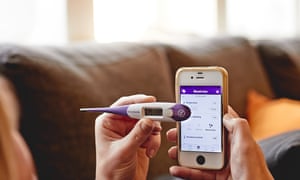
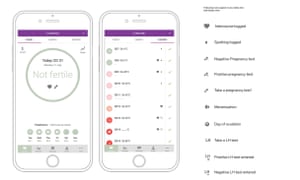
Using a sensitive thermometer and sophisticated mathematics, Natural Cycles is an old-fashioned period tracker, with extra features. The app, which launched in 2014, asks users to take their temperatures in the morning, preferably before getting out of bed, then input that into the app, which tells them where they are in their menstrual cycle. Days when a woman can get pregnant become red; “safe” days are green. So far, so low-tech. What makes Natural Cycles unique, though, is the algorithm developed by Berglund. The 32-year-old from Malmö in Sweden holds a PhD in particle physics and was a member of the team that discovered the Higgs boson at Cern, before developing her life-changing formula.
The Natural Cycles app Photograph: Danijela Froki/Natural Cycles
Through daily use, the algorithm learns not just how to map an individual’s ovulation but to predict it, too. That allows the five days prior to ovulation to be identified in real time, alerting women to the fact that male sperm can linger for that long in their bodies, ready to pounce on an egg when it is released.
The app fills a gap in the market, spotted by Berglund when she felt fed up with the limited options on offer other than hormonal contraception. She devised the algorithm and started mapping her own cycle, as well as those of female colleagues at Cern. When the Higgs boson was discovered and the project started to close down, Berglund and her husband, fellow physicist and Natural Cycle’s CEO Raoul Scherwitzl, decided to devote more time to the app.
Berglund has hired a team of researchers that includes Kristina Gemzell Danielsson, a professor in obstetrics and gynaecology at Karolinska Institutet in Stockholm. Their most recently published clinical study showed that Natural Cycles, when used correctly, is as efficient in preventing pregnancies as the pill. Unlike the pill, though, it doesn’t offer any cover for fertile days, which means that comparing the app to medical contraception is difficult.
Asking women to put faith in their phones to protect them from getting pregnant is a complicated business. In Sweden, the app was criticised for targeting young lifestyle bloggers and their impressionable readers. One example was Blondinbella, by Isabella Löwengrip, who is now a Natural Cycles investor. (Löwengrip says that the average age of her 1.3 million weekly readers is just over 30 – two years older than the typical Natural Cycles subscriber.) In December last year, the Swedish Medical Products Agency also banned the app from calling itself a preventivmedel – the Swedish word for “contraception”, which is associated with purely medical birth control. As a result, it’s now marketed as a “fertility monitoring device” that “can be used to avoid pregnancies”. Berglund doesn’t seem too worried, though.
“What we do is track fertility, right? And then women can use it how they want – it’s a tool for them to use this information either to prevent or plan a pregnancy.” Plus, she says, the company’s research shows that younger women are more disciplined in using contraception on red days; their pregnancy rates were much lower than those of users above the age of 35.
The Natural Cycles app Photograph: Natural Cycles
The ideal app user, Berglund says, is a woman in a stable relationship who is planning to have children at some point, and who would like a break from hormonal contraception ahead of trying. Gemzell Danielsson points out that it’s not a good option for women who absolutely want to avoid a pregnancy. Nor does she recommend it for anyone who has what she describes as “an irregular lifestyle”, irregular menstrual cycles or lacks the motivation to stay on top of their cycles. The latter of these categories might account for the 45% drop-out rate that the app is currently experiencing; women who sign up but fail to keep to their thermometer schedule.
The most important thing about Natural Cycles, Berglund and Gemzell Danielsson argue, is that it adds an alternative method to the mix. “I’m still surprised that there hasn’t been such a product before,” Berglund says. “I have been thinking about this since I was a teenager, because I didn’t feel well from taking the pill.”
Berglund is critical of the conveyor-belt style in which young women are prescribed it, and the fact that birth control is still very one-sided within relationships. “Sweden is supposed to be the most gender-equal country, but I think when it comes to contraception … the burden is very much on the woman.” Natural Cycles, she insists, is “more of a couple’s thing – the woman measures her temperature and the man sometimes has to wear a condom.” ”
The most important thing for the company, Berglund says, is to gain trust. “That’s why we keep performing clinical studies and why we try to achieve a higher ISO class of medical device status.”
But before Natural Cycles can become as trustworthy a contraceptive option as hormonal methods, larger-scale, independent studies will need to prove its efficacy. So while the app hasn’t killed the pill just yet, it is a welcome addition.
An experimental male contraceptive jab has proved just as effective as the pill is for women. Trials were abandoned, however, because side-effects included depression, raised libido and acne. Which is weird, because the pill has similar side-effects – although sometimes it can cure acne. The pill’s other common side-effects include nausea, headaches, breast tenderness, anxiety, weight gain and, sometimes, decreased libido. However, suggesting that the pill isn’t an almost perfect form of birth control tends not to go down very well.
This is understandable. The pill has given women agency over their own lives like nothing else. And women don’t want that great freedom to be tarnished. The advantages of an equally reliable male contraceptive, of course, are much less direct. If anything, the pill freed men from worry about contraception or “getting a girl pregnant” to the extent that an unwanted pregnancy is often looked on as something that’s entirely the fault of the fool who’s enceinte. It’s hard not to look on all those anti-abortionists and morning-after pill killjoys as people determined that foolish women should pay for their own singular mistakes.
Yet a male contraceptive is simply more sensible, in biological terms, than a female one. In her book, Sweetening the Pill, and in numerous articles, Holly Grigg-Spall points out that men have no fertility cycle, while women are only fertile for six days every month. Women take a lot of responsibility for those six days, while the constant risk is not from their ova but from ever-ready sperm.
Grigg-Spall, who is a passionate advocate of raised awareness about the pill’s risks to women, believes that its side-effects are minimised not just because of feminism, which cannot help but see the pill’s advantages as outweighing its disadvantages, because they do, but also because of sexism, which tends to dismiss female problems as trivial and male advantages as important. It’s hard not to agree with her, when comparing this latest research, in which side-effects were given such emphasis, with Danish research published last month that linked the pill to depression and gained little more than shrugs.
‘Shared responsibility for reproductive freedom still seems so far away.’ Photograph: Garo/Phanie/Rex/Shutterstock
Yet it’s precisely because hormonal contraceptives have side-effects, and that these vary from person to person, that a decent male contraceptive would be such a good thing. If one partner finds the side-effects unbearable, then the other can take up the mantle. If one partner has been on contraceptive hormones for a long time, he can give his body a rest and ask his partner to take her turn. A male pill would promote the idea of shared responsibility. Which in matters of sex and reproduction still needs a lot of promoting.
The pill unleashed sexual freedom on a grateful world. It took a while for feminism to realise that this was not by any means always to the advantage of women. Ever since that time, discussion about the male pill has tended to focus on casual sex – whether a woman would trust a man who said he was on the male pill, since a lie wouldn’t leave him up the duff. But the truth is that barrier methods remain necessary for casual sex, to protect against sexually transmitted diseases, whether other contraception is being used or not. Hormonal contraception for both sexes is at its most positive as a goal in stable relationships, where it is so important for responsibility and risk to be shared.
Yet shared responsibility for reproductive freedom still seems so far away. One reason why the development of an effective male contraceptive has been painfully slow is lack of enthusiasm for the idea. Money for research isn’t there because big pharma doesn’t think men will be keen enough. The prospect of more equality, empathy and understanding between the sexes just doesn’t thrill the market.
Unlike Grigg-Spall, who had a terrible time when she was on the pill, and suffered major side-effects such as panic attacks, I’m not against hormonal contraceptives, even if they are risky. I stayed on the pill for a long time, maybe too long, and eventually I couldn’t face it any more. I’d have very much liked it if my partner could have taken his turn too. That alternative wasn’t available. But that isn’t just scientific and pharmaceutical happenstance. I’m troubled by the idea that risks women are routinely encouraged to take are risks that men are not willing also to take. There are related risks that men won’t take either. Vasectomies are at a historically low level. Addressing this particular inequality is a huge step towards addressing many others.
With double as many people willing to take a contraceptive pill, fewer women would have to suffer in silence for the sake of worry-free sex. I’m sure that some men would be happy to take a hormonal contraceptive. But the market tells us that not nearly enough are interested, while research tells us that even when they are, they’re too risk-averse for the idea to be driven forward with enough urgency.
Reliable contraception is a Great Thing for humanity. It’s about time that half of humanity stopped shirking and joined women in engaging in the physical challenges that are undertaken in embracing it.
Gregory Pincus, the maverick scientist who co-invented the female contraceptive pill, first tried to come up with a male equivalent in the 1950s. Nearly six decades on we are still waiting.
Friday’s news that male contraceptive jabs are almost as effective as the female pill, is remarkable as much for the lack of progress it highlights as for the impressive result the trial delivered.
There are genuine scientific reasons why creating a male pill is tricky. But today’s results, together with a separate advance earlier in the week , make it a good time to ask whether the main obstacles are technical or a lack of will to develop the drug.
A central scientific challenge in developing a male pill is achieving the right balance of hormones that provides reliable and reversible contraception without inducing unacceptable side-effects.
Getting this right is a tightrope walk and the research fell just on the wrong side of the line. The World Health Organisation decided to stop enrolling men on its trial earlier than planned after being alerted to side effects, including low mood, acne and higher than usual libido (today some coverage interpreted this as a bonus of the drugs, although there is no suggestion that this is how the men or their partners saw it).
Participant safety must always be the first consideration when running clinical trials. It is worth noting, though, that three-quarters of the 300 men who took part in the trial, said they would continue to use this method if they had the choice – and the decision to halt the trial was not unanimous.
Richard Anderson, a professor of clinical reproductive science at the University of Edinburgh and a co-author, says: “It was a big disappointment when the trial was stopped, as the trial monitoring committee were happy with progress and safety, but another WHO committee made the decision.”
The scientists did not attempt to quantify whether the side-effects were comparable or worse to known side-effects of the female pill, but we know that these can also be substantial.
“There are many couples for whom the female pill is not an option,” says Sarah Jones, a reader in pharmacology at the University of Wolverhampton, who is working on an alternative form of male contraceptive.
“It has terrible side-effects as well for some women. It’s not much of a choice. I’m sure there are couples that would relish this [male contraceptives].”
A second challenge, for the male contraception, is that the hormones they normally rely on are quickly metabolised by the liver, meaning that it’s difficult to package the drugs in a pill form. Again, it is worth noting that most of men on the trial said they would be happy to go forward with the injection method.
Anderson and colleagues are due to start another trial using a similar hormone combination delivered through a gel that men could rub onto their chest each morning.
There are also new findings suggesting that targeting the sperm directly – by using a fast-acting pill or a nasal spray that a man could take before sex, for example – rather than using hormones might work. Until now, this approach had eluded scientists, because sperm is so impenetrable – or, as Jones puts it, “you just can’t get into the little buggers”.
She published findings this month showing that designer compounds could be smuggled inside sperm cells and target proteins that are required for the sperm to swim, essentially stopping them in their tracks.
The progress convinces Anderson that a male contraceptive will be available eventually. “It’s just disappointing that it’s going so slowly,” he adds.
Focus groups run by Anderson and others convince him that there is a clear and immediate demand. “About 90% of women we saw at a family planning clinic said it was a good idea, to share the responsibility,” he says.
“They say: ‘I’ve done that [taken the pill] for 15 years and had a baby. Come on it’s someone else’s turn.’”
However, funding from pharma companies – essential to run the trials involving thousands of men that would be required to get a product licensed – is not forthcoming.
Herjan Coelingh Bennink, who was global executive vice-president at Schering’s reproductive medicine programme until 2000 when the company was bought by German rival Bayer, has offered an insider’s perspective on why this might be the case.
“At board level it was only middle-aged white males,” Bennink told Mosaic , an online science magazine produced by the Wellcome Trust, this year. “I tried to explain how important it could be, but they never got further than saying to each other, ‘Would you do it?’ ‘No, I wouldn’t do it’. It was not considered male behaviour to take responsibility for contraception.”
Anderson said that commercial factors may have also impacted the decision to shift away from developing a male pill. “I’m not convinced by that characterisation,” he says. “Though it probably does have a grain of truth,” he says.
Undoubtedly, there are still scientific hurdles to be overcome before we have a safe, reliable male contraceptive.
But science is not there to solve life’s simple problems. When someone at the European Space Agency said let’s chase down a comet 250m miles away and land a robotic probe on it, nobody said “That sounds easy – let’s do it”.
If we’re looking for reasons why we’re still so far from equality in who bears the burden of birth control, let’s not place lack of scientific ingenuity at the top of the list.
A male contraceptive jab has been shown to be almost as effective as the female pill in a trial that could pave the way for men and women being able to share equal responsibility for birth control.
In the study, 350 men were given injections of hormones that were shown to dramatically lower their sperm count by “switching off” the male reproductive system. The drugs caused some unpleasant side-effects, however, meaning that the trial had to be halted early.
The men, who were all in long-term relationships, relied on the drugs to prevent unplanned pregnancies – and the combination of hormones was found to be nearly 96% effective.
Richard Anderson, a professor of clinical reproductive science and author of the study, said: “If you’re comparing it to other reversible male methods, it’s far better than the condom and it puts it in the same ballpark as the pill.”
However, the treatment was judged to have unacceptable side-effects, including depression, acne and increased libido, which caused 20 men to drop out of the study and ultimately led to the trial be stopped earlier than planned.
The trial involved injections of two hormones. A long-acting form of progestogen was designed to act on the pituitary gland to switch off sperm production. Testosterone was added to offset a drop in the male hormone triggered by the progestogen. “You need the testosterone to feel OK,” said Anderson.
After an initial period, when couples used both the injections and other birth control methods, the men entered the study’s “efficacy phase”. This lasted up to a year and the men relied on the jabs alone, which they received every two months.
Only four pregnancies occurred among partners of the 274 men, indicating a similar level of efficacy to the female combined pill and significantly better protection than condoms, which in real-life conditions are about 82% effective.
However, scientists stopped enrolling new participants into the study in 2011 due to the rate of reported side-effects.
Of the 1,491 incidents, 39% were found to be unrelated to the treatment. This included one suicide. One man experienced an abnormally fast and irregular heartbeat when he stopped receiving the injections.
Despite the side effects, at the end of the trial, three-quarters of the men said they would be willing to continue using the contraceptive jab. The scientists said it might be possible to reduce the side-effects by changing the dose of hormones or the way they are delivered.
“The results provide us with confidence that this can be done,” said Anderson.
He added that it would be difficult to convert the treatment to a pill form because the hormones are quickly metabolised by the liver, but the scientists are planning a new trial in which the combination is delivered through a gel that the men could rub on their chest each morning.
Other scientists were less convinced that the side-effects of could be overcome, however. Sarah Jones, a reader in pharmacology at the University of Wolverhampton, said: “Most previous attempts at male contraception that have involved hormonal targets have led to severe side-effects or have been irreversible. This study does seem better than previous ones, but it still doesn’t seem very good to me.”
Jones recently published research demonstrating that certain compounds could be used to impede sperm’s ability to swim, which she argues offers a more realistic route to reversible male contraceptives in the future.
Allan Pacey, professor of andrology at the University of Sheffield, agreed that the side-effects found in the study were a “major concern”. However, he said the efficacy was impressive. “Using long-acting injectable forms of [progestogen and testosterone] the authors were able to suppress the production of sperm to a remarkable degree,” he said. “As such, this contraceptive was extremely effective and therefore certainly has promise.”
The findings are reported in the Journal of Clinical Endocrinology & Metabolism.
Chris Barratt, professor of reproductive medicine at the University of Dundee, said: “This is high quality research from a very experienced group of investigators, and as there has been no progress in male contraceptives for 40 plus years this is a very significant and welcome development. Additionally, the fact that the study reports relatively low side-effects and good ease of use are real-world developments. The study involved a reasonable number of patients so the results are likely to be robust.”
A newly published study from the University of Copenhagen has confirmed a link between hormonal contraceptives and depression. The largest of its kind, with one million Danish women between the ages of 15 and 34 tracked for a total of 13 years, it’s the kind of study that women such as me, who have experienced the side-effects of birth control-induced depression first hand, have been waiting for.
Researchers found that women taking the combined oral contraceptive were 23% more likely to be diagnosed with depression and those using progestin-only pills (also known as “the mini-pill”) were 34% more likely. Teens were at the greatest risk of depression, with an 80% increase when taking the combined pill, and that risk is two-fold with the progestin-only pill. In addition, other hormone-based methods commonly offered to women seeking an alternative to the pill – such as the hormonal IUS/coil, the patch and the ring – were shown to increase depression at a rate much higher than either kind of oral contraceptives.
In recent years we’ve seen efforts from the NHS and family planning organisations to encourage teens to use these so-called LARCs (long-acting reversible contraceptives), primarily because they eliminate the need to remember to take a pill every day, but also due to the fact they’re commonly believed to have less severe potential side-effects than the pill. The new research suggests this practice is misguided. We already know that those with pre-existing depression may find the pill worsens their symptoms, and if teens were at greater risk of depression, then continuing this practice would be negligent.
The researchers note that, because GPs are less likely to prescribe the pill to women who already have depression and because women who do experience depression on the pill are more likely to stop taking it, this study probably underestimates the potential negative affect that hormonal contraceptives can have on mental health. They speculate, in view of the rate at which hormonal contraceptives are prescribed (there are 3.5 million users in the UK alone), that these medications might be responsible for a fifth of all cases of depression.
Having spent the past eight years researching and writing on the emotional and psychological side-effects of hormonal birth control, I initially felt elated to read this study. Not just for myself, but for the hundreds of women I’ve interviewed over the years. Mood changes are one of the top reasons many women discontinue using the pill within the first year. Finally, here was the kind of large-scale, long-term study I’d been told was necessary before we could seriously talk about this issue or make a change in how we prescribe hormonal contraceptives.
Sweetening the pill: could some birth-control methods kill you?
However, I was naive, because it seems that no study will ever be good enough for the medical community to take women’s experiences seriously. As soon as this research dropped, the experts lined up to deliver their usual mix of gaslighting and paternalistic platitudes. We’re told not to be alarmed, concerned, or deterred from continuing to use our hormonal contraceptives, mostly by men who have never and will never take them themselves (partly because the long-term, large-scale study undertaken by WHO on the “acceptability” of the male pill revealed it would negatively impact their emotional wellbeing).
This “pillsplaining” is specific to discussions of research into the side-effects of hormonal birth control. Usually, when the research is on the pill alone, we’re quickly informed there are many other hormone-based methods to choose from, but unfortunately this new study says those alternatives are even worse. One expert even tried to dismiss the link with depression in pill-taking teens as more likely the result of “teen heartbreak”.
So, why is it that we’re not supposed to take this study seriously? Considering that women are fertile just six days per menstrual cycle and men are fertile every single day, that the burden of avoiding unwanted pregnancy falls to us, regardless of the burden that might have on our health and wellbeing, is nothing short of sexism. After all, there are certainly effective alternatives to hormonal contraceptives –the copper coil, diaphragm, condoms and new technology that’s making it simple for women to practice the fertility awareness method, not to mention, of course, vasectomy and the promise of Vasalgel, a contraceptive injection for men.
Yet, we’re reminded with one medical professional’s response to this new research that “an unwanted pregnancy far outweighs all the other side effects that could occur from a contraceptive.” If that’s true, why bother researching the side-effects at all?
It is important to remember that women are twice as likely to experience depression as men
It is important to remember that women are twice as likely to experience depression as men, reportedly due to “the fluctuation of progesterone and oestrogen levels”, in other words our biological femaleness. It’s apparently acceptable to blame women’s depression on the fact that they’re women, but it’s not OK to claim a powerful medication formulated from synthetic hormones could be at fault.
To me, and many other women, these Danish researchers are heroes and criticism of their methods (such as, they should have tracked those women using condoms or the copper IUD as well – even though these options were not available to them; or that women were likely depressed because of menstrual cramps – which the pill is supposed to prevent), only highlights the incredible knots the medical establishment will twist itself into in order to deny there’s a problem with the pill.
One of the study’s authors, Øjvind Lidegaard, professor of obstetrics and gynaecology, also brought attention in 2011 to the increased risk of blood clots associated with newer, and supposedly “improved”, hormonal contraceptives such as the ring, the patch and drospirenone-containing pills. Lidegaard plans to focus next on researching the possible “association between taking hormonal birth control and attempting or committing suicide”. Researchers originally flagged up this potential link back in 1970 at the Nelson Pill Hearings, but the topic has not been touched since.
Depression and anxiety from hormonal contraceptives may not be the experience of every woman, but that doesn’t mean it’s not the experience of your friend, your daughter or your partner, and of many women out there, who, in reading about this could have their lives changed for the better.
Women who take the contraceptive pill are more likely to be treated for depression, according to a large new study.
Millions of women worldwide use hormonal contraceptives, and there have long been reports that they can affect mood. A research project was launched in Denmark to look at the scale of the problem, involving the medical records of more than a million women and adolescent girls.
It found that those on the combined pill are 23% more likely to be prescribed an antidepressant by their doctor, most commonly in the first six months after starting on the pill. Women on the progestin-only pills, a synthetic form of the hormone progesterone, were 34% more likely to take antidepressants or get a first diagnosis of depression than those not on hormonal contraception.
The study, published in the Journal of the American Medical Association (JAMA) Psychiatry, found that not only women taking pills but also those with implants, patches and intra-uterine devices were affected.
Adolescent girls appeared to be at highest risk. Those taking combined pills were 80% more likely and those on progestin-only pills more than twice as likely to be prescribed an antidepressant than their peers who were not on the pill.
The researchers, Øjvind Lidegaard of the University of Copenhagen and colleagues, point out that women are twice as likely to suffer from depression in their lifetime as men, though rates are equal before puberty. The fluctuating levels of the two female sex hormones, oestrogen and progesterone, have been implicated. Studies have suggested raised progesterone levels in particular may lower mood.
The impact of low-dose hormonal contraception on mood and possibly depression has not been fully studied, the authors say. They used registry data in Denmark on more than a million women and adolescent girls aged between 15 and 34. They were followed up from 2000 until 2013 with an average follow-up of 6.4 years.
The authors call for more studies to investigate this possible side-effect of the pill.
Other scientists said the research should not put women off using hormonal contraception. Dr Channa Jayasena, a clinical senior lecturer in reproductive endocrinology at Imperial College London, said: “This study raises important questions about the pill. In over a million Danish women, depression was associated with contraceptive pill use. The study does not prove [and does not claim] that the pill plays any role in the development of depression. However, we know hormones play a hugely important role in regulating human behaviour.
“Given the enormous size of this study, further work is needed to see if these results can be repeated in other populations, and to determine possible biological mechanisms which might underlie any possible link between the pill and depression. Until then, women should not be deterred from taking the pill.”
Dr Ali Kubba, a fellow of the faculty of sexual and reproductive healthcare of the Royal College of Obstetricians and Gynaecologists, also said further research was needed.
“There is existing clinical evidence that hormonal contraception can impact some women’s moods, however, from this study there is no way of linking causation, therefore further research is needed to examine depression as a potential adverse effect of hormonal contraceptive use,” he said.
“Women should not be alarmed by this study as all women react differently to different methods of contraception. There are a variety of contraception methods on offer including the pill, implants, injections, intrauterine devices, and vaginal rings and we therefore advise women to discuss their options with a doctor, where they will discuss the possible side-effects and decisions around the most suitable method can be made jointly.”
For as long as Alice, now 32, can remember, her father, “a major drug dealer with freezers full of cocaine”, was physically abusive towards her and her mother. “My first memory is of him backing us to the front door with a gun, saying he’d kill her, kill me and kill himself one day.”
Alice’s post-traumatic stress disorder (PTSD), a debilitating mental condition that can be caused by experiencing or witnessing a life-threatening event, went misdiagnosed for many years. The panic attacks, body shakes, nightmares and insomnia took their toll, while doctors treated her for depression and anxiety. There were many triggers: physical contact, being alone, showering, seeing someone who resembled a family member, loud sounds, even a red baseball cap – the kind her father wore. He and his friends also sexually abused her on numerous occasions. The disorder imprisoned Alice; she couldn’t answer the phone or go to the shops on her own. “I would get triggered by something and I’d shake or shiver,” she says.
The MDMA just pulls things out of you. There were times when I just sat up and started talking
Over the years, she tried talking therapy, somatic therapy, and eye movement desensitisation and reprocessing (EMDR), in which a therapist moves his or her fingers left and right in front of a patient’s face as they recount their trauma (the eye movements seem to dampen the memories). Nothing worked.
Then, two and a half years ago, Alice enrolled in a clinical trial for a treatment combining psychotherapy with MDMA, near her home town of Erie, Colorado. She took 125mg of the drug, the same dose a clubber might take recreationally, three times over the course of 12 weeks. Her “trips” were accompanied by eight-hour therapy sessions. “I sat on a comfy couch and my therapist gave me a pill in a little handmade ceramic cup,” she says. “It had a ritualistic feel to it. I was terrified the first time.” Having taken the capsule, Alice was given an eye mask and headphones, and lay back listening to drum music until the drug, which she’d never taken before, kicked in.
“The MDMA just pulls things out of you,” she says now. “It supports you. You can start looking at all your experiences and how they are affecting you. There were times when I just sat up and started talking. Or I’d cry. Or there were moments of re-enactment. Physically, I felt like my whole body was vibrating for a while.”
During the session, her psychiatrist guided the conversation according to goals she had set with Alice beforehand. “I had the first few minutes of peace I’ve had in years,” Alice says, though the sessions weren’t all plain sailing. “Some parts were wonderful and others were kind of hellacious. I was super-sad and couldn’t stop crying. It was not just an automatic love drug. But I was always able to come back to feeling good.”
Alice’s recovery was astonishing. The gold-standard assessment tool for this kind of trauma is the clinician-administered PTSD scale, or Caps, which uses a lengthy questionnaire to determine the severity of a patient’s symptoms (sample question: have there been times when you felt emotionally numb or had trouble experiencing feelings like love or happiness?). Any score over 60 is “severe”. Alice’s score went from 106 to two. It’s now at zero. In other words, her PTSD is gone.
•••
Alice is one of 136 patients who have now undergone MDMA-assisted psychotherapy in trials run by the not-for-profit Multidisciplinary Association for Psychedelic Studies (Maps), based in Santa Cruz, California. Maps was founded in 1986 by Rick Doblin, then a trainee therapist, and now an effervescent 62-year-old who has dedicated his life to studying the medical uses of psychedelic drugs, including psilocybin (magic mushrooms) and marijuana. “It’s taken 30 years to get to this point,” he says. “I’ve always known MDMA would work, but it’s been really gratifying to see such tremendous results.” He has studies nearing completion in Vancouver, Colorado, South Carolina and Israel, with plans for more in Australia.
Doblin and his colleagues want to make the drug a prescription medicine. It is currently listed as a Schedule 1 substance by the US Drug Enforcement Administration (DEA) and a Class A drug by the Home Office in the UK, along with heroin, cocaine and LSD. So far, the Maps studies have been relatively small, but the results are encouraging. One South Carolina study involved 20 patients, mostly victims of sexual abuse, who had suffered from PTSD for more than 19 years. It was a placebo-controlled study, so all patients were given the same therapy, but only some were given the MDMA; 83% of those given the MDMA no longer met the criteria for PTSD following treatment, compared with 25% of those who were not given the drug. Best of all? The results have held for several years.
Rick Doblin, founder of Maps, has spent 30 years studying the medical uses of psychedelic drugs. Photograph: Gretchen Ertl
But the real test will be next year’s phase three trials, the final stage of validation required if MDMA-assisted therapy is to be legalised. (Around 50% of all medical treatments fail at this stage.) A phase three trial requires bigger groups, at least 230 people, around the world. Once two trials are completed, and provided the results still look positive, the data can be submitted to the US Food and Drug Administration (FDA) and the European Medicines Agency for approval. In theory, MDMA could be legalised for therapeutic use by 2021.
•••
MDMA is not a silver bullet: treatment is heavily reliant on the accompanying therapy, and there is a lot of therapy: three monthly sessions with the drug, lasting eight hours each, punctuated by nine weekly 90-minute sessions without it.
International guidelines recommend the first line of treatment for PTSD should be EMDR or cognitive behavioural therapy; but it can be very hard to treat. “Perhaps 50% of people will have resistance,” says Jonathan Bisson, professor in psychiatry at Cardiff University. “We need new treatments.”
Antidepressants and anti-anxiety medications are already big business for pharmaceutical companies. According to a 2008 US Veterans Association study, around 80% of veterans diagnosed with PTSD are given psychiatric drugs. But a 2015 study in the Journal of the American Medical Association found that around two-thirds of veterans still meet the criteria for a PTSD diagnosis after treatment.
Nevertheless, the US military continues to spend huge sums on drugs and disability payments. The Veterans Association says that, of nearly the 1.5 million former soldiers receiving compensation, 870,000 have PTSD, and their treatment costs the government as much as $ 17bn (£12.7bn) a year. (In the UK, the Ministry of Defence pays £875m ($ 1.16bn) a year to those bereaved or injured through service; this figure covers mental and physical disability.) Doblin argues that if even a small portion of those funds were allocated to MDMA-assisted therapy, significant savings could be made. “To make MDMA into a medicine will cost around $ 30m,” he says. “If it works, it could save hundreds of millions, if not billions, of dollars a year.”
MDMA use under medical supervision is a world away from someone necking a load of pills at a rave
If the FDA approves the drug, the DEA will have to decide whether to declassify it to Schedule 2, alongside morphine, opium and codeine – drugs that have a high potential for abuse but can be used under supervision. It is tempting to draw comparisons with the way medical marijuana has been legalised in many US states. If MDMA were to follow the same pattern, it wouldn’t be long before any entrepreneurial drug user could cry trauma to gain access to a steady stream of highly potent ecstasy. But Doblin stresses this won’t happen. “These drugs are fundamentally different: marijuana is the treatment itself; we’re talking about MDMA-assisted psychotherapy.”
These different approaches reflect the level of risk associated with the drugs. No one dies from a marijuana overdose; 50 people died after taking MDMA in the UK in 2014 alone. There is no figure for MDMA-related deaths in the US, but there has been a sharp rise in hospitalisations, from around 4,500 people aged under 21 in 2005 to more than 10,000 in 2011, the latest data available.
Used recreationally, MDMA is not without risk. “It mucks about with the body’s thermostat and pushes up the body temperature, which can lead to organ failure and be fatal,” explains Harry Shapiro, director of the UK charity DrugWise. “But its use under medical supervision is a world away from someone necking a load of pills at a rave.”
•••
When James “CJ” Hardin, now 36, came back to the US from his tour of Iraq in 2006, he knew something was wrong. He was having nightmares and difficulty sleeping; loud sounds, crowds of people and flashes of light would send him into a state of anxiety. “I’d get tunnel vision and become hypervigilant, pulse racing and breath shallow.”
There were no flashbacks while he was awake, but he had nightmares about combat almost every night. He self-medicated with alcohol, combined with prescription sleeping pills and antidepressants. The Veterans Association offered CJ group therapy, but he found it a “dick measuring contest”, where participants engaged in one-upmanship over the atrocities they had experienced. When the sleeping pills became less effective, he also took the sedating antihistamine Benadryl, and drank rum until he passed out.
After leaving the military in July 2010, CJ moved to North Carolina. “I isolated myself and continued my bad habits, staying at home, drinking and smoking marijuana all day. Then I’d wake up, eat and do it all again.” A chance meeting with a Maps researcher led him to sign up for one of its studies – this one led by psychiatrist Michael Mithoefer and his wife Annie, a nurse, from their home and clinic in Charleston, South Carolina. The couple, now in their 60s, trained with the Czech psychedelic therapy pioneer Stanislav Grof, and have been working with MDMA since 2000.
James “CJ” Hardin was having nightmares and difficulty sleeping after his tour of Iraq. Photograph: James “CJ” Hardin
By that time, CJ was having frequent suicidal thoughts: “I’d resigned myself to believing my life wasn’t going to change.” But during his first session, once the drug had taken effect, he started to open up about his trauma. “All of a sudden I knew I was safe. I realised I’d been treating my life like I was in Iraq the whole time, when I’m not. I am back in the US. That left me immediately.”
He was able to talk about his fears of mortar attacks, and how he felt in a constant state of peril, as if he might die at any moment. “I felt like there was no light at the end of the tunnel. After that first session, the light clicked on. It wasn’t right in front of me, but it was there. I had hope.” The MDMA alone wouldn’t have worked, he says; it was the catalyst that made the therapy work. “It disarmed me, opened my mind and allowed me to feel at peace and safe as I talked about the things I did. After years thinking you’re a horrible person and not safe, it’s the biggest vacation.”
Like Alice, CJ had three sessions. And, like Alice, his Caps score plummeted: from 87 to just seven, falling to three the following year.
•••
MDMA (full name 3,4-methylenedioxymethamphetamine) was first synthesised in 1912 by the German pharmaceutical company Merck, which had been looking for a substance to stop bleeding. It wasn’t until the 1970s that its potential was explored more fully, when a California chemist called Alexander Shulgin started to experiment with cooking up psychoactive drugs. He made a batch of MDMA and started testing it on himself. In 1976, following a 120mg dose, he wrote, “I feel absolutely clean inside, and there is nothing but pure euphoria. I have never felt so great or believed this to be possible … I am overcome by the profundity of the experience.”
Shulgin introduced the drug to California psychotherapist Leo Zeff, who had previously developed LSD therapies. Zeff was so impressed by MDMA, describing it as “penicillin for the soul”, that he came out of retirement to introduce the drug to therapists across America and Europe. But just as its therapeutic potential was being explored, it started to make its way into the rave scene; in 1985, it was banned by the DEA.
“MDMA is highly volatile in one person but not the next,” says DEA spokesman Melvin Patterson. “You and I could both take it, and I would have no reaction and your organs would start to shut down. There were tons of raves happening, and a lot of people being rushed to hospital and packed in ice to get their temperature back to normal. It was rare that people overdosed or died, but it did happen, and at such a frequency that we had to step in.”
The Mithoefers began researching MDMA-assisted therapy in 2000. “It seemed to make particular sense for PTSD,” Michael says. “Most of the treatments that have been effective involve revisiting the trauma in a therapeutic setting, but a lot of people are unwilling or unable because they get overwhelmed by anxiety. MDMA decreases fear and defensiveness, while increasing trust and empathy.” He worked with Doblin to develop a plan for a clinical study, approved by the FDA in 2001.
Psychiatrist Michael Mithoefer and his wife Annie, a nurse, have been researching MDMA-assisted therapy for a decade. Photograph: Hunter McRae
So far, all the Maps trials have used doses of MDMA from a 31-year-old batch with 99.8% purity made in a lab at Purdue University, Indiana. But for phase three trials, the drug needs something called good manufacturing practice certification: Maps has to be able to show that, if MDMA were legalised, it could be produced on an industrial level at the same quality. This is where the pharmaceutical company Shasun comes in.
•••
Shasun’s factory is in the Northumberland village of Dudley, located a few miles south of Cramlington, a small town with the highest life expectancy in the UK. It is not a secret facility: taxi drivers know the plant without being given the address, which is on a main road opposite a row of red-brick semis and shops. But they may be surprised to learn that, inside, chemists are synthesising MDMA, perfectly legally.
Security is high. Visitors must first report to the lodge inside the gates and in front of the red-and-white barrier, the kind more often seen at military bases. Mobile phones must be surrendered, along with laptops, pagers, cameras and electronic car key fobs. The confiscation has less to do with secrecy than with the fact that the equipment could ignite and cause an explosion – a huge safety risk on a site processing volatile chemicals.
Shasun has been given a licence from the Home Office to manufacture Schedule 1substances. Around 20 of the company’s 325 UK staff are involved in the production of 1kg of MDMA – worth close to £300,000 ($ 398,000). After that, it will be shipped to licensed distributorsin the US and Europe.
British CEO Kevin Cook met Doblin two years ago in Boston, after being introduced by someone Cook describes as “a friend in big pharma”. He came away from the meeting reassured that Doblin knew what he was doing, and was doing it for a good cause; Shasun was prepared to jump through all the regulatory hoops to keep everyone on board.
Getting the Home Office licence was not easy. The firm has had to comply with a very long list of health and safety regulations, and security procedures. The drugs they make, and their key ingredients, are now stored in an alarmed vault to which just a handful of staff have access, their movements monitored by CCTV. “We can handle products here where there is a high risk of diversion – products that can be used for recreational as well as medical benefit,” says Cook, who has worked for Shasun for 27 years. Shasun’s business development manager Mike Hopkins jumps in to stress: “We’re not doing a Breaking Bad here.”
Kevin Cook, CEO of the British company manufacturing MDMA for medical use. ‘We’re not Breaking Bad here.’ Photograph: Christopher Thomond for the Guardian
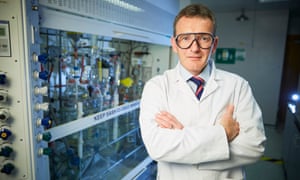
The MDMA lab is in Shasun’s development centre, a prefab in a corner of the site. A rabbit hops around on the grass outside. “Oh, he’s fine, don’t mind him,” Cook says. “There aren’t any chemicals out here he needs to worry about.” To access the building, visitors must wear white lab coats and protective goggles. Making the MDMA is much like following a recipe – one that was acquired from a German firm and emailed to Shasun’s chemists as an attachment. “Add X of this, stir to Y, heat to Z. It’s like cooking, but to get a really good-quality end product, you have to experiment a lot,” Cook explains. Robert Smith, a chemist with a degree from Cambridge and a PhD from Manchester, demonstrates the equipment his small team uses to synthesise the drug. Unlicensed manufacturers would face many years in jail, but making MDMA does not give Smith any kind of illicit thrill. “We just treat it like any other project.” He shrugs.
Recruiting a team was not difficult, Hopkins says; no one cited ethical concerns. “We always try to inspire our teams to understand what they are making and why. In this case, they are working for a non-profit trying to help people with severe PTSD. They find that sort of thing very motivating.”
•••
After fundraising, Maps’ second biggest challenge is training therapists, who must undergo the same treatment as their patients, to understand how it works. In November last year, Ben Sessa, a British psychiatrist based in Bristol, travelled to South Carolina for a 10-day stay with the Mithoefers, during which he underwent his own MDMA-assisted therapy session. “I haven’t got any psychological trauma,” he says. “I had a lovely upbringing, stable family. But it’s really important to learn this mental state in order to guide my patients through it.”
On the day of his session, all of it captured on video, Sessa takes his first dose of MDMA just before 11am, washed down with a swig of Gatorade. It’s a double blind study, so he doesn’t know if it’s a placebo. He hopes it isn’t. (“I chose the red pill and not the blue pill,” he says, referencing The Matrix.) Dressed in jeans and a T-shirt, Sessa reclines on a bed with Michael in a chair facing him, to his right, and Annie to his left. Propped into a seated position by a fortress of pillows and a large red and gold cushion, he has a blood pressure monitor wrapped around his left arm while the Mithoefers’ small white dog, Flynn, snuggles next to his leg.
The conversation is led by Sessa, with occasional prompts from the Mithoefers. Music plays in the background, starting with a gentle piano piece and building to higher tempo as the drug kicks in. The Mithoefers tell him to lie back, close his eyes and “go inside”. Annie regularly checks in on him, offering sips of juice, extra blankets and words of encouragement.
This is not a panacea. We need a cautious, methodological approach with sound scientific evidence
Around two hours into the session, Sessa takes a supplementary dose. Even though he’s in a darkened room, he asks for his red-rimmed sunglasses. “That second dose really hit the spot, man,” he tells the Mithoefers. He breathes heavily and purposefully, nodding his head to the music with his eyes closed, his lower jaw shifting subtly from left to right. Clearly, he did not take the placebo.
Sessa had taken MDMA in a rave context in the past but tells me: “This was very different from taking ecstasy recreationally. Imagine taking all that external energy that keeps you pumping all night on the dance floor and turning it inwards.”
Much of his session is spent lying down with an eye mask and headphones on; at times he hums and moans or reaches out to hold one of the Mithoefers’ hands. “I felt very safe and secure, but when I went to the toilet in the harsh light and stood looking at myself in the mirror, that’s when it felt like raving. I was completely fucked. I wanted to rush back into the bed and get under the covers and go back inside.”
At other times, he is encouraged to sit up and talk – about personal issues, psychotherapy, his constant need to be busy. “Life’s too short,” he tells the Mithoefers. “All these trinkets we adorn ourselves with are meaningless. It’s time that’s the only gift. So I don’t like to waste time.”
By around 4pm, the effects of the drug are wearing off, though Sessa says he experienced no comedown. He thinks ravers’ comedowns are mostly hangovers. “Most people who take ecstasy will go to the pub, drink three pints, then go to a club and stay up until five, take coke, drink more wine and beer, then get some soup and sleep on Sunday. Of course they feel bad on Monday!”
Three days later, Sessa had a second session. It was the same setup, but this time without the drug. “It was incredibly cathartic,” he says. “I was in floods of tears at times and talking about all sorts of issues. It was as if the MDMA had unlocked them three days earlier. It’s not just the drug sessions themselves where the work takes place – the real work is how the material that’s unlocked is then processed in the non-drug sessions.”
Sessa, who has worked with many children and adolescents battling trauma and addictions, believes MDMA could be an incredibly powerful tool for his patients. “We don’t have any medicines that allow patients and their therapists to approach trauma. Antidepressants only treat the symptoms, so this could be a very important step forward.”
Trauma is incredibly hard to treat, he says. “You sit in a room with a stranger and ask them to tell you about their child abuse and expect them to do it. They don’t. They can’t. So their mental health problem becomes a chronic disorder. In 20 years’ time, people may say: ‘Do you remember when we used to do psychotherapy without psychedelics?’”
MDMA could be legalised for therapeutic use by 2021. ‘Imagine taking all that external energy that keeps you pumping all night on the dance floor and turning it inwards.’ Photograph: Aaron Tilley for the Guardian
Despite his enthusiasm, Sessa remains pragmatic and is put off by some of the more evangelical factions in the pro-psychedelic movement, as well as its strong links with anti-establishment hippy culture; for him, this detracts from the science. “Some people want to live in a chemical utopia. This is not a panacea. We need a cautious, methodological approach with sound scientific evidence.”
Sessa has brought what he’s learned back to the UK, where he is hoping to start two Maps-funded MDMA studies in 2017; for now, he says, he’s in a “fragile period of getting ethical approval”.
One of these studies is in Cardiff and will involve giving patients either MDMA or a placebo and putting them in an MRI scanner, where they will be subjected to a narrative script of their trauma to see what happens in their brain. The second study, in Bristol, will treat patients with alcohol dependency, post-detox. “We’ll put them through a course of MDMA psychotherapy and look at the rates of recovery. The link between trauma and addiction is unambiguous,” Sessa says.
•••
In anticipation of the drug’s legalisation, Maps has set up a benefit corporation, a socially responsible company that, unlike Maps, is allowed to manage prescription sales of a medicine. All profits from the MDMA developed by Shasun will be funnelled back into Maps’ research. The patent for MDMA has long expired but, thanks to a law signed by Ronald Reagan in 1984, no other pharmaceutical company would be able to use Maps’ research data for five years after the drug is approved.
Big pharma probably wouldn’t be interested anyway, Doblin says, because the therapy involves so few doses of MDMA. “Most pharmaceutical companies want to make a drug people take on a daily basis, that treats symptoms, not the problem, so when you stop taking it, the problem comes back. It’s a money-making formula. We are the opposite of that: you take the drug a few times, hopefully it cures you and you go on your way.”
For Alice and CJ, legalisation can’t come soon enough. Alice says the biggest change since treatment has been her relationship with her husband and two young children. “It allowed me to connect – I could step into now, instead of living back then.” For the first time, she was able to hug her husband, whom she married 11 years ago, when she was 21, and to undress in front of him. “I could hold on to my children’s hands and snuggle them without feeling gross.” She is now working as an optician and training to become a psychotherapist herself.
For CJ, the treatment led to a “100% turnaround” in his life. Like Alice, he no longer has therapy or takes medication for his mental health. He has given up drinking and found a job with an aviation company. He married his long-term girlfriend at the end of August. He still thinks about his time in the army, but now remembers the good things, the people he bonded with. He wishes other people could experience the benefits: “It feels as though there’s a cure for cancer that I know of – and it’s not being used.”
• Alice is a pseudonym. Additional reporting: Helen Pidd.
Drugs in therapy
Ketamine Licensed for use as an anaesthetic on humans and animals, ketamine is also used illegally as a party drug, and associated with powerful hallucinations. In 2014, a small controlled trial by the NHS and the University of Oxford found that some people with severe depression responded well to small quantities of the drug.
LSD It helped the 60s swing but some medical experts hailed LSD as a potential treatment for addiction and anxiety long before it was banned. Though still illegal in the UK and US, a controlled study this year by Imperial College London looked at brain scans of users and found the networks that deal with vision, attention, movement and hearing became more connected.
Magic mushrooms The hallucinogenic fungus is a popular illicit drug, but preliminary research by the University of Arizona found that psilocybin – the psychedelic compound produced in some mushrooms – helped in the treatment of obsessive compulsive disorder in a trial in 2006. This year, a clinical trial showed it was effective in treating severe depression.
Marijuana Advocates of marijuana use for the treatment of post-traumatic stress disorder are eagerly awaiting the outcome of a recent $ 2.15m (£1.6m) trial in the US, backed by the state of Colorado. Anecdotal evidence from traumatised ex-service personnel who use marijuana suggests that it controls their anger and aids sleep.
Compiled by Jason Rodrigues. Model-making by Kerry Hughes.