access etiketine sahip kayıtlar gösteriliyor. Tüm kayıtları göster

21 Mart 2017 Salı

It"s official: access to green spaces leaves you in the pink

People living close to trees and green spaces are less likely to be obese, inactive, or dependent on anti-depressants, according to a new report.


Middle-aged Scottish men with homes in deprived but verdant areas were found to have a death rate 16% lower than their more urban counterparts. Pregnant women also received a health boost from a greener environment, recording lower blood pressures and giving birth to larger babies, research in Bradford found.


Overall, nature is an under-recognised healer, the paper says, offering multiple health benefits from allergy reductions to increases in self-esteem and mental wellbeing.


A study team of 11 researchers at the Institute of European environmental policy (IEEP) spent a year reviewing more than 200 academic studies for the report, which is the most wide-ranging probe yet into the dynamics of health, nature and wellbeing.


The project first appeared as an unpublicised 280-page European commission literature review last autumn, before being augmented for Friends of the Earth Europe with analysis of the links between nature-related health outcomes and deprivation.


“The evidence is strong and growing that people and communities can only thrive when they have access to nature,” said Robbie Blake, a nature campaigner for Friends of the Earth Europe, which commissioned the analysis.


“We all need nature in our lives, it gives us freedom and helps us live healthily; yet deprived communities are routinely cut off from nature in their surroundings and it is suffocating for their well-being.”


The report makes use of several studies that depict access to nature as being inextricably linked to wealth inequality, because deprived communities typically have fewer natural environments within easy reach.


Despite this, the study cites research that 26% of England’s black and minority ethnic populations visit natural environments up to three times a year, compared with 15% of the rest of the population.


Patrick ten Brink, the IEEP’s director, praised cities such as Oslo and Victoria-Gasteiz for taking steps to make nature accessible to all.


“We should be inspired by this and work together so that all Europeans have nature within 300 metres of their homes in the next 10 years,” he said.


Previous US research has found that that hospital patients with tree views from their windows were discharged a day earlier than those whose rooms faced walls.


An extra 10 trees on a Toronto city block provided health benefits to residents equivalent to a $ 10,000 increase in annual income, or being seven years younger, another study in 2015 found.


It"s official: access to green spaces leaves you in the pink

16 Mart 2017 Perşembe

NHS patients could face wait to access life-saving drugs

Patients could face delays accessing drugs on the NHS after health bosses agreed that the most expensive treatments can be stalled.


Even when a drug has been approved by the National Institute for Health and Care Excellence (Nice) – which already has strict rules on affordability – bosses at NHS England can now slow down its delivery to patients.


The move applies to any drugs that are expected to cost £20m or more in any of the first three years of their rollout across the NHS.


This could apply to cheaper drugs that will be used by hundreds of thousands of people or very expensive drugs used by a small number of people. Drugs used to treat a range of conditions, including diabetes or cancer, could be affected.


Under the move, NHS England can ask Nice to extend the amount of time the NHS has to bring the drug in for all patients – in some cases for three years. At present, the NHS has 90 days to make Nice-approved drugs available.


The new system also means NHS England and drug firms will have more time to discuss potentially lowering the cost of the drugs.


Charities have objected to the move and also worry that NHS England will try to restrict access to certain groups of patients.


Sarah Woolnough, Cancer Research UK’s executive director of policy and information, said: “If Nice thinks a cancer treatment is clinically effective and represents value for money, then patients should receive it without delay.


“A system that could add up to a three-year delay before patients can access treatments deemed clinically and cost effective is unacceptable.


“Cancer patients may lose their lives while they wait. We need to decide whether we want a world-class health system in the UK, and if so we need to pay for it.


“Manufacturers should be encouraged to price drugs responsibly, but we hope the government will reconsider the introduction of this new test, otherwise it will be patients, their families and carers who could pay the heaviest price.”


Mike Thompson, chief executive of the Association of the British Pharmaceutical Industry, said: “Today’s proposals from Nice/NHS England break the Conservative party’s 2015 manifesto promise to speed up the introduction of cost-effective medicines into the NHS.


“Thousands of patients will wait longer for treatment for conditions like heart disease, cancers and diabetes while medicines which stand to benefit the most people are caught up in the system.


“Use of new medicines in the UK is already poor, with patients seven times more likely to get a newly launched medicine in places like Germany or France.”


Sir Andrew Dillon, the Nice chief executive, said: “We hope, and we think it is perfectly possible, that for some treatments which exceed the £20m budget impact in their first three years, there will be commercial agreements between companies and NHS England which will at least minimise and in some cases avoid completely the need for any delay for access for patients.


“Even where there is a delay beyond the standard 90 days, NHS England has committed to ensuring that there is some funding available to provide access throughout the phased implementation period.”


He said the move would be reviewed in three years to see what impact it is having on allowing access to new drugs.


NHS England’s acting director for specialised commissioning, John Stewart, said it was “committed to working closely with companies that are willing to price their products responsibly”.


He said the “new flexibility will help us develop innovative win/win/win agreements – good for patients, good for taxpayers and good for those companies that are willing to price responsibly”.


Other changes agreed by the Nice board include the introduction of a new fast-track option for treatments which cost less than £10,000 per year of good quality of life to patients.


The upper end of Nice’s standard threshold range is £20-30,000 per year. The new fast-tracking will mean cheaper treatments go through the appraisal process in six months rather than nine.


NHS patients could face wait to access life-saving drugs

17 Ocak 2017 Salı

US abortion rate is lowest since Roe v Wade – but contraception access may go

The rate of abortion in the US reached a lower level in 2014 than in any other year since the procedure first became legal, a study has found, a decline that appears to be due to the widespread use of contraception producing a drop in unintended pregnancies.


Nineteen percent of pregnancies ended in abortion in 2014 – the lowest abortion rate since the supreme court handed down Roe vs Wade in 1973, legalizing the procedure – and the number of abortions between 2011 and 2014 also fell, by 12%.


But the researchers found strong indications to link the decline in the abortion rate to the wider availability of highly effective contraception – which could be imperiled by efforts to repeal Obamacare by the incoming Republican administration.


The study appears in the latest issue of Guttmacher Institute’s scholarly journal, Perspectives on Sexual and Reproductive Health, and was conducted by two of the institute’s researchers, Rachel K Jones and Jenna Jerman.


The researchers made an estimate of the number of abortions by surveying local health department data and abortion clinics, which may be hampered by clinics that did not respond. Guttmacher is a think tank that supports access to reproductive care, but its data is widely trusted by supporters and opponents of abortion rights alike.


The decline in the abortion rate was greatest in the midwest, south and north east. Abortion is still a common procedure – in 2014, Jones and Jerman estimate, US women had 926,200 abortions – but there were nevertheless shifts in how abortions were performed. The number performed with medication, which is only effective early in a pregnancy, rose 7% to account for 31% of abortions outside a hospital setting.


There are competing theories to explain the decline in the abortion rate. The drop coincided with the enactment of the Affordable Care Act (ACA), which made more effective methods of contraception, such as IUDs, available to millions more women for no copay. But the decline also aligned with a historic spike in new, state-level abortion restrictions.


Some data – such as trends in contraception usage – that could help determine the reasons for the decline are not yet available for 2014. Still, the researchers predicted that the drop in the abortion rate had less to do with new restrictions than with changes in contraception usage and a reduction in unintended pregnancies.


One clue is that more than 60% of the decline in the abortion rate took place in states that had not enacted new hurdles to getting the procedure.


If the drop is due to contraception, it would have alarming implications for Republicans’ breakneck campaign to repeal the ACA. The law says that most health insurance plans must cover a broad range of contraceptive drugs and devices at no copay – the so-called contraception mandate. Public health advocates have credited this provision with an explosion in women’s access to more affordable and more effective birth control.


Between the fall of 2012 and spring 2014, a separate Guttmacher study found, the share of privately insured women who had no copay for contraception quadrupled. By 2015, the federal Department of Health and Human Services (HHS) found, 55.6 million US women had access to FDA-approved methods of contraception without a copay.


Vice president-elect Mike Pence has proposed a rule allowing business owners to refuse to cover contraception if doing so violates religious beliefs.


Vice president-elect Mike Pence has proposed a rule allowing business owners to refuse to cover contraception if doing so violates religious beliefs. Photograph: Evan Vucci/AP

If Republicans were to repeal Obamacare, it is not clear that their replacement would contain a similar provision. Tom Price, Trump’s nominee to lead the HHS, has put forth several proposals for an Obamacare replacement that do not contain a contraception mandate.


Separately, vice president-elect Mike Pence has proposed issuing a rule, through the HHS, that would allow business owners to refuse to cover contraception if doing so violates religious beliefs.


“Their agenda … could stop or reverse progress in empowering women to meet their childbearing goals, including by avoiding unintended pregnancy,” Joerg Dreweke, of Guttmacher, wrote in a policy brief accompanying the new study.


“There is strong evidence from recent abortion declines that supporting women’s decision-making across the spectrum of reproductive healthcare is very much compatible with reducing abortion incidence.”


The Guttmacher researchers found less evidence to link the decline in abortions or to new abortion restrictions. About 38% of the decline in the number of abortions was observed in 22 states that had enacted new restrictions significant enough to potentially impact women’s access to abortion.


These included laws that imposed extra counseling for an abortion. But only eight of those 22 states had abortion declines that outranked the national average, and four states – Arkansas, Michigan, Mississippi and North Carolina – actually saw an increase in their abortion rates.


There was, however, one type of abortion restriction that seemed to cause a decline in the abortion rate. These were laws that placed medically unnecessary regulations on abortion clinics in order to shut them down.


The number of abortion clinics fell by 6% between 2011 and 2014, and the loss of access appeared to be linked with a decrease in abortions – although it could not account for the entire declines observed in those states. In June 2016, the supreme court ruled these kinds of laws to be unconstitutional.


The decline in the abortion rate from 2011 to 2014 continues a long downward trend. The US also saw its abortion rate drop between 2008 and 2011, driven, according to Guttmacher, by a steep decline in unintended pregnancies, probably explained by improvements in the use of contraception. As the abortion rate fell, the birth rate did not rise commensurately.


In particular, the rise of the use of highly effective, long-acting, reversible contraception, such as IUDs, might account for the drop in abortions.


US abortion rate is lowest since Roe v Wade – but contraception access may go

30 Kasım 2016 Çarşamba

The morning-after pill is safe. So why is it so difficult to access?

A new campaign from the British Pregnancy Advisory Service (BPAS) is calling for emergency contraception, commonly known as the morning-after pill, to be sold directly from pharmacy shelves without a mandatory consultation. The campaign highlights the fact that the pill can cost British women up to £30, as much as five times higher than in other European countries, meaning that it could even be cheaper to fly to France and buy it there than to visit a local pharmacy.


A 2003 report published in the Pharmaceutical Journal revealed that the high price –described by BPAS chief executive Ann Furedi as a “sexist surcharge” – was a deliberate attempt to prevent women from taking it too often. As a spokesperson for Levonelle, a manufacturer of the pill, said: “The price has been set, in part, to ensure that EHC [emergency hormonal contraception] is not used as a regular method of contraception.”


BPAS also argues that the mandatory consultation women must go through with a pharmacist may be part of the reason it is so costly in the UK, compared with other countries where such consultations are not required. Given that the medication is considered very safe, even compared with other medications sold off-the-shelf, and that the NHS says it has no serious side effects, it seems likely that this is a means of influencing women’s sexual and reproductive decisions, rather than a requirement for safety reasons.


The comments of one spokesman from the Family Education Trust exemplified this rationale: “With no questions asked about previous medical history or previous use of the drug, there is a very real danger that it could be misused or overused.” The same could be said of countless other off-the-shelf products, but the extra barriers only seem to come into play when a product is associated with female sexuality. And considering the lack of medical dangers associated with the morning-after pill, the “misuse” or “overuse” seems likely to be a moral, rather than medical, judgment.


So the major arguments both for the sky-high cost and the mandatory consultation seem closely tied to the idea that women cannot be trusted to make their own decisions about their bodies and sex lives. Not to mention the terrifying risk that, should the situation change, immoral, promiscuous women might run amok, foregoing other forms of contraception, indulging in countless one-night stands and choosing to pop morning-after pills instead of taking any other precautions.


Talk of ‘misuse’ or ‘overuse’ ​being referred to here​ seems likely to be a moral, rather than medical, judg​​ment


Of course it makes sense for a consultation to be available for those who choose it, as with any other product purchased in a pharmacy. Some people might want to ask about the efficacy of the medication within a given timeframe, or seek further information about issues such as sexually transmitted diseases. But this is a decision an individual is capable of making herself – not every person taking emergency contraception needs to be subjected to these interactions, often described as “embarrassing” and “shaming”.


The moralistic overtones of this debate are the same ones that emerge during any discussion relating to women’s reproductive health – as if male lawmakers and commentators feel the need to wrestle women’s autonomy from them because “we know best”.


As a healthcare option for those who wish to avoid unwanted pregnancy, it is hugely important that women should be able to access the morning-after pill as easily and cheaply as possible. But a 2014 study found that women in the UK were nearly twice as unlikely to use emergency contraception because they were “embarrassed to ask for it” than women in other European countries. Nearly a third of all the women surveyed who used emergency contraception said they felt uncomfortable or judged when obtaining it.


That women have to jump through hoops because they aren’t trusted to use it responsibly is reminiscent of the ongoing Victorian-era legislation that means abortion is still technically illegal in mainland Britain. Rather than overturning the 1861 Offences Against the Person Act, the 1967 Abortion Act essentially created a loophole allowing the procedure only after two doctors have agreed that a woman’s mental or physical health would be harmed by continuing with the pregnancy. The law hasn’t been changed since.


Like the idea that a woman’s decision isn’t valid until two doctors have agreed to “let her off” prosecution, the notion that we need a consultation before being allowed to take emergency contraception is outdated and patronising. It’s 2016. Isn’t it time we moved away from the Victorian notion that women can’t be trusted to make their own choices about their health, bodies and sex lives?


The morning-after pill is safe. So why is it so difficult to access?

22 Kasım 2016 Salı

Passports for NHS access plan: what are the implications?

Patients could be told to bring two forms of identification including a passport to get treatment at hospital, according to the most senior civil servant in the Department of Health. Chris Wormald told MPs on Monday night: “On the general question of, are we looking at whether trusts should proactively ask people to prove their identity – yes we are looking at that.


“Individual trusts like Peterborough are doing that and it is making a big difference. They are saying, ‘Please come with two forms of identity, your passport and your address,’ and they use that to check whether people are eligible. It is quite a controversial thing to do, to say to the entire population you’ve got to prove your identity.”


If that happens, what are the implications?


Q. Could British people be denied access to treatment if they fail to produce a passport?


A.The latest figures show that 13% of British citizens do not have a passport so it could be a very serious problem if they were denied NHS treatment for failing to produce a passport. The current NHS Choices advice to overseas visitors says that “if you do not have valid documentation, you may be charged for treatment”.


So a British citizen who cannot provide a passport to prove their nationality or country of residence will be treated but may later face a hospital inquiry about the possibility of being charged. This could be dealt with by providing a birth certificate or other proof of British citizenship or residence short of a passport. The NHS describes itself as a “residence-based system, unlike many other countries, which have insurance-based healthcare systems”.


Q. What happens to people from outside the European Economic Area who want NHS treatment at present?


A. The rules changed in April last year as part of the Immigration Act 2016 which was designed to ensure Britain has “a national health service, not an international health service”.


Non-European migrants who have permanent residence in Britain, ie indefinite leave to enter or remain, continue to be eligible for the same NHS care as a resident British citizen.


But those who are temporary migrants or students and intend to stay more than six months are now required to pay a health surcharge when they apply for their visa. This is £200 a year or £1,000 for a five-year visa. In the past year £164m has been raised from the immigration health surcharge.


Q. What happens to people from inside the European Union or elsewhere in European Economic Area who want NHS treatment?


A. EU citizens who are resident in Britain can access the NHS on exactly the same basis as British citizens. The difference is that as a result of an EU directive the NHS can claim back the cost of treating EU visitors, students or temporary migrants to Britain from their home governments.


MPs are concerned that while the UK paid out £650m last year to cover the treatment of British citizens in other EU countries, it only managed to recoup £49m for the NHS treatment of EU citizens here. The government thinks that an annual target of £300m is possible if hospitals do more to identify EU citizens being treated in British hospitals.


The NHS is thinking of asking everyone to prove their identity so they can identify EU citizens so their governments can be charged. EU citizens without European health insurance cards (EHIC) may be asked to pay the charges upfront and then to recover them from their own government. The NHS might do better to ask EU citizens to produce their EHIC card rather than ask the whole population to provide a passport or other form of identity.


Q. Is this a national ID scheme by the back door?


A. A national identity scheme is about having a single government searchable database on which the whole UK population is listed. Asking for a passport or other form of ID card, such as a driving licence, to prove British residence does not mean the proposal is introducing an ID card by the back door.


Passports for NHS access plan: what are the implications?

14 Kasım 2016 Pazartesi

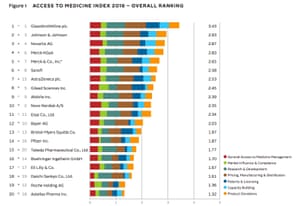
GSK tops list of drug firms improving global access to medicine

GlaxoSmithKline has come top of a league table that monitors the availability of medicine in developing countries, with fellow UK drugmaker AstraZeneca making it into the top 10.


The non-profit Access to Medicine foundation, which compiles the biennial index of drug companies, warned that while the availability of medicines is improving, the industry needs to do more on affordable pricing and the fight against corruption. Jayasree Iyer, executive director of the foundation, said: “Now is the time to step up those efforts.”


Overall, drugmakers have 850 products on the market for the 51 worst diseases in low and middle-income countries. They are developing another 420. But only 5% of products are covered by pricing strategies that were deemed affordable for different population groups within countries.


Iyer said there was no area where drugmakers had gone backwards, but noted that affordable pricing and misconduct were “static”. Breaches of laws or codes relating to corruption, unethical marketing and anti-competitive behaviour continue to arise.


GSK came first in the rankings for the fifth time, followed by Johnson & Johnson of the US, Swiss company Novartis and German group Merck. AstraZeneca jumped from 15th to seventh position after introducing a new affordability-based pricing strategy and expanding its Healthy Heart Africa programme, which aims to treat 10 million people for hypertension, or high blood pressure, over the next decade. The company was in sixth place in 2008 but then fell behind in several areas.


Access to Medicine Index.


Access to Medicine Index. Photograph: Access to Medicine Foundation

GSK accounted for the most research and development projects in areas of great need but with low commercial incentive, followed by AbbVie and Johnson & Johnson. The British drugmaker also topped the index for considering affordability when setting prices. Its top ranking came despite a damaging bribery scandal in China in 2014, for which it was fined £300m. The scandal prompted the company to overhaul its sales practices.


Iyer expressed some concern about GSK chief executive Sir Andrew Witty’s departure next March and what it could mean for the company’s efforts. He will be succeeded by Emma Walmsley, who currently runs GSK’s consumer healthcare business.


The index assesses the world’s 20 largest pharmaceutical companies on a range of measures, including their willingness to discount prices in poor countries, research on neglected tropical diseases, lobbying, patent policies, breaches of codes of conduct, corruption or bribery, transparency and conduct in clinical trials.


The Access to Medicine foundation is funded by the UK and Dutch governments and the Bill and Melinda Gates Foundation. It says its framework is used by companies to draw up access to medicine strategies.


GSK tops list of drug firms improving global access to medicine

23 Ekim 2016 Pazar

NHS access to innovative drugs could be cut by four years, says review

Patients could get drugs and treatment sooner under an “ambitious” plan, according to a new report.


The UK has been known to be slower than other countries when it comes to providing life-changing treatments as soon as they are available, officials said. Making the newest treatments available more quickly is among the recommendations in the Accelerated Access Review.


The report, commissioned by the government, suggests patients could have medications four years sooner than at present if NHS processes were streamlined. Officials said the report will help the UK “embrace new opportunities” as it prepares to leave the European Union.


The review said patients and medical staff become frustrated as they wait for much-needed treatments and said innovators have to “navigate multiple processes” to get their products to the market.


Chair of the Accelerated Access Review, Sir Hugh Taylor, said: “This ambitious plan will prepare the health system for an exciting era in medical innovation. We’ve listened to the views of the NHS, patients, clinicians, the life sciences industries and academia – and it is clear we need to act now to make the most of the tidal wave of new drugs and technologies that are being developed.”


NHS England chief executive, Simon Stevens, said the review could help create opportunities as Brexit approaches. “Across the NHS we’re going to create headroom for faster and wider uptake of important new patient treatments. In doing so we’re going to create new opportunities in the run-up to Brexit for our globally successful UK life sciences sector. If we get this right there are huge gains within our grasp, for patients across the NHS and for the wider success of our country.”


Health charities have welcomed the recommendations. Cancer Research UK’s chief executive, Harpal Kumar, said: “The voices of patients have been crucial to this review. They have a critical role in advising how research priorities should be set and how they would like to be involved in developing new treatments to meet their needs.”


Hilary Evans, chief executive of Alzheimer’s Research UK, said the review has come at a “crucial” time for thousands of dementia patients awaiting the results of trials of a number of potential new treatments. “If these are shown to be positive then the recommendations in this report, including the creation of a new strategic commercial unit, could help these treatments get to patients more rapidly, while ensuring that appropriate reimbursement to innovators is balanced against good value to the NHS.”


NHS access to innovative drugs could be cut by four years, says review

20 Ekim 2016 Perşembe

HPV vaccine access easier for US preteens after panel ruling

It’s now easier for preteens to get the cervical cancer vaccine.


A government panel on Wednesday recommended that preteens get two shots instead of three and space them further apart. The Centers for Disease Control and Prevention immediately made the change.


“It will be simpler now for parents to get their kids the HPV vaccine series, and protect their kids from HPV cancers,” said the CDC’s Dr Nancy Messonnier.


The vaccine protects against human papillomavirus – or HPV – which can cause cervical cancer, certain other cancers and genital warts. It is commonly spread through sex and, in most cases, the virus doesn’t cause any problems. But some infections gradually lead to cancer.


Health officials want kids to get HPV vaccinations at age 11 or 12, well before most first have sex and before they could be infected.


But less than one-third of 13-year-old US boys and girls have gotten three doses. Busy parents have struggled with the old schedule, which called for three trips to the doctor within six months.


“I know people who say ‘I can’t do that. Why even start?”’ said Cynthia Pellegrini, a March of Dimes official who sits on the panel.


Recent studies have shown two doses of the current HPV vaccine – Gardasil 9 – work just as well in kids ages nine to 14. The Food and Drug Administration two weeks ago said it could be given in two doses.


What’s more, two doses apparently work better when spaced six to 12 months apart. That means they could be given at annual checkups.


The Advisory Committee on Immunization Practices made the recommendation at a meeting in Atlanta.


The panel stuck with three doses for anyone who doesn’t get their first shot until they turn 15. That’s because they didn’t have enough data on how well two doses worked in older kids.


The vaccine was first recommended in 2006 for girls, and then for boys in 2011 – partly to reduce the spread of HPV to girls.


Vaccination rates have risen very slowly, and health officials have lamented the underuse of a potent cancer prevention tool.


Too many doctors have been timid about promoting the shots, experts say. That’s at least partly because some parents have worried the vaccination seems like they are greenlighting their kids to have sex.


But the onerous schedule didn’t help. “I think it was the icing on the cake” for parents already hesitant about HPV shots, said Dr William Schaffner, a vaccines expert at Vanderbilt University.


Until recently, there were three HPV vaccines on the market. Now there’s only one – Merck & Co’s Gardasil 9. This month, the company stopped selling an older version. GlaxoSmithKline phased out its vaccine, Cervarix, in the US because of poor sales.


HPV vaccine access easier for US preteens after panel ruling

13 Eylül 2016 Salı

We must legalise access to medical cannabis as a matter of urgency | Mike Barnes

You’re effectively using the essential ingredients of cannabis right now. You and everyone else. That’s because our brains, and other parts of the body, have a natural endocannabinoid system that is now known to assist with how we deal with pain, the control of movement, the protection of the brain after damage and a host of other functions. Our increasing knowledge of this natural endocannabinoid system now gives a solid scientific rationale for why cannabis has so many positive medicinal effects. And as well as this recently understood scientific rationale, there is a substantial body of clinical evidence that medical cannabis works. My review of that evidence is published today by the UK all-party parliamentary group on drug reform as part of their inquiry into medical cannabis.


My challenge to the government is to have the political courage to accept the scientific rationale, accept the evidence and move to legalise access to medical cannabis under prescription here in the UK as a matter of urgency.


Cannabis has been a useful medicine for centuries, with known use dating back to 4000BC in ancient China


Currently, the government has cannabis classified as a Schedule 1 drug, a classification for substances judged to have no medicinal value. This is irrational and incoherent. The evidence is plain to see and has been compelling enough for a large number of countries to legalise access to medical cannabis including the Netherlands, Germany, Spain and 25 US states.


My report shows that there is strong evidence that medical cannabis helps with chronic pain; spasticity (common, disabling and painful after stroke or brain injury and common in those suffering from multiple sclerosis, as examples); for nausea and vomiting, especially during chemotherapy; and for the management of anxiety. There is also evidence of usefulness in sleep disorders, for appetite stimulation (in HIV, for example), fibromyalgia, post-traumatic stress disorder, severe childhood epilepsies, bladder problems and even for control of some cancers. The list goes on.


And this issue matters to a lot of people. Estimates by the campaign group End Our Pain put the number of people in the UK taking cannabis primarily for medical reasons at one million. Many have found that “regular” prescription medicines just don’t work for them, or have debilitating side-effects. As access to cannabis in the UK is illegal, all these people are at risk of prosecution. These people would be regarded as patients in those countries with a more enlightened approach, but here they risk being treated as criminals.


The usefulness of medical cannabis is unquestionable; but is it safe? Certainly there are some potential short-term effects such as dizziness, drowsiness, dry mouth, balance problems and sometimes confusion. These effects, however, are largely induced by the psychoactive component – tetrahydrocannabinol (THC). This is the chemical that causes the “high” sought by recreational users. The other main chemical is cannabidiol (CBD), which is neither illegal nor psychoactive and indeed counters the effects of THC. That’s why medical cannabis will be produced in controlled conditions to ensure the right balance between CBD and THC.


Much more powerful and potentially dangerous prescription medicines are prescribed routinely by doctors. Every drug prescribed has positive and negative effects and the doctor’s job is to weigh those risks and benefits, explain that balance to the patient and allow an informed choice. It would be no different in the case of medical cannabis.


What about the threat of long-term problems, such as triggering schizophrenia? The evidence is conflicting but nevertheless some cannabis products (mainly those high in THC) can induce transient symptoms similar to the symptoms of schizophrenia and exacerbate symptoms in individuals already suffering from psychosis. I would expect a doctor not to prescribe medical cannabis in such cases.


Cannabis has been a useful medicine for centuries, with known use dating back to 4000BC in ancient China. It was also widely used in ancient Indian, Greek and Roman cultures. Medicinal use was first properly documented by Dioscorides in the first century AD. It has certainly gone through periods of being in and out of fashion. A particular period of enthusiasm was during the 19th century when, for example, Sir John Russell Reynolds recommended it for period pain suffered by Queen Victoria.


The government now has the scientific rationale and the evidence. And through the campaigning efforts of End Our Pain and others, we have the powerful personal testimonies of those that are suffering. Let’s act. Let’s legalise access to medical cannabis now.


We must legalise access to medical cannabis as a matter of urgency | Mike Barnes

19 Temmuz 2014 Cumartesi

George Osborne to give elderly greater access to pension savings

George Osborne

George Osborne: sweeping liberalisation of principles on pensions and annuities. Photograph: Amer Ghazzal/Barcroft Media


Individuals will be permitted to get lump sums out of their pension pots effectively right after they have retired to pay out for the value of care in old age and other needs under a further sweeping liberalisation of business rules to be unveiled by chancellor George Osborne on Monday.


At existing pensioners have to decide at the time of retirement no matter whether to consider a tax-totally free lump sum of up to 25% of the value of a pension pot. If savers want to take out a lot more they face punitive amounts of tax.


But below modifications to tax rules getting planned in the Treasury, offers will be available in potential making it possible for income sums to be taken out later in daily life to meet sudden wants that could arise, for illustration substantial expenses for lengthy-term care.


Ministers are also anticipated to announce a reform of annuities so that they can proceed to shell out out properly after death, to stay away from all revenue out of the blue becoming misplaced to the family members of a deceased policyholder. At the moment income from annuities is guaranteed for a highest of only 10 years from the time they are taken out – if an individual dies 9 many years following retiring, his or her family members will receive absolutely nothing following a further yr.


Under the Treasury strategy, the ten-12 months cap will be dropped and the annuity provider will be in a position to spend out far longer, even though income charges would depend on the length of the promise. A even more alter will introduce deals that fluctuate the ranges of earnings paid out, possibly providing much more in the early years of retirement and less later on, or vice-versa.


The new tax principles and resulting wider choices follow a public consultation launched this 12 months, after Osborne had outlined ideas for a dramatic shake-up of the market to let a lot more versatility for shoppers.


The chancellor mentioned in his March budget that, from April 2015, savers will be ready to entry and use their pension pots in any way they want after the age of 55. They will be able to take a quarter of their pot tax-cost-free and will then shell out earnings tax at the highest fee they at present pay (the marginal fee) on any a lot more they wish to take out. Osborne shocked the pensions market by saying that no one would be obliged to purchase an annuity, and that people would, instead, be in a position to get all the income as income.


Treasury insiders explained the newest ideas developed on concepts introduced in the spending budget. A Treasury source said: “The reforms to the tax guidelines are about encouraging innovation and making sure buyers have the widest attainable option in how they secure their economic potential.


“The government would like [monetary]companies to tailor goods for folks, and our reforms will empower people to pick those goods that are right for them.”


With the expansion of the elderly population, and a developing amount needing costly care, ministers are established to enable pension funds to be utilised as and when men and women need them. Some experts concern the ideas will backfire and that these who income in all their cost savings at once will be left far more dependent on the state later in lifestyle. But ministers argue that the huge majority will get wise choices according to their own needs, and say that the industry has extended been in require of a shake-up.


The attraction of cashing in all or some of a pension pot is that individuals can then deal with their personal money which can be handed down to their loved ones following their death, rather than going to the pension provider. In his March spending budget, Osborne said: “People who saved their whole lives, saved for a pension, these are accountable individuals … it is their money. They can do what they want.”


George Osborne to give elderly greater access to pension savings

30 Haziran 2014 Pazartesi

Going underneath the knife: surgical procedure access should be offered to all

Eye surgery in Nepal

Two billion men and women in the world do not have accessibility to simple surgical treatment. Photograph: Gemunu Amarasinghe/AP


A quiet alter is sweeping over global overall health. Surgery, previously an unique service for rich urban dwellers, is now currently being acknowledged as a human right. It is an thrilling time for international surgeons. The neglected stepchild of worldwide public health is gradually but surely becoming accepted into the major healthcare family.


In 2009, I worked as a medical officer in a principal health centre in rural India. On a bright Saturday afternoon, a lady was brought in with significant stomach ache and fever. With the constrained resources I had, I made a probable diagnosis of acute appendicitis and referred her urgently to a bigger hospital, found 5 hrs away. Regrettably, the rains had washed away the roads and she could not be transported. The lady died from a totally treatable situation. I will in no way forget how annoyed I felt that day, particularly knowing that this was a frequent story in rural regions globally.


The World Overall health Organisation (WHO) estimates that about 2 billion individuals do not have access to surgery. According to a report published in 2008, only 3.5% of all surgeries carried out around the world have been on the poorest 35%. The burden of disease triggered by treatable surgical conditions amounts to 401 million disability-adjusted life many years (DALYs, a measurement of the burden of the disease), far more than that triggered by malaria, tuberculosis and HIV/Aids collectively (214 million DALYs). Given that DALYs signify the variety of healthy years misplaced due to disability or death, these figures translate into massive economic losses.


In 2007 WHO director-general Dr Margaret Chan included vital and emergency surgical treatment in her agenda to enhance main healthcare. Ever given that, international surgical treatment has been gaining ground. This was most clear in January 2014, when World Bank president Dr Jim Yong Kim outlined the need for globalisation of surgical treatment, calling it the “indivisible, indispensable component of healthcare”.


There is resistance to contemplating surgical treatment a component of vital well being solutions, largely due to a perception that it is complex and pricey to create and practice. No doubt the initial value of establishing a surgical practice is substantial. Even so, a number of research globally have confirmed that vital surgery is one particular of the most value-successful health interventions offered. In reality, in some nations it has been estimated that the value per year of a lifestyle saved through surgical treatment is comparable to that saved by the measles vaccine. So the financial benefits alone can outweigh the original investment. Pioneering setups this kind of as that in Narayana (Hrudalaya) Overall health Groups in India, established by Dr Devi Shetty, have repeatedly demonstrated that unit expenses come down the a lot more surgical treatment is practiced.


The other major barrier in globalisation of surgery is lack of human assets. Surgical instruction is prolonged and labour-intensive. As soon as surgeons are educated, most of them establish their practices in urban areas or leave the nation altogether, generating a vacuum that is frequently filled by unskilled pros. This can be partly addressed by scaling up training, incentivising surgeons to perform in places with the most want and by delegating straightforward procedures to non-physicians. In 2005 WHO established the Worldwide Initiative for Emergency and Crucial Surgical Care, with the goal of minimizing essential surgical treatment-connected morbidity and mortality. It has made available toolkits, reports, and manuals, organised instruction workshops, and set minimal standards and technologies essential to establish surgical treatment as a part of major healthcare practice.


Moulding evidence-based mostly practices into achievable and sustainable goals at the neighborhood degree is the key step. Pilot projects that can be scaled up have been the backbone of all public well being practices. Global surgery will be no exception. Now what is essential is for governments and donors worldwide to recognise and invest in national wellness programs to integrate essential and surgical healthcare into main care practices.


With the appropriate will, the correct policies, right analysis and a multi-sectoral strategy, providing safe and good quality surgery as a principal overall health service is an achievable objective globally.


Sristi Sharma is a physician from India and a graduate from Johns Hopkins Bloomberg School of Public Overall health. Follow @sristi on on Twitter.


Go through far more stories like this:


•DIY biotech: how to construct by yourself a minimal-expense malaria detector


•3D printed prosthetics: long-term hope for amputees in Sudan


•Five memorable movements in public health


Join the local community of worldwide advancement experts and professionals. Turn into a GDPN member to get much more stories like this direct to your inbox


Going underneath the knife: surgical procedure access should be offered to all

13 Haziran 2014 Cuma

Underneath Obamacare"s "Closed Formularies" Sufferers With Serious Persistent Illnesses like MS Will not Get Access to Crucial Medicines


Americans who signal up for insurance under Obamacare are discovering many of these strategies offer you very narrow choices when it comes to their option of medical doctors and medication.


Some argue these narrow benefit styles aren’t unique to Obamacare. But this is not fully correct. The construction of the exchanges pre-ordained the wider adoption of these restrictive networks and formularies, and certainly produced these constructs politically appropriate.


Because many ideas have tiny or no co-insurance outdoors of their networks and formularies, sufferers seeking care outdoors of these narrow arrangements can be saddled with the complete price of these options. Under a lot of programs, when patients are out of their networks or off their drug formularies, these charges don’t count against deductibles or out of pocket maximums.


To get a sense of how restrictive the formularies are, and its affect on sufferers, we looked at medicines utilized to deal with two various continual diseases, rheumatoid arthritis and several sclerosis.


We examined the drug coverage presented by reduced price silver wellness plans presented in the most populated counties in ten different states, and focused on ten disease-modifying drugs that are broadly prescribed for these sufferers. We located that none of the programs offered coverage for all of the medicines, or covered any of them with out important cost sharing that would tap out most peoples’ yearly deductibles and out-of-pocket limits on investing.


The challenge for consumers is that most of the plans have “closed” formularies exactly where non-formulary medication are not covered. Additionally, the cap on out of pocket spending only applies to fees incurred on drugs incorporated on a plan’s formulary. That signifies that individuals could be saddled with the complete price of several of these medication, with no limits on that paying.


Amid some our findings, the several sclerosis drug Aubagio was left off the closed formularies of two of ten programs. So patients on these plans could have to shell out the full $ four,420 month-to-month retail price of this medication, translating to about $ 53,000 yearly. The drug Avonex left off the formularies of two of the ten programs, probably saddling patients with the drug’s $ 4,805 regular monthly price ($ 57,660 annually). Extavia wasn’t included on two of 10 formularies, at a month-to-month price of $ four,625 ($ 55,500 annually). Tecfidera was left off 6 of the 10 strategies at a monthly cost to sufferers of $ 5,209 (at a total value of $ 62,508 yearly).


We identified equivalent final results when it came to drugs targeted to the remedy of rheumatoid arthritis. The RA drug Xeljanz wasn’t integrated on the closed formularies of 4 of the 10 plans we examined at a month to month expense to the patient of $ 2,485, or $ 29,820 annually. Orencia was left off two strategies ($ 2,673 a month, or $ 32,076 annually) and Kineret wasn’t included in two ideas (at a cost of $ 2,978 a month, or $ 35,736 annually).


The RA drug Remicade was left off the formulary of 3 programs (about $ 3,592 for a two-month provide, or $ 21,552 yearly). Rituxan was left off of six ideas (a course of therapy will expense about $ two,868). Even though Actemra was left off four programs (about $ 1,555 each two weeks for a bi-weekly course of treatment, or $ 37,320 yearly). Simponi was left off two programs (at a expense of about $ 2,867 for a 1-month 50mg supply, or $ 34,404 yearly).


The high cost of developing innovative medicines translates into substantial retail prices. This is a challenge for our healthcare technique. But the value of illness progression, and the ensuing disability, can far outweigh the value of effective management with some of these medicines. Several newer medicines are much more targeted to these diseases, and far far more effective.


These findings have been replicated by other analyses. 1 examine by Avalere Well being of 22 carriers in six states located that the number of medication accessible on formularies ranged from a reduced of about 480 to nearly 1,110. Even if your drug makes it onto the plan’s formulary, receiving entry can even now be a costly affair. An additional evaluation launched this week looked at 123 formularies from various exchange strategies. It identified that a lot more than a single-fifth of silver programs demand co-insurance of forty% or far more for drugs for 1 of seven diverse continual conditions. About thirty% of programs provided no coverage for at least a single key drug for multiple sclerosis.


The identical issues are getting witnessed when it comes to the networks of medical doctors that the well being ideas supply. Much more than two-thirds of exchange strategies have assembled supplier networks regarded “narrow” or “ultra-narrow,” in which as many as 70% of hospitals and other local well being companies are not included. Earlier this year, we launched an examination on these networks that consistently found that exchange strategies offered just a fraction of the professionals available in the PPO strategy offered by the same carrier and provided in the exact same area.


In the 1990s, buyers firmly rejected the idea of extremely restrictive wellness strategies and drug formularies when they spurned HMOs in favor of Favored Provider Organizations. Nevertheless the ACA is premised on a see that consumers had been making a undesirable trade. The ACA effectively codifies the HMO model into law – forcing customers into restrictive networks and formularies as a way to shell out for the charges of Obamacare’s mandated positive aspects.


Congress could reform Obamacare by permitting any wellness plan that previously met state eligibility (prior to Obamacare) to be presented on the exchanges. This would permit for a significantly wider variety of ideas that make diverse tradeoffs amongst benefit style and networks. The restrictive schemes are an unfortunate consequence of the way that Obamacare structured the state exchanges. It is inside of Congress’ power to correct these guidelines.


You can follow Dr. Scott Gottlieb on Twitter @ScottGottliebMD


Underneath Obamacare"s "Closed Formularies" Sufferers With Serious Persistent Illnesses like MS Will not Get Access to Crucial Medicines
25 Nisan 2014 Cuma

"The most significant challenge for the NHS is fixing access to main care"

Melissa Morris

Melissa Morris: ‘If individuals are prevented from seeing their GP they can finish up with far worse conditions which are a lot more high-priced to deal with this could bankrupt the NHS.’ Photograph: Network Locum


Describe your role in 1 sentence Chief executive of the very best team in London, helping to resolve massive challenges dealing with the NHS.


Why did you want to operate in healthcare? There are great individuals on the frontline functioning really tough but inefficiencies in the program mean that healthcare solutions usually can’t be delivered at the proper time, scale and high quality. I genuinely think this can alter if the staffing model is more reasonably priced, far more flexible and of a greater good quality, which is what our organization is striving to achieve.


How do you want to see the sector adjust in the subsequent five many years? I would like to see all patients becoming able to get a GP appointment when they need one and to do this not only with a practice close to their home but wherever in the United kingdom they take place to be at that stage.


My proudest achievement at work was … when GPs commenced to recommend the Network Locum internet site to their pals.


The most hard point I’ve dealt with at work is … the sum of bureaucracy in the NHS and outdated resourcing designs.


The most significant challenge dealing with the NHS is … fixing accessibility to primary care. If men and women are prevented from seeing their GP they can end up with far worse problems which are far more expensive to deal with this could eventually bankrupt the NHS.


The folks I work with are … experts in their field who are quite passionate about healthcare. They are all really wise, tech savvy and fantastic fun to be about.


I do what I do because … I needed to see if I could make a variation.


Often people feel that I … am overly crucial of myself, being an entrepreneur, it comes with the territory.


Appropriate now I want to … win the Common Practice Awards which we have been shortlisted for.


At work I am always understanding that … people are wonderful. I am consistently astonished by the creativity and capacity of the men and women who operate with me, the suggestions they have and the pace with which they can execute them is astounding.


The 1 thing often on my thoughts at work is … cashflow. All efforts and achievements would be misplaced if we run out of funds we could not afford to let that come about.


If I could go back 10 years and meet my former self I’d tell them … read through much more books, have faith in by yourself and don’t be afraid to do issues your way.


If I could meet my future self I would count on them to be … energetic, but much less naïve and proud of my business achievements.


What is the best portion of your work? Doing work with wonderful people, no matter whether it is my group, GPs or practice managers.


What is the worst component of your job? Fundraising. It truly is a needed evil for any organization as it can be time consuming and demoralising answering the identical inquiries each time with a smile on your encounter.


What can make you smile? Craig, our chief technology officer, is most likely 1 of the funniest folks I have ever met, and Matt, our head of corporate, can do each and every accent from the quite north of Scotland to the bottom of Cornwall.


What keeps you awake at evening? Working a begin-up, I stress about funds and generating our projections each and every evening but I’m passionate about what I do and that makes it worthwhile.


If you would like to characteristic in our “Five minutes with …” series, or know somebody who would, let us know by emailing healthcare@theguardian.com


Are you a member of our online neighborhood? Join the Healthcare Experts Network to get typical emails and exclusive offers.


"The most significant challenge for the NHS is fixing access to main care"

24 Şubat 2014 Pazartesi

Company linked to drug makers sought pact on access to patient records database

Pills

By extracting patient data, drug makers will be ready to know which medicines a medical doctor is prescribing and how that compares with other individuals locally. Photograph: Alamy


A organization working to access NHS prescription data on behalf of pharmaceutical firms attempted to signal a gentlemen’s agreement last yr for accessibility to the new central database of medical information on every patient in England, the Guardian has discovered.


The firm, i4Health, lobbied the new Overall health and Social Care Info Centre (HSCIC) in July 2013 for a memorandum of understanding to “ensure that requests [for patient information] from daily life sciences acquire prompt focus”, an examination of the stakeholder forums of HSCIC exhibits.


Senior NHS officials are due to seem at the parliamentary wellness pick committee on Tuesday soon after ideas to extract patient data from GP files have been place on hold final week.


A single of the important concerns is likely to be how patient privacy will be protected provided that, under the scheme, data from GP records – including children’s mental wellness diagnoses, family histories and medicines prescribed, as properly as smoking and drinking habits – would be offered to public and private analysis organisations, industrial organizations, universities and “data intermediaries”.


On Monday it emerged that an insurance society, Staple Inn Actuarial Society, mentioned it was capable to entry the hospital information of 47 million sufferers in excess of 13 many years to help it decide premiums for clients.


According to the Competitors Commission, i4Health will “offer entry to NHS prescription information”. 1 of the aims of the new company is to allow drug firms to get collectively to access health care details simpler than if they applied individually. i4Health has currently created substantial-profile appointments, hiring the HSCIC’s former chair Candy Morris as a non-executive director.


The pharmaceutical industry has championed the proposed “care.information” scheme, claiming that health-related surveillance is key to creating certain firms are obtaining the appropriate drug to the proper sufferers. Critics say the database’s true worth is as an intrusive advertising instrument.


By extracting patient data, drug makers will be in a position to know which medicines a doctor is prescribing and how that compares with other folks locally. They will also be ready to discern whether or not individuals are picking up their prescriptions and, crucially, will be ready to collect details of patients’ health-related circumstances and lab exams.


Organizations argue that the recent database utilized for investigating patient conditions, identified as the Clinical Practice Research Datalink, is incomplete and the available pharmacy prescription data does not reveal patient situations as GP records would – only the medicines they take.


Professionals warned that the public would be uncomfortable with the notion of patient information becoming utilised to sell medication. Ian Herbert, of the British Laptop Society, and a member of the committee that advises the HSCIC on customer requests, informed the Guardian: “Patient surveys demonstrate that the public get most upset when their records are utilized by business outfits for promoting or advertising merchandise. Numerous clinicians will not be satisfied about this as well.”


Below the care.information scheme, delicate medical records containing NHS numbers, date of birth, postcode, ethnicity and gender will be extracted from each and every GP surgery in England, unless sufferers opt out. Patient information will be scrubbed of some of the most obvious private identifiers – a approach recognized as pseudonymisation – but not adequate to make the info fully anonymous prior to it is offered to third parties.


“You have to keep the data quite lean if you are going to hold the threat of identification at an insignificant degree,” Herbert stated. “Once you commence accessing it in excess of time and comparing it with other datasets it swiftly gets to be quite a wealthy source of info. Then you can identify patients. That’s the danger with massive industries like pharma which have a good deal of data.”


Drugs firms deny there is a chance of patients’ personal medical files getting rifled by means of. Lawrence Berry, i4Health’s chief executive, said: “Businesses this kind of as ours use anonymised data, not identifiable confidential data, to appear for exactly where enhancements can be created to increase treatments and outcomes for individuals.”


Berry previously founded a healthcare details company, Datapharm, which is funded by 200 pharmaceutical companies. He mentioned i4Health would be a non-profit firm whose members would include drug firms.


The HSCIC confirmed that i4Health had been searching to signal a memorandum of knowing with it last 12 months to reduce delays in acquiring hold of patient data, but stated the business would not now be asking for unique therapy and would make requests like any other applicant.


Nonetheless, campaigners claim that i4Health seems to be like a front for the medication business. Phil Booth, of the patient privacy campaign group medConfidential, said: “Initial NHS England officials flat out deny they are promoting our data, even even though income alterations hands. Then they deny they promote information to insurers, but they’ve just been caught doing that.


“Now we uncover pharmaceutical organizations are queuing up behind so-called not-for-revenue front firms to spy on what capsules we consider to get far better. The complete care.information scheme is starting to search like absolutely nothing far more than a giant healthcare information-laundering machine.”


Company linked to drug makers sought pact on access to patient records database

6 Şubat 2014 Perşembe

Police will have "backdoor" access to overall health information despite opt-out, says MP

Patients

Patients’ data at a GP surgical procedure. According to David Davis, in the past police would need to have to track down the GP who held a suspect’s data and acquire a disclosure purchase. Photograph: Christopher Thomond for the Guardian


The database that will shop the whole nation’s overall health records has a series of “backdoors” that allow police and government bodies to access people’s medical information.


David Davis MP, a former shadow property secretary, advised the Guardian he has established that police will be able to accessibility the wellness data of patients when investigating crimes even if they had opted out of the new database, which will hold the entire population’s medical data in a single repository for the 1st time from May possibly.


In the previous, Davis said, police would need to track down the GP who held a suspect’s information and go to court for a disclosure buy. Now, they would be able to merely strategy the new arms-length NHS data centre, which will hold the data.


“The thought that police will be capable request information from a central database with out a warrant completely undermines a prolonged held belief in the confidentiality of the medical professional-patient romantic relationship,” he stated.


The information will incorporate mental overall health situations, medication prescribed, as well as smoking and drinking routines – and will be developed from GP information and linked to hospital information.


Ministers have defended the incoming technique – which supporters say could carry huge rewards to care and research – saying it has mechanisms to de-identify information and a series of committees which will consider requests from thinktanks, firms, universities and government bodies, as nicely as providing opt-outs for patients concerned about the use of their information.


But the database will suck up all records, and state agencies in some situations will be able to get accessibility.


In the case of the police, officers will be in a position to request all of the medical data held for particular suspects with their correct identities, irrespective of regardless of whether they had opted out. With a nationwide database in place the request only has to be deemed by officials at the info centre, who will not know the patient personally.


Davis, who established the existence of these “backdoors” in a parliamentary question answered by health solutions minister Dan Poulter, explained he had “no problems with the data getting used for licensed health-related analysis, but when we have police accessing from a database that people have opted out from, and organizations getting capable to purchase this data, I think we need to have a debate about whether or not my property, which are my patient information, can be sold and used”.


Advocates say that sharing information will make health-related advances easier and in the end save lives due to the fact it will permit researchers to investigate drug side effects or the efficiency of hospital surgical units by tracking the impact on patients. But privacy professionals warn there will be no way for the public to operate out who has their health-related information or to what use their information will be put.


The extracted data will incorporate NHS numbers, date of birth, postcode, ethnicity and gender. After dwell, organisations this kind of as university research departments – but also insurers and drug companies – will be capable to apply to the new Health and Social Care Data Centre (HSCIC) to gain accessibility to the database, called care.information. Final 12 months it emerged that Bupa, a overall health insurer, was among four companies that had been cleared to entry “sensitive” patient data.


If an application is accredited then companies will have to shell out to extract this details, which will be scrubbed of some personalized identifiers but not adequate to make the information fully anonymous – a process recognized as “pseudonymisation”.


Speaking usually about the new program, Davis stated that healthcare information were a person’s “fingerprint”. “I have had my nose broken 5 instances. As soon as you know that, I am possibly in a group of 100 men and women in England. Then you figure out when I had my diptheria jab, generally done at birth, and bang you received me. Let me be clear: people can be identified from this data.”


This week the info commissioner’s office warned that information presented to individuals on care.data is not clear sufficient about how to opt out of the programme.


Brian Jarman, the co-founder of Dr Foster and professor of wellness economics at Imperial School, said the program must be “opt in, not opt out”.


“There is simply too significantly data and the hazards that something leaks are also excellent. We need to slow this procedure down to make certain we have the correct checks in area,” he mentioned.


Phil Booth of medConfidential advised the Guardian: “This is exactly the danger when you generate a giant database of hugely sensitive data about people – all kinds of other folks want to go rifling through it, like the government. There is often yet another very good reason to go digging, but no 1 thinks of the catastrophic breach of trust this represents.”


“The lack of independent oversight and transparency is what is most worrying. People trust their GP, but who’s heard of the Well being and Social Care Information Centre or the 4 men and women who indicator off on accessibility to all our healthcare information?”


A Department of Health spokesperson said: “There are robust legal safeguards in location to defend patients’ confidentiality. If individuals do not want their data to be shared, they can speak to their GP and info will not depart the surgical procedure. Any release of identifiable data with no consent would only be in a quite restricted number of excellent conditions, the place there is a clear basis in existing law – this kind of as for the police to investigate a serious crime.”


Police will have "backdoor" access to overall health information despite opt-out, says MP