&ndash etiketine sahip kayıtlar gösteriliyor. Tüm kayıtları göster

9 Mayıs 2017 Salı

Gardening, art, sport – "prescriptions" for mental health that don"t involve pills

Group therapeutic work had never appealed to Kerina, who was diagnosed with borderline personality disorder and obsessive compulsive disorder in her 30s after suffering from mental health issues all her life. “You sit there reading paperwork and it feels like you’re in a classroom,” she says.


Then two years ago the community mental health team in Mid Ross in the Scottish Highlands gave her a “social prescription” – referring her to Branching Out, a Forestry Commission Scotland programme designed to help people recover from long-term mental health problems. For 12 weeks she spent five hours a week in the woods doing conservation work, bushcraft and environmental art.


“I enjoyed it straightaway,” says Kerina, who now volunteers as a mentor with the Abriachan Forest Trust, where she completed the course. “It’s so different from your normal life. You go out there and all your worries leave you. We built shelters, tables, workbenches, a kitchen. We chopped wood, we cooked, we sat around the campfire.


“It just seemed to really work for me. I remember saying: ‘I feel like I’ve been here for ages.’ I’d only been there a day.” Though she still has good and bad days, she says she now finds her problems easier to deal with, and is working towards a formal award in volunteering.


The use of social prescribing – where GPs and other primary care professionals refer patients to non-medical activities, such as gardening, arts and sports, normally delivered by the voluntary sector – is growing, with many schemes tackling mild to moderate mental health problems. Studies have suggested a range of positive mental health and wellbeing outcomes.


But in January a report commissioned by Natural England warned that the lack of a standardised referral mechanism, or funding for the activities offered in the majority of services, posed “fundamental barriers” to the NHS’s ambition to increase the scale of social prescribing.


It identified Rotherham’s service for people with long-term health conditions, which started in 2012, as having many of the ingredients for good practice – including a simple and effective referral system, well-informed link workers to help patients choose an intervention, and, crucially, funding for those interventions.


The report also highlighted the service Rotherham has since started for people with mental health issues, which began as a one-year pilot in 2015 and has just been extended for a third year. In an evaluation of its first year, 93% of service users reported progress against at least one of eight wellbeing outcome measures, and 64% reported progress on four or more.


While the service initially focused on those who had been using services for five to 20 years and needed a support network and meaningful activities to help with a successful discharge, it is now expanding to work with people earlier on.


But Janet Wheatley, chief executive of Voluntary Action Rotherham, which coordinates the programme, backs up the warning in the Natural England report: “You can’t direct more and more people to use resources in the community without providing funding to support that.”


Gardening, art, sport – "prescriptions" for mental health that don"t involve pills

6 Mayıs 2017 Cumartesi

"Disabled in the body, not the mind or heart": surviving polio in Nigeria – video

Unable to complete his education after contracting polio as a child, Aminu was determined not to become a beggar on the streets of Kano in north-west Nigeria. His solution was to design a bike that restored his mobility. Now he produces dozens of them, employing fellow polio survivors and helping to transform lives


"Disabled in the body, not the mind or heart": surviving polio in Nigeria – video

20 Nisan 2017 Perşembe

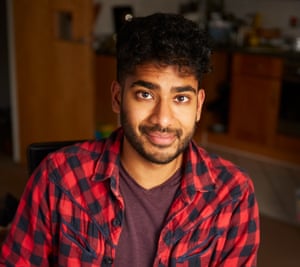
Confessions of a Junior Doctor review – Bake Off"s Tamal Ray gives his verdict

If you have a sense of deja vu while watching Channel 4’s new series Confessions of a Junior Doctor, it might be because you saw BBC3’s Junior Doctors: Your Life in Their Hands, which chronicled the highs and lows of doctors embarking on the start of their careers. That series coincided with my first year working as a doctor and – despite working all hours in a hospital – I couldn’t help but be glued to every episode. At first glance, things do feel familiar: shaky footage of doctors running through corridors, and haunting piano music overlaid with poignant monologues about suffering and death. There’s a brief introduction which looks like a medical version of Harry Potter, complete with nervous first years and kindly consultant, Dr Philip Pearson, in the role of Dumbledore. “It will be hard work. It will be stressful. But there will be plenty of good times,” he intones, with twinkly-eyed enthusiasm.


Junior doctor – and Bake Off star – Tamal Ray.


‘Today’s NHS seems predetermined to only allow staff to do a lacklustre job’… Junior doctor and Bake Off star Tamal Ray. Photograph: Christopher Thomond for the Guardian

But cut to footage of last year’s junior doctor strikes and it’s clear that the focus of this series will be more than the usual narrative of overcoming adversity. What brought a generation of doctors, the ones who should be the most bright-eyed and enthusiastic, to take such drastic action last year? Set not in a glitzy London teaching hospital, but in one of the many general hospitals that make up the backbone of the NHS, this is a series about the healthcare system’s struggles, seen through the eyes of its frontline staff.


Holly is the only true junior of the three doctors in this first episode. She funded her studies with a variety of jobs including stints as a healthcare assistant, a pub landlord and working in security; I wonder if she realises how useful the last two will be to her life as a doctor. We join her in the first few weeks of her fledgling career, where every prescription she writes comes bundled with the fear that she is going to kill someone. “I’ve heard that’s very difficult to do,” she tries to reassure herself. “Hopefully.”


Meanwhile, Emily’s dreams of becoming a palliative care specialist might seem a masochistic career choice. Why would you want to specialise in an area where every one of your patients will die? It is clear, though, that she understands how much of the practice of medicine doesn’t come from a textbook. If her patient dies suffering, the trauma it will cause the family will last the rest of their lives.


But it is Sam who has the most compelling story. One of his patients, Ryan, is a frequent visitor due to a undiagnosed illness that has caused him to be severely underweight. He is 29 but with his emaciated, four-stone frame he looks 15 years younger. What obscure disease will he turn out to have: a parasitic worm thought to have been eradicated 150 years ago? Radiation poisoning from the paperweight he bought at a car-boot sale? As this is real life, not an episode of House, the answer turns out to be as depressingly ordinary as it is heart-breaking. In a rare moment of quiet on the busy ward, Ryan takes Sam to one side and confides that he is terrified of going home because he knows he will start using cannabis again. It’s a potent appetite suppressant and he has been a heavy user for many years. Mystery solved: not some rare disease but a cycle of substance misuse and depression. What was needed to make the diagnosis was a doctor having the time to speak to his patient.


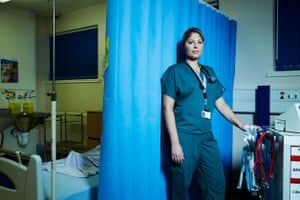
One of the stars of Confessions of a Junior Doctor.


One of the stars of Confessions of a Junior Doctor. Photograph: Jude Edginton/Channel 4

Time, or lack of it, is a recurring theme. It crops up when Emily stands her ground with her team, concerned that their hurried conversations are leaving the patients confused and resentful. When Holly informs her consultant that a patient has died, there is barely time for a heartbeat of recognition before the ward round continues. There are always more patients to see, more work to be done. “Emotion doesn’t come into it,” she says, like a soldier conscripted into a pointless war, despite her clearly empathetic nature. “If you’ve got the time to worry about how you feel then you’ve got more time on your hands than you thought.”


Sadly, today’s NHS seems predetermined to only allow staff to do a lacklustre job. Sam, it turns out, will be joining the one-third of junior doctors who have chosen to leave the NHS and not apply for further specialist training. “I want what anybody wants. I want to be able to do the job that I’m trained to do. I want to be respected,” he pauses, as it dawns on him that no job is worth his health. “I want to be happy.” Oh, Sam.


At the start of the programme, we are told that being a doctor requires courage, but if I were to choose a crucial skill that today’s doctors need it would be patience. Patience to work harder and longer hours for less pay. Patience to deal with a tabloid press obsessed with denigrating our every move. Patience to be ruled by a government whose only innovations are the myriad of ways they rebrand cuts. I worry, though, that our patience is running out.


Confessions of a Junior Doctor review – Bake Off"s Tamal Ray gives his verdict

21 Mart 2017 Salı

Jamal Edwards breaks taboos around men"s mental health – video

Suicide is the biggest killer of men under 45 in the UK. Jamal Edwards, founder of film-making company SBTV, asks why so many men are taking their own lives, and whether society’s stereotypes of masculinity have stopped men from seeking help with depression


Jamal Edwards breaks taboos around men"s mental health – video

16 Mart 2017 Perşembe

The Chokeables has saved babies" lives – here"s how we made it | St John Ambulance

So far, we know of 54 babies whose parents say wouldn’t be alive today if it wasn’t for The Chokeables, St John Ambulance’s first aid film teaching people how to save a choking baby in just 40 seconds.


We’re delighted our film has won charity film of the year, announced at Bafta on 15 March. So what’s the secret of its success?


Before making the film, we carried out research that revealed parents are the people most interested in first aid and what they worry about most is their baby choking. Over 40% of parents had seen it happen, 58% said it was a serious concern and yet 79% didn’t know what to do.


Our previous campaigns had been aimed at getting people to take first aid seriously but our audiences just weren’t taking the next step and learning it.


We realised we needed to teach directly – beam the advice into parents’ lives in a way they couldn’t ignore. And the tone needed to be spot on. Parents don’t want to be browbeaten and made to feel guilty. It’s hard enough being a parent. What we needed was an upbeat, engaging, shareable lesson.


Enter the geniuses at Bartle Bogle Hegarty. They realised that the lesson would come across best if taught by common household items that could potentially choke babies – the kind of things most parents would find under their sofas, like a toy or a pen lid. They crafted a script around the idea that these characters were so fed up with babies choking on them that they have decided to teach parents what to do.


We used animation to make the topic less scary, and pulled in the big guns with David Walliams and Johnny Vegas voicing the characters.


[embedded content]

This was all quite a feat considering the film needed to be 40 seconds long. Our tip with charity films is the shorter the better, to get as many people as possible watching to the end, but also to air it on TV in a cost-effective way.


I wanted a name for the campaign to help parents connect with the characters, and identify the campaign easily so it could trend on social media. Heaps of chocolate and one brainstorm later, The Chokeables was born.


When it came to sharing and promoting the film, we developed close relationships with key media to help create a buzz before we released the video. We focused in particular on those who could help us reach a high proportion of parents, such as ITV’s Good Morning Britain and Mumsnet, as well as nationals like MailOnline and the Mail on Sunday. Facebook was crucial as mums use it to share parenting tips, and we also worked with the mums who’d saved their babies so that even more parents could find out what to do.


Social media was key and we created a Thunderclap so people could mass share the video, flashmob style, as well as social media competitions to increase further engagement, such as a messy baby photo competition with first aid kit prizes. We also produced a whole suite of baby first aid advice videos to inspire further learning.


We entered The Chokeables into the inaugural Charity Film Awards, when entries opened in 2015. The awards have been set up to recognise the best videos created by or on behalf of UK charities, whether for raising awareness, changing attitudes and behaviours or fundraising.


Over 375 charities entered for the first round of public voting. More than 43,000 people voted and the resulting shortlist went to a panel of judges. They whittled it down to the finalists, including household names such as the RSPCA, Barnardo’s, the RNLI, Alzheimer’s Society and Great Ormond Street children’s hospital.


A second round of public voting for the people’s choice award has seen more than 66,000 people vote for the winner – the Soi Dog Foundation’s film about Cola the dog, who was given custom-made prosthetics after his front legs were amputated.


To win the overall award for film of the year for The Chokeables is just incredible. We’d put everything into this and hoped it would make an impact, but the success has knocked us sideways. Not only have we taught millions of people how to help a choking baby but it’s helped people feel that St John Ambulance is relevant to their lives.


The video continues to receive millions of views whenever it’s re-posted on social media. I love these stats but nothing beats getting a message from a mum who has saved their baby thanks to our video. There’s no greater reward than knowing we’ve reassured parents and helped all those babies.


  • Emma Sheppard is head of communications, St John Ambulance. The Chokeables won film of the year at the 2016 Charity Film Awards.

Talk to us on Twitter via @Gdnvoluntary and join our community for your free Guardian Voluntary Sector monthly newsletter, with analysis and opinion sent direct to you on the first Thursday of the month.


The Chokeables has saved babies" lives – here"s how we made it | St John Ambulance

2 Mart 2017 Perşembe

Inside Royal Brompton hospital"s paediatric unit – photo essay

The Royal Brompton in Chelsea is one of three hospitals in London with the facilities and staff to treat children with heart defects. An estimated 5,500 to 6,300 babies are born with congenital heart disease in the UK each year, all of whom require specialised care. Some will need many operations throughout their life.


On Friday, the Guardian will be live blogging from the Brompton, where congenital heart disease services are under threat of closure. Advocates of the change say concentrating services in fewer locations makes for better care; the hospital and its supporters say it is the best at what it does in the country. The Brompton treats children with heart and lung diseases aged from just days old to 16 years. It has a paediatric intensive care unit (PICU) for children after surgery with at least one dedicated nurse per child, the Rose ward for 30 inpatients, and four beds in a high-dependency care unit (HCU).


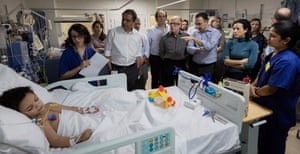
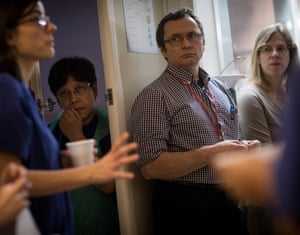
The morning ward-around


The morning ward-around Photograph: David Levene for the Guardian

  • Morning routines: the ward-around meeting, and breakfast on the fly for the nurses


The morning ward-around meeting


The morning ward-around meeting Photograph: David Levene for the Guardian


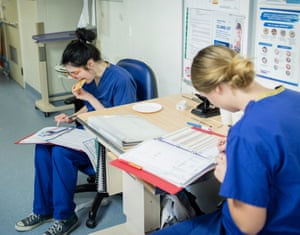
Nurses eat breakfast while doing paperwork


Nurses eat breakfast while doing paperwork at about 8am Photograph: David Levene for the Guardian

Doctors, consultants and nurses tour the paediatrics department in the morning ward-around. It is a crucial opportunity to discuss the various cases and what to expect for the day ahead.


Young patients


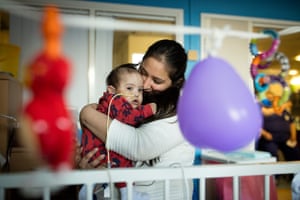
Kawaljit Kaur and her baby Ekam, inside Rose ward


Kawaljit Kaur and her baby Ekam, inside Rose ward Photograph: David Levene for the Guardian

Kawaljit Kaur spends all day, every day, at the bedside of her first and only child, Ekam, who is five months and 19 days old, she says, and was born with a hole in his heart. “I play with him. He holds my hand. We talk to each other and he gives me a smile,” she says. Ekam, sleeping flat on his back with his face hidden by tubes, flails his limbs in the air. “He is very lively,” says a nurse.


After work, Kaur’s husband joins her before they go home for the night. And in the morning she is back. “On Saturday and Sunday we are both sitting here, watching what he is doing,” she says.


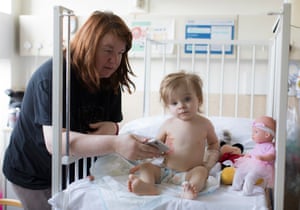
Autumn Russell with her mother Keri


Autumn Russell with her mother Keri Photograph: David Levene for the Guardian

  • Autumn Russell with her mother Keri

Fifteen-month-old Autumn Russell from Essex was transferred to the Brompton for specialist treatment for a case of empyema, a bacterial infection that develops in the slim space between the outside of the lungs and the inside of the chest cavity.


Time may pass slowly on the ward in the paediatric heart and lung unit, but for children like Ekam and their parents, the hospital becomes part of their life – a second home and a place of hope. Ekam’s veins are still too narrow for the heart operation he needs, so he has a succession of stents fitted – tubes inserted into blood vessels to increase the flow.


Marciee Barnes-Palmer


Marciee Barnes-Palmer, who has respiratory problems and a congenital heart defect Photograph: David Levene for the Guardian

Marciee Barnes-Palmer has respiratory problems as well as a congenital heart defect. She underwent a microlaryngoscopy and bronchoscopy procedure to look at her upper airways, and doctors will need to close the hole in her heart.


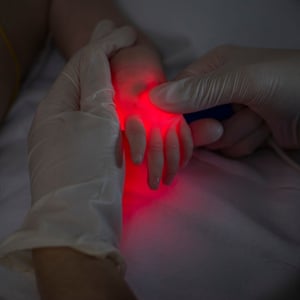
Dr Jana Kossaibati uses a torch to locate a vein in Marciee Barnes-Palmer’s hand


Dr Jana Kossaibati uses a torch to locate a vein for a cannula in Marciee Barnes-Palmer’s hand Photograph: David Levene for the Guardian


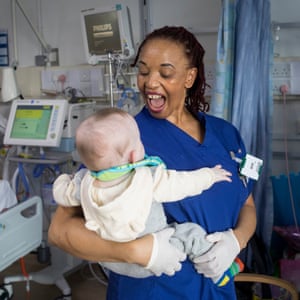
Paediatric nurse Patience Makuyana holds Marciee’s brother Freddie


Paediatric nurse Patience Makuyana holds Marciee’s brother Freddie Photograph: David Levene for the Guardian

  • Dr Jana Kossaibati uses a torch to locate a vein to insert a cannula in Marciee’s hand. Nurse Patience Makuyana holds Marciee’s brother Freddie


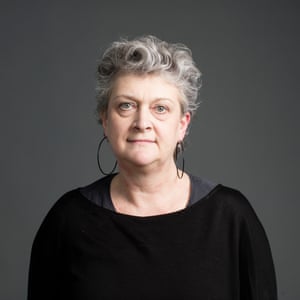
Consultant clinical psychologist Michele Puckey


Consultant clinical psychologist Michele Puckey supports the families, patients and their siblings Photograph: David Levene for the Guardian

Consultant clinical psychologist Michele Puckey supports the families, patients older than about three, and their siblings. “Brothers and sisters have to be reassured that they have not caused it,” she says. “And the child in hospital must not be treated like a princess – or they will not fit in at school when they get back to real life.”


Between four and seven they have this extreme feeling of being in control of everything around them. Children feel responsible for parents arguing and separation
Michele Puckey


Staff need support too and Puckey herself is not immune. “I remember once a boy going down to theatre in the same pyjamas as my son and I just caught my breath.”


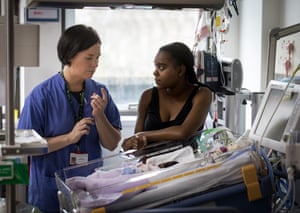
Ellarna and mother Rachel speaking with Dr Cathy O’Donoghue, anaesthetic and critical care consultant


Mother Rachel speaking with Dr Cathy O’Donoghue Photograph: David Levene for the Guardian

  • Rachel, the mother of Ellarna, speaking with Dr Cathy O’Donoghue

Ellarna is 32 weeks old and has had a catheter procedure today to close a hole in her aorta. Anaesthetic and critical care consultant Cathy O’Donoghue visits to discuss the operation.


Ellarna recovering from her operation


Ellarna recovering from her operation Photograph: David Levene for the Guardian


Ellarna


Ellarna Photograph: David Levene for the Guardian

For premature babies, the Brompton is the only centre in the UK using this method as an alternative to surgery.


Teenage patients


Sarah Bartram with daughter Ellie Bartram


Sarah Bartram with daughter Ellie Bartram Photograph: David Levene for the Guardian

Ellie Bartram, 16, has been coming to the Brompton since she was diagnosed at four months old with cystic fibrosis, a lifelong condition that clogs up the lungs with mucus. She is admitted for two weeks every three months for an intravenous course of antibiotics.


Ellie Bartram in her school class in the paediatric ward


Ellie Bartram in her school class in the paediatric ward Photograph: David Levene for the Guardian


Ellie Bartram


Ellie Bartram Photograph: David Levene for the Guardian

  • Ellie Bartram in her school class in the paediatric ward, and undergoing lung treatment

There is a schoolroom on the ward, where Ellie has lessons. The teaching is good – she and her mum Sarah credit a tutor at the Brompton for getting Ellie through her French GCSE with a C grade.


I can’t run around. I can’t go out much or go out with friends often. But my friends come and buy me McDonald’s because it’s my favourite thing
Ellie Bartram


In her solitary room, where visitors must wear aprons and gloves for fear of giving her an infection, she talks to her friends via FaceTime. “I’m used to it,” she says. She doesn’t like being different, but she is matter of fact about life at home in Romford, Essex.


Riley Jenkins, 13, grimaces in pain


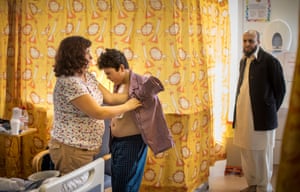
Riley Jenkins, 13, grimaces in pain as his mother helps him put on a shirt Photograph: David Levene for the Guardian

  • Riley Jenkins , 13, grimaces in pain as his mother helps him put on a shirt. Riley had cardiac surgery three days ago

Riley Jenkins, 13, is feeling very sick. He can’t eat the meatballs for lunch. His mother Sally rubs his back to try to make him feel better. It is the after-effects of the anaesthetic and the operation to replace a calcified heart valve that was inserted in his chest when he was just seven months old. “He’s been coming for a checkup once a year since he was a day old,” says his mother, Sally.
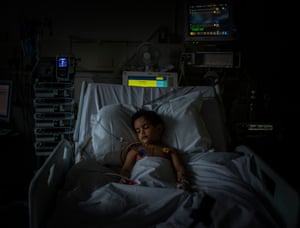

Riley was born with a back-to-front heart. “He loves Scouts and being on his computer but he’s been too tired to do a lot of running about. He used to love climbing trees. We’re hoping for more tree-climbing now,” Sally says.


Ben Eccleston-Barnes, from Devon, is visited by volunteer music therapist Brian in Rose ward


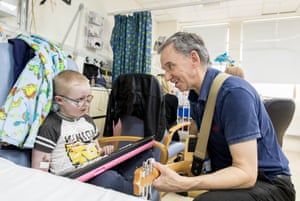
Luke Eccleston-Barnes, from Devon, is visited by volunteer music therapist Brian in Rose ward Photograph: David Levene for the Guardian

  • Luke with volunteer music therapist Brian

Luke Eccleston-Barnes, nine, has a needle phobia, perhaps because of the huge number of injections and blood tests he has endured in his life so far. But he is calm now – music therapist Brian Spears has arrived with his guitar to distract him while more blood was taken. He is playing softly to Luke, who tries to accompany him on an electronic keyboard Spears has brought along.


The nurses


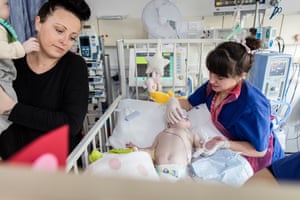
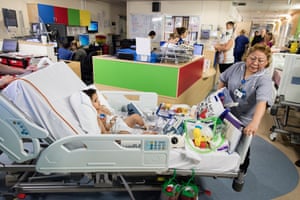
Nurse Angeline Guzha, right, and Dr Jana Kossaibati, centre, help a young girl called Sanaya


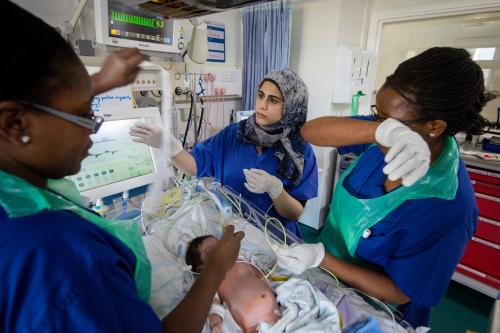
Paediatric nurse Angeline Guzha, right, and Dr Jana Kossaibati, centre, help a young girl called Sanaya in the paediatric intensive care unit Photograph: David Levene for the Guardian

Paediatric nurse Angeline Guzha and Dr Jana Kossaibati help a young girl called Sanaya in the paediatric intensive care unit.


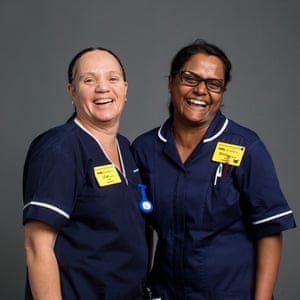
Lilian Leite and Nimla Pentayya are two of the three sisters managing Rose ward, where they have both been for six years. Leite is from South Africa and Pentayya from Mauritius. “We wanted to travel and we stayed – we are getting job satisfaction here,” Pentayya says with a grin. Both always wanted to work with children.


We know that parents are upset and the young nurses are upset but we have to be strong, the three of us will support each other
Lilian Leite


Lilian Leite and Nimla Pentayya


Lilian Leite and Nimla Pentayya are two of the three sisters managing Rose ward Photograph: David Levene for the Guardian

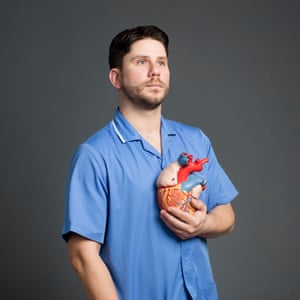
Dan Fossey is a practice educator, a nurse who trains other nurses. He also teaches parents basic life-support techniques in case they need them at home. Often parents are anxious and worry their child is too fragile. “Especially when they have had cardiac surgery they have questions about the scar and can you still do compressions,” he says. He teaches them to overcome their fears if a child has something stuck in his throat.


The last thing a parent wants to do is strike the child on the back
Dan Fossey


Practice educator Dan Fossey


Practice educator Dan Fossey Photograph: David Levene for the Guardian

Fossey runs a graduate programme for newly qualified nurses, to teach them about caring for children with heart defects. “I came here as a brand new nurse 10 years ago. I know what it’s like to come out of university and be looking after children with quite complex conditions,” he says.


Surgery


Surgery under way on a young patient


Surgery under way on a young patient Photograph: David Levene for the Guardian

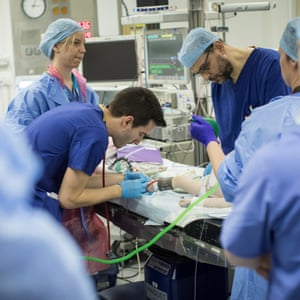
Abdula is being wheeled along a corridor to the operating theatre by robed staff, his mother trailing slightly – out of place and desperately anxious. By far the majority of the complex operations for congenital heart conditions carried out here are a success. Inevitably, sometimes they are not. In some cases, where there is a risk but the baby will die without an operation, surgeons as well as families have to be brave.


Patient Abdula Allanoud on his way to his third heart operation


Patient Abdula Allanoud on his way to his third heart operation Photograph: David Levene for the Guardian

  • Abdula Allanoud, four, on his way to his third heart operation

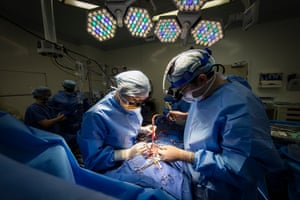
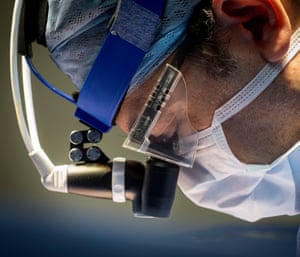
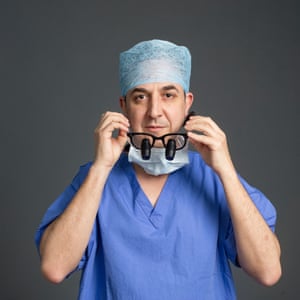
Consultant paediatric heart surgeon Olivier Ghez specialises in neonates – the tiniest babies, less than a month old, with a heart the size of a nut. He operates wearing binocular-style glasses that enlarge the miniature veins he has to stitch.


I have relatively small hands but it is the instruments, not the fingers
Olivier Ghez


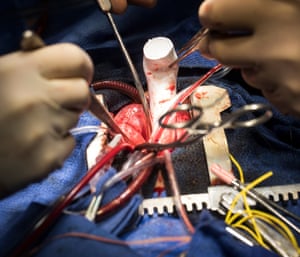
A four-hour surgical procedure conducted by Olivier Ghez


A four-hour surgical procedure to treat Abdula, conducted by Olivier Ghez Photograph: David Levene for the Guardian

  • Abdula is undergoing a four-hour Fontan procedure to correct a complex heart malformation, conducted by Ghez


Olivier Ghez


Olivier Ghez Photograph: David Levene for the Guardian


Olivier Ghez at work during an operation


Olivier Ghez at work during an operation Photograph: David Levene for the Guardian

Ghez’s job is exhausting – an operation can last three to five hours and a complex transplant could take 24 hours. But it is challenging and rewarding, he says. Sometimes he saves babies’ lives. Other times he gives them “the best possible future” with their heart condition. He can never be sure how it will go.


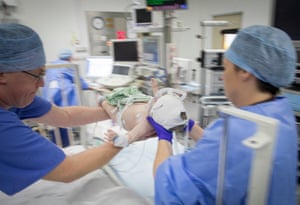
A 14-month-old girl, diagnosed after birth with a hole between the two chambers of the heart, comes into theatre for a relatively routine procedure and suffers a cardiac arrest. Suddenly the theatre is flooded with people, calm but purposeful, and the team restarts her heart.


A 14-month-old girl undergoes a procedure


A 14-month-old girl undergoes a procedure Photograph: David Levene for the Guardian

  • The girl arrested for four minutes during the procedure and was eventually revived by the team after a doctor performed CPR


A young girl goes into arrest during a surgical procedure.


A young girl goes into arrest during a surgical procedure. Photograph: David Levene for the Guardian


CPR is performed on the 14-month-old girl


CPR is performed on the 14-month-old girl Photograph: David Levene for the Guardian

When a child dies, says Ghez, “it is terrible, terrible – very sad and discouraging sometimes”. It may be a child who has had several successful previous operations at the Brompton. “When the baby dies after all this, it is really difficult,” he says. He worries about the accusations that can fly in the media over child deaths during or after surgery.


There is a danger of producing defensive medicine. That is a really perverse effect of the scrutiny. You can’t treat risky patients and have perfect results
Olivier Ghez


Consultant paediatric heart surgeon Olivier Ghez specialises in neonates, the tiniest babies


Consultant paediatric heart surgeon Olivier Ghez specialises in neonates, the tiniest babies Photograph: David Levene for the Guardian

Deaths are rare at the Brompton, but everyone is aware of the risks to the lives of these vulnerable children.


The support staff


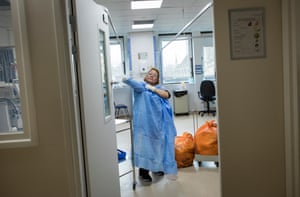
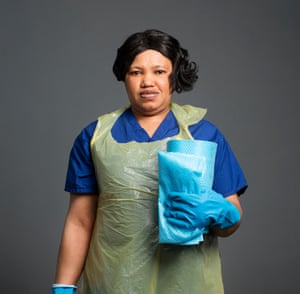
A cleaner prepares to clear and disinfect a bay


A cleaner prepares to clear and disinfect a bay where an infection was recently present Photograph: David Levene for the Guardian

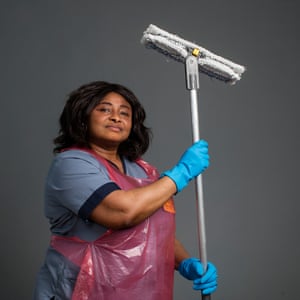
A cleaner prepares to clear and disinfect a bay where an infection was recently present. Everybody is supportive. Theresa Dzade, one of the cleaning staff, says she likes the children and the parents.


It is not easy for someone to leave their house and come here with a small baby. They are sometimes sad because their baby is ill. They talk to me all the time. I tell them I am here to help – anything they want
Theresa Dzade


Theresa Dzade, one of the cleaning staff


Theresa Dzade, one of the cleaning staff Photograph: David Levene for the Guardian

Her friend Sidratu Kargbo feels the same.
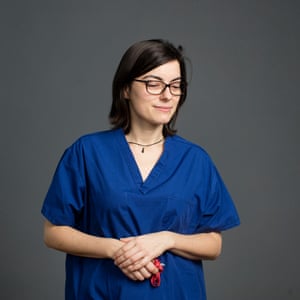


We have to do a good job to make them happy
Sidratu Kargbo


Cleaner Sidratu Kargbo


Cleaner Sidratu Kargbo Photograph: David Levene for the Guardian

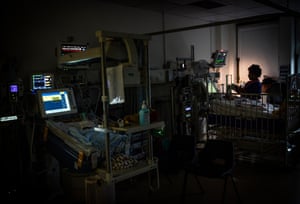
Night falls
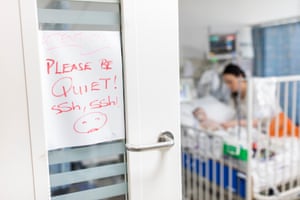


Night falls in the paediatrics department at the Brompton


Night falls in the paediatrics department at the Brompton Photograph: David Levene for the Guardian

Nursing and other medical staff work through the night as many patients require round-the-clock care. Parents usually leave the ward at night as they are encouraged by staff to rest.


Sandra Gala-Peralta, a PICU consultant, says: “If they don’t have a good rest, especially the mother, the following day they are exhausted. And if they are exhausted they don’t take the information in the same way. If something happens they are extremely fragile. So that is why we encourage them to go to sleep and have a good rest. If they don’t want to then we just let them be in the bed space. Especially if they are teenagers or children, five years old, then they have enough understanding to be be very afraid, so we let the parent in..”


Abdula Allanoud recovers after his operation


Abdula Allanoud recovers after his operation Photograph: David Levene for the Guardian

  • Abdula Allanoud recovers in intensive care after his heart operation

Gala-Peralta adds: “The evening tends to be a bit calmer. But everything depends on how the patients are. If the activity is high, the consultant stays around until … well, this is a personal choice. I’m more OCD, I like to make sure that if I go for a rest everything is in order and that I’m not going to have surprises in the night. We have an on-call room in one of the upstairs floors. I have been called in the middle of the night because a child has had a cardiac arrest. I was so stressed when they called me that I went down barefoot! I was doing cardiac massage in my socks! Now I’m more careful.”


I like to work on nights – it gives a lot of space to the doctor and nurses to focus on the patient, and because the night shifts tend to be a bit longer there is enough time to see how a patient can deteriorate, or improve during that time
Sandra Gala-Peralta


PICU consultant Sandra Gala-Peralta


PICU consultant Sandra Gala-Peralta, photographed at 8am at the end of a 24-hour shift Photograph: David Levene for the Guardian

  • Gala-Peralta photographed at 8am at the end of a 24-hour shift

“There are nights when we sleep one hour … and there are nights when we are able to sleep four or five hours. At least we can put our head down and we can have a bit of rest every night. And then in the morning at 7.30 we need to be sharp, back on the unit,” says Gala-Peralta.


A sign in the paediatrics department


A sign in the paediatrics department Photograph: David Levene for the Guardian


Inside Royal Brompton hospital"s paediatric unit – photo essay