Obesity etiketine sahip kayıtlar gösteriliyor. Tüm kayıtları göster

10 Mayıs 2017 Çarşamba

Gluten-free diet carries increased obesity risk, warn experts

Substituting everyday staples with gluten-free foods could increase the risk of obesity, experts have warned, after finding that such products often contain higher levels of fats than the food they aim to replace.


A gluten-free diet is essential to those with coeliac disease – an auto-immune condition that is thought to affect 1% of Europeans – while the regime is also proving increasingly popular among those without the disease. But while a host of gluten-free products are on the market, researchers have said they have a very different nutritional make-up to conventional staples.


“There is very little [consumers] can do about it,” said Joaquim Calvo Lerma of the Instituto de Investigación Sanitaria La Fe in Spain and co-author of the research. “Unfortunately consumers can [only] eat what is available on the market.”


Calvo Lerma’s warning comes after he and his and colleagues compared 655 conventional food products to 654 gluten-free alternatives across 14 food groups including breads, pasta, breakfast cereals, biscuits and even ready meals, covering a range of brands.


The results – presented at the annual meeting of the European Society for Paediatric Gastroenterology, Hepatology and Nutrition – reveal that, overall, gluten-free products were more energy-dense than their conventional counterparts.


The team found that, on average, gluten-free bread loaves had more than twice the fat of conventional loaves, while gluten-free breads in general had two to three times less protein than conventional products. Gluten-free biscuits were also found to be lower in protein but higher in fat, while gluten-free pasta had lower levels of sugar and just half of the protein of standard pasta.


Calvo Lerma warned that gluten-free foods could be contributing to an increased risk of obesity, particularly among children who are more likely to eat products like biscuits and breakfast cereals. He urged consumers to compare gluten-free products across brands to find those with the lowest fat content.


Calvo Lerma also called on manufacturers to innovate. “It is the responsibility of the food industry to produce these type of gluten-free products from other materials that are much healthier or have a [more] enhanced nutritional profile than the current raw materials being used, like cornflour or potato starch,” he said, pointing out that healthier products could be made, for example, using grains such as buckwheat or amaranth.


He added that manufacturers should also add more complete and clearer labels to products to highlight their nutritional content, including levels of vitamins and minerals.


Benjamin Lebwohl, from the coeliac disease centre at Columbia University, who was not involved in the research, said that the study backs up previous evidence that gluten-free foods are nutritionally suboptimal. But while a gluten-free diet is essential for coeliacs, it is not intrinsically healthy or unhealthy, he added. “It depends on the choices you make as part of the gluten-free diet,” he said.


Sarah Sleet, chief executive of Coeliac UK, said the latest findings tie in with the charity’s own research, adding that further development of lower-fat, gluten-free products would be welcomed.


David Sanders, professor of gastroenterology at the University of Sheffield, noted that other studies have found gluten-free and conventional foods to have similar nutritional value. “The jury is out,” he said.


But Sanders cautioned that there is no evidence a gluten-free diet has benefits for those without gluten sensitivity or coeliac disease. “Once you go into the territory of dietary restrictions without medical symptoms then you are running the gauntlet of missing out on various vitamins or minerals without realising it,” he said.


Gluten-free diet carries increased obesity risk, warn experts

25 Nisan 2017 Salı

Obesity epidemic in Latin America is "frightening", says UN report

More than two thirds of people living in Mexico, Chile and Ecuador are overweight or obese, costing their economies tens of billions of dollars every year, driving rates of disease and straining health services, according to a new UN report.


While the number of hungry people in Latin America and the Caribbean has halved in the last 25 years, the region is now struggling to combat an obesity epidemic.


Changing diets, including more processed food that are high in salt, sugar and fat, along with more sedentary lifestyles have triggered a rising tide of obesity, experts say.


“The implications for the future of countries are frightening … undernutrition is declining, but overnutrition is expected to become the largest social and economic burden in the region,” the UN World Food Programme (WFP) said in a statement.


The report by the WFP and the UN’s Economic Commission for Latin America and the Caribbean (ECLAC), said over the next six decades people being overweight and obese would cost Mexico an estimated $ 13bn a year, Ecuador $ 3bn and Chile $ 1bn.


Undernutrition, when people do not get enough food, and obesity – itself a form of malnutrition – are two sides of the same coin, and together they inflict a so-called “double burden” of disease on people and economies, the report said.


Undernutrition impairs child growth and brain development, while obesity can led to type 2 diabetes, cancer and heart disease.


“We now witness a worrying trend among vulnerable communities with cases of undernourishment and overweight simultaneously within the same families,” said Miguel Barreto, WFP’s regional director said in a statement.


“Both undernourishment and overweight represent a serious burden for the health of those families, that eventually translates into losses in productivity, and in pressure on the health and education systems in the country where they live.”


According to the World Health Organisation, obesity is an epidemic worldwide, killing 2.8 million adults every year, and obesity-related conditions now cause more deaths than hunger.


In Latin America, obesity is increasingly affecting the region’s poor, particularly women.


In Mexico, a country that faces one of the world’s most acute obesity crisis, 74% of women are obese or overweight compared with 70% of men, the report said.


The report urged food companies to play a greater role in combating obesity.


“The food industry has the opportunity to ensure the production, availability and accessibility of healthier food products,” it said.


Governments should also do more to promote exercise and health eating and place greater controls on food labelling.


The report noted Chile’s efforts to combat obesity, including an 18% tax on sugary drinks introduced in 2014 – one of the world’s highest – along with laws that restrict the advertising of unhealthy foods targeting children.


In 2014, Mexico also introduced a 10% tax on fizzy drinks, and 2016 research by the British Medical Journal found that the sugar tax led to as much as a 12% reduction in sales during the first year it was implemented.


Obesity epidemic in Latin America is "frightening", says UN report

23 Nisan 2017 Pazar

Obesity blamed for sharp rise in kidney cancer in UK

Obesity is to blame for a surge in kidney cancer in the UK, causing an extra 20,000 cases in the last 10 years, according to a leading charity.


Cancer Research UK says that new cases of kidney cancer have risen steeply, by 40% over the past decade.


Obesity and being overweight are implicated in about a quarter of kidney cancers, with smoking linked to another quarter, but while the numbers of people smoking has dropped, obesity continues to rise. The charity’s projections show kidney cancer cases climbing by a further 26% by 2035, which would make it one of the fastest growing types of cancer.


Kidney cancer kills half of those who develop it within 10 years. It is rare in people under the age of 50 and can be halted if caught early – usually by surgery to remove all or part of a kidney. It is often not picked up in time, however, because there may be no obvious symptoms early on.


There are about 11,900 cases of kidney cancer in the UK each year, 7,400 in men and 4,500 in women. About 4,300 people die from the disease each year.


Campaigners are concerned that few people realise obesity is a major factor in developing many types of cancer, including stomach, pancreatic and breast cancer.


“It’s concerning to see kidney cancer cases rising like this. Being overweight or obese is linked to 13 types of cancer, including kidney which is becoming more and more common,” said Dr Julie Sharp of Cancer Research UK.


“Similar to smoking, where damage to cells builds up over time and increases the risk of cancer, damage from carrying excess weight accumulates over a person’s lifetime.”


The symptoms of kidney cancer – when there are any – include blood in urine, a persistent pain below the ribs in the lower back or side, and a lump or swelling in the side. Kidney cancer is sometimes picked up during urine tests carried out for other reasons.


Sarah Toule of the World Cancer Research Fund said that maintaining a healthy weight was extremely important. “In fact, if everyone was a healthy weight, around 25,000 cancer cases could be prevented every year in the UK,” she said.


”There are simple ways people can help maintain a healthy weight, such as cutting out high-calorie food and drinks and doing at least 30 minutes of exercise every day.


“The government also plays a vital role in ensuring strong measures are in place to help the healthy choice be the easy choice. These include restricting junk food marketing to children and reducing the amount of sugar found in everyday products.”


Adam Freeman, a 46-year-old lawyer and father of four from south London, was diagnosed with kidney cancer in 2013. He had surgery to remove a kidney and is now cancer-free.


“When it comes to my lifestyle, I would say that the little devil on my one shoulder won over the angel on my other, so I ducked exercise and ate badly a bit too often.


“Now, since my diagnosis, I try to listen to the angel rather than the devil on my shoulder. I have tried to make things more habitual and rarely skip exercise or make bad food or drink choices. I regularly cycle to work to try and keep fit, and I have also started doing yoga.


“Of course it’s challenging to maintain a healthy lifestyle when you are juggling a career and family. I am only human. I’m a husband and father to our four children and my career can be demanding.


“But that’s why things have to be a habit so it becomes part of your daily life. We talk much more as a family about healthy choices, particularly trying to make the children aware of how much sugar is in drinks and breakfast cereals. We try and reduce the amount of temptations in the house.”


Obesity blamed for sharp rise in kidney cancer in UK

14 Nisan 2017 Cuma

Amsterdam"s solution to the obesity crisis: no fruit juice and enough sleep

[unable to retrieve full-text content]


The city is successfully fighting fat by promoting tap water in its schools, along with healthy cooking classes and a ban on fast food sponsorship


The city of Amsterdam is leading the world in ending the obesity epidemic, thanks to a radical and wide-reaching programme which is getting results even among the poorest communities that are hardest to reach.


Better known for tulips and bicycles, Amsterdam has the highest rate of obesity in the Netherlands, with a fifth of its children overweight and at risk of future health problems.


Related: For children’s health, the government has to treat sugar like cigarettes | Gary Taubes


Continue reading…


Amsterdam"s solution to the obesity crisis: no fruit juice and enough sleep

29 Mart 2017 Çarşamba

Chocolate bars may shrink in drive to tackle obesity

Chocolate bars and sweets are likely to get smaller as a result of a major push from Public Health England, which is urging the food industry to help fight obesity by cutting 20% of sugar from the main snacks and foods that children eat.


After talks with the confectionery industry, which has said removing sugar and keeping the taste would be hard, PHE is recommending they make the change by shrinking the size of the sweets and chocolate bars they sell.


PHE says changes to nine food groups could lead to 200,000 tons of sugar being taken out of snacks and meals yearly by 2020 and cut the number of overweight children by 20%. The targets are biscuits, breakfast cereals, cakes and pastries, chocolate, confectionery, ice cream, puddings, sweet spreads and yoghurts.


But the agreement is voluntary and some obesity campaigners warn that food manufacturers and restaurants may drag their feet unless there is a way to force their compliance.


“We’ve seen over recent weeks that some companies within the food and drink industry have made great progress whilst others are seriously lagging behind and others claiming wrongly that they can’t do it,” said Graham MacGregor, a professor of cardiovascular medicine and chairman of the campaigning group Action on Sugar.


“If these recalcitrant companies don’t comply we need Theresa May to bring in tough measures to ensure compliance and put public health first before the profits of the food industry.”


The 20% cut in sugar from foods, along with the sugar levy on soft drinks, were the two measures recommended by PHE and accepted by the government for inclusion in the national obesity plan published last summer. The government has since been criticised for rejecting other measures PHE recommended on more curbs on advertising to children and an end to multi-buy and discounted promotions of junk food in supermarkets such as buy one, get one free.


Duncan Selbie, chief executive of PHE, said they had never advised government that the sugar cuts should be compulsory. “We didn’t want to spend the next two or three years arguing whether a Jaffa Cake was a biscuit in judicial review,” he said.


Manufacturers and retailers had responded well to the proposed voluntary measures. “With a few exceptions, they have engaged very positively in this,” he said. “In the event that we don’t see progress we will be giving advice to the government about what further they might need to do.” He would not comment on what that might be, however.


Alison Tedstone, chief nutritionist, said PHE would be publishing a “barometer” of the top 20 products children consume, showing whether the sugar levels were coming down. “Parents will be able to see,” she said. “We will put it straight into the public domain.”


But while the PHE targets and transparency were widely welcomed, critics questioned whether the food industry and retailers and restaurants would comply.


“If we’re serious about changing the nation’s sweet tooth, industry as a whole needs to commit to the government’s very welcome 20% target and take collective responsibility for change,” said Professor Russell Viner of the Royal College of Paediatrics and Child Health. “The noises coming from certain companies remain a concern, with some hoping that a 10% reduction in sugar will somehow get them off the hook of the proposed 20%. The government must keep a close eye on how industry is acting and be tough on those who claim lower targets should be deemed a success.”


Alison Cox of Cancer Research UK said: “It’s clear that obesity has a major impact on cancer risk. Without action, the problem is only going to get worse, so it’s vital this new programme works towards the goal of slashing the amount of sugar hidden in our food.”


The British Retail Consortium is concerned that removing sugar will be technically difficult and that some food companies will comply but others may opt out. “Significant progress has already been made but the complexity of the reformulation process gives us concern about the time scales. Furthermore, to achieve the objective as outlined by PHE, these targets need to create a level playing field for every food company, large or small, to commit to and address,” said Andrea Martinez-Inchausti, deputy director of food policy.


The Food and Drink Federation said it supported the PHE plan. “Today’s report represents a constructive platform on which to build a world-leading programme of voluntary sugars reduction, right across food and drink,” said the director general, Ian Wright. “All parts of the food industry – manufacturers, retailers, takeaways, restaurants and cafés – need to step up. The guidelines are very stretching but manufacturers, for our part, are willing to take on the challenge.”


PHE has warned that saturated fat should not be substituted for sugar. It will be extending the work to produce targets and guidelines for cutting calories generally from food. Next year, after a report that is anticipated from the government’s standing advisory committee on nutrition, it may turn its attention to reducing saturated fat in foods.


Chocolate bars may shrink in drive to tackle obesity

26 Mart 2017 Pazar

Government plan on childhood obesity very disappointing, say MPs

Tough new measures to tackle childhood obesity – including a restriction on supermarkets offering “deep discounts” on unhealthy foods – must be introduced, according to a committee of MPs.


The Commons health select committee said it was “extremely disappointed” with the government’s current plans to fight obesity, and said ministers had ignored proposals from experts and had failed to go far enough.


In a report published on Monday, there was specific criticism of there being “no mention of price promotions” despite experts recommending there should be controls on supermarkets discounting unhealthy food and drinks aimed at children.


“We are extremely disappointed that the government has rejected a number of our recommendations,” said Dr Sarah Wollaston, the Conservative MP who chairs the committee.


“These omissions mean that the current plan misses important opportunities to tackle childhood obesity.


“Vague statements about seeing how the current plan turns out are inadequate to the seriousness and urgency of this major public health challenge.


“The government must set clear goals for reducing overall levels of childhood obesity as well as goals for reducing the unacceptable and widening levels of inequality.”


The attack on the government’s plan from the influential committee was supported by a number of health bodies, which also condemned the plan as inadequate – in spite of their support for its flagship measure, the sugary drinks tax.


Prof Russell Viner of the Royal College of Paediatrics and Child Health said: “The fight against obesity is going to be long and hard – and the health committee is right: without action across a number of areas, any impact of individual policies will be minimal.”


The British Retail Consortium had told the committee that regulation was needed to ensure that all supermarkets and other shops stop promotions of high-fat and high-sugar foods, but the government ignored that recommendation. Public Health England, the government’s advisory body, also supported it.


“We are extremely disappointed that the government has not regulated to provide the ‘level playing field’ on discounting and price promotions which industry representatives themselves have told us is necessary for the greatest progress,” said the committee’s report.


The Committee of Advertising Practice, a sister organisation of the Advertising Standards Authority, has announced new restrictions on advertisements for high-fat and high-sugar foods on non-broadcast media – such as on smartphones – but the select committee said that was not enough.


“We urge a re-examination of the case for further restrictions on advertising of high fat, salt and sugar food and drink in the light of the most recent research not only on the effect of such advertising, but on the scale and consequences of childhood obesity,” said the report.


The Royal College of Paediatrics and Child Health backed the conclusions.


“We’ve said time and again that it was an error for government to exclude TV junk food advertising restrictions in their obesity plan,” said Viner.


“We know these adverts have an effect on the type of food children consume, and experts from across the health sector, parents and the health select committee agree that a ban prior to the 9pm watershed is vital to help tackle the obesity crisis.”


MPs applauded the announcement of a tax on sugary drinks, but called on the government to monitor whether drinks companies pass on the tax in the form of higher prices and whether they also raise the prices of their unsweetened drinks, such as water, as well. They also call for sweetened milk drinks to be included – at the moment they are exempt.


The Obesity Health Alliance, a coalition of more than 40 health charities, campaign groups and royal medical colleges, said: “It’s reassuring to see the committee reiterate the importance of tackling childhood obesity, which has reached a devastating high. We agree that a range of actions are needed to protect our children’s health.


“Current loopholes in junk food marketing restrictions leave children exposed to unhealthy food and drinks during the programmes they watch the most; so we especially welcome the committee’s recommendations to extend these restrictions to include primetime TV shows.


“We look forward to seeing the government adopt further measures to help fight the obesity crisis.”


Government plan on childhood obesity very disappointing, say MPs

26 Şubat 2017 Pazar

Doctors don’t have to sugar the obesity pill | Barbara Ellen

A lot gets said about how it feels to be overweight, but what is the psychology of having to tell someone that they’re fat if you’re a health professional? Does it feel rude, abrasive, maybe even counter-productive to do so? But perhaps neglectful and harmful not to? A survey of 1,141 GPs by Pulse magazine found that almost one third (32%) of them said that patients became offended and resentful when their excess weight was pointed out.


Of course, there are GPs who feel that “political correctness” has no place in medicine and patients should just be told the truth, however it goes down. But for other GPs, the issue is more complicated. Some wonder whether they should bring the topic up at all, even when the problem is something like knee pain, which could be exacerbated by weight. They feel that to do so would only upset the patient and have a negative impact on their ongoing relationship.


Others believe that some patients are avoiding GPs because they don’t wish to feel pressured about their weight – although the patient is frequently more upset about being overweight than by the discussion.


At this point, some might say, what’s the problem? Britain has an obesity epidemic, and if weight contributes to an individual’s health problems, it should be part of the health advice. At the moment, the NHS approach is to offer all obese patients free places in slimming clubs, and when patients are being spoken to about their weight, there are guidelines suggesting that “the tone and content of all communications is respectful and non-judgmental”. Certainly, there are compelling arguments for telling patients that they’re obese – such as helping them to avoid unnecessary medical interventions.


This last one clinched it for me – a few seconds of tension is surely better than the patient undergoing unnecessary treatment. However, like many of these more sensitive GPs, I’m loath to go along with any narrative that tries to caricature overweight people as thin-skinned children throwing tantrums.


Weight isn’t just physiological, it’s emotional. Someone talking to you about it, while probably not a revelation, would still be painful. Moreover, in Britain today, it’s improbable that any fat person is getting away with living in denial.


Only this week, there was a case where a woman wearing heels fell down nightclub steps, and the judge ruled that she had no case because she was drunk and obese. Fair enough about the alcohol, but what did the woman’s weight have to do with anything? Heels or not, if excess pounds made people fall over more readily, then western civilisation would be full of images of overweight citizens rolling about on pavements like upturned human beetles.


Nor is this behaviour confined to courtrooms – increasingly, casual fat-shaming has become normalised. Which perhaps sheds light on why some GPs instinctively feel that they need to be cautious. Far from the patient being oblivious about their weight, they’re living in a world which, one way or another, never stops pointing it out. Instead of having too little insight into their weight problem, they’re likely to have become over-sensitised.


For these people, a GP surgery may feel like a sanctuary compared to the outside world, so to have their weight mentioned there may be momentarily jarring. Framed this way, the fact that two thirds of GPs aren’t encountering offended patients is a pretty good result. However, that still leaves the farcical situation where obese people are constantly told about their weight by everyone apart from the only people who need to mention it – namely health professionals. While something has gone very wrong here, the blame doesn’t lie with sensitive GPs.


Farage made a demon of himself


Do you want to drink in a pub with this man?


Do you want to drink in a pub with this man? Photograph: Oli Scarff/AFP/Getty Images

Former Ukip leader Nigel Farage is upset because he feels that he’s been “demonised” by the British media, to the point where he’s living like a “virtual prisoner” and is “frightened” to leave the house. Does this explain why Farage has been taking so many hols in America recently – at that well-known international leisure destination, Camp Trump?


As for Farage being “demonised” by the British media, could you excuse me a moment while I go hunting on the internet for the world’s tiniest violin? Nope, sorry, it’s going to have to be tinier than that.


I suppose that some could make a compelling argument for Farage being demonised. However, it doesn’t end there. Farage has also been promoted and feted, far beyond the size and political standing Ukip ever merited. Along the way, he was also reinvented, as a voice-of-the-people folk hero – an entertaining turn, someone you could “have a pint at the pub with”. To which, all I can say is: in all my years of going to pubs, I’ve never been that thirsty.


Which, of course, is just my personal opinion of a man who has always reminded me strongly of a malevolent sock puppet, conjured into life by some demented anti-EU Geppetto, and dressed as though permanently in lickspittle-hope of being invited to a grouse shoot at a grand house in 1953. But I digress.


The point is that, like Boris Johnson before him, Farage has enjoyed quite the “amusing British character” makeover – one which he continues to struggle to deserve in this tumultuous post-Brexit climate.


Indeed, while Farage might claim that he has been demonised, others might say that he and his views have been over-publicised, not to mention assimilated and normalised, to an absurd and dangerous degree.


We should call an amnesty on this shameful chapter


Britain’s smallest library, run by the Brockley Society in London.


Britain’s smallest library, run by the Brockley Society in London. Photograph: Facundo Arrizabalaga/EPA

A startling 25 million British library books are estimated to be overdue. At the close of 2016, libraries had around 50 million books, which was 25 million fewer than they had in 1996. It has only now been discovered because cuts mean that there aren’t enough librarians to carry out proper stocktaking.


That’s an awful lot of unreturned Terry Pratchett and Hilary Mantel. If Britain continues to lose books at this rate, by the end of the century all that will be left is a Ruth Rendell with the last chapter missing and a DVD of In The Night Garden.


Perhaps even as I write this, some people are staring shamefacedly at bookshelves holding tomes encased in incriminating plastic book coversdust jackets, thinking: “Why didn’t I take that Dan Brown book back? And why did I take it out in the first place?”


But enough of recriminations. This national unreturned library book conundrum seems to resurface periodically. Clearly, people are frightened about incurring gigantic fines. Surely there could be a designated period of library-amnesty for returning overdue books? For a limited period only, no penalty at all … unless you’re returning the Dan Browns?


Comments will be opened later


Doctors don’t have to sugar the obesity pill | Barbara Ellen

3 Ocak 2017 Salı

How the world got fat: a visualisation of global obesity over 40 years | Max Galka

Last year, a network of health scientists from around the world set out to create the most comprehensive portrait of world obesity ever produced. The researchers compiled results from 1,698 studies on adult obesity, covering 186 countries, 19.2 million participants, and spanning 40 years. And they condensed it all into a single study, published earlier this year in the Lancet medical journal.


And here are the full results, presented in one eye-opening graphic.


The colour of each country represents its adult obesity rate in the year shown. Hover over a country to see what its obesity rate was in 1975 and what it is today.


Since 1975, obesity rates have risen in every country in the world, without exception. That includes countries like the United States and the UK, where food is cheap and abundant, and countries like Somalia and Angola, where malnutrition remains an epidemic.


At the low end, North Korea’s obesity rates are up about 1% (from 1.6% in 1975 to 2.8% today). Japan is also near the bottom with a 2% increase since 1975 (from 1.1% to 3.3%). The largest changes occurred in smaller Pacific island countries. Samoa, Tonga, and Tuvalu all saw their obesity rates increase by more than 20%, a doubling of what they were in 1975.


Perhaps the country that stands out most of all is China. In 1975, only 0.5% of Chinese adults were obese. Today, China’s obesity rate is about 8%, a 16-fold increase in the most populous country in the world.


Globally, the average adult today is three times as likely to be obese compared to the average adult in 1975.


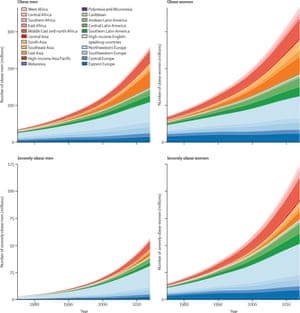
Trends in the number of obese and severely obese people by region. A person is obese if they have a body-mass index (BMI) of 30 kg/m2 or higher, or is severely obese if they have a BMI of 35 kg/m2 or higher. From Lancet report: Trends in adult body-mass index in 200 countries from 1975 to 2014


Trends in the number of obese and severely obese people by region. A person is obese if they have a body mass index (BMI) of 30 kg/m2 or higher, or is severely obese if they have a BMI of 35 kg/m2 or higher. Photograph: The Lancet Publishing Group/Trends in adult body-mass index in 200 countries from 1975 to 2014

Few other problems exhibit such a clear trend, over such a long time frame, across the entire world. In fact, I created this map because I think the magnitude of the global obesity epidemic is difficult to communicate with statistics alone.


However, the map also illustrates another point about a completely different topic, one that is even bigger and further reaching than global obesity – the problem of information overload.


The digital universe is growing exceptionally fast. Half of the information available online today was created in just the last two years. But for that information to be useful to anyone outside of subject matter experts, it must overcome a host of challenges.


First, the information must be practically accessible. This obesity study represents the work of thousands of researchers over perhaps millions of hours. Data visualisation, reduces it all into an intuitive, easily-digestible graphic.


At the same time, data visualisation gives us a frame of reference for understanding what would otherwise be cold, abstract numbers. When you read statistics about obesity, either as written language or as tables of numbers in a spreadsheet, you realise obesity is a problem. But when you watch the story unfold visually, you can feel the depth and magnitude of the problem because you are witnessing it firsthand.


Finally, for the information to be useful, it must be discoverable from among an ever-growing sea of digital noise. Data visualisations are not only informative, they can also be fun and beautiful, something that people will want to share with their friends.


As the digital universe continues to grow, making sense of all that information presents an increasingly difficult challenge. Fortunately, it may have an easy solution: communicate it visually.


How the world got fat: a visualisation of global obesity over 40 years | Max Galka

30 Kasım 2016 Çarşamba

Thyroid Dysfunctions & The Obesity Epidemic: Is Your Weight Loss Canary Suffering?

There’s no doubt that thyroid disease is on the rise. Now the question is why?


The reason your weight loss attempts might not be working is because your weight loss canary might be suffering…let me explain.


From the research, I have reviewed and the patients I have seen over the last 10 years, it’s clear to me that the thyroid gland is your body’s own yellow canary. It’s sensitive to many different influences—your diet, your lifestyle, and the world around you. And all these influences can affect how well your thyroid functions.


Remember how miners used to detect toxic methane gas and carbon monoxide? They sent bright yellow canaries into the mines. Canaries are highly sensitive to these gasses—so much so that they die when exposed to them. Their deaths served as a warning system for miners so they do not enter and become exposed to poisonous air.


So, it’s not surprising that as we eat more toxic foods and are increasingly exposed to pollution, petrochemical and industrial wastes, and heavy metals that thyroid problems have also skyrocketed. In fact, more than 20 percent of women and 10 percent of men in the United States have thyroid dysfunctions—and half of them don’t even know it (1, 2)!


But exactly how does your environment affect your thyroid?


We now have substantial research to demonstrate that environmental chemicals have a direct impact on the thyroid gland. It’s clear that PCBs and other industrial petrochemical toxins can lower thyroid function, as well as other pollutants such as chlorine, fluoride, and bromide.


Since the thyroid produces hormones that manage your metabolism, anything that affects your thyroid will ultimately affect your metabolism. In fact, there’s evidence that toxins boost the excretion of thyroid hormones, leaving you with less of this hormone to control your metabolism—and a decreased ability to burn fat.


The truth is, your thyroid plays a huge role in weight control, and in determining your metabolic rate.


The question is not if, but how much is today’s obesity epidemic linked to the harmful effects of environmental toxins on metabolism.


I’ve seen so many patients struggle with their weight, only to have the pounds melt off when we addressed their thyroid problems.


True, not everyone’s weight problems are caused by thyroid dysfunction—but if you’re overweight, you should consider the connection. That’s why the best medical doctors always check their patients’ thyroid functions and will consider all the possible causes of subtle thyroid imbalance, including toxins, food allergies, nutritional deficiencies, and stress.


Now let’s talk about some of those other factors.


For example, food allergies, like sensitivities to gluten and other foods, also negatively affect thyroid function—and are frequently undiagnosed. Likewise, deficiencies in nutrients important to good thyroid function—like selenium, zinc, omega-3 fatty acids. and iodine and tyrosine—can also trigger thyroid problems.


With all these factors that can affect your thyroid, it’s clear that we need a new approach to the diagnosis and treatment of thyroid disease. Many doctors can miss the subtle signs of thyroid problems, and conventional medicine often treats low thyroid function with inadequate, one-size-fits-all drugs like Synthroid.


However, thyroid dysfunction requires a more personalized, integrative approach—one that you can help control by becoming an active partner in your care. First, keep an eye out for the symptoms of a low thyroid function, including (3):


  • fatigue

  • sluggishness

  • trouble getting up in the morning

  • depression

  • dry skin

  • dry hair

  • constipation

  • fluid retention

  • menstrual problems and PMS

  • hair loss

  • cracked or chipping fingernails

  • low sex drive

  • weight gain

  • muscle aches

  • cramps

Yes, a lot of those symptoms are common and vague—which is one reason why thyroid dysfunction often goes undetected. But if you notice any of these signs, bring them to your doctor’s attention, and ask him or her to test your thyroid function.


If you are diagnosed with low thyroid function, the following steps recommended:


  1. Eliminate the causes of thyroid problems, like toxins, food allergies, and nutritional deficiencies.

  2. Exercise

  3. Eat foods that provide nutritional support to your thyroid—and avoid those that don’t.

  4. Use supplements that protect your thyroid, such as vitamins A and D, selenium, zinc and fish oil.

  5. Work with your doctor to choose the right thyroid proto

Remember, thyroid hormone is the master metabolism hormone. If your thyroid is out of balance, your metabolism is out of balance, too.


Do you have a dysfunctional thyroid?


Know that the problem can be fixed. By following the program here you can get your thyroid working properly, keep your weight under control and start feeling better today.
1. The Truth About Low Thyroid: Stories of Hope and Healing for Those Suffering with Hashimoto’s Low Thyroid Disease – August 30, 2016 Dr. Joshua J. Redd
2. Why Do I Still Have Thyroid Symptoms? when My Lab Tests Are Normal: a Revolutionary Breakthrough in Understanding Hashimoto’s Disease and Hypothyroidism, 1st Edition, Dr. Datis Kharrazian
3. http://www.health.com/health/gallery/0,,20723100,00.html


Thyroid Dysfunctions & The Obesity Epidemic: Is Your Weight Loss Canary Suffering?

24 Kasım 2016 Perşembe

The obesity epidemic is an economic issue

It is estimated that today’s obesity epidemic costs the global economy about $ 2tn (£1.6tn) or some 3% of GDP. For individuals, deciding what to eat is a jealously guarded privilege, but for economists obesity is not really about people exercising free-market choice. Instead it is a market failure.


The causes of the epidemic are complex, spanning the social sciences to biology and technology. Consider, for example, the shift towards urbanisation and car transport. By reducing many people’s daily physical activity, these are estimated together to reduce individuals’ need for food by 300 calories a day. So how much less food should the car driver eat to compensate? About one biscuit less a day – a trivial change that only goes to illustrate that few of us really understand the energy needs of our bodies.


In market terms, making a rational choice at the dining table requires people to know how much energy they need and how much they are getting – yet neither of these is known. As any one who has ever tried to lose weight knows, in these matters talk is cheap and advice is unreliable. At various times sugar, protein, fat, starch, fast food, home cooking and snacks have all been held to be responsible for the obesity epidemic.


Back in the 1950s, the dominant theory was that eating fat was responsible for making you obese – and by sating appetite, sugar could help to reduce weight gain.


However, food companies prefer to deflect rhetoric about poor diet being the primary cause of obesity, and instead promote messages focused on exercise and other factors – a phenomenon termed “leanwashing”.


Nonetheless, the political spotlight is now on sugar, with “environmental” changes proposed to reduce the appeal of sugary foods, such as warning labels and nutritional information panels. There’s serious talk of taxing them, in the way that tobacco has been. None of this is supported by any real evidence, but certainly new taxes are always popular with governments. (It’s pretty obvious, after all, that there are plenty of thin children who enjoy sugary foods, and plenty of overweight people whose tastes lie elsewhere.)


Prof Kevin Fenton, national director for health and wellbeing at Public Health England, says there are “practical solutions”, by which he means a de-sugaring of foods such as cakes, biscuits and puddings. But these foods are not sugary by accident – they are sugary because that’s what we like about them. It’s like salted crisps having salt removed … but yes, the health industry has pushed that one too.


Solutions based on labelling of foods by calorific content to improve consumer choices belie both human psychology and the complexity of the body’s digestive mechanisms. As a result, it is futile leaving a solution to the food and drink industry, or on relying on “education” to correct consumer behaviour.


However, consumer choices are being skewed by government actions, such as massive programmes of agricultural support that actually favour fast foods over healthy eating. Billions of dollars go towards subsidising junk foods, through farm subsidies for producing ingredients such as soya and high-glucose corn syrup.


Obesity affects poor households far more than their richer neighbours – and the cost of eating healthily is a very practical reason why.


And, as the US economist Richard McKenzie has pointed out, much of the rise of obesity is precisely a consequence of free-market economics. For example, fast food has become cheaper, in part because of mechanisation and in part because the workers producing it are paid less and less. At the same time, the economic forces that propelled 1960s women away from the kitchen and into jobs also propelled families towards processed foodstuffs and eating out … or just snacking.


When markets go wrong, governments need to step in. Agricultural support should be switched away from junk foods and towards producing healthy ones. The low wages and poor training that fast-food outlets rely on should be made a thing of the past, and tax incentives (such as zero VAT) should support the labour-intensive production of “real food” in cafes and restaurants.


Market corrections, rather than punitive moves aimed at individuals, are the only way to tackle what has become, in economic as well as in social terms, a very real crisis.


Martin Cohen is editor of the Philosopher. His recent book, Paradigm Shift (Imprint 2015), discusses ‘how expert opinions keep changing’


The obesity epidemic is an economic issue

20 Kasım 2016 Pazar

‘Cyber-bullies, obesity and stress … this is a scary world’ says the new top GP

‘ This is a scary world,” says Dr Helen Stokes-Lampard, the new leader of the UK’s 49,439 GPs. She is not referring to soaring obesity, or the fact that dementia has replaced heart disease as the nation’s biggest killer, or the truth that everyone’s risk of getting cancer has recently gone from one in three to one in two. She’s talking about social media, its downsides and its contribution to ill-health – mental ill-health specifically – and how more and more of its victims are ending up in GPs’ consulting rooms.


“I wouldn’t want to be a teenager nowadays. The social media pressures are phenomenal. People have become more judgmental about appearance. If I was a chubby teenager, the only people who knew were those around me. But now strangers on the other side of the world have a view on how teenagers look. Can you imagine how awful that must be? Unless you’ve got incredible resilience then that puts you at real risk. It grinds people down. It’s the inexorable pressure to be perfect,” adds Stokes-Lampard, who became the new chair of the Royal College of GPs this weekend.


Instagram and Snapchat are the two biggest facilitators of this worrying trend, she says. “You get eight- or nine-year-olds coming in worried about how they’re looking, and nine-year-olds talking to their parents but not wanting to eat because the food’s fattening. That makes my skin crawl; that’s a real cause for anxiety for us all. Social media’s created a new set of norms and values and we’ve not given our children the resilience and wisdom to know how to use these things safely.”


Family doctors now see depression in prepubescent children who have been bullied – cyber-bullied – because they have freckles, wear glasses or are overweight. “So there are clearly negatives from social media and technology,” she says, before adding, laughing: “Says she – who loves Twitter.”


Stokes-Lampard, 46, is what she calls “a coalface GP” in Lichfield, Staffordshire – “a very normal practice full of very normal people” – though her new role will limit her to just one day a week in her surgery. Reflecting on the changing nature of illness, she says that these days “obesity pervades the consultation. At least half of consultations I have are with people who are overweight, because society is overweight; real, normal people are overweight. It impacts on people’s health in myriad ways. There’s the obvious stuff – it can affect your breathing or joints, give you diabetes or increase your risk of cancer. But people’s self-worth and their mental health is dragged down when their body shape isn’t right because we’re, you know, an incredibly fat-shaming society.”


Family doctors can do only so much, Stokes-Lampard explains in a soft south Wales accent that indicates her upbringing in a mining village just outside Swansea. Doctors identify a patient’s condition and draw up a plan, but often other health professionals then need to take over, she adds. She laments the NHS’s postcode lottery in the specialist services to which GPs should be able to refer patients with a range of problems, not just dangerous obesity. It limits GPs’ ability to help and may reduce someone’s chances of recovery.


“We’ve got so many problems of where to refer patients on to, the next tier of our referral services – our physiotherapists, our memory clinics for people with dementia, [and] weight management services. It’s a big problem. If we’ve got nowhere to help, to channel these people to, they get stuck with us, and that’s not necessarily the best place for patients.”


Being overweight harms people’s health in physical and psychological ways.


Being overweight harms people’s health in physical and psychological ways. Photograph: Chris Radburn/PA

The media and political focus in the past year or two has been on the UK-wide shortage of GPs. “But we need more practice nurses, far more district nurses and far more health visitors, far more community mental health support workers, far more CBT [cognitive behavioural therapy]. It’s been a chronic underfunding problem. So much resource and energy has gone into shoring up hospitals due to winter crisis and pressures in A&E but actually they took their eye off the ball in terms of the vital role of primary care in supporting the rest of the NHS.”


In England at least, though, Simon Stevens, the head of NHS England, has promised to send what the GPs’ leader only half-jokingly calls “the cavalry”. That should entail not just 5,000 more family doctors, but also 3,000 new mental health therapists who will be based in GP surgeries, 1,500 pharmacists who will also see patients there, as well as more practice nurses, “physician assistants” – who are meant to do some tasks usually performed by nurses or doctors – practice managers and receptionists.


They are all intended to help relieve the strain on GPs, who by common consent are struggling to keep up with the demands posed by our ageing, growing and increasingly medically complicated population. General practice will receive an extra £2.4bn a year by 2020-21 that will push its share of the NHS budget from £9.6bn to £12bn.


That pledge of 5,000 extra GPs was originally made by David Cameron before the 2015 general election. It remains a totemic Conservative promise, the missing of which would be very embarrassing. No one in the NHS thinks it will happen, though the health secretary Jeremy Hunt is still gamely insisting it will be met. Stokes-Lampard is understandably sceptical. “We’re concerned about the 5,000 GPs. It’s a good pledge but it’s not going to be met at the moment. Things are moving too slowly to reach that level by 2020, so it’ll take a big concerted effort by a lot of people to push us from the amber, which is where I think we are now on that, back into the green.”


She is worried that few if any of the 500 extra GPs that were meant to be coming from abroad to help meet the 5,000 target have actually come. For example, despite publicity months ago announcing the imminent arrival of family doctors from India, none is here yet. Brexit seems to be a factor, she says. “Inevitably we’ve already had doctors [overseas] saying to us, ‘I’d like to come but actually I’m not sure what the visa situation’s going to be in a few years’ time and, well, I don’t want to bring my family over, start a new life and discover I’m not welcome.’ So we need to change the language.” The government’s Migration Advisory Committee could help by adding GPs to its list of shortage occupations, just as they did with nurses earlier this year, and thus make it easier for family doctors from around the world to come here, she suggests.


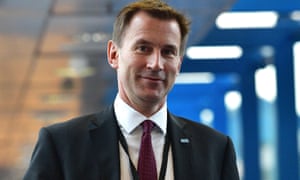
Jeremy Hunt, the health secretary, insists the pledge of an extra 5,000 GPs will be met.


Jeremy Hunt, the health secretary, insists the pledge of an extra 5,000 GPs will be met. Photograph: Carl Court/Getty Images

Even if all the pledges by Stevens and Hunt to improve the lot of GPs are delivered, she fears that will not be enough to enable them to cope with the growing volume of illness. She wants to see big changes in public health policy – the sugar tax, minimum unit alcohol pricing – and for everyone to become more active. “We need to make it easier for people to be healthy. We need to make walking the new norm and to have more cycleways. Kids used to walk to school, but now there’s a culture of being chauffeured. People think it’s safer but it’s not. The evidence is increasingly that it’s the sofa that kills you, not the eating. Inactivity underlies a lot of problems. Being more active helps with our weight, our wellbeing and our heart.”


Better diet, including eating less meat, would also help prevent illness, she says. “I say this as someone who loves meat, so I’m not being hypocritical, but we need to change the culture of meat and two veg being the staple diet in the UK. We definitely need to eat less red meat and processed meat. Meat should be a treat, not part of every meal.” Consuming more white meat and fish, especially oily fish, would help reduce the risk of certain cancers, she says. She also advises cooking meat ourselves rather than buying pre-cooked joints, and eating it no more than twice a week.


General practice is closer to the precipice than it’s ever been in living memory


Helen Stokes-Lampard


So there is the nation’s health, an issue as always for the gatekeepers to the NHS. But she is also determined to do what her office allows – through lobbying ministers and arguing her case on TV and radio – to improve the health of Britain’s general practitioners, or “expert generalists”, as she calls them. A friend – a 38-year-old female GP – recently packed in the profession when it all got too much and her relationship with her partner and children began suffering under the weight of the constant stress, 14-hour days and endless workload family doctoring involves. “She cracked.” Another has recently emigrated to Australia in search of a better work-life balance.


“General practice is closer to the precipice than it’s ever been in living memory. The NHS is its people,” Stokes-Lampard adds. “If you take them for granted and don’t value what you’ve got, once they’ve gone it’s so, so much harder to come back from that brink.” Minister, take note.


CV


Name Dr Helen Stokes-Lampard


Age 46


Born Swansea, south Wales


Educated Comprehensive school in Swansea, then St George’s medical school in London.


Career Worked in obstetrics and gynaecology before becoming an academic GP and has been a GP since. Until September was head of primary care teaching (undergraduate) at Birmingham university’s school of medicine. Held various roles in the RCGP, including council member and treasurer.


Roles Chair, Royal College of General Practitioners (2016-2019) – the third woman in a row to hold the post after only men for the previous 50 years; GP partner (part-time) in Lichfield, Staffordshire.


‘Cyber-bullies, obesity and stress … this is a scary world’ says the new top GP

13 Kasım 2016 Pazar

Curbs on junk food ads No 1 priority in fighting childhood obesity, says study

Dramatic curbs on the advertising of junk food and drink to children is the policy measure that will be most effective in reducing the growing epidemic of childhood obesity, according to a group of more than 70 health experts.


The Food Foundation group calls for a ban on TV advertising of unhealthy food and drink up to the 9pm watershed and on sponsorship deals between companies that produce them and sports events like the Olympics. The recommendations come after complaints the government’s recently published childhood obesity strategy did not go far enough.


Anna Taylor, executive director of Food Foundation, a thinktank which led the year-long study, said: “While it is good to see concerted action by the government on reformulation of processed foods, we must, at the same time, take action to help our children eat fewer processed foods.


“Parents are fighting a losing battle if their children are being constantly bombarded with advertising which idealises fast food. Other countries have managed to control this. Why can’t we?”


Children are targeted in front of family TV programmes like The X-Factor and in their bedrooms and outside with friends via cyber games and Facebook ads on their smartphones, say experts.


Modern digital technology allows customised advertising, so that ads for snacks pop up at moments of heightened excitement for a child playing an online game, while McDonalds restaurants feature as important locations in Pokemon Go in Japan.


The 73 leading health and obesity experts from 41 organisations will say in a report to be launched in parliament next week that greater control of advertising and sponsorship by companies selling unhealthy food and drinks is the No 1 priority if the UK is to bring down the soaring obesity rate.


At present, advertising of foods described as high in fat, salt or sugar are banned in programmes predominately watched by children. But the experts will argue for greater restrictions, including a ban on all forms of non-broadcast advertising of these food and drinks to children.


The latest figures from the school measurement programme shows that one in five children in England is obese in year 6, the last year of primary school. One in three is either overweight or obese.


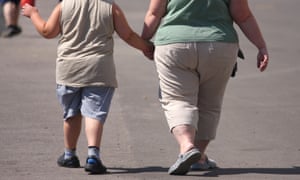
An overweight mother and child.


Experts are blaming high levels of advertising for soaring rates of childhood obesity. Photograph: McCrickard/REX Shutterstock

The experts have assessed the evidence for a large array of policies from around the world to develop England’s first food environment policy index, a measure of the effectiveness of the actions governments are taking. A similar index has already been published for other countries.


The next priority on the experts’ list is the nationwide implementation of the sugar tax by 2018. The third priority is an ongoing effort to reduce the sugar, fat and salt in processed food. Britain gets credit for the sugar tax, which is the number two policy on the experts’ list and will be brought in across the UK in 2018, and also for the work to reduce the sugar, fat and salt content of processed foods, which is third on their list.


But controls on advertising and sponsorship are even more urgently needed, say the experts, who include academics such as Profs Susan Jebb and Mike Rayner from the University of Oxford, Simon Capewell from the University of Liverpool, Corinna Hawkes and Geof Rayner from City, University of London, and Harry Rutter from the London School of Hygiene and Tropical Medicine.


Dr Tim Lobstein of the World Obesity Federation, a member of the expert panel, said food companies and advertisers would put up strong resistance to the changes, adding: “We know they will use any means to weaken and undermine such measures.


“We need stronger regulation to prevent secret lobbying, private political funding and pro-business bias at the heart of government”.


The Obesity Health Alliance, a coalition of more than 30 organisations, said: “The food and drink industry wouldn’t spend billions of pounds each year on advertising and marketing if it didn’t work. We know that the pester power of younger children and the spending power of teenagers is influenced by what they see on TV, the internet and on their phone.


“Failing to tackle junk food advertising is a failure to acknowledge the very real effect the environment has on our children’s habits and ultimately, obesity rates.”


Public Health England, which was commissioned by the government to review the evidence to inform its obesity strategy, found that in 2014, the food industry spent £256m promoting “unhealthy” products sold in retail alone. One of its key recommendations was to “significantly reduce opportunities to market and advertise high sugar food and drink products to children and adults across all media including digital platforms and through sponsorship”.


But the government ignored PHE’s advice. The childhood obesity strategy, launched after much delay this summer, omitted any mention of advertising or sponsorship by the fast food industry, such as occurred in the UK Olympics with Coca Cola and McDonalds.


At a childhood obesity summit last week, Richard Dobbs, a senior partner at the management consultancy firm McKinsey’s, which produced a major report on the interventions that are likely to help reduce obesity in November 2014, said broadcasters had lobbied against advertising curbs on junk food to children being included in the government’s obesity strategy. “Media restrictions were going to cost ITV £500m,” he told the meeting. “It is not surprising ITV fought this quite hard.”


The World Health Organisation’s Europe office recently warned of the increasing sophistication of digital advertising and called on all countries to take action to block the promotion of unhealthy food and drinks to children. Its report described the use of smartphone games and social media platforms to access children.


“Taken together, the creative tactics and analytics … equate to a brand appointing a personal marketer to each child, locating and identifying those who are most susceptible to their messages, encouraging them to send marketing messages to their friends, and following them throughout the day, at moments of happiness, frustration, hunger and intent, delivering advertising with the maximum impact, and directing them to the nearest place to buy foods to ‘fix’ their current emotional state.”


The Committee of Advertising Practice launched a consultation on restrictions on the non-broadcasting advertising of food and drink to children, including online, in May and is expected to report next month.


How others are tackling obesity


Other rich countries have taken bold measures to face up to the obesity challenge.


Canadian province of Quebec took a tough line on advertising to children as early as 1980. All ads for food products as well as toys aimed at under-13s were banned from all types of media, including radio, television, the web, mobile phones, printed materials, signage and promotional material.


Experts think it paid off. French speaking families in Quebec were 19% less likely to eat fast food compared with those living in Ontario and spent 46% less on fast food, according to a household expenditure survey in 2007. Quebec has the lowest rates of childhood obesity in Canada.


France opted for a “soda tax” which, despite lobbying from industry,was imposed on drinks with added sugar and also with artificial sweeteners in January 2012. The tax of around 11 cents per 1.5 litres of drink, raises around €400m (£344m) a year. Soft drink sales dropped by 3.3% in 2012 and 3.4% in 2013. The French treasury is now considering whether to introduce a tax on fatty foods.


Sweden has taken action on school meals, with legislation in 2011 requiring them to be nutritious and free. The nutritional quality of the meals, calorie content and portion sizes are laid down for each age group. Water and milk are the only permitted drinks.


Schools and local authorities can evaluate the meals through a website called SkolmatSverige (School Food Sweden), where there are also questionnaires for the pupils and staff who eat the lunches.


Scotland is planning to introduce a good food nation bill, with a consultation in 2017. It promises to address procurement, waste, health, education and social justice. Groups are lobbying for farming and fishing to be included too.


Curbs on junk food ads No 1 priority in fighting childhood obesity, says study

3 Kasım 2016 Perşembe

Health chief: obesity warning letters to parents must not be watered down

School letters sent to parents telling them their children are overweight should not be watered down despite widespread anger, the chief medical officer has said, arguing against the “normalisation” of obesity.


Dame Sally Davies was speaking as new figures emerged from the child measurement programme that showed levels of obesity among children are still getting steadily worse. Twice as many children – nearly 20% – are obese in year 6 as in reception, where 9.3% are obese.


More than one in five children start school either overweight or obese, and by the time they leave primary school, that is one in three. “What on earth are we doing?” asked Dame Sally.


“What worries me is how we have started to normalise it,” she said. “In my generation it was normal to see [children’s] ribs on the beach. That was healthy. How have we lost this national understanding of what is healthy and what is unhealthy?”


There were now size 16 mannequins in shop windows and fat can be beautiful, she said, but added: “It isn’t healthy. Here, we are talking about children and children can’t talk for themselves. They need to be helped.”


When children are measured in school and found to be overweight or obese, the parents received a letter from the school, advising them on where to get help and advice. Some become angry. Postings on social media urge parents to throw the letters in the bin.


But Dame Sally said the letters should spell out the problem. “I don’t think we should water down those letters,” she said at the Childhood Obesity Summit, held in London. “There was a move to stop them saying your child is obese because people felt it was offensive and went into denial. But it is a physical description.”


Work needed to be done on how to encourage people to take action. “It is a real worry to me,” she said.


Obesity is a very serious issue for the NHS, she said, costing £5.1bn in a single year in England alone. There were further huge costs to productivity and the economy. “We are spending more every year on the treatment of obesity and diabetes than we do on the police, fire service and judiciary combined,” she said.


She is concerned by the growing snacking culture, she said. “I was absolutely aghast to read about how crisp packet sizes have increased. Food is everywhere. We are doing much more snacking and eating out.”


People are grazing rather than eating regular meals around a table with others, she said. Teenagers who came to stay with her would be found at the fridge, snacking. “Snacking is now a £375bn industry worldwide.”


Dr Sarah Wollaston, Conservative chair of the parliamentary health select committee, deplored the omissions from the government’s childhood obesity strategy. “I don’t think we should consider what is in the national plan as the job done,” she said.


“It was particularly disappointing to see promotions and price promotions fall out of the original draft – 40% of everything consumed at home is bought on promotion. A staggering amount of that is unhealthy food and drink.”


The emphasis in the strategy is on industry reformulation of food – and particularly to remove 20% of sugar over time. Wollaston wanted to know what would happen to companies that did not take part.


“What should it look like if in a year from now nothing has happened or some sections of the industry have completely ignored this? What will be the penalty to stop sections of the industry going back to where it was before?”


Alison Tedstone, director of diet and obesity at Public Health England, said that removing 20% of sugar – 5% in the first year to August 2017 – from products was only the first step. Next year the government’s scientific advisory committee on nutrition would be reporting on saturated fat in the nation’s diet – which is also too high. PHE will then be talking to industry about reducing saturated fats and also calories in foods.


Health chief: obesity warning letters to parents must not be watered down

Child obesity rising again, NHS report reveals

A growing number of children are becoming obese as young as four or five years old, NHS figures have shown, sparking renewed concern about the obesity crisis.


Obesity is rising among children both in their first and last years at primary school, according to the latest annual measurements of child body mass index (BMI) in England.


Overall, 9.3% of four and five-year-olds in primary reception class in England in 2015-16 were classed as obese, up from 9.1% the previous year, according to the national child measurement programme (NCMP).


The number of obese ten and 11-year-olds in their last primary school year also rose from 19.1% to 19.8% last year – nearly one in five.


Richmond upon Thames in south-west London has the fewest fat children in England. In the borough, 11% of year six pupils are classed as obese. In contrast, in the east London borough of Barking and Dagenham 28.5% of children that age were found to be obese.


More boys are dangerously overweight than girls. Among reception pupils, 9.6% of boys were obese compared to 9.1% of girls. Similarly, 21.7% of boys in year six were obese compared to 17.9% of girls, according to the latest NCMP results published by NHS Digital.


The figures reveal that child obesity is rising again after falling slightly in 2014-15.


The statistics also underlined the stark class divide. NHS Digital’s report found thatobesity prevalence for children in reception living in the most deprived areas (12.5%) was more than double that of those living in the least deprived areas (5.5%). In year six, 26% of children living in the most deprived areas were obese compared to 11.7% in the least deprived areas.


Nationally, the number of reception children who are either overweight or obese has also risen, from 21.9% to 22.1%. The same picture emerges with year six pupils, the number of whom found to be overweight or obese rose from 33.2% to 34.2%.


The figures come after Theresa May’s government was criticised for watering down the childhood obesity strategy that her predecessor, David Cameron, intended to publish. Health organisations, charities and campaigners such as Jamie Oliver have accused May of putting the interests of big business above those of public health and letting down children and families by publishing a “weak” action plan in August.


Experts voiced deep unease at the figures and upward trend. “It is deeply worrying that more children are leaving primary school overweight or obese than ever before and levels are increasing”, said Professor Kevin Fenton, the national director for health and wellbeing at Public Health England, which advises the government.


The number of obese ten and 11-year-olds is the highest since children began being routinely weighed and measured in 2006-07. In that year 17.5% Year 6 pupils were found to be in that category. Last year it was 19.8%, even higher than the previous record of 19.2% in 2011-12.


Alison Cox, Cancer Research UK’s director of prevention, said: “Our nation has hit a devastating record high for childhood obesity. The trend over the last decade is showing no signs of slowing down, and this worrying news is something that could have been prevented with more government action.


“But the government still has a chance to save lives. It has already recognised the influence of junk food marketing on children by banning junk food advertising during children’s programmes. It’s time now to stop this influential marketing before 9pm.”


The Obesity Health Alliance, a coalition of health charities and medical organisations, said the figures should act as a wake-up call to ministers. “Year upon year, we are faced with sobering figures that reveal an increasingly worrying trend – the number of obese and overweight children in the UK is not falling and is in fact rising,” a spokesperson said.


“Today’s figures provide yet another wake-up call for all those intent on stemming the obesity epidemic – the alarm bells are ringing and there’s simply no time to hit the snooze button. These poor health outcomes mean we are failing our children, and future generations, if this trend continues”, said an alliance spokesman.”


It wants the government to introduce its levy on highly-sugared soft drinks on time as planned in 2017 and “without dilution”, to restrict the marketing of junk food to children, both online and before the 9pm TV viewing watershed, and to push food manufacturers to introduce “ambitious” targets to reduce the amont of sugar i their products.


Child obesity rising again, NHS report reveals