From nigiri to temaki, sushi has boomed in popularity in the west, but now doctors are warning of a less appetising trend: a rise in parasitic infections.
A team of doctors from Portugal raised concerns after a 32-year old man was admitted to hospital complaining of pain in his abdomen just below his ribs, vomiting and had a slight fever, all of which had lasted for a week.
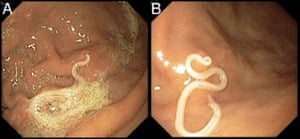
An endoscopy soon revealed the culprit: the larvae of a type of parasitic worm from the genus Anisakis. The doctors note that the condition, known as anisakiasis, is caused by eating undercooked or raw fish or seafood that has been contaminated: indeed, questioning of the patient revealed that he had recently eaten sushi.
After the larva was removed the man rapidly recovered, say the medics.
Two views of the parasite, seen here firmly attached to an area of the patient’s upper gastrointestinal tract. Photograph: Carmo et al/BMJ case reports
Writing in the journal BMJ Case reports, the team warn that with sushi in vogue in the west, awareness of anisakiasis is growing.
“Most of the cases were described in Japan due to food habits; however, it has been increasingly recognised in western countries,” the authors write, pointing to a Spanish study that reported 25 cases of the condition over a three year period from 1999 to 2002, with all patients having eating raw anchovies, as well as Italian research which flagged both anchovies and sushi as routes by which individuals could become infected.
The Italian study added that medical professionals should suspect the condition should patients complain of severe abdominal pain after eating raw fish, pointing out that “no effective pharmacological treatment is able to kill the larvae once eaten”.
Indeed, as the US Center for Disease Control and Prevention notes, “The treatment for anisakiasis may require removal of the worm from the body by endoscopy or surgery.”
The authors of the latest report add that besides the symptoms shown in the Portuguese case, the condition can also trigger a host of other symptoms including severe allergic reaction, as well as complications such as digestive bleeding, bowel obstruction and peritonitis.
The Food Standards Agency noted that raw fish occasionally contain parasitic larvae, but said that under European food hygiene legislation fish that is to be eaten raw should be frozen before it is sold to consumers to ensure any parasites have been killed.
The FSA added that fish and meat should always be cooked properly according to the producer’s instructions, but offered a few tips to those planning to make their own sushi.
“If you do choose to make your own sushi from fish at home, ensure you follow a reputable recipe,” the FSA advised. “If wild fish are to be eaten raw or lightly cooked, ensure that all parts, especially the thickest part, have been frozen for at least four days in a domestic freezer at -15C or colder. This will ensure that any undetected Anisakis larvae are killed.”
Like church and state, medicine and politics are traditionally seen as a queasy mix. The last thing you want in your flimsy hospital gown is some zealot with a stethoscope trying to sway your vote. Doctors, at the bedside, should clearly stick to doctoring. But – in a world of ever more outlandishly spun health statistics – where, outside of clinical encounters, do the limits of doctors’ duty to act in our patients’ best interests lie?
I made the sobering discovery, in my first few weeks as a doctor, that serving patients in the modern NHS was at least as much to do with advocacy as medicine. It has to be, in a system that’s stretched beyond breaking point. With resources so scarce, speaking out counts.
Once, I actually stalked a professor, in sheer desperation to provide an inpatient with decent care. He did a double take at the steely-eyed junior doctor, sat perched outside his clinic, fired up to plead her patient’s case. With everyone run ragged, overwhelmed by patients, no one had believed me or cared enough to act when I’d insisted my patient was suffering from a rare diagnosis, adult-onset Stills disease, that had left her heart swamped in fluid, her temperature soaring, her circulation so fragile it might need intensive care. “Please,” I begged. “Just see her for yourself.” As the pre-eminent professor of rheumatology in my hospital, he was the one man I knew who might act. And he did. He confirmed the diagnosis and whisked my patient off to his specialist care, possibly saving her life.
When almost every statistic about today’s NHS depicts a system quietly imploding around us, advocacy writ large has never mattered more. Doctors, like nurses, bear daily witness to the facts behind the spin. Our testimony is a vital corrective to a government hell-bent on airbrushing away the truth about today’s underfunded NHS. We look the patients in the eye as they languish on trolleys in hospital corridors. We apologise, shamefaced, to the families whose loved ones are stranded in hospital, because no social care exists to support their safe discharge home. We turn away the elderly who sob in A&E because the pain in their hip is beyond endurance, yet who haven’t even made it on to a waiting list for surgery. If we turned a blind eye and kept our heads down, would Hippocrates nod his assent?
Having to break bad news to a patient is never easy. But unflinching conversations are a cornerstone of good medicine
The state of the NHS in 2017 demands that doctors speak out about the human cost of underfunding since it clear our political leaders will not. Only this week, Theresa May made an election manifesto commitment of 10,000 more staff in mental health. Unfunded, needless to say, but also – more audaciously – a promise made on the back of the 6,700 mental health staff already culled since the Conservatives came to power in 2010. It’s this kind of political doublespeak that compels doctors to challenge loudly the government line that – despite the most brutal funding squeeze in NHS history – everything is going swimmingly.
In microcosm, we already know what happens when cost-cutting is prioritised above patient care. The scandal of Mid Staffs – a stain upon the history of the NHS, in which patients in their thousands were subjected to inhumane care – arose when one hospital trust strove to slash costs by millions. Yet currently, the government is enforcing £22bn of “efficiency savings” across the NHS, while insisting excellence of care can somehow continue.
Doctors should call out this claptrap for what it is. We are, after all – perhaps more than anyone – trusted to tell unpalatable truths. In this case, the hard medicine is more taxes. A world-class health service requires world-class funding. Either we provide the budget to fit the health care we want, or we cut the NHS to fit the amount we’re willing to spend on health. With a government too cowardly to confront this simple truth out loud, doctors should force an honest debate.
Yet – with a few notable exceptions (Taj Hassan and Neena Modi, for example, the presidents of the Royal Colleges of Emergency Medicine and of Paediatrics and Child Health respectively), the medical establishment is loath to rock the boat. Where is the joint statement from the Royal Colleges, for instance, urging increased taxation to bring our NHS and social care spend to at least the levels of Germany and France? Where are the hospital medical directors brave enough to speak out in public against the ever more fanciful diktats from on high to keep on delivering as their funding dries up?
Having to break bad news to a patient is never easy. But unflinching conversations are a cornerstone of good medicine. Nationally, doctors should be telling it like it is: without more money, our NHS is in relentless, terminal, and wholly avoidable decline.
Only a week ago I told a patient there would be a scandal soon about our over-prescribing of opioid medication for chronic pain. What comes across in your article (Doctors call for action after prescriptions for addictive painkillers double in decade, 6 May) is the absence of any sense of the profession’s complicity in this process. I suggested to a colleague a few years back that we prescribed too much Valium (diazepam) and opioids. “About the same as everyone else,” was the reply. We are effectively legalised pushers and should acknowledge this because, in doing so openly with patients, we shoulder some of the blame for their habit. I also remember helping a woman in her 50s wean herself off diazepam, alcohol, co-codamol, antidepressants and cigarettes after 30 years of using these to block the pain of her second son being born with cerebral palsy and being taken into care. It was a struggle for her but it brought her back into her relationship with her husband: a few months later he tearfully related how he had re-met the woman he married 30 years before. This was only possible – I believe – because, at the outset, I said that it was we doctors who were responsible for her addiction. Dr Hugh van’t Hoff GP, Stonehouse, Gloucestershire, and director of Facts4Life
• As someone living with lifelong chronic pain, I was interested to read your article highlighting that opiate use had doubled in the last decade with associated risks of addiction and dependency. While I agree this is worrying, I would argue that it reflects the dominant biomedical model of pain management within the NHS. There is little or no science involved in matching an individual patient with the complex range of painkillers available. It is largely a case of try it and “see how you get on”. I have been on dozens of painkillers, including opiates, throughout my life. I found most have unbearable side-effects and limited impact on my pains. We need a holistic approach to pain that can offer comprehensive individual assessments and access to a wide range of treatments. Opiates and other painkillers can have an important but not a primary role in pain management. Martin Hoban Pontyclun, Rhondda Cynon Taff
• Join the debate – email guardian.letters@theguardian.com
• Read more Guardian letters – click here to visit gu.com/letters
Fashion models in France will need to provide medical certificates proving they are healthy in order to work, after a new law was introduced banning those considered to be excessively thin.
A further measure, to come into force on 1 October, will require magazines, adverts and websites to mark images in which a model’s appearance has been manipulated with the words photographie retouchée (retouched photograph).
Doctors are urged to pay special attention to the model’s body mass index (BMI), a calculation taking into account age, height and weight. However, unlike similar legislation passed in Italy and Spain, models will not have to reach a minimum BMI.
Under World Health Organisation guidelines an adult with a BMI below 18.5 is considered underweight, 18 malnourished, and 17 severely malnourished. The average model measuring 1.75m (5ft 9in) and weighing 50kg (7st 12lb) has a BMI of 16.
Announcing the introduction of the new rules on Friday, France’s health minister said they were aimed at preventing anorexia by stopping the promotion of inaccessible ideals of beauty.
“Exposing young people to normative and unrealistic images of bodies leads to a sense of self-depreciation and poor self-esteem that can impact health-related behaviour,” the health and social affairs minister, Marisol Touraine, said.
Given Paris’s iconic role in the fashion industry, the measures – passed in 2015 but only just coming into effect – are likely to have a symbolic impact around the world.
The proposals had originally suggested a minimum BMI for models but, following an outcry from fashion executives and modelling agencies, this was ditched in favour of allowing doctors to decide whether a model is too thin.
Agencies who use models without valid medical certificates will face a fine of €75,000 (£54,000) and staff face up to six months in prison. Failing to flag-up retouched images will incur a fine of €37,500, or up to 30% of the amount spent on the advert.
Fashion models in France will need to provide medical certificates proving they are healthy in order to work, after a new law was introduced banning those considered to be excessively thin.
A further measure, to come into force on 1 October, will require magazines, adverts and websites to mark images in which a model’s appearance has been manipulated with the words photographie retouchée (retouched photograph).
Doctors are urged to pay special attention to the model’s body mass index (BMI), a calculation taking into account age, height and weight. However, unlike similar legislation passed in Italy and Spain, models will not have to reach a minimum BMI.
Under World Health Organisation guidelines an adult with a BMI below 18.5 is considered underweight, 18 malnourished, and 17 severely malnourished. The average model measuring 1.75m (5ft 9in) and weighing 50kg (7st 12lb) has a BMI of 16.
Announcing the introduction of the new rules on Friday, France’s health minister said they were aimed at preventing anorexia by stopping the promotion of inaccessible ideals of beauty.
“Exposing young people to normative and unrealistic images of bodies leads to a sense of self-depreciation and poor self-esteem that can impact health-related behaviour,” the health and social affairs minister, Marisol Touraine, said.
Given Paris’s iconic role in the fashion industry, the measures – passed in 2015 but only just coming into effect – are likely to have a symbolic impact around the world.
The proposals had originally suggested a minimum BMI for models but, following an outcry from fashion executives and modelling agencies, this was ditched in favour of allowing doctors to decide whether a model is too thin.
Agencies who use models without valid medical certificates will face a fine of €75,000 (£54,000) and staff face up to six months in prison. Failing to flag-up retouched images will incur a fine of €37,500, or up to 30% of the amount spent on the advert.
Powerful and potentially addictive opiate painkillers are being handed out too readily, leading doctors have warned after it emerged that the number of times the drugs are being prescribed in the UK has doubled in the past decade.
The Faculty of Pain Medicine and the Royal Pharmaceutical Society said they were worried about the high and growing use of opioid drugs such as codeine and tramadol – while other experts warn that hundreds of thousands of patients could be addicted to them.
Dr Barry Miller, dean of the Faculty of Pain Medicine, said that the increase in the prescription rates of painkillers in the UK should be “met with concern”, adding: “While some of the increase can be attributed to an improved understanding of the effectiveness of these medications by medical professionals, we are concerned by reports of unnecessary prescription.”
NHS Digital figures released last week showed that prescriptions of opioids have doubled in the past decade, with the number of prescriptions issued rising from 12m in 2006 to 24m in 2016. One of the highest increases in prescriptions was for oxycodone, which shot up from 387,591 to 1.5m – a 287% rise – over that period. There was a 236% increase in prescriptions for morphine sulphate and a 143% rise for fentanyl.
“Our greater understanding of these medications can improve the quality of life for tens of thousands of patients in the UK living with complex pain. However, all NHS staff prescribing these medications need to ensure they are not doing more harm than good,” said Miller, whose organisation represents anaesthetists who specialise in the relief of acute, chronic and cancer pain.
rising rates of pain killer prescriptions
Doctors have warned about the numbers of people in Britain who may be addicted to these drugs as a result, with recent estimates suggesting over 192,000 could be dependent, partly because some medics prescribe them too readily.
In the US, since 1999 the number of overdose deaths involving opioids such as oxycodone, hydrocodone and methadone has more than quadrupled. The number of prescriptions of these drugs rose dramatically – from 76m to 219m a year between 1991 and 2011. This comes despite the fact there has been no change in the amount of pain Americans report.
Harry Shapiro of the DrugWise information service warned of the growing risks of addiction in the UK and said the growing prescription of painkillers was leading to a “public health disaster hidden in plain sight”. He is calling for more dedicated specialist centres to help people with painkiller addiction and also to help track the scale of the problem.
“People are not staggering around the streets and buying dodgy drugs off dealers, they are getting painkillers. It’s a problem hidden in plain sight – a problem in every GP surgery and pain specialist clinic,” he said.
Martin Johnson, clinical lead for chronic pain at the Royal College of General Practitioners, raised concern about the number of people who may be on repeat prescriptions. He said those with other conditions such as diabetes were monitored while on medication, but it doesn’t always happen for people with chronic pain. He called for an annual review, potentially conducted by pharmacists, to check in on those given these drugs. “So many say painkillers don’t do anything, but they keep getting prescribed them,” he said.
Many patients also reportedly use these drugs recreationally, obtaining them non-prescriptively after being introduced to them by their doctors. In Britain, there is less recreational use and most people are given opioids by their doctor for chronic pain.
Opioids act on different parts the brain and nervous system, including the spinal cord. The latter receives sensations from the body before sending them to the brain. Opioids work on this area to decrease feelings of pain, even after injury. One of the risks with the drugs is that they are addictive, with users complaining of withdrawal symptoms when they stop taking them.
But doctors say that while medications such as codeine can be effective for cancer patients and for tissue damage, they do not always help the growing number of patients now taking them for long-term pain. These drugs also have side effects such as severe constipation and dangerous sedation.
Dr Jane Quinlan, consultant in anaesthesia and pain management at Oxford University Hospitals NHS foundation trust, said: “For the majority of patients with chronic pain opioids don’t reduce their pain, but the side effects can significantly worsen their quality of life. Over time opioids can actually make people more sensitive to pain, she added.
One former user, who asked to remain anonymous, said: “I was prescribed tramadol for about three years for my ongoing back condition. I was addicted to them after a few months, it got to the stage where it became part of my routine. I suffered awful withdrawal when I stopped taking them. Without them my pain was overwhelming.”
Yasir Abbasi, a psychiatrist with Mersey Care NHS trust, said: “Being dependent or addicted to prescribed painkillers can lead towards a slippery slope of illicit behaviour, which can pave the way for hardcore drugs. There are not enough non-pharmacological interventions available to reduce our reliance on opioid medication.”
Cathryn Kemp, 45, from Hastings: ‘I ended up in rehab after taking 60 fentanyl lozenges a day’
Cathryn Kemp: ‘In the morning I would wake up, crawl to the bathroom and take six lozenges.’ Photograph: Andrew Hasson for the Guardian
I was working as a journalist when, after a period of illness, I was finally diagnosed with a disorder of the sphincter. I had lots of scary procedures to make me better. I was very ill and eventually discharged with a repeat prescription for fentanyl lozenges. I’ve since been told that fentanyl is 100 times stronger than heroin.
At the time, I was told to take a maximum of eight lozenges a day. I was also on fentanyl transdermal patches – 100mg ones, the strongest. That shows the level of pain I was in. Then one day I took an extra lozenge and after that my use of the drug spiralled.
Two years later I ended up in rehab after taking 60 lozenges a day – all of them on prescription from my GP. I kept thinking I was in loads of pain and needed more.
I felt like I was taking control of things, which is completely insane. I hid the problem brilliantly from my family and friends. I used to hide lozenges around the cottage where I lived, putting them in tampon boxes so no one would know how many I was taking. Taking fentanyl would make me woozy and then about an hour or two between doses I would go to withdrawal – vomiting, shaking and hallucinating.
In the morning I would wake up, crawl to the bathroom and take six lozenges. This would stop me shaking. I would then be well enough to get a cup of tea and then have to take six more. This would go on all day. The tiny bit of me that was still myself at this point knew I was abusing drugs, but I was afraid to stop as I feared living in pain again.
At this stage I was dangerously dependent. My GP said he would write me my last fentanyl prescription and I was forced to borrow lots of money from my parents and sell my cottage in order to pay for private rehab. My GP applied for NHS detox for me, but I was told that I was refused it because I wasn’t homeless and I wasn’t offending.
By then I knew going to die if I carried on so I did whatever it took to get help. Coming off it I had to go through a pain barrier. The body stops producing endorphins, the body’s natural painkillers, because it is receiving opiates instead.
I lost everything. I had to leave work because I was so ill. I lost my relationship, my career and my home – I lost everything I had built up over my writing career. I nearly lost my life.
I now run a charity dedicated to helping people cope with painkiller addiction. I haven’t come across anyone who has had such a complete breakdown like me. But I hear from lots of people, mainly women, who say they have kids to sort out and they cannot stop to have a pain condition. They think they have to keep going and so become trapped by the drugs they are taking.
What I am really hearing is the fact in the medical community there is still no support for dealing with these cases – no specific or very few specific resources to refer people too, so many are left hanging. We really need to engage NHS England in accepting that we need proper treatment services to deal with chronic pain as well as the addiction side.
It’s heartbreaking because it’s everyday people who are affected. We look at America and are horrified that opioid deaths are higher than deaths caused by car crashes. We do have a different system here, but estimates suggest hundreds of thousands of patients in the UK today are addicted to prescribed painkillers.
Doctors are warning that the rise of an almost untreatable superbug, immune to some of the last-line antibiotics available to hospitals, poses a serious threat to patients.
The number of lab-confirmed cases of the bug, called carbapenemase-producing Enterobacteriaceae (CPE), rose from three to nearly 2,000 in the 12 years to 2015, according to Public Health England (PHE). But that may be far short of the real number because hospitals are not compelled to report suspected cases. PHE admits it does not know where the infections are coming from or how many people are dying.
Freedom of information requests made by the Bureau of Investigative Journalism reveal that at least 81 people infected with CPE have died since 2009 at 66 NHS trusts in England – although the bug may have been a complicating factor rather than the main cause of death in some cases.
But the real figure is almost certain to be much higher. Many trusts did not respond to the requests or were unable to supply complete data. Out of 136 NHS hospital trusts that were asked for the numbers of infections and deaths between 2009 and 2016, 97 responded but nearly half did not have data on CPE or could not extract the details.
In Manchester and London, dealing with CPE has cost NHS trusts almost £10m. There have also been confirmed outbreaks in Liverpool, Leeds, Sheffield, Birmingham, Nottingham, Colchester, Edinburgh, Belfast, Dublin and Limerick, among others.
Elsewhere, Italy had only sporadic cases of CPE in 2009 but by 2014, the bugs were rife across the country. “If you look at Italy they’ve suspended bone marrow transplant programmes,” said Dr Matthew Laundy, consultant medical microbiologist at St George’s University Hospitals NHS Foundation Trust. “If you’ve got no antibiotics to treat CPEs you’re stuck.”
Experts are calling for reports of suspected CPE infections to be made mandatory. The numbers revealed by the Bureau are “shocking,” said Val Edwards-Jones, emeritus professor of microbiology at Manchester Metropolitan University.
“It should absolutely be mandatory for trusts to report this,” she said. “If you go back to the 1990s MRSA [reporting] wasn’t mandatory. It was only when hospitals did proper surveillance and began looking at the bugs in the blood that we knew the scale of the problem. Then it was found that there were certain things that weren’t being done correctly.”
Dr Michael Cooper, a consultant microbiologist and director of infection control at the Royal Wolverhampton NHS Trust, said: “If something’s not mandatory, it’s the places doing well that take care to report. You don’t get figures from the trusts with their head in the sand, the poor performers.
“Public Health England have no idea how many people are dying, they’ve no outcome data. This is a serious mistake.”
CPE is carried harmlessly in the gut, but may kill if it enters the bloodstream through a wound of a patient who is already sick or frail, which makes it a real danger in hospitals. About 40-50% of patients with a CPE bloodstream infection die. CPE is not untreatable, but it is difficult as antibiotic combinations or older, more toxic drugs have to be used.
CPE, dubbed the “nightmare bacteria” by Tom Frieden, former head of the Centers for Disease Control and Prevention in the USA, has developed resistance to the carbapenems, a group of “last resort” antibiotics that are used in serious infections when other drugs will not work. They include KPC (Klebsiella pneumoniae carbapenemase) and NDM (New Delhi Metallo-beta-lactamase).
Experts have warned that antibiotic resistance is a major threat to the world and could turn the clock back on medical advances by making some surgery, such as heart transplants, impossible.
There are high levels of CPE in India, Bangladesh, Pakistan, the Middle East, south and Central America, China, southeast Asia, Taiwan, Japan, some countries in southern Europe and the USA. In February the World Health Organisation named carbapenem resistant bugs a “critical priority” for which new antibiotics are urgently needed.
In 2014, the medical directors of both Public Health England and NHS England took what they called “the unusual step” of writing to all NHS Trust chief executives, urging them to take action to prevent the spread of CPE.
“CPE represents one of the most serious emerging infectious disease threats that we currently face, and the failure to control their spread now, while we still have the opportunity, could have substantial human health and financial consequences,” wrote Dr Paul Cosford and Sir Bruce Keogh.
However, Professor Alan Johnson, head of the department of healthcare-associated infection and antibiotic resistance at PHE, said patients should be reassured that infections caused by CPE can usually be treated with other antibiotics. Fewer than 2% of E coli or Klebsiella bloodstream infections are resistant to carbapenems, he said.
“We carry out enhanced surveillance on carbapenem-resistant bacteria to determine the numbers and different types of CPE. Although reports of CPE have increased recently, part of this may reflect increased laboratory testing of many sample types other than blood stream infections, as awareness of CPE has grown,” he said.
Manchester
New figures show that four times as many people have died as had previously been reported in an outbreak in Manchester.
In 2009, the first cases of a type of CPE called Klebsiella pneumoniae carbapenemase were detected. In 2014, the hospital trust confirmed that 14 people had died from this infection, contracted within the hospital, in the previous four years.
But the Bureau’s research shows that there have been 61 deaths in the last seven years, including a six-year-old boy with leukaemia who caught the infection while undergoing a bone marrow transplant.
Many of those affected were very ill and had underlying medical problems and so it is not known whether the infection directly caused their death. Some may have died with a CPE infection rather than from it.
An investigation into the outbreak found in 2015 that CPE bacteria were living in the hospital kitchen sinks and handwash basins, which had drains that allowed splashback. Hugh Pennington, a leading microbiologist who chaired official inquiries into E coli outbreaks in 1996 and 2005, said such basins elsewhere in the NHS should be replaced. “It’s all about sound plumbing. It’s not rocket science. If your sink is going to spread the bug, get rid of it.”
A medical charity has launched a campaign against government guidance which “makes border guards of doctors” by allowing the Home Office to access details of undocumented migrants who seek NHS treatment.
Doctors of the World runs clinics for undocumented migrants, victims of trafficking and asylum seekers. It has assisted numerous patients, some pregnant and some with cancer, who are afraid of accessing NHS healthcare due to concerns that a visit to the doctor could lead to deportation.
The organisation has joined forces with the human rights charity Liberty and the National Aids Trust to launch a petition aimed at reversing a data-sharing policy between the NHS and the Home Office implemented this year. They want the government to “stop using NHS patients’ personal information to carry out immigration enforcement”.
Lu Hiam, a GP and Doctors of the World adviser, said: “Confidentiality is the cornerstone of the doctor-patient relationship. Deterring sick people from getting healthcare has serious consequences. Putting this data-sharing agreement in place without consulting doctors is nonsensical, given what a huge impact it has on our professional role.”
The government and NHS Digital, the body that stores patient information, published the agreement in January. The pact makes it clear that NHS Digital is legally required to hand over non-clinical patient details – including addresses and dates of birth – to the Home Office.
Use of NHS data has allowed immigration officials to locate, arrest and deport visa overstayers and undocumented migrants.
Doctors of the World has produced a “safe surgeries” toolkit that outlines practical methods doctors can use to keep patients’ addresses off NHS records, helping them circumvent the Home Office memorandum of understanding on data sharing.
The kit suggests ways to register patients using the address of the local GP practice and informs medical staff that they do not need to ask for a passport or proof of identity when registering patients. The pack also includes posters telling patients that they are not legally required to provide such information.
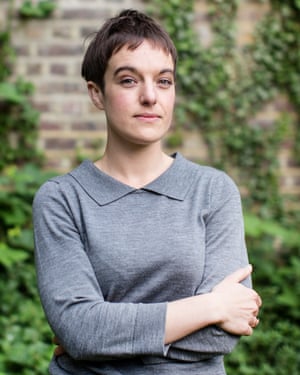
Martha Spurrier, the director of Liberty, says: ‘Fostering fear of the doctor in this way is a whole new dangerous and irresponsible low. Photograph: David Levene for the Guardian
Prompted by similar unease, the National Union of Teachers this week passed a motion condemning the Department for Education’s requirement, introduced last September, that parents must supply details of pupils’ nationality and country of birth to schools. The DfE may subsequently pass on this information to the Home Office. The request also forms part of a drive by Theresa May to create a “hostile environment” for illegal immigrants.
Miriam Beeks, a GP at Lower Clapton Group Practice in east London, has put up posters telling patients they can register as “no fixed abode”.
“Doctors, in general, hate the idea that they are being used as immigration officers. Doctors should feel confident about standing against this. We are backed up by both NHS and GMC confidentiality rules – our interactions with our patients are confidential,” she said.
Figures released this year show the number of Home Office requests to NHS Digital has tripled since 2014. Department of Health data reveals the Home Office made 8,127 requests for patient details in the first 11 months of 2016, which led to 5,854 people being traced by immigration enforcement.
Martha Spurrier, director of Liberty, said: “This government has made border guards of teachers, landlords, bank clerks and now even doctors – all as part of a misguided and counterproductive obsession with creating a ‘hostile environment’ for undocumented migrants.
“Fostering fear of the doctor in this way is a whole new dangerous and irresponsible low. It will put the health of the most vulnerable in society at risk, including children and victims of trafficking and torture.” Deborah Gold, chief executive, of the National Aids Trust, said the decision must be reversed. “Without any consultation, NHS Digital have agreed to share important personal information with the Home Office. They have betrayed their responsibility to safeguard the confidentiality of NHS patients. They have also harmed public health as people are deterred from healthcare,” she said.
A government spokesperson said no clinical information would be shared. “We share non-clinical information between health agencies and the Home Office to locate individuals suspected of committing immigration offences. Access to this information is strictly controlled, with strong legal safeguards.
“Immigration officials only contact the NHS when other reasonable attempts to locate people have been unsuccessful. Anyone in genuine need can always receive treatment from the NHS – urgent or necessary care is never withheld.”
In its clinics providing basic healthcare to undocumented migrants, Doctors of the World has encountered numerous patients who have avoided seeking medical help because of their irregular immigration status.
The charity said it recently helped a woman who visited their east London clinic in labour. She had avoided seeking antenatal care because she feared being reported to the Home Office and was concerned about the cost of treatment.
Doctors of the World also highlighted the case of a young Ugandan woman who was almost six months pregnant and had not sought antenatal care because she was too scared to visit the doctor. She has lived in the UK for five years, her partner is a UK citizen and they are in full-time work, but she does not have a visa.
“I feel trapped. I’m in a situation where I need to go to the hospital but I can’t, because I feel my information might not be confidential,” the woman said. “I can’t imagine being separated from my partner. Maybe they would make me go back without my baby too. I would be separated from one or even both of them.”
Doctors of the World has also been contacted by a woman from the Philippines who has lived here for several years without a visa. She found a lump on her breast last September and was concerned because of a family history of breast cancer.
The woman, who worked as a cleaner, received an appointment for a biopsy but did not attend amid concerns that the hospital would share her details with the Home Office.
She said: “I felt like I was carrying the weight of the whole world. I was worried that if I went to the hospital and the immigration authorities know about it they might get me and deport me. But if I didn’t go to hospital, then what about the lump?”
She said she forced herself to go to a second appointment and the lump was eventually removed. She said: “In the end, I thought I must go. The lump was getting bigger, it was over 4cm by then. I was so scared at the hospital – my pulse was going so fast!”
The woman remains concerned about the risks of seeking medical help. “For years I had just tried to protect myself from getting sick – like by always wearing warm clothes – because I thought it wasn’t safe to go to the doctor,” she said.
Desperate hospitals are so short of doctors they are pleading with them to take on extra shifts, with some offering up to £95 an hour to cover gaps in medical rotas to maintain patient safety.
Hospitals are so chronically understaffed they have been hiking pay rates in recent weeks and bombarding doctors with urgent emails and text messages in a bid to ensure standards of care do not suffer.
On Tuesday, Peterborough City hospital raised the pay available for working overnight that night in its “extremely busy” A&E to £95 an hour for a 10-hour shift to try to attract recruits.
“Exceptionally, we approved a maximum hourly incentivised rate for our senior trust doctors. This will ensure safe medical staffing levels and enable the department to continue to give high quality care to all our patients,” said Neil Doverty, the North West Anglia NHS foundation trust’s chief operating officer.
Hospitals often scramble to make 11th hour arrangements to fill rotas. Last Monday the Dudley Group NHS foundation trust in the West Midlands was forced to increase the fees for senior house officers in its A&E from £60 an hour to £70 an hour for shifts lasting 10 and 12.5 hours.
The Guardian has seen messages sent by dozens of hospitals across England and Wales to doctors which paint a picture of near panic as many of them struggle, often at the last minute, to have enough medics on duty.
Many hospitals have been struggling to find enough doctors to work over the Easter weekend, with some trying more unorthodox approaches to get staff in. West Middlesex hospital in London, which is facing problems staffing its rotas despite having a well regarded bank of staff and paying high locum rates, this week offered any doctor working over the holiday weekend an Easter egg as an incentive.
Faced with an acute shortage of A&E doctors last month, the John Radcliffe hospital in Oxford sent scores of doctors an email entitled “help!” which said: “I am sorry to be sending so many messages but I am in real need here. I am practically begging at this point. I really need some help.
“Can ANYONE help out for any length of the shifts needed this weekend? It really is a matter of keeping the department safe.” The email was sent on 16 March by Brigid Greaney, the medical staffing administrator for the hospital’s emergency department.
This week Lewisham hospital in London, in its search for doctors to staff its general medicine department, sent an email that said: “We are struggling with the cover for on-call shifts this week. Please let me know if you can help.” It offered to cover doctors’ day shifts if they agreed to work nightshifts.
Doctors’ leaders say the problem is getting worse, blaming NHS workforce planning and the pressure of coping with the growing number of patients needing care.
“Hospitals should not be reduced to begging, but what other option do they have when the NHS is so chronically under-resourced? This should set alarm bells ringing right through the NHS,” said Dr Liam Brennan, the president of the Royal College of Anaesthetists.
Dr Mark Holland, the president of the Society for Acute Medicine, said: “Rota gaps are common – very common. I would be surprised if any hospital anywhere has a full complement of staff. There are some trusts under huge stress and where putting a workforce in place is very challenging, I would be surprised if there wasn’t a sense of desperation to get doctors on the shopfloor.”
Hospitals are sometimes being forced to pay well over the normal rates for hard-to-fill shifts because “there is a pan-NHS workforce crisis. This isn’t about greedy doctors,” Holland said.
The emails and text messages show that almost every branch of medicine is experiencing acute shortages of doctors in at least some hospitals. They range from surgery to cardiac care, anaesthetics to A&E and general medicine to intensive care. For example, Manchester Children’s hospital last Tuesday solicited volunteers for 19 “long days” and 26 nightshifts this month in its paediatric intensive care unit “to be paid at the enhanced rate of £60 per hour”.
Some hospitals facing acute shortages are advertising scores of shifts at a time. Milton Keynes hospital this week notified doctors of 52 shifts over 20 days this month in its A&E. Worcestershire Royal hospital in Worcester has so far only filled five of the 69 shifts it is seeking to fill between now and early August.
A doctor at Chesterfield Royal hospital, who asked to remain anonymous, said: “The rota gaps problem here is insurmountable and, frankly, rather dangerous. The quality of my life has been greatly impaired by the busiest winter we had on record followed by no real drive by the trust to recruit more doctors to anticipate this deluge of patients. The biggest culprit is A&E which is almost entirely staffed by locums, most of them being long-term [locums], followed by the emergency medical unit, which is very short on nights and weekends.”
Despite hospitals’ best efforts some shifts are still going unfilled, which puts extra pressure on other staff. A trainee surgeon at a major London teaching hospital said: “I’ve had occasions where instead of having two on-call senior house officers to hand over to, I’ve had to cover both shifts, after already working 12 hours.
“Working locum shifts in short-staffed departments often feels like juggling with your medical licence as your clinical decisions are affected by time pressures and bed shortages more than your assessment of the patient in front of you.”
Hospital bosses warned that endemic understaffing is threatening patient safety.
“Along with high levels of bed occupancy, gaps in rotas can mean patient safety is put at risk. Fewer medical staff on shifts create intolerable workload pressures for all staff. This is bad for morale which has a further impact on the quality of care,” said Saffron Cordery, the director of policy and strategy at NHS Providers, which represents hospitals.
“Workforce pressures are fast becoming the number one concern for many NHS trusts, including hospitals, mental health, community and ambulance services. These are particularly difficult over holiday periods. All types of trust are affected but we know that this can be very challenging in rural areas and in specific specialties. Patient safety is always the top priority and every trust wants to guarantee safe care. The steps described here are an indication of just how seriously they take this,” Cordery added.
A Department of Health spokesperson said: “Staffing is a priority – that’s why we have invested in the frontline and there are over 31,400 more professionally qualified clinical staff including over 11,200 more doctors, and over 12,100 more nurses on our wards since May 2010.
“With over 52,000 nurses in training we will continue to make sure we have the staff available to give patients high-quality care as part of a safer NHS seven days a week.”
The Guardian has discovered that dozens of hospitals are struggling to recruit doctors to fill gaps in their rota. They are sending out urgent emails and text messages, often hours before a shift needs covering, asking for medics to come in. They are also offering increased hourly rates – of up to £95 an hour – in an attempt to encourage staff to cover.
But, despite this, doctors say many shifts are going unfilled, putting patient safety at risk. Doctors are being spread too thinly, they say, often having to leave other departments to offer help where its needed. They are also missing out on training due to staff shortages and being asked to work long hours back to back as a result.
We heard from dozens of NHS doctors about this. Here are a selection of responses.
Michael, a trainee surgeon: ‘We often have to cancel our emergency clinic because of a lack of staff’
We’ve had a rota gap for well over half a year now in my department. It has a knock-on effect. First, it means that my colleagues and I are constantly asked to cover extra 12-hour on-call shifts, despite already working long hours. Second, it affects services. We often have to cancel our emergency clinic because of lack of staff. But most importantly as a trainee surgeon in the past, I have not been able to attend theatre sessions to get training. This is worrying because when I am asked to perform certain life-saving procedure I may not be confident doing them on my own.
All junior doctors needs training to progress. When there are long-term rota gaps, this falls by the wayside and covering the services become the priority. Without adequate training, the service we provide will inevitably get worse as years go on.
It’s terrifying: you’re the most junior doctor in the hospital and you’re responsible for so many people
Jack, A&E locum: ‘One hospital had just two doctors for their A&E department – they called an emergency meeting’
I am working as a junior doctor in A&E. Since the tax rule changes (known as IR35) the gaps in A&E rotas in hospitals in the Midlands have got bigger. They were present before but not as visible.
One hospital I was in had only two doctors for a large A&E department overnight. They had to call emergency meetings and take doctors from other areas of the hospital. It meant patients needing treatment had to wait longer. Doctors stayed on for hours to try to bridge the gap. I stayed for as long as I could but in the end I was so tired I wasn’t safe. On the drive home I rolled the windows down and played music loudly just to try and stay on the road.
I work in three hospitals across the Midlands and the majority of the time there is not a full rota of doctors. When I arrive in the morning for handover, I have been told someone needs to go home and come back for the night shift as there isn’t enough cover. One consultant who was on call for 72 hours was in the hospital for the majority of that time trying to see patients and find more staff. A&E is the worst hit. This is because it has the lowest percentage of filled posts in training schemes and is most heavily reliant on locums. Its training schemes are underfilled because it has difficult hours, difficult time pressures, and it is one of only two ways into the NHS system. The GPs close, but the emergency department never closes so it’s always on the frontline.
Brian, a foundation doctor: ‘It’s terrifying when staffing gaps leave you responsible for loads of people’
Night cover is almost permanently short-staffed. It’s terrifying: you’re the most junior doctor in the hospital and you’re responsible for so many people. I am also seeing the effects on the more senior members of the team. They are sometimes expected to be in two or three places at once (somehow simultaneously covering the ward and clinic). I don’t understand how the problem seems to be taken so lightly. It’s a threat to patient safety.
Tensions run high as ridiculous last-minute rota changes result in people getting angry that a staff member they were planning on using has now been seconded elsewhere. The government capped rates for locums, the doctors who cover when staff members are ill or on holiday. Given that we sometimes already do 70-hour weeks (yes, that’s legal too somehow) our free time is very precious. The extra work is heavy enough as it’s short staffed, so the pain and risk just isn’t worth what we’re being offered.
Mandy, middle grade doctor: ‘Remaining staff take up the slack – teaching falls away and morale drops as a result’
Every rota has rota gaps. Obstetrics and gynaecology requires seven registrars; we have 1.8 doctors at our hospital. In intensive care, they are at least six registrars short. Every day we receive messages requesting staff to work extra shifts. Today working on renal the issue wasn’t a rota gap with doctors but with nurses: patients who needed dialysis couldn’t receive it due to not enough nurses to care for them on it.
The issue is the remaining staff take up the slack and go above and beyond every day to ensure patients remain safe. This makes our lives fairly miserable: teaching falls away, morale drops and tensions rise.
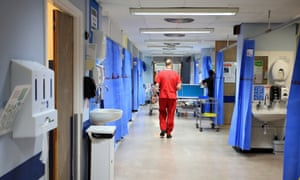
‘Rota gaps are ubiquitous, a daily occurrence. As a junior doctor you become desensitised to them.’ Photograph: Peter Byrne/PA
Al, a core medical trainee: ‘Not a day goes by where we don’t get emailed about a need for cover’
Rota gaps are ubiquitous, a daily occurrence. As a junior doctor, you become desensitised to them, which is a scary thing to say. Not a day goes by where we don’t get emailed about a need for cover. Sometimes phone calls are made to all the employed staff asking of they can work an evening shift or a weekend shift.
You become desensitised to gaps in the rota, which is a scary thing to say
If this fails, then the vacancy is put out to the preferred locum agency dealing with the hospital who then have thousands of doctors at hand. Often these medics have not worked at the hospital before and although they agree to step in, they are nowhere near as efficient or diligent as the staff doctors.
My trust are also employing long-term locums to fill these gaps in the rota. This a positive step as these doctors become well acquainted with the hospital policies and procedures
Iman, consultant physician: ‘Highly-skilled surgeons are sometimes pulled out of theatre’
I have been given the thankless task of coordinating the junior doctor rota, a role which no one wants, but is almost forced on you. The reason people are reluctant to take it on is the almost daily severe shortage of staff which means that you are firefighting all the time.
I have rota gaps more often than not. The number of junior doctors allocated to the hospital by deanery is less than what we are supposed to have. We try to cover the rest by recruiting locums, which is often unsuccessful partly due to locum pay caps.
The remaining juniors are often under a lot of stress due to manpower shortages and consequently the sickness rates are high. On several occasions some of the wards have no juniors at all, which then requires senior staff to act down. This is a waste of resources as it means a highly-skilled surgeons or physicians are pulled out of the operating theatre or clinic to do these jobs.
On several occasions some of the wards have no juniors at all, which then requires senior staff to act down.
It’s hugely concerning. I have raised these repeatedly with the trust board, but they are powerless to do anything. We do not have enough junior doctors full stop. Deanery cannot recruit enough in specialities such as medicine and A&E due to onerous on-calls. The 1% pay caps have eroded pay and the imposition of contract has resulted in many juniors leaving the country, depleting the pool further.
Tom, general surgery registrar: ‘Increasing rota gaps is one of the factors driving doctors out of the profession’
Most hospital doctors are extremely worried about the impact of rota gaps on patient care. Clearly, having doctors who have stayed on for up to an additional 12 hours beyond a normal 12-hour shift means they are far too tired to make reliable clinical decisions, especially for the sickest emergency patients. Beyond fatigue, the routine reassignment of doctors from their ward duties to the emergency department leaves vast numbers of patients with too few doctors to look after them. It is often the most junior doctors who are left caring for large numbers of vulnerable post-operative and/or elderly patients without quick recourse to or support from more experienced colleagues.
In the 10 years since I qualified, I have seen nothing but a relentless increase in the demands put upon hospital staff. Increasing rota gaps have compounded the pressure on staff and is one of the factors driving doctors out of the profession and into mental health problems.
Doctors feel they are spread to thinly to provide good care to patients, a survey found last month. The poll of more than 2,100 members of the Royal College of Physicians found 84% had experienced staffing shortages across their team, while 82% believed the workforce was demoralised. Many believed patient safety has deteriorated over the 12 months.
It comes after The Royal College of Physicians annual census of British consultants showed the pressure NHS staff were under. Doctors who were polled said they worried there were not enough medics to keep patients safe. A quarter of those who responded expressed concern about rota gaps, when a hospital or department is unable to cover the working shift pattern due to a lack of staff.
Share your experiences
The Guardian wants your stories about this. How often do shifts go unfilled where you work? What pressure does this put on remaining staff members? Are some medical specialties more affected than others? Have you found yourself working long hours to fill gaps? Are you concerned that this is affecting patient safety?
Share your stories and experiences, anonymously if you prefer in our encrypted form, only the Guardian has access to your contributions. We will do our best to keep you anonymous.
A record number of GP practices closed last year, forcing thousands of patients to find a new surgery, in spite of government attempts to stop local doctors shutting their doors.
NHS England data showed nearly a hundred practices closed in 2016, a 114% increase in GP closures compared with figures from 2014. Of the 92 practices that shut, 58 did so completely, while 34 merged with other local surgeries in order to pool resources.
The drop in GP numbers meant 265,000 patients – an increase of 150% from 2014 – had to change their practice last year, often travelling further for care. Brighton was particularly badly affected with 9,000 patients displaced when four practices closed. There have been a total of seven closures in the city over the past two years.
The new data, obtained by the GP website Pulse, has renewed fears that family doctors are not coping with increased demand and need an urgent cash injection to survive. Senior doctors also expressed concern that government funding was not being targeted correctly.
patients displaced gp practices close
It comes despite the NHS announcing its GP forward view plan last year, promising to invest an annual £2.4bn into services by 2020. The government also announced £500m investment as a rescue package, which included £16m to support vulnerable practices.
Dr Chaand Nagpaul, chairman of the British Medical Association’s GP committee, told Pulse: “We know the money, targeted in the right way, for the most severely affected practices, can make a difference.
“The tragedy is clinical commissioning groups have not delivered their part in making the resources available. Many practices that should have received support have had none to date. That’s been a failing of local delivery.”
Prof Helen Stokes-Lampard, chair of the Royal College of GPs, said: “Too many practices are being forced to close because GPs and their teams can no longer cope with ever-growing patient demand without the necessary funding and workforce to deal with it. This has serious consequences for patient safety and the wellbeing of hard-working family doctors and their practice teams.”
The findings are likely to put more pressure on the government to address a growing NHS crisis, with hospitals and family doctors under increasing pressure.
Jonathan Ashworth MP, the shadow health secretary, said: “These are startling revelations and really bring home the extent to which Theresa May’s NHS funding squeeze is impacting on people every day in communities across the country.”
He added: “Given the crisis in hospitals we’ve seen we need to be taking the pressure off hospitals. That means doing much more to protect GP services. With Labour, general practice will be at the heart of making the English NHS more focused on care closer to home.”
Norman Lamb, the Liberal Democrat health spokesman, said: “There is a pressing need for a national, cross-party discussion about how we can afford a modern, efficient, and effective health and care system. I once again urge the prime minister to begin such a process. We must face up to the scale of this challenge, and to the possibility that we might have to pay a little more in tax to ensure that everyone gets the high-quality healthcare they should expect.”
An NHS England spokesperson said: “All NHS patients wanting to register with a GP practice are guaranteed to be able to do so and we have increased investment in general practice by £1bn in two years in order to improve services and boost GP numbers.
“These figures as presented don’t reflect the full picture as they include patients whose records automatically transfer after a merger and therefore don’t have to change practice. As part of our plans to improve general practice services and boost the workforce, many practices are choosing to merge in order to offer patients a much greater range of services.”
Antidepressants are among the most commonly prescribed drugs throughout the western world. In fact, they are prescribed more than any other drug for Americans aged 18 to 44, and they are now taken four to five times more frequently than in the early 90s. In the UK, antidepressant use has doubled over the past decade. Either more people are depressed, more people are talking about their depression, or doctors now think they have got a pill that will help.
What are these drugs? Unlike the antidepressants of 30 years ago, they are considered “clean” and well-tailored. They target a certain neurochemical and leave the rest of the brain alone. (Old-school antidepressants were notorious for their scattershot effect.)
First-line antidepressants are almost exclusively what are called selective serotonin reuptake inhibitors (SSRIs), with the emphasis on “selective”. That means they keep serotonin in the connections between neurons (the synapses, where all the action is) far longer than it would normally remain. Serotonin is a neurochemical that appears to moderate the information travelling between neurons. The theory is that depression grows from too much information, consisting mainly of self-criticism, negative memories and negative expectations, cycling in an endless loop. More serotonin should diminish this unhelpful deluge.
But do SSRIs actually work? Despite great promise, the big picture reveals a mixed bag of results – and opinions. Many studies have revealed extremely limited effectiveness for SSRIs when compared with placebos. These disappointing results drew attention to studies conducted by the pharmaceutical companies, in which poor results were systematically buried. (Did we really trust the drug makers to present an unbiased picture?) Yet other well-controlled studies suggest that SSRIs do help depressed people at least some of the time. The final verdict? SSRIs help some people on a good day, according to some studies and not others. Most experts agree that it would be a very good thing to find other drugs that work more reliably.
Along comes ketamine. Ketamine has been around since the early 1960s, when it became available as an anaesthetic for use with humans and animals. Its psychotropic (mind-altering) effects were soon discovered. Ketamine changed people’s perception of themselves and the world around them to a degree comparable to LSD and other psychedelics. Thus began its career as a street drug and its designation as a controlled substance. You know how the reasoning goes: we can’t let people go around changing their reality. Nevertheless, it has been used as a party drug for decades, often under the nickname “K”.
We’re being forced to fix our own mental health. And it’s not working
Ketamine’s potential for fighting depression has been studied for years. Current reviews conclude that it is highly effective against depression – a promising new medicine, but potentially dangerous, both physically (you can lose your balance) and psychologically (it can produce psychotic-like states). But how does it work?
The main neurotransmitter for communicating between brain cells is glutamate. Little bundles of glutamate molecules, sent from one neuron to the next, tell each neuron how rapidly to fire – a very important message. But glutamate molecules have to enter the receiving cell through a doorway designed to welcome them. And one of the main doorways is called the NMDA receptor.
Thanks to swarms of glutamate molecules shooting into NMDA receptors all over the brain, an incredibly complex, incredibly subtle network of firing neurons creates our sense of reality. When the brain is functioning normally, the pattern of firing neurons matches what is going on in the world outside your brain. If you happen to be schizophrenic, then not so much.
What ketamine does is block many of those NMDA receptors, so the glutamate molecules have nowhere to land. Consequently, the network that fashions reality starts to fall apart. The harmony of synchronised neurons breaks down, and your perception of the world starts to drift. That’s why ketamine is called a “dissociative”. Ketamine has been used on the battlefield where wounded soldiers can dissociate from their pain. So ketamine’s main contribution is to free you from what’s in front of your face.
Nobody knows exactly how ketamine nails depression. Yet I don’t think it’s so mysterious. When people are depressed, they undergo the same cycling thought patterns over and over again: I’m no good. Nobody really likes me. I don’t deserve to be happy. I’m too selfish, too greedy, too unpleasant. It’s called rumination. What’s more, the negative self-thoughts reinforced through rumination promote feelings of sadness, shame and hopelessness, while those feelings reinforce the spiralling negative thoughts. A vicious circle indeed.
What ketamine might do is break the cycle, perturb the relentless repetition of depressive self-appraisals. The “reality” that you are a bad, worthless person gets fragmented, because ketamine fragments everything you think you know. Ketamine permits you to sojourn into different psychological realities. That is one of the risks associated with clinically dispensed ketamine, but for depressives, a little holiday from the daily grind of pessimism might be a welcome relief.
It would be great if ketamine-based treatment moves beyond its interminable research phase: is it really safe? Can we be absolutely sure? Let’s not forget that booze can also make you lose your balance, and it’s quite legal. And depression itself can generate psychosis, often for lengthy periods. Ketamine doesn’t look so bad on balance.
I would like to see ketamine become available, at least through the safeguards of the doctor-patient relationship, to the millions who suffer depression. But there is a lesson to be learned from ketamine’s protracted debut. We are so afraid of the drugs people take for fun, to feel good, or at least to feel different for a few hours, that we ban them almost reflexively and punish those who use them. Why? What’s so bad about adults taking a vacation from the imperious reality we call “normal” – a reality that, sorry to say, isn’t decreed by God or nature but by culture, by a semi-arbitrary history of conventions? We should divert some of our hyped-up fear of abuse potential into a societal experiment, a sandbox, so to speak, for exploring the benefits of various popular drugs – drugs (such as ketamine, marijuana, ecstasy and psilocybin) that are illegal because people sometimes want to take them. Surprise, surprise: these drugs might just help people feel better.
The ceilings soar impressively high, the stained glass windows are exquisite, and the satin-adorned pews stretch majestically to the dignified altar. Amid the silence punctuated by the barest of sobs, I spot doctors whom I have long lost track of. And row upon row of nurses, still tight years later. As we wait for the service to begin, we imagine we are all silently interrogating our memories about each other. Time parted us for decades before we have gathered in such dreadful circumstances.
“I wanted you to hear it from me,” a colleague had said, audibly upset on the phone. I nearly collided with the pavement when I heard.
She was wonderful, the speakers confirm that morning. Her boss delivers an impassioned eulogy about an inspired clinician and a devoted mother to the children who sometimes tagged along on weekend rounds. Her best friend recalls their last conversation that ended with the doctor saying to the nurse, “Go home, don’t work so hard.”
Her husband quietly expresses gratitude for their years together and grief for the stolen ones. Her parents sit mutely, heads hung low, suddenly and irrevocably aged. A slideshow of pictures, depicting ordinary things – licking ice cream, dropping of the kids, medical graduation, the first day of internship – suddenly turned unmistakably poignant. The audience is frozen in a horrible dream.
Outside, there is more heartbreak. “We have to say goodbye to Mummy, just us,” the children’s father says softly. We, the gathered, hold our breath lest it makes a sound. Gently, under the flowers she so loved, she is lifted into the car. It’s soon a mere dot on the road. There are refreshments but the crowd disperses awkwardly, wordlessly, not trusting ourselves to speak.
We had known each other well enough in our early days, biding time on endless night shifts, watching dawn break, praying that the nurses would save the next page for the day crew. Later, our lives diverged, each assuming the other was successful, busy and content. The final time I saw her was shortly before she died.
It had been a fractious day; I felt brittle, from a distance she looked happy. What would have happened if we had stopped to talk?
If she had asked, “How are you?” I’d almost certainly have smiled, “Fine.”
And if I had asked, “How are you?”
Could she conceivably have replied, “Suicidal”?
After the gut-wrenching news of her suicide starts the inevitable soul-searching. It was a bad boss. No, a troubled marriage. Parenting had taken its toll. Or her disagreeable colleagues. She seemed so normal in the days leading up to it. No, far from it. She was upset, anxious, disillusioned. The only thing you learn is that for someone who was surrounded by observant and intelligent people, no one really knew much at all. No one knew what went through the mind of a vibrant and capable doctor in the prime of her life, who one day decided that life wasn’t worth living anymore.
Unfortunately, this isn’t the first time I have encountered the suicide of a colleague. Some I had known personally; others were brought close through mutual patients, and still others I would never get to meet because they had ended their life before starting a new rotation. In every instance, other doctors did not realise the depth of their colleague’s mental anguish. “I wondered about her but didn’t want to intrude,” someone ruefully recalled. “I didn’t think it was possible,” reflected another.
Four junior doctors have taken their lives in the past six months in Australia.In my busy hospital, I observe a roundabout of students, residents and specialists in difficulty. But how much difficulty? When they say they’re having a bad time, is it a bad week, a dreadful year, or a tortured life? Are they upset about a rejected grant or do they deem their very existence worthless? Forced smiles and tough hides abound in the workplace, where always being “fine” is a badge of honour. This is why it can be so difficult to distinguish doctors who will indeed be fine from those who need help.
There is ample evidence for the high rates of mental illness in doctors, several times greater compared to other professions and the general population. These figures are quoted so frequently at every orientation that awareness should not be an issue. Practically every institution has an employee assistance program that offers confidential help. Some offer free psychiatric evaluation and counselling. And as with other informal medical consults, many psychiatrists will help a colleague in distress, making access to high quality help less of an issue for doctors than many others.
Armed with knowledge and surrounded by advice, why do doctors commit suicide at an alarmingly high rate?
I sometimes fear it may be because as a profession, we are reluctant to swallow the evidence. And if we can’t accept the evidence we can’t help ourselves or others. We can have an intellectual discussion about anxiety, depression or suicide and we can apply the knowledge to our patients but but identifying vulnerability in our own self is altogether different. No matter how many times we hear it, it still doesn’t seem possible that we, or someone like us, could have a mental illness. The consequences seem so vast, the repercussions so numerous that perhaps it’s better to not know the truthful response to “Are you OK?”
Doctors say that the disclosure of mental illness poses a real threat – to license and insurance, career and reputation.
Discrimination, bullying and harassment in medicine are unfortunately never far from the headlines but thanks to brave people who have risked their career, a victimised doctor has more support than ever before. Nonetheless, a career in medicine means always having to keep up with something, whether it’s the latest research, the newest drugs, the next exam or the upcoming promotion. Doctors would like to be perfect at all of these and are genuinely puzzled when life deals them disappointment. It seems ludicrous now but I was dumbfounded when I got my first mark that wasn’t a distinction. Twenty years later, I realised nothing had changed when my registrar failed his specialist exam and told me that “even the walls” were laughing.
When doctors are depressed, their sense of personal failure is compounded by the suspicion that they somehow lack the ability to pull themselves together. The “well” among them can’t understand how the same stressful hospital ward, the same demanding colleagues, the same rocky tenure track can make some of us angry, others sleepless, and yet others suicidal.
In these pressured times, few doctors would be strangers to a variation of the message, “Heard you’re sick. There’s no cover so let us know whether to cancel your patients.” There is no call more disheartening than one that professes to care about the doctor but can seem like a veiled complaint that says, “If you’re sick, we all suffer.” But while it’s quite easy to tell your colleagues that you have pneumonia or a migraine, doctors say that the disclosure of mental illness poses a real threat – to license and insurance, career and reputation. The diagnosis invokes not only sadness but also ignominy, which may be why there are so few well-publicised stories of doctors with mental illness.
For much of my career, I have watched policies, promises and campaigns about combating mental illness and suicide in doctors. Our knowledge is evolving and with it, ways of managing mental illness, but with many lives lost each year, we don’t have the luxury of time.
Since we can’t always read the suffering of our colleagues, humanity in all our professional dealings and concern and compassion for every colleague must be a priority. As well as this, a healthy dose of introspection about how we judge doctors with a mental illness and why we judge them differently, arguably more poorly, than our patients.
When it comes to mental illness, we hear a lot from the experts but not enough from the sufferers. But in fact, nothing would be more welcome than the insights of doctors who have endured mental suffering and worse, been on the brink of suicide. What healed them and who helped them? What could their colleagues have said or done differently at the time? What workplace adjustments would have meant the most? These stories are clearly among us – hearing them could illuminate the dark corners of our understanding and help link theory and practice.
As a profession, we must do more than lament our dead colleagues. Dealing effectively with mental illness and halting suicide among doctors requires curiosity, compassion and practical support. Most importantly, it requires the humility to realise that in the long span of a career, none of us is immune and that those doctors whom we help today could end up saving our life tomorrow.
In Australia, the crisis support service Lifeline is on 13 11 14. In the UK, the Samaritans can be contacted on 116 123. In the US, the National Suicide Prevention Hotline is 1-800-273-8255.