Four etiketine sahip kayıtlar gösteriliyor. Tüm kayıtları göster

13 Nisan 2017 Perşembe

One in four young women in UK report mental health problems, study shows

A quarter of young women in the UK have suffered from anxiety and depression, according to a new survey released by the Office for National Statistics (ONS).


The figures were collected as part of a wide-ranging survey gauging the wellbeing of people aged between 16 and 24. They show that, despite an increase in the number of those who said their quality of life had improved since 2009, one in four young women said they had faced symptoms linked to poor mental wellbeing in 2014-15.


The report said that young women were “significantly more likely” than their male counterparts to recognise and admit being anxious or depressed, with less than one in six young men reporting similar symptoms.


The ONS report used data taken from surveys that focused on a person’s overall happiness – shown by their attitudes to issues such as relationships, work, education and finances – to create a nationwide picture.


The results show that while more than a third of young people aged between 16 and 19 who were questioned said they had a “very high” level of life satisfaction, this dropped to just a quarter among people aged between 20 and 24.


The study also reveals that in the four years from 2009-10 to 2013-14, the number of young people saying their mental health had “deteriorated” rose from 18% to 21%.


Tom Madders, campaign director at the mental health charity YoungMinds, said: “There is still a huge amount of misunderstanding about mental health conditions, making people less likely to open up to others if they are struggling to cope. This is particularly difficult for young people who face pressure, including stress at school, college or university and body image issues.”


He said that an environment of 24-hour access to social media led to some young people feeling they needed to “keep up the pretence of having a perfect life”.


Other figures from the study show that the number of young people who believe they are financially comfortable has increased since 2009-10. Seven years ago, 15% said they were struggling to get by, while by 2014-15 the number reporting financial hardship was 7% – and a significantly higher percentage (45%) said they were satisfied with their household income, up from about 30% in 2009-10.


The report added that levels of “general health satisfaction” had risen, with 56% saying they were “mostly or completely happy” in 2014-15, compared with about 52% the year before.


However, the figures also show a rise in households deemed to be living in poverty, based on families who earn less than 60% of the average UK income. One in four said they lived in a household at such a level, compared with 20% in 2008.


YoungMinds recently called on teachers, parents and carers to sign an open letter to the prime minister, Theresa May, urging her to place an increased emphasis in schools and colleges on improving young people’s mental health, and to recognise the pressures caused by exam stress, cyberbullying and fears over employment when they leave education.


Madders said: “A good quality of life includes having positive mental health and wellbeing, so it’s crucial that the problems which young people report are taken seriously and supported to prevent them escalating and going into crises.”


One in four young women in UK report mental health problems, study shows

10 Nisan 2017 Pazartesi

Meet the girl who has had four hearts – video

Born with a serious heart condition called dilated cardiomyopathy, Chloe Narbonne had five major operations – and four hearts – by the age of 12. She defied the odds to become the youngest person in Europe to receive an artificial heart thanks to groundbreaking surgery involving 30 NHS staff. Now Chloe, her mother and medical personnel tell her amazing story for the first time


Meet the girl who has had four hearts – video

"When I met Chloe she was dead": one girl, four hearts and an NHS miracle

[unable to retrieve full-text content]


Chloe Narbonne’s heart failed when she was 11, starting a near-hopeless fight for survival. A year on from groundbreaking surgery, she is alive and this is her story


  • Revealed: girl of 13 is first child in Britain to receive artificial heart

“By the time I met Chloe she was dead,” André Simon says matter-of-factly. “I told her parents clearly that she didn’t really have a chance to survive. What I was proposing gave her a theoretical chance.” He pauses. “But I also said that the operation might just prolong her agony and suffering – I didn’t even know if she would survive it – and that it was OK just to let her go.”


Simon, one of the world’s leading heart and lung specialists, is recalling the conversation he had at the beginning of May last year with Fabienne and Todd Narbonne that led to him implanting an artificial heart inside their 12-year-old daughter Chloe. “It was an emotional meeting, it was tense, it was horrible. They were trying to be calm but they were extremely anxious and were holding on to each other for support. They put their last hopes in me and they prayed for a miracle.”


We owe the donors and their families eternal thanks


Continue reading…


"When I met Chloe she was dead": one girl, four hearts and an NHS miracle

UK eats almost four times more packaged food than fresh

The UK eats almost four times as much packaged food as it does fresh produce, according to new data, with most of western Europe and north America following a similar pattern.


The packaged food revolution – which includes ready meals and calorific cakes and biscuits – is held at least partly to blame for the rise in obesity in the US and Europe. Fresh food has played a smaller and smaller part in some families’ lives as the pace of life has speeded up over recent decades, working hours have increased and more women have entered the workplace. Set against this is the rise of ever more tasty instant meals.


Euromonitor has analysed data from 54 countries and shown that the balance has shifted from fresh to packaged food in the most developed. In some of the other populous but less developed nations – China, India and Vietnam – the nutrition transition, as obesity experts term it, has not yet reached tipping point and they are still getting most of their calories from fresh food.


.

In 2015, the data shows, 85% of the countries Euromonitor looked at consume more calories from packaged food than from fresh. The data relates to sales, but there is an assumption that most food that is bought is also eaten.


Brazil’s population consumed the highest number of calories per person per day as fresh food, out of the nine major countries in the survey, at 1,065 calories. The UK was second to bottom, at 405, above Japan which consumed just 247 calories from fresh food.


The UK bought the second highest calorific load of packaged food – 1,547 per person per day in 2015. Belgium was top, on 1,670 calories. China, Vietnam and India bought the least, with India buying just 164 calories in the form of packaged food.


Taking packaged and fresh food together, Belgium’s population buys the most calories per head, at nearly 2,600. India buys the least, at just over 760 calories per head in 2015.


Sara Petersson, nutrition analyst at Euromonitor International, said that the rise of packaged food was not necessarily all bad. “It is kind of the way we are today. The food we eat today is convenient. It is fast to consume and we don’t have to prepare it. Much of it is high in salt, sugar and fat but there are so many healthier packaged foods coming out all the time,” she said.


Food companies are now looking at reformulating food, to reduce the salt, sugar and fat content, reducing the pack size – which in the case of confectionery will probably result in smaller chocolate bars – and they can direct their customers to healthier lines, such as reduced sugar soft drinks.


But the rise of packaged food is cause for concern among obesity experts.


“Sadly, processed, packaged foods tend to be less healthy,” said Dr Tim Lobstein, director of policy at the World Obesity Federation.


“Better profits can be made from products with a long shelf-life and that can be formulated and branded as a commercial commodity. Fresh and perishable foods have a tough time competing with processed, additive-laden, brightly-packaged products. The logic of mass production means that the least healthy foods will often be the cheapest, and will be widely promoted in lower-income urban areas.”


Last month a professor of neuroscience who won an award for his work on the brain’s reward system advocated that high calorie food should be sold in plain packaging to be less attractive to shoppers.


“Colourful wrapping of high energy foods of course makes you buy more of that stuff and once you have it in your fridge, it’s in front of you every time you open the fridge and ultimately you’re going to eat it and eat too much,” said Wolfram Schultz, of the University of Cambridge.


Euromonitor also reveals that in many countries – 28 of the 54 its analysts examined, including the UK – more calories are bought in the form of alcohol than soft drinks.


“With the current obesity crisis, a lot of bad press has surrounded soft drinks, especially sugar-sweetened beverages,” said Petersson. The government’s proposed sugary drinks tax is aimed at reducing child obesity. However, she said, the data on alcoholic drinks suggests that sugar-sweetened drinks are not the only problem when it comes to adults.


“Of course, the relationship between sugar consumption and obesity/diseases is still crucial,” she said. “However, given the even stronger evidence for the relationship between alcohol consumption and morbidity, this data cannot be disregarded. Instead, this data could be used by soft drinks companies to argue against statements such as ‘soft drinks are primarily to blame for the obesity crisis’ or by policy makers/public health organisations to strengthen incentives against alcohol consumption.”


UK eats almost four times more packaged food than fresh

20 Mart 2017 Pazartesi

Four select committees launch joint inquiry into UK air pollution crisis

MPs from four influential committees are coming together to launch a joint inquiry into the scale and impact of the UK’s air pollution crisis.


In an unusual development, the environmental audit committee, environment, food and rural affairs committee, health committee and transport committee will hold four sessions to consider mounting scientific evidence on the health and environmental effects of toxic air.


Dr Sarah Wollaston, the health committee chair, said poor air quality was “affecting the health of millions of people across the UK”.


“Our joint inquiry will include an examination of the scale of the harm caused and the action necessary to tackle it,” she added.


Last month, the Guardian revealed the risk to children’s health posed by air pollution, identifying 802 educational institutions in London where pupils as young as three are exposed to illegal levels of air pollution.


The government says toxic air causes up to 50,000 early deaths – 9,000 of them in the capital – and costs the country £27.5bn each year.


The government’s own statistics show 38 out of 43 UK “air quality zones” breach legal limits for air pollution and last year the high court ruled ministers must cut the illegal levels of NO2 in dozens of towns and cities because their current policies to improve air quality were so poor they were unlawful.


The government has to announce its new plans before 24 April and the inquiry will examine whether these proposals go far enough to cut pollution “not only to meet legal limits but also to deliver maximum health and environmental benefits”.


Mary Creagh, chair of the environmental audit committee, said: “The UK courts have twice found that the government has failed to deal with our air pollution problem properly. Now ministers will face unprecedented scrutiny in parliament to ensure they finally step up to the mark to ensure adults, and children in particular, do not have their health damaged by filthy air.”


Much of the most dangerous pollution comes from diesel vehicles and there is growing pressure on the government to introduce a diesel scrappage scheme to encourage people to swap polluting diesel vehicles for cleaner alternatives.


Louise Ellman, chair of the transport committee, said the UK economy depends on an “efficient and flexible transport system” but added: “Emissions from vehicles are a significant problem and the standards that governments have relied on have not delivered the expected reductions. We will be asking what more can be done to increase the use of cleaner vehicles as well as to encourage the use of sustainable modes of transport.”


Neil Parish, chair of the environment, food and rural affairs committee, said the joint inquiry was unprecedented.


“The solutions to cleaning up our air are not the responsibility of just one minister. That’s why we have taken the unprecedented task of convening four select committees so we can scrutinise the government’s efforts from every angle and look for holistic solutions that are good for health, transport and the environment.”


Four select committees launch joint inquiry into UK air pollution crisis

16 Mart 2017 Perşembe

Why have four children when you could have seven? Family planning in Niger

Roukaya Hamani has an in-law problem. Her husband’s parents want more grandbabies, but she doesn’t want any more children right now. She’s already given birth four times; one of the babies died, and so now she has three, ages seven, five, and 16 months. She’s 18 years old.


“I just pray to God to bless those three babies I have,” she says. The local health centre in her village of Darey Maliki offered her free contraception, which they get partly from the NGO Pathfinder, but Hamani declined. “Maybe [my in-laws] would tell my husband to marry another woman to have more babies,” she says. “If they want me to have another pregnancy, I can do it just for them to feel happy.”


Hamani, a smiley, gap-toothed girl in a long orangey-brown headscarf worn in the popular style here – tight around her face and then flowing down to the knee, over a bright printed dress – never went to school, and got married when she was 10 and her husband was 20. He works in the fields and she keeps the home, waking up at dawn every day. “Why don’t I want to have another?” she says. “Because being a mother is not easy work.”


Hamani’s life is in many ways illustrative for women in rural Niger, where she lives in a small village of mud-brick houses lining sand-dust roads. Girls here get married young, usually as teenagers, and have their first child at 18. Polygamy is legal and commonplace, especially in the rural areas where about 80% of the population resides. More than half of girls don’t complete primary school, and fewer than one in 10 attend secondary school – as a result, less than a quarter of women here are literate. Women have an average of more than seven children apiece, the highest in the world. And they face a one-in-23 chance of dying from pregnancy or childbirth.


But Hamani is unusual in that three babies are enough for her. Despite having the highest fertility rate in the world, women and men alike in Niger say they want more children than they actually have – women want an average of nine, while men say they want 11.


When you have a huge number of young people who are jobless, they have no choice but to emigrate


Hassane Atamo, ministry of health


Birth rates as high as Niger’s contribute to rapid population growth. The country’s population exploded from 3.5 million people in 1960 to nearly 20 million today, with half of the current population under the age of 15. The overwhelming majority – 80% of Nigeriens – live in poverty. The landlocked nation is largely desert, less than 20% of the land is arable, and that number is shrinking due to climate change. At current growth rates, the population is set to double in 17 years. This, experts say, drives poverty, famine, political instability, and violence.


“When you have a huge number of young people who are jobless, they have no choice but to emigrate,” says Hassane Atamo, the division chief for family planning at the Niger ministry of health, noting that large numbers of young men go to nearby Ghana, Nigeria or Ivory Coast seeking work. “They may also fall into crime, or integrate into terrorism. The country is facing this problem as well, with the Boko Haram issue – they are recruiting jobless young people.”


To combat the health issues that come with high birth rates as well as the burden many young and out-of-work people place on a fragile economy and vulnerable security situation, the Nigerien government has turned to the solution: modern contraception. What they haven’t figured out, though, is how to get women to use it.


“This is a time bomb, because all the Sahel is in this situation, and especially with climate change, the food supply will be less abundant than before,” says John May, a visiting scholar at the Population Reference Bureau. “It’s a huge crisis.”


In a jam-packed room at a health clinic in Magama, a town in Niger’s Tillaberi region, 60-odd women cram side by side, each with a baby or two in tow, to hear Aboubacar Gousmane talk about family planning. Gousmane, an expressive, charismatic employee of Marie Stopes International, a global reproductive health organisation that does family planning work at this clinic, stands in front of a desk with a “choice kit” packed full of sample contraceptives.


“Family planning is about making space between your children,” Gousmane tells the group as babies cry. “We know our communities are poor. If we have many babies, we make it harder for ourselves. That’s why we say you should space pregnancies.” Contraceptives at this clinic, he tells the women, are free.


Currently, Marie Stopes International’s family planning work at this clinic is funded by USAid. Last year, they served nearly 30,000 clients. But since it is an international organisation that supports liberalising abortion laws and provides elective abortions in other countries where the procedure is legally allowed (in Niger, abortion is largely outlawed) it is going to lose its US funding thanks the “global gag rule” put into place by President Trump. Leaders from the organisation say they are hopeful that private donors and more sympathetic governments will fill the gap, but that it will be a substantial blow.


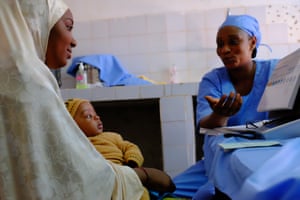
Marie Stopes International healthcare workers counsel women about contraceptive options.


Marie Stopes International healthcare workers counsel women about contraceptive options. Photograph: Jill Filipovic

In front of an attentive all-female audience, Gousmane goes through each contraceptive method, holding up samples – a T-shaped IUD, a needle with a little bottle of Depo-Provera, two white matchstick-sized implants, a slinky female condom – and explains how they’re used and how long they last. “It’s not for you to stop pregnancies or stop delivering babies,” he says. “It’s so you can deliver healthy babies and your body can make another baby.”


Many working in development say that to prevent a series of catastrophes – environmental, economic, security – women in Niger need to have smaller families. But unless women want their families to be smaller, there’s no reason to think the fertility rate will decrease anytime soon.


In Niamey, Niger’s capital city, the global health organisation PSI sends outreach workers to meet with women and talk about family planning. This is how 30-year-old Hadiza Idrissa ended up in the front yard of Mohammadou Rabi, a 39-year-old mother of four, her hair tucked under a gold scarf, a month-old infant in her lap.


Idrissa is helping Rabi figure out what kind of contraceptive to use, showing her samples and explaining the benefits of each one. Rabi asks if the IUD might fall out, or if the implant might break in her arm. Idrissa answers patiently (no and no); when Rabi says she isn’t sure what to pick and just asks Idrissa to choose for her, Idrissa says: “It’s up to you to choose a method. We just explain how the methods work.” She asks Rabi if she wants to come back in a few days, “so you can have a little time to reflect on what you want”. What Rabi wants is a break before having more children, ideally two or three more. “I like to make the Muslim community grow,” she says.


Niger’s population challenges are compounded by the prevalence of a conservative strain of Islam, which encourages followers to have as many children as possible. Any organisation working to put contraceptives into the hands of women has the dilemma of doing so in a way that doesn’t provoke religious backlash. Political leaders, too, have elections to worry about, and don’t want to cross influential clerics by pushing the population issue.


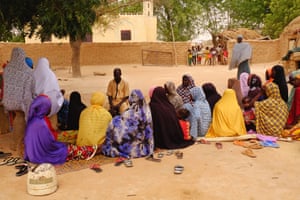
Women gather below a neem tree in a village outside of Dongondoutchi to hear Moundadou Magagi, a health agent with PSI, explain family planning options


Women gather below a neem tree in a village outside of Dongondoutchi to hear Moundadou Magagi, a health agent with PSI, explain family planning options. Photograph: Jill Filipovic

Some women feel that having more babies gives them a break in their difficult lives. In the villages the days are an endless cycle of hard physical labour from the time you’re an adolescent (or younger) until you become too old to work.


The thing I like in motherhood … is giving my baby his bath and playing with him


Hamsatou Issaka, 15


“I really don’t have time for amusement,” says Hamsatou Issaka, a pretty 15-year-old who lives in a village several hours from the nearest city of Dosso. “I just work all day. Then you sleep.” She nurses her one-year-old son, Habibou. “The thing I like in motherhood,” she says, a big smile breaking across her face, “is giving my baby his bath and playing with him.” A new baby also means a 40-day break from the usual demanding physical labour – and another few years of baby baths and giggles breaking up the monotony of tilling the earth and pounding the millet.


Issaka met her husband, a lanky young man with a wide smile and easy laugh, when she was 12 and he was 15; they got married soon thereafter. All of her friends are married with children and she can’t imagine going into her 20s without a husband and children. Having lots of children is the norm because they bring wealth (“they come with two hands to work but only one mouth to feed”). So why have four when you could have seven? Seven, one of Issaka’s neighbours says pointedly, is a bigger number than four.


“A large family size is a cultural ideal in Niger in a similar way that in the US or UK, a romantic relationship is a cultural ideal,” says Hope Neighbor, a partner at consulting firm the Camber Collective, which has researched increasing contraceptive use in the country. “We need to be more thoughtful in how we communicate family size and desires,” she says. “This doesn’t mean you tell people they need to have smaller families. It means reframing how they think about families, because it creates tremendous risk to the mother, and tremendous risk to the fragile environment in Niger.”


This is why, many experts say, Niger needs a strong campaign for girls education. “If we want to bring change, we must bring young girls to school,” says Laouali Assiatou, the deputy secretary general of the ministry of population, promotion of women, and protection of children.


Most of the time the girl is in school but the parents pull her out. She can’t speak for herself


Laouali Assiatou, ministry of population


Child marriage, Assiatou notes, “happens to vulnerable families. Most of the time the girl is in school but the parents pull her out. She is going to be violated. She can’t speak for herself. She will be pregnant early. She’s in her husband’s house, she has no money. She’s not mature enough to deliver and health services are not very developed in our country. She’s going to have a difficult pregnancy. She can die, or she can deliver a stillborn, or she can end up with a fistula and be rejected by society.” The end result, she said, is that keeping girls out of school “keeps the community in a cycle of poverty”.


Despite assumptions, studies haven’t demonstrated a correlation between polygamy and family size. Nigerien women in polygamous marriages have about the same number of children as women in monogamous ones. But some women’s health advocates argue that polygamy contributes to the norm-setting of large families and consolidation of male power in the household, with a potential second wife wielded as a threat to a married woman who doesn’t want more babies.


Mariama Hassan, who has lived in Darey Maliki village her whole life, got married at 18, late by village standards. As she breastfeeds her daughter, Ramatou, she says she wants to see her baby girl finish school, and eventually get married as well – but not until she’s 25. “I want her to be a doctor,” Hassan says. “I say 25 because I want her to be mature before getting married, and I want her to finish her studies.”


Her hopes for her own life are different. “In my lifetime, I want to have what God decides for me,” she says. What does that mean in terms of children? She smiles and laughs. “I hope God gives me 12.”


Join our community of development professionals and humanitarians. Follow @GuardianGDP on Twitter. Join the conversation with the hashtag #SheMatters.


Why have four children when you could have seven? Family planning in Niger

10 Ocak 2017 Salı

More than 2m people wait over four hours in A&E, figures show

More than 2 million people had to wait more than four hours at A&E units last year, a sharp rise on the previous year, official NHS figures have shown.


The latest annual data from NHS Digital shows that more people than ever before were treated at an accident and emergency unit in England last year – the first time the figure has risen above 20m – which suggests shortstaffed units are under increased pressure.


In 2015-16, 20,457,805 people attended either an emergency department at an acute hospital or an urgent care centre or walk-in centre. That was about 900,000, or 4.6%, more than the previous year.


The NHS experienced a surge in demand last winter, similar to the one this year that has prompted widespread claims from medical groups that the service is in crisis.


While A&E attendances between April and December 2015 rose by just 2.2% to 15.2m, compared with the same period a year earlier, they shot up by 12.2% between January and March 2016 to 5.2m, again compared with the same quarter in 2015.


A&E attendances

More patients are waiting longer before they leave A&E. In 2015-16 a total of 2,090,200 people were not dealt with for at least four hours and one minute, well up on the 1,638,058 seen the year before. Last year, 5.2 million people waited between three and four hours for care, up from the 2.4 million who did so in 2007-08, and the 4.9 million who did so in 2014-15.


NHS waiting times

The figures, which underline the relentless and ongoing increase in demand for A&E care, come a day after the health secretary sparked a huge political row by vowing to water down the NHS’s commitment to treat and then admit, transfer or discharge 95% of patients within four hours of their arrival.


Jeremy Hunt told MPs: “This government is committed to maintaining and delivering that vital four-hour commitment to patients. But since it was announced in 2000 there are nearly 9m more visits to our A&Es, up to 30% of whom NHS England estimate do not need to be there. And the tide is continuing to rise.


“So, if we are to protect our four-hour standard, we need to be clear it is a promise to sort out all urgent health problems within four hours, but not all health problems, however minor.”


Labour and the Liberal Democrats said Hunt was letting down patients by saying that the four-hour pledge – which has existed since 2004 though initially with a target of 98% – should not apply to the 30% of people who attend A&E with a minor ailment.


Theresa May’s spokeswoman insisted on Tuesday that Hunt had made no change to the four-hour pledge when he addressed MPs.


“The point that the health secretary was making in the house yesterday is a point that the government has made before, which is about making sure that A&E is there for people for what it says on the tin – accident and emergency. It’s not about non-urgent care,” she said when asked if Hunt had weakened the target.


There was, the spokeswoman said, “more to be done to make sure that the public understand” when they should go to A&E departments. Hunt had briefed the cabinet on Tuesday about the pressures facing A&E, she added.


“The target is a target for accident and emergency,” she said. “I understand what accident and emergency should be about. If I have a cold, I’m not going to go to accident and emergency and expect to be treated for a cold within four hours.”


Asked whether the four-hour target originally featured this distinction, she said: “There’s a commitment that accident and emergency is for emergency care.”


NHS organisations say inadequate GP and social care services outside of hospitals, including sometimes long waits to see a family doctor, are prompting more and more people to use A&E.


Growing numbers of patients who arrive at hospital through A&E are having to be admitted as a medical emergency, with 4.1m such cases last year. But that remains about one in five of all attendees, and not a growing proportion, despite the growing numbers of older people and the often complex medical conditions they present with.


Four million (19.8%) other patients were discharged to be followed up by their GP, and 2.6m (12.7%) were referred to a specialist clinic or outpatients department, NHS Digital’s data shows.


NHS England also produces data on A&E activity. While it covers every type-one unit, urgent care centre and walk-in centre in England, NHS Digital’s figures are based on just 87% of such places, though they do include every hospital emergency department.


“This report confirms what we have been saying, that hospitals are coming under increasing pressure but in the main are continuing to cope,” said a spokesman for NHS England.


“In fact, these figures show that last year the median time to assessment was 11 minutes and, on average, patients left A&E just two hours and 40 minutes after arriving. This shows the fantastic job staff are doing in ensuring patients get the urgent care they need.”


NHS England repeated its plea to the 30% of people believed to be turning up at A&E unnecessarily to seek care elsewhere, such as with a GP, pharmacist or NHS111.


More than 2m people wait over four hours in A&E, figures show

1 Ocak 2017 Pazar

One in four UK babies miss out on health visitor checks

One in four babies born in the UK are not receiving mandatory checkups from health visitors during the first two years of their life.


A fifth of babies do not receive the recommended reviews after they turn one, and one in four miss out at the age of two, according to the government’s commission on social mobility.


Health visitors, responsible for assessing a child’s early years development, are supposed to carry out checks straight after birth, at six to eight weeks, at one year and then at between two and two-and-a-half years.


However, the commission found that one in five children had not received the mandatory 12-month check by the time they reached 15 months old.


London children were the least likely to receive the right number of health visits, the report found, with fewer than half receiving the final two checkups.


A survey of parents found that the vast majority wanted the health visits to continue, with just 5% saying they did not feel they required advice during their first six months as a parent.


“Despite the conventional wisdom that parents fear interference from the ‘nanny state’, in reality many say that they welcome advice in the early years of their child’s life,” the commission said.


It said it was concerning that one in four two-year-olds did not have their health and education needs reviewed by a professional. “Despite this being a crucial period for families, there is still too little support for parents in the earliest stage of their child’s life. With the socioeconomic gap in outcomes emerging early, providing support to parents at this point could reap dividends for social mobility later on in life.”


The Conservative party’s 2010 manifesto included a key pledge to increase the number of health visitors. NHS Digital figures show the number of full-time or equivalent health visitors in England fell by almost 1,000 between October 2015 and August 2016.


In December a survey of health visitors by the Institute of Health Visiting found that 85% of respondents felt their workload had increased in the last two years. Some were having to look after between 500 and 1,000 children, when the maximum recommended is 250.


Labour said the commission’s figures showed the government was failing to invest in early years support. Emma Lewell-Buck, the shadow minister for children and families, said: “Becoming a parent for the first time is an exciting but scary time and it is shocking that not all parents are getting the support they need.


“The Tories promised more health visitors by taking away money from Sure Start Centres. Six years later we have lost over 700 centres and we are still waiting for the health visitors. The Tories have completely failed to invest these crucial early years.”


A spokesperson for Public Health England said: “Ensuring every child has the best start in life is one of our key priorities. We are supporting local authorities in commissioning services that support families and provide early help when needed.


“We are also working with councils to give health visitors professional guidance and leadership, as well as evidence of what works, to help them meet their public health responsibilities.”


The commission also said parents were finding it more difficult to access local children’s centre services, citing a 2015 survey which found more than 60% of children’s centre managers said they were cutting back on services to meet their budgets.


Government figures in December revealed that 156 Sure Start children’s centres had closed in England in 2015, almost double the number in the previous year.


One in four UK babies miss out on health visitor checks

9 Aralık 2016 Cuma

Colombia Zika outbreak: microcephaly cases four times higher this year

Cases of microcephaly in Colombia were four times higher this year than last, an increase that coincides with a widespread outbreak of the Zika virus in the country, according to a report released on Friday.


At its peak in July, microcephaly cases in Colombia were nine times higher than in the same month in 2015, according to the US Centers for Disease Control and Prevention’s weekly report on death and disease.


Overall, there were about 9.6 cases of microcephaly per 10,000 live births in Colombia, where the virus infected as many as 20,000 pregnant women since the start of the outbreak there in October 2015.


The numbers reflect a sharp increase in rates of the rare birth defect, but the number of cases was still far lower than those in Brazil, where Zika first arrived in May 2015. As of 3 December, Brazil has confirmed 2,228 cases of microcephaly linked with Zika, and there are 3,173 cases still under investigation.


Those numbers are far higher than the 432 cases of babies born in Colombia with microcephaly in 2016, and another 44 that occurred among fetuses that did not survive the pregnancy, according to the report by researchers at the CDC and the Colombian health department.


The study’s authors said the difference could have resulted from a number of factors, including the fact that women in Colombia had early warning about the risk of microcephaly.


In February, the Colombian ministry of health advised women to consider delaying pregnancy for six months, which may have played a role. During the study period, the number of live births fell by about 18,000 from 2015 to 2016.


Several experts also have suggested that women in Colombia took advantage of more permissive abortion laws, an option that was not available to women in Brazil, where abortion is banned in most instances.


Colombia Zika outbreak: microcephaly cases four times higher this year

21 Kasım 2016 Pazartesi

Four in five UK councils struggle to provide older people"s care – survey

Four in five UK local authorities have insufficient care for older people in their area, with the shortage most acute for some of the most vulnerable in society, research suggests.


The Family and Childcare Trust surveyed councils across the country and found they are struggling to meet needs amid a background of growing demand, budget cuts and recruitment difficulties.


The survey is published on the same day as an undercover investigation by BBC Panorama is to be broadcast, exposing shocking neglect at two Cornwall care homes, including vulnerable people being left unattended and a nurse saying she will use morphine to “shut up” a resident.


The deficit identified by the Family and Childcare Trust means more than 6.4 million people aged 65 and over are living in areas that do not have enough older people’s care to meet demand.


Only one in five councils reported having enough older people’s care in their area to meet demand, the survey found.


Just under half (48%) of the 182 councils (out of 211) that responded said they had sufficient availability of home care and a similar proportion (44%) reported having enough places in extra care homes, which allow people to live independently with 24-hour emergency or on-site support.


Only a third of local authorities said they have enough nursing homes with specialist support for dementia, which is predicted to affect one million people in the UK by 2025.


Claire Harding, head of research at the Family and Childcare Trust, which works closely with the government and local authorities, said: “It is inexcusable that vulnerable people are left unable to find the care that they need.


“We urge government to make sure there is enough care for everyone who needs it. In order to do this, we need robust data on where there are gaps in care, a funding system that truly meets the cost of providing care, and clear information for families.


“Without these steps, families will continue to struggle to find care and to meet the numerous care costs on their shoulders.”


The survey also highlighted large regional variations, with just 7% of outer London councils reporting enough older people’s care to meet demand. The only area where more than half of local authorities reported sufficient care was the north-east, where 57% responded positively.


The findings will add to the sense of crisis surrounding social care, with delayed transfers of care – when patients are medically fit to leave hospital but unable to be safely discharged – at record levels.


Council and NHS leaders, as well as the Care Quality Commission, have called for urgent action, with the chancellor, Philip Hammond, facing pressure to increase social funding in Wednesday’s autumn statement.


Inner London councils pay the highest rates for residential care for older people, at £649 a week per place, compared with the lowest rate of £464 in north-west England, according to the survey. The UK average for a residential place was revealed to be £27,113 a year.


A Department of Health spokeswoman said: “This government is committed to making sure older people throughout the country get affordable and dignified care. That is why we are significantly increasing the amount of money local authorities have access to for social care, by up to £3.5bn by 2020.”


Monday’s Panorama sees reporters go undercover at Clinton House in St Austell, and St Theresa’s, in Callington, near Plymouth, both owned by the Morleigh Group.


Hidden camera footage captured one resident left on a bed pan for 40 minutes and an out-of-date prescription supplement relabelled for use by another resident.


Clinton House is being closed as a result of safety concerns and St Theresa’s is under investigation by authorities along with two other Moreleigh Group homes.


Moreleigh Group said it had already removed the staff involved and reviewed its systems and procedures, prior to receiving information from Panorma. Cornwall council apologised for the failings.


Four in five UK councils struggle to provide older people"s care – survey

23 Ekim 2016 Pazar

NHS access to innovative drugs could be cut by four years, says review

Patients could get drugs and treatment sooner under an “ambitious” plan, according to a new report.


The UK has been known to be slower than other countries when it comes to providing life-changing treatments as soon as they are available, officials said. Making the newest treatments available more quickly is among the recommendations in the Accelerated Access Review.


The report, commissioned by the government, suggests patients could have medications four years sooner than at present if NHS processes were streamlined. Officials said the report will help the UK “embrace new opportunities” as it prepares to leave the European Union.


The review said patients and medical staff become frustrated as they wait for much-needed treatments and said innovators have to “navigate multiple processes” to get their products to the market.


Chair of the Accelerated Access Review, Sir Hugh Taylor, said: “This ambitious plan will prepare the health system for an exciting era in medical innovation. We’ve listened to the views of the NHS, patients, clinicians, the life sciences industries and academia – and it is clear we need to act now to make the most of the tidal wave of new drugs and technologies that are being developed.”


NHS England chief executive, Simon Stevens, said the review could help create opportunities as Brexit approaches. “Across the NHS we’re going to create headroom for faster and wider uptake of important new patient treatments. In doing so we’re going to create new opportunities in the run-up to Brexit for our globally successful UK life sciences sector. If we get this right there are huge gains within our grasp, for patients across the NHS and for the wider success of our country.”


Health charities have welcomed the recommendations. Cancer Research UK’s chief executive, Harpal Kumar, said: “The voices of patients have been crucial to this review. They have a critical role in advising how research priorities should be set and how they would like to be involved in developing new treatments to meet their needs.”


Hilary Evans, chief executive of Alzheimer’s Research UK, said the review has come at a “crucial” time for thousands of dementia patients awaiting the results of trials of a number of potential new treatments. “If these are shown to be positive then the recommendations in this report, including the creation of a new strategic commercial unit, could help these treatments get to patients more rapidly, while ensuring that appropriate reimbursement to innovators is balanced against good value to the NHS.”


NHS access to innovative drugs could be cut by four years, says review

9 Eylül 2016 Cuma

Three in four Britons unclear on obesity link to​​ cancer – poll

Three out of four Britons do not know the types of cancer that are linked to obesity, a poll suggests, raising concerns that widespread ignorance is hampering efforts to encourage people to adopt healthier lifestyles. Men and poorer people are most likely not to know about the connection. However, almost 80% of women are unaware that being dangerously overweight can cause female-only forms of cancer such as ovarian and womb cancer.


“Cancer isn’t at the forefront of people’s minds when talking about obesity, and that’s really concerning,” said Alison Cox, director of cancer prevention at Cancer Research UK. “Few understand that excess weight increases the risk of several cancers, including some of the most common, such as breast cancer.”


The charity undertook a survey of 3,293 adults selected to be representative of the whole UK population. It found that 23.8% of men and 26.9% of women indicated that they knew of the link between obesity and cancer.


Broken down by social grades, 30.1% of ABs (middle and upper middle class), 19.2% of C2s (skilled working class) and 22% of DEs (working class and unemployed) were aware of the extra risks associated with obesity.


When asked about specific forms of cancer, 60.1% of respondents said they knew obesity could cause bowel cancer and 55.2% said they were aware of a link with liver cancer, while far fewer knew of obesity’s link to womb cancer (21.5%), ovarian cancer (22%), prostate cancer (27.5%), breast cancer (31.1%), oesophageal cancer (31.2%) and bladder cancer (32.4%). CRUK says obesity is a contributory factor in 10 forms of cancer, and estimates that obesity causes about 18,100 new cases of cancer each year in the UK.


Cox said: “It’s the government’s responsibility to inform the public of the link and also to take action to tackle the obesity epidemic, starting with the health of the nation’s children.” She said adverts for foods high in fat, salt or sugar should be banned during all family programmes before 9pm, not just children’s shows.


Sarah Toule, head of health information at the World Cancer Research Fund, said the survey findings confirmed its own research that “people just don’t know enough about the dangerous links between obesity and cancer”. She added: “We live in a society where we are surrounded by advertising and offers for unhealthy junk food. Just eating an extra 100 calories a day can lead to gaining a stone within a year. It is therefore important that the public understand that they need to make conscious healthy choices for themselves and their children.”


Simple, inexpensive measures could help people live more healthily and reduce their cancer risk, such as walking an extra 15 minutes or eating a piece of fruit instead of a packet of crisps, Toule suggested.


Excess body fat can cause cancer for several reasons. Fat cells release hormones such as oestrogen, which can increase the risk of cancers including breast cancer. Research has also found that storing too much fat around the body prompts the body to produce growth hormones. Higher levels of those have been linked to a higher risk of developing cancer.


A Department of Health spokeswoman said the link between obesity and cancer was part of the motivation for its recent childhood obesity “plan of action”, which has been widely criticised. “Our obesity plan is world-leading, with more far-reaching and comprehensive measures than anything pursued by any other western government”, she said.


Three in four Britons unclear on obesity link to​​ cancer – poll

30 Ağustos 2016 Salı

Conjoined twins starting school four years after separation surgery

Conjoined twins who had a slim chance of survival are now preparing to go to school for the first time.


Rosie and Ruby Formosa, who were born joined at the abdomen and shared part of an intestine, needed an emergency operation to separate them when they were born in 2012. Their parents, Angela and Daniel Formosa, were told the girls had a low chance of survival when medics discovered they were conjoined. But after a successful separation operation at London’s Great Ormond Street hospital (Gosh), the identical twins lead happy and healthy lives and are preparing to start school in September.


The four-year-olds from Bexleyheath in Kent were “very excited” to be starting school like their big sister, Lily, nine, Ms Formosa, 35, said. “Four years ago it wasn’t in my mind that this would ever happen,” she said. “When I was pregnant I didn’t think I’d ever see their first day at school so it is really amazing and all thanks to Gosh really.”


She said it was “heartbreaking” when she discovered the girls had the rare medical condition which occurs in one in every 200,000 live births.


Two babies in a double buggy wearing striped dresses


The twins’ mother said they were very excited to start school. Photograph: John Stillwell/PA

“At 16 weeks they sent me to King’s College hospital and it was there that they discovered the connection between the girls,” she said. “It was heartbreaking really – I was already worried that they were monoamniotic [where twins share an amniotic sac], and conjoined was the worst-case scenario.


“I was really, really, really scared and really upset because at that point I was told that there was a high possibility that the girls wouldn’t survive the pregnancy.


“And if they did survive the pregnancy they might not survive the birth, then they might not survive surgery.


“They couldn’t tell what was connecting them,” she added. “I didn’t prepare to bring them home. It wasn’t until they were in hospital and they’d had their operation that my husband started painting the bedroom and getting everything ready for them.”


The girls were born at University College hospital in London by caesarean section when Formosa was 34 weeks pregnant. Within a couple of hours of being born, they were taken to Great Ormond Street for emergency surgery because of an intestinal blockage.


Two babies in knitted hats in an incubator


The operation to separate the twins took five hours. Photograph: Family handout/PA

Praising the staff at the children’s hospital, Ms Formosa said: “They had a look and did scans and all sorts of tests and it wasn’t until they got into surgery that they saw what was going on.


“It was on-the-spot decisions as to what was to be done.”


The operation to separate them took five hours and the girls were well enough to go home when they were just three weeks old. Their mother said it felt like a million years ago that she was waiting for the girls to come out of their surgery.


“The time has just flown by, I can’t believe how fast it has gone,” she said. “They are very excited [about starting school]; their big sister is in school so they can’t wait.


“They’ve met their teacher a few times and they love their teacher.


“They’re looking forward to painting, anything messy, they love reading.


“They are very similar, they are very bubbly little girls, they are very headstrong and very determined, which I knew they were from when they were in my belly because of the way they kept growing and surviving,” she added. “I knew they were going to be determined and they are. They rule the roost.”


Great Ormond Street hospital is the leading centre in Europe for the care of conjoined twins, performing the first successful separation surgery in 1985. It has since cared for 27 sets of conjoined twins.


The Formosa family are supporting the hospital’s charity through its Back to School campaign, which is celebrating all of the children who are able to go to school thanks to care at the hospital, as well as raising funds. The campaign encourages people to share their children’s back-to-school moments on their social media pages to help raise money.


Prof Paolo De Coppi, consultant paediatric surgeon at the hospital, said: “Over the last 30 years we have treated 27 sets of conjoined twins at Great Ormond Street hospital.


“The surgery is highly complex and requires teams from across the hospital to work together and combine a whole range of expertise.


“We’re thrilled that Rosie and Ruby are starting school this September.


“It’s always a joy to witness patients’ progress and to hear that they are reaching new milestones – this makes the job we do all the more rewarding.”


Tim Johnson, chief executive of Great Ormond Street hospital children’s charity, said: “Thanks to the world-class care given to seriously ill children from across the UK at Gosh, more children will go back to school or enjoy their first day at school.


“We’re encouraging people from across the UK to share their back to school or first day at school moments and donate to help raise money for the hospital. Text SCHOOL to 70020 to give £3.”


Conjoined twins starting school four years after separation surgery

5 Ağustos 2016 Cuma

Four natural treatments that can prevent or treat skin cancer

Each year there are more new cases of skin cancer than the combined incidence of breast, prostate, lung and colon cancer. (1) With summer rounding down, many people have spent substantial hours basking in the warmth of the sunshine.  Many people have slathered on sunscreen, been exposed to chlorine, or just endured the elements of the summer heat.


There are more new cases of skin cancer in the U.S. than the combined incidence of breast, prostate, lung and colon cancer


There are many health benefits associated with ultraviolet-B radiation and vitamin D.  There are approximately 100 conditions linked to low serum 25-hydroxyvitamin D concentrations.  Obtaining sun exposure is necessary for our health but over exposure can be threatening.  A healthy diet and supplementation can help protect the skin and body from cancer. (2)


Sun exposure is necessary for our health but over exposure can cause health risks


If you have spent hours in the sun this summer and are looking to fight the effects on the skin, consider the following treatments.


Four natural treatments to prevent or treat skin cancer


  1. Black Raspberry Seed Oil:  Black raspberries are rich in antioxidants and contain anticancer properties.  This oil not only helps kill cancer due to it’s immune boosting properties, but it targets the tumor, making it a safe and effect treatment. (3)

  2. Eggplant Extract:  A cream with 10 percent olasodine rhamnosyl glycosides (BEC) has been shown to be effect in treating keratosis, basal cell carcinomas, and squamous cell carcinomas.

  3. Myrrh oil:  Myrrh has been used throughout history to treat a wide variety of illnesses. (3) Two studies found that myrrh causes the death of cancer cells.  One study found that it is effective against prostate, breast and skin cancer cells! (3)

  4. Frankincense oil:  Several major studies and been published demonstrating frankincense oil’s ability to kill breast, bladder, and skin tumors.  (3)

Consider utilizing these oils and extracts topically as well as adding them to your diet.  A diet high in berries, eggplants, peppers, and tomatoes can help provide the body the nutrients it needs to fight skin cancer.  If you desire to utilize essential oils internally, consider buying from a reputable source and speak with a specialist about dosage and oral consumption.


Sources included:


(1) http://www.skincancer.org/skin-cancer-information/skin-cancer-facts


(2) http://www.naturalnews.com/042902_skin_cancer_nutritional_therapies_Nicholas_Gonzalez.html


(3) https://draxe.com/top-5-skin-cancer-symptoms-natural-treatments/


Four natural treatments that can prevent or treat skin cancer

1 Şubat 2016 Pazartesi

Prime four Approaches Apple Cider Vinegar can make your lifestyle far better

Any person who’s a fan of organic residing blogs, social media sites or e-magazines has possibly read a lot about apple cider vinegar. And there is excellent purpose for this. The mixture of minerals, vitamins, acids, probiotic bacteria and other healthier ingredients in this wonderful condiment make it a virtual panacea and it looks as although there is no end to the quantity of conditions that it can be beneficial for. But it does not end with just well being positive aspects for the entire body. Apple cider vinegar is also very beneficial about the residence and yard for a assortment of motives and it is getting to be more and more popular on organic residing sites due to the truth that it can be employed instead of numerous widespread family cleaners and is even valuable in the yard as a substitute for pesticides and other therapies. Go through on to locate out a lot more!


Does some thing in the home just not smell appropriate? Between pet odor, mold and other unwelcome smells in the home, the air can really feel not so fresh at instances! A excellent way to consider care of this is to leave an open bowl of apple cider vinegar wherever there is an odor to help neutralize the issue. It can also be spritzed lightly onto curtains, carpets, and so forth., to assist deodorize them.


If dandelions and other weeds are a issue, don’t attain for the industrial herbicides! Even the ones that claim to be “safe” can depart residues that will last for years and for households with youngsters or pets (who each like to roll about in the grass), these items are even greater no-no’s. As an option, merely spray apple cider vinegar onto the weeds in query: the acidity will assist destroy them off in a safe and eco-pleasant way.


Using diluted apple cider vinegar and applying it with a cotton ball day-to-day is a great toner for the skin: it will assist to unclog pores, prevents acne due to its potential to kill off bacteria and stability the pH of the skin. Its minerals and nutritional vitamins also help to nourish the skin and encourage its general overall health.


A dry, itchy flaky scalp and boring hair are not exciting problems to deal with! Apple cider vinegar can assist with this, however. There are two good approaches to use it. A single way is just to make a rinse with a single part ACV to 4 parts water and rinse the hair with it when a week. The other is to combine up a half-and-half answer and spray it on the hair twice a week, then depart it in for up to an hour just before rinsing it and then shampooing as typical. The last twice weekly spray treatment is specifically excellent for dandruff.


In quick, it is straightforward to see why apple cider vinegar is so extraordinary when it comes to the wellness of the entire body as nicely as the well being of the residence. The makes use of for ACV are virtually limitless, and obtaining a bottle about the property is nearly a have to for individuals who are trying to live green.


Sources:


authoritynutrition.com
rd.com
lifeinthegoldenyears.com


Prime four Approaches Apple Cider Vinegar can make your lifestyle far better

30 Ocak 2016 Cumartesi

four Routines Acquiring in the Way of Your Fat Loss

If you’ve ever struggled to drop fat despite the reality that you exercise often and make wholesome food choices, you are not alone. Articles or blog posts, Internet forums and televisions exhibits are usually filled with people who express aggravation more than the feeling that their exercises, nicely, apparently are not operating out.


Here are some motives why you’re not shedding those lbs — no matter whether you need to have to drop five, 50 or more — and what you can do to start off seeing some changes.


It is no secret that physical exercise and consuming appropriate are essential in reaching (and preserving) bodyweight reduction relying on just 1 more than the other will not yield powerful final results, at least not as quick as you’d like. To help this theory is a latest examine published in Existing Biology which notes that the human body learns to adapt to greater action amounts. As a result, people who exercising more with the mind set that carrying out so will torch further calories will be disappointed to know that that won’t automatically come about. In a nutshell, as summarized on Science Day-to-day: Folks with moderate action levels had somewhat larger daily vitality expenditures–about 200 calories higher–than the most sedentary people. But individuals who fell over moderate activity ranges saw no effect of their further perform in terms of energy expenditure.(1,two)


Answer: Take into account varying your schedule. If you often walk, attempt using the bicycle or elliptical. If you always run, contemplate walking on an incline. Do what you can to kick your entire body out of the program it’s come to know and you’ll probably begin seeing results. And of program, do not just hold your bodyweight reduction efforts at the fitness center. Make confident to eat healthier food items that promote fat reduction and keep portions below management. Avoid unhealthy fats, processed foods and extra sugars. Keep it as fresh and clean as feasible.


In an excellent world, no one would be on any prescription drugs. Nonetheless, visits to the pharmacy to pick up prescribed medication are widespread scripts are typically written at the drop of a dime. In actuality, many issues could be significantly resolved by way of dietary modifications and wellness regimens, but that is an article for one more time. The point is, several men and women are on a variety of medications, a lot of of which can thwart weight loss. A wide assortment of prescription drugs, ranging from antidepressants and hormone drugs to cholesterol-lowering medication and even migraine meds, can lead to weight gain.(three)


Resolution: Talk with your medical doctor to ask if fat achieve is a side impact and if so, ask if there are other manufacturers you may well be capable to consider rather. Depending on your well being issue, you may also want to look into option medicine. In that instance, a professional could be ready to advise a variety of strategies that really do not carry numerous of the problems (fat obtain and otherwise) frequently related with conventional health-related approaches. Specified foods, oils, herbs and supplements may aid your problem with out thwarting your weight reduction ambitions.


It’s a challenging reality to hear, but the truth is that possibly you are not providing your fat reduction efforts the attention you think you are. Skipping exercises or not varying their intensities can hold you back as can snacking too usually on the wrong meals or obtaining one particular as well a lot of further servings.


Resolution: Instead of rewarding your intense exercise with two slices of pizza with ideas that you deserve it or that your exercise will burn up off those further calories, target on the bigger picture. Bear in mind that each doing exercises and consuming appropriate go hand in hand when you want these numbers on the scale to lessen, so make positive you are genuinely paying attention to what you do in each areas. You know when you are just strolling on that treadmill or when you have indulged in unhealthy meals. Do your ideal to stay on track and take each ideas into consideration with utmost mindfulness.


It’s been proven that just cutting out sodas, which incorporate higher amounts of sugar, can help you drop weight. A lot of people report shedding bodyweight just by eliminating such drinks alone. If you’ve accomplished the very same, excellent for you. However, you may well be stunned the place other sugars lurk and pack on the lbs.


Resolution: Stay away from additional sugars as considerably as feasible. Really don’t sprinkle it on best of your cereal, add it to oatmeal or use it in your coffee. Refrain from consuming processed food items which are normally loaded with sugar. Sugar happens naturally in meals that are healthier for you this kind of as fruits, so be confident to stick to that. And at all costs, don’t eat artificial sweeteners which have been linked to a assortment of well being difficulties, which includes bodyweight obtain. In that regard, it’s been shown that they in fact trick the mind so that you crave ultra-sweet foods. In flip, you may possibly ultimately pick fattening items in excess of ones that include normal sugars like apples, or choose to place sugar on healthy meals to give it the sugary flavor you have come to expect. In actuality, they really don’t assist you shed weight and do a lot in the way of destroying your all round health.(four)


By taking these steps into consideration, you’re bound to encounter bodyweight reduction or excess weight loss servicing in a healthier method.


Sources for this report incorporate:


(1) http://www.cnn.com
(two) http://www.sciencedaily.com
(three) http://www.doctoroz.com
(4) http://abcnews.go.com


four Routines Acquiring in the Way of Your Fat Loss

3 Kasım 2015 Salı

four Typical Harmful toxins That Can Trigger Brain Cancer

There are extremely few things scarier than a cancer diagnosis, but a disturbing trend has additional one more degree of dread to the whole battle towards cancer. You see, if battling cancer is not sufficient, attempt adding in the problems of battling brain cancer. Then take into account that a good deal of youngsters are being diagnosed.


That’s a scary trend that wants to stop.


There are a myriad of variables to think about that can cause brain cancer, and the multi-faceted method that requirements to be deemed may seem specially challenging at initial. However, if you strongly think about removing the adverse results of the 4 variables that can cause brain cancer below, you can begin to shift the odds a lot more in your favour so you and your loved ones can come out on the other side alive and smiling.


Fluoride


Because fluoride is in practically 70% of all Americans public drinking water (according to the CDC and 2012 Water Fluoridation Statistics), and has been linked to brain degradation, this is a widespread risk to all brain associated problems including cancer.


Consuming sodium fluoride has been shown to definitively lead to neurodegenerative harm in the brain, spinal cord, and sciatic nerve according to the findings of the Journal of Health care and Allied Sciences. Performed by K. Pratap Reddy of Omani University in India, the study confirms that fluoride chemical substances “cross the blood-brain barrier and alter the framework and perform of neural tissue.”


The blood-brain barrier is a organic way to defend the brain and central nervous program from dangerous harmful toxins, but fluoride chemical compounds have uniquely harmful traits that allow them to bypass this barrier and lodge into brain tissue. This outcomes in neurodegeneration throughout the brain, which can lead to other hazardous conditions this kind of as cancer.


Clean up your water by consulting this useful guide to consuming water, and consider foods and herbs that can eliminate fluoride, this kind of as a this high top quality turmeric.


Hefty Metals


Heavy metals, like fluoride, have also been shown to be able to also cross the blood brain barrier and wreak havoc with the suitable working of the brain. Since hefty metals appear to have an affinity for fatty tissue, the brain turns into a best place for them to become lodged.


The most susceptible to traumatic brain harm due to mercury (a pervasive hefty metal) are newborn babies who have not properly produced their blood-brain barrier, and are subjected to intense vaccination schedules that often inject traces of mercury into their establishing bodies. Take this into account with potential genetic susceptibility due to heavy metal toxicity in the mother, and you have the prenatal and postnatal publicity to mercury that can lead to critical neurological damage, which includes cancer.


Add in exposure from metal fillings, seafood, and pollution, and heavy metals turn out to be difficult to stay away from.


Detoxing from hefty metals is typically an arduous task, but you can start to do it a lot more safely utilizing these approaches.


Artificial Sweeteners


Artificial sweeteners such as Splenda, Equal, Sweet ‘N Lower, sucralose, and most recently, AminoSweet are identified in 6,000 merchandise and consumed by much more than 250 million folks (Americans consuming about half). Artificial sweeteners can be located in every thing from diet program drinks to yogurt.


When aspartame, the poster little one for artificial sweeteners, gets broken down in your digestive tract, it generates a metabolic by-product referred to as DKP. According to Dr. Blaylock, a renown and retired neurosurgeon, it produces a compound very related to N-nitrosourea, a potent brain tumor-triggering chemical.


Taking into account this powerful insight, it is essential to detox from these zero calorie sweeteners and stay away from any items that include the artificial sweeteners named over.


EMFs


EMFs, also identified as electromagnetic fields, are invisible lines of force that emanate from any electrical or wireless device. Reduced-frequency EMFs are emitted by electrical energy and appliances, whilst high-frequency EMFs are produced by wireless units.


These man-manufactured EMFs interfere with our own organic EMF by cutting us off from the earth’s electromagnetic field, and by permitting guy-created EMFs into our bodies. Given that we resonate naturally with the earth’s electromagnetic area, which nurtures and generates stability in the entire body, any interference or elimination from this frequency can lead to dangerous wellness results.


A Swedish review on the use of wireless phones, has uncovered a link amongst EMF publicity and the danger of malignant and non-malignant tumors. These phones emit an non-ionizing radiation that can be absorbed by tissues and cells that come into close contact with the phone, this kind of as the head and the neck.


This examine exposed that individuals who utilised cell phones for a lot more than a yr were at 70% higher danger of brain cancer than these who utilized them for a year or significantly less. Those who employed them for far more than 25 years have been discovered to have a 300% better danger of brain cancer than individuals who employed them for a yr or less.


But individuals who do not use cell phones are also at danger, as EMFs are also made by power lines, home wiring, appliances, computers, microwaves, WiFi, and a lot more. EMF’s are essentially omnipresent, and the only reputable way to neutralize their effects are to turn into grounded on a normal basis.


Discover more about grounding and how to do it yr round, right here.


This is surely not an exhaustive list of brain cancer leading to harmful toxins, but a prevalent and systemic list that demands particular consideration. In addition to keeping away from and detoxing from these toxins, a diet regime rich in effortlessly assimilated greens (like seaweeds, algae, grasses, kale, and cilantro) and healthy fats is paramount to support eliminate harmful toxins from the brain and nourish it appropriately.


Sources for this report contain:


http://www.naturalnews.com/034399_fluoride_brain_harm_water_provide.html
http://blogs.naturalnews.com/top-four-cancer-threats/
http://www.healingcancernaturally.com/fluoride-cancer-osteoporosis.html
http://www.healingthebody.ca/turmeric-shown-to-shield-brain-against-fluoride-poisoning/
http://www.healingthebody.ca/four-most-unsafe-harmful toxins-to-the-brain/
http://www.naturalnews.com/035432_vaccines_mercury_court_situation.html
http://www.naturalnews.com/011804_aspartame_NutraSweet.html
http://www.naturalnews.com/042323_brain_cancer_chance_cell_phones_mobile_gadgets.html


About the writer:


Derek Henry took a deadly health challenge that traditional medication couldn’t fix and self-directed a a single-in-a-million well being journey that identified him happier and healthier than he had been in his entire lifestyle. As a end result of this rewarding journey, he produced Healing the Physique and grew to become a nicely revered holistic wellness coach who now spends his time creating, coaching, and educating 1000′s of folks every month who want to take pleasure in related outcomes.


His Wellness Transformation E-Guide and THRIVE On the internet Wellness System are two essential resources for any person who wishes to have the intelligence and answers to become genuinely properly.


four Typical Harmful toxins That Can Trigger Brain Cancer

5 Eylül 2015 Cumartesi

Four Greatest Aromatherapy Oils For Your Medication Cabinet

Aromatherapy oils are generally utilized to alleviate tension and relax your entire body by igniting your senses and enlivening your body. Even though they can deal with numerous physical problems too.


A research published in Evidence Primarily based Complementary and Substitute Medicine, recommended that


“A mix of vital oils, lavender, roman chamomile, and neroli at a ratio of 6:2:.5 can reduce anxiousness, increase sleep, and stabilize the blood pressure of sufferers undergoing cardiac stent insertion.


And peppermint oil, ginger oil, or a mix of crucial oils of ginger, spearmint, peppermint, and cardamom, are quite efficient in minimizing nausea.”


Right here are 4  well-known aromatherapy crucial oils that are packed with other employs as effectively:


Lavender oil


Lavender oil is a quite common aromatherapy crucial oil simply because of its sweet aroma and great qualities. It is the perfect addition to massage oil to fight stress and relieve exhausted, tense muscle tissue.


Other utilizes of lavender oil:


It can support you get a greater night’s rest, Lavender oil is an efficient all-natural sleep aid without having popping drugs.


You can also use lavender oil to alleviate itchy skin problems this kind of as rashes.


You can use lavender oil for migraines. Ease the symptoms in a normal chemical-free way.


If you endure from hair reduction problem, consider employing lavender oil for hair development.


Mosquito bites are quickly soothed by an application of a trickle of lavender oil on the impacted region.


Plus, lavender oil has so a lot of utilizes for cleansing too– floors, kitchens, bathrooms, laundry and far more.


Basil oil


Basil oil is a very good supply of Vitamin A, magnesium, potassium, iron, and calcium. Its employs are loads and varied:


Relieves the indigestion concerns


Soothes sore muscle groups and joints


Assists with clear breathing


Acts as a cooling agent for the skin


Supplies mental strength and used to deal with anxiety problems


Cures a selection of infections such as cuts, wounds, skin infections, and bladder infections


Rosemary oil


Rosemary is a single of the most well-known aromatherapy oils that known for its refreshing results on the spirit. It is an super oil to combat exhaustion and with other utilizes as nicely:


Research have identified that anti-bacterial property of rosemary oil action against the bacteria that cause acne. Use rosemary oil with coconut oil will support to reduce and manage acne blemishes.


It assists relieve the ache of the two migraine and tension headaches.


It relieves the muscle and joint soreness, and swelling brought on by arthritis.


Sandalwood oil


Sandalwood oil is one of the oldest known resources used specifically for its exotic scent. It is also powerful in dealing with a lot of other conditions:


It’s potent to treat some negative bacteria and viruses, creating it useful for aiding sore throat, chest infections, and bronchitis.


It can soothe an upset stomach, assist alleviate gas, heartburn, and good for the complete digestive program.


It has been shown to perhaps assist minimize high blood stress.


It assists soften skin by escalating and restoring its capability to retain moisture.


Sources for this post: aboutlavenderoil.com, thehealthsite.com, organicfacts.net, revitaliseyourhealth.com


, website.livingearthbeauty.com


Much more posts by author:


eight Hugely Medicinal Plants You Can Increase at Property


A Basic Dandelion Oil Recipe to Relieve Joint Pain


Four Greatest Aromatherapy Oils For Your Medication Cabinet