Brain etiketine sahip kayıtlar gösteriliyor. Tüm kayıtları göster

16 Nisan 2017 Pazar

How the brain keeps track of time | Daniel Glaser

Why isn’t Easter the same date each year? Unlike Christmas, it relies on different religious calenders and astronomy tricks, in particular the Spring Equinox and the full moon, meaning it is complex to co-ordinate. The most we achieve are close matches: a lunar month is just over four weeks of earth days; a solar year is near to 12 lunar months. But if you make that rule absolute, things gradually get out of sync.


Our own bodies share similar issues when it comes to circadian rhythms. Although individual cells isolated in a dish display a roughly 24-hour cycle, they need to be synchronised for a whole organism to work effectively. In studies where respondents ‘free-run’, ie where they are shielded from time cues – light, sound or action – the internal body clock shifts to a cycle of a little more than 24 hours, gradually losing sync with the day.


There are pathways to transmit light from the retina to the suprachiasmatic nucleus, a tiny bit of brain above the crossing of the optic nerves: the central timekeeper. Complex feedback mechanisms keep the whole thing running. For religious dates and biology, controlling cycles is a tricky business.


Dr Daniel Glaser is director of Science Gallery at King’s College London


How the brain keeps track of time | Daniel Glaser

10 Nisan 2017 Pazartesi

How the brain makes body parts move | Daniel Glaser

In a recent groundbreaking operation, a man paralysed from the neck down is now, after eight years, able to eat and drink without assistance – all thanks to the power of thought.


The story has captured everyone’s imagination because it seems miraculous that paralysis can be reversed simply by our thoughts. But neuroscientists have always known the information is there, it’s just a question of how you read it out.


In this instance scientists did not tap into the spinal cord. Instead, they used an implant in the patient’s head to read out his intentions from the motor cortex. In this part of the brain, which plans and controls movements, the various parts of the body are laid out like a map. This means that the intended actions can be read out by a sensor, like a message on a mobile. The scientists can then ‘spy’ on the signals and work out the neural trace of his movements. They are then relayed directly to the muscles, allowing the patient to move his arm.


It turns out that in neuroscience as in life, it’s often worth cutting out the middle man and tracing a story directly to its source.


Dr Daniel Glaser is director of Science Gallery at King’s College London


How the brain makes body parts move | Daniel Glaser

26 Mart 2017 Pazar

Why dissecting the brain only gives us half its story | Daniel Glaser

News that a man captured and killed the UK’s rarest butterfly reminds us how much biology relies on Wordsworth’s famous line, ‘murdering to dissect’.


The obsessive collector appreciates the butterfly’s beauty by killing it and pinning it to a board. In neurobiology, historically, researchers relied on slicing up the brain to understand more about its structure. But ‘murdering to dissect’ hasn’t always given us the best picture. When Renaissance physicians examined the cerebrospinal fluid in the brain that runs to the spinal cord, they assumed – wrongly – that this liquid transmitted impulses. And when Aristotle noticed the fine network of blood vessels in the folded surface of the brain, he believed its function was as a radiator. Neither error could have persisted if they had been able to conduct live experiments.


Dissection alone led to all sorts of mistaken conclusions, which is why modern neuroscience tries as far as possible to study the brain in action. If you want to truly understand and appreciate something, be it a brain or a butterfly, better to observe it in the wild and not just pinned to a board.


Dr Daniel Glaser is director of Science Gallery at King’s College London


Why dissecting the brain only gives us half its story | Daniel Glaser

19 Mart 2017 Pazar

How self-employment affects the brain | Daniel Glaser

The current debate about the rights of the self-employed raises the question of how much control we have over our work. Is an Uber driver really their own boss if they are controlled by a corporation? And how much does it affect work performance?


A great deal, from a neuroscientific perspective. There is a crucial difference between movements you control and movements you make when you slavishly follow external direction. The cerebellum predicts what these movements will be depending on how planned they are. If, for example, you move your arm to follow a dot on the screen, rather than tracing your own path, the brain activations will be different.


When you have no idea what you’re doing in advance, your movements are inherently more clumsy – the body works better when you are in charge. Being able to predict them enables you to regulate, flexibly and gracefully, and adapt in response to changing circumstances.


Similarly, self-employment, where you actually make your own plans and decide what you want to do, could benefit everyone, but the gig economy doesn’t allow for this degree of autonomy.


Dr Daniel Glaser is director of Science Gallery at King’s College London


How self-employment affects the brain | Daniel Glaser

16 Şubat 2017 Perşembe

Portable brain-scanning helmet could be future for rapid brain injury assessments

A transportable brain-scanning helmet that could be used for rapid brain injury assessments of stroke victims and those felled on the sports pitch or battlefield is being tested by US scientists.


The wearable device, known as the PET helmet, is a miniaturised version of the hospital positron emission tomography (PET) scanner, a doughnut-shaped machine which occupies the volume of a small room.


Julie Brefczynski-Lewis, the neuroscientist leading the project at West Virginia University, said that the new helmet could dramatically speed up diagnosis and make the difference between a positive outcome and devastating brain damage or death for some patients.


“You could roll it right to their bedside and put it on their head,” she said ahead of a presentation at the American Association for the Advancement of Science’s (AAAS) annual meeting in Boston. “Time is brain for stroke.”


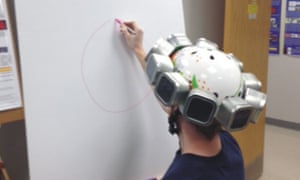
Despite being only the size of a motorbike helmet, the new device produces remarkably detailed images that could be used to identify regions of trauma to the brain in the ambulance on the way to hospital or at a person’s bedside. The device is currently being tested on healthy volunteers, but could be used clinically within two years, the team predicted.


Despite being only the size of a motorbike helmet, the new device produces detailed images that could be used to identify regions of trauma to the brain in the ambulance on the way to hospital or at a person’s bedside.


Despite being only the size of a motorbike helmet, the new device produces detailed images that could be used to identify regions of trauma to the brain in the ambulance on the way to hospital or at a person’s bedside. Photograph: Stan Majewski

Rapidly diagnosing stroke patients, who often wake up unaware of what has happened, is crucial as every passing minute without treatment can result in more extensive and permanent brain damage.


In the hours after a stroke, the brain tissue surrounding the main injury hangs in the balance as it is starved of oxygen due to blockages in the brain’s blood vessels. A rapid surgical intervention, within two to four hours of a stroke, can salvage neurons in the so-called “penumbra” area. After that the risks of brain surgery tend to outweigh any potential benefits to the patient.


“The more you wait, the more that penumbra area gasps and dies,” said Brefczynski-Lewis. “If you can see there’s a bit of activity you might say let’s do an intervention.”


Depending on the brain region affected by stroke, a patient’s speech and language abilities could be saved or paralysis prevented.


In the future, the team said it may be possible to diagnose sports concussion “within minutes”.


“If one can determine quickly whether a head injury is a concussion, then one might be better able to assess if the player, or the soldier, should continue or take time to heal,” said Brefczynski-Lewis.


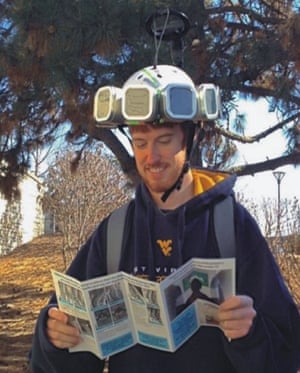
The device, which can be worn while walking around could also enable scientists to study people’s mental patterns as they walk aroundmove about, socialise and respond to threats in their day-to-day environment.


The device, which can be worn while walking around could also enable scientists to study people’s mental patterns as they move about, socialise and respond to threats in their day-to-day environment. Photograph: Stan Majewski

The helmet was developed in the lab and Brefczynski-Lewis describes it as the equivalent of “going from a big computer to a smartphone”.


The wearable scanner works on the same basic principle as a conventional PET scan. The patient is injected with glucose that has been tagged with a radioactive tracer. Radiation emitted by the tracer is captured by sensors on the helmet, allowing scientists to pinpoint which brain regions are metabolising glucose most rapidly, providing a heatmap of brain activity.


The team were able to miniaturise the scanner by using much smaller detectors fitted with crystal arrays designed to turn PET radiation into measurable electrical signals with a high degree of efficiency.


The device, which can be worn while walking around could also enable scientists to study people’s mental patterns as they move about, socialise and respond to threats in their day-to-day environment. Brefczynski-Lewis said it could also be useful for understanding addiction, where people can respond very differently in a lab setting to in their day-to-day lives where environmental triggers suddenly set off cravings.


“You could put [addicts] in a room similar to where they’ve used drugs before and ask what allows you to have the willpower to walk away,” she said.


A potential limitation is that the helmet is cumbersome, weighing nearly 3kg (6.6lbs) in its current form and up to 9kg (20lb) in an upgraded version designed to give full-brain coverage. The scientists have developed a counterweight system that is pushed along on a stand or carried in a rucksack to avoid the patient being crushed, but Brefczynski-Lewis acknowledges: “you’re probably not walking down the street in Manhattan wearing it”.


Portable brain-scanning helmet could be future for rapid brain injury assessments

13 Şubat 2017 Pazartesi

Tips For People Who Have Trouble Shutting Their Brain Off to Go to Sleep

Do you seem to be one of those people who lay awake in bed, tossing and turning trying to rest but you just have trouble shutting your brain off to sleep?  Here are some suggestions that may help you get rid of those distractions that keep you awake at night and help you learn to unwind, shutting your brain off to sleep when you need to (1, 2).


  1. Do not tackle anything new at least one hour before bed.  When you open a new email, look at the bills, or start a new project just before you try to turn in you get your mind going and dwelling on whatever issue or project it is that you were dealing with.  This is especially problematic for creative people and those who seem to be naturally prone to worrying.   So instead, make sure that you finish all business of the day at least one hour before bedtime; leaving that hour for you to follow the next tip in creating a bedtime routine.

  1. Establish a steady bedtime routine.  As young children, we know that a routine helps to train our brain that it is time to sleep, but as adults we seem to forget how useful this can be.  But by creating a regular routine for yourself, your body, and your brain, get into the habit of taking cues that it is time to sleep.  Good suggestions for creating your routine can be shutting down your computer, taking a bath, reading a short simple text, such as a magazine or collection of short essays, poems, or short stories.  Other ways to help you unwind and create a routine is to use that time before bed for various ways of pampering yourself; give yourself a manicure, use a massage pillow or soak your feet in a refreshing, vibrating foot bath to help you relax and shift your focus off of the day events so you do not have so much trouble shutting your brain off to sleep.

  1.  Meditate.  Learning to meditate is a great way to focus your mind and relax your body. Meditating can help you in shutting your brain off to sleep as well and relieve the stress and tension of the day helping you to relax especially if you meditation with visualization techniques that can carry you away from all the hustle and bustle of the day.

  1. Try aromatherapy.  Aromatherapy is another great way to help you calm your mind and get some sleep.  You can try candles, oil diffuser, aromatherapy pillows, or night time sprays that you can use to lightly mist your bed sheets with the great soothing scent of lavender and other essential oils blended to promote relaxation and help in shutting your brain off to sleep.

  1. Get rid of the environmental noise that can distract you and keep you awake.  Having the television or radio on is often a distraction from sleeping and can not only keep you awake but remind you of the issues that are the reasons that you are having trouble shutting your brain off to sleep in the first place.  For noise that you can not eliminate, such as street noise, mask it with natural sounds of the ocean or similar types of soothing sounds that can help you sleep.

So, if you are having trouble shutting your brain off to sleep, try these great suggestions to help you get a better night’s sleep.


  1. http://www.huffingtonpost.com/2014/08/08/bedtime-routine_n_5659183.html

  2. http://www.nosleeplessnights.com/sleep-hygiene/bedtime-routine-for-adults/


Tips For People Who Have Trouble Shutting Their Brain Off to Go to Sleep

BioActive Compounds in Turmeric Boost Brain Function, Treat Colon Cancer, and Relieve Depression

9 Şubat 2017 Perşembe

Oolong tea is good for brain health

The everyday beverages like coffee and tea are well-known mind stimulants- improve the mental alertness, wakefulness and help you feel energized.


What does the trick here?


For coffee, it is the caffeine. For tea, it is the synergistic effect of caffeine, polyphenolic antioxidants, and theanine. That’s why tea performs better than coffee when it comes to brain and cognitive health.


A review published in the Journal of Nutrition, Health, and Ageing, June 2010 observed that regular consumption of tea, irrespective of the tea variety (black, green and oolong tea) reduces the risk of cognitive impairment in older Chinese adults. Coffee consumption didn’t bring any improvement in cognitive performance.


If all the tea varieties are good for your brain, then what is so special about oolong tea? Well, it has a perfect blend of decent health benefits with better taste. In simple terms, it is a hybrid of green tea and black tea.


Let us know Oolong tea


Oolong tea is a low-caffeine, traditional Chinese tea which is manufactured mainly in parts of China and Taiwan.All kinds of teas (black, green and oolong) are manufactured from the leaves of a common plant- Camellia Sinensis. The degree of oxidation (fermentation) varies during the tea manufacturing procedure. The black tea is highly oxidized whereas the green tea goes unoxidized. The oolong tea lies in between- it is partially (semi) oxidized. That’s why it holds the health benefits related to green tea, but, with a mild, earthy taste. Unlike the green tea, it doesn’t taste grassy or bitter.


The oolong tea contributes only 2% of the total tea production whereas green tea is 20%. But, it is catching up very fast because of the taste advantage.In recent times, there has been a steep rise in its popularity. The habitual coffee and black tea drinkers find its taste more appreciable and easy to adapt to in comparison to green tea.


Oolong tea is good for Brain health


Let us discuss how the various nutrients in oolong tea make your brain work better


  • Theanine (L-theanine)

It is a natural amino acid with potent psycho-protective properties. It relaxes the mind by inhibiting the overproduction of cortisol (stress hormone) without inducing drowsiness.


Stress and anxiety can spike the blood pressure levels by stimulating the central nervous system to release vasoconstricting hormones in excess. In a case study reported in the Journal of Physiological Anthropology, Oct 2012- it was observed that theanine and caffeine, both can help reduce stress and ensure a small increase in blood pressure level while dealing with physical and psychological stressful conditions. However, theanine performed better than caffeine.


  • Antioxidants

The phytochemicals (plant chemicals) in oolong tea act as antioxidants. They neutralize the free radicals in your body to prevent oxidative damage. As the brain utilizes around 20% of all the oxygen that you breathe in it is most susceptible to be damaged by the oxidative stress caused by free radicals. The polyphenolic antioxidants, particularly ECGCs and catechins can help halt this process.


Caffeine is a naturally occurring compound in leaves and seeds of various plants. The various food sources of caffeine are coffee, tea, soda, soft drinks, energy drinks, and chocolate. Caffeine, within the safety limit, is good for your health. It stimulates the central nervous system to lift the mood, improve concentration and alertness and reduces fatigue.


Caffeine content in Oolong tea


As noted above, overconsumption of caffeine can be troublesome. The possible damaging effects of excessive caffeine intake are:


  • Body dehydration

  • Acidic body pH

  • Gut irritation and worsening of gut issues like acid reflux, bowel inflammation, and leaky gut

  • Insomnia

According to the latest guidelines of the European Food Safety Authority, the safety limit of daily caffeine intake is 400 mg for normal, healthy adults. One cup of brewed coffee contains around 100-120 mg of caffeine. Hence, 2-3 cups of brewed coffee everyday are quite a safe bet.


According to the Linus Pauling Institute, caffeine content in oolong tea is almost one-fourth that of brewed coffee, when consumed in the same amount. Also, various commercially available brands of oolong tea and green tea contain similar amounts of caffeine.


How much to drink


Consume 3 cups of oolong tea everyday for optimum results, preferably one hour after the meals. Do not drink it empty stomach in the morning or before the breakfast because it can cause stomach upset. Also, avoid drinking it late at night to avoid sleep disturbance.


How to make oolong tea


Take a teaspoonful (2 grams) of oolong tea in a cup and pour 6-8 ounces of boiled water over it. Let it steep for 3-5 minutes, strain the tea and your refreshing oolong tea is ready. For convenience, some people refer tea bags instead of loose tea leaves.


Take away message


The unique brain boosters like theanine and ECGC team up with caffeine for improved brain functioning. It is a low-caffeine elixir with health benefits similar to green tea. Despite the widespread health benefits of green tea, many habitual coffee (and black tea) drinkers find it hard to switch over to it because of its taste. For them, oolong tea seems a perfect alternative.


Author bio


This post is submitted by Ashish Agarwal. Check his blog- Health Melody to know more about the health benefits of Oolong tea.


References


https://www.ncbi.nlm.nih.gov/pubmed/20617284


http://www.sciencedirect.com/science/article/pii/S2213453015000555


http://jphysiolanthropol.biomedcentral.com/articles/10.1186/1880-6805-31-28#CR9


http://www.pnas.org/content/99/16/10237.full


http://www.efsa.europa.eu/en/press/news/150115


http://lpi.oregonstate.edu/mic/food-beverages/tea


Oolong tea is good for brain health

29 Ocak 2017 Pazar

How the brain stores memories | Daniel Glaser

Every week there is a new dementia study, raising hopes that we can find a way to halt memory loss. Interestingly, in any form of dementia our memories don’t vanish immediately but fade gradually – our memory systems have a property known as ‘graceful degradation’.


In a computer, each item of information is stored in a specific location. If part of the memory or hard drive becomes corrupted, a specific fact or image is lost instantly. The brain works differently by splitting up memories into overlapping patterns across a network of thousands and millions of neurons. As memory fades, there is a gradual deterioration in the ability to recall efficiently.


We have the added benefit of many more memory triggers if we want to recall, say, a specific address. Any element of the memory can bring it back – from a photograph, to the sound of a squeaky gate or a dodgy paving stone underfoot. Compared to a computer, it’s a much more resilient way of storing valuable information – probably a good thing since you can’t back up your brain.


Dr Daniel Glaser is director of Science Gallery at King’s College London. Listen to this week’s podcast at theguardian.com/science/audio


How the brain stores memories | Daniel Glaser

27 Ocak 2017 Cuma

Nutritional & Tasty Turmeric-Ginger Ice Tea Good For Your Heart, Brain and Immune System

Turmeric, this amazing spice has been used in India for more than 2500 years. And more and more studies have found its benefits to health, from treating various diseases to improving organs’ functions.


Here is a list of the remarkable health benefits of using turmeric regularly:


  1. Prevents cancer, especially effective for preventing prostate and skin cancer;

  2. Boosts brain function and prevents Alzheimer’s disease;

  3. Good for your eyes;

  4. Aids in weight loss;

  5. Acts as a natural painkiller due to its strong anti-inflammatory properties; (11 Healthy Foods That Can Block Inflammation and Ease Pain)

  6. Protects your liver from damage;

  7. Prevents Parkinson’s disease;

  8. Cures depression;

  9. Cures skin and dental problems as it has antibacterial properties;

  10. Helps you sleep well.

Ginger


Originally from Asia, ginger is one of the most popular spices. Nowadays, it has been widely used all over the world because of its excellent medicinal properties. Studies are finding that this spice works great to treat various illnesses and improve your health naturally.


  1. Ginger protects you against Alzheimer’s disease;

  2. Prevents cancers such as prostate, lung, colon, skin, breast and ovarian cancers;

  3. Aids in digestion;

  4. Fights obesity;

  5. Relieves migraines;

  6. Cures cold and flu;

  7. Reduces joint pain;

  8. Removes bad breath;

  9. Boosts immune system;

  10. Relieves menstrual cramp.

The combination of these 2 super ingredients makes the nutrients in them more readily accessible for use in the body’s systems.


Ginger: An Amazing Spice That Promotes Healthy Life


How to Combine Turmeric and Ginger For Better Health


Turmeric Ginger Iced Tea


Ingredients:


  • 4 teaspoons dried turmeric

  • 4 teaspoons dried ginger

  • 3/4 teaspoon black pepper

  • 1/4 cup raw honey

  • water

Directions:


Put the turmeric, ginger and black pepper into a saucepan. Pour in 1 cup water and boiling them.


Simmer for a while with a lower heat. Turn off the heat and let it cool for some minutes and then add honey.


Cover the saucepan and let the mixture steep for some hours.


Strain the mixture to remove the gritty powder out.


Save this concentration in the fridge and add some to your water to drink.


The join of a small amount of black pepper and honey will make the drink more tastier, and you’ll get more nutrients at the same time.


Sources:


healthdiaries.com
ncbi.nlm.nih.gov


Nutritional & Tasty Turmeric-Ginger Ice Tea Good For Your Heart, Brain and Immune System

22 Ocak 2017 Pazar

How music affects the brain | Daniel Glaser

La La Land is tipped for Oscar success following its triumph at the Golden Globes. Some have wondered if its appeal is partly as an escapist response to these troubled times.


Whether or not such a retreat is politically helpful, there is sound neurobiology behind it. Patients with even fairly advanced dementia can still respond to a piece of music if they were familiar with it in their youth. It can be comforting, but also allow them to engage and even dance.


Evidence suggests music and dance have therapeutic value for patients with Parkinson’s disease, inspiring them to perform movements which they normally can’t do. But the most moving biological phenomenon is in stroke patients who have lost the power of speech. For some, the brain areas responsible for singing words are distinct and can be spared from damage which destroys the main speech areas. These patients can sing all the words of a song, but can’t repeat them in prose or even say their own name.


If politics renders us speechless, there is comfort to be had in activating our neural song centres, if only for refuge.


Dr Daniel Glaser is director of Science Gallery at King’s College London


How music affects the brain | Daniel Glaser

17 Aralık 2016 Cumartesi

5 Daily Brain Exercises For A Healthy Mind And Life

The improvement of health and life in general is achieved by regular exercise and a healthy diet. However, physical exercise tends to be far more emphasized and this leads to mental exercises being overlooked. Engaging in exercises that address each cognitive function of the brain is a good place to start when maintaining a healthy mind.


Memory


Memory loss is very noticeable. Trying to recall something and constantly forgetting is frustrating. Spending a few minute listening to an unfamiliar song and memorizing the lyrics is a good way to keep your brain occupied. Brushing your teeth in the morning with the non-dominant hand, dressing in the dark are also challenging activities that can be done as they help build new associations between different neuron connections of the brain.


Attention


Improving focus enables increased productivity. The brain gets distracted easily and loses focus especially if subjected to a constant routine. To stimulate the brain, change the morning routine and take different routes to work or school. This forces the brain to pay attention as the sequence of events is unfamiliar.


Language


Fluency, grammatical skills and vocabulary can be improved constantly. To challenge the brain, read material that differs from your normal area of interest. For example, reading the sports column instead of the usual business column exposes you to new words, and with the help of a dictionary, you can understand the context and practice in its use.


Visual-Spatial


Our interaction with the environment is largely through the eyes. To challenge the brain, take a mental note of where several items are located in a room and after leaving the room, recall where the objects were. After two hours, note down the objects and location to determine your retention level.


Executive function


Decision making is a fundamental skill. With video games, progression to the next level is wholly based on the real time decisions made. Play a video game and record your progress till you reach the end of the game.


Brain exercises cannot be used as a substitute to a healthy lifestyle but are a great complement, and with new dementia diagnoses every 4 seconds, all efforts must be put into keeping the brain healthy and sharp. It’s important to flex our brain power the older we get. As you implement these tips into your daily life, they will become habitual and second nature to you.


Meghan Belnap is a freelance writer who enjoys spending time with her family. She loves being in the outdoors and exploring new opportunities whenever they arise. Hydration and a healthy diet are essential to maintaining a healthy brain, as recommended by Billings Clinic. Meghan finds happiness in researching new topics that help to expand her horizons. You can often find her buried in a good book or out looking for an adventure.


5 Daily Brain Exercises For A Healthy Mind And Life

9 Aralık 2016 Cuma

Is Zika Virus Linked to Brain Diseases?

Zika virus isn’t showing signs of slowing down, and although it’s widespread, little is known about all its effects on human organism. At first; it was assumed that microcephaly was the most severe consequence of Zika, but new studies keep emerging, and they show that the virus has a multitude of implications. For example, there’s solid evidence that zika is also linked to some brain diseases. In order to find out more about this subject and consequences associated with the virus, keep reading this article.


Zika overview


Zika virus has been detected for the first time in 1947 in Africa. It is transmitted by Aedes mosquitoes which also carry yellow fever, chikungunya fever, and dengue fever. The cure hasnt been found yet. The virus is not easy to diagnose. According to a report in the Clinical Microbiology Reviews symptoms of this disease can be very similar to other conditions so doctors may have trouble finding out the real cause. Zika affects our brain functions, and a lot of scientists believe that it might be connected to multiple brain disorders.


The main problem is that people cant differentiate these mosquitoes from regular mosquitoes or they dont protect themselves from mosquitos adequately. In zika-affected areas, people can catch the virus and spread it to someone else. The virus can also be spread through sex from an infected partner to another. Another shocking fact is that virus can also be transmitted from pregnant woman to her fetus. Zika virus has a great potential to spread in the major cities and highly populated areas, so we have to take the disease seriously.


Zika virus and brain disorders


The implications of Zika are far more serious than previously thought. A study published in the journal Cell Stem Cell found that zika affects adults as well. Researchers at the Rockefeller University carried out a study on mice and discovered that certain adult brain cells might be vulnerable to the virus. Among these cells are also the ones that serve to replace damaged or lost neurons throughout adulthood.


These particular cells play a significant role in learning and memory. The study is important because it is the very first research which showed that Zika has harmful consequences on adults and their brains too and effects of Zika arent only limited to pregnant women and their babies.


Furthermore, research that appeared in the New England Journal of Medicine revealed that Zika virus causes deadly paralysis known as Guillain-Barré syndrome (GBS). This rare disorder affects our brain, and it makes our body attack our nervous system. The real cause of this unusual disease is not yet determined, but scientists believe that it might be connected to Zika virus. Symptoms are similar, and they include weakness in arms and legs, pain in the whole body, heart rate increase, breathing difficulties and much more.


Scientists discovered that during the outbreak in French Polynesia, 42 patients with Zika had this syndrome which is a significant increase if we take into consideration that only five cases of GBS were detected annually during the previous four years.


The story of zika and its impact on the body, particularly brain, doesnt stop there. Scientists in Brazil have discovered a new brain disorder associated with Zika infection in adults. It is acute disseminated encephalomyelitis (ADEM), an autoimmune syndrome that attacks the brain and spinal cord. The research, presented at the American Academy of Neurology annual meeting in Vancouver, showed that 151 adults visited the hospital between December 2014 and June 2015 and were infected by arboviruses, the family of viruses that includes Zika. Six patients developed autoimmune disorders; four had GBS while two had ADEM. Scientists discovered that in both ADEM cases brain scans displayed damage to the white matter. This brain disorder is, in fact, brain swelling which lasts up to six months.


Brain nutrition


Our brain, like the rest of our body, needs quality food and nutrients to function properly; which is why its highly recommended to consume nutrient-dense diet. Foods that are rich in fatty acids are the best brain foods, like fish and nuts and they can be highly beneficial for our cognitive functions. A growing body of evidence showed that omega 3-fatty acids could improve our brain power and increase our brain abilities.


Folic acid can also be beneficial for our brain. Our liver produces folic acid after consumption of vitamin B. This is why we need to consume foods that offer us a lot of vitamin B like beef, salmon, chicken and many others that are considered to be best brain foods. Vitamin B12 is especially important since it protects our brain from diseases and different brain conditions.


Conclusion


Zika virus is something we still have to deal with. Scientists and researchers are still trying to find a connection between this virus and other brain disorders, but it is perfectly clear that zika is dangerous not only for pregnant women and babies but for other adults as well. Its recommended to avoid traveling to locations known for zika outbreaks or take necessary measures to protect yourself from mosquitos. Remember, Aedes mosquitos are active throughout the day and night.


Is Zika Virus Linked to Brain Diseases?

29 Kasım 2016 Salı

Stroke patients in UK "missing out on treatment for brain clots"

Thousands of stroke patients in the UK may be missing out on a treatment that involves physically unplugging blood vessels in the brain, research suggests.


Scientists estimate that about 9,000 patients with blood clots in the brain – a tenth of the total – could benefit from mechanical thrombectomy (MT) each year. Currently, fewer than 600 patients a year undergo the procedure.


The catheter technique uses an expandable grabber or suction to clear clots from large blood vessels and is said to be more effective than relying on clot-busting drugs.


Dr Martin James, one of the researchers from the Royal Devon and Exeter hospital, said: “Delivering mechanical thrombectomy to the 9,000 people who need it will require major changes to the configuration and skill sets of existing acute stroke services.


“We must work quickly to establish what needs to be done so that more people in the UK can benefit from a treatment which can dramatically reduce disability after a stroke as well as cutting associated costs to the NHS and social care.”


The study’s authors analysed all the available results from clinical trials of the procedure and compared them with the prevalence of stroke in the UK. They concluded that large numbers of British patients who qualified for MT were not being offered the treatment.


Between 8,770 and 9,750 stroke patients admitted to UK hospitals each year stood to benefit from the procedure, said the researchers, whose findings were presented at the UK Stroke Forum Conference in Liverpool.


Very few UK hospitals have enough specialists and the necessary support to provide MT treatment 24 hours a day, they claimed.


Co-author Professor Phil White, from the University of Newcastle, said: “Mechanical thrombectomy is a highly effective treatment for acute ischaemic stroke, with eight clinical trials showing a significant reduction in disability after stroke if it is used immediately in the right patients.


“The challenge is to make this technique more widely available, as current figures suggest that fewer than 600 patients receive this treatment each year in the UK.”


Stroke patients in UK "missing out on treatment for brain clots"

23 Kasım 2016 Çarşamba

Study- Synthetic Fragrance Linked to Cancer, Brain & Kidney Damage, Asthma, Headaches & More

What is Fragrance?


Fragrance also called a perfume is a key ingredient in perfumes and colognes. It is also called “the new second-hand smoke.” Like cigarettes, fragrance is harmful to the health of users and bystanders, its toxic effect lingering for hours after initial use. The late 70s and early 80s perfumes used to be made from natural ingredients like flowers and herbs. Today, they are approximately 95-100% synthetic (man-made).


Do you know your shampoo, perfumes, air fresheners, candles, and dryer sheets are killing you slowly? The term “fragrance” on a cosmetic ingredients list usually represents a complex mixture of dozens of chemicals. According to the United States Department of Health and Human Services, there are over 5,000 chemical fragrances being used in some combination by today’s consumers. (1) (2)


Fragrances are Synthetic and Artificial


The Environmental Working Group (EWG) reports that more than 95 percent of the chemicals in synthetic fragrances are derived from petrochemicals. These chemicals include benzene derivatives, aldehydes, phthalates, and a few of other known toxins that are capable of causing cancer, birth defects, nervous-system disorders and allergies. A survey of asthmatics found that perfume and colognes triggered attacks in nearly three out of four individuals.


Environmental Working Group (EWG) researchers found more than 75 percent of products listing the ingredient “fragrance” contained phthalates (THAL-ates) which have been shown to disrupt hormone activity, reduce sperm counts, and cause reproductive malformation, and have been linked to liver and breast cancer, diabetes, and obesity. There is also evidence suggesting that exposure to perfume can exacerbate asthma, and perhaps even contribute to its development in children. (3) (4) (5)


Homemade Herbal Perfume Recipe


Ingredients:


Approximately 12-20 drops of Essential Oils like: Cedarwood, Vanilla, Vetiver, Ylang Ylang, Sandalwood, etc
1 tsp of vanilla extract (optional)
25-30 drops of middle tone oil like Rose, Lavender, Chamomile or Geranium
12-15 drops of top note oil like Bergamot, Wild Orange or Neroli
4 ounces of alcohol to preserve and meld scents


Directions:


Mix all oils together in an opaque bottle to get a scent you like.
Let this mixture stay in the bottle alone for a few days to let scents meld.
Add the alcohol and cap tightly.
Shake and put in a cool, dark place for at least a month (preferably).
This is optional but helps the alcohol scent fade and the scents of the oils intensify.


Additional Sources:


–http://wellnessmama.com/26194/diy-herbal-perfume-recipe/


–http://www.huffingtonpost.com/maria-rodale/five-mustknows-on-the-dan_b_4737654.html


Read:


Study- Synthetic Fragrance Linked to Cancer, Brain & Kidney Damage, Asthma, Headaches & More