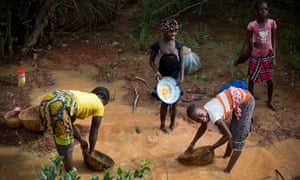
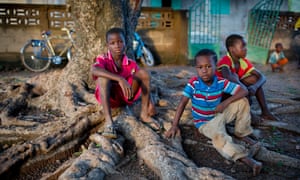
An Ebola outbreak has been declared in north-east Democratic Republic of the Congo, the World Health Organization (WHO) has said, after the virus caused three deaths since 22 April.
WHO said the outbreak had affected an equatorial forest region in Bas-Uele province, bordering Central African Republic.
The last Ebola outbreak in Congo in 2014 was quickly contained and killed 49 people, according to official figures.
In a television address, the country’s health minister, Oly Ilunga, confirmed the outbreak and urged the population not to panic.
“[The DRC] has taken all necessary measures to responde quickly and efficiently to this new outbreak,” he said.
WHO said it was working closely with Congolese authorities to help deploy health workers and protective equipment in the remote area to “rapidly control the outbreak”.
In 2013, an Ebola epidemic began in west Africa that killed 11,300 people in Guinea, Sierra Leone and Liberia and has left thousands more survivors with long-term health problems.
WHO was criticised at the time for responding too slowly and failing to grasp the gravity of the outbreak. An experimental vaccine was recently developed that WHO said could be used in emergencies.
A second outbreak of bird flu has been confirmed in Lancashire, the Department for Environment, Food and Rural Affairs has said.
The H5N8 avian flu strain was confirmed in a flock of about 1,000 pheasants at a premises in Pilling, Preston, by the UK’s deputy chief veterinary officer, Graeme Cooke.
Defra said there was a business link between the site and a nearby farm where the infection was found in a flock of about 10,000 pheasants earlier this week.
A 3km (1.8 mile) protection zone and a 10km (6.2 mile) surveillance zone had been put in place around both infected premises to limit the risk of the disease spreading.
A Defra spokesman said: “This case was proactively identified as part of a routine investigation of premises traced as a result of confirmation of the disease in Lancashire earlier this week. There is a business link between the two premises.”
A number of the birds in the latest case had died and the others would be culled humanely.
Public Health England has advised that the risk to public health from the virus is very low, and the Food Standards Agency made clear that bird flu did not pose a food safety risk for UK consumers.
On 16 January, Defra confirmed a case of bird flu in a flock of about 6,000 turkeys at a farm in East Lindsey, Lincolnshire.
Earlier in the month, the strain was discovered in two small backyard flocks of chickens and ducks on a premises near Settle, in North Yorkshire, and Carmarthenshire, south-west Wales.
An avian influenza prevention zone was declared on 6 December and would remain in place until February 28. It required owners to keep poultry and captive birds indoors or to take steps to separate them from wild birds.
A bird flu outbreak has been confirmed at a turkey farm housing more than 5,000 birds in Lincolnshire.
The Department for Environment, Food and Rural Affairs (Defra) said on Friday the H5N8 strain had been found at the farm near Louth. The virus has been circulating in mainland Europe.
All of the surviving animals will be culled and a protection zone has been placed around the facility. Officials said there was a low risk to the public and insisted there would be no impact on the Christmas turkey supply.
Most birds at the premises have died already, officials said, adding that a 3km (1.9 mile) protection zone and a 10km surveillance zone had been put in place around the farm to help stop the spread. Birds must be kept housed in the zones and the moving or gathering of them is banned.
An update on the Defra website said: “We are taking immediate and robust action and an investigation is under way to understand the origin of the disease and confirm that there are no further cases.”
Public Health England said the risk to public health from the virus was very low and the Food Standards Agency said bird flu did not pose a food safety risk. Thoroughly cooked poultry and poultry products, including eggs, were safe to eat, officials said.
The chief veterinary officer, Nigel Gibbens, said: “Avian flu has been confirmed on a turkey farm in Lincolnshire. This is the same strain that has been affecting poultry in Europe. Immediate steps have been taken to limit the risk of the disease spreading and all remaining poultry at the farm will be culled.
“Bird keepers should remain alert for any signs of disease, report suspected disease immediately and ensure they are maintaining good biosecurity on their premises. We are urgently looking for any evidence of disease spread associated with this farm to control and eliminate it.”
A PHE spokesperson said: “Avian flu (often called bird flu) is primarily a disease of birds. There have never been any recorded cases of H5N8 in humans and the risk to public health is considered very low. We continue to work closely with Defra throughout this investigation. Despite the risk being very low, we will offer health advice to those people who may have been exposed on the farm as a precaution.”
Defra said a detailed investigation was in progress to determine the most likely source of the outbreak, which is the first in the UK since January.
Since June, countries in Europe and Asia have detected A(H5N8) infections in wild birds and/or domestic poultry including Austria, Croatia, Denmark, Germany, Hungary, India, Israel, the Netherlands, Poland, Russia and Switzerland, according to the World Health Organisation, although most were associated with wild birds.
The cliche of social media is that it is full of people talking about their lunch. But this is one that the Food Standards Agency is now actively trying to encourage, at least if your lunch is heading the wrong way. Vomiting? Nauseated? Diarrhoea? Tweet it and you know at least one person will be reading – someone on the FSA’s norovirus monitoring team.
Since 2013, the agency has been developing an online epidemiology toolkit. It tried to work with Google initially, but found social media a far faster means of correlating lab results with geotagged incidences of people moaning about being “sick” (or a range of related search terms). To sharpen its results, the FSA excluded all simultaneous references to pregnancy, alcohol and anxiety, which have their own vomit-inducements.
This has greatly improved the lag time in its systems. Lab results take two days arrive, while tweets are instant. The FSA believes that the new system can predict an increase in norovirus in the following week between 70% and 80% of the time.
Three consecutive weeks of increases is the trigger point for what the FSA would define as an outbreak. That triggers a digital public awareness campaign advising people on how to look after themselves and avoid getting ill. A 10-mile run, seafood curry, 20 Rothmans and plenty of pinot grigio? Apparently not.
“The intervention is really quite basic,” says Dr Sian Thomas, head of information management at the FSA. “It’s about washing your hands, it’s about looking after yourself and not coming in to contact with other people while you’re sick.” The NHS advises people to stay home for two days after the initial gut-chunder symptoms disappear, because they remain infectious.
Online epidemiology is still in its infancy. In 2014, Google cancelled a global programme to track incidents of flu and dengue fever through its search bar. Of course, some social media are better suited to it than others. Rollout of norovirus monitoring to Instagram isn’t on anyone’s agenda.
Cases of microcephaly in Colombia were four times higher this year than last, an increase that coincides with a widespread outbreak of the Zika virus in the country, according to a report released on Friday.
At its peak in July, microcephaly cases in Colombia were nine times higher than in the same month in 2015, according to the US Centers for Disease Control and Prevention’s weekly report on death and disease.
Overall, there were about 9.6 cases of microcephaly per 10,000 live births in Colombia, where the virus infected as many as 20,000 pregnant women since the start of the outbreak there in October 2015.
The numbers reflect a sharp increase in rates of the rare birth defect, but the number of cases was still far lower than those in Brazil, where Zika first arrived in May 2015. As of 3 December, Brazil has confirmed 2,228 cases of microcephaly linked with Zika, and there are 3,173 cases still under investigation.
Those numbers are far higher than the 432 cases of babies born in Colombia with microcephaly in 2016, and another 44 that occurred among fetuses that did not survive the pregnancy, according to the report by researchers at the CDC and the Colombian health department.
The study’s authors said the difference could have resulted from a number of factors, including the fact that women in Colombia had early warning about the risk of microcephaly.
In February, the Colombian ministry of health advised women to consider delaying pregnancy for six months, which may have played a role. During the study period, the number of live births fell by about 18,000 from 2015 to 2016.
Several experts also have suggested that women in Colombia took advantage of more permissive abortion laws, an option that was not available to women in Brazil, where abortion is banned in most instances.
The cholera outbreak that killed more than 9,000 Haitians after it was spread by peacekeepers has been a stain on the UN’s reputation, the world body admitted on Thursday, as it set out long-awaited plans for eliminating the disease from the country.
The announcement of the strategy – unveiled as the UN’s outgoing secretary general, Ban Ki-moon, bids to leave a global health legacy – was overshadowed by question marks about its funding and disappointment in some quarters at what was perceived as a failure to offer an unqualified apology.
The world body had doggedly refused to address the issue of how its own peacekeepers, relocated from Nepal to Haiti in 2010 following a major earthquake, brought the deadly cholera bacterium with them.
A first tacit admission of blame came in August, but the UN’s “explicit and unqualified denial of anything other than a moral responsibility” was subsequently branded a disgrace by its own human rights special rapporteur.
A strategy unveiled on Thursday by the UN focuses on long-term issues including water, sanitation and health systems, as well as the development of a package of material assistance and support to those Haitians most directly affected by cholera.
“The people of Haiti deserve this tangible expression of our respect and solidarity, as well as our regret, and the genuine support that comes with it,” said the organisation.
“The United Nations should seize this opportunity to address this tragedy which has also negatively affected its reputation and global mission.”
The UN endeavours to deploy “responsible peace operations that operate at minimum risk to people, societies and ecosystems”, said the statement, which described the cholera outbreak as “a stain on our reputation”.
In a reference to the simmering levels of anger directed towards the UN by many in Haiti, the statement conceded: “The package is not likely to fully satisfy all those who have been calling for such a step, nor will it happen overnight. However, the secretary general has concluded that it is better to take this step than not to.”
Ban, the document said, “wishes to propose a solution, not leave an unresolved problem, for his successor”.
However, a lack of finance may inhibit the delivery of the package. The announcement conceded that efforts to tackle the outbreak have been undermined by insufficient funding.
Brian Concannon, executive director of the Institute for Justice and Democracy in Haiti, a partnership of Haitian and US human rights advocates, said the initial wording of the announcement marked “a refreshing change from six years of ignoring victims’ voices and the UN’s clear legal obligations to them”.
But he noted that the use of the phrase “moral responsibility” was the same language that the UN secretary general used during his trip to Haiti in July 2014, and appeared to be calculated to address the concerns of UN lawyers more than those of the people of Haiti.
“Haitians are looking for a less qualified apology – for both introducing cholera and for the six years of denial of responsibility, which was an insult to Haitian dignity,” said Concannon.
Stéphane Dujarric, a spokesman for the secretary general, said that the new approach went to the root of the problem with long-term investments in sanitation facilities and by “putting people and communities affected by cholera at the heart of our efforts”.
Some 190,000 ducks were destroyed on Saturday at six farms in the Netherlands following an avian flu outbreak, the country’s first cull in response to an epidemic sweeping northern Europe.
Outbreaks of avian flu, primarily the highly pathogenic H5N8 strain, have been reported in Denmark, Finland, Germany and Sweden over the past week.
Dutch authorities did not say what strain of the virus had been discovered at a poultry farm in the village of Biddinghuizen, 70km (43 miles) east of Amsterdam.
The cull was implemented at four other sites owned by the same company and at a sixth farm less than a kilometre from the site of the confirmed outbreak.
Officials said they were checking for bird flu at farms within three kilometres of the original site and imposed a ban on transporting poultry products within a 10km radius.
The world’s second largest agricultural exporter, the Netherlands has more than 100 million hens, pigs, cows and sheep on high-intensity farms. The density makes the animals more vulnerable to disease outbreaks.
Since 1997, 40 million hens, cows, goats, pigs and sheep have been slaughtered to contain outbreaks including swine flu, foot-and-mouth disease and BSE.
The United Nations’ refusal to accept responsibility for the devastating cholera outbreak that has claimed more than 9,000 lives in Haiti has been branded a “disgrace” by the organisation’s own human rights special rapporteur.
Human rights groups working with victims had reacted with jubilation earlier this year following the UN’s first tacit admission that it was to blame for the outbreak after doggedly refusing to address how its peacekeepers brought the disease to Haiti in 2010.
However, in a scathing report (pdf) to the UN general assembly, the organisation’s special rapporteur on extreme poverty and human rights, Philip Alston, said that flawed and unfounded legal advice provided by the UN lawyers was preventing it from accepting responsibility for the outbreak.
“The UN’s explicit and unqualified denial of anything other than a moral responsibility is a disgrace,” Alston said. “If the United Nations bluntly refuses to hold itself accountable for human rights violations, it makes a mockery of its efforts to hold governments and others to account.”
Alston accused the UN’s Office of Legal Affairs (OLA) for coming up with a “patently artificial and wholly unfounded legal pretence for insisting that the organisation must not take legal responsibility for what it has done”.
The criticism comes as the administration of the outgoing UN secretary general, Ban Ki-moon, is moving to provide compensation for the first time to victims of the outbreak. The UN plans to make cash payments from a proposed $ 400m (£328m) cholera response package, the New York Times reported.
Alston added that the OLA’s approach “has been cloaked in secrecy: there has been no satisfactory official explanation of the policy, no public attempt to justify it, and no known assessment of its consequences for future cases. This goes directly against the principles of accountability, transparency and the rule of law that the UN itself promotes globally.”
Peacekeepers who were relocated from Nepal to Haiti in 2010 in the wake of a major earthquake imported the deadly cholera bacterium with them. Studies have found that the UN troops could have been screened for the illness, and the disaster averted, for as little as $ 2,000.
Alston said the UN’s legal position appears to be largely explained by the approach of the US, the main contributor to the UN’s peacekeeping budget. “Despite numerous requests to do so, the United States itself has never publicly stated its legal position on the responsibility of the UN for causing cholera in Haiti,” he added.
“Instead, it seems to have pressed the UN to adopt the position frequently taken by lawyers in the US that responsibility should never be accepted voluntarily, since it could complicate future litigation. But this rationale is completely inapplicable to the UN, which enjoys absolute immunity from suit in national courts and whose reputation depends almost entirely on being seen to act with integrity.”
The special rapporteur said that the current stance of the UN’s lawyers ensures that it would never admit its responsibility for introducing cholera. “And avoiding legal responsibility hinders the UN from learning lessons and making sure that the fatal mistakes made in Haiti are not repeated elsewhere.”
Ban’s office said in a statement earlier this year that the organisation had decided to step up its efforts to fight cholera in one of the world’s poorest countries. A reference to the UN’s “involvement in the initial outbreak” was greeted as a breakthrough by groups working with cholera victims.
Ban appeared to have been bounced into making a clearer recognition of responsibility than ever before by the advent of a draft report by Alston into how the UN handled the crisis. Alston had also been one of five experts working for the UN who earlier this year wrote a heavily critical letter to Ban in which the secretary general’s resistance to accepting any responsibility was torn apart.
Nigeria is racing to contain a polio outbreak in its north-east state of Borno, amid fears the virus could spread to neighbouring countries and set back global efforts towards eradication.
This week, the UN children’s fund, Unicef, launched an emergency vaccination drive in 18 states in northern Nigeria and neighbouring Chad, Niger, Cameroon and Central African Republic, to immunise more than 41 million children.
Nearly 39,000 health workers will be deployed across the Lake Chad basin, where ongoing conflict with the insurgent group Boko Haram has forced 2.6 million people to flee their homes (pdf), leading to fears the virus could spread across borders.
The four-day campaign will be the third of five vaccination drives to contain the wild strain of the polio virus. Two further campaigns are scheduled for November and December in neighbouring countries.
Global efforts to eradicate polio suffered a setback in August when, after two years free of transmission, two cases of polio were detected in Borno state, followed by another in September. Nigeria is the last country in Africa and one of only three in the world where polio remains. Afghanistan and Pakistan are the other two.
A country cannot be declared polio-free until three years have passed with no new cases. Earlier this year, the World Health Organisation said it believed transmission of the virus could be stopped within 12 months.
Doune Porter, Unicef Nigeria’s chief of communication, said: “We have to respond, and we are indeed responding, with a massive show of force to make sure that it does not get out of control. We can’t afford to have polio come back to the area, to Nigeria or Africa.”
Although the polio vaccine is relatively simple to administer, large parts of Borno state have, for some years, been inaccessible to humanitarian organisations due to the Boko Haram insurgency. This has meant large numbers of children have never been immunised against life-threatening diseases.
This drive, which will involve door-to-door visits from health workers, will include 750,000 people in territory taken back by Nigerian government forces earlier this year. However, large areas of north-east Nigeria still cannot be reached with any kind of humanitarian assistance.
Porter said immunisations were crucial in keeping the re-emergence of polio in Nigeria under control, saying the new cases earlier this year were a “huge disappointment”.
“We need to start the clock again and of course there is the question of accessing more children with immunisation. However, it’s important to remember that it’s not going back to having huge numbers of polio cases. It doesn’t undo the great progress that has been made. It’s important to remember we’ve come a long way.”
The vaccination teams will also conduct malnutrition screenings among children under five. According to Unicef, 400,000 children in the three Nigerian states worst affected by the conflict will suffer from severe acute malnutrition this year.
If you were bitten by a mosquito, and within two weeks had a fever, bloodshot eyes, a rash and felt generally achy, you would have four classic symptoms of Zika. But if you or your sexual partner didn’t travel to Latin American, you might also have a hard time getting tested.
That’s because Zika tests are complicated, time-consuming, sometimes inaccurate and expensive. These obstacles have led some scientists to believe that several states at risk for spread of the disease may already have Zika outbreaks, without even knowing it.
“There is not active surveillance going on in the at-risk states in the United States,” said Peter Hotez, dean of the National School of Tropical Medicine at Baylor College of Medicine in Texas. “I think there’s not just Zika transmission going on in Miami, it’s going on all up and down the Gulf Coast and in Arizona, it’s just that nobody’s looking.”
The only confirmed cases of Zika caused by local mosquitoes in the continental United States are in Miami, Florida. Federal officials have since issued a travel warning for the area, asking pregnant women or those hoping to become pregnant to avoid the Wynwood neighborhood. There, local mosquitoes infected 15 people with the virus.
Other Gulf coast states are also considered to to be at high risk for local transmission of Zika virus. That is because Aedes aegypti mosquitoes are endemic, and multiple travelers have returned with the infection. But with laboratory limitations, even states with disease-spreading Aedes aegypti mosquitoes may not be able to surveil non-travelers for the virus.
“There is a limitation, and local transmission could slip through, but it’s the best we’ve got,” said Frank Welch, the medical director for Louisiana’s center for community preparedness.
Related: Zika virus scare is turning Miami’s hipster haven into a ghost town
Louisiana, long-known to be a haven for mosquitoes, is considered a state at-risk of Zika transmission. There, 22 cases of travel-related Zika has been confirmed by the Centers for Disease Control and Prevention (CDC).
“The big fear, of course, is we’ll figure this out seven, eight, nine months from now, in the spring of 2017, when we start seeing babies show up with microcephaly,” said Hotez.
Meanwhile, for community health centers in another Gulf Coast state, Texas, the virus recalls an earlier epidemic that left public health officials flat-footed.
“We’ve never faced something like Zika before. We faced, what was it? H1N1,” said José Camacho, executive director of the Texas Association of Community Health Centers. Member clinics serve about 1.3 million low income Texans. “Over night we were overwhelmed, and I guess nobody was ready for that either. And we’re fearful that some of the same things are playing out here.”
When H1N1 broke out in Texas, the CDC told doctors that they were required to test for the flu strain before prescribing antivirals, Camacho said. He recalls the first H1N1 case occurred on a Friday night. By the weekend, the CDC arrived. Then, it was discovered a standard flu test couldn’t detect the strain.
So the CDC provided new H1N1 tests. Five of them. For all 1.3 million of the Texans served by Camacho’s member organizations.
“Number one, in terms of screening, there’s very limited resources,” Camacho said. “We saw the same thing in H1N1, where the flu test did not work. They actually had to develop a test and eventually change the protocols to not require a test, but delegate it more to the physician’s knowledge at screening.”
Officially, the CDC recommends that patients with three of the aforementioned Zika symptoms be tested if the patient is a pregnant woman, or a woman trying to get pregnant, who lives in or has traveled to an area where Zika is being actively spread.
That means that many people who do not fit this profile, especially men, may be left untested even though the disease is spread sexually.
Some public health officials, like Welch, said testing more Americans would require exorbitant resources.
“Let’s say this test was incredibly available – we would have to test every single person in the US where there is the possibility of Aedes,” said Welch. “We would not only have to test them today, we would have to test them for the duration of the summer.”
“A once a week Zika test for everyone in the southern United States and California –that would be more expensive than building a wall across both our Mexican and Canadian borders,” he said. “So, you would have to decide, since the test is in fact limited in availability and expensive.”
Hillary Clinton talks to a pregnant woman during a health center visit in Miami, Florida. Photograph: Chris Keane/Reuters
Scientists don’t expect large-scale outbreaks in the continental US, like those that have taken place in Puerto Rico or Brazil. Texas also recently updated its guidance to include recommendations to test people who are symptomatic, but haven’t traveled to Latin America.
Even so, Zika presents its own challenges. Only one in five people infected with the disease are symptomatic. So in order for public health officials to locate a Zika case transmitted by local mosquitoes, a symptomatic patient (already just 20% of the infected population) would need to seek medical treatment. There is no guarantee a patient would even feel the need to see a doctor, since symptoms are generally mild. Then, doctors would have to rule out all other causes of such common symptoms.
“Say, for example, that person did show up at a healthcare provider,” posits Welch, “They wouldn’t be automatically turned away,” he said. “[But] you probably know the symptoms of Zika are pretty close to about 6 million other diseases.”
In the Wynwood neighborhood of Miami, for example, clinicians went over and above CDC guidelines to test a symptomatic patient who showed up at an emergency room without traveling abroad.
“We’re not going into community health centers, we’re not going into emergency rooms, we’re not going into clinics identifying people with fever, or a rash, and seeing if they have Zika,” said Hotez. “It’s not being done.”
In part, this is because of the limitations on Zika testing methods. The two most common ways to test for the virus are both manpower intensive.
“They absolutely take a specialized skill,” said Kelly Wroblewski, director of infectious diseases for the Association of Public Health Laboratories. Tests for past infections can be particularly tricky. “You’re going to get more false positive results, that’s just the way it works with any kind of assay.”
In the meantime, Camacho is rationing 50,000 bottles of donated mosquito repellant to the roughly 400,000 women of child-bearing age served by his organizations. Hotez is meeting about testing guidelines, and cities and states are increasingly broadening their testing guidelines.
Thousands of residents of a small New Zealand town in the North Island are seriously ill after the local water supply was contaminated – possibly by animal faeces.
On Thursday afternoon hundreds of residents of Havelock North in the Hawke’s Bay (population 3,000), began reporting severe symptoms of gastroenteritis such as vomiting and diarrhoea.
Related: ‘This is who I am’, says first female MP to wear Māori facial tattoo in NZ parliament
Many schools in the area were closed on Friday and over the weekend local medical centres, doctor’s surgeries and pharmacies were besieged with sick residents.
A spokesman for the Hawke’s Bay Distict Health Board (DHB) said thousands were affected by the outbreak, although most people were treating themselves at home.
However, more than 50 people presented to the emergency department at Hawke’s Bay Hospital, and 18 people were hospitalised.
Two elderly people were in intensive care, both as a result of the water contamination.
The death of a rest home resident in Havelock North from a gastro-like illness was also being investigated, Radio New Zealand reported.
Some schools in Havelock North remain closed on Monday, with many students and teachers too ill to attend.
The Hastings District Council was criticised for not informing residents of the contamination soon enough.
It said in a statement that the contamination and resulting sickness was “very serious”, and the water supply was found to be infected with Campylobacter – most likely a result of animal faeces finding its way into the bore.
Nick Jones, a Hawke’s Bay DHB medical officer, told Radio New Zealand the council had no idea how the faecal matter entered the water supply, but they were investigating.
The water supply has since been chlorinated but the council were advising residents to continue to boil their water until given the all-clear.
Medical centres in the area said they were prioritising caring for the young and elderly, as they were most severely affected by the bug.
The DHB and the local council were encouraging the community to check on their neighbours and any vulnerable people who may not be able to access medical help.
Andrew Lesperance, of the Hastings Health Centre, said they had tripled the number of staff working over the weekend, and set up an IV station at the clinic for rapid hydration.
Liz Dixon, co-owner of Gilmours Pharmacy in Havelock North said the community had pulled together over the weekend and organised groups of volunteers to visit elderly people living alone and bring them essential supplies – such as packets of electrolytes, water and toilet paper.
Related: Making meth: how New Zealand’s knack for ‘P’ turned into a homebaked disaster
The local supermarket – New World – sold 12,000l of bottled water and were selling bottled water at the discounted price of NZ$ 5.
The supermarket also noted a “significant increase” in the sales of toilet paper and hand sanitiser since the outbreak.
Life on an informal gold mine is hard for any child. In Guinea, it means searching through piles of dark earth for glittering particles from a young age, going hungry if the family has no luck that day, and surviving violent attacks by other miners or the authorities.
For Lounceny, a dark-eyed boy who has spent the first four years of his life watching his mother look for gold in Kintinian in the country’s north-east, life is harder. He caught polio when he was two.
“It started with a wound on his foot,” says Lounceny’s grandmother, Sita Aidara, touching her frightened grandson’s shoulder as he sits on a wooden bench beside her, trying to keep him calm. “He started complaining about his leg – then it spread to the other one.”
Related: Pakistan and Afghanistan join forces to wipe out polio
She took him to a clinic 20 miles away, where it was confirmed that he had become one of the few children in Africa to contract polio. There was little they could do for him, and now Lounceny cannot walk. His family has to carry him to the mines, where he sits on a mat all day as they search.
On Thursday, Africa was set to celebrate two years with no new cases of wild polio, a major step on the way to consigning cases like Lounceny’s to the past. However, the global fight to eradicate the disease suffered a blow when two new cases were found in Nigeria.
Globally, hundreds of thousands of children used to become paralysed as a result of polio every year, before vaccines were developed in the 1950s and 1960s. While it was almost eliminated in rich countries, the problem endured in poorer states. The Global Polio Eradication Initiative, set up in 1988 by Rotary International, the World Health Organisation (WHO), Unicef and the Centers for Disease Control and Prevention (CDC), has now almost managed to eradicate the disease.
When Nigeria marked two years without any new cases last month, Afghanistan and Pakistan were thought to be the last countries in the world left where polio is endemic. However, Nigeria’s celebrations were premature. The WHO said the strain of polio discovered there is most closely linked to one last seen in Borno in 2011. The two children have become paralysed.
Nigeria’s minister of health, Isaac Adewole, put the latest occurrence down to the “insurgents’ eclipse”, referring to the fact that the terrorist group Boko Haram controlled large swathes of territory in Borno state, where the polio cases were found. Health workers could not get there and vaccinate children for months.
Women pan for gold in the mining area of Siguiri, Guinea. It was in such circumstances that Lounceny contracted polio. Photograph: Kate Holt/Unicef
“Mr President himself, when we had a meeting last week, observed that as we liberate more areas, we should expect challenges,” Adewole told Nigerian media. “But we did not expect that there would be polio. We were expecting nutrition and other problems.
“It wasn’t that we were not doing the job. A chunk of the state was out of reach, and we couldn’t reach children there.”
Nigeria had appeared to be losing the battle against the disease, with some states banning all vaccines in 2003 amid suspicions about their safety. There were also several attacks on people administering vaccines. However, an immunisation campaign led by the CDC vastly improved the situation.
Africa needs three years with no new cases to be declared officially polio-free. The Nigeria outbreak resets the clock.
Guinea, one of the poorest countries in Africa, ranked 182nd out of the 188 countries in the UN’s 2015 human development index, had its last big outbreak of wild polio in 2009, when there were 41 cases.
But a new outbreak of vaccine-derived polio hit in September 2015, after the crippling Ebola outbreak that diverted all Guinea’s healthcare efforts. Seven children under five contracted the virus in the eastern region of Kankan.
“At that moment the Ebola outbreak hit, so we couldn’t do anything,” said Souley Lalibou, leader of the WHO’s polio response in Guinea. “While Ebola was happening, everything else stopped.”
Children sit outside a clinic in a community near Doko, Siguiri, in northern Guinea. They have just been vaccinated for polio as part of a Unicef campaign backed by the Spanish government. Photograph: Kate Holt/Unicef
As soon as they could, the WHO, Unicef and the government launched a campaign to stamp it out. In two weeks, Lalibou will find out whether their efforts paid off and Guinea’s polio outbreak is officially over.
“There are probably more cases out there that we don’t know about, but I don’t think there are any wild cases,” Lalibou said.
Vaccine-derived polio is easier to control than wild polio, but the effect on a child’s life is the same.
Lounceny only had one dose of the polio vaccine. Aidara wished she had known the risk to her grandson, as she would have tried to get him the 20 miles to the clinic for his second dose.
“His mother was in the mines, trying to earn money so we could eat. We didn’t know he could get polio,” she said.
As it is, the whole family struggles to survive at the same time as looking after a child with disabilities.
“The problem we have is that if you don’t carry him, he can’t move,” Aidara said. “You always have to help him. Taking care of him and looking for gold don’t go together. I’m really worried about his future – I don’t know what it will be like.”
A 500 square foot area in the Wynwood neighborhood of Miami, Florida is now the epicenter of the US fight against Zika, as federal and state health officials said at least 15 people were infected with the virus by local mosquitoes.
Officials said more diagnoses could be made in the coming days. The cases represent the first Zika infections transmitted by mainland American mosquitoes. The city began aerial spraying against the mosquitoes, a technique whose effectiveness is hotly criticized.
Related: Scientists edge closer to creating effective Zika virus vaccine
“Zika is unprecedented,” said Centers for Disease Control and Prevention director Dr Tom Frieden, at a press conference Thursday with Florida governor Rick Scott and state health officials. “We’ve never before had a mosquito-borne disease that can cause birth defects.”
Frieden said his top priority is to lower mosquito populations in the area. The mosquito that transmits the disease, Aedes aegypti, lives in and around homes, and can breed in containers as tiny as a bottle cap.
“It’s not going to easy, this is a difficult mosquito to control,” said Frieden. “Coffee cup, paint can, bucket for collecting rainwater … trash that can support a little bit of water when it rains” all will need to be emptied, Frieden said, and “a major effort to clean that entire effort” will be undertaken.
“What we want to see is mosquito counts coming down,” he said.
Related: Houston’s mosquito hunters take on Zika: ‘We cannot spray our way out’
Scott also repeatedly emphasized that Florida is still “safe” for the roughly 110 million tourists that travel to the state each year, even as officials warned pregnant women not to visit the Wynwood neighborhood.
Zika is believed to cause microcephaly, or abnormally small heads and severe developmental problems, in babies whose mothers are infected with the disease.
There is no specific treatment for the virus, no vaccine and little is known about how it impacts children not born with apparent birth defects. It is also sexually transmitted and can cause an autoimmune disorder that can lead to paralysis called Guillain-Barré.
Already, Miami has the longest mosquito season of any major city in the country, according to a new analysis by Climate Central. On average, just 28 days per year are inhospitable to mosquitoes in Miami, an increase of 20 days since 1980.
And although the recent infections in Miami are the first to be transmitted by local mosquitoes, cases of Zika have entered the US for months now. The CDC confirmed more than 1,800 infections in people returning to from travel. In Puerto Rico, more than 5,500 people have been infected with the virus.
Despite ample warning from experts that Zika would reach, and likely infect, American mosquitoes, Congress was unable to pass any appropriations to combat the disease.
A bipartisan effort by Florida’s senators, Republican Marco Rubio and Democrat Bill Nelson, to fund President Obama’s request for $ 1.9bn in Zika funding was quickly quashed. A Senate proposal for $ 1.1bn also failed, and a House proposal loaded with “poison pill” abortion politics riders also failed.
Instead, the Health and Human Services Administration raided other budgets to fund Zika vaccines and mosquito control efforts across the country, including monies originally allocated to fight Ebola. Already scarce dollars are expected to run out before the National Institutes of Health is able to begin the second phase of Zika vaccine clinical trials this fall.
“Now that the United States is in the height of mosquito season and with the progress in developing a Zika vaccine, the need for additional resources is critical,” HHS secretary Sylvia Burwell wrote in an 3 August letter requesting additional funding.
Public outcry has also hampered what some experts believe is one of the best answers to a complicated problem – aerial spraying. Local resistance in Puerto Rico has so far stopped fumigation with a CDC recommended chemical called naled.
The mosquito that carries Zika also carries a range of viruses, including Dengue fever and chikungunya. When Aedes mosquitoes spread Dengue fever through Puerto Rico in 1987, the pesticide naled was also used in a mass spraying campaign on the island.
The man who ran a study on that spraying, and the former head of the CDC’s dengue branch, Duane Gubler, told the University of Minnesota Center for Infectious Disease Research and Policy that the mosquito’s habitat in trash cans, closets and indoors makes mass spraying challenging at best.
“Successful spraying against Aedes depends on too many factors. Do people have their windows open? What rate is the wind speed? What is the weather?” Gubler told CIDRAP in July. “Spraying doesn’t kill larvae, and naled isn’t a residual insecticide. You’d have to spray weekly to make an impact.”
Miami-Dade county mayor Carlos Gimenez told the Miami Herald that even he had heard conflicting accounts of using naled.
“Some say it’s effective. Some say it’s not that effective. But it’s been recommended by the state and the federal government and we’re going to do it,” Gimenez told the Miami Herald.
“If it has a success rate of 10%, 20%, 30%, then that’s 30% more than what we had before.”
Even the company that makes naled admitted potential drawbacks.
“Resistance is always a potential in a living ecosystem,” Jeff Alvis, a business manager at Amvac Chemical told Chemical & Engineering News in February, about its effectiveness.
In Florida, state officials have tested 2,400 people for Zika across several counties. Officials also said that at least one other case in south-west Florida is also being investigated, but called it “unrelated”.
“As long as there is Zika spreading anywhere, pregnant women should protect themselves against mosquito bites,” said Frieden.
A 12-year-old boy in the far north of Russia has died in an outbreak of anthrax that experts believe was triggered when unusually warm weather caused the release of the bacteria.
The boy was one of 72 nomadic herders, including 41 children, hospitalised in the town of Salekhard in the Arctic Circle, after reindeer began dying en masse from anthrax.
Five adults and two other children have been diagnosed with the disease, which is known as “Siberian plague” in Russian and was last seen in the region in 1941.
More than 2,300 reindeer have died, and at least 63 people have been evacuated from a quarantine area around the site of the outbreak.
“We literally fought for the life of each person, but the infection showed its cunning,” Yamal governor Dmitry Kobylkin told Interfax news agency. “It returned after 75 years and took the life of a child.”
map
Tabloid LifeNews reported that the boy’s grandmother died of anthrax at a nomad camp last week.
Authorities said the outbreak was linked to climate change. For the past month, the region has been experiencing abnormally high temperatures that have reached 95 degrees fahrenheit.
Anthrax spores can survive in frozen human and animal remains for hundreds of years, waiting to be released by a thaw, according to Alexei Kokorin, head of WWF Russia’s climate and energy programme.
“Such anomalous heat is rare for Yamal, and that’s probably a manifestation of climate change,” he said.
Average temperatures in Russia have increased by 0.43C in the past 10 years, but the rise has been more pronounced in areas of the far north. The warmer climate has begun thawing the permafrost soil that covers much of Russia, including cemeteries and animal burial grounds. Thawing permafrost has also led to greater erosion of river banks where nomads often buried their dead, Kokorin said.
“They didn’t bury deep because it’s hard to dig deep in permafrost,” he explained.
According to custom, the Nenets tribe often inters its dead in a wooden coffin on open ground.
Related: Scientists climb to bottom of Siberian sinkhole – in pictures
The disease from thawing human and animal remains can get into ground water that people then drink. The boy in Salekhard died from the intestinal form of the disease, which typically results in fever, stomach pain, diarrhea and vomiting.
Other reports said a local cemetery was suspected, or infected venison.
Three unusual sinkholes were discovered on the Yamal peninsula in 2014, a phenomenon that many scientists also tied to climate change. Thawing permafrost could have allowed gas in the ground to explode, they said.
This summer, researchers have filmed grassy ground on an island off the Yamal peninsula that appeared to bounce under their feet. The phenomenon was likely caused by “bubbles” of methane and carbon dioxide, they said.
New York City’s historic Opera House Hotel, identified as the source of a deadly spate of Legionnaires’ disease, said it will go beyond newly imposed regulations in testing its cooling method even as officials declared an finish to the outbreak.
City officials on Thursday announced an finish to the outbreak, which killed 12 people and sickened 128 men and women. Of these, two had been guests of the South Bronx hotel, in accordance to the New York City Division of Overall health and Mental Hygiene.
Health officials matched the strain of Legionella bacteria located in the hotel cooling tower with the strain discovered in Legionnaires’ patients, the department said.
The hotel’s cooling tower and all other cooling towers in the impacted area were disinfected, and no new individuals have contracted Legionnaires’ because 3 August, city officials mentioned. Well being specialists are nonetheless locating and testing all cooling towers in the city, they extra.
Associated: Legionnaires’ disease in New York: what is it and how does it spread?
New York City mayor Bill de Blasio this week signed an unprecedented law regulating cooling towers during the city, requiring building owners to examine all towers quarterly and to report and disinfect towers with dangerous levels of bacteria.
The Opera Property Hotel mentioned as an added precaution, it will test its cooling tower each and every 30 days when the tower is in operation.
Legionnaires’ disease, a serious form of pneumonia, is triggered by inhaling mist infected with the bacteria Legionella. Symptoms consist of fever, cough, chills and muscle aches.
“Given latest events, we have made the decision to be especially cautious going forward,” the hotel explained in a statement on Thursday, adding that new tests completed this week confirmed the hotel’s tower is clear of the bacteria.
“It’s particularly disappointing simply because our technique is two years old, has the most up-to-date engineering accessible and our servicing prepare has been steady with the rules that each the city and the state are putting in spot,” the hotel explained.
The hotel was formerly the Bronx Opera House, which opened in 1913 and hosted entertainers, including the Marx Brothers comedians and illusionist Harry Houdini.
A shortage of meningitis C vaccine is threatening to jeopardise the potential to cope with a likely outbreak of the condition in Africa, global public well being organisations, such as the World Overall health Organisation, have warned.
A Meningitis A vaccine launched in 2010, MenAfriVac, has substantially lowered incidence of that strain but type C infections have been growing and a cheap equivalent that would shield against meningitis C, between other strains, is still many years away.
In the meantime, the members of the Global Coordinating Group for Vaccine Provision for Epidemic Meningitis Handle, which also comprises the Worldwide Federation of Red Cross and Red Crescent Societies (IFRC), and Médecins sans Frontières (MSF) are attractive to pharmaceutical firms to support them by plugging the gap.
Related: Meningitis vaccine withstands African heat with no injury
At existing, they say pharmaceutical businesses have advised them they are unable to provide the newer, a lot more efficient conjugate vaccines, which supply longer lasting immunisation than the outdated polysaccharide vaccines.
Dr William Perea, coordinator of the management of epidemic ailments unit at WHO, explained: “The issue is that now that we have vaccinated 200 million folks there are no far more epidemics with [meningitis] A, but this 12 months was a shock to us because we had been not expecting such a large one particular [meningitis C epidemic] as occurred in Niger.
“What we have told the companies is we want the conjugate vaccine to be ready to prevent epidemics for longer periods but they will not make the vaccine in ample quantities at affordable costs.”
As nicely as the further safety afforded by the conjugate vaccines, they are also ideal for kids, in contrast to the polysaccharide version. Even so, according to WHO figures, they usually value at least ten occasions far more than polysaccharide vaccines, which are priced at about $ 4 to $ five. Even with the producers providing the conjugate vaccines at $ 25 a dose, for the five million doses needed that amounts to $ 125m as opposed to $ 25m for the polysaccharide vaccines.
Folks collect at the well being clinic in Lazaret, near Niamey, Niger, in April 2015, the place sufferers struggling from meningitis are being treated. Photograph: Boureima Hama/AFP/Getty
“Either they assist us have affordable conjugate vaccines or we’ll have to use an previous vaccine that does not supply us with the identical quality,” mentioned Perea.
Meningitis C can trigger serious brain injury and is fatal in 50% of cases if untreated.
There were twelve,000 circumstances of meningitis in Niger and Nigeria and 800 deaths in the very first 6 months of the 12 months but with cases increasing because 2013, the fear is that subsequent year’s meningitis season, which starts in January, could see a considerably larger quantity of instances.
The MenAfriVac stockpile, brought about by way of a public-private partnership, was produced in response to an outbreak of meningitis A in sub-Saharan Africa in 1996-97 that developed 200,000 situations and 20,000 deaths.
It is as well early to say whether or not the C strain will behave in a similar style to A, moving to other nations in sub-Saharan Africa, but Perera mentioned the fact that it had already expanded from Nigeria to Niger in a couple of many years meant that this was a situation it was crucial to put together for.
MSF’s global healthcare coordinator, Dr Myriam Henkens, emphasised the importance of a multivalent vaccine – one particular that covers distinct strains of the illness: “We want vaccine makers to prepare manufacturing of a multivalent vaccine now to let ample lead time and capacity to meet this demand.”
A GSK spokeswoman confirmed the business had been in talks with the WHO and mentioned: “We are evaluating if and how we may possibly be in a position to supply further doses.”
Sanofi Pasteur said it was trying to improve production of its polysaccharide vaccine which covers Meningitis C.
Vaccinations could be the solution to cholera outbreaks in unsanitary conditions such as refugee camps. Photograph: Ashraf Shazly/AFP/Getty Images
With news of the worsening cholera crisis in South Sudan – reported by WHO to have killed 62 people and affected 2,400 more – and an anticipated outbreak in Syrian refugee camps in northern Iraq, the need for a robust international response grows. Such a situation reveals the tension between advocates for vaccines and those pressing for action on sanitation.
Cholera is a form of acute watery diarrhoea, which spreads from person to person through food and water contaminated with the bacterium vibrio cholerae. It is a miserable condition involving massive fluid loss and dehydration and left untreated can quickly lead to death. Cholera is common in places with poor water and sanitation – WHO estimates 3 to 5 million cases and up to 120,000 cholera deaths globally each year – but it’s when large epidemics occur that cholera grabs the world’s attention. The disease is highly contagious and rapidly acting, so outbreaks can be explosive.
The need for a multi-tool and integrated approach to prevention and control is widely acknowledged, but new evidence for the effectiveness of vaccines is pushing the debate toward their more widespread use, especially during outbreaks.
A new study about an outbreak in Guinea shows that two doses of the oral cholera vaccine Shanchol were able to protect people by 86%. In their vaccination strategy, Médicin Sans Frontières (MSF) and the Guinean ministry of health were able to administer over 300,000 doses of the vaccine in two rounds to the affected coastal districts, covering 75% of the population, reducing transmission of cholera and containing the outbreak. The authors of the study say that this vaccine provides protection quickly and should be used to control future outbreaks.
Shanchol was reported to be safe and efficacious in a larger trial in Kolkata with long-term results, and it is cheap: two doses cost about $ 3, or about one-third the price of the only other WHO-pre-qualified vaccine Dukoral, which has a shorter length of protection and is mostly geared toward travellers.
Both Dukoral and Shanchol require refrigeration, which is impossible in many settings, and with the more expensive product a large amount of clean water is needed for mixing the vaccine before consumption – again, unavailable in the impoverished environments where cholera is endemic or where outbreaks occurs.
Two weeks ago it was announced that another Indian firm is developing a cheaper powder form of the cholera vaccine that may require only one dose, no refrigeration, and just $ 1 to purchase. The non-profit biotechnology company Hilleman Laboratories, backed by Merck & Co and the Wellcome Trust, says it is starting clinical trials next year.
But issues around vaccine delivery, their feasibility and acceptability to communities, as well as cost concerns will continue to plague the vaccine approach to cholera. Critics have questioned whether the extensive resources required to develop, manufacture, purchase and deploy vaccines across affected populations would be better spent on basic water and sanitation infrastructure. Robust water and sewage systems are what prevents cholera from being an issue in developed countries. Indeed, even though WHO began last year stockpiling Shanchol for emergencies, it advises the use of simple oral rehydration solution as the first line approach to cholera, which is both cheap and widely available, or antibiotics for more severe diarrhoeal cases. The vaccine has not been regarded as a key public health tool.
During the cholera outbreak after the 2010 Haiti earthquake attempts for a vaccine campaign by the medical charity Partners in Health were spurned by the local government and public health officials concerned with costs and unconvinced by the vaccine’s effectiveness. Other NGOs working in the field feared that attention and resources directed toward a vaccine campaign that could cover just a fraction of the population would deflect from the need to provide clean water and permanent sanitation infrastructure.
After all, access to clean water and sanitation (which 2.5 billion people lack – half the developing world) is a precondition for improvements in most if not all other areas of health and development: poverty, hunger, gender-based violence and education to name a few. Any attention to water and sanitation in the cholera context, then, will bring wider and necessary benefits to populations.
Undeniably the key to controlling cholera is clean water, sanitation, and hygiene. The challenge is to press for attention to these more basic needs even as new research strengthens the case for implementing cholera vaccination programmes to prevent, treat, and eliminate this deadly disease.
Dr Jocalyn Clark is executive editor at International Centre for Diarrheal Disease Research. Follow @jocalynclark on Twitter.
Read more stories like this:
• Vaccine development: thinking out of the cold box
• 9 things to remember before changing the world with a malaria vaccine
• How Brac took diarrhoea remedies to every home in Bangladesh – video
Join the community of global development professionals and experts. Become a GDPN member to get more stories like this direct to your inbox
Guests from around the planet to two approaching occasions in Ohio’s Amish nation could come away with a lot more than they bargained for, well being officials fear – a situation of measles from the nation’s largest outbreak in two decades.
The outbreak, with more than 360 situations, started out following Amish vacationers to the Philippines contracted measles this 12 months and returned house to rural Knox County, the place it spread thanks to a reduce rate of vaccination amid the Amish and the issues public overall health authorities had in receiving the word out to largely rural communities, where phones are couple of and the net is nonexistent.
Overall health officials think the outbreak is slowing in Ohio thanks to vaccination clinics and door-to-door visits by public health nurses. But Horse Progress Days, an worldwide showcase of horse-drawn gear scheduled for Friday and Saturday, is anticipated to draw a lot more than 20,000 Amish and other folks from all around the globe. A big annual auction that raises money to aid Amish families pay out healthcare bills for children with birth defects is scheduled for Saturday.
Authorities are trying to spread education – and vaccination.
“Quite effortlessly an individual could come for these occasions, be exposed to somebody who didn’t know that they were sick, and travel property, and start yet another outbreak in an additional community someplace in the United States or overseas,” explained Dr DJ McFadden, well being commissioner in Holmes County, web site of Horse Progress Days and house to 1 of the country’s biggest Amish populations.
The county has 54 instances of measles and 1 hospitalization. Most of its Amish have been currently vaccinated ahead of the outbreak, McFadden stated.
Richland public wellness nurse nurse Renee Blankenship offers Daniel Martin, an Amish guy from Holmes County his measles, mumps and rubella vaccination. Photograph: Tom E. Puskar/AP
Signs and symptoms of measles, which is induced by a virus, incorporate fevers, coughs, rashes and pinkeye. Just before widespread vaccinations in the US beginning in the 1950s, 450 to 500 folks died each 12 months, 48,000 had been hospitalized and practically a thousand individuals suffered brain harm or deafness. Though virtually eradicated in the United States, measles remains common in numerous parts of Asia, the Pacific and Africa.
The Amish eschew several conveniences of present day daily life. Their religion does not avert them from in search of vaccinations, but due to the fact their kids do not attend conventional public schools, vaccinations are not required and therefore not program.
For Amish who aren’t vaccinated, Ohio wellness officials say, motives consist of religious objections, unwillingness to shoulder the expense due to the fact they do not have insurance, and not seeing the need for a ailment that is not typical.
Outreach efforts to supply vaccinations and schooling have been hampered by communication – handful of Amish have phones – transportation and the strapped resources of rural counties with out huge wellness departments, said Richland County public wellness nurse Sue McFarren.
But when they’re contacted, most Amish have cooperated, she stated. Officials have distributed about ten,500 vaccines in Ohio, about half in Holmes County in central Ohio. The other impacted regions are mostly, but not all, nearby — in Crawford, Ashland, Coshocton, Highland, Holmes, Richland, Stark and Wayne counties.
“They have been excellent about quarantining themselves,” McFarren said. “If they have a case, they remain home until it is run its program.”
Young Mennonite girls gather at the well being and safety clinic Photograph: Tom E. Puskar/AP
Amish dairy farmer Daniel Weaver got a vaccination throughout a clinic at a pole barn near Shiloh in northern Ohio on 25 July, concerned due to the fact he travels usually.
“The Amish in basic are not reacting that much differently than the rest of the population,” stated Weaver, 48, of nearby Shreve. “It’s just simply because of our tight proximity, it generates a distinct effect.”
Several Mennonite households visited the exact same clinic, arriving a single right after the other in horse-drawn buggies with fluorescent orange triangles affixed to the rear. These “horse-and-buggy” Mennonites reside a lifestyle equivalent to some Amish, even though several have phones and other modern conveniences.
Mennonite dairy farmer Samuel Zimmerman, who got his vaccine after hearing about the outbreak, mentioned he’d never ever actually had an viewpoint about vaccines before.
“I guess when I was expanding up we had been hale and hardy, and we did not feel about vaccinations,” stated Zimmerman, 36, of Blooming Grove.
Organizers of Horse Progress days said they are distributing letters to worldwide guests warning them of likely measles publicity. Previous events have drawn non-Amish from nations like Australia, Colombia, Germany, Mexico, South Africa, Sweden and New Zealand.
Posters will give info about measles and motivate people with signs and symptoms to go residence, and a hospital will give totally free vaccinations Friday, standard coordinator Daniel Wengerd stated.
Saturday’s auction for the Ohio Crippled Children’s Fund is getting held at the Kidron Auction Property in Wayne County. An auctioneer there mentioned he wasn’t familiar with officials’ worries.
The Ohio outbreak is the biggest in the US because 1994. Total, the Centers for Disease Handle and Prevention are monitoring 529 situations in twenty states, with the subsequent largest outbreaks in California and New York, none of which involve the Amish.
Overall health officials are setting up new therapy centres in Juba, South Sudan, to deal with conditions connected to contaminated water and poor sanitation. Photograph: David Mwangi/Reuters
Overall health officials are warning that a cholera outbreak in South Sudan’s capital, Juba, which has left 23 folks dead and forced far more than 670 others to look for remedy, could be receiving worse. Laboratory exams have confirmed that at least 1 man or woman residing in a Juba displacement camp has contracted cholera and there are fears the ailment could spread quickly inside the crowded site.
Officials are setting up new treatment method centres across the city and treating the water sources they feel are accountable for spreading the illness, but said they anticipate at least one,000 much more people might need to have to be hospitalised prior to the outbreak ends – and that is only if cholera does not spread to other places of the nation.
Wellness minister Riek Gai Kok officially announced the cholera outbreak almost two weeks in the past – the initial in South Sudan given that 2009 – and pledged “as the government, as a nation [we] will assistance any efforts created to have this ailment”.
The outbreak was not unexpected. The Planet Wellness Organisation’s (WHO) Abdinasir Abubakar said the ministry and wellness partners had presently began preparing for the physical appearance of cholera and other communicable diseases “simply because of the context. Because we had a great deal of population motion and that population motion usually brings some overall health troubles.”
Displacement brings condition
5-and-a-half months of fighting in South Sudan has forced far more than a million men and women to flee their houses – and the situation continues to deteriorate. Despite a renewed cessation of hostilities agreement signed virtually three weeks in the past by President Salva Kiir and opposition leader Riek Machar, fighting has continued. The UN reports an additional 70,000 individuals have been displaced considering that then, some into areas with no clean water or ample latrines.
When the outbreak was announced, UN companies and partners began focusing on some of the most significant water, sanitation and hygiene (Wash) concerns – both in the displaced populations and amongst lengthy-term Juba residents.
Much of the water individuals use for drinking and cooking is collected from the Nile and delivered by tanker truck. Unicef’s Wash chief Lillian Ukwiri stated efforts are becoming produced to track down every truck and make sure every single shipment is chlorinated, some thing that ought to destroy cholera bacteria.
The UN has also place out radio advertisements instructing individuals to boil water for at least 10 minutes before consuming it or cooking with it, and to wash their hands regularly. The messages also inspire folks to report to a healthcentre as quickly as they demonstrate any signs and symptoms, which includes watery diarrhoea or vomiting, because the ailment can destroy swiftly.
When the outbreak was announced, Juba Teaching hospital set up an emergency isolation ward. It filled swiftly, with sufferers sleeping in open-air corridors that have been covered with tarpaulins. Trina Helderman, from Medair, a humanitarian group supplying emergency companies in the country, has been stationed at the ward given that it opened. She told IRIN that initially they were seeing a lot more than a hundred individuals a day, however the intake has slowed.
“It would seem that the cases are going down, but based on what the specialists have told us, it could be that the peak comes back up yet again,” she explained. “We’re just waiting to see how issues play out.”
Helderman explained the messaging does seem to be functioning, with many individuals arriving as soon as they exhibit any symptoms, which can make it simpler to deal with them. They get both oral rehydration salts to change fluid lost in diarrhoea or vomiting or – in severe instances – an intravenous drip.
But some individuals are nonetheless not generating it to the overall health centres in time. Samuel Moro’s family members stated they recognised the signs and symptoms of cholera right away, but very first attempted to deal with the condition with a homemade rehydration remedy of sugar and salt. His problem worsened in excess of the subsequent 48 hours. By the time he arrived at the isolation ward, it was as well late. He died a number of hours later on.
His brother, Kagwa Apolo, told IRIN Moro’s family members was mindful of the outbreak and had heard the messages encouraging them to look for remedy, but “we were hoping we could deal with him at residence. Individuals left him to stay at residence for a prolonged time”.
Surveillance and treatment centres
WHO’s Abubakar said the outbreak’s fatality fee is even now also large. To bring it down, he explained they necessary to boost the surveillance teams so they could much more quickly identify people in need to have of treatment, like Moro. They also essential a lot more cholera treatment centres (CTCs). Médecins Sans Frontières (MSF) opened a clinic final week in one particular of the hardest-hit locations of the city and Abubakar explained health officials are taking into consideration opening two extra centres in the coming weeks.
People are not the only shortages. Abubakar said simply because the outbreak has been worse than officials at first anticipated, it has forced them to revise the anticipated number of people displaying signs of cholera from 5,000 to ten,000, two% of the population. Two thousand individuals are anticipated to be hospitalised.
“We need to have to go back to our arranging and carry much more supplies. We need to carry far more personnel in. We need to have to set up more CTCs. We need to have to train more employees and we require to expand the response.” And that was just before MSF reported this week that the condition had officially entered one of Juba’s two displacement camps.
When the fighting started in mid-December, 1000′s of individuals crowded into the UN Mission in South Sudan’s two bases in the capital. More than 14,000 individuals are nevertheless living in every single of the camps, which do not have ample latrines or other basic sanitation facilities.
Sefan Liljegren, MSF’s area coordinator, advised IRIN there was a single laboratory-confirmed case at the UN property camp on the outskirts of Juba and 7 other sufferers who showed symptoms of cholera.
Because of their circumstances, health officials presently viewed the camps as substantial-danger regions for a cholera outbreak. Earlier this year they provided two doses of oral cholera vaccines to much more than 96% of the individuals residing in the camp in an work to mitigate the impact of a feasible outbreak.
But Liljegren said the vaccine offers only 65% coverage, which implies there is still the potential for 1000′s of individuals to grow to be sick. MSF has presently set up CTCs in each of the camps.
“The advantage in the camp is that the population is aware,” he explained. “They have a extremely shut entry to the CTC, so hopefully they will be in a position to entry remedy really quickly, and as a result, also be discharged very quickly.”
Abubakar explained they are also waiting for reviews from three other regions of the country exactly where prospective instances have been reported and acknowledged. “Our estimation is the cholera outbreak might spread outside Juba.” Even without any confirmation, the government has encouraged state officials to commence rolling out public awareness campaigns and getting ready folks for the possibility that the outbreak could spread.