Scary etiketine sahip kayıtlar gösteriliyor. Tüm kayıtları göster

20 Kasım 2016 Pazar

‘Cyber-bullies, obesity and stress … this is a scary world’ says the new top GP

‘ This is a scary world,” says Dr Helen Stokes-Lampard, the new leader of the UK’s 49,439 GPs. She is not referring to soaring obesity, or the fact that dementia has replaced heart disease as the nation’s biggest killer, or the truth that everyone’s risk of getting cancer has recently gone from one in three to one in two. She’s talking about social media, its downsides and its contribution to ill-health – mental ill-health specifically – and how more and more of its victims are ending up in GPs’ consulting rooms.


“I wouldn’t want to be a teenager nowadays. The social media pressures are phenomenal. People have become more judgmental about appearance. If I was a chubby teenager, the only people who knew were those around me. But now strangers on the other side of the world have a view on how teenagers look. Can you imagine how awful that must be? Unless you’ve got incredible resilience then that puts you at real risk. It grinds people down. It’s the inexorable pressure to be perfect,” adds Stokes-Lampard, who became the new chair of the Royal College of GPs this weekend.


Instagram and Snapchat are the two biggest facilitators of this worrying trend, she says. “You get eight- or nine-year-olds coming in worried about how they’re looking, and nine-year-olds talking to their parents but not wanting to eat because the food’s fattening. That makes my skin crawl; that’s a real cause for anxiety for us all. Social media’s created a new set of norms and values and we’ve not given our children the resilience and wisdom to know how to use these things safely.”


Family doctors now see depression in prepubescent children who have been bullied – cyber-bullied – because they have freckles, wear glasses or are overweight. “So there are clearly negatives from social media and technology,” she says, before adding, laughing: “Says she – who loves Twitter.”


Stokes-Lampard, 46, is what she calls “a coalface GP” in Lichfield, Staffordshire – “a very normal practice full of very normal people” – though her new role will limit her to just one day a week in her surgery. Reflecting on the changing nature of illness, she says that these days “obesity pervades the consultation. At least half of consultations I have are with people who are overweight, because society is overweight; real, normal people are overweight. It impacts on people’s health in myriad ways. There’s the obvious stuff – it can affect your breathing or joints, give you diabetes or increase your risk of cancer. But people’s self-worth and their mental health is dragged down when their body shape isn’t right because we’re, you know, an incredibly fat-shaming society.”


Family doctors can do only so much, Stokes-Lampard explains in a soft south Wales accent that indicates her upbringing in a mining village just outside Swansea. Doctors identify a patient’s condition and draw up a plan, but often other health professionals then need to take over, she adds. She laments the NHS’s postcode lottery in the specialist services to which GPs should be able to refer patients with a range of problems, not just dangerous obesity. It limits GPs’ ability to help and may reduce someone’s chances of recovery.


“We’ve got so many problems of where to refer patients on to, the next tier of our referral services – our physiotherapists, our memory clinics for people with dementia, [and] weight management services. It’s a big problem. If we’ve got nowhere to help, to channel these people to, they get stuck with us, and that’s not necessarily the best place for patients.”
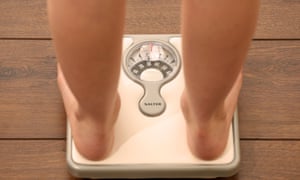


Being overweight harms people’s health in physical and psychological ways.


Being overweight harms people’s health in physical and psychological ways. Photograph: Chris Radburn/PA

The media and political focus in the past year or two has been on the UK-wide shortage of GPs. “But we need more practice nurses, far more district nurses and far more health visitors, far more community mental health support workers, far more CBT [cognitive behavioural therapy]. It’s been a chronic underfunding problem. So much resource and energy has gone into shoring up hospitals due to winter crisis and pressures in A&E but actually they took their eye off the ball in terms of the vital role of primary care in supporting the rest of the NHS.”


In England at least, though, Simon Stevens, the head of NHS England, has promised to send what the GPs’ leader only half-jokingly calls “the cavalry”. That should entail not just 5,000 more family doctors, but also 3,000 new mental health therapists who will be based in GP surgeries, 1,500 pharmacists who will also see patients there, as well as more practice nurses, “physician assistants” – who are meant to do some tasks usually performed by nurses or doctors – practice managers and receptionists.


They are all intended to help relieve the strain on GPs, who by common consent are struggling to keep up with the demands posed by our ageing, growing and increasingly medically complicated population. General practice will receive an extra £2.4bn a year by 2020-21 that will push its share of the NHS budget from £9.6bn to £12bn.


That pledge of 5,000 extra GPs was originally made by David Cameron before the 2015 general election. It remains a totemic Conservative promise, the missing of which would be very embarrassing. No one in the NHS thinks it will happen, though the health secretary Jeremy Hunt is still gamely insisting it will be met. Stokes-Lampard is understandably sceptical. “We’re concerned about the 5,000 GPs. It’s a good pledge but it’s not going to be met at the moment. Things are moving too slowly to reach that level by 2020, so it’ll take a big concerted effort by a lot of people to push us from the amber, which is where I think we are now on that, back into the green.”


She is worried that few if any of the 500 extra GPs that were meant to be coming from abroad to help meet the 5,000 target have actually come. For example, despite publicity months ago announcing the imminent arrival of family doctors from India, none is here yet. Brexit seems to be a factor, she says. “Inevitably we’ve already had doctors [overseas] saying to us, ‘I’d like to come but actually I’m not sure what the visa situation’s going to be in a few years’ time and, well, I don’t want to bring my family over, start a new life and discover I’m not welcome.’ So we need to change the language.” The government’s Migration Advisory Committee could help by adding GPs to its list of shortage occupations, just as they did with nurses earlier this year, and thus make it easier for family doctors from around the world to come here, she suggests.



Jeremy Hunt, the health secretary, insists the pledge of an extra 5,000 GPs will be met.


Jeremy Hunt, the health secretary, insists the pledge of an extra 5,000 GPs will be met. Photograph: Carl Court/Getty Images

Even if all the pledges by Stevens and Hunt to improve the lot of GPs are delivered, she fears that will not be enough to enable them to cope with the growing volume of illness. She wants to see big changes in public health policy – the sugar tax, minimum unit alcohol pricing – and for everyone to become more active. “We need to make it easier for people to be healthy. We need to make walking the new norm and to have more cycleways. Kids used to walk to school, but now there’s a culture of being chauffeured. People think it’s safer but it’s not. The evidence is increasingly that it’s the sofa that kills you, not the eating. Inactivity underlies a lot of problems. Being more active helps with our weight, our wellbeing and our heart.”


Better diet, including eating less meat, would also help prevent illness, she says. “I say this as someone who loves meat, so I’m not being hypocritical, but we need to change the culture of meat and two veg being the staple diet in the UK. We definitely need to eat less red meat and processed meat. Meat should be a treat, not part of every meal.” Consuming more white meat and fish, especially oily fish, would help reduce the risk of certain cancers, she says. She also advises cooking meat ourselves rather than buying pre-cooked joints, and eating it no more than twice a week.


General practice is closer to the precipice than it’s ever been in living memory


Helen Stokes-Lampard


So there is the nation’s health, an issue as always for the gatekeepers to the NHS. But she is also determined to do what her office allows – through lobbying ministers and arguing her case on TV and radio – to improve the health of Britain’s general practitioners, or “expert generalists”, as she calls them. A friend – a 38-year-old female GP – recently packed in the profession when it all got too much and her relationship with her partner and children began suffering under the weight of the constant stress, 14-hour days and endless workload family doctoring involves. “She cracked.” Another has recently emigrated to Australia in search of a better work-life balance.


“General practice is closer to the precipice than it’s ever been in living memory. The NHS is its people,” Stokes-Lampard adds. “If you take them for granted and don’t value what you’ve got, once they’ve gone it’s so, so much harder to come back from that brink.” Minister, take note.


CV


Name Dr Helen Stokes-Lampard


Age 46


Born Swansea, south Wales


Educated Comprehensive school in Swansea, then St George’s medical school in London.


Career Worked in obstetrics and gynaecology before becoming an academic GP and has been a GP since. Until September was head of primary care teaching (undergraduate) at Birmingham university’s school of medicine. Held various roles in the RCGP, including council member and treasurer.


Roles Chair, Royal College of General Practitioners (2016-2019) – the third woman in a row to hold the post after only men for the previous 50 years; GP partner (part-time) in Lichfield, Staffordshire.


‘Cyber-bullies, obesity and stress … this is a scary world’ says the new top GP

28 Mayıs 2014 Çarşamba

PETA: Milk Linked To Scary Autism And Vegan Is Your Only Hope

PETA, that bastion of accurate science and sensible remedies to the world’s ills, has supplied up an new evergreen campaign called “Got autism?” in which they assert that milk is linked to autism.


Milk. Autism.


In the annals of All the Issues Linked to Autism, PETA may well effectively have bested the greatest with this one particular. They are employing a neurobiological situation, one that at least 1% of the population–milk-consuming or otherwise–has, and striving to encourage their typically impractical agenda. But that is not all they’re undertaking.


Taking a page from the Autism Speaks playbook, PETA goes deep with the offense on this. In their fervor to defend cows from becoming milked and to make consumption of animal merchandise search like the work of Lucifer instead of hungry, omnivorous primates, they failed to recognize that they are campaigning on the backs of individuals. Individuals with autism. Pro tip, PETA: It’s not a good idea to demonize folks with disabilities to even more your result in.


Dairy Month Dairy Month (Photo credit: USDAgov)


Here’s what they say in their campaign, which attributes a bowl of Cheerios-like cereal, the little Os sadly forming an unhappy encounter in a sea of milk. If my milk:cereal ratio have been that off, I’d be sad, also. They’ve presently heard how offensive it is … so significantly so that the authentic 2008 billboard featuring the campaign was removed. What did PETA have to say about that? They are defiant and proud and continue the campaign in an undated report on their web site.


What do the people at PETA know about autism? Attempt these on for size:


Autism is a brain disorder … typically marked by anti-social habits like screaming…


PETA has developed a billboard to alert the public to the connection in between this devastating ailment and dairy-item consumption.


In amongst all of the screaming and currently being devastating, “many autistic kids” increase ‘dramatically’ on a dairy-cost-free diet program, PETA asserts. They cite a review of 20 youngsters (but really do not give a reference) and one more “from Rome” in which children showed “marked improvement” soon after getting taken off of dairy items.


Two research, neither of which is specified. We really don’t know the design. We really do not know if much more than casein was eliminated from the diet, but most scientific studies addressing diet and autism target on the GFCF (gluten-free of charge/casein-free) diet programs that a lot of dad and mom of autistic young children swear by. There is no way to stake enhancements to a reduce in dairy when other elements are getting eliminated, as properly. Cherry-selecting research aside, the aggregate of outcomes addressing dietary limitations, such as elimination of casein or gluten, and the effects on autism symptoms stays mixed, at greatest. The greatest managed scientific studies uncover no impact.


And then, in the grand tradition of all pseudoscience, following offering no references or clear proof of their assertion of a dairy-autism link, they move on to testimonials. “Heart-wrenching” ones, of course, simply because of the screaming and the devastation. But it doesn’t cease there. These are World wide web testimonials about the “disease.”


Regardless of the cause, testimonials show that several men and women with this ailment may be ready to discover relief with a simple dietary change—removing milk from their diet plan. The World wide web is made up of numerous heart-wrenching stories from mothers and fathers of little ones who had suffered the worst results of autism for many years just before dairy foods had been eliminated from their children’s diets.


They then give us a single mother’s story that pins behavioral exacerbation to a switch from soy formula to dairy, evidently not aware of the common allergenic overlap between soy milk and cow’s milk.


After expressing how unsurprising it is that dairy products “worsen this illness,” PETA claims that cow’s milk is “strongly” linked to cancer, Crohn’s illness, and other serious overall health problems … that really do not have something to do with autism, but why get all scientific about it now? Oh, let’s go ahead. Steven Novella offers the suitable scientific proof, which truly suggests a protective effect of milk against some cancers and preliminary and limited proof linking dairy and Crohn’s. I guess it depends on what your definition of “strongly” is. PETA’s definition of a powerful hyperlink appears to be “occurs in the very same sentence.” In that case, allow me assert that PETA’s whole anti-dairy, anti-autistic campaign is strongly pseudoscientific.


They close with a kicker:


Any individual who wants to alleviate or keep away from the devastating results of autism must give cow’s milk the boot and switch to healthful vegan options rather.


That reads to me like they are promising that avoiding milk will avoid autism. In other phrases, a significantly less-than-subtle hint that milk brings about autism, or at least its “devastating results.”


Confident, go vegan. Men and women I know who are vegans report enhanced overall health. Campaign for folks to go vegan. Even try out some science on people indicating that veganism can increase some health endpoints. But don’t use at least one% of our population as a dread element to urge folks to your lead to. Don’t weight the already burdened backs of autistic men and women by characterizing them as devastating, screaming monsters whose only salvation lies in following your urgings to give up dairy. You have some science on your side, PETA, supporting veganism as a healthful choice. Use that. Do not use autistic people.


PETA: Milk Linked To Scary Autism And Vegan Is Your Only Hope

14 Mayıs 2014 Çarşamba

Exactly where Do Scary Conditions Like SARS and MERS Come From? Animals

Middle-Eastern Respiratory Syndrome, or MERS, has a great deal in common with other emerging condition threats: we possibly acquired it from animals.


MERS has sickened at least 500 men and women, like two who traveled to the U.S, and has caused 145 deaths.  It is induced by a sort of coronavirus, a household of illnesses that also consist of a microbe that causes Sudden Acute Respiratory Syndrome, or SARS. According to the Centers for Illness Management and Prevention, the viruses that cause each sicknesses are closest to coronaviruses seen in bats camels can also infect humans. That means they are each most likely to be zoonotic conditions, which is the science identify for illnesses that can be passed in between animals and humans. Other major zoonotic diseases include anthrax, influenza, Lyme ailment, malaria, Ebola and West Nile. In accordance to the Globe Overall health Organization, that is just the tip of the iceberg: more than 200 diseases are zoonotic.


MERS-CoV MERS-CoV (Photograph credit: NIAID)


Zoonotic diseases account for about 75 percent of not too long ago-emerging infectious condition threats, in accordance to the CDC, and more than half of all human pathogens had been acquired from animals. Any infection acquired from an animal can be termed “zoonotic” after the virus appears to attempt making the jump everlasting, it can be called an “emerging infectious disease.”


The most latest zoonotic disease that you might have caught was the 2009 H1N1 swine flu. It bore no resemblance to the strains circulating at the time in humans as an alternative, it came from the guts of pigs, exactly where influenza viruses can reassemble. It’s not clear how often pathogens striving to jump to people fail — in truth, we’ve only recently developed the technologies to track the spread of disease from animals to humans at all.


MERS is a single of several emerging infectious ailments that seem to be making an attempt to turn into human viruses. At first, there had been animal contacts for the circumstances. Now it appears to be jumping in between folks. It is not totally clear that the changes in the virus will make humans more susceptible. Probably we are seeing a random fluctuation in the number of men and women who are contaminated perhaps we’re just seeing much more circumstances because we’re watching much more closely.


Even so, we have been seeing a lot more symptomatic circumstances and greater clusters than ahead of. More well being care workers are getting to be ill, and a greater proportion of the situations are in healthcare staff — which includes both U.S. instances. Most situations until finally not too long ago had been zoonotic — that is, in the sense that they have been acquired directly from animals. But clusters involving 12-48 people are now springing up, with a single man or woman infecting as numerous as 12. That alter may also be due to greater surveillance, but I doubt it.


That indicates we most likely should begin getting ready for the virus to start spreading far more quickly. The patient who was handled in Florida came into get in touch with with 500 men and women whilst flying and the CDC is currently striving to track them all down. It was on the journey in between Jeddah, Saudi Arabia, and London that this individual first started to come to feel sick. But simply because it’s not clear how or when MERS is transmitted, these folks may be fine. MERS generally isn’t dormant for longer than 14 days, so we will hear about any extra infections quickly, if there are any to hear about.


Of course MERS may not go worldwide it may continue to be isolated. But rather of waiting to discover out, it could be prudent to phase up condition surveillance and start to think about therapies. Antibodies to the respiratory syndrome have presently been located, so with some function, we could build a therapy — or, greater, a vaccine.


Nevertheless, if we’re concerned not just with MERS but with “the subsequent MERS,” no matter what that may possibly be, it behooves us to commence hunting very closely at the animals in our surroundings. We know in which many of these emerging illnesses come from — and now it’s time to pay consideration just before they jump to humans. Perhaps subsequent time we’ll be far better-prepared.


Exactly where Do Scary Conditions Like SARS and MERS Come From? Animals