rise etiketine sahip kayıtlar gösteriliyor. Tüm kayıtları göster

16 Mayıs 2017 Salı

Scanxiety: why private baby scans are on the rise

Anxiety may be the scourge of our times, but it now appears we have “scanxiety”, too. According to a study of 2,000 women, the phenomenon of pregnant women paying for extra private scans is on the rise. Almost a third paid for scans during pregnancy, with 36% citing anxiety as a reason. The NHS offers routine scans at 12 and 20 weeks, although more may be given for medical reasons.


“For the last 20 years, it’s been quite common for women to access private facilities for scans,” says Dr Christoph Lees, a consultant in foetal and maternal medicine and obstetrics and a spokesman for the Royal College of Obstetricians and Gynaecologists. “Sometimes it’s simply for reassurance, or because they don’t feel they’re getting sufficient scans on the NHS. Sometimes they’re accessing a service that isn’t routinely provided, such as 3D and 4D scans. Many are what you might call souvenir scans.”


For Lauren McGlynn, who has two boys aged four and nine months, anxiety was the main reason for paying for private scans. “Before my first son, I had two miscarriages,” she says. “I just couldn’t deal with waiting until 12 weeks. I had a private scan at seven weeks, which is the earliest they will let you do it.” Did she speak to her midwife or doctor about her worries and ask for an early scan on the NHS? “I didn’t say anything,” she says. “I just assumed the NHS wouldn’t be able to give an extra scan to every woman who had a miscarriage.”


Mandy Forrester of the Royal College of Midwives believes the rise may be partly explained by the shortage of 3,500 midwives in England (Lees also points to the national shortage of sonographers). “Midwives are pressurised during antenatal appointments and continuity of care is an issue,” she says. “If a woman is seeing the same midwife, it’s more likely they will build a good relationship. It may be that women are not getting the reassurance they need.”


There is also the issue of the small, unconfirmed risk to the foetus associated with ultrasound, which is why multiple scans without sufficient medical reason are not recommended. “And it’s difficult to know the quality of the service,” Lees adds. “While there are many private providers that are extremely good, there are pop-up services where the person doing the scan doesn’t have any training in ultrasound. You don’t need to have a licence to do an ultrasound scan privately.” Does he often see women who have had private scans that have worried them? “I do see women who come back to me with a private scan report,” he replies. “Quite often we have to repeat the scan and sometimes the advice is not correct. [Private scans] can cause concerns that are not necessarily merited, which rather negates their point.”


Scanxiety: why private baby scans are on the rise

12 Mayıs 2017 Cuma

Popularity of sushi has brought rise in parasitic infections, warn doctors

From nigiri to temaki, sushi has boomed in popularity in the west, but now doctors are warning of a less appetising trend: a rise in parasitic infections.


A team of doctors from Portugal raised concerns after a 32-year old man was admitted to hospital complaining of pain in his abdomen just below his ribs, vomiting and had a slight fever, all of which had lasted for a week.


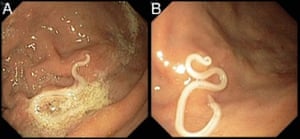
An endoscopy soon revealed the culprit: the larvae of a type of parasitic worm from the genus Anisakis. The doctors note that the condition, known as anisakiasis, is caused by eating undercooked or raw fish or seafood that has been contaminated: indeed, questioning of the patient revealed that he had recently eaten sushi.


After the larva was removed the man rapidly recovered, say the medics.


Two views of the parasite, seen here firmly attached to an area of the patient’s upper gastrointestinal tract.


Two views of the parasite, seen here firmly attached to an area of the patient’s upper gastrointestinal tract. Photograph: Carmo et al/BMJ case reports

Writing in the journal BMJ Case reports, the team warn that with sushi in vogue in the west, awareness of anisakiasis is growing.


“Most of the cases were described in Japan due to food habits; however, it has been increasingly recognised in western countries,” the authors write, pointing to a Spanish study that reported 25 cases of the condition over a three year period from 1999 to 2002, with all patients having eating raw anchovies, as well as Italian research which flagged both anchovies and sushi as routes by which individuals could become infected.


The Italian study added that medical professionals should suspect the condition should patients complain of severe abdominal pain after eating raw fish, pointing out that “no effective pharmacological treatment is able to kill the larvae once eaten”.


Indeed, as the US Center for Disease Control and Prevention notes, “The treatment for anisakiasis may require removal of the worm from the body by endoscopy or surgery.”


The authors of the latest report add that besides the symptoms shown in the Portuguese case, the condition can also trigger a host of other symptoms including severe allergic reaction, as well as complications such as digestive bleeding, bowel obstruction and peritonitis.


The Food Standards Agency noted that raw fish occasionally contain parasitic larvae, but said that under European food hygiene legislation fish that is to be eaten raw should be frozen before it is sold to consumers to ensure any parasites have been killed.


The FSA added that fish and meat should always be cooked properly according to the producer’s instructions, but offered a few tips to those planning to make their own sushi.


“If you do choose to make your own sushi from fish at home, ensure you follow a reputable recipe,” the FSA advised. “If wild fish are to be eaten raw or lightly cooked, ensure that all parts, especially the thickest part, have been frozen for at least four days in a domestic freezer at -15C or colder. This will ensure that any undetected Anisakis larvae are killed.”


Popularity of sushi has brought rise in parasitic infections, warn doctors

11 Mayıs 2017 Perşembe

Number of strokes in UK predicted to rise by 44% in next 20 years

The number of strokes in the UK is expected to increase by almost half over the next 20 years owing to the ageing population, according to a study.


Over the same period, the number of stroke survivors is predicted to rise by a third, raising questions about how the already stretched NHS and social care services will cope.


King’s College London analysed data from 35 European countries, finding that the number of strokes across the continent is likely to rise by a third (34%) by 2035. But the increase in the UK is expected to be more pronounced at 44%, owing to the rate at which the country’s population is ageing relative to many other European countries.


By 2035 the number of UK stroke cases is expected to increase by 44% to about 62,000 a year

Alexis Wieroniey, deputy director of policy and influencing at the Stroke Association, said: “The predicted rise in the burden of stroke is largely due to our ageing population, as the risk of having a stroke increases as you get older. It is a worrying forecast, but it is not inevitable.


“Most strokes are preventable and everyone can take steps to lower their risk of stroke as they get older. Obesity can increase your risk of stroke by at least 64%. However, simple lifestyle changes like eating healthier meals, taking regular exercise and stopping smoking, along with checking your blood pressure regularly, can greatly reduce your risk.”


According to the Stroke Association, an estimated 1.2 million people are currently living with the effects of stroke. It says there are more than 100,000 strokes each year.


Spending on stroke patients

The King’s College London analysis is published on the same day as the British Medical Association warns that the UK is facing a health time bomb owing to a failure in addressing the burden placed on the NHS by obesity, smoking and alcohol consumption.


The BMA points to figures showing that nearly one in six adults still smoke, 7.8 million adults binge drink and obesity rates remain stubbornly high. It says there has been a failure to publish a new tobacco control plan and a lack of recognition of the need for a new alcohol strategy. It also describes the childhood obesity strategy as “watered-down”.


In its manifesto, A Vote for Health, the BMA says whichever party wins the general election should reverse the £400m of public health cuts taking place between 2015-16 and 2020-21.


Dr Mark Porter, chair of the BMA council, said: “In England, successive governments have failed to deliver a long-term plan to improve public health, and too often evidence-based public health measures have been kicked into the long grass. We need tighter regulation of the food and soft drinks industry, a minimum unit price on alcohol and support for people to quit smoking.”


The Stroke Association says a plan to tackle strokes is also essential given the projected rise in the number of cases. The current stroke strategy for England is scheduled to end this year, leaving it as the only UK nation without such a plan.


A Conservative party spokeswoman said: “We are committed to improving the health of the nation. Smoking rates are now the lowest in our history, with cancer survival the highest, and we’ve put in place a childhood obesity plan Public Health England calls the most ambitious in the world.


“But the truth is that this all depends on a strong economy – we spent £3.4bn on public health programmes last year – which Jeremy Corbyn would risk with his nonsensical economic ideas.”


Number of strokes in UK predicted to rise by 44% in next 20 years

6 Mayıs 2017 Cumartesi

Lib Dems pledge 1p tax rise to "rescue NHS and social care"

The Liberal Democrats have pledged to increase income tax by a penny for every earner to fund a £6bn-a-year cash injection for the NHS and social care.


In what was described as their “flagship” spending commitment of the general election campaign, the party’s leader, Tim Farron, said voters recognised the need to “chip in a little more” to address the “chronic underfunding” of healthcare.


Under the Lib Dem plan, 1p would be added to the basic, higher and additional rates of income tax and the rate of dividend tax from the next financial year, with the £6bn raised being ring-fenced for the NHS, social care and public health.


The proposal – which echoes the Lib Dems’ pledge from the 1990s to put a penny on income tax for education – will be seen as a clear attempt to capitalise on public concerns about the state of healthcare.


Theresa May has insisted the Conservatives have no plans for tax rises while appearing to back away from a previous pledge not to put up income tax or national insurance.


Farron said: “Theresa May doesn’t care about the NHS or social care. People are lying on trolleys in hospital corridors and she has done nothing.


“The Liberal Democrats will rescue the NHS and social care. We are prepared to be honest with people and say that we will all need to chip in a little more.”


The party’s health spokesman, Norman Lamb, said: “The NHS was once the envy of the world and this pledge is the first step in restoring it to where it should be. A penny on the pound to save the NHS is money well spent in our view.”


The Lib Dems pointed to an opinion poll finding from last year, which suggested 70% of voters would back a 1p rise in income tax if the money was guaranteed to go to the NHS.


According to figures released by the party, the rise would mean an increase of £33 a year – or less than £1 a week – for someone earning £15,000 a year, rising to £133 a year – or less than £3 a week – for someone earning £25,000.


At the top end, someone earning £150,000 would pay an extra £1,500 a year – or £29 a week – while someone on £250,000 would pay £2,500 a year, or £48 a week extra.


In the longer term, the Lib Dems said they would introduce a health and care tax to bring spending on both services together in a collective budget, and make clear on people’s payslips what was being spent on those services.


The party said it would seek to establish a cross-party health and care convention to review longer term sustainability of the health and care finances while setting up an office of health and care funding, similar to the Office for Budget Responsibility.


Lib Dems pledge 1p tax rise to "rescue NHS and social care"

26 Nisan 2017 Çarşamba

Labour will give pay rise to "overworked and underpaid" NHS staff

NHS workers who have been “taken for granted” by the Tories will get a pay rise if Labour wins the election, the shadow health secretary is to announce.


Jonathan Ashworth will say in a speech on Wednesday that NHS staff have been “undervalued, overworked and underpaid”by the Conservative government, with cuts to pay and training forcing workers out of the health service and putting young people off applying.


This has led to short staffing that is a threat to patient safety, Ashworth will say.


In March, the government announced that around 1.3 million NHS staff would receive a 1% pay rise but critics pointed out the rise would see nurses, midwives and radiographers earn barely £5 a week more.


The settlement for 2017-18 is the sixth year in a row in which NHS staff’s annual pay rise has been lower than the cost of living – inflation is running at 3.2%.


Labour plan to lift the 1% cap on pay rises for NHS staff and move towards public sector wages being agreed through collective bargaining and the evidence of independent pay review bodies.


At the Unison Health Conference in Liverpool, Ashworth will say: “Our NHS staff are the very pride of Britain. Yet they are ignored, insulted, undervalued, overworked and underpaid by this Tory government. Not any more. Enough is enough.


“NHS staff have been taken for granted for too long by the Conservatives. Cuts to pay and training mean hard-working staff are being forced from NHS professions and young people are being put off before they have even started. Now Brexit threatens the ability of health employers to recruit from overseas.


Labour also plan to create legislation requiring NHS trusts to have regard for patient safety when setting staffing levels, as “Tory mismanagement” has left the health service “dangerously understaffed”.


It will ask the National Institute for Health and Care Excellence to assess whether legally enforced staffing ratios should be introduced in some health settings. The party will also reinstate funding and support for students of health-related degrees and incentivise NHS jobs to boost staffing levels.


Ashworth will say: “What is bad for NHS staff is bad for patients too. Short staffing means reduced services and a threat to patient safety. Labour’s new guarantees for NHS staff will help keep services running at the standard which England’s patients expect.”


The move was welcomed by unions and representative bodies.


Jon Skewes, director for policy, employment relations and communications of the Royal College of Midwives, said: “These are very welcome commitments from the Labour party. They recognise the effort, determination and commitment on the part of our hard-working midwives and other NHS staff to deliver the safest and best possible care for those using the NHS.


He also criticised the government for abolishing NHS bursaries, which has led to a fall by 23% of applications by students in England to nursing and midwifery courses at British universities.


The government’s policy of a 1% pay cap amounts to a drop in real wages, the TUC has calculated. Adjusting for inflation, a nurse, for example, would have earned £30,929 in 2010, but only £28,462 last year.


There are currently 24,000 nursing vacancies, according to the Royal College of Nursing as roles become harder to fill.


Frances O’Grady, general secretary of the TUC said: “Under the government’s current plans, NHS workers will lose thousands of pounds from their salaries. This is unfair, it will demoralise staff and it will increase the number who decide to quit.


“We hope all the parties will make an election pledge to scrap the unfair pay restrictions and give our hard-working NHS staff the pay rise they deserve.”


Unison general secretary Dave Prentis said NHS staff are “struggling to get by” on below-inflation pay rises and lifting the 1% cap would make them feel valued.


Conservative health minister Philip Dunne said: “We’ve protected and increased the NHS budget and got thousands more staff in hospitals. But all that’s at risk with Jeremy Corbyn’s nonsensical economic policies that would mean less money for the NHS. Just look at Wales where Labour’s economic mismanagement means they had to cut funding.”


Labour will give pay rise to "overworked and underpaid" NHS staff

23 Nisan 2017 Pazar

Obesity blamed for sharp rise in kidney cancer in UK

Obesity is to blame for a surge in kidney cancer in the UK, causing an extra 20,000 cases in the last 10 years, according to a leading charity.


Cancer Research UK says that new cases of kidney cancer have risen steeply, by 40% over the past decade.


Obesity and being overweight are implicated in about a quarter of kidney cancers, with smoking linked to another quarter, but while the numbers of people smoking has dropped, obesity continues to rise. The charity’s projections show kidney cancer cases climbing by a further 26% by 2035, which would make it one of the fastest growing types of cancer.


Kidney cancer kills half of those who develop it within 10 years. It is rare in people under the age of 50 and can be halted if caught early – usually by surgery to remove all or part of a kidney. It is often not picked up in time, however, because there may be no obvious symptoms early on.


There are about 11,900 cases of kidney cancer in the UK each year, 7,400 in men and 4,500 in women. About 4,300 people die from the disease each year.


Campaigners are concerned that few people realise obesity is a major factor in developing many types of cancer, including stomach, pancreatic and breast cancer.


“It’s concerning to see kidney cancer cases rising like this. Being overweight or obese is linked to 13 types of cancer, including kidney which is becoming more and more common,” said Dr Julie Sharp of Cancer Research UK.


“Similar to smoking, where damage to cells builds up over time and increases the risk of cancer, damage from carrying excess weight accumulates over a person’s lifetime.”


The symptoms of kidney cancer – when there are any – include blood in urine, a persistent pain below the ribs in the lower back or side, and a lump or swelling in the side. Kidney cancer is sometimes picked up during urine tests carried out for other reasons.


Sarah Toule of the World Cancer Research Fund said that maintaining a healthy weight was extremely important. “In fact, if everyone was a healthy weight, around 25,000 cancer cases could be prevented every year in the UK,” she said.


”There are simple ways people can help maintain a healthy weight, such as cutting out high-calorie food and drinks and doing at least 30 minutes of exercise every day.


“The government also plays a vital role in ensuring strong measures are in place to help the healthy choice be the easy choice. These include restricting junk food marketing to children and reducing the amount of sugar found in everyday products.”


Adam Freeman, a 46-year-old lawyer and father of four from south London, was diagnosed with kidney cancer in 2013. He had surgery to remove a kidney and is now cancer-free.


“When it comes to my lifestyle, I would say that the little devil on my one shoulder won over the angel on my other, so I ducked exercise and ate badly a bit too often.


“Now, since my diagnosis, I try to listen to the angel rather than the devil on my shoulder. I have tried to make things more habitual and rarely skip exercise or make bad food or drink choices. I regularly cycle to work to try and keep fit, and I have also started doing yoga.


“Of course it’s challenging to maintain a healthy lifestyle when you are juggling a career and family. I am only human. I’m a husband and father to our four children and my career can be demanding.


“But that’s why things have to be a habit so it becomes part of your daily life. We talk much more as a family about healthy choices, particularly trying to make the children aware of how much sugar is in drinks and breakfast cereals. We try and reduce the amount of temptations in the house.”


Obesity blamed for sharp rise in kidney cancer in UK

Rise in hospital admissions for infants triggers call for NHS overhaul

The number of infants admitted to hospital for emergency care for conditions such as asthma, bronchitis and jaundice has risen sharply in the past decade.


More young children are also ending up spending time in hospital being treated for tonsillitis, breathing problems, drug poisonings and infections, new NHS figures show.


Experts behind the report into children’s care are demanding that the NHS overhauls services inside and outside hospital to provide better care and avoid young people adding to the pressures on hospitals by spending time unnecessarily as an inpatient.


They have raised concerns about a number of weaknesses they have identified in NHS care of children and young people, including a lack of knowledge among GPs, poor mental health services and paediatricians spending too little time helping patients in community-based settings. Problems with the quality of care children receive helps explain why some need to be admitted in the first place and, in some cases, have to be readmitted soon after their hospital stay.


“We have identified a number of areas of concern, which highlight potential inadequacies in the level of care and support this group is receiving outside the emergency hospital setting”, said co-authors Ellis Keeble and Lucia Kossarova, who work at the Nuffield Trust thinktank.


They undertook the research, alongside the Health Foundation thinktank, by examining official NHS hospital episodes statistics records for admissions to hospital in England by newborns up to those aged 24 between 2006-07 and 2015-16.


Emergency hospital admissions for all under-25s grew during the decade from 990,903 in 2006-07 to 1,124,863 in 2015-16 – a rise of 14%. However, that was lower than the 20% increase in emergency admissions among the population as a whole over that time.


But they learned that there had been a 30% jump in the number of infants having to be admitted and a 28% rise among those aged one to four. The “concerning” spikes in those younger age groups raised inevitable questions about the availability and quality of maternity and community services, the researchers said.


“The number of infants, children and young people using emergency departments continues to increase – with 30% more emergency admissions for under ones and 28% more for one- to four-year-olds than 10 years ago. This is placing huge pressure on a service already under strain,” said Dr John Criddle, a spokesman for the Royal College of Paediatrics and Child Health.


The number of admissions among infants for jaundice more than doubled from 8,186 to 16,491 per year and cases of acute bronchitis rose 88% from 21,235 to 39,122.


Spells in hospital for “other perinatal conditions”, which includes digestive problems and feeding trouble in babies, also increased sharply, from 14,293 to 24,848. Upper respiratory infections except asthma rose from 17,357 to 20,940; viral infections rose by 116% from 12,730 to 16,826.


Tens of thousands of emergency admissions a year in the nought to 24-year-old range as a whole – each of which costs the NHS about £400 a night – could be avoided with better management and treatment, the report concludes. Four-fifths of the 37,549 admissions seen in 2015-16 for acute and chronic tonsilitis could have been prevented, as could “a proportion” of the 27,727 inpatient stays for epilepsy and 27,325 admissions for asthma, the authors said.


Emergency readmissions rose 12% over the decade, including 17% among 15- to 19-year-olds. “Perhaps most worryingly, compared to other conditions the analysis revealed a larger rise in emergency readmissions following emergency admission for acute and chronic tonsilitis (27%) and poisoning by other medications and drugs (25%) for children and young people”.


Dr Bob Klaber, a paediatrician at St Mary’s hospital in London, said: “There is no one medical explanation for why 30% more young children are now being admitted to hospital than before. So there must be something about how we are supporting these families and a lack of support for mums with newborns who are socially isolated.


“From my experience, the fragmentation of our health and social care system, including antenatal support and help in the child’s first five years of life, has made things really difficult for parents with new babies and young children, and so too often our hospitals become the default place for them to attend.”


A lack of focus on developing joined-up preventative care plans may help explain the growth in admissions for asthma and it could be that the NHS has made the eligibility criteria for children having their tonsils removed too tight so that some with recurrent tonsil problems end up needing hospital care, according to Klaber.


He urged paediatricians to work more closely with GPs, health visitors, school nurses and other primary care health professionals in their area so they can help them identify and manage illness in children.


Klaber said a scheme in which children’s doctors from St Mary’s did that with seven “hubs” showed that approach worked. “As well as extremely positive patient and staff experience, our published evaluation of the first full hub showed that 39% of new patient hospital appointments were avoided altogether and a further 42% of appointments were shifted from hospital to GP practice,” he said.


“In addition, there was a 19% decrease in sub-specialty referrals, a 17% reduction in admissions to hospital and a 22% decrease in A&E attenders.”


Rise in hospital admissions for infants triggers call for NHS overhaul

17 Nisan 2017 Pazartesi

Electroconvulsive therapy on the rise again in England

The use of electroconvulsive therapy to treat serious mental health problems, a procedure long thought to be in steep decline, is on the rise again in England, a Guardian analysis indicates.


Exclusive data covering four-fifths of NHS mental health trusts in England shows that more than 22,600 individual ECT treatments were carried out in 2015-16, a rise of 11% from four years ago, when about 20,400 were carried out.


The number of patients treated also rose, albeit more modestly, to more than 2,200, suggesting that on average individuals undergo more ECT procedures than before.


The figures, obtained through freedom of information requests, show that despite being a crude, controversial treatment, which fell sharply out of favour around the turn of the millennium, ECT is enjoying a revival.


The procedure involves anaesthetising the patient and passing electricity through the brain to induce seizure. Despite ghoulish depictions in popular culture and a marked lack of science explaining how and why it works, treatments can prove effective. Patient stories range from life-changing benefits to tales of lives being ruined.


The data collected by the Guardian covers 44 NHS trusts that provided comparable data. Figures for private clinics are not included.


After considerable fluctuation over the last four years, a comparison of figures from 2012-13 and 2015-16 reveals an 11% rise when it comes to the number of ECT treatments. Almost two-thirds of NHS trusts reported a rise in the number of ECT treatments carried out over the four-year period. The average number of ECT treatments per patient also rose, from 9.6 in 2012-13 to 10.1 four years later.


The changes in ECT were more striking in some parts of the country than others. While the number of treatments carried out by Mersey Care NHS trust, for example, has remained fairly constant over the last four years, the figures for Lincolnshire Partnership NHS foundation trust show a 75% increase in treatments.


Experts and practitioners say a slew of factors could be responsible for the revival. Some say it is down to improved patient access, lack of credible alternatives for serious cases of mental illness and the fact that in many cases ECT does seem to make a difference.


“I think [ECT] should be on the increase because it has been underused for a number of years,” said Tim Oakley, chair of the ECT Accreditation Service (ECTAS) accreditation committee and a clinical director at the Northumberland, Tyne and Wear NHS foundation trust.


“There are some patients who would respond very well to ECT who perhaps don’t get it as quickly as they should or don’t get it at all for various reasons,” he said. “In terms of getting people better, particularly for depression where everything else fails, it is still the best treatment.”


Others point to the patchwork nature of provision – popular in some parts of the country, not in others – as a sign that it is down to local medical preferences.


“The decision about whether ECT is to be used or not is based on the quirks of the local psychiatrist,” said Richard Bentall, professor of clinical psychology at Liverpool University. “There are some places where psychiatrists think it works, and they just do it lots of times, and there are some places where people think: ‘Bloody hell, I don’t think the evidence for this is very good,’ so will only do it in absolutely desperate circumstances.”


He added: “My view is that ECT is a classic failure of evidence-based medicine. I don’t believe that there are adequate clinical trials of ECT to establish its effectiveness.”


While some, including Oakley, have argued that historical ECT trials do show a benefit from the treatment, Bentall believes their design was not up to scratch, and said the data obtained by the Guardian highlighted the need for large randomised placebo-controlled clinical trials – a proposal some proponents of ECT have argued would be unethical.


But Bentall said: “It is clearly unethical to pass electric shocks across people’s brains unless it is effective [and] helpful to do so and therefore there is an ethical requirement to show that treatment is effective.”


Others have suggested the increase in number of ECT treatments could be down to a change from bilateral to unilateral therapy, where the electrodes are applied to one side of the head, rather than at both temples.


“That has slightly fewer side-effects and is less likely to cause memory impairment,” said Andrew Molodynski, consultant psychiatrist at Oxford Health NHS foundation trust and national mental health lead of the British Medical Association’s consultant committee. “It is also slightly less powerful, so it might be that if more people are having that then they are needing slightly more treatments.”


“It is by far the most powerful treatment for depression,” he added. “As a treatment it is certainly not bad as long as it is done properly and for the right people, which is people with genuinely treatment-resistant depression.” While Molodynski added that he did not believe it would be ethical to carry out new clinical trials of the effectiveness of ECT, he thought studies into outcomes over prolonged periods would be valuable.


But Molodynski pointed out that the Guardian figures suggested either that the procedure was being used more freely, or that more people appeared to be falling into the category of those with treatment-resistant depression.


He said the increase should be viewed negatively if it was a result of people with less severe forms of depression not getting the care they needed. “Equally, if people are resorting to ECT for inpatients more quickly, because it works more quickly than antidepressants, in order to get them out of hospital because of our perpetual bed crisis, that would be a major concern.”


One ECT service manager from a London-based mental health trust, who asked not to be named, said the Guardian findings tallied with his own experience of a recent rise in ECT use, adding that the trend was likely to be linked to changes in practice and better regulations, with people becoming more accepting of the procedure. “Our trust treated more patients last year than they have ever treated before,” he said.


A 2014-15 survey which included clinical outcomes for 2,148 people, published by ECTAS and covering England, Wales, Northern Ireland and the Republic of Ireland, reported that 91.5% of patients had improved after the treatment, compared with 1.7% who had become worse.


The mental health charity Mind, however, warned of side-effects, pointing to a 2003 survey it carried out with patients who had undergone ECT who reported memory loss, difficulty concentrating and dizziness.


While the idea of inducing a seizure for therapeutic reasons was first recorded in 1785, ECT was not developed until the 1930s. It was subsequently introduced to England and was commonly used well into the 1960s and 1970s.


But its use waned towards the end of the 20th century. According to the Royal College of Psychiatrists: “Between 1985 and 2002, its use in England more than halved, possibly because of better psychological and drug treatments for depression.”


Dr Rob Chaplin, from the Royal College of Psychiatrists, said: “Previous data collection has shown a decline in ECT, but this appears to have plateaued, perhaps suggesting a change in attitude towards a therapy that has historically been poorly administered and badly misunderstood.


“Since the launch of our accreditation service for ECT in 2003, safety standards have doubled, making ECT in the UK one of the best in the world.


“There is unmistakable evidence that electroconvulsive therapy is an effective treatment for many depressive illnesses, and can act much faster than drugs.”


At present, the National Institute for Health and Care Excellence (Nice) advises that ECT be used only as a last resort for those with prolonged or severe manic episodes, who are in a catatonic state, or who have severe depression or moderate depression when other treatments have not worked.


The data


There is a dearth of information on how widely ECT is used, so the Guardian requested data from every English NHS mental health trust, as listed by the Care Quality Commission, under the Freedom of Information Act for a 10-year period between 2005-06 and 2015-16.


It quickly became clear that many trusts either did not hold or could not access relevant data for the decade covered by the request.


The vast majority could not provide data for the full 10-year period requested. The data presented here begins in 2012 for that reason: a number of trusts were unable to provide figures prior to that year.


Three trusts refused the request outright, saying the staff time required to comply with the request was too great, while seven trusts could not even provide consistent data from 2012-13 onwards. Some trusts admitted they were missing data over periods of months in certain years.


Two trusts provided data that turned out to be completely incorrect, only providing accurate figures after multiple contacts.


The majority of the trusts provided financial year data. However, in those cases where calendar year data was provided, the data was grouped with the closest financial year.


This project may have revealed an increase in ECT use in England but it has also uncovered a lack of properly collected data relating to the procedure.


Electroconvulsive therapy on the rise again in England

12 Nisan 2017 Çarşamba

Recorded childhood cancers rise by 13% worldwide, study finds

Childhood cancers have risen across the globe by 13% over 20 years, according to data from the World Health Organization’s cancer section.


Cancer in children is comparatively rare; when it does occur it is more likely to have been triggered by something in the child’s genetic makeup than by anything to do with lifestyle or the environment.


Part of the reason for the rise is thought likely to be better detection. But experts say it is vital to collect better data from all over the world to establish all the causes, which could include infections and environmental pollutants.


The International Agency for Research on Cancer (IARC), which has published its findings in the medical journal Lancet Oncology, says the numbers recorded in cancer registries around the world have gone up since the 1980s. Between 2001-2010, there were 140 children in every million who were diagnosed with cancer under the age of 14, which represents a 13% increase.


IARC for the first time gives numbers for adolescents with cancer. There were 185 adolescents in every million diagnosed with cancer, most commonly lymphomas, which are cancers of the white blood cells.


“Cancer is a significant cause of death in children and adolescents, in spite of its relatively rare occurrence before the age of 20 years,” said IARC’s director, Christopher Wild. “This extensive new set of information on the pattern and incidence of cancer in young people is vital to raise awareness and to better understand and combat this neglected area of health early in life.”


A third of the cases under the age of 15 were of leukaemia, a cancer of the blood that is now successfully treated in Europe and the US.


A second paper, published in the Lancet Haematology journal, looks at the stark variation in survival from acute lymphoblastic leukaemia (or ALL) in childhood around the world between 2005 and 2009. In Germany, 92% of children survived for at least five years but in Colombia the figure was 52%.


Survival rates have improved significantly in all countries. From 1995-99 and 2005-09, five-year survival for the disease ALL, in children, increased from 79% to 89% in the UK, and from 83% to 88% in the US.


Regarding a second form of the disease, acute myeloid leukaemia (AML), five-year survival increased from 59% to 68% in the UK and from 52% to 63% in the US. Survival in China increased substantially over the same period – from 11% to 69% for ALL survival, and 4% to 41% for AML survival.


The IARC study on the global cancer rise has gathered information from cancer registries worldwide. But while the data covers 100% of children in Europe and North America, it accounts for only 5% or a lower percentage in Africa and Asia, where the information is not routinely collected.


In poorer countries, some children’s cancers are never diagnosed and their deaths will not be investigated. Social factors may explain why the cancer numbers for girls and small babies are very low.


In wealthier countries, greater understanding of cancers affecting children and adolescents and the development of better tools will account for much of the rise in numbers.


“It’s likely that this reported rise in children’s cancers is, in part, due to improvements in diagnosis,” said Anna Perman, Cancer Research UK’s senior science information manager. “We now have a better understanding of the symptoms of children’s cancers, which helps doctors to spot those who might have gone undiagnosed before. It’s unlikely environmental factors that children are exposed to either early in life or during development in the womb play a big role in this rise. Although some environmental and lifestyle factors that do play a role in cancer are on the rise, these usually take many years to influence cancer risk and would be unlikely to cause cancer at a young age.”


Recorded childhood cancers rise by 13% worldwide, study finds

11 Nisan 2017 Salı

Recorded childhood cancers rise by 13% worldwide, study finds

Childhood cancers have risen across the globe by 13% over 20 years, according to data from the World Health Organization’s cancer section.


Cancer in children is comparatively rare; when it does occur it is more likely to have been triggered by something in the child’s genetic makeup than by anything to do with lifestyle or the environment.


Part of the reason for the rise is thought likely to be better detection. But experts say it is vital to collect better data from all over the world to establish all the causes, which could include infections and environmental pollutants.


The International Agency for Research on Cancer (IARC), which has published its findings in the medical journal Lancet Oncology, says the numbers recorded in cancer registries around the world have gone up since the 1980s. Between 2001-2010, there were 140 children in every million who were diagnosed with cancer under the age of 14, which represents a 13% increase.


IARC for the first time gives numbers for adolescents with cancer. There were 185 adolescents in every million diagnosed with cancer, most commonly lymphomas, which are cancers of the white blood cells.


“Cancer is a significant cause of death in children and adolescents, in spite of its relatively rare occurrence before the age of 20 years,” said IARC’s director, Christopher Wild. “This extensive new set of information on the pattern and incidence of cancer in young people is vital to raise awareness and to better understand and combat this neglected area of health early in life.”


A third of the cases under the age of 15 were of leukaemia, a cancer of the blood that is now successfully treated in Europe and the US.


A second paper, published in the Lancet Haematology journal, looks at the stark variation in survival from acute lymphoblastic leukaemia (or ALL) in childhood around the world between 2005 and 2009. In Germany, 92% of children survived for at least five years but in Colombia the figure was 52%.


Survival rates have improved significantly in all countries. From 1995-99 and 2005-09, five-year survival for the disease ALL, in children, increased from 79% to 89% in the UK, and from 83% to 88% in the US.


Regarding a second form of the disease, acute myeloid leukaemia (AML), five-year survival increased from 59% to 68% in the UK and from 52% to 63% in the US. Survival in China increased substantially over the same period – from 11% to 69% for ALL survival, and 4% to 41% for AML survival.


The IARC study on the global cancer rise has gathered information from cancer registries worldwide. But while the data covers 100% of children in Europe and North America, it accounts for only 5% or a lower percentage in Africa and Asia, where the information is not routinely collected.


In poorer countries, some children’s cancers are never diagnosed and their deaths will not be investigated. Social factors may explain why the cancer numbers for girls and small babies are very low.


In wealthier countries, greater understanding of cancers affecting children and adolescents and the development of better tools will account for much of the rise in numbers.


“It’s likely that this reported rise in children’s cancers is, in part, due to improvements in diagnosis,” said Anna Perman, Cancer Research UK’s senior science information manager. “We now have a better understanding of the symptoms of children’s cancers, which helps doctors to spot those who might have gone undiagnosed before. It’s unlikely environmental factors that children are exposed to either early in life or during development in the womb play a big role in this rise. Although some environmental and lifestyle factors that do play a role in cancer are on the rise, these usually take many years to influence cancer risk and would be unlikely to cause cancer at a young age.”


Recorded childhood cancers rise by 13% worldwide, study finds

3 Nisan 2017 Pazartesi

The rise of non-surgical beauty: ‘My mum said my lip looked like a rubber dinghy’

Claudia Wright has filler injected into her lips every two months to plump them out, and is having them done again in two weeks. “I want them to look big,” she says. She likes them best the day after the procedure, when they are still swollen. When they settle – lip enhancements are supposed to last up to 18 months – it makes her want to book another appointment.


Wright, who is 24, is open about the procedure on her beauty blog and Instagram account. “I like the fake look,” she says. “I’ve got bleached blond hair, I have long eyelashes. I like that look, I’m not trying to look natural. I’m so open about everything I’ve had done, I don’t think it’s an issue.”


She started having lip enhancements when she was 21. Her mum, she says, recently told her that her top lip looked like a rubber dinghy “and that if I carry on getting it done no one will take me seriously. She’s really against them.” But women her own age have told her they love them and ask where she gets them done. “If anything, I’m getting a little bit more each time I go now because I want them to look more full. I did want just a full top lip but now I want both of them looking really full.”


The British Association of Aesthetic Plastic Surgeons (Baaps) recently released its annual figures showing a 40% drop in the number of cosmetic surgery procedures performed by its members, the lowest for nearly a decade. After years of steady rises, it came as a bit of a surprise. The economy and job insecurity was blamed – cosmetic surgery is expensive, after all.


The truth – says former president Rajiv Grover, who compiles the annual audit– is a bit more nuanced. Baaps only represents about 40% of cosmetic surgeons and he suspects that, with the wealth of information online (including many dedicated cosmetic surgery forums), people are researching experts and choosing a specialist, rather than a general cosmetic surgeon. They are going to a breast surgeon for breast augmentation or an ear, nose and throat surgeon for a nose job – surgeons who practise a bit of cosmetic surgery on the side, but aren’t members of Baaps, and so don’t get included in the figures.


But he accepts there may be a drop in surgery overall (if not by 40%). Surgeons are reporting a reduction in the number of procedures a patient has at one time. Before, he says, someone might come “to have some liposuction of saddlebags, as well as having some skin removed from their lower tummy and maybe some breast surgery, [but] now they’re just having one of those things done. That’s where I think uncertainty in the economy will have come into it.” Crucially, though, he says, “there is a rise in what you can have done without surgery. If people don’t have the time to spend two weeks off work recovering from a facelift and want a little bit of improvement, they can have whatever is on offer without downtime.”


The sheer number of non-surgical procedures is dizzying, and ever-growing. Botox is now so well established that it celebrates its 15th anniversary as an FDA-approved cosmetic treatment this month, but you can also have your face lasered and peels applied to improve skin texture, and ultrasound therapies to tighten. You can have tiny threads, that gradually absorb into the body, put in your face during your lunch break to hoick it up, and filler put into your cheeks. Soon, people will be able to have fat-melting injections for their double chins. At-home treatments are also increasing – you can get home laser hair removal and microneedling devices (rollers with tiny spikes that prick the skin and are supposed to encourage collagen production). One DIY trend that emerged last year was dermaplaning – using a scalpel to shave a layer of skin cells and hair, from the face for a supersmooth, airbrushed effect.


“A significant proportion [of patients] say they’ve come to me because they don’t want surgery yet or they want to try to prevent it from happening at all,” says Dr Frances Prenna Jones, whose clinic in Mayfair offers a wide range of treatments. “Twenty years ago your only option was surgery – now there are machines, injectables and so much more you can do. A lot of the time, it is replacing the need to have surgery done.”


Machines using lasers or LEDs “work deeper down within the muscle to make new collagen and elastin to give that nice infrastructure, and tightening effect”. Previously, loose skin was cut away and tightened. Now it is plumped up with injectable filler. Volume replacement is what has really changed in the last few years, says Prenna Jones. “Even three years ago, people would say, ‘I am not having filler, there’s no way.’ Now that people understand what it really means – that you don’t have to have puffed-up lips or puffed-up cheekbones. When I look at the amount of filler I was doing three years ago and the amount I’m doing now, that’s definitely on the rise.”


The cost of the treatments hasn’t come down spectacularly, so she doesn’t think that is driving popularity; it’s more the fact it is becoming normalised. “Now I think women accept that it is part of their monthly budget, the same as doing their hair.”


The use of more intense beauty treatments – such as teeth whitening and HD brows, where eyebrows are dyed, waxed and shaped – has accelerated in the past few years. “It is becoming increasingly normalised to have more done [to meet] what we think of as quite basic beauty standards,” says Heather Widdows, professor of global ethics at the University of Birmingham and author of the forthcoming book Perfect Me. “It doesn’t feel like a big hurdle to go from getting your hair done to Shellac-ing your nails to Botoxing.” There is less stigma, she says. “I think Botox, to use one example, is now being seen as routine maintenance, and that’s a very different scenario from 10 years ago.”


Kylie Jenner is famous for her lips, which have been filled.


Kylie Jenner is famous for her lips, which have been filled. Photograph: Steve Granitz/WireImage

What is driving the change can’t be attributed to one thing, she says. “We live in a more virtual and visual culture. We look at images differently, we have HD and computer technology that means we see flaws in skin we didn’t see before. And more people we know have had non-surgical procedures.”


Surveys about body image, she says, routinely show an epidemic of unhappiness about appearance. The rise of more “normal” women (ie, not supermodels) who become YouTube and Instagram stars should, in theory, mean wider and more democratic standards for beauty, but in reality it is their “normalness” that has changed the idea of what normal is, particularly when it is accompanied by heavy makeup and invasive procedures. “It puts pressure on all women to feel they have to look like that,” says Widdows.


What is striking, says the Guardian’s beauty writer Sali Hughes, is the number of much younger women seeking to alter their face. Contouring makeup, where different shades “shape” the face, is “predominantly a young woman’s trend and it’s fuelled by celebrities, but the celebrities who fuel it as a trend also have surgery and non-surgical procedures, so it’s a triple-pronged attack. It just so happens that young women can only afford the contouring part. It really exists to look good in pictures.” But the more disturbing thing, she says, is how many young people want, or are having, non-surgical procedures. She recently met an 18-year-old at an event who told her all her friends want fillers and lips like Kylie Jenner (the youngest of the Kardashians, who had lip-filler injections) for their birthdays. “They want their parents to pay for fillers for them.”


The aim, she says, is not to look natural. “They’re mimicking a surgical look or at least a heavily injected look that celebrities wear. I think young people are much less interested in pretending that this is what nature gave them than we perhaps assume. Where you would once hear actors in their 40s and 50s completely denying non-surgical procedures, and I quite understand why, even though I don’t think they should, young people don’t have that anxiety about non-surgical.”


Dr Tijion Esho, founder of the Esho clinics in London and Newcastle, says there has been a culture change. “One big thing now is people start earlier,” he says. Before, people would not consider these treatments until they were in their mid-40s. “Now women in their mid-20s are very aware of the ageing process and are already doing things to halt it early. The non-surgical treatments are improving more and more. It doesn’t mean non-surgical will ever replace the knife – there is a limitation to what non-surgical can do – but, in many areas, people can get improvements that are satisfactory.”


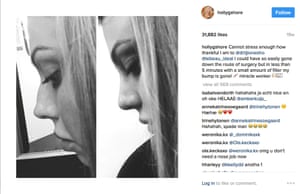
Fillers have changed everything, Esho says. He can use fillers to improve the shape of someone’s nose – a cheaper, less permanent version of a nose job without the need for general anaesthetic – for instance. In February one patient, Holly Hagan, the 24-year-old star of the reality series Geordie Shore, posted pictures on Instagram of some filler she had to change the shape of her nose and chin.


Dr Tijon Esho also shaped Holly Hagan’s nose with just fillers.


Dr Tijon Esho also shaped Holly Hagan’s nose with just fillers. Photograph: Instagram

‘When we’re doing fillers in young people we have to be very careful, from an ethical standpoint,” he says. “Legally, it does concern me because there is no law to say what age someone has to be to undergo fillers. Someone could treat a 16-year-old, but ethically that is wrong.” The non-surgical industry is unregulated and anyone can set themselves up as a practitioner with no training. Botox is prescription-only and people should be seen by a prescriber – a doctor, dentist, nurse or pharmacist – but that doesn’t always happen, which is why beauty therapists can offer it cheaply in salons.


Has the look that young patients are after changed? There is a growing minority, Esho says, “where there is an evolution in what we perceive as beauty”. Some bring in Instagram pictures where they have been heavily filtered, and skin and faces are flawless, and say they want to look like that. “It has almost gone full circle. Initially, when surgery and non-surgical aesthetics were available, it was the treatment of the rich. It was a statement to have it done so people wanted to let you know. Then there was a transition where people didn’t want others to know, it became more natural, understated. Now, it has gone back, but because now the services are more accessible, it’s more obvious. And social media has made it more noticeable.” His most popular treatment is providing lip filler, which accounts for about 70% of his work.


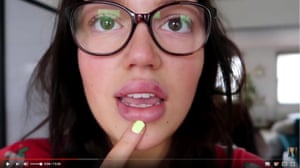
On YouTube, you can find numerous videos of vloggers who have posted about their lip fillers. Gabriella Lindley, a beauty vlogger, has had more than 360,000 views of hers; another video she put up, entitled “My Lip Filler NIGHTMARE” in which she talks about how her lips went lumpy, has had more than 314,000 views.


Vlogger Gabriella Lindley’s My Lip Filler NIGHTMARE!


Vlogger Gabriella Lindley’s My Lip Filler NIGHTMARE! Photograph: YouTube

Jessica Balkay, 22, researched lip fillers on YouTube before getting her lips done for the first time. “I wanted to get it done as I just didn’t like the shape of the sides of my lips and wanted a fuller top lip.” She said it has made her “really happy. I love makeup and taking selfies and having my lips looking fuller just made me feel happier with my appearance.”


She is planning to have a few more injections to build up the size and shape, then plans to go every six months for top-ups. “I think in my generation it is becoming a lot more normalised to have non-surgical procedures,” she says. “I don’t see the issue with that as long as people research reputable places and are doing it for themselves, not to please others. I don’t want to look like anyone else but myself, but I want to be a prettier version of myself.”


Where will it end? Widdows sighs. She thinks the use of non-surgical, but still invasive, procedures are likely to become commonplace. “Doing nothing gets harder and we have to wait and see whether Botox becomes ‘required’, like [people consider] visible body-hair removal or hair dyeing. That’s the way it’s moving.”


Hughes is a bit more optimistic, particularly where much younger women are concerned. “The only glimmer of light in the whole sorry picture is that at least non-surgical procedures are not lasting, so one hopes that young people outgrow them in the same way that I outgrew lightning bolts drawn down my face.”


The rise of non-surgical beauty: ‘My mum said my lip looked like a rubber dinghy’

31 Mart 2017 Cuma

US cancer death rates continue to fall as 5-year survival rates rise – study

Cancer death rates in the United States are continuing to fall and the five-year survival rates of those diagnosed with the disease have risen, research shows.


The Annual Report to the Nation on the Status of Cancer, published on Friday, also shows a decline in incidence of cancer among men in recent years, although it remained stable among women.


Death rates from 2010 to 2014 decreased for 11 of the 16 most common types of cancer in men and for 13 of the 18 most common types of cancer in women, including lung, colorectal, female breast, and prostate cancers.


The authors, from the American Cancer Society, the Centers for Disease Control and Prevention, the National Cancer Institute and the North American Association of Central Cancer Registries (NAACCR) suggest a decline in smoking – down more than 50% over the last 50 years – as well as improved early detection and more effective treatment helped bring about the fall.


But they warn that smoking continues to pose a threat along with obesity, rates of which are at 20% or or more in every state.


NAACCR executive director Betsy Kohler said. “The continued drops in overall cancer death rates in the United States are welcome news, reflecting improvements in prevention, early detection, and treatment.


“But this report also shows us that progress has been limited for several cancers, which should compel us to renew our commitment to efforts to discover new strategies for prevention, early detection, and treatment, and to apply proven interventions broadly and equitably.”


The report, published in the Journal of the National Cancer Institute, showed that death rates increased for cancers of the liver, pancreas, and brain in men and for liver and uterine cancer in women.


Overall, cancer death rates decreased by 1.8% per year in men and 1.4% a year in women.


During the period 1999 to 2013, cancer incidence rates in men fell by 2.3%, according to the study.


Compared with cases diagnosed between 1975 and 1977, five-year survival for cancers diagnosed in 2006 to 2012 increased significantly for all manifestations of the disease bar cervical and uterine cancer.


The greatest absolute increases in survival (25% or greater) were seen in prostate and kidney cancers, non-Hodgkin lymphoma, myeloma (bone marrow cancer) and leukaemia.


Further improvements in survival prospects are expected in the wake of recent advances in precision medicine and immunotherapy for late stage cancers. But the authors warn that the high cost of new cancer drugs – up to $ 10,000 (£8,000) per month – may put them out of reach even to Medicare-insured patients, who would still be left with a bill for around 20% of the drug’s cost.


US cancer death rates continue to fall as 5-year survival rates rise – study

Rise in middle-aged men taking steroids to feel youthful, experts say

[unable to retrieve full-text content]


People who work with users have raised concern about a new trend among men in their 40s and 50s who take the drug to fight some of the signs of ageing


Growing numbers of middle-aged men are turning to anabolic steroids to make themselves look and feel more youthful and boost their sexual performance, experts say.


People who work with users have raised concern about a new trend among men in their 40s and 50s, and some even in their 60s and 70s, who are taking the drug to boost energy levels and fight some of the effects of ageing, such as weight gain and a lower libido. Steroids can cause a range of potential health problems, such as heart disease and blood clots.


Continue reading…


Rise in middle-aged men taking steroids to feel youthful, experts say

28 Mart 2017 Salı

NHS workers in England to get "derisory" 1% pay rise

Health workers ranging from doctors, dentists, nurses and midwives to cleaners and porters are to receive a 1% pay rise, angering unions.


The government said it had accepted recommendations from Pay Review Bodies (PRB) for increases in the coming year.


Unions reacted with fury, saying the rise was “derisory”, especially as fuel, food and transport costs were increasing.


Christina McAnea, head of health at Unison, said: “This deal amounts to less than £5 a week for most midwives, nurses, cleaners, paramedics, radiographers and other healthcare staff. It’s a derisory amount in the face of soaring fuel bills, rising food prices and increasing transport costs.


“The government’s insistence on the 1% cap has tied the PRB’s hands. As the PRB itself admits, it can no longer prevent health employees’ pay falling way behind wages in almost every part of the economy.Without the cash to hold on to experienced employees, the NHS staffing crisis will worsen as people leave for less stressful, better rewarded jobs elsewhere.


“Today’s unfair settlement is yet more evidence of the government’s failure to invest in the NHS. Ministers must stop relying on goodwill, rethink this short-sighted pay policy and reward staff properly.”


Rehana Azam, of the GMB union, said: “Public sector workers desperately need a real pay rise, not the miserly and cruel decision being imposed on them by the government.


“Dedicated professionals are hurting and the quality of services is deteriorating for everyone else. Theresa May talks about helping those who are ‘just about managing’, but it’s clear that she doesn’t include over 5 million public sector workers. Imposing a 1% settlement is an insult to our selfless NHS staff and other public sector workers – who keep us safe day in, day out.”


Unison’s general secretary, Dave Prentis, said: “Day after day NHS staff are giving 100%, but getting just 1% in return. Low pay makes it tough for the NHS to hold on to experienced employees and recruit the next generation. And without enough staff, patient care will suffer. The pay of top judges and MPs has already breached the government’s 1% limit. It’s high time ministers stopped penalising NHS employees and gave them a decent pay rise.”


Jon Skewes, of the Royal College of Midwives, said: “It is extremely disappointing that the government is continuing with its disastrous policy of pay restraint for a seventh year. While we welcome that both the Scottish and Welsh governments will give a slightly higher award to lower paid staff, we want to see an inflationary increase given to all staff.


“As a result of below-inflation increases for the past seven years, midwives have seen their pay drop in value by over £6,000 since 2010. It is unsustainable for this to continue. There is currently a shortage of 3,500 midwives in the NHS, with many more midwives debating whether to leave midwifery because the pressures the service is currently under have created a situation in which midwives have never been so challenged in their ability to give high-quality, safe care to women and their families.


“Eighty percent of midwives who were intending to leave or have left the service told us they would be persuaded to stay if their pay was higher.”


Janet Davies, general secretary of the Royal College of Nursing, said the announcement was a bitter blow to nursing staff across England.


“The government will deter new people from joining the nursing profession at the very moment it is failing to retain staff and European colleagues in particular head for the door. The government is still refusing to keep nursing wages in line with inflation. The government has already cut nursing pay by 14% in real terms, leaving too many struggling and turning to food banks and hardship grants.


“Many nurses rely on working extra hours for the NHS as agency staff but, from next week, they will be forced to work through a ‘bank’ and accept lower rates of pay than they get in their normal NHS job. Ministers are ignoring the evidence that staff shortages put patient care and safety at risk. Tens of thousands of nursing jobs lie vacant today and the government missed the opportunity to stop that getting worse.”


A Department of Health spokesman said: “The dedication and sheer hard work of our NHS staff is absolutely crucial to delivering world-class care for patients. We are pleased to announce that all NHS staff will receive a 1% pay increase.”


Unite national officer Sarah Carpenter said: “What the PRB has proposed is woefully inadequate and means that the majority of NHS staff will have experienced a loss of income in real terms of about 17% since 2010.


“This won’t staunch the recruitment and retention crisis currently affecting many healthcare professions, which is exacerbated by the ugly Brexit shadow hanging over the future of the estimated 55,000 EU nationals working for the NHS. Health secretary Jeremy Hunt often speaks warm words in support of NHS staff, but the reality is that he has been quite content to see this serious erosion in NHS pay continue.”


NHS workers in England to get "derisory" 1% pay rise

21 Mart 2017 Salı

Tooth extractions rise among under-fours

The number of tooth extractions on children aged four and under in English hospitals has risen by almost a quarter over the past decade.


NHS data obtained by the faculty of dental surgery at the Royal College of Surgeons (RCS) shows there were 9,206 extractions within the age group in 2015-16 compared with 7,444 in 2006-07 – a 24% rise.


The figures prompted calls for parents, the government and the food industry to take action to reverse the alarming trend.


Prof Nigel Hunt, dean of the RCS’s faculty of dental surgery, said: “When you see the numbers tallied up like this it becomes abundantly clear that the sweet habits of our children are having a devastating effect on the state of their teeth.


“That children as young as one or two need to have teeth extracted is shocking. It’s almost certain that the majority of these extractions will be down to tooth decay caused by too much sugar in diets.”


The rise came as the number of children aged four and under in England rose by 16% over the same period.


Hunt said people should not be complacent about the removal of baby teeth as they “set the pattern for adult teeth, including tooth decay”.


He said 90% of tooth decay is preventable through reducing sugar consumption, regular brushing with fluoride toothpaste and routine dental visits, but that 42% of children did not see a dentist in 2015-16 despite treatment being free for under-18s.


“We’d like to see a significant proportion of the money raised through the government’s sugar levy spent on oral health education,” he said. “Sugar has an almost immediate damaging impact on teeth and if we teach parents and children to cut down on sweet treats and look after their teeth properly, there will be a positive knock-on effect for childhood obesity rates too.”


The British Dental Association (BDA) said that ministers in England had offered a “collective shrug” to the problem compared with dedicated programmes run by the Scottish and Welsh devolved governments “which have had transformative effects on children’s oral health”.


The BDA chair, Mick Armstrong, said there were deep inequalities which “require real commitment from government, not just token efforts”.


Katharine Jenner, campaign director at Action on Sugar, lamented the rise of added sugar but also called for a change in culture.


“Added sugar has found its way into almost all food and the use of sugar as a means to calm, entertain or reward children has become normalised, whereas sugar should be an occasional treat,” she said.


“Sugar-sweetened drinks are the biggest contributor of sugar in the diets of children and teenagers and, unless they are reduced, these drinks will still contribute to the high levels of obesity, type 2 diabetes and tooth decay – all of which are preventable and cost the NHS billions of pounds each year.”


The latest national diet and nutrition survey showed that, in 2012-2014, children aged one-and-a-half to three years old consumed 63g of sugar-sweetened soft drinks a day on average.


The RCS figures also show more than 34,000 extractions were performed on children aged nine and under in each of the past two years, compared with 27,760 in 2005-06.


A government spokesman said: “We are introducing a soft drinks levy, as well as a broader sugar reduction programme, to encourage food and drink companies to reduce the amount of sugar that is in popular products in the first place.”


Public Health England advised parents to ensure their children follow good dental hygiene, including limiting sugary food and drink.


Tooth extractions rise among under-fours

16 Mart 2017 Perşembe

Lib Dems call for 1p income tax rise to provide NHS funding boost

Income tax should be increased by 1p to deliver a £4.6bn boost to the struggling NHS while a long-term funding solution is found, the former Liberal Democrat health minister Norman Lamb has said.


As the Lib Dems seek to woo traditional Labour voters and win back public trust, after being reduced to just nine MPs, Lamb will urge his party’s spring forum this weekend to back higher taxes to pay for health and social care.


“You have to be straight with the public about what you say you will raise and then do it,” he told the Guardian, in the wake of a government U-turn over the national insurance contributions rise that was proposed by Philip Hammond in last week’s budget.


He would like to see income tax increased by 1p immediately while a new system is phased in. Lamb has asked a committee of health experts to make recommendations, but he suggests rebranding national insurance and earmarking it for health and social care is likely to be his preferred solution.


“You can have a mature discussion about why this is necessary,” Lamb said. “The bottom line is: it comes down to our loved ones. That hour of need when there is that real anxiety that there may be a cancer and you are not sure if you will get treated on time – that is something most people will find intolerable. That stake we all have in a system that works properly is very powerful.”


Lamb leads a cross-party group of Lib Dem, Labour and Conservative MPs, including the chair of the health select committee, Sarah Wollaston, who recently met the prime minister and pressed her to put the funding of the NHS and social care on a more sustainable footing.


Theresa May has agreed the group can consult her health adviser, Dr James Kent – a former medical doctor turned management consultant. Lamb said he will make the case for a cross-party investigation, lasting roughly a year, into long-term reforms.


Though Lamb said he ultimately believed the solution to the health crisis would be found in cross-party collaboration, he said his party had to be “audacious” with their own policy proposals, “because if we don’t, we’re nothing, there’s no point to us”.


He said Labour had failed to say where it would find the money to fund the NHS more generously, despite its leader, Jeremy Corbyn, regularly making the issue a key theme at prime minister’s questions.


“They are crushed by caution because this is difficult and they are worried about saying people will pay more tax under Labour,” Lamb said. “That is everybody’s fear about Labour, that they will expect everyone to pay loads more tax. So they, the leadership, resort to shouting.”


Norman Lamb MP.


Norman Lamb MP, a former health minister. Photograph: Linda Nylind for the Guardian

Though he stressed his support for the NHS as a tax-funded health system, Lamb said it was an “uncomfortable truth” that European social insurance models had kept better pace with demand.


“In Germany they just put the premium up and it doesn’t feel the same as increasing tax,” he said. “I think a dedicated health and social care tax, independently assessed, would work as a hybrid, a tax-funded health system which you see going into the care system.”


Lamb, who has devised the new proposals with a panel of health advisers including David Nicholson, the former chief executive of NHS England, will also propose an “OBR for mental health” to make independent assessments either once a year or the start of a parliament, of the funding the health service needs.


That approach would echo George Osborne’s creation of the Office for Budget Responsibility, which checks the Treasury’s economic forecasts and tax and spending plans.


The MP admitted that any new system would take several years to implement and that tax rises would be necessary in the interim. “My view is that we as a party should make the case for a 1p increase in income tax, raising about £4.6bn,” he said. “That would make a massive difference.”


Lamb said the extra funds raised should be ringfenced for health and social care, with an emphasis on investment on prevention, particularly in digitisation of systems. “It’s unbelievable we still have faxes flying around the NHS,” he said.


Other priorities should be improving general practice and investing in social care – giving people better treatment at home rather than deterioration, which results in hospital admissions, he said.


The Treasury has traditionally been sceptical about hypothecation – the practice of earmarking the revenue from particular taxes for one purpose. But former permanent secretary Nick Macpherson recently advocated five-year budgets for healthcare, paid for by a dedicated tax.


The Lib Dem vote collapsed in the 2015 general election, after the party joined the Conservatives in coalition and broke a manifesto pledge not to increase tuition fees.


The leader, Tim Farron, hopes his party can make a comeback as the champion of pro-remain voters, but believes it must be upfront about the need to raise taxes.


Lamb, who has been a vigorous campaigner for mental health during his time in politics and as a health minister during the coalition, has spoken out about his family’s struggles to get swift treatment for his son’s mental illness.


Archie Lamb, who subsequently founded a music label that launched the careers of stars including rapper Tinchy Stryder, had obsessive compulsive disorder and the family paid for private treatment after being told the waiting list for the NHS would be too long.


“If you can pay, you’re not going to watch your child deteriorate, but there are families who can’t pay and I can’t tolerate that,” he said. “That’s what makes me very driven. I came across so many cases as a minister where families are desperate and being completely let down by the system, with teenage girls with eating disorders told their BMI wasn’t low enough, so basically go away and get sicker.


“It is morally wrong and economically stupid but this is happening in our country and we have to confront it.”


Lib Dems call for 1p income tax rise to provide NHS funding boost