plan etiketine sahip kayıtlar gösteriliyor. Tüm kayıtları göster

5 Mayıs 2017 Cuma

Air pollution plan: sacrificing the nation"s health to save an election campaign

For seven years, people in Britain have been forced to hold their breath and wait for a comprehensive plan to tackle the nation’s toxic air crisis. After a series of humiliating defeats in the courts, Friday’s government plan was meant to finally deliver.


But instead ministers hit the brakes and slammed the policy into reverse – the farcical new strategy has even less detail than the one already ruled illegal. What was the impassable roadblock in the way of finally starting to cut the 23,000 early deaths diesel pollution causes every year? Nothing but pure political expediency.


The only sure way to bring the toxic nitrogen dioxide spewed out by dirty diesel vehicles down to legal levels is to keep them out of cities and towns. The law demands the fastest possible action, which means deterring polluting drivers with charges – as will happen in London. But backing new taxes on drivers in the heat of an election campaign promises a political car crash, so ministers have simply swerved and crashed into the nation’s health instead.


The most shocking aspect is that buried in the documents are candid admissions that the crisis is the “largest environmental threat to public health in the UK” and that it is a “direct result” of car makers gaming emissions tests for years, so that their vehicles pump out far more pollution on the road than in the official lab tests.


Ministers even say: “We will continue to press car manufacturers to develop options for recalling existing vehicles to improve their real world emissions performance.” But unlike in Germany and France, the government’s pressing of car makers has driven precisely zero action.


Rather than tackle air pollution head on, the government has passed the buck to local authorities, daring them to impose the needed charges instead and face the electoral consequences. Ministers suggest councils should penalise any diesel cars more than two years old – most of them – but lack the courage of their convictions.


In place of meaningful action, the government’s plan suggests gimmicks such as removing speed bumps and re-phasing traffic lights, measures as likely to increase traffic and emissions as to cut them.


One of the few good parts of the new plan is funds to clean up older buses, lorries and taxis but even this is old money, already announced in the budget. The much vaunted scrappage scheme is mentioned only as a possibility and even then would only cover 0.1% of all diesel cars.


The new plan will leave the nation gasping for years to come and it seems likely that ClientEarth, the lawyers who have twice had the government’s plans declared illegal, will return to the courts for a third time.


The government is likely to view its manoeuvring as a political success, having buried its feeble plan under the local election results. The government’s cynical calculus is that diesel drivers are more of a political force to be feared than people angry about the health damage being caused to them and their children.


Air pollution plan: sacrificing the nation"s health to save an election campaign

Government fails to commit to diesel scrappage scheme in UK clean air plan

The government’s new plan to tackle the UK’s toxic air crisis does not commit to a scrappage scheme for dirty diesel cars and places the largest burden for solving the problem on to local authorities.


These could impose charges on older diesel cars to keep them out of polluted areas, but the government said other measures should be considered first.


Ministers were forced to act after a series of humiliating defeats in the courts, which ruled earlier plans illegal. ClientEarth, the environmental law firm which sued the government, is now examining the new proposals and could go back to court again if it decides the measures will not reduce illegal levels of air pollution in the “shortest possible time”, as the law demands.


Levels of nitrogen dioxide, emitted mostly by diesel vehicles, have been above legal limits in almost 90% of urban areas in the UK since 2010. The fumes are estimated to cause 23,500 early deaths a year and the problem was declared a public health emergency by a cross-party committee of MPs in April 2016.


The government first lost to ClientEarth over the adequacy of its strategy in April 2015 and was ordered to come up with a new plan. The release of these proposals was buried on the September Saturday in 2015 when Jeremy Corbyn was first elected Labour leader, while the final plan was published on “take out the trash day” in December that year, along with dozens of other ministerial statements and many hundreds of government documents.


However, the plan included just six clean air zones (CAZs) – Birmingham, Leeds, Nottingham, Derby, Southampton and London – where some polluting diesel vehicles would be charged to enter city centres. ClientEarth, believing this to be inadequate, went back to court and won again in November 2016.


Court documents revealed that the Treasury, then run by George Osborne, had blocked proposals from other government departments for 16 CAZs in towns and cities blighted by air pollution, due to concern about the political impact of angering motorists. Both the environment and transport departments also recommended changes to vehicle excise duty to encourage the purchase of low-pollution vehicles. But the Treasury also rejected that idea, along with a scrappage scheme for older diesels.


The government continued to delay action, asking the court for 10 months to develop another new strategy, but lost again, with the judge ordering a new draft plan by 24 April and a final plan by 31 July.


However, ministers then argued that the tradition of “purdah” before elections, when no official announcements are made, should allow the postponement of the strategy until after the general election on 8 June. This was again rejected, with Mr Justice Garnham saying: “The continued failure of the government to comply with directives and regulations constitutes a significant threat to public health.”


Conservative ministers have sought to blame previous Labour governments for giving tax breaks for diesel cars, which produce less climate-warming carbon dioxide. But experts say all governments since the 1990s have done this.


Furthermore, government officials at the time were aware that diesel cars produce high levels of NO2 but they expected tightening EU emissions regulations to curb the problem.


However, car manufacturers found ways to circumvent the rules and across the industry produced vehicles that emit far more NO2 on the road than in the official lab-based tests. Transport campaigners argue that, as in Germany and France, car makers should be forced to pay for upgrades to their vehicles to cut pollution.


“The real villains here are the car companies who cheated tests, and lied to everyone about the pollution coming from their diesel vehicles,” said Greenpeace’s Areeba Hamid. “Drivers are right to feel conned, but what we can’t do is carry on letting these dodgy diesel cars pollute our towns and cities with toxic air.”


Government fails to commit to diesel scrappage scheme in UK clean air plan

25 Nisan 2017 Salı

High court orders UK government to explain clean air plan delay

The government has been ordered back to the high court to explain its last-minute bid to delay publication of the UK’s clean air plan.


Politicians and environmental groups had complained that ministers were “hiding behind the election” after they said they could not publish the proposals because of election purdah.


The high court said on Tuesday that there would be a new hearing on Thursday where ministers will have to defend their application.


James Thornton, CEO of the environmental lawyers ClientEarth, who brought the original case against the government, said they would present their response at the hearing on Thursday.


“This is a public health issue and not a political issue. Urgent action is required to protect people’s health from the illegal and poisonous air that we are forced to breathe in the UK.


“This is a matter for the court to decide once the government has made its arguments because it is the government which has not met, and instead seeks to extend, the court’s deadline for the clean air plan, to clean up our air.”


Ministers had been under a court direction to produce tougher draft measures to tackle illegal levels of nitrogen dioxide pollution, which is largely caused by diesel traffic, by 4pm on Monday. The original plans had been dismissed by judges as so poor as to be unlawful.


But after the announcement by Theresa May of a general election on 8 June, ministers lodged a lengthy application to the court late on Friday. It asked judges to allow them to breach the Monday deadline to “comply with pre-election propriety rules”.


Politicians and environmental groups reacted with anger, claiming ministers were “hiding behind the election” to justify delaying publication of the government’s long awaited proposals instead of tackling the UK’s air pollution crisis. Health experts warned the lack of government action had potentially put thousands of lives at risk.


The mayor of London, Sadiq Khan, said: “It is frankly outrageous that the government thinks it can continue to bury its head in the sand about the serious health impacts of air quality in London and across the country. The prime minister has once again missed this golden opportunity to show real leadership in tackling and improving the air we breathe, which should have been done well before the pre-election period.”


Andrea Leadsom, the environment secretary, was summoned to parliament on Monday to answer urgent questions. During the debate she said she was “personally deeply committed to the importance of ensuring clean air” but had been told by officials in the Cabinet Office that it would breach purdah rules to publish the plans in the run-up to the election.


The government has applied to publish draft plans on 30 June followed by the full policy in September, she said.


Leadsom, who also revealed that it was the second application to delay publication that her department had submitted to the courts, insisted the move would not postpone the rollout of the proposals.


The scale of the air pollution crisis was revealed in a joint Guardian-Greenpeace investigation this month showing hundreds of thousands of children were being educated within 150 metres of a road where levels of nitrogen dioxide from diesel traffic breached legal limits.


Last week figures obtained by Labour showed that more than 38 million people, representing 59.3% of the UK population, were living in areas where levels of nitrogen dioxide pollution were above legal limits.


Research consistently shows that exposure to traffic fumes is harmful to children and adults. Children are more vulnerable because their lungs are still developing and exposure to nitrogen dioxide reduces lung growth, causes long-term ill health and can result in premature death.


ClientEarth’s lawyers will attend the hearing, which has been listed by the court for Thursday at 10.30am. The court has set aside two and a half hours.


High court orders UK government to explain clean air plan delay

24 Nisan 2017 Pazartesi

Ministers under fire over bid to delay publication of air pollution plan

The government is facing renewed pressure after a last-minute attempt to delay the publication of its plan to tackle the UK’s air pollution crisis.


Ministers were under a court direction to produce tougher draft measures to tackle illegal levels of nitrogen dioxide pollution, which is largely caused by diesel traffic, by 4pm on Monday. The government’s original plans had been dismissed by judges as so poor as to be unlawful.


But following the announcement by Theresa May of a general election on 8 June, ministers lodged a lengthy application to the court late on Friday. It is understood it asked judges to allow them to breach the Monday deadline to “comply with pre-election propriety rules”.


The new draft would be submitted in June, after the election, with a full policy not produced until September.


Lawyers from environmental law group ClientEarth, which successfully took the government to court over its air quality plans, said the move was unacceptable, adding it was discussing its next move.


James Thornton, the group’s CEO, said: “The unacceptable last-minute nature of the government’s application late on Friday night, after the court had closed, has meant that we have spent the weekend considering our response.


“We are still examining our next steps. This is a question of public health and not of politics and for that reason we believe that the plans should be put in place without delay.”


The government lodged the lengthy application shortly before 7pm on Friday, which was too late for the court to accept. It was due to be considered by the court on Monday.


But ClientEarth said it was unlikely there would be a hearing on Monday as they would need time to respond to the government’s arguments, although the judge could order an emergency session.


The scale of the air pollution crisis was revealed in a joint Guardian-Greenpeace investigation this month showing hundreds of thousands of children were being educated within 150 metres of a road where levels of nitrogen dioxide from diesel traffic breached legal limits.


Last week figures obtained by Labour showed that more than 38 million people, representing 59.3% of the UK population, were living in areas where levels of nitrogen dioxide pollution were above legal limits.


Research consistently shows that exposure to traffic fumes is harmful to children and adults. Children are more vulnerable because their lungs are still developing and exposure to nitrogen dioxide reduces lung growth, causes long-term ill-health and can result it premature death.


Nitrogen dioxide emissions from diesel traffic cause 23,500 of the 40,000 premature deaths from air pollution each year, according to figures from the Department for Environment, Food and Rural Affairs (Defra). In April last year, MPs said air pollution was a public health emergency.


Thorton said: “Whichever party ends up in power after 8 June will need this air quality plan to begin finally to tackle our illegal levels of pollution and prevent further illness and early deaths from poisonous toxins in the air we breathe. The government has had five months to draft this plan and it should be published.”


A Defra spokesman said: “We are seeking an extension to comply with pre-election propriety rules.”


Ministers under fire over bid to delay publication of air pollution plan

21 Nisan 2017 Cuma

Government tries to shelve pollution action plan until after election

The government has made a last-minute application to the high court to delay the publication of its plan to tackle the air pollution crisis.


Ministers were under a court direction to produce tougher draft measures to tackle illegal levels of nitrogen dioxide pollution, which is largely caused by diesel traffic, by 4pm on Monday. The government’s original plans had been dismissed by judges as so poor as to be unlawful.


But following the announcement by Theresa May of a general election on 8 June, ministers lodged a lengthy application to the court late on Friday. It is understood they are asking judges to allow them to breach Monday’s deadline and submit a draft in June – after the general election.


It is understood that a full policy will not be produced until September this year.


The government has had months to come up with its air quality plans and Whitehall sources indicated to the Guardian this week they would be published in time.


The late application to delay publication was condemned by the environmental lawyers group ClientEarth, which successfully took the government to court over its air quality plans. MPs have said air pollution in the UK is a public health emergency that causes 40,000 premature deaths a year.


James Thornton, CEO of ClientEarth, said: “We are urgently considering the government’s application to delay the publication of the draft air quality plan which was received on Friday evening, less than one working day before the plans are due.


“It is far from acceptable that ministers have left this to the very last minute. The government proposes to delay the publication of the air quality plan despite the clear public health risk caused by illegal air quality. These plans are essential to safeguard public health and they should be put in place without delay.”


The application is likely to be considered by judges on Monday. Judges have already told ministers that their plans were taking too long and imposed the deadline to force the government to come up with new measures more quickly.


The government lodged a lengthy application shortly before 7pm on Friday to the court, which was too late for the court to accept. It will now be considered early next week.


Thornton said the general election was not an acceptable reason to delay taking action against air pollution.


“This is not a political issue but a public health issue. Whichever party is in power, the British public need to see an air quality plan which relies on good scientific evidence and which ensures that people no longer have to breathe toxic air and suffer the grave consequences to their health as a result,” he said.


Greenpeace also condemned the delaying tactics. Anna Jones, from Greenpeace UK said: “Ministers have had months to come up with a robust plan to tackle illegal air pollution. They have no excuses to delay its publication any further.


“The Cabinet Office guidance makes it clear that essential consultations can still be launched during purdah, and even mentions safeguarding public health as a ground for exceptions.


“Air pollution is a full-blown public health emergency, linked to thousands of premature deaths and a host of health problems. If the government intends to use the election as a pretext to buy more time, that would only be a sign that they just don’t get the gravity of the situation.”


A joint Guardian/Greenpeace investigation revealed this month that hundreds of thousands of children were being educated within 150 metres of a road where levels of nitrogen dioxide from diesel traffic breached legal limits.


A spokesman for the Department for Environment, Food & Rural Affairs said: “We are firmly committed to improving the UK’s air quality and cutting harmful emissions. We are seeking an extension to comply with pre-election propriety rules.”


Government tries to shelve pollution action plan until after election

11 Nisan 2017 Salı

Two in five GPs in south-west of England plan to quit, survey finds

About two in five GPs in the south-west of England are planning to quit, exposing a potential doctors’ crisis in the NHS. A survey of more than 2,000 GPs in the region revealed the impending healthcare problems.


Figures published last month showed there had been a drop in the number of GPs working in the NHS despite the government aim of recruiting 5,000 more by 2020.


The survey, carried out by the University of Exeter, also found that seven in 10 GPs intended to change their working patterns in a way that would mean less contact with patients. This included leaving patient care, taking a career break or reducing their hours.


The researchers said the data provided a snapshot of low morale which, if echoed in other regions, could point to a deeper and more imminent crisis than previously anticipated in relation to the worsening shortage of GPs nationwide.


John Campbell, a professor who led the research, which is published in BMJ Open, has called for a move away from “sticking plaster solutions” towards robust, joined-up, action to avert the crisis nationwide.


Campbell, a practising GP, said: “We carried out this survey because of a nationally recognised crisis in the shortage of GPs across the country, and our findings show an even bleaker outlook than expected for GP cover, even in an area which is often considered desirable, and which has many rural communities,.


“If GPs have similar intentions to leave or reduce their hours in other regions, as many are reporting, the country needs to take robust action more swiftly and urgently than previously thought.”


The research team sent surveys to 3,370 GPs across the region and received responses from 2,248, with 54% reporting low morale.


Campbell said: “We know that there’s an ageing workforce in general practice, with 30% of GPs being over 50 years old. Previous research has found that GP morale is low because of workload pressures, and many younger GPs do not want the financial risk and responsibilities of taking on a practice.


“Yet if the GPs we surveyed fulfil their intentions to leave or to cut back their patient contact, and no action is taken to address the issue, the south-west of England will experience a severe shortfall of GPs in the next five years.


“Whilst numerous government-led initiatives are under way to address recruitment, there is a need to address the underlying serious malaise which is behind this data.


“We are in a perilous situation in England, with poor morale of the current GP workforce, and major difficulties with recruitment and retention of GPs reflected in the stark overall reduction in the GP workforce. Reactive, sticking-plaster, approaches are not the answer.”


Campbell said GPs and their teams delivered nine in every 10 patient contacts with the NHS but attracted just seven pence in every pound of NHS spending.


“The government needs to work with the Royal College of General Practitioners, the British Medical Association and universities to obtain evidence on the causes of the problem, to develop and implement relevant strategy, and to effect fundamental change in healthcare resourcing and planning nationwide,” he said.


Two in five GPs in south-west of England plan to quit, survey finds

31 Mart 2017 Cuma

Let’s applaud Simon Stevens: the NHS boss with a plan | Deborah Orr

One trouble with dropping targets is that such a decision tends to create a target. The head of NHS England, Simon Stevens, has outlined many sensible goals in his proposals for the future of the health service. But attention has focused on one thing. In order to take the strain off A&E departments and improve cancer treatment, Stevens has decided to drop the target whereby 92% of routine surgery is carried out within 18 weeks of a GP referral. The moment that some ghastly failure can be personalised in the form of an iconic victim of this change, Stevens will be held personally responsible. He is the target now.


Why is Stevens taking this risk? Largely because the government has made it clear that the extra funding Stevens needs will not be forthcoming. But it’s also another attempt at a nudge, to GPs and to patients. People can be aggressively passive about their health. They want doctors to fix it for them. GPs are wary of berating patients into losing weight and exercising more, especially now, when patients have read on the internet all about the operation they can get. The promise of elective surgery within 18 weeks, I’m afraid, only encourages both GP and patient to kick the can down the road. The hope is that the removal of the target will encourage GPs and patients to opt first for physiotherapy, which is what all sensible people should be doing anyway.


Some of the problem is with us, and our demands. We trail off to the GP with our colds and beg for antibiotics


Around 150 urgent treatment centres are being planned, to take the strain off A&E, which NHS chiefs say still attracts about 3 million people each year with minor ailments. Stevens is hoping to persuade all GP practices to offer evening and weekend appointments, so that A&E departments don’t become one-stop-shops over the weekend. Astoundingly, Stevens is also demanding that all A&E departments should introduce “comprehensive front-door clinical streaming”. Here in my metropolitan elite bubble, I’d imagined that all A&E departments had been assessing all walk-ins by medical need for decades. It’s easy to forget just how much sheer inertia is inevitable when dealing with a beast as large and complex as the NHS.


Stevens also addresses the system’s two most glaring failures – the lack of integration with social care and the relatively slender access to mental health services. On the first, Stevens aims, through closer coordination between hospitals and councils, to free up potentially 3,000 hospital beds. On the second, the aim is to provide talking therapies to 200,000 more people. These are ambitious goals. Considering the lack of investment, they are valiantly optimistic. Sometimes, people doing tough work need a bit of encouragement and applause. Stevens is one of them.


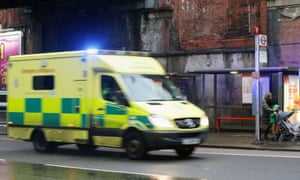
An ambulance


‘Some of the problem is with us, the users, and our demands. We trail off to the GP with our colds and beg for antibiotics; we call ambulances because our friend is very drunk.’ Photograph: Yui Mok/PA

There is a great deal of cognitive dissonance to Britain’s relationship with the NHS. Yes, we love it. No surprises there. It’s worth loving and not only for sentimental or socialist reasons. All but the most cock-eyed of diehard free-marketeers are obliged to bow to the evidence and admit that the NHS is the most cost-efficient health service in the world. Many politicians have struggled to come up with alternative funding models and had to admit that nothing is really worth the hassle it would cause. Insurance-based schemes around the world have been scrutinised and the conclusion is pretty much always that these simply drive up the cost of healthcare generally, with the US a particularly abject example.


Yet at the same time, our love for the NHS is sometimes skin-deep. When things go wrong or are disappointing, this is seen as proof that the service is falling apart, hardly ever that medical problems can be complex and baffling, or that people are not always the most reliable witnesses to their own problems. There’s still a great deal of suspicion about change.


Stevens has come up with a solid plan, and everyone’s up in arms because operations that might not work are being sidelined in favour of restorative exercises that probably will, if only people commit to carrying them out. Why is this supposedly awful thing being done? Just so that people who have been knocked down by cars or people with cancer can have their actual lives saved. Just so that hospitals don’t have to farm operations out to private providers simply to hit their targets on not always terribly necessary operations.


Some of the problem is us, the users; our own expectations and demands. We have this precious, amazing resource. We stand with it and see the government as its enemy. Yet we trail off to the GP with our colds and beg for antibiotics; we call ambulances when our friend is drunk; we’re astounded when our neighbour reveals himself as proficient in first aid.


Right now, there’s a hullabaloo because elderly people with some money behind them are expected to pay for people to help them with things they can no longer do for themselves. This, apparently, punishes “the thrifty”. How can having the wherewithal to pay for things you need be “a punishment”? Sometimes, the basic problem is that we want the best but we don’t want to pay for it. Full stop.


Let’s applaud Simon Stevens: the NHS boss with a plan | Deborah Orr

30 Mart 2017 Perşembe

Simon Stevens" delivery plan for the NHS explained

The chief of NHS England, Simon Stevens, has pledged to make an array of changes to benefit patients in his proposals for the future of the health service.


In the delivery plan for his Five-Year Forward View, he sets out the way in which providers of NHS care must overhaul their working practices, despite the unprecedented pressures they are facing and the service having less money than he believes it needs to do its job properly.


The changes include:


  • Creating an England-wide network of about 150 urgent treatment centres to take the strain of overcrowded A&E units, which NHS chiefs say 3 million people a year visit unnecessarily with injuries and minor ailments. The centres will be open for 12 hours every day of the week and be staffed by GPs, other doctors or experienced nurses. “They offer patients who do not need hospital A&E care treatment by clinicians with access to diagnostic facilities that will usually include an X-ray machine,” the delivery plan says.

  • Every A&E must put “comprehensive front-door clinical streaming” in place by October, under which nurses or doctors assess how unwell patients are and direct them to the most appropriate service. New GP services at emergency departments will be one option, paid for by £100m announced in the recent budget. This aims to give A&Es more time to look after the sickest patients, who will often be frail and elderly.

  • GPs will have to offer evening and weekend appointments across the whole of England by March 2019, despite family doctors’ concern that there is too little demand from patients, especially on Sunday afternoons, and too few of them. NHS England are also pledging to put 3,250 extra GPs, plus 1,300 clinical pharmacists and 1,500 more mental health therapists, into GP surgeries by 2019, though sceptics have questioned where the new doctors will come from.

  • An overhaul of the NHS 111 telephone advice service aims to increase the proportion of calls that are answered by doctors, nurses and mental health specialists from 22% to 30% by March 2018. A new NHS 111 online service later this year will let patients enter symptoms and receive “tailored advice on management” of their illness.

  • Hospitals and local councils will work together to cut the number of patients stuck in hospital, despite being medically fit to be discharged, because of inadequate local social care. The aim is to free up 2,000-3,000 hospital beds so that hospitals can admit patients classed as a medical emergency quicker than is currently the case.

  • Early diagnosis of cancer should be improved through the creation of 10 regional rapid diagnostic and assessment centres. They aim to ensure that by 2020 every cancer patient is diagnosed within 28 days and, it is hoped, ensure that an extra 5,000 people survive their cancer over the next two years. A £130m expansion of precision radiotherapy will see 42 hospitals acquire or upgrade their equipment to achieve this.

  • Improvements to mental healthcare aim to provide “talking therapies” to 200,000 more people by March 2019, improved services for children and young people, including 150-180 extra inpatient beds to avoid under-18s having to travel far from home to get care, and the creation of four new mother and baby units to help women suffering postnatal psychological or psychiatric problems. The number of A&E units with mental health specialists on duty 24/7 should rise fivefold to 74 by 2019, and there will also be new dedicated mental health services for traumatised military veterans.

  • Millions of people in up to nine areas of England should receive better, more joined-up care when hospitals, GP surgeries, mental health and ambulance services and social care providers in each region link up to become the first wave of new “accountable care organisations”, which provide fully integrated care for all of a patient’s needs. The frontrunners to get approval to pioneer that approach are Frimley Health in Surrey; Greater Manchester; South Yorkshire and Bassetlaw; Northumberland; Nottinghamshire; Blackpool and Fylde Coast; Dorset; Luton, Milton Keynes and Bedfordshire; and West Berkshire.


Simon Stevens" delivery plan for the NHS explained

7 Signs That Your Detox Plan is Actually Working

26 Mart 2017 Pazar

Government plan on childhood obesity very disappointing, say MPs

Tough new measures to tackle childhood obesity – including a restriction on supermarkets offering “deep discounts” on unhealthy foods – must be introduced, according to a committee of MPs.


The Commons health select committee said it was “extremely disappointed” with the government’s current plans to fight obesity, and said ministers had ignored proposals from experts and had failed to go far enough.


In a report published on Monday, there was specific criticism of there being “no mention of price promotions” despite experts recommending there should be controls on supermarkets discounting unhealthy food and drinks aimed at children.


“We are extremely disappointed that the government has rejected a number of our recommendations,” said Dr Sarah Wollaston, the Conservative MP who chairs the committee.


“These omissions mean that the current plan misses important opportunities to tackle childhood obesity.


“Vague statements about seeing how the current plan turns out are inadequate to the seriousness and urgency of this major public health challenge.


“The government must set clear goals for reducing overall levels of childhood obesity as well as goals for reducing the unacceptable and widening levels of inequality.”


The attack on the government’s plan from the influential committee was supported by a number of health bodies, which also condemned the plan as inadequate – in spite of their support for its flagship measure, the sugary drinks tax.


Prof Russell Viner of the Royal College of Paediatrics and Child Health said: “The fight against obesity is going to be long and hard – and the health committee is right: without action across a number of areas, any impact of individual policies will be minimal.”


The British Retail Consortium had told the committee that regulation was needed to ensure that all supermarkets and other shops stop promotions of high-fat and high-sugar foods, but the government ignored that recommendation. Public Health England, the government’s advisory body, also supported it.


“We are extremely disappointed that the government has not regulated to provide the ‘level playing field’ on discounting and price promotions which industry representatives themselves have told us is necessary for the greatest progress,” said the committee’s report.


The Committee of Advertising Practice, a sister organisation of the Advertising Standards Authority, has announced new restrictions on advertisements for high-fat and high-sugar foods on non-broadcast media – such as on smartphones – but the select committee said that was not enough.


“We urge a re-examination of the case for further restrictions on advertising of high fat, salt and sugar food and drink in the light of the most recent research not only on the effect of such advertising, but on the scale and consequences of childhood obesity,” said the report.


The Royal College of Paediatrics and Child Health backed the conclusions.


“We’ve said time and again that it was an error for government to exclude TV junk food advertising restrictions in their obesity plan,” said Viner.


“We know these adverts have an effect on the type of food children consume, and experts from across the health sector, parents and the health select committee agree that a ban prior to the 9pm watershed is vital to help tackle the obesity crisis.”


MPs applauded the announcement of a tax on sugary drinks, but called on the government to monitor whether drinks companies pass on the tax in the form of higher prices and whether they also raise the prices of their unsweetened drinks, such as water, as well. They also call for sweetened milk drinks to be included – at the moment they are exempt.


The Obesity Health Alliance, a coalition of more than 40 health charities, campaign groups and royal medical colleges, said: “It’s reassuring to see the committee reiterate the importance of tackling childhood obesity, which has reached a devastating high. We agree that a range of actions are needed to protect our children’s health.


“Current loopholes in junk food marketing restrictions leave children exposed to unhealthy food and drinks during the programmes they watch the most; so we especially welcome the committee’s recommendations to extend these restrictions to include primetime TV shows.


“We look forward to seeing the government adopt further measures to help fight the obesity crisis.”


Government plan on childhood obesity very disappointing, say MPs

31 Ocak 2017 Salı

Biggest headache for the NHS boss is his own plan | Denis Campbell

Who would be Simon Stevens? The job he takes such pride and purpose in has recently got a lot harder. Colleagues of NHS England’s chief executive say Downing Street’s preoccupation with Brexit means officials are letting him get on with his self-declared mission of transforming the health service in England. But that is the only good news about his relationship with Theresa May and her advisers.


Until July, Stevens worked and got on well with a prime minister who did at least protect NHS funding while cutting almost everything else – David Cameron. But he now has the misfortune of dealing with May, whose curious lack of interest in the true state of the health service is almost as worrying as her capacity for self-delusion over it.


Unprecedented poor waiting times for A&E care, planned operations, ambulance responses to 999 calls and delayed transfers of care from hospital? Just normal winter pressures. Record numbers of A&E units having to divert patients elsewhere and NHS trusts being forced to declare an alert because they can’t cope? There’s only the odd problem here and there – and it’s all lazy GPs’ fault anyway. Too little money to do the job properly? The £10bn is more than the NHS asked for – an outright lie. Rarely have a prime minister and NHS boss spoken from such different scripts.


Stevens is operating in the chilliest political climate any boss of the NHS has faced since the tailend of John Major’s time in office. Will May seek to oust him? Maybe, though a vengeful Stevens publicly telling it like it is could do her incalculable damage. The sheer brio of his evidence to the public accounts committee last month – a masterclass in speaking uncomfortable truth to power – does not suggest a man who would go quietly.


But Stevens’s biggest headache is not the “winter crisis”, cancelled cancer operations or financial failure. Rather, it’s his NHS Five Year Forward View, and the lack of realisation of its ambitious goals since its launch in October 2014.


Stevens may have made bold speeches promising a brave new NHS world by 2020 through new models of care, accountable care organisations and innovative sustainability and transformation plans (STPs). But reality has failed to match rhetoric by a wide margin. Yet next month sees a “national Five Year Forward View delivery plan for the rest of the parliament” – a progress report, albeit of only limited progress.


Stevens will formally green light the metamorphoses of a small number of the 44 regional STPs into “integrated organisations”, which ultimately dissolves the split between commissioners and providers of healthcare. They will probably include those covering Birmingham and Frimley in Surrey. The cadre of belated pioneers will get extra money and staunch support to “reshape what they’re doing” in a dramatic way. He will bat away questions about what became of all the other areas’ plans – still mere “proposals”.


Stevens hopes that even the modest progress made so far in transforming the NHS will persuade May & Co that – given money and political backing – more integrated services between GPs, acute hospitals and social care will deliver an NHS that is able to cope with the pressures. But will May, bereft of her own alternative vision of the health service, see the wisdom of backing the man who dared to challenge her over it so publicly?


Biggest headache for the NHS boss is his own plan | Denis Campbell

9 Ocak 2017 Pazartesi

Scientists Plan to Send First Interstellar Greetings to the Star System in the Movie Avatar: Link to the Scientific Research

An organization called METI short for Messaging Extra Terrestrial Intelligence has announced that there is a project under way to send Greetings by way of powerful radio or laser signals to Proxima Centauri, our nearest stellar neighbor. Sitting just 4.3 light years away Proxima Centauri is a Trinary star system consisting of three stars. Laser or radio signals would take 4.3 years to get there in a first attempt at contacting different worlds. These messages would be repeated for months or years in hopes of a reply. Proxima Centauri hosts the closest known exo-planet to Earth, Proxima Centauri b. This exo-planet was discovered by the European Southern Observatory in August of 2016, and it appears to lay within the habitable zone of its Red Dwarf star. This is one the targets for the Greetings signals scientists from METI plan on sending. No one is claiming that it is habited, but it is the best and closest chance. Good for practice but their are many more targets in the future according to METI’s President Douglas Vakoch. He hopes to send greetings to many star systems. Another interesting side note is….


The fictional moon called Na’vi set in the Proxima Centauri system is the backdrop of James Cameron’s 2009 movie Avatar. You couldn’t make this stuff up.


Scientists plan to send greetings to other worlds Phys.org December 26, 2016


Signaling to other worlds is a bold and historic move that is unprecedented in history.  Stephen Hawking has recently warned if we pick up alien signals don’t answer back. It could be a deadly move. The subject is full of controversy.


Like much else in science, the project has turned controversial. Some ask: If aliens are hostile, do we really want them to know where we are?


We shouldn’t draw attention to ourselves, say science fiction writer David Brin and theoretical physicist Stephen Hawking.


Stephen Hawking warns that humanity should not respond to aliens in case they kill us all


“We have almost zero idea of whether aliens are likely to be dangerous,” physicist Mark Buchanan wrote in journal Nature Physics in Looking for Trouble.


Who gave these people permission to start signaling possible alien civilizations. Anyone?


METI works closely with SETI the Search for Extraterrestrial Life scanning in the optical range to look for signs of alien civilizations. Seth Shostak, senior astronomer with the SETI Institute, is all for the idea despite the possible implications.


Others endorse the effort. “I’d be happy to see this done,” said Seth Shostak, senior astronomer with the SETI Institute. “I think there’s something to be learned, nothing to be feared, and at least the possibility of discovering something truly revolutionary: We have company nearby.”


How would this be accomplished and what are the possible future targets?


About this question, it was entirely coincidental in that this author wrote an academically linked article detailing this very answer published at Blogs.NaturalNews on December 22, 2016. Four days before the METI announcement with the original information published months before. Using research from two Canadian scientists from the University of Laval in Quebec, Canada, E.F. Borra and E. Trottier. The Blogs.NaturalNews piece points out that astronomers may have picked up the exact laser signals being described, that astronomers plan on sending, from 234 star systems quite similar to our own. Going into great detail about the power of lasers needed, what an alien signal may look like and how to structure our own signal. Pulsing the beam by nanoseconds so it would not be mistaken for anything natural in a routine sky survey by an alien civilization.


Alien Contact. Can We Answer Back?


Clearly explaining the technology has been available as early as 2004 that could transmit 1000 light years to about 1 million Sun-like stars.


For this, we shall use the analysis in Howard et al. (2004), who considered the energy requirements for an ETI trying to communicate with nanosecond optical pulses. They considered the feasibility of interstellar communications with technology available at the time the paper was written. They assumed communications within a 1000 lt-yr diameter region surrounding Earth that would contain about 1 million Sun-like stars. They assumed that a diode-pumped laser similar to the Helios laser designed at Lawrence Livermore National Laboratory for inertial confinement fusion would be used


SEARCHING FOR EXTRATERRESTRIAL INTELLIGENCE SIGNALS IN ASTRONOMICAL SPECTRA, INCLUDING EXISTING DATA.


Shouldn’t the whole world have a say in this? It would seem that elected leaders from around the world would convene to make such a decision. Probably one the most important collective choices the world could ever make. Again quoting from Phys.org.


There have been plenty of other efforts to connect with aliens, but they’ve come in fits and starts. There are no regulations for sending signals into space.


Hey if a couple of astronomers say it’s OK. Everything will be just fine. Right?   Never mind what the smartest people in the world say.


Visit RaptormanReports for news, science, and history.


Sources:


http://www.meti.org/


http://phys.org/news/2016-12-scientists-worlds.html


http://www.nature.com/nphys/journal/v12/n8/full/nphys3852.html


http://iopscience.iop.org/article/10.1088/0004-6256/144/6/181#aj447722r4


http://blogs.naturalnews.com/


Scientists Plan to Send First Interstellar Greetings to the Star System in the Movie Avatar: Link to the Scientific Research

1 Ocak 2017 Pazar

Seven-day NHS plan puts weekday surgeries at risk, warns top GP

Britain’s top GP has said surgeries will have to stop seeing patients during the week unless ministers abandon their drive to guarantee access to family doctors at weekends.


Dr Helen Stokes-Lampard condemned the policy, a key Conservative pledge, as unrealistic and said it was ignoring the lack of demand among patients to see GPs at weekends and a serious shortage of family doctors.


The government has promised to ensure that people in every part of England will be able to see a GP from 8am to 8pm every day of the week by 2020 as a key element of its push to create a “truly seven-day NHS” by the end of the current parliament.


“It’s unrealistic in the current climate. We haven’t got the people, we haven’t got the resources. If you give people access on a Sunday afternoon they’re not going to have access on a Tuesday morning. They can’t have it all”, the chair of the Royal College of GPs said in an interview.


Calling for surgeries weekend opening to be restricted to Saturday mornings, Stokes-Lampard said: “We should be responding to what is needed in an area, and balance that realistically by what can be provided safely. Because quite frankly if you open on a Sunday afternoon but you’re closed on a Tuesday morning, who’s going to benefit?.


There is so little demand from patients to see a GP on Sundays that plans to compel at least one surgery in each area to open on that day by 2020 should be dropped, she said. Nor do many people want to attend a surgery on a Saturday afternoon, she added.


David Cameron pledged access to GPs from 8am to 8pm seven days a week at the Conservative party conference in 2014, and established a £50m “challenge fund” to deliver it. Some surgeries that have begun opening at weekends, however, have scrapped their experiment because of the small numbers of patients seeking appointments on Saturdays and Sundays.


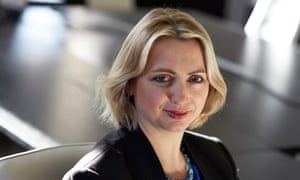
The chair of the Royal College of GPs, Dr Helen Stokes-Lampard


The chair of the Royal College of GPs, Dr Helen Stokes-Lampard. Photograph: Andy Hall for the Observer

A relentless rise in the need for care is prompting more GPs to retire early or move abroad, leaving the profession facing a growing workforce crisis and patients facing long waits for appointments, Stokes-Lampard said. As a result “we’re layered too thin at the moment, we’re spread too thin. We can’t sustain a good five-day service at the moment, a seven-day service is unrealistic. If we can’t provide eight to six Monday to Friday because we’re stretched to breaking point, we’re certainly not going to be able to provide seven days a week.”


She said general practice was “closer to the edge than it has ever been in living memory”, and cast serious doubt on ministers being able to fulfil another key NHS pledge – to increase the number of GPs in England by 5,000 by 2020 compared with 2015. It will be very hard to deliver that number without many GPs coming from overseas or former doctors being persuaded back into work, she said.


The Liberal Democrat MP Norman Lamb, who was a coalition health minister until May 2015, denounced the pledge of access to GPs all day and every day as a “superficially attractive gimmick”.


“This target is driven by seductive headlines, not sound policy. It will distort priorities and resources away from action which could make a real difference to people’s lives, such as ensuring that people have both their physical and mental health needs effectively met in primary care,” he said.


“No one believes that there will be sufficient resources to deliver this plan. The risk is that it will leave dangerous gaps in provision during the week.


“Pursuing superficially attractive gimmicks like this amounts to a smokescreen for the dire threat the NHS and care system now faces as it is starved of the resources it needs to provide effective, prompt and safe care.”


The shadow health secretary, Jonathan Ashworth, said: “These serious doubts about a flagship government pledge will raise widespread concerns. It’s yet another warning about the scale of the underfunding and understaffing now impacting our NHS.


“In her six months as prime minister Theresa May has shown no regard for the state of the NHS, so it’s no surprise it now looks like her own manifesto commitments will be broken.


“But in 2017 the government simply must not carry on ignoring the warnings. Instead they need to come forward with a genuine plan to give the NHS and social care the resources they need to deliver the very best care every patient deserves.”


The Department of Health insisted the government would achieve its ambition of seven-day opening, and that the policy was popular. “This is a common sense reform with wide public support, and one we will deliver”, a spokeswoman said.


“People don’t just get ill Monday to Friday, nine to five, and 18 million patients now have weekend and extended access to a GP, which has already shown evidence of relieving pressure on other parts of the NHS.


“To deliver our pledge, we are putting an extra £2.4bn into GP services, which will help expand the workforce.”


Seven-day NHS plan puts weekday surgeries at risk, warns top GP

22 Kasım 2016 Salı

NHS staff and managers condemn "passport before treatment" plan

Doctors, nurses and NHS managers have condemned government plans to make hospital patients produce their passport before being treated as unworkable and a burden on overworked staff that will not raise the £500m a year ministers hope.


There are also fears that marginalised groups – such as the homeless and the 13% of the population who do not have a passport – will find it harder to access care if the policy, currently operating only at the Peterborough and Stamford hospitals NHS foundation trust, becomes commonplace.


Despite growing anxiety among NHS staff, the Department of Health insisted that the policy – which its top mandarin admits is “controversial” – may still be rolled out nationally. It is keen for the NHS to increase dramatically the amount of money it recovers from people who are ineligible for free care from £73m in 2012-13 to its target of £500m a year.


Jon Restell, chief executive of Managers in Partnership, the union which represents health service managers, said: “Managers are worried about the unintended consequences for health inequalities, as marginalised groups may find it harder to access healthcare; for public health, where there are currently exemptions, for example around crisis mental health, TB and HIV. Will these continue?


“They are also worried about reciprocal arrangements with other countries. Is now the right time, at the start of Brexit negotiations, to be making these policy changes? What may be the impact on British citizens overseas?”


The likelihood that some patients would not have the two forms of identity envisaged by the DH will create problems, Restell added.


“Who is accountable for the care of a patient who can’t show ID? What happens if their condition subsequently worsens, possibly foreseeably, as a result of being turned away?” he asked. In addition, he added, “ID checks are likely to create delays in clinics and elsewhere as ID is checked and queries resolved”.


He also said the scheme was overly bureaucratic. “Most elective work [non-urgent care in hospitals] comes via referral from general practice, where registration requires eligibility checks. Why create a second check?” said Restell.


NHS managers doubt ID checks would generate any extra money beyond what is already received from overseas visitors and governments under existing arrangements. He added: “The system may well cost more to administer than the extra income it generates. Managers believe government underestimates how complicated this would be administratively. While we do not think it would necessarily burden clinical staff in practice, it would lead to delays and costs.


“The whole issue raises unresolved ethical questions about eligibility for healthcare and about compatibility with the values of the NHS and its staff.”


The Peterborough and Stamford trust saw its annual income from chargeable patients rise from £92,500 to £250,000 after it introduced identity checks in May 2013. Its total budget is £261m. It says 95% of invoices were recouped last year, compared to 37% in 2012. NHS bosses told MPs this week that the scheme “had made a big difference”.


However, the trust admits no formal evaluation of the scheme has been carried out. Four staff are employed on it, though they only spend a quarter of their time processing fees and pursuing unpaid bills. But the trust would not say how much the scheme costs, other than to say it did not outweigh the total income raised through charges.


Although some reports suggested passports would have to be shown to guarantee entitlement to free NHS treatment, they are not required in every case. Residents and EEA visitors who have lived in the UK for the past 12 months must provide two forms of ID such as a utility bill or payslip. If patients have not lived in the UK for the past 12 months, a passport or ID card is required.


Although the regulations enable an NHS trust to refuse treatment on the grounds that a patient requiring a non-urgent clinical intervention did not qualify for free treatment, Peterborough said it had never turned away a patient who said they were unable to pay.


Non-qualifying patients who do not pay invoices over £500 are reported to immigration and debt collectors are sometimes used.


Nurses said they were already too busy to help administer such a scheme and do not want to be distracted from looking after patients. Stephanie Aiken, the Royal College of Nursing’s deputy director of nursing, said: “Nurses and other staff on the frontline go to work to care for patients. While we recognise that the NHS is under extraordinary financial pressure, taking clinical staff away from the core job of treating patients is not the solution and must not be allowed to happen. Patient care must always be prioritised ahead of any administrative procedures.”


Sources at the NHS Confederation, which represents the NHS trusts who may have to implement the policy, said hospital bosses were “conscious of the practical and administrative burdens it would put on the NHS”.


A National Audit Office report last month estimated that hospitals are failing to collect about £200m from patients who should have paid for their treatment. But the chair of the British Medical Association, Dr Mark Porter, said: “We have got an NHS with a deficit approaching 100 times that amount opening up over the course of this parliament. This is little other than a pinprick on top of the actual problems facing the NHS.”


Charges only apply to non-urgent, planned care, not treatment in A&E. Dr Taj Hassan, president of the Royal College of Emergency Medicine, which represents A&E doctors, warned against changing that demarcation.


He said: “We do not believe the proposed plans to require patients to show identification before receiving treatment could extend to the emergency department, due to their sheer impracticality. However, if the plans include the ED, then we would be failing our patients on an ethical level. The patient’s health is – and must always be – the most important thing, not where they are from.”


NHS staff and managers condemn "passport before treatment" plan

Passports for NHS access plan: what are the implications?

Patients could be told to bring two forms of identification including a passport to get treatment at hospital, according to the most senior civil servant in the Department of Health. Chris Wormald told MPs on Monday night: “On the general question of, are we looking at whether trusts should proactively ask people to prove their identity – yes we are looking at that.


“Individual trusts like Peterborough are doing that and it is making a big difference. They are saying, ‘Please come with two forms of identity, your passport and your address,’ and they use that to check whether people are eligible. It is quite a controversial thing to do, to say to the entire population you’ve got to prove your identity.”


If that happens, what are the implications?


Q. Could British people be denied access to treatment if they fail to produce a passport?


A.The latest figures show that 13% of British citizens do not have a passport so it could be a very serious problem if they were denied NHS treatment for failing to produce a passport. The current NHS Choices advice to overseas visitors says that “if you do not have valid documentation, you may be charged for treatment”.


So a British citizen who cannot provide a passport to prove their nationality or country of residence will be treated but may later face a hospital inquiry about the possibility of being charged. This could be dealt with by providing a birth certificate or other proof of British citizenship or residence short of a passport. The NHS describes itself as a “residence-based system, unlike many other countries, which have insurance-based healthcare systems”.


Q. What happens to people from outside the European Economic Area who want NHS treatment at present?


A. The rules changed in April last year as part of the Immigration Act 2016 which was designed to ensure Britain has “a national health service, not an international health service”.


Non-European migrants who have permanent residence in Britain, ie indefinite leave to enter or remain, continue to be eligible for the same NHS care as a resident British citizen.


But those who are temporary migrants or students and intend to stay more than six months are now required to pay a health surcharge when they apply for their visa. This is £200 a year or £1,000 for a five-year visa. In the past year £164m has been raised from the immigration health surcharge.


Q. What happens to people from inside the European Union or elsewhere in European Economic Area who want NHS treatment?


A. EU citizens who are resident in Britain can access the NHS on exactly the same basis as British citizens. The difference is that as a result of an EU directive the NHS can claim back the cost of treating EU visitors, students or temporary migrants to Britain from their home governments.


MPs are concerned that while the UK paid out £650m last year to cover the treatment of British citizens in other EU countries, it only managed to recoup £49m for the NHS treatment of EU citizens here. The government thinks that an annual target of £300m is possible if hospitals do more to identify EU citizens being treated in British hospitals.


The NHS is thinking of asking everyone to prove their identity so they can identify EU citizens so their governments can be charged. EU citizens without European health insurance cards (EHIC) may be asked to pay the charges upfront and then to recover them from their own government. The NHS might do better to ask EU citizens to produce their EHIC card rather than ask the whole population to provide a passport or other form of identity.


Q. Is this a national ID scheme by the back door?


A. A national identity scheme is about having a single government searchable database on which the whole UK population is listed. Asking for a passport or other form of ID card, such as a driving licence, to prove British residence does not mean the proposal is introducing an ID card by the back door.


Passports for NHS access plan: what are the implications?

Doctors threaten to boycott plan for patients to show ID for NHS care

Doctors have said they will boycott attempts to introduce identification checks as part of government plans to combat “health tourism”.


Chris Wormald, the most senior official in the Department of Health, told MPs that he was looking at making hospitals check patients’ papers to find out whether they should be paying, a proposal he admitted was controversial.


It would mean that those trying to access health services in England, including British citizens, might have to prove their identity before having operations and undergoing tests in hospitals, but it would not cover care received at GP surgeries.


Doctors have reacted with fury to the plan, and have threatened not to implement it. One described it as “disgusting”, saying it was not the role of the NHS to be “actively working to kick migrants out”.


SJ Stallworthy (@caremanmeow)

What the hell? This is absolutely disgusting, the NHS should not be actively working to kick migrants out – https://t.co/3Nh4XTaXsR pic.twitter.com/TFwGyp1goT


November 22, 2016


Dr Ben White, one of the junior doctors who mounted an unsuccessful legal challenge to the imposition of new contracts, signalled he would not comply with initiative.


Dr Ben White (@drbenwhite)

Well, I won’t be asking anyone for their passport before resuscitating them, thanks. pic.twitter.com/DkQ6udrVJr


November 22, 2016


Dr Natalie Silvey, an anaesthetic registrar agreed.


Natalie Silvey (@silv24)

“The health of my patient will be my first consideration”


Not their passport details https://t.co/vmolLG2pXp


November 22, 2016


Wormald told the public accounts committee that passport checks were already taking place at one hospital in Peterborough that treats a population with a high number of immigrants.


He accepted it was not part of “health service culture” but that it might be necessary to crack down on use of the NHS by visitors from abroad who do not have an automatic right to free care.


A National Audit Office report issued last month said the government paid out £674m to other European countries for the treatment of Britons abroad, but received only £49m in return for the NHS treatment of European citizens.


Prof Meirion Thomas, a former cancer surgeon at the Royal Marsden hospital who has campaigned against health tourism, welcomed the initiative. He told BBC Radio 4’s Today programme he had recommended such a idea in a letter to the Department of Health in August 2015. “It will put the message out there that the NHS is not open to health tourism, that when you come here you will be checked for eligibility,” he said.


But Thomas pointed out that it would not stop maternity tourism. He said: “Ladies arrive in this country in the late stages of a pregnancy and they don’t declare themselves a month before the expected date of delivery and no airline will fly [them home] so they become what’s called ‘immediately necessary’ and they are entitled to have care.”


Dr Mark Porter, the chair of the British Medical Association, said the idea was a politically motivated response that would not solve the funding crisis in the NHS.


He told Today: “There is a problem, the question is whether the proposal to require everybody using the NHS to show a passport and another form of identification before receiving hospital treatment is either proportionate or going to resolve the problem.


“The National Audit Office estimates that the uncollected fees are £200m a year.


“We have got an NHS with a deficit approaching 100 times that amount opening up over the course of this parliament. This is little other than a pinprick on top of the actual problems facing the NHS.


“Introducing something across the entire NHS in this way in response to such a small problem would be tremendously controversial.”


He added: “The background is an NHS that has been deliberately starved of the resources necessary to treat British people and recouping a small amount of those from overseas visitors by introduction of a new mechanism by which British people have to show their eligibility is simply not going to fill that gap.”


Doctors threaten to boycott plan for patients to show ID for NHS care

17 Kasım 2016 Perşembe

Easy Steps To Get Started On Low Calories Diet Plan

Step 1: Be honest with yourself


Once you decide that you need to follow a low cal diet for losing weight, you have already started your journey.


The thorough mental process of making a firm decision is the key to getting your perfect, healthy shape. The rest are just tools to achieve that. Honestly, ask yourself why you want to change your body and lose weight. You can even make a list of the reasons, stick a picture of when you thought you were in a better shape or your favourite actress. Whatever motives you best.


Step 2. Decide on the diet plan


Next thing is that you must decide what low calories diet plan you actually want to follow. There are plenty of popular diet plans – vegan, paleo or the alkaline diet. They are often contradictory! Listen to your body and your moral compass. Maybe going vegan would be the best choice not only for your body but also for the environment?


Don’t just go by the name of the diet or celebrity endorsement, take the time to know what exactly all plans offer. What you need to do and how will it fit into your daily schedule. You must have the will-power to stick to the low cal diet to get started with the low-calorie diet plan.


Step 3: Make a day by day plan


On day one, you must decide which low cal plan you are going to follow. No matter what plan you choose, you will basically be eating less of carbs, oil and sugar. Your goal here is to lower the intake of calories and carbs so that the body uses fat stored within the body to get energy.


On day two, make your house low cal low carb diet plan friendly. That means you have to take stock of what eating items you have at home in your refrigerator, cabinets, drawers, pockets and pantry. Throw away or give away anything that has high sugar, high carb, and high-calorie content. Those ways even you crave, you will not get a ready answer for your cravings and you will have to opt for something healthier.


That day itself, make a list of what you will be eating and what needs to be purchased for the coming week. Include raw food, fresh food, drinks, snacks whatever you will need, obviously all of these have to be low cal and low carb.Then go shopping according to the list, no extra eating items to be bought.


Then, at the beginning of the third day, you can start following your low carb and low calories diet plan strictly. It is always good to start fresh as the day starts; you will be more committed towards your goal and find the diet a new way to transform your life and the way you look. On this third day, take some time out to cook some low cal low carb food for yourself. Then you will not have the impulse to grab on just anything when you feel hungry, instead, you will have something healthy cooked by you very well within your planned diet.


The next few days are going to be little rough, as you will face some withdrawal symptoms. You might experience a headache, dizziness and tiredness because your body craves for sugary food that it is used to. Nevertheless, do not worry, all these symptoms will subside within 3-4 days. Then the going will be smooth.


Now you have a step-by-step approach on how to get started on low cal diet. Commit yourself and you will not regret having your favourite calorie ridden dish when you see the great weight loss results for yourself.


Whenever you are losing hope and motivation remind yourself about the incentives to make this goal. Did you want to seem more attractive to the opposite sex, become more confident or probably the most important – be healthier and happier? It’s worth the effort! Don’t give up.


I wish you the best of luck!


Easy Steps To Get Started On Low Calories Diet Plan

7 Ekim 2016 Cuma

Plan to end NHS reliance on foreign medics could backfire, Hunt told

Leading doctors are warning Jeremy Hunt that his plan to make the NHS “self-sufficient” with homegrown medics will not work and poses “a major risk” to the health service.


In a letter to the Guardian, the presidents of two of the profession’s medical royal colleges tell the health secretary that his move has demoralised overseas doctors already working in the NHS and could deprive it of the long-established supply of foreign medics upon whom it depends.


The intervention by Professor Jane Dacre, president of the Royal College of Physicians (RCP), and Clare Marx, her counterpart at the Royal College of Surgeons (RCS), is a direct challenge to Hunt, who unveiled his new approach to tackling the NHS’s lack of doctors at last week’s Conservative party conference.


The NHS in England would have all the home-trained doctors it needed by 2025 and end its reliance on medics who come from scores of other countries, he pledged.


“While the recent announcement by the secretary of state of 1,500 extra medical school places is welcome, as over a quarter of current NHS doctors are from overseas, the extra places will not in themselves produce a self-sufficient UK medical workforce and we will still need our overseas doctors,” Dacre and Marx state in their letter.


“The announcement has led to our colleagues from overseas feeling that they may not be as valued as UK doctors and is affecting morale. We cannot let this happen.”


They also warn Hunt that his plan could backfire because medicine is now “an international profession” characterised by “free movement of doctors around the world”.


Highlighting the important role overseas doctors perform in the NHS they add: “This model has served the UK and the NHS well for decades. Moving away from that model is a major risk to the success of the NHS.”


The RCP represents about 20,000 hospital doctors across the UK, both consultants and trainees, while the RCS represents 13,178 surgeons in UK-wide hospitals.


Hunt won widespread acclaim for his plan. However, while applauding his determination to tackle chronic understaffing in the NHS, medical organisations pointed out that the extra 1,500 newly qualified doctors a year it is intended to produce will not be ready to start treating patients for a decade or more, and even then are unlikely to prove enough on their own to meet the rising demand for healthcare driven by the ageing and growing population and rise of lifestyle diseases.


Dr Mahiben Maruthappu, the chairman of the UK Medical Students’ Association, has also voiced concern about Hunt’s plan. Contradicting the health secretary’s claim that many would-be doctors are being denied places at university, he said: “Some medical schools are actually struggling to fill their places, meaning that these ambitions may also not be practical. I also believe that creating a health service that is 100% self-sufficient, one that only trains homegrown doctors and one that doesn’t take people from overseas and vice versa, is bad for medicine and bad for patient care.”


Dr Mark Porter, chairman of the British Medical Association, endorsed Dacre and Marx’s views. “If the government’s plan is to train more UK doctors and stop recruiting from abroad, it will not address the staff shortages in any way. There simply won’t be enough doctors for the number of patients walking through our hospital and GP surgery doors.


“The reality is that training this number of extra doctors will not make the NHS self-sufficient by 2025. But the question should be whether we want or need it to be. The government should not underestimate the vital skills and expertise that overseas doctors bring,” he added.


Plan to end NHS reliance on foreign medics could backfire, Hunt told

23 Eylül 2016 Cuma

Cure all diseases? The Chan Zuckerberg plan is brilliantly bold | Ian Sample

There is ambition and there is Silicon Valley ambition. For where else on a map could a pin be placed when asked to guess where billionaire philanthropists had declared their intention to cure, prevent or manage all human disease before the end of the century?


It was clear from the start that the announcement from Priscilla Chan and her husband, Mark Zuckerberg, nudged at the boundaries of belief. Writing in praise in the US journal, Science, David Baltimore, a Nobel laureate at California Institute of Technology concedes the goal “may raise eyebrows”. Even Cori Bargmann, the renowned neurobiologist who will lead the charge, is aware how it might be perceived. It is “ambitious”, she says, “but not completely ridiculous”.


It is tempting to dismiss the Chan Zuckerberg Initiative as hubris. But the best part of a century is a long time in medicine. Most babies born in 1900 did not live to see the age of 50. Medicine has not been the only reason for the dramatic rise in life expectancy since, but it was a crucial factor. “By 2100 we’ll be shocked by how much we’ve achieved, and we’ll be more shocked with initiatives like this,” says Jim Smith, chief of strategy at the UK’s Medical Research Council.


If not hubris, then what about one-upmanship? Bill Gates wants to eradicate malaria in a generation. Elon Musk wants a Mars colony in a decade. Yuri Milner has set his sights on sending a spacecraft to a star at one-fifth the speed of light. How better to leave your mark higher on the wall than to make every human disease obsolete within your child’s lifetime? Or at least find a way to manage awful conditions, so they no longer mar people’s lives?


But audacious goals are precisely what are needed. “We have to be bold about the scale of the challenge we face in improving human health,” says Steve Craddick, professor of chemical biology at University College London and director of innovation at the Wellcome Trust, the world’s largest biomedical research charity. “What is truly important about this kind of approach is that it creates the hope you need to go from exploratory science to making the world a better place.” He goes on: “Aspiration is essential. This idea that if we put our minds to it, almost anything is possible – that is what can sustain people through the peaks and troughs of decades of research.”


Chan and Zuckerberg will stump up at least $ 3bn (£2.3bn) for the effort over the next 10 years. That is not a vast sum for the task ahead. The new Francis Crick Institute in London, now filling with 1,400 scientists, could be built and run for 10 years on that. The Wellcome Trust itself will spend £5bn on biomedical research in the next five years alone. But part of Chan and Zuckerberg’s hope is to grow a movement to fund science: where they have led, they want other wealthy individuals to follow. An audacious, long-term goal backed by world-class scientists is the way to make that happen.


As Chan and Zuckerberg state, four types of diseases cause most of the deaths in the world: heart disease, cancer, neurological diseases and infectious diseases. The research kicked off by the initiative will focus on the basic science underlying them. The rationale is sound: it takes fundamental breakthroughs to make a real difference in medicine.


The first step is a $ 600m “Biohub” that will draw scientists and engineers from the Bay Area’s leading institutions: Stanford, the University of California, San Francisco and the University of California, Berkeley. The hub has two major projects lined up already. The Human Cell Atlas will map out the internal workings of every cell type in the body, a mammoth task that is bound to open up new avenues in medicine. The Infectious Disease Initiative aims to bring fresh thinking to drug design, diagnostic tests and vaccines. According to Tom Solomon, a neurologist and director of the Institute of Infection and Global Health at Liverpool University, such radical new approaches could be as important as the money itself.


And yet in Silicon Valley, it seems the only solutions are hi-tech solutions. This is one area where Chan and Zuckerberg may fall short in their aim to leave the world a better place for children. Only 10% of health research funds are spent in developing countries, where 90% of preventable deaths occur. The Chan Zuckerberg Initiative will apparently direct three-quarters of its efforts towards heart disease, cancer and neurological disease, the chronic conditions of the west. That may leave too little emphasis on infectious diseases.


A recent report from the World Health Organisation made clear that unless developing countries have the means to gather and study their own medical data, public health is unlikely to improve. It is the old adage about teaching a man to fish. Childbirth still kills hundreds of thousands of mothers and babies in low-income countries. To prevent those deaths does not require a scientific breakthrough. It takes know-how and facilities.


“It is not as sexy as saying you are going to develop a drug or a vaccine, but what is needed is research capacity development,” says Trudie Lang, director of the global health network at Oxford University. “Nurses, midwives and community health workers need to be trained and supported. It’s hard to get funding for it, because you can’t show how many lives you have saved, but it is absolutely vital,” she says. “It’s a slow win, but it’s what they should be doing.”


Cure all diseases? The Chan Zuckerberg plan is brilliantly bold | Ian Sample

15 Eylül 2016 Perşembe

Size diversity plan can help body image | Letters

We appreciate Hadley Freeman’s point (Don’t blame the fashion world for the cult of skinny, Weekend, 10 September) that eating disorders are multifactorial, unattributed to any single cause. However, we disagree that the fashion industry, and its media representations, don’t play a role.


The industry’s promotion of extreme thinness is a major sociocultural pressure that increases eating disorder risk. Furthermore, these pressures are harmful to models, who too often must put their health at risk to keep their job. Legislation that can change this thin-ideal saturated environment has a high potential to decrease the incidence of disordered eating behaviours.


The Women’s Equality party’s proposal argues for legislation aiming to increase size and shape diversity in fashion, including through larger sample sizes. Such legislation can be effective when end-users are involved and when enforcement is possible in practice and through the allocation of resources. In addition, providing youth with tools to resist appearance pressures is critical to decreasing rates of disordered eating. The WEP’s additional focus on including media literacy in curriculums would address this. A number of effective, evidence-based media literacy programmes are freely available for schools.


Limiting the impact of the thin ideal can only happen through concerted efforts to decrease these pressures and simultaneously help young people resist them. The WEP’s proposal outlines such a plan and may pave the way to healthier working conditions for models and positive body image for the greater public.
Rachel Rodgers Associate professor, Department of Applied Psychology, Northeastern University, USA, Professor S Bryn Austin Harvard TH Chan School of Public Health and Harvard Medical School, Sara Ziff Founding director, Model Alliance, Áine Campbell, Madeline Hill, Meredith Hattam Co-directors, Model Alliance


Join the debate – email guardian.letters@theguardian.com


Size diversity plan can help body image | Letters