Might etiketine sahip kayıtlar gösteriliyor. Tüm kayıtları göster

31 Mart 2017 Cuma

How mental health problems affect relationships: "They"re scared that this time you might die"

Anonymous
Last night I had a dream about my eldest son who’s just turned 11. Because of my mental illness, I have not been able to speak to or see my three boys for eight months now. In the dream I’m hangin’ with my eldest, shooting the breeze as we’ve done many a time, but this time I notice a difference; his voice has broken, and with this realisation my heart broke, too.


This dream is analogous of all those golden moments of childhood I have missed in their lives, that can never be relived, moments that seem even more precious when it comes to my eldest, as he rapidly approaches adolescence. The dream also feels analogous of everything I’ve lost as a result of mental illness; my marriage, career, liberty (sectioned twice), self-respect and societal approval.


What really frightens me about my mental illness is the way it suddenly grabs me and leads me to do things that I, when feeling stable, just would never want to do. Like right now I love my boys and mum so much I cannot believe I’d want to never see them again and devastate them through taking my own life. Yet out of the corner of my eye, I can see the omnipresent scar on my left wrist that is a constant reminder of how my mental health can construct a vast distance between me and my values.


Anonymous, 21
I have bipolar disorder, a highly stigmatised diagnosis. One of the hardest things to deal with is knowing you’re hurting people around you. After taking an overdose, lying in A&E with someone who loves you and feeling the guilt and horror of what you’ve done. They’re scared that this time you might die, but the urge was so strong you couldn’t stop yourself from doing it. Even when you know you are loved, you still wish to die. I have an illness. I wrote this poem in art therapy.


Today you are possible of great things,


Things of beauty, of purpose and of wonder.


Your voice is of importance, your body is of splendour.


Today you are tasked with only being fair to yourself and your soul, and to be fair to yourself and your soul is to be kind.


Kindness is all that you deserve.


Today you are you, and that is a magical thing, no one else will ever be you.


You are strong, you are mesmerising, you are intelligent, you are divine.


Today you are loved, as you should be, and as you always will be.


Anonymous
Go me: a poem about mental health, from a mother’s perspective


I am the world’s greatest mum


My teenage daughter is perfect


Good grades, no shouting, no drinking, no boys, no worries


I’m expert at giving lifts, coordinating activities, supporting vegetarianism, saying no to piercings, organising cultural excursions and understanding UCAS points


I’ve got this covered. Go me!


I am the world’s most understanding mum


I can support this exam stress


Distant, withdrawn, eating less, sleeping more, staying in


I am an expert at finding French tutors, arranging extra physics, breathing exercises, pep talks and staying positive


One of life’s challenges. Go me!


I am the world’s most bewildered mum


I don’t know why this is happening


School dropout, counselling, anger, a handful of pills, some minor cuts


I am expert at managing panic attacks, investigating colleges, negotiating the NHS and weird piercings


But I’m up for this. Go me!


I am the world’s most exhausted mum


I love her to death


Major overdose, psychiatrist, cardiac ward, cutting, minor overdose, more cutting


I am expert at bandaging cuts, hiding razor blades, 999 calls, police statements, social services, riding in ambulances, fighting for support, staying up all night, dispensing pills


But we’re still here and stronger. So go us


Helen, Manchester, 35
Fourteen years ago, I found my flatmate (and close friend) almost unconscious, with an empty bottle of pills next to her bed. I got her to the hospital. I stayed all night, until she was released in the morning. It was horrible. What came next was worse. At the hospital I asked the doctor what I should do the next day. He drew a blank. My other flatmate and I had no idea how to react. We were angry, we blamed her, we thought she was selfish. We treated her like a stranger. I went to my GP, who suggested we focus on ourselves because finals were coming up. Within a week, we just left her – went to our respective homes to study, claiming that we needed peace and quiet away from university.


I’ve never forgiven myself for that response, or forgotten how awful it was when she quietly confronted me about lying to her. In the end we both apologised, cried a lot, and made peace. It took me a few years, though, to fully accept that she wasn’t selfish or to blame. I hope that today’s 21-year-olds already know that, and that their doctors are giving better advice. By removing the stigma around mental health, and by educating people in how to support their friends and family, perhaps we can prevent other people being judged and abandoned.


Anonymous, early 40s
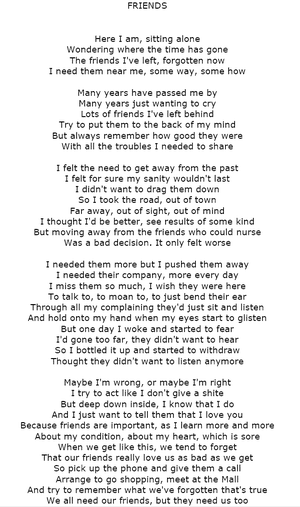


A poem dedicated to friends past, hopefully to return.


A poem dedicated to old friends, hopefully to return.

In the UK, the Samaritans can be contacted on 116 123.
In the US, the National Suicide Prevention Hotline is 1-800-273-8255.
In Australia, the crisis support service Lifeline is on 13 11 14.


How mental health problems affect relationships: "They"re scared that this time you might die"

5 Mart 2017 Pazar

"Defend NHS with all your might", Corbyn urges demonstrators

Jeremy Corbyn has told tens of thousands of demonstrators to “defend the NHS with all of your might” at a protest march through central London.


Organised to warn that further funding cuts in the health service represent “a real risk to the safety of patients”, the event on Saturday sought to demand a fully and publicly funded NHS and social care services.


The Labour leader said to the crowd in Parliament Square: “The NHS is in crisis, in crisis because of the underfunding in social care and the people not getting the care and support they need.


“There are those waiting on trolleys and those who are desperate to get into an A&E department waiting hours for treatment. It is not the fault of the staff. It is the fault of a government who have made a political choice.”


The Labour leader, Jeremy Corbyn, waves to supporters at the rally in support of the NHS in London.


The Labour leader, Jeremy Corbyn, waves to supporters at the rally in support of the NHS in London. Photograph: Daniel Leal-Olivas/AFP/Getty Images

Corbyn called for the budget to be unveiled by the chancellor, Philip Hammond, on Wednesday to properly fund the health service with an emphasis on social care and mental health services.


Ahead of the demonstration, the Green party spokesman Larry Sanders wrote in the Guardian: “The government tells us there isn’t enough money, but this isn’t true. We are the fifth-richest country in the world – we have the money to stop our health service turning into a humanitarian crisis, and to care for people when they grow old: in hospitals, the community and homes.”


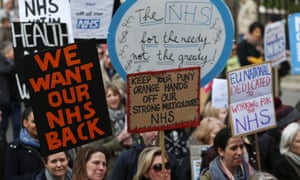
Campaigners, medical staff and members of the public who took part in the march held up homemade banners with slogans including “We want our NHS back” and “The NHS for the needy, not the greedy”.


David Wrigley, a GP from Carnforth, Lancashire, and deputy chair of the British Medical Association council, was among the frontline staff marching under the slogan “Our NHS, No Cuts, No Closures, No Privatisation”.


He said the march was a cry for help because funding cuts had put the NHS in a desperate situation.


“Patients are not getting the care they deserve. We are a country that can afford the funding that is required,” he said.


The campaigners, who say the NHS is at breaking point, hope the march will put pressure on the government ahead of next week’s budget.


Protesters march through central London to demand more funding for the NHS.


Protesters carry homemade banners during the march through central London to demand more funding for the NHS. Photograph: Neil Hall/Reuters

Wrigley said: “I guess it is also a wakeup call for Theresa May and the chancellor … we demand they fund the NHS adequately. If the budget does not bring about any further funding increase, there would be uproar.”


The junior doctor and GP trainee Dr Jeeves Wijesuriya said the demonstration was a chance for the government to plot a new course for the NHS.


Speaking on behalf of the BMA, he told the crowd: “What is sustainable about debts that can only be paid with our patients’ health and yet still won’t be settled? Where is the transformation when the money to build new hospitals and health centres is being siphoned off to pay debts?”


Felix Ramos, 53, of Hackney, east London, said: “Many people are not going to get the help they need … privatisation does not work. It is not going to care for the vulnerable.”


Support came from the Great British Bake Off presenter Sue Perkins, who tweeted: “Love and support to all those marching for the NHS today.”


Sue Perkins (@sueperkins)

Love & support to all those marching for the NHS today, with a special shoutout to KONP, West Cornwall Health Watch & the gang in Penzance.


March 4, 2017


A spokesman from the Department of Health said: “We are committed to the NHS, which is why we’re investing £10bn in its own plan for the future, including £4bn extra this year to transform services and improve standards of care.”


"Defend NHS with all your might", Corbyn urges demonstrators

31 Ocak 2017 Salı

Worried your partner might have a bisexual history? Why? | Phoebe Jane Boyd

“Use a condom, the pill, or get an IUD – avoid pregnancy” was the drill from sexual health practitioners who came to speak at my comprehensive school in Kent. There wasn’t much detail or thought beyond, “Some of these boys are going to get some of these girls pregnant before they hit 16 – let’s try to get that down to a lower number than we had last year.”


Thankfully, when it comes to the subject of sexual identity, there’s now more guidance than ever trickling down into the societal subconscious in the west – hopefully in schools, but certainly during publicity rounds for films starring Kelly Rowland and Cat Deeley. While talking about Love By the 10th Date to the New York Post last week, Rowland espoused the importance of knowledge when embarking on a sexual relationship with another: “I can’t tell someone how to feel about dating someone who is bisexual or had a past gay experience, but it’s proper to ask [if they have] in today’s times.”


Women who have sex with women are less likely to get a smear test, because many of us don’t realise we need to


It is “proper” to ask? Maybe it’s unfortunate phrasing, or maybe not being able to hear the tone of voice in which the opinion was offered gives it negative impact, but the sentence rings faintly of suspicion and mild disapproval: “Please submit your history of sex with people of the same gender, and it will then be decided whether or not you are too risky to be intimate with.” That’s how it comes across to this particular someone who is “bisexual or [has] had a past gay experience”, anyway.


Bisexuality just continues to have a bad rep, even though it’s on the rise (according to CNN) … or then again, maybe it’s not on the rise (according to the Verge). Statistics on the spread of sexually transmitted diseases, and which groups of people are spreading them, are easily found (and quickly wielded by those mistrustful of anything beyond heteronormativity), but they can obscure a simple and universal truth that applies to all groups, whether those groups are on the rise or not. And that is: whatever genitalia you and your partner(s) have, you should protect yourselves (condom/dental dam/wash your hands and accoutrement between uses, thank you). Ignoring that fact in favour of “it’s the bisexuals, mostly” is the source of so much harm.


You don’t have to openly identify as bisexual to get the bad side of bisexuality, because it goes beyond the myths of promiscuity, greed and dishonesty still held by some – biphobia also has an impact on physical health. Here in the UK, if you’re a man who’s had sex with another man in the last 12 months, you can’t donate blood (though that stance is currently being reviewed). Women who have sex with women are less likely to get a smear test, because many of us don’t realise we need to – we’re forgotten by the healthcare system, or our needs are misunderstood.


“Gay and bisexual women are at lower risk for HPV,” we confidently tell each other, “we don’t need a smear test.” A lot of us have heard that from our doctors, as well. It was only after seeing a leaflet about the issue from lgbthealth.org.uk during this month’s Cervical Cancer Prevention Week that I realised this was just ignorance.


In 2008, Stonewall released findings that one in 50 lesbian and bisexual women had been refused a smear test, even when they requested one. The 2015 survey on training gaps in healthcare, Unhealthy Attitudes, found that three in four patient-facing staff had not received any training on the health needs of LGBTQ people. Many women get variations of the “use a condom, the pill, or get an IUD – avoid pregnancy” mantra from our doctors to this day, if we don’t declare our gayness or bisexuality as we walk through the surgery door. Sometimes even a declaration is ignored by an uncomfortable practitioner. Straightness is still automatically assumed, unless you’re lucky enough to have a doctor who doesn’t see heterosexuality as the default for everyone they treat.


According to that 2015 Stonewall study, a third of healthcare professionals felt that the NHS and social care services should be doing more to meet the needs of LGBTQ patients, which is encouraging. Knowledge is wanted – needed – to undo the harmful myths that block help and prevent education. And that is what is “proper” (to quote the star of Freddy vs Jason and Love By the 10th Date) – fighting ignorance and biphobia, rather than continuing to be suspicious of sexual histories that might have featured people of the same gender. Whatever and whoever is in our sexual pasts, we must protect each other, and stay informed. That’s healthy.


Worried your partner might have a bisexual history? Why? | Phoebe Jane Boyd

8 Ocak 2017 Pazar

How colour-changing cats might warn future humans of radioactive waste

Plans for a new fleet of UK nuclear power plants are under way. Last month, for example, Hitachi and the Japanese government confirmed a plan to construct 5.4 gigawatts of generating capacity at UK sites. But what about the waste? And what happens when, in thousands of years, our descendants – who may not read any current human language – find a store, and put themselves in danger?


A panel of scientists and linguists asked this question in 1981 when the US Department of Energy commissioned them to find a method of ensuring that whatever is left of humanity in 10,000 years’ time is warned off the sites we’ve been filling with radioactive sludge.


The panel reasoned that since few people can read texts that are only 1,000 years old, written warnings guaranteed to be understood by future humanity could be difficult to create.


The answer may lie in “nuclear semiotics” – future-proof signs. Other options include hostile architecture, obelisks – or cats.


In 1984, writer Françoise Bastide and semiotician Paolo Fabbri suggested the answer could lie in breeding animals that “react with discoloration of the skin when exposed” to radiation. “[Their] role as a detector of radiation should be anchored in cultural tradition by introducing a suitable name (eg, ‘ray cat’).”


In short: cats that turn, say, green when near radioactive material. A legend, passed on through the millennia, would trigger a response in humans to get out as soon as possible.


The idea has recently gained fresh traction: the Ray Cat Solution movement, formed in 2015, is working to “insert ray cats into the cultural vocabulary”. They say it may be possible to harness some animals’ innate capacity to become fluorescent, or to absorb and emit light – but cats don’t have the physiology to do that. Another way would be to engineer cats to glow using enzyme interaction – a mechanism used to study cellular activity. Far fetched, but it could just work.


How colour-changing cats might warn future humans of radioactive waste

22 Kasım 2016 Salı

NHS passport-checking might save a few pence – at the cost of our humanity | Diane Taylor

The most senior official in the Department of Health, Chris Wormald, told MPs yesterday that he was considering asking hospitals to check patients’ passports to find out whether they should be paying for NHS care. In doing so, Wormald may not have been trying to make anti-migrant political capital. But he certainly generated plenty of it.


The implicit message in his disclosure is that we are being overrun with health tourists who are fleecing our cash-strapped NHS and that we must protect what is rightfully ours.


But there were a few things Wormald failed to mention. The number of migrants who pay their way when they use the NHS, for instance, and how many with serious health conditions are denied NHS treatment in a system policed in an increasingly zealous way.


London has the largest number of migrants of any UK city. In 2014, a series of freedom of information requests I made to 20 London hospitals revealed that many had received substantial payments from overseas visitors using the NHS, and that debts from this group of patients were relatively small – too small, perhaps, to justify introducing a vast and expensive new layer of bureaucracy to police and intimidate patients. Many migrants now have to pay a health surcharge and have been doing so since April 2015 as a condition of living here.


What is the definition of a health tourist? Someone who gets on a boat or a plane with the sole purpose of using NHS services on arrival here? Or is it also someone who is in the UK from overseas and then falls ill while they are here?


One man who falls into the latter category is an asylum seeker who was tortured in his home country in west Africa. His asylum claim was refused and he is preparing a fresh bid based on new evidence. He does not qualify for NHS treatment as a refused asylum seeker. In 2013, a charity gave him a bike because he could not afford public transport. He was hit by a car in January 2014 and badly injured. Of course he did not ask to be hit by the car, nor did he plan to use any NHS services at all when he set off on his bike on that fateful day.


As usual with all matters migration, a sense of proportion has been lost here. Populism has tossed morality aside


The London hospital he was admitted to made sure he received nothing more than the basic emergency treatment that everyone is entitled to (although this too may change). He was denied surgery for the chronic and painful injuries he was left with. Since then he has been disabled, in agony and can only walk short distances with the help of a crutch. Yesterday he received a settlement from the insurance company of the driver who injured him. He pursued the claim in order to pay the NHS for the treatment he desperately needs. Although he is destitute, he will be making a net contribution to the NHS.


Another asylum seeker gave birth to twins who were treated for a few days in a special care baby unit. She was sent a bill she could not pay, because as an asylum seeker she is not allowed to work. She is a deeply religious Christian and was so distraught about the bill that she set her alarm at intervals through the night so she could get up and pray that somehow the debt would vanish. She lived in terror of the consequences of not paying the bill. Eventually the NHS wrote off the debt, accepting that as an asylum seeker who is banned from working she could not pay.


The National Audit Office estimates that the uncollected fees are £200m a year, which is around 1% of the current NHS debt. And that figure does not take into account the extra income from those who are paying for their NHS treatment.


As usual with all matters migration, a sense of proportion has been lost here. Populism has tossed morality and ethics out of the window. As Dr Ben White tweeted: “Well, I won’t be asking anyone for their passport before resuscitating them, thanks.”


The hostility towards migrants is piling up. It used to be the job of the Home Office alone to police immigration, but now schools, health professionals, landlords and others have been co-opted, whether they like it or not. Passport checking may save the NHS a few pence as long as the cost of administering such a system does not outweigh these slender savings.


But what is the cost of the humanity we are losing in the process? And what is the deficit in decency and solidarity with other members of the human race? That deficit is piling up and the negative consequences are not just for migrants, but for everyone who inhabits this country.


NHS passport-checking might save a few pence – at the cost of our humanity | Diane Taylor

3 Aralık 2015 Perşembe

Examine finds important oils might improve cognitive functioning in Alzheimer’s sufferers!

Alzheimer’s Disease is the only cause of death in the top ten that cannot be prevented or cured.  For many families, a diagnosis of Alzheimer’s Disease is more devastating than any other diagnosis.(1)


Many people are searching for holistic options that may help improve symptoms or slow progression of the disease.  Essential oils have been used for generations to manage symptoms of depression, anxiety and even insomnia.  Caregivers are finding comfort in using oils to treat similar symptoms in relationship to Alzheimer’s Disease.(2)


Essential oils provide sensory stimulation that helps decrease agitation, improves sleep and overall quality of life associated with Alzheimer’s Disease or dementia!


Oils can be applied to the skin, inhaled or even placed in food or beverages if the oils are safe for human consumption.  In addition to the benefits associated with the oils themselves, studies also show that sensory stimulation helps decrease agitation, improves sleep and improves the overall quality of life associated with the disease.(2)


One study found that used rosemary, lemon, lavender and orange essential oils for 28 days on patients with Alzheimer’s Disease.  All patients showed significant improvement in cognitive function following aromatherapy.  Researchers used the Gottfries, Brane, Steen scale, Functional Assessment Staging of Alzheimer’s disease, and the Touch Panel-type Dementia Assessment Scale to assess progress following aromatherapy.(3)


Study found that essential oils was an effective non-pharmacological therapy for dementia and may have potential for improving cognitive functioning in patients with Alzheimer’s Disease!


Patients experienced no known side effects associated with the aromatherapy.  The study concluded that aromatherapy was an effective non-pharmacological therapy for dementia and may have potential for improving cognitive functioning in patients with Alzheimer’s Disease.(3)


Seven essential oils that could provide comfort for patients diagnosed with Alzheimer’s Disease or dementia!


If you or someone you love is struggling with dementia or Alzheimer’s, consider using the following oils.


  1. Lavender:  Lavender is thought to help calm and balance emotions and has been found helpful in managing depression, anger, irritability and insomnia.(2)


  2. Peppermint:  Peppermint can be used to energize and stimulate the mind, as well as calm nerves. (2)


  3. Rosemary:  Rosemary is similar to peppermint and can be used to stimulate the mind and body.  It may help improve cognitive performance and mood. (2)


  4. Bergamot:  Bergamot is a citrus oil that can help relieve anxiety, agitation, mild depression and stress. (2)


  5. Lemon Balm or Melissa Oil:  This is one of the more expensive oils but has been shown through studies to be effective in calming and relaxing people who deal with anxiety and insomnia.  It also may help improve memory and ease indigestion.(2)


  6. Ylang Ylang:  Ylang Ylang can help ease depression and promote quality sleep.(2)


  7. Ginger:  Ginger is helpful to digestions or loss of appetite or even constipation. (2)


If someone you know is diagnosed with Alzheimer’s or dementia, consider the benefits of aromatherapy.  It may help your loved one find more comfort within their diagnosis.


Sources included:


(1) http://www.alz.org/facts/


(2) http://www.alzheimers.net/10-10-14-essential-oils-dementia


(3) http://www.ncbi.nlm.nih.gov/pubmed/20377818


Examine finds important oils might improve cognitive functioning in Alzheimer’s sufferers!

8 Ağustos 2014 Cuma

Warning: Neck Changes Might Lead To Stroke

Following a neck adjustment — also recognized as cervical manipulative treatment and typically employed by chiropractors and other healthcare providers — men and women are at enhanced chance for cervical dissections (tears), which can lead to stroke, according to a scientific statement released by the American Heart Association/American Stroke Association. Despite the fact that a lead to-and-impact connection is far from being proved, the groups say that healthcare providers ought to inform their sufferers about the association prior to starting up the procedure.


“Most dissections involve some trauma, stretch or mechanical stress,” mentioned José Biller, lead writer of the scientific statement, in an AHA press release. “Sudden movements that can hyperextend or rotate the neck — such as whiplash, particular sports activities movements, or even violent coughing or vomiting — can outcome in CD, even if they are deemed inconsequential by the patient.”


Recent knowledge about cervical dissection is limited to situation-management research and clinical reviews, making it extremely hard to set up a result in-and-effect connection. In some circumstances, an option explanation might be that patients in the early stage of cervical dissection may possibly go to a chiropractor or other healthcare provider for relief of their neck soreness.


“Although a cause-and-impact relationship in between these therapies and CD has not been established and the risk is most likely low, CD can end result in critical neurological injury,” stated Biller.


Superficial dissection of the right side of th...

Superficial dissection of the proper side of the neck, showing the carotid and subclavian arteries. (Photo credit score: Wikipedia)


Warning: Neck Changes Might Lead To Stroke

28 Temmuz 2014 Pazartesi

Working: Any Amount Is Good And A lot more Might Not Be Far better

Although there is broad agreement that exercise is beneficial there has been significant uncertainty about how much exercise is very good for you. Recently some research have recommended that also considerably workout may possibly actually lessen the benefits of workout. Now a new study published in the Journal of the American University of Cardiology finds that even a small sum of workout, even operating for as tiny as 5 minutes a day, could be just as healthful as more exercise.


Analyzing data from much more than 55,000 adults participating in the Aerobics Center Longitudinal Examine, researchers uncover that, when compared to men and women who did not run, runners had a substantially reduced danger of each all-lead to and cardiovascular mortality. There was no substantial variation based on the distance run every single week, or other measures of duration, speed, or frequency of operating. The researches report that runners at all ranges had a thirty% reduction in the danger of death and a 45% reduction in the risk of cardiovascular death, resulting in a 3-12 months boost in daily life expectancy.


The study “may motivate much more men and women to start off operating,” said the authors.


In an accompanying editorial, Chi Pang Wen and colleagues create that in spite of the observational nature of the study, “the direct health benefits of physical exercise are irrefutable. The reality is that a virtuous cycle exists for an iterative method of incremental exercise promoting incremental health, and the healthier men and women in turn becoming more probably to exercising, blurring the simple result in-and-effect romantic relationship.” They advise doctors to offer a basic exercise prescription to sufferers: “15 min of brisk strolling or five min of operating is all it takes for most clinic individuals. Exercise is a miracle drug in numerous approaches.”


Running man sculpture outside the Sport, Exerc...

Running man sculpture outdoors the Sport, Exercise and Overall health building on Tyndall Avenue, Bristol. (Photograph credit score: Wikipedia)


Working: Any Amount Is Good And A lot more Might Not Be Far better

21 Temmuz 2014 Pazartesi

Schizophrenia Gene Examine Might Level to New Therapy

Hunting for a new schizophrenia drug is probably like searching for a needle in a haystack, but as of nowadays, the haystack got a great deal smaller sized.


Using a genome-broad association examine of more than 150,000 people, researchers found close to 100 genetic variants that contribute to schizophrenia, much more than tripling the recognized number of places connected with the psychological sickness, according to a paper published in the journal Nature.


Schizophrenia is a peculiarly loaded condition. Its biological roots “have usually been denied,” according to an editorial accompanying today’s paper. Most damagingly for sufferers, some doctors in the 1970s did not feel it was a real sickness. Due to the fact of its heritability, some researchers this kind of as Ernst Rüdin have explained that patients shouldn’t have young children — justifying sterilization and murder of the mentally unwell.


Today’s findings show the sickness is heavily-genetically influenced. All of the genetic variants are common, contributing to most – or perhaps all — instances of schizophrenia.


Genome-wide association research normally uncover a genetic locus — a community — rather than a distinct gene that causes all the problems. Nonetheless, the loci are near to specific genes we know to be involved with brain function.


A single prior hypothesis for schizophrenia recommended abnormal signalling from neurons, making use of dopamine as a transmitter researchers had observed that the efficacy of antipsychotic medicines was linked to dopamine blockades. This theory could be validated — given that a dopamine-receptor gene, DRD2 was discovered to be associated with the sickness. Other dopamine genes were untouched.


But the most important association might be the loci located in areas of the genome connected with the immune system. An association on chromosome 6 — the strongest association located — suggested that the major histocompatibility complicated is somehow involved. The MHC binds fragments of pathogens to the surface of cells, marking them for destruction by the immune system’s T cells. Some of the other back links are to areas that help govern acquired immunity — that is, immunity to pathogens the body has witnessed prior to.


If schizophrenia is somehow linked to misfires of the immune program, it might open new avenues for treating the illness the immune system wasn’t even regarded as a significant culprit in the illness until finally now. Earlier epidemiological evidence has suggested that babies whose mothers had been sick with flu throughout pregnancy had been more very likely to be schizophrenic later on in daily life.


The findings are particularly crucial because no medicines with new approaches of action have been introduced towards schizophrenia since the 1950s — the antipsychotics. A 2nd generation of these prescription drugs was launched in the 1990s. In the final ten years, Eli Lilly &amp Co. attempted to target schizophrenia employing one more drug, one that targeted the brain transmitter glutamate. Sadly, that drug was no greater than placebo in phase 2 clinical trials. Targeting the DRD2 gene may possibly lead to new medicines, and the immune system’s involvement suggests other methods may possibly be well worth attempting as properly.


Of program some of the gene associations found may be due to the environment. Many schizophrenics smoke variations in a certain gene cluster (with thte memorable name of CHRNA5-A3-B4) are recognized to be connected with hefty smoking. This cluster was tagged by today’s researchers — but it may possibly not be right involved with the disease. Rather, it may possibly be an indirect effect of schizophrenia. Almost certainly other indirect genes have been tagged as effectively researchers now are tasked with sorting by means of today’s outcomes to uncover the most promising targets, leaving aside genetic associations that may possibly be secondary or indirect.


Schizophrenia Gene Examine Might Level to New Therapy

Probiotics Might Assist Minimize Blood Stress

As interest in probiotics has grown in latest years, some proof has emerged that probiotics might favorably decrease blood strain, but trials have been modest and inconsistent. Now a meta-examination published in Hypertension suggests that the blood-strain lowering effects of probiotics could be genuine.


Saman Khalesi and colleagues analyzed information from 9 parallel, randomized, controlled trials such as 543 participants. Overall, the probiotic arms had a 3.56-mm Hg reduction in systolic blood stress and a 2.38-mm Hg reduction in diastolic BP BP, relative to controls. A more substantial reduction in blood strain was observed in trials in which baseline blood stress was at least 130/85 mm Hg, when treatment method lasted at least eight weeks, and when the daily dose of probiotics contained a greater amount of colony-forming units.


The authors note that although the treatment result was “modest … even a modest reduction of BP may possibly have important public health positive aspects and cardiovascular consequences.” They conclude that their findings “suggest that probiotics might be employed as a possible supplement for future interventions to stop hypertension or enhance BP control.”


“The little collection of studies we looked at recommend typical consumption of probiotics can be portion of a healthier lifestyle to support lessen large blood pressure, as effectively as sustain healthful blood stress levels,” stated the lead author of the study, Jing Sun, in a press release. “This involves probiotics in yogurt, fermented and sour milk and cheese, and probiotic supplements.”


Probiotics Might Assist Minimize Blood Stress

19 Temmuz 2014 Cumartesi

Mood swings? It might be much more than PMS

Contraceptive Pill

Numerous GPs are ignorant of the possible side-impact of the most generally prescribed combined pill. Photograph: Alamy


It really is that time of the month once more. If you happen to be a lady, you may be feeling a bit minimal, irritable, edgy and possibly craving something sweet and cake-like. If you’re a man in near proximity to such a girl, nicely, you are possibly lying low. The tendency for many ladies to get moody in the days just before their time period begins is so properly acknowledged it’s practically the stuff of legend, or at least, the stuff of comedy routines. As a card-carrying feminist, I am almost certainly not meant to laugh at PMS jokes – PMS jokes are not humorous, time period. Except they are – because they are about anything that is so acquainted, so considerably a part of everyday existence. If you never suffer from PMS yourself, you will certainly know a person who does.


But for up to one in twelve women, PMS turns into anything that truly is less than funny. We’re not just speaking about currently being grumpy right here. We’re talking about flashes of real anger, a descent into depression, and a lack of concentration and power – and it really is unattainable for these intense mood swings not to influence on relationships and perform. This much more serious type of PMS is referred to as PMDD – premenstrual dysphoric disorder.


I discovered about this a lot more severe form of PMS a couple of weeks in the past, at a conference dinner, where I ended up sitting subsequent to Peter Greenhouse, consultant in sexual wellness in Bristol. Just before prolonged the conversation had turned to premenstrual syndrome and disorder, and the overlap between sexual health and psychological well being. Very typically, it looks, women with PMDD are diagnosed as struggling from depression or bipolar disorder – and taken care of accordingly. But antidepressants are most likely to be ineffective, whereas stabilising hormone levels with an oestrogen patch can operate wonders. But there was something else that Greenhouse stated that immediately caught my interest: for some ladies with more intense cyclical mood alterations, going on the pill could be disastrous.


It caught my consideration simply because I’m nicely aware of my own susceptibility to really serious mood swings in the days just before my time period. I can rapidly turn into very irritable, tearful and dejected. My husband is, of program, quite familiar with this pattern, and I have discovered not to snap his head off when he suggests a correlation in between my grumpiness and my hormone ranges at a specific time of the month. When I became pregnant with my initial youngster, we were both aware of an incredible improvement. Speaking to Greenhouse, I realized that this is a very widespread encounter. And it can make sense – for 9 months, fluctuating hormones are replaced with stable, substantial ranges of oestrogen during pregnancy, I felt calm, well and pleased. This continued more than the months I breast-fed my child (which means my oestrogen amounts would have been lower, but steady)… and then I went back on the pill. The mood swings had been back with a vengeance – plunging me into unplumbable depths of despair and turning me into an irascible harpy in the days ahead of my period. My husband tentatively advised that I should, possibly, feel about stopping the pill. I did, and he was proper – the mood swings were still there, but infinitely more containable and benign. So I talked to my GP. Getting had this response to a pill that combined oestrogen and progesterone, he suggested I consider the progesterone-only “mini-pill”, which I did – and I’m pleased to say that household lifestyle has remained significantly far more harmonious in its wake.


The factor is, I thought that I was a bit of an oddity, responding to a mixed pill in this way. But talking to Peter Greenhouse, and other GPs that evening, I realised that this is really a common expertise. Some GPs I spoke to wouldn’t even prescribe the specific brand of the mixed pill that I took – for this quite cause. But, weirdly, it would seem that this potential side-impact of the most typically prescribed combined pill (Microgynon, Ovranette or Levest) is far from currently being common knowledge amid GPs – or indeed amongst girls. It truly is also distinctly lacking in the warning notes that come with the pills. And this all looks even a lot more odd when it truly is effectively acknowledged that mood alterations are the major explanation for women stopping taking the pill. Probably bodily side-effects are regarded to be far more critical, somehow more tangible – but definitely a side-impact that could derail and even wreck relationships is a single that demands to be taken significantly. At the very least, ladies want to be warned about the possibility.


I’ve taken the combined pill Ovranette given that I was sixteen, when I was prescribed it to support deal with time period ache. As an adolescent, I was presently quite hormonal and moody. But did the pill make it worse? As a younger, twentysomething physician, I was diagnosed with depression and took Prozac for a while… but would coming off the mixed pill – or, more probably, switching to another blend – have solved the dilemma? Possibly I would even have been greater treated with an oestrogen patch than an antidepressant. Bouts of depression have sometimes threatened to sink my romantic relationship with my now-husband. Just how considerably of that angst could have been avoided had I imagined about switching to a greater pill way back? I’ll by no means response these queries, but it is surely a sobering considered. And there need to be other girls out there who have had equivalent experiences – and who have never ever been warned about these potentially exceptionally damaging side-results of such a routinely dished-out contraceptive pill. And that tends to make me just a small bit angry. Not irrationally angry. Not irritable. Just proportionately, understandably angry.


Mood swings? It might be much more than PMS

2 Temmuz 2014 Çarşamba

Do Your Counterparts See You As A Pushover Or A Jerk? Research Demonstrates You Might Be Oblivious

When contemplating how your boss, co-employees, or other expert contacts behave, it’s most likely you can swiftly pick out “the jerk,” and “the pushover” in the crowd. But, have you ever stopped to think how your counterparts see you? Probably you presume you have a track record as getting “tough,” or perhaps you like to perform the part of “the good man,” but there’s proof that displays you may possibly be entirely oblivious to the way other people really see you.


A surprising new examine titled, “Pushing in the Dark: Brings about and Consequences of Constrained Self-Awareness for Interpersonal Effectiveness,” displays that men and women fail to acknowledge whether they are behaving also aggressively or also passively in the eyes of others. Sadly, this limited self-awareness can have severe consequences.


Group Discussion - Flipped Learning

Group Discussion – Flipped Learning (Photograph credit: mikecogh)


The research, which will be published in Personality and Social Psychology Bulletin, examined the conduct of college students enrolled at Columbia Organization College. Participants were paired for mock negotiations and right after every single deal was created, they answered inquiries about their personal levels of assertiveness and their partner’s level of assertiveness. They have been also asked to judge how their companion most likely perceived them.


The results unveiled that 57% of individuals who had been deemed to be below-assertive imagined they had come across as appropriately assertive, or even over-assertive. Meanwhile, 56% of individuals who have been noticed as over-assertive considered they had come across as appropriately assertive or even below-assertive.


In excess of half the time, people have been incorrect about how other folks perceived them. Interestingly, people who were viewed by others as being appropriately assertive often considered they have been coming across as becoming as well aggressive.


The Consequences of Restricted Self-Awareness


Being oblivious to how others perceive us can undoubtedly have damaging consequences. The study found that people’s constrained self-awareness interfered with their negotiating capabilities. Folks who believed they had “crossed the line” into being too pushy usually experimented with to repair the relationship. As a end result, they ultimately accepted less rewarding bargains. They had been unaware that they didn’t require to resolve the partnership “problem” since the other individual didn’t even acknowledge that a dilemma existed in the very first spot.


Studies like this emphasize that it doesn’t matter how you meant the message, it issues how other individuals obtain it. In several company interactions, it eventually does not matter if you feel you are assertive – alternatively, it matters regardless of whether or not other individuals perceive you as behaving in an appropriately assertive manner.


A lack of self-awareness can interfere with your potential to reach your targets in a multitude of methods. If you think you’re supplying fantastic product sales pitches, outstanding buyer service, and friendly-worker policies, you may possibly be amazed to find out that the men and women on the acquiring end may possibly disagree with how you come across.


If folks perceive you as a jerk, they’re probably going to be less interested in conducting honest enterprise bargains with you. But, if you’re perceived as a pushover, they are far more most likely to consider advantage of you.


Rising your self-awareness will take difficult work. The essential is a willingness to assess outcomes and a desire to examine how your frame of mind and behavior influence other people. Do not be afraid to request for feedback from other people. Typically, what you uncover about how other individuals perceive you can educate you useful existence lessons if you’re open to learning.


Amy Morin is a psychotherapist and the writer of 13 Items Mentally Sturdy People Don’t Do. You can adhere to her on Twitter @AmyMorinLCSW.


Do Your Counterparts See You As A Pushover Or A Jerk? Research Demonstrates You Might Be Oblivious

21 Haziran 2014 Cumartesi

Generation Selfie might hold the secret to saving the NHS

At a time when the NHS is struggling to survive – never mind evolve to meet the needs of a society undreamed-of at its inception – as far as Generation Selfie is concerned, if you caused your illness, you pay for your treatment. End of.


None of this bleeding-heart, touchy- feely stuff acknowledging the poverty trap or ignorance or bog-standard depression or just plain bad luck.


It might be a bit hardline, but it comes as something of a tonic after the acquired helplessness created by a broken welfare system.


As Benefits Street so deftly demonstrated, for too many people, working still doesn’t pay, despite Iain Duncan Smith’s ongoing attempts to reform the welfare state, a process he has compared with William Wilberforce’s 18th-century campaign against the slave trade; by which I take it he means, “This is going to be bloody difficult”.


But having said that, the oversimplistic “fat people should pay for their own gastric bands because they are greedy” and “alcoholics should stump up for their own liver transplants” lead to further moral judgments.


“You should have thought about the risk of skin cancer before you booked that villa in Greece”, and “You’re old, it makes more sense to spend all the resources on babies, who, let’s face it, are also cuter”, is the kneejerk response of those of an age when they, quite rightly, consider themselves immortal.


But I think I speak for everyone planning to live beyond 70 when I say we’d prefer a more compassionate National Health Service, thanks.


Shocking figures newly released by the Office for National Statistics show an abrupt rise in “lifestyle” cancers. Liver cancer leapt by 66 per cent from 2003 to 2012, cancers of the mouth are up by 48 per cent, cancer of the womb by 31 per cent and kidney cancer by 46 per cent.


While some of the increase is due to our ageing population, there is no denying that over-consumption of food and booze, cigarettes and sun exposure are doing their worst.


We’re all accustomed to the “how many units of alcohol do you drink a week?” question and the “do you smoke?” inquiry. It’s no exaggeration to say we can expect a questionnaire longer than the average A-level paper. How many pizzas do you eat a month? What’s your daily biscuit intake? Please list the destination of all holidays taken from the age of 11. Include all sun factors used and details of your working.


Can it really be so difficult to change our lifestyles in a bid to not just stay alive, but to feel alive?


Eat less, exercise more. Drink in moderation. Don’t smoke. It’s hardly rocket science, but according to the World Cancer Research Fund, around 80,000 cancer cases could be prevented in this country every year.


I hope it’s not too late for my generation, but for Generation Right, perhaps there’s an upside to their unsentimentality about the NHS.


Their sense of personal responsibility, coupled with a collective agreement that the NHS can’t and won’t fix everyone, might just be enough to prompt them to turn away from excess and choose a healthier path.


Man and mobile are one at last


Hailing, as he does, from north of the border, my husband is not given to public displays of emotion over anything but the really important stuff: Culloden, Tunnock’s teacakes, England losing to Uruguay.


So when on Thursday this week he turned to me and confirmed, misty-eyed as MacDiarmid’s Drunk Man Looking at the Thistle, that he had just undergone the biggest epiphany since the Act of Union, he meant it.


Don’t panic, he wasn’t suddenly persuaded to vote Yes in the forthcoming J  K Rowling referendum on economic disas… sorry, independence. No, on Thursday he went and got himself a mobile phone.


I say “got himself”, but I orchestrated his smartphone rite of passage by selflessly gifting him my sleek new iPhone upgrade.


It was heartbreaking (technologically speaking), but worth it just to witness the conversation in the Carphone Warehouse when my spouse strode in, brandishing a goose quill and asking to place his signature on a contract.


“How many, like, minutes do you spend on your mobile every day?” asked the assistant.


“None. I’ve never had a mobile before.”


“Yeah, but like, how many texts do you send every day?”


“None. I’ve never had a mobile before.”


“Yeah, but like, how many gigs do you use every day?”


And so on.


So he has a phone. For him, it’s Year Zero. And for me?


People, the waiting – in car parks and shops, railway stations and foreign ports, in hospitals and hotels – is finally over. I only hope it was worth it.


Give me some of what you’re on, Victoria, even if it is pink quartz


The future’s bright. In fact, the future’s glittering. Put down your entrepreurial manuals! Bin your business books! Regift that new-and-still-reproachfully-unread Thomas Piketty economics hardback!


Victoria Beckham has spoken. And what has she said? She has said she uses crystals to promote success when she stages her fashion shows.


Yes folks, pink quartz is the new black tourmaline; pop them in your handbag and fame and a photogenic family fathered by a hot husband will be yours, too. Possibly.


It’s easy to laugh. So I do. But I shouldn’t. I, too, have had recourse to the realms of the bizarre and the bonkers.


To wit: I have bought (white) witches’ herbs online and hidden them beneath my daughter’s pillow in an attempt to cure her chronic insomnia.


When faced with paralysis after an accident, my first response (after chanting a decade of the rosary) was to insist my husband contact a faith healer. Oh, and I telephoned a diviner and asked him for help in finding my lost wedding ring and my vintage Cartier watch.


And I bought a money plant in order to – well, that one speaks for itself, really. I initially kept it outdoors, where it failed to thrive in the cold. Two days after I moved it indoors, I won £1,350 worth of premium bonds. Yay! Sadly, it has since died.


I like to think all this reflects a laudable “there are more things in heaven and earth, Horatio” open-mindedness rather than out-and-out lunacy.


I’m a practising Catholic, but I still believe the Holy Ghost isn’t necessarily the only one. When we moved into our house, 11 years ago, there was a crystal hanging from a nail and I haven’t dared move it.


So Victoria, whether you are harnessing the spiritual power of pink quartz or just fiddling about with it in your expensively tailored pocket, I salute you. Or I would, if my fingers weren’t permanently crossed.


Coffee bars are not for kids


From the moment my younger daughter could reach out and grab a wooden brick, she would extend her arm right past it and strain towards my coffee mug instead.


By the time she was cruising round the furniture, her mission wasn’t to strengthen her chubby toddler legs, but to seek out and drink any cold dregs she could find.


Now aged five, she has an illicit passion for strong coffee that would put the Brazilian national team to shame. Three heaped spoonfuls of Nescafé? That’ll do nicely.


I certainly don’t let her drink coffee often. But if she could, she’d be a little caffeine junkie, while her 12-year-old sister has a crippling mocha-latta-chocca-frappuccino habit that costs £3.10 a go.


Maybe this is why I feel uncomfortable about Costa opening small coffee bars in secondary schools, even though it is my favourite of the high street chains. On the scale of stimulants, moreover, the caffeine in coffee is hardly a huge concern; there are 40mg of it in a 100g cup of filtered coffee.


That’s twice the caffeine content of 100g of brewed tea, but “energy shots” such as Ammo contain 570mg per 100g and Jolt Endurance shots have a caffeine level of 339mg per 100g.


But there’s a world of difference between sixth- formers carefully budgeting for coffee in the common room and schoolchildren splashing their (or rather our) cash on the sort of high-end, bespoke beverages most of us couldn’t have afforded in our first jobs. Possibly even our second.


There are so few pleasures that are the exclusive domain of grown-ups. Please let’s keep good coffee one of them.


Generation Selfie might hold the secret to saving the NHS

19 Haziran 2014 Perşembe

Big Genetic Research Might Help Unravel The Triglyceride Difficulty

The exact role of triglycerides in heart ailment has been very tough to decide. To help untangle the knotty difficulty two investigation groups studied huge populations and recognized uncommon variations in a gene (APOC3) that encodes for apolipoprotein C3, which is acknowledged to increase triglyceride ranges.


In the first paper, published in the New England Journal of Medication, an NHLBI working group sequenced the genes of three,734 individuals and identified a number of uncommon loss-of-function variants of APOC3. As expected, men and women with the variants had drastically reduced triglyceride levels. The researchers then analyzed data from far more than 110,000 participants in 14 studies and observed that folks with the identical loss-of-perform mutations had a forty% reduce threat for coronary heart illness.


The results, create the authors, “show that reduction of APOC3 perform confers protection towards clinical coronary heart ailment,” even though they have been unable to recognize a primary mechanism linking APOC3 to heart condition.


In the 2nd paper, also published in the New England Journal of Medication, researchers used information from a lot more than 75,000 participants in two big Danish potential scientific studies to discover the position of APOC3. Men and women with APOC3 loss-of-perform mutations had triglyceride amounts decreased by 44%, with corresponding risk reductions of 41% for ischemic vascular ailment and 36% for ischemic heart disease.


Large Hope or Massive Hype?


The two research have acquired a great deal of attention in the media, which includes, most notably, fantastic stories with lots of information and standpoint by Gina Kolata on the front webpage of the New York Times and Matt Herper in Forbes. Both stories supply lots of background on these scientific studies and current a wide assortment of opinions about their significance. In standard, although, they recommend that triglycerides and HDL are prepared to trade roles: triglycerides are now prepared for prime time as HDL fades into the background.


Herper writes that the two scientific studies flip “triglycerides from an ignored supporting character into a key villain.” Kolata interviews Robert Hegele, who tells her that the scientific studies “provide ‘a extremely, very powerful type of evidence’… that triglycerides are in truth a cause of heart attacks.”


But a close examination of the NEJM papers suggests that it could be extremely difficult to link the result of APOC3 to its specific influence on triglycerides. In each scientific studies men and women with the reduction-of-perform mutations had drastically lowered triglycerides, but they also had significantly raised HDL amounts. LDL levels have been lowered as well. So it may possibly be challenging to figure out specifically what APOC3 is carrying out, and it is most likely as well soon to dethrone HDL and elevate triglycerides. We just do not know ample at this point.


The authors of the two NEJM papers publish that their findings suggest that APOC3 may possibly make for an eye-catching drug target. The two Kolata and Herper get up this suggestion and note that ISIS Pharmaceuticals has an anti-sense drug  that targets APOC3 under advancement. Undoubtedly this is a promising new area, but it can not be emphasized strongly enough that this is nonetheless really early things. Here’s a warning I acquired from one top cardiologist. This research, he mentioned, “has definitely no implications for clinical practice. It may 1 day be seen as a pivotal examine that led to the development of exceptional drugs, but that is far away. I hope individuals really don’t go through it and consider that it has relevance to their recent choices about therapy.”


Big Genetic Research Might Help Unravel The Triglyceride Difficulty

15 Haziran 2014 Pazar

So you"ve beaten breast cancer. Some congratulations might be nice | Fay Schopen

mild exercise for cancer survivors

‘Exercise is excellent for you, cancer or no cancer. The tips really don’t seem notably arduous – just above twenty minutes a day of moderate ­exercise, like strolling.’ Photograph: Justin Kase zninez/Alamy


Cancer, that invasive and insidious ailment, is by no means far from the information, and breast cancer, the pinkest and fluffiest of all the cancers, especially so. We’re horribly used to the issues-that-lead to-cancer story – final week, for example, we realized that eating red meat in early life may possibly result in breast cancer, except it most likely doesn’t. And for great measure, two studies recommended that there may possibly be a genetic or hormonal website link between possessing a whole lot of moles and developing the disease. So now you can lie awake at evening in terror, examining each inch of your entire body, although digesting your dinner of lentils and tofu. So far, so acquainted.


But when you’re a single of the virtually 50,000 females in Britain diagnosed with breast cancer each and every 12 months, things are distinct, correct? You are slashed, you are burned, poison is pumped into your veins. You say goodbye to 1 breast, potentially two, or just component of one if you are fortunate. Hopefully you recover. No more worrying about cancer, since you’ve already had it. Have a burger, why will not you?


But perhaps not. There was yet yet another piece of analysis on breast cancer last week, a research telling us, in the words of 1 headline author, that “breast cancer survivors ‘do not exercising enough’”. Exercising has been proven to help recovery, but a US examine identified that only 35% of women who had had the illness met the weekly guidelines for physical exercise – 150 minutes at reasonable intensity, or 75 at vigorous intensity.


As a person who has had breast cancer – and who hates the word “survivor” by the way – I understand, I actually do. Exercising is very good for you, cancer or no cancer. And the suggestions don’t appear particularly arduous – just in excess of twenty minutes a day of moderate physical exercise, like strolling.


But whilst I am familiar with pre-cancer scaremongering, the publish-cancer model is new. Lifestyle following cancer is difficult enough. Having the condition is the straightforward bit. That is in which you have a single goal: not to die of cancer. So you subject by yourself to the surgeries, the chemotherapy and the radiation, and right after it is all more than – and you are not dead, hopefully – it truly is time to move on and overlook it ever happened.


Except there is a unwanted fat opportunity of performing that. You get undressed and observe you are missing some or all of your breasts. An individual you haven’t observed for a while greets you with a amazed cry of “You look properly!”. A properly-meaning buddy emails you a link to an post about this kind of-and-this kind of creating cancer. And you go through stories telling you that you are not undertaking it proper.


I don’t need to be told I will not consider adequate exercising. I worry about that as it is. I fret that I’m not taking the drug my oncologist insists I ought to consider for five many years, simply because the horrible side-effects stop me. I worry I drink also considerably alcohol, and never consume sufficient greens. And with every single ache and soreness, each cough and cold – my stupid brain can not assist pondering that it might be the cancer returning.


I do not mean to propose that I am a crazed hypochondriac who spends every waking minute residing in fear of cancer. I have rebuilt my daily life, thank you very significantly, and any person who meets me nowadays would not have a clue I’d been ill. But these ideas rumble in the background, a quietly ominous soundtrack to this new phase of my life.


Cancer casts a lengthy shadow. And even though some folks want to run away from the shadow towards the light as speedily as achievable, other individuals really feel defeated by the darkness and sit down in the shade, not sure of what to do subsequent.


And you know what would aid with that? Opening the newspaper and reading through a headline, for as soon as, that says: “Well done for being alive. Why do not you go and have a beautiful glass of wine, and perhaps a pizza also?”


Twitter: @fayschopen


So you"ve beaten breast cancer. Some congratulations might be nice | Fay Schopen

2 Haziran 2014 Pazartesi

Considerably Traditional Wisdom About The Leads to Of The Obesity Epidemic Might Be Incorrect

An financial perspective suggests that obesity has enhanced in response to the “excess availability and affordability of all types of foods.”


It has turn out to be acquired wisdom that the increase in overweight and weight problems in the U.S. above the previous 3 decades is linked the following:


• An boost in sedentary life style and a lessen in all round physical action


• Enhanced consumption of “junk food” and especially sweetened drinks and refined carbohydrates


• Lack of availability of healthier food items which includes fruits and greens


• Diminished leisure time.


A new standpoint on the causes of the obesity epidemic suggests that several of these extensively cited variables are both incorrect or play only a restricted position. The new evaluation by an economist at the RAND Corporation and health researcher at the University of Illinois appears in the existing situation of CA – A Journal for Clinicians published by the American Cancer Society.


The authors commence by stressing the need to have to search at trends for the complete population more than time, rather than emphasizing distinctions in between groups (defined by race/ethnicity, socioeconomic standing, and sex) at 1 level in time. When a single does this, one sees that the trend toward rising fat is visible in all groups. A single group could be ahead of an additional on the upward slope, but such distinctions are secondary.


A second observation is that the data indicate that the trend toward excess weight achieve in the U.S. population goes back more than the previous four decades, to the 1st half of the twentieth century. This longer time span is in line with the underlying trend that the authors recognize – namely, that the expense of food as a proportion of revenue has decreased significantly in excess of the previous century. They create that, “Americans now have the least expensive foods in background when measured as a fraction of disposable revenue.” In the 1930, Americans spent 1-quarter of their disposable cash flow on foods. The proportion declined to one-fifth in the 1950s and is at present below one-tenth.


Along with lowered cost, the availability of foods has increased drastically. As a outcome, average every day per capita consumption of calories improved from about two,100 in 1970 to over 2,500 in 2010.


In contrast to these powerful trends, alterations in the intake macronutrients (carbohydrates, excess fat, and protein) are weaker and quick-lived – getting been most probably responses to fads, like the emphasis on a lower-excess fat diet regime (to which the foods market responded by changing excess fat in processed foods by sugar) and the Atkins’ diet regime craze.


Between the other often cited aspects that the authors dismiss are: one) that bodily exercise has decreased in the population above recent decades – in truth, it has enhanced 2) that fruit and vegetable consumption has decreased – in reality, it too has enhanced 3) that leisure time has decreased – it also has increased and four) that a lack of supermarkets in poor neighborhoods and traits of the “built environment” market obesity – in reality, offered data do not give sturdy assistance for these linkages.


This evaluation suggests that, rather than one distinct class of meals, what is driving the weight problems epidemic is the sheer quantity of consumption of foods – and calories – that have become regular in our society.


The authors write, “Examining time trends for which there are information, what jumps out are alterations in food availability, in particular the improve in caloric sweeteners and carbohydrates. Common everyday discretionary calories from salty snacks, cookies, candy, and soft drinks now exceed the discretionary calories advisable in the Dietary Recommendations for power balance and important nutrients and the ratio of consumed to advisable discretionary calories is a considerable predictor of BMI in the population.”


They stage out that the advice to eat a lot more fruits and veggies is unlikely to have the wanted impact given that people have a tendency to include these food items to their intake rather than substituting them for high-caloric food items.


Considerably Traditional Wisdom About The Leads to Of The Obesity Epidemic Might Be Incorrect

27 Mayıs 2014 Salı

Economic crisis might have intensified obesity epidemic, report finds

Obesity trends in selected OECD countries

Weight problems trends in selected OECD countries Photograph: OECD


The economic crisis could have intensified the weight problems epidemic in wealthy nations as folks switched to less costly and less healthier food items, acccording to a report.


The Organisation for Financial Co-operation and Development also identified that the drop in bodily exercise for people who lost their task was likely to have contributed to higher weight problems rates in some spots.


In an update to its perform on the economics of obesity begun in 2010, the Paris-based mostly thinktank discovered the epidemic had spread further in the past 5 many years, although charges have been increasing at a slower pace than before.


“Until finally 1980, fewer than one particular in 10 folks had been obese in OECD countries. In the following decades, charges doubled or tripled, and are continuing to develop,” the report said, placing the weight problems fee now at 18% of adults.


One particular in five youngsters is overweight, on common, in OECD countries, but rates are as high as one particular in three in some nations, including Greece, Italy, Slovenia and the US.


The report advised monetary hardship and unemployment could be partly to blame. “The economic crisis is very likely to have contributed to further development in weight problems. Social disparities in weight problems persist, and have enhanced in some countries,” it mentioned.


Men and women with much less schooling and decrease socio-economic status are much more most likely to be obese, and the gap is usually larger in females, the analysis identified. Its report into England – it did not have data for the total of the Uk – discovered girls with less schooling were 1.six occasions far more very likely to be obese than a lot more educated females.


But the thinktank also noted a adjust in patterns in individuals nations with the highest obesity charges. “[In] Mexico and the United States, obesity has spread even faster between men and women with far more schooling in recent many years,” the report mentioned.


It highlighted the impact of fiscal hardship on food purchasing routines. “In 2008, the globe economic system entered 1 of the most serious crises ever. A lot of households, particularly in the hardest hit nations, have been forced to minimize their meals expenditures, and tighter foods budgets have supplied incentives for consumers to switch to reduced-priced and significantly less healthier meals,” the OECD said.


It cited a report from the Institute for Fiscal Research that during the 2008-09 slowdown, households in the United kingdom cut their food expenditure by eight.five% in true terms but the average calorie density of the food they bought increased by 4.eight%, resulting in a rise in consumption of saturated fat and sugar.


There was also proof of a drop in investing on fruit and veggies in the worst-hit countries in the eurozone, such as Greece, Ireland, Italy and Spain. The report mentioned information displaying fruit and vegetable consumption in the US went down as unemployment rose from 2007-09.


Meanwhile, it suggested, the unemployed obtaining a lot more time to hold fit did not overall offset the result of not functioning. “Even though some evidence suggests that shorter operating hours and lack of employment are associated with much more recreational bodily exercise … at occasions of increasing unemployment any gains are very likely to be offset by reduced work-related physical activity.”


“The financial crisis may possibly have contributed to a even more growth in weight problems, but most governments want to do much more to end this rising tide,” OECD wellness professional Michele Cecchini explained.


Economic crisis might have intensified obesity epidemic, report finds

15 Mayıs 2014 Perşembe

Statins might have no harmful side results, as controversial paper withdrawn

Creating in today’s edition of the BMJ, editor-in-chief Dr Fiona Godlee said it wanted to alert readers, the media, and the public to the withdrawal of the statements “so that sufferers who could advantage from statins are not wrongly deterred from starting or continuing treatment simply because of exaggerated worries over side results”.


She added that their withdrawal raised the query of whether the total articles should be pulled, saying: “Nonetheless, as the editor accountable for publishing the articles or blog posts, I have a vested interest in not retracting them unless of course the situation of performing so is entirely clear.


“So I have decided the right point to do is to pass this choice to an independent panel.”


She extra: “Meanwhile, the BMJ will proceed to debate the important questions raised in the two these articles: whether the use of statins ought to be extended to a vastly wider population of folks at minimal threat of cardiovascular disease and the role of saturated fat in heart ailment.”


Statins are at the moment provided to as several as seven million individuals in the United kingdom who have a 20 per cent danger of establishing cardiovascular condition inside of 10 years.


The National Institute for Overall health and Care Excellence (Nice) known as for the NHS to widen this to cover people with just a ten per cent chance following a examine by Professor Rory Collins and a staff at Oxford University.


Prof Collins criticised the papers by Dr Abramson and Dr Malhotra in March, saying they were misleading. It was he who requested the papers be withdrawn, the BMJ explained.


The independent panel will be chaired by Iona Heath, a former chairwoman of the Royal College of General Practitioners and a member of the BMJ’s ethics committee.


The journal mentioned tips from the Global Committee on Publication Ethics state that journals need to contemplate retracting a publication if there is “clear evidence that the findings are unreliable, either as a consequence of misconduct or sincere error”.


The BMJ explained Dr Abramson’s paper re-analysed information from the Cholesterol Treatment method Trialists’ (CTT) Collaboration which showed treating individuals with a less than 20 per cent danger of heart ailment with statins made no distinction to the death fee in excess of the following 10 many years.


This finding has not been challenged, but the paper also cited information from a separate “uncontrolled observational study” and “incorrectly concluded” that statin side-effects occur in 18-20 per cent of patients.


The identical blunder was manufactured by Dr Malhotra in the identical edition of the BMJ and it is these statements that have been withdrawn, the journal said.


Dr Godlee added: “The BMJ and the authors of each these articles have now been produced mindful that this figure is incorrect, and corrections have been published withdrawing these statements.”


Statins are a group of medicines that assist reduce rates of lower-density lipoprotein (LDL) cholesterol – so called “negative cholesterol” – in the blood.


Higher-rates of LDL cholesterol are linked to hardening and narrowing of the arteries, which can lead to heart condition, heart attacks and stroke.


Individuals can reduce their danger naturally by consuming a healthier diet plan, reduced in saturated fats, and growing the amount of omega three fatty acids in their diet.


Cardiovascular ailment is the leading lead to of death in England and Wales. In 2010, 1 in 3 folks died from it.


The NHS estimates that statins save 7,000 lives a 12 months in the United kingdom.


Statins might have no harmful side results, as controversial paper withdrawn

9 Mayıs 2014 Cuma

Met chief says Uk might flip to necessary health-related tests for FGM

Bernard Hogan-Howe

Sir Bernard Hogan-Howe: ‘We have to make positive we’ve explored all possibilities the existing legislation gives.’ Photograph: Dominic Lipinski/PA


Necessary health care examinations to identify victims of female genital mutilation (FGM) might have to be considered in the United kingdom, the head of Britain’s largest police force has explained.


The Metropolitan police commissioner, Sir Bernard Hogan-Howe, said there had been a lack of referrals from schools and health-related pros about girls who had undergone the procedure, as an operation was launched at airports to identify possible victims.


An estimated 66,000 girls in the Uk have undergone FGM and a lot more than twenty,000 ladies beneath 15 are believed to be at chance of the practice, which is classed as torture by the UN.


The initial Uk prosecution for alleged FGM started earlier this 12 months, while there have reportedly been a hundred FGM-connected convictions in France.


Speaking at Heathrow airport, Hogan-Howe stated: “They have a slightly various program in France so they can have mandatory medical examinations. We feel which is one of the things that makes a difference for them. We have to rely on receiving our message out by means of the media and encouraging members of the public to come forward.”


Asked whether or not necessary healthcare examinations must be introduced in the Uk, he explained: “It really is a single of the things I feel most likely the government is going to have to consider at some stage. The 1st factor we have to do is make positive we’ve explored all options the present legislation supplies.”


Hogan-Howe said it was crucial for colleges and health-related specialists to get in touch with police with info about FGM victims to ensure individuals accountable had been prosecuted.


He mentioned: “We’re not acquiring an terrible whole lot of referrals from the community, from healthcare experts or from educational experts. We need to have these since with out that we cannot start an investigation. Of program the victims could come forward sooner or later. But what we do know is that’s very tough. If you have to report against your mother and father, that is clearly very a challenge.


“It’s actually important they recognize the barbarity of this act and it is a criminal offence which is punishable by 14 years’ imprisonment.”


Police this week launched Operation Limelight at airports across the country which targeted flights to and from nations acknowledged to carry out FGM.


Beneath the joint-force operation, officers at Heathrow spoke to passengers on 13 outbound flights to “high-threat” countries. Passengers have been warned that FGM is unlawful in the Uk and if caught, offenders encounter a large fine and a prison sentence of up to 14 years.


Flights to Heathrow from Nigeria and Sierra Leone had been also targeted as officers sought to determine kids subjected to FGM and any individual who may possibly have arranged the process.


The week-long initiative at airports across the nation aimed to determine ladies who may possibly have been mutilated as well as warning United kingdom passengers that it was illegal to arrange for a kid to be flown abroad for the procedure.


DC Supt Keith Niven, head of the Met’s Sexual Offences, Exploitation and Little one Abuse (SOECA) Command, said: “FGM is an abhorrent offence which consists of violent assaults upon kids. This is an illegal practice and it will not be tolerated in the United Kingdom. It truly is truly essential to educate people who engage in this practice so they are mindful that this is not a reputable way to carry children up.


“This is child abuse … and men and women will be prosecuted if we discover evidence of this.”


Operation Limelight was supported by Uk Border Force and the National Crime Agency, as properly as officers from the Met, Essex, Avon and Somerset, Greater Manchester, West Yorkshire, Sussex and West Midlands police forces.


Met chief says Uk might flip to necessary health-related tests for FGM