secret etiketine sahip kayıtlar gösteriliyor. Tüm kayıtları göster

15 Nisan 2017 Cumartesi

Secret Teacher: Class, I wish I"d told you the truth about my mental health

Last year, I quit teaching. I had completed my NQT induction, and despite the years of self-doubt and tears I’d finally come to recognise that I was a competent teacher, and had started to believe my positive feedback.


I had also come to realise, however, that teaching was an unhealthy career choice for me. I am a perfectionist – or now, I hope, a recovering perfectionist – who is prone to anxiety. Unfortunately, I could not reconcile these aspects of my mentality with the never-ending pressures of being a teacher.


My health was poor while I was in the classroom. I was on medication, undergoing therapy and had to twice take time off sick when I couldn’t leave my house without breaking down. As the end of the year approached, I knew I would be leaving teaching.


But as the end of term loomed, I wondered: “What will I tell my students?” I remember standing in front of my lovely class, with whom I had developed an extremely good relationship, trying to find the words to explain why I was leaving them in the middle of their GCSEs.


They were a wonderful bunch – curious, energetic and high-achieving. But many were also anxious and stressed. I saw myself in so many of them. Their perfectionism and ridiculously high standards were a mirror of myself. I stood before them, without having learned to deal with those issues, about to give up on my dream career after two years of mental anguish.


And so, on my last lesson I stopped, looked them in the eye, and said:


Guys, I am leaving because I have never tackled my perfectionism – that same perfectionism that you think will get you A*s and make you happy.


I am leaving because I have not yet learned how to cope with failure or deal with negative emotions. I have not yet worked out how to tackle my faulty thinking. I have achieved so much academically and have a wonderful social life, but I have been suffering with poor mental health. I am anxious and depressed, and so I can’t carry on being your teacher at this moment in time.


But that’s OK. Our lives will go on. I am already receiving help, both through medication and therapy. I’ve talked to my family and my friends and it’s helping. I’m taking small steps to manage my lifestyle, to make sure I’m getting enough sleep. Mindfulness helps. Exercise helps. For me, music helps. There are so many ways you can mend yourself.


I am a not a doctor. I cannot tell you how to recover if you are suffering from poor mental health – not now or in the future. This is just my experience, but I think you should be aware of it.


Mental health issues are not something to be ashamed of. They are not always obvious. They can express themselves in many different ways. I think there is a scale; some mental health issues are life-threatening and totally debilitating. Mine, fortunately, are not. But had I carried on without talking and reaching for help, they may well have become so.


There is little that’s more important than your own health – physical and mental. Look after yourself, look after each other and talk. Build yourself a support network when times are good, just in case things get harder. Work on challenging negative thought patterns and disputing irrational thinking. Research what makes your brain work, investigate mindfulness, work on yourself.


And if you ever find yourself tempted to lie about a natural, normal period of ill health because you are ashamed, stop and think: “What would you tell a class of 15-year-olds? What would your 15-year-old self have benefitted from hearing?” Don’t be ashamed, use your journey to help others.


But I didn’t say that. Of course I didn’t.


I made up a different illness, in the same way I tell friends that I can’t come to their party because I have a migraine, when the truth is that I cannot see past the tears to make it out the front door.


Even in 2017, mental health stigma still exists and few people are brave enough to talk about it out loud to those kids who need to hear it. I certainly wasn’t. I passed up on perhaps the most “teachable moment” of all.


And so, I’m sorry I lied. I’m sorry we are not yet in a time or place where it is acceptable for me to have shown such weakness. I hope you do not suffer from mental health issues, but the reality is that many of you will. And I hope, if you do, you are brave enough to share your story when you can.


Follow us on Twitter via @GuardianTeach. Join the Guardian Teacher Network for lesson resources, comment and job opportunities, direct to your inbox.


Secret Teacher: Class, I wish I"d told you the truth about my mental health

16 Mart 2017 Perşembe

Noise-cancelling headphones: the secret survival tool for modern life

There’s one thing other than my wallet and my travel card I wouldn’t be without in a big city, and it’s my headphones. But I don’t actually listen to music that much: I just activate the noise-cancelling feature, and leave it at that.


No sound plays into my ears – instead a quiet fills my head, as if the sounds of the world have been turned down. Until I got noise-cancelling headphones, I had no idea how loud the city always was, and just how hungry I’d been for silence.


On public transport, using the noise-cancelling feature will soften the roar of engine and traffic. In the open-plan office, it eliminates the constant chatter and limits interruptions. On an airplane, it’s a revelation. I’m not alone in using state-of-the-art headphones not for music, but to tune out the constant drone of urban living – it’s becoming a modern life survival tool.


‘It was like that moment in a film where the sound cuts out’


Matt Thomas, an animator and motion graphics designer in London, is a convert. He discovered he could use the silencing feature on its own one day by accident, when his music cut out on the tube: “I thought, wait a minute, there’s this really nice peace and quiet. It was like that moment in a film where the sound cuts out and everything goes into slow motion.”


Heavy traffic generates noise levels of up to 85 decibels (dB), which the Health and Safety Executive deems sufficient to cause permanent hearing damage if we’re exposed to it for several hours every day. Underground trains can pass the 100dB mark when roaring around a loud corner.


Thomas often puts his headphones on silent when on public transport (he no longer does this in the street after nearly getting run over), but prefers music for work. For Johanna Vogel, an economist in Vienna, Austria, it’s the opposite: she plays music on the bus but works in silence. Vogel bought her noise-cancelling headphones hoping they would help her concentrate in an open-plan office. “It’s so relaxing,” she says. “At first I was doubtful it would make a big difference, but now couldn’t live without them. In noisy environments I really need some way to create quiet for myself.”


Noise damages more just our ears. Research studies have found links between long-term noise exposure and increased risk of heart attack and stroke, as well as low mood and difficulties with sleeping and concentrating. Adverse effects on mental and physical health can start at just 65dB, a level that seems moderate: a refrigerator hums steadily at 40dB, and an open plan office buzzes at around 60dB.


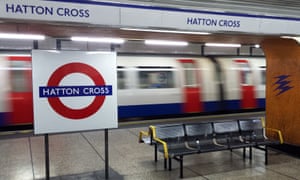
A train passing the platform at speed at Hatton Corner


Underground trains can pass the 100dB mark when in transit. Photograph: Dinendra Haria/REX/Shutterstock

Josi Livingston, a developer at a technology startup in London, often uses the silencing feature to block out office chatter while she’s coding, but likes how she can still hear if someone talks to her. “I’m trying to minimise distraction. I need to focus, and any kind of extra stimuli will detract from that,” she says. “I think of it as engineering my environment to be the most comfortable.”


Unwanted noise can cause irritation and anger if it feels like an invasion of privacy, says Stephen Stansfeld, a Professor of Psychiatry at Queen Mary University of London who focuses on noise and health. “Having a lot of background noise when you’re doing something is tiring. Without noticing, you’re putting in a lot more effort in order to block out the noise. So when you shut it out, there’s a sense of relief.”


Getting worked up about noise can raise stress levels and leads to ill health. “But there’s no doubt that even if you’re not focused on the noise, it can still have an effect. If you’re asleep you may not wake up, but your body is still responding if you hear a loud sound,” says Stansfeld. “The body responds to noise as a stressor.”


Bethany Temple, an attorney in Raleigh, North Carolina, sometimes uses her headphones to avoid having to hear the TV when she’s at home with her husband. Temple says the silencing feature helps her feel more centred in herself: “When you realise just how much ambient noise there is everywhere: the refrigerator is running, the dishwasher, the washing machine and air conditioner, cars are going by outside. When that goes away, and you have the ability to be silent with your thoughts – once you realise that exists in the world, you start craving more.”


From airline pilots to urban dwellers


Noise-cancelling headphones were originally created for airplane pilots to improve their comfort on long flights, and the first consumer versions were also intended for travellers.


The technology, known as active noise-cancellation (ANC), works by using microphones to pick up low-frequency noise and neutralise it before it reaches the ear. The headset generates a sound that’s phase-inverted by 180 degrees to the unwanted noise, resulting in the two sounds cancelling each other out.


ANC headphones turn down the volume of the world by about 30dB, says Brian Brorsbøl, Director of Product Management at Sennheiser Communications – the reduction ranges between 20dB and 45dB, as the technology is more efficient against low-frequency sounds. “Using noise-cancelling technology on its own is something we’ve heard some people are doing,” he says.


When my partner, who even uses the silencing function when walking down the street, first told me these headphones would change my life, I was skeptical. How could it possibly be so revolutionary? But I get it now.


These headphones let me create breathing room in a busy city. They let me hear myself think. Every time I put them on and switch on the quiet, the feeling is one of relief.


Noise-cancelling headphones: the secret survival tool for modern life

17 Ocak 2017 Salı

Secret aid worker: Is the NHS really comparable to a humanitarian crisis?

In 2015 I left the UK to provide humanitarian medical care to a refugee camp stuck in the midst of a civil war. The camp’s population quadrupled in the space of four months while I was there and the onset of the rainy season led to a demand for care that exceeded all expectations.


Hundreds queued to the door of the hospital with an official capacity of 90. Patients shared mattresses and sat in corridors. Where else could they go? They were sick and needed treatment and sending them home without medical care would often have been a death sentence – there were no other hospitals within hundreds of miles.


As the death toll rose in our camp, an emergency was declared. Last week the British Red Cross declared that the NHS is facing a “humanitarian crisis” too. Dr Mark Holland, president of the Society for Acute Medicine, admitted that this was strong wording but “not a million miles away from the truth”. We may not have thousands of people suffering on shared mattresses, but we do have thousands of our sick and our elderly and our children needlessly suffering in corridors around the country.


We have intensive care units that have to ship patients to distant hospitals in search of capacity. One month ago we ran out of intensive care beds for children throughout Leicester and the whole of London.


It may not be a civil war, epidemic or earthquake causing this crisis, but a hurricane of political ineptitude, denial and poor funding. There is an over-reliance on the compassion, blood, sweat and tears of NHS staff around the country. Staff that are already working 24/7, despite the suggestions we need a seven day NHS.


The symptoms are already visible, NHS workers are stretched. In a humanitarian crisis, people work to breaking point, burning themselves out in their endeavour to save people, often in the knowledge that they will go home to recuperate and resume their “normal” job. In the UK, NHS staff don’t have that luxury. This is their life and they are at breaking point.


The mantra we repeat to drivers that “tiredness kills” seems to be easily forgotten. Mistakes will happen. In Worcestershire, two poor souls died waiting for beds in a corridor, forgotten and lost amid the tsunami of other people waiting to be admitted.


I challenge any nurse or doctor to maintain that in the current environment the same could not happen in their own A&E department. From our state-of-the-art trauma centres to our small district general hospitals, we are overwhelmed. Suggestions by the health secretary that 30% of people attending A&E do not need to be seen in A&E does not solve the fact that 18,000 people in one week required A&E and waited over four hours to be admitted to a ward.


When the death toll in our refugee camp exploded, my organisation responded by providing more resources and staff. The levels of death and suffering began to drop. We know the costs of not responding quickly to a medical crisis. In 2014 the initial alarms raised by health professionals in response to the number of reported cases of Ebola in west Africa went largely ignored. They were further downplayed for months. This delay ultimately led to the unwarranted death of thousands of people and a panic on a global scale.


The problems faced by the NHS are complex and there is no easy solution, but perhaps the British Red Cross’s recent declaration is not wholly inappropriate. A humanitarian crisis is defined as a singular event, or a series of events that are threatening in terms of the health, safety or wellbeing of a community. This isn’t some faraway country seeing a civil war, epidemic or flood. But a slow-burning, manmade disaster of our own governing. The death toll I pray will not go in the thousands, but thousands are already suffering.


Do you have a secret aid worker story you’d like to tell? You can contact us confidentially at globaldevpros@theguardian.com – please put “Secret aid worker” in the subject line. If you’d like to encrypt your email to us, here are instructions on how to set up a PGP mail client and our public PGP key.


Join our community of development professionals and humanitarians. Follow @GuardianGDP on Twitter.


Secret aid worker: Is the NHS really comparable to a humanitarian crisis?

14 Kasım 2016 Pazartesi

The secret life of an oncologist: witnessing the most painful and intimate moments of life | Anonymous

People assume that oncology is all doom, gloom and death. To be honest it can be, but thankfully not all of the time, or else nobody could cope with doing it.


Cancer can be a disease of dreadful retrospectives – that lump that was looked at but not biopsied; that mole that was judged to be OK. These patients and their families are justifiably angry. Others have refused to see what was plainly staring them in the face.


For most of our patients the actual diagnosis of cancer has been given to them in another ward, and when they come to us they are pleased there are still options that can prolong their lives even if we cannot cure their illness. Surgery is usually restricted to relieving obstructions or draining fluids that cause discomfort. What is most commonly used is chemotherapy in different forms, and radiation. The treatment that is chosen is the result of many tests and a lot of accumulated experience. Oncology is very much a team effort, with everybody working together.


Most people have little idea about the kind of discomfort that chemotherapy entails.Vomiting, endless nausea and a totally washed-out feeling associated with a really bad stomach bug is usually experienced during most chemotherapies. Depending on the type, it can also knock your immune system badly leading to life-threatening infections if you are unlucky.If there is hope for recovery at the end of treatment, it is easy to support the decision to go through with it. But it might only be possible to prolong life for a few months and if that entails such sickness and other side-effects the choice of what is the right thing to do is not so clear.


A big part of life on the oncology ward is pain relief. Sometimes people are admitted almost howling in pain. They have stayed at home, without much more than paracetamol, and at some point it becomes too much for both them and their family to handle. To be able to help them get control of their pain and regain their dignity is a very satisfying part of the job. People are worried about opioids and dependency, but what we usually see is that people take too little and too seldom.


Talking to patients and their relatives when there is bad news is definitely the worst part of the job


Alternative therapies come and go: last year’s noni juice is replaced by this year’s crystal water. Usually these therapies are expensive and harmless, but sometimes people make choices that make you wonder. There was one patient on the ward who surrounded herself in crystals and was advised not to take painkillers as apparently they would be harmful for her. Naturally, as the disease progressed she was in agony, but she did not want to show she had no faith in the crystals her family spent huge sums of money to purchase. Her last few weeks were hell for both herself, the staff and those close to her.


I really despair whenever people come in to the ward and say: “I’ve done some research on this and this and this medication seems to be the best.” They have no idea of the amount of effort and hours involved in keeping up with what is the most cutting edge and promising treatment. People would not dream of showing YouTube videos to the garage when they take their car in for repairs, but have no qualms about presenting their doctor with articles printed off the internet. It can take a very long time to try to explain that something that worked on one person and two sets of mice might not help their loved one. It would be good if people could trust the people who have devoted their lives to knowing what might work best.


At the end of life we lose our sense of hunger and thirst, and this usually sends visiting relatives into a total frenzy. They see the patient getting thinner and thinner, and believe they are starving to death. To try to explain that it is the cancer that is eating away at them and force feeding is not helpful can be very hard. This is especially trying when relatives have not been part of the process but come in at a late stage. Sometimes I believe that all of the stubbornness from childhood returns as they brazenly declare what mother would and would not like to do. It does not matter if all natural functions have shut down, as long as there is a bag of saline they feel that something is being done.


Despite all the negative aspects of the job, some people come in at death’s door and walk out with the possibility of living to 100. The advances in treatments have given more years to many, but to some there is possibility of life where there would be no hope just a few years ago. This is what creates optimism on the ward, the balance that is necessary to keep on working here.


Patient having chemotherapy.


‘The best part of the job is when things go well and the treatment is working.’ Photograph: Alamy

Sometime miracles happen. I remember one guy who came in, full of cancer and with metastasis everywhere, and we assumed he’d be dead in a week or two. Then one of the doctors started wondering about the pattern in which the diseases had spread. It did not seem to fit entirely with the diagnosis given, and he ordered a second opinion of the histology. The pathology department were asked to reconsider, and they changed the diagnosis to a testicular cancer. The patient’s chemotherapy was changed, and in four weeks he was a healthy man again. It gives me faith, that the lab workers were not so stubborn that they let their pride stop them from rethinking given the input from an experienced clinician.


I try not to take the job home with me, but sometimes it can be hard not to. Especially at times when we have had many deaths, and the local paper is filled with notices naming people I spoke to only recently. Talking to patients and their relatives when there is bad news is definitely the worst part of the job. You cannot comfort people like you would a friend, and it can be really hard to know what to say.


That said, talking about death has become more acceptable over the years, and I think it helps to put what everybody is feeling into words. Some patients share their worries about the actual process of dying: nobody wants to be in unbearable pain. We try to reassure people that usually things are quiet and peaceful, and that we’ll do everything possible to relieve any discomfort.


The best part of the job is when things go well and the treatment is working. To see a tumour shrink away, and disappear, then meet a patient five years later who is healthy, and getting on with their life is a wonderful feeling. We follow people through some of the most painful and intimate moments of their lives. The losses casts a shadow on our days, but the wins give the entire ward a sense of pride and joy.


Are you a prison warden, a decorator or a librarian? We want to hear your candid accounts of what work is really like. Find full details on submitting your story anonymously here


The secret life of an oncologist: witnessing the most painful and intimate moments of life | Anonymous

18 Ekim 2016 Salı

Could Japan Hold The Secret Of Living To 115 Years Old?

[unable to retrieve full-text content]

Japan boasts the highest average life expectancy in the world — with females averaging around 87 years, and males just over 80 years. The recipe for a long life could perhaps be excavated by looking at some of the more distinctive characteristics of the Japanese example.


Could Japan Hold The Secret Of Living To 115 Years Old?

17 Ekim 2016 Pazartesi

The secret life of a GP: a family doctor is there for everyone else’s before their own | Anonymous

There are several qualities you need to have in your doctor’s bag to survive as a GP. Professionalism is of the utmost importance. As is keeping your cool even when you are being shouted at by someone who is intoxicated or under the influence, as happens every few weeks; or being threatened, or put in a position where the patient is trying to make you complicit in their fraud. The doctor’s surgery is similar to the confessional. Only if it leads to a safeguarding issue can you break the confidential code.


Resilience is invaluable. No matter what happened in that last appointment, it cannot affect those still to come. Empathy is vital. People come to see you terrified: that their headache is a brain tumour; that they are going to lose a loved one; that you are going to judge them.


These aside, the quality that you really need is a sense of humour. Without it, the job would be simply impossible. And frankly it’s difficult to keep a straight face when you ask a patient for a urine sample, hand them the small white-topped tube and they start undoing their trousers in front of you, until you politely point out that there is a loo around the corner.


On a typical day, 30 appointments are offered to my patients and I am fully booked for the day by the end of morning surgery – and that’s without any urgent walk-ins that are spontaneously thrown into the mix. That means at least 30 10-minute sessions; 10 minutes to welcome, introduce, glean, triage, diagnose, reassure, comfort, investigate, refer, treat, prescribe and follow up.


No two 10-minute slots are the same. You never know what will be coming up in the next appointment. Is it a quick case of tonsillitis in someone who’s not too poorly? Or is it someone who takes 10 minutes of going on about their bunions and general gripes before revealing that they had an episode of crippling chest pain last night, by the way?


A patient goes on about their ‘terrible tittyness’ (tinnitus) while I try not to smile


Is it a new psychiatric patient? I’ll never forget the consultation in which a patient asked me how many doctors it took to tile a bathroom – apparently it depends how thinly you slice them (this is the sort of moment when you quickly check access to the door).


Is it someone who will test my professionalism by going on about their “terrible tittyness” (tinnitus) while I try not to smile? Or someone who tells you their symptoms and by the end of the consultation you are 95% sure that they have cancer? Or a grieving widow who discloses that she and her late husband never consummated their marriage and that she is, in fact, an 80-year-old virgin?


Then there are the phone calls. An average day probably involves 10 or so calls to patients who are invariably not at the phone when you find the time to ring them. So ensues a telephone ping-pong match until you’re both in the right place at the right time. Meanwhile there’s all the paperwork to get through, including reports and results. There are so many of the latter that I am constantly terrified of actioning an abnormal result as normal. Over-investigating is on the rise in this age of increased litigation.


Working in an elderly-dense population, home visits are required daily and can range from two (quiet) to eight (hideous).These can be a real eye-opener: from palatial splendour to sticky and stained carpets. In between dashing here and there, I will try to catch a colleague to mull over a blood result I’ve kept on the back burner, not knowing quite what to do with it.


The best thing by far about the job is the patients. The privilege you feel to have them trust in you and respect your decision-making (albeit not 100% of the time) is immense and hugely rewarding. Being able to fix their problems and make them feel better, control their pain and provide some comfort is extremely gratifying. As is being allowed into people’s homes to relieve suffering in a dying patient. And making sure that when the time comes, they can die where they want, before supporting and guiding the whole family through this painful but inevitable time. At moments like these it is the best job in the world.


And the worst things about it? The passive privatisation of general practice. The daily doctor-bashing in the press. The promises from government that you will be able to see your family doctor from 8am until 8pm, seven days a week. As you can see from the plight and strikes of the junior doctors, we do not have government support right now. Instead, we are vilified and made out to be money-grubbing if we complain about our working conditions. We have all gone through years of training as junior doctors to become GPs in the first place and urgently need the next generation to stay in the health service. It is getting increasingly difficult to recruit and our roles are continually changing, which is deeply sad because it is without a doubt a vocation: you simply wouldn’t do it otherwise.


It is hard missing out on your own family milestones – first days at school or the nativity play – because surgery can start at 7am and go on until 7.30pm, when your children are already in bed, where they were when you left for work that morning. Ironically, being a family doctor means you are there for everyone else’s before your own. You know all of your patients’ family members by name, often their extended family too. You are there at their sides to help them through some of the most momentous events in their lives, whether that is bringing new life in to the world or easing the pain as another life leaves it.


It is an honour and a privilege to be a GP. We can’t let the government destroy that.


Are you a mayor, a stylist or a window cleaner? We want to hear your candid accounts of what work is really like. Find full details on submitting your story anonymously here


The secret life of a GP: a family doctor is there for everyone else’s before their own | Anonymous

1 Ekim 2016 Cumartesi

Secret Teaching: I love teaching, but I"m tired of feeling like a failure

When I began teaching 18 years ago, I poured everything I had into it. I started at a tough inner-city Manchester school. I ran after-school football and film clubs, and produced Shakespeare plays with 8- to 11-year-olds. I was glad to be observed 10 times in a gruelling five-day Ofsted visit (it was 1998). I put so much in and got so much out – I was young, single and I didn’t care about late nights and early mornings.


A few years later I moved to another challenging school down the road, as deputy headteacher. The budget was incredibly tight which meant I had zero management time and taught all week; this was before the luxury of PPA (the time that’s set aside for teachers to do planning, preparation and assessment work). I always had a foot out of the door and an ear cocked for trouble in the corridor – even more so when I spent a term as acting headteacher when the excellent head was in hospital.


I think that’s when my downward spiral started. I’d taken on a class where I had to field chairs being thrown at me, coerce one pupil from the roof and fend off physically abusive parents. I would become frustrated and angry when things went badly (being punched by a parent, the local authority demanding that results improve) and completely elated when things went well (transforming 30% of pupils achieving level 4 into 70%, seeing special educational needs and disaffected year 6 students performing Richard III).


Within three years, I hit a wall. I went back to my hometown, to teach in a successful primary in a leafy, middle-class area. I thought it would give me a chance to work in a less stressful environment. I was wrong. The pressure – in school, from the government and families – was different, but equally debilitating.


It was an outstanding school and the local education authority (LEA) had expectations. “Yours is one of the better schools,” we were told. “For us to reach our target, we need you to up your Sats results, because the other schools in the area are rubbish.” I’m paraphrasing, but the message was clear. I made an initial impact and was expected to carry the year 6 can. It wasn’t the school or the staff’s fault, it’s just the way things were and still are.


Each morning I would wake up feeling sick to my stomach. I spent my lunchtimes alone, sitting outside in the street, struggling to eat the lunch I’d prepared. There was just so much to do.


After a spell in hospital, I was diagnosed with severe depression. School wasn’t the only factor, but it tipped the balance. I was given months off work, saw psychiatrists and other mental-health professionals and had to fight to get back into the classroom nine months later. I managed it (in large part thanks to my now-wife, who I met through this illness) but it was a pyrrhic victory.


The next eight years had some highs – days when I really thought I was “winning” and that I’d taught well – but there were also more lows. There were times when I felt I was sinking; my to-do list was never-ending and parents irrationally expected their children to be level-pegging with their peers without understanding that people children learn at different rates.


When my son was born two years ago, I realised that family is more important to me than the increasingly demanding job that teaching has become. It’s more important than juggling targets and trying to keep up with the latest short-sighted initiative from Whitehall.


Now I’m a supply teacher, and am lucky that I can survive on the money. Half the wages, 10 times the happiness. I don’t plan, I’m home by 4pm and the job just pays the bills. And my mental state is so, so much improved.


I loved teaching and I miss it profoundly. But my mental health means I just cannot juggle all the balls necessary to be good at it. I demand a lot of myself as a teacher and the demands placed on the teaching profession – by local authorities, Whitehall, governing bodies, heads, parents – mean that I feel a failure far more often than I feel that I am of worth.


Secret Teaching: I love teaching, but I"m tired of feeling like a failure

12 Eylül 2016 Pazartesi

The secret life of an anaesthetist: if surgeons are the blood, we are the brains

You have to get used to being invisible as an anaesthetist. A large percentage of the public has no idea that we’re medically qualified. I’ve been asked how many GCSEs you need to be an anaesthetist. In fact our training is as long as that of a surgeon. It takes seven years of specialist studies after you’ve already completed two years of basic general training; and that’s after five or six years at medical school.


Patients always remember the name of their surgeon, never that of their anaesthetist. But it’s still a hugely rewarding job. We’re everywhere in the hospital. In theatre obviously, but also in intensive care, on the wards, in the emergency department, and in the pain clinic, with those who are really suffering. We assess people’s fitness for surgery, how likely they are to suffer complications, and support them through the operation itself and into the postoperative period.


If there’s an emergency during an operation the team looks to the anaesthetist for leadership. If you panic, it spreads


When you first start anaesthetising patients early on in your career it’s terrifying. You know that if you get it wrong you might kill someone. Our drugs stop people breathing and it’s our job to take over that function. Even after nine years I still get a frisson of nerves in some situations. I hide it though; it’s an important part of the job to stay calm at all times. If there’s an emergency during an operation the team looks to the anaesthetist for leadership, as the surgeon is often too focused on fixing the immediate problem. If you panic, it spreads and the team loses the ability to function efficiently.


Anaesthesia is a very safety-oriented speciality; we’ve led the way in reducing patient harm by looking at human factors, using simulation training and reporting “near misses”. By sharing episodes where a patient has nearly come to harm, we hope to address the causes and prevent actual harm from occurring in the future. We’ve embraced ideas from aviation and other high-reliability industries about how a team functions effectively. We try to flatten the hierarchy in theatre so that the least qualified individual can raise concerns without feeling intimidated. This makes it especially frustrating when patients come to harm after they leave your care because the rest of the system is struggling to cope.


There are so many gaps in rotas of doctors, nurses and the wider healthcare team, and the proposed junior doctor contract changes will only make this worse. The outlook for patients who suffer complications after surgery is determined not by the presence of the complication, but by how quickly it is picked up and dealt with. This simply can’t happen when workloads are too high.


I look after one patient at a time. This ability to offer a premium level of care is one of the reasons I became an anaesthetist in the first place. On the wards each doctor will be responsible for up to 30 people a day, and even more at night. I can see with each heartbeat what the patient’s blood pressure is in the operating theatre; on the wards, it might only be checked once every four hours.


The speciality is a broad church, so there is room for all personality types. But given the precision involved there is perhaps a tendency to obsessive traits. I’ve worked with colleagues who have a 10-minute ritual for putting in an intravenous cannula that had to be completed in the correct sequence. Our postgraduate exams are renowned for being tricky but they are really a test of commitment. We’re experts in physiology, pharmacology, and physics; we have to know about everything from cellular respiration to how our drugs work, to the internal workings of a defibrillator.


Patients are usually nervous when they arrive in my anaesthetic room. It’s an exercise in trust to place your whole life in the hands of others. Every anaesthetist will have their spiel, some small talk to distract the patient from their imminent surgery. I ask them about family, talk about their favourite place to visit, what they do for a living. I modify my “going to sleep” talk depending on the small talk that’s gone before. If they love travelling, I’ll talk about a white sandy beach, with crystal clear waters, a gentle breeze. The more nervous they are, the longer they take to go to sleep. Many young, usually male, patients have commented as the drugs take effect that it feels just like a Saturday night. I’ve also been asked if I liked to have sex in a vest – I decided not to pursue what he meant by that when he woke up.


Every anaesthetist has a secret weapon when working in the operating theatre. We always work with an assistant, who might be a nurse or an operating department practitioner (ODP). The very best of them could do my job without thinking twice, but they choose even greater anonymity than the anaesthetist enjoys. Many a time I’ve had my bacon saved by an astute ODP. Some appear to have powers of extrasensory perception; I turn to ask for something and there it is in my hand.


I’ve also worked with many theatre colleagues with a wicked sense of humour. Before my first unsupervised operating shift, I confessed to the ODP that I’d never worked alone before. He paused and stuttered that neither had he, it was his first day at work, being newly qualified. I spent the entire day terrified that some disaster would befall us, and we wouldn’t be up to the challenge. At the end of the day he came clean – he’d been doing the job for 20 years.


Frustrations creep in to the job when the system fails. I often arrive at 7.30am (30 minutes before my shift begins), so I can find space on the pre-op ward to see my patients in private, find out their history and take the time to address any concerns. It’s then immensely distressing when operations are cancelled due to lack of beds, or lack of notes, or the surgeon’s been double booked, or you are moved to another job at short notice. Anaesthesia can also become routine; it’s a far cry from the early days of the speciality when unpredictable drugs were used without monitoring. If the patient is fit, it’s rare for them to come to harm from a general anaesthetic.


It is important to have other interests to distract from the stresses, strains and occasional boredom of the job. In my spare time I’m a volunteer doctor for the ambulance service. Being under a car in a ditch in the rain at 2am is very different from the bright lights of the operating theatre. Some of my colleagues are real polymaths. There are painters, musicians, novelists, as well as some quite serious sports people. The coffee room in the morning is the preserve of the middle-aged man in lycra. We see every day the damaging effects of too little aerobic fitness, so we’re staving off our own mortality.


The best bits? Reassuring nervous patients, rendering labouring women pain-free with the magic of epidural analgesia and, of course, merciless surgeon baiting. I’ll ask if they need me to Google instructions for the operation, or if they’ll be finished before new year. We say there’s a blood-brain barrier between the surgeon and the anaesthetist: they’re the blood, and we’re the brains.


Are you a private tutor, a plumber or a mental health nurse? We want to hear your candid accounts of what work is really like. Find full details on submitting your story anonymously here


The secret life of an anaesthetist: if surgeons are the blood, we are the brains

26 Ağustos 2016 Cuma

The NHS secret is out. And local communities won"t like it

When Simon Stevens became NHS England’s chief executive in April 2014 he disavowed his predecessor David Nicholson’s radical centralisation of specialist hospital treatment into far fewer places.


Stevens also went further, using his first interview in the post to pledge to maintain local hospitals. Every NHS leader, and every MP, knows how attached the great British public is to the bricks and mortar of their local NHS. The last thing Stevens wanted was to face opposition by campaign groups, councillors and MPs to a particular A&E or maternity unit being downgraded or closed, and certainly not a wave of such protests in many parts of England simultaneously battling to save much-loved local services.


Yet that is the growing risk he now faces as a result of the 44 regional sustainability and transformation plans (STPs). The disclosure of controversial changes planned in north-west London, Leicestershire and the West Midlands – including entire hospitals being downgraded or closed – could easily result in England-wide protests.


NHS bosses say the plans are necessary for the sake of better care, modernisation and financial balance but an angry, disbelieving public is expected to fight tooth and nail against the loss of the local services.


The standoff over STPs has been coming for months and prefaces major political battles ahead which will involve unprecedented examination of the government’s record on and plans for the NHS. Are STPs part of an undeclared Tory plot to prepare the NHS for much greater privatisation after 2020? Or are they designed to move the health service from an illness treatment service to one that prevents ill-health in the first place?


Until now, STPs have been shrouded in secrecy. NHS England, which is driving the process, advised the boards of acute hospital trusts to discuss the plans in the private session of their monthly meetings. Labour MP Justin Madders, a shadow health minister, recently outlined his concern about the lack of public attention so far on “Jeremy Hunt’s opaque and secretive reorganisation of the NHS, which is being drawn up behind closed doors at this very moment through sustainability and transformation plans”. That deliberate hiding from public view of plans for significant changes to how and where patients are cared for is now over, earlier than NHS England planned. The public debate about what NHS services need to look like in order for the country’s most cherished institution to survive is now under way, and not before time.


Official NHS documents, albeit laden with the service’s usual array of buzz phrases, set out the purpose of STPs. NHS England calls them “blueprints [which] will be place-based, multi-year plans built around the needs of local populations”. It continues: “STPs are geographic areas in which people and organisations work together to develop robust plans to transform the way that health and care is planned and delivered for their populations.”


The overall rationale is simple: transform how care is organised and provided in order to keep the NHS sustainable as a system of healthcare. But it will be hugely difficult to convince a sceptical public to back such far-reaching changes.


Whether Jeremy Hunt or Theresa May likes it or not, the belated disclosure of the STPs will lead to fierce scrutiny of the government’s performance on and plans for the health service. Are the proposals helping to prepare the service for much greater privatisation after 2020? Have they only come about because the government has for years been giving the NHS much less money than it needs to deal with the rapid, relentless rise in demand it is facing as a result of the ageing population and the emerging disaster of lifestyle-related illness? Or are they a sincere attempt to make a stay in hospital the last resort because people are much better looked after in or near their homes by GPs, nurses, therapists and specialists?


For NHS chiefs such as Stevens, rapid progress on STPs is an urgent priority. They see the changes that STPs will usher in as the best way to achieve three key aims: to improve people’s health; to tackle the fact that there is still far too much variation in the quality of care many patients receive; and to address the £30bn gap in NHS funding which is projected to have emerged by 2020-21. Ministers have pledged to provide £8bn of the £30bn. But Stevens and Jim Mackey, head of the service’s financial regulator, NHS Improvement, have to find the other £22bn. Almost no one in the NHS thinks it can be done, but STPs are their way of trying. They have to satisfy the Department of Health, and it has to persuade the Treasury, that the NHS can sort out a financial mess that, incidentally, it did not create.


Reconfiguration of hospital services – NHS-speak for shutting things such as A&E and maternity units – is a key part of their plans. NHS Improvement last month told the leaders of the 44 STP footprints to plan for “the consolidation of unsustainable services”. The growing fear among NHS campaigners is that the definition of “unsustainable” has already been agreed behind closed doors, and that it will lead to a huge reorganisation of NHS services.


The whole STP process is fraught with risk and uncertainty. As Hugh Alderwick of the King’s Fund points out, closing bits or all of hospitals does not necessarily save money or improve care. There is also the fact that, as the Nuffield Trust health thinktank’s chief executive, Nigel Edwards, points out, care still has to be provided somewhere and that still costs money.


Crucially, for services to be delivered outside rather than inside hospitals there has to be enough capacity in GP and other community-based forms of care. There isn’t, especially with family doctors already struggling to meet demand. They have no spare capacity. There are also, as some of the STP plans admit, too few staff across the NHS to make this bright new dawn a reality. All these practical considerations may prove even more significant obstacles to the implementation of this covert reorganisation of the NHS than public and political concern.


The NHS secret is out. And local communities won"t like it

22 Ağustos 2016 Pazartesi

Secret documents reveal official concerns over "seven-day NHS" plans

The health service has too few staff and too little money to deliver the government’s promised “truly seven-day NHS” on time and patients may not notice any difference even if it happens, leaked Department of Health documents reveal.


Confidential internal DH papers drawn up for Jeremy Hunt and other ministers in late July show that senior civil servants trying to deliver what was a totemic Conservative pledge in last year’s general election have uncovered 13 major “risks” to it.


While Hunt has been insisting that the NHS reorganise around seven-day working, the documents show civil servants listing a string of dangers in implementing the plan – as summarised by a secret “risk register” of the controversial proposal that has prompted a bitter industrial dispute with junior doctors.


The biggest danger, the officials said, is “workforce overload” – a lack of available GPs, hospital consultants and other health professionals “meaning the full service cannot be delivered”, they say in documents that have been obtained by the Guardian and Channel 4 News.


The risk register and other documents also show that the DH sees the NHS’s 1.5 million staff, especially doctors, as a “barrier” to the high-profile but controversial ambition of increasing patients’ access to hospitals and GP surgeries at weekends “because they do not believe in the case for change”.


Hunt has angered hospital consultants and junior doctors over the last year by ordering them to work more at weekends in order to help deliver the seven-day goal, even though both groups are often on duty on Saturday and Sunday.


Juniors have held eight days of strikes to protest against a new contract Hunt is imposing on them which they claim ignores the need for extra doctors to enable the expansion of care he wants – a claim that the BMA said was vindicated by the documents.


Dr Mark Porter, leader of the British Medical Association, said the papers proved that government had ignored warnings from healthcare organisations, especially that a lack of extra staff and more funding would hinder progress. That it has also “disregarded its own risk assessment’s warnings about the lack of staffing and funding needed to deliver further seven-day services, is both alarming and incredibly disappointing”, he added.


He also seized on the DH’s admission in the documents that it still has not worked out what No 10’s objectives were. In pushing ahead with implementing the plan, Porter said: “[It] only goes to show that this was nothing more than a headline-grabbing soundbite set to win votes rather than improve care for patients.”


Shortly after the May 2015 election, David Cameron, the then prime minister, made a speech in which he referred on 18 separate occasions to his “plan” for a seven-day NHS. Fourteen months later, the BMA added, that the documents show that there was still a painful lack of detail.


The papers also show that senior officials at the Department of Health:


Fear the seven day plan might fail to deliver its stated aims, which include improving the quality of hospital care at weekends and reducing death rates among those admitted for treatment as an emergency on Saturday or Sunday. “It is possible that the programme delivers the planned outputs, but this does not result in the desired change (delivering against the plan but missing the point),” one states.


Voice concern that there is also a risk that even if weekend services are successfully enhanced, that “patients do not report any difference/improvement in their experience [of] out of hours and at the weekend”.


Worry that Britain’s decision on 23 June to leave the European Union “may adversing (sic) impact upon the delivery of the 7 Day Services programme, particularly with regards to workforce and finances” because the NHS employs 55,000 staff from around the EU.


A DH spokesman said: “Over the past six years eight independent studies have set out the evidence for a ‘weekend effect’ – unacceptable variation in care across the week. This government is the first to tackle this, with a commitment to a safer, seven day NHS for patients and£10bn to fund the NHS’s own plan for the future, alongside thousands of extra doctors and nurses on our wards.”


A department source added: “A risk register by definition details all potential issues under a worst-case scenario to help the government develop robust plans to ensure we meet our promises to the electorate, but we are confident our programme for a safer seven-day NHS is on track‎, and will deliver real benefits for patients.”


Hunt has persistently championed the idea of a seven-day NHS. On 25 April the health secretary told MPs of “the government’s determination to be the first country in the world to offer a proper patient-focused seven-day health service”. In that speech he specifically rejected “the concern that a seven-day NHS might spread resources too thinly”.


That was unfounded, Hunt said, because the government has increased doctor numbers by 10,100 since 2010 and would add a further 11,420 to the headcount by 2020.


The documents also show that privately some of Hunt’s most senior civil servants worry that the pledge to increase the NHS budget by £10bn by 2020-21 will not be enough to deliver the promised NHS expansion by 2020. The risk register notes that much of the £10bn will not reach the NHS until near the end of this parliament and thus not be immediately available to fund the changes. “This could result in ‘back loaded’ delivery increasing the risk that deadlines for completing roll-out [between now and 2020] are missed,” they say.


Several of the risks reveal damaging internal disagreements among those taking forward the seven-day drive, including over what the purpose of the plan is. That included tension between the DH and Downing Street in May when Cameron was still in power. In a section of the risk register headed “scope creep”, which was last reviewed on 10 May, it says: “The planned objectives and scope of the programme do not meet the expectations of No10/Cabinet Office, meaning that they may continue to change. This could lead to an inability to deliver the desired outcomes to the agreed timescales.”


Prof Chris Ham, the chief executive of the King’s Fund, rejected Hunt’s insistence that the £10bn was enough to deliver a seven-day NHS by 2020.


“It is not credible to argue that it can continue to meet rising demand for services, maintain standards of care and deliver new commitments such as seven-day services within its current budget,” he said. “Implementing seven-day services is a laudable ambition but is not realistic unless additional funding becomes available and workforce challenges can be overcome.”.


The shadow health secretary, Diane Abbott, said: “This is a shocking indictment of the Tory government’s plans. They pressed ahead with their proposals even when campaigners and NHS staff argued they were unworkable. It has now been confirmed by the advice the government received from its own civil servants.


“This is a scandal. The government is undermining the NHS with plans it knew to be unworkable.”


Abbott said she would be contacting Hunt to see if he had misled parliament.


Secret documents reveal official concerns over "seven-day NHS" plans

11 Ağustos 2016 Perşembe

A&Es are closing and doctors are leaving. It should be Jeremy Hunt who goes | The Secret Doctor

Getting ready for work this week, as I grabbed my stethoscope and NHS badge, I caught a radio discussion on the latest crisis in accident and emergency wards and all I could do was shrug in resignation. A&E departments are having to close their doors because of the lack of correctly trained staff required to safely run their departments, with Chorley A&E doing so in April and Grantham looking set to shut at night due to staff shortages.


Related: Hospital A&E wards ‘in crisis over shortage of emergency doctors’


Six years ago, when I started my career as an A&E doctor, departments had plans in place to cope with extreme pressures. If a department became so busy that it was deemed “unsafe” by senior A&E staff, they would request a “divert”, where ambulances would be redirected to other nearby A&E departments until the workload had been eased. Now there is nowhere to divert to since everywhere is in exactly the same position. So when they get too unsafe they have no choice but to turn people away.


This is not because too many people are becoming acutely unwell and arriving en masse to well stocked and staffed A&E departments. Departments are being forced to close their doors because they lack the manpower to cope. This is the result of long-term tactics at government level, aimed at changing the NHS as we know it by causing the erosion of both services and the morale of those who are on the frontline trying desperately to make it work.


After years of working through various A&E crises, with the backdrop of doom-monger headlines about the care we are providing, I am currently an emergency medicine doctor on respite. I have worked in some of the busiest A&Es in the country and now, for the sake of sanity and well-being, I am having a change. I just needed a breather, time to take stock, to have a life and to re-evaluate. So I am working on a rehabilitation ward, and while my patients recover, so do I. I am not here permanently – it’s a locum position in a rural area that is finding it a challenge to recruit staff. A situation replicated all over the country.


Jeremy Hunt has bulldozed NHS morale into the ground and yet his stampede continues


I have an A&E job lined up for later in the year, but I have been tactical about where. I am going to Wales. I can’t work in a place where Jeremy Hunt has jurisdiction to implicate his unethical plans. It will mean an upheaval of my personal life, maybe having to pay for two sets of accommodation to make it work and living in a different place to my husband. But these are decisions we are having to make to find ways to keep being A&E doctors. My morale is at an all-time low and I need to get it back to continue to do the job I love.


You have to psyche yourself up for every A&E shift, mentally and physically. Get your game face on, focus, blast through and take it as it hits you full force. Times that by 10 for a night shift or a weekend when chances are you won’t know your colleagues as they will be locums brought in to make up the shortfall.


Related: Jeremy Hunt has saved his own skin but let the NHS sink | Polly Toynbee


We are fed up of hearing about how overcrowded and understaffed hospitals are. The workforce pulls together and makes it work. Even the most senior emergency medicine doctor in the country, Clifford Mann, president of the Royal College of Emergency Medicine: after completing his duties in London, he gets on a train, back to his own A&E department in Somerset for a shift finishing late into the night. It’s gruelling work and only for the committed.


My A&E colleagues are finding alternatives all around me. Some have left for academia, some have left medicine and some have left the country. Working in A&E, with a severely unwell patient arriving in extremis does not just need someone with a medical degree certificate. It needs expertise, skill and experience. And a significant number of those who fit this brief are leaving. We should be worried.


Jeremy Hunt has bulldozed NHS morale into the ground and yet his stampede continues. For the sake of patients and staff, someone who really should be getting a new job is him. As Hunt stays in his role, implementing bullishly his unsafe plans, A&E doctors are leaving theirs in droves.


A&Es are closing and doctors are leaving. It should be Jeremy Hunt who goes | The Secret Doctor

"A few spots cast a cloud over my day": male teens on secret body worries

Although body image issues are thought to mainly affect young women, young men also worry about their looks – and more so than you might imagine. A new survey of 1,000 primary and secondary students in the UK found that 55% would consider changing their diet to look better, and 23% said they believed there was a “perfect male body”. It’s thought that pressure to look good comes from friends, celebrities, advertising and social media.


Related: Male teens and body image: what are your biggest fears and insecurities?


Below, four male teenagers and one young adult reveal their biggest body worries. Share your thoughts and comments (or indeed your own secret fears) below the line.


James, 19, Cornwall: ‘I don’t think I’ll ever be satisfied with my body’


I am most insecure about my skin and body. During my teenage years I spent hours looking in the mirror, thinking about what I hate and must improve on. I want to be more muscular, which requires eating more, but I’m also petrified of getting fat. Every bite becomes an existential matter, and I worry about being tipped over the edge into obesity (I’m 5ft8 and weigh roughly 138lbs). My skin is another root of my self-loathing. I’m constantly worried about bumps and spots and blackheads and obsess over the smallest of blemishes, washing my face sometimes more than 10 times a day. It really tears me apart.


I don’t think young men necessarily worry about their body image more than girls, but the problem is that we don’t talk about it. All my body worries really affect my mood. It sounds so dramatic but a grey cloud can be cast over my day because of a few spots.


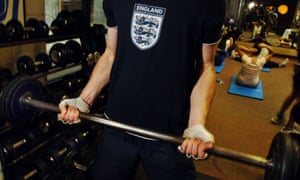
Boy lifting weights


‘I worry about making a fool of myself at the gym, so work out at home instead.’ Photograph: Linda Nylind for the Guardian

The past couple of months have been defined by diet and exercise and a will to get fit. But I also have a weird paranoia about joining a gym. I worry about making a fool of myself, so have gym equipment I use at home instead. Now, I work out pretty much every night. I’ve done hours of research on the best exercises and correct diet for muscle growth, but still don’t think I will ever be fully satisfied with the way my body looks.


William, 20, Essex: ‘Body image is a growing problem among young men’


Until my late teens I was overweight and although I am now (nominally) a normal weight for my height, I still feel fat and unattractive. I hate the way I look, whether I’m clothed or naked.


The ubiquity of internet porn has opened up a whole new world of insecurities around penis size


William


I think body image issues among young men are a growing problem. Advertising has made a big difference, for example the infamous Levi’s jeans ads that used a “perfect” male body to sell denim. Levi’s ads from the 1980s to me seem like a turning point, the first time that male sexuality and body image were used to sell us something (although practically any ad for men’s clothing or perfume now does this). These ads make me feel inadequate.


The ubiquity and extremity of internet porn has also opened up a whole new world of insecurities around penis size for men. Add that to an aggressively macho sports culture that worships strength and often denies men a chance to express their problems and you have the perfect storm for bottled-up anxiety, poor self-image and body dysphoria.


Craig, 17, Leicester: ‘Young men don’t talk about their own bodies in a negative way because they could get bullied’


I am sure a lot of men worry about their bodies, because we are expected to be muscular and some aren’t. Thinner men also think that they won’t get a date and some try to bulk up. During college years, young men always compare themselves to others and normally those who are classed as “fit” by girls.


I sometimes look at my own body and question whether it is good enough. I know I’m not as thin as I would like and I don’t have time to go to a gym (and wouldn’t because there are too many people there). I often feel embarrassed to take my top off, especially with friends because I don’t know what they will say, so I try to keep my tops a little baggy. Young men don’t talk about their own bodies in a negative way because they could get bullied, and younger men, especially, see their issues as weaknesses for others to exploit.


Mike, 19, Nottingham: ‘Young men are obsessed with body image’


I have always thought I was scrawny, that my shoulders are not broad enough and my upper arms not muscly enough. I could never go swimming or topless on a beach because I just don’t look good. I also worry that I’m not tall enough and that my skin is too pale.


Young men worry about body image every bit as much as young women do


Mike


Young men are obsessed with body image and worry about it every bit as much as young women do. Their worries can sometimes be more acute because there is so little debate about how images of “perfect” male bodies are used by the media. Whereas most girls are made aware that they are often unrealistic, there is no similar attempt to educate young men about body image. I am constantly anxious about the way I look in public: worries about being scrawny mean I can’t wear T-shirts or any close-fitting clothes. I feel uncomfortable without a jacket on to shield me, so I fear hot days when I have to leave the house without one. I also find it difficult to interact with girls without feeling like they are judging me. The way I appear feels like the most important thing in my life and one I can’t get right.


Tony, 18, Leicester: ‘My scrawny physique has led to me being called anorexic or compared to a heroin addict’


Boy staring out of window.


‘Comments about my body have made me insecure about ever taking my top off at the beach or poolside.’ Photograph: Noel Hendrickson/Getty Images

Everyone has always found great amusement at being able to form a ring around my wrists between their thumb and little finger. My scrawny physique has led to me being called anorexic, while others compare me to a heroin addict. All these comments have made me insecure about ever taking my top off at the beach or poolside. Worse still is that men often seem to size you up and then treat you accordingly. At times I feel like a non-entity. Everyone assumes that a two-seat sofa will fit three when I am one of the two already on it. Girls can be no different. They flock to the muscular men without ever giving boys my size a second glance. I am often told that it’s more a matter of confidence, but having a skinny physique means I don’t have any.


There seems to be a deficit of sensitivity in most male groups. It is always about banter and bravado. If one of us were to spontaneously open up there would be a tsunami of criticism and jokes.


  • Some names have been changed.


"A few spots cast a cloud over my day": male teens on secret body worries

21 Haziran 2014 Cumartesi

Generation Selfie may hold the secret to conserving the NHS

At a time when the NHS is struggling to survive – never mind evolve to meet the needs of a society undreamed-of at its inception – as far as Generation Selfie is concerned, if you caused your illness, you pay for your treatment. End of.


None of this bleeding-heart, touchy- feely stuff acknowledging the poverty trap or ignorance or bog-standard depression or just plain bad luck.


It might be a bit hardline, but it comes as something of a tonic after the acquired helplessness created by a broken welfare system.


As Benefits Street so deftly demonstrated, for too many people, working still doesn’t pay, despite Iain Duncan Smith’s ongoing attempts to reform the welfare state, a process he has compared with William Wilberforce’s 18th-century campaign against the slave trade; by which I take it he means, “This is going to be bloody difficult”.


But having said that, the oversimplistic “fat people should pay for their own gastric bands because they are greedy” and “alcoholics should stump up for their own liver transplants” lead to further moral judgments.


“You should have thought about the risk of skin cancer before you booked that villa in Greece”, and “You’re old, it makes more sense to spend all the resources on babies, who, let’s face it, are also cuter”, is the kneejerk response of those of an age when they, quite rightly, consider themselves immortal.


But I think I speak for everyone planning to live beyond 70 when I say we’d prefer a more compassionate National Health Service, thanks.


Shocking figures newly released by the Office for National Statistics show an abrupt rise in “lifestyle” cancers. Liver cancer leapt by 66 per cent from 2003 to 2012, cancers of the mouth are up by 48 per cent, cancer of the womb by 31 per cent and kidney cancer by 46 per cent.


While some of the increase is due to our ageing population, there is no denying that over-consumption of food and booze, cigarettes and sun exposure are doing their worst.


We’re all accustomed to the “how many units of alcohol do you drink a week?” question and the “do you smoke?” inquiry. It’s no exaggeration to say we can expect a questionnaire longer than the average A-level paper. How many pizzas do you eat a month? What’s your daily biscuit intake? Please list the destination of all holidays taken from the age of 11. Include all sun factors used and details of your working.


Can it really be so difficult to change our lifestyles in a bid to not just stay alive, but to feel alive?


Eat less, exercise more. Drink in moderation. Don’t smoke. It’s hardly rocket science, but according to the World Cancer Research Fund, around 80,000 cancer cases could be prevented in this country every year.


I hope it’s not too late for my generation, but for Generation Right, perhaps there’s an upside to their unsentimentality about the NHS.


Their sense of personal responsibility, coupled with a collective agreement that the NHS can’t and won’t fix everyone, might just be enough to prompt them to turn away from excess and choose a healthier path.


Man and mobile are one at last


Hailing, as he does, from north of the border, my husband is not given to public displays of emotion over anything but the really important stuff: Culloden, Tunnock’s teacakes, England losing to Uruguay.


So when on Thursday this week he turned to me and confirmed, misty-eyed as MacDiarmid’s Drunk Man Looking at the Thistle, that he had just undergone the biggest epiphany since the Act of Union, he meant it.


Don’t panic, he wasn’t suddenly persuaded to vote Yes in the forthcoming J  K Rowling referendum on economic disas… sorry, independence. No, on Thursday he went and got himself a mobile phone.


I say “got himself”, but I orchestrated his smartphone rite of passage by selflessly gifting him my sleek new iPhone upgrade.


It was heartbreaking (technologically speaking), but worth it just to witness the conversation in the Carphone Warehouse when my spouse strode in, brandishing a goose quill and asking to place his signature on a contract.


“How many, like, minutes do you spend on your mobile every day?” asked the assistant.


“None. I’ve never had a mobile before.”


“Yeah, but like, how many texts do you send every day?”


“None. I’ve never had a mobile before.”


“Yeah, but like, how many gigs do you use every day?”


And so on.


So he has a phone. For him, it’s Year Zero. And for me?


People, the waiting – in car parks and shops, railway stations and foreign ports, in hospitals and hotels – is finally over. I only hope it was worth it.


Give me some of what you’re on, Victoria, even if it is pink quartz


The future’s bright. In fact, the future’s glittering. Put down your entrepreurial manuals! Bin your business books! Regift that new-and-still-reproachfully-unread Thomas Piketty economics hardback!


Victoria Beckham has spoken. And what has she said? She has said she uses crystals to promote success when she stages her fashion shows.


Yes folks, pink quartz is the new black tourmaline; pop them in your handbag and fame and a photogenic family fathered by a hot husband will be yours, too. Possibly.


It’s easy to laugh. So I do. But I shouldn’t. I, too, have had recourse to the realms of the bizarre and the bonkers.


To wit: I have bought (white) witches’ herbs online and hidden them beneath my daughter’s pillow in an attempt to cure her chronic insomnia.


When faced with paralysis after an accident, my first response (after chanting a decade of the rosary) was to insist my husband contact a faith healer. Oh, and I telephoned a diviner and asked him for help in finding my lost wedding ring and my vintage Cartier watch.


And I bought a money plant in order to – well, that one speaks for itself, really. I initially kept it outdoors, where it failed to thrive in the cold. Two days after I moved it indoors, I won £1,350 worth of premium bonds. Yay! Sadly, it has since died.


I like to think all this reflects a laudable “there are more things in heaven and earth, Horatio” open-mindedness rather than out-and-out lunacy.


I’m a practising Catholic, but I still believe the Holy Ghost isn’t necessarily the only one. When we moved into our house, 11 years ago, there was a crystal hanging from a nail and I haven’t dared move it.


So Victoria, whether you are harnessing the spiritual power of pink quartz or just fiddling about with it in your expensively tailored pocket, I salute you. Or I would, if my fingers weren’t permanently crossed.


Coffee bars are not for kids


From the moment my younger daughter could reach out and grab a wooden brick, she would extend her arm right past it and strain towards my coffee mug instead.


By the time she was cruising round the furniture, her mission wasn’t to strengthen her chubby toddler legs, but to seek out and drink any cold dregs she could find.


Now aged five, she has an illicit passion for strong coffee that would put the Brazilian national team to shame. Three heaped spoonfuls of Nescafé? That’ll do nicely.


I certainly don’t let her drink coffee often. But if she could, she’d be a little caffeine junkie, while her 12-year-old sister has a crippling mocha-latta-chocca-frappuccino habit that costs £3.10 a go.


Maybe this is why I feel uncomfortable about Costa opening small coffee bars in secondary schools, even though it is my favourite of the high street chains. On the scale of stimulants, moreover, the caffeine in coffee is hardly a huge concern; there are 40mg of it in a 100g cup of filtered coffee.


That’s twice the caffeine content of 100g of brewed tea, but “energy shots” such as Ammo contain 570mg per 100g and Jolt Endurance shots have a caffeine level of 339mg per 100g.


But there’s a world of difference between sixth- formers carefully budgeting for coffee in the common room and schoolchildren splashing their (or rather our) cash on the sort of high-end, bespoke beverages most of us couldn’t have afforded in our first jobs. Possibly even our second.


There are so few pleasures that are the exclusive domain of grown-ups. Please let’s keep good coffee one of them.


Generation Selfie may hold the secret to conserving the NHS