urges etiketine sahip kayıtlar gösteriliyor. Tüm kayıtları göster

5 Mart 2017 Pazar

"Defend NHS with all your might", Corbyn urges demonstrators

Jeremy Corbyn has told tens of thousands of demonstrators to “defend the NHS with all of your might” at a protest march through central London.


Organised to warn that further funding cuts in the health service represent “a real risk to the safety of patients”, the event on Saturday sought to demand a fully and publicly funded NHS and social care services.


The Labour leader said to the crowd in Parliament Square: “The NHS is in crisis, in crisis because of the underfunding in social care and the people not getting the care and support they need.


“There are those waiting on trolleys and those who are desperate to get into an A&E department waiting hours for treatment. It is not the fault of the staff. It is the fault of a government who have made a political choice.”


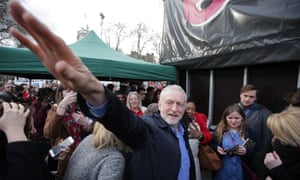
The Labour leader, Jeremy Corbyn, waves to supporters at the rally in support of the NHS in London.


The Labour leader, Jeremy Corbyn, waves to supporters at the rally in support of the NHS in London. Photograph: Daniel Leal-Olivas/AFP/Getty Images

Corbyn called for the budget to be unveiled by the chancellor, Philip Hammond, on Wednesday to properly fund the health service with an emphasis on social care and mental health services.


Ahead of the demonstration, the Green party spokesman Larry Sanders wrote in the Guardian: “The government tells us there isn’t enough money, but this isn’t true. We are the fifth-richest country in the world – we have the money to stop our health service turning into a humanitarian crisis, and to care for people when they grow old: in hospitals, the community and homes.”


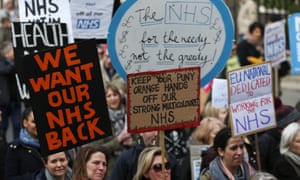
Campaigners, medical staff and members of the public who took part in the march held up homemade banners with slogans including “We want our NHS back” and “The NHS for the needy, not the greedy”.


David Wrigley, a GP from Carnforth, Lancashire, and deputy chair of the British Medical Association council, was among the frontline staff marching under the slogan “Our NHS, No Cuts, No Closures, No Privatisation”.


He said the march was a cry for help because funding cuts had put the NHS in a desperate situation.


“Patients are not getting the care they deserve. We are a country that can afford the funding that is required,” he said.


The campaigners, who say the NHS is at breaking point, hope the march will put pressure on the government ahead of next week’s budget.


Protesters march through central London to demand more funding for the NHS.


Protesters carry homemade banners during the march through central London to demand more funding for the NHS. Photograph: Neil Hall/Reuters

Wrigley said: “I guess it is also a wakeup call for Theresa May and the chancellor … we demand they fund the NHS adequately. If the budget does not bring about any further funding increase, there would be uproar.”


The junior doctor and GP trainee Dr Jeeves Wijesuriya said the demonstration was a chance for the government to plot a new course for the NHS.


Speaking on behalf of the BMA, he told the crowd: “What is sustainable about debts that can only be paid with our patients’ health and yet still won’t be settled? Where is the transformation when the money to build new hospitals and health centres is being siphoned off to pay debts?”


Felix Ramos, 53, of Hackney, east London, said: “Many people are not going to get the help they need … privatisation does not work. It is not going to care for the vulnerable.”


Support came from the Great British Bake Off presenter Sue Perkins, who tweeted: “Love and support to all those marching for the NHS today.”


Sue Perkins (@sueperkins)

Love & support to all those marching for the NHS today, with a special shoutout to KONP, West Cornwall Health Watch & the gang in Penzance.


March 4, 2017


A spokesman from the Department of Health said: “We are committed to the NHS, which is why we’re investing £10bn in its own plan for the future, including £4bn extra this year to transform services and improve standards of care.”


"Defend NHS with all your might", Corbyn urges demonstrators

30 Aralık 2016 Cuma

"Dad was an alcoholic": MP Jonathan Ashworth urges action on drinking

Childhood memories of growing up with an alcoholic father have prompted the shadow health secretary to call for greater recognition of the damage done by excessive drinking.


Jonathan Ashworth said there was a need for urgent action because the cost of alcohol-related harm was not just the £3.5bn NHS price-tag, but up to £7bn in lost productivity for the British economy.


During an interview with the Guardian, the Labour MP said he also wanted there to be much more focus on the needs of families affected by alcoholism, claiming the issue would be a priority for him and Labour in 2017.


Ashworth said he was surprised to find himself disclosing, for the first time to a national newspaper, the reason he felt so passionately about the issue.


“It’s quite personal for me, because my dad was an alcoholic,” he said, suddenly spilling out early memories of his father falling over drunkenly at the school gates and of returning home to a fridge stacked with cheap booze and no food.


Ashworth said he had never really considered his experience as something relevant in policy terms. “You didn’t think there was a problem, you just thought ‘that is the life I’ve got’,” he said.


Then he came across the work being carried out by his Labour colleague, Liam Byrne, whose childhood was affected in a similar way.


The MP’s all-party parliamentary group dedicated to the children of alcoholics has revealed that local authorities across the country tend to have no specific strategies to help young people affected in this way.


The group, which is publishing research on the issue in the new year, said that millions of children were “suffering in silence”.


Inspired by Byrne’s work, Ashworth felt he wanted to make the issue a priority in 2017. “I wanted to do something on alcoholism so that if nothing else I’ll have done something on that,” he said, before adding: “I know it’s cliched.”


As well as backing Byrne’s ideas he wants to support a phoneline run by the National Association for Children of Alcoholics to help make it a nationwide service. He also wants more specialised training for professionals to support children and for councils to be properly funded to be able to reach out to families affected by alcoholism through schools, via community nurses and in Sure Start children’s centres.


Liam Byrne


Ashworth was inspired by Labour MP Liam Byrne who has set up an all-party parliamentary group dedicated to the children of alcoholics. Photograph: Peter Macdiarmid/Getty Images

Ashworth talked about his own experience as an only child in a working-class part of north Manchester after his mother, who worked as a barmaid, and his father, a croupier in a Salford casino, divorced.


He spoke vividly about the days that he stayed with his father – whom he said he loved dearly.


“I remember him falling over when he picked me up at the school gates and we’d get home and there would be nothing in the fridge other than bottles of wine – he drank cheap horrible bottles of white wine … and cans of lager and Stone’s bitter,” said Ashworth.


“When I got to 11 or 12 then I was effectively looking after him on the weekends because he was drunk all weekend,” he said, pausing before adding: “And eventually he died.”


Ashworth recalled trying to persuade his father not to move to Thailand one Christmas. The MP said he knew in his heart it would end badly, but his father replied: “No, I’m going,” and he went.


“I never saw him again,” said the MP.


About a year later he received a call telling him to travel to the small apartment where his father had been staying. When he got there he found his bed surrounded by empty whisky bottles. “He was in Thailand for that last year drinking a bottle of whisky a day … I had to clear it up. That was my life. He was 60.”


Ashworth said his father, also called Jon, had not been offered formal help, although he himself had tried to raise the issue of his drinking as an adult. He said his dad thought he was OK because he didn’t touch alcohol during his working hours. “But as a child I didn’t see him at work,” he said.


Ashworth, who was politically active for the Labour party from the age of 15, through college and on into a job advising Gordon Brown, said the experience with his dad left him feeling “not damaged but determined”.


The MP for LeicesterSouth – who was promoted to shadow health secretary by Jeremy Corbyn after his second victory in a leadership contest – now feels he has an opportunity to take action.


As well as the work he outlined with charities and councils, he believes that part of the solution must also be a cultural drive to have alcoholism taken more seriously. Ashworth recalled how “people used to think it was funny – a right laugh” that his dad was a drinker.


He remembered his father in goal in the work football team and people pointing off the pitch and shouting: “Oh Jon Ash is in goal – just throw a crate of Stella in that direction and he’ll go after that.”


“And I was like ‘oh yeah that’s funny’, but actually that was my dad and for my teenage years I was looking after him. It just became a norm. I had to grow up very fast.”


But he is not just concerned about alcohol. “Public health has been cut back by the Tories but they are storing up huge problems,” he said. “Obesity is a huge problem that costs the NHS billions. The debate on obesity and diabetes hasn’t punched through.”


Ashworth said there were lessons to be learned from the bold action to ban smoking in public places, which had a massive impact. He called for much more direct action on poor diet.


“I think we have to be bold about what we say to the advertising industry – not just with kids programmes but families sitting down watching The X Factor. Think of the hundreds of thousands of calories being advertised this winter in the run-up to Christmas,” said Ashworth, arguing that fast food and supermarkets selling “tasty treats” were all over family viewing times.


“The government watered this down. There were going to be stricter restrictions on the industry, [David] Cameron was going to go for it and the story is that Theresa May got her red pen out and cut it out. I think we have got to be bold.”


"Dad was an alcoholic": MP Jonathan Ashworth urges action on drinking

"Dad was an alcoholic": MP Jonathan Ashworth urges action on drinking

Childhood memories of growing up with an alcoholic father have prompted the shadow health secretary to call for greater recognition of the damage done by excessive drinking.


Jonathan Ashworth said there was a need for urgent action because the cost of alcohol-related harm was not just the £3.5bn NHS price-tag, but up to £7bn in lost productivity for the British economy.


During an interview with the Guardian, the Labour MP said he also wanted there to be much more focus on the needs of families affected by alcoholism, claiming the issue would be a priority for him and Labour in 2017.


Ashworth said he was surprised to find himself disclosing, for the first time to a national newspaper, the reason he felt so passionately about the issue.


“It’s quite personal for me, because my dad was an alcoholic,” he said, suddenly spilling out early memories of his father falling over drunkenly at the school gates and of returning home to a fridge stacked with cheap booze and no food.


Ashworth said he had never really considered his experience as something relevant in policy terms. “You didn’t think there was a problem, you just thought ‘that is the life I’ve got’,” he said.


Then he came across the work being carried out by his Labour colleague, Liam Byrne, whose childhood was affected in a similar way.


The MP’s all-party parliamentary group dedicated to the children of alcoholics has revealed that local authorities across the country tend to have no specific strategies to help young people affected in this way.


The group, which is publishing research on the issue in the new year, said that millions of children were “suffering in silence”.


Inspired by Byrne’s work, Ashworth felt he wanted to make the issue a priority in 2017. “I wanted to do something on alcoholism so that if nothing else I’ll have done something on that,” he said, before adding: “I know it’s cliched.”


As well as backing Byrne’s ideas he wants to support a phoneline run by the National Association for Children of Alcoholics to help make it a nationwide service. He also wants more specialised training for professionals to support children and for councils to be properly funded to be able to reach out to families affected by alcoholism through schools, via community nurses and in Sure Start children’s centres.


Liam Byrne


Ashworth was inspired by Labour MP Liam Byrne who has set up an all-party parliamentary group dedicated to the children of alcoholics. Photograph: Peter Macdiarmid/Getty Images

Ashworth talked about his own experience as an only child in a working-class part of north Manchester after his mother, who worked as a barmaid, and his father, a croupier in a Salford casino, divorced.


He spoke vividly about the days that he stayed with his father – whom he said he loved dearly.


“I remember him falling over when he picked me up at the school gates and we’d get home and there would be nothing in the fridge other than bottles of wine – he drank cheap horrible bottles of white wine … and cans of lager and Stone’s bitter,” said Ashworth.


“When I got to 11 or 12 then I was effectively looking after him on the weekends because he was drunk all weekend,” he said, pausing before adding: “And eventually he died.”


Ashworth recalled trying to persuade his father not to move to Thailand one Christmas. The MP said he knew in his heart it would end badly, but his father replied: “No, I’m going,” and he went.


“I never saw him again,” said the MP.


About a year later he received a call telling him to travel to the small apartment where his father had been staying. When he got there he found his bed surrounded by empty whisky bottles. “He was in Thailand for that last year drinking a bottle of whisky a day … I had to clear it up. That was my life. He was 60.”


Ashworth said his father, also called Jon, had not been offered formal help, although he himself had tried to raise the issue of his drinking as an adult. He said his dad thought he was OK because he didn’t touch alcohol during his working hours. “But as a child I didn’t see him at work,” he said.


Ashworth, who was politically active for the Labour party from the age of 15, through college and on into a job advising Gordon Brown, said the experience with his dad left him feeling “not damaged but determined”.


The MP for LeicesterSouth – who was promoted to shadow health secretary by Jeremy Corbyn after his second victory in a leadership contest – now feels he has an opportunity to take action.


As well as the work he outlined with charities and councils, he believes that part of the solution must also be a cultural drive to have alcoholism taken more seriously. Ashworth recalled how “people used to think it was funny – a right laugh” that his dad was a drinker.


He remembered his father in goal in the work football team and people pointing off the pitch and shouting: “Oh Jon Ash is in goal – just throw a crate of Stella in that direction and he’ll go after that.”


“And I was like ‘oh yeah that’s funny’, but actually that was my dad and for my teenage years I was looking after him. It just became a norm. I had to grow up very fast.”


But he is not just concerned about alcohol. “Public health has been cut back by the Tories but they are storing up huge problems,” he said. “Obesity is a huge problem that costs the NHS billions. The debate on obesity and diabetes hasn’t punched through.”


Ashworth said there were lessons to be learned from the bold action to ban smoking in public places, which had a massive impact. He called for much more direct action on poor diet.


“I think we have to be bold about what we say to the advertising industry – not just with kids programmes but families sitting down watching The X Factor. Think of the hundreds of thousands of calories being advertised this winter in the run-up to Christmas,” said Ashworth, arguing that fast food and supermarkets selling “tasty treats” were all over family viewing times.


“The government watered this down. There were going to be stricter restrictions on the industry, [David] Cameron was going to go for it and the story is that Theresa May got her red pen out and cut it out. I think we have got to be bold.”


"Dad was an alcoholic": MP Jonathan Ashworth urges action on drinking

7 Kasım 2016 Pazartesi

Tax meat and dairy to cut emissions and save lives, study urges

Climate taxes on meat and milk would lead to huge and vital cuts in carbon emissions as well as saving half a million lives a year via healthier diets, according to the first global analysis of the issue.


Surcharges of 40% on beef and 20% on milk would account for the damage their production causes people via climate change, an Oxford University team has calculated. These taxes would then deter people from consuming as much of these foods, reducing both emissions and illness, the team said.


Food production causes a quarter of all the greenhouse gas emissions that are driving global warming, largely from the raising of cattle and other livestock. These emissions are increasing as people around the world become richer and eat more meat.


Marco Springmann, from the Oxford Martin Programme on the Future of Food, who led the study, said: “It is clear that if we don’t do something about the emissions from our food system, we have no chance of limiting climate change below 2C.


“But if you’d have to pay 40% more for your steak, you might choose to have it once a week instead of twice.”


Meat and dairy tax

The research, published in the journal Nature Climate Change, evaluated the tax required for each food type to compensate for the climate damage its production causes. Beef has a heavy footprint, due to the deforestation and methane emissions associated with cattle and the grains they are fed, and needed a 40% tax on average across the world.


The scientists then assessed how much less of each food type would be eaten as a result of the taxes. They examined different tax regimes and found the optimum arrangement in terms of both emissions and health was to combine the taxes with subsidies for healthy foods, such as fruit and vegetables, and payments to people to compensate for price increases. This ensured poorer people did not end up with worse diets as the result of taxation.


This optimum tax plan would reduce climate emissions by 1 billion tonnes a year – the same as the entire global aviation industry. This huge potential cut in emissions surprised Springmann, as did the heavy impact of dairy products.


Changes to how food is produced and consumed have largely been ignored in the battle against climate change, due to public sensitivity about their food choices, fears about increasing hunger in poorer parts of the world and the lack of straightforward measures to tackle the problem.


“If people see any food price rise, they get angry, so you have to explain why you are doing it,” said Springmann, adding that a successful food tax policy could spend all the money it raised on ensuring people could afford healthier diets. He said a tax in Denmark on unhealthy saturated fats, where the government simply kept all the revenue, was aborted after a year. But in Mexico, a sugar tax on soft drinks has been successful after the funds were spent on free drinking water in schools.


Most of the foods with big climate impacts also happen to be unhealthy when eaten in large quantities, such as beef and dairy. Therefore, if climate taxes cut consumption, fewer people would die from related diseases such as heart disease, strokes and cancers. In the US, for example, people eat three times the recommended level of meat. The researchers found climate taxes would save more than half a million early deaths every year, largely in Europe, the US, Australia and China.


However, cutting the demand for meat and dairy would not be easy, said Rob Bailey, research director at UK thinktank Chatham House: “The challenge is political. As the new research demonstrates, in many countries there is a very strong public health and climate case for dietary change, but it isn’t happening. Governments are reluctant to ‘interfere’ in people’s lifestyle choices for fear of a public backlash and criticism for ‘nanny statism’, as well as the reaction from powerful interests in the food industry and agricultural lobby.”


Bailey said there was currently little pressure on governments to act, partly because the public understanding of the link between diet and climate change is low. But, when people are informed, they find meat taxes far less unpalatable than is supposed, he said.


Calls to cut meat-eating, by the UN and high-profile figures including climate change experts and the economist Lord Stern, have so far been both rare and controversial.


The new research found the taxes needed to compensate for climate damage were 15% on lamb, 8.5% on chicken, 7% on pork and 5% on eggs. Vegetable oil required a large tax of 25%, but this was due to the low initial price of the product, making a relatively modest surcharge look high.


These tax levels were global averages but there was significant variation with, for example, the beef tax being higher in Latin America, where cattle-raising produces more emissions than in other regions. The optimum tax plan also had regional variations, including limiting climate taxes to beef in the lowest income countries, to ensure people there were still able to afford decent diets.


Springmann said it was critical to find a way to cut the environmental impact of food production: “Either we have climate change and more heart disease, diabetes and obesity, or we do something about the food system.”


Tax meat and dairy to cut emissions and save lives, study urges

15 Eylül 2016 Perşembe

Stephen Hawking urges inquiry into Hunt"s NHS patient death claims

Stephen Hawking, Lord Winston and a number of senior doctors are urging the prime minister, Theresa May, to hold an inquiry into Jeremy Hunt’s controversial claim that 11,000 patient deaths a year are caused by a lack of medics on duty in hospitals at weekends.


Their plea comes in a letter to the Guardian that claims the health secretary has caused a “devastating breakdown of trust between government and the medical profession” by misrepresenting the evidence on the “weekend effect”.


Hunt has come under fire since he began maintaining last year that “there are 11,000 excess deaths because we do not staff our hospitals properly at weekends”. Critics, including the British Medical Journal, have rejected his claim and accused him of highly selective use of complex evidence about the higher number of patients who die within 30 days of being admitted to hospital on a weekend.


The letter is a significant new challenge to Hunt’s integrity over the weekend effect – higher mortality among those admitted on a Saturday or Sunday – and what lies behind it.


Its authors want the prime minister to order an independent inquiry into the process behind the definition and claims of a weekend effect. They say there is so much disagreement about the evidence underpinning the weekend effect that ministers should pause the new junior doctors’ contract and the push to create “a truly seven-day NHS”.


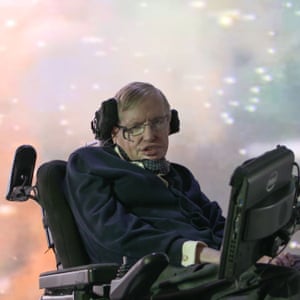
Physicist Stephen Hawking.


Physicist Stephen Hawking. Photograph: National Geographic Channels/Pau

Hunt’s assertion of a weekend effect due to understaffing is important politically because he has consistently used it to justify imposing the unpopular new contract on England’s 54,000 NHS junior doctors and the government’s push to make more NHS services in England available at weekends. The latter was a key Conservative pledge in last year’s general election campaign.


Other signatories to the letter include: Trish Greenhalgh, a professor at Oxford University specialising in evidence-based medicine; Prof Neena Modi, president of the Royal College of Paediatrics and Child Health; and Prof Alistair Hall, a cardiologist and epidemiologist at the Leeds teaching hospitals NHS trust.


They accuse Hunt of wasting NHS resources by forcing it to expand to a much fuller seven-day service on the basis of “bad evidence”, and of ignoring findings that challenge his thesis and misleading MPs and the general public.


“It is wrong to waste precious resources, or lives, because of bad evidence. Like NHS treatments, health policy should be evidence-based to demonstrate clinical and cost-effectiveness,” they write.


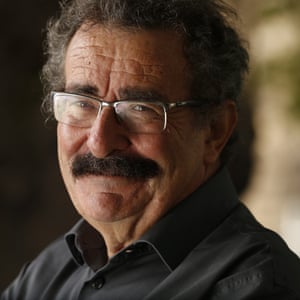
Scientist Lord Robert Winston.


Scientist Lord Winston. Photograph: Murdo Macleod for the Guardian

“Hunt has cherrypicked research, causing a devastating breakdown of trust between government and the medical profession. In making these claims without faithfully representing the evidence, he has obstructed fact and misled parliament and the public,” they add.


Other signatories include: Dr Margaret McCartney, a prominent GP and an author, columnist and broadcaster on medical matters; Dr Phil Hammond, vice-president of the Patients Association; and several prominent junior doctors.


The doctors dispute specifically Hunt’s claim that eight research studies back up his concern that a lack of medics in hospitals at weekends is leading to large numbers of avoidable patient deaths.


The authors of the letter also want the prime minister to halt “any policies or contractual reform driven by this evidence until it can be examined objectively and with rigour”.


Prof Julian Bion, an expert in the weekend effect at Birmingham University, said that the High-Intensity Specialist-Led Acute Care project, which he has been leading since 2014, is undertaking the sort of inquiry that the letters writers seek.


While not disputing the existence of a weekend effect, Bion said the causes of it were “multifactorial” and not simply due to too few doctors being on duty. “There is evidence that patients admitted at weekends are sicker and the weekend effect may therefore have a ‘community dimension’,” he added. “The causes may include [the availability or not and quality of] community and social care as much as hospital care.”


Paul Aylin, another expert in weekend-related mortality and a professor at Imperial College London, said there were many “studies out there of varying quality, and people therefore have plenty to pick from to support their side of the argument”. But international evidence showed a weekend effect in patients who had a gastrointestinal haemorrhage, stroke, heart attack, arrhythmia or cardiac arrest, but not in neonatal deaths, he said.


A Department of Health spokesman rejected the authors’ concerns. “Over the past six years, we have been presented with clear independent evidence of variation in care across the weekend – this government makes no apology for tackling the issue, to build a safer seven-day NHS for patients,” he said.


“Further peer-reviewed evidence is emerging all the time, including the authoritative 2015 Freemantle report, which confirmed previous evidence of a weekend effect.”


Stephen Hawking urges inquiry into Hunt"s NHS patient death claims

26 Ağustos 2016 Cuma

Harvard Scientist Urges People To Stop Drinking Low Fat Milk

Low fat dairy might seem like the ideal choice to retain in your diet, but it’s far from being the healthy option. A Harvard scientist, David Ludwig, is urging individuals to be aware of the dangers of low fat milk. He claims it is better to go back to the full-bodied variety, and here are the reasons why.


Obesity


There’s word going around that full-fat milk can make you gain weight – which is why a lot of people are going for ‘skim-slim’ milk. Studies show, however, that this is not true. There’s actually a benefit in using full-fat milk in that those who consume full-fat often have an easier time maintaining their weight.


Heart Problems


Full-fat milk also contains a healthy dose of phytanic acid, which helps maintain insulin levels and blood pressure. There’s also conjugated linolic acid in the milk known for reducing the risks of diabetes, cancer, and heart disease. Consume this on a daily basis and you’ll be able to lower the risks of these 4 common health issues all at once.


Special Vitamins


Some vitamins and minerals are hard to come by in a person’s typical diet. These include retinol and vitamin K2 which are known as fat-soluble vitamins. They’re available through full-fat milk though, and should make your diet more comprehensive.


Dental Health


When it comes to healthier teeth and gums, milk is often a cited ‘must’ in your diet. Unfortunately, teeth health is only benefited through full-fat milk.


Drinking the skim variety won’t really give you any type of benefit. At least nowhere near what full-fat can provide. If you’re partial to low-fat chocolate milk, that actually makes things worse. The blended variety already contains loads of sugar which would only promote tooth decay.


What About Calcium?


There’s no question that both skim milk and full-fat milk contain calcium for better bone health. Hence, if you’re drinking milk primarily for this purpose, then the need to ‘switch’ may not be as prevalent. Bear in mind, however, that calcium is a relatively common mineral in various types of food.


Green and leafy vegetables are packed with calcium in amounts definitely higher than milk. The unique properties of full-fat however, are better than skim milk and should be taken into account, and if you’re going to drink one, it makes sense to choose the type that offers more with each gulp.


Saturated Fats


It’s a common mistake to think that ‘full fat’ as written in milk is the same as the ‘fat’ that’s attached to the body. They’re two completely different things and saturated fats which can be found in full-fat milk are actually desirable.


Replacing saturated fats with ‘alternatives’ can lead to various problems such as increased instances of obesity, lower amounts of good cholesterol, increased bad cholesterol, and increased chances of coronary heart disease.


So when scientists talk about the benefits of milk, they’re actually talking about the full-fat variety. Simply put, the dangers of low fat dairy involve doing yourself out of numerous vitamins and minerals. Bear in mind though that ‘low fat’ isn’t limited to milk as there are also cheese products advertised under the same label.


Sources: Real Farmacy, Chris Kresser, and Jama Network.


If you enjoyed reading this post, don’t forget to connect with me on Facebook or Google+ or download my FREE Book “Amy’s Home Kitchen”, packed with my family’s favorite healthy, clean and delicious recipes. 


Looking for a way to live a healthy lifestyle while eating delicious, colorful meals and losing or maintaining weight the healthy way? Click here for more info


Harvard Scientist Urges People To Stop Drinking Low Fat Milk

24 Ocak 2015 Cumartesi

Video urges health-related college students to become family medical professionals

Alongside the video, which demonstrates the varied position a GP plays in health care practice with some even doing work on cruise ships or in prisons, the RCGP will up coming week launch a series of regional recruitment roadshows.


The East Midlands, North West, North East of England and Yorkshire and Humber are some of the areas with the biggest shortage of GPs across the Uk.


Dr Maureen Baker, the RCGP chairman, who final year wrote to health care college students urging them to take into account a job in general practice, explained there is a “media perception” that GPs have a significantly less fascinating job than those who operate in other places this kind of as emergency medicine.


Dr Baker explained: “This video – and the GPs who seem in it – present that nothing at all could be even more from the reality.


“Getting a GP is thrilling, varied and challenging, as properly as currently being the only function in the NHS that delivers care for the entire person over their lifetime.


“GPs are now doing procedures each and every day in our consultation rooms that a decade ago would immediately have been referred to hospital professionals.


“We hope the video will attain out to the medical students and trainee medical professionals who are thinking about the direction of their future careers and demonstrate them what a brilliant occupation basic practice actually is.”


While Dr Baker mentioned the profession has been hit by many years of funding cuts, she added that GPs will play a enormous component in the future of the NHS and a get in touch with has been created to improve its share of the wellness service price range by almost 3 per cent to 11 per cent by 2017.


Dr Baker explained: “After years of under-investment in general practice and the emphasis on hospital care, there is now a actual push for much more resources into standard practice and to create up the GP workforce.


“We are turning the tide on funding for standard practice, with pledges from politicians across the United kingdom that it is time to reinvigorate standard practice, in order to provide large quality and price-efficient care to our patients in the neighborhood.


“The potential of the NHS lies not in hospitals but in general practice. With more investment and far more medical professionals, we can decrease waiting occasions for GP appointments and provide a lot more care for patients closer to home, where they want it most.”


Dr Daniel Poulter, the wellness minister, stated: “We previously have 1,000 a lot more GPs given that September 2010 and growing trainees so that GP numbers carry on to expand more rapidly than the population. We have also set out clear programs to train five,000 more GPs by 2020.”


Dr Clare Taylor from the RCGP mentioned the causes why much more healthcare students are not picking to specialise in general practice are not understood fully, but stated portion of it is to do with the exposure they get at health-related schools to hospital specialities – as effectively as Television displays.


Speaking to Sky News she stated: “I consider some of the dramas on tv can portray hospital medicine perhaps in a slightly much more glamorised light.”


Dr Taylor explained it is a “amazing occupation”, including: “I consider all of us would really, really like far more time with our individuals, and to be capable to supply even a lot more services. And the only way we’re going to do that is to have far more individuals coming in.”


Video urges health-related college students to become family medical professionals

17 Temmuz 2014 Perşembe

Edward Snowden urges professionals to encrypt client communications

Hyperlink to video: Edward Snowden: ‘If I end up in chains in Guantánamo I can reside with that’


The NSA whistleblower, Edward Snowden, has urged attorneys, journalists, medical professionals, accountants, priests and other people with a duty to shield confidentiality to improve security in the wake of the spy surveillance revelations.


Snowden said professionals have been failing in their obligations to their clients, sources, patients and parishioners in what he described as a new and challenging planet.


“What final year’s revelations showed us was irrefutable proof that unencrypted communications on the world wide web are no longer secure. Any communications should be encrypted by default,” he explained.


The response of specialist bodies has so far been patchy.


A minister at the Home Workplace in London, James Brokenshire, said during a Commons debate about a new surveillance bill on Tuesday that a code of practice to safeguard legal professional privilege and other individuals requiring skilled secrecy was underneath overview.


Snowden’s plea for the professions to tighten safety came throughout an comprehensive and revealing interview with the Guardian in Moscow.


The former National Safety Agency and CIA laptop professional, needed by the US under the Espionage Act after leaking tens of 1000′s of leading secret paperwork, has offered only a handful of interviews given that looking for temporary asylum in Russia a 12 months ago.


Edward Snowden during his interview with Guardian editor Alan Rusbridger and reporter Ewen MacAskill Edward Snowden for the duration of his interview with the Guardian in Moscow. Photograph: Alan Rusbridger for the Guardian


In the course of the seven hrs of interview, Snowden:


• Said if he ended up in US detention in Guantánamo Bay he could live with it.


• Presented rare glimpses into his daily life in Russia, insisting that, contrary to reports that he is depressed, he is not unhappy and does not have any regrets. He rejected numerous conspiracy theories surrounding him, describing as “bullshit” recommendations he is a Russian spy.


• Explained that, contrary to a declare he performs for a Russian organisation, he was independently secure, residing on financial savings, and funds from awards and speeches he has delivered on-line round the globe.


• Made a startling claim that a culture exists inside the NSA in which, in the course of surveillance, nude images picked up of individuals in “sexually compromising” scenarios are routinely passed close to.


• Spoke at length about his future, which looks destined to be invested in Russia for the foreseeable future after expressing disappointment more than the failure of western European governments to offer you him a residence.


• Said he was holding out for a jury trial in the US rather a judge-only one, hopeful that it would be challenging to find twelve jurors who would convict him if he was charged with an offence to which there was a public interest defence. Negotiations with the US government on a return to his nation appear to be stalled.


Snowden, who recognises he is virtually certainly stored beneath surveillance by the Russians and the US, met the Guardian at a hotel within strolling distance of Red Square.


The 31-12 months-previous revealed that he performs on the web late into the evening a solitary, digital existence not that dissimilar to his earlier lifestyle.


He mentioned he was using component of that time to function on the new focus for his technical abilities, developing encryption tools to aid specialists such as journalists shield sources and data. He is negotiating foundation funding for the undertaking, a contribution to addressing the problem of professions wanting to defend client or patient data, and in this situation journalistic sources.


“An unfortunate side effect of the advancement of all these new surveillance technologies is that the perform of journalism has grow to be immeasurably tougher than it ever has been in the previous,” Snowden stated.


“Journalists have to be especially aware about any type of network signalling, any kind of connection, any type of licence-plate reading through device that they pass on their way to a meeting level, any area they use their credit card, any spot they consider their cellphone, any e mail get in touch with they have with the supply simply because that very very first speak to, prior to encrypted communications are established, is adequate to give it all away.”


Journalists had to guarantee they manufactured not a single blunder or they would be placing sources at threat. The exact same duty applied to other professions, he mentioned, calling for instruction and new requirements “to make confident that we have mechanisms to ensure that the regular member of our society can have a affordable measure of faith in the expertise of all the members of these professions.”


He added: “If we confess anything to our priest within a church that would be personal, but is it any distinct if we send our pastor a private email confessing a crisis that we have in our daily life?”


The response of professional bodies in the United kingdom to the challenge varies, ranging from calls for legislative alterations to develop in protection from snooping, to apparent lack of concern.


Ross Anderson, professor of safety engineering at Cambridge University, explained he shared Snowden’s concerns about the vulnerability of the professions to surveillance by spy and law enforcement agencies.


“If you consider your HIV standing is secret from GCHQ, fail to remember it,” he mentioned. “The equipment are obtainable to shield information and communications but only if you are critical sufficient for your doctor or lawyer to care.”


Timothy Hill, technology policy adviser at the Law Society, which represents United kingdom lawyers, said the profession was concerned.


“Legal expert privilege – the proper to seek advice from a legal adviser in self-assurance – is a long established frequent law right. Its fundamental role in our legal technique demands to be reasserted.”


The society is pressing to have current legislation rewritten to consist of explicit safety for legal specialist privilege from government surveillance.


“There requirements to be a debate about the implications of the Snowden revelations for professional privilege in the digital age,” Hill stated. “It is not happening. This is not being debated in parliament.”


He mentioned the society was searching for to strengthen law firms’ cybersecurity awareness but that a more powerful statutory framework was crucial.


Michelle Stanistreet, the National Union of Journalists general secretary, echoed the concerns. “For democracy to perform, it requirements to have a free press and journalists who are capable to do their task without worry or hindrance. But this is turning into more and more below threat.”


She extra: “Last year’s revelations demonstrate that unencrypted communications can indicate that journalists might be unwittingly handing in excess of their contacts, footage or materials, towards their will.”


The Standard Healthcare Council offers guidance to Uk medical professionals about safeguarding data towards improper disclosure.


Niall Dickson, the GMC chief executive, said: “Modern day communication provides massive rewards for patients in terms of study, accessibility to specialists, as effectively as speed of care and therapy. But of program it also carries chance, and confidentiality and trust are at the heart of the medical doctor-patient partnership.


“We recognise that maintaining up with advances in technological innovation and its implications for confidentiality are tough for all healthcare specialists. We do have guidance which explains what physicians need to have to do if they are concerned about the safety of private details or systems they have been offered to use. But in this quickly altering spot, we also want to preserve on leading of this ourselves, and we do regularly overview our advice to get account of changes in the external environment.”


Edward Snowden urges professionals to encrypt client communications
Edward Snowden urges professionals to encrypt client communications

Link to video: Edward Snowden: ‘If I end up in chains in Guantánamo I can live with that’


The NSA whistleblower, Edward Snowden, has urged lawyers, journalists, doctors, accountants, priests and others with a duty to protect confidentiality to upgrade security in the wake of the spy surveillance revelations.


Snowden said professionals were failing in their obligations to their clients, sources, patients and parishioners in what he described as a new and challenging world.


“What last year’s revelations showed us was irrefutable evidence that unencrypted communications on the internet are no longer safe. Any communications should be encrypted by default,” he said.


The response of professional bodies has so far been patchy.


A minister at the Home Office in London, James Brokenshire, said during a Commons debate about a new surveillance bill on Tuesday that a code of practice to protect legal professional privilege and others requiring professional secrecy was under review.


Snowden’s plea for the professions to tighten security came during an extensive and revealing interview with the Guardian in Moscow.


The former National Security Agency and CIA computer specialist, wanted by the US under the Espionage Act after leaking tens of thousands of top secret documents, has given only a handful of interviews since seeking temporary asylum in Russia a year ago.


Edward Snowden during his interview with Guardian editor Alan Rusbridger and reporter Ewen MacAskill Edward Snowden during his interview with the Guardian in Moscow. Photograph: Alan Rusbridger for the Guardian


During the seven hours of interview, Snowden:


• Said if he ended up in US detention in Guantánamo Bay he could live with it.


• Offered rare glimpses into his daily life in Russia, insisting that, contrary to reports that he is depressed, he is not sad and does not have any regrets. He rejected various conspiracy theories surrounding him, describing as “bullshit” suggestions he is a Russian spy.


• Said that, contrary to a claim he works for a Russian organisation, he was independently secure, living on savings, and money from awards and speeches he has delivered online round the world.


• Made a startling claim that a culture exists within the NSA in which, during surveillance, nude photographs picked up of people in “sexually compromising” situations are routinely passed around.


• Spoke at length about his future, which seems destined to be spent in Russia for the foreseeable future after expressing disappointment over the failure of western European governments to offer him a home.


• Said he was holding out for a jury trial in the US rather a judge-only one, hopeful that it would be hard to find 12 jurors who would convict him if he was charged with an offence to which there was a public interest defence. Negotiations with the US government on a return to his country appear to be stalled.


Snowden, who recognises he is almost certainly kept under surveillance by the Russians and the US, met the Guardian at a hotel within walking distance of Red Square.


The 31-year-old revealed that he works online late into the night; a solitary, digital existence not that dissimilar to his earlier life.


He said he was using part of that time to work on the new focus for his technical skills, designing encryption tools to help professionals such as journalists protect sources and data. He is negotiating foundation funding for the project, a contribution to addressing the problem of professions wanting to protect client or patient data, and in this case journalistic sources.


“An unfortunate side effect of the development of all these new surveillance technologies is that the work of journalism has become immeasurably harder than it ever has been in the past,” Snowden said.


“Journalists have to be particularly conscious about any sort of network signalling, any sort of connection, any sort of licence-plate reading device that they pass on their way to a meeting point, any place they use their credit card, any place they take their phone, any email contact they have with the source because that very first contact, before encrypted communications are established, is enough to give it all away.”


Journalists had to ensure they made not a single mistake or they would be placing sources at risk. The same duty applied to other professions, he said, calling for training and new standards “to make sure that we have mechanisms to ensure that the average member of our society can have a reasonable measure of faith in the skills of all the members of these professions.”


He added: “If we confess something to our priest inside a church that would be private, but is it any different if we send our pastor a private email confessing a crisis that we have in our life?”


The response of professional bodies in the UK to the challenge varies, ranging from calls for legislative changes to build in protection from snooping, to apparent lack of concern.


Ross Anderson, professor of security engineering at Cambridge University, said he shared Snowden’s concerns about the vulnerability of the professions to surveillance by spy and law enforcement agencies.


“If you think your HIV status is secret from GCHQ, forget it,” he said. “The tools are available to protect data and communications but only if you are important enough for your doctor or lawyer to care.”


Timothy Hill, technology policy adviser at the Law Society, which represents UK lawyers, said the profession was concerned.


“Legal professional privilege – the right to consult a legal adviser in confidence – is a long established common law right. Its fundamental role in our legal system needs to be reasserted.”


The society is pressing to have existing legislation rewritten to include explicit protection for legal professional privilege from government surveillance.


“There needs to be a debate about the implications of the Snowden revelations for professional privilege in the digital age,” Hill said. “It is not happening. This is not being debated in parliament.”


He said the society was seeking to strengthen law firms’ cybersecurity awareness but that a stronger statutory framework was essential.


Michelle Stanistreet, the National Union of Journalists general secretary, echoed the concerns. “For democracy to function, it needs to have a free press and journalists who are able to do their job without fear or hindrance. But this is becoming increasingly under threat.”


She added: “Last year’s revelations show that unencrypted communications can mean that journalists may be unwittingly handing over their contacts, footage or material, against their will.”


The General Medical Council provides guidance to UK doctors about protecting information against improper disclosure.


Niall Dickson, the GMC chief executive, said: “Modern communication offers huge benefits for patients in terms of research, access to professionals, as well as speed of care and treatment. But of course it also carries risk, and confidentiality and trust are at the heart of the doctor-patient relationship.


“We recognise that keeping up with advances in technology and its implications for confidentiality are challenging for all healthcare professionals. We do have guidance which explains what doctors need to do if they are concerned about the security of personal information or systems they have been given to use. But in this rapidly changing area, we also need to keep on top of this ourselves, and we do regularly review our guidance to take account of changes in the external environment.”


Edward Snowden urges professionals to encrypt client communications
Edward Snowden urges professionals to encrypt client communications

Link to video: Edward Snowden: ‘If I end up in chains in Guantánamo I can live with that’


The NSA whistleblower, Edward Snowden, has urged lawyers, journalists, doctors, accountants, priests and others with a duty to protect confidentiality to upgrade security in the wake of the spy surveillance revelations.


Snowden said professionals were failing in their obligations to their clients, sources, patients and parishioners in what he described as a new and challenging world.


“What last year’s revelations showed us was irrefutable evidence that unencrypted communications on the internet are no longer safe. Any communications should be encrypted by default,” he said.


The response of professional bodies has so far been patchy.


A minister at the Home Office in London, James Brokenshire, said during a Commons debate about a new surveillance bill on Tuesday that a code of practice to protect legal professional privilege and others requiring professional secrecy was under review.


Snowden’s plea for the professions to tighten security came during an extensive and revealing interview with the Guardian in Moscow.


The former National Security Agency and CIA computer specialist, wanted by the US under the Espionage Act after leaking tens of thousands of top secret documents, has given only a handful of interviews since seeking temporary asylum in Russia a year ago.


Edward Snowden during his interview with Guardian editor Alan Rusbridger and reporter Ewen MacAskill Edward Snowden during his interview with the Guardian in Moscow. Photograph: Alan Rusbridger for the Guardian


During the seven hours of interview, Snowden:


• Said if he ended up in US detention in Guantánamo Bay he could live with it.


• Offered rare glimpses into his daily life in Russia, insisting that, contrary to reports that he is depressed, he is not sad and does not have any regrets. He rejected various conspiracy theories surrounding him, describing as “bullshit” suggestions he is a Russian spy.


• Said that, contrary to a claim he works for a Russian organisation, he was independently secure, living on savings, and money from awards and speeches he has delivered online round the world.


• Made a startling claim that a culture exists within the NSA in which, during surveillance, nude photographs picked up of people in “sexually compromising” situations are routinely passed around.


• Spoke at length about his future, which seems destined to be spent in Russia for the foreseeable future after expressing disappointment over the failure of western European governments to offer him a home.


• Said he was holding out for a jury trial in the US rather a judge-only one, hopeful that it would be hard to find 12 jurors who would convict him if he was charged with an offence to which there was a public interest defence. Negotiations with the US government on a return to his country appear to be stalled.


Snowden, who recognises he is almost certainly kept under surveillance by the Russians and the US, met the Guardian at a hotel within walking distance of Red Square.


The 31-year-old revealed that he works online late into the night; a solitary, digital existence not that dissimilar to his earlier life.


He said he was using part of that time to work on the new focus for his technical skills, designing encryption tools to help professionals such as journalists protect sources and data. He is negotiating foundation funding for the project, a contribution to addressing the problem of professions wanting to protect client or patient data, and in this case journalistic sources.


“An unfortunate side effect of the development of all these new surveillance technologies is that the work of journalism has become immeasurably harder than it ever has been in the past,” Snowden said.


“Journalists have to be particularly conscious about any sort of network signalling, any sort of connection, any sort of licence-plate reading device that they pass on their way to a meeting point, any place they use their credit card, any place they take their phone, any email contact they have with the source because that very first contact, before encrypted communications are established, is enough to give it all away.”


Journalists had to ensure they made not a single mistake or they would be placing sources at risk. The same duty applied to other professions, he said, calling for training and new standards “to make sure that we have mechanisms to ensure that the average member of our society can have a reasonable measure of faith in the skills of all the members of these professions.”


He added: “If we confess something to our priest inside a church that would be private, but is it any different if we send our pastor a private email confessing a crisis that we have in our life?”


The response of professional bodies in the UK to the challenge varies, ranging from calls for legislative changes to build in protection from snooping, to apparent lack of concern.


Ross Anderson, professor of security engineering at Cambridge University, said he shared Snowden’s concerns about the vulnerability of the professions to surveillance by spy and law enforcement agencies.


“If you think your HIV status is secret from GCHQ, forget it,” he said. “The tools are available to protect data and communications but only if you are important enough for your doctor or lawyer to care.”


Timothy Hill, technology policy adviser at the Law Society, which represents UK lawyers, said the profession was concerned.


“Legal professional privilege – the right to consult a legal adviser in confidence – is a long established common law right. Its fundamental role in our legal system needs to be reasserted.”


The society is pressing to have existing legislation rewritten to include explicit protection for legal professional privilege from government surveillance.


“There needs to be a debate about the implications of the Snowden revelations for professional privilege in the digital age,” Hill said. “It is not happening. This is not being debated in parliament.”


He said the society was seeking to strengthen law firms’ cybersecurity awareness but that a stronger statutory framework was essential.


Michelle Stanistreet, the National Union of Journalists general secretary, echoed the concerns. “For democracy to function, it needs to have a free press and journalists who are able to do their job without fear or hindrance. But this is becoming increasingly under threat.”


She added: “Last year’s revelations show that unencrypted communications can mean that journalists may be unwittingly handing over their contacts, footage or material, against their will.”


The General Medical Council provides guidance to UK doctors about protecting information against improper disclosure.


Niall Dickson, the GMC chief executive, said: “Modern communication offers huge benefits for patients in terms of research, access to professionals, as well as speed of care and treatment. But of course it also carries risk, and confidentiality and trust are at the heart of the doctor-patient relationship.


“We recognise that keeping up with advances in technology and its implications for confidentiality are challenging for all healthcare professionals. We do have guidance which explains what doctors need to do if they are concerned about the security of personal information or systems they have been given to use. But in this rapidly changing area, we also need to keep on top of this ourselves, and we do regularly review our guidance to take account of changes in the external environment.”


Edward Snowden urges professionals to encrypt client communications

Edward Snowden urges professionals to encrypt consumer communications

Link to video: Edward Snowden: ‘If I finish up in chains in Guantánamo I can live with that’


The NSA whistleblower, Edward Snowden, has urged lawyers, journalists, physicians, accountants, priests and other individuals with a duty to defend confidentiality to improve security in the wake of the spy surveillance revelations.


Snowden stated specialists had been failing in their obligations to their clientele, sources, patients and parishioners in what he described as a new and challenging world.


“What last year’s revelations showed us was irrefutable proof that unencrypted communications on the world wide web are no longer secure. Any communications ought to be encrypted by default,” he explained.


The response of expert bodies has so far been patchy.


A minister at the Home Office in London, James Brokenshire, said for the duration of a Commons debate about a new surveillance bill on Tuesday that a code of practice to safeguard legal skilled privilege and other people requiring expert secrecy was below overview.


Snowden’s plea for the professions to tighten protection came during an extensive and revealing interview with the Guardian in Moscow.


The former Nationwide Protection Company and CIA computer professional, wanted by the US beneath the Espionage Act after leaking tens of 1000′s of leading secret documents, has offered only a handful of interviews since looking for short-term asylum in Russia a year ago.


Edward Snowden during his interview with Guardian editor Alan Rusbridger and reporter Ewen MacAskill Edward Snowden for the duration of his interview with the Guardian in Moscow. Photograph: Alan Rusbridger for the Guardian


In the course of the seven hrs of interview, Snowden:


• Mentioned if he ended up in US detention in Guantánamo Bay he could live with it.


• Presented uncommon glimpses into his day-to-day existence in Russia, insisting that, contrary to reviews that he is depressed, he is not sad and does not have any regrets. He rejected numerous conspiracy theories surrounding him, describing as “bullshit” ideas he is a Russian spy.


• Stated that, contrary to a claim he operates for a Russian organisation, he was independently secure, living on savings, and cash from awards and speeches he has delivered on the web round the planet.


• Created a startling claim that a culture exists inside of the NSA in which, in the course of surveillance, nude pictures picked up of men and women in “sexually compromising” circumstances are routinely passed close to.


• Spoke at length about his long term, which looks destined to be spent in Russia for the foreseeable future soon after expressing disappointment in excess of the failure of western European governments to provide him a home.


• Said he was holding out for a jury trial in the US rather a judge-only one particular, hopeful that it would be difficult to uncover 12 jurors who would convict him if he was charged with an offence to which there was a public curiosity defence. Negotiations with the US government on a return to his nation appear to be stalled.


Snowden, who recognises he is practically certainly kept below surveillance by the Russians and the US, met the Guardian at a hotel within strolling distance of Red Square.


The 31-year-outdated uncovered that he works on-line late into the evening a solitary, digital existence not that dissimilar to his earlier existence.


He said he was making use of portion of that time to function on the new target for his technical skills, developing encryption resources to help pros such as journalists protect sources and information. He is negotiating foundation funding for the task, a contribution to addressing the problem of professions wanting to shield client or patient information, and in this case journalistic sources.


“An unfortunate side effect of the improvement of all these new surveillance technologies is that the function of journalism has grow to be immeasurably more difficult than it ever has been in the past,” Snowden said.


“Journalists have to be notably conscious about any kind of network signalling, any sort of connection, any type of licence-plate reading through device that they pass on their way to a meeting point, any place they use their credit score card, any place they take their cellphone, any electronic mail get in touch with they have with the supply because that very initial make contact with, ahead of encrypted communications are established, is enough to give it all away.”


Journalists had to make sure they produced not a single blunder or they would be putting sources at danger. The identical duty applied to other professions, he said, calling for coaching and new requirements “to make positive that we have mechanisms to make certain that the regular member of our society can have a sensible measure of faith in the skills of all the members of these professions.”


He extra: “If we confess one thing to our priest inside a church that would be private, but is it any various if we send our pastor a personal e-mail confessing a crisis that we have in our life?”


The response of specialist bodies in the United kingdom to the challenge varies, ranging from calls for legislative adjustments to create in protection from snooping, to obvious lack of concern.


Ross Anderson, professor of security engineering at Cambridge University, said he shared Snowden’s considerations about the vulnerability of the professions to surveillance by spy and law enforcement companies.


“If you feel your HIV standing is secret from GCHQ, overlook it,” he explained. “The equipment are offered to protect data and communications but only if you are essential ample for your medical doctor or attorney to care.”


Timothy Hill, technologies policy adviser at the Law Society, which represents United kingdom attorneys, explained the profession was concerned.


“Legal specialist privilege – the right to seek advice from a legal adviser in confidence – is a prolonged established common law correct. Its basic part in our legal program demands to be reasserted.”


The society is pressing to have present legislation rewritten to include explicit protection for legal professional privilege from government surveillance.


“There demands to be a debate about the implications of the Snowden revelations for specialist privilege in the digital age,” Hill stated. “It is not taking place. This is not currently being debated in parliament.”


He said the society was searching for to strengthen law firms’ cybersecurity awareness but that a stronger statutory framework was essential.


Michelle Stanistreet, the National Union of Journalists general secretary, echoed the issues. “For democracy to function, it requirements to have a totally free press and journalists who are ready to do their work with no dread or hindrance. But this is becoming increasingly below threat.”


She extra: “Final year’s revelations show that unencrypted communications can suggest that journalists may possibly be unwittingly handing over their contacts, footage or materials, towards their will.”


The Basic Health care Council provides advice to Uk medical professionals about safeguarding information towards improper disclosure.


Niall Dickson, the GMC chief executive, explained: “Modern communication offers large rewards for patients in terms of study, access to specialists, as properly as speed of care and remedy. But of program it also carries danger, and confidentiality and believe in are at the heart of the physician-patient connection.


“We recognise that retaining up with advances in technologies and its implications for confidentiality are difficult for all healthcare experts. We do have guidance which explains what medical doctors want to do if they are concerned about the safety of private information or programs they have been given to use. But in this quickly changing location, we also need to have to maintain on prime of this ourselves, and we do often evaluation our advice to take account of adjustments in the external surroundings.”


Edward Snowden urges professionals to encrypt consumer communications