their etiketine sahip kayıtlar gösteriliyor. Tüm kayıtları göster

5 Nisan 2017 Çarşamba

Big screen baddies and their skin conditions unpicked by dermatologists

Bulbous noses, warts and dark circles under the eyes are among the skin conditions commonly used by filmmakers to indicate villains, researchers have found.


A study by a team of US dermatologists has highlighted that while heroes of the silver screen typically have barely a mark on their features, characters with dubious morals are often depicted with all manner of skin traits – an association that, the researchers say, is damaging.


“It something that has been perpetuated in film, sometimes maybe even unintentionally, but it is something that has become more and more prevalent over the years,” said Julie Amthor Croley, co-author of the research from the University of Texas.


“It is not only perpetuating this tendency towards discrimination towards people with skin disease but it also does affect the person on an individual basis,” she added.


For the research, published in the journal JAMA Dermatology, Amthor Croley and colleagues began by scrutinising the appearance of the top ten heroes and villains as rated by the American Film Institute.


Top of the list of ne’er-do-wells was Hannibal Lecter, from The Silence of the Lambs, followed by Norman Bates of Psycho, Darth Vader of Star Wars, and the Wicked Witch of the West from the Wizard of Oz. The virtuous list, meanwhile, was topped by Atticus Finch from To Kill a Mockingbird and included, among others, James Bond, TE Lawrence, and Rocky Balboa.



American Film Institute all-time top 10 villains and associated dermatologic findings.


American Film Institute all-time top 10 villains and associated dermatologic findings. Photograph: American Film Institute/Julie Amthor Croley et al

The team found that while skin features or conditions were common among the villains, cropping up in six of the ten cases, they were largely absent among the heroes – only Indiana Jones from Raiders of the Lost Ark and Rick Blaine from Casablanca were found to have scars, and then only single marks. What’s more, these scars belonged to the actors rather than being the handiwork of makeup artists, and were subtler and shorter than those of villains.


Baddies, however, had a host of skin problems ranging from warts, as found on the chin of the Wicked Witch of the West, to a condition known as rhinophyma which can cause a bulbous, red nose – such as that of the Queen in Snow White who, when in her hag-like disguise, was also found to sport deep wrinkles.


Regan MacNeil of The Exorcist also appeared on the top ten list of evil characters. The dark circles under her eyes and scars on her face are features also seen – together with deep wrinkles, grey skin and alopecia – in Darth Vader when he takes off his mask. The result, according to the authors, is that Vader “manifests sheer evil and incites apprehension and fear of the unfamiliar.”


“All these associations of skin findings with film villains date back to the silent film age in a time when all filmmakers had to communicate [with] was visual cues, they didn’t have spoken word,” said Amthor Croley, adding that one villain often sported multiple skin conditions, designed to hint at a nefarious character. “With specific reference to scars, filmmakers may use them to illustrate a sort of a stormy past filled with violence,” she added.


Beyond the top ten lists, the team point to other features which have frequently been linked to movie villains, including albinism – a condition seen in killers in the Da Vinci Code and Cold Mountain, among other films.



American Film Institute all-time top 10 heroes and associated dermatologic findings.


American Film Institute all-time top 10 heroes and associated dermatologic findings. Photograph: American Film Institute/Julie Amthor Croley et al

While the study does not consider whether many features such as hair loss were intended, prosthetic or just a natural feature of the actor, and only considers a small range of characters, experts say the research highlights an important issue.


“Skin disease is often trivialised as being nothing more than cosmetic disfigurement, but as this study shows, society holds deep-seated stereotypes about the association between skin appearance and personality,” said Kim Thomas, professor of applied dermatology research at the University of Nottingham, who was not involved in the research.


“Such stereotyping can be psychologically devastating for people suffering from common skin condition such as vitiligo, warts, acne and hair loss,” she added. “At a time when cash-strapped health services are talking of limiting medical treatment for cosmetic conditions, it is timely to be reminded of the wider impact that visible disfigurement can have on those affected.”


James Partridge, chief executive of the charity Changing Faces, said that findings of the study were not surprising. “For years, facial differences, such as dermatological conditions, scars or alopecia, have been used to indicate a villainous character. What concerns us is that this type of visual shorthand is used without any thought as to how it might affect the lives of real people with a visible difference,” he said.


“We want the film industry to take a more balanced approach,” he added. “Why can someone with a disfigurement not play the kind parent, the supportive teacher, the famous actor or even the president?”


Big screen baddies and their skin conditions unpicked by dermatologists

29 Mart 2017 Çarşamba

‘Communities provide the best solutions to their own problems’ | Rachel Pugh

Rachel Pugh


A year since Greater Manchester became the first region in England to take control of its £6bn health and social care budget, Jon Rouse is pleased at the progress already made, pointing to figures showing that 62-day cancer waits for Greater Manchester were among the best in the country, referrals to treatment targets are better than the England average and access to mental health services exceeds that of the north and of England as a whole. “I am proud,” he says. “In our first year, we have set up more than 20 programmes – and we are performing better overall in these areas than other parts of the country. It is quite an achievement. The key is to make sure the programmes deliver what we intend.”


As chief officer of the Greater Manchester Health and Social Care Partnership, Rouse is responsible for all the region’s health and social care that previously came under Greater Manchester’s 10 local authorities, 15 NHS trusts and foundation trusts, and 12 clinical commissioning groups. The 37 organisations are pooling their budgets to jointly organise, buy and provide health, care and support services for 2.8 million people across the region.


“Technically what we have in Greater Manchester is delegation,” says Rouse. “But what really matters is what we do. Devolution allows more flexibility on how the budget is allocated.”


Rouse has big ambitions for 2017. He wants to see further reductions in the number of unnecessary hospital admissions, GPs providing quality care to those who really need it through a new focused care programme aimed at the most deprived populations – and he wants to beat national standards on mental health.


But improving the basics are also vital, he says. “Devolution does not, however, mean that poor performance will be tolerated.” Greater Manchester has not met the 95% target for patients to be seen within four hours in A&E over the past 17 months, despite rigorous planning, including reducing hospital occupancies in the run-up to Christmas. The average in England is 85.1%, but Greater Manchester’s worst performing area, Stockport, only reached 70.5% and none of the others even reached the England average, except for Central Manchester (88.9%).


Rouse believes proposals announced this week to reform how urgent care is delivered will change all that. “We need to improve the routine GP service and out-of-hours care, but in return we need the public not to turn up to A&E when they do not need to,” he says. “For that to happen, we need to make it as easy as possible for them to know what the alternatives are. In the past we have not done that.” The plans include an app to inform the public which services are open and how busy they are – and a centralised operational hub in south Manchester, which will coordinate how hospitals respond to demand for urgent care across the region. “We are not downgrading any of our A&Es,” says Rouse. “However, we have designated four of our A&Es as higher acuity hubs.” These, which would treat the sickest patients, are Royal Oldham, Central Manchester, Stockport and Salford Royal.


An acute clinical services strategy is also under way, which aims to standardise and consolidate clinical services. Rouse says all hospitals will continue to provide general services, but would also have specialist roles for particular services. “We want to make sure that each hospital has a distinctive role, playing to its strengths. For example, at present Wigan is renowned for orthopaedics and south Manchester for coronary care,” he says.


Rouse points to the Greater Manchester cancer plan as one of devolution’s top achievements. With the exception of the Christie and Central Manchester University NHS foundation trusts, all the hospitals in Greater Manchester exceeded the 85% standard for patients to receive their first treatment within 62 days.


He admits that delayed discharges from hospital are more problematic, with 312 patients across Greater Manchester clocking up 6,729 days for January 2017 alone. “At the moment we are scrambling and it is not sustainable,” says Rouse. “Every day of every week we are being as creative as possible to find more community capacity.”


With the cumulative social care funding gap in the region predicted to reach £2bn by 2021, what can Rouse do practically to reduce this? He speaks with passion about the region’s new social care plan, launched in February, which aims to provide more support for carers, improve care home standards and encourage more people into social care through a new apprentice scheme. At least 70,000 people across the region are carers for more than 50 hours a week. If even 5% withdrew their support, it would leave an additional 3,500 people suddenly in need of the provision of full-time care from the state.


But in the end it is down to money, he says. “Integration is not the panacea. We need a new settlement in return for the way that social care is administered.” Whether Greater Manchester’s share of the £2bn extra funding announced this month is enough remains to be seen.


What about those who say “Devo Manc” is undemocratic and centralising? Rouse agrees that there was no referendum to introduce it, but he insists that there are benefits: “When something goes wrong in one part of the system, it is owned collectively. We treat it as one NHS and social care.


“Our strongest assets are our communities,” he continues. “Communities have the strength and provide the best solutions to their own problems. You have to facilitate that. I want an end to paternalism and talking shops, and to see the release of the power of the community.” It all sounds a bit Pollyannaish. What does he worry about? “There is the danger that the plans and discussions become disconnected and do not translate into changes at ground level,” Rouse admits. “My measure of success will be what people’s experience of healthcare is and whether it has improved. Devolution is not magic dust.”


Additional reporting by Anna Bawden and Pamela Duncan


CV


Age: 48.


Lives: Altrincham.


Family: Married, two daughters.


Education: Latimer Comprehensive school, Kettering; University of Manchester: law degree; London Metropolitan University: MA urban policy; University of Nottingham: MBA.


Career: 2016 to present: chief officer, Greater Manchester Health and Social Care Partnership; 2013-2016: director general, social care, local government and care partnerships, Department of Health; 2007-2013: chief executive, London Borough of Croydon; 2004-2007: chief executive, the Housing Corporation; 2000-2004: chief executive, Commission for Architecture and the Built Environment; 1998–99: secretary, the government’s Urban Task Force; 1995–98: policy and communications manager, English Partnerships; 1994–95: private secretary to housing minister; 1993–94: policy analyst, Energy Saving Trust;


1992–93: principal policy officer, Ealing borough council.


Interests: Playing clarinet, watching Queens Park Rangers FC away and Altrincham FC at home, family life and planning great holidays.


‘Communities provide the best solutions to their own problems’ | Rachel Pugh

22 Mart 2017 Çarşamba

Smartphone app could allow men to test their fertility at home

Men may soon be able to measure their own sperm count and quality at home, using a smartphone app developed by scientists.


In early tests the gadget, designed to clip onto a smartphone, detected abnormal sperm samples with an accuracy of 98%.


In more than 40% of cases where couples struggle to conceive, the underlying fertility issue is linked to sperm abnormalities, but the researchers said that social stigma and lack of access to testing meant than many men never seek evaluation.


Hadi Shafiee, who led the work at Brigham and Women’s Hospital in Boston, US, said: “We wanted to come up with a solution to make male infertility testing as simple and affordable as home pregnancy tests.”


The team put the device together using spare parts from DVD and CD drives at a total cost of $ 4.45. Using the device simply involves drawing semen into a disposable holder that is plugged into one side of the phone attachment, in a similar way to a USB. In seconds, results of the analysis are displayed on the phone’s screen.


In the study, published in the journal Science Translational Medicine, the research team recruited 10 volunteers with no formal training, including administrative assistants employed at a Boston fertility clinic. They correctly classified more than 100 semen samples using the app.


The test is an inexpensive smartphone attachment that quickly and accurately evaluates semen samples for fertility testing.


The test is an inexpensive smartphone attachment that quickly and accurately evaluates semen samples for fertility testing. Photograph: [Credit: M.K. Kanakasabapathy et al., Science Translational Medicine (2017)]

Overall, the scientists examined 350 clinic samples and were able to identify those with low sperm counts and inactive or poorly motile sperm with 98% accuracy.


John Petrozza, director of the Massachusetts General Hospital Fertility Center and a co-author, described the device as a “true game-changer”. “Men have to provide semen samples in these rooms at a hospital, a situation in which they often experience stress, embarrassment, pessimism and disappointment,” he said.


“Current clinical tests are lab-based, time-consuming and subjective. This test is low-cost, quantitative, highly accurate and can analyse a video of an undiluted, unwashed semen sample in less than five seconds.”


Allan Pacey, professor of andrology at the University of Sheffield, who was not involved in the research, said that the techniques used for sperm quality assessment have not changed significantly since the 1950s, and that even when carried out at specialist centres can be prone to errors if the laboratory worker has not had sufficient training.


“As such, the development of an easy, cheap and accurate method to evaluate the sperm present in a sample of semen would be very welcome, particularly if it could be carried out by someone without specific training and in any location,” he said.


However, he added that the smartphone device could not replicate all the tests carried out in a specialist lab and did not analyse morphology – sperm size and shape.


“For a small number of men whose sperm are badly made, and have poor morphology, it would be important to get this diagnosed correctly,” he said. “So any man who struggles with infertility for a significant length of time, say more than 12 months, should consider getting their test repeated in a specialist laboratory, regardless of what the phone app might have concluded.”


The team behind the device are planning to perform additional testing and will file for approval from the FDA, the US regulator.


Smartphone app could allow men to test their fertility at home

21 Mart 2017 Salı

To stop doctors ending their lives, we need to hear from those suffering | Ranjana Srivastava

The ceilings soar impressively high, the stained glass windows are exquisite, and the satin-adorned pews stretch majestically to the dignified altar. Amid the silence punctuated by the barest of sobs, I spot doctors whom I have long lost track of. And row upon row of nurses, still tight years later. As we wait for the service to begin, we imagine we are all silently interrogating our memories about each other. Time parted us for decades before we have gathered in such dreadful circumstances.


“I wanted you to hear it from me,” a colleague had said, audibly upset on the phone. I nearly collided with the pavement when I heard.


She was wonderful, the speakers confirm that morning. Her boss delivers an impassioned eulogy about an inspired clinician and a devoted mother to the children who sometimes tagged along on weekend rounds. Her best friend recalls their last conversation that ended with the doctor saying to the nurse, “Go home, don’t work so hard.”


Her husband quietly expresses gratitude for their years together and grief for the stolen ones. Her parents sit mutely, heads hung low, suddenly and irrevocably aged. A slideshow of pictures, depicting ordinary things – licking ice cream, dropping of the kids, medical graduation, the first day of internship – suddenly turned unmistakably poignant. The audience is frozen in a horrible dream.


Outside, there is more heartbreak. “We have to say goodbye to Mummy, just us,” the children’s father says softly. We, the gathered, hold our breath lest it makes a sound. Gently, under the flowers she so loved, she is lifted into the car. It’s soon a mere dot on the road. There are refreshments but the crowd disperses awkwardly, wordlessly, not trusting ourselves to speak.


We had known each other well enough in our early days, biding time on endless night shifts, watching dawn break, praying that the nurses would save the next page for the day crew. Later, our lives diverged, each assuming the other was successful, busy and content. The final time I saw her was shortly before she died.


It had been a fractious day; I felt brittle, from a distance she looked happy. What would have happened if we had stopped to talk?


If she had asked, “How are you?” I’d almost certainly have smiled, “Fine.”


And if I had asked, “How are you?”


Could she conceivably have replied, “Suicidal”?


After the gut-wrenching news of her suicide starts the inevitable soul-searching. It was a bad boss. No, a troubled marriage. Parenting had taken its toll. Or her disagreeable colleagues. She seemed so normal in the days leading up to it. No, far from it. She was upset, anxious, disillusioned. The only thing you learn is that for someone who was surrounded by observant and intelligent people, no one really knew much at all. No one knew what went through the mind of a vibrant and capable doctor in the prime of her life, who one day decided that life wasn’t worth living anymore.


Unfortunately, this isn’t the first time I have encountered the suicide of a colleague. Some I had known personally; others were brought close through mutual patients, and still others I would never get to meet because they had ended their life before starting a new rotation. In every instance, other doctors did not realise the depth of their colleague’s mental anguish. “I wondered about her but didn’t want to intrude,” someone ruefully recalled. “I didn’t think it was possible,” reflected another.


Four junior doctors have taken their lives in the past six months in Australia.In my busy hospital, I observe a roundabout of students, residents and specialists in difficulty. But how much difficulty? When they say they’re having a bad time, is it a bad week, a dreadful year, or a tortured life? Are they upset about a rejected grant or do they deem their very existence worthless? Forced smiles and tough hides abound in the workplace, where always being “fine” is a badge of honour. This is why it can be so difficult to distinguish doctors who will indeed be fine from those who need help.


There is ample evidence for the high rates of mental illness in doctors, several times greater compared to other professions and the general population. These figures are quoted so frequently at every orientation that awareness should not be an issue. Practically every institution has an employee assistance program that offers confidential help. Some offer free psychiatric evaluation and counselling. And as with other informal medical consults, many psychiatrists will help a colleague in distress, making access to high quality help less of an issue for doctors than many others.


Armed with knowledge and surrounded by advice, why do doctors commit suicide at an alarmingly high rate?


I sometimes fear it may be because as a profession, we are reluctant to swallow the evidence. And if we can’t accept the evidence we can’t help ourselves or others. We can have an intellectual discussion about anxiety, depression or suicide and we can apply the knowledge to our patients but but identifying vulnerability in our own self is altogether different. No matter how many times we hear it, it still doesn’t seem possible that we, or someone like us, could have a mental illness. The consequences seem so vast, the repercussions so numerous that perhaps it’s better to not know the truthful response to “Are you OK?”


Doctors say that the disclosure of mental illness poses a real threat – to license and insurance, career and reputation.


Discrimination, bullying and harassment in medicine are unfortunately never far from the headlines but thanks to brave people who have risked their career, a victimised doctor has more support than ever before. Nonetheless, a career in medicine means always having to keep up with something, whether it’s the latest research, the newest drugs, the next exam or the upcoming promotion. Doctors would like to be perfect at all of these and are genuinely puzzled when life deals them disappointment. It seems ludicrous now but I was dumbfounded when I got my first mark that wasn’t a distinction. Twenty years later, I realised nothing had changed when my registrar failed his specialist exam and told me that “even the walls” were laughing.


When doctors are depressed, their sense of personal failure is compounded by the suspicion that they somehow lack the ability to pull themselves together. The “well” among them can’t understand how the same stressful hospital ward, the same demanding colleagues, the same rocky tenure track can make some of us angry, others sleepless, and yet others suicidal.


In these pressured times, few doctors would be strangers to a variation of the message, “Heard you’re sick. There’s no cover so let us know whether to cancel your patients.” There is no call more disheartening than one that professes to care about the doctor but can seem like a veiled complaint that says, “If you’re sick, we all suffer.” But while it’s quite easy to tell your colleagues that you have pneumonia or a migraine, doctors say that the disclosure of mental illness poses a real threat – to license and insurance, career and reputation. The diagnosis invokes not only sadness but also ignominy, which may be why there are so few well-publicised stories of doctors with mental illness.


For much of my career, I have watched policies, promises and campaigns about combating mental illness and suicide in doctors. Our knowledge is evolving and with it, ways of managing mental illness, but with many lives lost each year, we don’t have the luxury of time.


Since we can’t always read the suffering of our colleagues, humanity in all our professional dealings and concern and compassion for every colleague must be a priority. As well as this, a healthy dose of introspection about how we judge doctors with a mental illness and why we judge them differently, arguably more poorly, than our patients.


When it comes to mental illness, we hear a lot from the experts but not enough from the sufferers. But in fact, nothing would be more welcome than the insights of doctors who have endured mental suffering and worse, been on the brink of suicide. What healed them and who helped them? What could their colleagues have said or done differently at the time? What workplace adjustments would have meant the most? These stories are clearly among us – hearing them could illuminate the dark corners of our understanding and help link theory and practice.


As a profession, we must do more than lament our dead colleagues. Dealing effectively with mental illness and halting suicide among doctors requires curiosity, compassion and practical support. Most importantly, it requires the humility to realise that in the long span of a career, none of us is immune and that those doctors whom we help today could end up saving our life tomorrow.


  • In Australia, the crisis support service Lifeline is on 13 11 14. In the UK, the Samaritans can be contacted on 116 123. In the US, the National Suicide Prevention Hotline is 1-800-273-8255.


To stop doctors ending their lives, we need to hear from those suffering | Ranjana Srivastava

14 Mart 2017 Salı

Republicans call kicking millions off their healthcare "freedom"? That"s perverse | Adam Gaffney

Paul Ryan is promoting Trumpcare as if it were some sort of medical Magna Carta – a brave declaration of healthcare freedom. “We’re not going to make an American do what they don’t want to do. You get it [healthcare] if you want it. That’s freedom” he recently said on Face the Nation. Freedom to die uninsured, that is.


It’s not that House Republicans are proposing some libertarian healthcare promised land wherein open heart surgeries and rounds of chemo are bartered and traded like tubes of toothpaste – far from it. Instead, the bill largely relies on Obamacare’s blueprint, although it mangles its details for the benefit of the rich while stripping coverage from a staggering 24 million people by 2026 (according to Monday’s estimates from the Congressional Budget Office).


Ryan’s healthcare bill would, like the Obamacare, provide subsidies (or tax credits) for the purchase of private insurance policies. Yet these tax credits would be comparatively more regressive and less generous than those in the Affordable Care Act (ACA); many Americans would thus be freed from having affordable premiums.


The Republican bill also discards Obamacare’s cost sharing subsidies for low-income individuals, who would henceforth have the freedom to pay higher copayments and deductibles. Additionally, it prevents tax credits from being used for the purchase of plans that cover abortion, freeing more women from control over their own reproductive systems.


The bill would also punish those with low incomes by squeezing federal funding of Medicaid beginning in 2020, effectively emancipating millions of poor people from the ranks of the insured.


Trumpcare would at the same time cut the ACA’s taxes on the wealthy, which, as the New York Times recently reported, would redistribute upward some $ 144bn over a decade to millionaires. Now in fairness, this provision would increase freedom for some: freedom, for instance, to buy a second vacation home, or a first yacht.


And finally, what Ryan seems to see as Trumpcare’s greatest emancipatory element – the elimination of the ACA’s unpopular individual mandate – would simply be replaced by a 30% premium penalty, assessed by insurers, for those who spent time uninsured. As Patrick Henry might have put it: give me a continuous coverage premium surcharge as opposed to a tax penalty, or give me death.


Unbelievably, Ryan sees “freedom” in all of this devastation.


For Ryan and those in his ideological camp, freedom in healthcare is basically the freedom of the consumer, who should be free to buy – or not buy – the particular insurance plan that suits his or her needs and tastes. Hence the bewilderment of Representative John Shimkus who recently asked why, exactly, men should be compelled to buy plans that cover maternity care (Trump’s pick to lead the Center for Medicare and Medicaid Services, Seema Verma, has said something similar).


Ryan thus offers a peculiar vision of healthcare freedom. For the medical literature tells us – to no one’s surprise – that the uninsured are more likely to die. And as noted, the CBO has now estimated that Trumpcare will increase the ranks of the uninsured by 24 million in a decade from now.


The bill would thus increase our freedom to die of health conditions that are amenable to modern medical care, and thereby liberate tens of thousands of people a year off of the face of the planet.


The Ryan formulation of healthcare freedom is thus a false freedom. Real healthcare freedom would look vastly different, though it would also go well beyond what the ACA has accomplished.


Healthcare freedom worthy of the name would mean knowing that one will never – and can never – be uninsured. It would provide the liberty to choose the doctor and hospital of one’s choice.


Healthcare freedom would ensure women’s control over their reproductive health. And critically, true healthcare freedom would mean that we can all make healthcare choices based on our medical needs and personal preferences – not our bank balances – which means eliminating today’s increasingly onerous copayments and deductibles.


Trumpcare would take us in the opposite direction on each of these fronts.


This more egalitarian vision of healthcare freedom may sound utopian, but it is entirely achievable: it emerges when societies create social rights to healthcare through the development of universal healthcare systems.


The conservative vision of healthcare freedom offered by Ryan and company, in contrast, is not a form of freedom at all: indeed, by serving the class interests of the rich at the expense of the welfare – and the very lives – of the poor and the sick, it is better seen as a form of oppression.


Republicans call kicking millions off their healthcare "freedom"? That"s perverse | Adam Gaffney

7 Mart 2017 Salı

Resistant Starches – What They Are and Their Health Benefits

When you ask people whether or not they know soluble fiber and insoluble fiber, many may give this answers, ‘The former dissolves in water while the latter doesn’t.’ But when you ask them whether they have ever heard about resistant starch, some would stare blankly at you and others may simply tell you that they have never come across such compound.


Before discussing resistant starch any further, I would better explain that starches are classified as fibers. In the rest of the article, I would use the word starch the most as it is found appropriate based on context relevancies.


Although fibers are commonly classified as soluble or insoluble, a recent school of thought believes that fiber’s solubility doesn’t determine its physiological function. Instead, other properties such as viscosity and fermentability which prevail as more significant characteristics should be used to determine specific physiological functions.


Naturally occurring resistant starches are a group of fibers which can be soluble or insoluble fibers that resist digestion in the small intestine and are slowly fermented in the colon.


Although grouped into insoluble starches, both soluble fiber and insoluble fiber still perform their designated jobs: soluble fiber tends to slow digestion while insoluble fiber speeds it up.


Many studies involving humans show that resistant starch may have several effective health benefits that include improved insulin sensitivity, reduced abdominal fat,  improved gut health benefits, lower blood sugar levels, and reduced appetite.


4 Types of Resistant Starch


Resistant starches are classified according to structure or source, as follows:


  • RS1 resists digestion because it is bound within the fibrous cell walls. Sources: whole or partially milled grains, legumes, and seeds.

  • RS2 resists digestion because of the granule’s nature. Sources: raw potatoes, some legumes, unripe bananas, and high-amylose starches, such as high-amylose corn.

  • RS3 is formed in the cooking-cooling process. Sources: bread, tortillas, cooked and cooled rice, potatoes, and pasta.

  • RS4 is a man-made and chemically modified starch found in a wide range of products.

Superfood For Gut Health


How does resistant starch improve your gut health? When you eat resistant starch, it ends up in the colon, where microbiota ferments it and turns it into short-chain fatty acids.


When the bacteria ferment resistant starches, several compounds are produced, including gasses, and short-chain fatty acids such acetate, butyrate (most notable), and propionate.


Butyrate not only being the most important short-chain fatty acid but is actually the preferred fuel of the colon epithelia.


Short chain fatty acids are used as fuel by both microbiota and colon epithelial cells. Certain bacterial species in the colon survive by cross-feeding, using either the breakdown products of complex carbohydrate degradation or fermentation products such as lactic acid for growth.


Increases Good Bacteria Population


There are actually hundreds of different species of bacteria colonizing the intestine. In recent decades, scientists have suggested that the number and type of bacteria may possibly have a great impact on health.


Resistant starch feeds the friendly bacteria in the colon which provide a positive effect on the type of bacteria as well as their numbers.


An animal study has demonstrated that resistant starch consumption may possibly have modulatory effects on certain microbiota population by increasing the number of several types of beneficial bacteria.


Enhances Insulin Sensitivity, Lowers Blood Sugar Levels, and Improves Metabolic Health


Having insulin resistance (low insulin sensitivity) is believed to be a major causal factor in several degenerative diseases, including metabolic syndrome, obesity, type 2 diabetes, cardiovascular disease, and Alzheimer’s Disease.


Resistant starch may help you avoid or reduce the risk those chronic diseases by way of improving insulin sensitivity and lowering blood sugar.


Studies have shown that resistant starch may possibly help improve insulin sensitivity that is the insulin receptors located in your cell membranes cells become more responsive to insulin.


It may also very effective at improving satiety and lowering blood sugar levels after meals.


“Second-meal effect” you may gain by taking resistant starch with breakfast is that it not only lower the blood sugar spike in the morning but extend it at lunch.


Helps Lose Weight by Improving Satiety


The more resistant starches you add to your diet, the fewer calories it will contain. Is that so? Yes. It happens that way because resistant starch has only 2 calories per gram compared to regular starch that delivers 4 calories per gram!


Studies have shown that soluble fiber supplements can contribute to weight loss, primarily by increasing satiety (feelings of fullness) and reducing appetite.


Resistant starch has a similar effect. Adding resistant starch to your meals may help increase satiety and make you eat fewer calories.


Note: Adding resistant starch to your diet would not necessarily lead to any major effect on your weight as other methods, for instance, low-carb diet may help you lose weight effectively.


Resistant Starches – What They Are and Their Health Benefits

16 Şubat 2017 Perşembe

Leaflet says Tory win in Copeland will "cost mums their children"

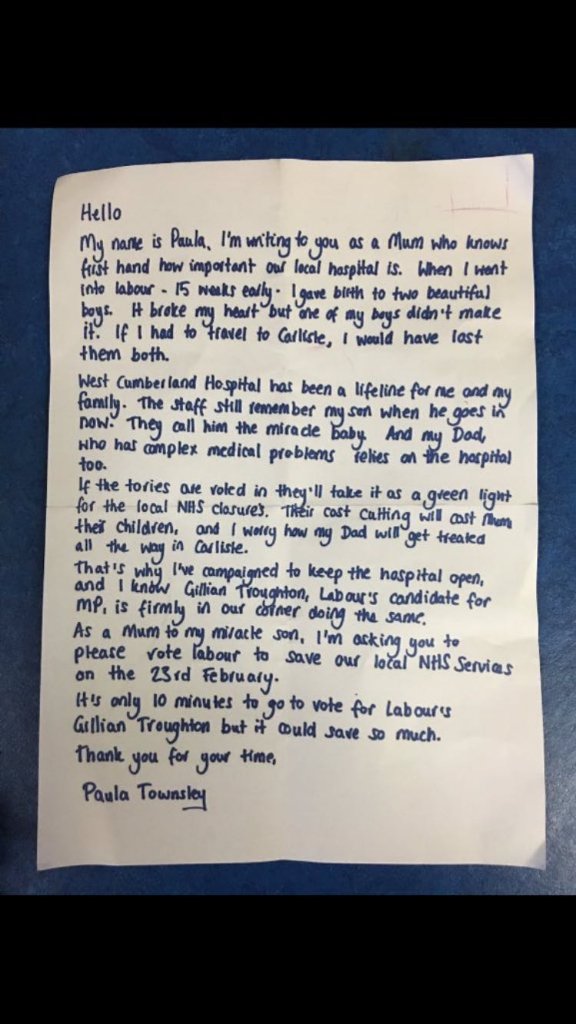
A graphic Labour pamphlet warns voters in Copeland that a Tory victory in the by-election will “cost mums their children” in an open letter aimed at highlighting the risks of NHS cuts in the constituency.


The handwritten letter in support of Labour candidate Gillian Troughton, a St John ambulance driver and former hospital doctor, is from local mother Paula Townsley. The leaflet is the second posted through letterboxes by Labour activists to contain dire warnings about the closures of maternity services at West Cumberland hospital.


Townsley’s letter describes how she gave birth to twins who were 15 weeks premature at West Cumberland hospital, but one of her sons did not survive. Expectant mothers will need to travel more than 40 miles to give birth in Carlisle if the maternity services in the area are closed.


Kevin Schofield (@PolhomeEditor)

Labour really upping the ante in Copeland – a Tory win “will cost mums their children”. pic.twitter.com/VeOtGqSXCd


February 16, 2017


“If I had to travel to Carlisle, I would have lost them both,” she wrote. “West Cumberland hospital has been a lifeline for me and my family.


“The staff still remember my son when he goes in now. They call him the miracle baby. If the Tories are voted in they’ll take it as a green light for the local NHS closures. Their cost-cutting will cost mums their children.


“As a mum to a miracle son, I’m asking you to please vote Labour in our local NHS services on 23 February. It’s only 10 minutes to go to vote for Labour’s Gillian Troughton, but it could save so much.”


The previous Labour byelection leaflet also included a quote from unnamed midwives, warning “mothers will die, babies will die, babies will be brain-damaged”.


Chris Whiteside, who has previously stood for the Conservatives in the seat, said: “I don’t know whether this will help Labour win the Copeland byelection but their tactics on the hospital deserve to lose.”


Labour’s campaign was given a boost on Thursday after negative headlines in the local paper about Theresa May’s visit to the constituency, where she repeatedly refused to answer questions on whether she would back the maternity cuts or over whether the government would underwrite the Moorside nuclear plant, after the Japanese company Toshiba pulled out of the project.


Canvassing is believed to show that Labour has a vote retention in some parts of the constituency as low as 70%.


Few Labour voters are switching directly to the Tories, one Copeland campaign source said, but many have told the party they are opting to stay at home. The party is said to be relying on legwork from the GMB union on the day of the byelection to persuade Sellafield workers to turn out and vote Labour.


Corbyn has confirmed he does not intend to campaign in the constituency again before polling day on 23 February.


The Tory campaign has been hinged on support for nuclear power and the Sellafield plant, a major employer in the area, highlighting Labour leader Jeremy Corbyn’s opposition to nuclear power. Tory leaflets distributed in the constituency feature a quote from Corbyn saying: “I say no nuclear power, decommission the stations we’ve got.”


Leaflet says Tory win in Copeland will "cost mums their children"

14 Şubat 2017 Salı

A&E in England registers record delays: readers share their experiences

A&E patients in England endured a record-breaking month of delays in January, with more than 60,000 people waiting between four and 12 hours for a hospital bed, and more than 780 waiting over 12 hours.


The figures are at the highest level since 2004, when a target was introduced that 95% of patients must be seen and either admitted or discharged in under four hours.


We asked Guardian readers to share their experiences of A&E in January. Here’s what they said.


‘It angers me that this is being portrayed as a normal winter crisis’ – Laura White, 30, Wiltshire


On 19 January, I was rushed to hospital by ambulance. I suffer from severe asthma so spend a lot of time in hospitals. The staff were swift, calm, professional and outstanding, but as someone with much experience of emergency care over the past few years, a marked increase in response time is noticeable. I am always a high-priority case as there is a real risk of sudden death, but even then there simply aren’t enough paramedics to cover demand. I was extremely ill en route and the paramedic had to help me to breathe. He phoned the hospital to warn them of a high-priority case coming in and allow them to prepare for arrival.


I was wheeled straight around to the high-dependency area. I was shocked to see around half a dozen trollies in the corridor with patients on. This has never been the case in my experience of this hospital.


The staff were caring and helpful and trying to attend to all patients, but they were clearly stressed. The lead doctor and junior had a discussion over my bed about needing to do a blood gas test, but were reluctant to because the only working machine was in intensive care. This was followed by a nurse asking how everyone was, to the reply: “I have a full resuscitation, a full high care, no beds available. But there is a woman in the corridor who needs to be in here so I have to choose one of these people who are extremely ill to put in the corridor. I can’t do this; this is not a decision I should have to make.”


It angers me that this is being portrayed as a normal winter crisis and the sort of thing we see each year. I can assure you it has got progressively worse in the past year and is currently well beyond breaking point.


‘No one was ever left waiting for attention or care’ – Hannah Powell, 47, North Yorkshire


I was admitted to A&E six times in four weeks at the start of this year, twice by ambulance, because of problems with my heart. On each occasion I was seen immediately, with almost no wait. I was admitted to the coronary care unit on three occasions and, although there was clearly a bit of bed juggling going on, there were beds available. There were some waits: two days to have pacemaker surgery, and a weekend to see a cardiologist. But on the ward no one was ever left waiting for attention or care.


Obviously heart trouble is a high priority at the triage stage, but it was clear to me that the hospital’s systems and processes were working well. Although the staff were under pressure the whole time, they were, without exception, utterly committed to the care they delivered and were not going to let shortages of beds or staff to get in their way.


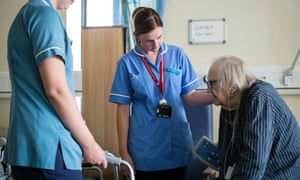
‘A defining moment was seeing the tenderness with which the nurses and assistants treated an elderly patient.’


‘A defining moment was seeing the tenderness with which the nurses and assistants treated an elderly patient.’ Photograph: David Sillitoe for the Guardian

A defining moment was seeing the tenderness with which the coronary care nurses and assistants treated an elderly patient, despite being rushed off their feet during a busy night shift.


‘A&E was extremely busy and there seemed to be a shortage of staff’ – Karen Hourihan, 57, social worker, Liverpool


I waited 55 minutes in excruciating pain for paramedics to arrive. I was taken to A&E and after a short wait in the corridor I was taken into a cubicle. My son was with me and he was able to advocate on my behalf by seeking out medical people and requesting updates. Nobody came to speak to me directly about my injury. I was taken to a holding ward while waiting to be admitted. I arrived at 8pm and was admitted to a ward at 4am when a bed became available. A&E was extremely busy and there seemed to be a shortage of staff.


Staff appeared to have little time to spend explaining things and reassuring patients. This was not too much of an issue for me as my son was present the whole time. However, for anybody alone or older I imagine it would have been an isolating experience. Having said that, the staff did their best to provide a good standard of care.


‘I was put in a room and forgotten about’ – Melanie Salinger, 53, Bishop’s Stortford, teacher


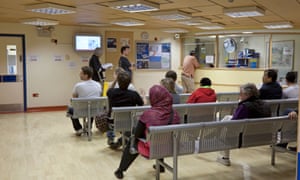
When I visited A&E, I was put into a side room and promptly forgotten about. Eventually, a nurse asked how my consultation had gone and I said I still hadn’t had one. It turns out I had been forgotten; they had no record of me. I was diagnosed with pneumonia and had to leave that room and sit in a chair for 10 hours as there were no beds. I was sat in a busy area with everyone looking at me. My blood pressure was very low, so I actually needed to lie down.


A hospital waiting area


‘I had to sit in a busy area with everyone looking at me. My blood pressure was very low, so I actually needed to lie down.’ Photograph: Alamy Stock Photo

Once a bed was found for me the nurses in the ward cared for me very well. However, the noise at night was constant. It sounded like an all-night party. Someone on my ward complained so it went quiet for half an hour – then started again. How are we meant to recover? I asked to be discharged as I knew I would recover quicker at home.


‘Wonderful service, could not be beaten’ – Larissa, 38, Bexley


I injured my wrist on a Sunday afternoon, but attended the hospital on the Monday morning. I had been told of the awful waiting times so I came prepared with a sandwich, thermos and my kindle.


However, I waited less than 10 minutes to see the nurse. She took my details and asked a few questions about my injury. I was then sent for an X-ray. The nurse informed me there could be quite a wait, but I only waited around 10 minutes. The radiographers were lovely, caring and professional.


The nurse called my name after 10 minutes, showed me the X-ray of my fracture and put me in a temporary cast. I was triaged, X-rayed and plastered in less than an hour and a half. I barely had time to open the thermos, and the kindle remained shut.


Wonderful service, could not be beaten. The NHS staff were great.


A&E in England registers record delays: readers share their experiences

13 Şubat 2017 Pazartesi

Tips For People Who Have Trouble Shutting Their Brain Off to Go to Sleep

Do you seem to be one of those people who lay awake in bed, tossing and turning trying to rest but you just have trouble shutting your brain off to sleep?  Here are some suggestions that may help you get rid of those distractions that keep you awake at night and help you learn to unwind, shutting your brain off to sleep when you need to (1, 2).


  1. Do not tackle anything new at least one hour before bed.  When you open a new email, look at the bills, or start a new project just before you try to turn in you get your mind going and dwelling on whatever issue or project it is that you were dealing with.  This is especially problematic for creative people and those who seem to be naturally prone to worrying.   So instead, make sure that you finish all business of the day at least one hour before bedtime; leaving that hour for you to follow the next tip in creating a bedtime routine.

  1. Establish a steady bedtime routine.  As young children, we know that a routine helps to train our brain that it is time to sleep, but as adults we seem to forget how useful this can be.  But by creating a regular routine for yourself, your body, and your brain, get into the habit of taking cues that it is time to sleep.  Good suggestions for creating your routine can be shutting down your computer, taking a bath, reading a short simple text, such as a magazine or collection of short essays, poems, or short stories.  Other ways to help you unwind and create a routine is to use that time before bed for various ways of pampering yourself; give yourself a manicure, use a massage pillow or soak your feet in a refreshing, vibrating foot bath to help you relax and shift your focus off of the day events so you do not have so much trouble shutting your brain off to sleep.

  1.  Meditate.  Learning to meditate is a great way to focus your mind and relax your body. Meditating can help you in shutting your brain off to sleep as well and relieve the stress and tension of the day helping you to relax especially if you meditation with visualization techniques that can carry you away from all the hustle and bustle of the day.

  1. Try aromatherapy.  Aromatherapy is another great way to help you calm your mind and get some sleep.  You can try candles, oil diffuser, aromatherapy pillows, or night time sprays that you can use to lightly mist your bed sheets with the great soothing scent of lavender and other essential oils blended to promote relaxation and help in shutting your brain off to sleep.

  1. Get rid of the environmental noise that can distract you and keep you awake.  Having the television or radio on is often a distraction from sleeping and can not only keep you awake but remind you of the issues that are the reasons that you are having trouble shutting your brain off to sleep in the first place.  For noise that you can not eliminate, such as street noise, mask it with natural sounds of the ocean or similar types of soothing sounds that can help you sleep.

So, if you are having trouble shutting your brain off to sleep, try these great suggestions to help you get a better night’s sleep.


  1. http://www.huffingtonpost.com/2014/08/08/bedtime-routine_n_5659183.html

  2. http://www.nosleeplessnights.com/sleep-hygiene/bedtime-routine-for-adults/


Tips For People Who Have Trouble Shutting Their Brain Off to Go to Sleep

9 Şubat 2017 Perşembe

The three questions that every patient should ask their doctor | Ranjana Srivastava

An unimpressed nurse summons the oncology fellow to the chemotherapy chair. “I am not prepared to treat him with chemo. He can barely stay awake.”


“But his oncologist wants to push on,” the fellow responds.


“The patient doesn’t seem to understand how sick he is or how chemotherapy is doing harm. You’ll need to sort this out, I am afraid.”


The fellow sighs, caught on the horns of a dilemma.


Elsewhere, an elderly woman has taken warfarin, a blood thinner, for some time, and now presents with a massive cerebral bleed. She was going to the kitchen one moment and unconscious the next; she is expected to die shortly. As I console her stricken son, it emerges that she had sustained 50 falls that year leading up to the fatal one. There had been many doctor visits but no one had asked specifically about falls.


At the desk, as I solemnly write a note, I overhear the same exchange that’s going on in my head.


“Fifty falls!” one dismayed resident says. “Why would you put her on warfarin?”


“Because someone wanted to reduce stroke risk and someone else watched her heart disease but no one thought of the whole patient.”


“What were they thinking?”


If you listen to doctors and nurses, this is one of the most common questions you will find them grappling with and grumbling about. It reflects part genuine puzzlement and part exasperation that what one doctor has recommended seems ill-advised or even inappropriate to another.


The Grattan Institute estimates the cost of wasted healthcare dollars to be in the order of a billion dollars and the figure stings clinicians but as a disillusioned young doctor sighed, in the age of super-specialisation, it seems expedient to let every doctor manage “their own organ”. Except the practice harms patients who are after all, more than a collection of organs.


If highly trained doctors don’t understand their colleagues’ intentions it stands to reason that most patients feel even more hapless, caught in an endless tangle of tests and explanations but the knowledge and power asymmetry is such that it’s impossible to question the doctor, who must surely know better (if not best).


Physicians overestimated the effect of some interventions on life expectancy by as much as 30%


Unnecessary and expensive medicine is at an all-time high and the usual reasons given are patient expectations, financial incentives, therapeutic uncertainty, medico-legal fears and the sustenance of hope. Now a new study in JAMA Internal Medicine authored by two Australians points out that when it comes to unsound medicine, there is another element at play. It turns out that when prescribing a drug or ordering a procedure doctors are actually quite bad at estimating the benefit and harm associated with it.


In a systematic review of 48 studies performed in 17 countries and involving more than 13,000 clinicians, they found that doctors rarely had accurate expectations of benefits or harms. The inaccuracies were in both directions but more often, harm was underestimated and benefit overestimated.


No group of doctors fared well. As a result, children with acute ear infections may be overprescribed antibiotics and women with troublesome postmenopausal symptoms may be deprived of hormone replacement therapy. Obstetricians and neurologists underestimated the risk of birth defects from antiepileptic drugs and GPs overestimated the benefit of prostate cancer screening and underestimated the benefit of warfarin for atrial fibrillation, a common heart condition. Transplant surgeons were biased towards an inaccurately low estimate of graft failure and all types of doctors were unaware of the risk of radiation exposure from imaging.


Physicians overestimated the effect of some interventions on life expectancy by as much as 30% and for elective but by no means inconsequential surgery on the thyroid, lung, prostate and uterus, there were clinicians who believed that complications “never occurred or had a rate of zero”. Dermatologists couldn’t agree on psoriasis treatment and psychiatrists differed on the risk of harm from long-term antipsychotics. There was a reluctance to convey a numerical estimate of benefit and worryingly, clinicians “overwhelmingly recommend the interventions they provide”.


This study is a wake-up call for doctors because it speaks to our collective failure to appreciate that in prescribing more for our patients we don’t always help, and indeed, commonly inflict harm. The goal of good medicine is not only to avoid harm but also to provide actual benefit, a distinction that’s commonly blurred, including in oncology. Chemotherapy at the end of life improves neither quantity nor quality of life. It leads to more invasive procedures and greater likelihood of dying in an intensive care unit but patients continue to receive it.


In the reign of evidence-based medicine it is discomfiting news that doctors may not understand the data in the form of hundreds of thousands of studies poured upon us.


First, as any patient knows, the art of medicine matters as much as its science. Evidence applied without tact, consideration, empathy and an understanding of the patient’s perspective can be as harmful as evidence not applied at all. Doctors are increasingly exhorted to provide collaborative care and practice shared decision-making. The catch is that both art and science suffer when we don’t know the facts or struggle to convey them.


Part of the problem is the sheer volume of publications. Entwined in increasing bureaucratic demands many doctors lack the time and also the confidence to interpret academic research so we turn to (commonly paid) expert opinion, “peer influencers” and biased pharmaceutical advertising.


Medical schools run the obligatory statistics course but don’t ingrain in doctors that their interpretation of a journal article or more commonly, an “advertorial”, and their participation in marketing disguised as “literature” peddled by pharmaceutical representatives has a direct impact on patient experience, the cost of care and wasted healthcare dollars. Hospitals who should care even more about such education virtually ignore it and when it’s volume, not quality of care that’s rewarded, it all but extinguishes the desire to do better.


Meanwhile, what should patients do? The JAMA study suggests that doctors frequently don’t know and certainly, don’t know best. This is vexing but not all doom and gloom because doctors now have at their disposal an unprecedented number of sound guidelines, robust protocols and genuinely plain-language information for patients, not to mention easy web-based access to experts. When it comes to doctors seeking advice the world really is a global village. In a world of rapidly evolving information, patients should be prepared for a doctor to say, “I don’t know” provided this is followed by, “but I’ll find out.”


Here are three questions that every patient should ask of every new proposed drug or intervention:


  • What are my options?

  • What are the specific benefits and harms to me?

  • What happens if I do nothing?

If patients asked these questions more often and doctors took it upon themselves to answer faithfully, medicine might yet experience a new dawn.


The three questions that every patient should ask their doctor | Ranjana Srivastava

30 Ocak 2017 Pazartesi

Why are GPs having to beg for appointments to get their patients treated in hospitals?

Ever wondered why it sometimes takes ages for you to have an ailment treated? Mavis is wondering. She has been waiting for weeks to have an infected scar checked, after the removal of a cancer, but was referred back to the wrong hospital much too late, even though her GP had begged for an appointment asap. And Rosemary’s GP asked for investigations into a worrying ailment last April, but her request was returned twice, with a demand for more information, but no explanation about exactly what information, confusing and enraging the poor GP.


Could these hold-ups be caused by third-party scrutiny by a clinical commissioning group (CCG)? Your GPs or consultants can’t just refer you for surgery themselves any more. They must first beg a CCG for your procedure, explaining why you, in particular, need treatment, especially if it’s some minor thing, no longer routinely NHS funded: a knee/hip replacement, hernia, varicose veins, cataracts, or a chalzion cyst on your eyelid, because after all you won’t die without treatment, even if your cyst is like a big boil, eye “out like you’ve done a couple of rounds with Mike Tyson”, as one man put it on Radio 4’s Inside Health, even if you can barely see, and it hurts. You’ll live. So the CCG (32% privately run) may say no, or send you somewhere for a “holding test”, or back to outpatients, or ask more questions, which all often costs more than the procedure would have done if they had just got on with it straight away.


This is all getting a bit scary now that my peers and I are going physically down the pan. If the CCG’s weren’t that fussed about Rosemary’s worrying mystery ailment and Mavis’ cancer, what hope for hips or eyelids? We’ll have to all limp around blindly and in horrible discomfort until we are nearly dead. And I have rather worrying pains in my hips. Should I join the replacements queue now? It is rather long already. I have a friend who has been in it for months, after years of waiting for permission to see the consultant who could tell him he ought to be on it. Is there even a queue to join any more?


Why are GPs having to beg for appointments to get their patients treated in hospitals?

27 Ocak 2017 Cuma

NHS commissioners risk losing sight of human cost of their decisions

The revelation that thousands of people could be forced out of their homes into residential care raises serious questions about the judgment of clinical commissioning groups (CCGs).


According to the Health Service Journal story, based on information gathered by campaign group Disability United, at least 37 CCGs have imposed restrictions on access to NHS continuing healthcare funding, which provides ongoing care for adults with a “primary health need”.


Around £2.5bn a year is spent on NHS continuing healthcare, with about 60,000 people receiving support at any one time.


A total of 19 CCGs have said they will not fund care in the person’s own home if it is more than 10% above an alternative – normally going into a care home. The remainder are imposing other restrictions. Up to 13,000 people could be affected among these CCGs; since 87 CCGs did not reply, the national figure could be around 22,000.


Lawyers are wary of a legal challenge, such as under article 8 of the European convention on human rights, which protects the right to family life.


Many of the rationing decisions appear to conflict with the NHS England operating model for NHS continuing healthcare, which says “treating individuals and their families with empathy, respect and dignity is at the core of NHS continuing healthcare delivery”.


Commissioners need some latitude to contain these costs; medical care provided in the home cannot be limitless. But the Department of Health’s guidance stresses that comparative costs have to be balanced against a person’s desire to continue living in their own home.


Overall, Disability United identified 42 CCGs whose responses to Freedom of Information requests on this issue gave cause for concern. In the last performance assessments, NHS England said 20 of them required improvement while nine were rated inadequate – proportionately worse figures than the overall national scores.


That gives little confidence that commissioners pursuing this approach have exhausted all other reasonable options for meeting their budgets.


Of course, this is not straightforward. Many of the choices facing CCGs trying to hit their financial targets are unpalatable, as the growing argument over the threshold for hip and knee replacement surgery demonstrates, while the best solution for some continuing healthcare patients may well be residential care.


But to deprive people of the right to live at home on the basis of a 10% limit on additional cost seems arbitrary and callous. It leaves the uneasy feeling that a vulnerable group of patients – many of the recipients of continuing healthcare have brain injuries, significant disabilities or are dying – are being shunted into a care home because it is an easy saving. In their desperation to find cuts, commissioners are in danger of losing sight of the human cost of their decisions.


Continuing healthcare sits on the fault line between the NHS and social services, and access to it has long been a source of controversy, notably for patients who have had serious strokes. Many families are left baffled by the fine distinctions drawn between medical care on the one hand and social and personal care on the other, understanding only that it is a device for the NHS to shunt costs on to the care system by deciding that the patient’s needs are not primarily medical.


Now it appears that those who are fortunate enough to meet the stringent criteria for continuing healthcare risk being deprived of rights and choices. The underlying problem is that CCGs simply do not have the managerial, analytical or clinical firepower to make care systems lean, efficient and integrated, or to drag funds out of hospitals and into community services, so they are reduced to managing their finances by drawing entirely subjective lines on a spreadsheet that cut patients off from care.


CCG decisions about who can have services such as continuing healthcare, various types of surgery and IVF are dressed up in the language of local choices, but in reality it is largely a matter of luck which cuts commissioners happen to choose. Forcing people to leave their home looks a bad choice.


Join the Healthcare Professionals Network to read more pieces like this. And follow us on Twitter (@GdnHealthcare) to keep up with the latest healthcare news and views.


NHS commissioners risk losing sight of human cost of their decisions

18 Ocak 2017 Çarşamba

On mental health, the Tories need to put their money where their mouths are | Alastair Campbell

What is it about the mental health debate that makes me go all Malcolm Tucker, effing and blinding at the gap between what politicians say about it and the reality on the ground? And why do I want everyone else to get as angry as I am about it? Because every time there is pressure on health spending, mental illness slips down the priority queue.


We are frankly light years away from the parity between mental and physical healthcare that is set out – in law – in the NHS constitution. In the last week, I have spoken to a mother at her wits’ end because her daughter is being treated in Scotland when she lives 80 miles south of the border; a young man I persuaded to get help for his anxiety and depression who has been given some pills and told he might get cognitive behavioural therapy (CBT) in six months; a student who has dropped out of education after two failed suicide attempts, one of which followed a long wait in a crowded room waiting to see an overstretched university psychiatrist.


I recently got a letter from someone who said that my urging people to be open in a radio interview had led him to seek help for what he worried was a drink problem. But when he got to his GP he was told the alcohol support service had been cut and was instead given a list of local Alcoholics Anonymous meetings. It makes you wonder what is the point of fighting to change attitudes if the services are not there to help people who, despite all the stigma and taboo, make that first step to be open about a mental health problem.


May and Cameron presided over 8% cuts in spending on mental health, and the loss of more than 6,000 mental health nurses


There are of course many people who do get good treatment. But my worry is that the battle against stigma is seen as a substitute for the services we need, rather than an accompanying policy goal, and a genuine government priority.


So for all Theresa May’s fine words, and David Cameron’s before her, they have presided over 8% cuts in real spending on mental health, the loss of more than 6,000 mental health nurses and a fall to a lower per-capita number of psychiatric beds than France, Germany or the OECD average.


According to findings from mental health research charity MQ, more than four out of 10 people believe that mental illnesses such as anxiety and depression are now an inevitable part of life. Even with more prevalent physical illnesses we don’t have the same expectation, because we just don’t think about mental health in the same way. That has consequences for care, and the pressures politicians feel to provide it.


Sadly, young people seem to be hardest hit; only one in four young people referred to a professional actually gets the treatment they need. When you consider that 75% of mental illness starts before the age of 18, that’s a lot of young people surrounded by their own concerns and the inabilities of others to help them. Yet where is the anger? Suicide is the biggest killer of young men in Britain – replace “suicide” with any physical illness or any other aspect of our national life, and you would have outrage aplenty. Walk past all those people living on the streets, as we all do, and imagine they were lying there untreated, not with a psychiatric illness but a broken leg or a heart attack – we would have an ambulance there in no time.


The demand for parity must include research. To make progress, we need research that focuses on mental illness in young people. You only need to consider the progress in HIV treatment over the past 20 years to see that research is a huge part of the answer.


May is right that mental health care is not all about the money. But a lot of it is. For every person affected in the UK we spend just £8 on research. For dementia – £110. For cancer – £178. Good for cancer. The impacts of mental health problems can last a lifetime. If we were funding mental health research like we have other physical illnesses, things would look very different.


If you bump into May or Jeremy Hunt, point out that by not investing in care, by not investing in research, by not taking seriously the growing mental health needs of younger people in particular, we are storing up much bigger problems – and costs – for the future. That much, surely, is so obvious, it’s unbelievable we even have to say it.


Malcolm Tucker coined the phrase “not my fucking problem”. This is our problem, because we all have mental health and we need to do a better job of getting the services, understanding and research we need.


On mental health, the Tories need to put their money where their mouths are | Alastair Campbell

10 Ocak 2017 Salı

Botox use is on the rise – but are some using it to freeze their feelings? | Anouchka Grose

Dannii Minogue has admitted to using Botox at difficult times in her life in a subconscious attempt to mask her feelings. Not only might she literally have been disabling her capacity to frown, she may also have been acting things out on her body in order to fend off her own emotions.


It’s about time someone said it. As a working therapist I have occasionally noticed my female patients’ faces change quite noticeably from week to week, but no one has ever spoken to me about what was making this happen. Cosmetic treatments, and the difficult thoughts and feelings that might make someone undergo them, are apparently one of the hardest things to talk about.


On the one hand perhaps these treatments are so normalised that they do not seem worth discussing in therapy – a new study in the US shows that young women using Botox has risen by 41% since 2011 – but on the other you probably wouldn’t spend hundreds of pounds on something that carried serious health risks if you weren’t feeling pretty worried about your appearance. Doing stuff to your face is like the sunny side of self-harm; you might try it in order to short-circuit anxiety or sadness, but the end result is supposedly regeneration rather than damage. Still, nothing signals underlying unhappiness and self-loathing more than a pumped-up, frozen physiognomy. In that sense, it’s a socially acceptable form of wound.


It’s hardly surprising that people, especially women, are prone to feeling insecure about their looks. But Botox is perhaps a special kind of beauty treatment in that it inhibits the visible expression of emotion. It helps people hide the way they feel. That this should come as a bit of a surprise is interesting in itself – this has never been its explicit selling point. The idea has been more that youth is good and age is bad. By starting Botox in your 20s you can supposedly pre-empt the signs of passing time. But what is facial ageing if not physical proof that you have smiled, frowned and been surprised? In other words, that you have let the outside world in on some of your feelings.


In Jane Austen’s great philosophical masterpiece Sense and Sensibility, we see two sisters attempting a serious experiment in living. Marianne expresses emotion freely while Elinor buttons it up. Which of them will fare best in life and love? Austen’s ultra-humane answer is that both ways have their ups and downs. And anyhow, while you think you’ve made your choice about which is better, you may find yourself doing the other.


Women in particular have had to rely on their beauty and personal charm in order to secure economic stability


More than 200 years later we’re still struggling over the same question. From the misery memoir to Instabrag via Geordie Shore, we’re trying to work out what will make us more lovable: free expression or self-control. Loosely speaking, some therapies work more towards the former, some towards the latter. As Austen wisely noted, there’s no clear answer as to which is best, although extremes in either direction do seem to cause trouble.


For humans, ensuring lovability is closely linked with survival. Babies very quickly learn how to endear themselves to their carers, and this habit continues into most people’s adult lives. If it doesn’t, modern psychiatry would even be inclined to brand you with a personality disorder. To generalise, becoming lovable seems to involve not crying and fussing too much, and learning to put your feelings aside for the sake of other people while still being affected enough by the world to experience empathy. You need to be able to control the release and expression of emotion, but not to the point of cold-bloodedness.


Historically, women in particular have had to rely on their beauty and personal charm in order to secure economic stability. Keeping your face nice and your character sweet in order to hang on to your TV job is perhaps the contemporary equivalent of donning a corset and holding your tongue in the hope of keeping your husband. The problem is that everybody is pretty much aware of the painful tragicomedy of all this, and Botoxed women are a very visible enactment of it. It seems to be absolutely socially acceptable to blast an older woman for having a too-smooth face. Far more so than for having a baggy one. By trying so hard to hang on to our charms, we risk revealing how much we fear losing them. In hiding our feelings we give them away.


Although cynics might see Minogue’s admissions as yet another ruse by a celebrity who wants to reel us in, it’s probably time we started to speak more freely, and above all kindly, about facial injections and the different forms of pain they attempt to address.


Botox use is on the rise – but are some using it to freeze their feelings? | Anouchka Grose