'urgent etiketine sahip kayıtlar gösteriliyor. Tüm kayıtları göster

9 Mart 2017 Perşembe

NHS chiefs order hospitals to begin urgent overhaul of A&E care

NHS chiefs have ordered hospitals to push through an urgent overhaul of A&E care, with GPs assessing every patient when they turn up to help the health service avoid another winter crisis.


The move comes as the NHS in England disclosed that it recorded its worst performance to date in January, missing vital treatment targets covering A&E, cancer and planned hospital care. The number of patients stuck in hospitals due to inadequate social care, such as a shortage of care home places, also hit an all-time high.


In a speech on Thursday, Jeremy Hunt, the health secretary, added to the pressure on hospitals by telling them to get back to meeting the target of treating 95% of A&E patients within four hours. That fell to 77.6% in January as hospitals buckled under unprecedented demand for emergency care.


However, hospital chiefs immediately criticised Hunt’s edict as “unrealistic” and demanded much more money to improve A&E care than the £100m in Wednesday’s budget.


NHS groups have voiced serious doubts as to whether there are enough GPs in England to work at every A&E unit. Dr Helen Stokes-Lampard, the chair of the Royal College of GPs, said: “We feel that the best place for GPs is working with patients in their communities and the money just announced for new triage systems in emergency departments would achieve more if most was spent shoring up general practice.”


The NHS England chief executive, Simon Stevens, and his counterpart at NHS Improvement, Jim Mackey, have written to all parts of the health service outlining “concrete changes” they must make to prevent next winter from overwhelming hospitals.


Over the previous winter, pictures of patients lying on trolleys in hospital corridors and countless stories about waiting many hours for ambulances caused major embarrassment to ministers and NHS chiefs.


Under the changes set out on Thursday:


  • Ambulance crews will treat many more sick people where they find them, rather than bringing patients to hospital. In future, paramedics should be “conveying patients to hospital only when this is clinically necessary”, the letter says.

  • Every hospital will have put in place “comprehensive front door streaming” by October, under which family doctors and nurses will assess how unwell patients are to reduce the risk of A&E units becoming overloaded by the 1.5 million to 3 million people who turn up unnecessarily every year.

  • GP surgeries will have to offer many more appointments at weekends and in evenings, ultimately providing these to everyone in England by 2020.

  • Doctors and nurses will have to provide better medical care to the 400,000 older people living in care homes, to stop them becoming so unwell that they need to be admitted to hospital.

  • NHS bodies will work much more closely with local councils to reduce so-called bedblocking in hospitals. Councils will use the £1bn extra for social care in 2017-18 announced in Wednesday’s budget to provide more at-home care services and places in care homes.

  • The NHS 111 telephone advice service will be overhauled to enable many more callers to speak to a doctor, nurse, mental health specialist or other type of health professional, as the Guardian reported on Wednesday.

Stevens and Mackey made it clear in their letter, published on Thursday, that NHS hospital trusts that do not implement every element of the plan will in effect be fined, by being denied money from the service’s £1.8bn-a-year sustainability and transformation hospital bailout fund.


Prof John Appleby, the chief economist at the Nuffield Trust health thinktank, said the latest performance figures “make dismal reading for the NHS and patients”.


“The number of patients stuck on a trolley waiting for a hospital bed has gone through the roof, with more than 80,000 patients waiting for four hours or more in January, and a staggering 988 of them waiting longer than 12 hours,” he said. “These are vulnerable people with acute medical needs. Corridors, it seems, have become the new emergency wards.”


Cancer charities criticised ministers over the NHS again missing the target for treating cancer patients referred for urgent treatment within 62 days.


Emma Greenwood, the director of policy at Cancer Research UK, said: “Today’s figures for January are the worst ever performance against this crucial cancer target, which has now been missed annually for three years. This is completely unacceptable.


“Cancer targets exist to ensure quick diagnosis and access to treatment, and provide a snapshot of how the NHS is performing for patients. The government and NHS England have committed to improving early diagnosis of cancer, including increasing investment, but it’s clear that this is yet to have an impact.


“Specifically, we have yet to see any significant progress to address huge staff shortages in the diagnostic workforce, especially for radiologists, pathologists, endoscopists and radiographers.”


NHS chiefs order hospitals to begin urgent overhaul of A&E care

1 Mart 2017 Çarşamba

Prisoners with serious mental health problems face urgent treatment delays

Almost 75% of prisoners are facing delays in being transferred to NHS hospitals to receive urgent treatment for serious mental health problems.


Prisoners in England who need to spend time as an inpatient in a mental health unit are meant to be taken there within 14 days of doctors admitting them. But new official figures show that barely one in four of the prisoners who received such care last year were transferred within the supposed maximum two weeks.


Labour MP Luciana Berger, who obtained the figures through a parliamentary question, warned that the already fragile mental health of prisoners needing hospital care could be badly affected by them being denied speedy care.


“In the outside world we would never expect someone to wait as long as two weeks to get appropriate care, and we know that prisoners are at much higher risk,” she said. “With every day that goes by their condition is likely to worsen, so the delay will have a hugely detrimental impact on their mental health.”


Figures released by the Department of Health show that 412 prisoners were transferred to hospital from jails in England within 14 days during 2015-16, or 26.5% of the total. However, far more – 1,141 (73.5%) – had to endure delays of longer than that, health minister Nicola Blackwood confirmed.


“This ubiquitous failure would never be tolerated in the outside world,”, Berger will tell MPs on Wednesday, in a Commons debate she has secured on suicide and self-harm in English jails.


Berger, the president of the Labour Campaign for Mental Health, said she did not know if there was a causal link between the delays and the record number of suicides – 119 – that occurred in English prisons during 2016. “It is likely to be a contributing factor, but it is just another issue, among many, which paints a very bleak picture of the inadequate support provided to people experiencing mental illness in our prisons,” she said.


2016 also saw a record number of incidents of self-harm in jail – 37,784 in all, up from 7,000 on the previous year.


In community settings, detentions under the Mental Health Act often take just a few hours. But the process takes longer with prisoners. Those who are due to be transferred wait temporarily in their jail’s hospital wing but, Berger added, those units are not equipped to give prisoners with serious mental health problems the proper care they need.


Berger will use the debate to accuse ministers of presiding over a “shocking and shameful rise in suicide and self-harm” in jails. “Most prison psychiatrists don’t feel able to deliver a basic level of care,” she will say. “Mental health services in prisons are at breaking point.”


The Ministry of Justice declined to comment directly on the figures. A government spokeswoman said: “We are committed to making prisons places of safety and reform and giving prisoners the support and treatment they need to help turn their lives around.


“All prisons have established procedures in place to identify, manage and help prisoners with mental health issues. Increased support is now available to those at risk of self-harm or suicide, especially in the first 24 hours, and we have invested in mental health awareness training for staff.”


Prisoners with serious mental health problems face urgent treatment delays

27 Ocak 2017 Cuma

Record number of urgent operations cancelled in England last year

Hospitals cancelled a record number of urgent operations last year as bed shortages left them struggling to cope with the growing number of patients needing surgery, NHS figures show.


Hospitals in England cancelled a total of 4,093 urgent procedures during 2016, which equates to 341 per month. That was 8% more than the 3,777 they had to put off in 2015 and 27% up on the 3,216 such operations they cancelled during 2014.


While some cancellations occur because of the patient’s health, the large majority are due to hospitals having too few beds, especially in intensive care or high-dependency units in which patients can recover afterwards, often because a more urgent case has arrived. A few involve staff shortages or a surgeon becoming unexpectedly unavailable.


The latest figures mean that in all 17,598 patients have had their urgent operation cancelled over the past five years, often at the last minute, despite their condition requiring surgery without delay.


Opposition parties claimed the figures, published on Friday by NHS England, showed that problems in the health service were deepening and that the government was not giving it sufficient money to keep up with the rising demand for treatment.


“Theresa May’s NHS crisis continues, and the problems are worse and more widespread than in previous years. By underfunding and overstretching the NHS, the Tories have pushed health services to the brink”, said Jonathan Ashworth, Labour’s health spokesman.


Norman Lamb, his counterpart for the Liberal Democrats, added: “The government’s stubborn refusal to give the NHS emergency funding means record numbers of operations are being cancelled as hospitals face weeks on end of intolerable pressure. This will inevitably have serious repercussions for patient care and the morale of NHS staff.”


The NHS England data shows that hospitals also cancelled 38,129 non-urgent elective operations between April and October – again, the largest-ever number for those six months.


Of those patients, 2,204 did not have their rescheduled surgery within 28 days, as the NHS Constitution says they should, in another sign of the huge pressures on the service.


However, NHS England’s latest winter situation reports data showed on Frida that hospitals came under slightly less strain last week than during the “winter crisis” that unfolded in the early weeks of January.


Overall 43 acute hospital trusts were forced to divert A&E patients to another emergency department because they could not cope with the large numbers of people needing care, down from 52 the week before. Similarly, 51 trusts declared some sort of alert during the week, down from 68 a week earlier.


A further Eleven people died from flu last week, bringing the total to 53 since the start of December, and 65 needed to be treated in an intensive care or high-dependency unit.


NHS England and Public Health England said the number of flu cases hospitalswere treating was worrying and linked to the particularly cold weather affecting much of England recently.


Record number of urgent operations cancelled in England last year

17 Ocak 2017 Salı

The urgent need to tackle crisis in adult social care | Letters

We write to you as 45 former directors of social services with many decades of senior management experience behind us, to express our grave concerns about the current underfunding of adult social care services. Not a day goes by without well-informed groups expressing their dismay at the outcomes for vulnerable adults. Yet despite this the chancellor made no mention of this issue in his autumn statement.


We know that £4.2bn has been taken from local authority budgets over the past five years. The appalling consequences are there for all to see. Rapidly rising levels of dementia, but cuts in home care support. Hospital beds full, but insufficient residential places for vulnerable adults to be discharged to. Increasing suicide levels among young people, but draconian cuts in mental health provision. Many more people living – and dying – in the streets, but inadequate support and a lack of hostel accommodation.


Some 500,000 older people are abused every year while cuts are being made in safeguarding provision. At the same time services for people with physical and learning difficulties have been drastically cut leaving many isolated and unsupported. The Care Quality Commission says the residential care service is at a “tipping point”. But should we really have to wait for more homes to go out of business before the necessary action is taken?


These are not the indicators of a caring and just society. We don’t need further reviews and promises. Thousands upon thousands of people are suffering and sometimes dying in misery. They need help now, and we call on the government to provide it, with urgency.
Rob Hutchinson, Dr John Beer, Hilary Simon, Chris Davies, Pauline Oliver, Anne Parker, Professor Ray Jones, Peter Westland, Ian White, Roy Taylor, Richard Jones, Andrew Cozens, Liz Railton, Brian Parrott, Jean Daintith, Jo Cleary, Julia Ross, Eileen Means, Gary Birch, Bill McKitterick, Mimi Konigsberg, Helen Taylor, Mary Robertson, Ann Windiate, Susan Richards, Robert Ward, James Reilly, Graham Gatehouse, Stephen Pitt, Lynn Hopkins, Derek Law, Ian Davey, Tim Brown, Stephen Sloss, Margaret Sheather, Matt Bukowski, Ian Winter, Colin Smart, Jonathan Phillips, David Mason, Peter Bye, Joyce Mosely, Teresa Bell, Jef Smith


Join the debate – email guardian.letters@theguardian.com


Read more Guardian letters – click here to visit gu.com/letters


The urgent need to tackle crisis in adult social care | Letters

21 Kasım 2016 Pazartesi

UN calls for urgent action to protect young women from HIV/Aids in Africa

Urgent action is needed to help and protect girls and young women from Aids in sub-Saharan Africa, thousands of whom are still being infected with HIV every week, the UN says.


Many adolescent girls do not know they have the virus and do not seek help or get treatment because they cannot tell their families they have had a sexual relationship with an older man. The death rates among adolescents are high.


In 2015, 7,500 girls and young women aged 15 to 24 were infected with HIV every week. More than 90% of the adolescents infected in sub-Saharan Africa are girls. Between 2010 and 2015, the total annual number of new infections among 15- to 24-year-old women fell just 6%, from 420,000 to 390,000. The UN target to reduce that number to fewer than 100,000 a year by 2020 is way off track, says the latest report from UNAids.


Too little has been done to help girls protect themselves and stay well, according to Michel Sidibé, the executive director of UNAids. “Young women are facing a triple threat,” he said. “They are at high risk of HIV infection, have low rates of HIV testing, and have poor adherence to treatment. The world is failing young women and we urgently need to do more.”


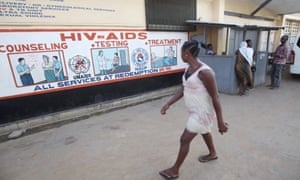
A woman looks at posters displaying information about HIV and Aids at a hospital in Liberia


A woman looks at posters displaying information about HIV and Aids at a hospital in Liberia. Photograph: Ahmed Jallanzo/EPA

Girls are particularly vulnerable in southern Africa because of their low status in a strongly patriarchal society. “Women’s and girls’ heightened vulnerability to HIV goes far beyond physiology: it is intricately linked to entrenched gender inequalities, harmful gender norms, and structures of patriarchy that limit women and girls from reaching their full potential and leave them vulnerable to HIV,” says the report.


Helping girls avoid HIV is hard because efforts must address the issues of gender imbalance and violence in societies, as well as poverty, which causes some girls to have relationships with men for money, says the report. Education is also important. Studies have shown that girls who stay in school longer are less likely to become infected.


The report says that a cycle of infection is taking place, which must be broken. Girls and young women are infected with HIV by older men. Men tend to acquire HIV later in life, from women who were infected when they were younger.


The good news from the report is that the numbers of people with HIV being put on drug treatment to keep them well has now reached 18.2 million, which is 3 million more than two years ago. UNAids says it is on track to meet the treatment target of 30 million people by 2020.


But preventing infection is proving more difficult. There were 2.1m new infections in 2015 – the same number as in each of the last three years and only slightly down from 2.2m in 2010.


Global HIV numbers

It was hoped that widespread drug treatment would make a difference to the numbers becoming infected. People who are on the drugs have a low level of the virus in their blood and are unlikely to transmit it to their sexual partners.


But many men are reluctant to go to health clinics and do not get tested, or if they do, they will not go on drug treatment until they actually fall ill, which could be months or years later. “Studies are showing that almost 61% of infections are caused by people who know they are HIV positive but they are not on treatment,” said Sidibé. While that is happening, he said, “how do we control the epidemic?”


Drug resistance is another issue highlighted in the report, which is published ahead of World Aids Day on 1 December. The basic drug combination – “first line” treatment – has become cheap, but the virus is adept at mutating. When people develop or pick up resistant strains of HIV, they need second- or third-line drugs, which are much more expensive. If resistance spreads, said Sidibé, the cost of treating millions of people with newer drugs will be prohibitive and make it impossible to end Aids.


“We need really to protect the drugs that we have. If not, we will have failed,” he said.


UN calls for urgent action to protect young women from HIV/Aids in Africa

4 Ekim 2016 Salı

Labour’s MPs and the urgent need for unity | Letters

On 28 September the Stockport NHS Watch group presented an analytical account of the way in which the Conservative government, starting with the Health and Social Care Act 2012, has been transforming the NHS into a US-style insurance scheme.


The Conservatives have a guarantee of another four years to carry out this programme, another six years if they win a snap election in 2017. John Harris (Opinion, 29 September) writes that a “new modernised movement is taking place” on the left in which a “remodelled Labour party might eventually emerge”.


By 2020? By then it will be too late. By then the degree of damage to the NHS and the extent of transformation of it into private health care will be immense. We will be back to 1947, before the NHS. Harris speaks of “Labour’s predicament”. He can say that again. There is only one solution: it is unity of opposition to the Tories now and defeat of them at the next election whenever it comes. That requires one almighty transformation into cooperation between the PLP and Momentum.


The whole parliamentary Labour party must now pledge support to Corbyn and offer itself entire for places in the shadow cabinet, and Momentum must abandon deselection of MPs. It is the sacrifice by both sides that has to be made.


The 1948 NHS is the jewel in the crown of this country’s achievements. Only unity can save it for the people. What else is the Labour movement in existence for?
Michael Knowles
Congleton, Cheshire


Mandatory reselection of Labour MPs, abolished under Tony Blair, is simply basic democratic accountability. Trade union general secretaries stand for election every five years and lay union representatives, working hard to represent their members while facing facility time cuts, between one and three years.


The sense of entitlement and concern for their careers that has anti-Corbyn MPs hyperventilating at the prospect of mandatory reselection will not restrain them from colluding with the pro-corporate establishment to conduct smear campaigns or organising coups to ensure their party leader is subjected to yearly mandatory reselection through doomed but divisive leadership challenges.
John McInally
National vice-president, Public and Commercial Services union


Join the debate – email guardian.letters@theguardian.com


Labour’s MPs and the urgent need for unity | Letters

21 Eylül 2016 Çarşamba

GPs fail to refer a third of malignant melanoma cases for urgent tests

GPs are failing to refer almost one in three patients with malignant melanoma for urgent tests, prompting a health watchdog to say services must improve.


The National Institute for Health and Care Excellence (Nice) has published a new quality standard, setting out the key areas for improving care for skin cancer patients.


It stresses that GPs should refer people with suspected malignant melanoma for an appointment to see a specialist within two weeks through the urgent referral system for suspected cancer.


The latest data from the National Cancer Intelligence Network shows that 56% of malignant melanomas were diagnosed following a two-week referral for suspected cancer in 2013.


Almost a third of cases, however, 29%, were only diagnosed following a normal GP referral to a specialist, which Nice says can take between four and six weeks in some trusts.


Another 2% of cases were diagnosed in A&E and 5% when the person concerned was already a hospital inpatient.


Figures released in July showed that the “sun, sea and sangria” generation of older people is being diagnosed with deadly skin cancer at an alarming rate.


Some 10,583 people aged 55 and over were told they had malignant melanoma in 2014, the most recent figure available, up from about 3,100 cases 20 years ago.


Cancer Research UK said people living longer is contributing to the rise but also blamed cheap package holidays.


It said people who have taken inexpensive package holidays since the 1960s and wanted a tan at all costs were now being diagnosed due to exposure and sunburn.


Rates of melanoma in people aged 55 and over have increased by 155% in the last 20 years, the data showed.


Rates among younger age groups are also rising, but at a slower rate, with a 63% growth in the last 20 years.


The disease kills around 2,000 people in the UK every year.


Non-melanoma skin cancers are also common, with 72,100 new cases diagnosed in the UK in 2013.


GPs fail to refer a third of malignant melanoma cases for urgent tests

21 Haziran 2014 Cumartesi

Urgent Require To Protect HS Football Players From Brain Damage!

Following holding six conferences with Hall of Fame Quarterback Warren Moon on athletic concussions from 1995 to 2008 I have named athletic concussions a ticking time bomb and undiagnosed health epidemic. I had a crisis of conscience in representing hundreds of NFL players who repeatedly were hit in the head in games and practice. I now believe that each time an offensive lineman hits a defensive lineman at the inception of each play it produces a low degree sub-concussive hit. A lineman who plays in higher college, university, and the pros may possibly retire with 10,0000 sub-concussive hits, none of which were diagnosed, none of which he is mindful of. The aggregate of these hits make brain injury significantly more serious than being knocked out three occasions. Prominent neurologists and researchers like Robert Cantu, Julian Bailes, Kevin Guskiewicz, Kristen Willeumier, and David Hovda report that three or much more concussions might lead to exponentially increased rates of Alzheimer’s, ALS, dementia, chronic traumatic encephalopathy and depression. This is diverse from other injuries. Brain function offers memory, judgment, and persona – what it signifies to be a sentient human being. That is why we are forming a new foundation, “Athletes Speak,” with players advocating awareness and prevention.


“I now think that every single time an offensive lineman hits a defensive lineman at the inception of every play it generates a reduced degree sub-concussive hit. A lineman who plays in substantial college, college, and the pros may retire with 10,0000 sub-concussive hits, none of which had been diagnosed, none of which he is conscious of. The aggregate of these hits produce brain harm a lot much more significant than getting knocked out three instances.” – Leigh Steinberg


The adolescent brain is at significantly increased chance than that of older players . The brain is nonetheless in the formative phases throughout the teenage many years. It will take an estimated 3 occasions longer for consequences from concussions to clear in this group. Actual brain advancement can be retarded. These youthful individuals are students who are nevertheless in the midst of their training. Gear at this degree can be much less than stellar. This is a group that needs specific protection.


A movement is growing across the country to safeguard youthful football gamers. Football is not the only make contact with sport and other athletes need to have protection also. Visionary California State Assemblyman, Ken Cooley, just proposed a law which passed the two houses limiting substantial college and middle school football practices. No complete speak to drills are permitted in the off-season and are  limited throughout the season. Nineteen states have passed equivalent legislation and much more are pending. SMU Head Football Coach June Jones has a range of educating tactics that limit practice make contact with without impairing group achievement. He has not permitted tackling throughout pre-season for in excess of twenty many years, commencing with the Atlanta Falcons. The Sports Legacy Institute estimates that in higher school football, 60-75% of head trauma occurs in practice, not in video games. This contrasts with a lower charge in the NFL.


Former New Orleans Saints front office executive Terry O’Neil has founded a new movement, “Practice Like the Pros,” created to restrict get in touch with on large school practice fields. He has assembled a prestigious board with co-chairs, Ronnie Lott and John Madden, and has the assistance of NFL Commissioner Roger Goodell to actively push the initiative. There is even a LinkedIn LinkedIn Group, Mothers Against Concussions, raising awareness.


Terry O’Neil, founder, speaks at “Practice Like the Pros” 1st seminar in August 2013 (T&ampG Personnel/PAUL KAPTEYN)


Meanwhile the search for far more protective helmetry continues. Jenny Morgan, CEO of Tate Technology, has a promising coil and compression helmet style to attenuate the vitality force. A new head cap made by Noggin Sports activities can be worn under helmets to give much more safety. A selection of sideline units have been developed that can detect a sub-concussive hit in real time so an impacted player doesn’t return to perform. Medical professionals and researchers across the nation are racing for nutraceutical and pharmaceutical options to one) prophylactically help the brain be significantly less at-chance for concussion, two) stop the swelling at time of influence, and three) actually heal a brain which has been impaired. Dr. Jacob Vanlandingham has produced one particular novel answer. Dr. Daniel Amen and his associate Dr. Kristen Willeumier have had promising benefits for several retired gamers with the use of a  hyperbaric chamber. Dr. Robert Stern, Ann McKee, and pioneering former football player Chris Nowinski have a promising examine at Boston University. There are a lot of heroes in this movement.


I adore football and consider it teaches life lessons and values. Self-discipline, teamwork, genuine time application of complicated plays, courage under pressure, resilience, and amazing camaraderie are all positive aspects. But if 50% of the mothers in this country understand the danger and forbid their teenage sons from playing, it poses an existential threat to football. The game won’t die, but the socio-economics of the players will change. The identical athletes who use a sport like boxing to escape financial situations, even being aware of the threat, will compose the majority of players. Football will never be damage cost-free, but we can act now to make it safer. Parenting is our most essential position on this earth – we need to have to safeguard the most vulnerable youth.


Twitter: @leighsteinberg
Facebook: www.facebook.com/SteinbergSports
Linkedin: www.linkedin.com/pub/leigh-steinberg/5b/188/647
Internet site: www.steinbergsports.com


Urgent Require To Protect HS Football Players From Brain Damage!

Urgent Need To Safeguard HS Football Gamers From Brain Damage!

Soon after holding 6 conferences with Hall of Fame Quarterback Warren Moon on athletic concussions from 1995 to 2008 I have known as athletic concussions a ticking time bomb and undiagnosed wellness epidemic. I had a crisis of conscience in representing hundreds of NFL players who repeatedly have been hit in the head in video games and practice. I now think that every single time an offensive lineman hits a defensive lineman at the inception of every play it produces a minimal degree sub-concussive hit. A lineman who plays in high college, university, and the pros may possibly retire with 10,0000 sub-concussive hits, none of which were diagnosed, none of which he is conscious of. The aggregate of these hits make brain harm significantly far more significant than currently being knocked out three occasions. Prominent neurologists and researchers like Robert Cantu, Julian Bailes, Kevin Guskiewicz, Kristen Willeumier, and David Hovda report that 3 or much more concussions may lead to exponentially larger charges of Alzheimer’s, ALS, dementia, continual traumatic encephalopathy and depression. This is diverse from other injuries. Brain perform gives memory, judgment, and personality – what it indicates to be a sentient human becoming. That is why we are forming a new basis, “Athletes Talk,” with players advocating awareness and prevention.


“I now feel that each and every time an offensive lineman hits a defensive lineman at the inception of each play it generates a lower level sub-concussive hit. A lineman who plays in high college, university, and the pros may retire with 10,0000 sub-concussive hits, none of which were diagnosed, none of which he is aware of. The aggregate of these hits generate brain damage much far more significant than being knocked out three occasions.” – Leigh Steinberg


The adolescent brain is at significantly greater danger than that of older players . The brain is nonetheless in the formative phases during the teenage many years. It takes an estimated 3 times longer for consequences from concussions to clear in this group. Real brain growth can be retarded. These youthful individuals are students who are nevertheless in the midst of their education. Products at this degree can be significantly less than stellar. This is a group that needs particular protection.


A motion is growing across the country to protect youthful football gamers. Football is not the only contact sport and other athletes want protection as well. Visionary California State Assemblyman, Ken Cooley, just proposed a law which passed each houses limiting higher college and middle school football practices. No total speak to drills are permitted in the off-season and are  limited throughout the season. Nineteen states have passed comparable legislation and much more are pending. SMU Head Football Coach June Jones has a selection of teaching strategies that limit practice make contact with without impairing staff achievement. He has not permitted tackling for the duration of pre-season for in excess of twenty many years, starting with the Atlanta Falcons. The Sports activities Legacy Institute estimates that in higher school football, 60-75% of head trauma happens in practice, not in video games. This contrasts with a minimal rate in the NFL.


Former New Orleans Saints front workplace executive Terry O’Neil has founded a new movement, “Practice Like the Pros,” developed to limit contact on high college practice fields. He has assembled a prestigious board with co-chairs, Ronnie Lott and John Madden, and has the support of NFL Commissioner Roger Goodell to actively push the initiative. There is even a LinkedIn LinkedIn Group, Mothers Towards Concussions, raising awareness.


Terry O’Neil, founder, speaks at “Practice Like the Pros” initial seminar in August 2013 (T&ampG Workers/PAUL KAPTEYN)


Meanwhile the search for much more protective helmetry continues. Jenny Morgan, CEO of Tate Technological innovation, has a promising coil and compression helmet style to attenuate the vitality force. A new head cap made by Noggin Sports activities can be worn under helmets to provide more protection. A selection of sideline products have been produced that can detect a sub-concussive hit in real time so an impacted player does not return to perform. Doctors and researchers across the country are racing for nutraceutical and pharmaceutical options to 1) prophylactically assist the brain be much less at-danger for concussion, two) stop the swelling at time of effect, and 3) truly heal a brain which has been impaired. Dr. Jacob Vanlandingham has created a single novel solution. Dr. Daniel Amen and his associate Dr. Kristen Willeumier have had promising results for several retired players with the use of a  hyperbaric chamber. Dr. Robert Stern, Ann McKee, and pioneering former football player Chris Nowinski have a promising research at Boston University. There are numerous heroes in this motion.


I love football and think it teaches daily life lessons and values. Self-discipline, teamwork, actual time application of complicated plays, courage underneath strain, resilience, and extraordinary camaraderie are all positive aspects. But if 50% of the mothers in this country understand the danger and forbid their teenage sons from taking part in, it poses an existential threat to football. The game won’t die, but the socio-economics of the players will adjust. The same athletes who use a sport like boxing to escape economic conditions, even knowing the risk, will compose the vast majority of gamers. Football will never be damage totally free, but we can act now to make it safer. Parenting is our most essential position on this earth – we need to have to protect the most vulnerable youth.


Twitter: @leighsteinberg
Facebook: www.facebook.com/SteinbergSports
Linkedin: www.linkedin.com/pub/leigh-steinberg/5b/188/647
Website: www.steinbergsports.com


Urgent Need To Safeguard HS Football Gamers From Brain Damage!

3 Haziran 2014 Salı

Hospital chiefs get in touch with for urgent reforms to make sure NHS survives

NHS new chief executive Simon Stevens

Simon Stevens, the new chief executive of the NHS. These days he will detail how he programs to fix the service’s budgetary crisis. Photograph: Owen Humphreys/PA


The NHS will turn out to be “unsustainable” in its recent type except if politicians urgently function out how to modernise and fund the services so that it can cope with sharply increasing pressures, hospital bosses warn right now.


In a letter to the Guardian, 71 NHS leaders urge the 3 main parties to commence creating solutions to assist the NHS survive or threat it ceasing to be a universal support that is free at the level of need.


“The NHS is at the most challenged time of its existence,” they warn in a plea directed at David Cameron, Ed Miliband and Nick Clegg, none of whom has nevertheless set out how they would ease the strains on the NHS right after following year’s election.


The intervention comes as NHS England chief executive Simon Stevens, in his very first important speech these days, is preparing to set out how the support can conquer the £30bn gap among its funding and demand for care anticipated by 2020.


The signatories to the letter, who consist of the heads of a lot of of England’s greatest hospital trusts, plead with the Conservatives, Labour and Liberal Democrats not to duck the NHS’s income troubles in the course of subsequent year’s standard election campaign, as they did throughout the 2010 poll.


“At the 2010 general election not one particular of the political events mentioned the monetary issues facing the NHS in its manifesto,” they write. “In 2015, the parties need to address the full range of problems facing the NHS or take duty for it becoming unsustainable in the form folks want it.”


Signatories consist of Rob Webster, chief executive of the NHS Confederation, which represents hospitals, and the chairs or chief executives of acute hospital trusts in London, Nottingham, Teeside, Kent, Sheffield, Oxford and elsewhere.


They want Cameron, Miliband and Clegg to each and every publicly recognise the scale of the difficulties the NHS is under, which is struggling to square fast-growing demand for care caused by ageing, an explosion in lifestyle-related illness and demands for far better care, with its most prolonged fiscal squeeze ever.


That rise in the want for care indicates the NHS’s costs are growing by about four% a year over standard inflation, the signatories say, who contain the heads of companies of acute care, psychological well being remedy and neighborhood solutions.


They also warn that also significantly of the NHS’s infrastructure and practices are woefully unprepared for the developing numbers of frail elderly men and women and individuals with at least a single prolonged-term issue. “The services we commission and run are not designed to cope with the care needs of the 21st century,” they write.


Their warning chimes with Stevens’s remark final week that “the NHS is at a defining second”. He will on Wednes day start to sketch out his views on what a radical NHS overhaul would seem like – including an improvement of solutions delivered outside of hospitals and a target on retaining older folks in much better health – when he addresses about two,000 NHS leaders gathered for the NHS Confederation’s yearly conference in Liverpool.


Dr Mark Porter, the leader of the British Medical Association, mentioned the pressures facing the NHS had been set to enhance and that politicians ought to see it demands much more money to support it remain viable.


“Our NHS is under huge strain from intense pressures, which includes rising patient demand and frozen funding,” he explained. “These difficulties are probably to become far more extreme in the potential, specially as an ageing society spots a more burden on declining resources. The NHS must be constructed on continual improvement, with regional services based on what we know to be best practice. This is unlikely to come from squeezing resources.”


Jeremy Taylor, chief executive of National Voices, a coalition of overall health charities and patient groups, mentioned politicians necessary to spell out how they would deliver “a individuals-powered model of well being and care that promotes wellbeing and independence, and is responsive, compassionate and accountable. They need to say how they will foster a different culture. And they need to have to say how they will correctly fund solutions. Major structural reorganisation and endless tinkering initiatives will not aid.”


Jamie Reed, the shadow health minister, mentioned Labour’s programs to integrate well being and social care showed it appreciated the need to have to rethink how care is organised.


“When the NHS is facing such a large monetary challenge, we must be bringing down the barriers to integration, not constructing a lot more. But the government’s challenging-line technique to competitors is blocking the modify the NHS requirements to make.


“Labour’s program to integrate health and social care is essential to tackling the financial pressures on the NHS at the very same time as driving up care requirements for sufferers.”


The Division of Health insisted that the NHS was “doing properly regardless of rising demand for companies. We know that there are difficulties, which is why we’ve taken difficult selections to defend the NHS price range,” explained a spokesman.


“That is making it possible for us to strengthen household doctoring, reform out of hospital care, and boost GP access for 7.five million individuals across the country. We are also taking radical action now to integrate health and social care providers via the £3.8bn Much better Care Fund.”


Hospital chiefs get in touch with for urgent reforms to make sure NHS survives

30 Nisan 2014 Çarşamba

WHO calls for urgent action to preserve energy of antibiotics and make new ones

Pneumonia will again turn out to be a feared killer, surgical procedure risky and diarrhoea fatal if urgent action is not taken to protect the energy of existing antibiotics as properly as build new ones, the Globe Well being Organisation has warned on Wednesday.


In its initial investigation of the extent of antimicrobial resistance across the planet, the WHO said we are dealing with a massive risk to public wellness, which could affect anybody of any age.


No nation is immune, as bacteria and viruses resistant to medication travel the globe with ease.


In the Uk, as elsewhere, there is rising concern about infections from Klebsiella pneumoniae, bacterium carried in the intestines which has turn into resistant to the final line of antibiotics accessible, the carbapanems. In fragile individuals on intensive care wards and newborn babies, these infections can be fatal. Meanwhile, sexually transmitted gonorrhoea is on the improve and is also resistant to the final-resort antibiotics utilised to deal with it.


“Without urgent, coordinated action by many stakeholders, the world is headed for a post-antibiotic era, in which common infections and minor injuries which have been treatable for decades can as soon as yet again destroy,” mentioned Dr Keiji Fukuda, WHO’s assistant director basic for health safety.


“Successful antibiotics have been one particular of the pillars allowing us to dwell longer, reside more healthy, and benefit from modern day medicine. Except if we take important actions to increase efforts to stop infections and also adjust how we make, prescribe and use antibiotics, the globe will lose more and far more of these worldwide public overall health items, and the implications will be devastating.”


Wednesday’s report is the first to gather complete data from the WHO on antibiotic resistance and has info from 114 nations. Even though the information is much more full in some areas than in other folks, it is clear that drug-resistant strains of bacteria and viruses are frequent and that striving to preserve the efficacy of present antibiotics is a shedding battle.


“We know that the pathogens are everywhere. They have been right here prior to humanity,” Dr Carmen Pessoa Da Silva, staff leader on antimicrobial resistance at WHO, advised the Guardian. “It is not a dilemma of a single nation or single region. It is a issue that belongs to the total planet. This is essential. No single country even with the greatest possible policies in spot can deal with this issue alone. We want all countries to get together and examine and put in practice feasible options.”


The report raises worries about drug-resistant tuberculosis, which is spreading and calls for far more than a 12 months of therapy with combinations of antibiotics that are unaffordable in some nations. It also seems at the rise of remedy-resistant strains of HIV, which is common in Europe and north America.


But the report’s principal target is 7 bacteria accountable for typical infections that are now at times life-threatening since of antibiotic resistance. The most worrying findings are the globally drug-resistant K pneumoniae, the therapy failures in gonorrhoea in 10 countries – which includes the United kingdom – and the widespread resistance to fluoroquinolones – a single of the most widely utilized antibacterial medicines for the treatment of urinary tract infections induced by E coli.


New medication are not on the horizon. There have been no new courses of antibiotics for 25 years, mentioned Dr Danilo Lo Fo Wong, senior adviser on antimicrobial resistance to WHO Europe.


Pharmaceutical firms can not cover the costs of research and development, due to the fact new antibiotics have to be used sparingly for fear of resistance developing – and when that begins, they have a brief lifespan. “New antibiotics coming on to the industry are not truly new,” Lo Fo Wong stated. “They are variations of those we previously have.” That means that bacteria are likely to create resistance to them that significantly sooner.


“We see treatment failure and we see people die because they are not handled in time,” he mentioned. “In some elements of the world, it is about availability.” But in other individuals, patients are taken care of with one antibiotic soon after another to attempt to find some thing that functions, escalating the danger to them due to the fact they become more sick and also further driving resistance. Some countries in Europe do not instantly carry out tests to establish what the infection is, particularly if there are added costs to the hospital or patient.


The WHO urges all nations to be more sparing in their use of antibiotics in people and in animals and improve hand hygiene, which has been credited with minimizing the numbers of instances in the United kingdom of the “superbug” MRSA – staphylococcus aureus – that is resistant to the antibiotic methicillin.


The health-related charity Médecins Sans Frontières said a worldwide strategy for the rational use of reasonably priced antibiotics was urgently necessary.


“We see horrendous prices of antibiotic resistance wherever we appear in our discipline operations, including young children admitted to dietary centres in Niger, and individuals in our surgical and trauma units in Jordan,” stated Dr Jennifer Cohn, health-related director of the MSF Access Campaign. “Countries require to improve their surveillance of antimicrobial resistance, as otherwise our actions are just a shot in the dark with out this data, physicians don’t know the extent of the difficulty and can’t consider the correct clinical choices required.


“In the end, WHO’s report ought to be a wake-up phone to governments to introduce incentives for market to develop new, reasonably priced antibiotics that do not rely on patents and high prices and are adapted to the requirements of building countries.”


British experts agreed on the urgency of the problem. “The world demands to respond as it did to the Aids crisis of the 1980s,” mentioned Laura Piddock, professor of microbiology at University of Birmingham and director of the campaigning group Antibiotic Action. “To do this, we need to be ambitious to do well.”


Necessary and funded international surveillance and public training campaigns were important, she additional, “but these are just commencing points. We even now need to have a greater knowing of all elements of resistance as nicely as new discovery, research and improvement of new antibiotics.” Nonetheless, United kingdom government funding for antibiotic investigation had dwindled, Piddock warned.


Prof Martin Adams, president of the Society for Utilized Microbiology, also named for much more investigation into how resistance develops in the two human and animal antibiotic use. “Even if there are new antimicrobial drugs brought to industry, we will even now encounter the spectre of resistance unless we can understand how to minimise or slow its improvement,” he stated.


WHO calls for urgent action to preserve energy of antibiotics and make new ones

5 Mart 2014 Çarşamba

Little one born with HIV reported to be clear of virus following urgent treatment

HIV-infected H9 T cell

An HIV-contaminated H9 T cell. Photograph: AP


A infant born with HIV might have been cleared of the virus following physicians gave her therapy for the infection within hours of her birth.


Physicians gave the baby’s mother anti-HIV medication in the course of labour to cut the risk of passing her HIV on, and started treating the baby four hours right after she was born in suburban Los Angeles last April.


Delicate blood exams advised that the little one has been entirely cleared of the virus, but the infection can hide in tissues and return. “We don’t know if the child is in remission … but it seems like that,” stated Yvonne Bryson, an infectious ailment professional at Mattel children’s hospital at UCLA who consulted on the girl’s care.


Physicians revealed the case at an Aids conference in Boston on Wednesday.


The infant lady could be the second to be freed of HIV after early treatment with anti-HIV medication. The 1st situation was reported final yr, when medical doctors gave medication to a little one born in Mississippi. She was taken care of right up until she was 18 months old, but physicians then misplaced make contact with with her.


When the girl came back to the clinic ten months later, doctors could uncover no sign of the infection. Now aged three-and-a-half, she is nevertheless clear of HIV.


Little one born with HIV reported to be clear of virus following urgent treatment

20 Şubat 2014 Perşembe

Urgent CDC Warning Of Threat From H1N1 Swine Flu

If you haven’t had a flu shot but this year, get 1. This from the CDC, which issued an urgent contact for flu shots today, warning that this year’s flu season is turning out to be specifically deadly and still has weeks or even months to go.


“Flu can be serious for anyone, and it can destroy,” stated Centers for Condition Control (CDC) director Tom Frieden, M.D. “Vaccination is the single most crucial point you can do to shield your self.”


The CDC is calling for flu shots for everybody except babies beneath six months, which includes pregnant women. The flu can destroy a healthy little one in as tiny as 3 days, CDC officials warned in a report issued in the October 28 issue of Pediatrics.


This year’s greatest flu risk is the H1N1 virus, informally acknowledged as swine flu, a virulent strain of the virus that triggered a globally pandemic in 2009.


Flu virus data showing the prevalence of H1N1 (swine flu) Source: CDC

Flu virus information exhibiting the prevalence of H1N1 (swine flu) Source: CDC


Far more worrisome is who’s getting sick – simply because it’s not the elderly and infirm, as you might count on. Alternatively, a lot more than 60 % of individuals hospitalized were amongst the ages of 18 and 64, in accordance to CDC reports published right now in this week’s Morbidity and Mortality Weekly Report (MMWR). And a scary 60 percent of flu deaths have been among these 25 to 65.


This is a big change from past flu seasons, in which adults beneath 65 have manufactured up just 35-45 percent of people critically unwell enough to be hospitalized.


Unfortunately, it’s this population group that’s also least likely to get flu shots, officials say, prompting their strongly worded public call for vaccination.


Today’s numbers come from a nationwide sampling of 122 U.S cities, but the CDC also issued a unique report for California, in which the flu has been notably deadly in recent weeks. Flu deaths in California reached 243 on February 8th, the California Department of Public Wellness reported, but also explained the peak season could have passed in the state (in which spring comes early).


Swine Flu Pandemic Revisited?


Most people keep in mind H1Ni from the pandemic of 2009, when swine flu swept the country after the flu strain arrived here in April, really late in the flu season. In that episode, serious illness predominantly involved kids and adults under the age of 24, top the CDC to conclude that older individuals might have developed antibodies to the virus.


Although this year’s numbers aren’t nevertheless closing in on 2009, the fact that it’s youthful and middle-aged adults who are acquiring sick adjustments the picture substantially.


CDC data from the time period September 29, 2013 to February 8, 2014 checklist 571 deaths connected with the flu, and out of people 352, or 62 % were aged 25 to 64. CDC officials expressed concern that part of the difficulty may be that flu vaccination charges among grownups are substantially lower than in the elderly and kids.


Becoming Overweight or Obese a Danger Aspect


The vast majority of the individuals becoming seriously ill or dying from H1Ni this 12 months already suffered from some other health issue, in numerous cases diabetes or obesity, which have been also recognized as chance elements in 2009.


Tomás Aragón, an epidemiologist at the University of California, Berkeley, here delivers a cogent evaluation of who’s on the “blacklist” for susceptibility to H1N1, and why you ought to take oneself off it – by receiving vaccinated.


Urgent CDC Warning Of Threat From H1N1 Swine Flu

2 Şubat 2014 Pazar

There Is An Urgent Need To Tackle The "Terrible Scenario Of Chronic Ailment In Creating Nations"

As mortality charges from chronic disease decline in developed nations, creating nations are dealing with a double-barreled wellness risk.In addition to the burden of infectious conditions (malaria, tuberculosis, HIV-AIDS), modifications in diet and way of life are driving increases in persistent diseases, which includes cancer, diabetes, and heart ailment.And this trend is magnified by population growth.The cancer burden in low-resource countries has doubled in the previous 25 many years and is projected to double again by 2030.


In September 2013 the International Prevention Study Institute (IPRI) issued a almost 500-web page report entitled “The State of Oncology 2013” assessing the developing burden of cancer and other continual ailments in developing nations. Last week The Cancer Letter, a newsletter for oncologists and cancer researchers, published an interview with IPRI’s president Peter Boyle, professor of international wellness at Strathclyde University and former head of the International Company for Research on Cancer, in which he explains the goal of the new report.


Throughout the interview, Boyle emphasizes the magnitude of the challenge and the want for new, bold contemplating.


First, there is the obvious need for critiAcal infrastructure to supply cancer therapies that are regular in large-cash flow countries to patients in reduced-cash flow countries.To cite just a single instance, about 30 countries in Africa have no radiotherapy machines.This applies across the board to screening, surgical treatment facilities, and availability of chemotherapeutic drugs.But Boyle can make clear that provision of these amenities alone is not sufficient without all the required supporting infrastructure – you need to have a trustworthy source of electrical energy to energy the radiotherapy machines, etc.


Equally crucial is the training of technicians, nurses, and professionals to use these resources to supply care. “So there is a enormous educational need, there is a massive training need to have that is definitely essential if we’re going to give radiotherapy machines, or whatever equipment or no matter what drugs – you require expertise to deliver them appropriately and make confident they carry on to be delivered. It is not a simple predicament.”


Even though stressing the glaring need to have for modern amenities to treat patients with cancer, another contributor to the IPRI report, Otis Brawley, chief medical and scientific officer at the American Cancer Society, stresses that the largest gains in minimizing cancer deaths will come from prevention rather than remedy. For that reason, efforts aimed at reducing the spread of cigarette smoking and enhancing diet plan and countering bodyweight obtain are vital. Furthermore, prevention can be accomplished more rapidly and cheaply than prolonged-term efforts required to create a sustainable well being care infrastructure.


Even although the emphasis of the report is on cancer, Boyle raises the question of whether the technique shouldn’t be broadened to include chronic ailments typically, because diabetes may outstrip cancer in coming decades in establishing countries, and given that heart disease rates are also anticipated to enhance.This kind of an method also tends to make sense in view of the truth that cancer, diabetes and heart condition share a variety of underlying risk aspects.


In accordance to Boyle, the IPRI report differs from earlier reviews in that it is “very patient-oriented” and “highlights extremely clearly the enormous disparities that exist throughout the planet.”


“I feel we’ve acquired to believe in a quite lengthy time frame.I feel it is a myth that if we invest millions and billions of bucks on the cancer difficulty that we’re going to locate a remedy for cancer, or certainly if we’re going to resolve the disparities that exist.”


“It’s actually not a process for a generation or two generations, but we require to have a strategy in spot so that we can carry on to make progress in the long phrase.”


But if absolutely nothing is accomplished to adjust this state of affairs, “the gap among outcomes, in standard terms, amongst the sufferers in greater-resource countries and the reduced resource countries, is just bound to improve.It is a really worrying scenario that we’re sitting right here in the 21st century and the gap between higher- and reduced-resource nations is rising.”


“I consider we can invest our lives – this generation and the following generation – in large-resource countries, we can compose reviews, we can sit on committees, we can do all sorts of items from a distance, but unless society in fact goes and does anything on the ground in reduce-resource countries, then we’re not truly going to make significantly of an improvement in their situation.”


What is essential according to Boyle are partnerships in between the public sector and the private sector.Each have crucial encounter and perspectives that need to have to be brought together. “I consider there is a want for a new model that will get with each other all the groups in the public sectors who want to operate with each other in great faith, get the personal sector concerned and come up with a coherent prepare for dealing with the terrible situation of continual disease in reduce-resource nations.”


In accordance to Boyle, there is no unified global cancer motion – or international persistent disease movement.Rather, “there are disparate organizations and groups fighting for their very own corner.” Even though the dimensions of the difficulty are so great that it would be effortless to throw up one’s hands, Boyle holds up positive accomplishments and applications that can serve as models.He points to incredible success of the AIDS motion over the past twenty years and to the “fabulous lesson” of PEPFAR (the President’s Emergency Prepare for AIDS Relief).


A single could also stage to the GAVI Alliance’s system to make the human papillomavirus (HPV) vaccine accessible to millions of preteen women in lower-resource nations in order to minimize deaths from cervical cancer, the major lead to of cancer death in females in several establishing countries.


Boyle holds up glowing examples of high-top quality, present day cancer hospitals in Eldoret, Kenya and Lahore Pakistan that have been developed by way of inventive strategies.He refers to these as “gems.”


He also has higher praise for the U.S Nationwide Cancer Institute’s reshaping of its international plan to make it much more practical and sensible in implementing applications and supplying sources and instruction.


Boyle argues that the most crucial characteristic of programs devised to address the persistent disease burden in minimal-resource countries is sustainability. Applications need to be tailored to the realities of a specific country, its greatest wants, its institutions, and assets, as well as to the availability of support for certain initiatives from the international community. Obviously you can’t do every little thing all over the place. We shouldn’t assume uniform plans or progress in all locations.A single has to target demonstration plans and assets to locations where they have the greatest possibility of currently being successful.


“Another lesson from PEPFAR: PEPFAR did not try to do it in each and every nation and each and every area of every country, but started to do it in areas where the process was possible and the place they recognized a group or an person who could be trusted to do what was required. PEPFAR then empowered the local sources to make it a accomplishment.I think that’s model that we’ve got to search very closely at for continual condition.”


Rather than setting unrealistic ambitions, Boyle stresses the require to capitalize on experience with what has worked and what has not worked.This is a difficulty, he says, that will not be solved in decades and will not be solved by throwing billions of bucks at it.What is needed is to acknowledge the dimensions of the dilemma and to build a concerted movement with all events contributing and tackling different facets of the difficulty.


The IPRI report is meant to commence a critical worldwide conversation between all of the essential events and commence taking concrete steps.


Geoffrey Kabat is a cancer epidemiologist at the Albert Einstein College of Medicine and a contributing editor at STATS (Statistical Assessment Service) at George Mason University.He is the writer of Hyping Wellness Risks: Environmental Hazards in Every day Existence and the Science of Epidemiology. Follow Geoffrey on Twitter .


There Is An Urgent Need To Tackle The "Terrible Scenario Of Chronic Ailment In Creating Nations"

30 Aralık 2013 Pazartesi

Brian Might undergoing "urgent tests" more than cancer fears

Brian May

Brian May mentioned he was feeling optimistic in spite of the well being scare as the results of exams so far have uncovered no indicator of cancer. Photograph: David Levene for the Guardian


The Queen guitarist Brian Might has unveiled how he has been undergoing “urgent” tests more than fears he could have cancer.


The rock star told fans on his website that his doctor organised scans, the most recent of which was nowadays, right after he complained of significant soreness that affected his capacity to stand up. MRI scans showed there were “abnormalities in the bones”, foremost to even more investigation above the Christmas time period.


Might, who has been foremost a campaign against the culling of badgers, said he was feeling optimistic despite the health scare as the outcomes of tests so far have exposed no signal of cancer.


The 66-year-previous mentioned in a site post on Saturday that he started out to get “undesirable pains in the backside” 3 months following getting knee substitute surgery earlier this yr. “So about Christmas I have been possessing a succession of blood exams, ultrasounds, and different types of scans, to see if they could rule out various varieties of cancer.


“Now, on hearing the ‘C’ word something transpires inside you … of program. I have observed so numerous of my dear close friends fighting it … and my Dad misplaced his battle at age 66, exactly the age I am now.


“So more than the last number of days I have been in numerous states of unrest. But the fantastic factor has been that the team my GP assembled to examine out the prospects has moved heaven and earth to gather all the data I want swiftly more than the Christmas time period … not an straightforward time.”


An update on brianmay.com on Monday thanked supporters for their type phrases. May possibly, married to actor Anita Dobson, wrote: “I’ve been overwhelmed by the remarkable messages you’ve been sending me, people, since I wrote about my ‘Health Scare’.


“It really is taken me by surprise – for a lot of factors. I actually did not realise how significantly you guys have been gunning for me … it really is fantastic to know that, and I can’t thank you sufficient. It puts a smile on my face.


“But I did not realise that biting the bullet and mentioning the ‘C’ word would unlock such an avalanche. I now realise that so several of you have been wrestling with this all along, personally, or in family members or friends, and, like me, found it hard to share. Hearing of your experiences, and courage, and hopes, and answers, has been a enormous eye-opener for me.”


He stated he would know a lot more soon and was getting on with preparations for a forthcoming tour whilst he waited for the results. Specialists have been “truly constructive” and advised him that even if tests did reveal cancer, it would be “virtually surely treatable with good results”, Could added.


His publicist mentioned he would not be making a statement in addition to the musician’s posts on his site.


Brian Might undergoing "urgent tests" more than cancer fears