delays etiketine sahip kayıtlar gösteriliyor. Tüm kayıtları göster

13 Nisan 2017 Perşembe

Patients suffer worst ever winter for A&E admission delays

Emergency patients had the worst winter on record for being admitted to NHS hospitals in England, with nearly 200,000 waiting at least four hours.


Figures from the health service showed a near five-fold increase in the number of A&E patients suffering admission delays over the past five years.


Between December 2016 and February 2017 a total of 195,764 patients waited at least four hours to be admitted to hospital from A&E, up from 40,791 in 2011/12.


The figure is the highest since records began and marks a sharp rise on the winter months last year when 134,576 patients missed the four-hour target.


Total emergency admissions to NHS hospitals in England rose from 1.3 million in winter 2011/12 to 1.44 million in winter 2016/17.


Extreme waiting times also reached record levels, as 1,877 patients were forced to wait at least 12 hours before being admitted to hospital from A&E this winter, compared with 375 the previous year.


Research suggests hospitals are creaking under the weight of demand. A&E departments had to close their doors to ambulances almost twice as often this winter compared with the previous three years, a report from the Nuffield Trust showed.


The number of ambulance diverts in place at hospitals in England hit 478 for the three-month period from December to February, compared with an average of 249 over the same period in 2013/14, 2014/15 and 2015/16.


The number of days lost to so-called “bed-blockers” also hit record levels in England this winter. A total of 577,195 days were lost through delayed transfers of care from December to February, compared with 471,780 in winter 2015/16.


Patients suffer worst ever winter for A&E admission delays

21 Mart 2017 Salı

NHS delays leave thousands facing long wait for wheelchairs

Thousands of disabled people face long delays to receive an NHS wheelchair, the first official figures on the subject show.


One in five children who need a wheelchair are being forced to wait beyond the supposed maximum 18 weeks, as are almost one in six adults. Campaigners say the figures reveal a “postcode lottery” in provision across England.


Some 7,200 people who received a wheelchair between October and December had waited at least 19 weeks, despite the NHS Constitution guaranteeing access to one within 18 weeks.


NHS England does not record how long over the 18-week threshold patients have waited for a wheelchair. But the charity Muscular Dystrophy UK says it knows of young adults who within the past year had waited more than eight months.


The NHS England figures obtained by the Health Service Journal (HSJ) show that those with the greatest need for the equipment can face the longest waits.


Nic Bungay, director of campaigns at Muscular Dystrophy UK, told HSJ that long waits for a wheelchair appropriate for their needs were stopping young people “going out independently … and accessing university, work and friends”.


An estimated one in 50 Britons is believed to use a wheelchair to go to work or school, get to the shops, look after their children or undertake other tasks. The Wheelchair Alliance, led by Paralympic champion Lady Grey-Thompson, claims “great variation in ability to access assessment and obtain service provision”, as well as delays in receiving equipment and having it repaired, were affecting too many people.


The campaign group is urging the NHS to ensure equality of access for everyone who needs a wheelchair, which “would prevent confusion and disadvantage when education needs mean a user moving to another area or changing their GP [and put] an end arbitrary age discrimination. This is especially the case where very young children may or may not be provided with chairs depending solely on where they live.”


Almost 40% of adults with high or specialist wheelchair needs, who are defined as “fully dependent on their wheelchair for all mobility needs”, wait more than nine weeks for the NHS to decide what kind of wheelchair they need. A further 37% wait more then nine weeks to then receive their equipment. Slightly smaller numbers of children with the same level of need have to wait the same lengths of time, the HSJ discovered.


The data also shows that waits for wheelchairs lengthened significantly between April and June and the last three months of 2016, especially for adults.


NHS England said it accepted that some local NHS clinical commissioning groups needed to get wheelchairs to those in need more quickly.


“While the majority of children and adults get their wheelchairs within a few weeks, there are parts of the country where local services are not sufficiently responsive and we fully agree that needs to change,” a spokesman said.


The organisation has pledged to halve the number of children waiting more than 18 weeks by April 2018 and eliminate overly long waits for anybody by April 2019.


NHS delays leave thousands facing long wait for wheelchairs

1 Mart 2017 Çarşamba

Prisoners with serious mental health problems face urgent treatment delays

Almost 75% of prisoners are facing delays in being transferred to NHS hospitals to receive urgent treatment for serious mental health problems.


Prisoners in England who need to spend time as an inpatient in a mental health unit are meant to be taken there within 14 days of doctors admitting them. But new official figures show that barely one in four of the prisoners who received such care last year were transferred within the supposed maximum two weeks.


Labour MP Luciana Berger, who obtained the figures through a parliamentary question, warned that the already fragile mental health of prisoners needing hospital care could be badly affected by them being denied speedy care.


“In the outside world we would never expect someone to wait as long as two weeks to get appropriate care, and we know that prisoners are at much higher risk,” she said. “With every day that goes by their condition is likely to worsen, so the delay will have a hugely detrimental impact on their mental health.”


Figures released by the Department of Health show that 412 prisoners were transferred to hospital from jails in England within 14 days during 2015-16, or 26.5% of the total. However, far more – 1,141 (73.5%) – had to endure delays of longer than that, health minister Nicola Blackwood confirmed.


“This ubiquitous failure would never be tolerated in the outside world,”, Berger will tell MPs on Wednesday, in a Commons debate she has secured on suicide and self-harm in English jails.


Berger, the president of the Labour Campaign for Mental Health, said she did not know if there was a causal link between the delays and the record number of suicides – 119 – that occurred in English prisons during 2016. “It is likely to be a contributing factor, but it is just another issue, among many, which paints a very bleak picture of the inadequate support provided to people experiencing mental illness in our prisons,” she said.


2016 also saw a record number of incidents of self-harm in jail – 37,784 in all, up from 7,000 on the previous year.


In community settings, detentions under the Mental Health Act often take just a few hours. But the process takes longer with prisoners. Those who are due to be transferred wait temporarily in their jail’s hospital wing but, Berger added, those units are not equipped to give prisoners with serious mental health problems the proper care they need.


Berger will use the debate to accuse ministers of presiding over a “shocking and shameful rise in suicide and self-harm” in jails. “Most prison psychiatrists don’t feel able to deliver a basic level of care,” she will say. “Mental health services in prisons are at breaking point.”


The Ministry of Justice declined to comment directly on the figures. A government spokeswoman said: “We are committed to making prisons places of safety and reform and giving prisoners the support and treatment they need to help turn their lives around.


“All prisons have established procedures in place to identify, manage and help prisoners with mental health issues. Increased support is now available to those at risk of self-harm or suicide, especially in the first 24 hours, and we have invested in mental health awareness training for staff.”


Prisoners with serious mental health problems face urgent treatment delays

14 Şubat 2017 Salı

A&E in England registers record delays: readers share their experiences

A&E patients in England endured a record-breaking month of delays in January, with more than 60,000 people waiting between four and 12 hours for a hospital bed, and more than 780 waiting over 12 hours.


The figures are at the highest level since 2004, when a target was introduced that 95% of patients must be seen and either admitted or discharged in under four hours.


We asked Guardian readers to share their experiences of A&E in January. Here’s what they said.


‘It angers me that this is being portrayed as a normal winter crisis’ – Laura White, 30, Wiltshire


On 19 January, I was rushed to hospital by ambulance. I suffer from severe asthma so spend a lot of time in hospitals. The staff were swift, calm, professional and outstanding, but as someone with much experience of emergency care over the past few years, a marked increase in response time is noticeable. I am always a high-priority case as there is a real risk of sudden death, but even then there simply aren’t enough paramedics to cover demand. I was extremely ill en route and the paramedic had to help me to breathe. He phoned the hospital to warn them of a high-priority case coming in and allow them to prepare for arrival.


I was wheeled straight around to the high-dependency area. I was shocked to see around half a dozen trollies in the corridor with patients on. This has never been the case in my experience of this hospital.


The staff were caring and helpful and trying to attend to all patients, but they were clearly stressed. The lead doctor and junior had a discussion over my bed about needing to do a blood gas test, but were reluctant to because the only working machine was in intensive care. This was followed by a nurse asking how everyone was, to the reply: “I have a full resuscitation, a full high care, no beds available. But there is a woman in the corridor who needs to be in here so I have to choose one of these people who are extremely ill to put in the corridor. I can’t do this; this is not a decision I should have to make.”


It angers me that this is being portrayed as a normal winter crisis and the sort of thing we see each year. I can assure you it has got progressively worse in the past year and is currently well beyond breaking point.


‘No one was ever left waiting for attention or care’ – Hannah Powell, 47, North Yorkshire


I was admitted to A&E six times in four weeks at the start of this year, twice by ambulance, because of problems with my heart. On each occasion I was seen immediately, with almost no wait. I was admitted to the coronary care unit on three occasions and, although there was clearly a bit of bed juggling going on, there were beds available. There were some waits: two days to have pacemaker surgery, and a weekend to see a cardiologist. But on the ward no one was ever left waiting for attention or care.


Obviously heart trouble is a high priority at the triage stage, but it was clear to me that the hospital’s systems and processes were working well. Although the staff were under pressure the whole time, they were, without exception, utterly committed to the care they delivered and were not going to let shortages of beds or staff to get in their way.


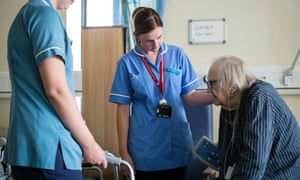
‘A defining moment was seeing the tenderness with which the nurses and assistants treated an elderly patient.’


‘A defining moment was seeing the tenderness with which the nurses and assistants treated an elderly patient.’ Photograph: David Sillitoe for the Guardian

A defining moment was seeing the tenderness with which the coronary care nurses and assistants treated an elderly patient, despite being rushed off their feet during a busy night shift.


‘A&E was extremely busy and there seemed to be a shortage of staff’ – Karen Hourihan, 57, social worker, Liverpool


I waited 55 minutes in excruciating pain for paramedics to arrive. I was taken to A&E and after a short wait in the corridor I was taken into a cubicle. My son was with me and he was able to advocate on my behalf by seeking out medical people and requesting updates. Nobody came to speak to me directly about my injury. I was taken to a holding ward while waiting to be admitted. I arrived at 8pm and was admitted to a ward at 4am when a bed became available. A&E was extremely busy and there seemed to be a shortage of staff.


Staff appeared to have little time to spend explaining things and reassuring patients. This was not too much of an issue for me as my son was present the whole time. However, for anybody alone or older I imagine it would have been an isolating experience. Having said that, the staff did their best to provide a good standard of care.


‘I was put in a room and forgotten about’ – Melanie Salinger, 53, Bishop’s Stortford, teacher


When I visited A&E, I was put into a side room and promptly forgotten about. Eventually, a nurse asked how my consultation had gone and I said I still hadn’t had one. It turns out I had been forgotten; they had no record of me. I was diagnosed with pneumonia and had to leave that room and sit in a chair for 10 hours as there were no beds. I was sat in a busy area with everyone looking at me. My blood pressure was very low, so I actually needed to lie down.


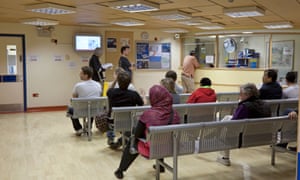
A hospital waiting area


‘I had to sit in a busy area with everyone looking at me. My blood pressure was very low, so I actually needed to lie down.’ Photograph: Alamy Stock Photo

Once a bed was found for me the nurses in the ward cared for me very well. However, the noise at night was constant. It sounded like an all-night party. Someone on my ward complained so it went quiet for half an hour – then started again. How are we meant to recover? I asked to be discharged as I knew I would recover quicker at home.


‘Wonderful service, could not be beaten’ – Larissa, 38, Bexley


I injured my wrist on a Sunday afternoon, but attended the hospital on the Monday morning. I had been told of the awful waiting times so I came prepared with a sandwich, thermos and my kindle.


However, I waited less than 10 minutes to see the nurse. She took my details and asked a few questions about my injury. I was then sent for an X-ray. The nurse informed me there could be quite a wait, but I only waited around 10 minutes. The radiographers were lovely, caring and professional.


The nurse called my name after 10 minutes, showed me the X-ray of my fracture and put me in a temporary cast. I was triaged, X-rayed and plastered in less than an hour and a half. I barely had time to open the thermos, and the kindle remained shut.


Wonderful service, could not be beaten. The NHS staff were great.


A&E in England registers record delays: readers share their experiences

9 Şubat 2017 Perşembe

A&E in England sees worst ever delays in January, leak suggests

A&E patients in England experienced the worst month of delays in January since a four-hour target was introduced 13 years ago, leaked figures suggest.


Provisional data passed to the BBC says an unprecedented number of patients spent longer than the target time waiting to be seen in emergency wards in January.


It showed that more than 60,000 people waited between four and 12 hours for a hospital bed. And more than 780 waited more than 12 hours. Both figures are record highs since the introduction in 2004 of a target that 95% of patients must be seen and either admitted or discharged in under four hours.


The leaked document from NHS Improvement suggests that out of 1.4m visits in January, only 82% were dealt with within the four-hour target.


The NHS Providers chief executive, Chris Hopson, said: “These figures have not been verified and should therefore be treated with caution, but they are in line with the feedback we have been getting from trusts.


“NHS staff have responded magnificently to increased winter pressures, but the situation has become unsustainable. The rise in long trolley waits is particularly worrying, as there is clear evidence they can lead to worse outcomes for patients.”


Hospitals have not hit the target nationally since the summer of 2015.


A Department of Health spokesman said the January data was yet to be verified and that official figures, due out on Thursday morning, only covered December.


He said: “We do not recognise these figures – it is irresponsible to publish unverified data and does a disservice to all NHS staff working tirelessly to provide care around the clock.


“Despite the pressures of winter, the vast majority of patients are seen and treated quickly and hospitals have detailed plans in place to manage busy periods – supported by an extra £400m of funding.”


Dr Mark Porter, chair of the British Medical Association council, said delays in A&E were a symptom of a bigger crisis in social care, which the government was failing to grasp.


“When social care isn’t available, patients experience delays in moving from hospital to appropriate ongoing care settings – preventing patients being admitted at the front end in A&E,” he said.


“The prime minister cannot continue to bury her head in the sand as care continues to worsen.”


A&E in England sees worst ever delays in January, leak suggests

29 Kasım 2016 Salı

NHS patients told to lose weight and quit smoking or face operation delays

Obese people and smokers will be asked to lose weight and give up cigarettes or face delays to routine operations after a health authority’s proposals were approved by NHS England.


Patients with a body mass index (BMI) of at least 30 will be asked to lose weight or face a 12-month delay for elective surgery while smokers will be asked to quit for two months or face a six-month postponement, the Vale of York Clinical Commissioning Group (CCG) announced.


The North Yorkshire CCG ruled out a “blanket” ban and said each patient would be dealt with on a “case-by-case basis” when the plan comes into force in January.


The CCG said: “Smokers and obese patients that need routine surgery, but do not wish to access the support services or fail to meet the criteria will not be denied their operation, but it could mean they have to wait longer than they otherwise would have done.”


Dr Shaun O’Connell, the CCG clinical lead who is also a local GP, said the plans would give patients the “best possible health outcomes in the long term” while helping to protect finances.


O’Connell said: “There is no ban and no blanket policy … decisions about what is in the best interests of their health, will be made on a case-by-case basis.”


The CCG, which serves a population of more than 351,000 in areas including York, Selby and Tadcaster, said there would be exclusions from the plan, which will probably include emergency and bariatric surgery and operations on patients under 18.


This year, NHS England intervened in the policy after the Royal College of Surgeons raised concerns that the proposals went against clinical guidance and made smokers and overweight patients soft targets for financial savings.


But the public body has now approved the plan.


An NHS England spokeswoman said: “Vale of York CCG has made clear its commitment to supporting patients to achieve better health and clinical outcomes by referring them to an established weight loss or stopping smoking programme, where appropriate.


“However, every patient’s case will be considered in the light of their own particular circumstances and on the basis of clinical need.”


NHS patients told to lose weight and quit smoking or face operation delays

8 Kasım 2016 Salı

Lack of NHS radiologists "could cause delays to breast cancer diagnoses"

Women may suffer a delay in finding out that they have breast cancer because the NHS is struggling with a serious and worsening lack of radiologists and radiographers, according to health experts.


There are fears that the NHS’s breast cancer screening programme will not be able to cope with the growing numbers of women who will require mammograms in coming years when the age of eligibility is extended from 50-70 to 43-73.


Two reports reveal how hospitals are facing a chronic shortage of specialists to both carry out and analyse mammograms to see whether women have breast cancer.


The Royal College of Radiologists (RCR) said there was a “looming workforce crisis facing breast cancer screening and diagnostic services” in the NHS. Difficulty getting enough staff could have a severe impact, it said.


Staff shortages are so common that almost one in 10 (8%) consultant posts in NHS breast radiology services are unfilled and a quarter of breast cancer screening programme units operate with just two or one breast radiologists, according to RCR surveys.


“The skill of breast radiologists in interpreting mammograms and other complex scans is vital to the early detection and diagnosis of breast cancer, as well as in the delivery of cancer screening programmes. Without more breast radiologists to tackle this increasing demand we cannot hope to achieve the best possible health outcomes for patients,” said Dr Hilary Dobson, the chair of the British Society of Breast Radiology.


A separate report, by the breast cancer screening programme itself, found that15% of posts among radiographers in England who carry out mammograms were unfilled and that 65% of screening units had vacancies for such staff. The NHS needed another 70 whole-time-equivalent radiographers specialising in mammography on top of its existing 615, it said.


Almost one in 10 consultant posts in NHS breast radiology services are unfilled


Almost one in 10 consultant posts in NHS breast radiology services is unfilled. Photograph: Dominic Lipinski/PA

“These findings suggest that in the future these staff shortages could risk more women experiencing a delayed diagnosis,” said Danni Manzi, the head of policy and campaigns at Breast Cancer Care. “Any delay in diagnosing breast cancer could affect how successful treatment is because the sooner treatment starts, the more effective it’s likely to be. It’s vital any wait is kept to a minimum.”


About 2.1 million women a year in England go for breast cancer screening. That number is due to rise in the next few years as there will be 8% more women aged 50 to 70. A planned extension of the age limits to 47 to 73 could see the number of women across the UK covered by the early detection scheme rise by 28% from 8 million to 10.2 million.


The RCR claimed the NHS had too few clinical oncologists who delivered both radiotherapy and chemotherapy. Six of the 21 vacant consultant posts in the specialism had been unfilled for at least a year and one in five clinical oncologists were due to retire by 2021, it found.


“The clinical workforce is growing but not quickly enough and the trends identified by our census reveal an oncology service moving steadily towards crisis,” said Dr David Bloomfield, the RCR’s medical director for professional practice.


Delyth Morgan, the chief executive of Breast Cancer Now, said: “These findings are of tremendous concern. This workforce is the backbone of the screening programme and is critical to our ability to diagnose and treat women with breast cancer in England, and must now be urgently reinforced.


“If we are to ensure the success of the screening programme and that all patients with symptoms of breast cancer have access to the timely investigation they need, this crucial workforce must be properly resourced and sufficiently supported.”


Lady Morgan urged Health Education England, the NHS’s medical recruitment and training arm, to come up with an urgent plan to increase the supply of key staff in NHS cancer services.


The Department of Health said it was working hard to ensure NHS cancer services had enough staff. “We’re helping the NHS manage increased demand in cancer services by making staffing a priority, with 20% more clinical radiologists since 2010,” a spokesman said.


The NHS in England had 20% more clinical radiologists, including 20% more consultants, and almost 10% more doctors in training, than in May 2010, he said.


Lack of NHS radiologists "could cause delays to breast cancer diagnoses"

12 Temmuz 2014 Cumartesi

Concern in excess of delays to therapy of babies struggling from tongue-tie

Tongue-tie can prevent babies from breastfeeding

Tongue-tie can prevent babies from breastfeeding. Photograph: Andersen Ross


Babies born tongue-tied can wait up to three months before having the situation rectified, according to new figures that reveal a “postcode lottery” in the time it takes to acquire remedy.


A lot more than 15,000 infants were born in 2013 with the issue, in which the skin that connects their tongues to their mouths – the frenulum – is as well brief to enable them to breastfeed.


The NHS recommends that infants are exclusively breastfed for the initial six months of their lives to lessen a catalogue of ailments, such as the likelihood of early infections and obesity in later lifestyle. However responses to freedom of details requests made to hospital trusts across the nation reveal wide disparities in how prolonged it will take for infants with tongue-tie to have their problem resolved.


The longest waits were at the University Hospitals of Morecambe Bay NHS Believe in, in which it took on regular 84 days for the procedures to be carried out. Poole Hospital NHS Foundation Believe in also initially explained its average wait was 84 days before subsequently adding that it did not think the figures it initially gave had been precise. Stockport NHS Basis Believe in carried out one,195 procedures in 2013, the most in the nation, but did not offer its average waiting time. The national regular wait was 21.six days, according to the responses to requests sent to the 160 trusts in the nation.


The figures further suggest that several mother and father are currently being forced to have the operation carried out privately. Of the 155,541 infants diagnosed with tongue-tie final yr, only 9,256 had NHS operations, even though not all of those concerned will have required treatment method. The value of the process with BUPA is around £1,530.


Luciana Berger, the shadow minister for public overall health who uncovered the figures, stated that the continued regional variation in the uptake of breastfeeding was being exacerbated by lengthy waiting times for surgical treatment.


She stated: “These worrying new figures show that thousands of mothers and babies are not receiving the care and remedy they require quick ample. “Also a lot of new mums who want to breastfeed their babies are not capable to since of extended waits for a easy tongue-tie method.


“For other mothers and fathers, the length of the waits is forcing them to go private and shell out for an costly operation. Neither of these possibilities is acceptable.


“The timely remedy of tongue-tie is vital to make certain that new mums who want to breastfeed their infants are capable to. The government need to tackle these delays and make certain that the process is accessible for all on the NHS.”


Infants with tongue-tie tend to have heart-shaped tongues because the middle is pulled in by the short frenulum, and they cannot stick out their tongue past their reduced lip.


Indications of the situation in newborns incorporate gulping and clicking while breastfeeding due to the fact they are not able to latch on appropriately.


Analysis published in the Journal of Paediatrics and Little one Health in 2005 discovered treating tongue-tie led to enhanced feeding in 95% of infants.


Belinda Phipps, chief executive of the Nationwide Childbirth Believe in, said: “Tongue-tie can result in mothers and fathers and babies much struggling. It often leaves babies hungry, unhappy and annoyed and parents sick with fear due to the fact their youngster isn’t putting on any bodyweight. Mothers could be sore, or even bleeding, because their infant isn’t in a position to feed effectively.


“To compound all this, it can take weeks or even months to get tongue-tie diagnosed and handled. Mothers and fathers frequently end up paying out for private therapy when the remedy might be a simple surgical process.”


Concern in excess of delays to therapy of babies struggling from tongue-tie

13 Haziran 2014 Cuma

Cancer check delays are placing lives at threat, professionals warn

MRI scans

Numbers waiting more than 6 weeks for an MRI or CT scan have doubled in a yr and are now the highest because 2008. Photograph: Cultura/Rex Features


Cancer patients’ probabilities of survival are getting place at chance by developing delays in carrying out essential tests on them on the NHS, experts in the ailment warn today.


New official figures display that the quantity of men and women waiting far more than six weeks for an MRI or CT scan has doubled in a year and reached its highest level since 2008.


NHS England functionality data also demonstrates that the variety of individuals getting forced to wait past the supposed maximum time has shot up for each kind of cancer check, which also includes endoscopy and ultrasound, below the coalition.


In April a complete of sixteen,981 sufferers with suspected cancer had to wait much more than six weeks for a check, the biggest quantity since February 2008. That is up from the seven,788 noticed in the same month final year and an nearly five-fold leap since the 3,495 observed in April 2010, just prior to the final standard election.


Ciaran Devane, chief executive of Macmillan Cancer Support, explained: “Only two weeks in the past we heard that more people are waiting longer to commence treatment method and now much more men and women are waiting longer just to get diagnosed.”


Devane added: “Every individual hospital has a responsibility to meet these targets, or they threat putting a patient’s very best possibility of survival at danger.”


The breach of politically essential important NHS targets – the NHS constitution says no patient should have to wait more than six weeks following their referral for a diagnostic check – has put ministers below pressure over how properly the service is responding to increasing demand for care while its finances are under unprecedented strain.


The row more than lengthy delays for cancer tests comes right after the NHS failed to meet its requirement to treat 98% of A&ampE patients inside 4 hrs and exceeded the 18-week deadline for treating individuals soon after their GP has referred them, and also the initial-ever breach of the necessity that 85% of cancer sufferers should start off acquiring treatment method within 62 days.


Sara Osborne, head of policy at Cancer Study Uk, explained: “These newest figures are very worrying and urgent action should be taken to make certain patients never have to wait also lengthy to get their cancer diagnosed. The six-week waiting-time target is in area as we know a rapid diagnosis of cancer and accessibility to remedy is important to improving survival from the disease.”


If a cancer patient is diagnosed late they may obtain remedy later on than would otherwise have been the case or need much more invasive treatment method than if it had been caught sooner. In some situations, it can decrease their probabilities of surviving or even make the big difference between physicians currently being able to conserve them or not.


Britain has one of the worst records in Europe for late diagnosis of many cancers, which has prompted the government to fund multi-million pound awareness campaigns to lessen late diagnosis of lung and bowel cancer by alerting the public to typical symptoms.


Dr Giles Maskell, president of the Royal University of Radiologists, whose three,000 members examine patients’ scan final results, stated it was “very concerned by these figures which reflect the excessive pressure on imaging services. These waiting occasions do not get account of delays in reporting, so the predicament is even worse.”


Amid expanding unease in Whitehall above the NHS, which includes predictions of a summertime A&ampE crisis, the Department of Well being final night confirmed it was offering the health support an emergency increase totalling £650m. Of that, £400m is to aid A&ampE units cope with increased demand subsequent winter and the other £250m will be invested on tackling the expanding backlog of elective procedures, such as a hundred,000 extra operations this summer time. “David Cameron has lost handle of what’s occurring in the NHS. These panic measures are a signal of how low the NHS has sunk on his watch”, said Andy Burnham, the shadow well being secretary.


A Division of Overall health spokesman stated: “Under this government, the NHS has kept waiting times low and ended the scandal of 1000′s of people getting to wait far more than a yr for treatment.


“With an ageing population pressure on the NHS is inevitably escalating so we are overseeing a one-off programme to tackle the sharp rise in demand for elective surgery.”


Cancer check delays are placing lives at threat, professionals warn

31 Mart 2014 Pazartesi

Clinical trial delays depart Uk vulnerable to epidemics, say senior medical doctors

A key outbreak of infectious ailment could sweep via the country and leave thousands dead or sick since hospitals are not able to test existence-saving remedies swiftly adequate, senior medical professionals have advised the Guardian.


Profound delays in the approvals procedure for clinical trials imply medical doctors face months of form-filling and administrative checks that make it unattainable to run essential tests in good time, mentioned Jeremy Farrar, in his very first main interview as director of the Wellcome Trust.


Farrar, a planet skilled on infectious diseases at Oxford University, has taken over from Sir Mark Walport, who left the medical charity to turn out to be the government’s chief science adviser.


Farrar’s warning is backed by other senior figures such as Sir Michael Rawlins, president of the Royal Society of Medication, and Prof Peter Openshaw, who suggested the government during the pandemic flu outbreak in 2009.


Farrar explained the unwieldy method puts public overall health at threat, particularly when pandemic flu and other infectious ailments strike, due to the fact doctors have no concept which interventions work.


“The programs we have got in area are not match for function when the scenario is moving quickly,” explained Farrar. “We have nothing at all that permits us to reply in true time.”


The Department of Health on Monday accepted proposals from the Health Analysis Authority to streamline clinical trials, but some foremost professionals argue that far far more function is required within the NHS to fast-track trials in an emergency.


An emerging infection such as bird flu, Sars or pandemic influenza could spread across Britain and burn up itself out within the area of eight weeks. But medical professionals hoping to test medication or other interventions in sufferers can face delays of more than a year just before they can recruit a single situation.


The delays mean that physicians have almost no hope of finding out which treatment options may save lives throughout a dangerous outbreak simply because sufferers will have recovered or died by the time a trial can begin.


Farrar explained the technique essential a radical overhaul so emergency trials could launch within 24 hours of an epidemic emerging. “Receiving this information early on is crucial to inform what we do and how we treat sufferers. With no it we are completely in the dark,” he said.


Pandemic influenza is deemed the most severe civil emergency chance that Britain faces, but other infections, such as novel coronaviruses and the alarming rise of drug-resistant pathogens, are also a severe threat.


Clinical trials need to have formal approval from the NHS and other bodies prior to physicians can recruit patients, but the procedure is held up at practically each and every stage. Researchers must apply for grants, submit examine protocols and patient consent varieties, gain ethical approval, discover hospitals with the correct amenities, equipment, supplies, staff and sufferers, and then signal legal contracts with them all.


The process is automatically thorough to protect patients and hospitals from litigation. Trials can go spectacularly wrong, as occurred in 2006 when 6 young men were almost killed by an experimental drug in a trial at Northwick Park hospital in north London.


The 2002 Sars pandemic killed 774 individuals and contaminated a lot more than eight,000. Had the virus not been contained it could have killed far more. The purpose the death toll was not higher was that patients have been most infectious when they had been most sick, so isolating the sick stopped the virus spreading.


“There is no doubt we were very fortunate with Sars,” explained Farrar. “But nobody is aware of exactly where it has gone and we do not have a vaccine. If it have been to come back tomorrow and I acquired contaminated, the medical professional treating me would not have a clue which drug, if any, to give me.”


Without challenging evidence, the government’s preparedness rests on educated guesses. The Division of Wellness spent £424m stockpiling Tamiflu (oseltamivir) for a flu pandemic. But the lack of trials in sick sufferers means medical professionals disagree on how properly the drug works.


A 2011 report from the Academy of Medical Sciences (AMS) raised main considerations about delays to clinical trials. The report quoted Cancer Investigation Uk information that discovered the standard time taken to launch a trial and deal with the initial patient was a staggering 621 days. The bulk of that time was spent obtaining NHS approval. The time has come down since, to all around 18 months, but has not improved considerably in the previous year or so.


Sir Michael Rawlins, president of the Royal Society of Medicine, who chaired the report, mentioned progress was disappointing. “It truly is going in the proper route, but it really is painfully slow,” he explained.


The Health Study Authority was set up in response to the AMS report and charged with streamlining approval occasions. It has currently reduce delays that held up ethical approval. One change was to hold weekly meetings of ethical committees to think about and approve trials submitted in the days beforehand, and a system for convening ethical committees practically when a trial is urgent. One particular trial to look at the impact of a vaccine in pandemic influenza acquired ethical approval in two days.


But the major delays are not with ethical approval, but indicator-off from the NHS centres that host trials. It is right here that the HRA proposals aim to make their biggest influence. Alternatively of personal NHS hospitals duplicating every other’s perform by independently reviewing, querying and ultimately approving a trial, the HRA will act as a central authority, offering a single sign-off for all participating hospitals.


Relieved of that workload, hospitals can target on the practicalities, such as acquiring trial medication and generating confident sufferers are enrolled. If the wellness division agrees to the programs, a basic trial could be accepted inside of 25 days.


“We will give researchers a great deal more self confidence that the NHS can react if the HRA is carrying out the greater portion of the approving,” mentioned Janet Wisely, chief executive of the HRA.


She mentioned that in the long run, they ought to be able to approve emergency trials inside 24 hrs. “If you are intending to treat someone in a 24-hour timeframe then research need to match that. It really is a challenge, but it’s what we must aim for,” she explained.


Farrar needs much more trials pre-authorized so that physicians can begin emergency tests in individuals the second an outbreak is identified. “We need generic protocols which have been pre-authorized by ethics committees and institutions at a nationwide level. All the information, from what samples to consider to the kinds we’d record patient data on, would be openly obtainable. Then, in an emergency, a group that has worked on the leading 3 or 4 interventions can start enrolling patients inside 24 hrs,” he said. “There are groups making an attempt to address this, but it truly is nowhere close to there but.”


Clinical trial delays depart Uk vulnerable to epidemics, say senior medical doctors

26 Mart 2014 Çarşamba

Obamacare Delays Should Delay Tax Day Too: April 15? How About August

Deadlines are component of government and our method of laws. We’re used to meeting them, which includes the dreaded April 15 tax day. Yet the repeated delays in implementing Obamacare have grow to be the new standard. So far, in accordance to Politico, we’ve had these:


  • Nov. 15, 2012: Exchange deadline delayed. The Department of Health and Human Providers gave states an extra month to determine no matter whether they would set up their own wellness insurance exchanges — a determination it announced just one particular day just before the unique deadline.


  • July 2, 2013: Employer mandate delayed. The administration declared that it wouldn’t enforce the fines in 2014 for companies with more than 50 total-time workers who do not offer you well being coverage. The fines have been pushed back to 2015.


  • Nov. 21, 2013: Open enrollment delayed for 2015. The administration pushed back subsequent year’s enrollment season by a month.


  • Nov. 27, 2013: Tiny Business Well being Choices System (identified as Shop) delayed. On-line enrollment for the federal health insurance coverage exchanges for tiny organizations was delayed.


  • Dec. 12, 2013: Enrollment deadline extended. Buyers on the federal enrollment internet site had been given practically two more weeks to sign up for coverage powerful Jan. 1.


  • Dec. 24, 2013: Enrollment deadline extended. In a message on HealthCare.gov, buyers have been advised they could get support finishing their Jan. 1 applications if they were currently in line on Dec. 24.


  • Jan. 14, 2013: High-chance pools extended. The high-risk insurance pools, which initially had been slated to close Jan. one, had presently been extended when.


  • Feb. ten, 2013: Employer mandate delayed. This time, companies with among 50 and a hundred staff were offered right up until 2016 to supply coverage, and the mandate will be phased in for employers with far more than 100 workers.


  • Mar. 14, 2013: Higher-chance pools extended. The specific, temporary coverage for individuals with severe pre-current problems — which was supposed to last only right up until the overall health insurance coverage exchanges have been in location — was extended a third time for yet another month.


  • Mar. 25, 2013: Final enrollment deadline extended. The March 31 deadline — the finish of enrollment for 2014 — will be loosened for men and women with specific sign-up conditions.


A lot of have questioned the legal authority for these delays. The latest delay will extend the enrollment deadline by two to three weeks for three dozen states. With this delay and so numerous others, is not it affordable to believe that taxpayers too deserve a delay in that merciless April 15 tax day?


English: President Barack Obama, Vice Presiden...

President Obama, Vice President Biden, and senior personnel, react in the Roosevelt Space of the White Home, as the Home passes the wellness care reform bill. (Photo credit score: Wikipedia)


While we’re at it, let’s not just get a filing deadline delay, but a payment delay as well. The latter appears only fair. After all, you can currently get an extension to file your taxes from April 15. You might need time to take into account appropriate reporting, get professional advice, and so forth. There’s no shame in obtaining an extension. Hundreds of thousands are processed each and every yr.


The extension used to be an automatic four months, with two more thereafter if you had a good reason. Then, the IRS dropped the purpose necessity and the two-stage method. Now automated extensions are six months, from April 15 to October 15. Who couldn’t use the added time?


But that extension is just to file your return, not to pay out. Your payment is still due April 15. It would confident be nice to have an extension of that! Yet regardless of the repeated extensions in the implementation of the Cost-effective Care Act, it looks awfully unlikely that Congress, the IRS or the White House will extend the due date for your tax payment.


That indicates you ought to make your payment, get your extension, and use the time wisely to make your return correct and full. You could be waiting for Forms K-1, gathering documents, etc. If there are debatable points on your return, get some expert guidance. It is far better to go on extension and be thorough than to file rashly.


To lengthen, you can mail a Form 4868, ask your return preparer, use TurboTax or other industrial software, or do it by yourself electronically. Go to IRS.gov and click: Application for Automatic Extension of Time To File U.S. Personal. For far more IRS advice, see IRS Tax Subject 304 Extensions of Time to File Your Tax Return.


Does going on extension topic you to a increased IRS audit chance? Most likely not. Some individuals claim that going on extension increases audit chance. Other folks say that going on extension actually decreases it. Neither can be verified. There are several opinions about what triggers an audit.


Several feel that filing at or close to a deadline decreases audit threat. Who understands, the crush of other filers April 15th might minimize the opportunity that your return will stand out. Of course, that logic may possibly also apply to the crush of extended returns filed on October 15th. Just go on extension if you require the time.


Want more time to shell out, and wish that you could get an Obamacare-type delay? Really don’t hold your breath for an extension of the April 15 tax due date.


You can reach me at Wood@WoodLLP.com. This discussion is not intended as legal suggestions, and can’t be relied upon for any goal without the services of a experienced expert.


Obamacare Delays Should Delay Tax Day Too: April 15? How About August

18 Şubat 2014 Salı

NHS in England delays sharing of medical records

NHS care.data

NHS England has delayed the launch of care.data, and the sharing of patient health care records. Photograph: Dominic Lipinski/PA


NHS England is to delay the introduction of a method to share healthcare information after healthcare and patients’ groups called for far more time to increase awareness of how people can opt out and have self confidence in the scheme.


Beneath the original timetable, individuals had right up until the commence of April to opt out of the information-sharing technique, which the NHS says will improve study into the final result of treatments and permit drug and insurance firms to get “pseudonymised” health care data. Last month, all 26m households in England had been sent leaflets about the scheme, setting out the achievable rewards and explaining how to make a decision regardless of whether to consider element.


In a statement, NHS England explained the collection of data from GPs’ surgeries would start in the autumn – it did not give a more exact date – to permit “much more time to create understanding of the benefits of using the information, what safeguards are in spot, and how folks can opt out if they select to”.


In the course of this time NHS England will work with groups including the British Health-related Association (BMA), the Royal School of Standard Practitioners (RCGP) and the customer body Healthwatch to advertise awareness, as effectively as hunting to new means of constructing self-confidence in the scheme, formally identified as care.data.


In the meanwhile, NHS England would work with a modest variety of GP practices on a voluntary basis to check the quality of the information collected, the statement added.


Tim Kelsey, nationwide director for patients at NHS England, said it needed to listen to patients’ views. He explained: “We have been advised extremely plainly that sufferers need a lot more time to find out about the rewards of sharing info and their right to object to their info getting shared. That is why we are extending the public awareness campaign by an further 6 months.”


Anna Bradley, chair of Healthwatch England, explained: “This is a truly constructive move by NHS England. They have proven a willingness to pay attention to what the public have to say about the way their well being and care providers are run.


“Crucially they have agreed to Healthwatch England’s request to see the roll-out of care.data delayed to permit much more time to guarantee the public are fully informed. Above the coming months the Healthwatch network will carry on to perform a essential role listening to the issues of regional communities, assisting to inform them about what’s happening and functioning with NHS England to increase their communications with the public so every of us can make an informed determination.”


Professor Nigel Mathers, from the RCGP, stated: “We would like to thank NHS England for listening to the considerations of RCGP members and for acting so swiftly to announce this pause. The further time will supply it with the likelihood to redouble its efforts to inform every patient of their proper to opt out, each and every GP of how the programme will function, and the nation of what robust safeguards will be in location to defend the safety of people’s data.”


The RCGP has sent a letter to NHS England arguing that the delay need to be used to clarify concerns this kind of as what data can be disclosed and who will decide this, and for a national campaign that highlights the choice to opt out.


Chaand Nagpaul, chair of the BMA’s general practitioner’s committee, stated: “With just weeks to go until the uploading of patient data was scheduled to get started, it was clear from GPs on the ground that patients remain inadequately informed about the implications of care.data.


“Although the BMA is supportive of using anonymised data to strategy and increase the top quality of NHS care for individuals, this should only be completed with the support and consent of the public, and it is only proper that they fully realize what the proposals mean to them and what their rights are if they do not want their data to be extracted.”


The scheme’s rollout has been beset by criticisms about the clarity of the information provided to the public. Earlier this month, the data commissioner’s workplace criticised the campaign for failing to adequately describe what data was concerned and how sufferers could avoid their medical records being shared. At the time, Kelsey agreed with some of the critics, saying: “Maybe we haven’t been clear sufficient about the opt-out.”


NHS in England delays sharing of medical records