ending etiketine sahip kayıtlar gösteriliyor. Tüm kayıtları göster

24 Nisan 2017 Pazartesi

Neglected no more: ending trachoma, an infectious eye disease rooted in poverty

In proportion to their collective contribution to human suffering, neglected tropical diseases (NTDs) have received insufficient attention. Today, thanks to incremental progress in the science of public health, growing programmatic experience and commitment from endemic country governments, donors and other partners, we are better equipped than ever before to recognise, prevent, control, eliminate and eradicate them.


Trachoma is one of many NTDs that are rooted in poverty. It is an infectious disease of the eye caused by a bacterium, and marked in its early stages by inflammation of the inner surface of the eyelid. Infection is spread by the transfer of discharges from the eyes or nose of an infected person.


More severe manifestations, such as trichiasis, typically occur in adulthood after multiple untreated infections. Trichiasis is present when turned-in eyelashes scratch the eyeball – a debilitatingly painful condition that may lead to progressive and irreversible visual impairment.


At present, about 0.45 million people are blind and 1.4 million people are severely visually impaired as a result of trachoma. Very basic interventions – simple eyelid surgery, the antibiotic azithromycin to clear infection and facial cleanliness, water and sanitation – can significantly reduce the impact of the disease. These interventions (surgery, antibiotics, facial cleanliness, environmental improvement) are represented by the acronym Safe: the strategy recommended by the World Health Organisation (WHO) to eliminate trachoma as a public health problem globally by 2020.


Morocco succeeds with Safe


Morocco adopted Safe in the early 1990s, becoming the first country to implement the strategy at national scale and one of the first to benefit from Pfizer’s now long-running donation of azithromycin to trachoma elimination programmes.


In November 2016, Morocco was validated by the WHO as having eliminated trachoma as a public health problem, joining Oman and Mexico as the only countries documented to date as having beaten the disease. Other countries have made similar progress, and further official validations are likely to follow later in 2017.
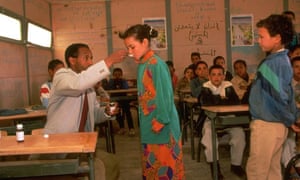


Azithromycin being used to treat trachoma in Morocco, 2016


Azithromycin being used to treat trachoma in Morocco, 2016 Photograph: Dr Jaouad Hammou/Ministère de la Santé, Maroc

Mapping trachoma


Trachoma’s natural home is among populations who live furthest from services, and so, until recently, data on where to intervene were grossly incomplete. The Global Trachoma Mapping Project (GTMP) sought to remedy this with surveys covering more than 1,500 districts in 29 countries. The project was completed in just over three years – running from December 2012 to January 2016 – and involved the training and deployment of more than 600 field teams, who collectively examined more than 2.6 million people. Its successful implementation now provides health ministries with the information they need to plan interventions, where required, for worldwide trachoma elimination.


Visionary backing


The success of the mapping project is attributable to a number of factors. First, it had financial backing from the UK’s Department for International Development and the United States Agency for International Development. Second, in each of the countries in which the GTMP operated, it benefited from high-level political commitment and strong health ministry leadership. Third, a worldwide partnership of NGOs and academic institutions, spearheaded by Sightsavers, the International Trachoma Initiative and the London School of Hygiene and Tropical Medicine, fostered synergies rather than inter-organisational competition. Fourth, the mapping project was held to strict quality standards, despite operating in some of the most difficult environments in the world. And fifth, the mapping was innovative in its use of technology, which kindled the interest of partners on all sides.
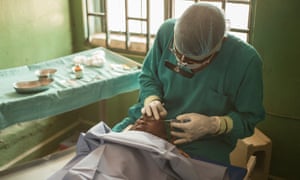


A surgeon operates on a young boy with trachoma in Nigeria.


A surgeon operates on a young boy with trachoma in Nigeria. Photograph: Graeme Robertson/the Guardian

Field teams collected all data into a purpose-built app running on Android smartphones. Those data, including geospatial information, were uploaded to a secure cloud-based server as soon as the phones were within range of a suitable network. Raw data were then cleaned, reviewed by the health ministry, and once approved, automatically displayed on the online Trachoma Atlas. This system was far more rapid and reliable than previous paper-based survey tools – and saved approximately 4.2m sheets of paper.


Work is ramping up in the 42 countries where trachoma remains a public health problem. In the next few years, with continued political support, collaboration and donor investment, we will finally be able to write the closing chapters in the long history of this devastating disease.


Victor Florea is an intern and Anthony Solomon is a medical officer for trachoma in the Department of Control of Neglected Tropical Diseases, World Health Organisation.


Join our community of development professionals and humanitarians. Follow @GuardianGDP on Twitter.


Neglected no more: ending trachoma, an infectious eye disease rooted in poverty

18 Nisan 2017 Salı

The agony of ending a wanted late-term pregnancy: three women speak out

Last year, Donald Trump suggested that current abortion laws allowed doctors to “rip the baby out of the womb of the mother just prior to the birth of the baby”. His statement erroneously described abortion procedures, and also triggered an uproar among the women and men who know firsthand the devastation of ending a late-term pregnancy.


Nearly 99% of abortions occur before 21 weeks, according to the Center for Disease Control and Prevention, but when needed pass that point it is in response to harrowing circumstances.


“Abortions that occur at this stage in pregnancy are often the result of tragic diagnoses and are exactly the scenarios wherein patients need their doctors, and not obstructive politicians,” says Dr Jennifer Conti, clinical assistant professor at Stanford University. “Asking a woman to carry a fatally flawed pregnancy to term is, at the very least, heartbreaking. I’ve often heard women say that they chose to end such pregnancies because of unselfish reasons: they couldn’t bare the thought of putting their fetus through even more pain or suffering.”


Just this year, 400 abortion restrictions were introduced in 41 states, according to the Guttmacher Institute, a research organization that supports abortion rights. Among them, Republicans introduced the first ever federal “heartbeat” bill earlier this year – which would ban abortions after a heartbeat is detected. Meanwhile, Congress is considering a bill that would also ban abortion at 20 weeks nationwide – which is when ultrasounds can offer the first signs of fetus anatomy anomalies.


Here, three different women agreed to share their experiences to end misconceptions about late-term terminations, and to explain to politicians and the general public why they’re necessary in the first place.


Kate Carson, teacher, outside of Boston, Massachusetts


That warm June day, the recovery room was silent. The doctor entered carrying Laurel, a bundle of just five pounds wrapped in a pink-and blue striped cotton blanket. He gently passed her to her mother, Kate. She bent forward to smell her. She touched her skin. Her daughter was warm, but not as warm as she should have been.


“I just needed to know it happened. I needed to know that I had a baby,” Kate Carson says.


At 27, Kate had her life planned out. She and her husband were going to have four kids, and she was going to be an engineering professor. Her first pregnancy went fine, and she had a healthy baby girl. But while pursuing her PhD in engineering, she suffered three miscarriages. “It was a long road,” she says, but at by 29, she was finally expecting another girl, Laurel. She was due in the summer of 2012, and both parents were elated.


Kateholds her baby Laurel’s foot and hand prints that were made by nurses at the clinic.


Kate holds her baby Laurel’s foot and hand prints that were made by nurses at the clinic. Photograph: Kayana Szymczak for the Guardian

At 19 weeks, an ultrasound revealed a shadow of concern but the finding was reversed with full confidence at a level two ultrasound. “I’m not seeing any problems. Everything looks fine,” the specialist told the parents.


But Kate had a nagging worry. “My husband and I did not feel like everything was fine,” she says. She asked the nurse how sure the specialist was. “He would have to be so certain. They would never reverse a diagnosis without being super sure about it,” the nurse replied.


Yet her husband encouraged her to book another second level two ultrasound, a “piece of mind ultrasound”.


Expecting only reassurance, Kate knitted a pink sweater for Laurel while chatting freely with the technician who quickly grew silent. There was a big black spot on Laurel’s brain. “This baby is different,” the technician said. She left the room and returned with a maternal fetal specialist and a specialist in training.


“That’s when they started telling me,” Kate says. The fetus had Dandy-Walker malformation, a set of abnormalities of the cerebellum.


“The problems we didn’t see last time, we are seeing today,” said the specialist. She offered Kate adoption and abortion, “if it was still a legal option”. They used to send women to Kansas for abortions, she told her, but that was before Dr Tiller was shot in the face at a Sunday church service.


Kate asked if children with Dandy-Walker malformation are ever normal. “Yes,” said the specialist.


“And that, honestly, is so hard to hear because you just want something definitive”, Kate recalls. “On the one hand, of course you want your child to be normal. On the other hand, you want to know, is your kid going to be okay, is your kid going to receive a devastating diagnosis?” But the specialist had no definitive answers and recommended an MRI to determine whether Laurel would be okay or “incompatible with life”.


Kate couldn’t get the MRI for the next 48 hours. The wait was excruciating. At home, she could find no peace and substituted knitting her baby’s sweater for sleeping. She curled up on her living room sofa and cried until her husband scooped her up each night and took her to bed.


“When you’re imagining futures beyond the miracle happy ending, it’s sinking in,” she says.


The day of the MRI finally arrived. She was 35 weeks, 0 days. By the end of it, Kate and her husband had the hardest answers they’ve ever received.


Their daughter had moderate to severe Dandy-Walker malformation. But that wasn’t the only diagnosis; Laurel also had a brain condition in which fluid builds up in the ventricles, eventually developing into hydrocephalus and possibly crushing her brain. She had a congenital disorder too, in which there was complete or partial absence of the broad band of nerve fibers joining the two hemispheres of the brain.


What this meant was Laurel was expected to never walk, talk, or swallow. That was if she survived birth.


Kate asked her doctor, “What can a baby like mine do? Sleep all the time?”


“Babies like yours are not generally comfortable enough to sleep,” the neurologist said.


“That is when it became very clear what I wanted to do,” she says. “The MRI really ruled out the possibility of good health for my baby.”


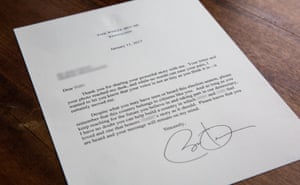
A personal letter of support from Barack Obama. Kate wrote to President Obama after her abortion experience, in an effort to educate politicians about the realities of late-term abortion.


A personal letter of support from Barack Obama. Kate wrote to President Obama after her abortion experience, in an effort to educate politicians about the realities of late-term abortion. Photograph: Kayana Szymczak for the Guardian

For Kate, giving a child life and peace are the two gifts a mother can offer. “Most babies get to have life and get to have peace, but this baby, I had to choose. I could choose life, with the outside chance of peace or occasional peace, or I could choose certain peace without life. And for me, certain peace without life was the choice I wanted to make.”


On their ride home, Kate and her husband were silent as they drove in rush hour traffic across the Zakim Bridge. Unable to say it herself, Kate’s husband uttered the word abortion. “I think we should ask about it,” he said.


“I had been in this dark, awful prison of a place inside myself,” she says. Her husband’s words comforted her.


When they arrived home, Kate immediately called the doctor and left her a message. Her mother arrived to pick up their daughter and before leaving said she would have done the same. An hour later, the phone rang. Kate grabbed it. If they wanted the abortion, they had 30 minutes to call a clinic in Colorado before closing time or wait the weekend. The procedure would last four days. And they would need $ 20,000. Massachusetts doesn’t allow abortion after 24 weeks unless it’s necessary to save the life of the mother.


Kate and her husband live a modest life, certainly not one with $ 20,000 readily available. Kate’s younger brother offered his life savings of $ 5,000, but it was her parents who gave them the money from their retirement fund. “This is exactly why these abortions exists,” said her father.


Three days later, they were driving up to Dr Hern’s Boulder Abortion Clinic, where surveillance cameras and razor wired fences surrounded them. She was 36 weeks.


I felt like the only one in the entire world … but we are not entirely alone. Just hidden


Kate Carson


Inside the clinic, Kate took a blood test followed by exhaustive counseling sessions, then the consent form. Dr Hern wanted to make sure she was doing this of her own free will.


By the end of the day, Kate and her husband knew it was time. Dr Hern took Kate to a room for the injection. It would slow her baby’s heart to a stop as soon as it penetrated. Sometimes, it happens quickly. For Kate, it happened over the course of a couple of hours. Just as she and her husband were planning to grab a bite of food, Laurel kicked. “I lost it,” says Kate. She retreated to her hotel room and lay there until the moving stopped. When Laurel went still, Kate’s stomach sagged low and lifeless, she says. “It was really sad and really hard.”


“I did not ever doubt I was doing the right thing for her but that did not make it easier,” she says. Kate says Laurel got the “tightest hug”. Her body was hugging her.


Next, it was time to get dilated, which was painful for Kate because she couldn’t receive an epidural. On the last day in Colorado, on an early June day, Kate, who was in labor for two and a half hours, delivered Laurel.


In the recovery room, Dr Hern brought Laurel to her. She smelled right, she felt warm, but not as warm as a live baby.


“She was beautiful,” Kate says.


When Kate returned home, they scattered Laurel’s ashes in the ocean. It was time for closure, but Kate worried about judgment so she didn’t tell anyone what happened for months. Then the self-doubt came.


“I feel like myself got fragmented into a million different selves. And I had my angry guard dog piece and my jealous piece, had my sad piece, I had the guilt, the religious piece. All of these pieces, and I had to figure out who I was”.


For some time, Kate wondered about the human error piece in the equation and wondered if her first doctor might have mislead her on purpose. A little research later proved it was just an honest mistake. “I can live in a world where people make mistakes,” she says. “I felt like the only one in the entire world who had had such a later abortion and it is true that we are rare, but we are not entirely alone. Just hidden.”


Since Laurel, Kate gave birth to another healthy daughter.


Kate Carson speaks about her experience to doctors, lawyers, and neighbors. You can also read about her experience here


Lindsey Paradiso, wedding photographer, Virginia


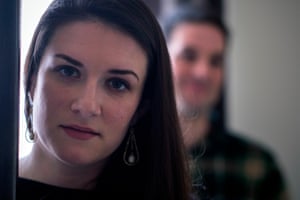
Lindsey and Matt Paradiso, photographed inside their home.


Lindsey and Matt Paradiso, photographed inside their home. Photograph: Justin Ide for the Guardian

The moment Lindsey, 27, found out she was pregnant, she wrapped the positive test strip in a used gold metallic gift bag and surprised her husband, Matt, with it. Two months later, they named her Omara Rose.


This was not the easiest pregnancy for Lindsey. She suffered from sciatica nerve pain and had to undergo daily injections for her blood clotting disorder. But she was over the moon about the pregnancy.


At first, it looked like a bubble floating on the ultrasound. At the routine 18-week visit in February 2016, the doctor speculated the peculiarity could be cystic lymphangioma, a group of cysts found mostly in the neck. Or it could be nothing. They immediately booked an appointment with the University of Virginia (UVA).


After seeing the ultrasound at UVA, Lindsey noticed the growth had enveloped half of Omara’s face and spread around her neck to the back of her head. When the doctor entered, they expected the worst. Again, the term lymphangioma came up. But so did cervical teratoma. Only an MRI could determine decisively, but whether it was malignant or benign, it could be fatal to the baby.


“You could just tell the energy in the room was like you should end it, it’s not going to turn out well,” she says. The doctor told them they could terminate the pregnancy since Omara’s chances of survival were slim. Matt and Lindsey were crushed by the prospect. They wanted to fight.


Twenty days after seeing the first signs of trouble, they learned that Omara had an aggressive form of lymphangioma growing out of her neck. The diagnosis came in the form of a dense two-page MRI report. The fast-growing, inoperable tumor had grown into her brain, heart, and lungs. It had wrapped around her neck, eyes, and deep into her chest. It was so invasive, it was pushing her tongue out of her mouth.


Her chances of living to age of viability or birth were slim. Lindsey and Matt made the heartbreaking decision to follow through with an abortion at around 24 weeks. They were just a few days away from it being an illegal termination.


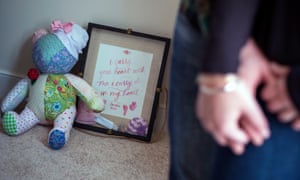
A shadow box of memories of their daughter, including her hand and foot prints, sits with a teddy bear.


A shadow box of memories of their daughter, including her hand and foot prints, sits with a teddy bear. Photograph: Justin Ide for the Guardian

On 26 February 2016, Omara Rose’s heart stopped beating. Shortly after, Lindsey was admitted into the hospital for labor induction but the epidural stopped working. “I felt like my insides were being ripped apart,” she says. When the doctor administered a second epidural, Lindsey became nauseous. Her ears rang. The room spun. The doctor rushed in to administer a third epidural.


She was conflicted the whole time because while she was in pain, she didn’t want it to stop because she knew by the end of it “your child is going to be dead”, she says. Matt held her hand the whole time.


To hide something because you’re ashamed of it is just going to perpetuate misunderstanding


Lindsey Paradiso


When she finally delivered Omara Rose 40 hours later, she was so small, “I barely felt her leave me but I knew she had,” she says.


Over the next few hours, Lindsey and Matt got to hold Omara Rose, dressed in a tiny dress with a hat the size of the cup of Lindsey’s hand. Then Lindsey’s and Matt’s family came, each taking turns to say their goodbyes. “I wanted her to be alive so badly but I knew it was for the best. She went without pain,” she says.


The next day, they buried their daughter in a cemetery four hours away from where they live now.


“I don’t think people understand the gravity of how sick she was. How fatal her tumor was,” says Lindsey.


But it took some time for them to be open about it, especially Matt. Lindsey found comfort in blogging while Matt focused on completing his education at Virginia Tech.


“To hide something because you’re ashamed of it is just going to continue to perpetuate misunderstanding,” says Lindsey. People automatically assumed that if she had the abortion, it was out of convenience. On the contrary, she says. “It’s something that will stick with you forever.”


For those who believe these babies are unwanted, Matt says: “You’re not going to wait until halfway through your pregnancy to finally have an abortion.”


Prompted by Donald Trump’s statements on late-term abortions, Lindsey shared more widely her experience in a Facebook post, which was shared over 100,000 times.


“Abortions are hard decisions made by real people,” she says. “Being open is a call for empathy.”


Lindsey Paradiso testifies against bills to limit access to safe and legal abortions. She’s also blogged about her experience here


Darla Barar, Austin, Texas, copyrighter


Darla Barar and her husband Peter. Darla was pregnant with twins - Catherine and Olivia - when they discovered that Catherine had a number of serious health issues.


Darla Barar and her husband Peter. Darla was pregnant with twins – Catherine and Olivia – when they discovered that Catherine had a number of serious health issues. Photograph: Courtesy of the Barar family

On 22 June, at 3.30pm, the doctor let them see Cate one last time. She danced for them and then kicked. Her mom told her it was going to be okay. And then, guided by the ultrasound, the doctor injected a medication into Cate’s heart, stopping it. When they checked for a heartbeat 30 minutes later, the silence was deafening.


Darla, then 29, and her husband Peter had tried for years to get pregnant. When treatments failed, they traveled to the Czech Republic to use donated eggs. A week after the transfer, Peter got a dinner dessert with a message: “Congratulations daddy.” They were expecting twins.


Darla and Peter had named their twins Catherine “Cate” and Olivia, and by their 20-week anatomy scan they already knew their distinct personalities. Olivia was a “diva” and Cate was shy, a “cuddle bug”. “We loved them more fiercely than I ever thought possible,” Darla says.


But during a routine anatomy scan, the technician was abnormally quiet. Cate was measuring a little behind but she was always the smaller of the two, so Darla didn’t worry much. After a long wait, the OBGYN entered the room and asked Darla to sit next to her husband. “I just knew something was wrong,” Darla says.


Finally, we just looked at each other and said it was okay. We had to do what was best for her


Darla Barar


Darla recalls hearing the doctor say he had never seen this combination of anomalies before.


Darla and Peter saw additional specialists, and all confirmed a number of issues. Cate had encephalocele, which is a neural defect that causes brain matter to leak out, slow growth, microcephaly, a very large cleft lip and possible fused digits. Her cerebellum was so underdeveloped that one doctor had trouble finding it and her brain’s midline was shifted, indicating “severe disorganization”.


To make matters worse, Olivia’s life was in danger. Cate’s amniotic sac was growing and restricting the growth of Olivia’s sac.


If she carried to full term, the restriction on Olivia’s sac would likely mean an early delivery. Darla says that every specialist they saw disclosed there was a high probability that Cate would not survive the delivery but if she did, there was no guarantee the surgeries – removing the encephalocele and placing her brain tissue back into her skull – would save her.


Darla cried and Peter prayed. “We needed a miracle and we knew as the day went on we weren’t going to get one.”


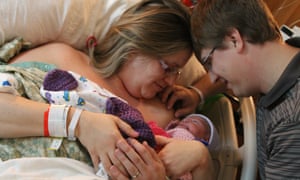
‘And then we had to grasp that we were only a family of three.’


‘And then we had to grasp that we were only a family of three.’ Photograph: Courtesy of the Barar family

Their other option was abortion, one they did not take lightly, but one that felt rushed because of Texas’ restrictive abortion laws, which bans abortions after 22 weeks. Darla and Peter had 12 days to decide. “If laws were different … we would have done more testing – one doctor mentioned an MRI, for example, to try to test the level of her brain function. But we didn’t have that, and knowing what timeline we were on, we spent a lot of sleepless nights researching, making appointments, talking to each other and our therapist, and really just spending time being the four of us,” she says.


“Finally, we just looked at each other and said it was okay. We had to do what was best for her. So we knew what we had to do to bring home one”. Darla says she was prepared to deal with it all, but “if it meant Cate was going to suffer, we just couldn’t do that to her.”


At 21 weeks and 6 days, Darla had an injection, and Cate’s heart stopped. “For us, it was completely humane,” she says.


In the case of an additional fetus that gets aborted in the womb, the tissue is usually reabsorbed back into the body, but that wasn’t the case this time.


“I kept telling Peter, I’m carrying our healthy baby and our dead baby. I can’t reconcile that in my brain. At the same time, it was a comfort to know that I didn’t have to say goodbye right then,” she says.


Thirteen weeks after the diagnosis, Darla delivered Cate and then gave birth to Olivia, a healthy five-pound baby. The family took turns holding Cate and later in the afternoon, the chaplain came to take her away.


“And then we had to grasp that we were only a family of three,” she says.


Darla says she couldn’t face people after the abortion. She called it a stillbirth. “I knew I was dealing with more than just grief and I couldn’t explain that to people,” she says. She was also dealing with guilt. But she never felt regret, she says. She knew she did the right thing.


Spurred on by Donald Trump’s comments about later abortions, Darla took to social media to share her story and the response was overwhelming, both good and bad. The meaner comments focused on abortions as a version of birth control, or a way to rid oneself of an imperfect child.


“I can tell you, knowing how much the procedure cost, nobody is doing that for birth control,” she says. “Ask us why we’re getting it. Don’t assume that you understand our lives.”


Nonetheless, “being open has allowed me to be a better mom. I’m much more free with my emotions,” she says. Knowing that she could become a voice for women and men who needed it empowered her.


“It’s always the health of the mother but the health of the baby is never taken into consideration [into laws] and in situations like ours, it could have meant two dead babies on our hands,” she says.


Darla Barar blogs about her experiences here


The agony of ending a wanted late-term pregnancy: three women speak out

21 Mart 2017 Salı

To stop doctors ending their lives, we need to hear from those suffering | Ranjana Srivastava

The ceilings soar impressively high, the stained glass windows are exquisite, and the satin-adorned pews stretch majestically to the dignified altar. Amid the silence punctuated by the barest of sobs, I spot doctors whom I have long lost track of. And row upon row of nurses, still tight years later. As we wait for the service to begin, we imagine we are all silently interrogating our memories about each other. Time parted us for decades before we have gathered in such dreadful circumstances.


“I wanted you to hear it from me,” a colleague had said, audibly upset on the phone. I nearly collided with the pavement when I heard.


She was wonderful, the speakers confirm that morning. Her boss delivers an impassioned eulogy about an inspired clinician and a devoted mother to the children who sometimes tagged along on weekend rounds. Her best friend recalls their last conversation that ended with the doctor saying to the nurse, “Go home, don’t work so hard.”


Her husband quietly expresses gratitude for their years together and grief for the stolen ones. Her parents sit mutely, heads hung low, suddenly and irrevocably aged. A slideshow of pictures, depicting ordinary things – licking ice cream, dropping of the kids, medical graduation, the first day of internship – suddenly turned unmistakably poignant. The audience is frozen in a horrible dream.


Outside, there is more heartbreak. “We have to say goodbye to Mummy, just us,” the children’s father says softly. We, the gathered, hold our breath lest it makes a sound. Gently, under the flowers she so loved, she is lifted into the car. It’s soon a mere dot on the road. There are refreshments but the crowd disperses awkwardly, wordlessly, not trusting ourselves to speak.


We had known each other well enough in our early days, biding time on endless night shifts, watching dawn break, praying that the nurses would save the next page for the day crew. Later, our lives diverged, each assuming the other was successful, busy and content. The final time I saw her was shortly before she died.


It had been a fractious day; I felt brittle, from a distance she looked happy. What would have happened if we had stopped to talk?


If she had asked, “How are you?” I’d almost certainly have smiled, “Fine.”


And if I had asked, “How are you?”


Could she conceivably have replied, “Suicidal”?


After the gut-wrenching news of her suicide starts the inevitable soul-searching. It was a bad boss. No, a troubled marriage. Parenting had taken its toll. Or her disagreeable colleagues. She seemed so normal in the days leading up to it. No, far from it. She was upset, anxious, disillusioned. The only thing you learn is that for someone who was surrounded by observant and intelligent people, no one really knew much at all. No one knew what went through the mind of a vibrant and capable doctor in the prime of her life, who one day decided that life wasn’t worth living anymore.


Unfortunately, this isn’t the first time I have encountered the suicide of a colleague. Some I had known personally; others were brought close through mutual patients, and still others I would never get to meet because they had ended their life before starting a new rotation. In every instance, other doctors did not realise the depth of their colleague’s mental anguish. “I wondered about her but didn’t want to intrude,” someone ruefully recalled. “I didn’t think it was possible,” reflected another.


Four junior doctors have taken their lives in the past six months in Australia.In my busy hospital, I observe a roundabout of students, residents and specialists in difficulty. But how much difficulty? When they say they’re having a bad time, is it a bad week, a dreadful year, or a tortured life? Are they upset about a rejected grant or do they deem their very existence worthless? Forced smiles and tough hides abound in the workplace, where always being “fine” is a badge of honour. This is why it can be so difficult to distinguish doctors who will indeed be fine from those who need help.


There is ample evidence for the high rates of mental illness in doctors, several times greater compared to other professions and the general population. These figures are quoted so frequently at every orientation that awareness should not be an issue. Practically every institution has an employee assistance program that offers confidential help. Some offer free psychiatric evaluation and counselling. And as with other informal medical consults, many psychiatrists will help a colleague in distress, making access to high quality help less of an issue for doctors than many others.


Armed with knowledge and surrounded by advice, why do doctors commit suicide at an alarmingly high rate?


I sometimes fear it may be because as a profession, we are reluctant to swallow the evidence. And if we can’t accept the evidence we can’t help ourselves or others. We can have an intellectual discussion about anxiety, depression or suicide and we can apply the knowledge to our patients but but identifying vulnerability in our own self is altogether different. No matter how many times we hear it, it still doesn’t seem possible that we, or someone like us, could have a mental illness. The consequences seem so vast, the repercussions so numerous that perhaps it’s better to not know the truthful response to “Are you OK?”


Doctors say that the disclosure of mental illness poses a real threat – to license and insurance, career and reputation.


Discrimination, bullying and harassment in medicine are unfortunately never far from the headlines but thanks to brave people who have risked their career, a victimised doctor has more support than ever before. Nonetheless, a career in medicine means always having to keep up with something, whether it’s the latest research, the newest drugs, the next exam or the upcoming promotion. Doctors would like to be perfect at all of these and are genuinely puzzled when life deals them disappointment. It seems ludicrous now but I was dumbfounded when I got my first mark that wasn’t a distinction. Twenty years later, I realised nothing had changed when my registrar failed his specialist exam and told me that “even the walls” were laughing.


When doctors are depressed, their sense of personal failure is compounded by the suspicion that they somehow lack the ability to pull themselves together. The “well” among them can’t understand how the same stressful hospital ward, the same demanding colleagues, the same rocky tenure track can make some of us angry, others sleepless, and yet others suicidal.


In these pressured times, few doctors would be strangers to a variation of the message, “Heard you’re sick. There’s no cover so let us know whether to cancel your patients.” There is no call more disheartening than one that professes to care about the doctor but can seem like a veiled complaint that says, “If you’re sick, we all suffer.” But while it’s quite easy to tell your colleagues that you have pneumonia or a migraine, doctors say that the disclosure of mental illness poses a real threat – to license and insurance, career and reputation. The diagnosis invokes not only sadness but also ignominy, which may be why there are so few well-publicised stories of doctors with mental illness.


For much of my career, I have watched policies, promises and campaigns about combating mental illness and suicide in doctors. Our knowledge is evolving and with it, ways of managing mental illness, but with many lives lost each year, we don’t have the luxury of time.


Since we can’t always read the suffering of our colleagues, humanity in all our professional dealings and concern and compassion for every colleague must be a priority. As well as this, a healthy dose of introspection about how we judge doctors with a mental illness and why we judge them differently, arguably more poorly, than our patients.


When it comes to mental illness, we hear a lot from the experts but not enough from the sufferers. But in fact, nothing would be more welcome than the insights of doctors who have endured mental suffering and worse, been on the brink of suicide. What healed them and who helped them? What could their colleagues have said or done differently at the time? What workplace adjustments would have meant the most? These stories are clearly among us – hearing them could illuminate the dark corners of our understanding and help link theory and practice.


As a profession, we must do more than lament our dead colleagues. Dealing effectively with mental illness and halting suicide among doctors requires curiosity, compassion and practical support. Most importantly, it requires the humility to realise that in the long span of a career, none of us is immune and that those doctors whom we help today could end up saving our life tomorrow.


  • In Australia, the crisis support service Lifeline is on 13 11 14. In the UK, the Samaritans can be contacted on 116 123. In the US, the National Suicide Prevention Hotline is 1-800-273-8255.


To stop doctors ending their lives, we need to hear from those suffering | Ranjana Srivastava

13 Temmuz 2014 Pazar

Existence is also precious for lawmakers to aid its ending


When someone is in discomfort and says they want to die, it is hard to search on and say: “No.” The ideal argument that the lobby for doctor-assisted dying has is the raw, emotional 1, and a lot of will truly feel sympathy for it. Among their quantity can now be counted Lord Carey, the former archbishop of Canterbury, who has stated that he believes it is concomitant with “Jesus’s mission” to assist end the struggling of the terminally sick.


Theologians could well argue that he is wrong. The Most Rev Justin Welby, the recent Archbishop of Canterbury, has asserted in equally moving terms that the Christian cause is often to market a culture of existence. Even so, Lord Carey is brave to consider a place that is so contrary to that of his own Church, and we have no doubt that his motivations are honourable and charitable, for he is a guy of considerable integrity. We do, nonetheless, respectfully disagree.


This week, a Bill authored by Lord Falconer will be debated in the Lords to legalise assisted dying for the terminally sick. It would apply only to those imagined to have significantly less than 6 months left to reside and who had been deemed mentally capable to make a selection and their condition need to be independently assessed by two physicians. This may look realistic in a tiny minority of situations, but this kind of a modify in the law could have considerable consequences for wider society.


Medical professionals can’t often reliably predict someone’s lifespan, and pointless action may well be taken. It might also be really difficult certainly to discern the distinction amongst currently being mentally capable and currently being in the correct frame of mind to make such a profound decision. And the concept of pure “choice” – that no terminal patient could ever come beneath strain to “choose” death – is specifically naive. Individuals will usually perceive, hopefully wrongly, that they have grow to be a “burden” on the people about them. As Lord Carlile writes right now, “The threat is that these who uncover themselves in this position could request support with suicide, not since it is a heartfelt wish, but because they see no alternative.” Do we genuinely want to produce a legal framework that confirms this kind of nihilistic pessimism?


Any person who thinks that opponents of assisted dying depend as well heavily on a “thin end of the wedge” argument need to have only seem to the Netherlands or Belgium to see where this can end up. In the Netherlands, the place voluntary euthanasia has been legal given that 2002, the variety of deaths by euthanasia has doubled in just 6 many years mobile units now make “house calls” to support men and women to die. This yr in Belgium, its parliament passed a bill making it possible for euthanasia for terminally ill young children, with no age limit. The probability is that if legalised assisted dying is made feasible for one particular group in the United kingdom, its use will increase above time and the strain will develop to make it accessible for other people.


Rather than resorting to assisting individuals commit suicide, it would be far far better to invest appropriately in palliative care and to motivate a culture in which no one is left to encounter an uncertain potential alone. We ought to construct a society that more than just acknowledges the ache of other people, and rather seeks to bear their suffering alongside them – in recognition that lifestyle is frequently challenging but, ultimately, valuable.


Existence is also precious for lawmakers to aid its ending

12 Temmuz 2014 Cumartesi

Life is also valuable for lawmakers to help its ending


When a person is in pain and says they want to die, it is tough to search on and say: “No.” The ideal argument that the lobby for doctor-assisted dying has is the raw, emotional a single, and a lot of will truly feel sympathy for it. Between their number can now be counted Lord Carey, the former archbishop of Canterbury, who has stated that he believes it is concomitant with “Jesus’s mission” to assist end the suffering of the terminally unwell.


Theologians may well argue that he is incorrect. The Most Rev Justin Welby, the present Archbishop of Canterbury, has asserted in equally moving terms that the Christian lead to is constantly to advertise a culture of daily life. Even so, Lord Carey is brave to get a position that is so contrary to that of his own Church, and we have no doubt that his motivations are honourable and charitable, for he is a man of significant integrity. We do, nevertheless, respectfully disagree.


This week, a Bill authored by Lord Falconer will be debated in the Lords to legalise assisted dying for the terminally ill. It would apply only to these considered to have much less than six months left to live and who had been deemed mentally capable to make a decision and their problem have to be independently assessed by two doctors. This may look affordable in a small minority of cases, but this kind of a change in the law could have considerable consequences for wider society.


Medical professionals are not able to constantly reliably predict someone’s lifespan, and pointless action may possibly be taken. It may also be really tough without a doubt to discern the difference among getting mentally capable and being in the proper frame of thoughts to make this kind of a profound decision. And the idea of pure “choice” – that no terminal patient could ever come underneath stress to “choose” death – is particularly naive. Sufferers will frequently perceive, hopefully wrongly, that they have grow to be a “burden” on the individuals close to them. As Lord Carlile writes nowadays, “The chance is that individuals who locate themselves in this position could request help with suicide, not simply because it is a heartfelt wish, but due to the fact they see no option.” Do we really want to develop a legal framework that confirms this kind of nihilistic pessimism?


Any individual who thinks that opponents of assisted dying rely too heavily on a “thin end of the wedge” argument need only search to the Netherlands or Belgium to see exactly where this can finish up. In the Netherlands, where voluntary euthanasia has been legal since 2002, the quantity of deaths by euthanasia has doubled in just 6 years mobile units now make “house calls” to support people to die. This yr in Belgium, its parliament passed a bill enabling euthanasia for terminally sick kids, with no age limit. The probability is that if legalised assisted dying is made attainable for 1 group in the Uk, its use will boost above time and the stress will develop to make it obtainable for other individuals.


Rather than resorting to assisting sufferers commit suicide, it would be far far better to invest appropriately in palliative care and to encourage a culture in which no one particular is left to face an uncertain potential alone. We ought to create a society that much more than just acknowledges the ache of other people, and rather seeks to bear their struggling alongside them – in recognition that lifestyle is frequently difficult but, in the long run, treasured.


Life is also valuable for lawmakers to help its ending

30 Nisan 2014 Çarşamba

Lord Darzi: Age of risk-free medication is ending

The quickly evolving resistance detailed in these reports is turning typical infections into untreatable illnesses.


The world is getting into an era the place a child’s scratched knee could destroy, in which sufferers entering hospital gamble with their lives and schedule operations are as well dangerous to carry out.


Each and every antibiotic ever produced is at chance of becoming useless. The age of safe medicine is ending.


In a single of the largest assortment of cases outdoors the Indian subcontinent, researchers from Public Wellness England discovered 250 Uk residents who had grow to be contaminated with bacteria carrying the enzyme NDM which rendered them resistant to all present day antibiotics.


NDM – New Delhi metallo-beta-lactamase – is an enzyme initial identified between patients in New Delhi, India in 2008. When connected to common bacteria such as E.coli or Klebsiella that take place naturally in the human gut, it supplies them with an powerful shield that can see off practically any attack.


E.coli and Klebsiella are usually harmless but they can cause significant damage if they get into the bloodstream or the urinary tract. In most circumstances, they are easily dispatched with a course of antibiotics. But when the bacteria causing them have been protected with the NDM enzyme they triggered virtually untreatable infections.


The only drug that could handle them, it turned out, was an antibiotic developed in the 1950s named colistin. Colistin was abandoned in the 1980s as newer antibiotics superseded it. But its premature obsolescence has been a blessing – colistin proved effective against NDM-carrying bacteria since the NDM enzyme had not had a likelihood to build resistance to it.


The reprieve is, even so, only temporary, as the researchers note. Resistance is a procedure of evolution and it can only be a matter of time just before colistin fails as well.


Worryingly, just four out of ten of individuals contaminated with the resistant organisms had travelled to India and a “substantial number” have been recognized in primary care.


Previously there had been no evidence of onward transmission of the resistant infection from people who brought it back from India. Now the researchers say: “Clearly NDM-constructive bacteria may possibly be discovered in the neighborhood.”


The report underlines the tremendous challenge that antibiotic resistance presents to the future of well being care and the gravity of the predicament with regard to treating serious infections.


The WHO document, primarily based on data from 114 nations, confirms what experts have prolonged warned – that the crisis is not a prediction for the potential, it is taking place now. Resistance to final resort antibiotics has been documented in all areas of the globe.


Dr Keiji Fukuda, WHO’s Assistant Director-Standard for Health Safety stated the world is headed for “a publish-antibiotic era”, in which frequent infections and small injuries which have been treatable for decades “can as soon as again kill.”


His warning echoes that from Professor Dame Sally Davies, England’s Chief Health care Officer, who last December declared that with the growth of resistant bacteria, in a handful of many years typical surgical treatment such as hip replacements may possibly be deemed too hazardous to undertake.


“What I learnt frightened me – not just as a doctor but as a mother, a wife and a friend”, she wrote in a report prepared for the Globe Innovation Summit for Well being (Want), organised by the Qatar Foundation in Doha which I chaired.


Much more than 500,000 individuals die from resistant infections globally every yr and that variety is specified to rise. In the US each resistant infection costs the wellness care technique an additional $ 29,000.


Dame Sally Davies’ report, created with a panel of worldwide professionals, referred to as for stronger regulation to restrict the use of antibiotics in people and animals, incentives for the development of new drugs, and worldwide collaboration to keep track of the spread of resistant organisms to minimize the alarming variety of deaths globally.


The Want report, presented at the summit of 1,000 wellness care leaders from around the world, mentioned that the amount of pharmaceutical businesses creating antibiotics has dropped substantially from 18 in 1990 to five these days simply because of poor returns. Increased charges, longer patents and guaranteed revenue for innovators need to be explored.


Greater hand washing, raised standards in the food sector and education to boost hygiene and sanitation in homes, colleges and workplaces are also needed.


Unless of course we address these concerns urgently, the reduction of powerful antibiotics, which offer crucial cures for hundreds of thousands of people, will be the subsequent global calamity.


* Lord Darzi is Director of the Institute of International Well being Innovation at Imperial College London


Lord Darzi: Age of risk-free medication is ending

28 Mart 2014 Cuma

Steve Bell on ending of Atos contract cartoon

6min ago


Cosmology: Back to the starting


Editorial: The after-conjectural gravitational waves that astronomers claim to have recognized in the afterglow of the large bang are hailed as the initial evidence of cosmic inflation – the approach that enabled the universe we inhabit to house sentient lifestyle


Steve Bell on ending of Atos contract cartoon

25 Mart 2014 Salı

David Cameron: elderly men and women could be "unfairly pressurised" into ending lives if assisted suicide legalised

“It’s a free vote situation,” Mr Cameron mentioned. “I have not supported it in the past and I’m not organizing on shifting my place.”


He additional: “I feel the Home of Lords is doing valuable operate by debating this and bringing out some of the arguments.


“My be concerned has constantly been about whether folks will be unfairly pressurised. But it is a matter of conscience.”


Under the 1961 Suicide Act, it remains a criminal offence, punishable by up to 14 many years in jail, to assist an individual get their personal life.


4 years ago, the Director of Public Prosecutions issued tips that produced clear that any individual who assisted a loved 1 to die even though “acting out of compassion” was unlikely to be charged.


Given that then, all around 90 such cases have been examined and there have been no prosecutions.


Supporters of assisted suicide say a formal legislative modify is long overdue to clarify the law and reduce needless struggling in the ultimate weeks and months of people’s lives.


Mr Cameron’s final intervention on the right to die issue came ahead of the 2010 standard election in an interview with the Catholic Herald. At the time he said he would campaign against any adjust.


Peers are anticipated to vote on the plans early this summertime and it could then pass to the Commons, the place there have been indications of developing support for a modify in the law.


A series of view polls have shown higher ranges of public support for new laws.


Lord Falconer, who is backed by the campaign group Dignity in Dying, argues that the Bill consists of robust safeguards to avert it being exploited to put strain on vulnerable elderly and disabled folks to finish their lives or extended beyond individuals who are terminally ill.


But opponents, who consist of prominent legal figures this kind of as Baroness Butler-Sloss, the former president of the Substantial Court Household Division, say it would cross an essential threshold, making it feasible for medical professionals to be actively involved in intentionally causing people’s deaths for the first time.


Claims that a relaxation in the law would lead to a “slippery slope” have intensified after the vote in Belgium final month to extend assisted suicide to youngsters.


David Cameron: elderly men and women could be "unfairly pressurised" into ending lives if assisted suicide legalised

17 Mart 2014 Pazartesi

Reside Q&A: ending child deaths from diarrhea and pneumonia

ETHIOPIA-DROUGHT-MALNUTRITION

Kids below 5 in Ethiopia are 1,000 times far more likely to die of diarrhea or pneumonia than children in Germany. Photograph: Marco Longari/AFP


“I’m obsessed with diarrhea,” mentioned Chelsea Clinton last week. The audience laughed but the very first daughter and international healthcare campaigner was deadly serious. “I discover the truth that more than 750,000 youngsters even now die every single yr close to the globe simply because of serious dehydration due to diarrhea unacceptable,” she stated.


In total, diarrhea and pneumonia declare practically 2 million young lives a 12 months, accounting for 29% of youngster deaths below the age of five globally. The crux of this tragedy is that the diseases are so easily prevented. In nations with clean water, plentiful food and dependable healthcare they are rarely fatal, but in minimal revenue countries youngsters are far more susceptible and much less most likely to acquire powerful remedy.


Last yr the World Health Organisation (WHO) said that tackling the two illnesses together would be the most efficient way to stop little one deaths. It published an integrated International Strategy for the Prevention and Management of Pneumonia and Diarrhea which operates towards ending preventable kid deaths from the two diseases by 2025 by way of vaccines, entry to clean water, minimizing home air pollution, improved healthcare supplies, breastfeeding and vitamin dietary supplements.


But how can these tactics be implemented in the world’s poorest nations? Are we on track to meet WHO’s aim? What can we find out from the most successful tasks? And in which in the planet do efforts and sources require to be more targeted? Join us on Thursday twenty March from 1-3pm GMT to examine these concerns with our professional panel.


The live chat is not video or audio-enabled but will consider area in the feedback section (under). Get in touch via globaldevpros@theguardian.com or @GdnGlobalDevPro on Twitter to suggest someone for our skilled panel. Follow the discussion utilizing the hashtag #globaldevlive.


Reside Q&A: ending child deaths from diarrhea and pneumonia

24 Şubat 2014 Pazartesi

Ending female genital mutilation: my hopes for my meeting with Gove

Fahma Mohamed, Bristol school girl campaigning against female genital mutilation

‘I went to Integrate Bristol right after college a single day when I had no idea what female genital mutilation even was,’ says Fahma Mohamed, left. Photograph: Irene Baque


If you had told me a year in the past that nowadays I would be meeting Michael Gove I would have said: “Yeah, correct.” Come to that, if you’d stated we had been going to record a song, I would pinch myself, except I was there for the song and you can hear it and I have the letter from Gove and it really is been in the news.


I would not have believed that my face would be on the front web page of a national newspaper. I would not have believed that the extraordinary Malala Yousafzai and the secretary standard of the UN would have supported my campaign, or that MPs this kind of as Jane Ellison and Lynne Featherstone would want to meet me, or that the director of public prosecutions would look for my guidance on ending female genital mutilation (FGM).


I definitely wouldn’t have believed that 230,000 folks so far would back the campaign and together we would make Michael Gove sit up and pay attention to us.


These days is a day for believing. These days we’ll get an early train from Bristol, and this afternoon we’ll sit across a desk from the education secretary, the guy who has a electrical power to break the wall of silence about FGM and finish it, at least in this country, through schooling. It truly is been a extended journey and I’m a modest element of a campaign that is created up of great organisations, huge and little, and several men and women fighting this practice.


Thanks to tireless operate from organisations such as Integrate Bristol – of which I am a youthful trustee – we’ve witnessed so much progress. Progress comes in plenty of shapes and sizes. It was progress that I went to Integrate Bristol soon after school one particular day when I had no idea what FGM even was. It was progress when we organised a conference, started out putting on plays about it and took the message to doctors and even boys (unheard of before Integrate Bristol). We have had plenty of support and genuine political progress as well – from the Departments of Overall health, Global Advancement, and Communities and Nearby Government.


Malala’s support is humbling and I cannot begin to express how much it means to all of us. I think we all truly feel that Malala’s campaign and ours are linked, they are both about empowering and liberating.


Now, as we head to London, it truly is time for some genuine progress from Michael Gove. If I had to name the 3 things that I would want to get out of the meeting with him, the 1st would be that he promises to publish to all schools supplying advice for teachers on how to educate youngsters about FGM in their schools.


I would like him to ask headteachers to train all personnel about the dangers of FGM and that he tends to make all schools educate children and youthful individuals about the dangers of female genital mutilation in an age-acceptable method ahead of the summer time holiday. He need to do this since the risks are huge and they final a lifetime, and due to the fact the summer time vacation is when youthful women may possibly be most at chance.


Teachers are sensible individuals, they can teach this tough issue sensitively and delicately – I ought to know, I’ve observed it take place. The quicker the message will get to schools, the quicker the cycle will be broken. In secondary colleges teachers will talk to tomorrow’s mothers, breaking the cycle that way. In primary colleges teachers would have the self confidence to get on this issue on the frontline.


Gove must create to them due to the fact of the hundreds of 1000′s who have backed our campaign and know it truly is the correct issue to do, who agree that this horrific abuse have to be stopped. It truly is essential that schools in all places get the message – teachers move and so do men and women. The FGM emergency demands to be tackled head-on, and tackled now.


For these who have survived FGM, it will mean so a lot. It will suggest that he has understood, he has heard, and he understands that it is, merely, child abuse. I hope he’ll want to be remembered as the particular person who broke the cycle of abuse, and stopped it.


Signal the petition at www.modify.org


Ending female genital mutilation: my hopes for my meeting with Gove