smartphone etiketine sahip kayıtlar gösteriliyor. Tüm kayıtları göster

22 Mart 2017 Çarşamba

Smartphone app could allow men to test their fertility at home

Men may soon be able to measure their own sperm count and quality at home, using a smartphone app developed by scientists.


In early tests the gadget, designed to clip onto a smartphone, detected abnormal sperm samples with an accuracy of 98%.


In more than 40% of cases where couples struggle to conceive, the underlying fertility issue is linked to sperm abnormalities, but the researchers said that social stigma and lack of access to testing meant than many men never seek evaluation.


Hadi Shafiee, who led the work at Brigham and Women’s Hospital in Boston, US, said: “We wanted to come up with a solution to make male infertility testing as simple and affordable as home pregnancy tests.”


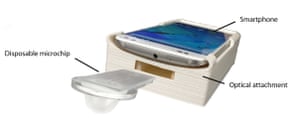
The team put the device together using spare parts from DVD and CD drives at a total cost of $ 4.45. Using the device simply involves drawing semen into a disposable holder that is plugged into one side of the phone attachment, in a similar way to a USB. In seconds, results of the analysis are displayed on the phone’s screen.


In the study, published in the journal Science Translational Medicine, the research team recruited 10 volunteers with no formal training, including administrative assistants employed at a Boston fertility clinic. They correctly classified more than 100 semen samples using the app.


The test is an inexpensive smartphone attachment that quickly and accurately evaluates semen samples for fertility testing.


The test is an inexpensive smartphone attachment that quickly and accurately evaluates semen samples for fertility testing. Photograph: [Credit: M.K. Kanakasabapathy et al., Science Translational Medicine (2017)]

Overall, the scientists examined 350 clinic samples and were able to identify those with low sperm counts and inactive or poorly motile sperm with 98% accuracy.


John Petrozza, director of the Massachusetts General Hospital Fertility Center and a co-author, described the device as a “true game-changer”. “Men have to provide semen samples in these rooms at a hospital, a situation in which they often experience stress, embarrassment, pessimism and disappointment,” he said.


“Current clinical tests are lab-based, time-consuming and subjective. This test is low-cost, quantitative, highly accurate and can analyse a video of an undiluted, unwashed semen sample in less than five seconds.”


Allan Pacey, professor of andrology at the University of Sheffield, who was not involved in the research, said that the techniques used for sperm quality assessment have not changed significantly since the 1950s, and that even when carried out at specialist centres can be prone to errors if the laboratory worker has not had sufficient training.


“As such, the development of an easy, cheap and accurate method to evaluate the sperm present in a sample of semen would be very welcome, particularly if it could be carried out by someone without specific training and in any location,” he said.


However, he added that the smartphone device could not replicate all the tests carried out in a specialist lab and did not analyse morphology – sperm size and shape.


“For a small number of men whose sperm are badly made, and have poor morphology, it would be important to get this diagnosed correctly,” he said. “So any man who struggles with infertility for a significant length of time, say more than 12 months, should consider getting their test repeated in a specialist laboratory, regardless of what the phone app might have concluded.”


The team behind the device are planning to perform additional testing and will file for approval from the FDA, the US regulator.


Smartphone app could allow men to test their fertility at home

5 Ocak 2017 Perşembe

NHS to trial medical advice smartphone app

An app that helps people get medical advice on their smartphones is to be trialled by NHS England, it has been announced.


The technology uses an algorithm to run a chat service that will search a database of symptoms, before advising whether to see a GP, go to hospital, visit a local pharmacy or stay at home.


NHS 111 is designed as an alternative to the NHS’s non-emergency 111 helpline, which has seen an increase in demand from two million calls a year to 15 million calls annually in four years.


But concerns have been expressed that the introduction of the app targets a symptom, rather than the cause, of the pressure on NHS services.


“Whilst it’s always important to maximise use of technology to empower patients and make efficient use of NHS resources, this initiative does not address the fundamental problem that we have a severe shortage of GPs and health professionals in community settings,” said Dr Chaand Nagpaul, the British Medical Association GP committee chairman.


He said that the app would rely “slavishly” on algorithms, rather than on clinical staff, which would leave no room for “clinical interpretation in certain instances”.


Nagpaul added: “This proposal does not address this fundamental limitation and may make the situation worse. What we should instead be doing is investing in having properly trained and appropriate clinical staff handling calls and requests from patients, complementing the use of new technologies.”


The six-month trial, beginning this month, will be available to north London residents in Barnet, Camden, Enfield, Haringey and Islington. Patients who choose to continue using the 111 helpline will still be able to do so.


Clinical commissioning groups have worked with technology firm Babylon to trial the app.


Adam Duncan, chief operating officer at GPs’ out-of-hours cooperative London Central and West, said the body was “happy to be working with NHS England and the other providers involved to ensure the piloting of the NHS 111 app is evaluated robustly”.


He said: “We aim to provide an alternative to using the NHS 111 telephone number for service users that would find it most convenient to their lifestyle. The use of the app could also reduce the demand on NHS 111 during the most busy periods, whilst retaining the high quality and accessible service.”


NHS to trial medical advice smartphone app

2 Ekim 2016 Pazar

The doctor will see you now… on your smartphone

One Friday afternoon, I decided to check out a pea-sized lump on my neck that was causing me consternation. I started by calling my GP’s surgery in south London. A recorded message informed me there were no appointments that day; after a few minutes, a receptionist came on the line and said that I could have an appointment on Monday. Not too bad, I thought, until I realised she was not talking about the Monday three days hence, but the one 10 days away. Not so good. I could also try for a walk-in slot or a phone consultation from 8am to 10am on weekday mornings.


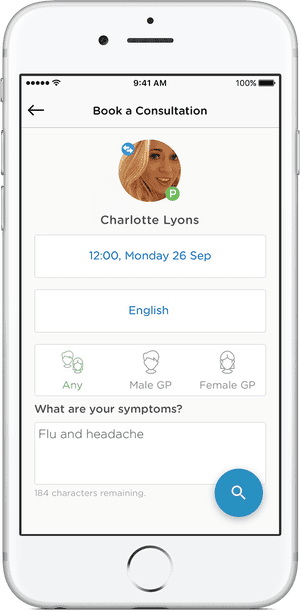
At this point, I downloaded the app from Babylon Health, one of the leaders in online doctor consultations, on to my smartphone. The homepage was purple and teal, the writing welcomingly blobby. I tapped on “check a symptom” and after half-a-dozen questions, it suggested that I “book a consultation”. I was offered a choice between a GP, a specialist or a therapist. The appointment could be on the phone or a video call.


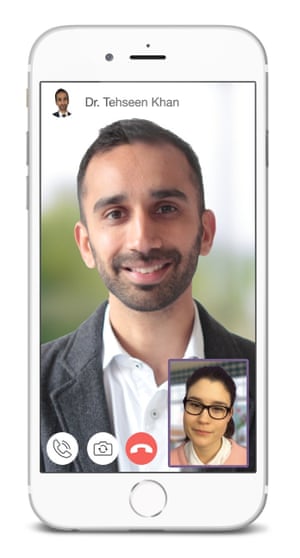
I selected a GP and a video call and was booked in to see Dr Patel 34 minutes later. As I waited to speak to him, I learned from his biographical detail that he was practising in Leeds, that he’d visited five of the seven continents and enjoyed cycling and skiing. At exactly 3.30pm, he materialised on my phone and welcomed me to Babylon. Our appointment was much like a regular exchange with a GP. There were some surreal moments: as I tried to show Dr Patel my neck, I was reminded of an Amy Schumer comedy sketch on the precariousness and indignity of sexting.


But he was engaged and reassuring, calling back when the video feed dropped, and after a few prompts he determined we were probably looking at a sebaceous cyst. They are non-cancerous and can be left alone, as long as they don’t change in size or shape. Soon after the consultation, in case I’d forgotten anything, a video of it was available on my Babylon app and I was sent a short text from Dr Patel that summarised his findings and advice. If I had needed a prescription, it would have been sent within the hour to a local pharmacy. Two days later, my phone beeped with a message to check how I was feeling.


GP on iPhone

It was a very thorough service, but there was a cost. Babylon offers its triage services, which advise on the urgency of treatment, free, but to speak to a doctor, it’s a rolling monthly payment of £4.99 or a one-off fee of £25. In my case, it provided peace of mind 10 days quicker than if I’d waited to see my GP. But the bigger question is what impact online doctors will have on the provision of healthcare in the UK: are they a valuable tool to reduce the demands on our overloaded doctors and nurses or are they, as one GP I spoke to said, opening “a door to NHS destruction”?


The offices of Babylon in South Kensington have been designed to evoke the hanging gardens, one of the seven wonders of the ancient world. A tough brief, you’d imagine, and the original designers estimated a cost of £1,000 per square foot. Ali Parsa, the founder of Babylon, bristled at such extravagance and decided to oversee the decorations himself. The result is a long, open-plan office with fake trees and hanging plants dotted around. All the accoutrements of the kidult, forward-thinking workplace are present: free toast and cereals, ping-pong tables that double as large desks for team meetings. An adult scooter leans against a desk, although it’s not clear if this is personal transportation or to whizz along the banks of desks.


Why the name Babylon? “First, I was born in Iran,” says Parsa, an energetic, fast-talking 51-year-old with a bald head and statement Cutler & Gross spectacles, “so Babylon was always part of our culture as one of the big Persian cities. And two, there is a story about Babylon that goes really well with healthcare. If you got sick in Babylon about two and a half thousand years ago, you’d stand on the square that was designated as a square of the sick and every resident that passed by would tell you if they’d ever come across that disease and, if they had, how they cured themselves. And with that very simple peer-to-peer health service, they had the longest life expectancy in the world.”


We are going to put an affordable health service into the hands of every person on Earth


Babylon’s mission statement


Parsa laughs: “But the truth is that all of that is nonsense. We called it Babylon because we were too cheap to pay a design agency or a PR agency to go out and figure out some funky name.”


In the reception area, the mission statement of Babylon is written on a large mirror: “Our purpose is to democratise healthcare. We are going to put an accessible and affordable health service into the hands of every person on Earth.” That’s quite an ambitious goal, I suggest.


“Of course it’s difficult,” he nods. “But actually, if you dissect that, the most difficult part is that you put something in the hands of every human being on Earth. Well, somebody already has. Almost every human being on Earth now has a mobile device. What Elon Musk is doing with SpaceX, creating a ship, sending it to space, that’s difficult! Putting a doctor on your mobile phone, relatively speaking, is not difficult.”


A number of progressive tech entrepreneurs appear to agree with Parsa. Push Doctor, founded by Eren Ozagir, claims to be the largest service of its kind in Europe, with about 7,000 NHS doctors in its network. It came about, apparently, after Ozagir fell sick on a trip to the US and bemoaned the fact that you could organise a taxi, a boat, even a helicopter through your phone, but not a doctor. Push Doctor does not attempt to triage or diagnose patients, but instead puts them straight in touch with GPs doing consultations during the time they could otherwise be doing private practice. An appointment costs at least £20 and a premium membership is the same price per month.


Other players in this market include Now GP and GPDQ (GP delivered quick). GPDQ can arrange for a doctor to come in person to a home, office or hotel in central London between 8am and 11pm, 365 days a year. The average wait is about 90 minutes.


The core message of all of these services is that they are not threatening the NHS, but working alongside it to reduce the burdens it faces coping with a growing and ageing population. Babylon, for example, has started a trial scheme with two GP surgeries in Essex where all patients can use the service free of charge. Early reports apparently found that the average waiting time for appointments came down by a week, to two weeks.


The development also fits with the idea that millennials now expect all their services to be streamlined and efficient: from getting the new ramen joint to deliver via Uber to having your dry cleaning picked up from your desk. David Mott from Oxford Capital, which raised £8.2m in funding for Push Doctor, even suggested the NHS should be left to the elderly and infirm, while time-poor 18-40-year-olds use the new app-based services.


Where Babylon seems to be taking the lead – and, Parsa believes, reducing the crisis of the global shortfall of doctors – is with its use of artificial intelligence. When I tried its “check a symptom” feature for the lump on my neck, I was actually being quizzed by what they consider the world’s first accurate AI triage service. In June, an in-house “live challenge” pitted Babylon’s AI against a senior A&E nurse and an Oxford-educated junior doctor. UCL professor Irwin Nazareth compared the results. According to Nazareth, “check a symptom” was consistently faster and more accurate in triaging patients than its human rivals: it scored 92% accuracy compared to the doctor’s 82% and the nurse’s 77%.


Push Doctor


Push Doctor offers video consultation with NHS GPs, who can provide sick notes, referral letters and prescriptions.

This experiment was not the most rigorous of scientific evaluations, but it has shown enough promise for some heavyweight backers to get behind Babylon. In January 2016, the company raised £19m to further develop its artificial-intelligence platform. Demis Hassabis and Mustafa Suleyman, co-founders of DeepMind, the AI startup bought by Google for $ 500m, who had already been advising Babylon, invested, as did Richard Reed, Adam Balon and Jon Wright, the men behind Innocent Drinks. For Parsa, the next stage, probably as soon as next year, is that the Babylon app will be able to diagnose patients without a doctor ever needing to be involved.


“I’d trust a machine over a human any day of the week – and I already do,” says Parsa, whose background is in engineering, not medicine. He arrived in Britain as a refugee in his late teens and has been, among other things, an investment banker and co-founder of Circle, the private healthcare company that runs hospitals in Bath and Reading and in 2011 took over the struggling Hinchingbrooke hospital in Cambridgeshire. Parsa stood down as Circle’s chief executive in 2012, before launching Babylon in 2014.


“The machine doesn’t get worked up, it doesn’t get angry, it doesn’t get pushed because there are 20 people outside in the queue,” says Parsa. “A machine learns every time a diagnosis happens. A doctor might do 7,000 consultations. The machine will do thousands of times more. Therefore the speed at which it learns and everything it sees increases. So we believe in time we will do this more accurately than a human.


“Even the specialists. How many papers were published last year on dermatology? It was 11,000; 11,000 pieces of research that were worthy of being written down for somebody to take note. Which dermatologist reads this? They say, ‘Oh yeah, I spend my weekends catching up.’ How many can they read? So the idea that a human brain can keep in touch – ha!”


Parsa does not think that artificial intelligence will replace humans – at least not in the foreseeable future. But the potential is clearly there. He cites the example of DeepMind’s AlphaGo program, which inflicted a stunning 4-1 defeat on the 18-time Go world champion Lee Sedol earlier this year. The 3,000-year-old Chinese boardgame had been considered one of the “grand challenges” of AI because of its almost infinite number of possible moves. DeepMind puts the success of AlphaGo down to the fact that the program almost mirrored a human brain: it used trial and error, allied to a dense historical database of games from the past, to play both creatively and minimise mistakes.


“The one game AlphaGo lost was because the guy [Lee] did something that the machine had never imagined can be done,” says Parsa. “He used his intuition to say, ‘You know what? I’m going to do something very human here.’ As opposed to something very machine. And the machine got confused. So the methodology we employ is very similar to the way a human brain works, whereby we teach a human how to become a doctor and the same way we teach a machine how to become a doctor. We don’t just use ginormous amounts of data, we give them rules and functions.”


It takes around seven years to train a human to become a doctor – how long then for a machine? “Well, we’ve been at it for three years,” says Parsa, “so maybe it will take us seven years too.”


Not everyone is excited about the boom in online doctors. While there has been a rush by GPs to supplement their incomes with shifts at places such as Babylon – it has about 100 doctors on call – others are concerned about the impact that paid-for services will have on the NHS.


Now GP

Now GP offers video GP services and can courier prescription medicines to your home for a fee. Photograph: NowGP handout

“General practitioners are a resource in short supply and in great need,” says Margaret McCartney, a GP in Glasgow, Radio 4 regular and author of the forthcoming The State of Medicine: Keeping the Promise of the NHS. “We as a profession are under huge strain and enormous pressure. These companies are essentially using market forces to determine access to GPs rather than need. GPs working in these companies will probably make more money and have a less stressful career. However, patients are far less likely to benefit. This might work in your favour if you are basically healthy, need a one-off appointment and have the money to pay to put yourself in the front of the queue. But if you have an ongoing condition, or multiple or complex needs, the research shows that your care will be better if you have continuity and are looked after by a team that can care for you holistically.”


The idea of “a GP in your pocket” emphasises speed and convenience, but McCartney fears that it may ultimately derail our health service. “These schemes may mean that you end up having to wait even longer to see your NHS GP, as the workforce becomes more depleted,” she says. “Some of these companies won’t see people with chronic diseases or mental illness. This kind of cherry-picking is rife in the private sector and I see these companies as the thin end of the wedge of sleepwalking us into an insurance-based model of healthcare. It needs to be resisted by everyone who cares about the values of the NHS.”


Parsa is aware that not everyone will approve of services such as Babylon. “Listen, there will be many comments from your readers that say, ‘That is brilliant.’ And there will be many that say, ‘That is awful.’ That’s OK. Think of anything: Facebook – lots of people say it’s brilliant and lots of people think it’s awful. But the existing model of healthcare we’ve got, guys, is nothing to write home about. One in five of us can’t see a doctor when we need to. One of eight of us gets misdiagnosed. About a thousand of us a month get killed because of avoidable mistakes. So the system we are protecting so much is good but it’s not great.”


There has been much discussion of the failure of Britain’s technology sector to produce a Facebook, Uber or Airbnb. Parsa feels that Babylon has the potential to become a similar, game-changing enterprise. Wired magazine recently named the company as one of Europe’s 100 hottest startups and the FT made a conservative valuation of it “in excess” of £77m. Babylon is certainly thinking globally; although its main operation is in the UK, the service is also launching in Rwanda, a country of 11.75 million people that has only a few hundred doctors.


Parsa insists that Rwanda is not a publicity stunt: it’s a country where mobile phones are commonplace and it has a progressive, if often heavyhanded, government. Besides, if Babylon can work in sub-Saharan Africa, then it should thrive anywhere. “In Rwanda or in many countries in the world, people are dying from things that a doctor can fix in no time,” he says. “So this is not populist. If you’re not doing it, it’s stupid. If you’re waiting two weeks to see a doctor and you can press a button and see it on Babylon, it’s not right.” A shake of the head: “That’s not right.”


Parsa is a convincing pitchman and my first experience with Babylon for my neck was a good one. But, until it becomes clearer how online doctors can coexist with our health service without diminishing it, it will remain hard to savour the benefits it can provide.


The doctor will see you now… on your smartphone

25 Haziran 2014 Çarşamba

Rare genetic issues diagnosed "by smartphone"


The software looks for facial structures that are linked to various circumstances like Down’s syndrome, Angelman syndrome and Progeria and presents an aim likelihood that a patient is suffering from each. It immediately recognises faces in ordinary, every day pictures, corrects for variations in lighting, background, pose and facial expressions. It then builds a description of the facial structure by identifying the corners of the eyes, nose, mouth and other functions, and compares this against a database of pictures of identified sufferers of each ailment.


The researchers have published their findings in the journal eLife this month.


“A diagnosis of a unusual genetic disorder can be a very critical phase. It can supply parents with some certainty and aid with genetic counselling on dangers for other young children or how most likely a problem is to be passed on,” mentioned lead researcher Dr Christoffer Nellåker of the MRC Practical Genomics Unit at the University of Oxford.


“A diagnosis can also boost estimates of how the ailment might progress, or display which signs and symptoms are brought on by the genetic disorder and which are induced by other clinical concerns that can be treated.”


The software program uses a database of images of acknowledged sufferers


The group of researchers at the University of Oxford incorporated first author Quentin Ferry, a DPhil research pupil, and Professor Andrew Zisserman of the Division of Engineering Science, who brought experience in computer vision and machine understanding.


“A doctor ought to in long term, anywhere in the planet, be able to get a smartphone image of a patient and run the pc examination to speedily locate out which genetic disorder the individual may well have,” says Dr Nellåker.


“This aim approach could support narrow the feasible diagnoses, make comparisons less complicated and permit medical doctors to come to a conclusion with a lot more certainty.”


Rare genetic issues diagnosed "by smartphone"

20 Haziran 2014 Cuma

Smartphone medical doctor: self diagnosis with new apps


Healthcare tricorders are no longer just science fiction.


New advances in sensor technologies are harnessing the computing power we presently have in our smartphones to produce sophisticated devices the common particular person can use to diagnose themselves.


Armed with that information, men and women can understand a lot more about their personal physical condition and, probably even much more helpful, share that information with physicians remotely.


Smartphone medical doctor: self diagnosis with new apps

20 Mart 2014 Perşembe

How sustainable is your smartphone? - interactive

Smartphones are owned by one particular in 5 men and women and have transformed how several of the world’s most crucial industries operate – from journalism to farming. But their manufacturing carries a cost making use of far more than forty aspects that are mined with untold environmental and social results on each and every inhabited continent on earth.

Use the interactive beneath to consider a in depth appear at constructive and adverse impacts your smartphone has created on individuals and planet


How sustainable is your smartphone? - interactive

10 Mart 2014 Pazartesi

Are health-related apps on your smartphone excellent for your wellness?

On a dreary November afternoon, the news bulletins are dominated by the fallout from the Mid Staffordshire hospital scandal and predictions of another tough winter in A&E departments but, at LSO St Luke’s, a church turned concert hall in Old Street, east London, all is optimism and light.


The NHS may be lurching from one crisis to another but, to listen to the entrepreneurs gathered beneath the eves of this Hawskmoor-designed church a stone’s throw from tech city, the health cavalry is on its way.


Twenty health tech startups from around Europe have gathered at St Luke’s to pitch to a panel of venture capitalists in a Dragons’ Den-style competition. Up for grabs is a share of a €50,000 prize and the ear of an investor who can fast-track their device to market. The event’s sponsors, Johnson & Johnson, have billed it as a digital health masterclass.


First up is Johann Huber, co-founder and CEO of Soma Analytics, a London-based company that describes its product as the “world’s first evidence-based mobile resilience programme”. In plain English, Huber and his partners have developed a smartphone app that purports to measure employee stress levels by analysing their speech and texting patterns.


“Using our algorithm we can design a 21-day personalised programme to help employees manage their stress and build mental resilience,” he tells the dragons.


Next up is Paul Doherty, head of sales at Shimmer, a Dublin-based company specialising in “clinical grade wearable wireless sensing technology”, such as the Shimmer3, a slimline sensor that can be strapped to an athlete’s arm in training to provide coaches with biophysical data.


Doherty is followed by Andraz Ogorevc, a Slovenian entrepreneur pitching a mobile app and Bluetooth-enabled wristband that enables the wearer to send an SOS message within 20 seconds of suffering a heart attack. “The market is huge. We estimate there are 1.2 billion smartphone users with health conditions,” he says. “Our goal is 20 million users within five years.” The star of the afternoon, however, is Don Jones, vice-president of Qualcomm Life, a subsidiary of the chip maker Qualcomm and a big sponsor of wireless healthcare technology. In a slick 30-minute presentation, he takes his audience on a whistlestop tour of the fast-changing market for health apps and digital medical devices – a market predicted to be worth $ 26bn by 2017 in the US alone.


Medical apps Monitoring your own health is the key to the apps.


From the LifeWatch V, a smartphone embedded with sensors that enables users to monitor everything from body temperature and ECG to heart rate and oxygen saturation, to the YOFimeter, a compact wireless blood glucose meter for diabetics, Jones explains that new technologies are rapidly altering how, when and where people monitor and manage their health.


“Think of every way you have ever interacted with a medical professional or someone in a clinical setting – a doctor, a nurse, or your corner pharmacist – then think how that can be replicated digitally so that the process is both more convenient and faster,” he says. “The odds are that someone in Silicon valley is already working on it.”


To spur innovation, last year Qualcomm announced a $ 10m prize for a Star Trek-style “tricorder” to be awarded to the first developer to succeed in designing a mobile platform capable of diagnosing a set of 15 conditions, including pneumonia, diabetes and sleep apnea, without recourse to a doctor or nurse.


While that might sound like science fiction, 230 teams from more than 30 countries have registered interest. But you don’t have to upgrade to a device like the LifeWatch V to monitor your vital signs. If you have the latest smartphone you can probably achieve the same thing with an off-the-shelf plug-in sensor and a downloadable app. Indeed, Jones argues that it is only a matter of time before mobile medical technologies make booking an appointment with your GP for a blood pressure test obsolete.


“Imagine a future where every medical need is just a button away and you can access medical support whenever and wherever you need it,” he explains. “In other words, no more queuing for appointments or sitting in waiting rooms.”


Put that way, digital health sounds hugely attractive. After all, in a world where many people already use the internet to research their symptoms, waiting for your GP to order a test and refer you to a specialist can be hugely frustrating. In theory, digital health can sidestep that process by putting the same clinical expertise on a device that sits in your pocket or on a smartpatch attached to your skin and streaming the data wirelessly to your “care provider network”.


Similarly, more basic telehealth devices that allow the remote monitoring of patients with long-term health conditions have the potential to allow huge cost savings for the NHS by enabling nurses to manage patients with heart and weight issues or conditions such as chronic obstructive pulmonary disease (COPD) more efficiently in the community.


But do we really want to live in a brave new digital world where patients are their own doctors and there is no longer a need for us to submit to an interview in a clinical setting? What do we give up – and what do we lose – when health becomes nothing more than a stream of physiological outputs, a set of data to be parsed and quantified by algorithms managed by faceless medical providers?


Furthermore, what evidence is there that these technologies are suitable for every patient or that they will result in better medical outcomes? Isn’t there a danger that by inviting ever more intrusive digital surveillance we become slaves to technology rather than the masters of our own health?


Medical apps Development of the smartphone has spurred the industry.


There is nothing new about the self-monitoring of bodily functions. People have been examining their urine and stools for signs of disease since Roman times and, after the association of diabetes with excess sugar in the early part of the 19th century, the English physician and physiologist George Oliver began marketing a range of urine reagent papers for home use in 1883. The self-monitoring of diabetes took another leap forward in the 1970s with the production of the Ames Reflectance Meter, a 1.2kg battery-powered lead case featuring a moving needle that indicated blood glucose levels within about a minute of being operated, and by the 1980s the home management of diabetes using handheld glucose metering systems had become standard. The 1980s also saw the aggressive marketing of the first digital home blood-pressure monitors by companies such as Omron, spurred by mounting concerns about heart disease and the risks of hypertension, and by the end of the decade many women’s bedside drawers contained a pregnancy testing kit.


By the 1990s, as people became used to viewing health in terms of a set of risk factors and as multiple drug regimes for the management of long-term medical conditions became commonplace, so the notion of regular checkups and tests, in which vital signs are monitored as a matter of course, began to be seen as normal.


In retrospect, however, the key development was the launch of the iPhone in 2007, followed a year later by the 3G version and the opening of Apple’s app store. It soon became clear that with its built-in camera, audio and GPS mapping functions, the iPhone was much more than a mobile phone, it was a sophisticated self-tracking device – hence its adoption by the Quantified Self movement to record and track every facet of members’ lives. Factor in the ability to download the latest exercise and diet apps and it was only a matter of time before people would be using their smartphones to quantify health data too.


Qualcomm was one of the first chip makers to recognise the potential to transform healthcare – hence its decision in 2005 to set up the Wireless Life Sciences Alliance in San Diego with Don Jones as chairman.


At first, Jones concentrated on the development of wireless and connected health solutions to support research in the life sciences. But as the smartphone market took off and app developers began targeting health and medical needs, he soon realised the consumer market had much bigger potential.


He also had a personal interest. His son, Keenan, was born with a congenital heart defect and needs to monitor his heart regularly to check if his heart is beating normally. For years, Jones would drive Keenan to a cardiologist to be hooked up to a Holter monitor to measure his arrhythmia. But in 15 sessions, Jones claims the conventional Holters failed to produce any useful data.


“Finally, I got fed up and told the attending nurse, ‘you know we’re not going to have any more of your Holter monitors’,” says Jones. Instead, he used his industry contacts to test a series of prototype electronic monitors capable of giving continuous ECG readouts. It was one of these non-US Food and Drug Administration approved prototypes that eventually produced the ECG data his doctor required to decide whether Keenan needed an ablation or therapy.


Keenan, who is now 19, takes his own ECG readings every day using an AliveCor heart monitor that connects to his iPhone. If he’s away from home and his heart starts racing – as it did on a recent trip to Montana – he can email the readings directly to the nearest hospital, together with his medical history, confident that the correct medication will be waiting for him on arrival at the emergency room.


Data can also be sent automatically via the cloud to a patient’s health provider to order a new test or prescription using systems like Qualcomm’s 2net. Indeed, many doctors now prescribe apps, rather than drugs, so that patients can keep abreast of treatment protocols. Taking this idea further, Jones foresees a time when apps will also “prescribe doctors”, telling patients which specialist they should consult and how to contact them. As patches and monitors become smaller and more lightweight, he even envisages a time when vital sign data will be collected seamlessly, 24/7, without the need for the patient to take an active role. The next stage is to combine this vital sign data with other predictive data – such as genomic markers for conditions like breast cancer – to devise personalised treatment programmes tailored to a patient’s risk profile.


From a conventional medical standpoint, the rise of digital medicine is worrying, say some. This is not only because apps and smartphones have the potential to marginalise expertise, making it harder for doctors to cash in on their medical training. Giving people the ability to monitor their vital signs, it is argued, also risks generating needless anxiety.


As Dr Nick Mann, a GP with 22 years experience in an inner city London practice, puts it: “Monitors used around the clock may throw up false alarms. For example, an ECG monitor may throw up all kinds of arrhythmias over 24 hours. It can be disempowering for patients as the patient and staff switch to ministering to the production and influx of data rather than focusing on the doctor-patient relationship.”


Mann also questions whether such technology is beneficial for patients who are terminally ill. “The main priority for someone with end-stage COPD or advanced diabetes is the rest of the life they have left,” he says. “People don’t really want to be reminded of their illness day by day. What they want is to get on with living as healthy a life as possible.”


But perhaps the biggest objection is that these technologies may not necessarily result in more cost-effective medical care – a critical consideration in the context of a tax-payer funded system, such as the NHS, where investment in new technology must be justified on clinical and financial grounds.


Perhaps this explains why in 2009 the Department of Health agreed to fund the Whole System Demonstrator project – a randomised trial of 3,230 patients with diabetes, COPD or heart failure at 179 practices across southern England that compared emergency hospital admissions and mortality rates for those using teleheath devices with those using the usual care systems.


Preliminary findings, in 2012, suggested a 45% reduction in mortality and a 20% fall in emergency admissions for telehealth users and prompted Paul Burstow, then minister for care services, to sign a concordat with the telehealth industry and launch a campaign, 3millionlives, with the aim of rolling out telehealth devices to three million people by 2016, to save the NHS an estimated £1.2bn.


However, a more detailed followup analysis by the Nuffield Trust, published in the doctors’ journal the BMJ later in 2012, found that when the first three months of data were excluded the differences between hospital admissions and mortality in the two groups was negligible.


Worse, researchers found that differences in hospital costs between the two groups were also insignificant and that given the high startup costs of telehealth systems they were unlikely to generate anything like the projected savings. Since then, little has been heard of the government’s three million lives initiative and to date only 100,000 telehealth devices have been distributed to patients with long-term medical conditions.


Nevertheless, pilot trials are continuing in several NHS trust areas and, for those patients fortunate enough to have been recruited, the devices have been transformative. Take Haris Patel, 53, from Folkestone, Kent, who suffers from Parkinson’s, peripheral vascular disease and hypertension, as well as other conditions. Patel, who is confined to a wheelchair, used to be a regular user of Kent Medway emergency services. Since taking possession of a Viterion 500 telehealth monitor, however, he has been able to monitor his blood pressure, weigh himself regularly and send his blood sugar readings to his hospital for remote viewing by specialist nurses, reducing the need for emergency callouts. “I used to spend an average of eight to 10 months in hospital every year,” he says. “Now, when my blood pressure is high it can be dealt with instantly without the need to involve a consultant. It’s improved the quality of my life 100%.”


Patel says the machine has also given him a greater understanding and control of his condition and looks forward to the time when he can send the same data wirelessly.


Many consultants are also beginning to embrace the technology. At the Johnson & Johnson digital health masterclass, Dr Jon Shaw, a former surgeon, was pitching DocCom, a secure social networking platform for use by medical teams in hospitals. DocCom was born out of Shaw and co-founder Dr Jonathan Bloor’s frustration with hospitals’ reliance on bleeper and paging systems.


Why, they wondered, couldn’t the NHS have a system akin to Facebook that enabled consultants to communicate with colleagues outside ward rounds? By signing up to DocCom’s secure cloud-based platform, consultants can do that without the fear of breaching patient confidentiality. All they have to do is download an app to their mobile phone and confirm their identity in order to start texting colleagues straight away. So far, 10 NHS trusts have agreed to trial the system.


Another promising application is Safe Mobile Care. Devised by Dr David Morgan, a consultant head and neck surgeon in Birmingham, the system uses a touch-screen mobile phone that can be programmed with personalised plans for patients. Morgan claims that not only does the system reduce admissions for cardiac failure by about 80%, it also enables nursing teams to work more efficiently. Furthermore, rather than increasing patient anxiety, he argues the system helps patients to better understand their conditions and take control of the management of their health.


Morgan does not believe, however, that the technology is appropriate for all patients. “The idea that patients should have a device for life is a market-led idea to sell more devices than necessary.”


That sentiment was echoed at the masterclass at LSO St Luke’s. Although nearly every developer claimed patients’ needs were uppermost, the judges begged to differ, expressing concern that some startups seemed more focused on market share than in catering to a clinical need. Perhaps that explains why the dragons awarded the first prize to PxHealthCare, a Dutch startup whose product was developed specifically for breast cancer patients. Founded by Dr Anne Bruinvels, a pharmacist with a background in personalised medicine, the company aims to provide bespoke medical support to cancer patients by providing them with a suite of self-reporting tools. Using the company’s OWise app and web platform, patients can talk to their physicians and get advice about their drug regimes, enabling them to better manage their treatment plans.


At the same time, the data collected by OWise can be anonymised and shared with medical researchers to shed light on drug interactions and side-effects.


For these and similar applications to take off in the UK, however, developers will first have to convince sceptical GPs like Dr Mann. While Mann accepts that some patients may benefit from such devices, he doubts this is true of most patients he sees in his practice.


“As a doctor, I welcome anything that will improve patient care and be cost effective but so far the evidence from telehealth is that it doesn’t do either of those things,” he says. “In the NHS we haven’t got the luxury of giving people things just because they like them.”


For all that doctors may be reluctant to embrace these new technologies, however, social trends are not with them. Already, Britain and the US are facing a shortfall of doctors as the recruitment to medical schools fails to keep pace with an ageing population and the growing numbers of people living with long-term health conditions.


Back at St Luke’s, I ask Jones whether he thinks the medical profession will come round to digital health. “As with any new technology, you’re going to find early adopters and late adopters and a middle group who hang back,” he says. “I’m not sure it’s what all physicians want but I’m confident that a percentage of them will wholeheartedly embrace this technology and that eventually the rest of their colleagues will follow.”


Are health-related apps on your smartphone excellent for your wellness?