condemn etiketine sahip kayıtlar gösteriliyor. Tüm kayıtları göster

19 Şubat 2017 Pazar

Doctors condemn delay in brain-damage man"s move to care home

Doctors and health experts have condemned the “shocking” delays in moving a brain-damaged man to his new care home as further evidence of serious bed shortages in intensive care.


Malcolm Steward, 63, has spent months more than 100 miles from his wife. He cannot go to a care facility in Devon because of limited space at the nearby Torbay hospital. It does not have enough room in its intensive care unit to let Steward, who is severely ill, stay while he recovers from his journey down to the area.


Steward’s wife, Philippa, said that the situation had put a huge strain on the couple and their two sons, aged 19 and 27. “It’s outrageous,” she said. “A hospital cannot just choose who it treats.”


The Stewards’ case has emerged after weeks of troubling news for the government on NHS capacity issues. Leaked figures showed that January was the worst months for A&E delays on record. And last week, a coroner said the bed shortages in intensive care had led to the death of Mary Muldowney, who was refused surgery at three hospitals last year because of a lack of space.


Dr Mark Porter, who chairs the British Medical Association, said the “shocking” case of Malcolm Steward was further evidence that patients were “repeatedly and unfairly being let down by an overstretched system”. Porter added that delays for vulnerable patients were now the norm.


“The NHS is at breaking point and unfortunately demand is so great that in many hospitals there is simply no capacity left in the system,” he said. “When the appropriate care isn’t available in the right setting, patients can experience delays. This can affect the quality of the care they receive, and in this instance have a profound effect on the patient and their family’s experience of the NHS.”
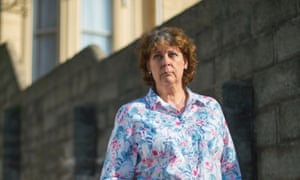


Philippa Steward at her home in Torquay, South Devon.


Philippa Steward at her home in Torquay, South Devon. Photograph: Jim Wileman for the Guardian

Dr Gary Masterson, president of the Intensive Care Society, said: “It is difficult to comment on this case specifically but in general terms a delay of several months resulting purely from critical care bed shortages is clearly unacceptable.”


Steward was left brain-damaged after having a stroke while driving in 2015. The crash left him with multiple injuries and he spent more than a year in hospital – moving between Southampton and Guildford.


Last month he was moved to a rehabilitation unit in Salisbury, but in the meantime his wife moved to Devon, where the couple had planned to relocate to before the accident. She found a local home that would take him and the move was set for last November. When this failed to happen, she was told that Torquay hospital, which backs up the care home, had blocked the move.
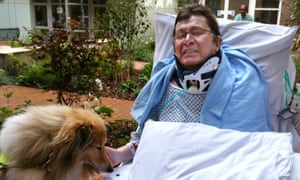


Malcolm Steward at a facility in Salisbury.


Malcolm Steward at a facility in Salisbury.

A letter from the hospital’s chief operating officer, sent at the end of October, said: “Torbay hospital has a small unit and if we are to accept people who may need long-term care we will significantly limit our ability to meet the needs of our local population.” It added that the hospital, which is south Devon’s main one, was to open in the spring and would be willing to accept a further referral then.


It currently has a nine-bed intensive care unit, which is almost 30 years old. The hospital has said that when the new unit opens in the spring it will add one new bed and then a further four over the next two years.


The hospital is concerned Malcolm Steward may need long-term care in one of their private rooms because of the complexity of his needs, limiting their ability to serve the local population. Doctors, however, said having long-stay patients was not unusual.


Philippa Steward travels four hours once a week to see her husband, which she says is affecting her health. After his accident she does not like driving at night but has no other option.


“I get no sleep because I am so worried about him,” she said. “If Torbay hospital don’t change their mind soon I fear I will lose my care home bed in Devon. There’s only one space available, which they may have to give to someone else. Another one might not come up in Malcolm’s lifetime.”


While her husband is unable to talk, he knows that she is there during these visits, she said. “He smiles and holds his hand out to me when I visit. He tries to give me a hug. He writes messages to me saying, ‘I want to come home and be with you.’”


Philippa Steward and her husband, Malcolm, before his stroke and car crash.


Philippa Steward and her husband, Malcolm, before his stroke and car crash.

Kevin Foster, the Conservative MP for Torbay, agreed the case had taken too long to resolve. “Although the case is with the [health service] ombudsman, I am still seeking a meeting with our local NHS to work out a quicker way to bring this matter to a satisfactory conclusion, which means bringing Malcolm nearer to his family here in the bay,” he said.


A spokesman for Torbay and South Devon NHS foundation trust said it could not comment on individual patients, but that its top priority in accepting a patient from another hospital “would be to ensure that we are able to put in place a safe pathway of care appropriate to that individual patient’s clinical needs”.


The spokesman added: “We regularly liaise with [the care home] Douglas House to ensure that any patient being transferred there has plans in place to ensure their safe care and treatment. We would never refuse a patient treatment in an emergency.”


The Stewards’ case will add further pressure on the government to address NHS bed shortages. In January Hull and East Yorkshire Hospitals NHS trust ran out of intensive care beds at its two hospitals and was struggling to provide normal care to the many patients needing treatment for life threatening conditions. Senior doctors told the Guardian that intensive care units were becoming so full that patient safety was increasingly at risk because life-saving operations were having to be delayed.


The BMA’s Mark Porter said: “We urgently need the government to look at the long-term funding, capacity and recruitment issues facing the system as a whole if we are to get to grips with the extreme pressure hospitals are now facing.”


Doctors condemn delay in brain-damage man"s move to care home

22 Kasım 2016 Salı

NHS staff and managers condemn "passport before treatment" plan

Doctors, nurses and NHS managers have condemned government plans to make hospital patients produce their passport before being treated as unworkable and a burden on overworked staff that will not raise the £500m a year ministers hope.


There are also fears that marginalised groups – such as the homeless and the 13% of the population who do not have a passport – will find it harder to access care if the policy, currently operating only at the Peterborough and Stamford hospitals NHS foundation trust, becomes commonplace.


Despite growing anxiety among NHS staff, the Department of Health insisted that the policy – which its top mandarin admits is “controversial” – may still be rolled out nationally. It is keen for the NHS to increase dramatically the amount of money it recovers from people who are ineligible for free care from £73m in 2012-13 to its target of £500m a year.


Jon Restell, chief executive of Managers in Partnership, the union which represents health service managers, said: “Managers are worried about the unintended consequences for health inequalities, as marginalised groups may find it harder to access healthcare; for public health, where there are currently exemptions, for example around crisis mental health, TB and HIV. Will these continue?


“They are also worried about reciprocal arrangements with other countries. Is now the right time, at the start of Brexit negotiations, to be making these policy changes? What may be the impact on British citizens overseas?”


The likelihood that some patients would not have the two forms of identity envisaged by the DH will create problems, Restell added.


“Who is accountable for the care of a patient who can’t show ID? What happens if their condition subsequently worsens, possibly foreseeably, as a result of being turned away?” he asked. In addition, he added, “ID checks are likely to create delays in clinics and elsewhere as ID is checked and queries resolved”.


He also said the scheme was overly bureaucratic. “Most elective work [non-urgent care in hospitals] comes via referral from general practice, where registration requires eligibility checks. Why create a second check?” said Restell.


NHS managers doubt ID checks would generate any extra money beyond what is already received from overseas visitors and governments under existing arrangements. He added: “The system may well cost more to administer than the extra income it generates. Managers believe government underestimates how complicated this would be administratively. While we do not think it would necessarily burden clinical staff in practice, it would lead to delays and costs.


“The whole issue raises unresolved ethical questions about eligibility for healthcare and about compatibility with the values of the NHS and its staff.”


The Peterborough and Stamford trust saw its annual income from chargeable patients rise from £92,500 to £250,000 after it introduced identity checks in May 2013. Its total budget is £261m. It says 95% of invoices were recouped last year, compared to 37% in 2012. NHS bosses told MPs this week that the scheme “had made a big difference”.


However, the trust admits no formal evaluation of the scheme has been carried out. Four staff are employed on it, though they only spend a quarter of their time processing fees and pursuing unpaid bills. But the trust would not say how much the scheme costs, other than to say it did not outweigh the total income raised through charges.


Although some reports suggested passports would have to be shown to guarantee entitlement to free NHS treatment, they are not required in every case. Residents and EEA visitors who have lived in the UK for the past 12 months must provide two forms of ID such as a utility bill or payslip. If patients have not lived in the UK for the past 12 months, a passport or ID card is required.


Although the regulations enable an NHS trust to refuse treatment on the grounds that a patient requiring a non-urgent clinical intervention did not qualify for free treatment, Peterborough said it had never turned away a patient who said they were unable to pay.


Non-qualifying patients who do not pay invoices over £500 are reported to immigration and debt collectors are sometimes used.


Nurses said they were already too busy to help administer such a scheme and do not want to be distracted from looking after patients. Stephanie Aiken, the Royal College of Nursing’s deputy director of nursing, said: “Nurses and other staff on the frontline go to work to care for patients. While we recognise that the NHS is under extraordinary financial pressure, taking clinical staff away from the core job of treating patients is not the solution and must not be allowed to happen. Patient care must always be prioritised ahead of any administrative procedures.”


Sources at the NHS Confederation, which represents the NHS trusts who may have to implement the policy, said hospital bosses were “conscious of the practical and administrative burdens it would put on the NHS”.


A National Audit Office report last month estimated that hospitals are failing to collect about £200m from patients who should have paid for their treatment. But the chair of the British Medical Association, Dr Mark Porter, said: “We have got an NHS with a deficit approaching 100 times that amount opening up over the course of this parliament. This is little other than a pinprick on top of the actual problems facing the NHS.”


Charges only apply to non-urgent, planned care, not treatment in A&E. Dr Taj Hassan, president of the Royal College of Emergency Medicine, which represents A&E doctors, warned against changing that demarcation.


He said: “We do not believe the proposed plans to require patients to show identification before receiving treatment could extend to the emergency department, due to their sheer impracticality. However, if the plans include the ED, then we would be failing our patients on an ethical level. The patient’s health is – and must always be – the most important thing, not where they are from.”


NHS staff and managers condemn "passport before treatment" plan

2 Eylül 2016 Cuma

Senior colleagues condemn junior doctors" plan for five-day strikes

Senior doctors have voiced strong opposition to the series of five-day strikes planned by their junior colleagues, warning that the action will cause real problems for patients, the service and the profession.


In a surprise statement on Thursday evening, the Academy of Medical Royal Colleges – which brings together doctors’ professional bodies – distanced itself from the doctors’ union, the British Medical Association, which has called the strike. The academy was “disappointed at the prospect of further sustained industrial action by junior doctors”, it said in a statement after several agonised hours of deliberation.


“We are acutely aware that the NHS is under extreme pressure at the moment,” it said. “Patient safety and quality of care must be the priority. We know there are genuine concerns about the contract and working arrangements but we do not consider the proposed strikes are proportionate.


“Five days of strike action, particularly at such short notice, will cause real problems for patients, the service and the profession.”


On Wednesday it was announced that junior doctors will go on strike from 12 to 16 September – the longest period of action yet announced by doctors in their protracted dispute over terms and conditions that the health secretary, Jeremy Hunt, would like to introduce. On Thursday the BMA announced additional dates for proposed walkouts, on 5, 6, 7, 10 and 11 October, 14-18 November and 5-9 December


Health secretary Jeremy Hunt


Junior doctors have long been in dispute with health secretary Jeremy Hunt over conditions of a proposed contract. Photograph: Stefan Wermuth/Reuters

However the BMA is split over whether to support the five-day strikes called by junior doctors, with many of its senior members considering the action unethical and fearful that patients will be harmed.


At a special meeting of the ruling council of the BMA on Wednesday some experts argued that the action was unethical because of the risk to patient safety, the Guardian has learned.


Such was the importance of the meeting that some council members changed their holiday plans to be there. Following a highly charged discussion, the BMA council voted by 16 to 12 to support the junior doctors’ industrial action.


The opposition of senior doctors raises questions over whether the industrial action can go ahead as planned. The opposition of the royal colleges may persuade some junior doctors not to take part and they may also lose the support of some senior doctors who were expected to cover for them during the strikes.


The Patients Association’s chief executive, Katherine Murphy, said the organisation was “gravely troubled” at the “catastrophic impact this will have on so many patients and their families” as winter approaches. “Many patients may be very unwell or vulnerable and so we cannot predict the distress or pain this will cause to everyone this will affect,” added Murphy.


Katherine Murphy


Katherine Murphy, chief executive of the Patients Association, said the organisation was concerned about the impact of the strikes, especially during winter. Photograph: Martin Argles for the Guardian

Earlier in the day Hunt said in a series of broadcast interviews that junior doctors would be inflicting “the worst doctors’ strike in NHS history”. The minister told Sky News: “Patients will be asking why it is that the BMA, who only in May said ‘this deal is a good deal for doctors, a good deal for patients, it’s good for the NHS, it’s good for equality’ are now saying it is such a bad deal that they want to inflict the worst doctors’ strike in NHS history.”


Theresa May, accused the BMA of playing politics, reiterating her confidence in Hunt during a visit to the Jaguar Land Rover assembly plant in Solihull.


“Jeremy has been an excellent health secretary, he is an excellent health secretary and this deal is about a deal that is safe for patients and I think it’s crucial if you look at what we’re doing as a government with the NHS,” the prime minister said. “We’ve got record levels of funding into the NHS, we’ve got more doctors now in the NHS than we’ve seen in its history and this is a deal that is safe for patients.


“The government is putting patients first, the BMA should be putting patients first – not playing politics.”


Most senior doctors condemn Hunt for his continuing threat to impose a contract on them that they say does not recompense them for Saturday shifts and will jeopardise patient safety, because of the excessive hours they will be asked to work.


Earlier in the day, the president of the Royal College of Physicians of Edinburgh, which has members across the UK, called on the government to negotiate but made it plain he opposed the strikes. “The safety of our patients and the wider NHS workforce remains paramount and this long-running dispute benefits no one,” said Prof Derek Bell.


“We are concerned that the industrial action proposed will have a significant impact for patients and all healthcare professionals in the NHS. The timing of the proposed industrial action – so soon after the August changeover with many junior doctors new in post and heading towards the winter months – and the sustained nature of the action will heap pressure on a health system that is already struggling to deal with existing pressures and rota gaps. The proposed notice will also make it extremely difficult for hospitals to arrange cover. We hope that this action can be avoided.”


Dr Mark Porter, chair of the BMA council, said the decision to announce five consecutive days of strike from 12 September was taken after “long and difficult debates”. He said Hunt had left junior doctors with no alternative but to strike again. “The reason the strikes have been announced is the continued reluctance of the secretary of state for health to do anything other than impose a new contract on junior doctors, a contract in which junior doctors have demonstrated repeatedly that they do not have confidence.”


Opinion among doctors who responded to a Guardian call for comment was very divided, with some saying the strike action does not go far enough but others against it, even though they support the junior doctors’ cause. “It is the Department of Health, not us, [which is] endangering patient care by trying to impose an unsafe contract that is also unfair. I’m hopeful that the public understands this – I became a doctor to care for people and it is in the interests of protecting my ability to do so that I’m going to be going back out on strike,” said a 32-year-old anaesthetist.


But a 28-year-old junior emergency medicine doctor said: “Appalling. I’m shocked that the new leadership of the BMA is taking such a damaging step. I can see why they may want to strike – and I’d be OK with a one day walk out – but this is insane.”


There is likely to be close scrutiny of the turnout for the first strike, which begins on 12 September. The last walkout, which was the first full withdrawal of labour, saw 78% of junior doctors fail to report for duty on 27 April, although this would have included some absent for other reasons such as illness.


That was down on the previous strike for the period of 6 to 8 April when emergency care was provided while 88% were on strike, according to NHS England.


There was also a drop in public backing for the action as a result of the full withdrawal of labour, according to an Ipsos Mori survey for BBC News. It found 57% of adults supported the strike at the end of April compared with 65% the previous month. The proportion who blamed both sides for the dispute was also up.


The action on 26 and 27 April saw around 13,000 operations and 113,000 outpatient appointments cancelled. Extrapolating those figures over five days and then multiplying by four to account for the strikes planned each month until the end of the year, the Department of Health is predicting that up to 125,000 operations and over 1 million outpatient appointments could be cancelled as a consequence of the latest wave of walkouts.


This article was amended on 2 September 2016. Professor Derek Bell is president of the Royal College of Physicians of Edinburgh, not the Royal College of Surgeons of Edinburgh as a previous version stated.


Senior colleagues condemn junior doctors" plan for five-day strikes

22 Mayıs 2014 Perşembe

Senior physicians condemn proposal to charge patients to see GP

The letter is in response to a movement getting debated at a British Health care Association conference calling for a charge to be launched in buy to bolster crucial shortages in GP funding.


The letter mentioned: “We categorically oppose the introduction of user fees for NHS GP companies.


“User charges are a disincentive to accessing overall health care, and target the poorest disproportionately. They lead to worsening care for persistent problems, and to more men and women seeking therapy at A&ampE.”


The Royal College of GPs has warned of a crisis dealing with standard practice with increasing workload and a lack of funding which means that waiting times are rising. Some GPs report that individuals now have to wait a lot more than two weeks for a regimen appointment.


Even so the School stopped quick of calling for patient costs.


The letter mentioned: “The poorest and sickest in society have to not foot the bill for the lack of political commitment to sustainable funding for GP companies. The BMA should side with individuals, and oppose charging people for employing the NHS.”


The aim of a charge would be to deter people from missing appointments, which expenses the NHS £160m a year and pump cash into standard practice.


Nonetheless it is feared any charge would force people into already overstretched A&ampE departments and any added revenue produced would be swallowed up by improved paperwork and administration.


Nigel Watson, of Wessex Neighborhood Health-related Committees will propose the movement at a conference in York.


It does not stipulate the level of charge but previously recommendations have ranged from £10 to £25.


Dr Watson stated: “This is about a broader debate on how we fund common practice.


“It is more and more hard to recruit new GPs and retain older ones, practices are close to collapse, workload is escalating and we want far more sources.


“I personally don’t believe we should be charging patients. Nevertheless the cash can only come from taxation, from closing hospitals and diverting the cash into common practice or from charging sufferers.”


The movement explained that ‘general practice is unsustainable in its existing format’ and it is no longer ‘viable’ to provide it totally free to all sufferers.


It goes on to call on the basic practice committee of the BMA to consider option funding mechanisms and to discover charging patients with government.


Thomas Cawston, analysis director at the feel tank Reform, mentioned costs are currently in area for many NHS solutions including sight exams and dentistry so this would not be a novel notion.


He extra: “We are living in extraordinary times and the NHS facing a funding gap of more than £30bn above the up coming decade. There is a nonetheless a national deficit and searching to the taxpayer for added funding for the NHS would place undue stress on other public services including colleges.


“All alternatives need to be on the table to raise added revenue for the NHS and fund greater acccess for patients.”


He mentioned if individuals were to spend their GP they would demand a greater services with much more hassle-free appointments and may also feel twice about whether or not they can use other solutions such as pharmacists and the 111 telephone variety which would lessen pressure on household physicians.


Chairman of the BMA GP commitee, Dr Chaand Nagpaul, mentioned: “This proposal undermines the core value of our NHS: universal accessibility based mostly on need to have, not potential to pay.


“If a charging program is introduced there’s a risk it would deter sufferers from seeing a medical doctor and receiving the treatment they desperately require.


“The strength of the GP patient consultation is that it is free of charge of a financial transaction, and costs could undermine trust, for instance in which GPs asked individuals to make stick to up appointments.


“It would also develop extra administrative expenses and bureaucracy in the processes of invoicing and chasing payments that could negate any likely supply of income.”


Katherine Murphy, Chief Executive of the Sufferers Association, mentioned: “Considering that the basis of the NHS there has been an underlying ethos that great high quality healthcare ought to be accessible to all, irrespective of wealth or standing.


“The system has often been based mostly upon 3 core ideas: that it meets the requirements of absolutely everyone, that it be free at the point of delivery and that it be primarily based on clinical need, not ability to pay.


“A move to charge for GP appointments will have a devastating influence on several vulnerable and disadvantaged people. There are many people who basically can not afford to shell out for GP appointments. Even more, with several GP practices, strictly enforcing ‘one difficulty per appointment’, several individuals will choose that their best alternative is to present at A&ampE, including additional pressure to an previously overstretched program.


“We also think that it would be a bureaucratic nightmare to invoice individuals and gather charges and would possibly cost more cash than it would save.”


A number of countries charge for GP consultations, such as France and New Zealand.


A Division of Well being spokesman stated: “We are absolutely clear that the NHS ought to be totally free at the stage of use, and we will not charge for GP appointments.


“We know GPs are below strain, which is why we’re cutting GP targets by more than a third to free of charge up far more time with sufferers, and are escalating trainees so that GP numbers proceed to develop more quickly than the population.”


Senior physicians condemn proposal to charge patients to see GP

13 Şubat 2014 Perşembe

Surgeons condemn "appalling" lack of action on cosmetic surgery regulation

PIP breast implant

The Keogh report was commissioned in response to the PIP implant scandal, but plastic surgeons say the government has failed to comply with via on its suggestions. Photograph: Anne-Christine Poujoulat/AFP/Getty Images


Cosmetic surgical procedure will proceed to be the wild west of medicine, say expert bodies, simply because of the government’s failure to deliver in the controls advisable by its own NHS healthcare director.


Plastic surgeons say they are appalled by the government’s response, which stops short of the regulation recommended by Sir Bruce Keogh’s report into cosmetic surgery. It does not clamp down heavily on the use of dermal fillers – substances injected underneath the skin, typically to plump out the encounter. Nor does it need that anybody concerned in cosmetic procedures is appropriately trained, certified and registered.


“Frankly, we are no significantly less than appalled at the lack of action taken – this review, not the initial one particular conducted into the sector, represents but an additional totally wasted possibility to make sure patient security,” explained Rajiv Grover, president of the British Association of Aesthetic Plastic Surgeons.


“With all the proof supplied by the clinical neighborhood, picking not to reclassify fillers as medicines with immediate impact or setting up any variety of compulsory register beggars belief. Legislators have obviously been paying out only lip services to the sector’s dire warnings that dermal fillers are a crisis waiting to take place.


“Most shockingly of all, the truth that there is no necessity for the real surgeon concerned to acquire consent for the procedure helps make a mockery of the total method. It truly is business as normal in the wild west and the message from the government is clear: roll up and come to feel totally free to have a stab.”


The Royal School of Surgeons will play a central role in determining what level of training and qualification cosmetic surgeons must have, but its remit does not lengthen to other healthcare professionals, this kind of as GPs, dentists and nurses who might be concerned in cosmetic procedures.


The problem that appeared to workout the Keogh overview most was the use of dermal fillers. “A man or woman possessing a non-surgical cosmetic intervention has no much more safety and redress than a person buying a ballpoint pen or a toothbrush,” mentioned the report. “Dermal fillers are a particular lead to for concern as anybody can set themselves up as a practitioner, with no necessity for understanding, education or preceding knowledge. Nor are there adequate checks in area with regard to merchandise high quality – most dermal fillers have no more controls than a bottle of floor cleaner. It is our see that dermal fillers are a crisis waiting to happen.”


Nevertheless, dermal fillers will not be classified as medicines, in spite of Keogh’s recommendation, and there will not be a statutory register of sufferers who have obtained them, nor of people who administer cosmetic procedures.


Plastic surgeons complain that the government has also been unwilling to use compulsion in its register of breast implants, following the PIP scandal – exactly where females were given implants filled with industrial silicone. It set up a voluntary register, but the surgeons say that has not worked in the previous and will not yet again.


The patient safety charity Action Against Medical Accidents said the response from the government was too small, also late. AvMA’s chief executive, Peter Walsh, explained it welcomed the truth that the government was taking the troubles critically. “Nonetheless, we have witnessed as well numerous men and women harmed by rogues in this industry currently. We are disappointed not to see all suppliers of cosmetic treatment possessing to register and be regulated by the Care Quality Commission, or a correct compensation scheme created for victims of the business. The government had promised its response by final summertime and Sir Liam Donaldson’s report in 2005 was ignored. We require to see action not words now. Overall, this is a situation of too little, also late,” he stated.


Surgeons condemn "appalling" lack of action on cosmetic surgery regulation