fund etiketine sahip kayıtlar gösteriliyor. Tüm kayıtları göster

28 Nisan 2017 Cuma

Cancer Drugs Fund condemned as expensive and ineffective

The Cancer Drugs Fund, set up by the government to pay for expensive medicines that the NHS would not normally finance, failed to benefit patients and may have resulted in some of them suffering unnecessarily from toxic side-effects, experts say.


An analysis in a leading cancer journal has found that the fund paid out £1.27bn from 2010 to 2016 – an amount that would have paid for an entire year of mainstream cancer drugs for the NHS.


But medicine it paid for was not worth the money, the report concluded. The analysis in the Annals of Oncology journal looked at 29 cancer drugs approved for 47 different types of treatment (known as indications), some of which were approved to treat more than one cancer. They found that only 18 of the 47 treatments prolonged the patient’s life, and then only by an average of three months.


Many of the drugs were approved by the fund on the basis of clinical trials that aimed only for what is called “progression-free survival”, where there is no sign in a scan or test that the cancer is growing. But patients often did not live any longer because the cancer would come back suddenly with lethal force.


The experts from London, Bristol and New York said that, from the patient’s perspective, increased progression-free survival might not be a benefit at all, since it not infrequently came with toxic side-effects.


Prof Richard Sullivan, of the institute of cancer policy at King’s College London, one of the authors, said the Cancer Drugs Fund had been “a massive health error”.


It was set up in 2010 because of the public outcry whenever the National Institute for Health and Care Excellence (Nice) turned down a new cancer drug for NHS use on the grounds that it was not cost-effective. The establishment of the fund was one of David Cameron’s election pledges. But, said Sullivan, although it was clear from Nice’s assessments that many of these drugs were not good value for money, neither doctors nor scientists nor the cancer charities spoke out against it.


“In science, we demand levels of evidence, but public policy is opinion-based, not evidence-based. You can’t have that in health. Populism doesn’t work,” he said.


Sullivan said that, wrongly, drugstook precedence in most people’s thinking over other treatments. Surgery can be curative and is the most important treatment and radiotherapy is also a valuable tool.


The paper, by Dr Ajay Aggarwal of the London School of Hygiene and Tropical Medicine, and colleagues, warns that other countries that may have been eyeing the Cancer Drugs Fund as a way to deal with the huge problem of soaring costs should think again. “Despite significant expenditure, there remains no evidence that the CDF has delivered meaningful value to NHS patients,” it says. “We recommend the avoidance of similar “ringfenced” drug access schemes in other countries.”


In 2016, as the costs of the fund span out of control, NHS England took action to wind it down in its current form. The CDF conducted its own assessment of the trial evidence behind the drugs it was paying for and struck off 24 of the 47 treatments – just over half of them because they offered insufficient value for money.


“Eighteen of these reversals were based on evidence that existed prior to the introduction of the fund, suggesting wastage of resources, but equally that drugs were given that were ineffective and probably resulted in unnecessary toxicities for patients,” said Aggarwal.


The fund has since reopened, but is now a supportive pot of money to enable evidence to be collected on the performance of promising new drugs. That sort of data should have been collected from the beginning, but was not, say the experts. Hard bargaining with pharmaceutical companies has brought down the prices that they are charging for these drugs.


The Institute of Cancer Research, which has carried out trials on many important cancer drugs, did not defend the fund. “The old Cancer Drugs Fund was always just a sticking plaster and we welcomed its overhaul because it was too expensive, unsustainable, and provided little certainty to patients and their doctors,” said Prof Paul Workman, the institute’s chief executive. “The new, more evidence-based system, where Nice appraises all cancer drugs, should address some of the issues highlighted in this study.


“But while we support the rigorous drug evaluation that Nice carries out, it’s essential that the new system continues to offer fast access to the most innovative and exciting cancer drugs. We need Nice to reform the way it evaluates drugs to place greater emphasis on how innovative they are, to ensure patients are not denied the most promising treatments purely because of their cost.”


But breast cancer charities, which have been strong supporters of the fund in the past, said there was still a need for extra money for cancer drugs. “While the old Cancer Drugs Fund was far from perfect – poor management and a distinct lack of data meant it was left in chaos – it did offer an avenue for people with incurable secondary breast cancer in England to access new treatments unavailable on the NHS,” said Danni Manzi, head of policy and campaigns at Breast Cancer Care.


“It remains a constant uphill battle for people living with incurable breast cancer to get the drugs they so desperately need. Now facing changes to funding systems, including cost caps, women tell us they are even more anxious about getting treatments to give them priceless extra time with loved ones.”


Cancer Drugs Fund condemned as expensive and ineffective

2 Nisan 2017 Pazar

Anger as tampon tax is used to help fund anti-abortion group

A new row has broken out over the so-called tampon tax after it emerged that a quarter of a million pounds from a controversial levy on women’s sanitary products is to be given to an anti-abortion organisation.


Under pressure from campaigners after failing to honour a pledge to scrap the 5% VAT on sanitary products, former chancellor George Osborne said that more than £10m a year would be redistributed from the tax receipts to women’s charities.


But there was consternation on Saturday night among women’s groups and politicians who had campaigned on the issue after it emerged that £250,000 of that money is going to Life, a charity that campaigns against abortion and has been at the centre of controversy over the information provided by a network of unregulated pregnancy counselling centres.


A spokesperson for the End Violence Against Women Coalition said: “We are surprised to see that Life is the recipient of a very significant tampon tax grant. The government set out clearly that this money would be spent in ways that would address women’s specific needs and inequalities. It is hard to understand how a service offering counselling based on the fundamental premise that abortion is wrong, to vulnerable women, can do that.”


The government announced last Friday that 70 organisations across the country would share £12m from the tampon-tax fund, which it said would improve the lives of disadvantaged women and girls across the country.


Rob Wilson, the minister for civil society, gave details of the funding on a visit to the Suzy Lamplugh Trust, which is to receive £200,000 to help increase its casework support service for women who are being stalked.


Four other charities, ranging from the Women’s Rape and Sexual Abuse Centre Cornwall, which is getting £179,157, to Black Country Women’s Aid (£240,401), were highlighted in a press notice from the Department for Culture, Media & Sport.


No mention was made of Life, but the organisation appears on a separate long list, which says it will receive £250,000 for “housing, practical help, counselling, emotional support and life skills training for young pregnant women who are homeless”. There has been surprise not just at the award, but at its size: it is one of the largest donations on the list.


Life describes itself as unique, combining “pro-life advocacy and education work with nationwide services providing positive alternatives to abortion”. It served notice last year of plans to increase its online presence to compete with established service providers such as Marie Stopes and the British Pregnancy Advisory Service (BPAS).


Among others who criticised the grant was Labour MP Paula Sherriff, whose successful amendment to last year’s budget led to the government pledging to abolish the tax.


“It will seem bitterly ironic to many women if we are taxed for our biology, only for the government to hand over that money to organisations that don’t even believe we should have control over our own bodies, especially when so many are left without basic sanitary protection,” she said.


“Just this Thursday, I led a Commons debate on period poverty and discussed terrible cases like the homeless women who can’t afford tampons and whose health is at risk, the girls in Leeds who play truant during their periods and a charity that provides free sanitary products to Africa now getting requests from schools in Britain because so many female pupils cannot afford them.


“Tackling these issues would surely be a better use of the tampon tax fund. The minister agreed on Thursday to look at funding for sanitary protection in schools and homeless shelters, and I will be asking the government to review their allocation of the tampon tax fund urgently.”


There was also criticism from the Women’s Equality Party. Its leader, Sophie Walker, said: “We consider any restriction on women’s reproductive rights as violence against us and thus it was a shock to learn the government has used the tampon tax fund to support a charity whose mission is anti-choice and aims to ‘make abortion a thing of the past’.


“While we appreciate the work Life does to support homeless pregnant women and care for children with life-limiting or terminal illnesses, we are very disappointed to see the allocation of such significant funds to this one charity while many others struggle, particularly those supporting black and minority ethnic women and disabled women who experience some of the highest rates of violence against them and yet are consistently at the bottom of the list for funding.


The government had originally faced a potential rebellion over the issue, after an amendment tabled by Sherriff won the backing of Eurosceptics keen to assert Britain’s power to set its own tax rates. Osborne had originally pledged to remove the tampon tax in November 2015, but was unable to do so due to regulations applied by the European Commission that prevented member states from doing so.


The government said on Friday that it is committed to continuing the fund until EU rules allow a zero rate of VAT to be applied to women’s sanitary products and that a decision will be made on the future of the Fund once this has been achieved.


Wilson said at the launch of the fund: “From Cornwall to Dundee, the tampon tax fund continues to benefit organisations in every corner of the UK working to improve the lives of disadvantaged women and girls, including those who’ve been affected by violence.


“This fund is helping to improve lives, supporting our ambition to create a fairer, shared society for everyone. I’m glad that so many worthwhile organisations will benefit from this money.”


A spokesperson for Life said: “We believe that our support services for women are not a luxury but are essential for them to have the space to look at options for continuing their pregnancies with support.”


Anger as tampon tax is used to help fund anti-abortion group

24 Şubat 2017 Cuma

Dutch minister calls on UK to join safe abortion fund after Trump ban

The Dutch government has voiced hope that the UK will join 20 countries to set up a safe abortion fund to fill the gap left by Donald Trump’s “global gag rule”.


Lilianne Ploumen, the Dutch international development minister, is leading an international campaign to raise $ 600m (£480m) to compensate for the Trump administration’s ban on funding for NGOs that provide abortion or information on the procedure to women in developing countries.


Belgium, Denmark and Norway have joined the Netherlands in pledging $ 10m each, while at least 15 other countries are preparing to join the scheme, including Canada, Cape Verde, Estonia, Finland and Luxembourg.


The British government has yet to declare whether it will sign up to the initiative, prompting concerns from British Labour MPs that Trump’s ban could undermine the Department for International Development’s work in promoting the health and education of poor women around the world.


Ploumen said she had contacted the international development secretary, Priti Patel, and her DfID predecessor, Justine Greening, who serves as minister for women and equalities.


The British government and the Netherlands were working closely on international family planning topics, Ploumen said, voicing hope that the UK would join the latest initiative. “It is up to them to voice their support. They are a strong partner in all of this so I do hope they will be able to join.”


“The UK has been a great champion of international cooperation and not only when there were Labour leaders in charge,” she said, praising David Cameron and Theresa May.


The Dutch government wants donors to step in to support family planning programmes.


Campaigners fear the ban will choke off funding for maternal health services and work to combat Aids, malaria and the Zika virus.


Already, 3m unsafe abortions for 15- to 19-year-old girls are carried out each year, the World Health Organisation estimates, leading to lasting health problems and, in some cases, the mother’s death.


The Dutch minister voiced optimism that a coalition of international donors – governments, foundations, companies and individuals – could raise the money, despite tepid responses to international fundraising drives for humanitarian emergencies in Syria and Yemen.


The $ 600m goal was a “very ambitious target” that “signalled the US has been a great partner in the last years”. But she acknowledged that countries were struggling to “make ends meet and it is really unfortunate that the US has now given us another challenge”.


The Dutch government has also approached US foundations. A few individuals have handed over money in envelopes to the Dutch embassies in Washington and London, prompting the creation of the fundraising page at SheDecides.com


NGOs have praised the Dutch government and other countries, but fear the plan may not go far enough..


We are counting on the UK government to continue supporting the family planning cause


Irene Donadio, IPPF


“We are witnessing a new version of the global gag rule,” said Irene Donadio, an expert at the International Planned Parenthood Federation (IPPF). “It has been enormously expanded and that will affect expenditure on all global health programmes. We know that at a minimum it could be $ 600m a year, but it could be much more.


“We admire and support those governments who want to stand up for women and their dignity, but we are not sure this will fill the gap or how quickly it will fill the gap.”


The IPPF had “always admired the UK’s commitment to family planning”, but “could not help noticing that the UK has not been very vocal [on the global gag],” Donadio added. “We are counting on the UK government to continue supporting the family planning cause.”


A DfID spokeswoman did not address a question about whether the UK would contribute to the international fund, saying: “The UK is a global leader on family planning, sexual and reproductive health and rights. We are continuing to work closely with partners, including governments and civil society, to deliver this, and are stepping up our leadership even further by hosting a major international summit this summer to secure commitments that increase access to family planning services for women and girls in the world’s poorest and most fragile countries.”


Aid experts have voiced concern that Brexit will damage Britain’s international development role, by eroding budgets and prompting an isolationist turn.


But Ploumen voiced optimism that the UK would not shrink from its promises. “Listening to your prime minister, she has voiced the importance of Britain in the world on several occasions, and international solidarity is part and parcel, I would assume, of that relationship with the rest of the world.


“If you are a trading nation, if you are an open economy like the UK and the Netherlands, there is a deep interest in a stable world.”


Dutch minister calls on UK to join safe abortion fund after Trump ban

7 Şubat 2017 Salı

Good vibes: selling sex toys online to fund sexual health programs

As an engineer, Jak Haines never expected to find herself in the sex business – she was just looking for an opportunity to practise conscious capitalism.


“I looked at different sectors … but I decided the sex industry was ripe for change,” she says.


Haines launched her website, Vävven, in November to sell sex toys and accessories that are “body safe”, ethically sourced and are marketed without objectification.


As a social enterprise, Vävven will donate 30% of its profits to causes for sexual and reproductive health and rights.


Haines had a 20-year career in heavy industry (turnaround management) before she closed down her business last year and decided to put her ideals to work. Conscious capitalism aims to use ethical business practices to elevate humanity. “Business can change society,” she says.


Launching a business in the sex industry appealed to her because of its challenges of managing standards (sex toys are required to meet lower safety standards because they are usually sold as novelty items), stigma and objectification in marketing. “There are a whole lot of things you could change within the industry without even linking it to a cause,” she says.


But she enjoys the irony of using the sex industry to fund the cause of sexual and reproductive health and rights. “It is also a bit of ‘stuff you’ to society,” she laughs.


Once it turns a profit, the organisations Vävven will support include Marie Stopes International (family planning, sexual health and abortion) and Oxfam and its gender justice program.


The founder of Vävven, Jak Haines, aims to use the profits of the sex industry to fund reproductive health and rights


The founder of Vävven, Jak Haines, aims to use the profits of the sex industry to fund reproductive health and rights. Photograph: Sarah Candlin

Vävven will also donate to Women on Waves – the Dutch non-profit that offers a floating sexual health and abortion clinic to women in countries where abortions are illegal. Last year Women on Waves used a drone to deliver abortion pills to two women in Northern Ireland.


There are few social enterprises that operate in this area but two are the UK Family Planning Association’s “pleasure shop” and the Denver-based online sex toy shop Vibrant, which donates all profits to Planned Parenthood.


Haines says the taboo nature of the sex industry means she has faced difficulties in getting her new business going. Firstly, it has been hard to find products that are safe to use and made by people who work in fair conditions. “If you are purchasing something for love, you shouldn’t be causing harm to others,” she says.


Although she sources her products from all over the world, most sex toys are made in China, where manufacturers are not accustomed to being asked to provide products at a higher safety standard. As a very small business, her requests are often swept to one side.


Haines has managed to find ethical manufacturers who “tick all boxes”, except for the stipulation that they must have freedom of association (the ability to join independent unions, for instance), which is not available in China.


Advertising her website also presents some trials. For a start, consumers are used to seeing sex products advertised with objectifying images of women and men, so catching their eyes without those images can be difficult, says Haines.


“You are attempting to change the way society thinks at the same time as you are marketing to them – and that is a ludicrously hard line to walk,” she says. “A woman can still look sensual, that is fine, but if they are just there just as a sexual object, that is not fine.”


She quotes feminist erotic filmmaker, Erika Lust: “Sex can stay dirty but the values have to be clean”.


Haines has also come up against what she describes as an unwritten moral code, which means that some businesses and banks are unwilling to deal with her because she is considered part of the sex industry.


Facebook, for instance, will allow Vävven to have a page,but will not allow it to “boost” its posts as paid advertising. “Selling of an intimacy product is considered immoral,” she says.


Dealing with a bank or getting access to PayPal can also take an “extraordinarily” long time. “There are a number of the big four [banks] that won’t even touch you because you sell sex toys. They say there is high risk with them – what that actually means, I am not sure.”


Building mutually beneficial relationships with other businesses is also a very slow process. “One of the things I discovered about the industry is that it is cagey, they are not necessarily interested in collaboration, which is a big problem. They need to learn how to collaborate”.


The Australian condom manufacturer Glyde Health is an exception with the managing director, Clive Woodworth, keen to join forces around the issue of sexual health.


Glyde Health supplies condoms and lubricants in bulk to brothels, male sex premises, the Aids councils and clinics for sexual health and family planning.


Woodworth started the business 27 years ago when he saw an opportunity to supply higher quality condoms than those that were being imported into Australia.


The company sells between 8m to 10m Malaysian-made condoms per year (Australia imports close to 60m per year).


Woodworth says it is still rare to find businesses in the sex industry that are mindful of objectification and operate under ethical lines.


He would like to see uniform legislation across all the states and territories to protect sex workers and says the stigma around the industry means that issues such as this are not properly dealt with.


He says there is room in the sex industry for businesses such as Vävven: “an operation that allows people to enjoy their sex life but not objectifying women as sex objects”.


Glyde Health also does not use objectifying images, marketing itself as a supplier of “sexual health products”. Like Haines, Woodworth’s entry into the sex industry was a business decision, rather than a personal interest. Before starting Glyde Health, he imported perfume.


“I went from French perfume to French letters in one fell swoop,” he says.


Good vibes: selling sex toys online to fund sexual health programs

7 Ocak 2017 Cumartesi

NHS sports protheses fund fires starter gun for future Paralympians

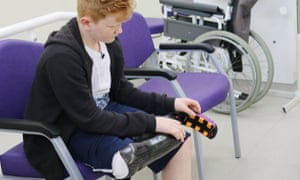
Children who are missing an arm or leg are being helped to run, swim and play sport after getting prosthetic sports limbs on the NHS.


The roll-out of sports prostheses on the NHS is part of a £1.5m fund to help child amputees and others across England get active. There are also hopes that it might help create Britain’s future Paralympians.


Ben Moore, 13, from Brighton, has already put his new running blade into action to jog and play football. Now his sights are on the Paralympics, according to his mother Kate.


She said: “We’re really pleased Ben has been fitted with a new running blade. After watching the success of Team GB last year, this blade means Ben can develop his interest in sport and could become part of the next generation of Team GB.


Ben Moore tries on his race blade.


Ben Moore tries on his race blade. Photograph: Department of Health/PA

“We hope more children and young people like Benjamin will be able to benefit too.”


Double-leg amputee Richard Whitehead, who successfully defended his Paralympic title in the 200m T42 at Rio last year, said: “Having run thousands of miles on prosthetics myself, I’m delighted to see the next generation take their first steps in experiencing the freedom of running whether just for general enjoyment or towards achieving their own Paralympic ambitions.”


Running blades, swim fins and arm attachments to help children play basketball are among some of the equipment that will be shared out.


Richard Whitehead retains his men’s 200 metre T42 title at Rio Games.


Richard Whitehead retains his men’s 200 metre T42 title at Rio Games. Photograph: Matthew Stockman/Getty Images

Rolled out over 2016/17 and 2017/18, the money is being divided between NHS limb centres to fund requests for the equipment, and research to improve sports protheses.


The fund, which the health secretary, Jeremy Hunt, announced during the Rio Paralympics, was earmarked after a campaign to highlight the issue by Sarah Hope.


Hope’s two-year-old daughter, Pollyanna, had to have her right leg amputated below the knee after she was hit by a bus on a pavement in south London.


Kiera Roche, the chief executive of LimbPower, the national disability sports organisation for people with limb impairments, described the fund as “a really positive step” in supporting children to be more confident and sociable.


She said it gave them the equipment to participate and “immerse themselves fully in school PE and community activities”.


Hunt said: “Every child should be able to participate in sport. Team GB surpassed everyone’s expectations at last year’s Paralympics and this investment will ensure the next generation of children who have either been born without a limb or who have lost a limb will be able to lead an active life.


“It’s wonderful that the first children are now receiving their blades and that they will be able to reach their sporting potential. I hope some may even be selected in the future as members of Team GB.”


NHS sports protheses fund fires starter gun for future Paralympians

18 Eylül 2016 Pazar

UK pledges £1.1bn to global aid fund against Aids, TB and malaria

Britain will contribute £1.1bn to a global aid fund to help fight Aids, tuberculosis and malaria – but attach a set of “demanding” performance targets, Priti Patel has announced.


The international development secretary, who last week said too much of the UK’s aid budget is stolen or wasted, announced the three-year pledge alongside the Canadian prime minister, Justin Trudeau. The investment in the Global Fund of about £366m a year will help the organisation save eight million lives from the diseases.


But it will be subject to a “performance agreement” – the first of its kind – which will see Britain monitor the fund’s work and withhold 10% of the money if targets are not met.


Patel said: “This latest round of UK investment demonstrates that Britain is keeping the promises it has made to the world’s poor while underlining the government’s commitment to tackle the great global challenges of our time, including disease, which is in the national interest. But even some of the best performing international aid institutions can improve and deliver better value for taxpayers and those in need.


“That is why we are using this investment in the Global Fund to secure a demanding performance agreement to make sure UK aid achieves the maximum possible impact. Performance agreements will become the norm for the Department for International Development’s engagement with international institutions, as global Britain uses its leadership to demand more for UK taxpayers and the world’s poorest.”


The money will fund 40m bed nets to tackle malaria, provide enough antiretroviral therapy for 1.3 million people with HIV and support the treatment of 800,000 people with tuberculosis. A proportion of the investment will be used to leverage £100m from the private sector specifically to tackle malaria.


Kate Osamor, the shadow international development secretary, said: “We welcome the government’s pledge of £1.1bn to the Global Fund, which has a remarkable record and powerful model for fighting Aids, TB and malaria across the world. However, it’s perplexing it comes at a time when we’re still waiting for the government to publish the multilateral and bilateral aid reviews, which are long overdue.”


UK pledges £1.1bn to global aid fund against Aids, TB and malaria

6 Ağustos 2016 Cumartesi

Elderly should sell homes to fund care, says aide to Theresa May

Theresa May’s policy chief has suggested that people with valuable homes who face high social care costs in old age should downsize or re-mortgage to cover their bills, the Observer can reveal.


Director of policy John Godfrey has suggested that over the next 10 years the solution to the social care crisis lies in people selling up or releasing some of the equity in their property.


“On a 10-year view … equity release is going to be hugely important, because if you look at the amount of housing equity across the UK that is owned by people of post-retirement age, that is really where an awful lot of the money sits at the moment,” Godfrey told an independent commission last year. “Can people either downshift or liberate some of that money through equity release to fund their living costs?”


One in 10 people end up paying more than £100,000 in care costs in old age, research has shown. Equity release involves borrowing against the value of a home or selling all or part of it for a lump sum or a monthly income. Godfrey, who was a special adviser to Douglas Hurd in Margaret Thatcher’s administration, added that he believed the government should encourage people to sell their homes to release cash through the building of suitable retirement homes.


“As far as downshifting is concerned, you move into another area of policy altogether, which is the need to build more housing to give people a choice of the right sort of home.”


Godfrey had been working for insurer Legal & General as corporate affairs director for eight years before his appointment in mid-July. His comments will be controversial, given that they involve the politically toxic suggestion that people should spend their children’s inheritance – in the form of the family home – to cover the costs of social care. In 2013, then health secretary Jeremy Hunt said it was a scandal that every year “30,000 to 40,000 people are having to sell their houses to pay for care costs”.


Last July the government announced it would delay the so-called Dilnot reforms, which included the introduction of a cap intended to limit the liability of those self-funding their social care at £72,000. It was hoped that insurance products would emerge to allow people to cover those costs.


The proposed reforms, at a cost of £6m over five years, also provided for a more generous means test that would have allowed more people to qualify for local authority financial support.


John Godfrey, Theresa May’s director of policy

John Godfrey, Theresa May’s director of policy.

Elderly should sell homes to fund care, says aide to Theresa May

2 Ağustos 2016 Salı

Users of HIV prevention PrEP urge NHS to fund "life-changing" medicine

Men and women across the UK at risk of acquiring HIV were offered hope after a high court ruled that a preventative treatment for HIV – known as PrEP – can be legally funded by the NHS.


Until now, those at risk of HIV transmission have been left with no choice but to obtain the preventative drug using private prescriptions or online pharmacies where the quality of medicine cannot always be assured.


Michael, 39, who lives in Sussex, buys Tenvir-EM – a generic version of Truvada, the drug used for PrEP – from online pharmacies. His partner is HIV positive and he takes PrEP to further reduce the “infinitesimal chances” of infection.


“The NHS is digging its heels on reviewing the drug so I, and many in my position, turn to internet pharmacies. I’d much prefer it to be available on the NHS. I would happily pay the prescription charge several times over, if only for the reassurance that the medicines are genuine. For now, I rely on good faith,” says Michael.


HIV campaigners ‘delighted’ by high court ruling on preventative drug.

NHS England said earlier this year that it would not routinely fund the drug as it claimed the treatment was preventative and not its responsibility. Instead, local councils were put in charge, which responded by saying they did not have the funds.


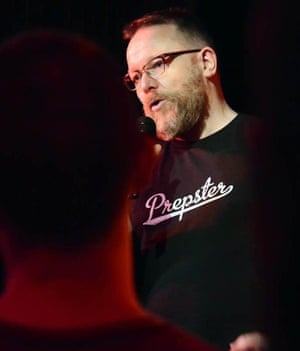
Dr Will Nutland, founder of Prepster – a PrEP awareness website – and a public health worker at the London School of Hygiene & Tropical Medicine, began taking the drug this year in part to protect against HIV transmission, but also to test the quality of online purchases.


“I’ve been sexually active for 30 years and I’ve always had the risk that HIV could be transmitted; condoms can break. I bought my first box of PrEP over a year ago as I wanted to demonstrate how easy it is to get hold of. It cost £45 from India. I thought, if I was advocating for it, then I must be prepared to take them myself. I found that, broadly, it was a simple process although I once had to pay 25% import duties,” says Nutland.


About 4,000 people acquire HIV in the UK every year. The average cost of a lifetime of treating each patient at current prices is put at about £360,000. Nutland believes that this cost could be eliminated.


Michael James, 49, from London, buys three months’ supply at a time from an online pharmacy in India at a cost of £150. But he is worried about safety, and angry with the NHS for discriminating against those at risk of HIV transmission.


“Of course it is a risk not knowing the quality and effectiveness of the medication but this is the only option many of us have. It’s a disgrace to be discriminated against in such a way by the government, who continue to handball the responsibility from authority to authority at the risk and expense of the individual,” says James.


Doctor Will Nutland


PrEP activist Will Nutland believes the drug could hugely reduce the number of HIV cases. Photograph: Nuno Lopez

Nutland isn’t personally concerned about the safety of PrEP bought over the internet, instead he believes the greatest problem is that those most at risk cannot afford to buy the drugs.


“There’s a Facebook group, where people swap information and batch numbers. There are about 100 of us in the UK, who test at sexual health clinics to measure the amount of the drug in our blood. There hasn’t been one person whose test hasn’t shown the drug, the only issue being when the tests have been taken too soon, too little of the drug shows up.


“The website IwantPrEPnow lists four reputable pharmacies. I don’t personally have any concerns with the drugs coming in. A major problem is affordability. I can afford the £45 a month, but the people who should use it might not be able to,” he says.


Although it is a positive that PrEP is easy to get, Nutland worries that may stop people from having advisable health checks before taking the drug, which is another reason that he is urging the NHS to fund the drug.


“It’s a concern that people using PrEP are doing so without HIV tests and kidney function tests,” he says. “If it was through an NHS commission, through a sex clinic, there would be a full barrage of tests. People are not safeguarding other things. Those who can protect themselves. Buying online is a stopgap until it’s properly available.”


Users of HIV prevention PrEP urge NHS to fund "life-changing" medicine

NHS can fund "game-changing" PrEP HIV drug, court says

A leading Aids charity has won a high court battle over whether a preventative treatment for HIV that charities say is a “game-changer” can legally be funded by the NHS.


NHS England said it had received advice that it did not have the legal power to fund pre-exposure prophylaxis (PrEP), a “highly effective” anti-retroviral treatment used to stop HIV from becoming established in the event of transmission.


But Mr Justice Green, sitting in London, ruled that NHS England “has erred in deciding that it has no power or duty to commission the preventative drugs in issue”.


The ruling was a victory for the National Aids Trust (NAT), which brought the case to court.


Deborah Gold, the NAT chief executive, said: “This is fantastic news. It is vindication for the many people who were let down when NHS England absolved itself of responsibility for PrEP. The judgment has confirmed our view that it is perfectly lawful for NHS England to commission PrEP. Now NHS England must do just that.


“Over 4,000 people are getting HIV every year in the UK – we desperately need further prevention options to add to condom use. PrEP works. It saves money and it will make an enormous difference to the lives of men and women across the country who are at risk of acquiring HIV. The delay to commissioning PrEP is both unethical and expensive.”


When taken consistently, PrEP has been shown to reduce the risk of HIV infection in people who are at high risk by more than 90%.


Related: Hope for ‘end of Aids’ is disappearing, experts warn


A row erupted earlier this year after NHS England said it would not routinely fund the drug. In March, the body decided the treatment was a preventative service and was therefore not its responsibility. It has said local councils are in charge of funding preventative health services.


However, NHS England agreed to a re-evaluation after the NAT launched a legal challenge. Then in May it said it had “considered and accepted NHS England’s external legal advice that it does not have the legal power to commission PrEP”, and that under 2013 regulations “local authorities are the responsible commissioner for HIV prevention services”.


Allowing NAT’s application for judicial review, Green said on Tuesday the core of the legal challenge was about “the allocation of budgetary responsibility in the health field”.


He said: “No one doubts that preventative medicine makes powerful sense. But one governmental body says it has no power to provide the service and local authorities say they have no money.


“The claimant is caught between the two and the potential victims of this disagreement are those who will contract HIV/Aids but who would not were the preventative policy to be fully implemented.


“In my judgment the answer to this conundrum is that NHS England has erred in deciding that it has no power to commission the preventative drugs in issue.”


Alternatively, said the judge, NHS England has “mischaracterised the PrEP treatment as preventative when in law it is capable of amounting to treatment for a person with infection”.


In any event NHS England had power to commission preventative treatments because that facilitated, or was incidental to, “the discharge of its broader statutory functions”.


Campaigners have said that while the majority of gay men use condoms to prevent being infected with HIV, there is also an “ethical duty” to provide PrEP to those who do not.


And they said the drug would provide an additional defence against HIV – and would not be used simply as an alternative to safe sex.


It comes after the results of a trial, published in February 2015, suggested that rates of HIV infection could be slashed by treating actively gay men with the anti-viral drug when they are healthy.


Dr Michael Brady, medical director at the HIV/Aids charity Terrence Higgins Trust, welcomed the findings and described the drug as “a game-changer”.


He said PrEP offered “another line of defence” against HIV, alongside condoms and regular testing. Brady said: “It is not a vaccine and it won’t be for everyone, but, once approved, we expect it to significantly increase the momentum in our fight against the virus.


“We urge the government, NHS England and local authorities to make PrEP a key priority in the fight against HIV.”


NHS can fund "game-changing" PrEP HIV drug, court says

18 Temmuz 2014 Cuma

Calling future leaders: meet the head of the UN Population Fund

Executive Director of the United Nations Population Fund ( UNFPA ) Babatunde Osotimehin

Executive Director of the United Nations Population Fund (UNFPA) Babatunde Osotimehin is interviewed at the UN’s news centre. Photograph: Paulo Filgueiras/UN Photo


Babatunde Osotimehin’s job is to guarantee that “each and every pregnancy is wished, every birth is secure, and every single young person’s prospective is fulfilled”. A experienced medical medical professional, Osotimehin was formerly minister of wellness in Nigeria and the director-general of the Nigerian National Company for the Management of Aids.


At the United Nations Population Fund (UNFPA), in which he is executive director, he has made maternal overall health, gender-based mostly violence and youthful folks central to his mandate. It is since of this curiosity in tomorrow’s advancement leaders that the Worldwide Growth Professionals Network is doing work with UNFPA to give you an possibility to meet him.


Speaking about his early daily life and having neglected his studies at college, Osotimehin says: “younger people may consider a long time to uncover their way and attain their likely. The work of grownups is to offer them choices.”


So as this “champion for reproductive wellness” approaches the finish of his 4-12 months term at the UNFPA, join the Network understand a lot more about his career, his vision and to place your tips and questions to him.


This invitation is open solely to members of the Network so if you are presently studying a subject that will stand you in good stead for a advancement job, and would like to attend the lunch at Kings Spot in London, here’s what you require to do:


Join the network send an e mail to globaldevpros@theguardian.com with the executive director’s title in the subject line. Contain a query for Osotimehin, and an illustration of when you have demonstrated leadership, as nicely as your university and contact particulars. Spots are restricted.


Calling future leaders: meet the head of the UN Population Fund

8 Temmuz 2014 Salı

NHS chief announces plan to give patients income to fund their very own care

Billions of lbs of well being services and town hall budgets are to be handed above to the most vulnerable patients to acquire overall health and social care services in the local community, in a dramatic modify of policy being unveiled by the NHS’s new boss.


Frail elderly individuals, disabled children and people with significant mental illness or understanding disabilities will from next April be offered personal pots of funds to commit as they see match on well being and social care solutions such as carers, physiotherapists and psychotherapy sessions, in an attempt, in portion, to maintain them out of hospital.


Some patients’ budgets will be as tiny as a handful of hundred pounds, though most are probably to get a lot more than £1,000, with a little quantity who have really complex wants receiving significantly more than that. Simon Stevens, NHS England’s chief executive, stated that it would assist maintain folks out of hospital and in the end save income.


These allocated the money would still get free GP and hospital care. Individuals will not instantly receive funds payments into their financial institution accounts but will manage the spending budget, which will be provided right after a care prepare is agreed with their physicians.


Stevens said that “north of five million sufferers” could each and every have a personal mixed health and social care budget by 2018, paid for by “billions” of lbs supplied by the NHS and local councils.


Stevens mentioned the dramatic extension of patient electrical power is needed to aid guarantee individuals get a far better deal from providers many find frustrating to deal with, reduce needless stays in hospital by trying to keep them healthier while nonetheless living at property, and also to conquer the shortages of cash which are increasingly visible in the NHS and social care.


“We are going to set out the largest supply to deliver wellness and social care collectively that there is been given that 1948 – a new alternative for combining them at the degree of the person,” Stevens informed the Guardian as he prepared to outline his ambitious prepare in a speech to council leaders at the Nearby Government Association’s annual conference in Bournemouth. It is his initial main policy alter since taking in excess of in April.


The initiative is driven by “a widespread sense that our Balkanised wellness and social care companies are no longer fit for purpose”, Stevens mentioned, specially when the ageing population has created developing demands for care just when Whitehall austerity programmes have produced what he has known as “two leaky buckets”.


Diminished funding for councils has led to a reduction in the availability of services which traditionally have assisted the elderly stay away from ending up in hospital, as evidenced by a 124% rise in the final 14 years in the variety of mostly older folks needing to be admitted for a day or two as an emergency, he said.


The move is meant to increase the high quality of care the 4 patient groups receive due to the fact at existing as well a lot of of them receive inadequate and “fragmented” care. That transpires simply because wellness and social care providers frequently do not perform properly together and also due to the fact the NHS is not as great as it ought to be in offering sufferers with complicated health care wants the joined-up care they require, he stated.


Older men and women with a number of distinct long-term circumstances can become baffled and daunted by dealing with an array of distinct parts of the NHS, including many departments of the same hospital.


Providing individuals direct handle in excess of these sums of funds is a lot more probably to force overall health and social care solutions to give much more joined-up and consumer-friendly solutions than people two separate techniques being merged, he stated, in a tacit rejection of the “whole particular person care” policy championed by Labour’s shadow health secretary, Andy Burnham.


“Rather than arguing for a structural reorganisation, if Beveridge was alive these days he’d clock the truth that, provided half a opportunity, men and women themselves can be the best ‘integrators’ of the wellness and social care they are provided,” Stevens extra.


In his speech on Wednesday Stevens will make clear that his technique is entirely various to his predecessor Sir David Nicholson’s habit of telling the complete NHS to employ one particular set policy. The new budgets will only be created accessible if neighborhood councils and GP-led NHS clinical commissioning groups in England agree to operate collectively and fund them, he mentioned.


While participation will be voluntary, he expects the two types of bodies to set aside their typical mutual suspicion in excess of which of them must pay out for what aspects of especially needy people’s care wants and make the budgets a reality.


“The proposition that we as NHS England are going to place on the table is that for these neighborhood authorities and neighborhood CCGs that want to operate with us, we will jointly develop combined, blended wellness and social care budgets for named folks in each area”, Stevens explained.


The Neighborhood Government Association and Age United kingdom last evening welcomed Stevens’s strategy in principle.


Katie Hall, chair of the LGA’s neighborhood wellbeing board, said the 648,000 people who have individual budgets to help pay out for their social care requirements had got higher choice and observed their lives enhanced as a consequence. Today’s announcement extends that to overall health requirements as nicely.But whilst council leaders will investigate with NHS England methods to make care more personalised, the new budgets “will not resolve the structural problems in the overall health and care program or fix the funding crisis in social care”, she warned.


Caroline Abrahams, Age UK’s charity director, said: “At the second negotiating the separate health and social care systems is for older individuals puzzling, frustrating and slow, because they have to deal with as well many people and hold telling their story to distinct individuals. For older people these personal budgets could indicate getting the assistance they need to have, tailored to their wants, stop duplication and boost their quality of lifestyle.”


However, the integrated personalized budgets will need to be designed so that they do not “current puzzling choices for some vulnerable older men and women struggling with sickness or dementia” or make individuals feel pressurised into taking one particular up, she additional.


Councillor Jim Dickson, Lambeth council’s cabinet member for health and wellbeing, explained that while most councils would welcome the enhance to integrated care, “the vital check of regardless of whether this will work is of program whether or not there is sufficient money in the new private budgets to supply high quality care”


Jeremy Hunt, the well being secretary, welcomed the plan.


“Greater out of hospital care is crucial for each individuals and the prolonged-term sustainability of NHS,” said a spokesman for Hunt.


NHS chief announces plan to give patients income to fund their very own care

5 Temmuz 2014 Cumartesi

Find approaches to fund the NHS correctly or accept a drop in specifications | the large concern

Government Pledges Increase In NHS Funding

What subsequent in terms of funding for the NHS? Photograph: Cate Gillon/Getty Photos


In each and every wealthy (OECD) nation, the share of nationwide cash flow devoted to well being companies is now increased than it was ten years in the past. Despite the economic downturn, even above the last five years, there is only one OECD nation exactly where the share has fallen: Greece (“Cameron warned: NHS is in danger of collapse inside up coming 5 many years”, News).


Looking ahead 5 many years, the query for the political events is not no matter whether wellness expenditure will rise in real terms as nationwide income recovers, but who will shell out for the higher expenditure? The only alternative is to give up our aspirations for a “world class” or even “high class” overall health services and return to the benchmark of the 1950s to the mid 1990s: an “satisfactory services”.


Professor Clive Smee


Chief financial adviser to the Division of Health 1983-2002


East Horsley


Surrey


You lead with the story that the NHS requirements much more funds to stay away from collapse within the following 5 years. Whilst that is most very likely real, one suspects there is still area for financial savings that will not impinge on patient care.


I just lately accompanied my wife to the A&ampE department of a specialist neighborhood infirmary, rated by many the best in Europe. The care she acquired was exemplary, to the extent that the receptionist took time and care to clarify how to total a questionnaire from which I quote verbatim: “You need to have to fill in this segment. How most likely are you to advocate this A&ampE department to friends and family if they required similar care or treatment?”


Professor David C Sanders


Durham


The difficulties of the NHS are far more to do with failure at the centre than in personal hospitals and clinics (“The coming crisis in the NHS”, In Focus).


There have been endless reorganisations and central initiatives that have completely failed in their objectives and that are then swept beneath the carpet even though ministers and their advisers swiftly move on, leaving the service increasingly impoverished.


At the identical time, privatisation and competitors are becoming steadily improved, which can only improve fragmentation, secrecy, confusion and the siphoning off of revenue. What the support really demands is openness, collaboration and utilizing any efficiency savings to fund new developments in the public support.


Frank Discipline is correct: we want a new national mutual, independent of government but not of voters, to obtain all the money and drive via reform.


Dr Richard Turner


Harrogate


It is really extraordinary that the King’s Fund analyses the stress on NHS finances without even mentioning the expenses of the Health and Social Care Act 2012, both “startup” and recurring, and the ongoing costs of working the NHS “market” in England. These are a lot more than the Far better Care Fund, which is removing £2bn from frontline NHS paying. Obviously the fees of redundant “reform” would not close the NHS’s black hole. But each and every not-so-minor aids


Calum Paton


Professor of public policy (well being policy)


Keele University


I scoured the Observer‘s substantial coverage of the NHS’s fiscal crisis for any reference to the disastrous effect that successive governments’ addiction to the smoke and mirrors of PFI funding has had, as predicted in some quarters, on the NHS’s prolonged-phrase viability. If, in accordance to Keep track of, the funding shortfall for 2015-sixteen will be £1.6bn while the PFI payments due for the very same time period will be £2bn, then the figures talk for themselves. Because they are the direct outcome of government policy, maybe PFI payments ought to be met by the Treasury rather of by the NHS, thus solving the problem?


Stephen Butcher


Ballymena


Co Antrim


Find approaches to fund the NHS correctly or accept a drop in specifications | the large concern

25 Haziran 2014 Çarşamba

£10m fund established to enhance fight towards antibiotic resistance

longitude prize

Drug resistance threatens health care successes, from transplant surgical procedure to cancer remedy. Photograph: Murdo Macleod for the Guardian


The battle towards antibiotic resistance will be the emphasis of a £10m fund, it has been announced. Both amateur and skilled scientists will be encouraged to consider to come up with the resolution to the dilemma of reducing effectiveness of the medicines as component of this year’s Longitude Prize.


The challenge, one particular of 6 proposed, was set by public vote on Wednesday. Scientists are now asked to to come up with a “price-efficient, accurate, quick, and easy-to-use check for bacterial infections that will allow health experts around the world to administer the correct antibiotics at the proper time”.


Setting out the dilemma, the organisers mentioned: “The development of antibiotics has added an common of twenty many years to our daily life. But the rise of antimicrobial resistance is threatening to make them ineffective. This poses a important potential chance as frequent infections grow to be untreatable.”


Dr Jeremy Farrar, director of health-related analysis charity the Wellcome Believe in, declared himself “delighted” with the result of the public vote, which was announced on the BBC’s the 1 Present.


He mentioned: “Antibiotics, and without a doubt the multitude of medication utilized every day to treat infection, are the bedrock on which a lot of modern medicine is created.


“However rapidly emerging drug resistance threatens the health care successes – from transplant surgery to cancer therapy – we at present consider for granted. It is critical we emphasis our collective international study efforts on this, 1 of the best public overall health threats of our time,” he additional.


Science minister David Willetts said that the shortlist “reminds us how considerably we depend on science and technologies to make our lives better”.


The Longitude Prize was set up 300 many years in the past to uncover the solution to what was then a key technical difficulty: how to navigate the seas securely.


“But in today’s age of X Issue and Strictly we are asking the public to vote on which great difficulty they want scientists to conquer,” wrote Willetts.


“There is absolutely nothing to quit a total outsider, with passion and ingenuity but no lab coat, from winning the prize itself.


“The sea clock that netted the authentic Longitude Prize in 1714 was invented by John Harrison, a Yorkshire carpenter who constructed and repaired clocks in his spare time. Legend has it that he was offered a watch at the age of 6 when he was in bed with smallpox, and spent hrs taking it to pieces to comprehend what produced it tick,” he extra.


Scientists also placed the troubles of paralysis, environmentally friendly flight, both foods and water supply and dementia on the shortlist.


£10m fund established to enhance fight towards antibiotic resistance

22 Mayıs 2014 Perşembe

Joe Hockeys health-related research fund is practically nothing far more than a distraction | Christopher Mayes

Overall health is a basic requirement for an individual to lead a good lifestyle. Without health you have nothing when we are sick, it is tough to perform, to care for others, to participate in the issues we enjoy. We seek out therapy so we can get back to our regular lives.


Due to the fact wellness is so crucial to our wellbeing, there is widespread agreement— including between ethicists —that a fair and available healthcare program is something that we need to pursue. And though the Australian healthcare technique is far from best, it has offered universal access to healthcare for practically 40 years. A universal healthcare system – a single that is open to absolutely everyone, no matter whether or not they can afford to pay – is a fundamental function of a good and just society.


Tony Abbott and Joe Hockey want us to panic about a “budget emergency”, including the thought that our existing wellness technique is unsustainable. Increasing healthcare costs pose a challenge to governments everywhere. But this is not a new difficulty, and will not carry about financial or social catastrophe any time soon.


This amplified risk is becoming used to justify measures that are now nicely known: introducing co-payments for GP fees disestablishing Medicare Locals transferring well being companies to the division of well being with decreased funding and stripping $ 80bn in funding from the states, especially in well being and schooling. This will not only force the states to increase their very own goods and companies taxes, but reduce the public providers they can afford to offer. It will end universal entry to overall health care, make Medicare a mere “security net”, overwhelm hospitals, and boost the inequities that are more and more a feature of Australian society.


With breathtaking cynicism, the Coalition has also engaged in the oldest strategy in the magicians’ handbook: distraction. The rabbit they have pulled out of their hat is the $ 20bn health-related analysis long term fund, to be financed – they claim – largely via the new taxes and cuts in well being providers. This is supposed, we can only presume, to acquire the quiescence of wellness and healthcare academics and researchers, and to distract citizens from the injury currently being done to our health program. Offered that polls regularly demonstrate that Australians strongly support Medicare, it’s probably that the government has underestimated our capability to focus on what’s critical. There are also powerful ethical motives why the Coalition’s proposed changes are unjustifiable.


Hockey encourages us to think about that the health-related investigation fund “could nicely conserve your life, or that of your mother and father, or probably even the lifestyle of your kid”. Medical analysis is clearly a good, and has accomplished outstanding breakthroughs in the final century. The health care research potential fund may possibly yield benefits. But, as any health-related researcher knows, healthcare analysis is not a steady manufacturing line of cures. It is regularly incremental, with several dead ends, and scope for progress might in fact be diminishing.


A lot more importantly, background shows that, without government intervention, the new treatment options created from healthcare analysis are typically available only to people who can pay, broadening the gap in between wealthy (who can afford top-shelf care) and bad (who acquire small). This indicates the proposed cuts and fees will burden the least-effectively-off in the existing to fund study that may benefit a handful of, probably wealthy, people in the future.


A lot more fundamentally, we have acknowledged for decades that enhancing well being in communities often relies on social change, rather than substantial-tech biomedical research. Prepared access to GPs and other neighborhood-based mostly wellness care, established vaccinations, great schooling, affordable healthy meals: issues like these make a large distinction to population well being. This is why Hockey’s championing of the health care study future fund as a panacea to services cuts is so offensive. Not only does it overstate the function of healthcare study in a just healthcare method, but it takes funding away from the agents of social transformation that can properly and effectively enhance well being.


Some health and health care researchers are organising against this unjust policy others seem inclined to assistance it. As well being and health-related researchers we could benefit from healthcare study future fund. But we believe that anybody who cares about the wellness of Australians is obliged to resist the two the proposed healthcare changes, and the deceptive trick of linking them to the good of medical study.


If well being and medical researchers do not stand up now, we will be left not only with a less coherent and much less fair health care program, but with the moral blight of possessing silently colluded in the destruction of universal healthcare. When destroyed, this will be almost not possible to claw back. We must reject this governments’ urgency rhetoric, lack of compassion for the least nicely-off, and rejection of solidarity and equity as basic Australian values.


Hockey and Abbott ought to place their rabbit back in their hat. We have not taken our eyes off the genuine problem: a honest wellness care system.


Joe Hockeys health-related research fund is practically nothing far more than a distraction | Christopher Mayes

21 Mayıs 2014 Çarşamba

Right now in healthcare from the King"s Fund NHS leadership and management summit

Very good morning and welcome to the dwell blog from the Guardian’s local community for healthcare experts. We are reporting from the King’s Fund fourth annual NHS Leadership and Management summit, which will hear speeches from Simon Stevens, chief executive of NHS England, Michael West, senior fellow at the King’s Fund, and Camila Batmanghelidjh, founder and director, Kids Firm.


Before the occasion commences, here’s a run by way of of today’s leading healthcare stories.


The Guardian reports that shock figures demonstrate extent of self-harm in English teenagers. A World Overall health Organisation survey reveals that a fifth of 15-year-olds in England say they self-harmed over the previous yr.


Professor Fiona Brooks, head of adolescent and little one overall health at the University of Hertfordshire, is the global study’s principal investigator for England. She says: “Our findings are truly worrying, and it’s [self-harm] substantially worse amid women. At age 11, each ladies and boys report a good degree of emotional wellbeing. But by the age of 15, the gap has widened and we get 45% of adolescent girls saying they really feel lower once a week in contrast with 23% of boys.”


She warns of a ticking timebomb unless the rise in bad mental healthamong younger people is addressed. “We do not yet know adequate about why this [poor mental overall health] is but dad and mom are busy and stressed, and children’s lives are turning into more pressurised. They know they need far better grades to get to university, but there is no assure of a occupation at the finish of it all.”


The Telegraph, meanwhile, reveals that one particular in 5 physicians and nurses feel pride in the NHS. A survey of two,000 nurses, medical doctors and managers by the King’s Fund found that just twenty per cent of nurses and 23 per cent of medical doctors said they felt “pride and optimism” about the NHS – in contrast with 63 per cent of executive directors.


Ann Widdecombe, former Conservative minister, has written for the Every day Express saying that prompt care is what NHS patients want. She highlights that Hinchingbrooke hospital is listed moving from 102nd to 10th area in the league table for waiting lists, getting rid of a £10million deficit, dealing with small servicing on the spot and minimizing parking fees from a optimum of £40 to £2.50. And, whereas the nurses at Hinchingbrooke utilised to commit 50% of the day with patients, they now invest 69%.


Nurses must nurse. Elementary, Dear NHS.


Perhaps Circle should run the whole demonstrate because all individuals want is prompt care, effectively and securely delivered.


They really do not care who offers it as extended as an individual does.


That is also quite elementary and only a comprehensive ideologue could deny it.


If there is a story, report or event you’d like to highlight – or you would like to share your thoughts on any of the healthcare troubles in the information today – you can get in touch by leaving a comment beneath the line or tweeting us at @GdnHealthcare.


Right now in healthcare from the King"s Fund NHS leadership and management summit

19 Mayıs 2014 Pazartesi

Top scientists cautious about $20bn health-related analysis potential fund

The spending budget centrepiece – a $ 20bn “medical investigation future fund” – will not boost the nation’s health except if the government broadens its quick beyond discovering cures for ailments, foremost well being researchers and academics have warned Tony Abbott.


The prime minister has described the fund as a “fine piece of policy” that would “double our nation’s investment in obtaining cures for ailment and far better health care treatments so we can all live healthier and happier lives”.


But acclaimed healthcare researchers, cited by the government as examples of the folks it desires to encourage with the cash, mentioned it required to be rethought.


A lot of have stated they are torn by a budget that gives the new pot of funds, in portion by charging men and women to visit the medical doctor, but also cuts $ 80m from co-operative investigation centres, $ 11m from the CSIRO and $ 75m from the Australian Research Council.


The researchers’ 1st priority has been to flesh out the really sketchy details offered on budget evening about how the new fund would perform, and offer the government with robust advice about its operation.


Professor Ian Frazer, whose crew produced a world-very first vaccine for cervical cancer and who appeared alongside Abbott on Monday, advised Guardian Australia he and other researchers had recommended Abbott and the health minister, Peter Dutton, that the fund need to have a “very broad remit” beyond studying new cures. They said it should contain well being economics and preventive and “translational” wellness – “translating” health-related analysis into diagnostic tools, medicines, procedures, policies and schooling.


“We get the robust sense they are planning this as they go along and I feel they listened to us,” Prof Frazer explained following the Brisbane meeting among the heads of analysis institutions, vice chancellors, top researchers and the prime minister and overall health minister.


Wellness sector authorities who attended final Tuesday’s price range lock-up had been advised the fund would “very strictly concentrate only on health care research”.


But the researchers at the Monday meeting insisted the government use the fund to implement a assessment of well being and health-related research, chaired by Simon McKeon, carried out beneath the former Labor government. McKeon advised Guardian Australia his findings were that this kind of a fund “has to have a broad scope if its goal is to improve overall health outcomes”.


“It can not just be restricted to health-related study, it has be significantly broader than that,” he mentioned.


McKeon, who is also the chairman of CSIRO, explained the budget’s decisions “run in contradictory directions”.


He mentioned the success of the new fund would rely on how it was set up. “If it is set up well [the price range] might finish up delivering us a net achieve, if it isn’t, we may not end up ahead. And we do not know how it will operate yet.”


The chief scientist, Professor Ian Chubb, mentioned he “could not see a technique at the moment” in a spending budget that cut most research funding, but invested considerably a lot more in medical research.


“They seem to be to be disconnecting health-related research from all the rest, but distinct sorts of research are linked. To do very good health care analysis you need very good chemistry and very good physics and excellent biology and very good genetics … it does not make sense to separate one thing out.”


Abbott and Dutton were once more spruiking the new fund on Monday, but number of top scientists completely agree with the technique.


Sir Gustav Nossal, emeritus professor at the university of Melbourne, advised the ABC: “I think this $ 20bn fund is extremely exciting but … why lower CSIRO? Why cut the Australian Nuclear Science and Technological innovation Organisation? Over all, why minimize the Australian Research Council?


“This is going to make an us-and-them predicament: the health care researchers will be laughing and the enabling scientists in maths, chemistry, physics and so forth will be suffering. This is not very good.’’


And eminent healthcare researcher Professor Fiona Stanley advised the Australian she was conflicted because the new fund would be established from $ five of the new $ 7 co-payment charged on visits to the physician.


“What I get concern with is that, by introducing a co-payment, it will impact people who are the sickest, most marginalised, the poorest … and for that to pay out for a medical analysis price range looks to me unpalatable,” she stated.


She said deterring men and women from going to their GP would lead to less early ­diagnosis and treatment for men and women with chronic illness.


The prime minister mentioned he anticipated disbursements from the fund would be overseen by the Nationwide Well being and Health-related Analysis Council which “has a sturdy reputation as a guardian of good investigation. It is researchers by and massive carrying out the correct point by researchers.”


Prof Frazer mentioned the prime minister and the researchers had discussed one more independent entire body currently being concerned in making grants choices in the potential.


Top scientists cautious about $20bn health-related analysis potential fund

13 Mayıs 2014 Salı

7 approaches to unify the NHS without having the Greater Care Fund

A nurse at the Queen Elizabeth Hospital

The Better Care Fund meant to minimize increasing pressures on the NHS was delayed right after a damning Whitehall assessment. Photograph: Christopher Furlong/Getty Photographs


The delay of the £3.8bn Greater Care project to integrate wellness and social care seems to be like a euphemism for its demise. The Division of Wellness still maintains that implementation will start off from April 2015. A single month ahead of the basic election? I do not feel so.


The intention is worthy, but the answer is fudged. The project calls for joint functioning between a lot of semi-independent organisations of various capability, including 150 local authorities, 160 acute hospital trusts and 52 mental well being trusts. The £40bn NHS hospital spending budget was to give £1.9bn of funding. But there are fears that some income-strapped nearby authorities might divert the funds to other purposes, highlighting an absence of executive authority and accountability to make certain accomplishment. This cannot reside in the two the NHS and regional government.


Furthermore, could hospitals truly conserve £1.9bn a yr to pay for the scheme, in addition to other efficiencies needed of them? Only with radical action. Considerably of their expenditure is pretty inelastic. Buildings are tough to decommission. Half the hospital spending budget is spent on procurement of drugs, goods, companies, equipment and operates. Capacity to make financial savings is hindered by the NHS’s unnecessarily complex structure for managing procurement.


Much of the remaining expenditure is on personnel. Considering that the Francis report into Mid Staffordshire, trusts seem to prefer going into deficit rather than chance delivering unacceptable service amounts. The Kings Fund reported on 15 April that 39 foundation trusts and 26 other trusts are in deficit.


Successive governments have been also timid in mandating excellent practice in the vain hope that a mixture of huge schemes, encouragement, incentives and restricted stress would do the trick. They haven’t. Jeremy Hunt should bite the bullet and mandate – now – to give the NHS breathing area to survive beyond the medium phrase.


1. Develop a single procurement construction – a mixture of central, regional and local.


2. Standardise support, functions and equipment specifications.


3. Share solutions – healthcare and administrative.


four. Make much more imaginative use of the private sector. In Kuala Lumpur one particular can receive a scan at a health club.


5. Determine greatest practice and mandate its use all through the wellness support. NHS trusts are notoriously slow to adopt innovations of other people.


6. Find a GP practice with every hospital as suggested by Chris Moulton, vice president of the University of Emergency Medication, at an Open Forum Occasions conference. That would lessen the strain on A&ampE.


7. Give hospital boards 1 12 months to develop fit-for-function administrative systems.


Successive governments have enhanced the independence of hospitals and trusts and created an inefficient postcode lottery. This is no longer financially sustainable.


Colin Cram is a public sector consultant specialising in procurement


• Want your say? E mail us at public.leaders@theguardian.com.


Join the Public Leaders Network for far more comment, evaluation and work options, direct to your inbox. Stick to us on twitter by way of @Guardianpublic.


7 approaches to unify the NHS without having the Greater Care Fund