anxiety etiketine sahip kayıtlar gösteriliyor. Tüm kayıtları göster

25 Nisan 2017 Salı

Burnout, depression and anxiety – why the NHS has a problem with staff health

When Laura-Jane Smith took time out of her clinical training for a PhD, she found she was constantly unhappy, and suffered from palpitations, nausea, severe headaches, and breathlessness among other physical symptoms.


The hospital doctor’s days were dominated by negative thoughts. She recalls: “I once walked for 30 minutes with ‘I hate my life. I hate my life’ on a loop of internal monologue that I feared had no end.” Eventually, Smith was diagnosed with depression and anxiety and ended up leaving the PhD.


She is not alone. Countless healthcare professionals suffer from burnout, depression, anxiety and addiction. Estimates from Public Health England put the cost to the NHS of staff absence due to poor health at £2.4bn a year – excluding the cost of agency staff to fill in gaps and the cost of treatment.


In his independent review looking at the impact of staff health on NHS performance, former medical director Steve Boorman, who is honorary professorial fellow of the Royal Society of Public Health, found that health workers often did not prioritise their own health. “They did not want to take time off as they felt patient care would suffer when temporary cover was needed to replace them,” he explains.


Dr Clare Gerada, medical director for the NHS Practitioner Health Programme, explains why this is so: “You only have to look at what you’re trained to do as a doctor or a nurse. You’re trained to put patients first and to put their needs above your own.”


NHS England now has a specific programme, supported by chief executive Simon Stevens, that advocates health checks, access to early physiotherapy and mental health support, and improvements in food available on site and staff vaccination uptakes. But Boorman admits that progress is inconsistent and staff health is still a low priority for leadership and for NHS staff themselves.


“Good staff health isn’t about token Zumba classes or lettuce leaves for the worried, but about helping people understand the impact poor health may have on themselves, their family and those around them – in the case of NHS workers, the vulnerable patients that need care,” he points out.


Smith, who is back at work after seeking help from the NHS Practitioner Health Programme and undergoing therapy, says that finding a space in life for creativity also helped her.


Anxious to prevent a relapse, she has made herself a number of promises: “I will take all my annual leave, I will say ‘no’ more often to extra work tasks, I will value activities that make me happy. By making time for the things that recharge me, I am now more effective – a better colleague and a better doctor.”


Burnout, depression and anxiety – why the NHS has a problem with staff health

1 Nisan 2017 Cumartesi

Experiences of anxiety: "I suddenly became so anxious I couldn’t breathe"

Jo, Washington DC
Having an anxiety disorder means that I don’t just have a lot of feelings, I have feelings about my feelings. I worry that my feelings aren’t real or that my feelings about my feelings are the correct feelings, or my feelings are the wrong feelings. I have shame about my feelings, guilt about my feelings, anger about my feelings. Sometimes I wonder which feeling is real – the initial feeling or the resulting feeling? Am I making myself feel this way or do I just feel this way?


I’m always looking for patterns. I thrive on routine. Anything to make me feel less trapped, like I have control. My best friend dying in high school threw this desire for control into overdrive. I can’t enjoy concerts or festivals or bars because there are too many people – what if there’s a fire? What if someone starts shooting? Will I get crushed to death in the inevitable stampede?


One time in high school my friend spent the night, sleeping on my floor directly underneath the ceiling fan. I couldn’t sleep for hours because I imagined what I would do if the ceiling fan suddenly collapsed. I went over the plan again and again, all night long.


Airplanes are a problem. I travel a lot for work. My airplane routine is thus: pack efficiently at least two days prior. Select an odd-numbered window seat (preferably A, but F will do at a pinch), preferably with a seven or a three (but not 13) – 11A is my favourite seat – 17A comes in second. I will pick 27A over 25A, even though it’s farther back in the plane. I wear my airplane sweater, the same sweater I’ve worn on every flight for the last four to five years and take anti-anxiety medications.


I love my friends, and I know, intellectually, my friends like me (otherwise why would they hang out with me?). But I’m constantly worried they don’t like me, or that I’m being annoying, or that they only invite me around because I’m just that friend that’s always around who you can’t get rid of.


Anonymous, 20
I’ve always been an anxious person, even as a child. Moving away from home forced me out of my comfortable hole, out of my comfort zone, which is when my anxiety and depression got so much worse.


It was after months of paranoia, violent imaginings and a confusing sleeping pattern that I forced myself to get help. Since then I’ve been in therapy more or less constantly, which has helped me learn more about myself, and ways of coping. In a way, therapy offered me a chance to reintroduce me to myself.


If there is one take away piece of advice I could give, after years of debilitating anxiety and depression, it would be to make valuable friends, and to not be scared to talk to them about your anxieties and worries – it’s a very British thing to just bottle everything up, but you have to unbottle, and release the pressure sometimes.


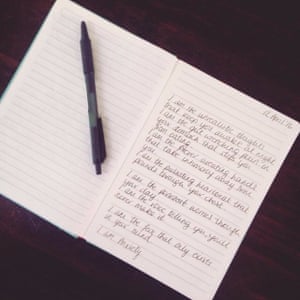
Sinead Taylor, Melbourne, 24


49081678 img 6220


A poem by Sinead Taylor. Photograph: Sinead Taylor

I have struggled with anxiety and depression since I was about eight. I went through years of therapy and counselling to fight my mental illness and through writing I have reached a very happy and healthy state.


Anonymous, 20, student
I’ve had a rocky road with mental health. I’ve suffered with what I think is a considerable problem with anxiety for nearly four years now. The fact that my life is near enough perfect and I still experience these feelings is astounding and often makes me feel helpless.


Bouts of anxiety where there is a constant niggling voice in my head, doubting everything I do and the actions of others, panic attacks, sometimes out of the blue, and deep-seated issues with skin picking and cleanliness, can be overwhelming and distract me from my work and sleep. I’ll be lucky to be asleep before four in the morning as of late.


Not so long ago I went to see my GP about it. They didn’t refer me, I wasn’t diagnosed, they just gave me pills and sent me on my way. The pills worked temporarily, but I didn’t understand how to tackle my issues, I didn’t even understand what my issues were or what was causing them. I still don’t.


David Beeney, 54
I will never forget 2 September 1986, one of the worst days of my life. I was helping to interview somebody and suddenly became so anxious I couldn’t breathe. I pretended that I felt faint to disguise what was really going on, and did exactly the same the following day in similar circumstances.


Little did I know then that I would continue to mask similar feelings of anxiety for the next 30 years. Two days later, I attended a wonderful wedding with my closest family and friends. Their memory of me that day would be of me acting the clown. My only memory of that day was thinking that my promising career was over at only 24-years-old and that I was going “mental”.


You just can’t tell by looking at someone how they are feeling inside. Back in 2004, a number of us went out straight from work to watch an England game. Our boss had put some money behind the bar and I can remember us all cheering England to a rare victory. What nobody noticed that evening was the young lad who decided to go home at half time. He didn’t turn up for work the next day. We never saw him again because he chose to kill himself, as life was no longer bearable for him. His closest colleagues were shocked because he had been laughing and joking only the day before in the office.


In the UK, the Samaritans can be contacted on 116 123.
In the US, the National Suicide Prevention Hotline is 1-800-273-8255.
In Australia, the crisis support service Lifeline is on 13 11 14.


Experiences of anxiety: "I suddenly became so anxious I couldn’t breathe"

1 Mart 2017 Çarşamba

Young men and mental health: how do you cope with anxiety?

A quarter of young men self-harm to cope with depression, stress and anxiety, according to a survey by YouGov.


The poll of 500 men aged between 16 and 24 found that 24% had turned to self-harm to deal with difficult emotions. Additionally, 22% said they had considered doing so.


When under pressure, the survey also found a large number of young men resorted to exercising excessively, controlled eating, pulling out their hair, punching walls and abusing drugs.


Dr Marc Bush, senior policy adviser at a leading youth charity, Young Minds, said that men also increasingly feel pressure to look a certain way these days, often lacking self-esteem. He warned about body image issues which affect some young people, leading to excessive exercising and even working out through injury, which could cause damage.


We want to hear from young men about this topic. Do you agree with the findings? Have you self-harmed to deal with stress? What are your biggest worries and concerns? Do you struggle with anxiety and depression? What ways have you found to cope? What can be done to tackle stigmas around men and their mental health? Share your views and experiences.


You can do so by filling in our encrypted form below – anonymously if you wish – or We will do our best to ensure your responses are kept secure and confidential. A selection of contributions will be featured in our reporting.


Young men and mental health: how do you cope with anxiety?

10 Şubat 2017 Cuma

How To Get Your Friends and Escape Stress & Anxiety Together?

Life is a highly complex and challenging concept. People deal with life in different ways, and they end up in very different places for that. In reverse, you can be sure that there are also a lot of people that find themselves in the same situation, because we’re all different, but not very different at the same time, if that makes sense.


One aspect of life is how it tends to make us prone to stress accumulation. Depending on how well you’ve made things for yourself in life, you can still be subject to stress and anxiety, and other similar symptoms that no one wants to have to deal with. If you are living a very successful life, there might be less frequent and less intense cases of stress accumulation, but that doesn’t mean you are experiencing continuous bliss.  Maybe you’ve experienced a tragedy or have been witness to one, or maybe you are just having a really hard time lately when it comes to work.


Like we’ve said, you’re never alone and despite how you might feel, there are a lot of people going through the same thing. Speaking of other people, one particular group of people you should focus on are your friends. You talk to them on a regular basis and do things together, but did you know you could actually do stuff with your friends that will help you overcome your not so cool mood or state of spirit?


Join us for the rest of this article, as we explore some of the things you can do with friends, and how you can make the most out of them to overcome the blues or rough period you’re facing.


Agriculture


Have you ever considered gardening? A cool way to spend more time with your friends is by opening a garden together. It’s up to you how big or small it would be, and what would grow inside. Gardening is a known form of reducing anxiety. Seeing things grow out of your own work and dedication can be very satisfying and rewarding for the mind and spirit. And vegetables don’t grow instantly, so you can spend the time with friends while you’re all tending to the garden. Bring a good book or some games and make the most of it.


Traveling


One influential factor in stress and anxiety increase is spending too much time in one place. You need to get out of the house, get some fresh air, or maybe just change the scenery for a while. Get a car, pack some clothes, food and some clothes, and head to a location where you can all relax in each other’s company. Somewhere with a lot of sunlight, maybe, and a beach. Or maybe a snowy mountain with some skiing if that’s more your thing.


That being said, it’s important to know that when dealing with stress or anxiety, there’s always a way out.  And by engaging in these activities with your friends by your side, you can create stronger bonds and free your mind, all in the same experience. It wouldn’t be a bad idea to immortalize the moment either. Pictures tend to last a long time, and having the possibility of revisiting that moment whenever you want is a great thing to have.


Author byline:


John Matthew working as digital marketing expert since 2008, he started his career as social media professional with NTD Telecommunications. John played a vital role in developing following brands freecnaclasses.net and dontpayfull.com and much more. He loves to exercise, yoga, my twin daughters, dailyforex.com, encouraging quotes, sleeping in colder rooms, bunk beds, acne spot treatment, the internet, hiking shoes for women, web hosting and traveling to new places.


How To Get Your Friends and Escape Stress & Anxiety Together?

3 Şubat 2017 Cuma

What I wish I could tell my boss: "My anxiety isn"t a weakness"

“How can you guarantee that this won’t happen again?” you asked. I was sat in a disciplinary meeting with the head of HR and you, my department manager. The meeting followed a three-day absence and was something I’d been dreading from the moment I’d called in sick.


My feet couldn’t stay still, I was swallowing bile every few minutes and I was having palpitations. I could barely concentrate on what was being said because I was trying not to hyperventilate. It took me a few moments to register the question, and when I did, I felt sick to my stomach.


You did not see my anxiety for what it was – an illness.


It may be a well-known cliche that large companies don’t care about the little people. But as someone who had only worked for local pubs and small businesses, I was naively confident that a well-known corporation would value the wellbeing of their staff. I assumed they would offer support and resources for mental health illnesses – considering as many as one in four people in the UK suffer from them each year.


As I sat there, all I could think while you were telling me off was: “You know nothing about anxiety disorders”.


Anxiety affects everyone in different ways. It can appear in the face of certain triggers or at completely random times – and its severity can vary wildly from episode to episode. Despite having been affected by mood disorders for years, I only realised I suffered from anxiety when a friend of mine suggested I seek help from my GP. This was after an episode where I had spent two hours hyperventilating and unable to move from the bathroom floor.


Describing my experiences to you and the head of HR gave me a dry mouth, as I could feel myself faltering under her stare and thinking: “She definitely thinks I’m exaggerating.” Though her tone of voice was sympathetic, she slid an unhelpful leaflet titled “stress at work” across the table and set up an appointment for me to talk to the occupational health therapist. They in turn suggested I speak to my GP, as I had done months before.


I don’t blame individuals for misunderstanding mental health. It carries a stigma with it, and because it often shows no physical symptoms it can be hard for others to understand. Anxiety isn’t simply getting worried about a presentation or feeling Sunday night blues – it’s a constant feeling of being on edge. It’s breaking down at a moment’s notice. It’s feeling a fist squeeze your chest until you feel like you’ll die from being unable to breathe.


Employers should have support systems in place for staff, so people like me don’t face disciplinary action. I understand that absence policies are in place to catch slackers, and to pinpoint recurring illness in staff who may need help. However the way you conducted the interview made it feel like I was being punished rather than helped. It felt like my personality and work ethic were being scrutinised.


What I wish I could say to my boss is: no, I can’t guarantee an attack won’t happen again, because the nature of my illness is unpredictable. I’m taking antidepressants and undergoing cognitive behavioural therapy so I can learn to get my anxiety attacks under control. They’ve been much more frequent in the past, and I know that if I wasn’t receiving medical help you’d have fired me by now.


These things don’t go away overnight, and I’d like to think that you support me trying my best to overcome my illness. Perhaps you could read up on anxiety, then you would know that it isn’t just me wanting to stay in bed all day, but rather that my mind has trapped me there – and you could work towards a better understanding of mental health.


What I wish I could tell my boss: "My anxiety isn"t a weakness"

25 Ocak 2017 Çarşamba

From Anxiety to Addiction: The Top 10 Uses of CBD Oil

Scientific research shows that cannabidiol or hemp CBD he is a component of the traditional marijuana, but it lacks the psychoactive effects that are often associated with marijuana use. Cannabidiol oil has ten medical uses that you might not have known.


Digestive Aid


When cannabidiol binds to cannabinoid receptors in a person, it stimulates the individual’s appetite. These receptors play a major role in regulating feeding behavior. Some diseases interfere with the appetite to the extent that they can prevent a patient from recovering, and such patients can benefit from this oil.


Moreover, cannabidiol is good at easing nausea and vomiting. People who are enduring chemotherapy and treatments from serious diseases and are suffering from the conditions can have the most benefit from this compound.


Anxiety Relief


Cannabidiol can also relieve severe social anxiety. In a 2001 study, researchers investigated the effects of this oil on people with generalized social anxiety disorder and confirmed that it significantly reduces anxiety, discomfort in speech performance and cognitive impairment. While the group that used cannabidiol showed great results, the other group showed higher anxiety, discomfort, and cognitive impairment.


Cancer Spread


Research has shown that cannabidiol may have significant protective effect against the development of certain types of cancer. This oil can prevent some types of cancer by inducing the death of tumor cells, controlling and preventing the spread of breast cancer cells, and inhibiting cancer cell growth. According to California Pacific Medical Center, the oil prevents breast cancer cells from traveling to distant tissues by inhibiting ID-1 gene aggression.


Antipsychotic Relief


Cannabidiol also relieves psychotic symptoms that are associated with schizophrenia, researchers at the University of Cologne in Germany have revealed. Schizophrenia affects approximately 1.1 percent of adults in the U.S., making the demand of this compound high.


Diabetes Prevention


In a recent study, the use of this oil led to the prevention of the development of diabetes in nonobese diabetic mice. This happened because it prevented the production of a cytokine that plays a significant role in many autoimmune diseases.


Insomnia


For many people, this compound is the best for those who want drugs that aid sleep. Unlike most drugs, it does not habit forming. A CDB-heavy strain will help you when you need it most.


Acne


This compound can treat acne, according to the Journal of Clinical Investigation. Scientists used cannabis-derived cannabidiol on the sebaceous glands of a human being and discovered that it acts as an efficient sebostatic and anti-inflammatory agent.


Fibromyalgia


The most common treatments for this condition are corticosteroids, opioid pain medications, and anti-inflammatory medications. A 2011 research study indicates that this oil can also treat fibromyalgia. The researchers recruited 56 participants and asked half of them to use cannabidiol and another half to use traditional methods to treat their conditions. All participants who used this oil saw a significant reduction in their symptoms and pain, but the other team did not see much of an improvement.


Crohn’s Disease


Cannabidiol could be very effective at treating bowel diseases such as Crohn’s disease. This compound interacts with the systems that regulate gut functions. Its anti-inflammatory abilities inhibit this condition from progressing and ultimately bring a lot of relief to Crohn’s patients.


Cigarette Addiction


Cannabidiol can play a major role in the smoking-withdrawal process. In a double-blind study, 24 smokers received either a placebo or inhaler of cannabidiol, and they were asked to take a puff every time they craved for a cigarette. Over the week, those who were taking the cannabidiol inhaler registered a nearly 40 percent drop in their intake, while the rest saw no change in the number of cigarettes they consumed.


From Anxiety to Addiction: The Top 10 Uses of CBD Oil

11 Ocak 2017 Çarşamba

Different Types of Anxiety Disorders

Anxiety is a common occurrence when a person faces potentially problematic or dangerous situations. It is also felt when a person perceives an external threat. However, chronic and irrational anxiety can lead to a form of anxiety disorder. There are different types of anxiety disorder depending on their causes or triggers.


Generalized anxiety disorder


A person who has this type of anxiety disorder usually experience prolonged anxiety that is often without basis. More accurately, people with generalized anxiety disorders cannot articulate the reason behind their anxiety. This type of anxiety usually last for six months and often affect women.  Due to the persistence of the anxiety, people affected with generalized anxiety disorder constantly fret and worry. This results to heart palpitations, insomnia, headaches, and dizzy spells.


Specific phobia


Unlike someone with generalized anxiety disorder, a person who has a specific phobia experiences extreme and often irrational fear of a certain situation or object. When exposed to the object or situation they fear, people with specific phobias exhibit signs of intense fear like shaking, shortness of breath, heart palpitations, and nausea. Common specific phobias include fear of heights, enclosed spaces, blood, and animals. The fear a person with phobia feels can be so extreme that he or she may disregard safety just to escape the situation.


Panic disorder


Also, known as Agoraphobia, panic disorders are characterized by recurring panic attacks which are often unexpected. Symptoms are usually shaking, chest pains, dizziness, fear of losing control, and reluctance of being alone. People with panic disorder are aware that their panic is usually unfounded and illogical. This is why they avoid public situations and being alone. A panic attack can be so severe that people may lose control and hurt themselves.


Social phobia


Alternatively called social anxiety, a person with social phobia may exhibit similar symptoms like those of panic disorder especially in social situations. Shaking, dizziness, shortness of breath, and heart palpitations may ensue when a person with social phobia finds his or herself at the center of attention or in the company of many people, regardless whether they are strangers or not.


Obsessive-compulsive disorder


People with obsessive-compulsive disorder experience anxiety caused by a persistent obsession or idea. They tend to avoid experiencing anxiety by resorting to repetitive actions or behaviors that prevent anxiety. For example, a person who is obsessed about cleanliness may experience anxiety at the mere sight of a vase placed slightly off-center. To prevent anxiety, he or she will clean and organize everything compulsively or without reason.


PTSD


Post-traumatic stress disorder may occur after a person experienced a severely traumatic event. He or she may relive the experience in his or her mind which causes stress and anxiety. If a person with PTSD comes into contact with stimuli (any object, person, or situation) that he or she associates with the traumatic event, he or she may literally re-experience the event by crying uncontrollably, panicking, or losing control. Subtle symptoms include insomnia and avoidant behavior. PTSD may manifest itself immediately after the traumatic event or even years after.


The good news is that there is hope. It is possible to recover from anxiety (2, 3). The primary source of anxiety is the imbalance in the gut function.  Techniques and methods that are used to help a person cope with a certain anxiety usually target not only the management of symptoms but coping mechanisms when exposed to triggers. Only after thorough diagnosis can treatment and recovery for anxiety disorders really commence.


  1. A Mind of your Own, 2016 Kelly Brogan

  2. Brain Maker, 2015, David Perlmutter


Different Types of Anxiety Disorders

9 Ocak 2017 Pazartesi

Saffron For Depression And Anxiety

When thinking of herbs, I think most people think of St. John’s wort for depression. However, there is another herb that is starting to get attention and shows great promise.


While most of my research was on saffron for depression, saffron has been shown to be helpful for anxiety as well.


What is Saffron


This is considered the most labor intensive herb to harvest and thus the reason for the high price for purchase.  Because it is so expensive, beware of cheaper substitutes that may be passed off as the real thing.  In an analysis of 151 samples of saffron, results showed that up to 90% contain one or more foreign substances.


The reason that it is so expensive is because it takes 150,000 flowers to produce 2.2 pounds of the yellow staining saffron spice which comes from the pistil, the orange-red stigma and styles in the center of the bloom.  The pistils need to be removed and dried by hand and then are sold whole or in a powder that dissolves and turns bright yellow in water.


It is known in traditional Chinese medicine as fan hong hua, and prescribed for depression.  The saffron tea is said to lift the spirits and calm the nerves.


 The safranal, which is an essential oil in the plant, is said to me the main constituent that is effective for depression.


What the Research Shows


The recent interest in saffron for depression is due to some clinical research done in 2005 and 2006.  The Hamilton Depression score was used to determine the subject’s level of depression.  Double blind randomized trials were carried out.  2% safranal saffron extract was orally given in tablet form.  This was in doses of 30 mg./divided, given 2 times daily.  The first trial was small and compared the dose of saffron versus the placebo in 40 subjects.  The effects were noticed within the first week and increased during the 6-week trial.  The average Hamilton Depression score at the start was 23 and at the end it was 10.  The placebo group averaged an improvement down to 18 on the Hamilton Depression score.


Saffron was then compared to imipramine (common name Tofranil) and fluoxetine.  (Fluoxetine is the active ingredient in Prozac).  Two randomized double blind trials were carried out over a period of 6 weeks with 30 subjects in the imipramine trial and 40 in the fluoxetine trial.  In the imipramine study the subjects were given 100 mg. doses and in the other trial they were given 20 mg. daily.  A significant improvement was noted again almost immediately after treatment with the saffron.  There were no adverse side effects from those taking the saffron but in the subjects taking the drugs they noted sweating and dry mouth as common side effects.


Two more recent studies looking at the hydro-alcoholic extract of the saffron petals on those with mild depression.  The first study was published in 2006.  It was a double- blind placebo controlled trial conducted on 40 people over a 6 -week period.  The petal extract was given in 30 mg. doses per day.  Improvement in the saffron group was noted in the first week while no significant improvement was noted in the placebo group.  During the 6 -week trial period the saffron petal extract proved to be significantly more effective than a placebo.


Another study using the petal extract was done in 2007.  This study compared the petal extract once again to fluoxetine. The trial was conducted over an 8- week period with 40 people in the study who had Hamilton Depression scores that averaged at 22.  30 mg. of the petal extract and 20 mg. of the fluoxetine were administered in tablet form twice daily.


Again, the effects of the saffron were noted right away, within the first week.  Scores dropped down to 10 in both groups.  (anti-depressants usually take 6 weeks to take effect)


My Thoughts on Saffron Use for Depression/Anxiety


Saffron appears to be better than a placebo and just as effective as fluoxetine but may act quicker and without any side effects.  Saffron petal may be just as effective as the stigmas


These studies are not large but are promising.   Saffron has been used and shown to be effective in those with moderate to severe depression and is fast acting.    Saffron is also good for those with anxiety, stress and OCD.  Often one or more of these other conditions coincide with depression.


Further research is needed with more test subjects than just 40 in a trial. However, effects were noted within the first week and improvements continued through the trials and without side effects.


I would like to know where the saffron was sourced from, which product brand they used since it can be challenging to find a reputable brand.  I would also like to see more studies using the saffron petal as perhaps this can be just as effective as the stigma thus less costly.


Should you Try it?


First make sure you are using a product from a reputable source.  When in doubt, call and ask questions.  If they can’t or don’t respond to your questions, then it may be best to avoid that product.  Always speak with your health care person prior to herb use as herbs can interact with some medications. (Although in my research it appears that saffron is safe to use with medications) Since saffron may increase serotonin, discuss its usage first with your doctor if you are currently taking an SSRI.  (I could not find any warnings in regards to this, but best to play it safe).  Based on what some research states, you may want to limit your intake to a short time of 26 weeks or less.


Beware of Imitation Saffron Products


While you may be purchasing your saffron in capsule form, here are some things you can look for if using whole pistils.


o   There are several ways to tell if you have the real thing versus a fake product


  • the pistil should have a trumpet shape at the end

  • if the pistil is perfectly straight then it is a fake

  • Smell it-it should have a woody aroma. A fake often has sandal wood added to it.

  • Add it to water-the saffron will turn the water a golden sunny yellow color. The fake will turn it a more reddish color. The coloring is a gradual process for the real saffron and the coloring effect is immediate in the fake product.

  • The fake threads will dissolve as you rub it between your fingers, the real saffron will not.

  • The Kashmir saffron is the best quality. The Iranian saffron is shorter, a bit more brittle but still good to use.

  • Fake saffron is often made with corn silk links and then dyed.

  • Some powdered products are saffron mixed with more affordable herbs such as marigold and safflower.

When to Use Caution


  • long term use may cause kidney damage and central nervous system damage

  • large doses may cause coughs or headache

  • Avoid during pregnancy and breastfeeding

  • Some do say that more than the 30 mg. per day and for long periods could be toxic and that 1200 mg. or more per day may cause nausea and vomiting. (long periods were defined as 26 weeks or more)

  • The only side effect that was noted in the Saffron studies was less snacking! This could be due to the elevated serotonin action in the body.

Overall it appears that saffron is safe to take for 8 to 26 weeks but after that it may do more harm than good.  Just because it is an herb, not a medication, does not mean it is safe.   Always use caution and seek the help of a professional when using herbs.


My Experience with Saffron


Before having my clients try a product I am not familiar with, I often like to use myself (or family) as guinea pigs.  I purchased one bottle of the Life Extension product.  I took one capsule two times per day until the bottle was finished.  I missed several days of the second dose and two days did not take any over the course of supplementation.


I did notice an overall improved mood and a sense of calmness.  Please note that I do not have moderate or severe depression but have had some stressful events recently that I can say have been impacting my mood.  The saffron was supportive.  I used to suffer from anxiety as a child and teen and what helped was changing my diet and balancing my blood sugar and hormones. However, I must admit I am still not the most mellow person in the world!  What was interesting recently is that when my husband and I were talking about an upsetting event he said “I am sick to my stomach over this.  Doesn’t it bother you?  How can you be so calm?”  My husband is usually not one for feeling overly anxious.  Maybe I need to give him some saffron!


In addition to that, saffron is touted as a product to curb cravings.  I did notice less of an appetite and did snack less mid-day and in the evening.


I contacted Life Extension to ask about their product.  While their product bottle does say for positive mood enhancement, it also says it supports healthy eating habits.  The company responded to my questions right away.  The reason for the higher milligram dose is because they are basing it off a study using saffron to curb snacking, not studies looking at its use for depression which used a different dose.  You can find the abstract to that study here. Their product uses Satiereal® which is derived from the stigmas of the saffron flower.  Satiereal is a registered trademark product of INOREAL. Life Extension also provided to me a great deal of information of their standards in regards to quality and testing of their products.  So, I trust their product and their other products as well.  My next step is to contact INOREAL!


I still have questions about the high dose of the Life Extension product and the possible contraindications if used for long periods of time.  I believe this product can be helpful to use for short periods of time while you are focusing on other aspects to address your anxiety and depression.


Lastly, if you are anxious or depressed and have a reduced appetite, a product with a milligram dose higher than 15-30 mg. may not be for you.  You don’t need to take a saffron product that will reduce your appetite even more.  However, could the product reduce your anxiety and depression to the point that you would regain your appetite?  If you try products with the higher milligram dose I would love to hear your results!


In the end, I feel that if you are struggling with a mental health issue, it is best to seek the support of a professional who can assist you to see if saffron (and if so, which saffron product) is right for you.


Bottom line


Keep in mind, an herb is not a magic pill.  Herbs rather support the body and allow your body to do what it needs to do.  My philosophy is to combine herbs with a diet that is right for your body. If you continue to consume a diet filled with refined, sugary, starchy, nutrient deficient foods, then you need to work on that. All the herbs (or supplements for that matter) in the world will not help you if you continue to put the wrong foods for you into your body.


Sources:


Akhondzadeh, S. et. al., Comparison of Crocus sativas L. in the treatment of mild to moderate depression: a


double-blind, randomized and placebo controlled trial.  Phytotherapy research, 19(2005)148-151


Akhondzadeh, S. et. al. Comparison of Crocus sativas L. and imipramine in the treatment of mild to moderate


depression: a pilot double-blind randomized pilot trial, BMC Complementary and Alternative Medicine, 4 (2004)


12-16.


Balch, P. Prescription for Herbal Healing.  2nd Edition NY: Avery


Basti, A.A. et. al. Comparison of petal of Crocus sativas L. and fluoxetine in the treatment of depressed out-


patients: a pilot double-blind randomized trial. Progress in Neuro-Psychopharmacology & Biological Psychiatry,


31 (2007) 439-42.


Bauman, E. & Friedlander, J. (2013) Therapeutic Nutrition. Pengrove CA: Bauman College


Boon, H. & Smith, M. (2009) 55 Most Common Medicinal Herbs. Second edition. Canada: Robert Rose Inc.


Gladstar, R. (2012) Rosemary Gladstar’s Medicinal Herbs.  A beginners Guide.  MA: Storey


Publishing.


Gleen, L. (2/28/06) Saffron: Crocus sativas. cms.herbalgram.org


Gregor, M. (10/19/12) Saffron vs. Prozac. http://nutritionfacts.org/video/saffron-vs-prozac/


Gregor, M. (10/18/12) Wake up and smell the Saffron.


http://nutritionfacts.org/video/wake-up-and-smell-the-saffron/


Hoffman, D. (2003) Medical Herbalism.  The Science and Practice of Herbal Medicine.  VT:


Healing Arts Press.


Mars, B.(2007) The Desktop Guide to Herbal Medicine.  CA: Basic Health Publications, Inc.


Moshiri, E. et. al. Crocus sativas L. (petal) in the treatment of mild to moderate depression: a double-blind,


randomized and placebo controlled trial.  Phytomedicine, 13 (2006) 607-11.


Noorbala, A.A. et. al. Hydro-alcoholic extract of Crocus sativas L versus fluoxetine in the treatment of mild to


moderate depression: a double-blind, randomized pilot trial. Journal of Ethno pharmacology, 97 (2005) 281-84.


Phillips, B. (2006) The Book of Herbs. Utah: Hobble Creek Press


Schar, J. (2/12)A taste of good cheer: Saffron for treatment of Cancer related depression. www.naturopath.com/


saffron.html


___(nd) Saffron.  https://examine.com/supplements/saffron/


If you are sick and tired of feeling sick, tired, fatigued, depressed, anxious and more and have given up hope then Karen’s simple, effective, individualized and sustainable approach may be what you need.


Karen Brennan, MSW, CNC, Board Certified in Holistic Nutrition and Herbalist is the author of Tru Foods Depression Free Nutrition Guide; How Food Supplements and herbs can be used to lift your mood and owner of Tru Foods Nutrition Services, LLC.


For more information visit  www.trufoodsnutrition.com


Get her Food Swap Guide here to get started on your health journey today! Want more information, like her fb page here


As a nutrition professional, Karen does not treat, cure nor diagnose. This information is for educational purposes only.


Saffron For Depression And Anxiety

Adaptogenic Herbs can help with Depression, Anxiety and Fatigue


Adaptogens for a Stress, Anxiety, Depression, Fatigue and Immune Support


What are Adaptogens


Adaptogenic herbs are herbs that allow the body to adjust to stress.  It essentially helps you resist the stress, whether it be physical or a biological response. For example, adaptogens can be useful for those coping with daily work stress, anxiety or depression, stress from training/long bouts of exercise or the stress placed on the body during injury, healing and surgery.


They can enhance the body’s natural response, and help balance the body.  Some of these herbs can have a strengthening effect on the adrenal glands.  This is important because the herb can have the action of relieving stress.


These herbs can affect the brain, nerves, endocrine glands, and the immune system by helping re-regulate, normalize and enhance function.  There are multiple theories as to what is occurring and even scientists are unsure of how these substances work.


Adaptogenic Herbs that I like to use for Stress and Mood Support


As you will see from the list below, you can kill two birds or more with one herb meaning you may be able to choose one herb to address your depression, fatigue and immune system.  While medications often have one purpose, herbs can be used for many different conditions and ailments.


There are many supportive Adaptogenic herbs; this is a short list of some of the more well-known herbs.  For anxiety and depression, a class of herbs called nervines can also be very useful.


Check with your doctor prior to adding in any herbs to your regimen as herbs can interact with medications.


What You Should Know About Herbs Before You Make a Purchase


Always start with one herb at a time.  It is best to do this rather than buy a blend.  Often the blends have lower doses of each herb or have extra ingredients you may not need.  Also, if you have a reaction to the product you won’t know which herb it was.  Start low and slow.  Work up to the amounts mentioned.


Adaptogens are best used for 12 weeks and then take a 2-week break or switch to a different adaptogen, as your body can adapt to the herb over time, thus reducing its effectiveness for you.  We all react differently to herbs so it may take a few tries to find the right herb for you and your health concern.


Purchase a reliable product.  Many cheaper or store brand herbal products have been found to not contain the amount stated on the label and in other instances they do not contain the correct parts of the herb. For instance, if you are going to use Rhodiola, you want a product that uses the root, not other plant parts. Brands that I like include Gaia herbs, Herb Pharm, and Bayan Botanicals.  I’m sure there are other high quality brands but it pays to do some research first.


Don’t rely on just herbs. If your body is under a great deal of stress, support the body with whole nutrient dense foods as well.  While an herb can do wonders, it needs the support of a nutrient rich diet too.


All the herbs or supplements in the world won’t help you if you continue to “eat like crap”.


Adaptogens for Depression


Since herbs can have a direct effect on the nervous system they can enhance mood


  • Asian ginseng root (less frequently leaf): This is one of the most studied herbs in the world. It is considered one of the most stimulating herbs.  For this reason, it makes a great herb for those who are exhausted.  Use it for insomnia, fatigue and depression.  Tincture: take 20-40 drops up to 3x per day.  Capsule: powdered herb take 2 400-500 mg. caps 2-3x per day. For powdered extract take one capsule of 400-500 mg. 2 times per day.  Start out with a lower dose and work up to the 400-500 milligram dose as for some people who have anxiety or insomnia this herb may be too stimulating.  Speak with your doctor first if you are taking warfarin, MAOI antidepressants, or blood sugar medications.

  • Holy basil plant (Tulsi): Use of holy basil can prevent increased corticosteroid levels that indicate elevated stress levels. It can be used as a “natural antidepressant” for situational depression such as coping with a traumatic event such as death of a loved one.  Tincture: 40-60 drops 3 times per day.  Tea: add 1 tsp. of dried leaf to 8 oz. of hot water. Let it steep for 5-10 minutes. For therapeutic benefits, drink the tea up to 3 times per day.

  • Rhodiola root: This herb is known to enhance energy, improve alertness, reduce fatigue and improve depression. It can be a good herb to use also for ADHD and for someone who is recovering from a head injury.  It can support someone who has a depleted immune system due to chemotherapy, radiation or from excessive physical training.  It can be useful for someone suffering from chronic fatigue syndrome.  Tincture: 40-60 drops 3x per day.  Avoid Rhodiola if you have bipolar, or are paranoid.  From some it can cause insomnia.

Adaptogens For Anxiety


Adaptogenic herbs, because of their effect on the nervous system, can relive stress and anxiety


  • Ashwagandha root: This is one of my personal favorite herbs. This is a calming adaptogen and is also useful for stimulating the thyroid gland. It is useful for anxiety, fatigue and stress induced insomnia.  Avoid this herb if you are sensitive to nightshade plants as this herb is in the nightshade family.  Do not use it if you have hyperthyroidism.  It can increase the effects of barbiturates. Tincture take 30 drops 3-4 times per day, as capsule take 400-500 mg. twice a day.

  • Schisandra (fruit and seed): This herb is calming and can aid in stress induced asthma or stressed induced palpitations. . It can provide a feeling of alertness without the stimulating effects that you would get from caffeine.    It also supports the immune system. (People who suffer from acute and chronic stress can have a weakened immune system).  Tincture: 40-80 drops 3-4 times per day.  Capsules: 1-2 400-500 mg caps, 2-3 times per day. Do not take if using barbiturates.

For Fatigue


  • American ginseng (root and less often leaf): This can be useful for those with mild to moderate adrenal fatigue. It can also be useful to reduce symptoms of jet lag. Tincture: 60-100 drops 3 times per day. Capsule: 2, 500 mg. caps 2 times per day.  Do not use if taking warfarin.

  • Ashwagandha: see information under anxiety

  • Asian ginseng: see information under depression

  • Eleuthero root and stem bark: This is a mild herb and thus good for the young and the old. It is unlikely that it will cause overstimulation and this is an herb that can be taken long term.  It strengthens the immune system and provides stamina.  You can use it when under a great deal of stress at work. It can help improve alertness and cognitive function when dealing with work related stress.  Tincture: 60-100 drops 3-4 times per day.  Do not use with cardiac medications

  • Shatavari root: this is a good herb to try for fatigue, chronic fatigue syndrome, and to support the immune system. It is also considered a nutritive tonic.  It is also a diuretic.  Tincture: 40-80 drops 3 times per day.  Avoid if you have diarrhea and bloating.

For Immune support


Stress weakens our immune system.  Adaptogenic herbs can help strengthen the immune system and improve the immune response.


  • Eleuthero: see information under fatigue

  • Holy basil: see information under depression

  • Rhodiola: see information under depression

  • Shatavari: see information under fatigue

  • Schisandra: see information under anxiety

Bottom Line


Choose an herb that can address more than one issue you are having.  Start out with one herb only and start out low and slow. Seek guidance from your holistic health professional or doctor before adding in herbs to your regimen.  When adding in herbs, give it time.  Support the body with a whole foods diet too.


Sources


Balch, P. ( 2012)   Prescription for Herbal Healing.  2nd Edition.  NY: Avery Publishing


Cech, R. (2016) Making Plant Medicine.  Oregon: Herbal Reads


Gaby, A.(2006) The Natural Pharmacy. Revised and updated 3rd edition.  NY: Three Rivers Press


Hoffman, D. Medical Herbalism. (2003) The science and practice of herbal medicine.  VT: Healing Arts


Press.


Mars, B. (2007) The Desktop Guide to Herbal Medicine.  CA: Basic Health Publications


Moore, M. (1996) Herbal Tinctures in Clinical Practice.  3rd Edition.   AZ: SW School of botanical Medicine


Skenderi, G. (2003) Herbal Vade Mecum. NJ: Herbacy Press


Winston, D. & Maimes, S.(2007) Adaptogens: Herbs for Strength, Stamina, and Stress Relief.  VT: Healing


Arts Press.


If you are sick and tired of feeling sick, tired, fatigued, depressed, anxious and more and have given up hope then Karen’s simple, effective, individualized and sustainable approach may be what you need.


Karen Brennan, MSW, CNC, Board Certified in Holistic Nutrition and Herbalist is the author of Tru Foods Depression Free Nutrition Guide; How Food Supplements and herbs can be used to lift your mood and owner of Tru Foods Nutrition Services, LLC.


For more information visit  www.trufoodsnutrition.com


Get her Food Swap Guide here to get started on your health journey today! Want more information, like her fb page here


As a nutrition professional, Karen does not treat, cure nor diagnose. This information is for educational purposes only.


Adaptogenic Herbs can help with Depression, Anxiety and Fatigue

4 Ocak 2017 Çarşamba

Natural Products For Relieving Stress, Anxiety, and Insomnia

In this high paced world, it seems that for most people, the solution for everything is to just pop some new fad drug; however, there are great, non-addictive, natural alternatives to dealing with stress, anxiety, and insomnia that does not require you to spend even more time at the pharmacy (1). There is a wide range of affordable, easy to use natural products that can help you get the relief that you need. Natural products can come in a variety of methods for helping you to ease tension and get to sleep ranging from Aromatherapy products, aromatic bath salts and oils, essential oils, herbal teas, and supplements so you are sure to find any number of natural products to help you relax in a safe and easy way.


Natural products in the aromatherapy category can range from candles, oil diffusers, sachets and pillows, and even these great little sleeping mists that you can use to spray your bed linens before you go to bed; the lavender and other aromatherapy elements of the spray help you to relax and soothes you to sleep. What effect you wish to achieve is the main determinant of which scent you would want. Most of the pillows and sleeping sprays, for example, come in lavender or some combination of lavender, chamomile, or sandalwood as well as other essential oils because of their ability to relax you, ease stress, and promote a restful sleep (2).


Aromatic bath salts and oils utilize most of the same elements and scents that are used in other aromatherapy products but give you the added enjoyment of a luxurious bath, which in itself can do wonders for a stressful day. That is much the same of essential oils which you can use in a variety of ways, for example, rubbing lavender oil on your temples can help to relieve the stress of a tension headache. Cardamom is also a common essential oil to help with fatigue and is known for its warm and comforting effect as well as its ability to promote clarity. All of these natural products utilize the soothing properties of the aromas to help calm and soothe you.


Herbal remedies, unlike aromatherapy, actually work with your body and can be taken a variety of ways (3). These natural products most often come in teas or supplements that you can take should tea not be your thing. When it comes to natural products in the tea categories, some of the most common choices include chamomile which does wonders for combating insomnia without any of the addictive properties of sleeping pills. Valerian root is another element of many natural products that you find to treat stress and insomnia because it has been used for generations to help promote relaxation and induce sleep. With herbal remedies; however, if you are on medication, are pregnant, or have health concerns you should consult your health care provider. Some herbs, chamomile for example, is not to be taken by pregnant women and others can interfere with certain types of medications so be sure to seek advice before beginning any herbal regimen.


Using natural products to help soothe away the effects of stress and anxiety and to treat insomnia can be very simple and yield great rewards so try one of the many natural products available and start getting a good night’s sleep.
1. Easy Sleep Solutions: 74 Best Tips for Better Sleep Health: How to Deal With Sleep Deprivation Issues Without Drugs, – October 8, 2015, Chris A. Baird


2. http://www.wsj.com/articles/SB10001424052748703846604575447591695802182


3. http://www.christopherhobbs.com/library/articles-on-herbs-and-health/herbs-and-natural-remedies-for-insomnia/


Natural Products For Relieving Stress, Anxiety, and Insomnia

19 Aralık 2016 Pazartesi

Merry Stress-mas: 12 Steps To Reduce Holiday Anxiety

‘Tis the Season 


Ahh, the holidays! Time for many to celebrate their faith. For others, to reflect on the accomplishments of yet another year gone by, and to plan for an even better one ahead. It is also a time to be with family, give thanks, serve others, and enjoy a break from the normal routines of life. Enter stress – the end of happy holidays for so many!


The holidays bring on an increasingly high level of undue stress for more reasons than there are days in the season. Financial struggles, health concerns, passing of a loved one, work deadlines, shopping, travel, and family squabbles are but a few that can spark fear, worry, sadness, anxiety, and depression. If you are not prepared for it, that is!


More Than just Emotional Stress


Add to typical holiday stress an increase in calorie intake, sedentary behavior, late nights/poor sleep, excessive alcohol intake, travel fatigue, and a general lack of attention to one’s health this time of year, and you have the perfect recipe for mental and physical health problems.


Suicide increase during the holidays is largely a myth. There are, however, direct correlations between increased mental and physical stress this time of year leading to exacerbation of depression and other mental health disorders. A resultant spike in the number of calls to suicide prevention and substance abuse hotlines is the natural outcome.


The Impact of the Holidays on our Health is Real


While this is a piece on stress around the holidays, the importance of physical health, which is directly impacted by stress, needs to be considered. The journal Circulation published research in 2004 showing a nationwide increase in heart attacks of 5% during the holidays. Peak incidence of heart attack was shown to occur on both Christmas and New Year’s Day! Coincidence??? Certainly not! An editorial in the same edition of this journal discussed further the “Merry Christmas Coronary” and the “Happy New Year Heart Attack” – related to increased mental and physical stress this time of year.


With the gloomy realities and statistics behind us, we can now focus on what is most important. What can we do to prevent or minimize the fallout of the holiday season to ensure we may enjoy it to the fullest? And, so that we may proceed with peace of mind, good health, and longevity into the year ahead?


12 Simple Steps to Minimize the Holiday Fallout


  1. Drink responsibly. Limit your alcohol intake to one drink every 2 hours in social situations. Have a glass of water in between drinks to avoid intoxication and dehydration. Your brain will thank you!

  2. Walk away. Don’t feel you must change anyone’s mind about politics, sports, or anything else for that matter. Engage in positive dialogue.

  3. Reach out. If something is upsetting you, sometimes the worst thing to do is hold it in while everyone else is celebrating. Confide in a trusted source.

  4. Don’t stress over shopping. Getting into fist fights over the newest TV or toy is clearly not what the holidays are about and will dramatically increase your stress levels. Is it really about the presents?

  5. It’s OK not to travel. Many are compelled to travel due to family pressures and the like. It is OK to ‘skip a year’ if you are overwhelmed and feel you need a break.

  6. Get to bed. Sleep cycles are impacted enough going into winter with shorter days and longer nights. Be mindful of sleep routines as they have a large impact on buffering chronic stress responses and clearing your brain of toxins.

  7. Stick to your regular eating habits. If they are healthy ones, that is. It is OK to ‘sample the goods’ around the holidays, but overdoing it will be sure to weaken your immune system and allow stress to harm your brain and body.

  8. Move your body. Exercise should be a regular part of your daily routine, especially around the holidays. It minimizes the effects of stress and burns the excess calories you will likely indulge in.

  9. Meditate. Quiet time away from the distractions of the holidays to self-reflect and calm your mind will reduce stress levels.

  10. Turn off the tube. TV usage skyrockets during the holidays for many, leading to less physical activity and social disconnection.

  11. Play games, read, tell stories. All activities that will engage your mind and connect you to others around you during the holiday season.

  12. Connect socially. One of the secrets to stress reduction. Social connection produced hormones that reduce stress. If you have little or no family and friends, volunteer opportunities abound.

There is help


For those experiencing undue stress during the holiday season (or any season) leading to withdrawn, erratic, or dangerous behavior, increased substance use, trouble at work, etc. – there is help! Brain Training such as neurofeedback and meditation are highly effective options for dealing with chronic stress outside of acute or emergency situations. In critical situations, you should call national helplines for immediate support:


National Suicide Prevention Lifeline: 1.800.273.8255


National Substance Abuse Hotline: 1.800.622.HELP (4357)


Merry Stress-mas: 12 Steps To Reduce Holiday Anxiety

29 Kasım 2016 Salı

3 Reasons Medical Marijuana Should Be Our Anxiety Antidote

Approximately 40 million Americans suffer from anxiety— and I used to be one of them.


After being diagnosed with Hodgkin’s lymphoma in my mid-20s, I found myself facing a long road of treatment. I had no idea what to expect, and as you can imagine, I felt pretty darn anxious about the whole situation.


I started chemotherapy and was prescribed a cocktail of pills to help calm the side effects. On top of that, I was given anti-anxiety medication to help ease my mind.


Over time, however, after realizing all these pills were only causing even more side effects, I replaced a majority of them with self-prescribed medical marijuana, or MMJ.


Almost immediately, this so-called illicit drug began providing medicinal benefits I simply wasn’t seeing from my pharmaceuticals. I regained my appetite, my palms stopped sweating, I no longer had the hiccups all the time, and best of all, my anxiety melted away.


Take the Natural Route.


Marijuana is a very misunderstood plant — mainly because most of the research conducted about it pertains to its recreational use.


Those who use marijuana recreationally are looking to get high and have fun, not necessarily treat an illness. So, naturally, the plant is mostly recognized for its intoxicating effects and gets labeled as something that will only exacerbate our anxiety and make us feel paranoid.


Much of marijuana’s medicinal value is still flying under the radar. Not a whole lot of people realize it’s possible to ingest MMJ and not feel intoxicated at all yet still reap medicinal benefits. High-cannabidiol strains in particular are known for relieving pain, reducing anxiety, and inducing feelings of relaxation — all while allowing us to maintain our motor skills and not feel loopy.


When compared with pharmaceuticals, taking a natural path to anxiety relief brings clear benefits:


1. Fewer Side Effects.


Traditionally, anxiety is treated with quick-fix benzodiazepines like Xanax — which happens to be the most-prescribed psychiatric medication in the U.S. Patients can pop these pills on an as-needed basis, and within a few minutes, they begin masking the symptoms of anxiety.


Unfortunately, benzos cause side effects such as drowsiness, insomnia, memory problems, poor coordination, slurred speech and irritability. None of these extra issues is worth the couple of hours of relief.


MMJ causes far fewer side effects — and as illustrated by my story, it can actually help us overcome side effects we’re experiencing from other medications.


2. Less Addiction.


In addition to their many side effects, benzodiazepines pose a major addiction risk. MMJ, on the other hand, is not considered to be physically addictive. If a daily user were to suddenly stop taking his or her medicine, there would be no real noticeable withdrawal symptoms to speak of.


In fact, some doctors are even using MMJ to wean patients off deadly pharmaceuticals — and they’ve reported more than a 75 percent success rate.


3. Higher Quality of Life.


All aspects of life are more enjoyable when we can control our anxiety, especially though natural means.


A great thing about MMJ is that it’s highly versatile. Based on our personal preferences, we can choose to smoke, eat or topically apply our medicine. Further, many different strains and dosages are available to choose from, all with differing ratios of active ingredients that produce different effects.


Instead of numbing us to the outside world, MMJ opens our perception and brings levity to our daily functions. One study even found it lowers our responses to negative stimuli, which is an important step in fighting depression.


While all this information is great, it doesn’t mean we can just smoke a joint and forget all our problems. It’s important to work closely with a physician and MMJ dispensary to determine the right strains for us.


Those suffering from anxiety should also undergo regular cognitive behavioral therapy sessions that focus on identifying, challenging and neutralizing the unhelpful thoughts that underlie anxiety disorders. This two-pronged approach — natural medicine paired with therapy — will lead to the best results.


Tackling anxiety is no easy feat — and luckily, it doesn’t have to involve pesky side effects and dangerous addiction. Talk to your doctor today about replacing your pharmaceuticals with MMJ.


3 Reasons Medical Marijuana Should Be Our Anxiety Antidote

18 Kasım 2016 Cuma

CBD (Cannabidiol) and Anxiety Disorders, Including PTSD

CBD (Cannabidiol), a non-psychoactive compound in cannabis, can be very helpful in those suffering from anxiety of many kinds.


One difficulty of supporting a healthy, anxiety-free mood is the fact that many of us are habituated to caffeine and this — in itself — can cause varying degrees of anxiety.


We Americans have a long history of the use of caffeine and other stimulants to obtain the clearest state of mind for creative work, group discussions, and performance in front of a group of people. The problem of anxiety arises, often unexpectedly, at the intersection of where the need for stimulation comes in conflict with our ability to stay composed. Those who have tried to become performing musicians or public speakers may have experienced this conflict.


Even without caffeine, though, our modern fast-paced lifestyle is full of stressors that may cause anxiety.


The need for a substance that allows us to be fully alert, but not anxious, has long been an unsatisfied one that has limited the performance of many who attempt success in competitive areas of life. There is even growing scientific evidence that we have a physical need for CBD supplementation, but its prohibition as a component of the cannabis plant has made it scarce.  CBD occurs elsewhere in foods, but in smaller concentrations than in cannabis and hemp.


CBD Has Only Recently Become Available Again to Americans


Even though cannabis compounds, including CBD, have been in human use for at least 4,700 years, they were — until recently — outlawed for use as medicine, beginning about 1906, no doubt to protect the growing use of synthetic pharmaceuticals and petroleum-based fiber products.


The fact that our body may have a need for CBD supplementation to support the health of the important endocannabinoid system (ECS) that regulates relaxation, eating, sleeping, memory, and our immune system — and that the most abundant source of this non-psychoactive nutrient has been prohibited in our diet to protect the growth of the competing synthetic chemical and drug industries — is a fascinating topic that deserves further study.


As bans on non-psychoactive Hemp are relaxed, many are rediscovering this rich source of CBD in preference to psychoactive pharmaceutical substitutes.


Many psychoactive substances are available that help to varying degrees with anxiety and PTSD. In recent years, pharmaceutical opioids may have seemed an attractive solution until their unpleasant side-effects, especially dependence, became obvious. Then, when one tried to quit, the patient found their anxiety had become much worse.


Cannabis sativa (Marijuana) is another anxiolytic that works well for some, but comes with legal and psychological baggage that makes it an imperfect remedy for the problem of anxiety.


Alcohol is another popular way many people self-treat their anxiety in social situations, but it obviously has its limitations. Drinking at work is “frowned upon”, which limits its usefulness. In social situations, few can walk the line for long until their relaxation moves further down the spectrum into slurred speech, bad judgement, and other obvious signs of intoxication.


Alcohol is a very crude and often destructive tool with which to self-treat anxiety.


Food is another imperfect substance many use to quell anxiety. We are all too familiar with the unwanted side-effects of weight gain, which in turn contributes to the frustration that seems to be a part of the “anxiety package”. The choice of sweets as an alternative to alcohol creates further problems for the approximately 50% of Americans who are either diabetic or pre-diabetic, whether they know it or not.


The Reintroduction of CBD Into the Food Chain — after Decades of Suppression of this Important Nutrient — Offers a Healthier Way to Deal with the Problem of Anxiety without the Side-Effects of Intoxication or Weight Gain


CBD (Cannabidiol) helps one avoid the problems inherent in the commonly used, legal and illegal methods of self-medicating anxiety in its many forms: generalized anxiety disorder, panic disorder, social anxiety disorder, obsessive-compulsive disorder, and post-traumatic stress disorder.


Some have found that CBD oil is useful for the acute anxiety that may arise during the working day, but it may cause a degree of lethargy which is counterproductive. Used only in the evening before bed, this problem can be avoided, in that only the benefits are seen the next day. Each of us will need to find our own best regimen for dosing.


Cannabidiol, when used in the evening to relax, has the advantage of producing a restful night’s sleep and allows us to bring that relaxation into our waking hours the next day, even after enjoying a wake-up cup of tea, coffee, or a nootropic “smart pill”.


There is no hangover from CBD use, as there might be from drinking alcohol in the prior evening.


The value of good quality sleep also contributes to increased productivity, personal effectiveness, and reduced anxiety — all valuable benefits of regular CBD use.


CBD consumption also relieves the pain caused by muscular tension that often accompanies stress, for whatever reason. This tension is compounded by the hard-to-stop mental monologue of worries that customarily trouble the anxious person.


Looked at from a philosophical point of view, we know these thoughts of “what if” and “if only I would have” are unproductive, but trying to stop them consciously only seems to make them worse.


Could a simple natural nutrient be what we’re lacking?


Money worries are another unproductive, but seemingly unavoidable aspect, of anxiety. Like a computer running too many unnecessary background programs, our mental capacity is hampered by worries. The best solution to these problems is to stop worrying about them and get to work doing whatever we can to produce more income!


Many find that CBD oil nightly can help relieve the anxiety that keeps us from doing our best in all areas of life — work, play, health, and personal growth. Keep in mind that it takes 10-14 days of regular nightly use for the CBD to build up to effective levels in our body.


So Stop Worrying and Start Working on those projects you’ve been putting off due to anxiety!


Worry contributes to anxiety, even while it does nothing to help us accomplish our goals. For this reason any herb like CBD or kratom, which helps us stop worrying — without affecting our  thought processes — can be very useful in solving the problems that contribute to the dysfunctional symptoms of anxiety.


We can know all the teachings of personal development gurus like Tony Robbins and Denis Waitley — or a long line of distinguished spiritual teachers and prophets — but until we find a predictable way to turn off that anxiety switch and stop wasting our mental and emotional energy on worry, there isn’t enough energy left for doing our best thinking and our best work.


It is exciting to find something we’ve been lacking for decades– a supplement that, used nightly, produces sound, restful sleep and then carries over into our waking hours a feeling of peace and hope for the future that makes constructive activity possible, unhampered by anxiety.


CBD is that supplement — a natural source of Nature’s non-psychoactive help for anxiety.


Paul Kemp writes and researches how to be vibrantly healthy without the need for synthetic medical products and invasive surgical procedures.


Cannabidiol as a Potential Treatment for Anxiety Disorders  


Cannabidiol, a Cannabis sativa constituent, as an anxiolytic drug.


Clinical endocannabinoid deficiency (CECD): can this concept explain therapeutic benefits of cannabis in migraine, fibromyalgia, irritable bowel syndrome and other treatment-resistant conditions?


High on Health: Cannabinoids in the Food Supply


CBD (Cannabidiol) and Anxiety Disorders, Including PTSD

3 Kasım 2016 Perşembe

Health anxiety may increase risk of heart disease, research finds

Fit and healthy people who worry about developing an illness may be increasing their risk of heart disease by unnecessarily fretting over their health, research suggests.


A study of more than 7,000 people over 12 years found that those with health anxiety at the start of the study were about 70% more likely to develop heart disease than those without that state of mind. Additionally, the researchers found that the higher the reported anxiety, the higher the risk of heart disease.


Anxiety is a known risk factor for heart disease but the Norwegian authors of the paper believe it is the first to look specifically at health anxiety, which is characterised by a persistent preoccupation with having or acquiring a serious illness and seeking medical help, despite the absence of any physical disease.


The findings, published in BMJ Open on Thursday, suggest that far from health anxiety protecting people from heart disease through increased monitoring and frequency of checkups, it may have the opposite effect.


The lead author, Dr Line Iden Berge, from the division of psychiatry at Sandviken University hospital in Bergen, Norway, said: “We hypothesised that people with health anxiety would have reduced risk because they would take better care of themselves.


“The results suggest it’s better, instead of worrying about what’s going on with your body and running to the doctor for any physical health problem, to seek a proper diagnosis and help for the anxiety disorder.”


The study analysed 7,052 participants in the long-term collaborative research project Norwegian Hordaland health study, all of whom were born between 1953 and 1957.


They filled in questionnaires about their health, lifestyle and educational attainment and had a physical checkup between 1997 and 1999.


Levels of health anxiety were assessed using a validated scale and the top 10% of the sample – 710 people – were considered to have health anxiety.


The heart health of all the participants was tracked up to the end of 2009. Anyone who received treatment for, or whose death was linked to, coronary artery disease occurring within a year of entering the study, was excluded on the grounds that they might already have been ill.


In all, 234 (3.3%) of the entire sample had an ischaemic event – a heart attack or bout of acute angina – during the monitoring period. But the proportion of those succumbing to heart disease was twice as high (just over 6%) among those who displayed health anxiety compared with those who did not (3%).


After taking account of other potentially influential factors, those with health anxiety at the start of the study were found to be 73% more likely to develop heart disease than those who did not have anxiety at the outset.


As it was an observational study, no firm conclusions can be drawn about cause and effect. Limitations include the frequent co-existence of health anxiety with other mental health issues, making it hard to differentiate, and the fact that the health anxiety index relies on self-reported symptoms and does not discern between imagined illness and more legitimate reasons for concern.


Emily Reeve, senior cardiac nurse at the British Heart Foundation, said: “It’s natural for people to worry if they feel they might be unwell. But anxiety and stress can trigger unhealthy habits, such as smoking or eating badly, which put you at greater risk of heart disease.


“While we don’t know if the worried well are directly putting themselves at risk of a heart attack, it’s clear that reducing unnecessary anxiety can have health benefits. If you are experiencing health anxiety, speak to your doctor.”


Health anxiety may increase risk of heart disease, research finds

31 Ekim 2016 Pazartesi

Childline anxiety calls spike as children express fears over global events

The number of children seeking help for anxiety has risen sharply in the last year, a leading charity has said, with increased exposure to global affairs on social media suggested as a possible cause.


The NSPCC’s Childline service handled 11,706 counselling sessions for anxiety over the past year, a 35% increase on 2014-15. The charity said: “Worryingly the problem appears to be getting worse.” It dealt with 6,500 contacts in the last six months where anxiety was cited the main issue – an average of 1,000 a month or 36 a day.


Research showed an increasing number of children and young people were concerned about world affairs such as the EU referendum, the US election and the conflict in Syria.


Childline figures

The rise is said to be down to a combination of personal and political issues, with some young people talking to counsellors about problems in their day-to-day life, while others cited disturbing events seen in the media and on social media as being the source of their worries, the charity said.


As Childline marks its 30th anniversary, it has created a webpage, launched in September, called Worries about the world, which has already received almost 5,000 visits.


Childline’s president, Esther Rantzen, said: “Seeing pictures of crying and bewildered toddlers being pulled from bomb-damaged homes upsets all of us. Often we fail to notice the impact these stories are having on young people.”


She said the fact they turned to Childline enabled them to express their anxiety. “Sometimes these stories also reveal related concerns in their own lives, such as being subjected to racist bullying.”


Being listened to and reassured, she said, meant if they suffer from other problems, “such as abuse or neglect, self-harm or cyberbullying, they will also turn to us for help”.


Esther Rantzen meeting volunteers at the NSPCC’s Glasgow office


Esther Rantzen meeting volunteers at the NSPCC’s Glasgow office. Photograph: Julie Howden/PA

Peter Wanless, the chief executive of the NSPCC, said: “The world can be a worrying place but we need to ensure our children are reassured rather than left overwhelmed and frightened.


“It’s only natural for children and young people to feel worried sometimes, but when they are plagued by constant fears that are resulting in panic attacks and making them not want to leave the house then they need support.”


Children as young as eight have contacted Childline to talk about their fears, with girls seven times more likely to get in touch for help with anxiety than boys.


There has been a marked shift in how the service is used. More than two-thirds of users now communicate with counsellors online.


Children and young people can contact Childline for free, confidential support and advice, 24 hours a day on 0800 1111 or at childline.org.uk.


Childline anxiety calls spike as children express fears over global events

17 Ekim 2016 Pazartesi

Instant Home Remedies For Anxiety Attack

Anxiety can attack anybody at any age. It is a normal condition when you have to face the difficult frightening situations such as a tough exam, a job interview, or blind date. However, it becomes worse problem when you are prone to frequent anxiety attacks without good reasons. Some worries and fears may interfere and cause difficulties in your daily life. Fortunately, there are some instant home remedies for anxiety attack which can help you to boost your good mood.


Home Remedies For Anxiety Attack – Effective And Natural Solutions


Anxiety is body’s natural reaction to danger. It happens when you are under pressure, feel threatened or face challenging situations. Normally, anxiety is not a bad thing. It will improve your concentration. However, when the anxiety is overwhelming and out of control, it will become an anxiety disorder. This problem will cause difficulties and troubles in your daily activities and your relationship. When you face the physical and emotional symptoms such as shortness of breath, pounding heart, sweating, dizziness, upset stomach, diarrhea, frequent urination, tremors, muscle tension, fatigue, headaches, insomnia, trouble concentration, irritability, restlessness, and blank-minded sensation without any warnings or good reasons, it means that you have anxiety attacks and it is time for you to seek for the effective solutions to get rid of anxiety and improve your mood before it becomes worse. Some natural treatments are proven to work effectively and quickly. In this article, I would like to introduce to you some instant home remedies for anxiety attack.


  1. Chamomile Tea

When you feel anxiety, one of good home remedies for anxiety attack is chamomile tea. It is recommended drinking three cups of chamomile tea daily in order to keep anxiety attack at bay. The possible reason may be that two chemicals including luteolin and apigenin which are present in chamomile tea will help to promote relaxation. According to a study carried out by the University of Pennsylvania Medical Center, there was a significant anxiety decrease in patients who took chamomile supplements for eight weeks, compared to those who take a placebo.


  1. Consume Omega-3 Fatty Acids

If you are prone to a frequent anxiety, the best solution is consuming omega-3 fatty acids. Omega-3 fatty acids will lower the level of cortisol and adrenaline in your body. Cortisol and adrenaline are stress chemicals. Consuming omega-3 fatty acids will improve your mood. The great sources of omega-3 fatty acids include tuna, canned fatty acid, walnuts, salmon, and flax  seeds. Moreover, a study found out that people who take fish oil supplements have less possibility to have an anxiety attack.


  1. Breathe In Lavender

Asking for natural home remedies for anxiety attack, you should not ignore lavender. It is recommended breathing in lavender immediately as soon as you feel anxious in order to find the significant relief. One study suggested a lavender oil massage as the effective solution that helps to lower the risk of developing anxiety attacks or anxiety disorders. Moreover, there is evidence shows that lavender oil massage or lavender breathing treatment will reduce systolic pressure which can result in stress, depression and anxiety. When you feel anxious or face overwhelming difficult situations, you just need to pour a few drops of lavender in a cup of boiling water and then inhale deeply to keep your mood calm down. In order to keep anxiety attack at bay, you can put two or three drops of lavender in your pillow or your bath. Moreover, lavender oil can be applied directly on your skin. The scent of lavender oil is proven to treat and reduce the symptoms of anxiety effectively.


  1. Increase L-lysine Intake

Diet plays the important role in not only keeping your body healthy but also balancing your mood. The advice for those who are prone to anxiety attacks is including L-lysine rich food in their diet. L-lysine, an amino acid, involves in the process of blocking neurotransmitters, the brain’s chemical messengers. Some studies have found out that people who take L-lysine supplements will reduce the symptoms of anxiety by lowering the level of stress hormones. However, if you choose to take L-lysine supplements, you should consult doctor carefully in order to make sure that you do not consume too much.  However, instead of taking L-lysine supplements, you can increase L-lysine intake by eating fish, meat, and beans regularly.


  1. Exercise

Exercise should be included in a list of home remedies for anxiety attack. This is because exercise can not only make your body healthy but also improve your good mood. Some researchers have found out that exercise will increase the body heat which may make the positive change in neural circuits. As a result, exercise balances your mood and controls your cognitive function. Therefore, it is recommended building a regular proper exercise routine in order to increase your relaxation, boost your mood and alleviate the anxiety.


  1. Get Exposed To Natural Sunlight

Exposure to natural sunlight will boost your vitamin D levels and alleviate the symptoms of anxiety and depression. You should have a short break outdoor and take part in some outdoor activities for at least 15 to 20 minutes. One Japanese study found out that a short walk through a forest for 20 minutes will lower stress hormone levels. However, if you live in an urban area, it is the great idea to look for tree-lined streets or parks to take a short walk. Keep in mind that, you should wear sunscreen before going out in order to prevent sunburn as well as other skin damages.


  1. A Hot Bath With Epsom Salts

A hot bath with Epsom salts is an effective solution for anxiety and depression. A soothing hot bath can increase your body heat; as a result, it will balance your mood and help to get rid of the anxiety. Moreover, if you add sufficient Epsom salts into your bath, it will bring the great benefits. Epsom salts contain magnesium sulfate which is effective in alleviating anxiety and reducing blood pressure. If you want, you can add a little vanilla essential or lavender oil. The scent of these oils has calming benefits.


  1. Cut Down Caffeine

Many people drink caffeine-contained beverage because they think that these drink can boost their energy and improve their concentration. However, caffeine will make people anxious and jittery, according to some studies. Therefore, you should reduce the amount of caffeine intake. The best solution is replacing it with a drink which contains less caffeine, like green tea. Other sources of caffeine include chocolate, soda, and tea as well as some over-the-counter medications like Midol or Excedrin


I just mentioned 8 instant home remedies for anxiety attack. Keep in mind that if you want to keep anxiety attack at bay, you should have a healthy diet, proper exercise routine, and good habits.


This guestpost is by Huyen My


Huyen My – Writer and Blogger, who has over 5 years of experience in Beauty & Skin Care industry. She works for VKool.com and AllRemedies.com – reliable resources assisting people to resolve their health and life issues, as a content coordinator for categories including Health & Beauty. I also focus on fitness, women’s issues, relationship, and lifestyle.


Instant Home Remedies For Anxiety Attack