offered etiketine sahip kayıtlar gösteriliyor. Tüm kayıtları göster

28 Nisan 2017 Cuma

Surrey students offered meningitis B jab after undergraduate"s death

Students living on campus at the University of Surrey are being offered the meningitis B vaccine after a student died and two others were taken to hospital with the bug.


John Igboanugo, a first-year physics undergraduate, died earlier this month following a sports trip to Rimini in Italy.


Two other Surrey students also fell ill with meningitis but have now been discharged from hospital.


Public Health England (PHE) said laboratory reports had confirmed two of the students had meningitis B while the third was thought to have contracted the B strain of the bug as well.


About 4,200 full-time students living in halls on the Guildford campus – around a third of the total student population – are now being offered the jab to protect against meningitis B.


The vaccine is normally only routinely given on the NHS to young babies.


Prof Max Lu, vice-chancellor of the University of Surrey, said: “We are greatly saddened by the death of our student, and our hearts go out to his family and friends during what continues to be a very difficult time.


“The health and wellbeing of everyone on campus is of the utmost importance.


“We are working closely with PHE on a targeted vaccination programme and are reassured that the risk to staff, students and visitors is still very low.”


Prof Kamila Hawthorne, associate dean for medicine at the University of Surrey, added: “We appreciate that when cases of meningitis B occur there is increased concern about the potential spread, but evidence shows that meningococcal infection is not highly contagious, comparatively rare and the risk to the wider community remains very low.


“Only people who have prolonged, close contact with an ill person are at a slightly increased risk of becoming unwell.


“If anyone is in any doubt or concerned about their health, or the health of others, please call NHS 111 urgently.”


The university said there was no direct link between the three cases.


The two students who were taken to hospital had not been on the sports trip to Italy.


PHE said passengers on the coach trip had been offered antibiotics as a precaution.


It said the wider population in the town and non-students who visited but did not live on the university campus were not considered to be within the at-risk group.


Dr Peter English, consultant in communicable disease control from PHE in the south-east of England, said: “Meningococcal infection is comparatively rare and the risk of transmission is relatively low.


“People who have prolonged, close contact with an ill person are at a slightly increased risk of becoming unwell in the following days.


“This is why immediate contacts of the cases have already been offered antibiotics as a precautionary measure.


“After considering the medical evidence, we have decided to offer vaccination to around 4,200 students living in halls of residence at the university to reduce risk of further cases next term.


“I would like to reassure other students, teachers, their families and the local community that the risk of catching this infection remains very low, and any higher risk is confined to those being offered the vaccine.”


Students are regularly offered a vaccine against other strains of meningitis, known as the Men ACWY jab.


Meningitis can develop rapidly and is sometimes mistaken for flu. Those who survive can be left with life-changing disabilities.


Symptoms include a high temperature, feeling or being sick, exhaustion and irritability, a headache and aching joints, stiff neck and dislike of bright lights, confusion and a rash.


Surrey students offered meningitis B jab after undergraduate"s death

21 Kasım 2016 Pazartesi

Jakarta"s Rat Eradication Movement: public offered cash reward for live rats

Samin climbed down into the darkness of the sewer, homemade catapult in hand. He wasn’t using stones this time, concerned they might kill his prey. Instead he formed small balls from damp mud, just enough to stun the rats and get them into a rusty wire cage. The plan was to smoke them out. He threw a fistful of lit rags down the tunnel and waited.


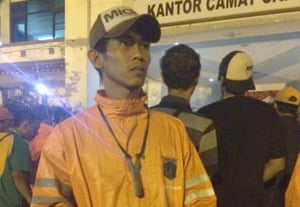
That night, despite an evening thunder storm, the square outside Cakung district administrative office in East Jakarta was packed with street cleaners carrying an assortment of old birdcages and traps made from wire or discarded water dispenser bottles. A good haul for one afternoon – 650 live rats – many of them more than two feet long.


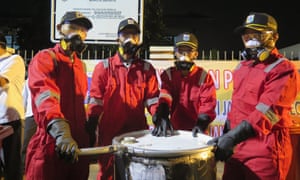
Civil servants in khaki uniforms gathered round to record the scene on smartphones as workers in protective suits and masks vigorously shook the squealing contents of each cage into a pair of steel drums to be gassed with sulphur. Shouts and screams went up whenever a rat escaped, zigzagging through the crowd of legs to get back to the sewer. A few made it. Most were stamped to death.


Samin with the homemade catapult he used to stun and catch six rats.


Samin with the homemade catapult he used to stun and catch six rats

Welcome to the Rat Eradication Movement, a fledgling city programme to rid the Indonesian capital of its rodent problem. It’s the idea of deputy governor Djarot Saiful Hidayat, who has offered the public a bounty of 20,000 rupiahs (£1.20) for each live rat – a generous incentive in a country where 40% of the population live on less than $ 2 a day. Collecting the rats alive stops people claiming rewards for dead rodents found in the street, and allows officials to ensure none have been poisoned or shot, which they fear could be dangerous to the public.


Cats used to catch them but now the rats are bigger than them


Murad Husein


Jakarta recorded 40 cases last year of Leptospirosis – a bacterial infection from rat urine which can be deadly to humans – with the situation made worse by the city’s frequent floods. While rodent populations are highest near markets and their ready supply of waste food, they can be seen almost anywhere in the city. Rats have been spotted in courthouses and government offices, exclusive apartment blocks and expensive restaurants. Wander the streets at 3am and rats can be seen scurrying in and out of drains. They don’t seem too scared of people.


The rats gnaw through plastic drainage pipes and electrical wires. It is both a fire hazard and an expensive problem to fix as a broken pipe or chewed through wire could be anywhere – outside, inside or under – that a rat can get.


A resident shows off the 200,000 rupiahs he earned for catching 10 live rats during a pilot programme in Kemayoran, Jakarta, last month.


A resident shows off the 200,000 rupiahs he earned for catching 10 live rats during a pilot programme in Kemayoran, Jakarta, last month. Photograph: Alez Kurniawan

Funding for the programme currently comes from Djarot’s own budget, and full operation will not start until after city elections in February. He is standing on a ticket with Jakarta governor Basuki ‘Ahok’ Tjahaja Purnama, who was last week named as a suspect in a blasphemy investigation.


A similar pilot evening two weeks ago in the sub-district of Kemayoran yielded 200 live rats. Djarot, who was there to supervise the operation and distribute money to the moonlighting cleaners and ojek motorcycle-taxi drivers who caught the rats, said the city’s rodent population had until now been “uncontrollable”. Ojek driver Sutikno earned 100,000 rupiah after catching five rats with fishing nets and traps. “It’s good money. I’ll do it again,” he said.


Some, though, worry the programme could backfire in a phenomenon economists call the Cobra Effect, where cash rewards lead to unintended consequences.


City workers in protective clothing and masks gassed the rats with sulphur.


Workers in protective clothing gassed the rats with sulphur. Photograph: Alez Kurniawan

The term was coined by German economist Horst Siebert, whose book of the same name contained an anecdote about attempts by colonial authorities in India to rid Delhi of cobras. When the British official in charge placed a bounty on the snakes, some enterprising locals started farming them. The scheme proved ineffective and was eventually cancelled. At that point the cobra farmers, faced with an unwanted stock of snakes, released them into the countryside around the city. The supposed solution had made the problem worse.


A similar situation has been documented by historian Michael Vann. His account of “the Great Hanoi Rat Massacre” tells of attempts by French colonial rulers to control rat populations in the Vietnamese city. New sewers in the wealthy European section unwittingly created a secret underground transportation network for the rats, where they were protected from predators, and the dark tubes provided an ideal breeding ground. They could make their way across the city, with flushable toilets in the poshest homes acting as a convenient entry point.


Authorities offered a cash reward to the public, paying out on production of a rat tail to make administration of the scheme easier. Soon residents were turning in tails in huge numbers – tens of thousands a day – but it wasn’t long before tail-less rats became an increasingly common sight.


“[Officials realised residents] were catching rats, but merely cutting off the tails and letting the still-living pests go free – perhaps to breed and produce more valuable tails,” Vann said. “Later, things became even more serious as health inspectors discovered a disturbing development in the suburbs of Hanoi. These officials found … individuals were actually raising rats to collect the bounty.” The scheme was declared a failure and scrapped.


Could Jakarta’s Rat Eradication Movement end up creating similar unintended consequences? Currently the scheme is nowhere near the scale of Hanoi’s Great Rat Massacre and there seems no shortage of genuine sewer rats, but Benvika, head of wildlife at the Jakarta Animal Aid Network, is not convinced by the project.


He advocates a return to a more natural balance, with predators such as snakes and owls used to control rodent populations. “The sulphur gas is not immediately lethal and causes unnecessary suffering,” he added. “The people of Jakarta must return to living healthily, and maintain their environment.”


Overseeing the Cakung operation was the vice-mayor of East Jakarta, Murad Husein. “Cats used to catch them but now the rats are bigger than them,” he said. “Without any predators the rat population has got bigger, and so have the rats themselves. We’ve no idea how many there are but you can see them almost anywhere, night or day.”


Additional reporting by Linda Hairani


Jakarta"s Rat Eradication Movement: public offered cash reward for live rats

6 Ekim 2016 Perşembe

GPs offered thousands of pounds to give private consultations via app

GPs attending the UK’s biggest family doctor conference are being urged to accept thousands of pounds to treat private patients.


Medics can earn £50-£60 per hour on top of their NHS salary – or up to £90,000 a year if they work full-time – by offering consultations to patients on their smartphones.


The cash is being offered by the firm Babylon to GPs who want to work “flexibly”. Doctors are told they can work from home or their usual workplace.


The Royal College of GPs (RCGP) has accepted thousands of pounds from Babylon to put recruitment flyers in about 1,500 delegate bags at the RCGP annual conference in Harrogate. Babylon has also paid for its logo to appear on the conference handbook and website.


On Thursday the chair of RCGP, Prof Maureen Baker, said NHS doctors were under intense pressure. She said GPs were “worried about making errors because they are so overwhelmed with work. This is a serious threat to patient safety.”


Babylon is an app-based service that works by offering patients unlimited private GP consultations for £4.99 per month or one-off appointments for £25. Patients can get access to one of 100 doctors for video-call or text-message consultations seven days a week from 8am to 8pm. The firm also offers appointments with specialists from £49.


Katherine Murphy, chief executive of the Patients Association, said GPs were often trying to tackle long waiting lists, but added: “What is disconcerting about this situation is that private firms are allowed to advertise positions at a conference of the RCGP.


“What this means is that NHS doctors are being targeted to give up their role working for our NHS and instead work for private companies, which I think most patients would consider unethical. When the NHS is so desperately short of GPs, how can this be right?”


The RCGP accepts sponsorship money from a wide range of firms for its conference, including the pharmaceutical companies Pfizer and Novartis. In 2014, the most recent year for which figures that are publicly available, bronze sponsors paid the RCGP £11,500 plus VAT.


Dr Mobasher Butt, global medical director of Babylon, said: “As a GP, I see doctors across the country working in public, private and voluntary organisations. At Babylon we work with NHS and private patients. Our GPs are often juggling family and professional commitments, and value the flexibility that we offer.


“Without this flexibility, many would not work additional sessions to their NHS work, which in effect is actually increasing our total national GP capacity. All of our GPs carry out face-to-face practice, mostly in the NHS, and Babylon provides them with a much-welcomed addition to their portfolio of work.”


He added: “We have an excellent relationship with the RCGP, having met members of the RCGP council to discuss our service in detail, which they found impressive. Many of our GPs, including myself, are RCGP members and Babylon is proud to support the college.”


Despite Babylon flyers telling GPs they have the “freedom to work from home or your workplace”, Butt said: “All of our GPs work from home and we do not recommend working from their NHS practice.”


A spokeswoman for the RCGP said: “The RCGP exhibition is a commercial venture that generates income for the college’s charitable work. It showcases latest developments in general practice and all exhibitors go through a rigorous process before they are allowed to take part.


“The decision to allow Babylon to become a bronze sponsor at this year’s conference was taken on the basis that it is an emerging digital healthcare company.”


She added: “They are also working with the NHS in some areas to reduce pressure on GP surgeries by offering virtual consultations. At the moment, general practice in the UK is struggling, and we need to pull out all the stops to recruit as many GPs to the NHS as possible, and retain existing ones. But that is not to say we are in a position to close the doors to opportunities for our members.


“Babylon’s presence at the annual conference is in line with the college’s sponsorship policies. Due to commercial confidentiality we are unable to disclose further details of the sponsorship.”


Last month it emerged that another Uber-style app-based medical service, Doctaly, was being rolled out nationally.


GPs offered thousands of pounds to give private consultations via app

30 Haziran 2014 Pazartesi

Going underneath the knife: surgical procedure access should be offered to all

Eye surgery in Nepal

Two billion men and women in the world do not have accessibility to simple surgical treatment. Photograph: Gemunu Amarasinghe/AP


A quiet alter is sweeping over global overall health. Surgery, previously an unique service for rich urban dwellers, is now currently being acknowledged as a human right. It is an thrilling time for international surgeons. The neglected stepchild of worldwide public health is gradually but surely becoming accepted into the major healthcare family.


In 2009, I worked as a medical officer in a principal health centre in rural India. On a bright Saturday afternoon, a lady was brought in with significant stomach ache and fever. With the constrained resources I had, I made a probable diagnosis of acute appendicitis and referred her urgently to a bigger hospital, found 5 hrs away. Regrettably, the rains had washed away the roads and she could not be transported. The lady died from a totally treatable situation. I will in no way forget how annoyed I felt that day, particularly knowing that this was a frequent story in rural regions globally.


The World Overall health Organisation (WHO) estimates that about 2 billion individuals do not have access to surgery. According to a report published in 2008, only 3.5% of all surgeries carried out around the world have been on the poorest 35%. The burden of disease triggered by treatable surgical conditions amounts to 401 million disability-adjusted life many years (DALYs, a measurement of the burden of the disease), far more than that triggered by malaria, tuberculosis and HIV/Aids collectively (214 million DALYs). Given that DALYs signify the variety of healthy years misplaced due to disability or death, these figures translate into massive economic losses.


In 2007 WHO director-general Dr Margaret Chan included vital and emergency surgical treatment in her agenda to enhance main healthcare. Ever given that, international surgical treatment has been gaining ground. This was most clear in January 2014, when World Bank president Dr Jim Yong Kim outlined the need for globalisation of surgical treatment, calling it the “indivisible, indispensable component of healthcare”.


There is resistance to contemplating surgical treatment a component of vital well being solutions, largely due to a perception that it is complex and pricey to create and practice. No doubt the initial value of establishing a surgical practice is substantial. Even so, a number of research globally have confirmed that vital surgery is one particular of the most value-successful health interventions offered. In reality, in some nations it has been estimated that the value per year of a lifestyle saved through surgical treatment is comparable to that saved by the measles vaccine. So the financial benefits alone can outweigh the original investment. Pioneering setups this kind of as that in Narayana (Hrudalaya) Overall health Groups in India, established by Dr Devi Shetty, have repeatedly demonstrated that unit expenses come down the a lot more surgical treatment is practiced.


The other major barrier in globalisation of surgery is lack of human assets. Surgical instruction is prolonged and labour-intensive. As soon as surgeons are educated, most of them establish their practices in urban areas or leave the nation altogether, generating a vacuum that is frequently filled by unskilled pros. This can be partly addressed by scaling up training, incentivising surgeons to perform in places with the most want and by delegating straightforward procedures to non-physicians. In 2005 WHO established the Worldwide Initiative for Emergency and Crucial Surgical Care, with the goal of minimizing essential surgical treatment-connected morbidity and mortality. It has made available toolkits, reports, and manuals, organised instruction workshops, and set minimal standards and technologies essential to establish surgical treatment as a part of major healthcare practice.


Moulding evidence-based mostly practices into achievable and sustainable goals at the neighborhood degree is the key step. Pilot projects that can be scaled up have been the backbone of all public well being practices. Global surgery will be no exception. Now what is essential is for governments and donors worldwide to recognise and invest in national wellness programs to integrate essential and surgical healthcare into main care practices.


With the appropriate will, the correct policies, right analysis and a multi-sectoral strategy, providing safe and good quality surgery as a principal overall health service is an achievable objective globally.


Sristi Sharma is a physician from India and a graduate from Johns Hopkins Bloomberg School of Public Overall health. Follow @sristi on on Twitter.


Go through far more stories like this:


•DIY biotech: how to construct by yourself a minimal-expense malaria detector


•3D printed prosthetics: long-term hope for amputees in Sudan


•Five memorable movements in public health


Join the local community of worldwide advancement experts and professionals. Turn into a GDPN member to get much more stories like this direct to your inbox


Going underneath the knife: surgical procedure access should be offered to all

17 Haziran 2014 Salı

NHS trusts offered incentives to recoup overseas patient fees

NHS doctor fills out paperwork

At current, NHS trusts have no incentive to report a person as an EU visitor, according to overall health secretary Jeremy Hunt. Photograph: Christopher Thomond


Fiscal incentives are to be utilised to encourage NHS trusts to report remedy of EU nationals, as portion of a drive to recoup up to £500m a yr from overseas patients.


The well being secretary, Jeremy Hunt, announced on Tuesday that trusts will be supplied a premium of 25% on prime of the tariff they acquire for delivering treatment method if they report that it was offered to a citizen of one particular of the 27 other EU member states.


Hunt mentioned that the move would “much more than spend for itself” because the NHS is ready to reclaim the price of remedy from other member states beneath extended-standing reciprocal arrangements via the use of a European Wellness Insurance coverage Card (Ehic).


At existing, the United kingdom pays other EU nations far more than £800m a 12 months to cover the value of Britons receiving healthcare on holidays and other visits abroad, but receives back only £29m for nationals of the EU and European Financial Area taken care of right here.


When sufferers from outdoors Europe are integrated, the NHS takes in only £73m of the £500m a 12 months believed to be due, which is all around 16% of the complete, mentioned Hunt.


Speaking at a Westminster lunch, Hunt stated the shortfall stemmed from the truth that recording remedy of foreign nationals represents an further administrative burden for hospitals and surgeries, but they acquire the same payments beneath the NHS tariff scheme as they would if the patient was British.


Hunt said: “Independent study suggests there is about half a billion quid in money we need to be collecting from global guests who use the NHS. We only collect around sixteen% of that funds – £73m a 12 months.


“I have no difficulty whatsoever with foreigners utilizing our NHS, as long as they contribute to it either via taxes or via paying expenses. We require to be significantly greater at collecting that income.”


Hunt additional: “We ought to be receiving a great deal far more money, but we do not. The explanation is since trusts have no financial incentive to report an individual as an EU visitor. It truly is an additional complication and if they never report it they get the NHS tariff.


“These days, we are announcing a premium on the tariff for trusts who report EU guests employing their providers, to pay for the added administrative costs and to produce economic incentives so we get suitable reporting and we get the money.


“My target is that by this and subsequent measures we will announce for non-EU visitors, we will raise around half a billion lbs a yr to spend for additional medical professionals and nurses on the frontline.”


The new 125% tariff for treating EU nationals will be offered to NHS trusts in England.


NHS trusts offered incentives to recoup overseas patient fees

29 Nisan 2014 Salı

Mum"s kitchen-created drink to be offered across the country

She explained: ”I had my daughter Rosie five many years ago, Of course at the beginning children just drink milk and water, but then she began to get to the stage the place she wanted squash or juice.


”I knew that cordials have a great deal of sugar, even though squashes are total of additives. I couldn’t locate anything at all as an substitute.


”It is a huge concern for mothers and fathers. For me, it is about striving to do one thing to tackle obesity. People are never going to give up the items they like, and I would never ever say they need to.


”I am all up for getting a pizza on a Friday night, but if I can do something to assist a loved ones minimize their sugar consumption by 37 per cent then I have been ready to help do one thing good.


”I didn’t want to just make it for myself and give it to Rosie – I wanted everyone else to taste it.”


Clippy had previously place her culinary skills to the check on the Television present Masterchef where she competed towards Wahaca founder Thomasina Miers, who won the competitors.


Inspired by her foray into the kitchen, in 2008 she persuaded her companion Paul to depart his well-paid work as a supply chain advisor and launched a productive line of lower-sugar jams.


In 2011 she made a decision to launch a selection of cordials and with the assist of her young kitchen helper Rosie fine-tuned her recipes.


Clippy said: ”We had to try out all our recipes out on Rosie, it doesn’t get anyplace otherwise.


”When I started out she would say ‘Oh mummy I never like it’. We would give her the drink whilst she was doing something else – I did not want her to put on a white coat and hair net like I had to.


”Once I received the recipe I liked I tried it out on Rosie, and the neighbours youngsters, and it proved a hit.


”And now the cordials have gone from getting a recipe I was attempting out in the kitchen of our semi-detached residence to being in supermarkets up and down the country.


”It is a weird feeling – but excellent.”


The couple, who run their booming organization from their tiny spare room at their property in Sale, Manchester, decided to use the plant-primarily based sweetener stevia to slash the drink’s sugar material.


Their drinks, sold as Clippy’s Cordials, incorporate 37 per cent less sugar, 37 per cent fewer calories than other cordials and have no artificial sweeteners, colourings or flavourings.


They have now hit shelves in 220 Tesco retailers across the United kingdom.


Mum"s kitchen-created drink to be offered across the country

24 Nisan 2014 Perşembe

Jamie Oliver calls for crackdown on junk meals being offered close to colleges

Jamie Oliver

Jamie’s School Dinners in 2005 exposed how a lot unhealthy meals pupils had been served at school at lunchtimes. Photograph: Joerg Carstensen/DPA/Corbis


Campaigning chef Jamie Oliver has demanded a crackdown on the “crazy” policy of fast meals premises opening close to schools, as element of a renewed drive to tackle childhood weight problems.


Outlets currently being licensed to commence offering unhealthy items near colleges was completely at odds with the government’s investment in foods schooling and school lunches, Oliver said.


“I do find it entirely crazy that we do all this tough function in a single part of government while at the exact same time you’ve received other parts of government locally and nationally which are still permitting any old junk meals operator to open up inside of spitting distance of a school,” said Oliver. “That, to me, is madness.”


He also urged ministers to draw up a hard new blueprint to reverse the trend of growing weight problems and to appoint a figurehead to drive via changes.


“Optimistic social change is not that far away and I consider it truly is not that difficult but what demands to be done is for about 50 or 60 separate decisions and initiatives to happen at when, all followed by a 5-year strategy. The one particular point that will make a change is tons of changes.”


In an appeal for “leadership and vision” from all political events on what he known as “the shocking rise in diet-connected diseases and weight problems”, Oliver added: “Let’s see if we have one particular pioneer, one particular visionary who’s going to place prevention [of childhood weight problems] at the heart of its campaign”.


Oliver’s Channel four series Jamie’s School Dinners in 2005, which exposed how considerably unhealthy meals pupils have been served at college at lunchtimes, prompted the Labour government to introduce much more nutritious school meals in England.


Jamie Oliver calls for crackdown on junk meals being offered close to colleges

17 Nisan 2014 Perşembe

Trial of GM plants to help fight heart ailment offered go-ahead

GM plants to help fight heart disease given go-ahead

GM crops at Rothamsted Analysis Centre in Hertfordshire, which has permission to start a new area trial. Photograph: Dominic Lipinski/PA


Scientists have been provided permission to grow genetically modified plants that could aid protect against heart disease.


The Department for Atmosphere, Meals and Rural Affairs (Defra) has provided the go-ahead for the field trial of a crop of GM camelina plants, the seeds of which are modified to produce fish oils. The oils could supply feed for farmed fish, which means that fewer fish want to be caught from the sea, and eventually could be used in overall health dietary supplements or as an additive in foods such as margarine.


Scientists at Rothamsted Investigation Centre in Hertfordshire who will run the trial hailed the selection as a substantial milestone for study into genetically modified plants.


Fish oils, or omega-three long-chain polyunsaturated fatty acids, have been confirmed to be useful for human well being and to assist shield against coronary heart condition. It is also hoped the crop, if grown commercially in the future, may minimize the burden of in excess of-fishing. About 80% of the fish oil harvested from the oceans is fed to fish grown in farms.


Researchers invested ten years developing a sustainable way to produce the oil just before effectively expanding the engineered plants in lab problems. The trial was announced in January, but has been offered the go-ahead right after a public consultation.


Professor Johnathan Napier, lead scientist of the project, mentioned: “We have produced considerable progress above the final ten many years in designing and developing these plants and my colleagues and I are very satisfied that we can now check the overall performance of these plants in the field, below real-daily life situations.”


The specific oils that benefit the wellness of fish and humans, named EPA and DHA, are not in truth made by fish themselves but rather accumulated by eating marine microbes. Napier’s group took up to 7 genes from algae that produce the fish oils and transplanted them into oil seed plants referred to as camelina. It naturally creates short-chain oils and has been grown as a food crop for centuries in southern and eastern Europe and is utilized a biofuel crop in North America.


The investigation is component of a task to discover out how seeds could be enhanced to benefit the population’s wellness.


The experiment will start off by the middle of May possibly this year, with the plants harvested in August or September. Some seeds from the plants will be used for analysis, even though the rest will be destroyed beneath the situations of the consent.


The GM inspectorate of the Meals and Setting Analysis Company will be carrying out regular inspections.


Professor Martin Parry, acting director of Rothamsted Research, stated: “We are delighted to be in place to carry out the field trial and to additional assess the likely of these GM plants to contribute, as 1 of several solutions, to the crucial environmental sustainability issue of offering omega-three fish oils.”


The trial will be funded by the Biotechnology and Biological Sciences Analysis Council (BBSRC).


Professor Jackie Hunter, chief executive of the BBSRC, explained: “This study is looking for to provide an substitute supply of omega-3 oil for the aquaculture industry that is searching for new techniques to sustain and boost its sustainability.


“Following many years of BBSRC-supported laboratory study this venture has reached the stage exactly where only a field trial will show scientists if this could function in true-globe situations. I am pleased that the team are now in a place to proceed and will be interested in hearing their benefits.”


Emma Hockridge, head of policy for the Soil Association, which represents organic farmers, called the move a “waste of scarce public funds”.


She advised Farming United kingdom: “GM crops are generating farming less honest, more risky and no much more sustainable. As an alternative, we support useful science and innovation that addresses true wants, is genuinely sustainable and puts farmers in management of their livelihoods.”


Trial of GM plants to help fight heart ailment offered go-ahead

16 Nisan 2014 Çarşamba

Pensioners to be offered suggestions on how prolonged they will dwell

But critics worry that folks could end up struggling financially if they devote all their funds soon right after retiring.


Mr Webb stated that men and women often underestimated their daily life expectancy.


“The idea is that you come to believe about retiring, [but] you really do not know how long that retirement is going to be,” Mr Webb stated.


“What we do know is people get it wrong and they underestimate how long they’re going to dwell.


“At 60 most folks will have dad and mom even now alive so the greatest guide they’ve got about how lengthy they are going to dwell is their grandparents. That is two generations ago so they have a tendency to underestimate how prolonged they are going to dwell.


“My notion … is to say to somebody, ‘Look, an individual of your generation, residing in this element of the country, you’ve not smoked, a person like you could simply live for 27 years’.”


Newly launched figures display that daily life expectancy is growing steadily in the Uk with females born now projected to live 82.seven many years on regular. Regular male lifestyle expectancy is now 78.9 years.


However, for those who reach the age of 65, existence expectancy is substantially greater, as the total figure is an typical brought down by the number who are very likely to die young.


The new figures, from the Office for National Statistics, also suggest that youthful men and women with healthy lifestyles from poorer elements of the Uk are moving to a lot more prosperous areas.


Mr Webb said that the advice would be given face to face by cost savings advisers to any pensioner who requests it.


He promised that the programs would not be “crass and insensitive”.


“I don’t consider it would be tailored to the individual,” he explained. “You would potentially have a table … with gender, in which you live … and you could then say, ‘This is the variety on the chart for you’.”


He has mentioned that he is “relaxed” about the thought of the retired purchasing Lamborghinis with their pension cost savings. “It’s completely people’s own choice what they do with their cash,” Mr Webb stated. “This is not the Government telling them what to do with their very own money. But what it is saying is that when they make their personal choices, we want to make positive they do it on the basis of total details.”


He additional that individuals would have “longer operating lives” in potential and could take on a 2nd or third occupation just before reaching retirement.


“The Chancellor has talked about pension ages of 69 and past, so the thought that people will leave greater education at 21 or 22 or leave college at 18 or whatever and just do 1 task for 50-odd years is implausible,” he mentioned.


“That indicates carrying out diverse items, retraining, moving from anything a lot more physically demanding to some thing much less demanding [or] gradually easing your way out of function.”


The ONS figures also showed stark regional divisions in existence expectancy and recommended that the migration of wholesome young individuals to prosperous regions in search of much better paid jobs is widening the north-south existence-expectancy gap.


Estimates propose that a lady born these days in Purbeck, Dorset can anticipate to reside to 86.six years on regular, 14 years longer than a boy born in inner-city Glasgow.


General existence expectancy is rising across the Uk with girls born now projected to live a complete yr far more than was the case 4 years in the past. Men are narrowing the gap rapidly, gaining nearly 17 months.


In a handful of places in southern and eastern England, the overall figure for male life expectancy has passed 80. It is highest in East Dorset, at 82.9 years.


Glasgow City has the lowest figure for each males and females at 72.six and 78.five many years respectively.


But the greatest current gains have been in London, which has one of the youngest and fastest increasing populations.


Typical male lifestyle expectancy in the capital has leapt by more than 19 months in the previous 4 many years. Female lifestyle expectancy is up by effectively more than a 12 months.


The ONS mentioned in a commentary that patterns of north-south migration appeared to be generating what volume to ghettoes of poorer health in some areas and healthy pockets elsewhere.


It said many variables may possibly be accountable which includes wealth, working problems, education and lifestyles.


But it extra: “One aspect that has received much less attention is the selective migration of wholesome people from poorer health places into far better wellness regions or vice versa.”


Life expectancy right after 65 for guys and females, by area


ENGLAND: guys 18.6 years ladies 21.1 years


North East: 17.6 20


North West: 17.eight twenty.2


Yorks/Humber: 18 20.five


East Midlands: 18.3 21


West Midlands: 18.four 21


East: 19.one 21.5


London: 18.9 21.six


South East: 19.2 21.6


South West: 19.one 21.seven


WALES: 18 20.six


SCOTLAND: 17.two 19.five


NORTHERN IRELAND: 17.9 20.six


Pensioners to be offered suggestions on how prolonged they will dwell

9 Nisan 2014 Çarşamba

Tamiflu: medicines offered for swine flu "were waste of £500m"

Nevertheless, researchers from The Cochrane Collaboration, a not-for-revenue organisation which carries out evaluations of well being data, identified that Tamiflu only minimize flu-like signs and symptoms from seven days to six.3 days and there was no evidence of a reduction in hospital admissions.


Eight youngsters who took the drug in Japan ended up committing suicide after suffering psychotic episodes. Other side effects integrated kidney problems, nausea, vomiting and headaches.


A lot of people reported feeling anxious or depressed when taking the drug.


Data from 20 trials of Tamiflu also recommended that it prevented some men and women from creating enough numbers of their very own antibodies to fight infection.


Dr Carl Henegen, professor of evidence-based mostly medicine at Oxford, said: “This drug was offered to one,000 people a week over a mobile phone line, but it was no far better for symptom relief than more than-the-counter medicine — and you are speaking about probably serious problems. I wouldn’t prescribe it to my sufferers.”


Dr Tom Jefferson, an epidemiologist with The Cochrane Collaboration, additional: “The stuff is toxic. It improved the risk of psychiatric events, headaches and renal events in one in 150 people. Individuals reported nausea, vomiting and constriction of the airways. In Japan eight youngsters jumped out of windows and committed suicide.” The report’s authors mentioned they had struggled to receive the authentic trial information from Roche, which at first claimed it was confidential.


The Government began stockpiling Tamiflu in 2006 more than fears about bird flu after it was accredited by the Nationwide Institute of Health and Clinical Excellence. It is not widely prescribed for standard flu.


Roche stated it “fundamentally disagrees” with the newest findings.


Dr Daniel Thurley, the company’s Uk healthcare director, extra: “We disagree with the total conclusions of this report. Roche stands behind the wealth of data for Tamiflu and the decisions of public wellness companies worldwide, including the US and European Centres for Ailment Control and Prevention and the Globe Overall health Organisation.


“The report’s methodology is frequently unclear and inappropriate, and their conclusions could probably have significant public overall health implications. Neuraminidase inhibitors are a vital remedy selection for individuals with influenza.”


The Department of Wellness said that Tamiflu had a “proven record” of security, good quality and efficacy. But a spokesman said overall health officials would think about the most recent Cochrane overview “closely”.


The assessment is published on Thursday in the British Medical Journal.


Tamiflu: medicines offered for swine flu "were waste of £500m"

12 Mart 2014 Çarşamba

MPs will be offered cost-free vote on "three mother or father babies"

The ideas have attracted criticism with MPs suggesting that the procedure will create “genetically modified children” and could be noticed as tantamount to eugenics.


Speaking at a debate named by MPs concerned by the consultation Miss Ellison said: “As Parliament has debated advances in science like IVF ahead of, and considered and weighed in the balance their considerations towards the prospective advantages, so that will happen yet again.


“I am really particular that individuals will come to their own conclusion on these issues – these issues are normally determined as votes of conscience and I would be really stunned if this wasn’t the exact same. In reality I am confident it will be.”


Jacob Rees-Mogg, the MP for North East Somerset, who named the debate on the problem, stated young children born with donor DNA would be “genetically modified young children” and that making it possible for the process would sum to “tampering with human souls”.


He added that the consultation on three parent infants was a “fundamentally unsafe” street to go down. He recommended it could lead to families demanding designer babies with “blue eyes and blonde hair” and should be halted although much more evidence was gathered.


Mr Rees-Mogg explained: “Once this line has been crossed the argument towards going further is merely a matter of degree it is not absolute.


Bob Stewart, the Conservative MP for Beckenham, stated folks could unknowingly marry their brothers or sisters if they did not know they had more than two parents.


Most health specialists and scientists have backed the government claiming it heralds a new era in genetic medicine.


Professor Peter Braude, head of obstetrics and gynaecology at King’s School London, said: “I am pleased that the Government has been brave adequate to comply with by means of on their promises given during the 2008 revision of the Human Fertilisation and Embryology Act, to deliver before Parliament an choice to help a small but deserving portion of society blighted with the spectre of transmitting mitochondrial disease to their youngsters.


MPs will be offered cost-free vote on "three mother or father babies"

28 Şubat 2014 Cuma

NHS data will not be offered to insurance coverage companies, Jeremy Hunt says

Jeremy Hunt

The wellness secretary, Jeremy Hunt, says patient opt-outs will be subjected to statutory safety. Photograph: Richard Gardner/REX


Insurance organizations will not be able to buy patient healthcare records via the NHS data scheme, the overall health secretary has announced.


Jeremy Hunt is to legislate on the care information programme to appease some of the worries that have been raised about the scheme. Hunt plans to give “rock-reliable” assurance to sufferers that confidential data will not be offered for commercial insurance functions, the Division of Health explained.


He is to place a raft of measures in place which includes a statutory necessity that any patient’s opt-out will be respected and legislation that will stop the Overall health and Social Care Info Centre (HSCIC) – the entire body which will control the data – from sharing private details exactly where there is “not a clear wellness or care benefit for individuals”.


A Division of Overall health spokeswoman mentioned this “puts past any doubt that the HSCIC can not release identifiable, or possibly identifiable, patient information for business insurance or other purely commercial purposes.”


The HSCIC will also be bound by laws to defend patient confidentiality when anonymised information is released. And any researchers who want to accessibility identifiable data need to show “an ethical explanation to do so”.


A source shut to the wellness secretary said: “The rules about this programme, which will bring genuine rewards to patients, are fundamentally proper, and we fully assistance them.


“But, alongside a new campaign from NHS England to describe the programme to the public and GPs, we also require to ensure that robust legislation is in location to address their worries.”


The care.information programme was pushed back until finally the autumn following NHS England, the entire body behind the scheme, bowed to stress from patient and health-related groups including the Royal College of GPs and the British Health care Association (BMA).


Patients, physicians and other expert organisations, raised concerns that they had not been provided enough time to find out about the project.


NHS England has said it will work with sufferers and professional groups to encourage awareness of the scheme.


The programme is made to hyperlink data from GP records with information from hospitals to give an thought of what transpires to patients at all stages of NHS therapy.


The information that will be extracted from GP techniques includes data on household historical past, vaccinations, referrals for treatment, diagnoses and data about prescriptions.


It will also contain biological values such as a patient’s blood strain, entire body mass index and cholesterol levels. Individual confidential information will also be taken, such as date of birth, postcode, NHS amount and gender. The written notes a GP helps make for the duration of a consultation will not be extracted.


The data will be held by the HSCIC and anonymised by officials there. Entirely anonymised information will be created obtainable publicly to any person outdoors the NHS.


Data regarded to be potentially identifiable – for instance in which a patient in a little town has a unusual condition – will only be released to approved organisations for the specific goal of benefiting the wellness and social care technique.


Numerous which includes a massive amount of healthcare investigation organisations have backed the scheme, saying it will alert the NHS when requirements drop, help produce a much better knowing of what occurs to people, especially those with lengthy-term problems, who are cared for away from hospital, and offer data essential to help and help analysis into new medicines, prevention and treatment of condition.


NHS data will not be offered to insurance coverage companies, Jeremy Hunt says

19 Ocak 2014 Pazar

NHS patient data to be produced offered for sale to drug and insurance coverage companies

Drug and insurance coverage firms will from later this year be in a position to get info on sufferers including psychological overall health circumstances and conditions this kind of as cancer, as nicely as smoking and consuming habits, once a single English database of health care information has been developed.


Harvested from GP and hospital records, medical data covering the total population will be uploaded to the repository controlled by a new arms-length NHS info centre, commencing in March. Never just before has the entire medical historical past of the nation been digitalised and stored in 1 place.


Advocates say that sharing data will make healthcare advances easier and eventually conserve lives because it will let researchers to investigate drug side effects or the functionality of hospital surgical units by tracking the effect on sufferers.


But privacy professionals warn there will be no way for the public to perform out who has their health care data or to what use their information will be put. The extracted details will incorporate NHS numbers, date of birth, postcode, ethnicity and gender.


When reside, organisations such as university analysis departments – but also insurers and drug businesses – will be capable apply to the new Overall health and Social Care Data Centre (HSCIC) to acquire access to the database, referred to as care.data.


If an application is accepted then companies will have to pay to extract this information, which will be scrubbed of some personal identifiers but not sufficient to make the details completely anonymous – a process known as “pseudonymisation”.


Nevertheless, Mark Davies, the centre’s public assurance director, advised the Guardian there was a “tiny chance” specific individuals could be “re-identified” due to the fact insurers, pharmaceutical groups and other health sector organizations had their personal health-related information that could be matched towards the “pseudonymised” data. “You may be capable to determine men and women if you had a good deal of information. It depends on how men and women will use the data when they have it. But I feel it is a tiny, theoretical chance,” he said.


Once the scheme is formally accredited by the HSCIC and patient information can be downloaded from this summer, Davies said that in the eyes of the law one could not distinguish in between “a government department, university researcher, pharmaceutical business or insurance coverage business” in a request to entry the database.


In an try to ease public concern, this month NHS England is sending a leaflet entitled Much better Details Implies Far better Care to 26m households, to say parts of the care.data database will be shared with “researchers and organisations outdoors the NHS” – except if folks decide on to opt out by means of their family doctor.


Nonetheless, a foremost academic and government adviser on overall health privacy stated pursuing a policy that opened up information to charities and firms with no plainly spelling out privacy safeguards left critical unanswered inquiries about patient confidentiality.


Julia Hippisley-Cox, a professor of standard practice at Nottingham University who sits on the NHS’s confidentiality advisory group – the large-degree physique that advises the health secretary on accessing confidential patient data without having consent – explained that even though there may possibly be “rewards” from the scheme “if extraction [sale] of identifiable information is to go ahead, then sufferers need to be in a position discover out who has their identifiable data and for what goal”.


Hippisley-Cox added that “there need to be a clear audit trail which the patient can accessibility and there needs to be a basic method for recording data sharing preferences and for these to be respected”.


Davies, who is a GP, defended the database, saying there was “an absolute commitment to be transparency” and rejecting calls for an “independent assessment and scrutiny of requests for accessibility to data”. “I am tempted to say that we will have 50 million auditors [referring to England"s population] hunting more than our shoulder.”


He mentioned it was necessary to open up healthcare information to commercial organizations specifically as private companies take more than NHS companies to “boost patient care”. Davies explained: “We have private hospitals and companies like Virgin who are purchasing NHS patient care now. This is a trend that will carry on. As lengthy as they can display patient care is benefiting then they can apply.”


But Davies accepted there was now a “need to open a debate on this”.


He pointed out that a amount of personal firms – such as Bupa – currently had entry to some delicate hospital information, despite the fact that none had been in a position to website link to GP data until finally now. He extra: “I am not confident how valuable in the NHS the distinction among public and private is these days. Look at Dr Foster [which] is a private business that used data to demonstrate significantly how issues can be improved in the NHS and unveiled what was going wrong at Mid Staffs. The essential check is whether the data will be employed to enhance patient care.”


Campaigners warned several members of the public would be uneasy about personal organizations benefiting from their overall health data – particularly when the spread of data will not be routinely audited. Phil Booth, co-ordinator at patient pressure group medConfidential, said: “1 of people’s commonest worries about their medical information is that they will be employed for commercial functions, or suggest they are discriminated against by insurers or in the workplace.


“Rather than stop this, the care.information scheme is deliberately developed so that ‘pseudonymised’ data – information that can be re-identified by any person who presently holds information about you – can be passed on to ‘customers’ of the details centre, with no independent scrutiny and without even notifying patients. It truly is a catastrophe just waiting to occur.”


Booth stated the five listed reasons data can be launched for are exceptionally broad: overall health intelligence, wellness improvement, audit, well being service investigation and support arranging. He mentioned: “Officials would have you feel they are performing this all for investigation or improving care but the number of non-health care, non-research utilizes is ballooning before even the 1st upload has taken location. And though you will not study it in their junk mail leaflet, the folks in charge now admit the selection of likely buyers for this giant centralised database of all our healthcare data is efficiently limitless.”


NHS England mentioned it would publish its very own evaluation of privacy hazards this week and pointed out that 1 of the crucial aims of care.information was to “drive economic growth by producing England the default spot for planet-class wellness providers study”.


A spokesperson mentioned: “A phased rollout of care.data is currently being readied over a three month time period with first extractions [sales of information] from March permitting time for the HSCIC to assess the top quality of the information and the linkage ahead of creating the information available. We feel it would be wrong to exclude personal organizations basically on ideological grounds alternatively, the check need to be how the business needs to use the information to boost NHS care.”


NHS patient data to be produced offered for sale to drug and insurance coverage companies

2 Ocak 2014 Perşembe

Recreational marijuana offered legally for first time in Colorado


In Denver, Television cameras and journalists filled Denver’s Discreet Dispensary, as the store’s 1st consumer, Sean Azzariti, purchased a legal quantity of marijuana.


Possession, cultivation and personal individual consumption of marijuana by adults for the objective of “acquiring substantial” has currently been legal in Colorado for much more than a 12 months underneath a state constitutional amendment authorized by voters.


But as of Wednesday, cannabis was becoming legally made, offered and taxed in a related way to alcohol.


Recreational marijuana offered legally for first time in Colorado