List etiketine sahip kayıtlar gösteriliyor. Tüm kayıtları göster

28 Mart 2017 Salı

NHS draws up list of items to be banned from prescriptions

The NHS is to stop giving patients travel vaccinations, gluten-free foods and some drugs that can be bought over the counter in an effort to rescue its ailing finances.


Simon Stevens, the chief executive of NHS England, announced the changes in an interview with the Daily Mail in which he detailed new efforts to get better value for money so that money saved could instead be spent on promising therapies that have recently been developed.


GPs will be told to not prescribe medications such as those for upset stomachs, travel sickness and haemorrhoids in a new drive to eliminate waste from the NHS’s £120bn annual budget.


Stevens said: “We’ve got to tackle some of the waste which is still in the system. The NHS is a very efficient health service but like every country’s health service there is inefficiency and waste.


“There’s £114m being spent on medicine for upset tummies, haemorrhoids, travel sickness, indigestion, [and] and that’s before you get to the £22m-plus on gluten-free that you can also now get at Morrison’s, Lidl or Tescos.


“Part of what we are trying to do is make sure that we make enough headroom to spend money on innovative new drugs by not wasting it on these kind of items.”


Next month, NHS England will start reviewing 10 items which it says are “ineffective, unnecessary [and] inappropriate for prescription on the NHS, or indeed unsafe”, which together cost the service £128m a year. The Department of Health is expected to then issue new guidance advising GPs that they are not prescribed.


They include omega 3 and fish oils; the painkiller fentanyl: lidocaine medicated plasters; a tablet used to treat high blood pressure called doxazosin MR; and a drug called tadalafil, which is used to treat erectile dysfunction, along with gluten-free foods and travel vaccines.


NHS Clinical Commissioners, which represents England’s 209 NHS clinical commissioning groups (CCGs) – the GP-led bodies which hold health budgets locally – has asked NHS England to look into whether the 10 itemsare a good use of scarce cash when the NHS is undergoing the tightest budgetary squeeze in its 69-year history.


Many other common medications could soon be added to the banned list. NHS Englandsaid: “In light of the financial challenges faced by the NHS, further work will consider other medicines which are of relatively low clinical value or priority or are readily available over the counter and in some instances, at far lower cost, such as treatment for coughs and colds, antihistamines, indigestion and heartburn medication and suncream. Guidance will support clinical commissioning groups in making decisions locally about what is prescribed on the NHS.”


NHS bosses hope the moves could ultimately save as much as £400m a year. The service is facing serious financial problems. NHS trusts in England recorded a deficit of £2.45bn last year and are expected to end this financial year almost £1bn in the red again, despite repeated warnings to get their finances in order.


An NHS spokesman said: “New guidelines will advise CCGs on the commissioning of medicines generally assessed as low priority and will provide support to clinical commissioning groups, prescribers and dispensers.


“The increasing demand for prescriptions for medication that can be bought over the counter at relatively low cost, often for self-limiting or minor conditions, underlines the need for all healthcare professionals to work even closer with patients to ensure the best possible value from NHS resources, whilst eliminating wastage and improving patient outcomes.”


Stevens’s money-saving initiative is a foretaste of a major initiative he will unveil on Friday. He will announce details of his long-awaited “delivery plan” to fulfil his pledge, first made in October 2014 in his Five Year Forward View modernisation blueprint, to radically transform how the health service works by 2020 so that it delivers better care and closes the £22bn gap which is expected to open up in its own finances by then in order to remain sustainable.


He will give the go-ahead to between six and 10 of the 44 sustainability and transformation plans (STP), one covering each part of England, which are intended to implement his ideas, which centre on moving a lot of care out of hospitals and treating patients closer to home and keeping them healthier so that they avoid expensive £400-a-night unnecessary stays in hospital.


The STP plans have proved very controversial because they could see dozens of hospitals lose key services, such as their A&E or maternity unit.


NHS draws up list of items to be banned from prescriptions

21 Kasım 2016 Pazartesi

Clove (Syzygium aromaticum), A common Food Spice that offers A Long List of Traditional Uses

Clove is one of the highly prized spices, native to the Maluku islands in Indonesia. The spice actually is dried aromatic flower buds of an evergreen rainforest tree in the family Myrtaceae, Sygizium aromaticum


It is available throughout the year and commercially harvested primarily in Indonesia, India, Pakistan, Sri Lanka, Madagascar, and Zanzibar. It is widely recognized all over the world for its medicinal properties and culinary qualities.


The spice is widely used in Asian, Middle-East, and African cuisines in the preparation of curries, gravy items, and marinades. It is used along with other spices, including cinnamon, cardamom, and black pepper in the cooking of Biryani (spiced rice).


Clove essential oil is used as an active ingredient in cosmetic products and the healing of many disorders. In the Middle East, it is added to beverages, at times along with cardamom and peppermint.


Clove has been used for thousands of years in India, China, and South East Asia, not only as a spice and condiment but also as a remedial herb for many ailments. Ayurvedic practitioners, for instance, use clove for tooth decay, halitosis, and bad breath, among others. In Traditional Chinese medicine, clove is considered an aphrodisiac.


Scientists have determined and isolated many bioactive compounds from clove, including (but not limited to) phenolic compounds: flavonoids, eugenol, hydroxybenzoic acids, hydroxycinnamic acids, and hydroxyphenyl propene; phenolic acids: gallic acids and its derivatives, hydrolyzable tannins; and other phenolic acids: caffeic, ferulic, ellagic and salicylic acids. Flavonoids found in lower concentration in cloves, including kaempferol, and quercetin and its derivates (glycosylated) .


Clove flower buds contain up to 18% of essential oils, which comprises, eugenol, eugenol acetate, humulene, geranyl acetate, and caryophyllene oxide. Other volatile compounds present in lower concentrations in clove essential oil are beta-pinene, farnesol, limonene, benzaldehyde, 2-heptanone and ethyl hexanoate.


Clove is considered as an important medicinal plant due to the wide range of pharmacological effects owed to its traditional uses for centuries and reports in literature.


Health Benefits 


Digestive: Clove aids digestion by stimulating the secretion of digestive enzymes. It is also used to alleviate flatulence, gastric irritability, dyspepsia, and nausea. Roasted powdered clove is usually taken with honey as a remedy to relief digestive disorders.
Antibacterial: Clove found to have 29 phytochemicals with antibacterial properties against a number of pathogens including specific bacteria that spreads cholera.
Anti-carcinogenic: Clove really attracts the attention of scientists for its anti-carcinogenic properties. A study demonstrated that clove may be helpful in controlling lung cancer in its early stages.
Hepatoprotective: Metabolism, in the long run, results in increased free radical levels. Antioxidants prevent free radical induced tissue damage by preventing the formation of radicals, scavenging them, or by promoting their decomposition. Clove offers a high amount of antioxidants which may be beneficial in protecting organs from the detrimental effects of free radicals, including the liver.
Anti-diabetic: Consuming cloves on daily basis may be beneficial in regulating blood sugar in diabetics. A study has revealed that clove extract imitates insulin in certain ways and help in controlling blood sugar levels.
Anti-osteoporotic: Phenolic compounds in clove such as eugenol and its derivatives, and bioflavonoids including flavones and isoflavones have been particularly found to be helpful in preserving bone density and the mineral content of bone, as well as increasing tensile strength of bones.
Anti-Mutagenic: Mutagens is defined as chemical compounds that change the genetic makeup of the DNA by causing mutations. Biochemical compounds found in cloves such as phenylpropanoids shown to have anti-mutagenic properties. When administered to cells treated with mutagens, they were found to be able to control the mutagenic effects.
Immunostimulant: A study showed that clove essential oil stimulated the immune system by increasing the white blood cell count, thereby improving delayed type hypersensitivity. The study also demonstrated that it restored cellular and humoral responses in cyclophosphamide-immunosuppressed mice in a dose-dependant manner.
Hypocholesterolemic: One clove study found that a daily dose of cloves lowered cholesterol while improving insulin performance.


Antiviral: Dr. James A Duke in his ethnobotanical database shows that clove contains 21 phytochemicals that may act as antiviral. Taking clove tea either alone or combined with other antiviral herbs such as thyme, rosemary, cinnamon or neem may help in shortening of the flu or colds duration.


Reverse atherosclerotic plaque
Speaking about cholesterol-lowering and antioxidant properties of clove, I would like to share a little tip on how to possibly reverse atherosclerotic plaque in arteries in our body especially those located in the brain, heart, penis and feet.
Take 1 teaspoon of clove powder, 1 teaspoon of ghee or pure butter along with 1 teaspoon of pure pomegranate juice. Pomegranate syrup may also be used.
Traditional uses
Clove either alone or combined with other herbs can be used traditionally to treat candidiasis, bad breath, toothache, wounds, dental abscesses, muscle sprains, painful ejaculation, cholera, gingivitis, cold, cramps, cough, bloating, gastroenteritis, emphysema, diabetes, osteoporosis, stye (hordeolum), acid reflux, attitude sickness, typhoid, scanty menses, flu, grey hair, insect bites, entamoeba, schistosomiasis, sore throat, asthma, stomachache, headache, nausea, vomiting, fever, indigestion, and coryza.


Other traditional uses include relieving diarrhea, pneumonia, premature ejaculation, fatigue, lower back pain, sinusitis, phlegm, headache, hematemesis, acid reflux, bronchitis, irritable bowel syndrome, dizziness, and yellow teeth.


Note: Most of the traditional uses of clove in the aforementioned list can be found by browsing various alternative healing websites owned by Indian herbal practitioners or holistic health advocates.


Clove (Syzygium aromaticum), A common Food Spice that offers A Long List of Traditional Uses

14 Kasım 2016 Pazartesi

GSK tops list of drug firms improving global access to medicine

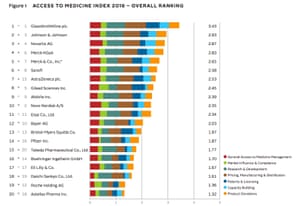
GlaxoSmithKline has come top of a league table that monitors the availability of medicine in developing countries, with fellow UK drugmaker AstraZeneca making it into the top 10.


The non-profit Access to Medicine foundation, which compiles the biennial index of drug companies, warned that while the availability of medicines is improving, the industry needs to do more on affordable pricing and the fight against corruption. Jayasree Iyer, executive director of the foundation, said: “Now is the time to step up those efforts.”


Overall, drugmakers have 850 products on the market for the 51 worst diseases in low and middle-income countries. They are developing another 420. But only 5% of products are covered by pricing strategies that were deemed affordable for different population groups within countries.


Iyer said there was no area where drugmakers had gone backwards, but noted that affordable pricing and misconduct were “static”. Breaches of laws or codes relating to corruption, unethical marketing and anti-competitive behaviour continue to arise.


GSK came first in the rankings for the fifth time, followed by Johnson & Johnson of the US, Swiss company Novartis and German group Merck. AstraZeneca jumped from 15th to seventh position after introducing a new affordability-based pricing strategy and expanding its Healthy Heart Africa programme, which aims to treat 10 million people for hypertension, or high blood pressure, over the next decade. The company was in sixth place in 2008 but then fell behind in several areas.


Access to Medicine Index.


Access to Medicine Index. Photograph: Access to Medicine Foundation

GSK accounted for the most research and development projects in areas of great need but with low commercial incentive, followed by AbbVie and Johnson & Johnson. The British drugmaker also topped the index for considering affordability when setting prices. Its top ranking came despite a damaging bribery scandal in China in 2014, for which it was fined £300m. The scandal prompted the company to overhaul its sales practices.


Iyer expressed some concern about GSK chief executive Sir Andrew Witty’s departure next March and what it could mean for the company’s efforts. He will be succeeded by Emma Walmsley, who currently runs GSK’s consumer healthcare business.


The index assesses the world’s 20 largest pharmaceutical companies on a range of measures, including their willingness to discount prices in poor countries, research on neglected tropical diseases, lobbying, patent policies, breaches of codes of conduct, corruption or bribery, transparency and conduct in clinical trials.


The Access to Medicine foundation is funded by the UK and Dutch governments and the Bill and Melinda Gates Foundation. It says its framework is used by companies to draw up access to medicine strategies.


GSK tops list of drug firms improving global access to medicine

27 Eylül 2016 Salı

China tops WHO list for deadly outdoor air pollution

China is the world’s deadliest country for outdoor air pollution, according to analysis by the World Health Organisation (WHO).


The UN agency has previously warned that tiny particulates from cars, power plants and other sources are killing 3 million people worldwide each year.


For the first time the WHO has broken down that figure to a country-by-country level. It reveals that of the worst three nations, more than 1 million people died from dirty air in China in 2012, at least 600,000 in India and more than 140,000 in Russia.


At 25th out of 184 countries with data, the UK ranks worse than France, with 16,355 deaths in 2012 versus 10,954, but not as poorly as Germany at 26,160, which has more industry and 16 million more people. Australia had 94 deaths and 38,043 died in the US that year from particulate pollution.


Maria Neria, director of the WHO’s public health and the environment department, told the Guardian: “Countries are confronted with the reality of better data. Now we have the figures of how many citizens are dying from air pollution. What we are learning is, this is very bad. Now there are no excuses for not taking action.”


Gavin Shaddick, who led the international team that put together the data, said: “Globally, air pollution presents a major risk to public health and a substantial number of lives could be saved if levels of air pollution were reduced.”


Deaths attributable to ambient air pollution

Sixteen scientists from eight international institutions worked with WHO on the analysis, which gathered data from 3,000 locations, using pollution monitors on the ground, modelling and satellite readings.


They looked at exposure to tiny particulates 2.5 microns in size, known as PM2.5s, which penetrate the lungs and are the air pollutant most strongly associated with an increased risk of death. “The real driver of ill health is ultra-fine particles, 2.5s – they have the ability to permeate the membrane of the lungs and enter our blood system,” said Shaddick, who is based at the University of Bath. “Increasingly there is an understanding that there are not just respiratory diseases but cardiovascular ones associated with PM2.5s.”


In the UK more than 90% of the population lives in areas with levels of PM2.5s above the WHO’s air-quality limits of 10 micrograms per cubic metre for the annual mean. The government is in the high court on 18 and 19 October facing a legal challenge by environmental law group ClientEarth, which says ministers’ clean-up plans are inadequate.


Globally, 92% of the population breathes air that breaches WHO limits but the world map of deaths caused by PM2.5s changes when looked at per capita. When ranked by the number of deaths for every 100,000 people, Ukraine jumps to the top of the list at 120.


It is followed by eastern European and former Soviet states, and Russia itself, probably due to a legacy of heavy industry in the region. China drops down to 10th, at 76 per 100,000, and India falls to 27th, with 49 per 100,000.


Worst and cleanest countries per capita

Most of the air pollution comes from cars, coal-fired plants and waste burning but not all of it is created by humans. Dust storms in places close to deserts also contribute to dirty air, explaining partly why Iran is at 16th highest for total deaths, at 26,000 a year.


Most of the total deaths worldwide – two out of three – occur in south-east Asia and the western Pacific, which includes China, Vietnam, Japan, Australia, South Korea and small Pacific island states.


Shaddick said: “We might think of [pollution in] Beijing as being very high, but when you fill in the gaps between the big [Chinese] cities, [air pollution in] regions [is] remarkably high compared to the WHO limits [10 grams per cubic metre for the annual mean], up in the 50s and 60s. That’s something we in the west can’t even comprehend. That was probably a bit of a shock [to me].”


The Pacific states of Brunei Darussalam, Fiji and Vanuatu have the lowest number of deaths from air pollution, the WHO found.


Anne Hidalgo, mayor of Paris and chair-elect of a network of cities combating climate change, said: “Fighting pollution is one of my top priorities as mayor of Paris. It is a vital public health issue and all mayors should take on their responsibility to deliver bold actions.”


The city of Paris voted on Monday to ban cars along a stretch of the river Seine to cut pollution, defeating a minority rightwing opposition.


Hidalgo added: “I have said it before and am saying it again: we cannot negotiate with Parisians’ health.”


Neira said Canada and Scandinavian countries deserved praise for curbing air pollution and singled out France too. “France is taking a lot of action, Paris is taking aggressive measures: aggressive in the good sense. [It] maybe unpopular because it’s for the health of people but they are putting some restrictions on individuals. We all need to understand this is a matter of public health,” she said.


China tops WHO list for deadly outdoor air pollution

8 Eylül 2016 Perşembe

NHS "in perpetual winter of Narnia" as waiting list reaches record 3.9m

The NHS is missing so many of its key performance targets that it has entered “the perpetual winter of Narnia”, a medical leader has said, after figures revealed the highest ever number of patients on waiting lists.


Claire Marx, president of the Royal College of Surgeons, criticised the NHS’s failure to give patients planned care in hospital within the required 18 weeks, such as surgery for cataract removals, hernia repairs and hip and knee replacements.


The number of people in England who are awaiting such treatments has climbed to almost 3.9 million.


Hospitals are meant to treat 92% of patients on the “referral-to-treatment” (RTT) waiting list within 18 weeks, according to guarantees in the NHS constitution. However, they did so in just 91.3% of cases in July, NHS-wide performance data released on Thursday shows. It was the service’s worst RTT performance in more than five years.


Hospitals met the 92% target in nine categories of RTT patients, including those requiring treatment for eye problems (92.7%), cardiac care (92.7%) and gynaecological problems (92.3%). However, it missed the target in 10 other categories. It treated barely four of of five (81.7%) of all those awaiting neurosurgery within 18 weeks, 86.9% of those needing plastic surgery and 88.9% of trauma and orthopaedic patients.


“It feels as if the NHS has stepped through the wardrobe and into the perpetual winter of Narnia,” Marx said. “We cannot forget that behind these statistics are potentially very ill and anxious patients who are being made to wait far too long for treatment. This is the true impact of the serious financial pressure we’ve seen the NHS come under in recent months.”


The NHS also missed targets covering A&E, ambulance response times, diagnostic tests, two forms of cancer treatment and rapid first treatment for those experiencing psychosis for the first time.


Dr Mark Holland, president of the Society for Acute Medicine, said: “This data reflects a system which is close to breaking down.”


Bed blocking has reached record levels. In July a total of 184,188 bed days were lost to delayed discharges – when patients are fit to leave but social care support is not in place – up sharply from 147,376 in the same month last year, and the highest number since records began in August 2010.


At midnight on the last Thursday in July, 6,364 patients who were fit to leave were still in their beds, up from the previous record of 6,105 patients the month before.


“For every 100 people who come to A&E, around 30 are admitted and, of these, 20 come under acute medicine. That number is increasing and our front-of-house workforce is depleted”, Holland said.


“However, performance is most significantly hampered due to our inability to discharge people at the backdoor of our hospitals. Failure to get people home is, in my view, a national emergency.”


Medical leaders want ministers to urgently pledge more money for the NHS to tackle its growing problems.


Marx said: “The forthcoming autumn statement offers an opportunity for the government to provide more money for the NHS and social care, and to agree to a cross-party commission to review how we can make the NHS sustainable for the long-term. Without a serious look at what the NHS needs in funding, we will remain in a state of constant winter.”


NHS England said that despite missing so many targets, its performance was still very good by international standards.


“As the NHS responds to ever increasing care needs, hospitals are continuing to look after more than nine out of 10 A&E patients within four hours, and more than nine in 10 patients are waiting less than 18 weeks for their routine operations,” said Matthew Swindells, its national director of operations and information.


“While this is probably the best performance of any western nation, these figures underline the pressures facing the NHS, and the obvious risks to patient care posed by weeks of further drawn-out industrial action.”


NHS "in perpetual winter of Narnia" as waiting list reaches record 3.9m

3 Şubat 2014 Pazartesi

NHS adds new cancer drugs to approved list

Two thousand more cancer patients a year will be able to access potentially life-extending treatments after the NHS added three more drugs to those available through the Cancer Drugs Fund.


Breast cancer campaigners said that women gaining access to trastuzumab emtansine through the £200m-a-year fund’s list of approved drugs in England was “a huge step forward”.


Dr Caitlin Palframan, senior policy manager at Breakthrough Breast Cancer, said the drug “has been shown to extend life by up to six months in HER2-positive secondary breast cancer patients, and with more manageable side-effects than alternative drugs. It has the potential to provide women with a better quality of life in their final months than existing treatments, which could make a significant difference.”


NHS England estimated that 1,100 women a year would gain access to the drug, 500-1,000 men to the prostate cancer drug Radium-223 dichloride, and about 70-120 people to dabrafenib, which is for patients with unrectable or metastatic skin cancers.


The Cancer Drugs Fund was introduced by the coalition in 2011 after an outcry over the National Institute for Health and Care Excellence denying cancer sufferers access to some expensive new medications it believed did not represent value for money. The fund has led to 38,000 people receiving drugs since then.


Prof Peter Clark, chair of NHS England’s chemotherapy clinical reference group, said: “These new additions to the list demonstrate NHS England’s commitment to achieving maximum benefit to patients from the annual £200m Cancer Drugs Fund.”


NHS adds new cancer drugs to approved list

8 Ocak 2014 Çarşamba

Why Biotech Whiz Child Jack Andraka Is Not On The Forbes thirty Underneath thirty List


Visioneering 2013

Jack Andraka (Photo credit score: XPRIZE Foundation)


When I place out a call for promising younger scientists to be portion of Forbes’ yearly 30 Underneath 30 undertaking, no identify came up a lot more than that of Jack Andraka, the 16-yr-old who developed a prototype cancer diagnostic check and won the prime $ 75,000 prize at Intel’s yearly substantial school science fair.


And no wonder. For two years, Andraka has been all over the place.  The Intel win resulted in a barrage of media appearances on 60 Minutes, which mentioned the check “might save many lives,” ABC Globe Information Tonight, and Forbes. He was honored as a “Champion of Change” at the White House and was Michelle Obama’s guest for the duration of the 2013 State of the Union Handle. He has offered several TEDx talks, the most prominent of which has produced much more than one million views. These presentations have constantly portrayed Andraka’s achievements as Earth-shaking. A Forbes post, for instance, described the test as a “breakthrough.”  Smithsonian named him “The Teen Prodigy Of Pancreatic Cancer.”


But I determined not to incorporate Andraka on the listing, overriding the recommendation of an skilled judging panel, since the perform was not however published in a peer-reviewed scientific journal. It is by published operate that scientists are judged.  I nonetheless think this was the right determination. In fact, when Andraka volunteered to share a draft of a paper that he does plan to submit to a scientific journal, my concerns deepened.


George Church of Harvard University, one of the skilled judges for the 30 Below 30 venture and a single of the fathers of up coming-generation DNA sequencing, reviewed the paper and thought that numerous of the key claims that had been made of Andraka’s sensor – for instance, that it was 168 instances more rapidly, 26,667 instances much less high-priced, and 400 times a lot more sensitive than existing technologies – may not hold up, or at least call for a lot more work to be verified. I sent the paper to five much more prime scientists, who reviewed it, for the most portion, anonymously. Most noticed holes and mentioned the benefits did not match the glowing accounts reported, effectively everywhere.


The consensus: Andraka’s sensor is a probably a publishable piece of science that could at some point appear in a journal, and was a impressive achievement for a substantial school student. But it falls far short of altering science and is only a little phase toward developing a workable cancer diagnostic.


“While promising the undertaking truly was really preliminary and is by no implies as sophisticated as some stories say it is,” Andraka writes me through email.  “I realize that in retrospect that it was just a higher college science fair project and it was a proof of idea experiment and at first I imagined that it could get on the market place in one-two many years however I’ve discovered so much in excess of the program of this journey and recognized that it will in actuality consider a good deal longer than this.” A great deal longer.


Underestimating Existing Technological innovation


Here is what Andraka did, in accordance to his draft paper: he created a gadget by dipping filter paper into a resolution of carbon nanotubes coated with antibodies for a particular protein that can be elevated in individuals with pancreatic cancer. He proved that the gadget can detect the presence of that protein, mesothelin, in cell culture options. He also showed that the sensor could inform the big difference between the blood of mice that had human pancreatic tumors grafted onto them and individuals that did not.


So far, so very good. But what about all individuals claims that this new method is more rapidly, far better, and less expensive than the present technologies, the enzyme-linked immunosorbent assay (ELISA)? This 60-year-old technology utilizes antibodies linked to shade-modifying enzymes. If the substance you’re looking for is existing, the shade exhibits up when you include a third chemical.


Andraka’s “168 occasions more quickly, 26,667 occasions less costly, and 400 instances a lot more sensitive” figures are primarily based on a comparison with ELISA. But Church saw difficulties with the way that Andraka characterizes the ELISA test.


Test velocity: Andraka says he in contrast the pace of his test to the sum of time he spent attempting to get results from an ELISA kit he ordered on-line: 14 hrs.  But generally a contemporary ELISA check takes 1 hour.


Test value: Andraka is comparing the industrial price for a test – such as the manufacturer’s profit and overhead – to his very own materials expense. That’s not a fair comparison. He says the only mesothelin test that he identified expense $ 912 per kit. But other ELISA tests are for sale on the web for $ 400 per 60 tests or $ 600 for 96 exams – in other words, about $ six.50 per test run. That even now compares favorably to Andraka’s $ three per ten exams, but remember that there would also be a commercial markup if a company determined to sell his tests.


Sensitivity:  Church felt that the regular deviations on Andraka’s sensitivity measurements had been also massive to say that his check is considerably a lot more delicate than ELISA. Others explained that it’s not clear how much increased sensitivity a new check would want.


Is it the right protein? Another question: Is Andraka even testing for a protein that will effectively identify pancreatic cancer? Doctors use a blood protein named CA19-9 to track no matter whether a pancreatic tumor is expanding, or whether it will come back. But they really don’t use CA19-9 for screening, simply because it would miss too several cancers and, far more importantly, recognize pancreatic cancer in patients who really don’t have it. That could lead to needless CAT scans, or even to pointless surgeries to eliminate tumors that really don’t exist.


Andraka asserts that mesothelin would be a much better protein to test for. But a single of my anonymous reviewers pointed to a paper published in HPB, the journal of the Global Hepato-Pancreato-Biliary Association. It compared mesothelin to CA19-9 as a marker for pancreatic cancer, and located mesothelin was much less useful. The paper expressed hope that plenty of proteins, employed collectively, would allow the development of a prostate cancer screening test. It is not specific that Andraka’s test, no matter how delicate it is, could grow to be broadly used just by detecting mesothelin. (His mentor at Johns Hopkins has advised that other proteins would want to be extra in news articles.) These are all inquiries Andraka would have had to solution in the peer-overview approach, probably top him to modify his claims.


The Issues For Diagnostic Tests


In standard, cancer medical professionals are turning into skeptical about screening exams. There has been controversy about making use of PSA screening to detect prostate cancer, and mammography to detect breast cancer in youthful female. The reason is that the harms of screening – the further CAT scans and incumbent radiation, the further biopsies, even the removal of tumors that would never ever show deadly – can in aggregate be worse than the cancer becoming taken care of.


This is a bigger problem in pancreatic cancer, because pancreatic tumors are difficult to detect and the pancreas is nestled deep in the abdomen, beneath other, fragile organs.


Susan Desmond-Hellmann, the chancellor at University of California, San Francisco, reviewed the paper and wrote:


The more substantial issue right now is the growing comprehending of the limitations of ‘early detection’.   For a pancreatic cancer screening check to have clinical utility a single would want to believe that the cancers detected would be early stage and resectable and it would be rare to operate on somebody and not find a cancer (pancreatic surgical treatment is really difficult, not as simple as breast or prostate surgical procedure).


So the manuscript is compelling, but the road to an authorized screening test is likely to be lengthy, tough and pricey.


Andraka’s draft paper does not consist of tests of the sensor in human blood samples. There have been no exams of it in human beings. Andraka’s check can tell a mouse with a human tumor developing on it from one particular without having. But can it inform the blood of a person with an inflamed pancreas or gallstones from yet another person with cancer? After all that perform is carried out, there will nonetheless be a require for prospective clinical trials, the ultimate check in which individuals are randomized to get the check – or not.  At the finish of the day, does acquiring the check make you healthier? There’s a extended path in between developing a instrument to detect a protein in the blood — which is what Andraka commenced to do — and generating a diagnostic test. We’re undertaking him no favors by pretending otherwise.


Actuality Check: Medicine Is Super-Challenging


The two Forbes 30 Under 30 judges who voted that we should highlight Andraka were Mikael Dolsten, the head of R&ampD at Pfizer, and Daniel Kraft, the executive director at FutureMed. Each advised me that they believed his example was encouraging other young individuals. I hope so, but I really do not think it is correct to honor Andraka for that cause. Individuals who get concerned in health care analysis need to know how tough it is — that not only are there 1000′s of failures, but that the successes look to flip into failures too. And that’s why I want to see published perform for scientists on the 30 Under thirty.


More than that, I think it may possibly have been greater for Andraka, and for his check, if he had gone via the standard method of publishing and presenting his function to other, hypercritical but friendly scientists prior to he became a media star. A scientific paper should have come ahead of the TED Talks, and before the adulation. He says he’s looking for a big diagnostics organization to license and build the test I’m sure the businesses he’s speaking to would come to feel much much more relaxed if they had been hunting at published investigation. Instead, it appears to me that a single author following yet another has just taken the claims he created whilst making an attempt to win a large college science honest and inflated them to fill a international stage. In Andraka’s personal phrases, it has been a “media circus.” Andraka advised me: “It was my extremely first time in the laboratory and I was just so enthusiastic to be able to do serious scientific study and talk about my investigation in the media.”


By taking a teenager’s excitement and utilizing it to turn him into a folk hero, TED and a lot of, a lot of media organizations which includes my very own have provided false hope to cancer patients and provided the general population a distorted see of how healthcare science performs. Individuals may possibly like to think that cancer researchers have missed something obvious, and that we just want a substantial school student to come in and develop a breakthrough. We need to have that super-intelligent, ambitious substantial college student operating on cancer, but this is a ailment that is actually written into our DNA. (60 Minutes and Smithsonian, at least, did better, cautioning that it would be numerous years and get numerous clinical trials before the check could be used.)


In 1 of the 1st stories about Andraka, Forbes Managing Editor Bruce Upbin asked: “Wait, Did This 15-Yr-Previous From Maryland Just Modify Cancer Treatment method?”  Nineteen months later, I really feel protected answering: No, he did not. And I feel it is unfair to him, and to the operate he did do, that we anticipated him to. Simply because what he did — making a cool biosensor while still in higher school — was quite neat on its personal.


Why Biotech Whiz Child Jack Andraka Is Not On The Forbes thirty Underneath thirty List

31 Aralık 2013 Salı

A New Year"s Day What is In What"s Out List For Huge Government


English: Barack Obama signing the Patient Prot...

Barack Obama signing the Patient Protection and Cost-effective Care Act (Photo credit: Wikipedia)


Satisfied New Yr! It’s bound to be an additional paternalistic one particular.


The nanny state never ever will get rolled back, so sorry individuals, this is only an “In” record.


For instance, the government shutdown (along with Obamacare) was the large political story of the year, but in the new bipartisan price range agreement, even the mandatory sequester cuts — the only opportunity to roll something back — had been eliminated.


So, right here are some new governmental outrages I’ve accumulated, in no specific order. They are mostly federal government-based mostly, but I would agree that products like Bloomberg’s Bloomberg’s large soda ban try belong.


(1) The Foods and Drug Administration’s (FDA) paternalistic, arrogant and pricey menu-labeling regulations are noteworthy. People attempting to “nudge” us to consume much better have been at it a lengthy time, Obamacare offers the ultimate push here.


(2) I also like Transportation Safety Administration’s (TSA) “detention pods” at airport exits  Also of program the nudie scanners are enjoyable but that was, like, so 2012. Everyone is under NSA surveillance and DHS is increasingly untethered from terrorism.


(three) We can not disregard the lawless modifications to Obamacare, in specific the legislating by press conference in November and the quick waivers for Christmas.


(4) The Environmental Protection Agency’s surprise no-lead-in-your-fire-Hydrant rule are enjoyable for funds-strapped cities.


(five) The Highway Safety Institute recommending auto Booster Seats for children until they are 12 many years previous. This is classic in the vein of how we received transfat and soda bans. We constantly get the government we deserve, as they say.


(6) Impatient states really don’t want to wait for the FDA to regulate water-vapor-only emitting e-cigarettes.  London deems them “medicines” And the French ban them in public spots. The French are also about to need Uber automobile rides to wait 15 minutes just before picking up a passenger, to safeguard entrenched entrants. France gets picked on a great deal but the French get the government they deserve too. I can say that without having chauvinism currently being of French descent myself.


(seven) Asset-forfeiture crazes more and more enrich government agencies at the expense of the innocent.


(eight) 1 wouldn’t know from lists like this one, but it’s supposed to be tough to make law there are not supposed to be that several. But disdainful of Congress and the separation of powers doctrine elemental to the Constitution, President Obama and these surrounding him recognize few if any limits on executive power. So: there is even an executive order directing the government to “prepare for worldwide warming.”


(9) As portion of the American Panopticon excesses exposed by Edward Snowden but warned of long, prolonged before he came along, TSA is now screening you long just before you ever get to the airport, via a slew of government databases. Government has never ever been in the privacy business, and has by no means necessary to try to pretend to defend it it just demands to permit it.


(10) Oh yes, in excess of at EPA again, “Richard Windsor, Model Employee.”


A New Year"s Day What is In What"s Out List For Huge Government