Improving etiketine sahip kayıtlar gösteriliyor. Tüm kayıtları göster

5 Mayıs 2017 Cuma

Five priorities for improving children"s mental health | Paul Burstow

The mental health of the nation is built on foundations laid in the early years of our lives. Yet our mental health system is designed and funded to pay the price of our failure to act on the evidence and invest in the right family support in those childhood years.


We go through many life changes and transitions in our childhood and teenage years. It’s why the age of 18 is the wrong time for child and adolescent mental health services (Camhs) to “hand over” to adult services. A joint report by the health and education select committees has turned the spotlight on the role schools can play.


According to a study [pdf] by Martin Knapp at the London School of Economics, the costs of poor mental health land disproportionately in our schools. Over half of the mean cost of addressing emotional and behavioural problems is incurred in frontline education.


Little more than 6p in every pound the NHS spends on mental health is spent on children and young people. Yet as the health and education select committees acknowledge in their report [pdf] on the role of schools in mental health, “50% of adult mental illness starts before age 15 and 75% has started before age 18”.


The select committees have put down important markers for any incoming government. The critical importance of whole-school working to promote the wellbeing of young people and the value of a joined-up approach to delivering mental health support are key recommendations.


When members of the select committees visited Regent High School in Camden to learn about the schools-based work of the Tavistock and Portman NHS foundation trust (of which I am chair), they heard for themselves the value of a joined-up approach. Equipping teachers with knowledge of mental health and making this part of their professional development is a step in the right direction. But a good grounding in child development should be at the heart of teacher training.


The presence in every school in Camden of an experienced clinician who is part of the wider Camhs team makes for a seamless response when there is a need to escalate. This whole-school approach means the clinician is there to see pupils and support staff. This pays dividends in staff resilience and help-seeking among young people who might otherwise go unseen by mental health services.


With the snap general election, the select committees did not have time to look for lessons from overseas. However, earlier this year I took part in an international study visit on mental health leadership to learn about the approach being taken by the education system in Australia. What was striking was the close collaboration [pdf] in New South Wales between the education and health departments.


Hallmarks of the approach are: acting on the best available international and domestic evidence; testing proof of concept; evaluating to ensure robust implementation; and sustained investment at scale. The principle underpinning the schools-based work I learned about could best be summed up as proportionate universalism: using the results of the Australian early development census of children in their first year of full-time schooling to identify the schools where support should be targeted, then offering support to the whole school.


So what should this mean for a green paper and future policy?


First, it’s time to make Camhs services up to age 25 the norm.


Second, mental health and wellbeing should be integral to the life and work of schools, not a bolt on.


Third, a proactive approach to identifying and meeting need could do much to prevent mental distress entrenching into lifelong mental illness, offering timely support to parents to strengthen parenting and reduce parental conflict.


Fourth, embedding mental health expertise in every school as part of a richer Camhs offer ensures there is no wrong door for young people when it comes to getting the right help at the right time.


Fifth, we need to build on the progress already made with the Children and Young People’s Improving Access to Psychological Therapies programme; deliver Camhs services that focus on outcomes; make a reality of shared decision-making; and deliver evidence-based interventions and support.


The mental wealth of the nation is critical to our future, the mental health and wellbeing of children, young people and parents should be a priority. As the select committees rightly say: “Schools and colleges have a frontline role in promoting and protecting children and young people’s mental health and wellbeing.”


Join the Social Care Network to read more pieces like this. Follow us on Twitter (@GdnSocialCare) and like us on Facebook to keep up with the latest social care news and views.


Five priorities for improving children"s mental health | Paul Burstow

27 Nisan 2017 Perşembe

10 Steps on Improving Your Metabolism

Are you sluggish and low on energy? Do you feel like you work and work toward your weight loss goal and never seem to make any dramatic improvement?


You could be suffering from a slow metabolism (1). Even though you may have a slow metabolism, it does not have to destroy your weight loss efforts. You can dramatically improve your metabolism, and boost your energy levels without taking supplements (2).


Your metabolism simply refers to the conversion of food to usable energy by the body. It is the biological process, by which energy is extracted from food, and the net result is how fast or slowly the body burns those calories.


A few steps you can take to improve your metabolism naturally are:


Drink Water – Water is great to drink and you should be drinking a minimum of 8 to 10, glasses daily, of course, more is better. It will help increase your metabolism and flush out sodium, toxins, and fat. Drinking water before meals will fill your stomach so you feel full and prevent overeating. Avoid excess colas, coffee, teas, and sugary juices. Caffeine will dehydrate you, and the sugar will do more damage than good in the long-run.


Eat Every Three Hours – Eat a small balanced meal every three hours, including snacks. Meals and snacks should be balanced, meaning they should contain a complete protein, carbohydrates, as well as natural fat. Failure to eat consistently can lead to a slower metabolism and fat storage. Also, skipping meals slows down your metabolism. To ignite fat loss you need to be consuming the right foods in a balanced manner throughout the day.


Don’t Skip Breakfast – Breakfast is the most important meal of the day because it gets your metabolism running in high gear. You wouldn’t drive your car to work on an empty tank, and you shouldn’t start your day without adequate nourishment. Your first meal sets your metabolism for the day and keeps it going, as long as you eat every three hours. If you get up early and eat a late breakfast, you miss out on several hours of burning calories.


Don’t Fear Fat – Fat has developed a bad reputation. Many people think fat makes you fat. This is false. The type of fat and how much fat you eat impacts your body fat composition. Fat is needed by the body. Those who follow a very low-fat diet have a harder time ridding their body of fat. Choose natural healthy fats such as olive oil, avocados, various nuts, flax, and natural peanut butter to receive your necessary fats.


Omit Trans Fat – Trans fat is the bad fat, the cause of weight gain, low energy, depression, cancer, and heart disease. You will never get the body you desire by eating “healthy” fast food, frozen dinners, and other processed choices. If it’s man-made, it’s not the best choice, and will halt fat loss endeavors. Eat the foods Mother Nature has provided to meet your fat loss goals.


Be Active Daily – Stay active at least six days a week. Take the stairs when possible or park further out to get that little bit of extra movement to keep the heart and lungs working optimally. The more movement you get daily, the better you will feel overall.


Do Cardiovascular Exercise – Cardio exercise is necessary for heart and lung health. It also burns calories. Doing cardio first thing in the morning on an empty stomach can tap into fat stores, and keep your body burning calories at a high rate for about an hour after cardio is finished. If you fail to eat adequately daily, first morning cardio on an empty stomach can work against you. Doing morning cardio on very low calorie diet can burn muscle. Another good time to incorporate cardio is in the evening after your last meal. This allows you to burn calories so you are not sleeping on them. You do not have to implement a morning and evening session, choose one or the other or cycle between the two to prevent staleness and boredom.


HIIT It – Blend some High Intensity Interval Training (HIIT) into your cardiovascular program from time to time to give your body and metabolism a good shock. The body is programmed for adaptation. Therefore, doing the same cardio format day in and day out can become stale really fast. Take one or two days a week and implement some HIIT to give the body an added shock.


HIIT is basically alternating low intensity and moderate to high intensity cardio training.  For example, a 20 minute HIIT session would look similar to this:


Minute 1 and 2 – Low Intensity (Walking) Minute 3 and 4 – High Intensity (Light jogging or running) Minute 5 and 6 – Low Intensity Minute 7 and 8 – High Intensity and so on…


Weight Train – Resistance training builds muscle, which is metabolically active tissue. The more muscle you acquire, the faster your metabolism will be.  Adding more lean muscle tissue to your body will put curves in the right places and allow you to eat more calories a day.


Listen to Your Body – Killing yourself with workouts is just as dangerous as not working out at all. Listen to your body and get proper rest. Don’t train if you are ill, still sore from the previous workout, or just simply too tired. Training in such a state can cause more problems than it solves.


If any of the above fails to prove results in 4 to 6 weeks, there could be an underlying problem, such as a food allergy, sluggish thyroid, hormonal imbalance, toxins, parasites, etc. (3) If so, I recommend searching for a natural healer in your area to determine the cause. and work from there. For the most part, proper diet, detoxifying, and herbs can correct any ailments.


  1. http://www.naturalnewsblogs.com/thyroid-dysfunctions-obesity-epidemic-weight-loss-canary-suffering/

  2. http://www.naturalnewsblogs.com/cant-lose-weight/

  3. http://www.naturalnewsblogs.com/adrenal-fatigue-beat/


Dr. Serge Gregoire

Dr. Serge is a clinical nutritionist. He owns a doctorate degree in nutrition from McGill University in Canada. In addition, he completed a 7-year postdoctoral training at Harvard Medical School in Massachusetts where he studied the impact of fat as it relates to heart disease.

He has authored a book on this topic that is awaiting publication with Edition Berger publishers in Canada. He holds an advance certification in Nutrition Response Testing (SM) from Ulan Nutritional Systems in Florida and he is a certified herbalist through the Australian College of Phytotherapy.


His personalized nutritional programs allow to help individuals with a wide variety of health concerns such as hormonal imbalance, digestive issues, heart-related conditions, detoxes/cleanses, weight loss, fatigue, migraines, allergies, among others.


10 Steps on Improving Your Metabolism

10 Nisan 2017 Pazartesi

Improving air quality requires a little less conversation, a lot more action | Letters

The findings in your article (Hundreds of thousands of children being exposed to illegal levels of damaging air pollution from diesel vehicles, 4 April) are scandalous. We are storing up huge unknowns in terms of the future of our children’s lung health. We need urgent action. The government must bring in a fair and ambitious Clean Air Act with targets to ensure pollution levels are monitored around every school and nursery located close to busy roads, arming parents and teachers with the information they need to take action to protect children’s health. Traffic emissions are the main culprit, but we know people bought their old diesel cars in good faith. A targeted scrappage incentive scheme would be a positive step, which could persuade drivers to switch quickly to cleaner vehicles. The Guardian and Greenpeace’s investigation shows our children’s lung health demands action now.
Dr Penny Woods
Chief executive, British Lung Foundation


• Your article highlights diesel fumes in London.In Hampstead, north-west London, pleas to Camden council to take account of the EU air quality directive and limit developments with massive lorry movements have not been heard. The council accepts that if it complied with the directive it will have to stop developments, and it is just not going to do that. Some 12,500 children go to schools in Hampstead every day, many under the age of seven. Development after development is approved by Camden and government planning inspectors right next to schools where children are exposed to lorry diesel fumes. One such development will see 2,000 lorry movements.


Cycle superhighway 11 will shut five out of 10 lanes on the main north-south corridor used by 40,000 vehicles a day. Transport for London confirmed that traffic will fan out into our narrow residential streets causing congestion and pollution, with up to an extra 475 vehicles an hour on one of our roads which has two primary schools with kids aged from two. Parliament passed laws to enable HS2 to pollute our area with 800 lorry movements a day. The continuing assault on air quality by local councils and government authorities shows that they pay only lip service to improving our air quality.
Jessica Learmond-Criqui
London


• Schools should be especially concerned as air pollution has been shown to cause a range of adverse effects including obesity, asthma, infant mortality, low birthweight babies, and depressed IQ.


All schools keep a record of asthma inhalers brought to school and over two decades ago, the late Dr Dick van Steenis proposed that “every county conduct a survey of primary schools to ascertain the proportion of children taking inhalers to school, and that any area with high proportions be investigated locally. This would be quick, cheap and effective.” (Airborne pollutants and acute health effects, The Lancet, 8 April 1995).


As far as I know, no council bothered to do so. Perhaps this will change now that Sadiq Khan is mayor of London and an asthma sufferer who’s determined to tackle air pollution, but who seems to have overlooked the impact of incinerator emissions. Will Khan publish the percentages of children in Years 3 to 6 in each London school who bring in asthma inhalers?
Michael Ryan
Shrewsbury, Shropshire


• Join the debate – email guardian.letters@theguardian.com


• Read more Guardian letters – click here to visit gu.com/letters


Improving air quality requires a little less conversation, a lot more action | Letters

26 Şubat 2017 Pazar

Children in UK mental health hospitals "not improving", parents say

More than half of parents with children in mental health hospitals do not feel their condition has improved as a result of treatment, while nearly a quarter say it has actually deteriorated, according to a survey.


The research was based on responses from 448 parents whose children have been in mental health hospitals in England over the last five years.


The study, carried out by the children’s mental health charity YoungMinds and the National Autistic Society, found that 54% of parents said they had seen no improvement, while 24% said their offspring’s mental health had got worse.


A further 44% revealed they felt unable to challenge decisions about their child’s treatment and a third said they were not consulted about decisions regarding medication.


Sarah Brennan, the chief executive of YoungMinds, said it was deeply alarming that so many parents felt angry and frustrated about their child’s care.


Just more than half of parents surveyed said they lacked confidence their child was receiving the appropriate care and 44% claimed they could not visit their child as often as they would like because of the distance or travel time.


Brennan said: “In the worst cases, young people can be trapped in inappropriate care for years with [their] mental health deteriorating while their parents desperately try to find a way to get them home.”


“That’s why its crucial that young people and their families have clear and enforceable rights that put that young person’s needs at the centre of their care and treatment.”


The two charities have launched a campaign called Always and a petition calling on the government to strengthen and enforce the rights of young people in mental health hospitals.


The campaign is based on the the Always Charter, which sets out 12 rights to which young people in inpatient units and their families are entitled.


These include being fully involved in decisions about the care and treatment they receive, and being treated and supported as close to home as possible.


The charter also states young people should always be “treated with dignity and respect, including avoiding the use of restraint (including chemical restraint), isolation and seclusion wherever possible”.


Mark Lever, chief executive of the National Autistic Society, said families should be fully involved in decisions about the care of their loved ones, adding: “Our joint survey with YoungMinds suggests that many parents of children and young people in mental health inpatient units feel powerless.”


He went on: “This is putting an unfair strain on families who are often already under almost unimaginable pressure. The government must address this unacceptable situation by strengthening the rights and voices of children and their parents.”


He added: “Care and support should always be built around each child, including those on the autism spectrum, and be as close to home as possible.”


All the children of the parents polled for the joint survey have been in Child and Adolescent Mental Health Services (Camhs) tier-4 units.


There are about 1,300 Camhs tier-4 beds in England, which deliver specialist care and treatment to young people with severe or complex mental disorders.


Services are provided for youngsters aged between 13 and 18 with a range of conditions including depression, psychoses, eating disorders and severe anxiety disorder, associated with significant impairment or significant risk to themselves.


• For more information about the Always campaign and charter, and to sign the petition, visit https://act.youngminds.org.uk/always


Children in UK mental health hospitals "not improving", parents say

24 Ocak 2017 Salı

Improving Recovery with a Massage Chair

The benefits of massage for recovery are well-known. Elite athletes wouldn’t dream of not getting a massaged between contests to speed their recoveries and keep them limber. Most amateur athletes do not have access to a therapist for massages at all times, which is why massage chairs are so beneficial. Whenever you work out, you can speed your recovery and treat the sport injuries by taking advantage of a massage chair. Here is a look at the benefits you will enjoy with a session in a chair after a workout.

Improved Circulation

One of the greatest benefits of this therapy for sport recovery is that it increases circulation. Muscles that have been broken down through intense performance will be full of lactic acid. With a session in a massage chair, you can break down lactic acid and bring fresh oxygen to the muscles. When you have two competitions in quick succession, it is crucial to take your time to get massaged to ensure that your performance is not hampered.

Keep Your Muscles Limber


Another reason that serious athletes love massaging is because of the way they loosen up the muscles. When the muscles are tight, athletic performance goes down and the risk of injury goes up. If you roll straight out of bed without warming up your muscles first, you raise your chances of suffering an injury. You could always stretch out and do other warm-up exercises to loosen up your muscles, but sitting in a chair and getting massaged is a lot more fun and relaxing way to do it.

Pain Relief

Arguably the most beneficial aspect of this type of therapy is its role in pain relief. Whether you are suffering from an injury or simply have sore muscles from overexertion, you can count on your aches and pains to fade away when you sit down in a massage chair. As the chair vibrates underneath you, a sense of bliss will envelop your body as your achy muscles relax.

Target Specific Muscles

If you have never sat in a chair and been massaged before, you may not realize how wonderfully these devices work. Not only can they give you a general treatment, but you can use the settings to target specific muscles that are achier than the rest from your sport. When your shoulders or hamstrings are extra tight, you can give them targeted therapy for as long as you want with a chair that never tires of massaging you.

Feeling Good

One of the best ways to naturally fight the pain of the physical or emotional variety is to increase the production of endorphins in the body. Endorphins are your body’s natural feel-good chemical, and getting massaged will produce loads of them when you sit down in this kind of chair. Next time that you are feeling down or a workout has overly taxed your body, you can always count on your chair to instantly reduce your pain by flooding your system with feel-good endorphins.

If you are ready to enjoy the benefits of getting massaged at home whenever you want, you should get a massage chair for like the ones used by professional tennis players for treatment. Enjoying treatment before and after workouts will raise the level of your performance and help prevent the sport injuries just like it did for tennis players at the Australian Open. You will enjoy pain relief, relaxation and bliss with just one chair. While not everyone can afford or find it convenient to get treatment from a professional therapy practitioner after every workout, anyone can enjoy the benefits of massages in their own home with one of these amazing devices. The benefits of this treatment cannot be denied, and you will believe in them the instant you feel the chair massaging your cares away.


Improving Recovery with a Massage Chair

6 Ocak 2017 Cuma

Improving NHS services should not feel like a quest in a labyrinth

The surprise in the health service is not how little collaboration there is across professional and organisational boundaries, but how so many people achieve so much in the face of overwhelming odds.


Ministers and NHS leaders encourage and cajole staff to improve services, but even the most driven transformation zealots find themselves worn down by having to fight the system rather than be supported and encouraged by it.


In the words of one GP: “There is a hell of a lot of bureaucracy that gets in the way. The whole thing around designing care is how straightforward it is as a concept, but the bureaucracy cannot disentangle itself from the engineering to allow simple things to happen.


Improving services should not feel like a quest in a labyrinth


“Change can be virtually impossible because money flows will not allow it to happen, so you have teams of people wading through spreadsheets and legal issues. There are boards, frameworks and contracts which create a system that never moves, but people are crying out for a system that allows care to be integrated.”


Arguing that there are ways of working around this misses the point; improving services should not feel like a quest in a labyrinth. On the contrary, a system designed for improvement should be looking for opportunities to sweep away obstructions.


Instead, the NHS has managed to reach the perverse point where a bureaucratic error that allows an member of staff to access patient data without authorisation is treated as a serious problem, but staff not being able to access the notes of someone arriving in A&E is routine.


The imperative to meet national targets irrespective of whether they reflect local priorities is one of the most powerful headwinds. One leading physician described the impact: “We have a significant local transformation plan which will have long-term benefits for mothers and children, and is beginning to gain traction with the local population after a big consultation piece. However, we were threatened with central support being pulled if we didn’t refocus our efforts on our two local trusts’ access and waiting targets.”


Alongside money and staff time, the most precious healthcare resource is data. But too often it is squandered on retrospective beatings around national targets rather than used to inform real-time decision-making and predict future events. Data “tends to be used as whips to constantly show failing, without doing anything to actually change or improve [the system]. It drains resources that could be used to collect more relevant data that would allow people to improve, and find efficiencies.”


Sustainability and transformation plans (STPs) are a credible attempt to get NHS organisations to work together. But while system rhetoric encourages collaboration, outdated accountability and funding rules forces people apart.


The NHS is riven with fault lines. Managers and clinicians look after their own organisations at the expense of others because that is how they will be judged. As one doctor put it: “Drivers, incentives and regulation are the biggest thing. People’s skills have been honed against that backdrop.”


A chief executive said: “The central bodies say one thing and do another. The bottom line is that the regulators are playing politics. You can’t say ‘we are working as a system’ and then say that each organisation has to balance its books.”


I have heard a GP describe a consultant as “the enemy”, not out of personal animosity but simply because he represented the local hospital, the source of most of the difficulties in the GP’s life.


This divisive culture permeates the entire NHS. It can be seen in the poor collaboration between physical and mental health services. I have heard a diabetic consultant admit that he had never met a consultant psychiatrist, despite the high risk of mental illness among his own patients.


There are signs of a more collaborative culture emerging. Leadership and teamwork are increasingly important training priorities for clinicians, and STPs – although subject to stringent oversight – are an attempt to give local leaders at least some power to shape the future.


But creating a system that champions and spreads collaboration and improvement is a long way off. It requires a change of attitude at every level – from the practice manager to the NHS England chief executive – and a recognition that leadership is about liberating the talent below and around you.


Join the Healthcare Professionals Network to read more about issues like this. And follow us on Twitter (@GdnHealthcare) to keep up with the latest healthcare news and views.


Improving NHS services should not feel like a quest in a labyrinth

30 Kasım 2016 Çarşamba

The game improving a community’s health without them noticing

It is drizzling and cold in Salford, but a class of eight- and nine-year-olds from Lewis Street school in Patricroft are buzzing as their teachers lead them down the streets of terraced houses between classes. They stride through a park, dodging an abandoned car seat, to swipe lanyards against three street sensors before returning to lessons.


It’s called “going fobbing” in Salford – walking or cycling to sensors on lampposts all round the city and swiping them to get points. It’s part of a health and community building scheme called Beat The Street (BTS) and it’s taken Lewis Street by storm. Pupils and parents have travelled 3,288 miles (scoring a mighty 66,490 points) on fobbing expeditions over two months to outwalk all Salford’s other 23 participating schools and 13 community groups.


Patricroft is a struggling area, where unemployment is high and the number of people describing their health as bad or very bad is well above the national average. But there’s a clear sense of purpose here as the warmly wrapped youngsters line up to swipe their fobs near the school. “I did all the 50 fobs in three days over half term,” says one little girl excitedly. Her teacher reveals that this previously inactive child now goes to an after-school sports club almost every night of the week.


The school has undergone a mini revolution. A detailed and constantly changing online content plan, social media and incentives such as tickets to local amenities, keep the players engaged – not to mention the sense of competition.


Rachael Hall, the school’s sports coach, says: “I’ve never known anything like it – children are going out walking every evening and weekend. Teaching assistants take the children out at lunchtime three times a week and take whole classes out twice a week. I’ve had parents telling me how happy they are to be spending time with their children going fobbing rather than sitting in front of the TV.”


She says a little boy with cerebral palsy with walking problems has made big progress because of the peer pressure to participate in BTS. Another pupil has become so fascinated by the project that he has taken to writing down where he has been, which has improved his school work.


Beat the Streets in Salford


‘I’ve never known anything like it – children are going out walking every evening and weekend.’ Photograph: Beat the Streets

This is exactly what Beat the Street founder and Reading GP, Dr William Bird is after – galvanising whole communities, with the health message almost a side issue. He says: “I want to get the whole of the UK walking, starting with the cities where it is easiest. Walking creates vibrancy – take it away and you create a flat and dying city full of underpasses where no one wants to go.”


Intelligent Health, which Dr Bird set up to operate BTS, works by turning a town or community into a game where people of all ages earn points by walking, cycling or running between sensors placed on lampposts. In the process, no-go areas are opened up to pedestrians, people have fun together and develop healthier habits.


Jennifer Dodd, engagement manager for BTS in Salford, has convinced 5,500 people to take part so far – (though not a patch on Belfast which boasted 36,000 players). She says: “People are not seeing BTS as exercise but as a fun way of going out with the family. We are not saying to people ‘go and join a gym or get yourself to an exercise class’ we are saying ‘go out and meet your friends’.”


Part of her work has been to link fobbing with community events – such as the Eccles Makers Market – where BTS participants could gain extra points on the day of the event at a temporary sensor set up nearby.


The two-month games are preceded by three months’ community engagement, where people such as Dodd work with GPs, local NHS organisations, community groups, sports clubs and schools to build up the enthusiasm. Then the activities requested by a community are set up, whether that be women-only bike riding classes in Asian-dominated Wandsworth in Birmingham, or just the incentive to walk into town for previously immobile elderly members of Banham Drive, Sudbury. There elderly residents walked more than 1,500 miles together and have now set up organised walks.


BTS is proving successful in health terms according to results from 53,000 participants. During the game phase the proportion of adults meeting the physical activity guidelines increased from 46% to 57% and the percentage of adults reported walking on five to seven days per week increased from 47% to 61%.


Government research shows that those who fulfil the recommendation of 150 minutes per week of exercise will improve 23 different long-term conditions including diabetes and dementia, reduce the risk of developing several cancers and even stimulate the brain chemicals that reverse ageing, says Bird.


Intelligent Health’s research shows that people are put off by the NHS’s health messages, because they feel they are being lectured. So the year-long health programmes targeting areas of deprivation put the emphasis on enjoying activity with others – and last year 175,198 peopletravelled more than 1.5m miles with BTS in 21 areas.


The scheme is not working for everyone, though. Head of Lewis Street School, Gemma Lavelle, says: “Even though BTS has raised our activity levels we know that some parents have not signed up. What do we have to do to get some of the really hard-to-reach families involved?”


Join the Healthcare Professionals Network to read more pieces like this. And follow us on Twitter (@GdnHealthcare) to keep up with the latest healthcare news and views.


The game improving a community’s health without them noticing

14 Kasım 2016 Pazartesi

GSK tops list of drug firms improving global access to medicine

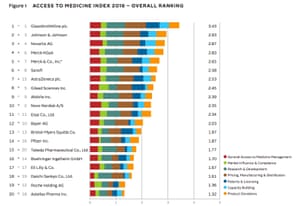
GlaxoSmithKline has come top of a league table that monitors the availability of medicine in developing countries, with fellow UK drugmaker AstraZeneca making it into the top 10.


The non-profit Access to Medicine foundation, which compiles the biennial index of drug companies, warned that while the availability of medicines is improving, the industry needs to do more on affordable pricing and the fight against corruption. Jayasree Iyer, executive director of the foundation, said: “Now is the time to step up those efforts.”


Overall, drugmakers have 850 products on the market for the 51 worst diseases in low and middle-income countries. They are developing another 420. But only 5% of products are covered by pricing strategies that were deemed affordable for different population groups within countries.


Iyer said there was no area where drugmakers had gone backwards, but noted that affordable pricing and misconduct were “static”. Breaches of laws or codes relating to corruption, unethical marketing and anti-competitive behaviour continue to arise.


GSK came first in the rankings for the fifth time, followed by Johnson & Johnson of the US, Swiss company Novartis and German group Merck. AstraZeneca jumped from 15th to seventh position after introducing a new affordability-based pricing strategy and expanding its Healthy Heart Africa programme, which aims to treat 10 million people for hypertension, or high blood pressure, over the next decade. The company was in sixth place in 2008 but then fell behind in several areas.


Access to Medicine Index.


Access to Medicine Index. Photograph: Access to Medicine Foundation

GSK accounted for the most research and development projects in areas of great need but with low commercial incentive, followed by AbbVie and Johnson & Johnson. The British drugmaker also topped the index for considering affordability when setting prices. Its top ranking came despite a damaging bribery scandal in China in 2014, for which it was fined £300m. The scandal prompted the company to overhaul its sales practices.


Iyer expressed some concern about GSK chief executive Sir Andrew Witty’s departure next March and what it could mean for the company’s efforts. He will be succeeded by Emma Walmsley, who currently runs GSK’s consumer healthcare business.


The index assesses the world’s 20 largest pharmaceutical companies on a range of measures, including their willingness to discount prices in poor countries, research on neglected tropical diseases, lobbying, patent policies, breaches of codes of conduct, corruption or bribery, transparency and conduct in clinical trials.


The Access to Medicine foundation is funded by the UK and Dutch governments and the Bill and Melinda Gates Foundation. It says its framework is used by companies to draw up access to medicine strategies.


GSK tops list of drug firms improving global access to medicine

17 Ekim 2016 Pazartesi

Hospital deficits could force NHS to divert money meant for improving care

The NHS expects hospitals to go on racking up such large deficits in the next few years that it will have to divert £5.4bn earmarked for improving patient care to prop them up, experts claim.


NHS trusts in England, which recorded a collective deficit of £2.45bn last year, are meant to reduce their overspending this year to only £580m to help tackle the service’s acute financial problems.


But the Nuffield Trust thinktank has discovered that the £1.8bn trusts will receive this year to help wipe out their deficits will be made available to them again in 2017-18 and 2018-19, despite NHS pledges that they will have got close to balancing their books by the end of March.


However, using that £5.4bn for deficit reduction will threaten the chances of success of the NHS’s plan to ensure its own future, according to Sally Gainsbury, the thinktank’s senior policy analyst who unearthed the planned diversion of funds.


That is because the money will be swallowed up by cash-strapped hospitals and will not be available to be ploughed into overhauling how care is delivered, which NHS England chief executive Simon Stevens has made clear is vital if the health service is to stem the rising demand for care and ensure it remains sustainable.


The disclosure of a cash shortage in the NHS comes as Stevens and health secretary Jeremy Hunt prepare to face tough questioning from MPs on the Commons health select committee on Tuesday about the state of the service’s finances.


MPs are likely to ask about Theresa May’s decision, revealed by the Guardian last weekend, that the NHS will not get any extra money in next month’s autumn statement, despite fears that it is coming under unsustainable pressures.


If the NHS cannot stop demand for A&E and other care rising from the current 3% increase a year to the 2% increase it hopes to achieve by 2020 – which giving the extra £1.8bn a year bailouts to trusts makes more unlikely – then hospitals will fail to get their finances back on track, Gainsbury added.


“The risk is the NHS starting the next decade with a recurrent overspend of more than £2bn a year, even after the painful cost cuts providers are currently being asked to make to reduce their deficits,” said Gainsbury.


“The fact that there is now less money available for investing in service transformation than originally envisaged matters because the NHS desperately needs to slow the pace at which the demand on its hospitals is growing. If that doesn’t happen through careful investment in alternative services and public health improvement then the risk is it will happen instead through crude rationing and service closures.”


The planning guidance which NHS England issued to the service last month made clear that the sustainability and transformation fund, which Hunt created last year, will “focus on supporting sustainability rather than transformation, aiming not to fund service enhancements but to sustain services”.


NHS England confirmed that all the £1.8bn in the fund this year will help cover hospitals’ deficits; and that of the £2.9bn it has set aside for sustainability and transformation activities in both 2017-18 and 2018-19, of that £1.8bn each year will be used to help ease the financial situation of NHS providers of care and the other £1.1bn to transform how it cares for patients.


Meanwhile, a survey has found that 70% of Britons are prepared to pay an extra one pence in income tax to help fund the NHS, and almost half (48%) would pay an additional two pence.


An extra penny on the basic rate of income tax would raise around £4.5bn, and 70% of those questioned for ITV1’s programme The Agenda said they would be happy to see a tax hike on this scale if it was guaranteed that all the money would go to the NHS.


The same poll found that almost half of Britons (46%) think that the NHS is performing badly, double the number (23%) who think it is performing well.


There is little public support for charges being introduced for NHS services to help ease its financial problems. Just one in four (27%) of those questioned said they would be willing to pay £5 to see their GP, while 66% said they would not. If that cost £10 then only 15% would be happy to pay, while 79% said they would not.


Chris Hopson, chief executive of NHS Providers, which represents hospitals, said: “We know the NHS is under the greatest pressure in a generation. Patients can see this pressure. They’re saying very clearly that they are happy to pay a bit more income tax to get the right quality of care and relieve the pressure on the NHS. We elect governments to make decisions on the NHS budget and we hope the new prime minister and chancellor are listening.


“And an extra penny on income tax would only give the NHS a quarter of the extra £350m a week patients were promised in the Brexit referendum campaign.”


Hospital deficits could force NHS to divert money meant for improving care

24 Ocak 2016 Pazar

Acupuncture believed to support battle cancer by improving the immune technique and supporting remission!

A lot more and more individuals are in search of alternative cancer therapies.  Studies finished by the Survey Sampling Worldwide and The Investigation Intelligence Group report that two-thirds of people across the planet feel disrespected by their doctors.  They also report that unclear communication is a major cause for patient dissatisfaction.  One-fourth of individuals across the globe reported that their physicians really do not response inquiries, don’t involve them in treatment decisions and use health care terms with out explanation. (1)


Two-thirds of individuals close to the world feel disrespected by their doctors!


There is an estimated 13,776,251 people living with cancer in the United States.(2)  Many of us have cancer and precancerous cells in our bodies.  Scientists feel that cancer thrives with the immune methods defenses cannot or don’t react correctly.  The high incident charge of cancer recurrence following traditional therapy, proves that the remedies fail to restore the immune method response.(3)


Following cancer treatment, the physique could acclimate to the presence of abnormal cells and the brain could even send messages that help the regrowth.(3)


Whether pairing option treatments with standard treatments or searching for a hundred percent option treatments, there is higher comprehending about the damages that conventional cancer treatment method causes.  More and a lot more people are in search of option therapies to assist enhance the immune program.(three)


Acupuncture located to enhance the bodies immune method in buy to battle cancer and continue to be in remission!


Dr. Wang Fuda of Greenville Study Clinic sees one hundred-200 sufferers per day.  Over 70 percent of his individuals have a cancer diagnosis.  Dr. Fuda is an acupuncturist that believes that acupuncture can retrain the body’s immune program to defeat cancer.  The therapy he offers is seldom acknowledged by local oncologists as the reason for recovery, nevertheless sufferers line up at Dr. Fuda’s clinic to share how acupuncture resulted in their cancer remission.(three)


Dr. Vivien Griffiths is an acupuncturist and coordinator of postgraduate research at Southern Cross University.  Dr. Griffiths is also a breast cancer survivor, who at first did not consider acupuncture as a primary treatment method. Following surgical treatment and chemotherapy, she then sought out an acupuncturist.(three)


Following surgical treatment, her acupuncturist utilised requirements and electrical stimulation on her surgical scar.  Within 12 hours the scar modified from blue to warm pink and her discomfort drastically decreased.  The improvement allowed her to participate in lymphatic drainage treatment and vigorous physiotherapy.(three)


Dr. Griffiths identified that acupuncture greatly enhanced her bodies ability to heal following breast cancer therapy and believes the acupuncture enhances the immune technique, enabling for remission!


Dr. Griffiths now believes that acupuncture is an crucial portion of publish cancer treatment method and can improve the immune program and enable for patient to continue to be in remission. Following breast cancer, Dr. Griffiths aisles utilizes herbal medication to assistance her immune overall health.(3)


“As a cancer patient, you receive a cancer diagnosis and a whirlwind of activity begins: constant tests, surgical treatment, chemotherapy, radiation,” she explained. “But as soon as the cancer is arrested, it’s a extended struggle to regain the overall health one had prior to the diagnosis. It appears as if obtaining a strong, healthier immune system is not perceived as ‘that important’ by typical medication. You are sent on your way and told to report back for a check out-up after a yr. You hold your breath hoping the cancer doesn’t return. When you get a very good result from your examine-up, you believe ‘Thank God, I’ve got yet another year.’ Your daily life depends on these phrases ‘in remission’ or ‘clear.’ Who or what is assisting cancer survivors to keep in that group?” (3)


Whilst Western medicine continues to fight cancer in laboratories, it is crucial to recognize that different medication is creating a difference.  Ultimately, men and women diagnosed with cancer want to join the list of cancer survivors.  In the vulnerability of this diagnosis, they also want to trust their supplier, be treated with respect and be a component of the therapy procedure.


Sources incorporated:


(one)  http://www.kevinmd.com/blog/2011/08/sufferers-flock-substitute-medication-suppliers.html


(2)  http://seer.cancer.gov/statfacts/html/all.html


(three)  http://www.acupuncturetoday.com/mpacms/at/post.php?id=28310


Acupuncture believed to support battle cancer by improving the immune technique and supporting remission!

28 Şubat 2014 Cuma

Michelle Obama"s Unfinished Company When It Comes To Improving Meals Labels, and Diet plans

The determination by the Meals and Drug Administration to revamp food labels, to increase disclosure of added sugars and serving sizes, is an critical stage by an agency that has been singularly successful in current many years at improving the details shoppers get about the food items they eat. Implementing this kind of change isn’t easy – each operationally and politically. The Agency’s Commissioner, Peggy Hamburg, deserves credit for spearheading these efforts.


For her subsequent initiative, she might revisit the FDA’s stance when it comes to wellness claims made on food labels. This is one region exactly where FDA has gotten its policy incorrect. It represents a large possibility to alter the healthiness of food merchandise, and American diet programs.


At situation right here is FDA’s longstanding discomfort with overall health claims produced on meals labels, notably these touting the health care positive aspects of specific diet programs and elements. FDA employees worries when food well being claims aren’t backed by the exact same kind of rigorous science that supports the healthcare claims made on drug labels. By their estimation, wellness claims created about foods ought to call for the very same type of scientific proof as claims manufactured on health-related products – randomized, prospectively controlled clinical trials. They argue, in impact, that there’s a single truth common when it comes to overall health claims. A wellness declare is a wellness claim, regardless of exactly where it is manufactured. Foods shouldn’t be treated significantly differently than drugs.


There are troubles with this logic, not least of which is that the courts have strongly disagreed with FDA’s place. In Pearson v. Shalala (1999), the D.C. Circuit Court of Appeals chastised the FDA, stating that it was “skeptical the government could show with empirical evidence” that well being claims created with appropriate disclaimers would “bewilder” buyers, as the FDA claimed. The FDA has largely ignored this, and other comparable Federal court rulings, by arguing that the situations have been wrongly determined – an uncommon revision of conventional civics.


Nonetheless, there is an even bigger problem with FDA’s place – a single that is not a matter of law, but science. Creating the identical sort of scientific proof about diet plan that is needed for a new drug is hard, if not extremely hard. You cannot prospectively randomize people to diverse diet plans, and tightly control what they consume (like you would do in a drug trial). For that reason, science about diet program has frequently depended on big epidemiological studies, the place people’s behaviors aren’t as tightly managed, as they would be if scientists have been studying a new health-related item.


The courts have also informed FDA that there’s much less at stake when it comes to food, which need to enable a far more relaxed standard. So extended as the power of the scientific proof supporting a distinct food well being declare is properly disclaimed (to inform the customer about how believable the science is) the courts also purpose that the declare itself constitutes permissible speech protected by the Initial Amendment.


Additionally, in the case of a drug, there are typically massive risks at stake from a declare that isn’t sufficiently validated. It may well prompt an individual to opt for a less effective treatment, and forgo alternative, and probably curative therapy. What the courts have mentioned is that the identical hazards are not apparent when it comes to food. The identical stakes do not apply. If a claim suggests that eating Cheerios may possibly confer specified heart positive aspects, even if that proof is strongly suggestive but not definitive, the worst end result is that men and women may well opt to consume a lot more Cheerios rather of Corn Flakes.


As a consequence of the problems in creating health claims, food labels nowadays mostly carry assertions about taste, portion dimension, or packaging. As I wrote in the Wall Street Journal, this is precisely since FDA does not regulate claims made about these attributes – the Federal Trade Commission does. Far fewer foods compete on the potential to boost well being due to the fact they can’t make claims about these functions. When they do, the FDA now usually forces foods makers to construct claims that are so weak and convoluted that the info is unusable for buyers, and marketers.


Yet science is offering us distinctive options to leverage diet plan in well being. For instance, the emerging science of nutrigenomics seeks to mix insights from genome investigation with our comprehending of how diet program selections affect health. By adjusting food content, the diet program selections we make could play a prominent position in mitigating ailment. We are at a level in science the place we can recognize individuals at risk for particular circumstances like cancer and maybe use nutrition as a instrument for chemoprevention.


But FDA makes it so difficult to get well being claims into meals labels that couple of companies try out. Even fewer invest in research to develop foods products (and diet programs) that can confer well being advantages. If foods makers can not talk about these rewards (and compete against each and every other based mostly on this science) why would they invest in the study?


The FDA has legitimate considerations when it comes to translating healthcare claims onto food labels. But its impulse to apply its specifications for drug promotion to all method of items blurs crucial distinctions in between the a lot more significant chance that “P” does not equal “.05″ when it comes to a new drug used to treat a existence threatening disease, versus the danger that the same statistical bar is not met when it comes to a breakfast cereal. But mainly FDA is concerned about adopting a various normal for well being claims dependent on the context. In the agency’s mindset, a well being declare is the same irrespective of where it is being manufactured. But this is exactly the incorrect place. The power of proof needed to make a claim ought to be deemed in the context of in which the claim is created, and the public overall health objective being pursued.


In 2003, FDA briefly permitted qualified health claims to appear on food labels so extended as makers integrated a disclaimer that described the dependability of the scientific evidence supporting the association in between food and health. This concession was made in direct response to the Federal Court’s rulings in the Pearson situations.


The policy established 4 distinct ranges of proof, from very reputable to highly improbable, and graded well being claims from A to D. The notion was meals makers would invest in building very good proof linking diet regime and well being. No food firm would want to be forced to disclose their health care claims have been sketchy and graded a “D” by the company. But unfortunately FDA scrapped this framework only a handful of many years right after it was first implemented and went back to requiring huge, drug-like trials for wellness claims manufactured on foods labels. The result is predictable. Couple of foods companies are striving to develop proof – or enhanced foods goods — to support these claims.


As FDA seeks extra techniques to advance the anti-obesity campaign launched by Michelle Obama, it may revisit that 2003 policy for enabling graded claims on meals labels. Or it could go a step further and generate a committed part on labels to show properly disclaimed data about the proof supporting a food’s overall health benefits, when such science exists.


Buyers would pay far more observe to goods with wellness benefits, specifically food items that aid avert the triggers and consequence of condition. And foods businesses, for their component, would emphasis a lot more of their money and consideration on making merchandise that confer these constructive attributes.


You can adhere to Dr. Scott Gottlieb on Twitter @ScottGottliebMD


Michelle Obama"s Unfinished Company When It Comes To Improving Meals Labels, and Diet plans