Cancer death rates in the United States are continuing to fall and the five-year survival rates of those diagnosed with the disease have risen, research shows.
The Annual Report to the Nation on the Status of Cancer, published on Friday, also shows a decline in incidence of cancer among men in recent years, although it remained stable among women.
Death rates from 2010 to 2014 decreased for 11 of the 16 most common types of cancer in men and for 13 of the 18 most common types of cancer in women, including lung, colorectal, female breast, and prostate cancers.
The authors, from the American Cancer Society, the Centers for Disease Control and Prevention, the National Cancer Institute and the North American Association of Central Cancer Registries (NAACCR) suggest a decline in smoking – down more than 50% over the last 50 years – as well as improved early detection and more effective treatment helped bring about the fall.
But they warn that smoking continues to pose a threat along with obesity, rates of which are at 20% or or more in every state.
NAACCR executive director Betsy Kohler said. “The continued drops in overall cancer death rates in the United States are welcome news, reflecting improvements in prevention, early detection, and treatment.
“But this report also shows us that progress has been limited for several cancers, which should compel us to renew our commitment to efforts to discover new strategies for prevention, early detection, and treatment, and to apply proven interventions broadly and equitably.”
The report, published in the Journal of the National Cancer Institute, showed that death rates increased for cancers of the liver, pancreas, and brain in men and for liver and uterine cancer in women.
Overall, cancer death rates decreased by 1.8% per year in men and 1.4% a year in women.
During the period 1999 to 2013, cancer incidence rates in men fell by 2.3%, according to the study.
Compared with cases diagnosed between 1975 and 1977, five-year survival for cancers diagnosed in 2006 to 2012 increased significantly for all manifestations of the disease bar cervical and uterine cancer.
The greatest absolute increases in survival (25% or greater) were seen in prostate and kidney cancers, non-Hodgkin lymphoma, myeloma (bone marrow cancer) and leukaemia.
Further improvements in survival prospects are expected in the wake of recent advances in precision medicine and immunotherapy for late stage cancers. But the authors warn that the high cost of new cancer drugs – up to $ 10,000 (£8,000) per month – may put them out of reach even to Medicare-insured patients, who would still be left with a bill for around 20% of the drug’s cost.
The white bulk of the cobalt-60 radiotherapy machine is just visible inside the dark cement bunker. The electricity in the room at Bugando Medical Centre is shut off. The machine, donated last year by the Indian government, looks ready to go, but it has yet to deliver a life-saving dose of radiation.
Medical staff at Bugando, a tertiary care and teaching hospital in Tanzania’s second largest city, Mwanza, are keen to start offering radiotherapy to the growing number of cancer patients arriving at the hospital’s doors.
In 2014, the government helped to build a state-of-the-art oncology wing at the hospital to make it a regional hub for cancer treatment, complete with several bunkers to house radioactive material safely.
But getting the expensive technology up and running has been a long struggle. In the wing’s main hall, two more donated machines – used linear accelerators from Italy and the US – are sitting in a jumble of parts, waiting for the hospital to secure the funds to install them.
Bugando is a lifeline for the 13 million-strong population of northern Tanzania’s Lake Victoria region, providing specialised care no other hospital around can offer. But like many other parts of the country’s healthcare system, this centre – run by the government and the Catholic church – faces staff and equipment shortages that limit what it can do.
Last year, Tanzania’s government allocated 11.3% (pdf) of the national budget to health. That percentage, which includes significant donor funding, has been rising modestly, but it still falls short of the 2001 Abuja declaration (pdf), in which African nations pledged to set a target of spending 15% of their budgets on health. There are fewer than five skilled health professionals per 10,000 people in Tanzania, compared with the regional average of 14.1.
The oncology wing at Bugando Medical Centre in Mwanza. Photograph: Krista Mahr
That shortfall is particularly glaring when it comes to cancer diagnosis and treatment. The World Health Organization warned recently that non-communicable diseases are likely to kill more people in Africa than infectious disease by 2030, and Bugando is on the frontline of this fight.
Dr Nestory Masalu, Tanzania’s only internationally trained medical oncologist, helped set up the oncology ward in 2009; in 2010 he saw 320 cancer cases. Last year, he and his colleagues saw 14,000.
“Cancer is exploding,” says Dr Merchades Bugimbi, Bugando’s acting director. “Everyone is asking, ‘Why, why, why?’”
The answer is not straightforward. Doctors and health workers in the Mwanza region attribute the spike to poor health education, environmental changes, high HIV rates, improved diagnostics and the fact that people are simply living longer.
In late February, Dodo Boniface, a farmer who lives 170km (105 miles) from Mwanza, stood in the new oncology wing, holding his four-year-old daughter, Dainess. In January, Dainess started complaining about pain in her back. Within days, she had lost use of her legs. The family was referred to Bugando, where she was diagnosed with lymphoma that had moved into her spine.
“We’ve really struggled with this,” says Boniface.
Dodo Boniface carries his daughter, Dainess, during a weigh-in at Bugando Medical Centre in Mwanza. Doctors are trying to assess whether Dainess is strong enough for a course of chemotherapy. Photograph: Krista Mahr
Bugando is the only hospital in the region that can do biopsies and has its own pathology lab; the team here can also perform complex surgeries and offer chemotherapy. But the centre still has limitations: the hospital does not have MRI or a functional CT scan machine to investigate and diagnose certain kinds of cancer, according to staff.
Dainess’ family isn’t insured, but sold some cattle to pay for her scans at a private clinic. Now they’ve been advised she should start a course of chemotherapy. Since 2015, the US-based International Cancer Care and Research Excellence Foundation (Iccare) has subsidised chemotherapy for paediatric patients at Bugando. The programme collaborates with the Duke Global Health Institute at Duke University, which is working on strengthening cancer treatment in Bugando and in other parts of Tanzania.
It’s not always easy to get cancer patients to keep coming back. Many don’t have the money to get to the hospital or stay for treatment. Others worry that the illness is a curse, and prefer to consult traditional doctors. When Iccare first started its programme, half the paediatric cancer patients abandoned treatment mid-course. The programme has reduced that number by 20%.
“If you diagnose patients with cancer, they don’t accept it,” says Dr Beda Likonda, Bugando’s radiation oncologist. “It’s like a denial. They look for other options.” By the time many do seek treatment, their cancer is advanced.
Dainess can be treated at Bugando, but many others cannot. Masalu, the medical oncologist, estimates that 60% of new cases at Bugando require radiotherapy. The radiotherapy machine in the bunker may soon be ready, says Likonda, but it’s older technology and a blunter instrument than the linear accelerators languishing in storage. Together, those two machines will take a few million dollars to install and maintain, he says.
For now, Bugando patients who require radiation are referred to Ocean Road Cancer Institute in Dar es Salaam, more than 1,000km away and home to the country’s only radiotherapy treatment centre. Making the journey once is daunting and expensive, let alone going back and forth for the required cycles of therapy. “They are told to go back home, and come back in one month,” says Masalu. “They can’t.”
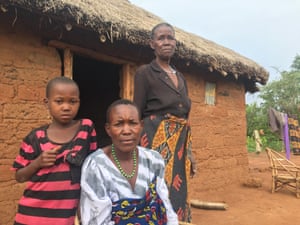
Rahel Charles Rosana, a 49-year-old widow who lives about 70km outside Mwanza, hasn’t been able to go anywhere for a long time. By the time Rosana was examined for cervical cancer at a local health centre, she had been having such intense abdominal pain that she hadn’t slept lying down for five years. The health workers suspected she had cancer and referred her to Bugando, but she struggled to pay for even one visit.
“I can’t afford to go back,” Rosana says, visibly uncomfortable in a chair in her small village. If she were referred to Dar for radiotherapy, a common treatment for cervical cancer, there would be no way for her to get there.
Rahel Charles Rosana, centre, with her mother and daughter at their home outside the village of Misasi. Photograph: Krista Mahr
Cervical cancer has emerged as the most common cancer in Tanzania – and the leading cause of cancer-related deaths. Eighty percent of Tanzanian women are diagnosed at an advanced stage, according to Pink Ribbon Red Ribbon, a US-based non-profit. The mortality rate for the disease, which is treatable and curable if caught early, could be as high as 44%, according Dr Safina Yuma, cervical cancer specialist at the health ministry.
“This disease is killing more women than die in childbirth,” says Celina Schocken, Pink Ribbon Red Ribbon’s CEO. “It has an incredibly high disease burden and gets very little donor funding.”
Pink Ribbon Red Ribbon and its partners have been helping the government to improve screening and health worker training to catch cervical cancer earlier. Around Mwanza, where rates are especially high, they help pay for treatment and transportation for women to get to Bugando or Ocean Road in Dar es Salaam. The group is also planning to build hostels for cancer patients to stay in both cities to relieve expenses during long treatments.
At Makongoro Health Centre in Mwanza, Dr Goret Dussa says she was trained under one of these programmes to do screening and cryotherapy, a simple, early treatment that uses gas to freeze pre-cancerous cells on the cervix. “Before this, we didn’t know how to do it,” Dussa says.
Dussa was driving out to do screenings and treatment in rural areas outside Mwanza, but the funding has run out. She is also having a problem with the centre’s donated cryotherapy machine, and has been borrowing a machine from another clinic. She’s requested new equipment from the government, but isn’t sure if she’ll get the money.
After all, there is a limit to what any donor or NGO can do. “There’s a five-year project, but then it ends,” says Yuma. “If you develop something and you stop, there’s no meaning to it. We need the government to take over.”
At Bugando, Masalu is banking on the government finally locking down the funds to get the radiation machines up and running to treat women like Rosana closer to home. He has big plans for Bugando’s cancer treatment programme, including the construction of a 120-bed cancer ward next to the oncology wing, and training more young oncologists to join his staff.
“The government is starting to think about non-communicable diseases, especially cancer,” says Bugimbi, the hospital’s acting director. The radiation programme, he admits, is stuck for now. But he adds, “Always, we try.”
Cancer rates will increase nearly six times faster in women than in men over the next 20 years, with obesity partly to blame, experts predict.
As several of the obesity-related cancer types only affect women, the growing number of people of both sexes who are severely overweight is likely to have a greater effect on incidence of the disease among women, according to the analysis by Cancer Research UK.
Cases of ovarian, cervical and oral cancers are predicted to rise the most. Rates will rise by around 0.5% for men and 3% for women, meaning an estimated 4.5 million women and 4.8 million men will be diagnosed with cancer by 2035.
That equates to projected UK cancer rates increasing by approximately 0.5% for men and 3% for women.
The figures were released on the same day as the National Institute for Health and Care Excellence (Nice) announced that it was recommending that the breast cancer drug palbociclib should not be routinely funded on the NHS in England.
Charities decried the decision by the drugs watchdog, stressing the importance of developing and supporting more treatments to help women to survive, but they also urged women to change their lifestyles to minimise their risk.
Cancer Research UK’s chief executive Sir Harpal Kumar said: “These new figures reveal the huge challenge we continue to face, both in the UK and worldwide. Research is at the heart of finding ways to reduce cancer’s burden and ensure more people survive, particularly for hard-to-treat cancers where the outlook for patients is still bleak. We need to keep working hard to reduce the devastating impact cancer can have on so many families.
“The latest figures show that more than 8 million people die from cancer each year across the world. More people die from cancer than Aids, malaria and tuberculosis put together. With more investment into research, we hope to make big improvements over the next 20 years in diagnosing the disease earlier and improving and developing treatments so that by 2034, three in four people will survive their disease.”
Smoking is another factor behind the projected growth of cancer cases among women, which will mean the gap between the number of women and men with the disease narrows. Widespread smoking among women happened later than men and lighting up continues to have a big effect on the number of cancer cases diagnosed each year, says Cancer Research UK.
Sarah Toule, head of health information at the World Cancer Research Fund, said lack of exercise and alcohol consumption were also driving the predicted increase in the UK cancer rate for women.
“It is concerning that rates are predicted to rise so sharply in women, especially as so many cancer cases could be prevented,” she said. “For example, about two in five breast cancer cases in the UK could be prevented if women maintained a healthy weight, were more physically active and didn’t drink alcohol – that’s around 20,000 fewer cases a year. Other cancers that could be reduced by women having a healthier lifestyle include womb and ovary.”
Professor Kevin Fenton, the director of health and wellbeing at Public Health England, said: “The top things we can all do to prevent and reduce the risk of cancer are quitting smoking, maintaining a healthy weight, being physically active and attending cancer screening when invited.”
In draft guidance explaining its reasoning for its advice on palbociclib, which is made by Pfizer, the drug watchdog said that a full course of treatment costs £79,560. Although Nice found that the drug stalled the growth of the cancer for an extra 10 months on average “it was still not enough to make palbociclib cost effective at its current price”.
The watchdog estimates that around 5,500 people in England – out of 45,000 new diagnoses of breast cancer each year – would be eligible for treatment with palbociclib.
Baroness Delyth Morgan, chief executive at Breast Cancer Now, said: “This is the clearest illustration to date that the drug appraisal system is totally unfit for purpose in assessing first-in-class breast cancer medicines.
“Palbociclib could benefit a large proportion of metastatic breast cancer patients and may even be the closest thing these women would have to a cure in their lifetime.”
She urged Pfizer to reconsider its decision not to offer the NHS a discount on the list price and said the pharmaceutical giant must work with Nice to ensure the drug can be made widely available to women as soon as possible.
The Institute of Cancer Research (ICR), with its partner The Royal Marsden NHS Foundation Trust, led a major clinical trial of palbociclib.
Dr Nicholas Turner, team leader in Molecular Oncology at ICR and consultant medical oncologist at The Royal Marsden, said: “Palbociclib is one of the most important advances in treating the most common type of breast cancer in 20 years.
“If the manufacturer, Nice, and NHS England can find a way of making this treatment available for patients, they will substantially improve the lives of patients with breast cancer.”
In December, Nice turned down another breast cancer drug, Kadcyla, made by Roche Pharmaceuticals, on financial grounds, triggering an outcry from patients’ groups who say it prolongs the lives of people who are seriously ill with the disease.
At present there are an estimated 7.4 million men and 6.7 million women being diagnosed with cancer worldwide each year. The disease is the leading cause of death globally, accounting for an estimated 8.2m deaths in 2012 and approximately 15% of all deaths.
Death rates from cancer in the UK will fall by 15% by 2035 thanks to advances in research, diagnosis and treatment, with more Britons living longer after their diagnosis, the charity Cancer Research UK predicts.
Breakthroughs will prevent more than 403,000 deaths from the disease by 2035 that would have happened otherwise, according to an analysis from the charity.
However, although the risk of death from cancer is likely to fall, the number of people dying from it will continue to rise, because the ageing and growing population will result in more people being diagnosed, the charity said. Those factors, and the rise in cancers linked to bad diet and alcohol, mean that a typical Briton’s chances of getting cancer have recently risen from one in three to one in two.
Overall 331 people per 100,000 of population died from any form of cancer in July 2014. But improvements in doctors’ ability to detect, diagnose and treat cancer will see that fall to 280 people per 100,000 of population by 2035, CRUK estimates.
“Thanks to research fewer people will die from cancer in the future. We’re resolute that, by 2035, three in four people will survive their cancer for at least 10 years”, said Sir Harpal Kumar, CRUK’s chief executive. “This will mean making more progress in breast, bowel and blood cancers, but also accelerating our effort in those cancers which are currently hard to treat.”
Even though more people will die from cancer, the diminishing risk of death shows that cancer research and treatment are still yielding benefits and heading in the right direction, the charity said. For example, CRUK believes mortality rates from bowel cancer will fall by 23% over the next 20 years – from 32 to 25 deaths per 100,000 population – thanks to advances in surgery and chemotherapy and also better screening for the disease.
Death rates from breast cancer, the most common form of the disease among women, are projected to drop by 26% to 31 per 100,000 women by 2035. Likewise, mortality rates from lung cancer will be 21% lower by then – at 58 deaths per 100,000 people – according to CRUK’s analysis.
But deaths from pancreatic cancer are estimated to fall by only 3%, to 17 deaths per 100,000; and from brain and related tumours by just 2%, to ten deaths per 100,000 people, CRUK said.
However, the risk of death will increase for some cancers. For example, the mortality rate for liver cancer is expected to rise by 58% by 2035.
Simon Stevens, the chief executive of NHS England, which has made improving cancer outcomes one of its key priorities, said: “These figures underline how the NHS is successfully translating new research and targeted investment into dramatic gains in cancer care. Thanks to improvements over just the past year, an extra 2,400 families will be able to share this Christmas with a loved one who would not have survived cancer a year ago.”
CRUK’s statistical information team arrived at their conclusions by applying the difference in the actual cancer mortality rates in 2014 and the projected age-standardised death rates for all cancers combined in the UK between 2015 and 2035 to the Office for National Statistics’ projections for the UK population over the study period.
Kumar said that while survival rates for some forms of cancer had improved in recent decades, thanks to the development of new drugs and surgical techniques, the variation in death rates for different forms of cancer was still too wide. For example, mortality rates for brain cancer are likely to remain unchanged over the next 20 years, with just one in five patients surviving for five years. Similarly, just three in 100 people diagnosed with pancreatic cancer live for five years or more after diagnosis.
Access to websites and social media platforms that tell people how to kill themselves should be restricted, according to MPs, who are warning that the government is not doing enough to bring down the “unacceptable” suicide rate in the UK.
The House of Commons health select committee, chaired by the Conservative MP Dr Sarah Wollaston, is calling on ministers on Monday to “work with internet providers and social media platforms to consider what changes can be made to restrict access to sites which encourage self harm or give detailed advice on suicide methods”.
They said they had taken evidence from a recent study by the University of Bristol that exposure to suicide content, including reading about others’ attempts, had served to validate or justify suicide as an acceptable course of action.
Suicide rates are still ‘unacceptably high’ in the UK.
Detailed information about methods of suicide and the relative painfulness of different techniques is available instantly through search engines including Google. According to Suicide.org, a suicide prevention charity, “pro-suicide websites, groups, and bulletin-boards continue to expand.”
Earlier this year, the National Society for the Prevention of Cruelty to Children revealed that its Childline service is being contacted by record numbers of children and young people who are struggling with suicidal thoughts and feelings.
The call for action came as the government prepares to renew its suicide prevention strategy. “4,820 people are recorded as having died by suicide in England last year, but the true figure is likely to be higher,” said Wollaston. “Suicide is preventable and much more can and should be done to support those at risk.”
The suicide rate in 2013 was the highest it has been since 2001, and the 2014 and 2015 rates were only marginally lower. Suicide is highest among men, who account for three-quarters of all such deaths, and it remains the biggest killer of men aged under 49. Rates among women are rising too. However, rates have been on an overall downward trend since 1981 everywhere in the UK apart from Northern Ireland, where they spiked in 2005 and 2006 and remain the highest anywhere in the UK.
Dr Sarah Wollaston is leading the committee calling for restrictions to be placed on certain websites. Photograph: Peter Byrne/PA
The select committee is urging the government to increase support for public mental health and early intervention services. It found that around a third of people who end their lives by suicide are in contact with their GP before their death, but are not receiving specialist mental healthcare. Another third are in the care of specialist mental health services.
“GPs need better training in suicide risk,” the report states. “All patients being discharged from inpatient care should receive follow-up support within three days of discharge rather than the current standard of seven days.”
A Department of Health spokesperson said it recognises that “every death by suicide is a tragedy and devastating for families, friends and communities”. “We are investing almost £1bn in providing mental health support in A&E and home-based crisis care — and are currently updating our suicide prevention strategy, which we are confident will address many of the issues raised by the committee,” they said.
NHS England has set a goal to reduce suicides by 10% by 2020.
A spokesman for the NHS Confederation, which represents NHS trusts, said: “Developing mental health services is essential, but money hasn’t come as quickly as promised, and this is holding-up progress. For too long we have seen year-on-year increases in prison suicide and there are worrying trends around children’s mental health, too, with insufficient investment to improve their care.”
The health select committee also called for those bereaved by suicide to receive better primary and secondary care, and said media guidelines on the reporting of suicide were being widely ignored and that greater attention should be paid to breaches of the rules. The MPs claimed that too many newspapers and broadcasters use the term “commit suicide”, which they said “reinforces stigmatising attitudes from when suicide was a criminal offence”.
In the UK, the Samaritans can be contacted on 116 123. In the US, the National Suicide Prevention Hotline is 1-800-273-8255. In Australia, the crisis support service Lifeline is on 13 11 14. Hotlines in other countries can be found here.
Angelina Jolie’s revelation that she underwent a double mastectomy to reduce her chances of developing breast cancer boosted rates of genetic testing among women, but might have failed to reach those most at risk, new research suggests.
In a 2013 article for the New York Times, Jolie explained her decision to undergo a double mastectomy after finding that she had a mutation in a gene known as BRCA1 that greatly increased her risk of breast and ovarian cancers.
.
“I am writing about it now because I hope that other women can benefit from my experience,” she wrote. “Cancer is still a word that strikes fear into people’s hearts, producing a deep sense of powerlessness. But today it is possible to find out through a blood test whether you are highly susceptible to breast and ovarian cancer, and then take action.” After surgery her risk of developing breast cancer in later life fell from 87% to 5%.
The actor’s decision to tell her story was welcomed by medical experts and campaigners worldwide. But did women heed Jolie’s call?
Writing in the British Medical Journal, Sunita Desai and Anupam Jena of Harvard Medical School describe how they sought to answer the question by scrutinising data on US health insurance claims from more than nine million women aged between 18 and 64 .
These revealed that in the 15 working days following Jolie’s article, daily rates of testing for harmful mutations in BRCA1 and BRCA2 genes rose by 64%, compared with the 15 working days before. After six months, average monthly testing rates were still 37% higher than in the four months before the article’s publication.
But the study also reveals that while genetic testing rates increased, there was no change in average, overall mastectomy rates in the six months following the article’s publication – and showed a slight drop in mastectomy rates among those who had BRCA tests.
“The fact that mastectomy rates dropped after Angelina Jolie’s editorial suggests that that denominator of women who started getting the BRCA test became less appropriate for the BRCA test because they had a lower pre-test probability of having the mutation in the first place,” said Desai.
However, Douglas Easton, professor of genetic epidemiology at the University of Cambridge, noted that the study did not offer insights into the BRCA test results – meaning it was not possible to say whether women taking the test received negative results, or whether they had tested positive, but decided not to undergo surgery.
But Jennifer Litton, associate professor in the department of breast medical oncology at the University of Texas, said the results reflected what had been seen in clinics.
“The ‘Jolie effect’ was real, and we did have many more breast cancer patients ask about the test,” she said. “As only a small proportion of breast cancer patients harbour an abnormal gene, those that met national guidelines for testing had already had testing, so it did not change that group with the highest risk of a positive test.”
The research is not the first to explore the impact of Angelina Jolie’s declarations, although previous UK-based studies found that both testing among women at risk, and subsequent preventative surgery, increased.
A co-author of the UK-based research, Tony Howell, professor of medical oncology and director of scientific research at Prevent Breast Cancer, says the new US study looked at too short a period after publication of Jolie’s article to truly reflect its impact. “It takes weeks or months to get through the testing process in proper centres,” he said. “Same applies to risk-reducing breast surgery. This takes one to three years to filter through to surgery if all the checks and counselling are performed properly.”
Overall, says Howell, the 2013 article was valuable in raising awareness. “Jolie did a terrific job,” he said.
The UK is a European hotspot for cocaine use and gonorrhoea, a new report suggests.
Across Europe, 1.9% of young adults aged 15 to 34 report using cocaine in the last year. But in the UK this figure stands at 4.2%, according to the Health at a Glance: Europe 2016 report from the European Commission and the OECD.
“Cocaine is the most commonly used illicit stimulant in Europe,” the authors wrote. “About 2% of young adults aged 15 to 34 report having used cocaine in the last year.
“The percentage of young adults consuming cocaine is highest in the United Kingdom, Spain and the Netherlands, with 3% or more of young adults having used cocaine at least once in the last year.”
Meanwhile in 2014, reported rates of gonorrhoea were highest in the UK, the authors found. Out of every 100,000 people in the British population, 60 were found to have the sexually transmitted infection – compared with a European average of 20 cases per 100,000 people.
Overall the authors conclude that life expectancy across Europe has increased but many are spending their additional years in ill health.
Vytenis Andriukaitis, European commissioner for health and food safety, said: “The Health At A Glance report provides useful information for member states to shape their actions on health across all policies. It shows that in the EU many people die every year from potentially avoidable diseases linked to risk factors such as smoking or obesity.”
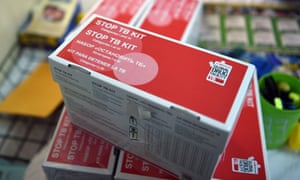
Soaring rates of multidrug-resistant tuberculosis have been found in west Africa, with the highest in the dense population of Lagos, Nigeria, suggesting the seriousness of the epidemic has been considerably underestimated.
Until now, the World Health Organisation has had to rely on estimates for MDR-TB in west Africa because the data has not been collected or reliable. But a new surveillance network across eight countries in the region has found that drug resistance is a much greater threat than had been assumed.
The WHO had estimated that up to 2% of new TB infections in west Africa were resistant to drugs, but the researchers found the true rate was 6%.
The rate among people who had already been treated for TB was much higher: the WHO had estimated 17% of these infections in west Africa were resistant to drugs, but the network has found the average is 35%.
The hotspots are in Lagos, Nigeria’s largest city, where 66% of people previously treated for TB have a drug-resistant strain. Among people treated for TB for the first time, nearly a third – 32% – had a drug-resistant strain.
In Mali, the researchers found that 59% of people previously treated for TB had drug resistance.
“It is a wake-up call for the ministries of health and the governments to take MDR-TB seriously,” said Prof Martin Antonio, principal investigator at the Medical Research Council unit in the Gambia. “I think it is a problem for the rest of the world as well. Ebola wasn’t just a west African problem.
“We recommend that efforts be put in place for containment of a potential west African TB epidemic at the earliest possible stage. This is especially important as west Africa, with its 245 million inhabitants, is one of the poorest regions globally, whose fragile health systems can easily be overwhelmed by infectious disease epidemics, as seen in the recent Ebola outbreak.”
TB normally takes six months to cure using a combination of antibiotics, but when the bacteria becomes resistant to them a new combination is needed. Photograph: Mick Tsikas/AAP
His unit is part of the West African Network of Excellence for TB, Aids and Malaria, funded by the European and Developing Countries Clinical Trials Partnership, which was set up to collect data on the three infectious diseases across the region.
The surveillance also picked up evidence of extensively drug-resistant tuberculosis (XDR-TB) in Togo and Ghana. These are strains that are resistant to second-line antibiotics used to treat MDR-TB.
The network has published its findings in the BioMed Central Medicine journal.
TB normally takes six months to cure using a combination of the antibiotics rifampicin and isoniazid, but when the bacteria becomes resistant to them a new combination is needed that is more expensive and involves longer treatment.
The latest report from the WHO found that drug-resistant cases had risen to more than 500,000 a year worldwide. The numbers of people with TB were also revised upwards, from 9.6 million to 10.4 million a year, after better data emerged from India.
Achieving the ambitious target to end maternal and child deaths, enshrined in the sustainable development goals (SDGs), will require ingenuity. The good news is that 11 health innovations could save more than 6 million mothers and children by 2030, if they are invested in and used widely in 24 priority countries.
When I began working in global health (at the World Health Organisation in 1990) 12.7 million children under five and 532,000 new mothers died every year. The challenge looked insurmountable. But in the two decades that followed, unprecedented global cooperation resulted in annual child deaths being cut by more than half, to 5.9 million in 2015, and annual maternal deaths to just over 300,000.
As impressive as the progress has been, it’s not enough. The current rate of decline in maternal and child mortality will not get us to the ambitious SDG targets by 2030. We need innovative tools and approaches to accelerate progress.
The 11 innovations modelled in our analysis, crowdsourced from experts around the world, are gamechanging health technologies and approaches that will have wide-scale impact, ensure healthier babies, protect mothers, and secure better health in the long term.
1 Injectable contraceptives
A new formulation that combines a widely used long-acting contraceptive in an easy-to-use injection is already improving access to this life-changing intervention by allowing community health workers to bring the drug directly to women. Several countries are even studying the potential for women to self-inject, further empowering women and their choices.
Modelling showed that this innovation, making long-acting contraception more accessible, could save more than 3 million lives – including women, newborns, and children – by helping women space their pregnancies in a healthy way.
Accurately diagnosing pneumonia in young children is very difficult. New tools to diagnose and treat the condition, including better respiratory rate monitors and portable pulse oximeters, can save many more lives from this disease, which is the leading infectious killer of children under five.
3 Kangaroo mother care
There is so much we can do now to give newborns a better chance at a healthy life. Studies have shown that kangaroo mother care, or skin-to-skin contact between the newborn and mother immediately after birth, improves breastfeeding and thermal regulation of newborns, both critical for survival in low-resource settings.
4 Chlorinators for water treatment
Beyond traditional interventions for mothers and newborns, we also need to ensure access to clean water. New technologies, like a chlorinator for community water treatment, are making the use of chlorine for disinfecting water easy and economical.
5 Antiseptic gel
Chlorhexidine, a low-cost antiseptic, is a very simple gel that, if applied to the newborn’s umbilical cord, can prevent deadly infections.
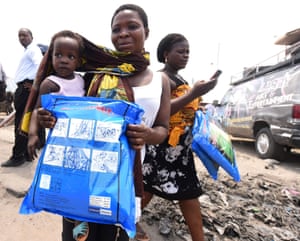
Despite widespread distribution of mosquito nets, malaria is still one of the world’s biggest killers. Photograph: Pius Utomi Ekpei/AFP/Getty Images
6 Single-dose anti-malarial drugs
Better drugs to protect against diseases like malaria are in the works, including a potent single-dose anti-malarial drug.
7 Neonatal resuscitators
As many as one in 10 newborns need help breathing at birth, new, simple, neonatal resuscitators can help prevent deaths.
8 Low-cost balloon tamponade
Women with postpartum haemorrhage can also be stabilised and treated by a balloon tamponade, a common tool in high-income countries. Recently, this tool has been adapted using readily available materials in low-income countries. Using the materials at hand, a healthcare provider can create a tamponade out of condoms and rubber tubing. Now simple low-cost kits and pre-assembled versions are available, that make this solution more accessible and effective.
9 Drugs to stop blood loss after childbirth
New forms of the drug oxytocin are currently being developed and tested that could increase coverage because they won’t require skilled health workers to administer or refrigeration for storage. These innovations could help ensure this highly effective drug reaches and treats hundreds of thousands of women at risk of death from postpartum haemorrhage (or severe bleeding after delivery) each year.
10 Rice fortification
For children who live in areas where rice is a staple food, we are seeing amazing developments in rice fortification, a process that enriches rice with vitamins and iron supplements. Better nutrition is at the core of better health and smarter ways to supplement staples and introduce foods with more nutritional value are essential.
11 New tests for a life-threatening maternal condition
Preeclampsia is another danger that affects more than one in 20 pregnant women. It is associated with dangerously high blood pressure that can lead to seizures. New diagnostic tools to treat preeclampsia will help identify at-risk women so that they can receive low-cost treatment.
How will these life-saving innovations be funded? Traditional donors cannot do it alone. Governments in low- and middle-income countries have a critical role to play and so do local entrepreneurs with the potential to take forward affordable solutions. The private sector and social impact investors, also want to engage. But all these groups need better data to assess what is available, what is coming soon, or where there is a gap that requires new ideas.
To achieve the goal of ending preventable maternal and child deaths, the world must invest in new and emerging health innovations so that bright ideas turn into real solutions. The lives of millions of women and children depend on it.
Join our community of development professionals and humanitarians. Follow @GuardianGDP on Twitter. Join the conversation with the hashtag #Dev2030.
Social pressure on new mothers to get their babies into a feeding routine and to sleep through the night is a key factor in why the UK has the lowest rate of breastfeeding in the world, an expert has warned.
Speaking at the British Science Festival, Amy Brown of Swansea University said not enough was being done to support new mothers to breastfeed. In particular, she said, advice given to mothers to impose a feeding regime whereby babies don’t feed frequently, contributed to why many women felt that they weren’t producing enough milk and abandoned breastfeeding.
“One of the key things about breastfeeding is that you have to feed the baby very regularly,” Brown, a GP and member of the department of public health, policy and social sciences at Swansea University, told the Guardian. “That’s easily every two hours.”
But, she says, that doesn’t chime with common advice.
“We are told by so-called experts that you should get your baby in a feeding routine and your baby should not wake up at nights,” said Brown. “But that is really incompatible for breastfeeding. If you try and feed them less, you make less milk. You need to feed at night to make enough milk.”
[embedded content]
Should babies sleep through the night?
Elizabeth Duff, senior policy adviser at the National Childbirth Trust, agreed that frequent feeding is necessary. “It is obviously easier for everyone if they begin to sleep more during the night, but if you are fully breastfeeding you will have to feed for at least once and probably two or three times during the night,” she said. “The daily patterns will come, but it won’t be in the first few days or the very first weeks.”
Duff agrees that mothers are not given enough support to breastfeed. “Understanding a bit about the physiology of breastfeeding can be really helpful,” she added. “Some women who have not been able to find that information think that the baby isn’t getting very much [milk, but] a couple of teaspoons-worth is probably enough at any one time.”
According to a recent report published in the Lancet, the UK has the lowest rate of breastfeeding in the world, with only 1 in 200 women breastfeeding their children after they reach their first birthday. The World Health Organization (WHO) recommend just breast milk for six months, with breastfeeding to form part of a baby’s diet up to two years of age.
“We have known that breastfeeding rates aren’t great in the UK for a long time,” said Brown. “We have about 80% of women starting breastfeeding at birth, but by the end of the first week, over half of those babies have had formula in some way.”
Speaking ahead of the publication of her book, Breastfeeding Uncovered, Brown said that while a large proportion of mothers struggle to breastfeed, few of them have underlying conditions that prevent the process.
Surveying around 300 women who had stopped breastfeeding in the first six months, Brown found that around 80% cited pain and difficulty as contributing, while 40% referenced public attitudes, 60% lack of support from others and 20% blamed embarrassment.
“The vast majority of women who are having problems, it isn’t really to do with a primary inability to breastfeed, it is to do with their experience,” said Brown. “Eighty per cent of women who stop breastfeeding in the first six weeks do not want to. They want to keep breastfeeding but they feel that they can’t.”
Among the issues faced by new mothers, Brown criticised aggressive advertising by formula companies, and negative public perceptions of breastfeeding that have seen women asked to cover up when feeding their baby. “Babies have to breastfeed in public – it is called eating,” said Brown.
Duff agrees that breastfeeding should be welcomed. “Everywhere should be parent friendly and baby-feeding friendly,” she said.
Pressures on women to return to their pre-baby lives is also part of the problem, said Brown, while cuts affecting funding for breastfeeding peer support groups, as well as cuts to midwife services and the NHS more widely, are limiting help for new mothers.
[embedded content]
How you can help to support a breastfeeding mother.
“The way forward is that we need a complete societal change to how we look at breastfeeding, how we accept it, but also how we accept and value mothering in general,” said Brown, adding that raising breastfeeding rates could save the NHS millions due to a reduction in common infant infections. “Women should not be held responsible for this, is the key message,” she added. “We need to raise breastfeeding rates, but it is not their fault.”
Rebecca Schiller, director human rights for childbirth charity Birthrights, said it is of great concern that many women were giving up breastfeeding sooner than they wished, and criticised a lack of support for new mothers. “I think it is a huge cruelty to women to tell them that there is something wonderful that they should be doing and then to make it very difficult for them to do that,” she said. “We also don’t think that anyone should be pressured into feeding in any particular way.”
Dr Nigel Rollins from the department of maternal, newborn, child and adolescent health at WHO, said it was important to acknowledge that breastfeeding can be challenging, and criticised negative public attitudes to breastfeeding, particularly in England. What’s more, he said, whether a particular routine is adopted varies greatly between babies.
“This sense that ‘achieving’ or ‘accomplishing’ breastfeeding is the responsibility only of the mother and therefore [a] judgement as to whether she is ‘adequate’ or not, I think is one that I would counter strongly,” he said. “There are so many things that make it more manageable to breastfeed than not,” he added, pointing out that lack of support from a partner, family, health worker and even negative comments from neighbours can all play a role in making it harder. “All of those things chip away at a woman’s confidence as to whether she has enough milk,” he said.
The virologist and cancer researcher Dr Jian Zhou had an important goal after creating a vaccine for the cancer-causing human papillomavirus in a Queensland laboratory.
He wanted to see the vaccine made widely available in his home country of China, which today accounts for more than 28% of the world’s cervical cancer cases. Cervical cancer is also the second most common cancer in Chinese women aged between 15 and 44.
The virus, commonly known as HPV, causes 5% of cancers worldwide, the main one being cervical, but it also increases the risk of vulva, penile, anal and throat cancers.
China has a notoriously lengthy and difficult drug approval process, with drugs first required to have been approved and marketed in another country and also required to pass separate Chinese clinical trials. It means the vaccine has never been available on the mainland.
Monday marks the 10-year anniversary of the vaccine being released in Australia, and research led by the Royal Woman’s hospital in Victoria and published to coincide with the anniversary has found that HPV infection rates have plummeted.
In countries such as Australia, where there has been high uptake of the vaccination thanks to free vaccination programs for all 12-year-old schoolchildren, infection rates have fallen by up to 90%, the researchers say. They found similarly significant decreases in genital warts and cervical abnormalities in many of the 129 countries they examined.
In China, however, women have been forced to travel to Hong Kong and pay hundreds of dollars for the three injections required for full vaccination, and the number of HPV-related cancers remains high.
July saw a breakthrough, with the China Food and Drug Administration approving the pharmaceutical giant GlaxoSmithKline to sell its HPV vaccine Cervarix domestically. It will be available on the Chinese market from next year.
Zhou did not live to see his vaccine make it to China. He died in 1999 aged just 42 after suffering from an illness, after the science of his vaccine had been proven but before its commercial release. He was recognised posthumously for his work at a commemorative service in 2008 at Parliament House in Brisbane.
His collaborator in creating the HPV vaccine, the University of Queensland professor Ian Frazer, told Guardian Australia he was saddened that Zhou did not see vaccine being delivered or its impact a decade on. Frazer, who was named Australian of the Year in 2006 for his role in inventing the vaccine, has always pointed out that Zhou equally contributed to the discovery.
“It is important to realise this was a partnership and we were equal partners in the game,” Frazer said. “He was a very self-effacing individual and he would never have wanted to take any credit, but he was always sure it – the vaccine – would work.
“The major challenge, from his point of view, was making sure it was made available in China. And this year he has finally been vindicated in that sense, with China deciding they will put out the vaccine.”
The pair were also aided throughout their research by Zhou’s wife and research partner, Dr Xiao Yi Sun, who followed Zhou’s instructions to assemble two proteins to create a virus-like particle resembling the HPV shell. When introduced into the human body, the particles simulated an immunological response that formed the basis of the vaccine.
The latest review of the vaccine, led by Prof Suzanne Garland, director of microbiological research at the Royal Women’s hospital in Melbourne, found that more than 187m doses of the vaccine had been administered in 129 countries, leading to significant declines in HPV. But many developing countries still did not have access to the vaccine, the authors of the study wrote.
“The full public health potential of HPV vaccination is not yet realised,” the review concluded. “HPV-related disease remains a significant source of morbidity and mortality in developing and developed nations, underscoring the need for HPV vaccination programs with high population coverage.”
Frazer agreed that this was the major challenge for the HPV vaccine moving forward. It would require not only the funding for the vaccine in those developing countries but the development of youth-targeted health programs, as the vaccine is most effective before people become sexually active – at which point they are at risk of contracting the virus.
“All the evidence from Australia shows us the vaccine has virtually eradicated infection among young people, and has sharply reduced the incidence of cancers,” he said. “That’s a cause for celebration. The evidence is clear that this vaccine is also very safe. We now must make sure it is delivered more widely.”
Frazer’s work is now focused on developing a vaccine for herpes, which is in phase two of clinical trials, meaning it is being tested on several hundred people to determine its efficacy and to further evaluate its safety.
A record number of organs were donated and transplanted in the UK in 2015-16 but the consent rate is still one of the lowest in Europe, with a worrying shortfall of donors from black or Asian communities.
In the 12 months to the end of March, 1,364 people became organ donors when they died and their donations resulted in 3,519 transplants taking place, figures published on Thursday show.
The consent rate stood at 62%, slightly up on 2012-13 when it was 57%, but well short of the target of 80% by 2020 with the biggest obstacle being family refusal, mostly when they were unaware of their deceased relative’s intentions.
The consent rate was much lower (34%) among potential black, Asian and minority ethnic (BAME) donors, which is of particular concern as 26% of the current waiting list are BAME.
Sally Johnson, NHS Blood and Transplant director of organ donation and transplantation, said: “Think about what we would want others to do for us if we ever need a transplant and be prepared to donate. Talking to your relatives about what you want is crucial as it is much more difficult to agree to donation when you don’t know what the patient would have wanted. There are about 6,500 people waiting for a transplant now and they need people to agree to donate for them to get the organ transplant they so desperately need.
“It is especially important for people from our black and Asian communities to talk about organ donation. I realise that this is a very difficult subject but there are many black and Asian people who need a transplant. While some are able to receive an organ from a white donor, others will die if there is no donor from their own community.”
Last year, 466 patients died in need of an organ and a further 881 were removed from the transplant waiting list, many whom would also have died shortly afterwards.
NHS Blood and Transplant estimates that if 80% of families approached to donate a relative’s organs said yes, more than 1,000 additional transplants would take place across the UK each year.
People from black and Asian communities have a higher incidence of conditions such as diabetes and certain forms of hepatitis, making them more likely to need a transplant, and make up a third of the active kidney transplant waiting list. But in 2015-16 only 67 (5%) of all deceased organ donors were from black and Asian backgrounds.
Lloyd Dalton-Brown, 65, who lives in Exeter, agreed to donate his half-sister Jane’s organs when she died aged 29 after being hit by a truck in 2000. Their father was from Trinidad. “Because of that gift [of organs] five people had transplants, which is utterly fantastic. One of them was a mother of children of three and four; she got one of Jane’s kidneys and because of that ended up with quality of life and was able to bring up her children.
“A lot of people from Caribbean backgrounds are quite susceptible to kidney disease. Her organs were going to be really beneficial to someone in that category. There’s a positive outcome after a very sad ending.”
The Welsh government, which on 1 December became the first part of the UK to introduce a “soft opt-out” system, expressed satisfaction at a 24% rise in the number of its citizens whose lives have been saved or improved by organ transplants, compared with a 4% increase in the UK as a whole. The effect of the change in system was relatively small in the period analysed, during which there were nine cases where consent was deemed.
Charities including Live Life Give Life and the British Heart Foundation urged people to join the organ donor register and communicate their decision to their loved ones.
To join the NHS Organ Donor Register visit www.organdonation.nhs.uk or call 0300 123 2323.
The amount of antidepressants dispensed annually in England rose by 25m between 1998 and 2012– from 15m items in 1998, to 40m in 2012 – according to a new study which claims that England’s increasing use of antidepressants has accelerated since the financial crash in 2008.
Published as part of the Nuffield Trust and Health Foundation’s QualityWatch programme, the research shows that almost half of the increase between 1998 and 2012 occurred in the four years between the 2008 financial crisis and 2012 (the last year for which data is available). Meaning the annual rise in prescriptions has risen to 8.5% per year since the banking crash, compared to 6.7% before.
The release notes:
This striking increase is despite the incidence of depression having risen much more slowly over the same time period, meaning that either antidepressants were heavily under-prescribed in 1998, or they are heavily overprescribed now.
Some GP practices also prescribed far more antidepressant medicine than others even where their patients were similar – suggesting over-use or under-use in many parts of England.
Researchers also found that even when regional characteristics are taken into account, large geographical variations in the rate of prescribing exist – echoing research carried out in 2011 by the Guardian which revealed a north-south divide in the prescription of antidepressants.
This latest report – examining the number of tablets dispensed on NHS prescriptions across the country – shows that between October and December 2012/13, rates varied from 71 items per 1,000 people in NHS Brent, to 331 items per 1,000 people in NHS Blackpool.
They also found that generally, there were higher rates of prescribing in the north-east and lower levels in London. The map below shows antidepressant prescription rates per 1,000 people by primary care trusts (PCTs) in England.
Other key findings from the report are:
Areas with more white people, more women, and more people over the age of 65, had the heaviest use of antidepressants
Areas with more men and more people from ethnic minorities, had significantly lighter use
GPs who prescribe more antibiotics also tend to prescribe more antidepressants, suggesting doctors vary across the board in how likely they are to use drugs to deal with their patients’ conditions.
An analysis of changes over time found that increases in unemployment were associated with significant increases in the number of anti-depressant tablets dispensed. A 1% rise in unemployment typically meant one and a half more tablets were given out per person on a GP list, per year
The table below shows figures obtained from the Health and Social Care Information Centre (HSCIC) by the Nuffield Trust and the Health Foundation. They show the number of antidepressant drugs prescribed by PCTs in England. The downloadable spreadsheet also has data on the trend in prescribing of antidepressants in England.
Download the data
• DATA: download the full spreadsheet
More open data
Data journalism and data visualisations from the Guardian
Development and aid data
• Search the world’s global development data with our gateway
Can you do more with this data?
• Contact us at data@theguardian.com • Follow us on Twitter • Like us on Facebook
You’ve seen headlines like this one particular ahead of. ‘Item X linked to Element Y’. In fact, I’d location a bet that one of the most-employed phrases in well being examine-related headlines is some variation of “linked.” And there is a cause: Many such studies report only a mathematical relationship of “Where Y went, X followed.” That’s the link.
How appropriate are this kind of hyperlinks? Sometimes, other info may possibly hint at relevance. For instance, when observation has suggested that two things might be associated and then the math supports that hypothesis, probably we’re onto something. But occasionally, these associations are meaningless and come up from what quantity to scientific fishing expeditions. No matter how a lot that means our pattern-in search of minds consider to invest in them, they might have none at all. There’s a explanation the word coincidence exists.
We’ve witnessed it over and above again with autism studies. Mothers and fathers, weary of studying how yet an additional issue of daily living that influences every human getting on earth might “be linked to” autism, have probably designed long term eyeroll spasms and hunched shoulders from shrugging also considerably. And so numerous of these back links appear to have emerged from the ether, with no physiological or useful rationale–just math.
Even a reported link amongst ailment and a chance element that appears rational can in the long run demonstrate to be less than compelling. Math is, at best, a starting level on a continuum of scientific investigation. When math is the only proof, the street ahead is a prolonged and unpredictable a single.
Margarine in a tub (Photo credit score: Wikipedia)
Autism has its very own “spurious correlations” meme, showing how organic foods revenue and autism diagnoses are correlated. But probably absolutely nothing greater illustrates how irrelevant the mathematical handholding of numbers can be than a web site that is been creating the rounds that is actually known as Spurious Correlations. Promising you an “interesting spurious correlation a day!”, website creator and Harvard law student Tyler Vigen displays how two obviously unrelated variables can track each and every other, in some instances so exactly that our pattern-seeking minds would right away see them as genuinely relevant. An example is the headline on this submit: As it turns out, divorce rates in Maine track extremely nicely with the per capita consumption of margarine in the United States.
Margarine consumption and divorce in Maine.
So, they are linked. But not linked in any trigger-effect sense. Just by math, numbers holding hands, wandering all around with each other. Margarine, divorce, Maine.
If that’s not ridiculous enough for you, the internet site delivers you a chance to desensitize your self to obtaining meaning in correlation by letting you uncover some for yourself.
It comes as no shock that obesity is 1 of America’s most pressing social problems. As weight problems is linked to several other well being issues such as heart ailment, diabetes and even cancer, it’s essential to know what factors can trigger obesity, and how to stay away from them. Although overeating and lack of physical exercise are clear aspects in excessive fat acquire, specific professions can also lead to an unhealthy BMI. Here are five jobs with the highest obesity costs, and why these staff pack on pounds.
1. Administrative Assistants
Between pushing papers, screening telephone calls, typing memos and responding to e-mails, secretaries have a whole lot of tasks to attain in one day. Even so, these duties frequently involve the use of a laptop, leaving administrative assistants trapped behind a desk for a much better element of their weekday. This sedentary occupation heavily increases the threat of excess weight-obtain, as sitting for long periods of time weakens muscle tissue, along with limiting the body’s assortment of motions and causing general fatigue. All of these elements can lead to administrative assistants to lead inactive lifestyles even outside of the workplace, further major to higher rates of weight problems.
2. Public Administration
In accordance to a latest study in the journal Preventing Persistent Illnessthese who function in the sector of public administration have the highest costs of weight problems of any occupation. As the area of public administration encompasses numerous diverse careers such as government officials like city and state representatives, federal heads, law-makers and cabinet secretaries, there are a number of causes for the higher obesity rate. A lot of the excess weight-obtain can be attributed to the prolonged hours and high stress of these kinds of positions, which can lead to unhealthy consuming and exercising habits. Public administration positions can oftentimes involve a hostile doing work environment as well with much less-than-pleasant co-employees and supervisors, which may possibly drive staff to indulge in “food therapy” following a extended and nerve-racking day in the workplace.
Hungry for Modify: Ditch the Diet programs, Conquer the Cravings, and Consume Your Way to Lifelong Wellness
3. Physicians Assistants
Whilst it may be challenging to feel, a shockingly high number of individuals who work in this certain discipline of healthcare are obese. This position often involves large ranges of pressure, which is linked to fat-gain (the two by stress-eating and the body’s physiological response to anxiety). Also, a lot of nurse practitioners or PA’s schedule’s typically involve shift-function and retaining really irregular hours, triggering dietary habits that outcome in obesity. Nevertheless, while numerous nurse practitioners and doctors assistants are obese, other experts in the health care discipline, this kind of as surgeons, physicians who diagnose or these with physiatrist jobs do not have as substantial a tendency to be obese.
four. Factory Employees
Factory employees, such as these who operate machines, function on assembly lines or within manufacturing have a larger risk for obesity for several factors. Although sitting or standing in a manufacturing line for hrs at a time can lead to fat gain, the principal explanation for this kind of a substantial weight problems price is due to socioeconomic status. Due to recent analysis by CareerBuilder, it has been reported that the salary of a factory employee affords them significantly less options to attend a gym or physical exercise in one more secure setting, as effectively as significantly less availability to healthful food alternatives.
5. Truck Drivers
In the latest study Obesity Prevalence by Occupation in Washington State, 38.6% of truck drivers had a high BMI classifying them as obese. The review recorded that the sedentary nature of this place, along with the bad nutrition choices that these staff reportedly pick, contribute to the higher obesity prices.
For numerous staff in America, their task could be contributing to their bad well being, creating obesity. Those who perform as truck drivers, physician’s assistants, factory employees, secretaries and in the area of public administration have the highest weight problems prices, as uncovered in a latest examine. In between these profession’s nerve-racking, sedentary and hostile working environments occupation-induced obesity is turning out to be a lot more and more common. However, with far more awareness and better alternatives, weight problems rates can be decreased.
Forty-five of 50 states – 90 percent – fail to adequately make price information accessible to their buyers even as the Reasonably priced Care Act, employers and insurance firms push for better transparency, according to a new examination.
In their “Report Card on State Price tag Transparency Laws,” the nonprofit Overall health Care Incentives Improvement Institute and Catalyst for Payment Reform, gave 45 states a failing grade with the highest grades awarded to Maine and Massachusetts, which each received a “B.” No states acquired an “A.” States with large grades typically share information about inpatient and outpatient services by way of a website that can be accessed by anybody.
But the findings displaying a modest quantity of states offering value info are disappointing, the report’s authors say, particularly as more and a lot more Americans are getting insurance or getting provided overall health strategies by their employers that have substantial deductibles. The higher price-sharing is forcing shoppers to store close to yet when they look for costs of providers, they are usually elusive.
“As considerably discussion and exercise as there is about transparency, the truth is that nowadays it’s a extremely uncommon instance when a client can very easily uncover meaningful details about well being care costs,” says Suzanne Delbanco, executive director of Catalyst for Payment Reform, a nonprofit group that represents big purchasers of wellness care like AT & T (T), Boeing Boeing (BA), E-Bay (EBAY), Standard Electrical Common Electric (GE) and Wal-Mart Retailers Wal-Mart Merchants (WMT).. “We’ve a lengthy way to go.”
Money Register (Photograph credit score: tarale)
The groups examined all 50 states’ enacted payments, statutes and regulations on cost transparency and found that states actually scored worse than its first report card issued final year. For instance, Catalyst and the Institute stated New Hampshire’s grade dropped to an “F” from an “A” due to the fact its internet website “is inoperative and might stay so for an extended period of time” even however the state has a transparency law.
In order to get a good grade, the groups say a state requirements to supply public access to a “fully functioning website” as well as guarantee rules on price info are available for a lengthy time period of time.
“We know we’re going to get some pushback from states who truly feel they’ve made progress, either since they have initiated some private/public sector collaborations, and/or pushed through some regulations to introduce some pricing transparency,” says Francois de Brantes, executive director of the Health Care Incentives Improvement Institute. “But what they ought to understand is that encounter suggests that with out legislation, there is merely no assurance that shoppers will have extended phrase access to any pricing information. So while it is wonderful that some states are taking action, our report card is based on what matters to customers, and today they nonetheless have little to no entry to timely and credible healthcare pricing information.”




 Margarine in a tub (Photo credit score: Wikipedia)