Italy has announced that it is experiencing a measles epidemic following a fall-off in vaccinations, as the United States issued a warning to visitors about the outbreak of the potentially fatal disease.
The Italian health ministry said on Wednesday there had been almost 1,500 registered cases of measles so far this year against some 840 in all of 2016 and some 250 in 2015.
“Italy and Romania have an epidemic at the moment,” said Walter Ricciardi, president of the Higher Health Institute, adding that he understood why the US Centers for Disease Control and Prevention issued an advisory this week.
Ricciardi told Radio 24 that unlike in Italy, the United States had launched a large campaign to convince parents to vaccinate their children.
The Higher Health Institute says only around 85% of two-year-olds are being vaccinated against measles at present, well below the 95% threshold recommended by the World Health Organisation to block the illness.
The centre-left government has accused the anti-establishment Five Star Movement (M5S) of spreading concern among parents by questioning the safety of some vaccines and by loudly denouncing efforts to make vaccinations mandatory.
“Vaccinations have played a vital role in eradicating terrible illnesses … but nonetheless, they bring a risk associated with side-effects,” the M5S founder Beppe Grillo wrote in 2015, saying mandatory vaccination represented a gift for multinational pharmaceutical firms.
A leading M5S politician, Andrea Cecconi, suggested last month that the jump in measles cases might be part of a natural cycle for the illness rather than a preventable epidemic.
Renewed concern over measles came amid fury among doctors over a programme on the state broadcaster RAI that highlighted the possible side-effects of the human papillomavirus (HPV) vaccine, which protects against cervical cancer.
The M5S defended the report, but health officials accused RAI of being unnecessarily alarmist.
“It is very serious that a TV programme, which is supposed to be at the service of citizens, spreads fear by telling lies and giving credence to the anti-vaccine lobby,” said Giuseppe Mele, chairman of the Italian Society of Paediatricians.
An Italian health official has blamed an alarming rise in measles cases on the populist Five Star Movement (M5S), which has campaigned on an anti-vaccination platform and has repeated discredited links between vaccinations and autism.
According to the health ministry, more than 700 cases of the highly contagious disease have been registered so far in 2017, compared with 220 for the same period last year and 844 in the whole of 2016.
The surge in the number of cases follows a drop in the proportion of two-year-olds given vaccinations from 88% in 2013 to 86% in 2014 and 85.3% in 2015 – well below the 95% threshold advised by the World Health Organisation.
In 2015, the M5S proposed a law against vaccinations because of “the link between vaccinations and specific illnesses such as leukaemia, poisoning, inflammation, immunodepression, inheritable genetic mutations, cancer, autism and allergies”.
Writing on his blog the same year, the party’s leader, Beppe Grillo, said: “Vaccines have played a fundamental role in eradicating terrible illnesses such as polio, diphtheria and hepatitis. However, they bring a risk associated with side-effects that are usually temporary and surmountable … but in very rare cases, can be as severe as getting the same disease you’re trying to be immune to.”
The outbreak of measles this year has been mostly concentrated in the wealthy regions of Piedmont, Lazio, Tuscany and Lombardy. Some doctors in these areas have been actively encouraging parents not to give their child the injection. Turin in Piedmont and Rome in Lazio both elected M5S mayors last June.
Raniero Guerra, the director general for preventive health at the ministry of health, told the Guardian: “People from the M5S say measles is normal, and that every three years we have a peak, so why is it dangerous? Well, I say it’s not normal to have peaks or outbreaks – we are supposed to be a measles-free country.”
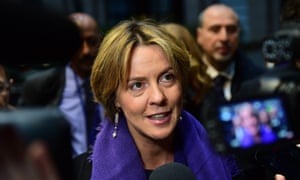
Italy’s health minister, Beatrice Lorenzin, issued a strong defence of vaccinations. Photograph: Emmanuel Dunand/AFP/Getty Images
Last week, Beatrice Lorenzin, Italy’s health minister, issued a strong defence of vaccinations in response to the new figures.“The only weapon we have against serious diseases such as measles is vaccination: enough with the false information. There is no correlation between vaccines and autism,” she said.
Andrea Liberati, an M5s official in the Umbria region, said the nationwide rise in measles cases was the result of confusing information.
“It’s not that we’re entirely against vaccines, but the government needs to send out a clearer message; parents are very confused by the contradictory information,” he said. Liberati also claimed: “There is obviously [also] a commercial element to this, and need for big pharma companies to make money.”
Asked in November last year about some of the less mainstream theories the party has supported, M5S MEP Laura Ferrara denied it opposed vaccinations, but said it wanted to urge parents to be more vigilant about which vaccines they gave their children.
Italians’ perception of the safety of vaccinations was heavily influenced by now-discredited claims of a connection between the combined measles, mumps and rubella (MMR) vaccination and autism. In a high-profile case in 2012, a court in Rimini awarded compensation to the family of an autistic child after ruling that the child’s autism was probably caused by the MMR jab, which played into parents’ fears even though the judgment was quashed on appeal three years later.
These fears, combined with a lack of trust in mainstream politicians, have left many parents agonising over whether to vaccinate their children.
Michele Marchesani and his wife struggled to decide whether or not to inject their daughter, now 15, against measles. They eventually agreed not to, a decision influenced in part by the seven years Marchesani, a physiotherapist, had spent working with an autistic boy.
“His parents believed that the autism was caused by the measles vaccination,” he said. “They campaigned and tried to take it to court, but didn’t get anywhere with it … I would trust the injection more if, say, a friend convinced me it was the right thing to do, but not when it comes from a politician.”
Elettra De Marches, a mother of 16-year-old twins, also shunned the jab. “My children both had measles,” she said. “It’s a manageable disease. There is no need for an injection, it’s just for commercial purposes.”
Initial symptoms of measles include fever, red eyes and sensitivity to light, greyish white spots in the mouth and throat and cold-like symptoms. The measles rash typically appears after two to four days. The disease can be very debilitating, and although most people recover fully, it can have very serious complications, including blindness and death.
The Italian government is striving to address unfounded fears over vaccinations as part of a new strategy focusing on social media.
“The usual institutional lines of communication do not work,” Guerra said. “The value of immunisation needs to be communicated in a language that is easily understood by younger parents, as that is where the biggest concentration of hesitation is right now.
“We’re talking about letting them know what appropriate information they can access, rather than using whatever rubbish is published on the internet – because that’s another issue.”
The government is also looking into ways of prosecuting doctors who actively persuade parents against the jab. “This is unacceptable … it’s close to being a crime,” added Guerra.
Your main concerns when you attend a festival might include any of the following: how will I identify my tent at 5am? Is glamping worth it? Will Este from Haim do bassface?
But one thing you should not have to worry about is: will I get measles?
Public Health England has confirmed a significant number of infections linked to music festivals and other large public events. There have been reports of 38 suspected measles cases at events in June and July alone. Glastonbury had 16 cases, with seven cases reported from the NASS festival near Bristol; six at the Triplicity festival in north Devon; three at Tewkesbury medieval festival; two at Nozstock: the Hidden Valley in Herefordshire; two at Noisily in Leicester; one at the Secret Garden Party near Huntingdon; and one at Yeovil Show.
In all, 234 cases have been confirmed between January and June, compared with 54 for the same period last year.
Why is this happening now? One possibility is that the Wakefield generation has come of age. The fraudulent study by Andrew Wakefield that incorrectly linked the MMR vaccine and autism was published 18 years ago. Although later discredited (with Wakefield being struck off the medical register), the rate of vaccination against measles plummeted after the study’s appearance in The Lancet. There were 56 cases of measles the year before its publication in England and Wales; by 2008 there were 1,370.
Many parents of the Wakefield era chose not to vaccinate their children and were understandably swayed by breathless media coverage, inconsistent messages from health providers, and apparent validation of Wakefield’s findings by the scientific community; it took The Lancet 12 years to retract the publication. If you were the parent of a toddler in those years, what would you have done?
Now, those unvaccinated children have grown up. They go to festivals. The virus is so contagious that if one person has it, 90% of those in close contact will also become infected if they are not immune themselves. And so Public Health England has urged teenagers and adults to check with their GP if they have been vaccinated and to receive two doses of the MMR vaccine if required.
The Wakefield-era children also grew up to account for most of the 1,219 measles cases in the Swansea measles epidemic in 2012, in which one person died. Although some recovered quickly from fever, conjunctivitis and a rash, others suffered more significant complications. According to the US Centers for Disease Control and Prevention, one or two out of every 1,000 children who become infected with measles will die from respiratory and neurologic sequelae including blindness, seizures and encephalitis. Since 2006, there have been three deaths from measles in England and Wales.
This historical legacy is compounded by anti-vax sentiment that has become more visible in recent years, albeit not necessarily more widespread. The consequences of this movement travel beyond forums and Facebook posts. It is easy to imagine it to be as infectious as the virus itself, but I think there is a more nuanced subtext, too.
Measles arrived at Disneyland, California with one case in December 2014. Within four months, there were 145 confirmed cases in seven states and three countries, all linked to Disneyland. The authors of an analysis in JAMA Pediatrics journal said the outbreak was directly associated with substandard vaccination compliance: “The ongoing measles outbreak linked to the Disneyland Resort in Anaheim, California, shines a glaring spotlight on our nation’s growing anti-vaccination movement and the prevalence of vaccination-hesitant parents.”
Vaccination is more than a personal choice; the inaction of others can affect even vaccinated children and adults
Vaccination is more than a personal choice; the inaction of others can affect even vaccinated children and adults. Community vaccination helps to halt the spread of the virus and thus protects the wider population. The sum is greater than its parts. But here’s what is crucial. Each outbreak is different, there are nuances to each one, and not all can be attributed simplistically to a groundswell of anti-vax sentiment. Swansea is definitely not California.
For example, early 2014 cases were linked to unvaccinated travellers returning home who had acquired the virus abroad (an outbreak in the Philippines was an important factor) and then infected others in communities with lower vaccination rates. Despite the concerns expressed in pockets of unvaccinated residents, there is no nationwide loss of confidence in vaccines. Sometimes it’s a case of missed doctors’ appointments or single vaccines refused rather than staunch dissent. And vaccine refusal does not correlate with a lack of knowledge. Moral outrage is too easy.
Julie Leask, an associate professor at Sydney University’s school of public health, provides level-headed discussion on this topic: “To be committed to the science of immunisation ideally comes with a commitment to the science of immunisation behaviour. Media often present this problem as refusal to vaccinate. But the evidence is clear and it’s more complex: under-vaccination is broadly about a lack of acceptance and a lack of opportunity to vaccinate fully or on time. It’s not just the haves, but the have-nots who don’t fully vaccinate.
“A typical measles outbreak will reveal this. There will be children whose parents refused vaccination; children whose parents were unwittingly not up to date for lack of access; affordability or awareness; adults and travellers who didn’t get a needed booster; and babies who are too young to be vaccinated.”
So although “festival measles” seems to largely fit with the coming of age of the Wakefield generation and more particularly a broader anti-vax narrative, it is too simplistic to conclude that this is applicable to all. But it does provide an opportune moment to discuss issues around vaccination, to strengthen public health infrastructure to deliver effective programmes, and to ensure there is never even the possibility of a Wakefield generation occurring again.
Related: Measles warning to young people at festivals after series of outbreaks
Young people planning to go to festivals or other mass events are being warned to make sure they have been fully vaccinated after a number of measles outbreaks.
Public Health England says anyone visiting a music festival should ensure they have had two shots of the measles, mumps and rubella (MMR) vaccine. Some younger people may be at risk because they were not vaccinated as small children, after the scare generated by the suggestion of the now discredited scientist Andrew Wakefield that there was a link between the vaccine and autism.
There has already been an increase in measles cases this year, with 234 confirmed between January and June, says PHE, which has to be notified of every case. That is a more than fourfold increase over the 54 cases in the same six months last year.
Festivals have added to that. There have been 36 suspected measles cases in young people who attended events in June and July. Glastonbury – the biggest music festival of the year – had the most cases, at 16. There were seven cases reported from the NASS festival near Bristol; six at the Triplicity festival in north Devon; three at Tewkesbury medieval festival; two at Nozstock: the Hidden Valley in Herefordshire; two at Noisily in Leicester; one at the Secret Garden Party near Huntingdon; and one at Yeovil Show.
At least three of the cases were people who had measles symptoms but decided to go to the festival anyway rather than staying at home.
PHE is anxious to avoid further spread at festivals and gatherings where thousands of young people are in close contact and some may be susceptible to infection. Measles can be more complicated in teenagers than in small children.
“Measles is a highly infectious viral illness that can be very unpleasant and sometimes lead to serious complications,” said Dr Mary Ramsay, PHE’s head of immunisation.
“So if you think you might have measles, please don’t go to any of these big events. Measles isn’t common these days because most of us are vaccinated, but young people who missed their MMR jab as children are vulnerable, especially if gathered in large numbers at an event.
“If you think you’ve got it, call your GP or NHS 111. Please don’t turn up at the surgery or at A&E as you could infect other patients.”
Measles commonly causes diarrhoea and vomiting, which can lead to dehydration, earaches, conjunctivitis, fits caused by fever and pneumonia or bronchitis if the infection reaches the lungs.
Very rarely it can lead to serious eye disorders and even a fatal brain complication years later. Before vaccination, it was a regular killer. In 1941, there were 1,145 deaths from more than 400,000 cases. In 1998, the year in which the Wakefield paper was published in the Lancet, there were more than 3,700 cases and three deaths. In 2013, the latest year with published figures, although they are incomplete, there was a surge to 6,102 cases because of the Swansea outbreak – in an area of Wales where many parents had opted not to vaccinate their children – but only one death.
The MMR vaccination rate fell slightly in 2014-15 to 92.3% of eligible children. The previous year it was 92.7%, the highest rate ever achieved. But the overall figure obscures the problem of low vaccination rates in specific regions. In some places, less than 80% of children were vaccinated.
Anxieties about the vaccine have led to outbreaks in the US as well. In 2014, there were a record 667 cases, according to the Centers for Disease Control and Prevention. A substantial number of those were among the unvaccinated Amish communities in Ohio.
Last year there was an outbreak in California among children whose parents had refused to have them vaccinated, which began when somebody with measles visited Disneyland – another place where there are mass gatherings.
Guests from around the planet to two approaching occasions in Ohio’s Amish nation could come away with a lot more than they bargained for, well being officials fear – a situation of measles from the nation’s largest outbreak in two decades.
The outbreak, with more than 360 situations, started out following Amish vacationers to the Philippines contracted measles this 12 months and returned house to rural Knox County, the place it spread thanks to a reduce rate of vaccination amid the Amish and the issues public overall health authorities had in receiving the word out to largely rural communities, where phones are couple of and the net is nonexistent.
Overall health officials think the outbreak is slowing in Ohio thanks to vaccination clinics and door-to-door visits by public health nurses. But Horse Progress Days, an worldwide showcase of horse-drawn gear scheduled for Friday and Saturday, is anticipated to draw a lot more than 20,000 Amish and other folks from all around the globe. A big annual auction that raises money to aid Amish families pay out healthcare bills for children with birth defects is scheduled for Saturday.
Authorities are trying to spread education – and vaccination.
“Quite effortlessly an individual could come for these occasions, be exposed to somebody who didn’t know that they were sick, and travel property, and start yet another outbreak in an additional community someplace in the United States or overseas,” explained Dr DJ McFadden, well being commissioner in Holmes County, web site of Horse Progress Days and house to 1 of the country’s biggest Amish populations.
The county has 54 instances of measles and 1 hospitalization. Most of its Amish have been currently vaccinated ahead of the outbreak, McFadden stated.
Richland public wellness nurse nurse Renee Blankenship offers Daniel Martin, an Amish guy from Holmes County his measles, mumps and rubella vaccination. Photograph: Tom E. Puskar/AP
Signs and symptoms of measles, which is induced by a virus, incorporate fevers, coughs, rashes and pinkeye. Just before widespread vaccinations in the US beginning in the 1950s, 450 to 500 folks died each 12 months, 48,000 had been hospitalized and practically a thousand individuals suffered brain harm or deafness. Though virtually eradicated in the United States, measles remains common in numerous parts of Asia, the Pacific and Africa.
The Amish eschew several conveniences of present day daily life. Their religion does not avert them from in search of vaccinations, but due to the fact their kids do not attend conventional public schools, vaccinations are not required and therefore not program.
For Amish who aren’t vaccinated, Ohio wellness officials say, motives consist of religious objections, unwillingness to shoulder the expense due to the fact they do not have insurance, and not seeing the need for a ailment that is not typical.
Outreach efforts to supply vaccinations and schooling have been hampered by communication – handful of Amish have phones – transportation and the strapped resources of rural counties with out huge wellness departments, said Richland County public wellness nurse Sue McFarren.
But when they’re contacted, most Amish have cooperated, she stated. Officials have distributed about ten,500 vaccines in Ohio, about half in Holmes County in central Ohio. The other impacted regions are mostly, but not all, nearby — in Crawford, Ashland, Coshocton, Highland, Holmes, Richland, Stark and Wayne counties.
“They have been excellent about quarantining themselves,” McFarren said. “If they have a case, they remain home until it is run its program.”
Young Mennonite girls gather at the well being and safety clinic Photograph: Tom E. Puskar/AP
Amish dairy farmer Daniel Weaver got a vaccination throughout a clinic at a pole barn near Shiloh in northern Ohio on 25 July, concerned due to the fact he travels usually.
“The Amish in basic are not reacting that much differently than the rest of the population,” stated Weaver, 48, of nearby Shreve. “It’s just simply because of our tight proximity, it generates a distinct effect.”
Several Mennonite households visited the exact same clinic, arriving a single right after the other in horse-drawn buggies with fluorescent orange triangles affixed to the rear. These “horse-and-buggy” Mennonites reside a lifestyle equivalent to some Amish, even though several have phones and other modern conveniences.
Mennonite dairy farmer Samuel Zimmerman, who got his vaccine after hearing about the outbreak, mentioned he’d never ever actually had an viewpoint about vaccines before.
“I guess when I was expanding up we had been hale and hardy, and we did not feel about vaccinations,” stated Zimmerman, 36, of Blooming Grove.
Organizers of Horse Progress days said they are distributing letters to worldwide guests warning them of likely measles publicity. Previous events have drawn non-Amish from nations like Australia, Colombia, Germany, Mexico, South Africa, Sweden and New Zealand.
Posters will give info about measles and motivate people with signs and symptoms to go residence, and a hospital will give totally free vaccinations Friday, standard coordinator Daniel Wengerd stated.
Saturday’s auction for the Ohio Crippled Children’s Fund is getting held at the Kidron Auction Property in Wayne County. An auctioneer there mentioned he wasn’t familiar with officials’ worries.
The Ohio outbreak is the biggest in the US because 1994. Total, the Centers for Disease Handle and Prevention are monitoring 529 situations in twenty states, with the subsequent largest outbreaks in California and New York, none of which involve the Amish.
Reviews of measles cases hit a 20-12 months large in the very first 5 months of 2014, according to new data released by the Centers for Condition Handle and Prevention.
The 288 circumstances reported up to 23 Could are the most for any 12 months since 1994.
“Measles has reached a twenty-year higher. This is not the sort of record we want to break,” stated Dr Anne Schuchat of the CDC.
“The existing increase in measles situations is currently being driven by unvaccinated men and women, largely US residents, who received measles in other nations, brought the virus back to the United States and spread to other folks in communities exactly where a lot of folks are not vaccinated,” said Schuchat.
The hugely contagious viral respiratory illness is usually accompanied by a blotchy rash, fever, runny nose, cough, body aches, watery eyes or pink eye and tiny white spots in the mouth.
Before vaccines had been introduced virtually each child in the US contracted the illness by age 15. About 3 to four million individuals had been contaminated yearly. Of those, the disease killed in between 450 and 500 individuals each and every year, put 48,000 in the hospital, induced 7,000 to seize and left one,000 with everlasting hearing or brain damage.
Measles was virtually eradicated in the US in 2012, fifty five situations had been reported.
“Many US healthcare providers have never noticed or taken care of a patient with measles because of the nation’s robust vaccination efforts and our quick response to outbreaks,” explained Schuchat.
Around the globe, close to 20 million men and women are infected each and every yr, and 122,000 die, in accordance to the CDC.
Infants and young children underneath one particular-yr-old are at better danger of establishing critical cases of measles. The CDC suggests kids over twelve-months-old receive what’s known as the “MMR” or measles, mumps and rubella vaccinations. The CDC recommends children older than 6-months-old who will travel abroad receive the vaccines.
Eighteen states accounted for 79% of situations. Including, Alabama, California, Connecticut, Hawaii, Illinois, Massachusetts, Minnesota, Missouri, New Jersey, New York, Ohio, Oregon, Pennsylvania, Tennessee, Texas, Virginia, Wisconsin and Washington.
Earlier this month, Jenny McCarthy, the anti-vaccine movement’s loudest proponent, disavowed her earlier arguments. As an alternative, she claimed that she by no means advised anybody not to vaccinate their kids and that she simply opposes doctors providing children several immunization shots at as soon as.
That McCarthy at some point took a single modest phase toward the nearly universally agreed upon truth that vaccines conserve lives and never trigger autism is excellent information, but it may be as well minor also late: the anti-vaccination motion in the United States has helped to usher in outbreaks of preventable conditions in states coast to coast.
In New York and California, measles outbreaks are bigger than they’ve been in decades. A lower of vaccinations across Europe brought with it 26,000 situations of measles in 2011. And one Australian survey discovered that 83% of Sydney homeopaths suggested their customers against vaccinating.
Opting out of vaccines or insisting on a schedule for administering them, as McCarthy now suggests, that puts other individuals at chance (simply because your own kid could be protected by herd immunity) is unconscionably selfish. That the very good that comes from vaccinating youngsters towards deadly diseases can be characterized as a “gray zone” – allow alone topic to national debate – is the height of Initial Globe Problems.
And yes, as McCarthy asserted, each youngster is distinct – but the actually “diverse” kids we must be anxious about are the 22m youngsters who overwhelmingly reside in building countries like India, Indonesia and Nigeria, who are denied even basic entry to immunizations, let alone the proper to choose their own distinctive vaccine routine.
As significantly as McCarthy and other folks might want to think that immunizations are an problem of personalized option, decisions not to vaccinate influence young children outside of your very own home and, more and more, across borders and oceans.
I go through McCarthy’s Chicago Sun-Times editorial just a number of days after going to a tiny local community healthcare clinic outside of Sao Paulo, the place immunizations are part of the regimen care its sufferers get. Brazil’s immunization program is 1 of the most amazing in the planet. The government tends to make most of its personal vaccines in the country and distributes them cheaply and universally, which led to a steep decline in infant mortality and deaths from infectious ailments right after the national vaccination program started in the 1970s – one particular chart illustrating polio infection rates exhibits a total drop-off a couple of years right after nationwide immunization campaigns. Now, although, Brazil is seeing tiny outbreaks of illnesses like measles. But they are not homegrown – they’re reportedly coming in from Europe and the United States, thanks to anti-vaxxers.
In a lot of techniques, Brazil is a model for how national vaccination packages can function, and how vaccines can accelerate a country’s advancement, health and development. The country’s implementation of widespread cost-effective vaccinations, coupled with an expanding public health program, induced infant mortality to plummet and contributed to a greater regular of residing, a more healthy populace and a more robust economic climate. But right now, Brazilian pubic overall health officials are newly concerned that some of the richest, most produced nations on the planet threaten their achievement
In accordance to Dr Homma, the Globe Cup is specifically troubling – the influx of vacationers, he mentioned, might bring with it unvaccinated Americans and Europeans, putting Brazilians at threat. Brazil has not experienced a measles outbreak in more than a decade and the Americas take into account the condition eradicated – but with half a million new site visitors coming into Brazil for the June sporting occasions, the Pan American Well being Organization and the WHO accredited an emergency program to fight likely outbreaks.
The most scary affect of vaccine denialism is the straightforward fact that when we are capable to cross borders with ease and accessibility data from all around the globe, it’s significantly easer to spread both deadly diseases and bad suggestions.
The anti-vaccine contingent – whose most recent celebrity proponent is Alicia Silverstone – that argues vaccines can negatively have an effect on kids, and in some instances, even go so far as to say vaccines cause autism, largely has the privilege of living in locations in which numerous deadly communicable illnesses are uncommon. This means that even the unvaccinated children of anti-vaxxers have a rather very good chance of in no way contracting the illnesses for which they eschew the shots – simply because of the herd immunity brought on by the identical vaccines these grownups oppose. Which is a luxury not afforded to mother and father and youngsters in much of the globe.
In accordance to the WHO, vaccination prevents among two and 3 million deaths every yr. Vaccines shield individuals who are immunized, but also infants also little for vaccinations, immune-compromised people such as people undergoing specific cancer remedies, and individuals who are resistant to immunizations. You can also aid the 22 million kids who lack accessibility to vaccinations around the world get the standard shots they require by providing to the Gavi Alliance.
Plus, up coming week is Planet Immunization Week – so there is no much better time to stick it to the Jenny McCarthys of the globe by generating positive that your own stickings (and your kids’) are up to date.