wouldn't etiketine sahip kayıtlar gösteriliyor. Tüm kayıtları göster

14 Şubat 2017 Salı

‘I love the NHS. Without it, I wouldn’t be here’

I attempted suicide. Without the NHS, I wouldn’t be here


When I was 20 I attempted suicide. I ended up in A&E where every staff member I came into contact with was patient, kind, and calm, even though the department seemed busier than usual. I was treated with compassion and respect, and one nurse even succeeded in making me laugh on what was the worst day of my life. I could feel the support all around me. They made me feel less alone and I can’t thank them enough.Even though a couple of years have passed, I still think about how fantastically I was treated in my vulnerable state, and how different my life could have turned out if it hadn’t been for their kindness and understanding. Without them, I don’t think I’d be here.
Student, Gloucestershire


I’ve lived in the US. I’ve seen what worse care for more money looks like


The first time the NHS saved my life I was trapped under a car after an accident with a fractured pelvis, skull and three crushed vertebrae as well as a haemorrhaging liver. The eight days I spent in hospital would have bankrupted my family if I had been living in the US. I was 13 and by the time I was discharged I didn’t even want to leave. The care was so good they even brought in school work so I didn’t fall behind in class.


The second time my appendix burst and I underwent an operation. I missed the first day of my finals but the surgeon gave me the smallest appendectomy scar of anyone I’ve ever seen. They obviously took immense pride in it and I thought that was very cool.


I’ve lived in the US. I’ve seen what worse care for more money looks like. I’ve seen people die of preventable cancers because they were too poor to go to a doctor.
Huw Gildon, 40, marketing professional


It’s amazing when patients that have nearly died several times walk out of hospital


I love the NHS because every day I see people who are at their most vulnerable and the sickest they will ever be. The standout stories for me are when patients have been through the biggest fight of their lives, have nearly died several times, have been hooked up to a ventilator for months on end and they then walk out of our unit and hospital.
Jenny, ITU nurse, 32, Liverpool


My consultant came in to operate on me on his day off


I had a radioactive plaque fitted into my eye five days after a diagnosis of eye cancer. A while later, I was lying on a theatre trolley waiting for surgery to remove it. The consultant who had fitted the plaque previously warned me that he had a day off and so would not be doing the removal. Obviously all surgeons are perfectly qualified; I had no need to be fearful. But, it had been a stressful week so I lay having a silent sob about how I was about to die and only one person could save me but they weren’t here. Just as I was being pushed into theatre, someone touched my arm; it was my original consultant. “I’ll be doing your operation today Mrs Dimmock,” he said. Those words are now up there with my husband saying “I do” and my kids first saying “mumumum”.
Victoria Dimmock, 41, Brighton


As a doctor it is marvellous to be able to treat everyone without worrying about them having to pay


I remember about 30 years ago a baby was born in severe heart failure. She was transferred to a specialist heart hospital and then had to be transferred to another hospital in Scotland. Sadly the treatment failed and the doctors explained that the baby was going to die. The parents asked if they could be transferred back to their hometown so the grandparents could see the baby before she died. She was accordingly helicoptered back to where her family was and she died surrounded by them.


The marvellous thing was no one argued about financial matters – it just happened. As a doctor, it is marvellous to be able to treat everyone without worrying about them having to pay.
Anonymous


Woe to the British citizen who doesn’t vigorously defend the NHS


My favourite story is the birth of our third child which was our first to happen through the NHS. Our eldest were born in the US and even though we had “good” health insurance we still received bills for about $ 1,300 after each child was born.


And the NHS has midwives who have the goal of making birth as easy and humane as possible for mum and baby. In the US, birth is much more an assembly line situation that feels like some sort of costly corporate emergency. In the UK, our son swam out into a big birth tub while my wife sucked on some gas and air (which they don’t have in the US). It was just a kinder, gentler experience and while there were doctors nearby if we needed one, we never even had to see one. My wife was coached through labour by a lovely young woman while I tried to stay out of the way and shout nice things or grab a flannel when asked, that type of thing.


Woe to the British citizen who doesn’t vigorously defend the NHS. You do not know how lucky you are. Do NOT take it for granted and fire politicians who you think don’t take care of your nation’s most precious achievement, the NHS.
Rob Delaney, 40, comedian, from the US but lives in London


Sometimes there are wonderful stories of survival


When I was an intensive care nurse, I looked after a patient for several weeks who had a number of setbacks along the way to recovery. One day, it was decided by the doctors that he had reached a stage where survival was unlikely and that, should the time come, he should be allowed to die with dignity. It was agreed to transfer him to a hospice.


I ensured that I was his nurse on each day. He started in a catatonic state. I made enquiries about transferring to a hospice nearer his home, but none of them had any beds. We were told to try again in a few days. Three days later, he had made a strong recovery and was sat out in a chair eating breakfast when his family came to visit.
Nurse practitioner, 40, Cheshire


I have seen HIV go from a death penalty to chronic manageable illness in my time working in the NHS


I worked on a HIV ward in London in the early 90s. We cared for patients who were slowly dying as their immune systems were attacked by the virus and they succumbed to various infections. It was a heartbreaking time with so many people affected and no hope in sight.


There were various drugs being trialled, and the patients were happy to be guinea pigs – they had nothing to lose. There was a breakthrough in the late 90s and I witnessed the introduction of triple therapy. I saw the illness go from a death penalty to chronic manageable illness.
Anonymous


  • In the UK, the Samaritans can be contacted on 116 123. In the US, the National Suicide Prevention Hotline is 1-800-273-8255. In Australia, the crisis support service Lifeline is on 13 11 14. Hotlines in other countries can be found here.

Join the Healthcare Professionals Network to read more pieces like this. And follow us on Twitter (@GdnHealthcare) to keep up with the latest healthcare news and views.


‘I love the NHS. Without it, I wouldn’t be here’

13 Şubat 2017 Pazartesi

"I wouldn"t have done this at 18": why I switched to a nursing degree

To study nursing takes a certain kind of student. Ian Noonan, head of the mental health nursing department at King’s College London, draws an analogy: “A lot of people give up their seat for someone else on the tube,” he says, “having made a decision on whether that person is less able than them. But then many people don’t look. You might look down at your paper or your electronic device instead. We can teach you how to decide whether someone is able or not – but we can’t teach you that motivation to look up and to notice.”


Noonan himself trained as a musician before mental health nursing, and says that students who move to nursing from other disciplines often bring something extra to the job. “A broader world view helps in understanding the patient’s own values and why they might be different to their own. It’s about ethical perspectives as well as empirical evidence. Even geography, theology, philosophy students – subjects that don’t seen so connected to nursing – can have a lot to offer,” he says.


So what motivates students to change course?


‘Everyone on my course has found our attitudes have changed’


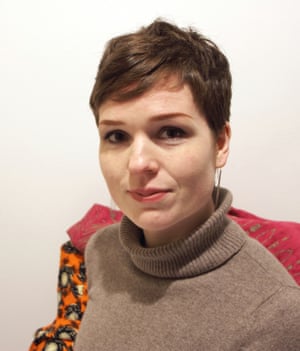
Freya Sewell, 30, is a second-year mental health nursing student at Edinburgh Napier University


Freya Sewell student nurse copy


Freya Sewell.

“Without our health we can’t fulfil what we can do. Whether mental health or physical health – it’s all part of the same person. That’s why I wanted to become a mental health nurse.


“I’m 30 now, but I wouldn’t have wanted to do this at 18 or 19. I did not know as much then about relationships between people and how they can affect all of us. Everyone on my course has found our attitudes have changed – and we come from a huge range of ages and backgrounds.


“I come from a family of artists and academics and my degree was in fine arts at Edinburgh, where I have stayed ever since. Course fees are still paid for here and you get a bursary; without that I wouldn’t be able to do the course. I’m also a support worker for people with learning disabilities. Most other nursing students do bank nursing [providing temporary cover], but I like working in the community and want to do so when I’m qualified.”


‘I wasn’t sure I had it in me to be a nurse’


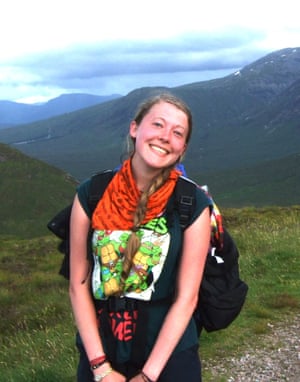
Rose Abell, 27, is studying for a master’s in nursing studies at Glasgow Caledonian University


Rose Abell


Rose Abell.

“I always wanted to be a nurse, but my granddad, who brought me up, didn’t think it was prestigious enough. I decided to go into international relations instead. I first did a degree in economics and Chinese at Westminster and then an MA in international economics.


“I got a job with a major drinks company, but realised I didn’t like business. Then I worked at the EU in Brussels as a secretary, but I didn’t like that at all either.


“By this time, my granddad had been in hospital and changed his mind about nursing after being cared for by nurses. But I wasn’t sure I had it in me to be a nurse. A lot of nursing is about being an understanding person and I wasn’t sure I could always do and say the right thing.


“But while doing my MA in Berlin I worked part-time in a nursing home. I realised then that I could talk to people about what is important to them. I am now doing a master’s in nursing studies at Glasgow Caledonian. The course prepares you if you want to go on and do a PhD, but I want to be a nurse.”


‘I wanted a more definite career path’


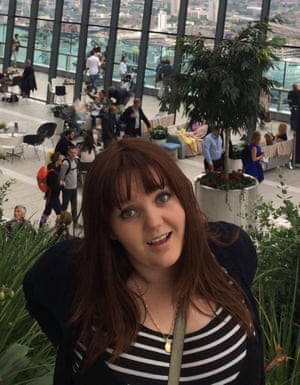
Imogen Dobie, 24, studies mental health nursing at City University


imogen dobie


Imogen Dobie.

“My school had a rather old-fashioned view of nursing, so if anything we were encouraged to consider medicine. At first, I considered becoming a clinical psychologist. I did a psychology PGDip after my first degree in medical neuroscience at Sussex University. But I wanted a more definite career path – with nursing you know you’re going to be a nurse.


“I’m now a final-year mental health nursing student at City University. I like the mix of things mental health nurses can do with service users, and that it is less biologically focused than medicine. But it is a real shame that our skills can’t be transferred into jobs in other countries, when general nursing can be.


“I moved to London to do the course. You can train and work with such a diverse population. And whatever mental health service you want to work in, it’s here.


“There is a sense that our role is being subsumed by some other professions. Occupational therapists do a lot of the therapeutic work around daily living skills, psychologists do the more in-depth, one-to-one work with service users. If the incoming role of nursing associates can administer medicines, then I’m not sure what we’ll be left with.


“My mum was a mental health nurse in the 1980s and tells me that I don’t have to be ‘just a nurse’, that I can go into management or research. But I don’t want us all to be pushed behind the scenes.”


‘There’s such a buzz in A and E’


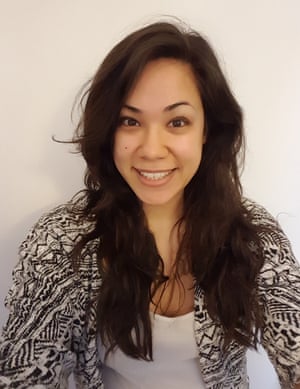
Aimee Wong, 26, studies adult nursing at King’s College London


Aimee Wong.


Aimee Wong.

“I did a degree in geography at Manchester because I liked the subject. I wasn’t sure about my career options; I thought I might be a teacher. I worked for a computing company in an office role for a year and didn’t like it, it wasn’t sociable. Then I went travelling for a couple of years and taught English in Taiwan. Whilst there I did some voluntary work with patients who have HIV.


“When I came back to London, I needed a job and Lewisham Hospital was doing a mass recruitment of healthcare assistants. I requested a job in accident and emergency because I thought it would be exciting. I loved it: there’s such a buzz in A and E. There is always something going on.


“I worked there for a year and it really opened my eyes to what nurses can do. They do a lot of personal care, but there is a huge overlap between medicine and nursing. Now I’m doing a pre-registration degree in adult nursing and want to go on to be an advanced practitioner.


“The course placements are really varied. I’ve been on a cardiac surgery ward and an acute medical ward. I really enjoyed that, even though it was working with really unwell people, who often died. When that happened, it brought the whole team together. You don’t get that with other jobs.”


Keep up with the latest on Guardian Students: follow us on Twitter at @GdnStudents – and become a member to receive exclusive benefits and our weekly newsletter.


"I wouldn"t have done this at 18": why I switched to a nursing degree

7 Ekim 2016 Cuma

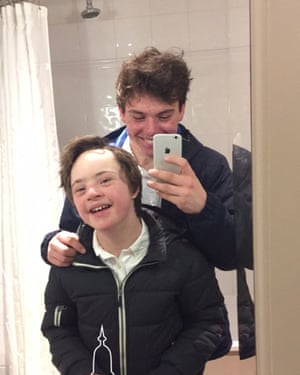
My brother has Down’s syndrome. I wouldn’t change him for the world | Oliver Shone

“Sausage rolls!” I hear him exclaim, sitting in his place at the table while indulging in his favourite ice-cream. His knowledge is limited, his speech is limited, his comprehension of life is limited – but his emotions are heightened. This is my 13-year-old brother, Sebbie; he has Down’s syndrome, a congenital disorder arising from a chromosome defect.


He may not seem as clever as the average child; however, his intelligence, though less apparent, is no less valuable. He is not able to conform to society’s expectations by taking exams and tests to demonstrate his intellect. But Albert Einstein said: “Everybody is a genius. But if you judge a fish by its ability to climb a tree, it will live its whole life believing that it is stupid.” He is clever, but cannot be part of “our” life because he is not clever in the “normal” way.


He is sitting opposite me at the table eating his pudding, while dancing to a “happy song”; he just has to physically express enjoyment (he loves his vanilla soft scoop). Internal rhythm is often talked about by musicians and is something to which I cannot relate; Sebbie’s rhythm, however, represents his effusive personality. Dancing is one of his greatest passions.


Looking at him from across the table, I think how far he has come, physically and mentally. He has recently learned to swim and is making progress towards adding numbers.


‘He can be tricky, perplexing and sometimes outrageous, but his sense of fun and love outweighs all else.’


‘He can be tricky, perplexing and sometimes outrageous, but his sense of fun and love outweighs all else.’ Photograph: Oliver and Sebbie Shone

I will never forget the day Sebbie was born; it was my fourth birthday and he arrived so quickly I didn’t even have time to finish my cake before going to see him in the hospital. He was in the special care baby unit, surrounded by wires and lying in a tiny pod. Lots of doctors surrounded him and, young as I was, I realised that he was not a healthy child, but to me he was just my new little brother and was perfect. I did not understand, then, the overwhelming distress and horror that faced my family.


There were many big words flying around that I did not understand. Tetralogy of Fallot … atrial septal defect … open-heart surgery … My parents were alarmed, panicked; I had not seen them like this and I felt afraid too. This was the start of a long and terrifying journey of operations, hopes and fears. But nothing seems to dampen his enthusiasm and his quirky outlook on life.


It is hard to judge “normal” in this world. There is talk of testing for Down’s syndrome, selective abortion and eradicating this condition. While I understand that no disability is ideal, I think it would be desperately sad to lose these precious children and adults who bring so much light into their families’ lives. Gone would be my crazy brother who talks of pizzas, trains and skiing all in the same sentence; gone would be the adoration that he feels for me and gone would be that wonderful dancing and tuneless singing.


We often find ourselves laughing round the table at funny remarks and comments of his; he has always had the ability to generate laughter. His sense of humour is infectious; there have been many times that he has diffused a tense situation with his comical asides. It is hard to take life too seriously when Sebbie lifts up his jumper and tells me to “Put your belly away!” His sense of timing is impeccable.


His lack of inhibition means he is more likely than not to join another family at the park or beach while giving us a cheeky wave. He has no sense of embarrassment, shyness or social conventions; this can lead to some embarrassment from me, although most people’s reactions are positive.


I often think of his future and what it holds. Sebbie will never be able to live alone and will need constant care and supervision, which I plan to always be a part of. Although we love him, it is frightening to look ahead to a life that will never be independent. We not only worry about how he will cope in later life, but also the major operation that will probably face him before he is 18.


Sebbie’s current condition (although he is physically more than able) can lead to frustration and difficulty. Even the simplest tasks, such as putting on a coat, socks and shoes, can lead to disputes, especially as he is such a strong character. Growing up with a brother with Down’s syndrome has been a real challenge but I would not change him for the world. He can be tricky, perplexing and sometimes outrageous, but his sense of fun and love outweighs all else. There are adults with the condition who have learned to drive cars, are performing in drama groups and are holding down jobs.


My great uncle had the same condition and he was born exactly 100 years before Sebbie, in 1903. Thankfully times have changed since he was alive – he spent his life in an institution. Now disabled children have huge opportunities open to them and are achieving more than was ever thought possible. With our help I hope that Sebbie will grasp these opportunities. Who knows what he might achieve? I will always be at his side to help him along and I know the rewards I get back from him, in the form of love and friendship will make it worthwhile.


Oliver originally wrote this piece as part of his GCSE English course last year


My brother has Down’s syndrome. I wouldn’t change him for the world | Oliver Shone

17 Ağustos 2016 Çarşamba

There may already be a Zika outbreak in Texas, but we probably wouldn"t know

If you were bitten by a mosquito, and within two weeks had a fever, bloodshot eyes, a rash and felt generally achy, you would have four classic symptoms of Zika. But if you or your sexual partner didn’t travel to Latin American, you might also have a hard time getting tested.


That’s because Zika tests are complicated, time-consuming, sometimes inaccurate and expensive. These obstacles have led some scientists to believe that several states at risk for spread of the disease may already have Zika outbreaks, without even knowing it.


“There is not active surveillance going on in the at-risk states in the United States,” said Peter Hotez, dean of the National School of Tropical Medicine at Baylor College of Medicine in Texas. “I think there’s not just Zika transmission going on in Miami, it’s going on all up and down the Gulf Coast and in Arizona, it’s just that nobody’s looking.”


The only confirmed cases of Zika caused by local mosquitoes in the continental United States are in Miami, Florida. Federal officials have since issued a travel warning for the area, asking pregnant women or those hoping to become pregnant to avoid the Wynwood neighborhood. There, local mosquitoes infected 15 people with the virus.


Other Gulf coast states are also considered to to be at high risk for local transmission of Zika virus. That is because Aedes aegypti mosquitoes are endemic, and multiple travelers have returned with the infection. But with laboratory limitations, even states with disease-spreading Aedes aegypti mosquitoes may not be able to surveil non-travelers for the virus.


“There is a limitation, and local transmission could slip through, but it’s the best we’ve got,” said Frank Welch, the medical director for Louisiana’s center for community preparedness.


Related: Zika virus scare is turning Miami’s hipster haven into a ghost town


Louisiana, long-known to be a haven for mosquitoes, is considered a state at-risk of Zika transmission. There, 22 cases of travel-related Zika has been confirmed by the Centers for Disease Control and Prevention (CDC).


“The big fear, of course, is we’ll figure this out seven, eight, nine months from now, in the spring of 2017, when we start seeing babies show up with microcephaly,” said Hotez.


Meanwhile, for community health centers in another Gulf Coast state, Texas, the virus recalls an earlier epidemic that left public health officials flat-footed.


“We’ve never faced something like Zika before. We faced, what was it? H1N1,” said José Camacho, executive director of the Texas Association of Community Health Centers. Member clinics serve about 1.3 million low income Texans. “Over night we were overwhelmed, and I guess nobody was ready for that either. And we’re fearful that some of the same things are playing out here.”


When H1N1 broke out in Texas, the CDC told doctors that they were required to test for the flu strain before prescribing antivirals, Camacho said. He recalls the first H1N1 case occurred on a Friday night. By the weekend, the CDC arrived. Then, it was discovered a standard flu test couldn’t detect the strain.


So the CDC provided new H1N1 tests. Five of them. For all 1.3 million of the Texans served by Camacho’s member organizations.


“Number one, in terms of screening, there’s very limited resources,” Camacho said. “We saw the same thing in H1N1, where the flu test did not work. They actually had to develop a test and eventually change the protocols to not require a test, but delegate it more to the physician’s knowledge at screening.”


Officially, the CDC recommends that patients with three of the aforementioned Zika symptoms be tested if the patient is a pregnant woman, or a woman trying to get pregnant, who lives in or has traveled to an area where Zika is being actively spread.


That means that many people who do not fit this profile, especially men, may be left untested even though the disease is spread sexually.


Some public health officials, like Welch, said testing more Americans would require exorbitant resources.


“Let’s say this test was incredibly available – we would have to test every single person in the US where there is the possibility of Aedes,” said Welch. “We would not only have to test them today, we would have to test them for the duration of the summer.”


“A once a week Zika test for everyone in the southern United States and California –that would be more expensive than building a wall across both our Mexican and Canadian borders,” he said. “So, you would have to decide, since the test is in fact limited in availability and expensive.”


Hillary Clinton talks to a pregnant woman during a health center visit in Miami, Florida.


Hillary Clinton talks to a pregnant woman during a health center visit in Miami, Florida. Photograph: Chris Keane/Reuters

Scientists don’t expect large-scale outbreaks in the continental US, like those that have taken place in Puerto Rico or Brazil. Texas also recently updated its guidance to include recommendations to test people who are symptomatic, but haven’t traveled to Latin America.


Even so, Zika presents its own challenges. Only one in five people infected with the disease are symptomatic. So in order for public health officials to locate a Zika case transmitted by local mosquitoes, a symptomatic patient (already just 20% of the infected population) would need to seek medical treatment. There is no guarantee a patient would even feel the need to see a doctor, since symptoms are generally mild. Then, doctors would have to rule out all other causes of such common symptoms.


“Say, for example, that person did show up at a healthcare provider,” posits Welch, “They wouldn’t be automatically turned away,” he said. “[But] you probably know the symptoms of Zika are pretty close to about 6 million other diseases.”


In the Wynwood neighborhood of Miami, for example, clinicians went over and above CDC guidelines to test a symptomatic patient who showed up at an emergency room without traveling abroad.


“We’re not going into community health centers, we’re not going into emergency rooms, we’re not going into clinics identifying people with fever, or a rash, and seeing if they have Zika,” said Hotez. “It’s not being done.”


In part, this is because of the limitations on Zika testing methods. The two most common ways to test for the virus are both manpower intensive.


“They absolutely take a specialized skill,” said Kelly Wroblewski, director of infectious diseases for the Association of Public Health Laboratories. Tests for past infections can be particularly tricky. “You’re going to get more false positive results, that’s just the way it works with any kind of assay.”


In the meantime, Camacho is rationing 50,000 bottles of donated mosquito repellant to the roughly 400,000 women of child-bearing age served by his organizations. Hotez is meeting about testing guidelines, and cities and states are increasingly broadening their testing guidelines.


“It’s still patchwork quilt,” said Camacho.


There may already be a Zika outbreak in Texas, but we probably wouldn"t know

23 Haziran 2014 Pazartesi

Banning these born after 2000 from smoking wouldn"t have worked on me | Rhiannon Lucy Cosslett

Teenage girls smoking

‘Giving up smoking is difficult, but there is tiny use in telling youthful individuals just how challenging. Right up until you are in the grips of it, the strength of your addiction is tough to envisage.’ Photograph: Alamy


I started out creating this report getting run out of cigarettes. Up right up until about 5 minutes ago, the last cigarette I had was at about 7pm last night, a Silk Lower blue given to me by my grandma “for the street”. But then the Guardian asked me to publish about smoking, and, right after glancing about the flat for my e-cig charger, I convinced myself that I couldn’t write this with out smoking, and dispatched myself to Budgens. Pathetic.


Medical doctors will tomorrow vote on whether or not to push for a long lasting ban on the sale of cigarettes to these born right after the year 2000 in an try to safeguard the up coming generation of youngsters from what I will freely admit is a disgusting, unhealthy and financially ruinous habit. It was also uncovered this week that menthol cigarettes, the kind I am presently smoking in an try to fool myself that they never genuinely count, are much more addictive and lead to teenage menthol smokers smoking twice as significantly.


But is a ban actually the resolution? Background has taught us that prohibition is hardly a successful measure for combating addiction and, furthermore, these born in 2000 are 14 many years outdated. Is it not a bit too late? Will not some have commenced previously, and as a result just harangue their buddies for duty free fags each time they go abroad, or get them from individuals outlets that promote them cheaply, below the counter?


Furthermore, the ban fails to account for the way dad and mom and grandparents allow the habits of the younger generation, either by acquiring or giving them cigarettes, or by the part they play in social interactions. I would not consider back the hours I spent at my late grandfather’s kitchen table chain smoking and listening to his stories about the war, or the conspiratorial rollie I have with my dad outdoors every single household gathering. To an extent, smoking has enriched these relationships. I realise how incorrect that will sound to non-smokers, but this is how some households are.


Saying that, I wouldn’t want the self-loathing and guilt that addiction to smoking brings on anybody. I was 18 and residing in Paris when I started out smoking – this kind of a cliche. I will not know why I began. A guy I was kicking all around with left a pack of Phillip Morris in my bedroom and a single day I smoked them, almost certainly even though sporting a kimono and listening to Edith Piaf. Becoming in France did not support. I worked with a waitress named Fanny who chain-smoked Gauloises even when delivering plates to people’s tables. Following a wellness scare, I decided to quit. That was two years ago.


Because then, I have experimented with many techniques. I have completed the patches, which didn’t function, and the Champix (a pill that gradually helps make you really feel sick as you smoke, until finally you can no longer do so) which did perform, at least temporarily, however the nurse failed to observe my historical past of depression and I invested two weeks in such an awful pit of misery that I believed I would never smile yet again. I have study Zeno’s Conscience, by Italo Svevo – an complete novel about the struggle to give up smoking – and most of Allen Carr’s The Effortless Way to End Smoking (I stopped studying at the bit where you’re supposed to give up).


I have attempted providing up consuming at the very same time, which to be honest, did genuinely assist, till my close friends got fed up of getting asked to meet up “for coffee” or “for sushi” or “for frozen yoghurt”. I have attempted the magic e-cigs, hailed by several as the resolution, but discovered that they just manufactured me crave nicotine more rabidly than before. I have not but tried my mother’s “patented Cosslett approach”, which is to buy two cans of Specific Brew and a ten-pack of Silk Cut every single 10 days, make a evening of it, and then come to feel so horrible that you depart it just a little bit longer until the next time. In in between binges, you cry anytime you want a fag.


At four.45 this evening, I will pay a visit to the nurse and attempt once more.


Providing up smoking is tough, but there is minor use in telling youthful folks just how challenging – until you’re in the grips of it, the power of your addiction is challenging to envisage. When my boyfriend informed me that most folks who attempt to give up will by no means be successful, I felt a profound sense of terror. I do not want my dad to die. I do not want this to be the thing that kills me, and yet there is a higher possibility that it will.


I do not want youthful folks to start off smoking. Like a lot of smokers, I wish I had never started out. Like many smokers, I really feel embarrassed by it, but this is countered with the tiny niggling feeling that smoking is awesome and rebellious. I am ashamed to admit that I still come to feel this, in spite of the smoking ban, in spite of the elimination of cigarette marketing, regardless of the escalating absence of smokers from tv programmes and vogue shoots. But display me a image of Brigitte Bardot with a fag in her mouth and my brain will consider: “Yeah, that’s attractive.”


I fear that banning it for teenagers may possibly emphasise this issue. Also, the not purchasing does not suggest not smoking. I didn’t acquire for six months I just bummed off other folks in the Guardian creating. I wish I could feel of a public wellness initiative that would assist resolve this difficulty, but I can’t. And yet, I do not want anyone to end up like me. I smoked 3 cigarettes even though creating this article, and right after I file it, I will smoke one more.


Banning these born after 2000 from smoking wouldn"t have worked on me | Rhiannon Lucy Cosslett