I almost didn’t write this. It wasn’t from not wanting to. I cradled my head in my hands, desperate to contribute to the reams of social media positivity I had seen surrounding Mental Health Awareness Week.
I almost didn’t – couldn’t – because I was depressed.
There came a certain point in my experience of being LGBT where I accepted that I had to be strong and uncompromising in the face of disapproving glances and withering remarks. I made a pact to throw myself into my community with zeal, no matter how exhausting, and to make full use of the privileges I was afforded in the tolerant metropolis I’d landed in.
And yet, for some reason, I find this an incredibly difficult attitude to transfer over to my struggle with depression. I will share with my co-workers that I am going on a date with a man or going to an LGBT-themed event with an almost belligerent pride, but am overwhelmed with fear in having to admit to those same people that I’m leaving slightly early to see my therapist or that I need to take some time off due to another episode.
Indeed, the word “depression” still has a bite to it, in the way that the word “gay” did when I first dared to say it to someone else in reference to myself. The tone of my voice takes on an odd quality as I approach it in a sentence, to the point where I sound intolerably meek by the time “depression” tumbles out.
The thing is, in many cases, mental illness and being queer go hand in hand. It’s an uncomfortable but important reality that LGBT youth are four times more likely to kill themselves than their heterosexual counterparts. More than half of individuals who identify as transgender experience depression or anxiety. Even among Stonewall’s own staff, people who dedicate themselves to the betterment and improved health of our community, 86% have experienced mental health issues first-hand. It’s a morbid point to make, but it makes perfect sense that we, as a community, struggle disproportionately.
At a recent event I attended, set up to train LGBT role models to visit schools and teach children about homophobia, no one explicitly mentioned their struggles with mental illness. We told one another stories of how we had come to accept ourselves in the face of adversity, talking in riddles about “dark times” or “feeling down” or being a “bit too much of a party animal”. But these problems have other names – depression, anxiety, addiction – that we consistently avoid, despite being in a community in which a large percentage of us will have undergone similar experiences.
And this phenomenon replays itself over and over. Despite there being a common understanding between me and my queer friends that we’ve probably all been vilified in the same way and made to feel a similar flavour of inadequate, we will rarely acknowledge, even within the safe boundaries of friendship, that this has had a lasting impact on our ability to maintain a healthy self-image.
But part of being proud of who we are as LGBT people is being able to be open about the struggles we’ve faced. It’s in naming and wearing the uncomfortable badges of anxiety, depression and addiction that we take the first step towards fully accepting mental illness as an important part of our collective identity. After all, how can we be true role models to the next generation if we refuse to tell the whole story?
And so, this Mental Health Awareness Week, I’m issuing a challenge to my community. If you are LGBT and suffer from a mental illness, be defiant in your acceptance of it in the same way that you would about your sexuality or gender identity. Bring it up, speak it out and feel sure that your voice, however seemingly small or insignificant, is a valid one. After all, we have been, and will always be, a community of fighters – it’s about time we dared to show our battle scars.
In 2009, Mark Lukach came home from his teaching job in San Francisco to find his wife, Giulia, sitting on the carpet, their dog sprawled next to her. He could instantly sense that something was wrong. Then Giulia looked up at him and said: “I can’t figure out what I’m going to do with the Vespa key.”
The couple had a Vespa scooter but Mark didn’t understand. “What do you mean? What would you have to do with the Vespa key?”
“I mean, when I drive to the Golden Gate Bridge,” Giulia replied, “I’ll probably take the Vespa. When I park it, what should I do with the key? If I leave it in the scooter for you, someone will probably steal the scooter. But if I bring it with me, and they don’t find my body after I jump, you’ll lose the only key we have to the scooter.” She looked at Mark pleadingly. “What am I supposed to do with the Vespa key?”
Mark and Giulia met at Georgetown University, Washington DC, in August 2000 when they were just 18. In his book, My Lovely Wife: A Memoir of Madness and Hope, Mark describes the first moment he saw Giulia. It was a coup de foudre: “She was radiant, way out of my league, but I was fearless and almost immediately in love.”
Mark and his wife, Giulia.
Giulia was highly ambitious and knew exactly how her life was going to pan out: she was going to be a marketing director with three children by the time she was 35. Mark was more laid-back but also knew what he wanted to be: a husband, a surfer and the father of lots of children with Giulia.
Those plans seem a long way away now. Giulia turned 35 earlier this year but her life is nothing like she had anticipated. Her ambitions have shrunk to accommodate her new identity: that of, in her own words, an “ongoing psychotic”.
In 2009, at 27, Giulia had a terrifying and unexpected psychotic break. Hospitalised in a psychiatric ward, she was tormented by delusions and paranoia. When she was released almost a month later, she was diagnosed with schizophrenia and had sunk into an extended suicidal depression during which Mark, struggling to support Giulia, exhausted himself trying to keep his wife safe, follow doctor’s orders, while keeping the job on which the family’s health insurance now relied.
Eventually, Giulia fully recovered and the couple had a son. But soon after he was born, Giulia had another breakdown and was diagnosed as bipolar. She had her third episode a few years later: in 2014. Pushed to the edge of the abyss, the couple’s golden present and glittering future, which they had taken for granted, was transforming into a harrowing reality.
It has been two and a half years since Giulia’s last episode but although she is on daily medication and has a team of psychiatrists and therapists fighting to preserve her delicate mental health, she and Mark know that it is improbable that she will fully recover. The family have to be on permanent alert in case she sinks into psychosis again.
“It’s just so crazy what happens to you in the psych ward that you just don’t want to live afterwards,” says Giulia. “Each time, I have had to start over with my job, and put on hold plans to get pregnant again. Hospitalisation disrupts everything and you have to start from scratch. If I’m being honest, I don’t know if I have the strength to do that one more time.”
Mark is silent. I ask how hearing that makes him feel. “It’s terrifying to hear but I’m not surprised,” he eventually says quietly. “I have seen three times how hard it is for Giulia to process these breaks. I do worry that she’s been able to process three but how about the fourth, fifth, sixth and so on? If you keep breaking your arm in the same place, your arm gets weaker and weaker. The same applies to your mind. I have a lot of admiration for her strength but can’t help having that nagging worry that she will not be able to keep recovering.”
My Lovely Wife is not Giulia’s story but Mark’s. It is the compassionate and deeply honest account of how a husband copes when he is forced to become the carer for an ongoing psychotic wife, a young son (he will be five next week), while being his family’s main breadwinner.
“My greatest sadness is that at times, I wasn’t strong enough to be a father to my son and I had to let him down, or take him to stay with his grandparents,” Mark says. “I never thought that would be a consequence of being a carer. It still brings me to tears when I talk about it.”
Mark wrote the book to fill the void he discovered when, battling to get through his trauma, isolation and despair, he searched for support. “I couldn’t find any voices out there speaking to my experience,” he says. “I learned a lot about her and her symptoms and diagnoses, but there was nothing for me. No resources at all.
“An example of the lack of support is that the maximum my health insurance would offer me was one 30-minute session once a month. I was appalled. What was I supposed to do? Who was listening to me? It felt like I was the first one going through this, which is obviously not the case. The message was that the healthy one is not supposed to need help. I was supposed to be fine. I was on my own.”
[embedded content]
Mark’s Ted talk about Giulia.
Mark also had to readjust his idea of what a relationship was. “I have a really strong belief that relationships should be equal: that the effort one person puts in, needs to be balanced by an equal amount of effort being put in by the other partner. But I do so much caring for Giulia when she’s sick that that reciprocity becomes imbalanced.”
Mark admits his expectations led to a lot of tension after Giulia’s first episode. “It was like he was seeking retribution from me for my having got sick,” she says.
Mark admits this is true: “My expectations after the first episode were that she should ‘pay me back’ for the extra caring I put in when she was ill,” he says. “It created a lot of tension. Our marriage hit a very rocky patch partly because of that.”
It’s different now, Mark says. “It’s not that I do X for her, so she has to do X for me. Now it’s that we have to care for each other as much as we can at any given moment, and I’ve accepted that for periods of time, Giulia isn’t able to care for me or our son. That doesn’t put her in deficit.”
Nevertheless, Giulia admits she has learned a lot from reading Mark’s book. “For the first time, I was able to get into his shoes and see how awful it was: how scary it was for him, being a dad and being the best dad when his wife was in the psych ward. We’d talked about it already but reading it made me experience my illness from his perspective. The loneliness really came through,” she says.
But, ultimately, Giulia says, this book is about love. “This book is pretty much a love letter Mark has written to me,” she said, struggling to hold back the tears. “And it’s the gift that we can give to the world.”
Mark’s ultimate message to anyone who finds themselves in a situation that resembles his own is clear. “Without a doubt, you have to take care of yourself as a carer,” he says. “My first impulse was to put absolutely everything into trying to help Giulia and not pay attention to my needs at all.
“I felt that doing anything for myself was selfish and not good for Giulia. But I’ve learned that that’s how carers burn out, and then they’re no good to anyone,” he says. “So now, I continue to prioritise being active and being the best teacher and writer I can be, despite Giulia’s mental health.
“We’ve said we don’t want her to have another episode but have had to prepare ourselves for one, and this is part of that process,” he adds. “Keeping myself at the top of my game means that if – or, rather, when – Giulia has another episode, I will be able to be the best husband and best father I’m able to be for us all.”
• My Lovely Wife: A Memoir of Madness and Hope is published by Macmillan, £16.99. To order a copy for £14.44, go to bookshop.theguardian.com or call the Guardian Bookshop on 0330 333 6846. Free UK p&p over £10, online orders only. Phone orders min. p&p of £1.99.
In the UK, the Samaritans can be contacted on 116 123. In the US, the National Suicide Prevention Hotline is 1-800-273-8255. In Australia, the crisis support service Lifeline is on 13 11 14. Hotlines in other countries can be found here
This year it will be 17 years since my brother died, aged 40. I have so many regrets – regret not only for Kev, who was finally killed by the addiction that overtook him, but regret that I didn’t try to understand him more when he was alive. It is only now that I have begun to appreciate the pain and entrapment inflicted by alcohol addiction and how the man I thought I knew became swamped by this misunderstood and deadly condition. My brother deserved so much more. For so long, I questioned why drink always won, without realising that for him it was never a question of winning or losing. It was just about surviving each day.
One of my earliest memories of Kev was when I was sitting miserable and uncomfortable with chicken pox. I was around five years old and stank of calamine lotion – my entire skin was cracked pink with it. I hated missing school and was bored silly at home. Then my older brother walked into the house, carrying a bag of books. My day suddenly lit up. In my early life, Kev’s long hours as a nurse meant he didn’t often visit, but when he did he brought a different energy to the house, and a kindness.
He was the one who’d take me out for surprise shopping trips, or for weekends away at his house where he and his wife would take me to amazing firework displays and other outings. Kev always seemed full of life – talking, laughing and coming up with ideas. He loved reading and talked about books. He made me appreciate the wonder of words. I didn’t know then that he was working long hours, that he was struggling, and drinking to cope. I just saw the mask he painted on. The happy Kev, rather than the cracks. But of course all cracks deepen in time and the mask begins to slip.
His marriage fell apart and soon his drinking meant Kev was signed off from a job he loved and excelled at. He was forced to move back to our house. That’s when I saw the true problem. I was 10 years old, and I had an older brother who now spent most of his days sitting in his bedroom. His appearance had changed. His face was more red, speech slurred, eyes swollen. We still talked though. He gave me his old computer to type on and encouraged me to write.
Kev didn’t think it was silly that I wanted to be a writer: he actively encouraged me. He talked about the importance of plot structure and leaving the reader wanting more. It was just sad that he didn’t read himself any more. He still listened to music though: to David Bowie, Leonard Cohen and the Clash. He taught me to listen to the words and hear the real meaning. He told me to sound words out loud and hear how they worked. Above all, he told me not to give up on my dreams. He always looked sad when he said that, like he’d already given up on his.
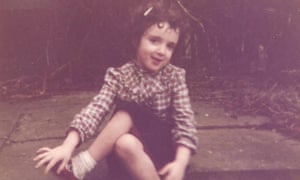
Eve Ainsworth aged 4, around 1982. Photograph: Eve Ainsworth
But as a teenager things changed. I’d changed. I’d become ashamed of him. He’d become bloated and sick and would often do or say things to embarrass or shock people. I’d look at his closed door and imagine a monster behind it, consumed by alcohol, no longer recognisable. I didn’t want to be in his company any more. He frustrated me, and I couldn’t understand why he had chosen this existence. Finally, he moved to a house of his own and I suppose I was relieved. At least now his drinking was contained somewhere else. I could kid myself he was OK really. But he wasn’t. The reality was that he was just getting sicker and sicker.
When I became ill myself, hospitalised with quinsy, I begged my brother not to visit. I didn’t want people to see how bad he was. When I came home, he phoned me. “I’m glad you’re better,” he said. “That should be me in hospital. Not you.”
He collapsed a week later; his liver had finally failed him. I was at work when they made the decision to turn off his life support. I tried to go and see him, but I couldn’t get there in time. Guilt raged through me. I’m not religious but I found myself in a small church, lighting a candle. Praying for forgiveness. Ashamed.
The guilt affected me for a long time afterwards. I resigned from my job. I spent most nights out drinking with friends. I felt like I was lost. One night I drank too much and found myself vomiting in a toilet wondering if this had been what his life was like. I woke up feeling wretched and ill and knew I could never drink to excess again. Even now I struggle being around people who are excessively drunk.
I wish we could have helped Kev. I wish we could have saved him. But we couldn’t
It took me a long time to get over his death and in many ways perhaps I never will. But it changed me because I knew I never wanted to feel like that again. I tried to remember Kev for the man he was, not what the drink made him. And I carried on writing, because I knew then that life was short and cruel, and I had to try and achieve my goals in the time I had. When my first book was published I remembered my brother’s early encouragement and belief in me, and knew how happy he would be.
Now I’m almost at the age my brother was when he died – and that seems wrong somehow. It makes me realise how young he was and how much life he had yet to live. He had so much talent, wisdom and kindness. I wish we could have helped him. I wish we could have saved him. But we couldn’t. And I’ll never stop regretting that. But regrets are wasted. So instead, I just have to be thankful for what he gave us instead.
A few days after he died I had a vivid dream in which my brother appeared in a beautiful, peaceful setting. In the background Bowie’s lyrics played on a loop, like a soothing lullaby – “I’m happy, hope you’re happy too.”
I am happy, Kev. And I’d like to think in some way you are too.
When people ask whether mental illness is real or not, my suspicion is that they really mean: does mental illness have a physical, material cause, in the same way as cancer or a broken leg? Can it be tested for, diagnosed and treated with the same certainty as a physical disease? Whatever the answer to that question, it should cast no doubts or aspersions on the very real suffering of people with mental health problems.
When we think of mental illness, we tend to think of categories such as schizophrenia, bipolar affective disorder, depression and anxiety. These categories cannot be verified with objective tests, in the way as, say, cancer or diabetes can. Neither do they tend to stand up to scientific scrutiny as distinct constructs. For people with a diagnosis of schizophrenia, there is no specific treatment or predictable outcome. To take another example, most people with a diagnosis of depression have symptoms of anxiety, and vice versa.
Framing problems as being part of distinct disorders is a powerful thing to do, and loads of the categories that reach our diagnostic bibles appear relatively new, historically. Many can be traced back to the pharmaceutical industry, which has a direct interest in shaping behaviours and emotions into various symptoms, to be sold back to consumers as disorders requiring medication. This has led people to argue that these categories do not represent real illnesses.
Such arguments can come across as diminishing the lived experience of mental anguish, its embodiment, and the potential role of medication. Some mental health problems are less contested than others, and medication does save lives. It would be cruel to suggest a grieving widow unable to cope could not benefit sometimes from anti-anxiety medication, or to deny an option of antipsychotics to quell the intrusive, menacing, persecutory experiences that can accompany an acute psychosis.
In the City: ‘There is little political will to combine increasing mental distress with structural inequalities.’ Photograph: Alamy Stock Photo
The problem, though, is that the efficacy of such treatments, and the mechanisms by which they work, tend to be oversold and presented as long-term solutions. We are right to be cautious about the overprescription of antidepressants, to take one example. These tend to be prescribed along with a scientifically dodgy idea that the pills are rejigging an imbalance in serotonin, a chemical messenger in the brain. Similarly, emerging evidence suggests that the long-term prescription of antipsychotics may actually hinder recovery for many.
Psychological and social factors are at least as significant and, for many, the main cause of suffering. Poverty, relative inequality, being subject to racism, sexism, displacement and a competitive culture all increase the likelihood of mental suffering – as the survivor-led collective Recovery in the Bin brilliantly illuminates. Add into the mix individual experiences such as childhood sexual abuse, early separation, emotional neglect, chronic invalidation and bullying, and we get a clearer picture of why some people suffer more than others.
Crucially, all of these experiences affect our psychological and physiological makeup. For example, the Adverse Childhood Experiences studies show that childhood trauma, neglect and structural oppressions manifest later not just in mental distress but in chronically inflamed bodies stuck on hyper-alert (this we can pick up through blood tests).
Governments and pharmaceutical companies are not as interested in these results, throwing funding at studies looking at genetics and physical biomarkers as opposed to the environmental causes of distress. Sociologists argue that this is because citizens who consider themselves ill are easier to manage than people who consider themselves maddened by toxic families and injustice.
Mental health practitioners often try to sidestep this whole debate by claiming that most sensible professionals subscribe to a biopsychosocial model of mental distress. But unfortunately such a model nearly always ends up privileging the biological, despite the best intentions of many psychiatrists. As a society, we have a somewhat fetishistic relationship to bodies and brains, a moth-to-light-like attraction to shiny brain-imaging scans or a hint at a breakthrough in genetic research. Correlations between experiences and genetic phenotypes are conflated with evidence for molecular pathways that prove the existence of distinct disorders. Studies with only a few participants generate multiple headlines, and remain entrenched in the public imagination. At the same time, treatments that we know work fail to get funding due to the unconscious bias towards biological explanations.
We must shift our focus to one that validates the lived experience of people who are suffering, however they choose to understand their pain
Consider family interventions. Professionals have known for decades that reducing hostility, criticism and emotional over-involvement in families improves how well people recover from a number of serious mental health problems, regardless of how severe patients’ symptoms are. Yet despite the robust evidence base – up there with medication and individual therapy – family work is rarely available through the NHS.
Similarly, there is little political will to combine increasing mental distress with structural inequalities, though the association is robust and many professionals think this would be the best way to tackle the current mental health epidemic. The idea that mental suffering is a “real” illness residing in individuals, and especially in their genes, can therefore be damaging.
It is also not necessarily what the public wants, despite the current emphasis on the “just like any other illness” narrative. When researchers ask people how they understand mental illness, they tend to prefer psychosocial explanations to medical ones. Simplistic biological explanations tend to increase stigma, not least because they cement a division between ill and well people. Many people have felt silenced and traumatised by such accounts, feeling that the illness model shuts down their truth.
There is an implicit suggestion here that mental health problems have to be viewed as being equivalent to physical illnesses if they are to warrant society’s care and funding. This may inadvertently cement prejudice, given the contested nature of mental illness. Mental health problems are no less real, no less disabling, for occupying a peculiar space between inner and outer, meaning-making and meltdown, the inner world and the environments that shape us.
Rather than clumsily trying to squeeze people’s distress into different boxes, and attempting to convince the public that these reflect illness processes, as with flu or cancer, we must shift our focus to one that validates the lived experience of people who are suffering, however they choose to understand their pain.
Some will choose to conceptualise their distress as an illness, others as a result of trauma, others yet as an embodied response to the mixed messages that are rife in society about who and how we are supposed to be. Our guiding principle should not be whether such forms of accounting are true or false, but whether they are useful for any given individual at any given moment. Acceptance, after all – is the great friend of good mental health just as writing over one another’s truth is the great enemy.
Last week, the Duke and Duchess of Cambridge and Prince Harry joined other notable names, including the rapper Professor Green and the former Labour spin doctor Alastair Campbell, to record short films about modern approaches to mental illness. They all stressed that it was good to talk, or, in the terminology beloved of the mental health world, to “start the conversation”.
I agree – and salute their efforts. Talking and being listened to are therapeutic and are known to be what doctors call a “protective factor” when it comes to good mental health. They make us better able to deal with stress; talking also helps reduce stigma, which otherwise leads to discrimination and social isolation.
I know from first-hand experience the power of stigma. When I had my first major depressive episode nearly 20 years ago, I was a reporter at the Times. I was briefly hospitalised and ill for six months. But when I went back to work, I told no one in the newsroom that I had suffered depression. I didn’t just fear what my colleagues would think – I didn’t want to acknowledge the illness to myself.
Several years later, I suffered a second serious episode. Depression is experienced in different ways, but my illness was born of being an anxious striver who became overwhelmed by the stress of trying to do too much. Chronic insomnia, nausea, a palpitating heart and a terrifying sense that I was falling and had to hold on to something all featured as symptoms. I felt suicidal, not because I didn’t like my life but because of the physical pain of the illness.
It was only after this second episode, which lasted for 18 months or so, that I decided to talk openly about being unwell. I also resolved to discover the evidence-based strategies that would make a third episode less likely.
Fast forward 20 years, and, while we may have “started the conversation”, in many professional worlds stigma is still thriving. In workshops I run – alongside mental health charities – I often start by asking the audience to stand up. Invited to stay standing if they or their family have suffered any kind of mental illness, most stay standing. But when they are invited to stay standing if they’ve been able to talk openly about their experience of mental illness, most sit down.
This is common when I talk to groups at professional service firms: lawyers, accountants and bankers. Despite valiant initiatives such as the City Mental Health Alliance and the Bank of England’s mental health network, many workers feel it may damage their careers to admit mental ill health. They stay stumm, however much royals tell them it’s good to talk.
Part of the reason, I think, is to do with our assumption that a privileged life must entail privileged health. Depression, however, has no respect for background or profession.
For all the great work of celebrities, there’s also a sense in the room that the life of a famous person does not reflect the life of someone working long hours in an office. It’s almost as if the gods of screen or sport are expected to be a bit mentally unstable, given the vicissitudes of their professional life, even if such thinking is misguided. But someone with a steady, well-paid job? Why should they be depressed? Equally, we may think it more likely for those suffering from real social deprivation to experience mental illness. But someone who has his own business? Or a successful doctor or plumber?
So what’s to be done to destigmatise mental health issues?
First, employers need to do more to make it acceptable to be mentally unwell in the workplace. When the royals released the largest ever survey of attitudes towards mental illness last week, just 2% of the 5,000 surveyed said they had spoken to human resources at work. And all this despite almost 12m working days being lost to work-related stress, anxiety and depression in 2015-16.
Probably the most powerful change will be when more senior staff take the initiative and talk about their own struggles. A junior employee is never going to admit to problems if they feel their boss wouldn’t do the same. Meanwhile, employees need safe, non-judgmental platforms to discuss their feelings on a regular basis. Often, people with mental health problems find it harder to stay in work and progress in their career.
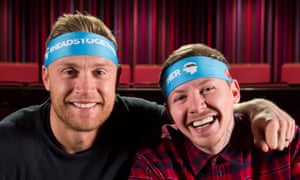
Freddie Flintoff (left) and Stephen Manderson (aka Professor Green) are among the stars talking about their mental health battles in the Heads Together films. Photograph: Heads Together/PA
The second key change must be in the NHS. Last Friday, its chief executive, Simon Stevens, said that mental health will now be a priority. Talking therapies for anxiety and depression will be given to 200,000 more patients each year by 2020, and NHS England is committing £1.4bn in funding to expand treatment.
Welcome news, though we’ve heard promising announcements before. But we have decades of neglect and underinvestment to rectify. Last November, an analysis by the King’s Fund thinktank showed that 40% of mental health trusts had a fall in income in 2015-16. This was despite the government’s commitment to parity of esteem for mental health now enshrined in the NHS constitution, and despite assurances from NHS England that almost 90% of plans submitted by clinical commissioning groups last year included mental health funding increases.
I routinely talk to people who have had to wait months for cognitive behavioural therapy, the therapy of choice in the NHS, or an appointment with a psychiatrist. And Professor Sir Simon Wessely, president of the Royal College of Psychiatrists, warned last week that a lack of specialists means that mental health patients are not being treated by people trained to deal with their condition.
Another problem is representation. There are still precious few mental health experts on the boards that run the health service, including the boards of NHS England and Monitor (the health service regulator), or the Wellcome Trust.
I would also love to see the NHS adopt a more holistic approach to good mental health. My own experience is that we all need a toolbox of strategies, nutrition being one of them. Yet NHS doctors have almost no nutritional training.
As the royals said, simple conversations can change the direction of an entire life. But even more important is having access to proper services and getting proper care. And many don’t. So let us see the extent to which words translate into action.
Given the scale of change we need, I worry that too much talk may be seen as an excuse for not enough action. In fact, in a strange way, it will only be when the prime minister and the heir to the throne no longer need to publicise the problem that we will have defeated the stigma.
Rachel Kelly’s books include Black Rainbow, her account of her struggle with clinical depression. She is an ambassador for Sane and Rethink Mental Illness
Is there any medical explanation for the concept of not having time to be ill? Every teacher I know will attest to the fact that they do not get ill during term time, but the minute the holidays arrive they fall sick. How could the body make a virus or bacteria wait until the holidays?
James O’Neill, Meudon, France
• Post your answers – and new questions – below or email them to nq@theguardian.com. Please include name, address and phone number.
Steve Hewlett became a household name over the past few months for talking about his cancer intimately and frankly to Eddie Mair on BBC Radio 4’s PM programme and for his diaries, which appeared in the Observer. At first I found it hard to reconcile how Steve was talking with the way he’d approached his life and work on Radio 4’s The Media Show, where I was his producer from 2009 to 2013.
It was an extraordinary time in media history, with stories of phone hacking and a BBC director general resigning. Steve Hewlett had always wanted to find the story, not be the story, and he was wary of “human interest”. But here he was on PM talking of himself with the same clarity and fascination as if he were a breaking story, with the scoop on his own condition. Suddenly it made sense. He was an utterly fearless interviewer and now he was turning that fearlessness on himself.
Steve made his name in investigative journalism on television and had been presenting The Media Show for a year when I first met him. We went for a pint and compared notes on what was going well and what might be changed. I had to get up to Steve’s speed on what he already knew, and find new subjects he didn’t know about, to test him, keep pushing him and show how wide the remit of this new programme could be.
Over the next few years, his scoops ranged from phone hacking and press regulation to who knew what, and when, about Jimmy Savile. On air he was dauntingly impartial, as hard on his friends, contacts and colleagues as on anyone else. It was gruelling at times, but Steve had the stamina of an ox.
The Media Show wasn’t Panorama, where he’d famously handled Martin Bashir’s interview with Princess Diana, and Steve was doubtful at first of radio and the impact it had, compared to television.
He was still developing his voice as a presenter of a live programme, rather than an expert answering someone else’s questions on his favourite subjects. But he hit his stride as we broke stories, and he enjoyed it even more when this rolled into appearances on Radio 4’s Today programme, which turned virtually into a residency during the phone-hacking scandals, the News of the World debacle and the Leveson inquiry.
I remember getting a call from Steve almost incoherent with excitement when he had just been phoned by someone at the News of the World, from the meeting where its closure was being announced. Steve made it to a studio to take part in the PM programme within the hour, exhilarated to be the one in the know, first with the inside story.
He was a great teacher. He impressed on me the importance of knowing the industry’s regulations, to see who was bending the rules, and of working out who had a strategy and who was being merely tactical. I often catch myself saying “causation or correlation?” and realise that’s a mantra from Steve, picked up when he snorted at a piece of research that claimed to show watching TV was bad for children, without demonstrating the link.
Steve pushed me and our assistant producer hard, but he always pushed himself harder. Especially in the first years of The Media Show, when it was live at lunchtime, I would arrive before 7.30am to find him already working on something in his office.
Often the door would stay closed for a confidential call. Later, as he came to trust me, it would be left open. Sometimes his tone would be intense, hushed, focused, and I’d not know who it was until after he hung up.
Sometimes it was altogether warmer, lighter and tinged with laughter, and I knew he was talking to one of his teenage sons, a holiday moment on a busy programme day. This would prompt him to tell stories about the other areas of his life, his weekends of refereeing rugby in Harpenden and his adventures in student politics, what he was doing at their age.
It was a glimpse of the side of him listeners eventually got to know much better in recent months. When I asked, he said it felt so natural to talk openly to Eddie Mair about his cancer, he couldn’t understand why anyone thought it was remarkable. Anyone who heard Steve, or read his diaries in the Observer, came to appreciate just how remarkable he was.
For three days he hadn’t slept, at least not properly. The last time he remembered drifting off was before dawn on Tuesday. It was now 1:40pm on Friday, and Ginger was hunched in his sleeping bag on the freezing slab of north London pavement he called home. His resting place was outside a branch of HSBC, metres from Camden Town tube station. There might be more crowded locales in London but few are more frantic. Around him surged crowds of tourists and revellers starting the weekend early. A bunch of Italians took it in turns to take pictures of Ginger, red-eyed and weary, a very modern face of the capital. Others struggled to hide their pity; some looked plainly disgusted.
But it wasn’t the incessant tumult of Camden that had induced Ginger’s most recent bout of insomnia. “It’s the cold. You can’t sleep. You just lie there, freezing. Even when you turn numb, it’s still painful. And someone stole my gloves,” he shook his hands forcefully to mimic his shivers as the temperature fell to -3C last week.
Ginger said the best thing to kill the cold was heroin. “It’s the only thing that makes you feel warm, from the inside. But it’s been so cold, even that hasn’t worked.”
An articulate and incisive character, Ginger is one of Britain’s growing cohort of rough sleepers, among the 960 identified in London last year. Last week government figures showed that the number of rough sleepers in England had risen for the sixth year in a row, up 16% on the previous year, nearly double the number since 2010. Across the country 4,134 people were forced to sleep outside. Ginger describes it as a life of extremes, an existence that brings out the best and the worst of people. “Some people try to bully you, try to pick a fight, some spit at you or shout at you to get a job or get some benefits. Mostly they tend to stick their nose up at you.
“And then a lady will walk by and give you a helping of homemade stew that she’s made especially – that happened yesterday,” he smiles. Considering his profound fatigue, Ginger looks well, although he admits he feels “much older” than his 41 years. The average age of death for rough sleepers is 47. The lowest average life expectancy in the world is in west Africa’s Sierra Leone: 44.4 years.
Ginger, born in upper Clapton, east London, in March 1975, describes his life’s journey as a string of squandered opportunities, bad luck, bad decisions, substance abuse and ultimately the shocking murder of a loved one. His first setback occurred at the age of six and a half. Ginger’s mother walked out on him and his father. He has not spoken to her since. “She didn’t want anything to do with me.” His father, now 67, brought him up single handedly and, according to Ginger, remains supportive.
After leaving school aged 16, Ginger went to live with his uncle in the Irish city of Limerick. There, he fell in love with the outdoors. In the River Shannon he caught his first salmon. He went rabbit hunting in the fields below the Slieve Felim mountains. “I became a keen fisherman, I really took to the life.” But the lure of London drew him back and, aged 19, Ginger found work as a painter and decorator in Camden, making £50 a day cash in hand, a grand a month. “That was big money in those days,” he said. But his disposable income was invested disastrously. Ginger began drinking heavily in Camden pubs like the World’s End – opposite where he now sleeps – or the Camden Head. “The problem was that I was drinking with the wrong crowd.”
Cannabis use rapidly evolved into crack and heroin addiction. His job suffered, his income evaporated. In 2000 Ginger received his first custodial sentence for robbery. For the following eight years life became a blur of prison and heroin use. He served time in Pentonville, Wandsworth and Portland, among others. Amid the chaos, Ginger managed to maintain a seven-year-relationship. He and his partner had two daughters and a son between 2002 and 2006. The family lived in a two-bedroom flat in a yellow tower block behind Euston station. “I had everything I ever wanted. I thought I’d made it.”
But in 2008 the relationship broken down. Ginger went clean but he has not heard from his partner or children since. His loss prompted a period where he tried to build a new life, and Ginger is adamant he would have never ended up on Camden’s streets had it not been for the brutal murder of his Irish uncle in 2015. An intruder attacked and viciously beat the 74-year-old in his Limerick home. “I was asked to go to the funeral but had to say no. I couldn’t bear to see him in the open coffin. I wanted to remember him as he was,” said Ginger, still visibly grief-stricken. Heroin anaesthetised the pain. By the summer of 2016 Ginger had lost everything and was a rough sleeper. “Once you’re back on the heroin, it’s hard to get straight,” he said, describing his current heroin intake as “dabbling”.
Spice – synthetic cannabis – is the narcotic of choice among Camden’s rough sleepers now. “Everyone’s on it. It just knocks you out,” said Ginger. Last May the government made spice illegal, and the only people to benefit have been the dealers. Before then, Ginger could procure five grams for £25 from a local shop. Now dealers cut the substance and charge £10 for half a gram.
Camden could be a violent place for a rough sleeper, he said. He is wary of the surrounding streets, recounting a drunken night in 2003 when he got into a mindless squabble with a stranger in a nearby alley. They began fighting. Initially Ginger thought his assailant had punched him in the leg. “Then I realised I’d been stabbed. You live in fear that that can happen at any time.”
Ginger also admitted that he was a danger to himself. In 2008 he was taken to St Pancras hospital in handcuffs after a psychotic episode. Once there, he sliced himself open with a craft knife he had hidden in his pants. Yanking up his jacket, he reveals two parallel lines of knotted scar tissue 30cm long, running across his lower stomach. “It was the voices that told me to do it.” He was diagnosed as a paranoid schizophrenic and currently receives a fortnightly injection to control his condition. Research by charity St Mungo’s shows that four in 10 people who sleep rough have a mental health problem.
But street life is not unswervingly bleak. Ginger’s survival relies on daily acts of unsolicited generosity. “Some people sit down for a chinwag and ask how I am. Others give me money, even 20p, for which I’m always grateful. People bring sandwiches or visit a local shop to buy me lunch, and local restaurants often bring leftover meals.”
Staff from the McDonald’s on Camden High Street bring over a quarterpounder with cheese, Ginger’s favourite. If not, there is the nearby soup kitchen which, in a sign of the times, can “become very crowded”.
Ginger talks fondly of his fellow rough sleepers, how they will defend each other if attacked or from new faces they don’t trust. In the past Ginger has befriended strangers and woken up without his shoelaces. Even so, rough sleeping is fundamentally wearying. Days begin around 5am, when the city starts waking up, and Ginger says he can only fully relax after 3am when Camden’s nightlife fades. His alternative “homes” – a doorway close to the American Apparel store across the high street and an alley behind the World’s End – are hardly more peaceful.
Ginger often thinks of the day he’ll be able to leave Camden’s streets. Like all rough sleepers his primary ambition is a permanent home. Without an address, securing a job and saving money is almost impossible.
But Ginger is also scared that he’ll never fully conquer the internal voices that he said prevented him from moving forward. “The medication is working in the sense that I can only hear mumbling. I can’t quite make out the voices but they are there, coming from behind my back. If they stop, I’ll be able to think more clearly.”
HOMELESSNESS FACTFILE
• Using a different methodology to the government figures, the Combined Homelessness and Information Network, found that 8,096 people slept rough at some point in London during 2015/16, an increase of 7% one the previous year.
• Of these, 5,276 people were new rough sleepers.
• 85% were male, with the proportion of women rising slightly over the last two years by 1%
• Many rough sleepers have pressing support needs: 43% have alcohol problems; 31% have drug addictions and 46% mental health issues. The proportion of rough sleepers with no support needs is around a quarter.
• A third of people seen rough sleeping in 2015/16 had served time in prison, while one in 10 had experience of the care system. Eight per cent had been in the armed forces.
• Where nationality was recorded, 3,271 people rough-sleeping were UK nationals – 41% of the total.
When Rockefeller decided he needed to increase his profits and control the world’s usage of fertilizer, he convinced the farmers that the petro-chemical fertilizers would enable them to spend more time farming instead of spreading manure. What he never told them was that the petro-chemical fertilizers would kill the essential mineral sulfur in the soil that the manure facilitated and by doing so, the people would be deprived of the essential nutrient that the manure provided and illness would abound. But, he knew all about that because soon after the petro-chemical fertilizer was introduced he started selling pharmaceuticals.
So, the 21 reasons to add organic sulfur to your daily regimen are as follows:
1. Organic sulfur is not a drug or prescription medicine, but rather a nutrient that the body is deprived of.
2. It increases enzyme production within the glands of the body, substantially increasing resistance to illness.
3. It increases flexibility in the tissues within the body and increases blood circulation.
4. It reduces muscle and joint inflammation, promotes healing in the muscles and joints and prevents them from becoming sore. To the degree there is soreness, recovery and return to normality is quickened. Athletes, in particular, benefit from this as the intake of OS dramatically increases their recovery time.
5. It eliminates “free radicals” in the body. Allergies to pollens ad certain foods can be eliminated or reduced by its use.
6. It promotes healthy, increased growth of hair and fingernails.
7. Because of the oxygenation of the cells and tissues that the OS facilitates, the body is kept in a constant aerobic environment making it so that cancer cells cannot survive or exist.
8. Studies have shown it can help reverse symptoms of osteoporosis, Alzheimer’s disease and Parkinson’s disease.
9. It aids in healthy skin production and the reduction of “wrinkles”. It is one of the main ingredients in moisturizing creams.
10. It helps the body properly regulate insulin production. Adequate OS in the diet may reduce the amount of insulin injections.
11. It helps alleviate chronic headaches and migraines. Increased circulation in the brain cells promotes proper blood circulation within the brain. Less pressure and pain result, reducing tendencies for headaches.
12. It helps alleviate emphysema by providing the body with material to manufacture new, healthy cells on lung walls.
13. Because of the ability to make cell walls more permeable. OS causes the body to rapidly release and reduce alcohol “hangover” toxins, removing them as waste from the body. The process quickens recovery time from a “hangover”, often as quickly as 20 minutes.
14. It helps in reducing and often eliminating diverticulitis. Parasites living in the intestines are unable to remain attached to the walls due to the slippery coating that the OS produces. Because of this, hatching parasitic worms are flushed out as well because they cannot attach to the walls.
15. It reduces hypoglycemia in the body because it has made it easier for the body to introduce blood sugar through more permeable cell walls. Less insulin is demanded for the process, resulting in less overuse of the pancreas. Within several months of constant usage, OS can reduce or eliminate hypoglycemia entirely.
16. It helps alleviate PMS. Glandular production is enhanced by OS to have more “normal” levels of production. Acid, enzyme, and hormonal levels are more evenly balanced facilitating reduction of cramps, headaches, and nausea associated with the monthly cycle.
17. It helps promote better kidney function more efficiently. Water retention problems associated with poor kidney function can be alleviated.
18. It can help alleviate eye problems. Dissolve 1 teaspoon of the sulfur crystals in 4 ounces of water and use as eye drops as frequently as you like.
19. OS delivers the essential omega-3 throughout the body and also allows the body to produce vitamin B-12.
20. It has amazingly reversed countless cases of asthma and 35 cases of autism that we know about so far.
21. Last and certainly not least, it eliminates the continued need for Viagra or Cialis by reversing erectile dysfunction.
This is by far the ONLY substance that can remove the poisons from pesticides, heavy metals, radiation, and other toxins. You can find out more by going to www.healthtalkhawaii.com and going to Products.
Oh yeah, the Opti product does not work because they add the synthetic silicon dioxide to it to make it more pourable, whereby all synthetics kill all the benefits.
Aloha!
To learn more about Hesh, listen to and read hundreds of health related radio shows and articles, and learn about how to stay healthy and reverse degenerative diseases through the use of organic sulfur crystals and the most incredible bee pollen ever, please visit www.healthtalkhawaii.com, or email me at heshgoldstein@gmail.com or call me at (808) 258-1177. Since going on the radio in 1981 these are the only products I began to sell because they work. Oh yeah, going to www.asanediet.com will allow you to read various parts of my book – “A Sane Diet For An Insane World”, containing a wonderful comment by Mike Adams. In Hawaii, the TV stations interview local authors about the books they write and the newspapers all do book reviews. Not one would touch “A Sane Diet For An Insane World”. Why? Because it goes against their advertising dollars.
If you deal with mental health issues of any sort, talking about them is often a struggle, especially with all the stigma around them. It turns out, putting them out there for the world to hear is even more tricky. Nonetheless, after years of producing podcasts that stretched idiocy to previously unchartered territories, I recently did precisely this and released my first semi-serious project, all about discussing and sharing personal experiences of dealing with mental health problems.
Three days after it was released, I’d still not listened to the completed series myself. Despite being the presenter and producer, I’d slightly bottled it.
Those closest to me will tell you that I was battling a real anxiety in the lead-up to releasing the full series of The Mental Podcast, and that I’d already made my excuses to them. Every time somebody said they were looking forward to it I told them not to, and my initial promotional tweets had a cautionary, apologetic feel of “you may like this, you may not”. For the record, I’ve never had any issues talking about mental health stuff, always more than happy to casually drop it into an interview or real-life conversation, but with this new series, as the release date loomed closer, I started to get worried about it.
On a purely business level, I was concerned that it wouldn’t make its money back. Over the last 12 months or so I’ve financed my independent stuff up front and then, with a reward incentivised (not a word) donations drive at the end of the series, attempted to recoup the cost. It’s a very high risk/utterly idiotic business model as podcast listeners have “getting stuff free” in their DNA, but so far I’ve fluked a decent, if modest, return. The last two series of podcasts were called The ParaPod and consisted of me lambasting a ghost-believing-buffoon with the simple tools of logic and facts, a pretty easy concept to get on board with and you don’t need to be worrying that it will potentially take you to the darkest depths of depression (although the commitment of an adult to such a ludicrous supernatural premise should at least waver your faith in human intelligence).
The Mental Podcast,however, was going to be a very different beast, as mental illness – unlike ghosts – is a real and serious thing, so how entertaining could this be, and by extension would this be the sort of thing that listeners would be persuaded to fund?
Talking things out is usually helpful for most things, and this can include mental health issues. Photograph: Highwaystarz-Photography/Getty Images/iStockphoto
My main apprehension about the release though, was that I became increasingly concerned that I’d followed a bad idea through. People are often very reluctant to talk about mental illness, often with what (to them at least) are legitimate reasons. Even if you do talk about it, there are many different takes on how you should do so. Was going further and actually broadcasting it, so anyone in the world could listen, something that could spectacularly backfire?
This concern was compounded when a major interviewee was pulled from the show by their management with a week to go, citing “marketing reasons”. While a perfectly legitimate reason, this showed just how sensitive the issue can be. Also, as this person was, like me, a comedian, a little panic started that I had become blinded by the project and was now committed to doing something vulnerable and revealing yet utterly stupid. Was I wrong to be defiantly charging ahead, waving my own mental health issues about? I’d done six months of work on it that could very well have distracted me from the fact that it was basically crap. I’d done a few interviews with people, interspersed with my own take on it, and dissections of darker parts of my life, and after initially feeling rather liberated by that unapologetic display, was now feeling like I wanted to hide.
It very nearly didn’t get released. Even as I was waiting for iTunes to approve it I was thinking I could make this all go away with a delete button and solitary explanatory tweet.
I managed not to do either.
It’s difficult to find relevant images for a discussion about intangible issues in a purely-audio medium, so here’s a picture of what looks like a dog trying to do a podcast. Photograph: Alamy
Now, some weeks later, I’m being told often that I should be proud of it, but to be honest, I’m still enjoying being simply relieved. It had a decent top five showing in the podcast chart, and a large, positive reaction on social media. Nobody seems arsed that it’s not comedy (although Johnny Vegas’ interview certainly has its moments), and there’s a wave of gratitude for saying some of that stuff out loud.
I honestly never set out to make something that helped people, I didn’t really know what it was when I was making it, but I knew it had to be something that spoke about mental health and wellbeing issues in a relatable and human way, with candour and honesty. A by-product of that has been that it has helped people, and plenty have informed me that being able to relate to myself and the interviewees was kind of educational too, that it has validified (not a word) things that were previously a source of embarrassment or anxiety.
For myself, lest this become a giant metaphorical praise-retweet (you can go to @thementalpod for A LOT of that), there has also been a strong educational element to it; that those apprehensions and concerns that I had, that were inadvertently fed subliminally by whatever assumptions my insecurities were predicting, came very close to persuading me not to release it at all. The fears of perception, of creative or financial failure, of rendering myself either a figure of fun or an untouchable, very nearly silenced the discussion before it had started, and with what I know now, having seen the responses to my most recent work, I’m certain that wouldn’t have been a good thing.
I’m rarely one for being concerned about something damaging whatever I pass off as a career, I’m certainly not cursed with ambition or lust for power, so I’m sort of annoyed with myself for ever worrying about The Mental Podcast in that regard, but what I shall take away from it at this stage, with regards to mental health, is that there’s little valid argument for silence to be taken or encouraged as an option.
Ian Boldsworth is a comedian, writer, podcaster and radio presenter.
Sally will never forget the day she had to section her 13-year-old daughter. “Maisie was already in hospital. She was there because she’d taken an overdose, and she wouldn’t stop talking about death and saying she would do it again. She kept telling me she wanted to die – and I believed her.”
Sally agreed to let doctors formally assess Maisie, and then allowed her to be sectioned and detained in hospital under the Mental Health Act. “I feared for her life. I felt I had no other option.” Maisie had been moved from A&E to the children’s ward to recover from her overdose, but the hospital was planning to discharge her. “I couldn’t risk taking her home,” says Sally. “I didn’t dare. I thought she was going to kill herself. I was terrified.”
Maisie started self-harming when she was 12, shortly after her father died of cancer and Sally suffered an episode of ill health. “Maisie can’t regulate her emotions and she copes by trying to hurt herself. Everybody sees the behaviour, but not what’s behind the behaviour.”
Once Sally had signed the section, she no longer had the power to bring her daughter home again. “I didn’t have a clue how much control over my child I was giving up. After you sign the papers for a section, the doctor has more power than you over what happens to your child, and other professionals will listen to the doctor rather than you.”
She talked to other kids in the hospital. It was a game the children played: what medication are you on?
Maisie was sectioned in a specialist children’s unit for six months. “I thought I had done the right thing, and that Maisie would finally get the therapies she needed. I thought they would fix her. I was wrong.”
Instead, Maisie learned a new way to self-harm. “Maisie copied another girl in the mental health unit.” Her medication was expanded and now includes antipsychotic drugs and antidepressants as well as sleeping tablets. “They’ve given her all sorts – she’s asked for it. She talked to other kids in the hospital. It was a game the children played: what medication are you on?”
One night, Maisie grew so desperate to leave the hospital that she escaped from the ward. “I got a phonecall saying, ‘Maisie’s missing and we don’t know where she is.’”
Maisie had been gone for an hour by the time staff realised she was gone. “She was found at a National Express coach depot by the police, waiting to get a bus home.”
When Maisie was eventually released after six months, Sally felt as though her daughter had done time in prison. “No, actually, it was worse than prison.”
The family recently agreed to take part in a Channel 4 documentary on teenagers with mental health problems in conjunction with the Tavistock and Portman NHS foundation trust, hoping it would raise awareness about the need for better NHS funding. “The government takes advantage of the stigma that surrounds mental illness. That’s why children’s mental health has got such a poor budget.” Sally thinks parents are embarrassed to speak out or complain about the poor care their children receive. “It’s time to change that.”
The documentary shows Maisie’s emotions and behaviour getting out of control again. “I was exhausted, just from trying to restrain her from hurting herself,” says Sally. “It was constant, 24 hours a day. But I had no extra support.”
Sally must keep all Maisie’s medication locked in a safe, along with anything sharp. Over the summer, Maisie started barricading herself in the bathroom so she could self-harm, physically fighting her mother off when Sally tried to stop her. “I was covered in bruises – not that she’d hit me, just while I was restraining her, it would happen.”
Sally asked for more help at home. “But it didn’t materialise. That made me very angry. Maisie disassociates, so when she comes back round and sees I have bruises, she can’t cope, knowing that she’s done that.”
Eventually, in August, Maisie herself asked to go away to an inpatient unit. “I needed to protect my mum,” Maisie explains. “Asking to go away was the only way I could do that.” Her mother, she says, is her rock.
Sally believes the way Maisie was treated from that point on was disgraceful. “I begged the doctors not to section her again, because she would go informally, without the section,” says Sally. “But they said because it’s an emergency admission, no one would take her on an informal basis.”
The head of Maisie’s local adolescent mental health service, who knows Maisie well, felt she only needed two weeks in hospital. But Maisie was sent to a secure paediatric unit 95 miles away from her mother’s home and sectioned for 28 days by a doctor she’d never met before. “As soon as she arrived at the hospital, the doctor there had control over Maisie. He totally dismissed her previous diagnoses.”
In total, Maisie – who is now 15 – has been given 15 different diagnoses over the past three years, ranging from autism to severe depression. After visiting Maisie in the mental health unit, Sally became extremely concerned about her. “Her face was very swollen and all the blood vessels had popped.” It turned out Maisie had been managing to self-harm. “The hospital staff weren’t telling me. I was only hearing because of Maisie.” Sally had never seen her daughter in such a terrible state before and complained to staff. “I don’t think they took me seriously. These people are in powerful positions making crucial decisions for your child. It’s scary.”
The relationship between the parents of mentally ill children and hospital staff can be fraught. “Professionals perceive me as a pain. They don’t have the ability to empathise. I think a lot of it is that they don’t understand. When Maisie’s gone into crisis on a weekend, the hospital doesn’t want her there because there’s nothing medically wrong with her. But there’s nowhere else for her to go if she doesn’t feel safe at home. At those times, it’s like being an alien on that ward, an inconvenience, a nuisance. I’m seen as part of that nuisance. ”
She believes some doctors and hospital staff make judgments about the parents of children with mental health problems. “They think, ‘Bad home.’ Or they think, ‘Mum’s not set enough boundaries.’ There’s a culture of: ‘We can’t help you because it’s your parenting skills.’”
I failed her and I don’t want to fail her again. That’s why I fight like I do
Mental illness is an invisible disease, she says, so people – parents, particularly – need to get more clued up about it. “We were happily going along in our lives and didn’t realise that one day it would affect us. I failed her and I don’t want to fail her again. That’s why I fight like I do.”
Sarah Brennan, chief executive of YoungMinds, says: “We often hear from parents who are furious that they can only visit their children once a week or once a fortnight, because the distances are so far and travel costs are so expensive. It can also be incredibly stressful for young people to be cut off from their families and friends.
“Inpatient care should be a last resort. We need to ensure that help is available locally, in the community, when problems first emerge. Draining money from early intervention is incredibly short-sighted, and just stores up problems for the future.”
Last year, Sally launched a successful petition to get a local mental health unit for children reopened, and convinced her NHS foundation trust to introduce a 24/7 crisis team. But she admits there are days when she struggles, and she is now having counselling. “Maisie’s illness has definitely made me a more confident mum in many ways. However, it’s also made me a very angry person. I don’t trust the system.”
Maisie is back home now. Eventually, after Sally highlighted her concerns about Maisie’s treatment to her MP and got a good package of care put in place for Maisie at home, she was discharged from the hospital. Reunited with her mother and her dog, Honey, she has recently started attending a school for children with autism. But Sally still locks herself in her own bedroom at night with the safe, so that Maisie cannot try to open it while Sally is sleeping.
“It’s hard having Maisie home. I can’t lie to you and say it’s a breeze. But when you’re a parent, you make sacrifices.”
She loves her clever, articulate daughter unconditionally. “I want her to be happy one day. I hope she will be. I always just cling on to hope, and that’s what I tell all the other parents I meet to do, too. Never, ever let go of hope. Because without hope, it’s really bleak.”
She never wants Maisie to be sectioned again. “The most challenging part, as a parent, is feeling absolutely helpless. When a doctor sends your child miles away, for a long time, and you know it will be difficult to bring her home … it’s like torture. It could slowly drive a parent insane.”
•Kids on the Edge: Troubled Girls is on 30 November at 10pm on Channel 4.
In the UK, Samaritans can be contacted on 116 123. In the US, the National Suicide Prevention Hotline is 1-800-273-8255. In Australia, the crisis support service Lifeline is on 13 11 14.