poverty etiketine sahip kayıtlar gösteriliyor. Tüm kayıtları göster

11 Mayıs 2017 Perşembe

Poverty blighting health of many UK children, paediatricians warn

Poverty is seriously affecting the health of many British children, who are paying a heavy price as a result of housing, food and financial insecurity, paediatricians have warned.


A report from the Royal College of Paediatrics and Child Health (RCPCH) and Child Poverty Action Group (CPAG) paints a bleak picture of the wellbeing of children in low-income households.


Among the problems cited by paediatricians are poor growth in children, whose parents cannot afford healthy food or to take them to medical appointments, respiratory illnesses being caused or exacerbated by cold, damp housing, and mental health problems resulting from financial stress.


Two in five of surveyed doctors said they had experienced difficulty discharging a child in the past six months because of concerns about housing or food insecurity.


Prof Russell Viner, RCPCH officer for health promotion, said its members were seeing problems that seemed to belong to a bygone era.


“Paediatricians around the country are telling us that poverty is affecting the health of children in a way we haven’t seen before,” he said.


“It’s an absolute wake-up call for our political parties that they really need to deliver on promises to make Britain a more equal society.


“The prime minister talked on her first day about the burning injustices in society and how she wants to change that and this chimes with that kind of focus.”


Latest figures show that 4 million children in the UK live in poverty and projections suggest that could rise to 5 million by 2020. In 2015, the Conservative government scrapped the target requiring the eradication of child poverty by the end of the decade. The decision was much-criticised at the time and the restoration of the target is one of the recommendations of the RCPCH and CPAG in their report, published on Thursday.


Only one respondent out of 266 paediatricians from 90 NHS trusts who completed the survey said poverty and low income did not contribute to the ill health of the children they work with, while more than two-thirds said it contributed “very much”. Almost half of doctors who responded said things were getting worse and only three believed they were improving.


Housing problems or homelessness were a concern for just under nine out of 10 respondents, with one London doctor commenting that “overcrowded, damp or unsuitable housing amongst our patients is the rule rather than the exception”.


Another paediatrician said that they had seen a number of babies unable to be discharged from the special care babies unit due to the parents being homeless. Four out of five doctors said an inability to keep warm at home contributed to ill health among children they treat.


More than three in five said food insecurity contributed very much to the ill health of children, with more than nine in 10 saying it had some impact. The inability to afford enough healthy food is associated both with poor growth of deprived babies and children on the one hand, and rising child obesity on the other.


One doctor who responded to the survey said the biggest impact of poverty on their patients was “insecurity, inferiority and stress. Through the biological and psychological factors these undoubtedly lead to poor health”.


More than nine in 10 paediatricians said financial stress and worry contributed to the ill health of children they work with.


The CPAG chief executive, Alison Garnham, said the resultsshould sound alarms for the next government. Low family incomes, inadequate housing and cuts to support services are jeopardising the health of our most vulnerable children.”


As well as restoring child poverty targets the report recommends that the next government reverses cuts to public health and universal credit, and examines the impact on child health of all prospective policies.


Viner stressed that the report did not aim to lay the blame for the problem at the door of one political party. “We need our children to be healthy, for the economy to be competitive, post-Brexit,” he said.


The shadow health secretary, Jonathan Ashworth, said child health inequality was a “national scandal”. He added: “Labour will bring down childhood obesity rates, improve early years’ services, enhance mental health provision and improve the state of all our children’s teeth.


“Our children deserve the best possible start in life and no child will be left behind under the next Labour government.”


Poverty blighting health of many UK children, paediatricians warn

25 Nisan 2017 Salı

If we want to improve mental health, first we need to tackle poverty | Dawn Foster

Mental health discourse welcomed an unexpected participant this month. Prince Harry, the fifth in line to the throne, spoke publicly about seeking counselling following his mother’s sudden death in his pre-teen years. Rightly, mental health charities praised his intervention, highlighting as it did that even extreme privilege cannot shelter us from depression, anxiety or any other psychiatric illness. Our bodies are fragile, and our minds equally so: this message is increasingly accepted as people with mental health problems, campaigners and medics alike have fought to end stigma by building a national conversation on mental health.


Removing the stigma around mental health is important but does little alone. Without services, treatment is still inadequate, and feeling less judged for your health issues means little if you’re faced with a lack of access to talking therapies and nonexistent community support. But the conversation on mental health also needs to examine how the structures of society cause and perpetuate poor mental health.


Poverty, poor housing and debt all have a detrimental impact on the mental health of children and adults. Money can’t buy happiness, but poverty can practically secure stress and misery. For children in particular, the impact of poverty early on increases the lifetime risk of long-term mental health problems. The National Child Development Study found children from the lowest-income families are four times more likely to display psychological problems than children from the richest families. Homeless children are four times as likely to experience mental health problems as settled families.


Across the UK, both women and men in the poorest fifth of the population are twice as likely to be at risk of mental health problems as those on average incomes, according to the Mental Health Foundation. Poverty increases the likelihood of developing mental illness, and mental illness increases the risk of poverty: combating only one factor does nothing to end the poverty cycle – the two are inextricably linked. Being as wealthy as the royals doesn’t preclude you from experiencing mental health problems, but it does lower the likelihood, cushion you in certain aspects and allow you access to a better standard of care more quickly.


Failing to address childhood mental health linked to poverty is like scrimping on a car repair only to crash into a wall


Refusing to recognise the link between socioeconomic deprivation and mental health creates a preventable drain on the public purse. Advocates for austerity argue that every penny counts, that “we are all in this together”, to borrow a famous phrase from George Osborne, heir to a baronetcy.


This is the ideological reasoning behind cutting the benefit cap to £20,000 outside London, implementing the bedroom tax, removing council tax benefit and forcing women to fill in forms confirming they were raped if they wish to claim child benefit for more than two of their offspring. But it makes no economic sense: these policies make rents unaffordable and increase homelessness, which contributes heavily to the deterioration of millions of people’s mental health. The Institute of Education found that poor mental health in children alone costs the UK £550bn in lost earnings. Children who experience poor mental health in childhood, disproportionately linked to poverty, earn less in their lifetime, requiring more financial support from the state, as well as seeking more medical assistance. It is akin to scrimping on a minor car repair only to crash the vehicle into a wall.


But even if economic arguments do not sway the government, the humanitarian, emotional argument should be recognised. Social policy can actively lower people’s risk of experiencing depression, anxiety and other disorders.


Austerity is an economic choice: it’s a foolish one that saves nothing and harms millions. Any campaign on mental health should champion combating poverty to stop more people experiencing entirely preventable problems.


If we want to improve mental health, first we need to tackle poverty | Dawn Foster

24 Nisan 2017 Pazartesi

Neglected no more: ending trachoma, an infectious eye disease rooted in poverty

In proportion to their collective contribution to human suffering, neglected tropical diseases (NTDs) have received insufficient attention. Today, thanks to incremental progress in the science of public health, growing programmatic experience and commitment from endemic country governments, donors and other partners, we are better equipped than ever before to recognise, prevent, control, eliminate and eradicate them.


Trachoma is one of many NTDs that are rooted in poverty. It is an infectious disease of the eye caused by a bacterium, and marked in its early stages by inflammation of the inner surface of the eyelid. Infection is spread by the transfer of discharges from the eyes or nose of an infected person.


More severe manifestations, such as trichiasis, typically occur in adulthood after multiple untreated infections. Trichiasis is present when turned-in eyelashes scratch the eyeball – a debilitatingly painful condition that may lead to progressive and irreversible visual impairment.


At present, about 0.45 million people are blind and 1.4 million people are severely visually impaired as a result of trachoma. Very basic interventions – simple eyelid surgery, the antibiotic azithromycin to clear infection and facial cleanliness, water and sanitation – can significantly reduce the impact of the disease. These interventions (surgery, antibiotics, facial cleanliness, environmental improvement) are represented by the acronym Safe: the strategy recommended by the World Health Organisation (WHO) to eliminate trachoma as a public health problem globally by 2020.


Morocco succeeds with Safe


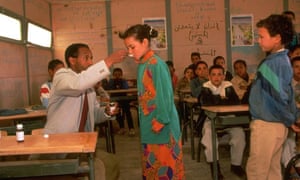
Morocco adopted Safe in the early 1990s, becoming the first country to implement the strategy at national scale and one of the first to benefit from Pfizer’s now long-running donation of azithromycin to trachoma elimination programmes.


In November 2016, Morocco was validated by the WHO as having eliminated trachoma as a public health problem, joining Oman and Mexico as the only countries documented to date as having beaten the disease. Other countries have made similar progress, and further official validations are likely to follow later in 2017.


Azithromycin being used to treat trachoma in Morocco, 2016


Azithromycin being used to treat trachoma in Morocco, 2016 Photograph: Dr Jaouad Hammou/Ministère de la Santé, Maroc

Mapping trachoma


Trachoma’s natural home is among populations who live furthest from services, and so, until recently, data on where to intervene were grossly incomplete. The Global Trachoma Mapping Project (GTMP) sought to remedy this with surveys covering more than 1,500 districts in 29 countries. The project was completed in just over three years – running from December 2012 to January 2016 – and involved the training and deployment of more than 600 field teams, who collectively examined more than 2.6 million people. Its successful implementation now provides health ministries with the information they need to plan interventions, where required, for worldwide trachoma elimination.


Visionary backing


The success of the mapping project is attributable to a number of factors. First, it had financial backing from the UK’s Department for International Development and the United States Agency for International Development. Second, in each of the countries in which the GTMP operated, it benefited from high-level political commitment and strong health ministry leadership. Third, a worldwide partnership of NGOs and academic institutions, spearheaded by Sightsavers, the International Trachoma Initiative and the London School of Hygiene and Tropical Medicine, fostered synergies rather than inter-organisational competition. Fourth, the mapping project was held to strict quality standards, despite operating in some of the most difficult environments in the world. And fifth, the mapping was innovative in its use of technology, which kindled the interest of partners on all sides.


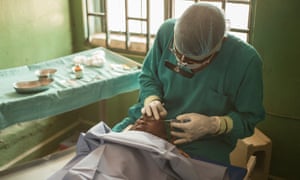
A surgeon operates on a young boy with trachoma in Nigeria.


A surgeon operates on a young boy with trachoma in Nigeria. Photograph: Graeme Robertson/the Guardian

Field teams collected all data into a purpose-built app running on Android smartphones. Those data, including geospatial information, were uploaded to a secure cloud-based server as soon as the phones were within range of a suitable network. Raw data were then cleaned, reviewed by the health ministry, and once approved, automatically displayed on the online Trachoma Atlas. This system was far more rapid and reliable than previous paper-based survey tools – and saved approximately 4.2m sheets of paper.


Work is ramping up in the 42 countries where trachoma remains a public health problem. In the next few years, with continued political support, collaboration and donor investment, we will finally be able to write the closing chapters in the long history of this devastating disease.


Victor Florea is an intern and Anthony Solomon is a medical officer for trachoma in the Department of Control of Neglected Tropical Diseases, World Health Organisation.


Join our community of development professionals and humanitarians. Follow @GuardianGDP on Twitter.


Neglected no more: ending trachoma, an infectious eye disease rooted in poverty

29 Ocak 2017 Pazar

Study dispels myth of links between poverty and weight

Call it the “Benefits Street effect” – the popularity of widely held preconceptions about unemployed people. And one of the most prevalent is that jobless people are more likely to be overweight than those in work.


While television documentaries and newspapers can help perpetuate this belief, academic studies also reinforce it. A series of studies have suggested that employers are biased against larger candidates when hiring staff. As a result, slimmer people tend to be employed first, leaving the overweight in the pool of the unemployed for longer.


But a study in the journal Preventive Medicine produces evidence that unemployed people are far more likely to be significantly underweight than the average person. The study’s authors, Dr Amanda Hughes and Professor Meena Kumari from the Institute for Social and Economic Research at the University of Essex, believe their findings provide a corrective to popular misconceptions about unemployed people and should alert health professionals to the heightened mortality risks that come from being underweight.


Hughes explained that she first became suspicious of a link between weight and unemployment when volunteering at a food bank. She observed that there were more people coming in who were painfully thin than were clearly overweight.


“There were people who had not eaten that day or the day before, or who had walked for two hours to get there, because paying for a return bus journey was out of the question,” she said. This set her thinking: had researchers become so concerned with obesity that they were ignoring the big picture?


“In public health there’s a really quite consistent and replicated finding that obesity is more common among more disadvantaged groups,” Hughes said. “It’s such a well replicated finding that, even in public health, there has always been this assumption that if unemployment affects body weight it will be in the direction of increasing it.”


We now have quantitative evidence that many unemployed people are not eating enough in simple caloric terms


Dr Amanda Hughes


But Hughes’s work suggests the picture is far more complex: that there is a “U-shaped” association between unemployment and body weight, with jobseekers tending to be more susceptible to being obese or underweight than those in work.


Using the Understanding Society database, a nationally representative survey of more than 40,000 UK households, Hughes looked at the BMI (body mass index) of 10,737 working-age adults between 2010 and 2012, a time when the effects of the recession were being keenly felt and substantial changes were being made to the benefits system.


Of those who were in employment, were full-time parents or in full-time education, 0.7% had a BMI below 18.5 and were therefore classed as underweight. But for those who were unemployed, the proportion shot up to almost 4%.


When factors such as education, gender and smoking were taken into account, it was revealed that the unemployed were still four times more likely to be classed as underweight than those who were not classed as unemployed.


Furthermore, just under 29% of those unemployed were classed as overweight compared with almost 40% of those in work or full-time education.


The study found that unemployed people were more likely to be obese, but only if they were non-smokers. Hughes suggested that this might be because some people on severely restricted budgets chose to prioritise their spending on tobacco rather than food.


“Together, these results point to a complex picture in which jobseekers, depending on the complexities of individual lives, are at increased risk of being either underweight or obese, each with their own associated health risks,” Hughes said.


“We now have quantitative evidence that many unemployed people are not eating enough in simple caloric terms. These results make an important contribution to research trying to explain the increased risk of chronic illness and mortality for unemployed people. They suggest that, at least in contemporary Britain, being underweight may contribute to this much more than previously realised.”


Study dispels myth of links between poverty and weight

25 Ocak 2017 Çarşamba

Poverty in the UK jeopardising children’s health, warns landmark report

Children’s health in the UK is in jeopardy, with higher child death rates, obesity and ill-health than in much of Europe, according to a landmark report.


“The bottom line is that the UK could do far more to improve child health and wellbeing. UK performance on several measures, though better than the United States, is worse than many European countries,” says Professor Neena Modi, president of the Royal College of Paediatrics and Child Health (RCPCH), in the report.


“Particularly troubling are the stark inequalities in child health that have widened in the last five years.”


The report, published on Thursday, shows that:


  • The UK has the 15th highest mortality rate for babies under the age of one year out of 19 European countries and one of the highest rates for older children and young people. There are around 130 more deaths of one to nine-year-olds in the UK every year than there would be if it met the European average. The leading causes are cancer, injuries and poisonings, congenital conditions and neurological and developmental disorders.

  • Smoking in pregnancy, which increases the risk of deaths in babies and disease in later life, is 11% in England and 15% in Northern Ireland, higher than in many European countries and strongly associated with deprivation. The rate is 5% in Lithuania and Sweden.

  • Breastfeeding rates are low – only 34% of babies are breastfed at all by six months, compared with 71% in Norway.

  • In England’s most deprived areas, 40% of children were overweight or obese in the last year, compared to 27% in the most affluent.

“We are terribly concerned,” Modi told the Guardian. “What is particularly shocking is that although we’ve known these things for a long time, we are still in a situation where there is such wide health disparity between the most advantaged and the least advantaged.


“The shocking thing is that we know what’s wrong, we know where we stand, we’ve known this for some time but we seem to be absolutely stuck.


“Children are a low priority. In this country children are still not seen. They are not visible. But as a scientist I would say the other reason we’re lagging behind is because the link between child health and adult health and everything that follows downstream from that in terms of the economic prosperity of nations is not adequately recognised.”


Infant mortality in Europe

Children living in the most deprived areas are much more likely to be in poor health, be overweight or obese, suffer from asthma, have poorly managed diabetes, experience mental health problems, and die early, the report shows.


“Poor health in infancy, childhood, and young adult life will ultimately mean poor adult health, and this in turn will mean a blighted life and poor economic productivity. The UK is one of the richest countries in the world; we can and must do better, for the sake for each individual, and that of the nation as a whole,” said Modi.


Sarah Toule, head of health information at World Cancer Research Fund, agrees:“We strongly support RCPCH’s call on the government to close the poverty gap and improve our children’s health and future.”


The report calls for child health to be pushed high up the government’s agenda, as a cross-departmental issue. Each government – Scotland, Wales, Northern Ireland and England – should develop a child health and wellbeing strategy and consider children’s health in all policymaking.


The college also calls for a broadcasting ban on adverts for high fat, sugar and salt foods before 9pm, support for breastfeeding and minimum unit pricing of alcohol – which would help make strong drinks unaffordable for children and young people. In addition, the college want the public smoking ban extended to schools, playgrounds and hospitals.


The call for action was backed by the Obesity Health Alliance, a coalition of over 35 leading charities, Royal Medical Colleges and campaign groups, who said: “We must take bold action now by bringing in measures like the soft drinks industry levy, reducing the sugar, saturated fat, and salt from everyday foods and restricting junk food marketing to children to give us a fighting chance to help make our children healthier now, and in the future.”


The Child Poverty Action Group also applauded the report’s recommendations. “The Royal College’s report demonstrates all too clearly how poverty in the UK is jeopardising children’s health,” said Alison Garnham, chief executive.


“We are nowhere near where we should be on children’s wellbeing and health given our relative wealth. In the face of a projected 50% increase in child poverty by 2020, this report should sound alarms. It is saying that unless we act, the price will be high – for our children, our economy and our overstretched NHS which will take the knock-on effects.”


A cross-governmental approach, considering child health in every policy, was the right one, Garnham said. “But the overall question the report raises for our prime minister is will she continue with the deep social security and public service cuts she inherited – to the detriment of our children’s health – or will she act to ensure that families have enough to live on so that all children get a good start? If other comparable countries can produce results that put them in the top ranks for child health, why not us?”


A Department of Health spokesman said: “We are determined to tackle health inequalities and help children and families lead healthier lives. To help, over the next five years we will invest more than £16bn in local government public health services.”


Poverty in the UK jeopardising children’s health, warns landmark report

9 Aralık 2016 Cuma

Risk of poverty and suicide far higher among transgender people, survey finds

Transgender people are substantially more likely to have attempted suicide, to be unemployed, and to be living in poverty than the broader US population, according to a landmark new survey by the National Center for Transgender Equality (NCTE).


The survey of more than 28,000 trans individuals by the Washington DC-based advocacy organization suggests that along with a battery of health and economic indicators, transgender people face persistent discrimination and a litany of other challenges.


“Responses revealed pervasive mistreatment, harassment and violence in pretty much every facet of life whether that be in the schools, the workplace or family life,” said survey project manager Sandy E James.


The results on mental health were of particular concern. Thirty-nine percent of respondents said they had experienced “serious psychological distress” in the past year, compared with 5% of Americans.


Forty percent of those surveyed said they had attempted suicide in their life, almost nine times the US overall attempted suicide rate. Seven percent said they had made an attempt within the last year, more than 10 times the national prevalence.


“We have already known that these are issues … in the trans community but now we actually have a tool that we can reference to [say] these are the numbers,” said NCTE executive director Mara Keisling. “That can be a useful instrument for creating transformative change in the lives of transgender people.”


Nearly one third of respondents said they were living in poverty, about twice the rate of Americans nationwide. Respondents also reported an unemployment rate of 15%, three times higher than than the national rate. Trans people of color were the most likely to experience high rates of unemployment. Researchers said they intentionally shaped survey questions to be comparable to survey data regarding the broader US public.


A quarter of those employed over the last year said they had experienced discrimination in the workplace, and more than three quarters of those who were “out” or perceived as transgender during school recall experiencing “some form of mistreatment”, including sexual assault and verbal and physical harassment.


James said NCTE plans to repeat the effort every five years to keep tabs on the challenges that transgender individuals face over time. The study released this week is the second such report, following a less expansive effort in 2011.


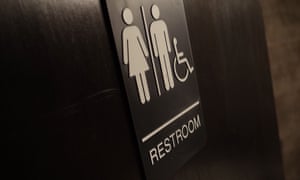
This year’s study also looked at what could be considered the most visible aspect of the battle for trans rights in the US today, public restroom accommodations. Legislation like North Carolina’s HB2, which restricts individuals to using only the bathroom reflective of the biological sex listed on their birth certificate, has turned the issue into a flashpoint for transgender rights.


The most visible recent debate over transgender rights has surrounded North Carolina’s so-called ‘bathroom battle’.


The most visible recent debate over transgender rights has surrounded North Carolina’s so-called ‘bathroom battle’. Photograph: Mandel Ngan/AFP/Getty Images

“I can speak first hand for how critical [it is] for transgender people to have safe and private bathroom access just like everyone else”, said Sharron Cooks, a trans woman and activist. Cooks added that when she was in high school, she was banned from the women’s room, calling the experience “crushing”.


“It made it impossible to learn and it severely delayed my academic career,” Cooks said.


The study found that Cook’s experience is far from unique. More than half of survey respondents said they had avoided using a public restroom in the past year because they “were afraid of confrontations or other problems they might experience”. 32% said they had limited the amount they ate or drank in the previous year specifically to avoid using the bathroom.


But Keisling cautioned that while the bathroom issue is important, “we have a lot of issues … that are missed when all we talk about is bathrooms.”


Keisling added: “Every minute we spend talking about it, we’re not talking the problems in real people’s lives. We’re not talking about the economic marginalization and we’re not talking about people being alienated from their faith communities and families.”


Risk of poverty and suicide far higher among transgender people, survey finds

1 Ağustos 2016 Pazartesi

Impact of poverty costs the UK £78bn a year, says report

Dealing with the effects of poverty costs the public purse £78bn a year, or £1,200 for every person in the UK, according to the first wide-ranging report into the impact of deprivation on Britain’s finances.


Related: More than a million people in UK living in destitution, study shows


The Joseph Rowntree Foundation (JRF) estimates that the impact and cost of poverty accounts for £1 in every £5 spent on public services.


The biggest chunk of the £78bn figure comes from treating health conditions associated with poverty, which amounts to £29bn, while the costs for schools and police are also significant. A further £9bn is linked to the cost of benefits and lost tax revenues.


The research, carried out for JRF by Heriot-Watt and Loughborough universities, is designed to highlight the economic case, on top of the social arguments, for tackling poverty in the UK. The prime minister, Theresa May, has made cutting inequality a central pledge.


Julia Unwin, the chief executive of the foundation, said: “It is unacceptable that in the 21st century, so many people in our country are being held back by poverty. But poverty doesn’t just hold individuals back, it holds back our economy too.


“Taking real action to tackle the causes of poverty would bring down the huge £78bn yearly cost of dealing with its effects, and mean more money to create better public services and support the economy. UK poverty is a problem that can be solved if government, businesses, employers and individuals work together.”


Responding to the research, a spokeswoman for the government pointed to the former chancellor George Osborne’s introduction of the “national living wage” for over-25s and May’s pledge to share out economic gains more fairly.


“We’re committed to creating a Britain that works for everyone and that means tackling the root causes of poverty,” the spokeswoman said. “Employment is key and we’ve made good progress – there are now more people in work than ever before, millions are receiving a pay rise thanks to the national living wage and we’ve doubled free childcare to 30 hours.


“But there’s more to do and we’re taking action across other areas like education and family breakdown so we can help more people to succeed in life.”


The JRF report, called “counting the cost of UK poverty”, estimates that 25% of healthcare spending is associated with treating conditions connected to poverty.


In education, an extra £10bn – 20% of the schools budget – is spent every year to cope with the impact of poverty through initiatives such as free school meals and the pupil premium, which is funding given to schools to help children from socio-economically disadvantaged backgrounds improve their academic performance.


Police and criminal justiceaccount for £9bn of the annual poverty cost, due to the higher incidence of crime in more deprived areas.


An estimated £7.5bn of spending in children’s services is associated with poverty. This represents 40% of the early years budget and 60% of the children’s social care budget.


The report’s authors said their estimates did not include the full cost of benefits aimed at preventing poverty or helping people to find a way out of it, such as working tax credits or jobseeker’s allowance. Nor did they include the amount that experiencing poverty in adulthood costs the public purse through reduced tax revenue. The estimates for lost tax revenue that the report included were only based on individuals who grew up in poverty.


Prof Donald Hirsch from the Centre for Research in Social Policy at Loughborough University said: “It is hard even to estimate the full cost of poverty, not least its full scarring effect on those who experience it. What our figures show is that there are very large, tangible effects on the public purse.


“The experience of poverty, for example, makes it more likely that you’ll suffer ill health or that you’ll grow up with poor employment prospects and rely more on the state for your income. The very large amounts we spend on the NHS and on benefits means that making a section of the population more likely to need them is extremely costly to the Treasury.”


The researchers noted that a concerted effort to eradicate poverty “may well involve spending more initially on services that help break the long-term cycle of family poverty and its consequences, but bring longer-term social and economic benefits”.


Impact of poverty costs the UK £78bn a year, says report

9 Haziran 2014 Pazartesi

Poverty and depression can result in heart attacks


The proposition, frequently manufactured in latest many years, that these with the misfortune to suffer a heart attack have only themselves to blame for their “unhealthy” life-style, is contradicted by the observation that in a lot of there is no proof of an acute thrombus (blood clot) impeding the flow of blood by way of the coronary arteries.


For that reason a distinct factor could be accountable, such as psychological anxiety caused by bereavement or a traumatic knowledge. Twenty years ago, Japanese cardiologist Dr Kenji Dote discovered that the surge of adrenalin in nerve-racking scenarios could “stun” the heart muscle, compromising its potential to pump blood – a issue recognized as tension cardiomyopathy or “broken heart syndrome”. The symptoms, of serious chest pain and shortness of breath, are characteristic of a heart assault, but the coronary arteries, when X-rayed, are totally typical.


Cardiologists at the University of Atlanta have used the most recent heart-scanning methods to show that psychological stress can trigger Psychological Anxiety Induced Myocardial Ischaemia (or MSIMI). “This supplies additional proof,” observes Prof Matthew Burg of Yale University, creating in Psychosomatic Medication, that “important psychosocial aspects such as poverty and depression have adverse wellness outcomes.”


The first (the self-evident) recounted how researchers in Spain had located that those “eating at least 3 slices of white bread a day were a lot more most likely to grow to be obese than individuals who ate a single slice each and every week”.


The up coming (the improbable) extrapolated the “convincing evidence” from animal scientific studies that light publicity leads to bodyweight gain to claim that “keeping a light on when sleeping can boost the chance of weight problems in women”.


It is a most significant matter, as these prominent scientists stage out, when protracted bureaucracy for funding scientific study sanctions such trivial intellectual pursuits, at the cost of “sustained open-ended enquiries in controversial or unfashionable fields”.


Dual motion


There have been a lot of responses to the dual bowel motion featured final week – the very first entirely regular, followed quickly after by a 2nd, “loose and urgent”. For a couple of readers, the culprit proved to be their early morning correct of freshly brewed coffee, even though an additional has identified that a couple of Imodium, 1 just before and one particular right after his morning bowl of Weetabix, “has made the whole variation to my life”.


Two further suggested remedies are gluten-free golden linseed seeds crushed into a powder by the coffee grinder, and the soluble dietary fibre supplement Resource Optifibre, that is available on prescription.


Electronic mail health care inquiries confidentially to Dr James LeFanu at drjames@telegraph.co.uk. Answers will be published each Friday at telegraph.co.united kingdom/wellness


Poverty and depression can result in heart attacks

28 Mayıs 2014 Çarşamba

Children"s wellness harmed by increasing poverty | @guardianletters

Child with asthma

A rise in respiratory troubles amid youngsters could be down to far more mother and father residing in damp and cold circumstances. Photograph: Voisin/Phanize/Rex Characteristics


As health pros we are alarmed, dismayed and disappointed by the most recent evidence, contained in a new report by Conserve the Kids that five million young children in the United kingdom could be living in poverty by 2020 (Report, 28 May possibly). The increasing statistics and study bear out what we are seeing on a day to day basis: a lot more youngsters with signs which are plainly linked to decrease standards of residing, such as asthma, bronchitis and anxiety-related illnesses. However, we are hearing from far more mother and father describing their living situations as damp and cold, which could be why we are seeing much more young children developing extended-phrase respiratory issues. The analysis also shows more families forced to get the cheapest foods achievable, regardless of its dietary content, reinforcing the enhanced likelihood of diabetes and weight problems in poorer young children.


The influence of poverty on children’s health and wellbeing cannot be underestimated. Reduced earnings can lead to bad well being, even though coping with sickness can outcome in a decrease earning capacity – perpetuating a cycle of deprivation. And we know that a lot of of the causes of little one death – like perinatal deaths and suicides – disproportionally have an effect on the most disadvantaged in society. We simply cannot disregard these warnings. We need to act now and put youngsters at the really heart of any approach to tackle poverty and overall health inequalities.
Michael Marmot, Dr Hilary Cass President, Royal College of Paediatrics and Child Wellness, Dr Mark Porter Chair, British Medical Association


• In a breathless 3-page post (Politics or technology, Review, 24 May possibly) David Runciman asks rhetorically: When did a government last develop anything as beneficial for the public welfare as Wikipedia? I would recommend 1948, and the NHS. Or, he wonders, when did a bureaucracy ever invent anything at all as lifestyle-enhancing as Google? How about a cradle-to-grave welfare state? Runciman’s frothiness regularly collapses under closer inspection. “We all would like laws made to suit us,” he says: no, some of us would like laws that supply social justice. Probably the most ridiculous of all: “It is a signal of broad satisfaction with the political program that most men and women don’t want to have anything at all to do with politics”. And so Runciman perpetuates the delusional view of the present elites. What a good deal of pernicious tosh.
Professor Huw Davies
Newport on Tay, Fife


Children"s wellness harmed by increasing poverty | @guardianletters

2 Mayıs 2014 Cuma

Uk child death fee: a scandal with a clear hyperlink to poverty

Babies in a maternity ward

The United kingdom mortality charge is notably undesirable for infants in the 1st 6 days of lifestyle and aged one particular month to a 12 months. Photograph: Alamy


The death of a little one is usually a tragedy. The avoidable deaths of thousands of children beneath five many years old every single yr in the Uk is a scandal, in accordance to the Royal College of Paediatrics and Child Overall health (RCPCH) and the Nationwide Children’s Bureau, who say that inequalities in our society which depart numerous households in poverty and deprivation are to blame.


Their views, expressed in a report this week, Why Kids Die, put flesh on stark new statistics published on Friday from the most authoritative variety-crunchers on overall health in the globe, the Institute of Health Metrics and Evaluation in Seattle, portion of Washington University. In their paper, published in the Lancet, they demonstrate that young children under 5 in the United kingdom are much more very likely to die than in any other western European country except Malta. Almost five babies of each 1,000 born in the Uk will not live to their fifth birthday.


The information is broken down by daily life phases. The United kingdom does especially badly in the very first 6 days of life, in one month to a yr and – worst of all – in ages one particular to four. The factors are slightly distinct, but there is one particular outstanding hyperlink issue: deaths rise with socio-financial deprivation.


In 2012, three,000 died below the age of one. People babies tend to be premature and of lower birthweight. Their mothers could be youthful and still growing themselves, they may possibly be smokers or they might not eat effectively – the RCPCH report says the growing amount of people accessing meals banking institutions is a concern.


Once previous their initial birthday, the principal causes of death are diverse. Accidents and injuries occur. Young children drown in ponds or are knocked down by vehicles and lorries.


But once more, it is the children from the poorest communities who are most most likely to die. Their streets are not so risk-free, perhaps their families can not afford excellent childcare, there is nowhere safe to perform.


In this older age group, in accordance to Dr Richard Horton, editor of the Lancet, there is one more important issue. Ailments like cancer are uncommon in children but can be fatal and they are hard for a GP to spot. In our anxiety to defend the NHS in latest many years, he says, we have omitted to place young children at the centre of our issues. “Need to we not be pondering of a model of care in which we have paediatricians sitting side by side with GPs?” he asks. We should feel of taking the specialist to the kid as an alternative of the child to specialist.


The identical lesson have to be realized in other areas too. “Hospitals are not the potential,” he says.


Healthcare reorganisation is naturally a extended way off, but the target on poorer communities is urgent, in accordance to all people who know about little one well being and child deaths.


Sir Michael Marmot, who was concerned in the RCPCH report, has been speaking for many years now about the social inequalities that underlie bad wellness. This is a British medical doctor who has turn out to be the world’s guru on the situation. But although he is taking the message all around the globe, his personal country appears to be failing its youngsters.


Uk child death fee: a scandal with a clear hyperlink to poverty

17 Mart 2014 Pazartesi

Nigerian gold mining: farmers choose death by lead poisoning above poverty | Monica Mark

Flanked by fields of millet and groundnut, the northern Nigerian outpost of Bagega is so far out on the periphery of the global economic system that when the financial crisis struck in 2008 couple of residents had any idea it was happening. And no one particular in a village with no automobiles, electrical power or tarred roads imagined it would end up indirectly poisoning hundreds of their children.


“We knew there was gold around here, but most folks didn’t care. We have often been farmers right here,” mentioned Alhaji Jibril, the white-haired village chief, sitting in the gnarled roots of a tree in front of his residence, which he calls his workplace.


But when western fiscal markets went into meltdown, gold offered traders with a haven from the turmoil, sending its price tag rocketing. For the very first time, it grew to become lucrative to mine the ore on which the village sits. “We considered [the gold boom] was a very good factor at initial,” said Jibril. So did 1000′s of itinerant fortune seekers, who beat down the dust trail leading to the village, swelling its population.


Shortly afterwards, officials from Médecins Sans Frontières (MSF) received a cellphone call from neighborhood wellness employees. “They advised us their kids have been dying, and they didn’t know why,” said Michelle Chouinard, the health care charity’s nation director. It was, in truth, the beginning of what Human Rights Observe named the worst incident of lead poisoning in present day history. Gold is extracted from lead, which accumulates in the blood and can severely harm the nervous technique.


By the time the rush subsided, Bagega, and seven other villages dotting the Zamfara countryside, had been ravaged by the deadliest lead poisoning epidemic in modern background. At least 460 kids died and practically 2,000 have been poisoned. “Lead poisoning can make adults infertile, but its most severe affect is on kids. So we had been seeing children who have been blinded or paralysed. Some have neurological injury, and that is not normally reversible,” Chouinard said.


Right after three many years of official dithering, some of the $ five.4m (£3.25m) pledged in government funds released last year permitted global organisations to begin cleansing the worst of the contaminated regions. Nevertheless, with few options, 1000′s proceed to mine in perilous conditions.


For the 3 extended households that dwell in Soweba’s compound, mining presented a a lot-needed improve when their farms suffered from erratic rainfall, partly linked to climate modify. Three many years in the past, her 14-yr-previous son started bringing rocks property. Soweba and the other women would sift via them, searching for glints of gold dust. A gramme could bring in up to 7,500 naira (£27) in a state where 70% lived on less than $ 2 a day.


Then, one by a single, the young children in the compound have been struck by convulsions and sweats. “There was a herbal concoction which we utilized, but it didn’t function,” stated Soweba, a slight girl with almond-shaped eyes. Her two-yr-outdated toddler died initial. A number of weeks later, another daughter died. Even cattle – drinking from contaminated waterholes – started to die, more diminishing the family’s earnings.


“We thought it was a genie, an evil spirit,” she stated, cradling a surviving daughter throughout a weekly go to to a clinic run by MSF. Nevertheless, her husband continued to permit their son to go mining towards her wishes. “He says it is the only way to feed the surviving children. They just leave their [contaminated] garments outdoors the property when they come back.”


Overall health staff also worry about a potential crime boom. Lead poisoning is linked not only with finding out troubles, but also with violent crime.


Handling mercury in gold mining Bagega Nigeria Glints of mercury, which is used to separate gold from its ore, is also highly toxic. The employees use their bare hands as they deal with hazardous heavy metals


Environmental scientist Simba Tirima, whose organization shipped in about ten,000 cubic metres of soil in an work to clean hundreds of compounds in Bagega, identified astonishing charges of contamination: up to 35,000 components per million of lead, virtually a hundred times the sum regarded safe for residential soil. In the vast tracts of land the place processing took area, the costs soared to a hundred,000 components per million.


“It is my sincere hope that the communities will not be recontaminated. The crucial to avoiding this from taking place once again lies in very carefully created safer mining programmes that are pragmatic and relevant,” Tirima said.


As soon as a significant component of the economic system, mining was abandoned by the government once oil was identified in the 1960s, leaving the operate to tiny-time diggers outfitted with practically nothing but shovels and hand-powered stone crushers. The unregulated market continues unabated. Villagers who make ten times as much money mining as they do from farming have advised Tirima they would rather die of lead poisoning than poverty.


“They are not going to cease. I noticed a female who had misplaced eight youngsters, but she is nonetheless mining,” mentioned mines minister Musa Sada, who aims to enhance the sector’s contribution to the economic climate to 5% from its current 1% by following year. “The only way around it is to invest in obtaining greater approaches for mining, give modern day tools and get a more structured industry for these individuals to function in.”


For now, that has not took place. A brief trip away from Soweba’s home, a fine mist of dust rises from the ground, clinging to garments and machines and cloying the eyes, nose and mouth. Payment increases in accordance to how hazardous the operate is. At the leading of the chain are employees who operate hand-powered grinders. Sitting amid fumes for hours a day, they earn up to 2,000 naira (£7.twenty) per jute bag of powdered stone. Up coming come those who mix poisonous mercury, employed to separate the lead from its ore, with their bare hands.


“The early days had been great days,” explained Adamu Tsiko, chairman of the Bagega Gold Miners Association, surveying employees raising plumes of dust at a vast open-pit web site. “Everybody wished to join – some people walked from [neighbouring countries such as] Burkina Faso, Chad, Niger, even Ivory Coast.”


Tsiko was element of a delegation that met government representatives in the Nigerian capital of Abuja final year to lobby for modern day products. He worries the government’s efforts to woo huge gamers – utilizing tax holidays and duty waivers – indicates artisanal miners are being forgotten.


“Appropriate now we even now need to have the correct tools, we require [pipe-borne] water to do items properly. Like now, there is nowhere to wash my hands just before I commence eating this sugar cane,” he said, breaking off a piece for a blank-eyed toddler wandering by means of the clouds of fumes.


Nigerian gold mining: farmers choose death by lead poisoning above poverty | Monica Mark

2 Mart 2014 Pazar

Meals poverty now greater public overall health concern than diet plan – specialist claims

Food poverty bigger concern than bad diet – claim made in BBC Panorama

Panorama has found that over a third of regional authorities in England and Wales have been now supplying funding for foods banking institutions. Photograph: Christopher Thomond for the Guardian


The prevalence of poverty–stricken families who can’t afford to purchase enough food is overtaking unhealthy eating as the most pressing public overall health concern, a public well being professional has claimed.


The claim is produced in a BBC Panorama documentary to be broadcast on Monday evening which identified that over a third of local authorities in England and Wales had been now offering funding for foods banking institutions, despite government claims that charity food is not a part of the social security technique.


Julie Hirst, public health specialist at Derbyshire county council, advised Panorama the authority had invested £126,000 from its public wellness budget in meals banks.


She mentioned: “It really is now turn into an situation of foods poverty and some men and women in the nation are not currently being able to eat at all – and if individuals can’t consume at all, what’s the level in attempting to get them to consume healthily?”


Elizabeth Dowler, a professor at Warwick University and the co-author of a latest government-commissioned report on meals support provision, advised the programme it was shocking so a lot of councils were investing in foods banking institutions.


“Food banking institutions are an inadequate plaster in excess of a gaping wound … They do not resolve the issues. And that they ought to be enshrined as an inadequate remedy is deeply immoral.”


The programme also uncovers proof that a job centre seems to be explicitly alerting its employees to the economic cost savings to be made by means of “sanctioning” job seekers when they are judged to have broken advantage circumstances.


A wall chart in a Grantham work centre explicitly sets out the funds savings obtainable to the Division for Perform and Pensions (DWP) by means of stopping the rewards of claimants, ranging from £227.twenty a week for a 4-week sanction to £3,728 for a sanction lasting one yr.


The DWP advised Panorama: “This was an isolated incident and does not reflect our policy on sanctions.”


Charities and campaigners say record totals of DWP sanctions – 875,000 in the 12 months to September 2013 – are a prime reason why men and women are forced to turn to foods banking institutions.


They complain that several sanctions are unfair and unjustifiable, and that hundreds of folks are wrongly penalised every day forcing them to survive for weeks on little or no money.


The DWP insists there is no robust hyperlink amongst welfare reforms and the rise in meals bank use.


The programme interviews a mom of two who says her family’s well being suffered soon after she was wrongly sanctioned for three months after a clerical combine up, leaving them on reduced income.


Suzanne Harkins, who lives in Paisley, Scotland, advised Panorama: “It was devastating. It acquired to a level that there was no food in the property and any foods that did come in had to feed the two youngsters and my husband and I would go for days at a time with no eating.


“I was nonetheless breastfeeding Mason at the time and I stopped making milk since I wasn’t getting sufficient nourishment into me to create milk to breastfeed him.”


The two councils covering the parliamentary constituency of Iain Duncan Smith, the function and pensions minister – Redbridge council and Waltham Forest council – have offered above £70,000 to fight foods poverty, the programme discovered.


The DWP stated regional authorities, who run regional welfare assistance programmes, most of which refer vulnerable residents to emergency meals charities, have been very best placed to fund meals banking institutions.


However, the DWP mentioned earlier this yr that it would stop its £180m funding for council neighborhood welfare schemes in 2015, a move that charities warned would set off a rise in the amount of individuals turning out to be dependent on food banks or loan sharks to survive.


Hungry Britain?, 8.30pm, Monday three March, BBC One particular


Meals poverty now greater public overall health concern than diet plan – specialist claims

16 Şubat 2014 Pazar

It truly is wrong to suggest poverty is a cause not to assistance action against smoking | Kevin Barron

cigarettes in packet Tobacco

‘The claim that we need to not act to stop a single bad issue, simply because there are other poor factors that we are not preventing at the same time is a fallacy usually perpetrated by reactionaries.’ Photograph: Martin Rickett/PA


Zoe Williams appears to be arguing that we ought to not legislate to avert smoking in vehicles with children present due to the fact “it stamps into public lore an image that fixates conservative view – that of the negligent parent” and “who makes the greatest mother or father? The middle class, of course” (The hidden agenda behind the ban on in-auto smoking, twelve February).


Initial, it must be remembered that ending smoking in cars with children was only part of the bundle of tobacco control measures agreed by parliament as part of the young children and families bill. The other people included the introduction of standardised packaging for cigarettes and other tobacco products – a measure aimed squarely at the tobacco firms, their advertising and marketing method and the huge income they make from pushing addiction and ailment. Williams does not mention that – it would spoil her narrative.


Second, she looks to propose both that due to the fact “the smoking figures are virtually usually in constellation with other aspects … from bad housing to reduced birth weight”, we either are not able to know for certain that smoking is a issue in kid illness, such as sudden infant death syndrome, or that we should not act on it even if it is – due to the fact we are not concurrently tackling other variables, typically a consequence of poverty in the household.


I profoundly disagree with her 1st proposition: the connection between smoking in front of young children and sudden infant death syndrome is effectively established in scientific literature and has been confirmed by the US surgeon common, the UK’s scientific committee on tobacco and health, and numerous other people.


Yes, there are other elements – and, like smoking, a lot of are associated to poverty and inequality – but this does not make government action to decrease smoking in front of young children a bad idea. The 2nd proposition is a fallacy generally perpetrated by reactionaries: the claim that we need to not act to avoid 1 negative point due to the fact there are other bad issues that we are not avoiding at the very same time. As even Williams looks to accept, smoking in cars is notably risky to youngsters simply because “smoking is more extreme in a modest enclosed area”.


Third, she forgets that smoking is the most significant single trigger of wellness inequalities in our country. Simply because smoking costs are higher in poorer communities, it accounts for about half the distinction in lifestyle expectancy in between the richest and poorest social class.


Smoking is an addiction deliberately promoted to some of the poorest folks in our society by some of the biggest, greediest and most irresponsible multinational companies in the world. If that is not some thing that must animate men and women on the left to action, I do not know what is.


I was brought up in a local community the place funds was tight and smoking was commonplace. Many great guys and women died younger as a outcome. I will not require to be lectured by a Guardian journalist about the realities of poverty, or to have it advised that poverty is a explanation not to assistance legislation to reduce smoking rates. I think I have a very good grasp on what poverty means, why we need to have to fight it, and why we must reduce the toll of death and ailment triggered by smoking.


It truly is wrong to suggest poverty is a cause not to assistance action against smoking | Kevin Barron