'I've etiketine sahip kayıtlar gösteriliyor. Tüm kayıtları göster

16 Nisan 2017 Pazar

Terry Jones: ‘I’ve got dementia. My frontal lobe has absconded’

Terry Jones first exhibited signs that all was not well with his health in July 2014. He and his close friend Michael Palin were performing with the rest of the surviving Monty Python’s Flying Circus troupe in a show of sketches and songs, Monty Python live (mostly) at the O2 in London.


“Terry was always very good at remembering lines,” recalled Palin last week. “But this time he had real problems, and in the end he had to use a teleprompter. That was a first for him. I realised then that something more serious than memory lapses was affecting him.”


Jones, now 75, later passed standard tests designed to pinpoint people who have Alzheimer’s disease. His speech continued to deteriorate nevertheless. “He said less and less at dinner parties, when he used to love to lead conversations,” said his daughter Sally.


Eventually, in September 2015, Jones was diagnosed as having frontotemporal dementia (FTD), a condition that affects the front and sides of the brain, where language and social control centres are based. When cells there die off, people lose their ability to communicate, and their behaviour becomes increasingly erratic and impulsive. Unlike Alzheimer’s, there is no loss of reasoning or orientation. However, planning, decision making and speech are affected, and patients often seem less caring or concerned about their family and friends.


Sally recalls that even though her father’s speech was faltering, he was still initially able to outline his plans and thoughts by email. “However, the emails slowly became more and more jumbled, and by autumn last year he had to give up,” she said. “For someone who lived by words and discussions this was tragic.”


Jones’s family revealed his condition to the public six months ago, and at last year’s Bafta Cymru ceremony in October, his son Bill had to help his father collect his award for outstanding contribution to television and film. The only words that Jones was able to utter were to tell his audience to “quieten down”.


Jones was not expected to talk to the press again – until last week, when his family requested an interview to help promote public awareness of FTD, a condition that affects tens of thousands of people in the UK but which remains a relatively little-known medical problem. Their hope was that information about Jones’s responses to his condition might help others cope with it.


“Many patients, particularly those in the early stages of the condition, are often unaware they have anything wrong with them at all,” said Professor Nick Fox, a dementia expert who has been involved in the diagnosis and care of Jones. “It is only later – when FTD is diagnosed – that you get some inkling of the root of their earlier behaviour. People may not show sympathy or concern for others, including their spouses – much to the consternation of the rest of their family,” added Fox, who is director of the Dementia Research Centre at University College London.


Loss of language nevertheless remains the most noticeable symptom of FTD. In the case of Jones, his dialogue is now restricted to a few words, usually uttered to agree with those who are speaking to him. Apart from that, he looks fit for his years. Dressed in black trousers, shirt and jacket and lurid purple socks, he cut a trim figure during our interview. He remains an enthusiastic walker, likes his beer and wine, and watches old films compulsively. Some Like It Hot is a favourite.


Palin is a frequent visitor to Jones’s home and the affection between the two men is clear from the start. They clasp each other warmly on Palin’s arrival and Jones looks relieved to see him. “The thing that struck me was how Terry reacted to his diagnosis,” said Palin. “He was very matter of fact about it and would stop people in the street and tell them: ‘I’ve got dementia, you know. My frontal brain lobe has absconded’.


“He knew exactly what was affecting him and he wanted to share that knowledge – because that is the way that Terry is. FTD may cause loss of inhibition, but Terry was never very inhibited in the first place.”


Palin and Jones first started working together in 1965 on The Frost Report, a collaboration that culminated in the formation of the Monty Python Flying Circus team in 1969. Jones was also co-director (with Terry Gilliam) of Monty Python and The Holy Grail before directing the Python films Life of Brian and The Meaning of Life. He went on to direct other films, including Personal Services and The Wind in the Willows. He has also written books on medieval history and the Iraq war (to which he was bitterly opposed).



The Pythons in 2014, at the time of the last live show.


The Pythons in 2014, at the time of the last live show. Photograph: Andy Gotts/PA

The pair still regularly have lunch together. “We chat – well, I chat,” added Palin. “But when the meal is over he makes it clear he has to move. He has to get to the next thing on his agenda and he just puts his head down and goes. I have never felt discomfited in his presence, however. There is no embarrassment. He doesn’t shout or show his bottom.”


Only taxis cause problems. “He always wants to give directions and he hates traffic,” said Sally. “That is nothing new in a sense. He always knew a better way and would always let the taxi driver know that very early on in the journey.” At this point, Jones nods vigorously.


In contrast with other forms of dementia, walking or moving around is not usually a problem with FTD. “Terry still goes on very long walks across Hampstead Heath, often following the most obscure routes, and it is very hard to keep up with him,” said Palin. “His old pal Barry Cryer, the comedian, came round one day and said he would like to join Terry on a walk on the heath, and nothing would deter him. It was a muddy day and Barry kept slipping while Terry just walked on and on. In the end, Barry fell over so many times he gave up. He told me that there he was on his backside in the mud while his friend who had dementia was striding out miles ahead of him across the heath.”


Certainly Jones is no shuffling, helpless victim of cognitive degeneration. “He still enjoys his beer, his wine, his walks, his films and a good joke,” added Palin. “These are not things you associate with a depressive illness.” However, the condition can still cause problems, as Fox stresses.


“The frontal lobe contains the brain cells which act as our social censor,” he says. “Essentially it is a handbrake on our behaviour. Take that off and you start to act impulsively. People get into all sorts of trouble – particularly if they are also losing the ability to speak and to explain their actions.
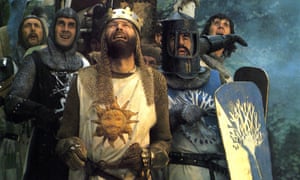


The team in Monty Python and the Holy Grail, which Jones co-directed with Terry Gilliam.


The team in Monty Python and the Holy Grail, which Jones co-directed with Terry Gilliam. Photograph: Allstar

“People with FTD end up in prison in this way. It is made worse because people with FTD have no insight into their condition. They are not aware that things are going wrong for them.”


This lack of insight can have profound consequences, Fox added. “The head of a company in the early stages of FTD has no idea that his insight has been compromised and can make decisions that have enormous consequences. There are companies that have lost all their money this way.”


A tendency to impulsive action is also noticeable. “Food can be a particular problem,” said Sally. “As soon as it is put down in front of him he will grab it and eat it. We made him a birthday cake a few weeks ago. He started to eat it before we could get him to blow out the candles.”


And then there are other people’s perceptions of his condition, which can also cause distress. “Friends often ask: will he recognise me?,” added Sally.


“I tell them: of course he will. It is his speech that has gone. In fact, he loves seeing friends. His only problem is that he no longer has the ability to tell them how pleased he is to see them.”


It is a point endorsed by Palin. “I think that must be the most difficult thing – not to be able to say quite simply how you are feeling on a given occasion. We assume that he is happy, but that assumption could be wrong. We just don’t know.”


Certainly, it is hard to believe that Jones is unaware of his condition. However, he is clearly consoled by the support of his family, who help to keep his life enriched.


It is also obvious he gets strength from the presence of Palin. Towards the end of our interview, Jones reaches out to grasp his hand, giving it a good squeeze. The pair hold hands for a couple of minutes, a gesture that perfectly reflects their 50 years of friendship – and its importance in sustaining Jones through his tribulations.


Where to find help


The FTD support group provides practical help and information for people with the disorder and their families. Their website gives details of meetings in different regions of the UK – an important way to meet others coping with similar problems that may seem very different from those experienced in more common dementias.


A specialist progressive aphasia support group offers help for those whose speech and language are affected.


Jargon-free research updates can be found at www.ftdtalk.org


The dementia research centre at UCL has a specialist focus on young-onset dementias and is linked to the cognitive disorders service at the National Hospital for Neurology and Neurosurgery, which receives NHS referrals for people with FTD.


Join Dementia Research enables people both with and without dementia to register an interest in taking part in research.


Terry Jones: ‘I’ve got dementia. My frontal lobe has absconded’

10 Nisan 2017 Pazartesi

I"ve had to remove all of a toddler"s teeth. It"s time for a war on sugar

It is the end of an afternoon in theatre and I have extracted more than 100 teeth from my operating list of eight patients, the youngest a two-year-old who needed all 20 baby teeth removing because they were so decayed. I watch in silence as a child younger than my own is transferred from the operating table and I wonder how we reached this point as a society where I don’t believe we truly value oral health, nor realise the implications of failing to do so.


Nearly 20 years after observing my first general anaesthetic as a student it doesn’t get any easier. I regularly see parents overcome by guilt and emotion as they watch their child being put to sleep, or recovering dazed and confused in the recovery suite. Sometimes after a busy afternoon I sit in the theatre and wonder if there is more I can do, sometimes I have nothing left to give.


Responsibility for oral health promotion has been devolved to cash-strapped local authorities


As an NHS consultant in paediatric dentistry, it sadly comes as no surprise to me that removal of decayed teeth remains the most common reason for a child aged five to nine years to be admitted to a hospital in England. In these straitened times, it seems so wrong that every year we spend around £35m on operations to treat a disease that is almost always preventable.


The frustration is that the solutions are already out there. Ten years ago, the Scottish government agreed to invest in a programme of oral health prevention called Childsmile. Now every child in Scotland has access to free daily supervised toothbrushing in nursery and free dental packs to support toothbrushing at home. Dental registration is encouraged and those communities and individuals who are higher risk have more support. The result? Scotland is reducing the millions of pounds it spends on general anaesthetics and turning around the oral health of its children, for the princely sum of £17 per child per year.


Wales has a similar Designed to Smile programme but in England, responsibility for oral health promotion has been devolved to cash-strapped local authorities. This means that it is a postcode lottery with some excellent programmes, such as Teeth Team in Hull, while in other areas existing services are being decommissioned.


England needs urgent investment in oral health prevention. It is actually more cost effective to prevent, rather than treat, dental disease but more importantly we could be preventing tens of thousands of young children, and their families, from potentially experiencing pain, swelling and sleepless nights and time away from school or work.


Every child has a right to good oral health yet still we see one in eight three-year-old children with obvious signs of decay. We need a more radical approach to reduce the persistent inequalities in oral health, which are immoral in this day and age. We need more compassion, an accelerated programme of product reformation so that the sugar content is reduced, and a war on marketing of high sugar products aimed at children.


Two years ago after a particularly frustrating consultation with a parent whose child’s diet was limited to Ribena and biscuits, I decided to begin writing a blog as a way of delivering practical information. I have reached many more families than I would in my day job, but I still feel as though I am wading in a sea of untreated decay. Education is important but it forms only part of the solution. It is too simplistic, and frankly unhelpful, to apportion all blame to the parents. Yes, as parents we have responsibilities and a vital role to play – but we could all be more proactive when it comes to children’s oral health.


I am delighted at the growing number of organisations that are now beginning to collaborate with myself and colleagues via the British Society of Paediatric Dentistry. Health visitors can and are encouraging a dental check before a baby’s first birthday; sports and education settings can lead by example, adopting low-sugar menus and refusing to place sugary drinks in their vending machines; and communities should campaign for water fluoridation. Above all, we need strong, visible leadership by local and national government that says, “This is not acceptable and we are going to do something about it”. Children’s oral health should be everyone’s business.


If you would like to write a blogpost for Views from the NHS frontline, read our guidelines and get in touch by emailing sarah.johnson@theguardian.com.


Join the Healthcare Professionals Network to read more pieces like this. And follow us on Twitter (@GdnHealthcare) to keep up with the latest healthcare news and views.


I"ve had to remove all of a toddler"s teeth. It"s time for a war on sugar

31 Mart 2017 Cuma

Experiences of eating disorders: "I"ve been to many dark places"

Anonymous, 22
The first time I was depressed, I was 12 and I didn’t know I was ill. I didn’t even know what depression was. After a family feud and several years of being a victim of bullying, I didn’t want to live any more. I remember standing on my balcony, hands on the railing, and thinking: “Should I jump?” I thought that I was a coward, because I was afraid of dying more than I hated living. I began to self-harm, and my mental illness had the sting of a pair of scissors cutting into my skin.


I was 16 when I decided to lose weight, so the boys and the girls wouldn’t laugh any more, and perhaps, just perhaps, someone, one day, would even desire to touch me. Three years later, I was sitting on the toilet bleeding because I had taken too many laxatives, and my mental illness was as red as blood.


At 19, I gained all the weight back and along with it came anxiety and depression and the sense of failure. I had moved in London, away from my family, to study and build a new life. So why wasn’t I happy? Why had the balcony turned into a tube platform and I was wondering again: “Should I jump?”


I lost the weight again at 21, and by 22 things were OK (in a precarious, risky balance). I decided that I needed help before things got worse again. Now, once a week, I meet with a therapist, thanks to the NHS, and she asks me how my week was, and I am as honest as I can be.


I was as pretty


As a flower


Yours to pick


And then left to wither


Now


I want to be as free as the wind


As tall as a mountain


As fierce as a lion


And beautiful


Like the stars


That keep shining


After they’re long gone.


Jessica Secmezsoy-Urquhart, 23, Hamilton, Scotland, master’s student


Jessica Secmezsoy-Urquhart


Jessica Secmezsoy-Urquhart: ‘I will always have multiple conflicting sides to myself but I’ve found ways to bring them together more now.’ Photograph: Jessica Secmezsoy-Urquhart

This photo is called Alone Together, and represents the duality of my identity. I’m a recovered sufferer of an eating disorder, an abuse survivor and I was hospitalised twice before the age of 15 with depression caused by the social effects of Asperger syndrome. I have everything from attention deficit disorder to anxiety and I’m chronically ill with a connective tissue disease. And yet I’m mentally better than I’ve ever been and have found my place at university, but to get there I’ve been to many dark places.


I had two selves, like in this image – the real one that was disgusting, pathetic and deserved to be dead and mistreated, and one that others saw that was normal and good. I will always have multiple conflicting sides to myself, but I’ve found ways to bring them together more now. Recovery is possible. I’m proof.


Anonymous, 29
I have suffered with anorexia nervosa since I was 12 and have been in and out of several inpatient units. As an adult, having been a service user for the past seven years, I have seen a rapid decline in the quality of services available, not just for eating disorders, but across the whole of mental health.


NHS cuts have led to decreased beds being available for desperately ill patients, resulting in more strain on community services. Working hours and staff shortages have also put a huge strain on nurses in this field, resulting in reduced quality of patient care.


Treatment in all areas of the NHS, but particularly mental health, is being severely compromised. I am currently a patient at a hospital in south London, on the eating disorders unit. Staff shortages, lack of trained nurses and increasing demands on the few nurses on the ward, are seriously jeopardising patient care. In some cases patients are being left to deteriorate to such extremes that they have required nasogastric feeding to save their lives.


Suz Hemming, Aylesbury


Suz Hemming


Suz Hemming: ‘It took six years of my life just to get past the shape and size of the thing I have that keeps me alive – my body.’ Photograph: Suz Hemming

This photo is representative of my battle with mental illness, which I have lived with from a young age. I have borderline personality disorder, that frequently leaves me with this overwhelming sense of identity diffusion and a profound confusion and disparity between my image and my body; my thoughts and who I am. This photo creates a way of capturing who I might be in the one moment, because my rapid mood fluctuations and unstable sense of self often leave me with this idea of my life as a string of photos, disconnected from one another, with no narrative or person a its core. Its black-and-white presentation symbolises the black-and-white, all-or-nothing thinking style that is the cornerstone of my illness. It’s what keeps me stuck, what keeps me searching in the mirror for an answer to the question: “Can I be just one person, a whole, not fractured with flashbacks from my past?”


Also, being in stable recovery from anorexia, the photo asks what is it in a piece of glass that has so much power? Not just over me but over you too. It took six years of my life just to get past the shape and size of the thing I have that keeps me alive – my body. This photo asks me who and what is real. Is it me? Is it her? Is it her image? Or mine? And whether any of those things can be the same as each other – each a part of a bigger part, of a much bigger picture of my journey towards living a life in a “working recovery” from acute mental illness.


In the UK, the Samaritans can be contacted on 116 123.
In the US, the National Suicide Prevention Hotline is 1-800-273-8255.
In Australia, the crisis support service Lifeline is on 13 11 14.


Experiences of eating disorders: "I"ve been to many dark places"

7 Kasım 2016 Pazartesi

As a prison doctor I’ve seen the crisis in jails – half the inmates shouldn’t be there | Gordon Cameron

I have worked as a GP over the past decade in about a third of the around 140 prisons in England and Wales – all categories, male and female – and in all there has been a gradual increase in the prison population, leading to overcrowding.


This reflects the national situation. Ministry of Justice figures show that between June 1993 and June 2012 the prison population in England and Wales increased by 41,800 prisoners, to more than 86,000. Without urgent steps aimed at cutting the prison population this could exceed 100,000 by 2020. However, this has not been matched by a corresponding increase in the number of prison officers. On the contrary, their numbers have been cut.


When our prisons are at crisis point, amid continuing controversy about incidents such as the recent killing at Pentonville, consider our direction of travel. Take HMP Berwyn, the so-called super prison expected to open in February 2017.


Built at the cost of £212m and located at Wrexham in Wales, HMP Berwyn is expected to accommodate 2,100 category C prisoners – those who cannot be allowed to move freely but are considered unlikely to try to escape. Instead of taking steps to radically reduce the UK prison population the government keeps building more prisons to house even more prisoners.


I have come across numerous cases over the years where a noncustodial sentence would have been more appropriate than imprisonment. I recall a heavily pregnant lady suffering from a life-threatening condition who was jailed for breaching a restraining order. What was to be expected of a pregnant sufferer confined for a good deal of the time in a small, poorly ventilated prison cell? During her time behind bars she was rushed to hospital several times. Whenever she was there, for sometimes up to a week and longer, she was guarded round the clock by prison officers.


Sending people to jail in the hope of ridding society of the menace of drug abuse is a woefully inadequate approach


I recall another instance when the nurse, seeing the new arrivals on reception duty, sent me the following message, asking me to prescribe a short course of sleeping tablets for a recent arrival. She was in prison for failing to pay a bill. Her partner was supposed to be looking after their young children but, the message said: “she does not believe he is up to the task. She is in a very weepy state and unable to sleep. She has another four weeks to do – could you please help?”


These women represent a not insignificant proportion of the prison population who are not a “danger to the public”. So why is the state spending large sums to keep them behind bars?


Ministry of Justice figures from 2013 revealed that 55% of prisoners connected their offences to drug-taking, with the need for money to buy drugs the most commonly cited factor. Eliminating the addiction factor could lead to the closure of about half the prisons in the UK and free resources for other matters.


‘Prison is punishment enough’: are inmates paying price of industry politics?

Sending these people to jail in the hope of ridding society of the menace of drug abuse is a woefully inadequate approach to the complex problem of drugs. It is akin to a doctor treating the symptoms of a disease without concerning themselves with its cause or its future prevention. There should instead be a holistic approach to the problem of drug addiction, with treatment and rehabilitation forming the centrepiece.


And then there are the inmates with mental health issues. Surely these are best handled in psychiatric institutions rather than prison. Instead of spending millions on “super prisons”, the state would be better employed building additional psychiatric hospitals and homes to accommodate the hundreds, if not thousands, of them languishing in jail. Instead of helping them to overcome their mental impairment, society is punishing them for a condition they cannot help having. Labelling them criminals on a par with those who commit armed robbery, rape and murder is antiquated at best and nonsensical at worst. Samuel Butler lampooned this stance in his classic satire, Erewhon, describing a culture who imprisoned the sick for the crime of not being well. That was published in 1872, but what has changed since then?


A report published last month by the RSA’s Future Prison project says the prison and probation services in England and Wales are failing to protect the public because they do not rehabilitate offenders, and that they should be radically restructured. I welcome the rehabilitation aspect, but it still ignores the central issue of population.


We need urgently to address sentencing, because too many offenders are being sent to prison for short terms. A record-breaking case was that of a lady who was jailed one evening only to be released the next day. I believe any sentence below three months should be suspended, turned into fines or whatever other punishment society deems appropriate short of an actual prison sentence.


As for drug addicts, the power to sentence them to drug rehabilitation homes makes sense for everybody. Keeping the most dangerous criminals – sex offenders, murderers, terrorists, armed robbers, and so on – in jail, and finding alternative punishment for those committing petty crimes, would not only lead a radical reduction in the prison population, it would also allow for the proper supervision of extremely dangerous inmates.


Whatever else is said this week, population reduction is where our focus is and it is quite achievable. What is really needed is the will.


Dr Gordon Cameron is a pseudonym. Memoirs of Her Majesty’s Prison Doctor by Dr Cameron is available now. Visit hmpdoctorsmemoirs.com


As a prison doctor I’ve seen the crisis in jails – half the inmates shouldn’t be there | Gordon Cameron

7 Ekim 2016 Cuma

Fanny Burney wrote one of the most courageous pieces of work I’ve ever encountered

As presenter of Woman’s Hour I’m no stranger to the history of women who, over the centuries, have risen above the prejudice imposed on their gender, and whose lives began to be uncovered in the latter part of the 20th century as women’s studies became an acceptable subject for academic research. But nowhere could I find a book which gathered together a group of those who had most excited my interest and admiration.


Then came reports in November 2015 that it was proposed to cut feminism from the politics A-level syllabus. The suffragette movement was to be squeezed into a section on “pressure groups” and only one political thinker, Mary Wollstonecraft, was to be mentioned by name. My son had come home some years earlier with his text book for 20th-century British history and recognised (thank goodness) that something was missing. “Mum,” he said, “I don’t think this is right. I can’t find any women in this book except half a page on the suffragettes.” That’s my boy!


Then I came across Thomas Carlyle’s “The history of the world is but the biography of great men”, written in 1840, and, in Steve Biddulph’s Raising Boys(1997), “It’s important to remember that men built the planes, fought the wars, laid the railroad tracks, invented the cars, built the hospitals, invented the medicines and sailed the ships that made it all happen.”


It became vital to bring together a group of female warriors, poets, playwrights, painters, composers, campaigners, scientists, engineers, doctors and politicians for the benefit of all those young people who need to know that the history of Britain is the biography of great men and women.


Fanny Burney is one such woman. Though certainly not the most accomplished novelist in the canon of English literature, she was successful in her day, often writing in her fiction about the difficulties faced by women in getting an education, taking control of their own lives and surviving the social whirl of the nouveau riche. Virginia Woolf called her “the mother of English fiction”.


Her diaries are phenomenal, giving us the most gossipy and often scandalous details of life in literary and intellectual London in the late 18th and early 19th centuries. She was at the centre of a circle that included Dr Johnson and his biographer, James Boswell. Her diaries give a far more intimate portrait of Dr Johnson than do those of the man she referred to rather scathingly as Bozzy.


She also wrote one of the most courageous pieces of work I’ve ever encountered. I read it around the time I, like so many 21 century women, was diagnosed with breast cancer.


Burney’s is the first example I’ve come across of a woman writing about so intimate an event as a diagnosis of breast cancer and a mastectomy. Even today, when I wrote about my experience, it was regarded as a brave thing to do, though we no longer have any squeamish concerns about speaking the words “breast” and “cancer” out loud. It was generally deemed to be helpful, making it clear that there’s no shame attached to the diagnosis and it can be endured and survived.


Burney was there first. She was diagnosed in Paris in 1810, at the age of 58, when surgery was in its infancy and there was no effective anaesthetic. Her story was written to her sister, Esther, and was headed “Account from Paris of a terrible Operation – 1812”. First she explains that in August of 1810 she had a pain and a heaviness in her breast. She was referred to a surgeon and, at first, dismissed the concerns of her family and friends. Her letter is a cautionary tale. “I relate this false confidence, now, as a warning to my dear Esther, my sisters and nieces, should any similar sensations excite similar alarm.”


She goes on to describe every horrific detail of what she endured: “Monsieur Dubois placed me on the Mattrass, and spread a cambric handkerchief upon my face. It was transparent however, and I saw through it that the Bedstead was instantly surrounded by the seven men and my nurse. I refused to be held; but when, bright through the cambric, I saw the glitter of polished steel – I closed my eyes.”


For now I’ll spare you the remaining horrors and reassure you that the tale has a happy ending. Burney lived for another 29 years after her mastectomy, to the age of almost 88.


I love Burney’s writing, especially her diaries. But most of all I love her for making us aware that, though the diagnosis is awful and the surgery, even with a full anaesthetic, isn’t pleasant, breast cancer can be survived – and a long and productive life lived after it. For this, she deserves her place among the greatest women.


A History of Britain in 21 Women by Jenni Murray is published by Oneworld. To order a copy for £13.93 (RRP £16.99) go to bookshop.theguardian.com or call 0330 333 6846. Free UK p&p over £10, online orders only. Phone orders min p&p of £1.99.


Fanny Burney wrote one of the most courageous pieces of work I’ve ever encountered

26 Eylül 2016 Pazartesi

I"ve worked as a GP receptionist under a year and I"m already burnt out

It’s only 8.15am and the appointments for the day are already fully booked despite our appointment booking line opening at 8am. Less than a year ago this was an anomaly, now it’s the norm, as are queues out the door when we open. I spend the rest of the morning bearing the brunt of patient irritation, which is mostly aimed at our lack of appointments. I share their frustration because the service is substandard and it only seems to be getting worse.


The calls keep flooding in, the phone rings all day and I often finish work with a headache from the sound. The calls can be incredibly stressful one moment – talking to someone who is struggling to breathe – to mundane the next with patients who are convinced that their three-day cough constitutes an emergency. Patient anger often unfortunately comes back on to the receptionists, I wish they could see the wider picture and direct their anger at the government that is responsible for cutting their services.


Much of my job involves reducing doctors’ workloads so they can spend more time with patients. The administration aspect of the NHS is what keeps the service running. However, the demands of the job and the ever rising number of patients relative to staff make it impossible to do the job well. I think back to my early enthusiasm and my wish to help patients. Now I just feel the steady erosion of my capacity to help. I can’t offer people appointments that aren’t there. I can’t give any patient any real time and attention because there are just so many.


The stressful demands of the job mean that there are high levels of staff sickness; this makes staff morale low and turnover high. I’ve been in the role for less than a year and I’m already burnt out. I’m exhausted all the time and the stress from the job has affected my personal life, making it difficult to sleep and giving me a constant sense of worry. I’ve even been referred to counselling by my doctor because of the stress and anxiety my job causes me, ironically further burdening the NHS.


I work in a deprived area in the midlands and I’ve seen firsthand the long-lasting and far-reaching effects of poverty. The lack of investment and funding in the NHS means that we are having to do more with a decreasing level of resources and a lot of cuts mean people are getting put back on to their frontline GP service.


We have numerous patients with complex mental health issues who we are called about every day, usually by social workers or concerned relatives, because the support they need has been cut elsewhere. There’s the heroin addict who goes in and out of prison and mental health units – every time he is released he goes missing for days until we are informed that he has been sent back to another institution.


There was also a patient who was terminally ill with chronic obstructive pulmonary disease, but also suffered from severe anxiety and schizophrenia, who called us or the emergency service in a frantic state every day for months until he died. He would often be having panic attacks on the phone or hearing voices – this was incredibly distressing as I felt underprepared to deal with such complex issues. One woman was so distressed after cutbacks on the time she received from carers that she attempted suicide just weeks later. She now remains on an A&E ward.


Some people’s lives are so chaotic and their support networks so poor that it seems that the NHS is the only consistent factor in their lives. How will they cope when services they rely on continually suffer from cutbacks? Without drastic improvements in funding and a greater number of staff, these issues will only get worse. I worry about the future of our practice, our patients and the NHS at large. But for now I’m overstretched and exhausted, I’m certain that neither I nor the NHS can keep this up for much longer.


If you would like to write a blogpost for Views from the NHS frontline, read our guidelines and get in touch by emailing sarah.johnson@theguardian.com.


Join the Healthcare Professionals Network to read more pieces like this. And follow us on Twitter (@GdnHealthcare) to keep up with the latest healthcare news and views.


I"ve worked as a GP receptionist under a year and I"m already burnt out

16 Eylül 2016 Cuma

I’ve been having an affair for 10 years – what will I do when it ends?

I’ve been having sex regularly with a married man for about 10 years. The sex is amazing, which is why we’ve continued for so long. We are intellectually matched and get on very well, but neither of us want the relationship to be anything more than it is. I feel lucky to have what I have with him. I am independent and very happy not to be in a “normal” relationship. I work overseas a lot and having him to satisfy me when I am back is perfect. I am very content with all aspects of my life.


However, I know that the relationship will come to a natural conclusion at some point. As that time gets closer (we don’t have a fixed date, but we are not getting any younger), I wonder how I will feel. Yes, I will be immensely sad to have lost a special, intimate relationship but I am not sure if I will suddenly want to share my life with someone full-time. If I do, how will I go about finding that next someone? I will have such high expectations that I wonder if I will ever find another man who can make me feel satisfied – both sexually and emotionally. I don’t want what I have to stop, but I know that is not possible. There must be others, both the single lover and the married one, who have had a similar experience.


When leaving a message on this page, please be sensitive to the fact that you are responding to a real person in the grip of a real-life dilemma, who wrote to Private Lives asking for help, and may well view your comments here. Please consider especially how your words or the tone of your message could be perceived by someone in this situation, and be aware that comments that appear to be disruptive or disrespectful to the individual concerned will be removed.


If you would like fellow readers to respond to a dilemma of yours, send us an outline of the situation of about 150 words. For advice from Pamela Stephenson Connolly on sexual matters, send us a brief description of your concerns.


All correspondence should reach us by Wednesday morning. Email: private.lives@theguardian.com (please don’t send attachments).


I’ve been having an affair for 10 years – what will I do when it ends?

21 Ağustos 2016 Pazar

Why I’ve got a beef with Ian Botham | Victoria Coren Mitchell

Last Sunday morning, Sir Ian Botham’s penis was on my doorstep.


The world is changing fast; millions of others found Sir Ian’s penis on their laptop, Kindle or mobile phone. But I still love the elegance of a printed page, so the cricket legend’s john thomas was delivered to me the old-fashioned way. At dawn. Through the letter-box. With a bang. I haven’t finished. When I woke up, I was amazed by what I found all over the mat. (I know I already said it was left on the doorstep, but let’s just assume I get two copies of the Sun on Sunday, and move on to the next paragraph.)


Last Sunday, news that Ian Botham does not suffer from erectile dysfunction was splashed across the front of Britain’s cheeriest tabloid. The great sportsman has been having impotence treatment, he “bravely revealed”, but only as a preventative measure. He urged men to throw off pride issues around penile function and confidently seek treatment for impotence – but not men like himself, because he doesn’t suffer from it. No siree. No Sir-Ian.


“I’m a male and men do have problems and you have to front up to them,” said Botham, adding: “I don’t have a problem.”


Nevertheless, Ian Botham has been undergoing Vigore Linear Shockwave Therapy. He mentioned this several times, while bravely revealing his total lack of a problem. It doesn’t say he was paid for this, although he does also appear on the website for Vigore Linear Shockwave Therapy saying: “I’m happy to recommend Vigore offered by the Regenerative Medical Group and they will provide a screening first to ensure you are suitable. Please call 0800 999 2662 or email admin@vigore.co.uk for further information.”


It’s certainly possible that Sir Ian is doing all this for free, in order to encourage men to have no shame about undergoing such treatment. After all, he is keen to see the end of the embarrassment albatross: “There’s nothing to be embarrassed about,” he assured potential patients in his interview. Not that Ian Botham would need to be embarrassed anyway, because, as he quickly clarified: “I didn’t need the treatment.”


We would already know that Ian Botham has no trouble in that department if we’d ever seen a photograph of his erect penis on Twitter, which of course we haven’t, because the person who put a photograph of their erect penis on Ian Botham’s Twitter feed with the note “What are you thinking..xx” was a hacker.


But we trust him. He volunteered to have his privates zapped with shockwaves for no motive other than insurance against the possibility of erectile problems in the future. It may sound grisly but it’s better than using Viagra, argues Sir Ian. Not that he has ever used Viagra himself. (“I have never needed to,” he explains.)


Poor men. It seems like they have to have erections all the time these days. Ubiquitous internet porn access shows a relentless gallery of unrealistic women demanding to be satisfied around the clock. The documentary Brought Up On Porn, released on BBC iPlayer last Monday, reveals that one in four new erectile dysfunction patients is under 40, which seems to reflect the anxiety created by technology.


Latest news in London is that businessman Bradley Charvet, who is launching the Fellatio Cafe in Geneva this December, now hopes to open a branch in Marylebone. Yes, it is what you think: a cafe where men can receive oral sex while having a coffee. This is an appalling, dangerous and irresponsible idea. We drink far too much coffee already.


The prospective cafe’s name is disappointing. “The Fellatio Cafe”? They’re not even trying. I myself would have called it Cup And Saucy. But even Hot Drinks would have been better.


What about Just A Splash, An Extra Shot or Mine’s A Grande? Other possibilities (I have given this some thought) include The Daily Grind, Morning Glory, French Roast, Johnny Come Lattely, Our Coffee Sucks, The Foamy Lip, A Little Bit Of Sugar In Your Bowl, Fluid, The Drip Method, Cup And Balls, Cup This and Starsucks. I’ll leave it with you. Have a nice afternoon.


Where was I? Ah yes. I’m sure this ghastly cafe won’t open, though it really is opening in Geneva, but the very idea that a normal man might be expected to perform under such circumstances adds to the general taxing expectations (and the word “perform” itself is a stressful one, which should probably be phased out.)


So Ian Botham’s interview in last Sunday’s Sun was not “brave” at all: it was weedy, unhelpful and wrong. Correctly or incorrectly, people will assume he was paid for his Vigore endorsement and people are pretty media-savvy. They’ll know a company like that would look long and hard (yes, yes) for a celebrity who suffered from erectile dysfunction and the closest they could evidently find is someone who’s careful to state over and over again that he definitely doesn’t. The company could find nobody who would talk openly about it without this tub-thumping proviso. And celebrities will do anything.


Therefore the notion that it’s taboo is emphatically reinforced! And it’s reinforced alongside the weird possibility of extra guilt and regret for any impotent men who didn’t have shockwave treatment as a “preventative measure”.


Of course there should be no shame in this sort of thing. The human body is a beautiful, complicated, interesting ecosystem; glitches happen. Impotence causes such terrible sadness, loneliness and frustration, it’s a proper wide-scale tragedy that thoughts of ignominy and humiliation prevent anyone from either seeking help or living a proud and happy life regardless.


That Ian Botham would despise the idea of anyone thinking he has “a problem”, yet agree to be the man who talks publicly about impotence anyway … if there is shame in anything, it’s that.


Why I’ve got a beef with Ian Botham | Victoria Coren Mitchell

8 Ağustos 2016 Pazartesi

As a psychiatrist I"ve seen how culture affects views of mental illness

“I am already dead! I have been buried.” said a young south Asian girl on the psychiatric ward. Prior to her admission she had stopped going to school, and instead isolated herself in her room spending hours on the internet searching for her grave. She was not eating much and losing weight. There had been occasions when she wandered off at night. With poor eye contact and slow speech, she added: “I can feel the worms crawling inside my body.”


After an assessment she was found to have developed a severe form of depression with Cotard syndrome (a rare mental illness in which the affected person holds the delusional belief that he or she is already dead).She wanted me to let her access the internet so she could view her grave online. Her family thought that the girl was possessed by a jinn (a demon in Muslim culture). The family wanted to take her to a spiritual healer, away from the hospital, but we were concerned about her wellbeing.


I spent hours explaining to them the need for medical treatment while listening to their cultural understanding of such mental health problems. As mental illness is a taboo in so many cultures, it is easier to see it as a spiritual problem rather than a medical one. I agreed to talk to the spiritual healer, so that he could explain to the family the serious nature of her mental health problems. We finally came to an agreement whereby the girl would continue to have treatment in hospital and the family would place spiritual amulets around the room. There was a good outcome and the young girl was discharged after recovery.


This was my first exposure, as a psychiatry trainee, to cultural issues entwined with mental health problems in England. Although I had an understanding of some of the cultural issues highlighted in this case, I learned it was important to make sure we listened to and respected all views before coming to a decision.


The UK has become more ethnically diverse in the past 20 years. Generally, stigma and shame have heavily influenced any help-seeking behaviour in the black and ethnic minority groups. Even if they do seek help, the lack of cultural and spiritual understanding of their problems may lead to non-attendance and disinterest by the patient and the family. We come across this in our daily practice.


A middle-aged women of African descent was referred to us for dependence on prescribed painkillers. Following a thorough assessment it transpired her initial complaint of “aches all over her body” were cultural expressions of low mood and depression rather than actual pain. This was explained to us by her young daughter who described how feelings of lethargy and lack of energy are expressed as weakness and body aches.


Related: How can mental health services deliver better care for black patients?


Once we helped the person detoxify from the painkillers, we started treating her for depression which dramatically improved her life.


We need to target communities to increase awareness and challenge stigma which would help to reduce the barriers in seeking help. We should work to develop community champions and work with spiritual healers who can refer individuals needing mental health treatment.


As a British south Asian Muslim, I can identify with some of the issues I see in my clinical practice. I think appropriate, localised training on cultural awareness for all staff in the NHS can help in a better understanding of the patient’s needs.


Transcultural psychiatry has always been at the forefront of the Royal College of Psychiatrists’ agenda and now it is needed more than ever.


If you would like to write a blogpost for Views from the NHS frontline, read our guidelines and get in touch by emailing sarah.johnson@theguardian.com.


Join the Healthcare Professionals Network to read more pieces like this. And follow us on Twitter (@GdnHealthcare) to keep up with the latest healthcare news and views.


As a psychiatrist I"ve seen how culture affects views of mental illness

21 Temmuz 2014 Pazartesi

"I"ve lived my existence with uncertainty"

Sandra, from London, who owns an IT firm with husband Srdjan, was first diagnosed with a brain tumour in November 2007, when she was 26 weeks’ pregnant with Lily and on vacation in Florida. “I had horrible headaches and was sick, but place it down to pregnancy,” she says. An MRI scan revealed she had a three‑inch tumour in her front temporal lobe, the part of the brain that controls emotions, reasoning and some components of speech.


Oligodendroglioma is a reasonably rare type of cancer, affecting close to 5 per cent of the 4,700 individuals diagnosed with a tumour of the central nervous method in the United kingdom every yr. It develops from cells referred to as oligodendrocytes, which generate the fatty covering of nerve cells.


Sandra says: “Perhaps it was my hormones, but I didn’t realise how critical it was and wasn’t scared for my own life. I feared only that one thing would occur to my daughter.” In the US, her issue was stabilised for a week to give her infant the very best possibility of survival. Then, during a seven-hour operation, an incision was made into Sandra’s scalp behind her hairline, before her surgeon made a ”window’’ in the bone to infiltrate the membrane that lines the cranium (portion of the skull) and eliminate her cancer.


Afterwards, Sandra was prescribed steroids to reduce the swelling in her brain. She was discharged following four days with no side effects. The loved ones flew home and she was transferred to Charing Cross Hospital, exactly where she would have brain scans each 3 months.


Lily was born by caesarean part in February 2008. “I cried with relief when doctors stated she was a perfectly healthful baby,” says Sandra. “I imagined my sickness was over.”


But in May 2008, an MRI scan revealed a slight shadow all around the region from the place her tumour had been removed. The cancer had returned. “It was far worse than obtaining out about the very first tumour. I keep in mind crying as I took Leo to nursery shortly right after hearing. He was only two and I also had a child to appear soon after. My young children did not deserve this.”


She had to stop breastfeeding Lily so she could embark on chemotherapy – using a new-generation drug referred to as temozolomide that she took for 5 days on, 23 days off, every month. “Surgery was mentioned, but simply because the number of cells was small, it was hoped chemotherapy would be sufficient to treat it,” says Sandra.


Prof Glaser (who treated former cabinet minister Mo Mowlam in the course of her ultimate illness), says Temozolomide is the very first drug to boost the survival of brain tumour patients because it was launched 13 many years ago. Conveniently for patients, it is taken in tablet form.


“It produced me truly feel sick, but I didn’t shed my hair, which was beneficial. I grew exhausted but I located it best to keep a normal lifestyle, to place my make-up on every morning and encounter the globe.”


Srdjan, 44 – whom she married in 2000 – was supportive. “Some guys would have been unable to cope and walked out, but he’s been great,” she says.


Following twelve months of chemotherapy, her cancerous cells had gone – but only to return in February 2012. By August that yr, they had created into yet another tumour. It was a grade three oligodendroglioma, meaning it was fast-expanding Sandra had yet another 6-hour operation to eliminate it.


“I convinced myself I’d pull via,” she says. “I didn’t inform Leo and Lily I was poorly. They were – and still are – too younger to recognize.”


10 years in the past, surgeons began employing a personal computer-assisted program named neuro-navigation, which allowed them to consult a pre-operative “map” of the brain for the duration of brain-tumour surgery. But it was problematic, says Sandra’s surgeon, Kevin O’Neill, of Charing Cross Hospital, since once surgical treatment begins, the brain tissue shifts and the “map” no longer matches up. In 2008, a more efficient method – 3D ultrasound technologies – was designed. It functions by converting pre-operative MRI scans into a virtual 3D reconstruction of the brain, for consultation for the duration of surgical procedure.


“Ultrasound engineering has far better picture resolution,” says Mr O’Neill. “You know what you are dealing with and how a lot you’ve taken out. It provides you a lot more self-assurance. ”


Even so, he says it is not constantly achievable to remove all of this type of tumour: “They really don’t spread all around the body like other cancers, but even a single cell can result in a recurrence, and there is no discernable boundary between in which the tumour ends and the brain begins.”


Sandra’s operation, combined with a subsequent six months of chemotherapy, appeared a good results. But last July, six months soon after her program ended, a scan uncovered a tumour the dimension of a plum had returned.


“For the first time, I feared for my life,” says Sandra. “I felt I was failing my children. They didn’t deserve the likelihood of losing their mother so younger.” She was booked in for her third main operation a week later on. This time, the tumour was complex and contained blood vessels Mr O’Neill induced a coma afterwards for 24 hrs, to shield Sandra’s brain and reduce the threat of a stroke.


Soon after the surgical treatment, she and Srdjan mentioned what would occur if she died. “We talked about creating notes about how I’d like [our young children] to develop up, but I really don’t want to feel about saying goodbye.”


Sandra is now becoming handled with Avastin, a cancer drug that slows the growth of new blood vessels. She has scans every three months, the final of which, last month, showed no indicator of the tumour returning.


Meanwhile, developments in the remedy of brain cancer continue apace. The Brain Tumour Study Campaign just lately raised £500,000 for two hi-tech ultrasound scanners known as SonoWand for Charing Cross Hospital’s neurosurgery centre. Mr O’Neill says they enable for the most accurate surgical treatment nevertheless. And “molecular fingerprinting” engineering, which will assist surgeons recognize cancerous, as opposed to healthful, tissue even far more precisely, is becoming trialled at Imperial University London. Laser engineering is also getting designed, for a related result. “The much more tumour you can get out securely, the more you can push the survival rate,” says Mr O’Neill.


Prof Glaser adds that, as in other cancers, physicians are building genetic molecular profiling that will allow much more targeted drug therapies. “That’s been a huge advance. There is a true optimism in the treatment of brain tumours.”


Sandra understands that as things stand, she will reach a second when absolutely nothing functions: “But I have two adorable kids, a good work, an wonderful husband and great buddies. Apart from my tumour, I am exceptionally fortunate.”


For far more information, go to wayahead-btrc.org


"I"ve lived my existence with uncertainty"

5 Haziran 2014 Perşembe

I"ve witnessed the long term of Britain"s healthcare and it operates | Jackie Ashley

Nordic walking

‘One stroke survivor had identified that Nordic strolling – with ski poles – assisted his motion and fitness, so the staff persuaded him to lead a group in ­Nordic walking after a week.’ Photograph: Alamy


It’s in a sprawling home in Twickenham, west London, housing a staff of 30 in former bedrooms. It doesn’t seem significantly like the long term of healthcare in Britain, but at a time when the debate rages about NHS costs, privatisation and scarce resources, this organisation could provide part of the response.


Integrated Neurological Providers (INS) was set up back in 1999 by Liz Grove and Ellie Kinnear to fill the gaps left by the NHS. It is there for individuals with Parkinson’s ailment, multiple sclerosis, stroke and several other neurological complaints that impact movement, memory, stability and communication – certainly, every little thing vital to a normal life. The charity helps make the distinction among a lifestyle devastated by severe sickness and a life that can make the most of the possibilities still obtainable. It is all about expanding horizons and realising what is attainable.


At 1st, the organisation operated from a church hall with just a number of patients. Nowadays 600 men and women a yr benefit from the service. In the well-equipped gyms, ten individuals are attending a balance class. Beatta, a Parkinson’s patient, is dropping her stability, but needs to display her fellow sufferers how yoga has aided her. John has agreed with Frank to swap skills – John will educate Frank guitar-enjoying, even though Frank will assist John on the personal computer. Other sufferers take part in memory classes, cooking skills and speech therapy.


It truly is all about mutual assistance. When you are hit with a long-term health-related situation your existence – and your family’s life – modifications completely. But the charity aims to help you adapt, to share experiences with folks suffering from the very same situations and to learn skills that may possibly enable you to reside a fulfilling life, perhaps following a different pathway.


The two key words from all employees are “patient-centred”. These people are ill, frequently extremely unwell. But every person is individually assessed, and offered a “care navigator” to help them by means of the technique. That can be anything from locating clinical aid, medication, bodily therapy, emotional help, housing assistance and aid for the carers too.


The individuals I met felt valued, supported and empowered. One particular stroke survivor had identified that Nordic walking (with ski poles) aided his movement and fitness, so the team persuaded him to lead a group in Nordic walking as soon as a week.


Patients suffering from Parkinson’s assess notes. Is their expert really as knowing as another? Is the medication all that is available? Are there bits of tools, from kitchen aids to mobile phones, that can assist deal with the difficulties?


All really effectively, you may say, this is just a patient help group. But no, it emphatically is not. Parkinson’s, several sclerosis and stroke are the conditions we are increasingly struggling from, as the health care advances in heart ailment and cancer indicate that we reside longer. Physical therapy, just as a lot as medicines, can support with recovery from stroke and with delaying the onset of signs and symptoms from Parkinson’s and multiple sclerosis.


So now here is the rub. How is INS financed, and how can it be spread nationwide? Its founding principle is that therapy is totally free to all of these who want it. It receives £250,000 a year from the NHS, and the salary of the chief executive, Ann Bond, and one of the two fundraisers are paid from the Large Lottery fund. As it happens, the charity’s contract comes up for renewal in a year’s time. If Big Lottery does not renew this funding it would be a huge error.


This is specifically the variety of support the NHS need to be supplying. About 300,000 folks a 12 months are impacted by neurological conditions and often dwell for another 15 or twenty many years – so you can see the scale of the problem.


I request Bond regardless of whether she worries that by delivering this charitable support she is, in effect, letting the NHS off the hook. Let’s be sincere, she says: can you think about the NHS delivering this kind of services any time quickly? At a time when all the speak is of cuts, it is of course ludicrous to propose that the NHS alone will roll out this variety of essential services nationwide.


So how can this little but brilliant organisation in Twickenham give a national model? Alan Britten, the acting chair of its trustees, fears that any expansion will dilute the level of support. That’s accurate, but perhaps INS could train other local units, as the services grows. NHS commissioners could be encouraged to help this kind of groups.


At the core of this achievement story is versatility – what the individuals want. There is no speak of outcomes, waiting times, services provision and the rest of the NHS jargon. Over all, there is no talk of revenue. Revenue is the last thing that would encourage workers – their reward is seeing the progress of their patients, and in merely continuing, year on yr, to provide that help.


This is completely not a privatised services, in contrast to Hinchingbrooke hospital in Cambridgeshire, run by Circle group. INS started out from the bottom – two therapists who saw a desperate need to have in the local community. It has been nurtured by the local community, with many volunteers assisting to increase funds.


Ultimately, it will only be sustained by NHS contracts, lottery cash and community spirit. Definitely, right up until the great British public is ready to shell out higher adequate taxes to fund the NHS effectively, it is portion of the long term.


I"ve witnessed the long term of Britain"s healthcare and it operates | Jackie Ashley

31 Mayıs 2014 Cumartesi

Suzanne Moore: "I"ve joined the gymnasium!"

We are unwanted fat and getting fatter. Talk for yourself, you may say. Do not worry, I am. It is naturally not my fault. It truly is boredom, it truly is working at residence, it’s the deliciousness of crisps, it really is hormones, it really is a culture of grazing. It’s portion of my “huge appetite for existence” that sounds marvellous, but does not conjure the actuality: guzzling my daughter’s cold leftovers, celebrating the finish of the day with the popping of a cork. Just before you contact me a champagne socialist, it’s cava. Comrade.


But my clothes were tight, and I had aches and pains. I am the average middle-aged female. There are regular warnings about our bulk. Headlines scream that the Uk has the fattest girls in Europe. Female flesh is constantly up for grabs, the having of it and the losing of it are regarded as are newsworthy spectacles. The unhealthy obsession is pitiful. If the camera puts on 10lbs, several of those pictured on the red carpet at Cannes appear shut to hospitalisation.


At the bottom of the social scale, we can see that physique mass is the a single asset that bad people can be said to accumulate. The new vital statistics are scary. A third of girls underneath 20 are classified as obese with 8% getting clinically obsese (BMI above thirty) 57% of older ladies are fat and 66% of guys. This is why it is getting recommended that the NHS supply Fat Watchers-sort programmes. Way of life-management programmes and CBT are witnessed as reduce-value preventative options to very complex problems.


Do not get me wrong, I have observed Fat Watchers be helpful for numerous folks, and have even won a can of tuna at a quiz about the number of calories in a Pret salad. I have enjoyed Slimming Planet, specifically the slap-up meal following the weekly weigh-in. The place else do you hang out with a barrister, a dinner lady, a teenage mum and an actress? Every person has constantly been warm and supportive, the opposite of Matt Lucas’s hilarious Excess fat Fighters sketch.


The weekly weigh works for several, as does the reality that nothing is forbidden but there is nevertheless a language of sins and treats inside of a points program. My friend utilized to say she was making use of 22 of her 24 points a day on white wine. But make no blunder, Bodyweight Watchers is a massively rich organisation because shedding weight is not as difficult as maintaining it off.


All diet regime advice can be rendered in four phrases, “Consume much less, move more”, which would perform if we were rational beings but our relationship to meals is emotional. I mother myself with food but that food does not love me back. It never will. Which is fairly miserable. Pass the biscuits.


But for dull well being factors, that behaviour had to stop. There lies the rub. Or really, chafing thighs. My idea of heaven is a dark snug with drink, meals, buddies, smoke. Hell is other individuals jogging. I can scarcely depart my property without having bumping into some sweating, self-righteous fool cantering previous me. Some with buggies! Genuinely the end of days.


It’s not as if I haven’t made similarly ridiculous efforts myself in the previous: the fitness studio that I joined and went twice so that it worked out at £250 a pay a visit to. The unusual soldier I skilled with who by no means asked me my name but typically talked of how he wanted to be a stunt man. The hippie detox in Devon with twice-a-day DIY colonic irrigation, no food and group therapy where you discuss the benefits of mentioned colonics. Yes I am speaking shit. I can certainly say that in my encounter, the quickest way to lose excess weight is amoebic dysentery.


But I needed to take myself in hand and a friend recommended The Library in London (thelibrarygym.com). This is a private health club, and it is not inexpensive. The course I was offered price £595.


There is nothing at all I like about gyms: the men and women the outfits the muscle Marys the MTV the mirrors the monotony. Whereas, the thought of developing motion into one’s routine each day seems sensible. I have a single of people pedometer issues that I have never opened. I even have those horrible shoes that are by some means based on barefoot Masais, simply because let us encounter it, my lifestyle is extremely like that of a Masai warrior. I had hoped that liking strolling, rather like enjoying gardening, would just occur to me. But no, and my superfit close friends who have usually run have now accomplished their knees in. My medical doctor also explained I had to do weight-bearing exercise for bones.


So by the time I met Zana Morris, who runs The Library, I felt rather hopeless. Hopeless in the way only sausage rolls could assist. She weighed and measured me and pinched my unwanted fat with claw-like callipers. She prescribed a twelve-day programme of no sugar AT ALL. Substantial body fat/protein. Tons of avocado, nuts, olive oil, meat, fish and green veg. It is all to do with stabilising insulin, which helps make sense, specially in the course of menopause as females usually make too considerably cortisol. The diet plan looked doable. Except for a single point. No booze. Plus, the gym bit.


The only constructive point was that the session would last 15 minutes. The notion is to disturb the muscles sufficient to push up metabolism and enable fat-burning. The diet is about gaining muscle as opposed to bodyweight loss.


The 1st point that was wrong were my trainers. Too large. (Air Max.) My feet had to be flat? And then into the machine, and there I was carrying out squats with weights on my shoulders. Torture, but I realised I can do anything at all if I know it truly is only going to be 15 minutes. How else do “relationships” work?


Soon after the initial session my legs had been jelly and all I could consider was, “I will get to John Lewis and lie down in the bed division”. But I got property. Weirdly, the diet program was Ok, except I felt a bit speedy and whinged the total time about not obtaining wine. Now have no close friends.


Resistance and weight coaching are wonderful because you can constantly do them. If not at 1 bodyweight, at the one under. You truly feel effective rather than pathetic. Meals-smart, soon after a couple of days with no sugar, the dips and the cravings quit. But I could not have carried out any of this on my own. The trainers, Zana and Andre, answered my endless inquiries and have been very encouraging.


Match people are just an additional species. One day when I was attempting to carry the subject to consuming as a reward, a person mentioned: “Can’t you reward yourself with a good set of abdominal abdomen crunches?” What?


As I began reading the science behind this, I could see there is quite a lot agreement on the evils of sugar. This is a huge industrial issue beyond person willpower, demanding government regulation of the meals industry. The other bit of the programme that appealed due to the fact I am so lazy is the growing help for the thought of quick bursts of education being more useful than totally exhausting yourself.


The outcome of 3 weeks of this has been counterintuitive. On a large-excess fat diet plan, my cholesterol is down and my back isn’t going to ache any much more. How to apply what I have realized not only for myself but for other people? We need to not eat so many carbohydrates. But there are no two methods about it, carbs are inexpensive, protein is expensive.


How can this function for most men and women? I realized that fat loss in itself is not what it is all about. Any crash diet plan will make you lose weight that is speedily place back on. A lot of lower-calorie diet programs leave folks feeling weak. There is no “before and soon after” right here. I will not know how I will sustain all this, but I would like to. My bodyweight has stayed significantly the very same but I have misplaced 3 inches off my stomach. And want new clothes.


It truly is possible I might have fish and chips and cava for tea nowadays. But one thing has ripped apart the space/time continuum, since final week when I had a glass of prosecco I didn’t like it!


Some of us will never be thin or even match, but this new regimen has made me truly feel stronger. It can make me feel of all these women who hate PE just like I did. Their weight is usually cast as a weakness. What they need to focus on, above all, is not just getting thin, not merely counting calories, but what we can do to truly feel effective. Then the weight will lift.


Suzanne Moore: "I"ve joined the gymnasium!"

25 Mayıs 2014 Pazar

Lord Archer"s former lover Sally Farmiloe says "They contact me Lazarus - I"ve risen from the dead"

Miraculously, Farmiloe started to improve, and following a few weeks she started to sift by way of her stack of health care notes. Buried there was a psychological detonator: a report describing her as “clinically deteriorating” and noting that in see of her sophisticated illness it would not be acceptable to resuscitate her in the event of a cardiac arrest. The words and their implication made her truly feel dizzy.


“Whaaat?” she says huskily. “I had by no means mentioned it with them never authorised it. Even in my weakened state, I would have desired to battle with every fibre of my currently being. But a group of effectively-that means medics had made the decision that, need to my heart fail, I would be too weak to undergo remedy to revive me.”


What incensed her was that the situation had been raised only with one of her in-laws. “I feel strongly that if a patient is not well enough to be in charge of their own lifestyle and death, something as critical as this ought to be mentioned with a blood relation. It should have been Jade [her 22-yr-old daughter, Jade Farmiloe-Neville, a style and elegance model]. She is my rock, my explanation for residing she knew I would battle to the bitter end.”


Farmiloe is campaigning for far more stringent principles governing do-not-resuscitate orders and for folks to make residing wills so that their intentions are clear. “I am fortunate in that no 1 in my family has a vested curiosity in hastening my end. Other people may be much more vulnerable. As a patient who has been traumatised by this, I want to include my very own little voice so that other folks have a opportunity to make their wishes identified.”


Cancer has a way of realigning values and priorities, as Farmiloe has found. Righting wrongs is one facet, exorcising old feuds another. In this “spirit of forgiveness”, she approached her former lover, Lord Archer, at a City awards ceremony not too long ago and, resplendent in red, had her photograph taken with him. Despite her energetic round of solution endorsements, fund-raising for great brings about, creating and modelling, it is a penalty of the celebrity circus she enjoys so much that she is remembered for being Lord Archer’s mistress and all-round very good-time lady far better than almost something else. (She had many acting roles, such as the Bafta-winning Dear Rosie (1991) and as a standard in the common but cheesy Eighties tv drama Howards’ Way.)


Sally Farmiloe and her former lover Lord Archer


Although he has disappointed her in the past, she says, specially by not keeping an undertaking to shell out her legal bill when she sued a newspaper at the height of her alleged kiss-and-inform scandal, a current report claiming that he spoke disparagingly of her wellness crisis infuriated her significantly more. (In an article in The Instances in March, Andrew Billen said he was shocked by a callous comment the peer created about his ex-mistress. Lord Archer had asked him not to print it and, despite currently being harried by other journalists, Billen has not disclosed what it was.)


“I was shocked since Jeffrey has in no way slagged me off in the past,” she says. “He presumably mentioned it because he thought I was dying and would not see it.”


She intended to confront Archer, but says her anger melted away when they met. “I realised it did not matter. He was very sweet and charming and chivalrous. We just talked about his new guide [Be Careful What You Want For, which, by a good irony, Farmiloe is reviewing for her column on a website, Hot Gossip]. I was pleased I bumped into him. I’m glad I’ve had the likelihood to clear the air, type of thing. I really don’t want to have any bad emotions for anybody. It’s not very good for you as a cancer patient to harbour anger inside you.”


Lord Archer and his wife Dame Mary


Farmiloe’s three-and-a-half 12 months affair with Archer was exposed in 1999, just before he was identified guilty of perjury and perverting the course of justice and sent to prison. The affair defined her life, but she does not regret it: “only that I was caught”. He was, she says, a wonderful boyfriend, generous and witty. As the confidante of “lots of richer and a lot more famous” men, she had been the soul of discretion. Then came a trumped-up “true confessions” story in a nationwide newspaper, which was taken up by other publications. “That ruined me, actually, since I looked like a kiss-and-tell lady. I looked like a undesirable man or woman. I had to sue the newspaper. If I had had Jeffrey’s funds behind me, I would have sued them all. It was pretty tough operate and rather nasty. It was out there – and it wasn’t correct.”


Did she have any misgivings although the affair was going on? “Not actually. I knew about the marriage. I’m not a particular person who goes around nicking married women’s husbands. It wasn’t like it was a really strong marriage and I was going to break it up. I did not come to feel poor because I knew she had her very own existence, you know.”


Farmiloe is now securely married to Jeremy Neville, 60, who runs a property management company in west London. She has not only brought up Jade and Alistair, her stepson, but also Kat, the daughter of her ideal friend Marilyn, who died of cancer 18 years ago. Neville has not featured significantly in this narrative so far. “He is a quite stoical kind of man or woman, as Englishmen usually are,” she explains. “He has had really a whole lot of cancer in his daily life already. He had a new enterprise, which was like holding a tiger by the tail. He’s there if he’s essential.”


Severe sickness can undermine a marriage as effectively as strengthen it, I say. “I consider a great deal of females with cancer are concerned they are going to lose their partners. And a good deal of males do run for the hills when they find out their partner is going to shed their hair, have to take steroids, place on fat, produce marks on their skin.” (There are bruises on her arms where the skin has thinned, and a sweat-band sized bandage the place it has broken. “There’s a bit of a bleed going on here,” she says matter-of-factly.) “And there are numerous unpleasant side‑effects. I can kind of comprehend it. Jeremy puts up with it, bless him. But Jade is my primary cancer buddy, the most treasured particular person in my whole lifestyle. She sees me by means of.”


At the finish of her breast cancer therapy last 12 months – a lumpectomy followed by eight sessions of chemotherapy – Farmiloe wrote My Left Boob: A Cancer Diary, an idiosyncratic, informative book about how the adore of friends and family members, the skill of doctors and faith in a wide selection of therapeutic interventions, from hypnotherapy to hairdressing, saved her daily life and her sanity.


A glass of champagne meets most emergencies. Fake lashes are her best close friends. She can be amusingly frank and useful. The dent in her breast from surgery does not bother her “because it is on the outside of the boob, which does not display in dresses, and I will nonetheless have my cleavage, which is the bit of the bustline I require for my work”. Her ash‑blonde acrylic NHS wig, “Crystal”, is a life‑support. You cannot but respond to her quite human muddle of courage and fear, as nicely as the generosity of spirit with which she shares the entire humiliating organization.


Sadly, she is now working on a sequel. She has a new battle on her hands: a lot more chemotherapy, a diverse variety of cancer. Of program, no person dies of cancer any a lot more. The modern language of health-related positivism dictates that they “live with” it. I really don’t feel I have met anyone who embodies that principle very as totally as Sally Farmiloe.


At Sally Farmiloe’s request, the Telegraph has made a donation to Professor Ian Smith’s cancer investigation fund. ‘My Left Boob’, RRP £9.99, is available to buy from Telegraph Books at £9.99 + £1.ten p&ampp. Phone 0844 871 1514 or pay a visit to books.telegraph.co.uk


Lord Archer"s former lover Sally Farmiloe says "They contact me Lazarus - I"ve risen from the dead"