Views etiketine sahip kayıtlar gösteriliyor. Tüm kayıtları göster

20 Ekim 2016 Perşembe

10 Fabulous views from benefits of pumpkin seeds

Halloween is coming, absolutely you probably need a bunch of pumpkins to decorate and celebrate in this day. How about pumpkin seeds? What should you do with them or do you want to throw it away? Surprisingly, you need to look at this article to know more about health benefits of pumpkin seeds.


  1. Boost Immune system

Pumpkin seeds contain a large of zinc. This microelement is necessary for your body that boosts your immune system to fight against to other medical conditions such as diabetes, sexual function disorder, eye problems… You should consume zinc at least 10mg per day for people who over 13 years old. Moreover, one ounce has more than 2mg zinc.


  1. Promote heart health

Magnesium is in pumpkin seeds that take part in the creation of ATP process and pumping of your heart. Therefore, try to intake pumpkin seeds help control your blood pressure and prevent heart attack, stroke or other heart disease. On the other hand, the fiber in pumpkin seeds might ease the amount of cholesterol in the blood.


  1. Help men’s health

Unfortunately, pumpkin seeds are too cared with men’s health. Because of their rich zinc content it is an important part for prostate health. This mineral helps reduce risk of benign prostatic hyperplasia or enlarged prostate. Otherwise, high zinc levels are evolved with increase sperm quality and reduce risk of infertility. Your husband might be happy when you cook for him some Garnish salads, Greek yogurt or Gourmet.


  1. Support women’s health

Women are postmenopausal who change in hormone level. Absolutely, it accompanies with many annoyed signs and symptoms such as hot flashes, headaches, decrease blood pressure and other problems that relate to join. Pumpkin seeds perhaps reduce and soothe these symptoms by natural phytoestrogens. Look at other vegetable which help postmenopausal women: Edamame: Nutrition Facts and Health Benefits


  1. Relaxation

You often get stress and trouble sleeping, pumpkin seeds ensure to be your best friend. Pumpkin seeds contain tryptophan which is an amino acid. Potentially, it helps promote sleep quality. In addition, their nutrition helps improve your mental function that takes you to relax. The zinc in these seeds probably may convert tryptophan to serotonin that manages your sleep cycle. Some researchers suggest that you should eat some pumpkin seeds before bed to get a good sleep.


  1. Anti-inflammation

Do you know indomethacin? It is a one of the ingredients in the anti-inflammatory medication. Pumpkin seed oil has some materials which are the same function with that drug. It can reduce pain and irritation in treating arthritis. Moreover, when you consume pumpkin seed oil will not worry about side effects.


  1. Reduce risk for obesity

Nowadays, a lot of women are looking for a best way to lose weight. Why don’t you think about pumpkin seeds in this Halloween? Pumpkin seeds are a rich fiber source. That’s why it is related to reduce of risk obesity and type 2 diabetes. You might be easy to add to daily diet.


  1. Improve bone health

Older people are susceptible to exposed with bone problems due to denegation. Pumpkin seeds have high magnesium that is an important mineral; and it helps bone formation. In more words, magnesium is associated with reducing the risk of osteoporosis in postmenopausal women. Now you are quiet confident to cook pumpkin seeds a few times a week. You can read more magnesium functions here: Magnesium: Nutrition Facts and Health Benefits


  1. Pregnancy

For pregnant women, zinc is a necessary nutrition that needs to provide during pregnancy. Zinc helps improve immune system for both mom and baby. Potentially, high zinc diet might prevent preterm birth because zinc is related to hormones level.


  1. Antioxidants

Pumpkin seeds contain carotenoids and vitamin E that are antioxidants. Because of these antioxidants pumpkin seeds might reduce inflammation, infection and protect your cells from toxins. Furthermore, it might help body against other serious diseases. Without these antioxidants, pumpkin seeds are rich in omega-3, copper, selenium.


Resources:


https://wikihomenutrition.com


https://www.ncbi.nlm.nih.gov


https://nihseniorhealth.gov


More by Jenny Heth:


10 Fabulous views from benefits of pumpkin seeds

5 Ekim 2016 Çarşamba

"Diversity is good": your views on plans to end reliance on overseas doctors

Those who agree with Hunt’s proposals: ‘I think it is wrong that graduates aren’t legally obliged to stay’


I think Hunt’s proposals are excellent considering what he has said in the past. It’s important to train more British doctors and I also really like his idea to help more people from disadvantaged backgrounds get into medicine.


Foreign students already pay eye-watering fees to study medicine in this country. If you can afford to pay £35,000 per year it isn’t that much of an increase to £40,000. So the funding should be there, as should the demand for medical school places from domestic students.


I’m not put off by his proposal to work for four years. The NHS massively subsidise medical students and I think it is wrong that UK graduates aren’t legally obliged to stay in the NHS after graduating. I certainly feel morally obliged to do so.


Anonymous, 23, medical student, London


‘Doctors need to be able to communicate in English to a very high level’


Doctors need to be able to communicate in English to a very high level, so what Hunt is proposing is a good idea. Also, it is not ethical to employ doctors from countries who have a great need for doctors themselves. Especially when the need for doctors in hospitals and in GP practice is increasing.


As a nurse, I saw doctors who were far too tired to be working. I know things are better since the early 1980s, but there is still room for more improvement.


Anonymous, 64, former nurse living in Huddersfield


‘We have been draining other countries of their clinical talent for decades’


Hunt’s proposals are the right decision but have been far too long in coming. While I have complete faith in the ability and competence of foreign NHS staff of all grades, we have been draining other countries of their clinical talent for decades – this is not a newly identified issue.


While medical schools conduct fairly robust vetting processes already, which of course include a requirement to achieve specific grades at A-level, I do believe that there is room for this process to become more nuanced.


One risk to Mr Hunt’s plan, however, is that his recent battles with junior doctors may undermine any prospective student’s faith that they will receive a fair salary once they find themselves in employment as a doctor after years of studying and training – a considerable commitment.


Anonymous, 32, senior NHS analyst, Hampshire


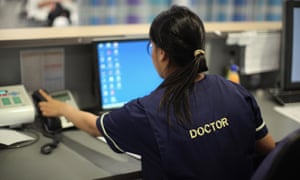
A doctor at the accident and emergency department of Birmingham Queen Elizabeth Hospital.


A doctor at the accident and emergency department of Birmingham Queen Elizabeth Hospital. Photograph: Christopher Furlong/Getty Images

Those who disagree with Hunt’s proposals: ‘The NHS needs those extra 100,000 medics’


I believe having a diversity of doctors and nurses in the NHS is a good thing. Our patients are not exclusively UK-born or speak English as a first language, so why should our doctors?


There are excellent doctors, and not-so-excellent doctors. There are doctors who are wholeheartedly invested in the NHS, what it stands for, what it provides, and some who are not. My experience is that neither of these groups relate to a doctor’s immigration status.


1500 extra medical students a year will not replace 100,000 doctors, particularly in a service that is spectacularly under-staffed as it is. The NHS needs those extra 100,000 medics, regardless of what Jeremy Hunt says or believes.


Becca, 27, junior doctor, Yorkshire and Humber


‘People will just leave after four years’


This will not help the recruitment and retention crisis whatsoever. Unsatisfied with breaking every NHS target in recent years, he’s now picking fights with the people who work tirelessly to keep the NHS going. He is the most hated health secretary, and possibly politician, of recent times.


Hunt’s proposals are absolutely not workable. People will just leave after four years, or, train in European universities, the fees are much less than UK, and allows them freedom to move. We will haemorrhage the brightest and best.


I am leaving for Canada. I have no intention in taking part in the willful destruction of the NHS. Medicine as a career is finished in this country. Rather like our motor industry, we have been mismanaged to the point of rock bottom morale and people are leaving in droves. Several of my colleagues have left for Australia and New Zealand, I wish I had left sooner. If you treat highly intelligent people like this, they will leave.


Zakir Hajat, 30, anaesthetist, Sheffield


‘If I were a student now there is no way I would pursue medicine in the UK’


Hunt’s proposals are insane. We’ve never trained enough doctors or nurses to staff the NHS. We used to have a regular supply of well-trained doctors coming here from the Indian subcontinent, as well as a steady flow of doctors from Australia and New Zealand who would come for a couple of years as our training was excellent. They don’t anymore, because why would they now?


To train enough doctors to be all UK grown will take many, many years. With the haemorrhaging of staff to early retirement or overseas he’ll be lucky to have any kind of useful workforce to maintain what services we provide now. To recruit and retain doctors is easy. You treat them with respect. You offer them reasonable conditions. You pay them fairly, and you train them well. Then they will come and they will willingly work very hard, over and above what is expected or paid for. Treat them the way Hunt is, and they’ll go.


If I were a student now, there is no way I would pursue medicine in the UK. If you treat staff properly, they won’t want to leave anyway. This is home. The vast majority want to live and work here.


Tim Campbell-Smith, 47, consultant surgeon, Sussex


"Diversity is good": your views on plans to end reliance on overseas doctors

3 Ekim 2016 Pazartesi

Doctors" political views can affect advice given to patients, says survey

Doctors’ political beliefs can skew the advice they give patients on sensitive issues such as abortions and cannabis use, according to new research.


A survey of more than 200 doctors found that those with conservative views were more likely than others to discourage patients from having an abortion in the future. They also handed out more stern warnings over the legal and health risks of using cannabis.


The results suggest that doctors’ political leanings can spill over into the guidance, and even the treatments, they offer to patients under their care. The findings build on previous work that has highlighted gender and race biases in the medical treatment different people receive.


“Doctors need to think through these kinds of issues, because if they are dealing with politically sensitive issues, this is unavoidable,” said Eitan Hersh, a political scientist at Yale University. “If we can get this out to physicians, they can be more aware of it.”


“If you’re a patient and you are choosing a new doctor, you might want to know their views beforehand,” Hersh said.


Writing in the journal, Proceedings of the National Academy of Sciences, Hersh and his colleague Matthew Goldenberg, describe how they linked more than 20,000 primary care doctors in 29 US states to their political party affiliations using public voter databases. From these they selected more than 200 doctors, half Democrat, half Republican, to receive a survey from Yale medical school, rather than their own Institution for Social and Policy Studies, to disguise the political nature of the study.


In the survey, the doctors were asked to rate the seriousness of nine scenarios presented by patients. The vignettes included references to drinking too much alcohol, smoking cigarettes, using marijuana, being depressed, visiting sex workers, riding a motorbike without wearing a helmet, storing guns in a house where there were children, and having had two elective abortions in the past.


The doctors more or less agreed on the seriousness of the less politically-charged issues, such as alcohol abuse and not wearing a helmet. But they differed substantially in their reaction to more sensitive issues, such as cannabis use, elective abortions and having guns in the home. The Republicans were more concerned than Democrats about patients having future abortions and using cannabis. Meanwhile, Democrats were more vexed than Republicans at patients having guns in the home.


A similar split emerged when doctors proposed how they would treat each patient. The survey found Republican doctors were more likely to warn patients about the health risks of using too much cannabis. They raised the legal risks of the drug too, and urged patients to cut down. They took a stronger line on abortions, too, the researchers found.


“As a patient, it’s useful to ask ‘is my doctor telling me this because it’s what the medical evidence says, or is it because of their world view?’” Hersh said. “Doctors sometimes say they think of themselves as mechanics, that whatever patient comes in they will treat them the same way. But it’s obvious that’s not true. It’s never the textbook scenario.”


Hersh says the findings point to a need for greater transparency. With that in mind, he is considering setting up a website that links doctors to their political affiliations, an idea he said did not appear to be popular among doctors he had spoken with. “There’s a strong economic incentive for them not to close off half of their business because they are with what patients might regard as the wrong party,” he said.


Doctors" political views can affect advice given to patients, says survey

8 Ağustos 2016 Pazartesi

As a psychiatrist I"ve seen how culture affects views of mental illness

“I am already dead! I have been buried.” said a young south Asian girl on the psychiatric ward. Prior to her admission she had stopped going to school, and instead isolated herself in her room spending hours on the internet searching for her grave. She was not eating much and losing weight. There had been occasions when she wandered off at night. With poor eye contact and slow speech, she added: “I can feel the worms crawling inside my body.”


After an assessment she was found to have developed a severe form of depression with Cotard syndrome (a rare mental illness in which the affected person holds the delusional belief that he or she is already dead).She wanted me to let her access the internet so she could view her grave online. Her family thought that the girl was possessed by a jinn (a demon in Muslim culture). The family wanted to take her to a spiritual healer, away from the hospital, but we were concerned about her wellbeing.


I spent hours explaining to them the need for medical treatment while listening to their cultural understanding of such mental health problems. As mental illness is a taboo in so many cultures, it is easier to see it as a spiritual problem rather than a medical one. I agreed to talk to the spiritual healer, so that he could explain to the family the serious nature of her mental health problems. We finally came to an agreement whereby the girl would continue to have treatment in hospital and the family would place spiritual amulets around the room. There was a good outcome and the young girl was discharged after recovery.


This was my first exposure, as a psychiatry trainee, to cultural issues entwined with mental health problems in England. Although I had an understanding of some of the cultural issues highlighted in this case, I learned it was important to make sure we listened to and respected all views before coming to a decision.


The UK has become more ethnically diverse in the past 20 years. Generally, stigma and shame have heavily influenced any help-seeking behaviour in the black and ethnic minority groups. Even if they do seek help, the lack of cultural and spiritual understanding of their problems may lead to non-attendance and disinterest by the patient and the family. We come across this in our daily practice.


A middle-aged women of African descent was referred to us for dependence on prescribed painkillers. Following a thorough assessment it transpired her initial complaint of “aches all over her body” were cultural expressions of low mood and depression rather than actual pain. This was explained to us by her young daughter who described how feelings of lethargy and lack of energy are expressed as weakness and body aches.


Related: How can mental health services deliver better care for black patients?


Once we helped the person detoxify from the painkillers, we started treating her for depression which dramatically improved her life.


We need to target communities to increase awareness and challenge stigma which would help to reduce the barriers in seeking help. We should work to develop community champions and work with spiritual healers who can refer individuals needing mental health treatment.


As a British south Asian Muslim, I can identify with some of the issues I see in my clinical practice. I think appropriate, localised training on cultural awareness for all staff in the NHS can help in a better understanding of the patient’s needs.


Transcultural psychiatry has always been at the forefront of the Royal College of Psychiatrists’ agenda and now it is needed more than ever.


If you would like to write a blogpost for Views from the NHS frontline, read our guidelines and get in touch by emailing sarah.johnson@theguardian.com.


Join the Healthcare Professionals Network to read more pieces like this. And follow us on Twitter (@GdnHealthcare) to keep up with the latest healthcare news and views.


As a psychiatrist I"ve seen how culture affects views of mental illness

16 Ağustos 2015 Pazar

Carly Fiorina Says Her Views On Vaccination Are Unremarkable For Better Or Worse, She"s Appropriate

[unable to retrieve total-text articles]


CLEAR LAKE, IA – AUGUST 14: Republican presidential candidate Carly Fiorina speaks with supporters even though getting into the Starboard Marketplace August 14, 2015 in Clear Lake, Iowa. Fiorina ate lunch at the restaurant and greeted patrons there before continuing to campaign in Iowa later in the afternoon. (Photo by Win McNamee/Getty [...]


Carly Fiorina Says Her Views On Vaccination Are Unremarkable For Better Or Worse, She"s Appropriate

9 Temmuz 2014 Çarşamba

Simon Stevens announces program to give patients money for care - your views

Billions of lbs of NHS and town hall budgets are to be handed above to sufferers to pick health and social care services in the neighborhood, in a dramatic modify of policy getting unveiled by the new NHS England chief executive.


Simon Stevens advised the Guardian that “north of 5 million sufferers” could every single have a individual combined wellness and social care spending budget by 2018, paid for by “billions” of lbs supplied by the NHS and local councils.


The move will see older folks, disabled young children and these with significant mental well being difficulties or finding out disabilities supplied person pots of cash to devote as they see fit on well being and social care companies, in an attempt, in element, to preserve them out of hospital.


Some patients’ budgets, from subsequent April, will be as small as a few hundred pounds, however most are probably to get more than £1,000, with a tiny variety who have extremely complex demands obtaining much more than that.


What do you consider? Can it work? Will the move alleviate pressure on hospitals? Ought to sufferers have more management above their care? Or, ought to there be a lot more investment in solutions? Share your thoughts in the comment part beneath or tweet us @GdnHealthcare


Simon Stevens announces program to give patients money for care - your views

30 Mayıs 2014 Cuma

Simon Stevens: NHS should end mass centralisation - your views

The NHS need to finish mass centralisation and alternatively increase its regional companies to treat men and women in their own communities, Simon Stevens, the new chief executive of NHS England has explained.


In a marked reversal of present policy, Stevens stated the NHS must broaden its neighborhood services because numerous sufferers are not handled with “dignity and compassion”.


Several wellness solutions in western Europe were previously successfully serving their regional communities with no centralising almost everything, he extra. He informed the Daily Telegraph on Friday: “A variety of other countries have discovered it possible to run viable nearby hospitals serving smaller sized communities than sometimes we believe are sustainable in the NHS.”


What do you consider? Need to there be a lot more investment in local community companies? How can they help? Or, must there be much more hospital closures? Share your thoughts in the comment area under or tweet us @GdnHealthcare


Simon Stevens: NHS should end mass centralisation - your views

26 Mart 2014 Çarşamba

NHS workers" views are "damning indictment of Jeremy Hunt"s record"

The huge vast majority of NHS staff want well being services to be merged with social care in order to support guarantee the NHS survives amid the increasing pressures of ageing, tight budgets and the need to have to seem soon after older men and women better.


Four out of five of the 1,069 respondents to the most current survey of members of the Guardian’s Healthcare Network, who do a wide range of clinical and management roles in the NHS, mentioned they backed a policy aim often described as the “holy grail” of healthcare.


Participants from a selection of NHS organisations, such as GPs, consultants, nurses, approach and policy managers at NHS trusts, and officials from NHS England, shared their views just prior to the initial anniversary of the coalition’s radical restructuring of the service in England.


When asked, “Are you in favour of integrating overall health and social care?”, 81% mentioned yes, 9% explained no and 11% have been uncertain.


A much smaller sized vast majority (61%) believed that merging the two solutions into a single was achievable, – although 18% disagreed, with 21% unsure – but offered that integration would inevitably involve alter, pain and a loss of autonomy and handle, that is a relatively optimistic response.


Supporters of integration said the move was “essential with an ageing population” and “essential to improving patient-centred healthcare”. Yet another stated: “We waste so a lot cash by obtaining different methods and it prevents continuity for sufferers.”


But there were sceptics too. “We integrated four years ago and the services are nevertheless fragmented, with patients falling among the two”, stated one particular. “Collaborative operating is far better than integration”, explained yet another, and further remarks backed integration “as prolonged as [it truly is] not under the management of local authorities”.


Comments on the achievability of this broadly sought after aim highlighted the complications concerned. “It will take a monumental shift in budgets, staffing and providers”, said one. It “will need pooled overall health and social care budgets, but absolutely everyone is so desperate for funds that no one particular can commit to taking the plunge in situation they appear to shed out. Present funding concerns lead to continuous brief-termism”, explained an additional.


One particular suggested “joint appointments to senior posts, but at present what I have seen is duplication of senior posts as every organisation would like to hold management of ‘their’ spending budget”.


Ministers are striving to encourage health and social care providers to come collectively and provide joint providers across England by way of the creation, from April 2015, of the Greater Care Fund. The Department of Wellness (DH) says its fund would “bring £3.8bn of overall health and social care funding collectively into a single seamless support to preserve our elderly and most vulnerable effectively for longer.” It will lead to pooled budgets in each and every portion of England, with £200m to aid smooth the integration. It is seen as a crucial way of prompting the joint operating, and possibly in the end the merger, of solutions experts think are necessary to hold the NHS sustainable.


Surprisingly, given how piecemeal integration has proved so far, as many as 49% of respondents stated their organisation was currently concerned in integrated doing work with social care providers in its area. Of these, 13% have been part of an integration pioneer task. Significantly less positively, when asked to determine the barriers to integration, respondents pointed out structural variations (78%), incompatible IT methods (66%), cultural differences (64%) and various regulatory techniques (59%) as effectively as “lack of curiosity at senior degree” (33%).


A lot of of the rest of the findings make worrying reading, each for the well being secretary, Jeremy Hunt, and for staff, bosses and supporters of the NHS. For illustration, 77% explained their job was harder now than final year, with just 5% disagreeing, and 50% explained they now had much less time with individuals than just before the 2013 shakeup, although a mere 6% said they had far more time. “Elevated workload”, “significantly less employees, far more patients” and “stress to make far more financial savings” had been among respondents’ feedback.


Crucially, 52% mentioned patient care had not improved more than the last year, regardless of the hefty strain on NHS companies to enhance the high quality and safety of care in the wake of Robert Francis’s report into the Mid Staffordshire scandal in February 2013, although twenty% mentioned it had received better.


“Staffing amounts are unsafe, unreliable and unpredictable” was one comment. Another respondent said: “Mantra is to discharge as quickly as achievable. If they are re-referred it counts as a new referral –we get paid yet again.” Other individuals talked about heightened pressure and unfilled vacancies.


Following his higher-profile drive to raise care standards, Hunt might react with anxiety to this kind of findings.


Even more doubts about the wisdom of last year’s massive upheaval emerged in the locating that 79% do not think the NHS is much more financially sustainable than it was a 12 months ago. Just 4% think it is.


Is the NHS match for goal? Although 47% said it was, a considerable minority (35%) disagreed. The majority view among survey respondents echoes the consensus amongst important health policy thinkers.


Two weeks in the past, Sir David Nicholson, the NHS’s outgoing boss, reshaped the expanding debate on how to preserve the NHS functioning appropriately in the many years ahead when he advised the Guardian that the service would require additional funding during the five many years of the next parliament to smooth its transition from its “unsustainable” existing to a long term in which several solutions come about outdoors hospitals.


Some 57% of respondents want higher taxation for deeper NHS investment. Of these, 38% favour higher taxes and 19% a hypothecated tax, even though perhaps surprisingly, 23% back charging sufferers for services and 21% endorse much more rationing of treatment method.


The money question is turning out to be urgent. Anita Charlesworth, the authoritative chief economist at the Nuffield Trust wellness thinktank, warns that: “If we want to maintain the existing NHS with a expanding and ageing population, and tackle issues about top quality, we will have to pay out for it one particular day. There is now a critical chance that the NHS will hit the monetary buffers prior to and not right after the subsequent election.”


4 in five (79%) think the NHS is beneath too considerably political handle, a concern shared at senior amounts in supposedly quasi-independent organisations such as NHS England and the regulator Check. Handful of think the Well being and Social Care Act’s intention of “liberating” the NHS from political direction and interference has become a actuality. And 61% back a database of patient information, although fewer (56% ) would allow their very own information to go into it.


Hunt evokes robust feelings. In all, 77% explained they did not have self-assurance in him just six% did. Right after alienating key personnel groups such as GPs, nurses and managers, and cancelling the NHS workforce’s advisable one% pay rise, that vote of no self confidence is to be anticipated.


Jamie Reed, a shadow overall health minister, calls it “a damning indictment of his [Hunt"s] record. It is small wonder men and women feel this way following his persistent attempts to run down the NHS”.


Christine McAnea, head of overall health at union, Unison, agrees. “It comes as no shock that an mind-boggling bulk of health workers have no confidence in a secretary of state who has put the NHS underneath assault. Personnel are on common ten% worse off than when the coalition came to electrical power,” she says.


A DH spokesman says: “The health secretary recognises the really challenging operate of NHS workers but makes no apology for pushing for better transparency and increased requirements for individuals.”


Labour and Unison blame the difficulties highlighted in our survey on the NHS shakeup final 12 months. “The reforms have had a devastating influence on the NHS as a support and on personnel morale. Workers are feeling increasingly demotivated and demoralised. They are concerned about the top quality of care they are in a position to provide as they struggle with increasing amount of sufferers and staff shortages”, says McAnea.


The top priorities for the new NHS England chief executive, Simon Stevens, who begins next week, say Healthcare Network members, must be to increase employees morale, by some means get a lot more money for the NHS and to drive forward the integration of well being and social care that so many individuals doing work in the overall health support plainly think is so essential. All of these, however, are the accountability of ministers, not Stevens.


Far more on the survey at theguardian.com/healthcare-network


NHS workers" views are "damning indictment of Jeremy Hunt"s record"

20 Mart 2014 Perşembe

Challenge your views of Down syndrome


Welcoming a kid into the world is a challenging experience for all parents.


However, when a single long term mom announced her fears about providing birth to a little one with Down syndrome, these youngsters responded with this message to reassure her.


Down Syndrome is a genetic issue that occurs in youngsters who have an further copy of Chromosome 21 and normally prospects to some understanding and bodily disabilities.


This video, titled Dear Future Mom, was produced ahead of Planet Down Syndrome Day taking area on Friday. Its message will adjust your viewpoint and hopefully display that Down syndrome is not something to be afraid of.


Video courtesy of CoorDown


Do you have time to view an additional video?


Discover why this tiny lady is offering up her hair for other children


Challenge your views of Down syndrome

10 Şubat 2014 Pazartesi

Dr. Oz Hosts Joe Mercola On His Show. Does Oz Endorse Mercola"s Anti-Vaccine Views?

Soon after a series of scientific studies showing that vitamins and supplements are usually a waste of funds, such as my recent post on the prime 6 vitamins you shouldn’t take, internet supplement salesman Joe Mercola is concerned.  He need to be: his Internet-driven empire is largely based on product sales of vitamins and supplements, for which his claims assortment from merely implausible to dangerously untrue, like:


I could provide a lot of a lot more examples, but this ought to be enough to show that I’m not producing this stuff up.


Mercola is also 1 of the loudest voices and worst offenders in the anti-vaccine motion. Amongst other misinformation, he claims that the hepatitis vaccine triggers autism, and his internet site urges individuals to use his supplements alternatively of receiving vaccinated.


Dr. Oz at ServiceNation 2008

Dr. Oz at ServiceNation 2008 (Photo credit: David Berkowitz)


So how do I know Mercola is worried? He’s appearing on the Dr. Oz Present on Monday, February ten (the day following I’m writing this) to talk about multivitamins. Apparently his ten minute segment wasn’t sufficient (for him), so he posted an post on his site with the “Information I couldn’t share” on Dr. Oz’s demonstrate.


Does the article make clear why multivitamins are truly great for you?  Well, no. Most of the report is a massive red herring, in which he argues that dietary supplements ought to not be regulated as drugs, because “ we have all the laws we require.” Then he scontradicts himself and says that the FDA presently regulates supplements. (It doesn’t – or to be far more exact, the FDA does not call for supplement makers to show their items work. It can only phase in if the items start to destroy individuals. This is what Mercola calls regulation.) In addition to, he says, supplements are harmless. As evidence, he cites a press release from a pseudoscientific organization that claims “no deaths from dietary supplements in 27 many years.”


Not remarkably, Mercola doesn’t cite any real science to support his claims. In contrast, many very massive studies in major medical journals, cited in my very own columns last month and last October, present that schedule supplementation with multivitamins, specially with the megadoses that many men and women consider, can certainly lead to real harm. People identical scientific studies showed that if you don’t have a deficiency, there is merely no advantage to taking most vitamins.  Mercola’s response is to cite view pieces from his very own site that merely assert, without any proof, that the scientific studies are incorrect.


In other word’s, Mercola’s response is “Oh yeah?” He then goes off on a tangent and launches an irrelevant ad hominem attack on mentioned vaccine professional Dr. Paul Offit.


Why has Dr. Oz repeatedly had Joe Mercola on his display? This is a challenging one. Does Oz feel that autism causes vaccines, one thing Mercola has claimed repeated over the years?  Does he realize that Mercola’s anti-vaccination campaign prospects to genuine harm? Does he know that the FDA has repeatedly issued warnings to Mercola to demand that he stop creating false claims about his vitamins and supplements, as Chicago Magazine reported?


Or does Dr. Oz hold inviting Mercola back simply because he knows Mercola has a big audience that will enhance his very own viewership?


Despite my past criticism of Dr. Oz, I still believe he has a much better grasp of science than Joe Mercola. He also reassures viewers constantly that he doesn’t promote the goods that appear on his demonstrate. And but Oz is offering a platform to a person who can make huge revenue offering merchandise based on unproven claims. By getting Mercola on his display, Oz is offering him totally free publicity and helping him sell those identical merchandise. And regardless of whether or not Oz agrees with Mercola, he is helping to give credibility to Mercola’s wildly inaccurate and harmful anti-vaccine claims.


Dr. Oz Hosts Joe Mercola On His Show. Does Oz Endorse Mercola"s Anti-Vaccine Views?

2 Ocak 2014 Perşembe

Two Views Of Death: The Scientist And The Novelist

Here are two totally distinct techniques of looking at death. A single is a totally goal, coldly beautiful standpoint. The other is deeply personal and troubling. The two are really worth reading through.


English: Skull and crossbones


Here’s the scientific see:


Your probability of dying throughout a offered 12 months doubles each eight years. For me, a 25-12 months-previous American, the probability of dying in the course of the next yr is a relatively minuscule .03% — about one in three,000. When I’m 33 it will be about 1 in 1,500, when I’m 42 it will be about 1 in 750, and so on. By the time I attain age a hundred (and I do program on it) the probability of living to 101 will only be about 50%. This is significantly quickly development — my mortality charge is escalating exponentially with age.


This is from the blog Gravity and Levity written by a younger physicist, Brian Skinner. I wasn’t aware of this fact before, even though it was very first stated by the British actuary Benjamin Gompertz in 1825. Skinner goes on to investigate some of the deeper implications of the Gompertz law:


Remarkably ample, the Gompertz law holds across a huge amount of nations, time intervals, and even different species. Although the actual common lifespan alterations quite a bit from nation to nation and from animal to animal, the identical basic rule that “your probability of dying doubles each X years” holds real. It’s an wonderful truth, and no one understands why it is correct.


He goes on to demonstrate how the law can be utilised to check various theories of human mortality. The “lightning bolt theory” and the ”accumulated lightning bolt theory” are obviously inconsistent with the Gompertz law, but the “cops and criminals inside your physique theory” is constant with the law. Skinner believes that this view supports our comprehending of the immune system and cancer. I suspect cardiovascular illness may possibly also fit here.


A extremely distinct see of death comes from the novelist Margaret Drabble. Writing in the Guardian, she writes about the implications of “artificially prolonged previous age”:


As we move into our unwanted final decade, we will, entirely predictably, become lonelier and lonelier and far more and much more likely to endure from dementia and far more and far more high-priced to maintain.


It would be unfair to blame medical professionals or health experts for our longevity, which might be attributed to causes other than surgical ingenuity and pharmacological innovations and deadly existence assistance machines, but it is not surprising that many of us come to feel gravely disappointed by the support and relief on offer you to us at the finish of daily life.


We seem in vain for compassion, dignity, even typical sense. We search in vain, regardless of what we are advised, for ample ache relief. Medical pros seem to be far a lot more interested in retaining alive barely viable premature “miracle” babies with a bad lengthy-term prognosis than in offering reassurance to the growing and ageing multitudes who long to depart peacefully. They keep the infants alive simply because it’s tough, and very number of folks dare argue that it’s not a very good point to do. They keep us alive since they are forbidden to give us what we want and need to have, and they are too frightened to question the law. There’s anything wrong there.


Drabble goes on to argue forcefully for “a modify in the law concerning assisted dying and voluntary euthanasia, and support, if require be, to die with dignity.” But she is pessimistic that any such law will be passed in the Uk. I suspect the probabilities are even reduce in the US.


I suppose a publish like this is a rather morbid way to commence off the new 12 months. But I am strangely inspired by these two extremely different pieces. I suspect you might come to feel the very same.


Hat tip: three Quarks Daily and Joyce Carol Oates (@JoyceCarolOates)


Two Views Of Death: The Scientist And The Novelist