Brazil has declared an end to its public health emergency over the Zika virus, 18 months after a surge in cases drew headlines around the world.
The mosquito-borne virus was not considered a major health threat until the 2015 outbreak revealed that Zika can lead to severe birth defects. One of those defects, microcephaly, causes babies to be born with skulls much smaller than expected.
Photos of babies with the defect spread panic around the globe as the virus was reported in dozens of countries. Many would-be travellers cancelled their trips to Zika-infected places. The concern spread even more widely when health officials said it could also be transmitted through sexual contact with an infected person.
The health scare came just as Brazil, the epicentre of the outbreak, was preparing to host the 2016 Olympics, fuelling concerns the Games could help spread the virus. One athlete, a Spanish wind surfer, said she got Zika while training in Brazil ahead of the Games.
In response to the outbreak, Brazil launched a mosquito-eradication campaign. The health ministry said those efforts have helped to dramatically reduce cases of Zika. Between January and mid-April, 95% fewer cases were recorded than during the same period last year. The incidence of microcephaly has fallen as well.
The World Health Organization (WHO) lifted its own international emergency in November, even while saying the virus remained a threat.
“The end of the emergency doesn’t mean the end of surveillance or assistance” to affected families, said Adeilson Cavalcante, the secretary for health surveillance at Brazil’s health ministry. “The health ministry and other organisations involved in this area will maintain a policy of fighting Zika, dengue and chikungunya.”
All three diseases are carried by the Aedes aegypti mosquito.
But the WHO has warned that Zika is “here to stay,” even when cases of it fall off, and that fighting the disease will be an ongoing battle.
In the run up to the general election on June 8, we asked professionals working across public services what they think are the biggest problems in their sector at the moment, and what they want to see from the UK’s major political parties.
Here’s what those working on the frontline in housing, local and central government, healthcare, social care, and the voluntary sector had to say.
‘I want to see compassion’
There is a lack of mental health services, a lack of supported housing projects and just a lack of resources generally. Homeless people who are lucky enough to find accommodation are hit on day one with letters about council tax, water rates, bin collections … It’s too much for someone who may have been rough sleeping for months and in temporary B&Bs for years before that.
I want to see compassion. I don’t believe people should “sponge” off the government but punishing people with sanctions is not the answer. Some people need a little more support then others and I believe if they get this they will have more chance of putting back into the coffers in the future. We need to care about each other, not penalise and punish those who struggle the most.
Anonymous, homeless charity worker
‘Address the reasons why doctors are leaving in droves’
A&E departments are increasingly stretched as patient demand outstrips what the NHS provide. Doctors are leaving in droves to work abroad or change career. We desperately need more nurses – but scrapping the bursaries for nursing students, a real terms pay cut and Brexit is disastrous for recruitment. GP numbers are falling, despite the government’s promise to appoint 5,000 new GPs.
Several things could be done. Guarantee the NHS budget for the next five years as a percentage of GDP (such as 8%), increase social care budgets so hospitals don’t have to keep patients longer than is medically necessary and reinstate the bursary for nursing students.
I certainly don’t want to see the introduction of the proposed conscription of doctors to four years in the NHS after medical school. Any government coming in needs to address the reasons why doctors are leaving (low morale, long hours, poor training, feeling undervalued, increasing workloads, increasing weekend work for less pay, demonisation by the media) rather than simply forcing them to stay.
Tom Palmer, 31, A&E doctor
‘I’d like to see national insurance breaks on health and future care provision insurance’
People are not planning for their future health, financially or physically. The cost of a care home is astronomical and while taxpayers’ money is being thrown at it now, it’s going to get a lot worse . I’d like to see national insurance breaks on health and future care provision insurance.
Fiona, 44, finance manager for a charity that provides care homes
‘We need rent caps and more social housing urgently’
The housing crisis is all-consuming and has a dramatic impact on virtually every other area of policy. The benefit cap, for example, punishes vulnerable people for not having access to social housing which successive governments have sold off. It is because families are forced to rent at high costs from the private sector that their benefits end up so high. That is the fault of landlords, not claimants. We need radical overhaul of the benefit system – I see things worsening on a daily basis.
I’d like to see a tenants’ union given the right to collectively bargain rent levels
There has been some focus on the insecurity of tenancies in the private sector. This is an important point, but what the increasing number of evictions boil down to is that landlords evict because they want to charge higher rents or because tenants cannot afford the rents they are already charging. We need rent caps. Other western European countries do this. I’d also like to see a tenants’ union given the right to collectively bargain rent levels at national and regional levels. The bottom line is we need to build more accommodation – especially social housing – very urgently.
Greg, housing adviser
‘I want a recognition that poverty contributes to social problems’
Social work is is overstretched and increasingly technocratic. The trend towards family therapy ignores socio-economic problems and seeks to reconcile parents to their current condition. I want to see a recognition that poverty is a contributing factor to social problems.
Many of our clients experience overcrowded housing conditions. There are fewer and fewer opportunities to remain in the area they grew up in, where their children go to school and where their family and friends can offer a support network. Many are unemployed and resigned to poverty. Very few are politically engaged.
After that we need investment in community solutions to social problems, such as increased funds from local authorities to youth arts and sports projects, as well as a firm commitment to social housing projects.
Arthur, 25, child protection social worker
‘Cuts have dramatically and irreversibly damaged local government’
Significant efficiencies have been achieved in local government since 2009, and it is certainly arguable that this – rather than increasing council tax – should have been done anyway prior to the recession. But eight years later there is no fat left to trim. Cuts have dramatically and irreversibly damaged local government.
If the new government does not reinstate a fixed central government grant (as opposed to fixing spending according to the level of council tax and business rates collected, which discriminates against poorer parts of the country) then very soon the Local Government Association’s warning that councils will need to make deep cuts to essential services will come true.
Finally, wages were frozen for three years, followed by five years of 1% rises. Give staff a pay rise, even if only at the level of CPI inflation. Five more years of pay freezes will force many talented members of staff to permanently leave the sector.
Anonymous, local government lawyer
‘Most police problems can be solved with more money for NHS and social services’
The police suffer from a chronic shortage of detectives, while overworked response officers get hardly any time off, or even time to adequately investigate at a crime scene. Most police problems can be solved with more staff and more money for the NHS and social services.
We need funding to recruit more detectives, and increase salaries for those detectives as an incentive to take on more stress and responsibilities. Then we need vastly more money for the NHS and social care; there is an overwhelming dependence on the police to deal with mental health crises, having cut social care to the bone and beyond. I would support a separate NHS tax.
We should help people to change their lives rather than imprison them
Vastly improving rehab programmes would prevent re-offending. Our current system costs millions and achieves nothing. This would involve legalising drugs and treating addiction as a medical problem not a crime. We should help people to change their lives rather than imprison them and make a life of crime more likely. Legalising and taxing drugs will save us a fortune in the long run.
Anonymous, police officer
‘We may need the return of housing inspectors’
Government policy does not reflect the realities of the housing market. Firstly, we need to increase supply. Quadruple council tax for all properties left empty for more than six months, rising to ten times if left empty for three or more years. This will prevent private landlords “going on strike”. A land tax designed to make land-banking extremely unprofitable should be followed by commitment to building council-owned homes for rent that are genuinely affordable. Councils are accountable to the public and elected representatives of their communities in a way that other providers are not. Right to buy should be extended to housing association tenants, but the properties must be sold at market value, no more discounts, and all proceeds used to build new homes to rent and for low-cost home ownership.
Then we need to raise standards, by putting in place mandatory registration and licensing of all privately rented accommodation. Housing association regulations should include housing management and value for money – we may well need the return of housing inspectors! Repeal the 2016 Housing and Planning Act and regulate rents – the amount of money being sucked out of the wider economy by ever-rising rents is damaging to the overall state of our country.
Andy, 52, retired head of housing in the West Midlands
Sign up for your free Guardian Public Leaders newsletter with comment and sector views sent direct to you every Thursday. Follow us:@Guardianpublic
In the run-up to June’s general election, almost every aspect of our public services and social policy feels at breaking point: we’re in the midst of an NHS crisis, a social care crisis, a housing crisis, a local government funding crisis and a civil service staffing crisis, not to mention a collapse in public trust for charities.
The election will be dominated by Brexit, but domestic policies are equally vital – and must not be swept under the rug. It will be up to all those professionals working for and with the public to make that case. So we’d like to know what you want to see in the party manifestoes as top election priorities.
This is not just a matter of grand statements or pledging more money. What do the main political parties need to say that shows they really understand the issues?
Share your thoughts
Whether you work in healthcare, social care, housing, local government, central government, or any other part of public service – including the private sector or the voluntary sector – we want to hear from you. Tell us what you think are the biggest problems in your sector at the moment and what each of the political parties should be offering.
You can do so by filling in our encrypted form below – anonymously if you wish. We will do our best to ensure your responses are kept secure and confidential. A selection of contributions will be featured in our reporting.
There is an ebb and flow in reporting on the NHS as Trump, Syria and Brexit dominate front pages. But the pressure-cooker state of the entire service still worsens. This morning’s latest figures are just a snapshot of deterioration – but every target is missed, for A&E, ambulance response times, for treating psychosis within a week, for cancer waiting times, blocked beds and diagnostic tests.
“Demand” is rising, the government says, as if serious illness were a choice, though the pressure comes from well-predicted rapidly increasing numbers of old, sick people: this February’s A&E figures are, as ever, better than deepest winter January, but worse than February last year, as this crisis ratchets up. Major A&E centres are treating 81.2% of patients within four hours, against a target of 95% that used to be hit before 2010. The government likes to blame frivolous users of A&E, but those are easily triaged to on-site GPs. Serious delays are due to very ill people needing to be admitted with no empty beds: bed occupancy is at dangerous levels, as Chris Hopson of NHS providers warns, where doctors often have to decide “one in one out”, discharging those who still need more care too early.
Take the temperature in virtually every part of the NHS and the wonder is how the heroically overstretched staff keep the wheels on the trolley. Take this week alone: the Royal College of Physicians says 84% of doctors have to cope with staff shortages and gaps in rotas. GPs? Two years after a government promise of 5,000 more GPs, numbers are still falling. They dropped by 400 just in the last three months of last year: as doctors find the workload unmanageable some escape abroad, take earlier retirement or become locums. Too few new doctors want the burden of running a GP partnership, so 92 practices closed last year, tipping hundreds of thousands more patients on to already overloaded neighbouring GP lists.
Today the Royal College of Nursing starts consulting its members on whether to hold a strike ballot, the traditionally most reluctant of unions to take action. But with public sector pay frozen yet again at 1%, when inflation will shortly hit 3%, nurses are departing, like doctors, for less stressful, better-paid work. Recruitment from the EU is plummeting, as predicted.
As everyone firefights, all the preventative services are being cut that might prevent patients needing a crisis bed
As everyone firefights, hand to mouth, all the preventative services are being cut that might help keep patients from needing a crisis bed. The government has lines to take but no answers, and some of those “lines” are fictions. No, the NHS has not had £10bn, as Theresa May keeps claiming: it’s more like £4.5bn over four years, says the Kings Fund.
No, the £2bn given to social care will not ease the beds crisis, for all the exhortations to councils to use every penny of it in releasing bed-blocking patients with new care packages at home. NHS Providers, representing NHS hospitals, mental and community trusts, says councils are using that money to stem the collapse of existing care services and care homes, as the higher minimum wage and rising costs cause multiple closures. Cuts leave at least half a million old people getting no care, who would have done, and that risks falls, neglect and extra hospital visits. The care crisis is seeing 900 care workers a day leaving underpaid and overworked jobs.
Money, you might think, comes last in hospital managers’ priorities. But they are being severely harried and punished by NHS England to rein in ballooning debt by plundering capital funds and selling bits of land to cover running costs, one-offs many say they can’t repeat this year. An NHS England-commissioned report says £10bn is needed to cover this depleted capital: that’s not for grand new projects, but for basics like outworn dialysis machines.
A chair of a leading teaching hospital tells me “heroic assumptions” are being made by most trusts agreeing their “control totals”, their spending limits for this year. Debts will swell again. This year the NHS gets just a 1% increase, next year an unprecedented zero.
One of the Labour’s NHS triumphs was to cut waiting times for operations from 18 months to 18 weeks – but now that totemic 18-week limit has been abandoned. However, that only adds to hospitals’ financial woes as they rely on income from elective surgery, while every extra emergency costs them money.
This is the dismal background to the reorganisation that NHS England head Simon Stevens is attempting, almost undercover. His state of play review of his five-year forward plan passed hardly noticed, announcing a first tranche of England’s 44 STPs, (sustainability and transformation plans) to reconnect local services fragmented by the Lansley 2012 act.
Most observers think it the right way to go, putting the NHS and social care under a united structure with one finance hub, ending destructive and expensive competition and tendering of services. But hardly anyone thinks this can be done with no new money: every STP calls for capital for new beds and units. Virtually all involve closures and mergers stirring a local political outcry.
Jeremy Hunt, who always presented himself as the patient’s ally, rooting out poor quality, wallowing in the Labour disaster at Mid-Staffs, has fallen uncharacteristically quiet. He has nothing much to say about patient safety in A&Es or elderly patients turned out of beds too soon. Not even deaths on trolleys in A&E corridors in Worcester roused his usual righteous ire.
Concern about the NHS has risen high in recent polling: what no one knows is when public anger will reach a political tipping point. May and Hammond stay iron-clad adamant: all this is NHS shroud-waving and there will be no more money. Lack of any opposition helps, but can they really tough it out where Thatcher, Major and Blair all bent in the face of NHS crises?
Vicky Frost is joined by Guardian members; Sarah Boseley, the health editor of the Guardian; Professor Jane Dacre, president of the Royal College of Physicians; Helen McKenna, senior policy adviser at the King’s Fund, an independent healthcare charity; and Denis Campbell, the Guardian’s health policy editor. They consider the current state of the National Health Service in the UK, President Trump’s approach to healthcare reform in the US, and the global approaches that seem to be working best. What can we learn from each other about funding effective healthcare? And are our expectations realistic?
• In the next episode of this series, we will be discussing the global rise of nationalism. Find out more, and submit your questions to our panel here.
Growing numbers of Britons think the NHS is getting worse and fear for its future, a survey has found.
Ipsos Mori polling last month found that 57% of people believe that the NHS’s ability to deliver the care and services it provides worsened over the last six months, up from 52% in January. One in four (24%) said it had got “much worse”, 33% “slightly worse”. Only 8% said “better”. The same proportion – 57% – were pessimistic about the NHS’s future. Asked how they expected it to fare in the next few years, 37% said “worse” and another 20% “much worse”; 21% said better.
The polling may reflect the NHS’s worst winter crisis in years. Record numbers of patients were forced to endure long waits – often on a trolley – and more than half of hospitals went on alert because they could not cope.
The over-75s were the only group in which more people thought the NHS would get better (41%) than worse (35%). Conservatives were less pessimistic (50%) than Labour voters (61%).
“This survey shows the public is realising that the NHS is buckling under the strain of meeting rising demand for services and maintaining standards of care,” said Chris Ham, chief executive of the King’s Fund health thinktank.
Chris Ham, chief executive of the King’s Fund health thinktank. Photograph: Frank Baron for the Guardian
A separate international study by Ipsos Mori found that Britons are more pessimistic about their healthcare system than people in 22 other countries. Almost half (47%) of Britons believe the quality of the healthcare they and their families can access will get worse in coming years.
However, Britons are also among the most positive internationally about the care they currently receive. Some 69% say that they and their family get good quality healthcare, well above the 47% seen across the 23 countries.
“Britain’s love for the NHS is one of our defining characteristics, and we remain among the most positive countries in the world about the quality of care we receive. But we’re also the most worried for the future of the service. This fear has been growing and is now at record levels”, said Kate Duxbury, Ipsos Mori’s head of healthcare research.
A spokesman for NHS England said: “It’s welcome news that a far higher proportion of people in Britain than in other countries rate the quality of their healthcare highly. And it’s noticeable that those people who use the NHS most and who therefore know most about it – the over-75s – are in fact the most optimistic about its future.”
He pointed to the very high scores recorded by 12 different types of NHS services in December under the “friends and family” ratings test. Dental care got the highest patient satisfaction rating, at 97%, while even the lowest scores – 86% for both A&E and mental health care – were still high.
Meanwhile, doctors and hospital bosses want some of the £700m-£1bn of extra government money expected to be given to social care in this week’s budget to be used to help cover the cost of “bed blocking”. They want to ensure that local councils do not use the cash to fill other holes in their budgets and ensure that any extra funding benefits both social care and the NHS.
The call has come from NHS Providers, which speaks for hospitals, and medical royal colleges representing A&E doctors, surgeons and hospital physicians. They want Philip Hammond, the chancellor, to make the money conditional on councils spending it on people who have had a spell in hospital, so that it reduces the 723,000 bed-days a year lost because patients who are medically fit to leave cannot be safely discharged for lack of social care support.
“If extra money is coming into social care it should either be spent on local authority packages of care or, if this doesn’t happen, on the alternative – the cost of keeping patients in hospital,” the four organisations said, in a joint statement to the Observer.
“Any solution to benefit NHS patients must be clear, simple and not capable of being manipulated. Local authorities would receive more funding if they support the NHS and less if they don’t.”
Patients could be at risk from online companies offering doctors’ services, the Care Quality Commission has said.
The warning comes after investigators found two firms were putting patients at risk by failing to examine their medical history before prescribing medicines. There were also questions over whether clinicians had the relevant skills or qualifications to prescribe or diagnose illnesses.
The inspectors found there were no processes for contacting a patient’s GP, including when medication was prescribed that required monitoring or a follow-up. The medics failed to check patient identity before prescribing online and there was no way of checking if people lacked the capacity to consent to treatments.
The two online firms were MD Direct (which had traded through the website assetchemist.co.uk) and HR Healthcare Ltd (treated.com). The CQC said its inspection of HR Healthcare was influenced by an investigation by BBC Radio 5 Live, which looked at the site’s online sale of antibiotics.
Following this, the CQC suspended the registration of HR Healthcare Ltd. MD Direct voluntarily cancelled its registration; the site assetchemist.co.uk now uses a different online GP provider for its prescription service.
As well as these two inspections, a review of all 43 online services registered with the CQC revealed others were potentially posing a risk to patients.
The CQC has now brought forward a programme of inspections. It is particularly concerned about sites where patients can choose their own drug and select their symptoms or diagnosis from a drop-down menu. The prescription is then reviewed by a medic and passed to a pharmacist who processes it.
Steve Field, the chief inspector of general practice at the CQC, said: “The growth in online technology presents a real opportunity to improve people’s access to medical advice and treatment. It is important that healthcare services continue to innovate. However, in some cases we have found websites which in effect allow people to select their own medication, including medicines restricted as prescription-only, with little or limited clinical oversight.
“Patients can go online, self-diagnose their condition, order their own medicine and obtain a prescription from the online doctor service, with minimal checks on [their identity] and whether the medication is safe or appropriate for them, often within a matter of seconds. We know there are often inadequate identity checks, no checks on patient history or suitability, no checks with patients’ GPs and no follow-ups or monitoring.
“Following our review of all online services registered with CQC, we will now visit each provider, working closely in partnership with the relevant regulators and checking that providers are following the appropriate professional guidance. We will take action to cancel or suspend the registration of providers who are putting their patients at risk.”
Field said that, as with conventional GP surgeries, online companies and pharmacies were required to provide safe, high-quality and compassionate care. “They must not cut corners,” he said.
A further joint statement from four regulatory bodies – the CQC, the General Medical Council, the General Pharmaceutical Council and the Medicines and Healthcare products Regulatory Agency (MHRA) – reminds firms and their medics that they must provide safe and effective care, and follow professional guidelines.
Lord O’Shaughnessy, the health minister, said: “We have empowered the CQC to run a tough and comprehensive inspection regime and commend their work to uncover failings in digital care provision. Online providers can be a convenient option, but patient safety must always be the priority and we urge the public to follow CQC’s advice when buying medicines online.”
Gerald Heddell, the director of inspection, enforcement and standards at the MHRA, said: “Prescription-only medicines are prescription only for a reason and should only be taken under the supervision of a healthcare professional. A proper consultation with a medical professional is essential to ensure that an appropriate diagnosis of your condition can be made, your medical history can be reviewed, your recovery can be monitored and any adverse reactions can be dealt with.”
More than half of the British public believe air pollution levels across the UK are damaging to their health and almost two-thirds back proposals for new laws to tackle the issue, according to research.
Canvassing the views of 1,670 adults, the survey found that 58% believed the current levels of air pollution in the UK to be either harmful or very harmful to health, a figure that rose to 73% among Londoners. What’s more, 65% of those polled said they would support a new Clean Air Act to tackle the issue.
The study, undertaken by YouGov, was commissioned by the environmental law organisation ClientEarth on behalf of the campaign for a new Clean Air Act.
Launched this week, the campaign is a coalition of organisations, charities and activists – including Greenpeace, the British Lung Foundation and Sustrans – calling for fresh legislation to reduce air pollution.
“This poll clearly shows that people across the UK want the prime minister to get serious about the toxic and illegal levels of air pollution,” said James Thornton, the chief executive of ClientEarth which is leading the coalition.
“This is an urgent public health crisis over which the prime minister must take personal control,” he added. “She must listen to the country and come up with a credible plan that will reduce air pollution as soon as possible, so we are not choking on illegal levels of pollution until 2025 or beyond. The time for excuses is over.”
Poor air quality is a growing issue in cities around the world and is linked to a host of health problems, including heart failure, strokes and dementia.
“It’s no exaggeration to say that air pollution is a public health crisis. It contributes to up to 40,000 early deaths a year across the UK,” said Dr Penny Woods, chief executive of the British Lung Foundation. “Toxic air is a risk to everyone but hits those with a lung condition, children and the elderly hardest.”
The problem is acute. Last month it was found that parts of London had exceeded their annual legal limits for nitrogen dioxide (NO2) in the first five days of the year, while January’s cold, still weather exacerbated problems across swaths of the UK, with multiple regions rated as having high or very high pollution levels, and the capital put on high alert. Last week, the European commission announced it was escalating action against the UK for its failure to keep to agreed limits on air pollution.
‘The poll shows people want the prime minister to get serious about the toxic and illegal levels of air pollution,’ said James Thornton, CEO of ClientEarth. Photograph: Philip Toscano/PA
But while the study suggests the majority of Britons would back attempts to improve air quality, the fervour appears to be split along Brexit lines. Those who voted to leave the EU were less concerned about air pollution, less likely to support the banning of diesel vehicles in areas of high pollution, and were less inclined to place the burden of addressing the problem on the government’s shoulders; while 67% of remain voters held the government among those chiefly responsible for keeping our air clean, only 47% of leave voters felt the same. By contrast both camps strongly believed the motor industry and other businesses linked to air pollution should lead the way.
What’s more, while half of remain voters said air pollution had worsened over the last eight years, those who voted leave were more sanguine, with only 36% believing the problem had grown.
Although 57% of leave voters support a new Clean Air Act, with mooted measures including reducing traffic and shifting to low-emission vehicles, only 33% felt that when Britain leaves the EU, there should be stronger laws on air quality in Britain. More than half of remain voters said they supported stronger laws.
Simon Birkett, founder and director of Clean Air in London, part of the new coalition, stressed the need for action, adding that any legislation should ensure powers and responsibilities are given to the mayor and local authorities to tackle the problem.
“Sixty years after the first Clean Air Act, which fought respiratory problems from short-term exposure to visible air pollution from coal and wood burning, we need a new Clean Air Act to address newly understood health effects that include heart attacks and strokes from long-term exposure to invisible air pollution from diesel fumes,” he said.
A government spokesperson defended current plans to tackle the issue. “We are firmly committed to improving the UK’s air quality and cutting harmful emissions. We have committed more than £2bn since 2011 to increase the uptake of ultra-low emissions vehicles, we support greener transport schemes, and have set out how we will improve air quality through a new programme of clean air zones.
“In addition, in the autumn statement, we announced a further £290m to support electric vehicles, low-emission buses and taxis, and alternative fuels. We will update our air quality plans in the spring to further improve the nation’s air quality.”
Guardian Cities is dedicating a week to investigating one of the worst preventable causes of death around the world: air pollution. Explore our coverage in The Air We Breathe and follow Guardian Cities on Twitter and Facebook to join the discussion
Rising mortality rates, an increase in life-threatening infections and a shortage of staff and medical equipment are crippling Greece’s health system as the country’s dogged pursuit of austerity hammers the weakest in society.
Data and anecdote, backed up by doctors and trade unions, suggest the EU’s most chaotic state is in the midst of a public health meltdown. “In the name of tough fiscal targets, people who might otherwise survive are dying,” said Michalis Giannakos who heads the Panhellenic Federation of Public Hospital Employees. “Our hospitals have become danger zones.”
Figures released by the European Centre for Disease Prevention and Control recently revealed that about 10% of patients in Greece were at risk of developing potentially fatal hospital infections, with an estimated 3,000 deaths attributed to them.
The occurrence rate was dramatically higher in intensive care units and neonatal wards, the body said. Although the data referred to outbreaks between 2011 and 2012 – the last official figures available – Giannakos said the problem had only got worse.
Like other medics who have worked in the Greek national health system since its establishment in 1983, the union chief blamed lack of personnel, inadequate sanitation and absence of cleaning products for the problems. Cutbacks had been exacerbated by overuse of antibiotics, he said.
“For every 40 patients there is just one nurse,” he said, mentioning the case of an otherwise healthy woman who died last month after a routine leg operation in a public hospital on Zakynthos. “Cuts are such that even in intensive care units we have lost 150 beds.”
“Frequently, patients are placed on beds that have not been disinfected. Staff are so overworked they don’t have time to wash their hands and often there is no antiseptic soap anyway.”
No other sector has been affected to the same extent by Greece’s economic crisis. Bloated, profligate and corrupt, for many healthcare was indicative of all that was wrong with the country and, as such, badly in need of reform.
Acknowledging the shortfalls, the government announced last month that it planned to appoint more than 8,000 doctors and nurses in 2017.
Since 2009, per capita spending on public health has been cut by nearly a third – more than €5bn (£4.3bn) – according to the Organisation for Economic Co-operation and Development. By 2014, public expenditure had fallen to 4.7% of GDP, from a pre-crisis high of 9.9%. More than 25,000 staff have been laid off, with supplies so scarce that hospitals often run out of medicines, gloves, gauze and sheets.
In early December Giannakos, a nurse by training, led a protest march, which started at the grimy building housing the health ministry and ended outside the neoclassical office of the prime minister, Alexis Tsipras. At the ministry, hospital technicians erected a breeze-block wall and from it hung a placard with the words: “The ministry has moved to Brussels.”
Few advanced western economies have enacted fiscal adjustment on the scale of Greece. In the six years since it received the first of three bailouts to keep bankruptcy at bay, the country has enforced draconian belt-tightening in return for more than €300bn in emergency loans. The loss of more than 25% of national output – and a recession that has seen ever more people resorting to primary health care – has compounded the corrosive effects of cuts that in the case of public hospitals have often been as indiscriminate as they are deep.
Pressure to meet creditor-mandated budget targets means that in 2016 alone, expenditure on the sector has declined by €350m under the stewardship of Syriza, the leftist party that had once railed against austerity, said Giannakos, citing government figures.
More than 2.5 million Greeks have been left without any healthcare coverage. Shortages of spare parts are such that scanning machines and other sophisticated diagnostic equipment have become increasingly faulty. Basic blood tests are no longer conducted at most hospitals because laboratory expenditure has been pared back. Wage cuts have worsened the low morale.
“The biggest problem is shortage of staff because people are retired and never replaced,” said Dr Yiannis Papadatos, who runs the intensive care unit of one of the three paediatric hospitals in Athens. “Then there’s the problem of equipment and, periodically, lack of supplies like gloves, catheters, and cleaning tissues.”
Small acts of heroism have done much to keep the broken system afloat: doctors and nurses work overtime, with donors and philanthropists also helping.
Papadatos said: “I was brought up partly in Kenya by parents who emphasised the virtues of helping others. These days I spend a lot of time going round asking friends, or the private sector, for help when our hospital runs out of supplies. The monitors we use to track heart rhythms, blood pressure, that sort of thing, were all donated. People like to give. It makes them feel good.”
Unionists argue that healthcare is an easy target because successive governments have refused to properly tackle tax evasion, the biggest drain on public coffers. In a rare public admission, the International Monetary Fund recently conceded that cuts had been so brutal “basic public services such as transport and healthcare are being compromised”.
But at a time when the Greek debt crisis has flared again, after Tsipras’s controversial announcement of a series of welfare benefits, there are many who fear worse is to come.
One of them is British-trained Dr Michalis Samarakos, who believes that while the health system is in need of further reform it also runs the risk of running out of specialists and clinical trainees. Already there has been a massive exodus of doctors abroad, mostly to Germany and the UK, as a result of lack of opportunity.
“The best are leaving because their potential cannot be developed here,” he said. “I can see it teaching sixth-year students at Athens University, everyone wants a reference, everyone wants to go.
“It’s become a growing problem. We don’t have nephrologists, for example, because there are no prospects for specialists, either in or out of the system [in private practice].
“Trainee doctors are the backbone of any hospital – without them hospitals can’t function. Unless there is a big change, I worry greatly that things can only become worse.”
“Quite often people are in hospital and they’ve got nothing: no food, no clothes, no toiletries,” says Kate Gillespie, Derventio Housing Trust’s strategic lead for its Healthy Futures initiative. “We get all that sorted out, so people at least have a bit of dignity when they are discharged.”
That’s just the start of the scheme’s work with homeless people due to leave hospital. Many have multiple, complex needs, such as mental health problems and addictions, and are trapped in a vicious cycle of ongoing health issues and repeat admissions.
Over a 12-week period, staff work intensively to find housing for patients, settle them into their new homes and help them live independently – while making better use of primary care, rather than relying disproportionately on acute services.
“Sometimes it’s because they don’t manage their health, so they actually get ill enough to need to go in [to hospital] all of those times,” Gillespie says. “We’ve also got people who are going in because it’s their social contact. They’re so isolated that the only kind of love and nurture they get is a trip to A&E, where they get a sandwich and a cup of tea and a ‘there, there’ from the nurses. When someone has nothing else they’re going to keep coming back for it.
“It’s like they’ve got a dependency on acute care. We transfer that dependency to us, and then take the time to wean them off it. If we get someone who’s in A&E three times a week, the next step down from that is a walk-in centre. Then their GP, then the pharmacy.”
Healthy Futures, which also offers brief interventions to help with the timely discharge of inpatients with less complex housing and support needs, has worked with more than 330 patients since it began in October 2013. Some 170 patients have received ongoing community-based support.
In the six months before becoming Healthy Futures clients, those patients had been admitted to acute beds on 487 occasions, had gone to A&E 616 times, and had called 999 and been taken there by an ambulance 364 times.
The project has led to an 88% fall in avoidable admissions of clients, a 90% drop in clients’ visits to A&E, and 84% fewer 999 ambulance transfers. Hospital stays have also been cut by an average of 16 days. Two thirds of patients felt their physical health had improved, and the same proportion reported better mental health.
Healthy Futures’ achievements come despite working in a climate of cuts to adult social care, at a time when finding housing is harder than ever. Key to getting funding has been its use of robust data proving its impact and efficiency. Patients give consent for their health records to be accessed, so their use of acute care before working with the project can be tracked – and commissioners can clearly see the positive effect.
Great staff are also vital, Gillespie says. “They’re just amazingly capable and patient and resourceful. I’m immensely proud of them.”
Pauline Cafferkey, the Scottish nurse who nearly died twice from Ebola, has called on Public Health England to “recognise their own failings” in a botched Heathrow airport screening process that has led to one of her colleagues being suspended for two months.
She said she was “extremely disappointed” that PHE had employed a “blame culture” that highlighted the possible mistakes made by volunteers who risked their own lives to help Ebola patients but did not acknowledge its own.
Cafferkey made her remarks as Donna Wood, a nurse who was part of the same volunteer group who travelled to Sierra Leone in November 2014, was suspended by the Nursing and Midwifery Council (NMC) after it found she had concealed the nurse’s temperature during the screening process in Heathrow on 28 December 2014.
Najrul Khasru, the chair of the NMC panel, told Wood: “The seriousness of your misconduct … could have contributed to the risk of Ebola, a very serious and dangerous illness, spreading in this country.” The panel described Wood’s “dishonesty” as extremely serious and called it “a momentary lapse of judgment”.
Cafferkey said: “I am very sorry to hear the outcome of Donna Wood’s hearing. I still feel extremely disappointed that in making complaints against volunteers who willingly put themselves in danger for the benefit of others, Public Health England employed a blame culture and failed to recognise their own failings – which were many – on the day the volunteers arrived at Heathrow.
“I hope that Public Health England will now acknowledge their mistakes and accept that as a result of these, they took the decision to allow me to fly on to Glasgow, rather than transferring me to hospital in London. I look forward to this continuing ordeal eventually being concluded.”
During the eight-day disciplinary hearing, it emerged that PHE had run out of screening forms and monitoring kits and had only four cubicles for about 50 passengers.
It emerged during the hearing that Wood and Cafferkey were among five volunteers who decided to take their own temperatures to get out of the “uncomfortable” and “chaotic” screening area more quickly.
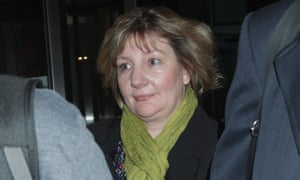
Donna Wood was cleared of falsification but the panel found she was aware of Cafferkey’s higher temperature and had failed to escalate the situation. Photograph: Yui Mok/PA
Wood denied she had falsified Cafferkey’s temperature, which a fellow volunteer recorded as over 38C, a degree higher than average body temperature and a potential early warning sign of Ebola. The panel cleared her of falsification, but found she was aware of Cafferkey’s higher temperature and had failed to escalate the situation.
Later, the doctor who took Cafferkey’s temperature raised the issue with an infectious diseases expert in their group and they agreed that Cafferkey should return to the screening area.
Her temperature was taken three more times by the lead clinician on the PHE team, Deepti Kumar, but she told the disciplinary hearing that she had not been told Cafferkey had taken paracetamol, which can mask a high temperature. Kumar then cleared Cafferkey to make her connecting flight to Glasgow.
The manager of the screening team, David Carruthers, a former police officer, told the panel that Cafferkey had told him she had taken paracetamol and that he had passed this information on to Kumar. However, he was not sure if the doctor had picked up that information.
It also emerged that the PHE manager had mistakenly phoned a hospital switchboard rather than an infectious disease team that was mandated to deal with any referrals from the screening team. Carruthers told the panel he had passed on enough information to those he spoke to get help but he never heard back.
All five of the volunteers were referred to their regulatory bodies by PHE following an early investigation into the screening on that day. The volunteer doctor who took Cafferkey’s temperature will go before a medical disciplinary tribunal in March.
Cafferkey faced being struck off but was cleared of any misconduct in a disciplinary hearing in September after an NMC panel found no evidence that she had set out to mislead PHE. Her solicitor at the time said she had found the proceedings stressful and upsetting.
Samin climbed down into the darkness of the sewer, homemade catapult in hand. He wasn’t using stones this time, concerned they might kill his prey. Instead he formed small balls from damp mud, just enough to stun the rats and get them into a rusty wire cage. The plan was to smoke them out. He threw a fistful of lit rags down the tunnel and waited.
That night, despite an evening thunder storm, the square outside Cakung district administrative office in East Jakarta was packed with street cleaners carrying an assortment of old birdcages and traps made from wire or discarded water dispenser bottles. A good haul for one afternoon – 650 live rats – many of them more than two feet long.
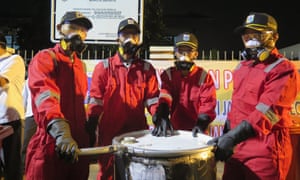
Civil servants in khaki uniforms gathered round to record the scene on smartphones as workers in protective suits and masks vigorously shook the squealing contents of each cage into a pair of steel drums to be gassed with sulphur. Shouts and screams went up whenever a rat escaped, zigzagging through the crowd of legs to get back to the sewer. A few made it. Most were stamped to death.
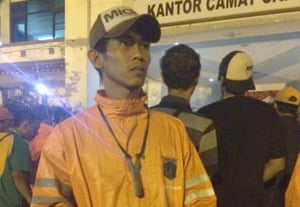
Samin with the homemade catapult he used to stun and catch six rats
Welcome to the Rat Eradication Movement, a fledgling city programme to rid the Indonesian capital of its rodent problem. It’s the idea of deputy governor Djarot Saiful Hidayat, who has offered the public a bounty of 20,000 rupiahs (£1.20) for each live rat – a generous incentive in a country where 40% of the population live on less than $ 2 a day. Collecting the rats alive stops people claiming rewards for dead rodents found in the street, and allows officials to ensure none have been poisoned or shot, which they fear could be dangerous to the public.
Cats used to catch them but now the rats are bigger than them
Jakarta recorded 40 cases last year of Leptospirosis – a bacterial infection from rat urine which can be deadly to humans – with the situation made worse by the city’s frequent floods. While rodent populations are highest near markets and their ready supply of waste food, they can be seen almost anywhere in the city. Rats have been spotted in courthouses and government offices, exclusive apartment blocks and expensive restaurants. Wander the streets at 3am and rats can be seen scurrying in and out of drains. They don’t seem too scared of people.
The rats gnaw through plastic drainage pipes and electrical wires. It is both a fire hazard and an expensive problem to fix as a broken pipe or chewed through wire could be anywhere – outside, inside or under – that a rat can get.
A resident shows off the 200,000 rupiahs he earned for catching 10 live rats during a pilot programme in Kemayoran, Jakarta, last month. Photograph: Alez Kurniawan
Funding for the programme currently comes from Djarot’s own budget, and full operation will not start until after city elections in February. He is standing on a ticket with Jakarta governor Basuki ‘Ahok’ Tjahaja Purnama, who was last week named as a suspect in a blasphemy investigation.
A similar pilot evening two weeks ago in the sub-district of Kemayoran yielded 200 live rats. Djarot, who was there to supervise the operation and distribute money to the moonlighting cleaners and ojek motorcycle-taxi drivers who caught the rats, said the city’s rodent population had until now been “uncontrollable”. Ojek driver Sutikno earned 100,000 rupiah after catching five rats with fishing nets and traps. “It’s good money. I’ll do it again,” he said.
Some, though, worry the programme could backfire in a phenomenon economists call the Cobra Effect, where cash rewards lead to unintended consequences.
Workers in protective clothing gassed the rats with sulphur. Photograph: Alez Kurniawan
The term was coined by German economist Horst Siebert, whose book of the same name contained an anecdote about attempts by colonial authorities in India to rid Delhi of cobras. When the British official in charge placed a bounty on the snakes, some enterprising locals started farming them. The scheme proved ineffective and was eventually cancelled. At that point the cobra farmers, faced with an unwanted stock of snakes, released them into the countryside around the city. The supposed solution had made the problem worse.
A similar situation has been documented by historian Michael Vann. His account of “the Great Hanoi Rat Massacre” tells of attempts by French colonial rulers to control rat populations in the Vietnamese city. New sewers in the wealthy European section unwittingly created a secret underground transportation network for the rats, where they were protected from predators, and the dark tubes provided an ideal breeding ground. They could make their way across the city, with flushable toilets in the poshest homes acting as a convenient entry point.
Authorities offered a cash reward to the public, paying out on production of a rat tail to make administration of the scheme easier. Soon residents were turning in tails in huge numbers – tens of thousands a day – but it wasn’t long before tail-less rats became an increasingly common sight.
“[Officials realised residents] were catching rats, but merely cutting off the tails and letting the still-living pests go free – perhaps to breed and produce more valuable tails,” Vann said. “Later, things became even more serious as health inspectors discovered a disturbing development in the suburbs of Hanoi. These officials found … individuals were actually raising rats to collect the bounty.” The scheme was declared a failure and scrapped.
Could Jakarta’s Rat Eradication Movement end up creating similar unintended consequences? Currently the scheme is nowhere near the scale of Hanoi’s Great Rat Massacre and there seems no shortage of genuine sewer rats, but Benvika, head of wildlife at the Jakarta Animal Aid Network, is not convinced by the project.
He advocates a return to a more natural balance, with predators such as snakes and owls used to control rodent populations. “The sulphur gas is not immediately lethal and causes unnecessary suffering,” he added. “The people of Jakarta must return to living healthily, and maintain their environment.”
Overseeing the Cakung operation was the vice-mayor of East Jakarta, Murad Husein. “Cats used to catch them but now the rats are bigger than them,” he said. “Without any predators the rat population has got bigger, and so have the rats themselves. We’ve no idea how many there are but you can see them almost anywhere, night or day.”
Across England and Wales 140,000 miles of tidy and scrappy, rough and smooth and muddy, open, wooded, exposed, sheltered, peaceful and exhilarating rights of way roll and ramble across some of the two nations’ finest landscapes. They meander from pub to hamlet and farm to school, or sometimes just from suburb to suburb by the scenic route. Now, over a little more than a year and helped by more than 3,000 citizen’s surveys, Ramblers (formerly the Ramblers’ Association) has mapped the condition of enough of these sometimes ancient routes to conclude that more than half are in a good condition, treasured, enjoyed, and as well maintained as a vital part of the common interest should be.
But the picture is uneven. Where the landowner is the National Trust, the National Forest or a national park, the story is usually good – streams with stepping stones, fences with working gates. But as many as a tenth are in serious disrepair: unsignposted, overhung by inhospitable brambles and thick with threatening nettles. That is 14,000 miles of rambling that hovers between the difficult and the impassable. No surprise that these paths are often in areas where local councils, responsible for maintaining rights of way, have experienced the worst cuts. How obvious it must seem, when faced with the choice between closing a day centre or maintaining 100 miles of footpaths, to let the axe fall first on what seems inessential.
Yet, as the Ramblers point out, walking is probably the best single way of promoting both physical and mental health yet to be devised. If everyone walked for two and a half hours a week, fewer people would need doctors and the NHS could be nearly £2bn better off. It is something that almost everyone can do. No special equipment is needed – just paths there to walk on, safe, traffic-free and easy to reach. There is even a budget, just not the obvious one. Under the largely destructive Health and Social Care Act of 2012, responsibility for public health was devolved to local councils. There are some obligations they must fill, relating to the provision of access to such things as sexual health services and baby and child health measures. But there is scope for local interpretation too, to chose what form of public healthcare local people will get the most benefit from. Some things – stop-smoking and substance abuse programmes – are usually essential. But walking, along with facilities like green spaces and play areas, could be part of the programme too.
Unfortunately, the Treasury view does not encompass public health; if extra cash for the NHS has to be found, it is invariably the public health budget that is raided. So, after the last election, £200m was taken out mid-year. Earlier this year, it was announced that the budget, now at £3.38bn, would shrink again, by just short of 4% a year until 2020. The sub-budget for promoting physical activity, King’s Fund research found, has now been cut by nearly 15%.
MPs on the communities and local government committee have just launched an inquiry into the state of parks in England. They are hearing bleak messages about play areas closed because councils can no longer afford to maintain them and about park wardens, who kept spaces safe, made redundant. To that toll can now be added thousands of miles of rights of way that, like parks and play areas, should be playing their part in keeping the NHS solvent by making us all healthier.
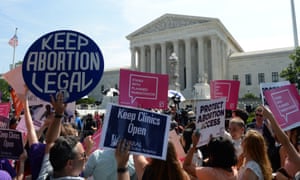
Donald Trump on Friday named one of the nation’s top anti-abortion activists to his campaign coalition, in the clearest signal yet that the presidential candidate has fully embraced Republicans’ typically harsh stance against abortion.
Marjorie Dannenfelser, the president of Susan B Anthony List, a group that works to elect Republican, anti-abortion women, will chair the loose coalition of conservative, anti-abortion rights leaders who are working to elect the Republican nominee. Trump’s campaign also announced that he would commit to a law banning public funding of abortion.
The appointment is a sharp about-face for both Dannenfelser, formerly one of Trump’s most vocal critics, and the Republican presidential nominee. Although he has espoused harsh anti-abortion positions, Trump has nevertheless spent much of the campaign out of step with the anti-abortion establishment – praising Planned Parenthood and, conversely, calling for the punishment of women who have abortions illegally.
In response, anti-abortion groups have sometimes accused Trump of being ignorant of their positions.
On Friday, Dannenfelser signaled that her group considered Trump’s policies to be wholly in line with the anti-abortion movement’s priorities. Trump “doubled down [on his] commitments to the pro-life movement,” Dannenfelser said. “The contrast could not be clearer between the two tickets, and I am proud to serve as national chairwoman for Donald Trump’s pro-life coalition.”
The announcement is a further sign that Trump has succeeded in wooing social conservatives who once viewed the Manhattan real estate magnate with suspicion and chimes with his choice of Mike Pence, governor of Indiana, as his running mate. The former congressman is credited with laying the blueprint for the Republican party’s crusade against Planned Parenthood.
Trump has only recently claimed to oppose abortion. In 1999, in his last public statement on abortion before he flirted with a presidential run, Trump proclaimed himself to be “very pro-choice”. He first declared he was “pro-life” in 2011 at an annual conservative confab.
During the Republican primaries, Dannenfelser was one of the loudest voices to oppose Trump, calling on Iowa caucus-goers in a January letter to “support anyone but Donald Trump”. “We are disgusted by Mr Trump’s treatment of individuals, women, in particular,” the letter read. “Trump … has through the years made disparaging public comments to and about many women.”
Reproductive rights groups immediately condemned Marjorie Dannenfelser’s addition to Trump’s campaign. Photograph: UPI / Barcroft Images
Her comments came as Trump repeatedly equivocated on abortion rights and one of the anti-abortion movement’s most cherished goals, the federal defunding of Planned Parenthood.
A little more than a year ago, Trump said he could not commit to defunding Planned Parenthood without weighing whether the group was “good for women”. Trump later committed to stripping federal funds from Planned Parenthood – “because I am pro-life” – in a February primary debate. But he added that he admired Planned Parenthood’s work on reproductive health, saying: “Millions of millions of women – cervical cancer, breast cancer – are helped by Planned Parenthood.”
A month later, Trump said he would support “some form of punishment” for women who have abortions if the procedure were illegal, comments that anti-abortion groups criticized as out of step with their mission. In April, he further angered anti-abortion groups by saying he believed abortion should remain legal. “The laws are set,” he said. “And I think we have to leave it that way.”
His campaign in both cases quickly sought to undercut his comments, claiming the candidate believed in punishment only for abortion providers and saying Trump would appoint anti-abortion nominees to the supreme court.
In Friday’s announcement, Trump committed for the first time to signing the Hyde amendment into law. The amendment is an annual budget rider that prohibits federal Medicaid funding from paying for abortion services. Making the amendment law is the strictest position Trump has staked out on abortion funding, although it is not surprising. Trump, in a January opinion column, called public funding for abortion “an insult to people of conscience”.
Hillary Clinton, by contrast, in an apparent first for a major party candidate, has promised to repeal Hyde.
Reproductive rights groups immediately condemned Dannenfelser’s addition to Trump’s campaign.
“Let’s be clear: just like Donald Trump, Susan B Anthony List hasn’t done a thing to empower women and everything to advance an extreme agenda that aims to entirely end women’s access to abortion in America, often even for survivors of rape, incest, and women whose health is endangered,” said Ilyse Hogue, the president of NARAL Pro-Choice America, a reproductive rights group.
“Between his support from the dangerously similar anti-choice and alt-right movements, and his record of misogyny, we know Donald Trump will be a disaster for women in the White House.”