Samin climbed down into the darkness of the sewer, homemade catapult in hand. He wasn’t using stones this time, concerned they might kill his prey. Instead he formed small balls from damp mud, just enough to stun the rats and get them into a rusty wire cage. The plan was to smoke them out. He threw a fistful of lit rags down the tunnel and waited.
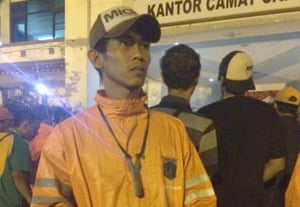
That night, despite an evening thunder storm, the square outside Cakung district administrative office in East Jakarta was packed with street cleaners carrying an assortment of old birdcages and traps made from wire or discarded water dispenser bottles. A good haul for one afternoon – 650 live rats – many of them more than two feet long.
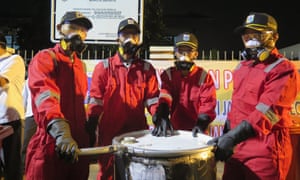
Civil servants in khaki uniforms gathered round to record the scene on smartphones as workers in protective suits and masks vigorously shook the squealing contents of each cage into a pair of steel drums to be gassed with sulphur. Shouts and screams went up whenever a rat escaped, zigzagging through the crowd of legs to get back to the sewer. A few made it. Most were stamped to death.
Welcome to the Rat Eradication Movement, a fledgling city programme to rid the Indonesian capital of its rodent problem. It’s the idea of deputy governor Djarot Saiful Hidayat, who has offered the public a bounty of 20,000 rupiahs (£1.20) for each live rat – a generous incentive in a country where 40% of the population live on less than $ 2 a day. Collecting the rats alive stops people claiming rewards for dead rodents found in the street, and allows officials to ensure none have been poisoned or shot, which they fear could be dangerous to the public.
Cats used to catch them but now the rats are bigger than them
Jakarta recorded 40 cases last year of Leptospirosis – a bacterial infection from rat urine which can be deadly to humans – with the situation made worse by the city’s frequent floods. While rodent populations are highest near markets and their ready supply of waste food, they can be seen almost anywhere in the city. Rats have been spotted in courthouses and government offices, exclusive apartment blocks and expensive restaurants. Wander the streets at 3am and rats can be seen scurrying in and out of drains. They don’t seem too scared of people.
The rats gnaw through plastic drainage pipes and electrical wires. It is both a fire hazard and an expensive problem to fix as a broken pipe or chewed through wire could be anywhere – outside, inside or under – that a rat can get.

Funding for the programme currently comes from Djarot’s own budget, and full operation will not start until after city elections in February. He is standing on a ticket with Jakarta governor Basuki ‘Ahok’ Tjahaja Purnama, who was last week named as a suspect in a blasphemy investigation.
A similar pilot evening two weeks ago in the sub-district of Kemayoran yielded 200 live rats. Djarot, who was there to supervise the operation and distribute money to the moonlighting cleaners and ojek motorcycle-taxi drivers who caught the rats, said the city’s rodent population had until now been “uncontrollable”. Ojek driver Sutikno earned 100,000 rupiah after catching five rats with fishing nets and traps. “It’s good money. I’ll do it again,” he said.
Some, though, worry the programme could backfire in a phenomenon economists call the Cobra Effect, where cash rewards lead to unintended consequences.
The term was coined by German economist Horst Siebert, whose book of the same name contained an anecdote about attempts by colonial authorities in India to rid Delhi of cobras. When the British official in charge placed a bounty on the snakes, some enterprising locals started farming them. The scheme proved ineffective and was eventually cancelled. At that point the cobra farmers, faced with an unwanted stock of snakes, released them into the countryside around the city. The supposed solution had made the problem worse.
A similar situation has been documented by historian Michael Vann. His account of “the Great Hanoi Rat Massacre” tells of attempts by French colonial rulers to control rat populations in the Vietnamese city. New sewers in the wealthy European section unwittingly created a secret underground transportation network for the rats, where they were protected from predators, and the dark tubes provided an ideal breeding ground. They could make their way across the city, with flushable toilets in the poshest homes acting as a convenient entry point.
Authorities offered a cash reward to the public, paying out on production of a rat tail to make administration of the scheme easier. Soon residents were turning in tails in huge numbers – tens of thousands a day – but it wasn’t long before tail-less rats became an increasingly common sight.
“[Officials realised residents] were catching rats, but merely cutting off the tails and letting the still-living pests go free – perhaps to breed and produce more valuable tails,” Vann said. “Later, things became even more serious as health inspectors discovered a disturbing development in the suburbs of Hanoi. These officials found … individuals were actually raising rats to collect the bounty.” The scheme was declared a failure and scrapped.
Could Jakarta’s Rat Eradication Movement end up creating similar unintended consequences? Currently the scheme is nowhere near the scale of Hanoi’s Great Rat Massacre and there seems no shortage of genuine sewer rats, but Benvika, head of wildlife at the Jakarta Animal Aid Network, is not convinced by the project.
He advocates a return to a more natural balance, with predators such as snakes and owls used to control rodent populations. “The sulphur gas is not immediately lethal and causes unnecessary suffering,” he added. “The people of Jakarta must return to living healthily, and maintain their environment.”
Overseeing the Cakung operation was the vice-mayor of East Jakarta, Murad Husein. “Cats used to catch them but now the rats are bigger than them,” he said. “Without any predators the rat population has got bigger, and so have the rats themselves. We’ve no idea how many there are but you can see them almost anywhere, night or day.”
Additional reporting by Linda Hairani
Jakarta"s Rat Eradication Movement: public offered cash reward for live rats

