Dr BJ (Bruce) Miller is convinced that how we care for people towards the end of their lives needs an urgent, radical rethink. An American palliative care specialist, Miller is in the UK this week as the keynote speaker at a conference marking the 50th anniversary of modern hospice care in Britain. He will argue that much more needs to be done to ensure the best possible quality of life for people as they deal with illness and approach dying.
“The way in which we handle death and dying is enormous, fascinating and elemental, and yet it is something that continues to be seen as a taboo,” Miller says of how societies like Britain and America tend to confront the issue. Palliative care is not as high a priority as it should be, he says, and while there are encouraging signs of a growing understanding of the importance of end-of-life care, “at least here in the United States, and I presume [in Britain], a lot of people don’t understand what the heck palliative care is”.
A physician and faculty member at the University of California, San Francisco Helen Diller Family Comprehensive Cancer Center, Miller has emerged in the US as a leading advocate for an approach to palliative care that focuses on promoting people’s quality of life, not merely managing pain. It also emphasises the involvement of others including healthcare workers and caregivers in making that happen.. The 46-year-old sprung to prominence with a 2015 TED Talk, What Matters Most at the End of Life, which ended up being among the 15 most viewed online that year. In it he laid out his vision and talked of how his own life experience (at 19 he almost died in an accident and lost both his lower legs and a forearm) informed his perspective on dying and end-of-life care.
Like his UK counterparts in the palliative care sector, including this month’s conference co-organisers Hospice UK and St Christopher’s Hospice, Miller promotes a focus on the individual and the quality of their life, not just on the disease, illness or disability. Palliative care, including hospices and home visits delivered by “interdisciplinary” teams that include doctors, social workers, volunteers, carers and family as well as fresh perspectives from areas like design and art, should contribute to a better life even as it nears the end, he says.
Delivering first-rate palliative care is not just a worthy ambition, it’s a necessity, Miller says. Wider health and social care systems need to respond to the fact that so many more people are living much longer with chronic or degenerative conditions. “People at the end of their lives often do not have access to the services they need, and with an ageing population demand continues to grow.” The availability of hospice services needs to meet the demand, he says.
Miller’s assessment appears to tally with public opinion, at least in Britain. A recent ComRes poll for Dying Matters, a coalition of voluntary and public sector organisations found that only 16% of people agreed there is enough support for people dealing with death, dying and bereavement.
It’s good news that people are living longer, Miller says, but “we’ve opened up these enormous ranges of lifespans too quickly, soour society has not kept up. And that’s a problem.”
We don’t need to demonise hospitals; we just need to use them more surgically
The “default” mode within healthcare systems of “a strictly medicalised approach” won’t suffice, he says. A situation where older or dying people end up in hospitals because there isn’t a better, more appropriate place for them to be is unacceptable. “Being sick, dying; these are hard things that we all go through, but they are much harder than they need to be. The seduction of acute care remains outrageously and disproportionately the receiver of funding and attention,” he adds. “Let’s not ask them to do everything. We don’t need to demonise hospitals; we just need to use them more surgically.”
To truly transform things, Miller says, the public needs to be properly informed about what palliative care is – where the quality of life for people with advanced or serious illnesses is the focus of teams with a range of skills. They need to be made aware of the benefits too, not least because once they do understand, they are likely to put pressure on politicians to make it a priority. This is why he “keeps banging the public education drum”, he says. And policy-makers need to realise that palliative care can be cost-effective.
“Part of the good news of palliative care is that if you are to take the total cost to the system point of view, time and again this approach saves the damn system money. Even if you’re the most narrow-minded bean counter, you’re still going to arrive at palliative care and the approach it provides as good for the system.”
The US and UK palliative care systems may be different, but both should concentrate spending on residential hospices, more homecare services, video conferences and teleconferencing to reach people in rural areas, says Miller. “These things exist. They just need to be developed and amplified.”
He accepts that the challenges are vast. At a time when social care and healthcare in the UK is under huge financial strain, and when Republicans in the US are attempting to dismantle Obama’s Affordable Care Act – which saw healthcare provision expanded to millions who were previously without insurance (including the very sick, disabled and older people) – the climate is far from conducive.
But he firmly believes the status quo can’t continue: “I believe there is a true urgency to this.”
Curriculum vitae
Age: 46.
Lives: Mill Valley, California.
Family: Dog named Maysie and two cats: The Muffin Man and Darkness.
Education: St George’s school; Princeton, undergraduate studies in art history; University of California, San Francisco, MD as a regents’ scholar; Cottage Hospital, Santa Barbara, California, internal medicine residency as chief resident; Harvard Medical School, fellowship in hospice and palliative medicine, with clinical duties split between Massachusetts General Hospital and Dana-Farber Cancer Institute.
Career: 2007 to present: assistant clinical professor of medicine, UCSF; 2011-16: executive director, Zen Hospice Project; 2008-11: associate director, Symptom Management Service, UCSF; 2008-10: associate programme director, UCSF; 2008-10: associate fellowship director, hospice & palliative medicine, UCSF.
Interests: Nature, the arts, the built environment.
It may not be a surprise to see another study suggesting that cycling to work can drastically reduce your chances of getting cancer and heart disease – those who ride bikes for transport already know how good it makes them feel. However, it’s perhaps yet another motivation for those who don’t, to dust off their bikes – and remember some other reasons cycling to work is so great.
In a five-year study of 263,450 UK commuters, published in the BMJ, researchers at Glasgow University found regular cycling cut the risk of death from any cause by 41%, and the incidence of cancer and heart disease by 45% and 46% respectively.
The cyclists in the study were riding an average of 30 miles per week; that’s three miles each way, five days per week. Cycling at a leisurely 10mph, that would take about 20 minutes each way – a manageable distance for most people.
At present only 3% of the UK population commute by bike, while 36% use a car. If we increased cycling in this country to German levels by 2025, we would save £1.8bn in health benefits and £284m thanks to less congestion.
Ask anyone who cycles to work why they do it, and they’ll have a story to tell, whether it’s about how good it makes them feel, how they saved money, lost weight, or won a battle with depression. Most people will tell you how enjoyable it is.
My commuting story began at university. I remember being astonished one morning when I realised my friend Szilvia had cycled from Finsbury Park in the rain. Getting on a bike and riding five miles in such conditions sounded miserable, but she looked happy and bright, and told me how great it was.
We lived fairly close to one another and she offered to ride with me one day. As I pedalled frantically to keep up with her through Regent’s Park, and Camden, it was like I’d grown wings. Before long, like her, nothing short of a gale force wind with pigeon-sized hailstones was going to stop me from experiencing this feeling every day.
For the first time in my life I started getting fit. I arrived at university feeling awake, alert, and generally in a good mood. I continued to cycle to various temp jobs around London after graduation, carrying my work clothes in a pannier and getting changed in the loos.
On crisp, sunny mornings, I’d cycle through the city feeling like it had rolled out the red carpet just for me. I’d levelled up on urban living: I’d whizz past the stationary traffic and queues for buses and try not to look too smug.
I’d chat to others at the traffic lights. Often I’d get to places quicker than public transport could carry me. Often it was the best part of the day.
Fitting exercise into your daily routine is infinitely easier than trying to carve out a slice of it to go to the gym. Without even trying, you get fitter if you cycle. It is no surprise that levels of physical activity are declining as fewer people cycle or walk to work.
In the cities of cycle friendly countries, such as the Netherlands and Denmark, up to 41% of people commute by bike because it’s easy to do and it feels safe. Decades of investment in cycling infrastructure have made it that way. These countries have learned that most people prefer protected, direct routes on main roads, and low-traffic neighbourhood streets. This means people of any age can cycle, from the very young to the elderly. In the Netherlands, for example, 20% of 80-84 year olds regularly cycle.
Imagine if the UK was like the Netherlands, where 20% of 80-84 year olds regularly cycle. Photograph: Rory Buckland L/Alamy Stock Photo
In the UK, meanwhile, we’ve had decades of car-centric planning, and minuscule levels of funding for cycling. Even though cycling is statistically safe, it doesn’t always feel it, and this fear of sharing road space with motor traffic is the key reason people don’t cycle or stop after trying it.
The government knows that every £1 spent on cycling brings £5.50 of benefits, but at present it spends just 72p per person per year on cycling, compared with £86 per person per year for roads. There is huge potential for more journeys to be cycled if that were to change.
Increased levels of cycling can bring benefits for everyone, whether they cycle or not. Bicycles take up far less road space than cars and emit no toxic fumes. They’re good for our high streets: on New York streets where cycle lanes were introduced average trade rose by a quarter. What’s more, bicycles are great social levellers – according to research, mass cycling could increase mobility of the nation’s poorest families by 25%.
If a magic pill were invented that could generate all of these benefits, we would be falling over ourselves to buy it. As it is, no magic is required, just steady, long-term planning and investment, and a commitment to the humble bicycle, so that more of us can enjoy the simple, life-giving joy of cycling from A to B.
Dying patients are waiting up to eight hours to receive pain relief because of cuts to district nursing services during the NHS’s unprecedented budget squeeze, a new report has revealed.
Severe financial pressures on the NHS are leading to longer waits for treatment and a short-sighted and growing rationing of care that is storing up problems for the future, according to a study by the King’s Fund health thinktank.
The report quotes one unnamed manager of a hospice saying: “The district nurses working at night are not able to give effective response times; you can wait up to eight hours … for patients experiencing pain and discomfort in the last two to three days of their life, it has a massive impact. It’s a frightening time for patients.”
The King’s Fund research has found that district nursing and sexual health services are among the areas of care most affected by six years of the NHS in England receiving annual budget increases of 1.2%, far less than its historic average of 3.7% rises.
It highlights how the diminishing number of district nurses are struggling to give patients prompt high-quality care because they are increasingly overworked.
The need to balance budgets and the smaller numbers of district nurses are prompting some NHS bodies to restrict their eligibility criteria for patients seeking help, refusing it for those with serious mobility problems unless they are completely housebound.
“We heard some examples of providers attempting to limit access. This was mainly through tightening referral criteria, particularly in relation to patients being ‘housebound’. Increasingly, if patients are able to visit their general practice (even if doing so is challenging), they will not be eligible to receive care from district nurses,” the report states.
The past two years have seen a loss of one in seven (14.8%) district nursing posts. “There is a significant gap between demand for district nursing and the available resources in terms of funding and staff numbers,” researchers found. Heavier workloads are contributing to 20% vacancy rates in some places.
The report also warns: “Pressures in district nursing are affecting the quality of patient care. Staff are increasingly rushed. Visits have become more task-focused, and there is less opportunity for thorough assessments. This dilution of quality may damage patient experience and outcomes.”
Many services provided by acute hospitals have been “relatively protected” despite the lack of investment in the NHS in recent years, the authors say.
However, genito-urinary medicine services have been hard hit, with cuts of up to 20% in 2014/15-2015/16 in some places in the budgets for testing for and treatment of sexually transmitted infections. “This has resulted in fewer clinics and reductions in staff in some areas, while there have also been cuts to prevention and outreach services. This could put patients and the general population at greater risk of infection,” the report adds.
The number of hip replacements has also started to fall, despite growing demand for them caused by the ageing population. Slightly fewer were carried out in 2015-16 than the year before as NHS clinical commissioning groups (CCGs) sought to save money by making surgery conditional on losing weight or giving up smoking. Waiting times for the procedure have also lengthened and more patients are waiting longer than the supposed maximum 18 weeks.
“It’s a disgrace that as a result of the Tory funding squeeze many elderly people are forced to live in prolonged agony and without independence because they are denied a hip replacement in reasonable time,” said Jonathan Ashworth, the shadow health secretary.
“Patients are unfairly suffering the consequences of a deliberately underfunded NHS at breaking point,” said Dr Mark Porter, chair of council at the British Medical Association.
The King’s Fund warns that rationing of care will become ever more common. “Although NHS funding growth began to slow in 2010/11, it appears to have taken some time for financial constraints to impact on patient care, and our data suggests that these impacts will spread and intensify,” the report adds.
The Department of Health has told CCGs not to ration care, despite the tight financial constraints it has imposed. NHS England said only: “Ultimately these are legally decisions for CCGs, but informed by best evidence and national guidance where appropriate.”
Rising mortality rates, an increase in life-threatening infections and a shortage of staff and medical equipment are crippling Greece’s health system as the country’s dogged pursuit of austerity hammers the weakest in society.
Data and anecdote, backed up by doctors and trade unions, suggest the EU’s most chaotic state is in the midst of a public health meltdown. “In the name of tough fiscal targets, people who might otherwise survive are dying,” said Michalis Giannakos who heads the Panhellenic Federation of Public Hospital Employees. “Our hospitals have become danger zones.”
Figures released by the European Centre for Disease Prevention and Control recently revealed that about 10% of patients in Greece were at risk of developing potentially fatal hospital infections, with an estimated 3,000 deaths attributed to them.
The occurrence rate was dramatically higher in intensive care units and neonatal wards, the body said. Although the data referred to outbreaks between 2011 and 2012 – the last official figures available – Giannakos said the problem had only got worse.
Like other medics who have worked in the Greek national health system since its establishment in 1983, the union chief blamed lack of personnel, inadequate sanitation and absence of cleaning products for the problems. Cutbacks had been exacerbated by overuse of antibiotics, he said.
“For every 40 patients there is just one nurse,” he said, mentioning the case of an otherwise healthy woman who died last month after a routine leg operation in a public hospital on Zakynthos. “Cuts are such that even in intensive care units we have lost 150 beds.”
“Frequently, patients are placed on beds that have not been disinfected. Staff are so overworked they don’t have time to wash their hands and often there is no antiseptic soap anyway.”
No other sector has been affected to the same extent by Greece’s economic crisis. Bloated, profligate and corrupt, for many healthcare was indicative of all that was wrong with the country and, as such, badly in need of reform.
Acknowledging the shortfalls, the government announced last month that it planned to appoint more than 8,000 doctors and nurses in 2017.
Since 2009, per capita spending on public health has been cut by nearly a third – more than €5bn (£4.3bn) – according to the Organisation for Economic Co-operation and Development. By 2014, public expenditure had fallen to 4.7% of GDP, from a pre-crisis high of 9.9%. More than 25,000 staff have been laid off, with supplies so scarce that hospitals often run out of medicines, gloves, gauze and sheets.
In early December Giannakos, a nurse by training, led a protest march, which started at the grimy building housing the health ministry and ended outside the neoclassical office of the prime minister, Alexis Tsipras. At the ministry, hospital technicians erected a breeze-block wall and from it hung a placard with the words: “The ministry has moved to Brussels.”
Few advanced western economies have enacted fiscal adjustment on the scale of Greece. In the six years since it received the first of three bailouts to keep bankruptcy at bay, the country has enforced draconian belt-tightening in return for more than €300bn in emergency loans. The loss of more than 25% of national output – and a recession that has seen ever more people resorting to primary health care – has compounded the corrosive effects of cuts that in the case of public hospitals have often been as indiscriminate as they are deep.
Pressure to meet creditor-mandated budget targets means that in 2016 alone, expenditure on the sector has declined by €350m under the stewardship of Syriza, the leftist party that had once railed against austerity, said Giannakos, citing government figures.
More than 2.5 million Greeks have been left without any healthcare coverage. Shortages of spare parts are such that scanning machines and other sophisticated diagnostic equipment have become increasingly faulty. Basic blood tests are no longer conducted at most hospitals because laboratory expenditure has been pared back. Wage cuts have worsened the low morale.
“The biggest problem is shortage of staff because people are retired and never replaced,” said Dr Yiannis Papadatos, who runs the intensive care unit of one of the three paediatric hospitals in Athens. “Then there’s the problem of equipment and, periodically, lack of supplies like gloves, catheters, and cleaning tissues.”
Small acts of heroism have done much to keep the broken system afloat: doctors and nurses work overtime, with donors and philanthropists also helping.
Papadatos said: “I was brought up partly in Kenya by parents who emphasised the virtues of helping others. These days I spend a lot of time going round asking friends, or the private sector, for help when our hospital runs out of supplies. The monitors we use to track heart rhythms, blood pressure, that sort of thing, were all donated. People like to give. It makes them feel good.”
Unionists argue that healthcare is an easy target because successive governments have refused to properly tackle tax evasion, the biggest drain on public coffers. In a rare public admission, the International Monetary Fund recently conceded that cuts had been so brutal “basic public services such as transport and healthcare are being compromised”.
But at a time when the Greek debt crisis has flared again, after Tsipras’s controversial announcement of a series of welfare benefits, there are many who fear worse is to come.
One of them is British-trained Dr Michalis Samarakos, who believes that while the health system is in need of further reform it also runs the risk of running out of specialists and clinical trainees. Already there has been a massive exodus of doctors abroad, mostly to Germany and the UK, as a result of lack of opportunity.
“The best are leaving because their potential cannot be developed here,” he said. “I can see it teaching sixth-year students at Athens University, everyone wants a reference, everyone wants to go.
“It’s become a growing problem. We don’t have nephrologists, for example, because there are no prospects for specialists, either in or out of the system [in private practice].
“Trainee doctors are the backbone of any hospital – without them hospitals can’t function. Unless there is a big change, I worry greatly that things can only become worse.”
When I first discovered I had breast cancer, I felt shocked and afraid. I thought maybe there had been a mistake. I was 52, and didn’t have any symptoms: there were no lumps, just what I thought was a cyst under my armpit. I’d gone to hospital to get it checked, and had a mammogram and biopsy.
A week later I received several calls from the doctor, which I didn’t respond to until a voicemail asked me to come in. This was over the holiday period, and I went with a family member who herself had gone through a recent diagnosis and treatment for breast cancer and understood the process. That’s when they told me I had stage two cancer. I remember thinking that this couldn’t be right. I’m healthy and fit, and play a lot of sports.
I believe black women are less likely to go for screenings because the prevention work is not targeted at us
As a black woman, breast cancer wasn’t something I had received much information about. No one in my family had had it, and I don’t remember learning about it in school. When you pick up a breast cancer leaflet you tend to see a white woman staring back at you. I never saw it as an issue that specifically affected me.
But, of course, it does. In fact, new analysis shows that black women in England are twice as likely to be diagnosed with advanced breast cancer as white women. This is for many reasons, including possible differences in tumour biology, low awareness of symptoms and screening, and barriers to seeking help. In my community here in Leeds I know two women who have lost their lives to breast cancer, one of them only 49 years old.
I believe black women are less likely to go for screenings because the prevention work is not targeted at us. It would be great if larger charities made sure that their messaging reached women of colour.
There are charities working with black communities already, such as Black Health Initiative (BHI), but we need help spreading the message. BHI has a national cancer programme – BME Cancer – which launched in the House of Commons in 2014 and addresses the disparities within cancer among diverse communities. This kind of outreach and awareness cannot be time-limited; we need to keep going until it’s clear everyone is getting the message. After all, many from these communities support the national cancer fundraising drives, such as Stand Up To Cancer, Macmillian’s Coffee Mornings and Race For Life. Let’s be deliberately inclusive rather than accidentally exclusive when it comes to tackling inequalities. We have enough evidence to show it’s time for action.
My journey taught me to be more open and talk more. I had a mastectomy, reconstructive surgery, chemotherapy and three weeks of radio therapy. My treatment involves being on a drug for five years. I also have a mammogram every year. On being diagnosed, I felt a tinge of sadness, not knowing who to tell. But then I found some great support here in Leeds among other black women. It helped me get through some difficult days. It’s so comforting knowing that you’re not alone and that someone else is going through the same journey as you. We are able to share stories and talk, hold each other’s hands and raise awareness.
Only last week someone approached me, as they had to go for a mammogram and didn’t know what was going to happen. I gave them just a brief description of my experience, as I didn’t want to instil fear in them, but it was good to be candid and open. I hope I helped reassure them.
I just wish there was more awareness nationally. If the government, charities and those who hold the financial pot through fundraising do not recognise a need for inclusion when it comes to breast cancer awareness, then black women will continue to die at a higher rate. It’s as simple as that.
There is so much that is distressing about the case of JS, the 14-year-old girl with terminal cancer who wished to be cryonically preserved after death, in the hope that she could be revived when a cure for her rare illness had been discovered. Her mother supported the girl in her wishes; her estranged father did not. So, without the consent of both parents, the child had to apply to the courts for permission for the procedure to take place.
JS and her mother both seem to have been determined to secure the preservation. JS got in touch with a Michigan storage facility and also with a UK charity that offers cryonic preservation and makes travel arrangements. Her maternal grandparents raised the estimated £37,000 to fund the process. After the death of JS, her hospital sent a note to the court, saying that their patient’s mother had been too preoccupied with complex postmortem arrangements to be “fully available” for her daughter as she died.
It seems cruel, placing that observation in the public domain, in reference to a woman whose daughter lost her life just a month ago. A lot of people will be familiar with the weird displacement activities that are indulged when a relative is dying. As my father died of cancer, his family fretted over whether he was eating enough and drinking enough water. The last time I offered Dad water, he said to me, very crossly: “Deborah. Enough.”
When my mother was dying of cancer, I got rid of the piano to make space for a bed in the living room, called private ambulance companies and contacted local hospices and care homes, trying with immense futility to arrange for her to be brought the 400 miles from Airdrie to London. Would I allow myself to be taken over by my child’s fantasy of future life? I fear I might.
How easy things were when we all agreed that all good children – and adults – go to heaven. My parents had always seemed to me very pragmatic in their atheism and their belief that this life was all there was. I was hugely shocked when my father, faced with his own death, said: “I didn’t think this would happen to me.” If anything, I was even more shocked when my mother said the same thing, just six years later. I’d had cancer myself in the interim, and had stared hard at the prospect of my own death. I’m absolutely certain that it’s going to happen to me. My doleful preoccupation is with how long I’ve got.
As for the father in the case, who also has cancer, he seems to be the ultimate example of a man who is clever but not wise. His objections included worries that she might be revived in the future and be unhappy and isolated. He thought it through. Unbelievable, really. He took a dying child’s complete fantasy, of a rebirth that medical science does not offer and is never likely to, imagined how things might pan out if this wasn’t a fantasy, and decided he was going to deny his child because his verson of this fantasy didn’t end happily. Also, he’s on benefits, and expressed concern about becoming liable for costs.
Yet one feels for this man too. Even this brief vignette of his psyche explains why he was bitterly estranged from his wife and daughter. Neither mother nor child had seen him for many years. Yet still, when they asked something of him in their baleful situation, he said no. Eventually he came round, saying he would agree if he could see his daughter’s body after she died; they said no, in turn. That’s how high-conflict family fractures go: one person says no and the other says no right back, the first chance they get.
It’s possible too, that it was the need for a court order that made the whole thing real to the mother and daughter, encouraged them to pin down details, check out logistics, make costings, seek funding. The case has certainly made things real for the rest of us.
The judge in the case, Mr Justice Peter Jackson, was at pains to emphasise that in granting permission he was not endorsing cryonics. Rather, he suggested that there was a need for regulation to be drawn up. I can’t help feeling that the regulation of a few exploitative, science fiction-based companies can only give an imprimatur of seriousness to ghastly people who exploit the human fear of death. These places don’t need regulating. They need exposing as morbid confidence tricksters.
In the absence of religion, humans still have philosophy to help those in distress make sense of life and death. At its best, religion is just a theatrical version of philosophy with a comforting final act. Even the resolutely irreligious understand the importance of a funeral – because funerals are for the living.
That’s why it’s easy to see the mother as even more tragic than the daughter. Perhaps she believed in her daughter’s fantasy too. In that case, she is likely to spend the rest of her life tracking progress in the treatment of her daughter’s illness. If that cure ever comes, this might be the point at which she will have to accept that her child is really dead. It’s a miserable thought. One can only hope that she knew what she was doing – offering false but compassionate hope to a child who didn’t want to die.
The number of young women dying from taking ecstasy is on the rise. Even though more than twice the number of males take the drug than females, this year the death rate for young women is substantially higher. After the death of Stephanie Shevlin, 22, on a night out in Crewe, Leah Green investigates what role hormones and super-strength tablets play in the trend
Click here for harm reduction information on how to take ecstasy more safely
The widow of Robin Williams has lifted the lid on the actor’s struggle with a debilitating neurological disease in the months before he took his own life, likening it to “chemical warfare in his brain”.
Writing in the journal of the American Academy of Neurology, Williams’ wife Susan Schneider Williams has detailed the final months of her husband’s life as the couple struggled to respond to his devastating decline in health.
Williams took his own life in August 2014.
Three months before his death Williams was diagnosed with Parkinson’s, but Schneider Williams has previously revealed the autopsy identified that he had suffered from Lewy body disease (LBD).
In her essay, “the terrorist inside my husband’s brain”, she said doctors would later discover it was instead one of the worst cases they had ever seen.
LBD is an incurable form of neurodegenerative disease. It is the second most common form of dementia after Alzheimer’s, with which it shares many symptoms, and can be misdiagnosed as Parkinson’s disease.
In October 2013, on the couple’s second wedding anniversary, Williams experienced gut discomfort, and fear and anxiety which “skyrocketed to a point that was alarming”, Schneider Williams wrote.
He had already been experiencing various physical ailments, which had been intermittent and which the couple and doctors had believed were unrelated. By December he would suffer from increasing levels of “paranoia, delusions and looping, insomnia, memory, and high cortisol levels”.
After his death doctors found that a high concentration of Lewy bodies in his brain’s amygdala had caused the acute paranoia and “out-of-character emotional responses”.
Schneider Williams described it as “chemical warfare in his brain”.
“How I wish he could have known why he was struggling, that it was not a weakness in his heart, spirit, or character,” she said.
Over the following months Williams suffered from panic attacks and memory loss, struggling to remember lines during the shooting of Night at the Museum 3.
He kept saying, ‘I just want to reboot my brain’.
His mental state declined, and Schneider Williams found herself increasingly unable to reassure his anxieties and insecurities.
“Robin was losing his mind and he was aware of it. Can you imagine the pain he felt as he experienced himself disintegrating? And not from something he would ever know the name of, or understand? Neither he, nor anyone could stop it – no amount of intelligence or love could hold it back,” she said.
“He kept saying, ‘I just want to reboot my brain’.”
While had been diagnosed with Parkinson’s disease, Schneider Williams wrote that after his death it became apparent that, pathologically, he suffered from diffuse LBD.
“One neuropathologist described LBD and [Parkinson’s disease] as being at opposite ends of a disease spectrum. That spectrum is based on something they share in common: the presence of Lewy bodies – the unnatural clumping of the normal protein, a-synuclein, within brain neurons,” she said.
Schneider Williams said four doctors examined her husband’s autopsy report and final two years of medical records and they “indicated his was one of the worst pathologies they had seen”.
“He had about 40% loss of dopamine neurons and almost no neurons were free of Lewy bodies throughout the entire brain and brainstem.”
She said the medical team had been on the right track in diagnosing and treating Williams before he died, but she would never know if that would have made a difference.
“I am not convinced that the knowledge would have done much more than prolong Robin’s agony while he would surely become one of the most famous test subjects of new medicines and ongoing medical trials,” she said.
“Even if we experienced some level of comfort in knowing the name, and fleeting hope from temporary comfort with medications, the terrorist was still going to kill him.”
Schneider Williams, who was last week appointed to the American Brain Foundation’s board of directors, said she wrote the essay to increase neurologists’ understanding of patients and caregivers and to “add a few more faces” to the reasons they conduct research.
• In the US, the National Suicide Prevention Hotline is 1-800-273-8255. In the UK, the Samaritans can be contacted on 116 123. In Australia, the crisis support service Lifeline is on 13 11 14. Hotlines in other countries can be found here.
Anxiously twirling my pen, the piece of armoury I still felt most comfortable with as a junior doctor, I hurried back to her bedside, drug chart poised.
Annette was an 82-year-old lady with lung cancer. It was my first month at the hospice. We’d been trying everything to ease her breathlessness. From medications to mindfulness, chest physiotherapy to visits from the chaplain … nothing helped. And now a lump formed in my throat every morning, as I tentatively roused the frail outline curled into a ball, each day bearing a starker resemblance to a child. Her words were interspersed with a soft, gasping rattle, as I’d ask the same question: “What can I do for you Annette?”
I don’t remember learning much about end-of-life care at medical school. Or perhaps I didn’t pay much attention. After all, I went into this job to keep my patients alive. Thinking about death wasn’t a subject that resonated with the newly qualified me, raring to go into action, scenes of bloody heroics reflected in my eyes as I was unleashed onto the wards.
I spent six years being trained how to deploy our ever-expanding arsenal of technology. My satisfaction, and my identity as a doctor, came from a feeling of competence. Just as a sculptor feeds his passion by constructing new statues or a carpenter by chipping away at fragile antiques to restore them to their beauty, so I fed my sense of worth by fixing what was in my control.
I had just about grasped the choreography of medicine: people agree to become our patients and we agree to try and fix them until the very end, as all manner of machinery trill and beep around their frail figures.
But Annette was not being fixed. And I was running out of tools.
“Do you know what I’d really like, doc? Some KFC.”
As I sat with her later, watching her surprisingly nimble arthritic fingers tear apart a bucket of chicken wings, I couldn’t shake the feeling that we’d surrendered. I knew our battle with death can never be won, but I had a niggling unease that we were retreating prematurely.
It soon became a ritual. Every few days I sat with her as she licked her fingertips and painted stories of her childhood. She soon confessed her biggest fear – dying alone at home. She didn’t want us rummaging in our armoury for something else to deflect the grip of death, as it inched closer.
So we listened, and we stopped. A week later, Annette passed away, surrounded by her family. I had never before thought of what a good death should look like. But as I stroked her hair with prickling eyes, I knew that I had just witnessed one.
I began to change my view of end-of-life conversations. I soon saw an irony in them: when it came down to it, done well, they were not about the end at all. They were more about life than any other conversations I had ever had with my patients.
This job has made me contemplate the questions Atul Gawande, a surgeon, writer, and public health researcher, so eloquently asks. Have we built our system around the few patients that exceed survival expectations, at the expense of preparing the rest for a more likely outcome? Through our struggle to curb our medical urges, are we failing to hear what really matters to them at a time when their choices should be most respected? Is there a tendency to preserve every fibre of life, to glorify longevity, over what actually makes our lives worth living?
Our lives are stories, and we want to be the authors. And in stories, the endings count. I’ve learnt that, as doctors, we need to be better at shaping those narratives, at helping patients with their endings.
After six years of medical school, death is a certainty that I must admit I shrank away from. But a picture of Annette and her bucket of KFC is now etched in my memory. I thank her for the lesson she taught me: that sometimes, doing nothing is the bravest decision of all.
If you would like to contribute to our Blood, sweat and tears series which is about memorable moments in a healthcare career, please read our guidelines and get in touch by emailing sarah.johnson@theguardian.com.
Join the Healthcare Professionals Network to read more pieces like this. And follow us on Twitter (@GdnHealthcare) to keep up with the latest healthcare news and views.
A GP who died from a rare form of kidney cancer has warned of the difficulties doctors face in getting treatment for themselves, in an emotional blog published posthumously.
Dr Lisa Steen described her anger at colleagues for failing to go the extra mile to help identify the disease and for dismissing her as a hypochondriac, in the essay published on BMJ.com.
The 43-year-old mother-of-two from Cambridge wrote of spending “two years wandering in the wilderness of the medically unexplained” before finally being diagnosed in July 2014, by which time the cancer had spread to her bones. She died in February.
She wrote: “I do not know how long I’ll live. It probably won’t be for many weeks. But right now I am glad to be alive. I am grateful for the expensive drug which is holding back the cancer.
“I am angry at being left in the medically unexplained wilderness and I did not like the way my colleagues looked at me, when they believed me to have health anxiety.”
Steen said hers was a cautionary tale for all health professionals who get ill, and for doctors treating other health professionals.
Affected by myriad symptoms, she eventually attended her GP in August 2012. Various tests failed to lead to a diagnosis and her condition was put down to health anxiety.
Steen, who was a GP for the drug and alcohol service Inclusion, wrote of her frustration at trying to describe her symptoms to doctors, and trying to diagnose herself.
She tried to explain that the symptoms might be connected to a benign carotid body tumour she had had when she was younger.
Her attempts to get investigatory tests and treatment were thwarted, she said, because of a “fear of looking even more ‘anxious’ or suffering from ‘health anxiety’, aka a hypochondriac”.
Eventually, embarrassed by being off work with no diagnosis, she returned to work. “I still knew there was something wrong, but it seemed fruitless going to see specialists. It was so humiliating, feeling like a goldfish with no voice. Watching doctors’ faces glaze over at the multitude of symptoms. Trying to fit it all in with work and looking after my family.”
After two years and prompted by weight loss, a routine ultrasound revealed a mass.
Steen wrote: “If any one of the doctors I saw had gone another mile, they would’ve stumbled upon it.”
But, she said: “they were reluctant to lay their hands on and examine a fellow medic”. And on her part, she said: “I was too embarrassed about my ‘psychiatric’ condition, too confused by not having the whole answer ready.”
She added: “My story is a cautionary tale to all of us health professionals when we get ill. Illness is somehow not the done thing. It upsets our ‘them/us’ belief system, which helps us cope with the horror of what we see.
“Mine is a cautionary tale to those treating health professionals, and those of us who are unwell – doctors do get ill, they don’t always know what is wrong with themselves. Give them a class A service because it is actually harder getting treated as a doctor than a layperson.”
Her husband, Raymond Brown, told the Telegraph: “They didn’t seem to be taking her too seriously, particularly because she had been diagnosed with health anxiety, she was being looked at as a hypochondriac.”
He added: “She just wants doctors to be aware when they are treating doctors to give them really good treatment and they have to be aware they are a patient and they don’t know everything. They need to be treated like a patient, not like a doctor.”
In 2013, at a conference on endangered languages, a retired teacher named Linda Lambrecht announced the extraordinary discovery of a previously unknown language. Lambrecht – who is Chinese-Hawaiian, 71 years old, warm but no-nonsense – called it Hawaii Sign Language, or HSL. In front of a room full of linguists, she demonstrated that its core vocabulary – words such as “mother”, “pig” and “small” – was distinct from that of other sign languages.
The linguists were immediately convinced. William O’Grady, the chair of the linguistics department at the University of Hawaii, called it “the first time in 80 years that a new language has been discovered in the United States — and maybe the last time.” But the new language found 80 years ago was in remote Alaska, whereas HSL was hiding in plain sight in Honolulu, a metropolitan area of nearly a million people. It was the kind of discovery that made the world seem larger.
The last-minute arrival of recognition and support for HSL was a powerful, almost surreal vindication for Lambrecht, whose first language is HSL. For decades, it was stigmatised or ignored; now the language has acquired an agreed-upon name, an official “language code” from the International Organization for Standardization, the attention of linguists around the world, and a three-year grant from the Endangered Languages Documentation Programme at the School of Oriental and African Studies in London.
But just as linguists were substantiating its existence, HSL stood on the brink of extinction, remembered by just a handful of signers. Unless the language made a miraculous recovery, Lambrecht feared that her announcement might turn out to be HSL’s obituary.
Three years after announcing its existence, Lambrecht is still unearthing her language sign by sign. She may be the only person in the world who still uses HSL on a regular basis, signing into a camera while a linguist named James “Woody” Woodward and a handful of graduate students from the University of Hawaii document her every move.
Led by Lambrecht, Woodward, and researcher Barbara Earth, the project aims to document what may be the last-ever conversations of native HSL signers. The goal is to record at least 20 hours of high-quality video footage of natural HSL and then transcribe, translate, and archive it. The researchers hope that this work – along with a series of illustrated handbooks depicting over 1,000 signs, and a regular class at the University of Hawaii set to begin next year – will jump-start the revitalisation of HSL.
The project faces numerous obstacles. The first is the scepticism of many of the remaining signers themselves. Hawaii’s tiny Deaf community is deeply divided. Some say HSL is not a real language, others see it as backward; still others are sceptical of Lambrecht.
Illustration by Christian Montenegro
But the gravest threat to HSL is American Sign Language (ASL), which is advancing across the globe – from Hawaii to Thailand to Togo – just as fast as English. The Deaf world, intensely local until recently, is consolidating and globalising in unprecedented ways. And the forward march of ASL, which in certain ways brings people together, also poses a significant danger to many of the estimated 400 sign languages used all over the world – most of which we know nothing about.
Hawaii is a bellwether, but Deaf culture all around the world – for many on the inside it is a “capital-D” culture, not a “lower-case-d” disability – faces threats from every direction. The “mainstreaming” of deaf students means that they are placed in hearing schools, where they are encouraged to be just like everyone else but with “special needs”, in a process that some call deliberate assimilation. Cochlear implants (and the potential of gene therapy) even more fundamentally endanger sign languages – some Deaf activists condemn such “cures” as being akin to genocide.
If the loss of a particular language such as HSL means the end of a whole expressive system, the disappearance of sign language in general – the only fully fledged form of language completely independent of speech – would permanently impoverish human communication.
Like every natural language, HSL is the evolved product of a specific history, the unconscious creation of a community. For it to survive, local signers will have to make a deliberate choice to use it. The same may be increasingly true of Deafness itself. The story of HSL raises crucial questions in an age of globalisation: Do cultures on the margins have a future? Will enough people choose to be that different, and will they do it together?
Though they parallel spoken languages in certain ways, sign languages represent a fundamentally different way of communicating. They neither derive from, nor correspond to, spoken languages. Nor are all sign languages mutually intelligible, as hearing people often assume – they are as various as spoken languages.
Their historical evolution is distinctive. Infants can sign before they can speak, and the great sign language linguist William Stokoe argued that sign may have preceded speech in the history of human language. It’s considered normal for one in 1,000 children to be born profoundly deaf, but places with higher rates of inherited deafness – such as the village of al-Sayyid in Israel and Bengkala in Bali – have been natural hotspots for sign languages.
For sign languages, and for Deaf culture more broadly, intergenerational transmission is far from straightforward. The vast majority of deaf adults give birth to hearing children, while most deaf children are born to hearing adults who have no connection with the Deaf communities.
Signing is not miming, and signs are not just gestures that anyone can immediately grasp
Signing is not miming, and signs are not “just” gestures that anyone can immediately grasp. “Iconic” signs, where the gesture self-evidently expresses meaning, play a role in every sign language, but even they can be wonderfully nuanced. In HSL, for instance, “cry” is signed with spread-finger “tears” running out from the sides of the eyes, while “bawl” has the fingers running straight down. Still, abstraction and convention are essential, just as in speech, because not everything can be expressed with self-evident gestures. There is nothing obvious, for example, about the HSL sign for “man” or “boy”: a spread hand moving down across the head.
For most of recorded history, sign languages have been effectively invisible to hearing people. It was not until William Stokoe’s groundbreaking study of ASL, published in 1960, that any sign language had been analysed as a fully fledged communication system with a grammar of its own. In 1965 Stokoe published an ASL dictionary, also the first of its kind.
Now that the kind of geographical isolation that once bred new languages is no more, sign languages represent something of a final frontier. “We really don’t know how many sign languages there are,” says Albert Bickford of the global sign languages team at the language database Ethnologue. “It seems reasonable to assume that the majority of sign languages currently in use in the world have not been discovered yet,” Victoria Nyst, a linguist at Leiden University, told me.
The most recent edition of Ethnologue, published earlier this year, mentions 141 sign languages. Over a hundred more have been reported, Bickford says, but no solid information on them exists – just the barest indication that Deaf people may sign differently in a particular place. We may never know much about these languages, or even confirm their existence.
Lambrecht’s announcement in 2013was the culmination of a lifetime of work. Born deaf, she hears almost nothing, barely even the noise of a siren blaring in her street. “I grew up very frustrated, thinking I’m not deaf, I’m not deaf, I’m hearing! I want to be an actress, I want to be a dancer, I want to be a movie star!” Lambrecht told me late last year at the University of Hawaii. “I was so frustrated that I couldn’t be those things.”
Teletype, an early form of texting, and closed captioning, which made TV and films accessible, were life-changing developments for her when they became widespread in the 1970s. “After that, I settled down,” she said. “I hated being deaf until that communication barrier broke down, when all those devices came out.”
The youngest of seven children, Lambrecht started signing HSL at home in the late 1940s – learning it from two of her older brothers, who were both deaf like her. She was probably one of the last people anywhere to learn HSL naturally, as a first language, and picking it up from family was particularly unusual. By then, the dorm at Hawaii’s only deaf school was the closest thing HSL had to a homeland – it was there that one of her brothers learned it.
But ASL was already coming in. Soon after the second world war, an unprecedented number of Deaf mainlanders came to Hawaii to work or retire. Within a few decades, ASL was dominant, HSL almost dormant. “We would get a lot of insults, a lot of negativity,” Lambrecht recalled. “Deaf people here would put themselves into an inferior category compared to the people who brought ASL. People said, ‘They’re from America, they’re white people, they know better.’”
Lambrecht made a living by teaching ASL for 33 years, mostly to hearing people, but in her spare time she pursued HSL, tracking down old signers in hospitals and nursing homes. “We used to go to the other islands to drum up people, and now they’re all dead, dead, dead,” her husband, Jeff, said. Interested mainlanders had documented a small number of local signs, and they encouraged Lambrecht to do more. Years in, she realised she had been collecting the remains of a complete and original language.
Without funding and without linguistic expertise, Lambrecht’s efforts stalled until 2007, when a woman named Barbara Earth came to Hawaii and enrolled in her ASL class. After a career working on gender and development in Asia and Africa, Earth was going deaf and wanted to learn how to sign.
Embracing Lambrecht’s cause and digging into HSL history, Earth hunted for money to support the project. Three years later, she found enough for a pilot study, interviewing 19 elderly Deaf people and two children of Deaf adults on four Hawaiian islands. William O’Grady, the linguistics department chair at the University of Hawaii, agreed to host the project at the university: “Barbara knocked on my door and said there was an unknown sign language here in Hawaii, and she needed help to prove that it existed.”
Linda Lambrecht, left, teaches Hawaii Sign Language. Photograph: Eugene Tanner Photography, LLC
An initial estimate of up to 280 surviving HSL signers was soon revised down to 40, then down to just 10 or so old-timers still likely to be competent in HSL. ASL had made deep inroads even among these signers, but there was evidence, especially from Lambrecht’s signs, that HSL was distinct, and lay close enough to the surface to be recovered. Spoken languages such as Basque, Welsh, and Hawaiian have come back from the brink of extinction – could HSL be the first sign language to do it?
For James Woodward, the mass extinctionof sign languages is bound up in prejudice and chauvinism. He believes that every local sign language should have the chance to become a valued, modernised language of education, giving communities a choice and a chance at continuity. Like the spread of English, the triumph of ASL might enable communication, but convenience cannot replace intimacy and history, which people soon forget ever existed.
Related: Signs of the times: deaf community minds its language
One day late last year in Honolulu, I sat in on a gathering that included some of the last active HSL signers. Besides Lambrecht, there were the three other elderly signers who had joined the project within the last year. Their funny and furious signing was almost all in ASL, as usual, but here and there old bits of HSL were surfacing.
“Is this Deaf culture or what!?” Hilda Lopez signed. “I love it, I love it, I love it.” She kissed her own hands as she signed. “HSL is really number one in my life. The ones who don’t like it are small-minded!”
Lopez explained to me that her first name in English is Hilda, but her name sign – her real, everyday name in the Deaf community – is a pointing gesture towards the mouth, based on an incident at her fifth birthday party when someone fired a BB gun and shot out some of her teeth. It’s a classic HSL name sign: blunt, comic and personal, based on physical characteristics and memorable incidents.
Like any language, HSL can be broken down by linguists, but its personality, its characteristic style of discourse, is harder to get a handle on. Even when signing ASL, Lopez seems to embody the HSL style. “When they’re using ASL, people talk too long and make other people bored,” she told me. “HSL is short and thrilling and fast.”
HSL has a bigger ‘signing space’ than ASL – anywhere from the top of the head to the bottom of the torso
HSL has a bigger “signing space” than ASL – meaningful signs can be made anywhere from the top of the head to the bottom of the torso. Signs that occur not on the hands but elsewhere on the body also play an important role. “Kick” is signed only with the leg, for instance, while a raised eyebrow is a vital bit of grammar, signalling a yes or no question, or a conditional clause beginning with “if”. The “vocalisations” accompanying certain signs, which fellow signers can sometimes lip-read, echo different spoken languages: borrowed words from Hawaiian, English and Hawaii Pidgin.
Lopez thinks and talks to herself in sign. “I’m 100% Deaf!” she said proudly. “I don’t hear sound, but I can feel it, I feel the body vibrations in my chest: bass drums, police sirens. The only thing I can hear is fireworks — I don’t like the smell of them, they make me sick, but I like the noise and vibration.”
Lopez never knew her biological parents, but she is fiercely proud of her Native Hawaiian and mixed-ethnic roots. At least one piece of evidence, an 1821 letter discovered by Barbara Earth, seems to link HSL to the Native Hawaiian past. In that year, an American missionary, newly arrived in the Kingdom of Hawaii, met a deaf man and bargained with him over 40 sticks of firewood and a pig. Some of the man’s signs were “in common use”, seemingly among both deaf and hearing people, wrote the missionary. The signs he recorded for “pig”, “money”, “see”, and a system of counting by clapping, are still present in HSL today.
The rate of inherited deafness in Hawaii is normal. But by the late 19th century, waves of Japanese, Chinese, Portuguese and Filipino immigrants were coming to Hawaii to work on the American-run plantations, and a new multi-racial Deaf community took shape in Honolulu, including boot shiners, launderers, and flower sellers. There was even what a contemporary newspaper called a “fancy deaf wedding”, where 80 of the guests used “the sign language”.
“The turning point, the beginning of the end of HSL,” according to Barbara Earth, was the founding of Hawaii’s deaf school in 1914. Like most schools at the time, it promoted oralism, the system of lip-reading and speaking that is almost universally despised in Deaf communities for being painful, unnatural and ineffective. But for a while the school was also a unique environment for the clandestine transmission of HSL. One former student, Norman Galapin, told me that he learned HSL “on the playgrounds and in the dorm”, though “if the teacher saw you signing, sometimes they would slap your hands, or hit you with a ruler, or pinch your cheek.”
During the 1940s, HSL was already a language in transition, according to Galapin: “They weren’t using the old [HSL] sign for ‘mother’, they were using this [ASL] one, but they were still using the old sign for ‘father’.” Starting in 1939, a few charismatic teachers from the mainland played a vital role in overturning oralism and legitimising sign language, but they ended up promoting ASL over HSL in the process.
Employment, education and access to government services – from court interpreters to mental health provision in sign language – were perennial problems in the community, but many deaf Hawaiians thrived as master carpenters, printers, mechanics, postal workers and even ukulele makers. As elsewhere, an informal Deaf Club was at the centre of an unusually tightknit community, organising Christmas parties, bowling nights and an annual summer camp-out on the beach, with up to 100 people fishing and cooking for two weeks straight.
Yet Hilda Lopez, like many Deaf Hawaiians, left Hawaii for the mainland for education and for work, arriving in California in her teens. The culture shock was intense: “It was all ASL, and I wasn’t really comfortable with it,” she said. “People seemed to know so much, I felt that I wasn’t very smart…. I got confused and I lost HSL, I didn’t really remember it any more.” Only now, haltingly peeling away the layers of ASL, is she starting to reclaim the language.
No other sign language comes close to having the influence of ASL. Accurate, up-to-date signer numbers do not exist for any sign language, but most of the larger ones are not even yet secure in their own countries. There are more than 20 million deaf people in China, for instance, but Chinese Sign Language, which has hardly been documented, has only been acknowledged as a distinct language for the last 30 years.
By comparison, ASL is a powerhouse, supported and promoted by institutions such as the National Association of the Deaf, and Gallaudet University in Washington DC, which describes itself as “the world’s only university with programmes and services specifically designed to accommodate deaf and hard of hearing students”. Gallaudet plays a critical role in the American Deaf community and in the life of ASL. Until recently, the university supported both a college prep centre in Honolulu (to ensure qualified deaf applicants to Gallaudet) and ASL interpreter training in Hawaii (to bolster ASL more broadly).
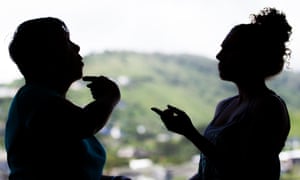
Linda Lambrecht having a conversation in Hawaii Sign Language, Honolulu. Photograph: Eugene Tanner Photography, LLC
ASL may now be going global, but the language is at least partly rooted in local sign languages that have long since gone extinct. French Sign Language was the first modern, “methodical” sign language, codified in the 1760s and 70s for formal instruction from existing signs used in the Deaf community of Paris by the Abbé Charles-Michel de l’Épée. When America’s first school for the deaf opened in Hartford, Connecticut in 1817, French Sign Language was imported and likely fused with a handful of existing New England sign languages. The result was ASL. (British Sign Language, dominant in the UK but only granted official status in 2003, is not directly related to ASL.)
Today, there are at least 500,000 ASL signers in the US, while ASL and ASL-derived sign languages are also widespread across the Caribbean, the Pacific and much of Africa and south-east Asia. The language’s increasing dominance in countries on every continent reflects the strength of Deaf culture in America and the role that well-meaning American missionaries and educators have played in spreading Deaf education through ASL.
In the past, James Woodward told me, missionaries would often tell deaf people in other countries that they didn’t have a language. “It’s improving now,” he added, “but I saw that going on as late as 1999 in Thailand, when some Americans came over. I think there’s a growing awareness in the Deaf community in the US of how ASL has really endangered many other sign languages, and even destroyed some.”
As with English, prestige plays a major role in the growth of ASL. The linguist Victoria Nyst has written that “signers in West Africa tend to perceive ASL-based sign languages as being superior to sign languages of local origin.” Similarly, Misella Tomita, a young Gallaudet graduate from Hawaii, described visiting the Netherlands and seeing everyone using ASL rather than Dutch Sign Language: “I felt like ASL is taking over the world.” Closer to home, Woodward has studied Black ASL, which seems to have evolved in the second half of the 19th century at segregated deaf schools in the southern US. The dialect, which is an inspiration to Lambrecht, carries a heavy stigma and has become highly endangered. Almost all black signers now use standard ASL.
At the Hawaii School for the Deaf and Blind, ASL became the standard in 1960. Today, more than half the teachers are Deaf and students are expected to sign ASL while learning to read and write English. HSL is only used, occasionally, by one dedicated teacher, and Linda’s proposal to teach the language there was turned down.
“I think ASL is the reason for the decline of HSL,” Woodward told me matter-of-factly, but then added: “You can’t really separate the personal issues from the linguistic issues.”
The impending disappearance of a language puts enormous stress on a community. For years, the last two fluent speakers of Ayapaneco in Mexico were not on speaking terms, until outside pressures and incentives convinced them to reconcile. According to William O’Grady, one language with just 60 speakers has four competing writing systems. In any community that speaks an endangered language, there are often groups who think the language is not worth saving. “But usually when it’s too late, there’s a deep sense of regret,” O’Grady said.
In Hawaii, the remaining community of HSL signers is deeply divided. Lambrecht is the face of the language, but as a past president of the Aloha State Association of the Deaf (ASAD), she is on the opposite “side” from many of the older signers, who belong to a group known as the Diamond Head School Alumni (after the former name of the deaf school).
The impending disappearance of a language puts stress on a community. The remaining HSL speakers are deeply divided
The two organisations are the institutional expression of a seemingly intractable split in the Deaf community that dates back to at least the 1970s. Some explain it as generational, historical and linguistic, but it is also personal, visceral and mysteriously self-perpetuating. In 2014, when the deaf school marked its 100th anniversary, there were two separate celebrations: one for the Diamond Head group, one for the group Lambrecht is a part of. “I feel like it’s just natural now, this fighting,” Lopez told me.
Because HSL was in retreat by the 1950s, most younger Deaf people can hardly sign in the language – there was virtually nowhere for them to pick it up. Many take great pride in their identity as Deaf Hawaiians and emphatically support HSL as a symbol of that identity. But some of the most fluent of the older HSL signers, in the Diamond Head group, are deeply ambivalent about reviving the language. “Even though they use it in their conversations, they don’t feel that HSL is a real language,” said Darlene Ewan, a community activist who teaches at the deaf school.
Early on, Wanda Andrew, who is part of the Diamond Head group, warned off the researchers: “I said, ‘To tell you the truth, for HSL it’s too late, it’s dead,’” she told me. “The loss of HSL is sad, but it was just sort of a mixture of everything, like chop suey, just kind of like an accent.” For Andrew, who is in her 70s, ASL enabled a cosmopolitan life, from studies at Gallaudet to decades on the mainland and eventual marriage to a Deaf Australian man.
Explaining why some keep their distance from the project, Andrew added that “People will just say they don’t want to, because they don’t want to work with Linda.” She continued, “And if they don’t remember [signs], then they just don’t remember [them]. Or they might be afraid of what it’s for, or they don’t want to feel dumb… I don’t support Linda, I think she’s a little narcissistic.”
Others close to the Diamond Head group agreed that personal animosity and questions of authority – whose signs to record and revitalise? – are part of the problem. Lambrecht’s supporters counter that she has almost single-handedly led the revitalisation effort. Lambrecht herself points to the lingering power of the stigma: “HSL is in their hearts, but they’re resistant. They want to be modern.”
The divide, which has implications for how the language is documented, is now reflected in a similar rift between the researchers. Earth and Woodward now acknowledge that ASL must have had a deeper impact than was initially understood, obliterating HSL and leaving in its place a hybrid of ASL and HSL that Woodward calls CHSL (Creolised HSL).
Earth believes that when signers refer to HSL today, they may actually mean CHSL – a view Woodward does not share.After meeting more members of the Diamond Head group, Earth argues that CHSL is the only thing left: “I have never seen pure HSL. Fewer and fewer old folks retain strong HSL elements… They cannot recover pure HSL because they never knew it.” Woodward counters that “the past two years have shown that Lambrecht is using a different language from CHSL” – during recording sessions where Earth, increasingly estranged from the project, was not present.
The signs for “blue”, “green” and “yellow” have become a particular flashpoint in this dispute. Woodward argues that Lambrecht’s distinctive signs for these colour terms make semantic sense, because they are clearly related to the HSL signs for “water”, “bamboo” and “pineapple”. But other signers were incredulous, saying they had never seen the signs before and suggesting that they might be specific to Lambrecht or her family. Their own signs for those colours were basically ASL, and they couldn’t remember any others that might be original to HSL. Earth felt that the pressure to find such “original” non-ASL signs risked distorting the research.
“If no other person has a sign and Linda has a sign, I don’t know what else to do except use her sign,” said Woodward, who worked with the last known signer of Chiang Mai Sign Language in northern Thailand before he died of complications from diabetes in early 2015. Lambrecht’s signs for “blue”, “green”, and “yellow” are likely to be the standard for teaching HSL going forward. “If there’s only one person left,” Woodward said, “then that’s what you have to document.”
Now in its final month, the three-year project to document and revitalise HSL has made progress, but the hardest work remains ahead. “We haven’t been able to do everything we wanted,” Woodward told me recently. He is applying to the Endangered Languages Documentation Programme for a six-month grant extension. Even now, he said, the team is still finding new signs.
While she continues her work with Woodward, Lambrecht is looking beyond Hawaii, since ASL is spreading to other islands across the Pacific: “I want to tell people there: it’s not that you’re stuck with your local sign language, you can borrow signs from ASL, but please don’t throw out your local language.” Woodward believes that many of the Pacific’s innumerable islands had, or may still have, traditional, indigenous sign languages of their own – he has already identified one on Majuro, one of the Marshall Islands.
“Time is passing quickly,” Lambrecht said the last time I talked to her. The oldest signer who had joined the project, a Japanese-Hawaiian woman named Mildred, was dying. “I remember Mildred would always tell me, ‘I don’t like HSL, I like ASL, it’s for educated people like me,’ and I would say, ‘No, no, no, it’s our local language!’” Mildred was seen as one of HSL’s remaining masters, but she had been reluctant to sign for the camera when I visited last year.
Then in February, Linda told me, Mildred had a bad fall and went to the hospital. She couldn’t walk and was now under hospice care, living with her son. Linda visited her recently: “I saw her signing – and I noticed that she had reverted to HSL. We were just shocked. The others didn’t understand her, I said let me translate. Now when I visit her I try to catch every story I can, while she’s still here. Next time I go I really want to bring the camera and record her.”
• Follow the Long Read on Twitter at @gdnlongread, or sign up to the long read weekly email here.