'act etiketine sahip kayıtlar gösteriliyor. Tüm kayıtları göster

20 Nisan 2017 Perşembe

Crackdown on migrants forces NHS doctors to "act as border guards"

A medical charity has launched a campaign against government guidance which “makes border guards of doctors” by allowing the Home Office to access details of undocumented migrants who seek NHS treatment.


Doctors of the World runs clinics for undocumented migrants, victims of trafficking and asylum seekers. It has assisted numerous patients, some pregnant and some with cancer, who are afraid of accessing NHS healthcare due to concerns that a visit to the doctor could lead to deportation.


The organisation has joined forces with the human rights charity Liberty and the National Aids Trust to launch a petition aimed at reversing a data-sharing policy between the NHS and the Home Office implemented this year. They want the government to “stop using NHS patients’ personal information to carry out immigration enforcement”.


Lu Hiam, a GP and Doctors of the World adviser, said: “Confidentiality is the cornerstone of the doctor-patient relationship. Deterring sick people from getting healthcare has serious consequences. Putting this data-sharing agreement in place without consulting doctors is nonsensical, given what a huge impact it has on our professional role.”


The government and NHS Digital, the body that stores patient information, published the agreement in January. The pact makes it clear that NHS Digital is legally required to hand over non-clinical patient details – including addresses and dates of birth – to the Home Office.


Use of NHS data has allowed immigration officials to locate, arrest and deport visa overstayers and undocumented migrants.


Doctors of the World has produced a “safe surgeries” toolkit that outlines practical methods doctors can use to keep patients’ addresses off NHS records, helping them circumvent the Home Office memorandum of understanding on data sharing.


The kit suggests ways to register patients using the address of the local GP practice and informs medical staff that they do not need to ask for a passport or proof of identity when registering patients. The pack also includes posters telling patients that they are not legally required to provide such information.
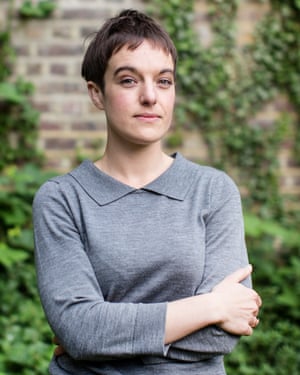


Martha Spurrier, the director of Liberty


Martha Spurrier, the director of Liberty, says: ‘Fostering fear of the doctor in this way is a whole new dangerous and irresponsible low. Photograph: David Levene for the Guardian

Prompted by similar unease, the National Union of Teachers this week passed a motion condemning the Department for Education’s requirement, introduced last September, that parents must supply details of pupils’ nationality and country of birth to schools. The DfE may subsequently pass on this information to the Home Office. The request also forms part of a drive by Theresa May to create a “hostile environment” for illegal immigrants.


Miriam Beeks, a GP at Lower Clapton Group Practice in east London, has put up posters telling patients they can register as “no fixed abode”.


“Doctors, in general, hate the idea that they are being used as immigration officers. Doctors should feel confident about standing against this. We are backed up by both NHS and GMC confidentiality rules – our interactions with our patients are confidential,” she said.


Figures released this year show the number of Home Office requests to NHS Digital has tripled since 2014. Department of Health data reveals the Home Office made 8,127 requests for patient details in the first 11 months of 2016, which led to 5,854 people being traced by immigration enforcement.


Martha Spurrier, director of Liberty, said: “This government has made border guards of teachers, landlords, bank clerks and now even doctors – all as part of a misguided and counterproductive obsession with creating a ‘hostile environment’ for undocumented migrants.


“Fostering fear of the doctor in this way is a whole new dangerous and irresponsible low. It will put the health of the most vulnerable in society at risk, including children and victims of trafficking and torture.”
Deborah Gold, chief executive, of the National Aids Trust, said the decision must be reversed. “Without any consultation, NHS Digital have agreed to share important personal information with the Home Office. They have betrayed their responsibility to safeguard the confidentiality of NHS patients. They have also harmed public health as people are deterred from healthcare,” she said.


A government spokesperson said no clinical information would be shared. “We share non-clinical information between health agencies and the Home Office to locate individuals suspected of committing immigration offences. Access to this information is strictly controlled, with strong legal safeguards.


“Immigration officials only contact the NHS when other reasonable attempts to locate people have been unsuccessful. Anyone in genuine need can always receive treatment from the NHS – urgent or necessary care is never withheld.”


In its clinics providing basic healthcare to undocumented migrants, Doctors of the World has encountered numerous patients who have avoided seeking medical help because of their irregular immigration status.


The charity said it recently helped a woman who visited their east London clinic in labour. She had avoided seeking antenatal care because she feared being reported to the Home Office and was concerned about the cost of treatment.


Doctors of the World also highlighted the case of a young Ugandan woman who was almost six months pregnant and had not sought antenatal care because she was too scared to visit the doctor. She has lived in the UK for five years, her partner is a UK citizen and they are in full-time work, but she does not have a visa.


“I feel trapped. I’m in a situation where I need to go to the hospital but I can’t, because I feel my information might not be confidential,” the woman said. “I can’t imagine being separated from my partner. Maybe they would make me go back without my baby too. I would be separated from one or even both of them.”


Doctors of the World has also been contacted by a woman from the Philippines who has lived here for several years without a visa. She found a lump on her breast last September and was concerned because of a family history of breast cancer.


The woman, who worked as a cleaner, received an appointment for a biopsy but did not attend amid concerns that the hospital would share her details with the Home Office.


She said: “I felt like I was carrying the weight of the whole world. I was worried that if I went to the hospital and the immigration authorities know about it they might get me and deport me. But if I didn’t go to hospital, then what about the lump?”


She said she forced herself to go to a second appointment and the lump was eventually removed. She said: “In the end, I thought I must go. The lump was getting bigger, it was over 4cm by then. I was so scared at the hospital – my pulse was going so fast!”


The woman remains concerned about the risks of seeking medical help. “For years I had just tried to protect myself from getting sick – like by always wearing warm clothes – because I thought it wasn’t safe to go to the doctor,” she said.


Crackdown on migrants forces NHS doctors to "act as border guards"

14 Kasım 2016 Pazartesi

"Birth control is a political act": the pre-Trump contraception rush starts now

On Wednesday morning, gynecologist Deborah Ottenheimer went to work determined not to talk about the election. “I never do that,” she says. “You just never know where people are at.” But as her doors opened, she quickly realised she wouldn’t have a choice. “Every single patient that walked in burst into tears,” she says. “Women and girls were sobbing. Just sobbing. Everybody was wrecked.”


Ottenheimer’s New York City clinic treated nearly 40 patients the day after Donald Trump was elected, and the only thing more unusual than their tears was that so many of them had the same question: “Should I get an IUD?”


Feminists, queer and transgender activists gather to protest against Donald Trump.


Feminists, queer and transgender activists gather to protest against Donald Trump. Photograph: Pacific Press/LightRocket via Getty Images

This tiny T-shaped plastic-and-copper coil, designed to stop an egg and sperm from surviving in the womb, has become an unlikely weapon on the frontline of women’s rights. “These are not people who were thinking about it already – or were unhappy with their current method,” Ottenheimer says. “These people were afraid.”


In fear of what a Trump presidency might mean for reproductive rights, thousands of women have taken to social media to urge each other to seek out access to IUDs, a form of birth control that can last anywhere from three to 12 years. Trump has promised to defund Planned Parenthood, the reproductive health organisation that provides contraception to many women around the US, and dismantle the Affordable Care Act, which guarantees access to contraception. Depending on the brand, an IUD inserted before Trump’s inauguration guarantees that a woman is protected from unwanted pregnancy for the duration of his presidency and beyond. “It’s a ‘fuck you’ to this president to get birth control that will outlast him,” said Margot Judge, a 25-year-old from New York who is considering getting an IUD this week.


Since the election, Ottenheimer says she has continued to be overwhelmed with requests about the device, and she is not alone. Planned Parenthood has reported a spike in inquiries while Google reported a “massive peak” in searches for “IUD” this week. And while this step towards self-protection is a measure of reassurance, plenty of women remain deeply uncertain about what the future holds.


Planned Parenthood supporters rally for reproductive healthcare.


Planned Parenthood supporters rally for reproductive healthcare. Photograph: Nick Ut/AP

“For me, my motivation is fear,” says Jennifer, 35, from Maryland. “For the past eight years, we’ve seen expanded healthcare and more acknowledgement of reproductive rights – but I remember how tense things were under George Bush. So, for me, there’s a sense that I need to protect myself because I don’t think lawmakers will.”


Jennifer has thought about getting an IUD before, but feels urged to get one now. She says that the panic she has noticed among women after the election has left her feeling unsettled about making a decision. “I don’t like the feeling of being painted into a corner. I feel like I am being rushed, like I’m having to make a decision right now that I would like to be more thoughtful about.”


Even without the threat of a pussy-grabbing president, IUDs make a lot of women anxious. They are the third most popular form of contraception in the US – and the most effective form of reversible contraception available – but it requires a medical procedure, and tales of perforated uteruses, heavy bleeding and painful cramps have long sent women running to the pill instead.


A mass rally on the fourth day after the election.


A mass rally on the fourth day after the election. Photograph: Pacific Press/LightRocket via Getty Images

However, gynaecologists insist complications are rare. Ottenheimer says that, while there are other forms of long-term birth control such as the implant (inserted in the arm, lasting up to 3 years), IUDs are a “really good option” for most women. Clare Lyons, a registered nurse who urged women to get an IUD on the night of the election, says that IUDs are “incredibly safe” and that women should get informed about whether it might be a good option for them. “Ultimately, my message is to make an appointment with a provider; figure out what is best for you.”


Ayelet Bitton, a 25-year-old software engineer from San Francisco, has read a few horror stories about IUDs, which have always held her back from getting one. But now she is re-evaluating. “I used to say I didn’t want to deal with getting it inserted, or the fear that it might be dislodged. But now I want to reconsider all of that,” she says. “Because the stress of something going wrong with my IUD is a lot less than the stress I’ll have if this other stuff happens.”


Hannah Weinberger is also reconsidering the downsides. The 26-year-old from Amaeus, Pennsylvania, is an avid cyclist. She was once put off having the procedure to avoid physical side-effects that could stop her from cycling. But now that has changed. “My strong feelings about being able to take control of my body mean that temporary discomfort doesn’t [matter] very much to me any more.”


Most women cite two reasons for wanting to get an IUD: wanting to take advantage of their current right to free contraception, and uncertainty about rising costs of contraception in the future. But there’s another reason, too.


A #GOPHandsOffMe protest outside Trump Tower.


A #GOPHandsOffMe protest outside Trump Tower. Photograph: Pacific Press/LightRocket via Getty Images

“Contraception is a feminist issue,” Weinberger says. “Getting an IUD means I have a tool in my body that the government can’t touch. Making my own choice about what my body can and cannot do in the face of an administration that wants to change that is a political act.”


And let’s be clear, this administration does very much want to change that. Although Trump has flip-flopped on abortion and has seemingly softened his perspective on Obamacare, Mike Pence, his beady-eyed running mate, has been vehemently opposed to reproductive rights throughout his political career. He signed a whopping eight anti-abortion bills into law in fewer than four years as governor of Indiana, including one that mandated women hold funerals for their aborted foetuses and allowed hospitals to deny abortions to women even if they would die without care.


So, while an IUD is a form of armour that women can use to shield themselves against Pence and Trump’s crusade to control their bodies, there’s still reason for women to be anxious about their future in Trumpland.


“Even if I decide to get an IUD today,” Jennifer says, “how do I know that in a few years I’ll be able to see someone to get it taken out?”


"Birth control is a political act": the pre-Trump contraception rush starts now

22 Eylül 2016 Perşembe

Vasectomies: turning an "act of love" into a global movement

“How do we celebrate the best in men when the news is full of stories about their frustration, humiliation, and destructiveness?” That was the question that film-maker Jonathan Stack was pondering back in 2011. The answer, he concluded, was to point out to men that there is a simple and pragmatic way they can personally make a difference to some of the most complex problems of our time – a vasectomy.


“I saw it as a creative challenge,” he says now. “How do we counter that narrative?” In vasectomies Stack saw an opportunity to transform an “act of love” into a global movement – a means “to engage men in the conversation”.


stack


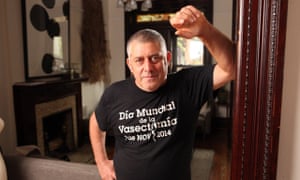
Vasectomies are an act of love, argues Jonathan Stack. Photograph: World Vasectomy Day

Expanding access to vasectomies in developing countries has now become Stack’s life mission. In 2012, he created World Vasectomy Day while working on a documentary about his journey through fatherhood and decision to have a vasectomy. “The plan was to have 100 doctors in 20 countries do 1,000 vasectomies in 24 hours,” he says. “And we came very close to that.”


Men need to share the burden of birth control


Studies indicate that reducing fertility can result in far-reaching benefits – from improvements to maternal and child health to poverty reduction and long-term environmental sustainability. In 2012, the Bill and Melinda Gates Foundation and the UK government’s Department for International Development co-hosted a summit on family planning and outlined an ambitious new goal: to make affordable contraception available to an additional 120 million women and girls in the world’s poorest countries by 2020.


Four years on, important gains have been made: more than half of the 69 countries have delivered on their commitments, and an additional 24.4 million women and girls now have access to modern contraceptive methods. But some experts say progress has been slower than expected because efforts have overlooked a key population: men.


Vwfamily fl


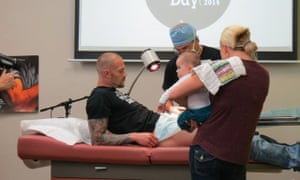
“We need to engage more men to support their partners and spouses,” says Monica Kerrigan. Photograph: World Vasectomy Day

“We’re falling behind,” says Monica Kerrigan, former deputy director of family planning with the Gates Foundation and a senior adviser to FP2020, the global partnership formed after the summit to carry out its objectives. “I think a missing component is the need to engage more men to support their partners and spouses.” Among the many ways they can do that, she says, is by shouldering some of the burden of birth control, including, for those who no longer want to have children, voluntary sterilisation, or vasectomy.


Stack agrees. As it is, he says, men are largely left out. Most family planning programmes target women and girls, and with good reason: globally, the biggest barrier to reducing birth rates is gender inequality – population growth is fastest where female literacy is low, violence against women is common and reproductive rights are not protected.


Still, the reality remains that men tend to dominate decision making about family size and birth control. At the same time, they tend to be detached from or opposed to family planning, and the result is often that their partners discontinue using birth control or never start at all. In fact, of the unmarried women who say they don’t want to get pregnant within the next two years, close to a quarter don’t use contraception because someone close to them opposes it – one reason for the 74m million unintended pregnancies that occur annually.


“We’re now realising that while it’s important to focus on women and girls, we can’t continue with business as usual,” says Kerrigan. “We have to positively disrupt the status quo.” World Vasectomy Day, she says, is just that – an effort to secure men’s engagement, using modern innovations that can accelerate progress.


No scalpels


One of those innovations is the no-scalpel vasectomy. First performed in China in the 1970s, the technique made what was already a safe, simple procedure – a pair of small incisions to sever the duct that delivers sperm from the testicles (the vas deferens) – even more so. Using the no-scalpel approach, a provider need only locate the vas deferens under the skin and make a single needle puncture through which to cut it, minimising the risk of bleeding.


Men equate vasectomy with castration, or believe it will cause them to be impotent


Ricky Lu


“That modification really facilitated the spread of vasectomy across the globe,” says Carmela Cordero, a reproductive health expert with EngenderHealth. “Before, it was only the urologist who could perform a vasectomy. Now, we’re training nurses, midwives, clinical officers. You don’t need sophisticated equipment, you don’t need an operating room. It’s inexpensive, and it takes less than 15 minutes.”


And yet, for all its virtues, vasectomy is still an uncommon practice in the developing world and the least known modern method of contraception in poorer countries. In sub-Saharan Africa, where the unmet need for family planning is greatest, fewer than 100,000 men have had the operation. By comparison, female sterilisation, which is costlier , more time consuming, must be performed in a hospital and can result in serious complications, is among the most widely used methods of contraception worldwide.


Some of the volunteers for WVS 2014.


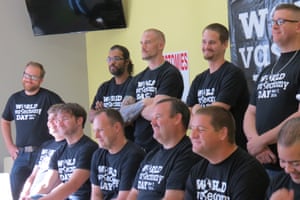
Some of the volunteers for WVS 2014. Photograph: World Vasectomy Day

One reason for that, says Ricky Lu, director of family planning and reproductive health at non-profit Jhpiego, is that vasectomy has long been mired in misconception. “Many men equate vasectomy with castration, or believe it will cause them to be impotent,” he says. Where accurate information is lacking, he says, demand for the procedure is very low, and “there are few trained providers offering the service” as a result.


Jhpiego is trying to change that through programmes like Tupange (“let’s plan” in Kiswahili) in Kenya, which aims to make modern contraceptive methods available to the urban poor and to educate men about the benefits of voluntary male sterilisation. The country is one of a long list that will celebrate the fourth annual World Vasectomy Day on 18 November, 2016. Now a global movement, the event is supported by the International Planned Parenthood Federation, Marie Stopes International, FHI 360, and the ministries of health of India, Indonesia, and Kenya.


WVS is celebrated all over the world, including Indonesia.


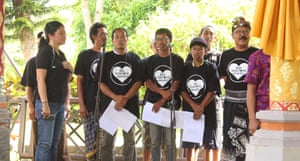
WVS is celebrated all over the world, including Indonesia. Photograph: World Vasectomy Day

As before, the day will feature an 18-hour “vasectomy-thon” with medical professionals from around the world performing the procedure, as well as a training session for would-be providers in Kenya. “We’ll also have a wellness centre where men can get a general check-up, as well as counselling and testing for HIV and hypertension,” Stack says. “We think that part of being a responsible partner is taking care of one’s health.”


Kerrigan says vasectomy is part of catalysing men to support contraception. “If the majority of men supported their partners in using the contraceptive method that they want, we could go a long way toward preventing the 74m unintended pregnancies that happen every year,” she adds. “We need to change the way we think about men and boys in this space.”


Join our community of development professionals and humanitarians. Follow @GuardianGDP on Twitter. Join the conversation with the hashtag #SheMatters.


Vasectomies: turning an "act of love" into a global movement

9 Mart 2014 Pazar

Britain "will not act" on sugar guidance


The disclosure is likely to trigger controversy, since Professor Ian Macdonald, a nutritionist who has worked for Coca-Cola and Mars, is amid five of eight members of the panel who have been accused by anti-sugar campaigners of “worryingly close” ties with the rapidly meals and confectionary market.


The nutritionist, who is chairman of the carbohydrate doing work group at the Scientific Advisory Committee on Nutrition (SACN) is recognized to be critical of some of the claims created by anti-sugar campaigners, which he considers “irresponsible” and “ill informed”.


In an interview just before the new WHO guidance was published final week, Macdonald explained: “The place, I’ve been informed by the officials, is that actually we would get note of it, but we would not act on it. The government will act on the tips that comes from [the United kingdom specialist panel].”


On Sunday Government officials confirmed that their advice will come from SACN, even though they stated the committee was anticipated to meticulously consider the proof which led WHO to make its recommendations.


Britain "will not act" on sugar guidance

Britain "will not act" on sugar tips


The disclosure is most likely to trigger controversy, due to the fact Professor Ian Macdonald, a nutritionist who has worked for Coca-Cola and Mars, is between 5 of eight members of the panel who have been accused by anti-sugar campaigners of “worryingly close” ties with the fast food and confectionary business.


The nutritionist, who is chairman of the carbohydrate working group at the Scientific Advisory Committee on Nutrition (SACN) is acknowledged to be essential of some of the claims created by anti-sugar campaigners, which he considers “irresponsible” and “ill informed”.


In an interview just before the new WHO guidance was published last week, Macdonald mentioned: “The position, I’ve been informed by the officials, is that actually we would take note of it, but we would not act on it. The government will act on the suggestions that comes from [the Uk expert panel].”


Yesterday Government officials confirmed that their guidance will come from SACN, although they stated the committee was anticipated to very carefully consider the evidence which led WHO to make its suggestions.


Britain "will not act" on sugar tips

12 Şubat 2014 Çarşamba

Ketamine death of public schoolgirl an "act of stupidity which destroyed family"

“Ellie was a hugely intelligent man or woman who liked to analysis every little thing from the contents of her cat meals to background searches on the poets she studied for A-degree and biogs on each and every actor in the Harry Potter movies, no fact was too obscure for Ellie.


“The fact she failed to study the results of ketamine on the human body method beggars’ belief.


“It is effectively-documented that alcohol and ketamine do not go well with each other but I feel that it need to truly be reinforced – if you take even a small quantity of ketamine and a modest quantity of alcohol, you could die.


“We can only say that for an intelligent man or woman, Ellie did a extremely stupid thing, probably she considered she was taking a calculated risk or perhaps she was tired of contemplating.


“She invested her total lifestyle contemplating and she often liked to check out.


“It truly is possible to envision for her it would be all too eye-catching to cease pondering for a whilst and simply experiment in the false liberation of intoxication.


“Nothing at all will carry our beautiful daughter back, if something optimistic is to come out of our daughter’s death it may possibly be the sombre reminder that looks, brains, fitness and sheer enthusiasm for human encounter are no match for the toxic blend of alcohol and ketamine.”


The inquest heard that the teenager, from Glastonbury, Somerset, was volunteering as a steward for Oxfam at the festival with a pal, Stephanie Peirce, on August eight when she snorted a line of ketamine powder having drunk a number of cans of Carlsberg lager throughout the day.


In a statement study to the Winchester inquest, Miss Peirce, also 18, described how she fell asleep in their tent following taking the drug and came about to find Miss Rowe unconscious.


She explained: “I experimented with to wake her up but she wouldn’t, at the time I imagined she felt a bit cold, I received a bit anxious so I tried different strategies of waking her up, speaking loudly, shaking her.


“I stumbled out of the tent and I asked the 1st person I noticed to aid me since I couldn’t wake her up.”


On-internet site paramedics attempted to revive the former Wells Cathedral School pupil, including giving her an emergency tracheotomy to aid her breathing, until finally an ambulance arrived and took her to the Royal Hampshire County Hospital in Winchester exactly where she was pronounced dead.


Pathologist Dr Adnan Al-Badri informed the hearing that toxicology tests showed that Miss Rowe had two.14mg of ketamine per litre of blood in her program which was the second lowest recorded fatal dosage of the drug recorded.


He explained that the use of alcohol exacerbated the danger of taking ketamine, including: “In mixture, she really brought on a lot more harm than if she had taken ketamine alone.”


Coroner Sarah Kirby recorded a narrative verdict which stated that Miss Rowe died as a result of alcohol and ketamine toxicity and central nervous system depression obtaining taken ketamine and alcohol.


She said that Miss Rowe had snorted roughly 200mg of the drug from two wraps of ketamine that the pair had bought from a “pal of a friend” at the festival.


She explained: “Ellie was a youthful woman who would have had no thought whatsoever that what she did would cause her death.


“She was 18, it is not that she was an habitual drug user, she believed it would be fine, she didn’t consider about it.”


Speaking soon after the inquest, her father Anthony Rowe, a self-employed businessman and caretaker, mentioned: “She was quite accountable, it truly is an absolute tragedy, it was a single act of stupidity and that can ruin a loved ones.


“This wasn’t some significant drug use.”


Mr Rowe, who was informed of his daughter’s death on his 58th birthday, described how his daughter was independent and outgoing.


He stated that Miss Rowe, who had sisters, Iona, 20, and Belinda, 16, had been named as British Army cadet of the 12 months after finishing an outward-bound survival course in Canada.


He extra that they would be collecting her Duke of Edinburgh gold medal subsequent month at a ceremony in London, and just days ahead of her death she had completed a cycling tour of the Bulgarian mountains.


He said: “I often imagined that if any harm came to her, it would be a bungee leap or a canoe down a fierce river, an accident on a mountain bike, nothing at all like this.


“She was really sensible, it really is an absolute tragedy for our household.”


He mentioned that he supported the improve from Class C to Class B.


He said: “The major message is do not take any powder because you do not know what is in it, you do not know the power of it, you do not know how your metabolism will act upon it, you run the chance of triggering harm to your whole household which we really feel with all our hearts.”


Iona added: “I have an problem with the way the classification method does not reflect the harm it does to the human entire body and the deaths it has brought on.”


Describing her sister, who intended to go on to university to grow to be a lawyer, Miss Rowe said: “She was extremely independent, quite personable, loved talking to individuals.


“She was constantly my leader since she was the stronger, a lot more independent character.”


Mr Rowe extra: “We would really significantly like to pressure, do not take ketamine, but if you do consider ketamine, do not consider anything at all else, just drink water.”


Ketamine death of public schoolgirl an "act of stupidity which destroyed family"