construction etiketine sahip kayıtlar gösteriliyor. Tüm kayıtları göster

20 Nisan 2017 Perşembe

How to stop the construction industry choking our cities

Poor air quality, with diesel the biggest culprit, is now thought to be the cause of 40,000 deaths in the UK each year.


But while cars and lorries have attracted most attention, less reported is the contribution of other polluters to the problem, particularly construction sites.


According to the most detailed air-quality study in the UK, the London Atmospheric Emissions Inventory, construction sites are responsible for approximately 7.5% of damaging nitrogen oxide (NOx) emissions, 8% of large particle emissions (PM10) and 14.5% of emissions of the most dangerous fine particles (PM2.5).


While a small amount of this (about 1%) is dust from site activities like demolition, the vast majority comes from the thousands of diesel diggers, generators and other machines operating on sites.



Construction workers


In 2005, more than 230 construction workers a year were reported to have died from cancers caused by exposure to diesel fumes. Photograph: Ben Birchall/PA Wire

Yet this machinery is not held to the same emissions standards as on-road vehicles. What’s more, its proportionate impact will only get higher as on-road emissions drop, according to Daniel Marsh, King’s College London academic and project manager for the London Low Emission Construction Partnership.


So what are the chances the industry can improve?


Given the construction industry’s questionable history with asbestos, which wasn’t regulated until 1983 or completely banned until 1999 – almost 40 years after the cancer link was proven – some are sceptical. In 2005, the Health and Safety Executive found (pdf) that each year more than 230 construction workers die from cancers caused by exposure to diesel fumes, a figure it hasn’t since updated, even though more is now known about diesel’s noxious effects.


Marsh is particularly concerned about the impact on those working with the most polluting machines. He says: “Now on a construction site if you find asbestos it’s like a scene from ET, people swoop down in protective suits – it has become a huge priority. What the industry has failed to take on board is that diesel emissions should be considered in the same way.”


Despite this general failure to act, there are innovative firms in the industry trying to help clean up. The Greater London Authority is also attempting to clamp down on the problem. In January, Mayor Sadiq Khan said he intends to bring in a fine like the congestion charge to be paid by firms using polluting machines, beefing up groundbreaking emissions rules on central London building sites introduced under his predecessor Boris Johnson.


Leading the charge are firms like Off Grid Energy, which has developed products that turn traditional diesel generators (responsible for an estimated 25% of site emissions) into hybrid machines, reducing fuel consumption by around 60%.


Founder and CEO Danny Jones says the requirement for occasional very high “peak loads” of energy leads builders to use far bigger generators than necessary, which then remain on all day and night. In contrast, Off Grid’s battery system stores excess power, turns off generators when charged, and allows much smaller generators to be used. Just one proposed motorway works installation, Jones says, will be the equivalent of taking 225 cars off the road.


Another firm tackling the problem is Taylor Construction Plant, which is providing the first UK lighting rigs (mobile units that provide bright lighting, generally for working outside after dark but also for security) to be powered by hydrogen fuel cells. This means zero on-site emissions, at a total cost (including fuel) that product manager Simon Meades says is cheaper than the approximately 20,000 conventional generator-powered lighting rigs operating in the UK. After a slow initial uptake, Meades says demand has grown fivefold in the last year.


Even slower to change have been the fleets of diggers and excavators, which until now have relied on powerful diesel engines, but where hybrid technology is finally emerging. Swedish motoring giant Volvo, through its Volvo Construction Equipment subsidiary, has customers currently trialling a prototype hybrid excavator that generates electric power from the down-swing of its boom arm.



Volvo Construction Equipment’s LX1 hybrid wheel loader prototype


Volvo Construction Equipment’s LX1 hybrid wheel loader prototype. Photograph: Jonas Ljungdahl

Patrick Lundblad, the firm’s senior VP of technology, says these trials have confirmed the vehicle uses around half the fuel of Volvo’s best-performing conventional excavators. Customer demand doesn’t seem to be an issue either.


“Wherever we go our customers want to have a couple of our green machines,” he says. However, producing it is not straightforward; 98% of the vehicle parts are new, and supply chains are immature, meaning the firm doesn’t know when it’ll be ready for sale.


This is not the only problem. Off Grid’s Jones says resistance to its products from the generator hire industry, which also makes money from selling diesel, came close to driving his firm out of business. “We’re a classic disruptive technology, and our challenge is the reluctance of the diesel generator rental industry to engage in a technology that changes what they do now.”


Sign up to be a Guardian Sustainable Business member and get more stories like this direct to your inbox every week. You can also follow us on Twitter.


How to stop the construction industry choking our cities

17 Mart 2017 Cuma

Male construction workers at greatest risk of suicide, study finds

Men working in the construction industry and women employed in culture, media and sport, healthcare and primary school teaching are at the highest risk of suicide, official figures for England suggest.


The research, commissioned by Public Health England (PHE), found people in roles as managers, directors and senior officials – the highest paid occupation group – had the lowest risk of suicide.


The Office for National Statistics (ONS) looked at all 18,998 deaths of people aged 20 to 64 – a rate of about 12 deaths for every 100,000 people per year – who killed themselves in England between 2011 and 2015. Of these records, 13,232 had information on the deceased’s occupation.


Suicide is the leading cause of death for men under 50 and about four in five (10,688) deaths included in the analysis were among men.


The ONS found low-skilled male construction workers had the greatest risk, at 3.7 times above the national average.


Building finishing trades, including plasterers, painters and decorators, had a risk twice the national average and the risk for low-skilled workers in process plant operations was 2.6 times higher. The agricultural sector also carried an elevated risk for men, more than 1.5 times above the average for both low-skilled and high-skilled workers.


For women, the risk was elevated among those working in culture, media and sport occupations, at 0.69 times higher than the national average, compared with 0.2 times higher for men.


The risk of suicide among female health professionals was about a quarter higher than the national average, largely driven by suicides among nurses, and it was 0.42 times higher for primary and nursery school teachers, although lower than average for the teaching and education profession as a whole.


The risk among male and female carers was almost twice the national average but among corporate managers and directors the risk was more than two-thirds lower for both sexes.


The ONS said previous studies suggested an occupation may have a high risk because of low pay and job security and/or access to or knowledge of methods of suicide.


The Samaritans chief executive, Ruth Sutherland, said: “We spend a third of our lives at work and one fifth of us experience suicidal thoughts, so these resources are much needed. We shouldn’t stop there though – it is up to us to create a culture in our workplaces where people feel safe enough to talk about their feelings and get support if they need it.”


PHE said the research, published on Friday, will help build a better understanding of factors that influence suicide and help identify where inequalities exist among different groups.


The PHE chief executive, Duncan Selbie, said: “People who die from suicide are usually not in contact with health services, and often push through in silence as their ability to cope deteriorates. With more than two-thirds of adults in employment, the workplace offers an opportunity to reach people who need extra support.


“I urge all employers, large or small, public or private sector to treat mental health as seriously as physical health. Early action can stop any employees reaching a desperate stage. Simple actions can make a huge difference – talking with a manager or colleague can help people get the support they need, and ultimately save lives.”


PHE, Business in the Community and the Samaritans have published toolkits to help employers prevent and respond to suicides.


The ONS limited its analysis to occupations where there were 50 suicides or more so that relative mortality rates could be estimated more precisely.


  • In the UK, the Samaritans can be contacted on 116 123. In the US, the National Suicide Prevention Hotline is 1-800-273-8255. In Australia, the crisis support service Lifeline is on 13 11 14. Hotlines in other countries can be found here


Male construction workers at greatest risk of suicide, study finds

15 Şubat 2017 Çarşamba

Delhi"s deadly dust: how construction sites are choking the city

Far out on Delhi’s southern and eastern fringes the rows of high-rises suddenly turn skeletal. The population of the Indian capital, already the second largest in the world, is forecast to grow by 9 million in the next 15 years; and despite a recent lull in new projects, areas such as Noida are a universe of worksites, cranes and workers.


The empty towers stretch as far as can be seen – which is only about 300 metres. Like much of Delhi on most winter mornings, Noida is blanketed in thick smog and a heavy dust that cakes windows and clogs throats.


A comprehensive 2016 study of what is to blame for Delhi’s poor air identified some obvious sources,such as car emissions, the city’s coal-fired power stations and rubbish fires both small and literally mountainous. But it also highlighted more unlikely culprits.


Dust kicked up by cars along Delhi’s vast and growing road network contributes between a third and 56% of the most harmful pollutants in the city’s atmosphere.


The city’s construction sites, and the production of the raw materials that feed them – such as bricks and concrete – are also an outsized contributor to the foul air that some lung specialists warn is making Delhi hazardous, particularly for children and the elderly.


In a country largely under construction – by some rough projections, around 70% of the buildings that will exist in India’s cities by 2030 are yet to be built – controlling the dust produced by roads and worksites is an important, but largely neglected, part of clearing Delhi’s air, according to environmental groups.


Landlocked by treeless plains and deserts, Delhi is inherently dusty. “It’s one of the reasons we can’t have air quality standards as strict or high as the US,” says Sarath Guttikunda, the founder of UrbanEmissions, an air pollution research group. “Our annual standard for PM2.5 pollutants is 40 units, but the World Health Organization’s guideline is 10.”


Construction equipment sits idle at a site shrouded in smog in New Delhi, India


Construction and demolition are the third-largest contributor of coarse pollutants. Photograph: Bloomberg/Getty Images

But poor building standards and antiquated practices, multiplied across thousands of worksites, make construction and demolition the third-largest contributor of coarse pollutants – strongly linked in a 2015 study to heart disease.


At one building site in Chittaranjan Park, an affluent south Delhi neighbourhood, half-covered piles of rubble spill out on to the pavement. No fences have been erected to keep the wind from whipping dust out into the street. Enormous mounds of dirt left in empty lots, or simply dumped at the roadside, are also a common sight.


“The Indian construction contractor is trying to maximise his margins,” says Polash Mukherjee, a researcher with the Delhi-based Centre for Science and Environment. “If he’s constructing his house, he’s not required to go to a facility by law and dispose of the waste. Unless he’s forced by government to cover his trucks when he transport raw materials, he won’t do it.”


Builders aren’t just cutting corners: Delhi simply lacks the capacity to safely process the amount of construction waste it produces. A senior environmental engineer at the Delhi Pollution Control Committee told the Guardian current facilities allow for about 1,000 tonnes of waste to be processed per day, but the city produces an estimated 3,600 tonnes.


Run-of-the-mill construction activities take a hefty toll. The process of mixing concrete alone, for example, is estimated to contribute 10% of the coarse pollutants in Delhi’s air, according to an Indian Institute of Technology Kanpur study. Less polluting methods of producing concrete exist, but cost money. “Here it’s often mixed in a pit by manual labour,” says Mukherjee. “It’s cheaper that way, because there’s such a surplus of labour.”


Laborers load cement bags manually onto transport carriers at the Shakur Basti station in New Delhi, India.


Concrete is ‘often mixed in a pit by manual labour. It’s cheaper that way.’ Photograph: Bloomberg/Getty Images

A 2015 study of 19 large Delhi construction sites found the air quality around all of them exceeded safe limits by at least three times, with workers on these sites, mostly daily wage labourers, bearing the brunt. Almost none wear pollution masks, while a handful tie handkerchiefs across their faces to guard against the dust.


Naresh Sharma, a cook on a site in Greater Noida, said workers were sometimes issued pieces of jaggery, a concoction of sugarcane and date palm believed to clear the throat and lungs. “It clears your throat from phlegm, but I don’t think it prevents damage,” says Sai Kiran Chaudhari, a leading pulmonologist at the Delhi Heart and Lung Hospital.


Two years ago, India’s environment court issued extensive regulations to clean up the city’s construction industry, mandating 50,000 rupee (£595) fines for builders who failed to cover their sites in tarpaulin, put up barriers, or sprinkle building materials with water before they were stored or transported. But Mukherjee says construction in Delhi is administered according to complex rules by numerous authorities, and in any case, “enforcement is very, very lax”.


Delhi itself has strong regulations, he adds, “but the biggest projects, the metros, hospitals or malls, are usually in suburbs outside the city, in Gurgaon or Noida, where those rules don’t apply”.


Even when clear orders are issued, they are routinely flouted. Brick production has been banned in Delhi for environmental reasons, but flourishes in nearby towns such as Dadri, in Uttar Pradesh state.


Children at brick factory Delhi


Children working at a brick production site on the outskirts of Delhi. Photograph: Michael Safi

At RR Brickfields, one of the 18 kilns that dot the dry fields around the town, workers including children were collecting finished bricks from a furnace cut deep into the earth. Thick smoke billows from a chimney stack for almost the entire six months each year that the kiln operates. Studies have suggested India’s brick industry could contribute nearly 10% of India’s emissions of black carbon, a major contributor to climate change.


Since early 2016, brick kiln owners have been required to gain environmental clearance before firing their ovens. “But in some areas, people bribe officials. Sometimes they produce bricks secretly,” said the owner of the kiln.


He said he was still in the process of applying for a clearance and, despite the apparent signs of industry, insisted his kiln was not one of those operating.


Then there is the largest year-round contributor to the city’s air crisis: the dust thrown up by the more than 9 million cars that grind along Delhi’s poorly maintained, sometimes unpaved 33,000km road network. Dust has always been factor of Delhi life, but the particles released by traffic are particularly toxic, Mukherjee says.


“It mixes up with the vehicular emissions, the industrial pollution,” he says. Harmful pollutants bind to the dust and settle in the air, when they might otherwise be dispersed by winds.


Building more pavements would make “a big difference”, he says. So would planting vegetation along dividers and road shoulders. “Those bushes would get covered in dust, but it would prevent the dust from blowing further down the road,” Mukherjee adds.


A significant proportion of Delhi’s pollution blows in from across the region, including from crop burning in Punjab and Haryana. There is growing awareness that Delhi’s air problem is really a regional one. Modelling produced for the Guardian by Greenpeace shows that air pollution increases the risk of heart disease for Delhi residents, and the risk of lung cancer by 62%. But the air in Amritsar, the Punjab capital, poses its residents a similar risk. The rates in Allahabad, in Uttar Pradesh, are even higher.


But lasting change will also involve tackling Delhi’s local pollution sources, Mukherjee says. “We know the solutions. We’ve known them for 30 years,” he says. “Implementation is the bane in India.”


Lung specialists such as Chaudhari are beginning to recommend to some older patients and those with chronic conditions to leave the city. “At one stage you have to think Delhi is not the place to live, you should look for a better option,” he says.


He says he aims to leave the city before the age of 50. “I’m serious,” he says. “Next time someone tries to trace me, I might be gone.”


Guardian Cities is dedicating a week to exploring one of the worst preventable causes of death around the world: air pollution. Explore our coverage here and follow Guardian Cities on Twitter and Facebook to join the discussion


Delhi"s deadly dust: how construction sites are choking the city

16 Kasım 2016 Çarşamba

Construction project rebuilds lives after brain injury and mental illness

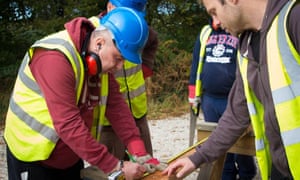
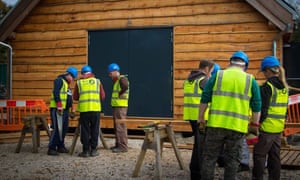
At first glance it’s just another construction site. On one side of the yard, a group of men in hard hats stand around a large electric saw, watching the foreman demonstrate how it works. Further along, another group are wielding hand saws. The sound of banging and clashing comes from inside a half-finished wooden structure.


But this isn’t your average building site and these are no regular builders. They’re patients on day release from three low secure mental health facilities within the Abertawe Bro Morgannwg University (ABMU) health board in Wales.


The group is here at Down To Earth, a not-for-profit education organisation based near Swansea, as part of the Building Community project, funded by the Big Lottery’s people and places grant, which aims to engage hard to reach and vulnerable adults and young people through participation in practical, educational and community-based activity.


Paul, who didn’t want to tell the Guardian his surname, is one of today’s workers. It’s his fifth time on site, and so far he’s enjoyed learning skills such as sawing, measuring and team work, all of which are designed to boost confidence and mental wellbeing.


“It makes me feel better,” he says. “I feel like I’ve done something worthwhile.”


His occupational therapist technician, Freya Jones, from the Taith Newydd mental health unit at Glanrhyd hospital, says it’s having a huge benefit on the group. “I’ve really seen an improvement in confidence in the guys since they’ve been here.”


construction project


‘Wellbeing can be delivered through an educational and community regeneration approach …’ Composite: Down to Earth

This anecdotal evidence is supported by clinical research funded by ABMU and Swansea University, which is measuring the effectiveness of this kind of work on both psychological and physiological wellbeing, as well as the healthcare impact of the project’s approach.


“Wellbeing and healthcare isn’t just doing some gardening or singing in a community choir,” says Down To Earth founder Mark McKenna.


“We want to show that wellbeing can be delivered through an educational and community regeneration approach, so you don’t separate out healthcare from education or healthcare and education from community regeneration. It’s an integrated, cross-sector approach.”


Another study is being undertaken with a group of brain injury patients from Morriston hospital in Swansea. In their case, the emphasis is on neuro-rehabilitation, with four factors under consideration: depression and anxiety levels, quality of life and wellbeing. In all four areas, the results have been significant and positive.


Alan Gee is a prime example of the project’s success. Just over three years ago, the 56-year-old father of four fell from a height while cleaning the stables at his home in Pembrokeshire. He landed headfirst on the concrete floor, fracturing his skull in 12 places.


Less than a fortnight later he was discharged from hospital, but the recovery process was only just beginning. Battling memory loss, slow mental processing, fatigue and mood swings, Gee spent a year doing little more than lying on the sofa, heavily medicated with painkillers.


Then, in 2014, he was referred to Down To Earth and joined the first group of brain injury patients to work on the construction of the training centre. The experience is one he believes transformed his life.


building project


Everyone in the project hopes it will be the start of a new way of providing practical community-based healthcare solutions. Photograph: Down to Earth

“It’s like coming in and having an arm put round you and someone saying it’s alright,” he says. “People understood. A lot of people with serious brain injury become defined by it. People stick them in a box. Projects like this get you out of that box. You become the new you – you don’t have to be ‘the brain injury person’.”


His neuropsychologist, Dr Zoe Fisher, has nothing but praise for the work Down To Earth is doing.


“It’s really bridging the gap between the health service and the community,” she says. “Usually, we’re confined to a hospital; if you don’t have access to real life situations, you can’t help people through them.


“You can’t do neuropsychology to someone, you do it with them. There’s no them and us in this project, everybody just gets involved. It helps us achieve the same objectives in a more holistic way than in the hospital.”


Everyone involved in the project hopes it will be the start of a new way of providing practical community-based healthcare solutions – including Gee’s wife, Michelle.


“It wasn’t just somewhere Alan came to spend some time,” she says. “The way he was when he came home each time, to me that growth was rapid. We could start to see him finding himself again.


“This shouldn’t be seen as alternative; it’s the future. It has to be. Medication is fantastic and it has a time and a place, but it doesn’t create the future.”


Join the Healthcare Professionals Network to read more pieces like this. And follow us on Twitter (@GdnHealthcare) to keep up with the latest healthcare news and views.


Construction project rebuilds lives after brain injury and mental illness

15 Haziran 2014 Pazar

Beyondblue survey finds construction internet sites are mentally wholesome workplaces

They may possibly look rough and ready but development internet sites are amid Australia’s most caring locations to function.


Which is according to a national survey carried out by the psychological health charity beyondblue.


It found building staff are the most very likely to say they work in a mentally wholesome environment.


The least probably are agriculture and public administration employees.


Geographically, workplaces in Western Australia are the most mentally healthy and individuals in Queensland the least.


The investigation was released on Monday to mark the launch of headsup.org.au, a cost-free on-line guide businesses can use to generate their personal psychological overall health plan.


It also also discovered that all around 50% of employees do not believe they perform in a mentally healthier environment and 1 in 5 had taken time off work in the past twelve months since they felt mentally unwell.


Supportive and caring managers and versatile operating hrs are crucial attributes of a mentally wholesome workplace, in accordance to beyondblue.


These organisations also motivate employees to get lunch breaks, prevent discrimination and have help programs.


Many employers do not realise they can reduce absenteeism and improve productivity by improving psychological well being, says beyondblue’s chairman, Jeff Kennett.


“Employers not only have a overall health and safety obligation to supply great psychological wellness in the workplace but also a moral obligation to support their employees who usually spend far more time at function than anyplace else.”


He mentioned the on-line manual could support organizations of all sizes with sensible advice on how to set up a psychological wellness strategy.


Beyondblue survey finds construction internet sites are mentally wholesome workplaces