Cities etiketine sahip kayıtlar gösteriliyor. Tüm kayıtları göster

20 Nisan 2017 Perşembe

How to stop the construction industry choking our cities

Poor air quality, with diesel the biggest culprit, is now thought to be the cause of 40,000 deaths in the UK each year.


But while cars and lorries have attracted most attention, less reported is the contribution of other polluters to the problem, particularly construction sites.


According to the most detailed air-quality study in the UK, the London Atmospheric Emissions Inventory, construction sites are responsible for approximately 7.5% of damaging nitrogen oxide (NOx) emissions, 8% of large particle emissions (PM10) and 14.5% of emissions of the most dangerous fine particles (PM2.5).


While a small amount of this (about 1%) is dust from site activities like demolition, the vast majority comes from the thousands of diesel diggers, generators and other machines operating on sites.



Construction workers


In 2005, more than 230 construction workers a year were reported to have died from cancers caused by exposure to diesel fumes. Photograph: Ben Birchall/PA Wire

Yet this machinery is not held to the same emissions standards as on-road vehicles. What’s more, its proportionate impact will only get higher as on-road emissions drop, according to Daniel Marsh, King’s College London academic and project manager for the London Low Emission Construction Partnership.


So what are the chances the industry can improve?


Given the construction industry’s questionable history with asbestos, which wasn’t regulated until 1983 or completely banned until 1999 – almost 40 years after the cancer link was proven – some are sceptical. In 2005, the Health and Safety Executive found (pdf) that each year more than 230 construction workers die from cancers caused by exposure to diesel fumes, a figure it hasn’t since updated, even though more is now known about diesel’s noxious effects.


Marsh is particularly concerned about the impact on those working with the most polluting machines. He says: “Now on a construction site if you find asbestos it’s like a scene from ET, people swoop down in protective suits – it has become a huge priority. What the industry has failed to take on board is that diesel emissions should be considered in the same way.”


Despite this general failure to act, there are innovative firms in the industry trying to help clean up. The Greater London Authority is also attempting to clamp down on the problem. In January, Mayor Sadiq Khan said he intends to bring in a fine like the congestion charge to be paid by firms using polluting machines, beefing up groundbreaking emissions rules on central London building sites introduced under his predecessor Boris Johnson.


Leading the charge are firms like Off Grid Energy, which has developed products that turn traditional diesel generators (responsible for an estimated 25% of site emissions) into hybrid machines, reducing fuel consumption by around 60%.


Founder and CEO Danny Jones says the requirement for occasional very high “peak loads” of energy leads builders to use far bigger generators than necessary, which then remain on all day and night. In contrast, Off Grid’s battery system stores excess power, turns off generators when charged, and allows much smaller generators to be used. Just one proposed motorway works installation, Jones says, will be the equivalent of taking 225 cars off the road.


Another firm tackling the problem is Taylor Construction Plant, which is providing the first UK lighting rigs (mobile units that provide bright lighting, generally for working outside after dark but also for security) to be powered by hydrogen fuel cells. This means zero on-site emissions, at a total cost (including fuel) that product manager Simon Meades says is cheaper than the approximately 20,000 conventional generator-powered lighting rigs operating in the UK. After a slow initial uptake, Meades says demand has grown fivefold in the last year.


Even slower to change have been the fleets of diggers and excavators, which until now have relied on powerful diesel engines, but where hybrid technology is finally emerging. Swedish motoring giant Volvo, through its Volvo Construction Equipment subsidiary, has customers currently trialling a prototype hybrid excavator that generates electric power from the down-swing of its boom arm.
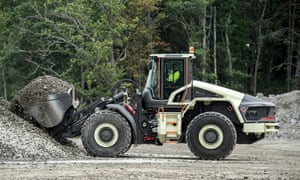


Volvo Construction Equipment’s LX1 hybrid wheel loader prototype


Volvo Construction Equipment’s LX1 hybrid wheel loader prototype. Photograph: Jonas Ljungdahl

Patrick Lundblad, the firm’s senior VP of technology, says these trials have confirmed the vehicle uses around half the fuel of Volvo’s best-performing conventional excavators. Customer demand doesn’t seem to be an issue either.


“Wherever we go our customers want to have a couple of our green machines,” he says. However, producing it is not straightforward; 98% of the vehicle parts are new, and supply chains are immature, meaning the firm doesn’t know when it’ll be ready for sale.


This is not the only problem. Off Grid’s Jones says resistance to its products from the generator hire industry, which also makes money from selling diesel, came close to driving his firm out of business. “We’re a classic disruptive technology, and our challenge is the reluctance of the diesel generator rental industry to engage in a technology that changes what they do now.”


Sign up to be a Guardian Sustainable Business member and get more stories like this direct to your inbox every week. You can also follow us on Twitter.


How to stop the construction industry choking our cities

8 Mart 2017 Çarşamba

How dementia-friendly shops, offices and cities offer hope for sufferers

In coming decades, rates of dementia will rise sharply, partly due to a “silver tsunami” as the boomer generation ages and partly because we are living longer than ever. By 2030, the WHO predicts 75.6 million people globally will have the disease.


In response, cities around the world are creating communities that better help people with dementia go about their daily lives (there are more than 200 such dementia-friendly communities in England and Wales alone).


This includes engaging businesses whose customers may have or be caring for people with dementia. “Making small changes in the way businesses and communities act can transform the quality of life and the contribution those with dementia and their carers can make,” says George McNamara, policy chief at Alzheimer’s Society.


Those small changes include training companies to recognise and support people with cognitive decline. In Bruges, for example, dozens of shops are designated as dementia friendly. Select employees are trained to recognise customers with the condition, allowing them to help those struggling to pay or find what they need, for example.


In Greater Manchester, taxi drivers are also being trained as “dementia friends” who recognise and assist customers with dementia, while in London, Lord’s cricket ground has created a project to reduce stigma and raise awareness. London recently announced a goal to become the world’s first dementia-friendly capital by 2020. Key areas of focus include (pdf) working with local health authorities to improve diagnosis rates and collaborating with Transport for London to make getting around safer and easier.


“If you get it right in cities you can have a big impact on a large number of people,” says Mark Drane, a Bristol-based architect and doctoral researcher with the WHO Collaborating Centre for Healthy Urban Environments. “And a city, in theory, has the levers to pull, especially for integrated care.”


Elsewhere, banks are training employees to help people with the dementia manage their money. HSBC, for example, has joined with Alzheimer Scotland and the Alzheimer’s Society in a three-year awareness raising partnership that has so far trained 2,000 UK staff across 742 branches.


In Southampton, British Gas is training staff as “dementia champions”, who can then teach other local business people and the public about the needs of those with dementia, holding monthly drop-ins to support people with the disease and their carers, and connecting staff to volunteer and fundraising opportunities in the community.


Around 7,000 of British Gas’s 30,000 UK staff are taking part in a dementia friends programme that trains them to be more informed about the illness.


Cutting costs


In addition to their work supporting customers, British Gas and Centrica are working to support employees who face dementia-related issues in their own lives. British Gas carers’ network, for example, offers a range of support, including giving employees flexibility to attend family members’ hospital appointments.


Centrica estimates that its caregiver support initiatives (paywall) save £2m in staff retention and potential training costs, and another £4.5m in preventing absenteeism of employees who are caregivers.


A 2014 report found that dementia costs UK businesses roughly £1.6bn per year, because of carers, more than half of whom are in work, having to reduce their hours or give up their jobs to look after a relative or friend with dementia. The Alzheimer’s Association estimates dementia costs US businesses $ 61bn (pdf), more than half of which it attributes to costs to businesses – including lost productivity – related to employees providing care.


As well as saving money through supporting employees, assisting customers with dementia offers businesses an opportunity to build and maintain their customer base. Sainsbury’s and the Federation of Small Businesses are among those that joined a federal retail task and finish group, which has produced a guide (pdf) on making shops dementia friendly. This isn’t merely corporate altruism: 83% of people with memory issues have changed where they shop based on how the business caters for people with dementia, according to the Alzheimer’s Society.


While a single company can have a significant impact locally, a multi-sector approach is crucial to creating dementia-friendly cities. Care City, for example, a research, education and innovation site in north-east London, works with the technology sector to develop products such as wearable devices for those with dementia.


Through NHS England’s healthy new town programme, Care City is also working with local communities to foster innovation in their backyards. That includes everything from an online platform where patients and their carers can log information about their health to a wearable location device that alerts carers if someone with dementia leaves a designated safe space.


Many projects currently begin in the health and social care system, or are driven by charities who work with businesses. In the future, more products and services to help people live at home longer and stay safe in their communities may come from industry itself.


According to McNamara, progress is being made by businesses, among others, to help those with dementia engage with their communities but there’s work to be done to ensure these ideas spread further. “Dementia,” he says, “is everyone’s business.”


Sign up to be a Guardian Sustainable Business member and get more stories like this direct to your inbox every week. You can also follow us on Twitter.


How dementia-friendly shops, offices and cities offer hope for sufferers

24 Şubat 2017 Cuma

How can health services keep pace with the rapid growth of cities? | Richard Vize

The relentless growth of urban populations is driving city and national governments to increase access to healthcare while tackling the root causes of poor health.


According to Oxford Economics [pdf], the world’s largest 750 cities will be home to 2.8 billion people by 2030 – more than a third of the global population. They will account for almost a third of the world’s jobs and more than half its consumer spending. More than a dozen cities will have populations greater than 20 million.


Rapid, uncontrolled urbanisation strains many aspects of city life that determine health. Traffic, factories, generators and construction poison the air, meanwhile water supplies can become contaminated, poor housing harms the health of children, and food supply and quality can be compromised.


Unplanned urban growth drives poverty. About 900 million people worldwide live in urban slums, where overcrowding encourages the spread of infectious diseases such as tuberculosis, dengue fever and cholera. The United Nations estimates that by 2030, roughly 60% of city inhabitants will be under the age of 18, which puts huge numbers of children at risk from illnesses such as diarrhoea and pneumonia, the leading causes of global childhood death.


Health services, particularly in developing countries, are concentrated in cities. As Mark Britnell notes in his study of global healthcare, many developing countries such as China, Indonesia and India suffer from a chronic shortage of health workers. This creates big disparities in care between cities and the countryside; doctors are reluctant to work in rural areas because pay is poor, career choices are limited, hospital facilities are often inadequate and primary care tends to be underdeveloped.


Meanwhile, in the cities, hospitals become overcrowded because patients know that is where the best doctors, research and technology are found. The dominance of hospital care in cities often means primary care is neglected, which according to the World Health Organisation (WHO) [pdf] can lead to unregulated, unsafe and ineffective private services. In some African cities, public primary healthcare has almost disappeared.


Britnell highlights some of the efforts being made to bridge the shortfalls. Brazil has announced new medical schools to train thousands of additional doctors, and training is being extended to include two years working in public service posts. This could add up to 36,000 working students to the system by 2021. Compulsory training in public hospitals was inspired by the NHS.


In addition, Brazil has recruited at least 10,000 doctors from Cuba to work in the poverty-plagued favelas on the peripheries of cities, as well as in remote areas.


The chronic shortage of clinicians is encouraging countries to make better use of volunteers and community workers. India is trying to boost its services in slums through the National Urban Health Mission, which emphasises reproductive health and works with women’s health committees.


Toronto [pdf]has been trying to bring together its primary and hospital services to provide joined-up care for patients with several health conditions. This includes individual care plans, one point of contact, and multidisciplinary teams supporting high-risk patients after they have been discharged from hospital. The city’s Ageing at Home programme aims to make it easier for older people to continue to live at home after illness.


Toronto also provides impressive support for people living on the streets with mental illness. Its Streets to Homes programme includes incentives for private landlords to offer accommodation. Several thousand people have moved into their own home since 2005, and about 80% of them remain there for at least a year.


Yet for many people, access to healthcare depends on the ability to pay, which excludes swathes of the population. Increasingly, countries such as China, Thailand and Indonesia are addressing this problem by pursuing universal healthcare. At present around two in five countries have some form of universal healthcare.


Britnell argues that its expansion is being driven by two opposing forces: capitalism and globalisation have grown a middle-class demanding more from governments, while about 1 billion people lack access to basic healthcare and 100 million are impoverished every year through catastrophic healthcare costs. Providing more equal access to health services strengthens social cohesion and promotes economic growth.


But while developing countries are increasing the proportion of their wealth spent on healthcare, urban populations are expanding so quickly that it is all but impossible to provide the health infrastructure and staff to keep pace.


Faster progress can be made, however, in improving the environment, such as providing cleaner air and water. For this reason, the WHO believes local government – and particularly executive mayors – are central to improving city health.


Beijing and Shanghai, for example, have introduced tough anti-smoking laws. In 2013 Mexico City became the first in the world to levy a tax on sugary drinks, which had been a factor in Mexico having among the world’s highest obesity and diabetes rates. Kuwait City has reduced salt content in bread to tackle high blood pressure. London and Paris were among the first cities to attempt to cut traffic pollution and increase exercise by offering free bicycle use.


Poor road safety takes many urban lives. Fatal traffic accidents [pdf]cost about 21 lives per 100,000 population annually in Brasilia and 18 in Nairobi, compared with 1.3 in Tokyo. Cutting road deaths depends on many factors – higher population density actually reduces deaths compared with sprawling areas. São Paulo (Brazil), Bogotá (Colombia) and Accra (Ghana) are among cities pursuing safer road design.


The health of city populations is becoming a central concern of local and national governments and international institutions. Affordable access to health services is just part of the story. Local government in particular recognises that improving the health of city populations depends on everything from ensuring water quality to designing safe roads and controlling air pollution.


But there is a chasm between cities where growth is controlled and those where the relentless quest to find work is creating polluted, overcrowded slums.


  • Richard Vize provided editorial support to Mark Britnell for his book In Search of the Perfect Health System, which won the health and social care prize at the BMA Medical Book Awards 2016.

Join the Healthcare Professionals Network to read more pieces on issues like this. And follow us on Twitter (@GdnHealthcare) to keep up with the latest healthcare news and views.


How can health services keep pace with the rapid growth of cities? | Richard Vize

16 Şubat 2017 Perşembe

"You can taste it in the air": your stories of life in polluted cities

EUROPE


Warsaw, Poland


“The air pollution problem in Poland is beyond any western standards. Despite poor conditions, Poland has done nothing to reduce used car imports, promote renewable energy, protect green areas or rationalise precaution levels. (Right now an alert is announced at 600% of the norm and the ministry for environment refuses to change that level because “they would have to announce the alert too often”.)


“Where I live (Warsaw) the air quality is very bad. The intensive development of apartment buildings in suburban areas without proper public transportation pushes people into cars and reduces green space. Over the last decade Warsaw suffered a net loss of 160,000 trees.


“Recently as more groups join the demand for better air, the city hall pretends they care, but there is no real action. I became a father five months ago and air quality has become a reason to stay indoors against our will for most of the winter. I’m a member of Warsaw’s city activist group Miasto Jest Nasze (the City is Ours), an organisation which set up Warsaw’s smog alert.” (Tymon Radwański)


London, UK


Ed H-B (@EdH_B)

3 week old #airpollution filters frm cycling in Central #London – everyone should wear masks in #protest & tweet dirty filters! #cleanairnow pic.twitter.com/b34puftPGM


February 14, 2017


Bath, UK


“Levels of nitrogen dioxide on several roads leading into the city have exceeded the EU limits for years. It’s said that people living off the southern approach road into the city are likely to die nine years younger than those living on the hill on the opposite side of the city, three miles away.” (Louise Hidalgo, Bathampton Meadows Alliance)


AFRICA


Port Harcourt, Nigeria


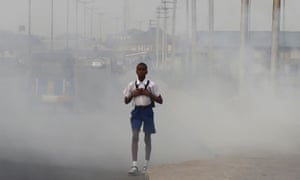
A school boy walks past smoke and fumes emitted from a dump in Port Harcourt.


A school boy walks past smoke and fumes emitted from a dump in Port Harcourt. Photograph: Pius Utomi Ekpei/AFP/Getty Images

“Residents of Port Harcourt became aware of a black substance falling from the sky last November. Authorities said an investigation was going to be carried out but not much happened until late January and early February when this pollution became unbearable.


“A lot of residents believed local refineries were the likely cause and took to social media to ask the state government to act. Finally, a committee was set up and a report released showing the soot is petroleum based, but the government said they couldn’t determine which activities were the cause.” (Babajide Odulaja)


“If you wipe surfaces indoors and outdoors with a white towel or tissue paper, you get a black smudge. Perhaps more worrisome is that if you clean your nostrils with a white material, you come up with a jet black residue. If you walk barefooted, the soles of your feet turn black.” (Eben Dokubo)


(Update: The situation was declared an emergency this week. According to reports the state government have shut down a Chinese construction company apparently responsible for the pollution.)


AMERICAS


Santiago, Chile


Envigado, Colombia


“Air pollution is visible here on most days. You can taste it in the air. I believe it’s caused by low-quality diesel, and the high number of motor vehicles. There is no rail system and freight is transported by road. Heavy vehicles emit a thick, black exhaust that is frightening to see and lingers in the air.” (Anonymous)


Mexico City, Mexico


Los Angeles, US


“I grew up in Los Angeles in the 50s and 60s. I remember days where the air pollution was so bad your eyes would burn and it hurt – actually was painful – to take a deep breath. Combine that with the heat and a shining grey sky that beat down on you, where the soup was so thick all you could see of the sun was a diffuse bright patch in the sky, where even the grass turned brown and the trees died from the pollution, and you have a hell on earth of the sort described by Tolkein when he wrote about the wastelands of Mordor.” (EvilMidnightBomber)


“I remember walking home from my grade school in the late 60s literally crying like I had been teargassed the air was so bad. My parents said it was even worse before incinerators were banned.” (MakeBeerNotWar)


ASIA


Shanghai, China


“We celebrate when we see blue sky and share pictures with each other on WeChat. I purchased an air purifier for my home – we have no idea if it helps. We just feel secure, it’s like buying insurance: you suddenly feel good.” (Artem)


“When the air pollution is bad, many people in my office develop coughs and sick days are taken. I like to walk or ride a bicycle home, but I always need to check the air quality before leaving work. Today I decided to take the bus home because the air quality reading was 150. I have also cancelled weekend plans with friends due to the unhealthy air levels. It can be very depressing.


“When the neighbouring city Hangzhou hosted the G20 and they shut down all the factories for two weeks it was amazing. Shanghai had clear blue skies the whole time. It shows if they really wanted to improve the quality of life and health of their residents they could, but they are not willing to unless a group of rich, powerful people are coming.” (Anonymous)


Beijing, China


Hong Kong


“Often, I don’t take my baby outside as I am so concerned about the effect on him. I wear a face mask on the days it is above an orange rating. My husband exercises at the gym instead of running when it’s bad. I often have a bitter taste or thick feeling on my mouth and tongue when I walk home at rush hour. This is a serious and scary problem, it’s obvious in the pollution visible on buildings, skin problems, difficulty breathing, chest pain and coughs.” (Anonymous)


Ulaanbaatar, Mongolia


Protesters march in Ulaanbaatar on 28 January to demand government action to reduce air pollution.


Protesters march in Ulaanbaatar on 28 January to demand government action to reduce air pollution. Photograph: Davaanyam Delgerjargal/EPA

“We are a part of the #BreatheMongolia and #MongolsAreSuffering initiatives. Protests and demonstrations in Ulaanbaatar have been raising awareness of the dangerous air pollution in the city and calling upon the government for solutions to the crisis as soon as possible. Thousands of demonstrators marched holding black balloons that represent their damaged lungs caused by air pollution and hung the balloons on the fence around the government house, aiming to show that around 500 children die annually in Mongolia due to air pollution.


“It has officially been declared that air pollution in Ulaanbaatar has reached disaster levels, exceeding 120 times the safe limit; 80% of the air pollution comes from the districts of ger (traditional circular felted tents) households, where people burn coal to stay warm.


“The top three diseases that resulted in the largest number of deaths in Mongolia in 2013 were air pollution-related. Studies show that air pollution exposure also results in miscarriage, premature birth and has an impact on the intellectual and physical development of a child. We know of someone who had multiple miscarriages while living in the city and had to move out to the countryside in order to give birth successfully. The people of Mongolia deserve clean air.” (Nomi Ganbold and JaRed Cameron)


Delhi, India


Sebastian Taylor (@DilliSeb)

@guardiancities Taken last November mid morning here in Delhi. Only when this extreme did it become a (minor) political issue…for a week. pic.twitter.com/aVd0snXhuP


February 13, 2017


“I am asthmatic and air pollution makes me sick. In 2014 I packed up and left Delhi, moved to the mountains. But I have to keep coming back to the city and fighting air pollution has become a personal battle for me. I have seen healthy friends become sick in November 2016 as air pollution was at its peak. Tier two and tier three cities in India are worse though, there are no records on them and nothing to make people aware of it.” (Shibayan Raha)


“The air pollution in Delhi is actually pretty scary. I really haven’t ever experienced anything quite like it. There are days where I just have to stay inside because if I go out, I know the next day I’ll be struggling with sinus issues and laboured breathing. I have had a chronic cough since I have been here.


“Many people here, from young kids to athletic adults, to elders, all have this chronic congestive cough. We call it the Delhi chest, or the Delhi cough. Little kids with chronic respiratory illnesses are the norm here, not the rarity. And still they burn trash, run vehicles on diesel.


“I grew up in Los Angeles, and we had summer inversion layers that were probably the start of the reasoning for things like the Clean Air Act and the EPA. But the intensity of the physical symptoms I have here I have never experienced anywhere before.” (Nancy)


Guardian Cities is dedicating a week to investigating one of the worst preventable causes of death around the world: air pollution. Explore our coverage at The Air We Breathe and follow Guardian Cities on Twitter and Facebook to join the discussion


"You can taste it in the air": your stories of life in polluted cities

13 Şubat 2017 Pazartesi

Tipping point: revealing the cities where exercise does more harm than good

Who says exercise is always good for you? Cycling to work in certain highly polluted cities could be more dangerous to your health than not doing it at all, according to researchers.


In cities such as Allahabad in India, or Zabol in Iran, the long-term damage from inhaling fine particulates could outweigh the usual health gains of cycling after just 30 minutes. In Riyadh, Saudi Arabia, this tipping point happens after just 45 minutes a day cycling along busy roads. In Delhi or the Chinese city of Xingtai, meanwhile, residents pass what the researchers call the “breakeven point” after an hour. Other exercise with the same intensity as cycling – such as slow jogging – would have the same effect.


“If you are beyond the breakeven point, you may be doing yourself more harm than good,” said Audrey de Nazelle, a lecturer in air pollution management at Imperial College’s Centre for Environmental Policy, and one of the authors of the report.


The study, originally published in the journal Preventive Medicine before the World Health Organization’s latest global estimates, modelled the health effects of active travel and of air pollution. They measured air quality through average annual levels of PM2.5s, the tiny pollutant particles that can embed themselves deep in the lungs. This type of air pollution can occur naturally – from dust storms or forest fires, for example – but is mainly created by motor vehicles and manufacturing.


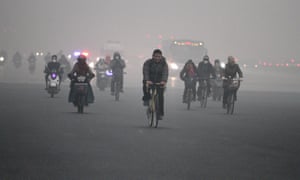
People cycle in heavy smog in Beijing.


People cycle in heavy smog in Beijing. Photograph: Imaginechina/Rex/Shutterstock

Breathing polluted air has been linked to infections including pneumonia, ischemic heart disease, stroke and some cancers. The Institute for Health Metrics and Evaluation’s Global Burden of Disease study ranks it among the top risk factors for loss of health.


The report in Preventive Medicine assumed cyclists moved at speeds of 12/14kph, with health benefits calculated in a similar way to the WHO’s Heat assessment tool. It also assumed cyclists used roads with double the background levels of air pollution, which may underestimate how poor air quality is in many developing world cities: for example, a study in Lagos found five out of eight sites exceeded Delhi’s annual PM2.5 concentration.


People commuting to work along busy roads in a city with average annual background PM2.5 levels of 160 micrograms per cubic metre (μg/m3) or above will pass the breakeven point at just 30 minutes a day, the study found. Using the WHO’s latest global estimates, published in May, those levels are only reached in Zabor, and in Allahabad and Gwalior in India – although many large cities in the developing world do not accurately measure air pollution so were not included in the WHO database.


Breakven point for different levels of cycling and air pollution

Fifteen cities (see map above and table below) have annual mean PM2.5 levels of 115μg/m3 or above, according to the WHO data, so the breakeven point is reached after an hour of active travel. Fine particulate levels above 80μg/m3 were found in 62 cities, making cycling more harmful than beneficial after two hours.


The study found people in western cities such as London, Paris or New York would never reach the point where PM2.5 air pollution’s negatives outweigh exercise’s positives in the long term.


“The benefits of active travel outweighed the harm from air pollution in all but the most extreme air pollution concentrations,” said Nazelle. “It is not currently an issue for healthy adults in Europe in general.”


London’s annual average PM2.5 pollution was estimated at 15μg/m3 by the WHO – above the WHO’s guideline of 10, but still at a level at which the study estimated active travel would always be beneficial. Paris had ambient PM2.5 levels of 18μg/m3, while New York had 9μg/m3.


However, the study did not consider the health impacts of short-term spikes in PM2.5 pollution, or take into account the effect of exercising in air containing larger PM10 particulates, ozone, or toxic nitrogen oxides (NOx) from diesel cars.


London mayor Sadiq Khan issued his first “very high” air pollution alert last month when air in the UK capital hit the maximum score of 10 on the Air Quality Index, equivalent to PM10 in excess of 101μg/m3. NOx pollution causes 5,900 early deaths a year in the city, and most air quality zones across Britain break legal limits.


“This is the highest level of alert and everyone – from the most vulnerable to the physically fit – may need to take precautions to protect themselves from the filthy air,” Khan warned.


Air pollution – cities where harm from exercise outweighs benefits – table

Guardian Cities is dedicating a week to investigating one of the worst preventable causes of death around the world: air pollution. Explore our coverage at The Air We Breathe and follow Guardian Cities on Twitter and Facebook to join the discussion


Tipping point: revealing the cities where exercise does more harm than good

22 Ocak 2017 Pazar

Bringing a breath of fresh air to the UK’s polluted cities

Featuring a sturdy leather head-strap and mask, two large tubes and a transparent backpack containing a small potted plant, designer Chih Chiu’s response to crowded, polluted cities is stark.


“My initial idea was to separate an individual from the public space,” he says.


Titled Voyage on the Planet and originally created by Chiu for his BA final project in China in 2013, the work is set to take to the streets in Space to Breathe, a two-day exhibition based at Somerset House, central London, that is hoping to propel the issue of air pollution and public health into the limelight.


Kitting out visitors with the apparatus and taking them on to the Strand, Chiu, now a joint student at the Royal College of Art and Imperial College, hopes the sight of the people donning the otherworldly masks will shake the city out of its complacency.


“When all of us are sharing this polluted air, but none of us has a reaction to it, we feel nothing [is] really seriously wrong,” he says. “But when people start to have a reaction to the polluted air, like wearing this [mask], we start to [pay] attention.”


It is time we did. Amid a growing crisis in cities around the world, air pollution in parts of London smashed through the annual limit in the first week of this year. And with poor air quality linked to dementia, heart attacks and strokes, it is taking its toll on public health.


“What people really struggle with is the dislocation in time,” says Ian Mudway, lecturer in respiratory toxicology from the environmental research group at King’s College London. “The exposures you have now could produce effects in 20, 30, 40 years’ time,” he adds, pointing out that air pollution is estimated to cause around 40,000 premature deaths a year in the UK alone.


A collaboration between curators Shrinking Space, scientists from the environmental research group at King’s College London and Cape Farewell, an organisation that pioneers the use of art to promote cultural changes to tackle climate change, Space to Breathe is an energetic mix of art, science and entertainment.


Among the weekend’s highlights, which includes a DJ set by former Pulp frontman, Jarvis Cocker, visitors will be able to don virtual reality headsets to take a tour around the Strand with the project Energy Renaissance. A 360° video, the experience explores how the area could be transformed through interventions ranging from tree planting to urban wind turbines and zero-emission buses.


Taking the ideas further, the weekend will encompass a set of panel discussions, with representatives from the Greater London Authority, the British Lung Foundation and Tidal Lagoon Power, the company behind the mooted Swansea Bay project, to share their views on the air pollution crisis and how to tackle it while, perhaps more creatively, a pollution-removing bench designed by Airlabs will be exhibited on the river terrace.


Also on show is a specially commissioned installation by sound artist Wesley Goatley based on six months’ worth of air pollution data gathered by instruments in the area surrounding Somerset House. The aim, says Goatley, is to offer visitors an innovative way to explore pollution data, while pushing back against the perception that such figures and statistics are only for specialists.


Entitled Breathing Mephitic Air, the experience involves a 360° soundscape with three different components of air pollution – nitrogen dioxide, nitric oxide and particles known as PM10s – depicted by different sounds. These sounds, the rush of traffic, a catalytic converter and the sound of a refinery are themselves linked through their relationship to a metal intricately involved in the problem of air pollution: platinum.


The sounds, notes Goatley, rise and fall in volume with the levels of the pollutant they represent, while the apparent direction of sound mimics the direction and speed of the wind when the data was recorded. “There is a very firm connection between what you hear and what the data says – you can kind of read the data through the sound,” he says, adding that the data is also depicted dynamically through a visual display.


But Space to Breathe is not only about raising awareness of air pollution: it’s also an attempt to put the public back in control. Scientists will be offering visitors the chance to try out some of the latest real-time pollution-monitoring technology, as well as revealing how web-based apps can be used to plan journeys and dodge pollution hotspots.


“We will get people not just to think about what the pollution is on the day, but to actually have a perception of what their long-term exposures are likely to be,” says Mudway. The hope, he adds, is that the experience will galvanise visitors into action, from the way they navigate cities to the cars they choose to drive, and even encourage them to lobby those in power for change.


Andy Franzkowiak, a creative producer of the exhibition from Shrinking Space, agrees. “Every single person can make a difference,” he says.


Space to Breathe takes place at Somerset House, London WC2, on 28 and 29 January


Bringing a breath of fresh air to the UK’s polluted cities

8 Eylül 2016 Perşembe

"People are nicer to each other when they move more slowly": how to create happier cities

When Charles Montgomery first started talking about urban happiness, people laughed at him. As his colleague Omar Dominguez explains, “happiness is kind of an out-there concept for some people”.


Montgomery and Dominguez work at Happy City, a Canadian organisation named after Montgomery’s 2013 book, which makes the case for retrofitting cities for happiness and argues that streets, parks, shopping centres, housing estates – indeed most urban infrastructure – can be designed to make people feel happier, behave better and be kinder.


“If we give a damn about human wellbeing in cities, we need to study the emotional effects of spaces and systems,” says Montgomery. “We need to use evidence to help fix the horrific mistakes we’ve made over the last century.”


To beat the sceptics, the team at Happy City gathers evidence from psychology, neuroscience, public health and behavioural economics. They know that hospital patients who can see trees through their bedside windows heal faster than those who only see brick walls. They know that commuters at rush hour suffer more anxiety than fighter pilots or riot police facing angry mobs. They even know that the friendliest front gardens are precisely 10.6ft deep.


And they conduct their own research, particularly around Montgomery’s theory that the most important ingredient for human happiness is social connection. An experiment in Seattle found that passersby are four times more likely to help lost tourists on lively streets filled with lots of small shops than on pristine, but essentially characterless, blocks, where people tend to move more quickly.


“We think the kindness effect was a result of velocity,” says Montgomery. “People are nicer to each other when they move more slowly and have time to make eye contact.”


At the Project for Public Space conference in Vancouver from 12 to 15 September 2016, Happy City will host walking tours of the city. Participants will be hooked up to sensors that measure their physiological arousal, enabling scientists to test people’s physical and emotional responses to their surroundings, as they walk through community gardens or down dark alleys.


‘An explosion of interest’


But the real problem is that this kind of evidence rarely makes it outside academia. With one foot in research and another in urban planning, Happy City tries to bridge the gap between them. It is a consultancy, advising local governments, developers and any other organisations that have control over how cities grow, including the World Health Organisation.


Montgomery says he’s seen an “explosion of interest in the field” of happiness and urban planning over the past three years – and not just from Scandinavian countries. “I’m especially thrilled to see that property developers are embracing the wellbeing agenda,” he says.


Happy City has helped British Land, the UK’s largest real estate investment trust, to weave wellbeing principles into its new development practices.


“But we’re seeing an awakening in other parts of the world, too,” says Montgomery, referring to Ahura Builders, which invited Happy City to hack the designs for a community of 8,000 people in Punawale, India. “Our happiness interventions included breaking up imposing superblocks, investing in quiet streets that are safe and friendly for pedestrians and creating a village heart to which residents could walk and shop.”


Another project was based in Mexico City. Chaotic, crowded and with high levels of crime, it’s an unusual setting for the happiness agenda. But in the autumn of 2014 the local government’s innovation unit commissioned Happy City to do a three-day “happiness audit” of Colonia Doctores, a poor neighbourhood in the south-west of the city.


Dominguez, Happy City’s director of operations and sustainability, gathered together public officials, city planners, architects and – most importantly – local residents. On the first day they discussed key principles that influence wellbeing, such as access to nature and the ability to have positive social interactions on a daily basis.


“One of the key concerns in Mexico is safety. What people do when they’re concerned about their safety is to fortify,” says Dominguez. “Actually, one of the best things you can do is generate a sense of trust and calm.”


On the second day the group toured Colonia Doctores, applying the principles to physical aspects of the neighbourhood and on the third they presented their findings. Recommendations included opening a new museum and pedestrianising an area outside the local wrestling arena, turning it into a cultural corridor around Mexican wrestling. “That sense of community is good for their wellbeing,” says Dominguez.


‘Happiness is good for the bottom line’


One thing the Happy City team is really passionate about is making the business case for happiness. “Building healthier, happier places is not more expensive. In fact, these places save society money in the long run,” says Montgomery.


He can, of course, point to the proof. People who are socially connected are more resilient and more productive at work. Cities that encourage social interaction foster greater levels of creativity and trust, both of which correlate with GDP growth.


There’s an app that analyses the cost to society of commuting: driving to work incurs costs you might not think of, such as infrastructure, accidents, pollution, congestion and lost productivity due to ill health. Cycling, meanwhile, offers savings to the healthcare system and improved productivity from exercise – making that bike lane look like a great investment, Montgomery says.


The private sector also has a lot to gain from from designing workplaces where employees can be more productive, or shopping centres that encourage loyalty from customers and businesses. Some developers understand that places that promote health and happiness are also good for their bottom line, says Montgomery.


Talk to us on Twitter via @Guardianpublic and sign up for your free weekly Guardian Public Leaders newsletter with news and analysis sent direct to you every Thursday.


"People are nicer to each other when they move more slowly": how to create happier cities

17 Ağustos 2016 Çarşamba

Building better mental health in cities from the ground up

The frenetic, isolating nature of city life can be a day-to-day struggle for millions of people. An environmental cocktail of densely packed streets and homes, cramped and lengthy commutes and noise pollution as well as significant pockets of poverty and deprivation can take their toll. As a result, mental ill health and urban life are inextricably linked.


With urban areas expected to house two-thirds of the world’s population by 2050 and some cities, such as in China, undergoing unprecedented expansion, the relationship between urban environments and mental health – and what to do about it – is rapidly coming to the fore.


“Public health is an important component of the built environment, but all too often this focuses only on physical health,” says Layla McKay, founder and director of the Centre for Urban Development and Mental Health. The thinktank was set up in 2015 to bring together researchers, policymakers and planners across the globe to push for urban space designs that create mentally healthier cities.


Projects paving the way


A well-designed urban space can have a positive influence on people’s wellbeing and help prevent mental health problems developing or becoming worse, according to McKay.


“Mental health plays a huge role in the overall burden of disease around the entire world,” she says. “It’s prevalent in every country. The statistics do tell us that people who live in cities have a 40% increased risk of depression, a 20% increased risk of anxiety and double the risk of schizophrenia.”


So far, projects paving the way have tended to be small. Examples include one in Sheffield, England, says MacKay, where a green space parks initiative, the Improving Wellbeing Through Urban Nature project, is aiming to promote well-designed urban green spaces as a cost-effective way to boost mental and physical health. Another is the network of Dementia Friendly Communities across the UK.


Urban living takes its toll


There is a considerable body of evidence (pdf) internationally suggesting that urban living, especially poorly designed environments, can have negative effects on mental health. For example, substandard, overcrowded, damp housing has been proven to affect people’s capacity to cope, while the lack of something as basic as a play area can influence children’s wellbeing.


Meanwhile, compared with non-urban areas, cities around the world have an increased prevalence of acute mental illnesses, as well as other problems such as stress and isolation.


A recent report (pdf) from the Mental Health Foundation (MHF) in the UK concluded that cities becoming more crowded and the rising proportion of people living alone (up from 6% in 1972 to 12% in 2008) contributes to higher levels of loneliness, which is a risk factor for mental ill health.


Another study, Poverty and Mental Health, published by the MHF for the Joseph Rowntree Foundation emphasised the adverse connections between mental health and deprivation, which tends to be most concentrated in urban areas. The report’s recommendations included that policymakers consider mental health as a core part of the urban planning process, saying it “should be promoted as good practice”.


The role of planners and architects


It makes sense, McKay says, to take into account, for example, that improving street lighting and housing layout might reduce fear and anxiety about safety. The same goes for using urban design to produce plentiful open, green spaces (pdf) that encourage regular interaction in “pro-social spaces” and “a sense of community” with the goal of reducing isolation.


“[There] is a real opportunityfor for people who work in the planning, architecture and urban-focused professions to have an impact on mental health,” she adds.


Experts at the WHO Collaborating Centre for Healthy Urban Environments at the University of the West of England (UWE), which works in tandem with the World Health Organisation’s international Healthy Cities Project, concur that urban planning could have a substantial role to play in cities being designed with mental wellbeing in mind.


Related: Is city living bad for your health?


Sarah Burgess, senior lecturer in the department of architecture and built environment at UWE, says there is definitely momentum towards mental wellness becoming a greater priority for planners globally. She points to the popularity of happiness indices internationally and to initiatives such as Happy City in Canada, which promotes wellbeing as a legitimate goal of urban design, as examples of a growing appetite for new approaches.


But when it comes to individual cities spearheading attempts to put mental wellbeing at the centre of planning strategies, Burgess concludes that they are rare.


According to Daniel Black, an urban planner and fellow at the WHO Collaborating Centre, while planning professionals and researchers are increasingly becoming advocates for prioritising mental health in planning decisions, there is still some way to go before decision-makers in governments catch up.


“Mental health is still lagging behind,” he says. “Even physical health is only beginning to get on the radar. How those in control of urban development are integrating health into development is negligible.”


Talk to us on Twitter via @Guardianpublic and sign up for your free weekly Guardian Public Leaders newsletter with news and analysis sent direct to you every Thursday.


Building better mental health in cities from the ground up

29 Temmuz 2016 Cuma

Where are the world’s most water-stressed cities?

In the southern reaches of Egypt, the city of Aswan is one of the hottest and sunniest in the world. Temperatures reach 41C in the summer and less than a millimetre of rain falls each year. Some years it doesn’t rain at all.


Aswan may be one of the world’s least rainy places, but it’s not even close to being the most water-stressed city. It nestles on the east bank of the Nile, close to the Aswan High Dam and the vast Lake Nasser, one of the largest manmade lakes in the world. With a capacity of 132 cubic km, the dam serves the irrigations needs not just of Aswan, but Egypt and neighbouring Sudan as well.


Water stress – where the human or ecological demand for water is not met – is caused by a variety of factors. There’s the physical scarcity of water due to lack of rainfall, the natural aridity of the area and, increasingly, changes in climate; but poor management and investment in water infrastructure, and pollution, also play their parts.


The problem affects an estimated 2.7 billion people for at least one month of every year, across every continent – and is particularly pressing in cities as the global urban population grows. At present, almost four billion people live in cities, with a further 2.5 billion expected to join them by 2050.


As the urban population grows, so too does the number of people living in settlements that are not connected to a formal piped water supply. Currently, some 860 million people live in slums around the world; their lack of access to clean water carries enormous health consequences.


Yemen is one of the world’s most water-scarce countries, with per-capita availability of water only 2% of the global average.


Yemen is one of the world’s most water-scarce countries, with per-capita availability of water only 2% of the global average. Photograph: Yahya Arhab/EPA

As freshwater supplies dry up, many cities are engaged in a race to the bottom as they turn to groundwater – with some underground aquifers now so overexploited that water is extracted much faster than it is recharged. During the height of the recent drought in California, farms and cities were apparently drilling so deeply for groundwater that they tapped into reserves that had fallen to earth as rain 20,000 years ago.


Over the past few years, both Los Angeles and São Paulo have been hit by major droughts affecting their surrounding states. For California, 2014 and 2015 were the two hottest years in its history; in April last year, the state’s Department of Water Resources found “no snow whatsoever” during its survey in the Sierra Nevada mountains.


Droughts creep up and develop over a period of time. But very often they end suddenly, with a crash of flooding


Carolyn Roberts


“We get all of our water for the year through the winter months, and we hope that accumulates in reservoirs and as snowpack to draw on as a resource over the summer,” says Paul Ullrich, assistant professor of regional and global climate modelling at UC Davis. “In the absence of snow pack or precipitation in winter, we turn to pumping groundwater – but it’s our insurance policy, our emergency fund.”


In response to the absence of snow, the governor of California, Jerry Brown, announced mandatory regulations that prohibited the watering of ornamental grass, required new homes to use drip irrigation, and directed water agencies to set up new pricing structures to maximise conservation.


In Brazil meanwhile, the main reservoir supplying São Paulo dropped to just 6% of its capacity and residents were hit with regular water rationing. Some were forced to move away to more water-reliable areas.


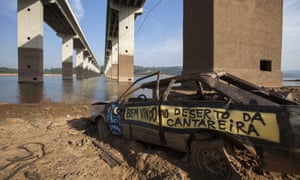
Brazil, 15 January 2015. The drought in the region is the worst in 80 years, according to reports, with the region only receiving a third of the usual rainfall during the wet season from December to February. EPA/SEBASTIAO MOREIRA


A message in graffiti which reads ‘Welcome to the Cantareira desert’ is written on a car which was once submerged in water near Sao Paulo. Photograph: Sebastiao Moreira/EPA

Droughts can last for decades, but they are ­temporary. “Droughts creep up and develop over a period of time, through an uncertain space – and get worse,” says Carolyn Roberts of the Knowledge Transfer Network. “But very often they end suddenly, with a crash, bang and wallop of flooding.”


While the droughts affecting Los Angeles and Sao Paulo – both of which are now said to be over – had a severe impact on these cities, neither can be placed among the world’s most water-stressed. In Los Angeles, “after per capita use, there is twice as much water as there is in the UK even now,” says Roberts.


And São Paulo? “It’s not in a structurally water-scarce environment. But as the city has grown, the ability of the water management infrastructure to withstand a multi-year drought was clearly overwhelmed,” says Steven Schonberger, water global practice manager at the World Bank. “It may have been one of the top water-scarce cities last year – but two or three years from now, with some significant rain, that could all turn around.”


There are many cities, like Aswan, that never receive any significant rainfall. Lima is a particular concern, built on the Peruvian coast: one of the driest desert regions in the world. The city, with a population of around 8.5 million, depends mainly on the Rímac river, plus the Chillón and the Lurín. But due to such an arid climate – just one centimetre of rain falls on average each year – water supply is irregular, and a fifth of the population is cut off from the drinking-water network.


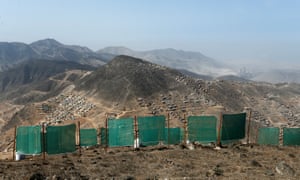
Nets, set up by a group of community leaders called ‘Peruvians Without Water’, are used to trap water from the moisture in fog, on the hillside of Villa Maria Del Triunfo in Lima, Peru, May 11, 2016. REUTERS/Mariana Bazo


Nets set up by Peruvians Without Water are used to trap water from the moisture in fog. Photograph: Mariana Bazo/Reuters

But what Lima lacks in rain, it makes up for in humidity – reaching 98% at times – and Limans are making good use of this. The Peruvians Without Water movement has built vast nets to trap the thick sea fog and mist that surrounds the coastal city for more than half the year. To date, the local grassroots organisation has erected more than 1,000 nets around Lima, gleaning between 200 and 400 litres of water a day – depending on the amount of fog. The nets won’t solve Lima’s water woes on their own, of course, and the city is also planning to restore a pre-Inca network of channels to make the water supply more reliable.


It doesn’t rain much in the Middle East either, and nor are there many freshwater sources. Indeed, the top five countries with the lowest renewable freshwater resources per person are all in that region: Kuwait, Bahrain, the United Arab Emirates, Egypt and Qatar.


Major cities in these countries – such as Kuwait City, Abu Dhabi and Doha – could certainly be considered among the world’s driest. But while the Middle East doesn’t have much water, it does have a great deal of wealth-generating oil – ensuring that 70% of the world’s water desalination plants are found there (the majority in Saudi Arabia, the UAE, Kuwait and Bahrain). So while parts of the Middle East might not have much natural freshwater, it is certainly investing in creating it.


Singapore, too, has limited access to freshwater relative to its population, but has found a way to create water security. Despite getting rain for an average of 178 days each year, this densely-populated island city still has only 110 cubic metres of freshwater per capita, per day.


Doha, Qatar


Doha, Qatar lacks access to renewable freshwater resources. Photograph: Warren Little/Getty Images

Surrounded by sea water, Singapore does not have a hinterland from which to draw water, and instead relies on its “four national taps”: rain, imported water from Malaysia, recycled wastewater and desalinated sea water. These measures come at a huge cost, but mean that 100% of residents have access to fresh water 100% of the time.


But many less well-resourced cities struggle to manage their water supply in such a holistic way. The aquifer used by Gaza City, for example, has become partly contaminated by saltwater: when freshwater is extracted in a coastal area, seawater rushes in. Meanwhile, reservoirs and pipelines have been intermittently damaged by bombings over the decades.


Amman is also struggling to cope with changes beyond its control. Between 630,000 and 1.27 million Syrian refugees now live in the already parched nation of Jordan (it had just 92 cubic metres of freshwater per capita in 2014). While not all refugees live in Amman, a 20%-to-40% increase in the number of people drawing on water resources will add a significant strain on the system. It is hoped that the $ 900m water sharing agreement between Israel and Jordan, agreed in February 2015, will go some way to alleviating this added pressure.


Related: Where is the world’s hottest city?


So is the world’s most water-stressed city one where all these contributing factors – natural aridity and low rainfall, poor management, increasing population and exploitation of the aquifer – converge? Sana’a, the capital of Yemen, might just be that city.


Water was scarce even before the current conflict began, made worse by an increasing population and poor water management. Just 48% of the Yemeni capital’s 2.2 million inhabitants receive piped water and the rest get water through tankers, which is five-to-10 times more expensive. Around 60% of water is lost through leaks, while the cultivation of khat – a popular mild narcotic – accounts for 40% of the water drawn from the Sana’a Basin.


What’s more, Sana’a draws water from the world’s most over-stressed aquifer, the Arabian Aquifer System, which 60 million people in Saudi Arabia and Yemen rely on. But Yemen doesn’t really have a backup plan: despite having more than 1,000 miles of coastline, the country hasn’t been able to invest in desalination in the same way as its more wealthy neighbours. The conflict has only exacerbated this existing water stress, and there is evidence to show the country’s water infrastructure has been targeted deliberately.


But the experts are still divided on Sana’a. While a common saying there says it will run dry in just 10 more years, Schonberger reckons people have been saying that for decades now. Only time will tell if it becomes the first capital city to run out of water.


Follow Guardian Cities on Twitter and Facebook and join the discussion


Where are the world’s most water-stressed cities?