The WHO’s Ambient Air Pollution Database measures PM2.5 levels in 3,000 cities in 103 countries. More than 80% of people living in cities that monitor air pollution are exposed to air which fails to meet the WHO’s guidelines. That rises to 98% for people living in large cities (more than 100,000 residents) in low and middle-income countries.
The health and social care system is not only struggling to meet the care needs of our ageing population, it is completely unprepared for the consequences of looking after growing numbers of older people with extremely complex health problems. That’s the conclusion of Karen Lowton, a professor of sociology at the University of Sussex who specialises in ageing and health.
Whereas 40 years ago a child born with cystic fibrosis, severe congenital heart defect or Down’s syndrome had a slim chance of surviving childhood, let alone reaching adulthood, now there are more adults than children living with these conditions. In addition, people with HIV are also growing older. This is a “remarkable testament” to advances in medicine, says 49-year-old Lowton. But she warns that these success stories are set to create another crisis for an already stretched social care system, as this diverse group of people’s care needs increase with age.
“As these individuals grow older they will experience even more health problems,” she says. “And because no one has reached old age with these conditions before, many of the health and psychological problems they will face are impossible to predict or prepare for.”
Although the Cystic Fibrosis Trust has a national database of UK patients, there are hardly any other national patient registers for these groups. This means it is difficult to know exactly how many people will require lifetime specialist care and exactly what care they will need.
What is certain, adds Lowton, is that even more people will require in-patient and outpatient care from specialist health services as survival ages increase, not only for physical but also mental health; depression and anxiety are common features of these conditions for adults. “Although clinicians are broadly aware of the challenges to come, none of the clinical services are prepared for the increase in demand and increasing complexity that these now-adult conditions will bring.”
A 40-year-old with cystic fibrosis will need to spend additional time taking more medicines and treatments not only for their cystic fibrosis but also for the health conditions that arise from it such as osteoporosis and cystic fibrosis-related diabetes. They may require a lung transplant as their disease progresses.
An adult with a severe congenital heart defect is likely to experience complications such as arrhythmias and heart failure.
An older adult with Down’s syndrome will need to have a plan for their future as their parents age and become less able to support them. Those living in supported accommodation are likely to need increased support from social services as they grow older, which may involve a move into a care home. And they have a higher risk of Alzheimer’s disease and of developing symptoms at an earlier age.
A person growing older with HIV may experience longer-term side effects from their medication, as well as symptoms of chronic illness at a younger age than the general population. Many older HIV-positive people live alone with little family support and few financial resources.
“I think the key difficulty for providing proper health services for these ‘new’ ageing populations in adulthood is that our definition of success in this context is so focused on the short-term,” says Lowton. “The current crisis in the NHS reflects our concerns about patients’ immediate care needs rather than considering what our health and social care services will also require in the future in order to care for patients.
“We are unwilling or, perhaps, incapable – due to our parliamentary cycles and the current government’s ethos of austerity – of looking ahead to see what type of support, intervention and care these ‘new’ ageing populations will need, and how we, as a society, can provide it.”
Lowton says there is little recognition at the Department of Health of their long-term medical and social wellbeing. “The £22bn hole in the NHS’s finances doesn’t bode well for these ‘new’ ageing populations with their expensive-to-treat, lifelong conditions,” she says.
It’s impossible to say how much these conditions could add to the social care bill, because we don’t yet have a good idea of exactly how many ‘new’ ageing populations there are growing older, Lowton explains.
“We also don’t know how health in later life will be experienced, although it is likely that people will experience even more complex conditions as they grow older. Whatever the cost, these populations will be a substantial addition to the current health and social care bill,” she adds.
So what should be done? Lowton cites a number of ways to help to mitigate some of the issues, including ongoing and regular clinical oversight, more support for mental health, more resources for specialist adult clinics, more knowledge and skills training for carers, and more support for families who help to care for these adults.
“The need for care in adult life is a problem that most professionals working in the health and social care fields acknowledge, although to date there has been little development of innovative care solutions for these ageing groups,” she says.
“Worryingly, these groups are now being pitted against each other when funding for new treatments is considered.” For example, NHS England’s response to the judicial ruling that it should fund pre-exposure prophylaxis (PrEP) for people at risk of HIV was that it would be at the expense of funding other treatments such as ivacaftor, a novel personalised medicine for children with cystic fibrosis.
What we must not do, says Lowton, is to lay the problem of increasing care costs at the feet of the people who experience these types of conditions or to think that meeting their care needs is utopian. “Life is tough enough for them as it is,” she says. “As a society we need to appreciate that the significant resources we invest in these ‘new’ ageing populations at the beginning of their lives need to be sustained throughout adult life and into old age.
“We do need to support the scientists who focus on finding a cure, but we also need to support all these adults for whom a cure will come too late.”
Curriculum vitae
Age: 49.
Family: Two grown up sons.
Lives: Orpington, Kent.
Education: Newstead Wood School, Orpington; King’s College Hospital, registered nurse training; Kingston University, IBSc (Hons) health studies; St George’s Hospital Medical School, MSc health sciences; Royal Holloway (University of London) PhD in medical sociology.
Career: 2015-present: professor of sociology (ageing and health), University of Sussex; 2006-14: senior lecturer, Institute of Gerontology, King’s College London; 2003-06: lecturer, Florence Nightingale School of Nursing & Midwifery, King’s College London; 2001-03: research fellow, King’s College London and St Christopher’s Hospice, Sydenham; 1996-2000: doctoral student, Royal Holloway (University of London); 1994-96: research sister, St George’s Hospital Medical School, London; 1989-94: staff nurse positions in intensive care units at St Thomas’ Hospital, London (1991–94); Royal Surrey County Hospital, Guildford (1990–91); Royal London Hospital (1989–90).
Public life: committee member, European Society for Health and Medical Sociology.
A combative Jeremy Corbyn has said he welcomes the tough byelections triggered by the resignations of two Labour MPs as an opportunity to challenge the government, as his ally John McDonnell said the party had had a good week.
Tristram Hunt, a fierce critic of Corbyn’s leadership, announced on Friday that he was stepping down as the MP for Stoke-on-Trent Central, a constituency where Ukip came second in 2015 and that voted heavily for Brexit.
His resignation to run the Victoria and Albert Museum in London followed that of Jamie Reed in December, whose Copeland constituency in Cumbria is home to the Sellafield nuclear plant.
In a robust appearance on the BBC’s The Andrew Marr Show on Sunday, Corbyn said he welcomed the forthcoming contests. “It’s an opportunity to challenge the government on the NHS. It’s an opportunity to challenge the government on the chaos of Brexit. It’s an opportunity to challenge the government on the housing shortage,” he said.
He said the resignations had not affected his determination to keep leading Labour. “I look in the mirror every day, and I think, let’s get out there and try to create a society where there are opportunities for all,” he said.
Labour is still languishing far behind the Conservatives in the opinion polls, but Corbyn said he believed the party’s ratings would start to bounce back as the public realised the full state of the crisis in the NHS.
He said Labour’s priority would be to cancel planned cuts to corporation tax and put the cash into social care.
The two mid-term resignations have raised concerns at Westminster that more Labour MPs disillusioned with Corbyn’s leadership could follow suit. “There won’t be loads, but there will be some, I’m sure,” a senior party insider said.
The Wigan MP Lisa Nandy, who is sometimes talked about as a future Labour leadership contender, told BBC Radio 5 Live on Sunday she planned to spend more time in her constituency in the coming months, as a response to the feeling among some voters that their voices were not being heard.
Asked if she thought other colleagues would follow Reed and Hunt, Nandy said: “People are thinking very seriously about what they can actually contribute personally to the political process.”
She added that Labour was in the difficult position of trying to speak for both sides of the Brexit divide. “A lot of my colleagues are spending a lot more time outside the Westminster bubble and in their constituencies,” Nandy said.
Corbyn’s appearance on the Sunday television interview circuit was part of a new year relaunch, in which his advisers have sought to harness his unpolished style and willingness to reject the political mainstream. He has floated the idea of capping excessive corporate pay and nationalising failing care homes – ideas that Corbyn’s team believe will be popular with the public.
McDonnell, in an interview with Sky News’s Sophy Ridge, said he believed the relaunch was going well. “I think this week’s been pretty good,” he said. “On the issues that we wanted to get across on the day, the issue around pay was raised and he answered honestly, in the authentic way he always does.
“We drew people into a debate that they’d never had before, or not for a long time anyway, and we drew them in on our own terms.”
But an attempt to shift the party’s line on immigration, which many backbench MPs believe is key to winning back votes in working-class constituencies, floundered as Corbyn appeared to back away from the idea of limits on free movement.
The shadow foreign secretary, Emily Thornberry, when asked to clarify Labour’s position by ITV’s Robert Peston, said: “We’re not going to die in a ditch about it, it’s up for negotiation, but Labour’s principle has always been that the economy is the most important thing.”
Diane Abbott, one of Corbyn’s closest allies, has struck a different tone since the Brexit vote, warning that by caving in to demands for a tougher stance on immigration, the party risked becoming “Ukip-lite”.
Corbyn sought to sidestep the issue on Sunday, emphasising the impact of exploitative employers on low-paid workers, rather than the scale of immigration, saying: “Let’s not blame migrants for the problems we have.
“What I have been talking about all along is the question of ending the grotesque exploitation and the undercutting that goes on. Are we going to cut ourselves off from Europe completely? I don’t think so.”
He also hit out at the representation of Labour and his leadership in the media. Corbyn said it had been unfair and he would like to see a “right of reply”.
No date has been set for the two byelections, but both are expected to be held within weeks, and could give the clearest indication yet of how the referendum has shaken up British politics.
A combative Jeremy Corbyn has said he welcomes the tough byelections triggered by the resignations of two Labour MPs as an opportunity to challenge the government, as his ally John McDonnell said the party had had a good week.
Tristram Hunt, a fierce critic of Corbyn’s leadership, announced on Friday that he was stepping down as the MP for Stoke-on-Trent Central, a constituency where Ukip came second in 2015 and that voted heavily for Brexit.
His resignation to run the Victoria and Albert Museum in London followed that of Jamie Reed in December, whose Copeland constituency in Cumbria is home to the Sellafield nuclear plant.
In a robust appearance on the BBC’s The Andrew Marr Show on Sunday, Corbyn said he welcomed the forthcoming contests. “It’s an opportunity to challenge the government on the NHS. It’s an opportunity to challenge the government on the chaos of Brexit. It’s an opportunity to challenge the government on the housing shortage,” he said.
He said the resignations had not affected his determination to keep leading Labour. “I look in the mirror every day, and I think, let’s get out there and try to create a society where there are opportunities for all,” he said.
Labour is still languishing far behind the Conservatives in the opinion polls, but Corbyn said he believed the party’s ratings would start to bounce back as the public realised the full state of the crisis in the NHS.
He said Labour’s priority would be to cancel planned cuts to corporation tax and put the cash into social care.
The two mid-term resignations have raised concerns at Westminster that more Labour MPs disillusioned with Corbyn’s leadership could follow suit. “There won’t be loads, but there will be some, I’m sure,” a senior party insider said.
The Wigan MP Lisa Nandy, who is sometimes talked about as a future Labour leadership contender, told BBC Radio 5 Live on Sunday she planned to spend more time in her constituency in the coming months, as a response to the feeling among some voters that their voices were not being heard.
Asked if she thought other colleagues would follow Reed and Hunt, Nandy said: “People are thinking very seriously about what they can actually contribute personally to the political process.”
She added that Labour was in the difficult position of trying to speak for both sides of the Brexit divide. “A lot of my colleagues are spending a lot more time outside the Westminster bubble and in their constituencies,” Nandy said.
Corbyn’s appearance on the Sunday television interview circuit was part of a new year relaunch, in which his advisers have sought to harness his unpolished style and willingness to reject the political mainstream. He has floated the idea of capping excessive corporate pay and nationalising failing care homes – ideas that Corbyn’s team believe will be popular with the public.
McDonnell, in an interview with Sky News’s Sophy Ridge, said he believed the relaunch was going well. “I think this week’s been pretty good,” he said. “On the issues that we wanted to get across on the day, the issue around pay was raised and he answered honestly, in the authentic way he always does.
“We drew people into a debate that they’d never had before, or not for a long time anyway, and we drew them in on our own terms.”
But an attempt to shift the party’s line on immigration, which many backbench MPs believe is key to winning back votes in working-class constituencies, floundered as Corbyn appeared to back away from the idea of limits on free movement.
The shadow foreign secretary, Emily Thornberry, when asked to clarify Labour’s position by ITV’s Robert Peston, said: “We’re not going to die in a ditch about it, it’s up for negotiation, but Labour’s principle has always been that the economy is the most important thing.”
Diane Abbott, one of Corbyn’s closest allies, has struck a different tone since the Brexit vote, warning that by caving in to demands for a tougher stance on immigration, the party risked becoming “Ukip-lite”.
Corbyn sought to sidestep the issue on Sunday, emphasising the impact of exploitative employers on low-paid workers, rather than the scale of immigration, saying: “Let’s not blame migrants for the problems we have.
“What I have been talking about all along is the question of ending the grotesque exploitation and the undercutting that goes on. Are we going to cut ourselves off from Europe completely? I don’t think so.”
He also hit out at the representation of Labour and his leadership in the media. Corbyn said it had been unfair and he would like to see a “right of reply”.
No date has been set for the two byelections, but both are expected to be held within weeks, and could give the clearest indication yet of how the referendum has shaken up British politics.
I had always thought I could swim. It may have been because I could run. It may have been because I wanted to swim. Or because I only ever did 10 minutes of breaststroke at a time, or splashed off a warm beach. But I really couldn’t swim.
It took 12 months of lessons and practice before I was able to swim in open water, beyond the pool or my home beach in Brighton. Then I could let myself believe I was up to taking on a challenge I had been dreaming of for more than a year: I wanted to swim in the Greek waters of the Ionian Sea. Specifically, I wanted to swim to Ithaca, the island home of Greek hero Odysseus.
Since childhood, I had been fascinated by Greek myths and the heroic tales of the Trojan war. As I grew older and read classics at university, it became Odysseus who captured my imagination more than any other. Legend has it that Odysseus was within sight of Ithaca when he was blown hundreds of miles off course. It took him several years to get home after that. Meanwhile, his wife Penelope stayed at home on Ithaca, spending every night unpicking the embroidery she had completed during the day, having promised her suitors that she would marry one of them just as soon as her sewing was finished. Eventually, a decade after Odysseus set out from Troy to return home, they were reunited. Sometimes you have to wait for the one you love.
I never wanted to be Penelope; instead, I had fought for years to be my own hero, my own Odysseus. I wanted my sense of belonging to come from within, and as soon as I found that, I found D, my husband. Now that I had my own Ithaca, I wanted to see the real one.
There was a deadline to contend with: after a year of marriage and even longer of trying for a baby, we had recently been referred for IVF treatment. I was shaken by the news. My relationship with my body had changed radically over the last few years. Finally learning to have a little faith in what it was capable of had been one of the most rewarding experiences of my life. Now, I was being told that positive thinking was not going to be enough.
Six weeks later, I was on my way to the island of Lefkada, where I was going to spend a week on a guided swimming trip around the islands of the Ionian. It would be an opportunity to see what I was capable of in the water, and to remind myself of the barriers I had overcome, even as I was now confronting a new one.
The evening I arrived was heavy with heat. We all gathered on a terrace overlooking the sea to introduce ourselves and eat together under the vines. J, the leader of the trip, encouraged us to go around the table saying a little about ourselves.
“Hi, my name is Jess and I recently swam the English Channel as part of a relay with some mates.”
“Hi, my wife and I are regular Masters swimmers in the south of France; these are our times…”
“Hi, I’m on this trip with my teenage daughter as a rest before her Olympic tryouts.” And so it went, on and on. These were people who had swum for their country, across their country and to their country. They may as well have been a different species.
The first morning, we boarded a beautiful wooden boat with a taciturn Greek captain who made no effort to hide the fact that he despaired of us all and our sanity. The pattern for the week was quickly set. The boat headed out to wherever the swim was to begin, then we would be briefed on deck about what type of swim it would be. Some were coastal, all the way around an island, with plenty to look at below us; some would be crossings from island to island – more satisfying, but potentially much harder work. And some would be a combination of the two. For most of the week, we would have a morning swim, lunch somewhere nearby, then a bit of time on the boat before a second swim. Friday would be the exception, because that was the day of the heroic 5km swim from Kefalonia to Ithaca.
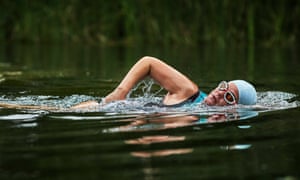
‘The barriers were not merely physical, but mental.’ Photograph: Chris Floyd
Being in an entirely unfamiliar environment was all-consuming. I was used to wading into the water; a slow walk with a gradual drop-off. Now, we were clambering or jumping off a boat, straight into deep water. The most striking thing was its clarity. I had never seen anything like it. In Brighton there are only a few days when the water is clear enough to see through, and even more rarely is the ocean floor visible. Now, I could see a whole new universe. In our underwater world, body type had little effect on how we moved. The strength, the glide, the ease of the reach through the water was all that counted.
I found the sensation of travelling between two bodies of land dizzyingly intimidating. Once, managing a single length of the pool had been too much for me. Then, swimming in open water, albeit close to the shore. Then, the unknown length and depth of the river. Each time, I had persuaded myself that if I could relax and focus, I could do it. Each time, I had been proved right. The barriers were not merely physical, but mental.
This was something else entirely. As we reached the farthest point between the islands, the sea became so deep, it was beyond blue; a dark purple, almost charcoal, with shimmers of yellow as the current moved on and on below us. We found ourselves righting and re-righting our course, having to fight to stay straight, rather than being dragged somewhere else. That pull in the water, begun as a ripple on the other side of the world, reached me then, in that moment, as if gently to tug my sleeve and let me know that, perhaps, I was reaching the limitations of what my body could do. And the thought stayed with me all week as we approached Friday, the day of the 5km swim.
We had a pre-6am start that morning, to be ready for a boat trip of more than two hours. I was tired and beginning to ache in places I had never felt before. The mood on the boat was noticeably quieter than usual. Until now, I had enjoyed conversations with the group, getting tips on my technique, as well as hearing stories of their entrancing swims around the world. Today’s early start and the task ahead, though, had left us all but silent.
It’s all about the breath, I reminded myself. Keep the breath steady and you’ll keep yourself steady
My nerves were mounting. Not only was it farther than I had ever swum continuously – by more than a kilometre – but we would be negotiating a busy channel, competing with swells and currents, as well as holidaymakers’ boats and billionaires’ superyachts. And there was the added pressure that we had been told to swim tightly in our groups during the crossing, directly alongside each other for safety: there was no option to slow down to catch my bearings or indulge in panic. I would either let the team down or find myself drifting dangerously alone in the currents.
I sat in the prow of the boat, my legs dangling over the water as she moved slowly through the still, flat, unbroken surface, the sun rising behind the distant islands, and I felt horribly alone. I missed home with a longing I was sure only Odysseus had ever felt. For the others, this was an energetic holiday, but for me it felt like a last chance to prove to myself what I was capable of before I faced the uncertainties of IVF.
As I stared down into the water, a dolphin’s fin broke the surface and danced ahead of us. I yelped; the captain cut the engine. In that instant, I saw that I had been a fool. Only seconds before, I had been feeling so utterly alone while mere metres from such a magnificent sight. The dolphin leapt and pranced ahead, before approaching the boat and swimming alongside it for a little while. I sobbed, overwhelmed at how appallingly close the lowest and the most beautiful moments can be to each other. Yes, we swim alone. But we can never truly know what swims alongside us.
Half an hour later, people started to ready themselves to head into the water. My heart was hammering. It’s all about the breath, I reminded myself. Keep the breath steady and you’ll keep yourself steady.
Now it was time to swim. I became lost in sensory overload within the first few minutes. The light seemed liquid, leaping up and circling me every time I drew my hand through the water, trying to push against the current that was moving with such strength beneath me.
The first hour or so went smoothly, the group moving steadily as one. About halfway, something changed. We were approaching a tiny island, barely big enough to lay a picnic blanket on, and until this point we had been using it as a sighting point, keeping it in view in order to steer a straight course. We were to swim north of it as we passed, which we were all on course to do. As we approached, the ocean floor came up and back within sight. There was some comfort in seeing the sloping patterns of the underside of the island beneath us. Until I realised that it wasn’t moving.
‘I had never stood toe to toe against nature in this way before.’ Photograph: Chris Floyd
We were swimming at our hardest. Perfectly in rhythm, well warmed up, pulling hard, breathing hard. At last, I felt like a real swimmer. Except I was going absolutely nowhere. An anxiety dream come to life. I was pulling and pushing at the water with all my might, but we had hit the point where the currents were at their strongest. The harder I swam, the less I moved. The rocks below me were entirely static.
I continued like this for five or 10 minutes before panic set in. I knew that to stop was instantly to slide back, away from the group. Exhale. Keep going. Exhale. Believe. Exhale. Glide. But the demons were chasing me now. I had never stood toe to toe against nature in this way before. You can’t fight nature, I thought, and felt tears choke in my throat. I forced an exhale. I wouldn’t let myself think it. But I did. If you can’t fight nature, what about pregnancy? And with that I was lost in a world of worry. Would I ever get pregnant? What would IVF do to me? What would IVF do to us? Would it be worth it? Would we get there? When would I know?
The water swirled around me and roared in my ears. I forced the air out of my lungs, again and again. The salt water was crusting my mouth, and every breath felt like a punch as the sunlight hit my eyes.
Your body might never be the same after this summer, I told myself. Enjoy what you have
Think of home. Be your own hero, be your own Odysseus, be ship, cargo and crew. I repeated these things to myself again and again, forcing physical relaxation until mental solace came. I made myself feel the power in my limbs and lungs, and love it. I was strong. Your body might never be the same after this summer, I told myself. Enjoy what you have.
Eventually, I won the battle. The rocks beneath me slid slowly out of sight. The deep blue returned. I have never been so glad to be swimming so utterly out of my depth. But the horror wasn’t over. About half an hour later, a sort of fizziness began in the tips of my fingers. I had only felt it once or twice before, in the final few metres of running events. I knew it meant that I needed oxygen, and fuel. I realised what was happening and tried to power my way through with positive thinking. Success was limited. My mind had got me thus far, but my lungs had not had the chance to catch up.
I needed help. I called to the rescue boat, and clung to it. J told the others to carry on, while I hauled myself in. My breathing was laboured and erratic, my head spinning and the tips of my feet and fingers numb. I breathed. I gulped at the orange juice on board to get some sugar into my system. I grabbed a handful of nuts. Devastated not to be in the water, I sat, breathing, for five minutes. We were so close to Ithaca. I could make out individual trees on the mountainside. Ten minutes later, I knew I couldn’t let the dream go.
“Can I get back in?” I asked.
J checked me over, to make sure that I wasn’t still delirious.
“I have to reach Ithaca. It’s why I came.”
She nodded. I leapt off the boat and headed for the grey rock. I couldn’t believe there was any strength left in me, and I vowed never to forget the moment that the island’s sea life started to make itself apparent to me. Once again, the sea shallowed, and fish shimmied between crags, sea urchins perched on ridges and starfish danced on the side of the island.
Finally I touched the rock, and burst into tears. Huge sobs, shaking my shoulders, forcing me to cling on to the island to keep myself steady. I had done it. I had discovered a grit I hadn’t known I had. I had slowly, over a year of marriage and a year spent in the water, learned that strength does not always mean merely ploughing forward in the face of adversity; it means changing your plans when what you’re doing isn’t getting you where you need to go; and it means nurturing the confidence to adapt without panicking. The relaxation that swimming demanded of me had taught me that calmness is strength. As I clung to that rock, I had no idea of the extent to which my adaptability and survival skills were about to be tested.
***
As the plane landed back on English soil, I smiled, knowing that I would be home soon and that there were still a few months before the most difficult stages of the IVF swung into action. I was gleeful to be returning to my Penelope, but it was tinged with the melancholy of knowing this summer was past full bloom. I wanted to carry on swimming outdoors, putting my new-found strength and confidence into practice.
I was sure I would be pregnant soon. I was anxious about the side-effects of doing a cycle of IVF, but I was not anxious about it failing.
I was wrong. It proved a brutal and disorienting experience. The cycle ended in early September with me battle-scarred, exhausted and with a streak of red blood that confirmed that I was not pregnant. The Saturday morning after we realised the treatment had not been successful, I woke up at 6am and stared at the ceiling as the tears rolled slowly, silently, down the sides of my face and on to the pillow. What now?
Slowly, the overwhelming duvet of sadness that had swamped us began to shift. While the summer had not been the idyllic sea frenzy I had hoped for, once I looked up and beyond myself, I saw that we were being treated to an exceptionally beautiful autumn. We had agreed to try one more round of IVF, but for now I had a chink of time in which to use my body for as much adventure as it could manage.
As autumn progressed, I swam and I swam, feeling the strength flowing gently back. I had been utterly unprepared for the havoc that the drugs and surgery would wreak on my body. There were extra rolls of flesh that seemed to have sprouted within a fortnight. The belly that appeared as I grew eggs stayed, as did the soft pouches sitting on my hips. My boobs were uncontrollably enormous – the sort of thing mothers-to-be so often take delight in. But, for me, they did not represent an exciting new life change, merely a daily reminder of what I didn’t have. As did the significant amount of internal pain in which the egg collection surgery had left me and which meant that running, and its associated jiggle, was out of the question.
Slowly I emerged from this body that bore no relationship to the one I had built for myself over the previous five years, and took on more and more swims, enriched weekly by the sights, smells and sounds.
Soon, we had a second round of IVF scheduled. I felt fiercely protective towards my own body. Ours was a relatively new love, hard won over miles run and distance now swum. It had taken years to accept that, yes, my body had value, but that value lay more in where it could take me, what it could show me, than in any perceived visual pleasure it could provide for others. I tried to approach this latest quest with the spirit of adventure that had sprung so late in me but proved such a source of joy. I would not yield to any suggestion that my life or my body were lesser if they didn’t incorporate motherhood.
Resolute about keeping my fitness up, I swam lengths twice a week in the pool and continued to swim in the sea, even as the heat slowly started to ebb from it. The day before my second egg collection surgery, I swam in the mouth of Shoreham harbour, feeling my muscles read the movement of the water and warm my blood against the autumn chill. I had rebuilt myself. I was ready.
This time, the treatment went well, and a few weeks later we had a positive pregnancy test. It was followed by the heartbreak of miscarriage. The first round had been disappointment, a setback. This round was crushing grief. My body had betrayed me. Where I had found strength, I now saw inadequacy, insufficiency, weakness. Where I had found beauty, I now saw flesh that served no purpose: a nascent belly, swollen from medication but aching with emptiness, uncontainable breasts bursting with anything but sexuality. Where I had felt self-love, I now saw an unwelcome stranger in the mirror. My body had been rejected, and in turn I rejected my body.
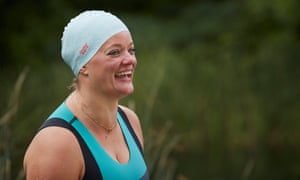
‘I have learned not to be frightened.’ Photograph: Chris Floyd
The first time I felt strong enough to get back into the water was in December. I underwent a full winter of cold-water swimming. I never chose to do it; I just chose not to stop doing it. Where so many other plans around me had turned to dust, in one area at least I just had to keep going.
Jumping into cold water if you are not accustomed to it can put huge pressure on your heart, send your breathing into potentially unrecoverable erratic fits and starts, and leave you woozy with hypothermia – too sleepy to swim, too cold to recover. You can’t fight thermodynamics any more than you can fight infertility. But you can adapt. You can acclimatise. You can find joy where others see pain. And this was what I chose. To keep swimming, week in, week out, until what had seemed like an impossibility became golden, a delight.
Through January, February and on towards March, the coldest month, I carried on swimming. Though the sea temperature dropped incrementally each week, my body, as it slowly acclimatised, felt the same each time. After five minutes or so, my body would start to warm me from within, the hard work of the swimming pushing heat as far as it could out into my limbs. My skin would glow red, as if I’d received a thousand tiny slaps. Within half an hour, I would be glowing from within, warm for the rest of the day. Like a hangover in reverse, I had done something that was painful for moments but that left me feeling well for hours. I had made the difficult habitual, the habitual easy and the easy beautiful.
That winter of swimming was a sort of inadvertent exposure therapy. A type of behavioural therapy used to treat anxiety disorders, exposure therapy usually involves helping people to confront their fears by exposing them in tiny, almost insignificant amounts to the thing they are most afraid of.
There are people all around us dealing with sickness, injury and upset, but they choose to keep moving
Over the winter, I repeatedly exposed myself to the elements. As I hit the water day after day, I took myself to a place I never thought I could go. Previously distressed at having reached the limits of what my body could do for me, I rediscovered pride in what it could achieve and where it could take me.
More importantly, I was exposing myself to myself. That winter, I was the heaviest I had ever been. At the time, it felt like weakness, like surrender, but now I see that what felt like unnecessary blubber from hormones, grief or greed was keeping me warm, keeping me in the water to do what I needed to do. To thrive at the weight I was felt not just subversive, but a triumph.
I was emerging from the water calm but energised. I could do more than I’d imagined, and the more I swam, the more I witnessed others experiencing this alongside me. As I glided along in the lido, I saw women slowly easing themselves down the steps, scars the length of their thighs. I saw injured shoulders ahead of me, struggling to swing their arms around but finding fluidity and peace in the water. I saw women who arrived at the seafront jangling with panic or sadness, leaving it serene an hour later.
These quiet, everyday gladiators battling the wet and the cold showed me time and again that it wasn’t just me who headed for the water in times of distress. There are people all around us dealing with sickness, injury and upset, but they choose to keep moving instead of standing at the edge of life, peering in.
When I think about never having a child, a sort of breathlessness, almost a vertigo, comes over me. The same metal vice tightens around my ribcage, the one I felt as I entered the sea those first few times. I don’t know if we will ever have a child. I don’t even know if we have it in us to try IVF again. But I never know for sure what swims beneath me as I push myself through open water.
Swimming has taught me about my adaptability. It is not enough simply to train hard. You must adjust how you move, refine how you approach the water and embrace your environment. In swimming, as in life, I found fortitude and resilience when I needed them most; but I also found the courage to change depending on the weather, the tide or my own body. I have learned not to be frightened; that life is to be lived as a participant, not a spectator.
The most useful thing anyone said to me about grief is that you never really get over it. When you have difficulties with fertility or staying pregnant, the whole experience is a process of accepting that grief might be round the corner. But is that not the very nature of love? To fall in love is to expose yourself to infinite potential for rejection or pain, and to be a parent is to accept a lifelong commitment to the unknown. To love truly is to know that you might lose it in a heartbeat. In the same way that you never know if the wind will change when you’re half a mile from the shore, or the waves might smash you in the face just as you gasp to breathe. We must stand on the shore, proud of the life our bodies offer us, and accept that we’ll never truly know what lies beneath the surface any more than we’ll know what lies ahead. And then we must leap in.
• This is an edited extract from Leap In: A Woman, Some Waves And The Will To Swim, by Alexandra Heminsley, published next week by Hutchinson at £12.99. To order a copy for £10.65, go to bookshop.theguardian.com, or call 0330 333 6846.
In excess of-the counter hayfever tables, sleeping pills or asthma drugs drastically increase the chance of establishing dementia, a study has shown.
Taking a everyday dose of capsules like Benadryl, Piriton and Nytol, for at least 3 many years, can improve the possibility of obtaining Alzheimer’s condition by a lot more than 60 per cent.
Researchers at the University of Washington stated pensioners taking over-the-counter drugs must tell their physicians and end taking medicine instantly if it is not needed.
The drugs are identified as ‘anticholinergics’ which operate by blocking acetylcholine, a chemical involved in the transmission of electrical impulses among nerve cells. People with Alzheimer’s disease are acknowledged to lack acetylcholine and it is feared the pills might exacerbate or set off the situation.
Other medication on the risk-record include older antidepressants such as doxepin, and the bladder manage treatment method Ditropan.
Numerous of these medicines are taken by vulnerable older folks, according to the scientists, who say their findings have public wellness implications.
“Older grownups must be aware that numerous medicines – like some available with out a prescription, such as above-the-counter rest aids – have robust anticholinergic results. And they must inform their overall health-care companies about all their in excess of-the-counter use,” stated US research leader Professor Shelly Gray, director of the geriatric pharmacy system at the University of Washington College of Pharmacy.
“Of program, no a single need to end taking any treatment without consulting their wellness-care supplier.
“Health-care providers should often evaluation their older patients’ drug regimens – such as over-the-counter drugs – to appear for chances to use fewer anticholinergic prescription drugs at lower doses.”
Prior investigation has raised issues about the use of anticholinergic medicines and psychological impairment in the elderly.
But the new review, published in the journal Jama Internal Medicine, is the first to show a dose response linking greater use of the medicines with an escalating chance of dementia.
The scientists tracked the wellness of 3,434 guys and ladies aged 65 and over for around seven many years even though monitoring their use of anticholinergic medication.
Of the total, 637 created Alzheimer’s disease and 160 other types of dementia.
For individuals taking the highest doses of anticholinergic medicines in excess of the research time period, the relative threat of dementia was enhanced by a statistically important 54 per cent in contrast with no use. The danger of Alzheimer’s alone was raised by 63 per cent.
The findings showed that men and women taking at least 10 milligrams per day of doxepin, four milligrams per day of diphenhydramine (Nytol, Benadryl) or 5 milligrams per day of oxybutynin (Ditropan) for a lot more than three years would have an enhanced chance of creating dementia.
Accessible substitutes that did not have anticholinergic results incorporated selective serotonin re-uptake inhibitor (SSRI) antidepressants this kind of as Prozac and newer anti-histamine allergy remedies which includes loratadine (Claritin), said Prof Gray.
“If providers need to have to prescribe a medicine with anticholinergic results since it is the very best therapy for their patient, they need to use the lowest effective dose, keep track of the treatment routinely to make sure it is operating, and cease the treatment if it truly is ineffective,” additional Professor Gray.
Earlier investigation has identified that anticholinergic results in animals had been shown to improve levels of beta-amyloid protein in the brain, one particular of the hallmarks of Alzheimer’s.
The authors conclude: “These findings .. have public wellness implications for the education of older grownups about possible security risks because some anticholinergics are obtainable as above-the-counter items.
“Given the devastating consequences of dementia, informing older adults about this probably modifiable risk would allow them to choose different items and collaborate with their overall health care specialists to minimise total anticholinergic use.
“Added scientific studies are essential to verify these findings and to understand the underlying mechanisms.”
Charities explained that elderly folks need to seek suggestions from their medical professionals prior to stopping their medication.
Dr Simon Ridley, Head of Investigation at Alzheimer’s Analysis United kingdom, the UK’s major dementia analysis charity, stated: “This large research adds to some current proof linking anticholinergic medicines to a modest increased chance of dementia, but the results really don’t inform us that these medicines trigger the condition. Continued investigation to shed light on these links will be crucial for assisting realize the positive aspects and prospective hazards of these drugs.
“In the meantime, any person who is concerned about the medication they are taking need to look for guidance from a medical professional or pharmacist before stopping a course of remedy. Investment in investigation is essential if we are to discover far more efficient approaches of treating and avoiding dementia.”
Kind 2 diabetes is much more frequent in people who perform shifts, according to final results of a new research.
Data from the study adds to the ongoing concern for those who function shifts, in which known dangers currently contain cancer, digestive diseases, and cardiovascular disease.
Findings of the review have been reported July 24 in the Journal, Occupational and Environmental Medicine.
“Physicians have long been mindful that rest is a critical component of our health,” explained Dr. Alan Manevitz, Clinical Psychiatrist at Lenox Hill Hospital in New York City. “So a new study linking shift perform – in which ten million Americans take element – to type two diabetes is not ‘new news’.”
“Since diabetes itself is induced by a blend of genetic and way of life variables, like rest, the results make sense,” additional Manevitz.
It is believed that disruption of rest patterns top to lack of rest, triggers metabolic and hormonal adjustments foremost to boost in appetite, and subsequent excess weight achieve.
In truth, benefits of earlier sleep scientific studies in laboratory settings have already demonstrated that asking people sleep during daylight hrs can lead to the early phases of type two diabetes inside a couple of weeks.
The examine, a meta-evaluation, evaluating over 226,000 persons, offers an even more powerful association among altered sleep patterns and improvement of kind two diabetes.
Data from the study, from the Huazhong University of Science and Engineering in China showed that general, shift workers have been 9 % far more likely to have sort two diabetes. In guys, the threat rose to 35 % and in individuals who rotated in between day and night shifts, the danger was even higher—42 percent.
The authors publish, “Given the growing prevalence of shift function around the world, and the hefty economic burden of diabetes, the outcomes of out study supply useful and valuable clues for the prevention of diabetes.” With the addition that “male shift workers should shell out much more interest to the prevention of diabetes.”
The cause for boost chance for variety two diabetes is very likely connected to altered sleeping and consuming patterns as a result of shift operate. 1 explanation is that eating late at night makes one a lot more likely to store the calories as excess fat, major to an boost threat for growth of weight problems, and consequently variety two diabetes.
Another explanation is that the daytime amounts of the male hormone, testosterone are managed by the circadian rhythm, the body’s internal clock. Shift operate seems to influence the clock foremost to lower testosterone levels, which are in the end linked to insulin resistance and development of diabetes.
Nevertheless, other aspects beside testosterone might also be at function.
“Study authors implicate the disruption of the male hormone testosterone as a single likely trigger of insulin resistance and diabetes in examine participants,” Manevitz explains, “but a wide array of other physique chemical substances are also skewed when typical rest patterns are disrupted, which includes leptin and development hormone.”
Bu yet another critical syndrome predisposing one particular to diabetes also deserves special mention, in the setting of the discussion of diabetes.
Deputy prime minister Nick Clegg will set out a string of measures to try out to cease female genital mutilation. Photograph: Derek Peters/Demotix/Corbis
Teachers, medical professionals and social workers will be given extra coaching to identify and help ladies who may well be at threat of becoming victims of female genital mutilation (FGM).
The measures will see new guidance for professionals grow to be part of compulsory instruction in public sector organisations.
The deputy prime minister, Nick Clegg, will set out a package deal of measures to tackle FGM at a summit on Tuesday.
The prepare will involve supporting a tiny network of “community champions” to motivate volunteers who want to supply assist in places affected by FGM.
Clegg will inform the Woman Summit: “Female genital mutilation is one particular of the oldest and the most severe approaches in which societies have sought to handle the lives and bodies of generations of youthful ladies and girls.
“We’re presently failing 1000′s of ladies and have to act now to assist place a end to FGM.
“Central to tackling it are the doctors, nurses, teachers and legal specialists who require to be outfitted to recognize and assistance younger women and ladies at risk of FGM.
“They agree that, with out the proper understanding, expertise and experience, individuals come to feel like they never have the cultural understanding and authority to even talk about this practice honestly, never ever thoughts intervene when they are concerned an individual is vulnerable.
He will say the United kingdom government will be introducing new instruction and advice for frontline public sector employees to assist recognise the indications of FGM abuse and prevent a lot more women and women acquiring lower.
Dr Peter Carter, chief executive and general secretary of the Royal University of Nursing (RCN), explained: “Controlling the lives and bodies of young women and ladies via FGM has no spot in contemporary Britain and the government’s function to put a cease to it is to be commended.
“Nurses have a important position to play in ending this practice that impacts the lives of thousands in the Uk and past.
Louise Silverton, director for midwifery at the Royal College of Midwives, stated: “These are positive methods and ones that will contribute to stopping this terrible practice.
“Nonetheless, all these items have to be backed up with resources and dedication across public services, such as making certain personnel have entry to the necessary training.
“Midwives are one particular of the essential frontline healthcare professions in detecting and assisting to avoid female genital mutilation. As this kind of, we need to make sure that they have time and assets to be capable to do this efficiently.”
The capsules could go on sale as early 2019, the scientists from Barts and the London School of Medicine and Dentistry, Queen Mary University of London explained.
The examine was published in GUT, the global journal of gastroenterology and hepatology.
two. An hour of physical exercise can assist stave off dementia
We’re often advised it is crucial to workout but now a landmark examine says just one hour’s physical exercise a week can minimize the opportunity of Alzheimer’s condition by almost half.
The review, which ranked the lifestyle factors that enhance the chance of dementia, also located a reduction in smoking and tackling well being difficulties this kind of as weight problems and diabetes could assist.
The analysis led by Cambridge University, published in the Lancet Neurology, identifies physical exercise as the most substantial protection against the problem.
three. Anxiety causes calories to burn slowly
Females who really feel stressed locate it more difficult to get rid of fat because they burn calories a lot more slowly, a study published in journal Biological Psychiatry suggests.
Researchers found that girls who had knowledgeable a single or much more stressful events the earlier day burned far fewer calories from a meal than individuals who did not – a big difference amounting to eleven further lbs in excess of the course of a year.
Professor Jan Kiecolt-Glaser, lead author from Ohio State University, said one achievable cause was that folks were “much more probably to eat the wrong foods when we’re stressed, and our data say that when we eat the wrong foods, excess weight achieve gets more most likely simply because we are burning fewer calories”.
4. Consume unripe bananas, drink water for a healthier back but do not eat mash
The ways to consuming healthily are quite easy in accordance to one particular professor: consume unripe bananas, do not mash potatoes and don’t cook with olive oil.
Rodney Bilton spent 15 years researching what a healthier diet plan based mostly on scientific evidence is and provided a number of guidelines to readers.
These consist of eating green bananas due to the fact they incorporate much more resistant starch than their ripe counterparts which gives extended-phrase power as it is absorbed slowly by the entire body.
He also suggested consuming water to reduce back pain and warned towards mash since heating and grinding the starch granules in potatoes triggers the volume of sugar to enhance “by breaking open the membrane that surrounds them, releasing starches that turn into sugar”.
five. Arthritis drug could halt progression of Alzheimer’s
A drug which is frequently utilized to deal with arthritis may possibly be the 1st medicine discovered which can halt the progression of Alzheimer’s ailment.
Scientists at the University of Southampton discovered Etranercept, which is typically provided as a weekly injection to relieve arthritis signs, stopped dementia obtaining worse.
Professor Clive Holmes led the research, and presented his results at the Alzheimer’s Association Global Conference in Copenhagan, identified the drug soaked up and disposed of a protein in the blood called TNF-alpha.
Professor Holmes’ group has already proven folks with Alzheimer’s that have large levels of energetic protein in their blood decline faster than people who have extremely reduced amounts.
Males who have a vasectomy have a higher chance of building the most aggressive form of prostate cancer, a examine has discovered.
Harvard scientists analysed the health care information of nearly 50,000 guys and located that individuals who had the operation were 10% more most likely to be diagnosed with the illness.
The examine exposed a more powerful website link with the most significant types of prostate cancer, with charges of advanced or lethal illness growing by 20% in guys who had the process. The danger appeared to be highest amongst men who had a vasectomy ahead of the age of 38.
Cancer charities said the study was “really important” and urged physicians to go over cancer danger with men who have been taking into consideration sterilisation.
The most hazardous types of prostate cancer are unusual. In excess of the 24-12 months research, one.six% of men developed lethal prostate cancer. A twenty% enhance would raise that figure to much less than two%.
Kathy Wilson, a co-writer on the examine at Harvard College of Public Overall health, explained it was unclear how a vasectomy might raise the threat of prostate cancer, but one likelihood was that the operation changed the protein composition of seminal fluid produced in the prostate. “The underlying mechanisms actually aren’t known, although, and will need more clinical and experimental scientific studies,” she mentioned.
Prostate cancer is the most common cancer in guys in the United kingdom. Far more than 40,000 men a year are diagnosed with the disease. In 2011, practically 11,000 males died from prostate cancer in Britain.
The Harvard group analysed the healthcare information of 49,405 males for up to 24 years, from 1986 to 2010. Throughout that time, six,023 men had been diagnosed with prostate cancer, and 811 men died from the condition. A single in four who took component in the review had a vasectomy.
Getting a vasectomy had no reputable impact on the probabilities of developing reduced-grade prostate cancer, but guys who had the procedure had a 19% better threat of lethal prostate cancer and have been twenty% more most likely to be diagnosed with superior illness than other males.
During the review, reported in the Journal of Clinical Oncology, sixteen in each and every one,000 males designed lethal prostate cancer. A 20% boost due to vasectomy could increase that amount to around 19 in every 1,000.
The research goes a lengthy way to ruling out biases that have undermined previous scientific studies, this kind of as the tendency for men who have had vasectomies to have more healthcare checkups.
Malcolm Mason, of Cancer Study United kingdom, explained: “This is an very important examine, the largest one particular of its sort searching at the website link among vasectomies and prostate cancer. Importantly, the added threat of building prostate cancer soon after possessing a vasectomy appears to be small but of the handful of that do go on to create the disease, a higher quantity will build an aggressive type.
“Vasectomy is still an essential option for contraception, but this details ought to kind element of the discussion ahead of a guy tends to make an informed selection as to whether or not or not it is correct for him. Long term investigation must seem at a combined analysis of this review with other people of a related nature – and if these findings are confirmed, much more investigation will be necessary to perform out why vasectomy would seem to have this impact on prostate cancer risk.”
Last night charities stated the study was “extremely important”. Spokesmen suggested that males needed to be advised a lot more about the risks of vasectomies.
Prostate cancer is the most typical kind of cancer in guys, affecting 40,000 a year in Britain and causing ten,000 deaths.
A single in eight males will produce the condition, with most situations taking place following the age of 65.
The vast majority of circumstances are “slow growing” and medical advice frequently advises maintaining the disease below surveillance.
Several men with the cancer will suffer no harm from it, even though therapy options, like surgical procedure and radiotherapy, can have severe side results, this kind of as erectile dysfunction and incontinence.
Researchers at Harvard Health care School tracked 50,000 guys, aged in between forty and 75, from 1986 to 2010.
The findings, published in the Journal of Clinical Oncology, discovered throughout these 24 years that 25 per cent of males had vasectomies and 6,023 circumstances of prostate cancer were diagnosed.
In complete, less than two per cent produced the most aggressive kind of the disease, the investigation discovered. Some prior studies had recommended a connection in between sterilisation and cancer.
This new research is the initial to remove “bias factors”, this kind of as that men who have a vasectomy are a lot more regularly diagnosed simply because they are far more very likely to have typical checks.
Prof Malcolm Mason, Cancer Analysis UK’s prostate cancer specialist, said: “The extra chance of creating prostate cancer following getting a vasectomy seems to be tiny but of the couple of that do go on to build the condition, a larger variety will build an aggressive type.
“Vasectomy is nevertheless an critical selection for contraception but this information must kind portion of the discussion before a man helps make an informed determination as to no matter whether or not it is right for him.”
About a single in six males in Britain has a vasectomy. Authorities mentioned it was not clear why the process would influence cancer incidence but it could relate to modifications in the proteins in semen.
Lorelei Mucci, the research writer and associate professor of epidemiology at Harvard College of Public Health, mentioned the findings recommended improved risks among people who had a vasectomy prior to the age of 38.
She mentioned: “We saw that in males who had a vasectomy earlier in existence there was a greater risk of creating sophisticated or lethal kinds of the condition.
“This could be because of the timings and the affect on the prostate.”
Though the relative improve in dangers linked with a vasectomy was substantial the absolute danger remained little, researchers explained.
Cancer charities said the enhanced risk in aggressive circumstances, though large in relative terms, did not translate to a large total number of instances.
Dr Iain Frame, of Prostate Cancer United kingdom mentioned: “We require to be cautious about how the final results are interpreted. Even though there seems to be an increase in aggressive prostate cancer in guys who have had a vasectomy, it translates as a fairly modest boost in the variety who build aggressive prostate cancer.”
Analysing a mammogram. Substantial ranges of cholesterol have been linked to an elevated chance of breast cancer. Photograph: Rui Vieira/PA
Decreasing cholesterol with statin medication could aid prevent breast cancer, analysis suggests.
A examine of a lot more than 600,000 British girls located that the threat of breast cancer was nearly doubled in these with abnormally substantial ranges of blood fats.
The research is nevertheless at an early stage and the findings do not show that cholesterol aids trigger breast cancer.
But if future function demonstrates a causal link it opens up the probability of utilizing low cost cholesterol-lowering statins to decrease women’s danger of the ailment.
Cardiologist Rahul Potluri, from the University of Aston, mentioned: “We discovered that ladies with higher cholesterol had a considerably better opportunity of establishing breast cancer.
“This was an observational study so we can not conclude that large cholesterol causes breast cancer, but the power of this association warrants more investigation.
“A prospective examine that monitors the chance of breast cancer in ladies with and without having large cholesterol is required to verify what we observed. If the connection amongst high cholesterol and breast cancer is validated, the next stage would be to see if reducing cholesterol with statins can minimize the risk of developing cancer.”
A total of 664,159 females from across the Uk whose wellness information had been stored on a big database took part in the examine.
Almost 23,000 (three.4%) had hyperlipidaemia, that means their blood contained abnormally large amounts of lipid fats – cholesterol and triglycerides.
Some 530 ladies with the situation had been amid the 9,312 who created breast cancer.
Statistical analysis showed they have been one.64 instances much more most likely to have the condition than girls with out hyperlipidaemia.
Earlier analysis has shown a clear association amongst weight problems and breast cancer in submit-menopausal women.
A US examine last year identified that a cholesterol solution named 27HC fuelled human breast tumours in genetically engineered laboratory mice.
Scientists also identified higher levels of 27HC in each wholesome breast tissue and tumour cells in girls with breast cancer.
“We have a standard principle that weight problems is linked to breast cancer and a research in mice suggested that this may possibly be because of cholesterol,” stated Dr Potluri, who presented his findings at a European Society of Cardiology meeting in Barcelona.
“We made a decision to investigate whether or not there was any association among hyperlipidaemia, which is substantial cholesterol primarily, and breast cancer.”
He added: “While our study was preliminary, our benefits are promising. We discovered a considerable association in between having high cholesterol and creating breast cancer that demands to be explored in much more depth.
“Caution is required when interpreting our results because even though we had a large examine population, our analysis was retrospective and observational with inherent limitations. That explained, the findings are interesting and additional analysis in this discipline could have a big affect on patients numerous many years down the line.
“Statins are low-cost, widely offered and fairly risk-free. We are probably heading in direction of a clinical trial in 10 to 15 years to check the impact of statins on the incidence of breast cancer. If this kind of a trial is productive, statins may have a function in the prevention of breast cancer, specifically in substantial threat groups, this kind of as women with higher cholesterol.”
Baroness Delyth Morgan, chief executive of the Breast Cancer Campaign charity, mentioned: “These are interesting results that report a website link between increased unwanted fat in the blood and an increased chance of breast cancer.
“Nevertheless, this is just the 1st phase in comprehending much more about how cholesterol relates to the risk of breast cancer, and far more study is required to figure out whether statins could help avert breast cancer.
“We do know that getting overweight, notably soon after menopause, can enhance a woman’s risk of building breast cancer. We would inspire women to sustain a healthful excess weight and to go over any considerations, such as their breast cancer threat, bodyweight or cholesterol levels with their GP.”
In excess of the previous few many years, research have recommended an association between obesity and breast cancer. Final 12 months a research in mice concluded that lowering circulating cholesterol or interfering with its metabolic process might be utilized to prevent or deal with breast cancer.
Dr Potluri explained: “We have a common principle that weight problems is linked to breast cancer and a study in mice advised that this may be since of cholesterol.
“We determined to investigate regardless of whether there was any association among hyperlipidaemia, which is high cholesterol basically, and breast cancer.”
The researchers performed a retrospective evaluation of much more than one particular million sufferers across the United kingdom between 2000 and 2013 from the Algorithm for Comorbidities, Associations, Length of stay and Mortality (ACALM) clinical database. There had been 664,159 girls and of these, 22,938 had hyperlipidaemia and 9,312 had breast cancer. Some 530 girls with hyperlipidaemia developed breast cancer.
The researchers used a statistical model to study the association in between hyperlipidaemia and breast cancer. They located that obtaining hyperlipidaemia enhanced the chance of breast cancer by one.64 occasions.
Dr Potluri said: “We located that females with high cholesterol had a substantially higher possibility of creating breast cancer. This was an observational study so we can’t conclude that substantial cholesterol causes breast cancer but the power of this association warrants further investigation.”
He additional: “A potential examine that monitors the threat of breast cancer in girls with and with no substantial cholesterol is essential to confirm what we observed.
“If the connection in between high cholesterol and breast cancer is validated, the following stage would be to see if lowering cholesterol with statins can decrease the chance of creating cancer.”
Dr Potluri additional: “Statins are cheap, extensively available and relatively risk-free.
“We are possibly heading in the direction of a clinical trial in 10 to 15 many years to test the result of statins on the incidence of breast cancer.
“If this kind of a trial is profitable, statins might have a position in the prevention of breast cancer specially in higher chance groups, such as females with large cholesterol.”
He extra: “Although our study was preliminary, our final results are promising.
“We found a considerable association amongst getting higher cholesterol and building breast cancer that demands to be explored in much more depth.
“Caution is needed when interpreting our outcomes simply because even though we had a big study population, our evaluation was retrospective and observational with inherent limitations. That explained, the findings are interesting and further research in this discipline could have a big influence on patients a number of many years down the line.’
The investigation is due to be presented these days at Frontiers in CardioVascular Biology in Barcelona, Spain. The meeting is organised by the Council on Fundamental Cardiovascular Science of the European Society of Cardiology (ESC) in collaboration with 13 European cardiovascular science societies.
‘At the quite time folks require assistance most, psychological overall health services are becoming cut,’ Dr Andrew Collier told the meeting. Photograph: Alamy
Mental wellness companies are in a “vital” state, with patients becoming put at danger by significant cuts, the British Health-related Association’s yearly meeting was informed.
In three years, mental overall health services in England have reduce beds by 9%, delegates heard. One particular trust has invested hundreds of thousands of pounds placing individuals up in bed and breakfast accommodation due to the fact no beds have been accessible.
Individuals were being shipped to all corners of the country for beds, far from friends and families.
Doctors have been being forced to discharge patients as swiftly as attainable to free beds – placing sufferers at chance, the conference in Harrogate was informed.
Dr Andrew Collier, co-chair of the BMA junior medical professionals committee, explained: “The companies we offer are beneath improved pressure.
“But at the very time individuals need to have support most, psychological overall health providers are becoming minimize. Current freedom of details requests have shown that considering that 2011 at least one,700 psychological well being beds have been closed. That represents a 9% reduction in the quantity of available beds.
“Time and once again we’re told that when beds are minimize it truly is element of an all round strategy to invest in better, improved services but I am beginning to feel that’s not the case.
“The scenario is now so negative that a quarter of junior medical doctors doing work in psychiatry have been advised that unless the patient is topic to the Mental Health Act, a bed will not be located.”
He mentioned that patients often had to travel massive distances to uncover care. “One psychological well being believe in has even spent £345,000 to place patients in bed and breakfast providers merely because there are no beds.
“The consistent fire-fighting due to the abysmal shortages we encounter has got to end. If the government is severe about attaining parity of esteem for psychological well being services these damaging cuts and closures should quit now.”
Dr Jason Holdcroft, psychiatry trainee, said he has noticed “ever-increasing” strain on companies over the last 4 years.
“Faced for considerably of the time with a chronic shortage of beds, neighborhood teams are forced to deal with ever far more unwell individuals at home with dwindling resources.
“In striving to free up beds more quickly there is pressure on in-patient teams to discharge patients as early as attainable into the care of local community psychological health teams who could have misplaced their occupational therapist, their psychologist, and usually a proportion of their nurses as well.
“The finish consequence of all of this is sometimes tragedy – avoidable deaths and suicides in which the method has not supplied the care that sufferers require.”
Public wellness officials warn that whooping cough poses the best danger to younger kids as California discounts with its worst outbreak of the respiratory disease because 2010, with almost three,500 reported victims so far this year.
“Prevention of pertussis is specifically critical in youthful infants simply because they are the ones at chance for serious ailment and death,” Dr Gil Chavez, state epidemiologist and deputy director of the California Department of Public Well being, stated on Monday.
Infants, in certain, are the most vulnerable to the disease which triggers severe, uncontrollable spasms of coughing that can make breathing tough, and public well being officials urged parents to make sure their youngsters are appropriately vaccinated.
Vaccines also are advisable for pregnant women and adults who have increased make contact with with young young children.
California public wellness officials mentioned on Friday whooping cough, also identified as pertussis, has reached epidemic proportions in the state.
A lot more than 800 circumstances have been confirmed statewide in the initial two weeks of June alone, with Napa, Sonoma and Marin counties close to San Francisco Bay reporting the highest costs of infection per capita.
The highly contagious bacterial infection strikes 30 million and 50 million individuals each year around the world and kills about 300,000 annually, largely young children in the creating planet.
In the United States, the place outbreaks have a tendency to run in cycles, most kids are immunized against pertussis with a vaccine provided as a series of shots starting as early as six weeks of age. Pregnant women should get the vaccine in their third trimester because antibodies will be passed on to their newborns, Chavez stated.
Pertussis in youthful kids normally starts with a runny nose and occasional coughing for up to two weeks, escalating into bouts of extreme coughs punctuated with a characteristic “whooping” sound.
Infants typically do not exhibit the traditional signs and symptoms but may gag or gasp, and their faces may possibly turn red or purple for the duration of these spells, Chavez mentioned.
As of June 10 of this 12 months, 3,458 circumstances of pertussis have been reported during California, far surpassing the 2,530 folks diagnosed with the ailment statewide for all of 2013.
Of this year’s tally, 119 sufferers have been hospitalized, most of them under four months of age, and one, a five-week-previous infant, has died.
This year’s outbreak so far pales in comparison to a whooping cough epidemic that struck California in 2010, when 9,000 instances, such as 10 infant deaths, have been reported.