tough etiketine sahip kayıtlar gösteriliyor. Tüm kayıtları göster

26 Şubat 2017 Pazar

The Steve Hewlett I knew: a tough journalist, a fearless chronicler of the illness that killed him

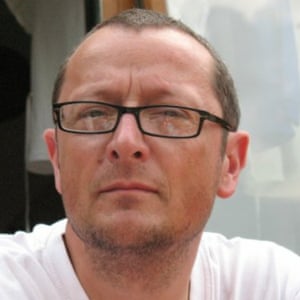
Steve Hewlett became a household name over the past few months for talking about his cancer intimately and frankly to Eddie Mair on BBC Radio 4’s PM programme and for his diaries, which appeared in the Observer. At first I found it hard to reconcile how Steve was talking with the way he’d approached his life and work on Radio 4’s The Media Show, where I was his producer from 2009 to 2013.


It was an extraordinary time in media history, with stories of phone hacking and a BBC director general resigning. Steve Hewlett had always wanted to find the story, not be the story, and he was wary of “human interest”. But here he was on PM talking of himself with the same clarity and fascination as if he were a breaking story, with the scoop on his own condition. Suddenly it made sense. He was an utterly fearless interviewer and now he was turning that fearlessness on himself.


Steve made his name in investigative journalism on television and had been presenting The Media Show for a year when I first met him. We went for a pint and compared notes on what was going well and what might be changed. I had to get up to Steve’s speed on what he already knew, and find new subjects he didn’t know about, to test him, keep pushing him and show how wide the remit of this new programme could be.


Over the next few years, his scoops ranged from phone hacking and press regulation to who knew what, and when, about Jimmy Savile. On air he was dauntingly impartial, as hard on his friends, contacts and colleagues as on anyone else. It was gruelling at times, but Steve had the stamina of an ox.


The Media Show wasn’t Panorama, where he’d famously handled Martin Bashir’s interview with Princess Diana, and Steve was doubtful at first of radio and the impact it had, compared to television.


He was still developing his voice as a presenter of a live programme, rather than an expert answering someone else’s questions on his favourite subjects. But he hit his stride as we broke stories, and he enjoyed it even more when this rolled into appearances on Radio 4’s Today programme, which turned virtually into a residency during the phone-hacking scandals, the News of the World debacle and the Leveson inquiry.


I remember getting a call from Steve almost incoherent with excitement when he had just been phoned by someone at the News of the World, from the meeting where its closure was being announced. Steve made it to a studio to take part in the PM programme within the hour, exhilarated to be the one in the know, first with the inside story.


He was a great teacher. He impressed on me the importance of knowing the industry’s regulations, to see who was bending the rules, and of working out who had a strategy and who was being merely tactical. I often catch myself saying “causation or correlation?” and realise that’s a mantra from Steve, picked up when he snorted at a piece of research that claimed to show watching TV was bad for children, without demonstrating the link.


Steve pushed me and our assistant producer hard, but he always pushed himself harder. Especially in the first years of The Media Show, when it was live at lunchtime, I would arrive before 7.30am to find him already working on something in his office.


Often the door would stay closed for a confidential call. Later, as he came to trust me, it would be left open. Sometimes his tone would be intense, hushed, focused, and I’d not know who it was until after he hung up.


Sometimes it was altogether warmer, lighter and tinged with laughter, and I knew he was talking to one of his teenage sons, a holiday moment on a busy programme day. This would prompt him to tell stories about the other areas of his life, his weekends of refereeing rugby in Harpenden and his adventures in student politics, what he was doing at their age.


It was a glimpse of the side of him listeners eventually got to know much better in recent months. When I asked, he said it felt so natural to talk openly to Eddie Mair about his cancer, he couldn’t understand why anyone thought it was remarkable. Anyone who heard Steve, or read his diaries in the Observer, came to appreciate just how remarkable he was.


The Steve Hewlett I knew: a tough journalist, a fearless chronicler of the illness that killed him

6 Şubat 2017 Pazartesi

Treating former child soldiers and refugees is tough yet fascinating

My first client of the day is Ahmed. He witnessed around 30 people, including family members, drowning when the boat in which they were crossing to Europe, sank in a storm. He feels guilty for surviving. He was one of the youngest on the boat, so was wearing one of the few life jackets.


This morning I’ll try to help Ahmed with the flashbacks he has every time it rains, with the nightmares that wake him every night about drowning, people calling his name in the darkness, bombs falling, bodies on the street. He is claiming asylum in the UK. He knows that some people don’t want him here, but he’s frightened of going home. His home town is being bombed, and he doesn’t feel wanted there either.


For all the stories of human suffering, these are also narratives of survival


After Ahmed, I’ll see Erica, who was beaten so badly by her husband that she has a metal plate in her skull; Louise, who regained consciousness in the middle of an operation, able to feel everything but unable to move or raise the alarm; and Alex, who dreams every night about the colleague he could not save when their vehicle was hit by an IED in Afghanistan.


As a trauma therapist, this is a normal day for me. Some people associate post-traumatic stress disorder (PTSD) only with military veterans, but my clients come from a huge range of backgrounds. Almost any life-threatening experience can cause PTSD, as can sexual assaults, witnessing terrible things happen to someone else, or hearing about them repeatedly as part of your job.


There is still a stigma associated with many mental health problems, and PTSD is no exception. Some people feel it is a sign of weakness, and they should just be able to get over what has happened. Others are unaware that help is available, or that treatments are effective.


There is no shortage of referrals, and managing the waiting list is a constant struggle. Trauma therapists spend their days listening to some of the most heartbreaking and horrifying stories imaginable. Confidentiality prevents us talking about what we have heard outside of the therapy room, but we support each other with time, care, biscuits and humour.


NHS trauma services exist in various cities across the UK, but service provision is patchy and postcode-dependent. Cuts over the years have put further pressure on mental health services which are already spread thin, leaving many therapists feeling burnt out by unachievable targets and endless waiting lists. Insidious measures to cut costs, such as limited session numbers, freezes on recruitment and service restructures (another word for cuts) continue to whittle away services, and lead to patients waiting longer for less treatment.


Why would I choose to work in this field? It is fascinating. I’ve heard firsthand accounts of what it is like to be recruited as a child soldier, to survive the Rwandan genocide, to travel Basra’s road of death. Perhaps not experiences everyone would want to hear but, for all the stories of human suffering, these are also narratives of survival. My clients have escaped, endured and overcome events which can, and have, killed many others. I bear witness to their fortitude, and help them mend the mental scars.


Thankfully, many of my clients recover. Trauma memories are not forgotten, but they can fade. Through treatment, clients achieve goals which many of us take for granted, like sleeping through the night without nightmares, or meeting new people without fearing they will be attacked. Things which were previously out of reach because of their symptoms, like working and having relationships, become achievable.


There is no magic pill or quick fix to treat PTSD. The most effective treatments are trauma-focused. Rather than avoiding the horrific memories, therapy involves talking about them, processing what happened, and making sense of what can feel senseless. We spend some sessions out of the office, helping clients to overcome situations and places which they have been avoiding, teaching them to discriminate the past from the present.


As a therapist, seeing someone who has been so mentally, emotionally, and often physically, damaged, begin to heal is incredibly rewarding. On a gloomy day, I read the cards and letters that clients have written to me after treatment. They tell stories of recovery and hope.


Knowing the potential for recovery will help me in my session with Ahmed today. At the moment he feels that he lost everything worth living for in that storm over the Mediterranean. Today, we’ll start picking up the pieces. We’ll talk about what happened, and grieve for the losses. We’ll try to put the bad memories in the past, so that he can look towards a future. When that happens, it will remind me again why I do my job.


Some details have been changed


If you would like to write a blogpost for Views from the NHS frontline, read our guidelines and get in touch by emailing sarah.johnson@theguardian.com.


Join the Healthcare Professionals Network to read more pieces like this. And follow us on Twitter (@GdnHealthcare) to keep up with the latest healthcare news and views.


Treating former child soldiers and refugees is tough yet fascinating

10 Ocak 2017 Salı

‘Care work is tough. We should not be paying minimum wages’

Whether or not you agree with reports at the weekend that the NHS is facing a “humanitarian crisis”, caused by delayed discharge and unprecedented demand for services, it is abundantly clear that when it comes to health and social care, the status quo is not an option.


As calls grow for the government to do more to tackle the funding gap in social care – predicted to reach £2.3bn by 2020, David Miles, chief executive of Mears Group, agrees that the social care sector’s position is precarious.


The funding gap has become so severe that Housing and Care 21, Mitie and Saga have all decided to stop providing domiciliary care services. And as one of the UK’s biggest providers of homecare for elderly and vulnerable people, Mears has certainly been feeling the pinch. In 2014, its care business made a loss of £400,000. The following year, losses had spiralled to £5.1m, with no sign of this slowing in 2017.


But Miles dismisses any suggestion that Mears could walk away from its care business altogether. “That won’t happen, categorically not,” he says. “But we have given up 20% of our homecare contracts in revenue terms, where we believe the gap between the national living wage and the rate we enjoy from our clients is not enough to continue delivering services.”


The problem is that, reeling from austerity cuts, some local authorities have been slashing the rates they pay for homecare. Across Britain, providers receive just under £15 an hour, but a number of councils have cut these fees to £12-£13 an hour, which the UK Homecare Association, which represents domiciliary care providers, says barely covers a care worker’s salary, travel time, travel costs, statutory holiday pay, sickness and pension entitlements and does not cover the cost of providing the service or regulatory costs. At the same time, payroll costs have risen following the introduction of the “national living wage” of £7.20. According to the UKHCA, the total funding gap for homecare is £513m.


Mears has already handed back its contracts with Sefton, Liverpool and Wirral councils because they were no longer viable, publicly condemning the authorities for offering new rates that were “nothing short of encouragement to providers to breach the national living wage”. It has also refused to bid for new contracts with Solihull for the same reasons. And unless local authorities change how they contract with domiciliary care providers, Mears could decide to hand back more contracts.


Miles agrees that the government needs to do much more. Part of the solution to the funding crisis is integrated health and social care budgets, he says. “Better homecare, with better-trained care staff, would actually reduce the need for hospital beds and other NHS services. It is a vicious circle at present and someone needs to own both budgets and go for it.”


“The Manchester Devo could be the right solution, however, it needs to happen now, because the situation needs a long-term fix, not more short-term, knee-jerk funding solutions.”


But he also wants more scrutiny of how existing funding is spent.


“If I were Theresa May, I would work out what the cost of care is and where the money goes,” he says. “As a taxpayer, we pay around £24 for an hour of [state-funded] care. How does £24 become £7.20 an hour for a care worker?”


“Care work is really tough, when you think what these people are expected to do,” he says. “We shouldn’t be paying them minimum wages.” Miles advocates making care a more skilled job, with pay rates to match – he suggests around £11 an hour – and argues that this would actually save money in the long run. “Let’s make sure more of the money goes to paying care workers, making sure they’re properly trained. And then maybe they wouldn’t need as much supervision and management as currently.”


Paying more would also help to address the perniciously high turnover rates of care staff, leading to better services and reducing recruitment costs.


But Miles believes councils could stretch their social care budgets much further if they had fewer, larger, long-term contracts, instead of multiple providers on 18- to 24-month deals. “If you have lots of contractors as many councils do, that’s a lot more costly to administer than managing one or two.”


While Mears has won a handful of long-term contracts – Wiltshire and Richmond being the most notable examples – it is extremely unusual. Yet in housing, single-provider, five- to 10-year contracts are common, even though the recipients of the services are often the same.


“How is it possible that the same local authority chief exec allows the housing department to come up with a long-term single-provider model, but allows social services departments to use lots of providers working on a cascade system on short-term contracts, with no qualitative scores? I don’t get it.”


Miles argues that longer-term contracts provide certainty of revenue and allow staff to be paid more, so recruitment and retention costs are lower due to less churn, and the quality of services improves. In addition to providing homecare services to 25,000 people, Mears also repairs and maintains more than 700,000 social homes in the UK, accounting for 85% of the company’s turnover. In recent years, it has also expanded beyond maintenance into housing management and building new homes.


Miles welcomes last week’s announcement of a £7bn “affordable homes fund” as a “great opportunity” as long as it happens quickly – so many housing initiatives have come and gone “with little impact”, he says. What about the garden village proposal?


“The principle is a good one, but waiting lists for affordable housing normally are at their highest in already densely populated areas, with little to no affordable land available, therefore it will be very difficult to build new homes to the quantity required.”


Miles does not really believe that housebuilding will solve the lack of affordable homes. “Personally I’m not sure building’s the right way to go. The UK’s got lots of space in certain areas to build, but that’s not necessarily where people want to live.”


He thinks councils would be better off buying back homes, pointing out that many of the 3 million people on the waiting list for social housing are in private rental accommodation. “I don’t understand how the private landlord can make that work and why a local authority can’t make it work. Is there not a way to convert people on the waiting list into more properties for the local authority?”


So far, Mears has not spoken out much about housing policy or social care. But as council budgets continue to be squeezed, that looks likely to change.


For Miles, 20 years after he joined the company, it’s all about helping to improve people’s lives. “I am very boring,” he says – “I like trying to make a difference.”


Curriculum vitae


Age 49
Lives London
Education West Hatch high school, Chigwell, Essex. Professionally qualified electrical engineer (IEE)
Career 1985-1992: senior engineer, Cairn Electrical Engineers; 1992-1996: senior manager, Mitie; 1996-present: chief executive, Mears Group
​Interests The environment​


‘Care work is tough. We should not be paying minimum wages’

5 Kasım 2016 Cumartesi

"You see tough things as a police officer. I felt sick as memories flooded back"

When people used to ask me, a serving police officer, how I was feeling, “OK” became an easy phrase to use. It didn’t show how much I was hiding.


I have worked for Essex police for more than 30 years. After 20 years of service, in 2013 my mental health started to decline. There were no big warning signs, no alarms, no sirens, just the start of a really difficult period of my life.


As a police officer, you see tough things. I started to have flashbacks to certain incidents I had encountered. I would feel sick as some memories flooded back. At other times I would feel an overwhelming sense of despair, feeling that life was just not worth it.


Alan Phillips


Alan Phillips: ‘There were no big warning signs’

In January 2014 I started to drink, a little too much most days. My behaviour at work became more erratic and on several occasions I was spoken to by supervisors. I wanted to tell them how I felt but I couldn’t find the words. I gave little clues but these were not picked up on. When anyone asked me if anything was wrong, I’d always respond that I was OK.


Mentally, I crashed in April 2014. I spent a week-and-a-half unable to move, not washing, shaving or dressing, just staying in bed. I finally saw a doctor. I’d been off work nearly a week and my wife encouraged me to go.


This wasn’t the end of the problems – I still live with stress, depression and symptoms of post traumatic stress disorder. But at the moment, I’m managing; I’m working. I’m open about my mental health now and that has changed a lot. Being in the police force can mean you encounter some difficult things. This condition is not because we are weak; thoughts of suicide are not a sign that you are a coward. This condition is one suffered by the strong.


I have been involved with Mind’s Blue Light programme from the beginning. Mind’s research shows that nearly two-thirds (63%) of emergency service staff and volunteers have contemplated leaving their job or voluntary role because of stress or poor mental health.


The Blue Light infoline offers vital support to people in the emergency services who may be experiencing similar feelings to the ones I had. It serves an important purpose. If you have any worries at all about your mental health while working in the emergency services and are afraid to tell someone, this service can offer a confidential ear and tailor support to the field you work in.


Once you speak, people will listen, but you have to tell them.


Alan Phillips is a detective constable in Essex police. Mind has just run a Blue Light Infoline awareness week.


For more news, opinions and ideas about the voluntary sector, join our community – it’s free!


"You see tough things as a police officer. I felt sick as memories flooded back"

23 Ağustos 2016 Salı

Tough prison sentences "will not end FGM in Dagestan"

A Russian journalist who reports on female genital mutilation says introducing prison sentences for perpetrators will not bring about an end to the practice, after a report released last week said that FGM was taking place in remote villages in the republic of Dagestan.


Marina Akhmedova, based in Moscow, has recently returned from the North Caucasus region, where she interviewed survivors of FGM. She is calling for a programme of on-the-ground advocacy.


Responding to a draft bill introduced by MP Maria Maksakova-Igenbergs last week that called for the criminalisation of FGM, with sentences of up to 10 years, Akhmedova said such strict measures would only be seen as religious persecution and could drive the practice underground.


Speaking to the Guardian, she said: “It is really difficult to help these women as they don’t consider themselves victims. First you need to persuade them that they are victims. Targeting them will only drive them to do this in secret. If religious leaders say it is right for a girl to undergo circumcision, people will do it.”


She suggested that Russia needed to adopt an “accurate and moderate” approach and work with religious leaders as well as doctors and teachers to persuade them to abandon FGM.


A report published by the human rights group Russian Justice Initiative (RJI) said there was evidence that FGM of girls under the age of three was happening in remote, mainly-Muslim villages in Dagestan. It came to wider attention when two religious leaders responded with comments in support of the practice.


Ismail Berdiyev, the mufti and chairman of the North Caucasus Muslim Coordination Centre, said FGM does not contradict Islam and is a “purely Dagestani ritual” that is necessary “to limit the unnecessary energy” of women. He also suggested in a radio interview that all women should undergo FGM to curb their sexual feelings, later retracting some of his comments.


Vsevolod Chaplin, an Orthodox Christian leader, posted on Facebook in support of Berdiyev, saying that traditional practices should be allowed to continue without interference.


Maria Baronova, an opposition activist, responded to the report by standing outside Moscow’s main mosque with a sign saying “cut sheep not women”.


Akhmedova said Baronova’s protest amounted to an “incitement of ethnic hatred”.


“The mosque she stood outside belongs to Moscow Muftiyat, which has officially rejected FGM,” Akhmedova said. “Not all Muslims practise circumcision, and there was nothing in her actions that showed a desire to help the women of Dagestan.


“The opinion of religious leaders on the case in Dagestan is divided. The media made it out that this is a wholly Islamic problem, but this is not the case. Some of the women I spoke to themselves felt ashamed for not having a clitoris, but others suggested that it is a practice that they have done for years and will continue to do.”


RJI found that FGM is carried out predominantly in five mountainous areas, where the procedure is usually performed on girls under the age of three, but also on some up to the age of 12.


Vanessa Kogan, the group’s executive director, said: “The report would not have received nearly as much coverage if it hadn’t been for the outrageous statements made by Berdiyev and Chaplin. Their statements did not really contribute anything concrete to the questions surrounding the practice of FGM, but they spoke volumes about both Islamic and Christian religious leaders’ intentions to control women’s bodies and their sexuality.


“We don’t want to give the impression that FGM is a religious practice, and we want to keep the focus on the fact that the procedure is a gross violation of women and children’s rights. These communities are among the last to have converted to Islam in the region, and many experts interviewed expressed the view that the practice is rooted in pre-Islamic tradition adat or customary law.


“At the same time, we acknowledge that the support of religious leaders may be a key component in working to eradicate the problem.”


It can kill: the facts you should know about female genital mutilation

Kogan added no further research was planned, saying: “There is no evidence that FGM is being practised anywhere else in Russia on a systematic scale. As far as we know, FGM is limited to Dagestan and within Dagestan the practice is limited to certain isolated communities.”


Equality Now, an international human rights organisation, said the report was a concern and more research was needed to have a better understanding of the situation.


Mary Wandia, who works for the group, said: “We are only starting to get information on the prevalence of FGM in Russia but it is very concerning that all 25 women interviewed for this report had undergone it. We need further investigation.


“FGM can no longer be seen as a supposedly ‘African’ issue. It is a human rights violation which affects hundreds of millions of women and girls around the world. Recently, we have had better data from countries such as Indonesia, India, Pakistan, Singapore, Malaysia, Colombia, Yemen and others, which shows that FGM is a global issue and needs to be urgently addressed.”


The United Nations warns that more than 200 million girls and women alive today have been cut, mostly before they reached puberty, and has recently classified it as child abuse.


FGM is defined by the World Health Organisation as procedures that intentionally alter or cause injury to the female genital organs for non-medical reasons. FGM has no health benefits and is recognised as a violation of the human rights of girls and women.


Tough prison sentences "will not end FGM in Dagestan"

18 Ağustos 2015 Salı

The situation of Chelsea"s Eva Carneiro exhibits how tough it is to be a sport medical doctor


A player collapses on the discipline. He seems injured and in pain. The referee, on two occasions, urges the medics to examine him. Dr Carneiro and physiotherapist Jon Fearn run onto the pitch and treat the injured player. Dr Carneiro has given that been demoted from touchline duties to Chelsea’s coaching ground at Cobham.


Ethically, Dr Carneiro is on protected ground. The Common Medical Council’s states in its advice that “In an emergency, wherever it arises, you need to provide help, taking account of your very own safety, your competence, and the availability of other possibilities for care.”


In this situation, there was no risk to Dr Carneiro’s security and she was plainly competent to assist the player. Failing to offer help may have led to disciplinary action towards her.


Chelsea medical professional Eva Carneiro responds to Jose Mourinho’s criticism


Divided loyalties


A doctor’s principal duty is to act in the very best interests of the patient. A football manager, nonetheless, might prioritise the ideal interests of the crew.


Like the manager, the players, and the followers, the medical professional usually wants the team to do effectively. The difficulties arise when a doctor’s loyalties to the manager, the group, and the fans conflict with the health care commitment to the patient.


In April 2009, in the quarter final of rugby’s Heineken Cup, the club doctor of the Harlequins crew deliberately minimize a player’s lip, at the player’s request, so that a professional purpose kicker could be brought on. The player had concealed a capsule of fake blood in his sock. In causing physical harm to the patient, the medical doctor had place the team’s interests above that of her patient, and in excess of the laws and spirit of the sport. She was suspended by the Basic Health-related Council.


A sports activities physician after advised me that he allowed a boxer, ahead on points in the greatest battle of his daily life, to carry on fighting with a broken rib. The stress here was between the health-related best interests of the patient (cease the fight) and his all round very best interests (let him to fulfil his ambition of reaching the best of the sport).


Shifting power


In a regular clinical context, there is an imbalance of electrical power in favour of the doctor. The patient is sick, often frightened, and medically significantly less sophisticated. The medical doctor is healthier, experienced and in a acquainted atmosphere.


For sports activities medical professionals, the electrical power relationship is altered. The well-known manager and gamers with eye-watering salaries, the prestige and privilege of a coveted health care part, and the expertise that a substitute could effortlessly be found, create a diverse dynamic. The physician wields small power.


External pressures


Sports physicians are by no signifies the only physicians to encounter external pressures. Military physicians can encounter ethical tensions in between acting in the greatest curiosity of individuals and obeying the orders of their superiors. A military medical professional in Afghanistan could be ordered not to deal with Afghan civilians who present to the hospital with injuries unrelated to the military mission. This runs counter to a doctor’s instinct to support.


The private medical doctors of heads of state or celebrities can expertise a reversal in the energy dynamic in between doctor and patient. This may possibly describe the actions of Michael Jackson’s physician, Dr Conrad Murray, who acted far beyond his level of competence and triggered the death of his patient.


The prolonged intervals spent with one particular, or just a few, patients threat blurring skilled boundaries. Famously, Dr Claude Gubler, personalized medical doctor to former French president François Mitterrand, repeatedly lied in the 1980s and 90s to the French people about Mitterrand’s prostate cancer and his declining bodily and psychological well being. The identity of his patient, his close relationship with him, the prestige of the work and the substantial salary distorted his ethical judgement.


Eva Carneiro has an argument with Chelsea manager Jose Mourinho on the touchline


Moral courage


The solutions to the ethical dilemmas encountered by sports activities medical professionals are seldom difficult. The Hippocratic Oath reminds medical professionals of their commitment to healing, even in the face of pressure or the temptations of corruption: “In a pure and holy way, I will guard my existence and my art and my science.” The GMC’s guidance is also clear on the duty to act in the best interests of the patient.


But, knowing the solution and acting on this expertise are fairly various. When much is at stake, carrying out the right point can call for significant moral courage. On the facts publicly available, Dr Carneiro and physiotherapist Jon Fearn discharged their Hippocratic and skilled duties to aid the sick and injured in an emergency. In so undertaking, they have guarded their lifestyle, artwork and science and maintained the reputation of their professions.


Dr Daniel Sokol is a medical ethicist and barrister at 12 King’s Bench Walk in London, Uk.


The situation of Chelsea"s Eva Carneiro exhibits how tough it is to be a sport medical doctor

14 Temmuz 2014 Pazartesi

Lastly! Tough Evidence We Can Slow Alzheimer"s By Exercising The Body And The Thoughts


English: PET scan of a human brain with Alzhei...

English: PET scan of a human brain with Alzheimer’s ailment (Photo credit score: Wikipedia)


Alzheimer’s ailment is one of the most feared diagnoses between patients. It destroys people’s minds, their personalities, the extremely essence of who they are. And once the condition has been diagnosed, there is absolutely nothing contemporary medicine can do to end it.


But it can be slowed, and a new examine presented by researchers at the Karolinska Institut in Sweden gives some of the strongest evidence but as to how: through bodily exercising, by way of mental workouts and social interaction, by consuming a healthier diet rich in fruits and vegetables, and by monitoring the very same risk aspects that lead to cardiovascular disease.


The undesirable information: Alzheimer’s, in individuals who produce it, is nevertheless inexorable. The excellent news: even for individuals late in lifestyle who are presently at higher danger for developing the disease can advantage from altering their way of life. Patients in this research have been amongst 60 years and 77 many years old.


“This is a very important message,” says Miia Kivipelto, the lead investigator of the review who presented the outcomes at the yearly meeting of the Alzheimer’s Association. “It’s still feasible to do something for your brain when you are 70 years outdated.”


The Finnish Geriatric Intervention Review to Stop Cognitive Impairment and Disability (somehow abbreviated FINGER) was adhere to one,260 individuals in Finland who have been at large threat of dementia and had cognitive efficiency that was both regular for their age or worse for two many years. They had been randomly assigned into two groups. One, a handle group, obtained the greatest medical suggestions obtainable and typical cognitive testing. The other group acquired a battery of interventions.


Amongst the treatment options:


  • Seven group sessions and 3 person sessions to help them boost their nutrition, focusing on including fruits, veggies, and fish, and steering clear of saturated fats

  • Intensive physical exercise. Starting up at three months into the research, they did muscle-constructing exercising after or twice a week and cardiovascular coaching two to four occasions a week. The fat instruction continued throughout the study, and the cardio ramped up to five or 6 instances per week.

  • They did cognitive instruction exercise routines. These had been completed in eleven group sessions above the course of the examine, along with lots of independent instruction.

  • To track heart illness hazards like high blood strain and large cholesterol, they noticed a nurse every single 3 months, with three visits to a physician over 3 years.


The advantage of these interventions was measured with a battery of exams for memory, executive perform, and the velocity at which patients could consider. Correct now, the overall measure for the study is not very informative, Kivipelto says, due to the fact it combines so a lot of various tests into a single. But what’s clear is that soon after two many years of treatment, there was a statistically significant overall benefit.


This benefit remained when researchers looked individually at memory, executive function, and psychomotor pace. On executive function and psychomotor pace, Kivipelto says, the management group was actually steady, maybe since they too have been receiving additional healthcare care. But the individuals getting the treatment options in fact considerably enhanced.


“For the past few many years, bodily physical exercise (min three sessions/wk X thirty min/session) has been as great or greater than something that we can advise for people with or at chance for cognitive decline. Would that we had a pill as very good as that but we do not,” writesSamuel Gandy, Director, Mount Sinai Center for Cognitive Wellness and NFL Neurological Center, through e-mail right after reviewing the outcomes. He says he’s “prepared to believe” that extending beyond physical exercise could include extra rewards.


One massive question that will need to be answered by additional analyses: how did the diverse parts of treatment method influence patients’ psychological wellness? Will these therapies perform as nicely in Ohio as they did in Sweden? And what are the lengthy-phrase results of doing exercises the physique and brain? The study will proceed to comply with patients for seven years to consider to get some of individuals answers.


Lastly! Tough Evidence We Can Slow Alzheimer"s By Exercising The Body And The Thoughts

9 Temmuz 2014 Çarşamba

Pensioners to prisoners: how telecare can deal with tough to attain patients

Man looks out of prison window

Airedale NHS foundation trust now offers a remote advisor-led service to 15 prisons. Photograph: Peter Macdiarmid/Getty Pictures


Final winter, 93-yr-previous Ernest Towers had entry to arguably 1 of the most transformational resources in healthcare, when his North Yorkshire care house, Sutton Lodge, was linked to Airedale NHS basis trust’s telemedicine service.


For numerous older individuals, unplanned admissions to emergency departments – or even regimen hospital appointments – can be hugely disruptive. The hyperlink to Airedale’s telehealth hub, staffed by nurses knowledgeable in acute evaluation, offers Towers with on phone specialised health-related care close to the clock, albeit by means of video hyperlink.


Rachel Binks, nurse consultant for outreach and critical care at the believe in, argues that higher definition cameras and screens, linked by the NHS’s N3 network, offer a very clear see of the patient. “We can see regardless of whether they are obtaining a problem, say with their breathing, and we can use other products like telemonitoring to assess them,” she says.


Airedale supplies telemedicine to 107 nursing and residential houses, and this yr it is expanding its services with links to a more 180. It has also kitted out 75 patients in their very own residences, typically men and women with continual obstructive pulmonary condition and heart failure.


According to the trust’s figures, in the 12 months from April 2012 telemedicine lowered hospital admissions by 35%, A&ampE attendances by 53% and bed days by 59% for men and women in nursing and residential care houses. The findings for people with long-phrase situations are related: 45% fewer hospital admissions, a 60% reduction in A&ampE attendances and a 50% minimize in bed days.


And it claims that feedback from individuals and carers is good. Michael Hebden, manager of Sutton Lodge, says: “We can often contact if we have doubts or queries about our residents. We have utilized it for tips on breathing complaints, a head damage, rashes and chest infections.”


The service reaches across England, as far south as Dartford and as north as Carlisle, and has come a extended way because it started eight years ago with a extremely distinct type of clientele. Airdale’s healthcare director at the time, Dr Richard Pope, saw telemedicine as a way of tackling wellness inequalities and treating hard to reach individuals. Pope was instrumental in initiating videoconferencing consultations with prisoners at Total Sutton maximum security jail.


Rebecca Malin, Airdale’s deputy director of method and organization development, says: “In people early days, because we have been only delivering the services to a handful of prisoners, it brought about scheduling problems. Five prisons does not produce enough referrals to run a total clinic.”


Airedale now gives a remote advisor-led services, such as full trauma, orthopaedic and dermatology clinics, to 15 prisons, which includes Whitemoor in Cambridgeshire which started out generating referrals in April 2014.


The capital outlay for technological innovation is funded by local spot teams, produced in April 2013 by NHS England with duty for contracting and delivering providers for prisoners. Malin points out that the reduction in escort and bed view costs is important. “The minimum value for an escort is £200 and there is really no upper limit if you have a substantial protection prisoner. And if they are super higher protection, then you are into helicopters and guards.”


She says about 50% fewer prisoners have to be escorted to hospital as a end result of telemedicine and that the positive aspects go beyond value cost savings. “If you are a patient in the waiting room it is disruptive to see somebody coming in under guard.


“And then there is the privacy and dignity of prisoners, not currently being paraded by means of an outpatient division in handcuffs.”


Delivering remote care efficiently relies on a resilient technical infrastructure, preferably backed up by e-patient records. Malin says that in spite of the reliance on broadband, there has only been one instance of a care property in which connectivity was also bad to run the service.


A next step for Airedale is to give telehealth for finish of life care. Following pilots, it is rolling out 30 telemedicine units, which will go into the properties of men and women in the last number of months of life.


Malin says the believe in did not at first set out to give telemedicine for finish of daily life sufferers, but feedback from the pilots has been quite positive. 1 woman stated it gave her the confidence to deliver her promise of caring for her husband and allowing him to die in his personal residence.


Are you a member of our on the web community? Join the Healthcare Professionals Network to receive standard emails and exclusive delivers.


Pensioners to prisoners: how telecare can deal with tough to attain patients

4 Temmuz 2014 Cuma

What is so excellent about tough function? I vote for a fixed, 3-day weekend for all | Andrew Martin

man in deckchair not working

I’m miserable most of Sunday, since Monday is round the corner. Half the weekend, in fact, is the finish of the weekend


Professor John Ashton, president of the United kingdom Faculty of Public Overall health, caused a stir this week by advocating a 4-day working week. This would improve our mental and physical well being, reduce tension and we would all ”enjoy ourselves much more”.


One particular purpose to bring in a 4-day week is that we function the longest hours in Europe. But this lamentable workaholism is also the cause it won’t happen. Our schoolchildren are among the most-tested in the world. We, alone in Europe, have an opt-out from the 48-hour optimum on the operating week. And the political left is much more committed to assisting the three million Britons who want to operate a lot more rather than less, even however a four-day week could balance this inequality.


The government also launched an extension of the right to request versatile working this week, but, as the TUC pointed out, “there is practically nothing to stop the employer saying no”, and their spokesperson presented me with a acquainted scenario: “A woman requests versatile functioning in the sense of wanting to function a number of hours a week less. Her spouse then compensates for the loss of income by operating a couple of hrs a week a lot more.” As for the political appropriate, if the Confederation of British Sector (CBI) can be so described (which I feel it can), their press officer stopped me in my tracks when I named to ask its response to Ashton’s concept: “I never think we’re going to go for it, Andrew.”


Later, he named back to request no matter whether the concept was that folks would cram five days’ well worth of work into the four days, or simply for a shorter working week. I will not know regardless of whether the CBI is aware that the former was experimented with, apparently successfully, in Utah a number of years ago the latter is nearly the norm in Holland, exactly where a single in three males have an added day off. (“Daddy days.”) I mentioned I would like to know what the CBI thought of either. I heard absolutely nothing more.


I relayed all this depressing news to Prof Ashton, who replied with spirited sarcasm, “I’ve place forward my idea! It is your occupation to shoot it down!” I explained I quite much liked the thought, as a challenge to the inelegance – the uncoolness – of getting a nation of try-hards a country that puts in the hrs only to obtain reasonably low productivity, most likely as a perform of individuals identical extended hours.


The identify of the game is to be in the office even if you’re not carrying out anything: the blight of presenteeism. “Presente!” Ashton barked down the phone when I stated this. He explained that he was invoking Franco’s Spain, the place this was the necessary utterance not just when the college register was taken, but for adults also at public gatherings. (“It truly is nonetheless a extremely emotionally loaded word in Spain.”) There looks to be a prevailing neurosis by which we as a nation agonise and strain but never supply. Our World Cup humiliation, for instance, would have been lessened if we hadn’t been quite so bothered about progressing to the knockouts – and we may have played much better.


I asked Ashton how we’d come to be so wedded to more than-function. “Pass!” he mentioned, in his enjoyably forthright way. “It is a matter for conjecture. I’m confident you can conjecture.”


Appropriate then: protestant function ethic, allied to publish-imperial crisis of self confidence a weakened trade union motion and worry of unemployment the want for downsized workforces to do much more the Americanisation of our business culture (most Americans get two weeks vacation a 12 months) failure to counteract the Gove-ite notion of everyone obtaining to make sacrifices – some a lot more than others – in see of a frantic scramble for survival in a globalised world. (“A race to the bottom,” Ashton calls this).


What is so excellent about tough operate that it affects our entire discourse? We have that creepy Labour formulation, “challenging-operating households”, which suggests dogged morons with their heads down. Why have a loved ones if everyone’s going to be slogging their guts out all the time? The phrase “work in progress” is worn out by overuse. Any variety of guide club or literary seminar is not reading and talking about a guide they’re “exploring” it. And any individual undertaking almost anything at all is “on a journey”, seemingly with no finish in sight, if you happen to be reckless ample to request them about it. For the record, Scott of the Antarctic was exploring he was also on a journey, and look how it finished up. But every little thing should be presented as difficult work, which is why, when the chattering lessons have a chat, they often get in touch with it a “workshop”.


Somewhere along the line, we came off the rails. The most admired Victorian legislation diminished working hours. The Factory Act of 1847, for illustration, restricted the working day for ladies and kids to ten hrs. Tom Hodgkinson, founder of the Idler magazine and Academy, traces the honourable background of not functioning all the time. “Till the Reformation, existence was supposed to be about contemplation, philosophy and the intelligent use of leisure. In ancient Athena, the notion was to be a philosopher in your spare time. In Greek, the word college [skole] means leisure.”


The aspiration lingered in our politics. Hodgkinson cited Oscar Wilde’s essay of 1891, The Soul of Guy Below Socialism (“It is mentally and morally injurious to guy to do something in which he does not discover pleasure”) and John Maynard Keynes’s essay of 1930, Financial Possibilities for Our Grandchildren. That means us, by the way, given that the essay was a prediction of society in 2030. “Science and compound curiosity,” Keynes believed, would guarantee we could “dedicate our energies to non-economic functions.” Some may possibly still want to work, but a 15-hour week “would be really sufficient to satisfy the previous Adam in most of us!” I will throw in Winston Churchill, who, in the booming 50s, predicted “a four-day week, then three days’ exciting” for British workers.


The 4-day doing work week implies the three-day weekend. The weekend Ashton foresees would be a movable feast. “Husbands and wives may possibly want to get off a various added day.” “To keep away from every single other, you imply?” I said. ”I meant for the youngsters,” Ashton chasteningly replied, “so they can see more of their parents.”


I advised him I favored a universal, fixed three-day weekend. We need the formal reduce-off. I’ve been freelance for many years, but I am even now enthusiastic on Fridays, like when I was a child, when Leslie Crowther on BBC1 would shout, “It’s Friday! It’s 5 to five, and it’s Crackerjack!” (Younger readers, Google it). I’m also miserable most of Sunday, because Monday is round the corner. Half the weekend, in fact, is the end of the weekend. And I’m even far more miserable now that everything’s open on a Sunday than I was when every little thing was closed. The present day Sunday is like a man trying to get pleasure from himself at a get together, but he has one thing weighing on his mind (Monday morning).


The added day would make all the difference. It could have something in widespread with the old sabbath, not in the sense of getting tremendously boring, but in being a various kind of day. Ashton suggests a neighborhood services choice, in return for tax credits.


No doubt this is all like these schemes I’d dream up although watching the rain fall on the old Sundays: unlikely to be realised. In which situation we can fall back on the Charwoman’s Epitaph, as quoted by Keynes in that essay of 1930: “Do not mourn for me, friends, don’t weep for me by no means/ For I am going to do nothing for ever and ever.”


What is so excellent about tough function? I vote for a fixed, 3-day weekend for all | Andrew Martin

17 Mayıs 2014 Cumartesi

The tough inquiries becoming faced by today"s professional-choicers | Eva Wiseman

Pro-Choice supporters hold placards

Pro-Decision supporters hold placards. Photograph: Peter Muhly/AFP/Getty Photographs


What does it indicate to be professional-selection? What does it suggest, nowadays, almost 50 years after the Abortion Act, when we say we help the correct of a lady to make her own decision about whether she wants to go through with a pregnancy? I request because, more and more, even amongst those who say they are pro-option, individuals who tut at the protestors outdoors Marie Stopes clinics, people who might have had abortions themselves, there would seem to be some confusion.


When, at the end of April, escort, aspiring glamour model and mom-of-two Josie Cunningham informed the Sunday Mirror she was organizing an abortion to guarantee her area on Massive Brother, there was mild uproar. The earliest response was from Mirror readers, 93% of whom said they’d boycott Huge Brother if she appeared on the present, but the anger – and bloggers, when they weren’t promising to pray for her, have been angry – swiftly spread. She received death threats somebody explained they’d throw acid in her encounter she was invited to commit suicide. These alongside disgusted tweets from large-profile medical doctors and liberal commentators. Cunningham altered her mind. “I have not heard from BB bosses, but I am not bothered – I have received much better possibilities lined up. I’m in talks for my own present. It really is going to be a cross among Keeping Up with the Kardashians and Jeremy Kyle.”


A week or so later on, a YouTube video of an abortion went viral. The clip, by 25-yr-outdated abortion counsellor Emily Letts, focuses on her encounter as she breathes, calmly, by means of the brief method. At the finish she says: “I come to feel excellent.” “We speak about abortion so a lot,” she explained, “and however no a single actually understands what it in fact looks like.” It has been viewed over one.5m occasions. “Females are like: ‘Of course everybody feels bad about this of program everyone feels guilty’, as if it’s a provided,” she says in the video. “I will not come to feel like a bad person, I don’t come to feel sad… I knew that what I was going to do was proper, because it was correct for me.”


Once more, the reaction has been fierce – the two from anti-abortion protestors (some responded to Letts’s video with their burning images of her the messages were so aggressive that YouTube disabled remarks) and from those who are passionately professional-selection. The Telegraph‘s Dina Rickman wrote: “I’m not denying there are many issues we want to demystify – I just never believe people conversations must involve YouTube. For me, the video displays there are some taboos we just do not want to break.”


For me? The reactions have illustrated a widening gap amongst the concept of becoming pro-option and the true, day-to-day “Oh shit… oh properly” of abortion. The actual bus to the clinic, the actual flicking by way of Appear magazine, the true tuna sandwich afterwards, the genuine emoticons to buddies. The actual 185,122 abortions in England and Wales every single 12 months, some of which are crushingly unhappy, some of which are difficult, some of which are a huge, large relief, and some of which make every thing much better. How a person feels about an abortion (and, too, a birth) depends on her family, her romantic relationship, task, age, religion, education, the reactions of people around her. Each and every abortion story is various, and some are positive.


These two instances have brought uncomfortable truths about numerous pro-choicers’ emotions to the surface. They’ve proven that many feel that not only are there proper and wrong motives to get an abortion but that women’s (legal, deemed) selections are up for examination.


“If only Josie had stayed quiet about her pregnancy,” you can come to feel folks muttering, “rather than employing it to even more her career, if only she’d been possibly a tiny bit raped, if only she had expressed shame.” If only Emily Letts had cried, just a little, then possibly our liberal shell would still be intact. There is no correct or incorrect purpose for a lady to get an abortion, and there is no proper or wrong way for her to feel about it. For professional-choicers, there ought to be no confusion.


E mail Eva at e.wiseman@observer.co.united kingdom or follow her on Twitter @EvaWiseman


The tough inquiries becoming faced by today"s professional-choicers | Eva Wiseman

17 Mart 2014 Pazartesi

Tough guys can diet plan, also - or at least I hope so

Dolce has agreed to oversee my weight-reduction programme. Six foot tall and weighing 210lb (15 stone), I’m aiming to lose 30lb (two stone) in twelve weeks. At 48, I’m up towards not a champion fighter, but a normal journalist’s way of life, such as continual travel and poor consuming habits.


So far, I’ve followed Dolce’s guidelines to the letter: all the “normal” food has been cleared from the fridge and kitchen cupboards, to be stored in boxes or provided away. Fortunately there are no loved ones meals to be concerned about: the two my daughters are at university and my wife Andrea, a qualified yoga instructor, is joining me on the diet plan.


Armed with a 137-web page guide, a buying list, recipes and 12 DVDs, I’m ready to tackle the Dolce regime. I’ll be committing to an hour of intense plyometric physical exercise – in which muscle tissue exert optimum force in as short a time as feasible – which signifies that, each and every day, I’ll be attacking thin air with my fists, knees and feet, and lifting light weights while undertaking so.


I am permitted four meals and two snacks daily. But there is no worries about calorie counting – as prolonged as I stick to the recipes in Dolce’s guide.


On the menu are meals such as almond milk (lactose and cholesterol-cost-free), organic agave nectar, chickpeas, broccoli, quinoa, buckwheat, tofu and wild salmon individuals far more associated with high-end diet regime mags than battle culture. Andrea is delighted: there are oats and berry smoothies for breakfast, dates and pecans for a mid-morning snack, Waldorf “warrior” salad and a skinny “sumo” stir-fry for dinner.


Like a fighter pursuing the world title belt, the accomplishment of this experiment could come down to how significantly I want this. I’ll be travelling to fights for five of the next 12 weeks, so the actual check will be sticking to the Dolce program although on the move.


The guy himself is encouraging. “There’s no reward without having the discomfort,” he tells me. But, he promises that the programme, if I stick to it, will transform me into “the particular person you deserve to be”.


Much more info can be found at ufcfit.com


Tough guys can diet plan, also - or at least I hope so

13 Mart 2014 Perşembe

NHS funding: tough times | Editorial

NHS budgets are operating on empty. The government, getting spent £3bn on a reorganisation that is even now far from embedded, has succumbed to the temptation of utilizing staff pay to help shore it up.


When the shell out bill takes 3-quarters of the average hospital spending budget, it is a tempting place to squeeze.


But the £450m of savings from the selection to reject the spend review body’s suggestions of a reduced-than-inflation 1% rise will make barely an impression on the monetary crisis that is looming, which is the warning Sir David Nicholson, the outgoing chief executive of NHS England, gave in his Guardian interview yesterday.


No party would disagree that there have to be “painful and unprecedented modifications”. But no celebration has got a timetable for producing them happen.


A hint of just how challenging it is to make any adjust at all in the NHS was illustrated by the former “heart tsar” Sir Roger Boyle’s newest reflections on the bruising historical past of attempts to reconfigure paediatric cardiology, which has now taken eight unhappy many years without managing to come to a sustainable conclusion.


Initial, spend. The health secretary, Jeremy Hunt, rejected the NHS shell out assessment body’s suggestions for the little group of leading managers – and for the vast majority of employees who are awarded yearly incremental payments.


He presented these progressional payments as automated, but in reality they previously incorporate, as advised by the Francis inquiry, an element of appraisal of knowledge and skills.


Unison, the greatest health services union, suspects Mr Hunt of in search of a confrontation that would reach its climax just as the NHS cash crisis bites down on services. But it really is also clear that they doubt that there’s an appetite for industrial action, regardless of the original outrage.


There may possibly, nevertheless, be scope for a re-engineered pay out package deal: the head of NHS Employers, Dean Royles, has been contemplating aloud about having to pay the living wage across the NHS and introducing longer-term pay bargains.


The unions know it could be worse. Hospital personnel in austerity-hit Ireland have had a lot steeper spend cuts.


Most NHS employees recognise that they are unlikely to see real spend increases for at least one more two many years. Last month it emerged that 39 of England’s 147 NHS foundation trusts are operating deficits, which includes a third of all acute trusts.


The mental wellness spending budget has been raided to assistance acute care. Subsequent 12 months, £2bn comes out of hospital budgets to pay for the Greater Care Fund, yet another try to improve continuity of care among hospital and the neighborhood which Sir David – who retires at the finish of the month – sees as element of the crucial reconfiguration that, in his see, is the only way of building a sustainable health support.


His valedictory proposals contain decreasing significant A&ampE centres to 70 (or fewer) and decimating the amount of cardiac care and transplant centres from 300 to 30.


The biggest challenge of all is how to provide such substantial reconfiguration. Yesterday, Sir Roger Boyle spoke bitterly of the hostility he faced, from medical doctors and regional MPs, as he tried to rationalise paediatric cardiology care.


His review, which briefly provoked the closure of solutions at Leeds standard infirmary, is now becoming carried out once more on diverse and broader criteria. Its report is not expected till June.


In the long run, reform of professional services is in the gift of NHS England itself. The even a lot more painful reconfiguration of standard hospital companies is meant to be driven by the clinical commissioning groups. Shadow wellness secretary Andy Burnham is taking into consideration a model of integrated or patient-centred care as an option way of reshaping services.


The weakness of all these proposals is that they will take time. Sir David suggests what he named a alter fund to ease the transition. Some put a figure of £5bn on it. Other folks think to make a big difference it would need to have to be double that.


Meanwhile, below demographic and technological pressures, it may possibly be not possible to keep specifications of care. So whoever wins the following election, there will be very tough selections. Tax cuts, the training budget, universal kid care, youth unemployment – or a poorer NHS.


NHS funding: tough times | Editorial

11 Şubat 2014 Salı

Spain"s tough new abortion law advances right after secret vote

abortion demo spain

Spain’s proposed new abortion law has generated key protests in Spain and across the planet. Photograph: Antonio Navia/Demotix/Corbis


Spanish MPs narrowly voted on Tuesday to proceed moving forward with legislation to significantly limit entry to abortion in the country.


In a secret ballot, initiated by the Socialist Parliamentary Group, MPs voted 183 to 151 towards abandoning the proposed modifications to the abortion law.


Tabled in late December by the governing People’s party, the legislation seeks to enact some of the toughest abortion legislation in Europe. Widely attacked by women’s groups as a stage backwards, the alterations will make abortion unlawful except in the case of rape or when there is a threat to the physical and mental overall health of the mom. Any lady wanting an abortion would need two doctors to verify these circumstances had been becoming met.


The secret vote was an try to thwart the bill ahead of it is place to a general vote. The idea, explained Carmen Montón of the Spanish Socialist Employees celebration, came from considerations above the legislation that she and other opposition members heard in parliamentary corridors.


“We want PP’s [People"s party] parliamentarians – particularly the girls – to have the freedom to express how they really feel about the problem,” she mentioned prior to the vote. “We’re attempting to consider away the excuse that they would be penalized by the barons of the get together.”


The secret vote was meant to inspire MPs to vote with their constituents rather than get together allegiances in thoughts, she said. “The majority of Spaniards do not want this reform.”


The Spanish prime minister, Mariano Rajoy, has constantly defended the modifications, arguing they fulfilled an electoral promise. The Catholic Church, which has historical ties to the People’s party and remains an influential force in Spain, had championed the adjustments.


Amid Spanish citizens, even though, the thought is deeply unpopular. Polls present in between 70% and 80% are opposed to rolling back the country’s abortion laws.


Organised action against the proposed legislation has been taking location almost every single other day across Spain. Petitions have been signed and and letters delivered to parliamentarians. A platform, Wombastic, has been developed specifically to share professional-selection drawings.


Demonstrations, backed by throughout the world demonstrates of solidarity , culminated in a display of force earlier this month as tens of 1000′s demonstrated in Madrid, waving indications that demanded “MP and rosaries, out of my ovaries”.


This week saw hundreds of females stroll into regional government offices demanding that their bodies be entered in business registries, generally reserved for automobiles and airplanes. Activists explained to puzzled bureaucrats that they needed official certification that their bodies belong to them.


The government is adamant it will push ahead with the reform. “You have my word that no screams or insults could provoke me to abandon my dedication to comply with the [party] platform to regulate the rights of girls and the unborn,” Justice Minister Alberto Ruiz-Gallardón explained at the People’s celebration convention earlier this month. “We are not talking about moral issues or electoral benefits, but alternatively the defense of basic rights.”


But his comments masked inner dissent inside the celebration on the situation. Infighting broke out right after many regional leaders spoke towards the modifications, while dozens of municipalities – which includes these governed by Men and women get together leaders – have also stated they will reject the modifications.


Isabel Serrano, spokeswoman for Decidir Nos Hace Libres, which opposes the proposed legislation, attributes the result of Tuesday’s vote to MPs voting along party lines. She explained the end result at least showed that the People’s get together is alone in pushing it forward. “The end result was damaging, naturally, but the process was optimistic,” she explained.


Since the majority of Spaniards are against the alterations, she saidPeople’s party MPs have to now “evaluate regardless of whether they want to continue forcefully governing their bulk or whether or not they want to listen to the folks”.


Right up until that happens the platform would continue to battle towards the proposed adjustments, she additional. “Our aim is to get the People’s celebration to act in favour of girls. Our objective is to get them to withdraw this legislation.”


Spain"s tough new abortion law advances right after secret vote