Andrew etiketine sahip kayıtlar gösteriliyor. Tüm kayıtları göster

24 Nisan 2017 Pazartesi

Drugs didn’t work for my brother. Electroconvulsive therapy did | Andrew Mayers

The death certificate said heart attack. But anyone familiar with what my brother had been through over the last decade of his life knew the real cause of death: depression. A self-depleting torment that knew no rock bottom; a psychological tumour that consumed his personality.


Now, looking back after several months on an end that Stephen had said was all he prayed for, I think there was something missing on the certificate: not a cause of death, but a “cause of hope”. That cause was a procedure once derided as the Frankenstein treatment: ECT, or electroconvulsive therapy. Last week it was reported that ECT is on the rise again, with more than 22,000 individual treatments carried out in England in 2015-16.


For some people, this new research will have reawoken old fears of the therapy, and it has certainly brought forth a welter of images of Randle McMurphy, Jack Nicholson’s character in One Flew Over the Cuckoo’s Nest, who was laid impossibly low by the treatment. It’s a context in which my brother’s story needs to be heard.


My brother’s case of depression may well have been “severe”, or “psychotic” or “neurochemical”, or any of the labels used in the struggle to understand his condition. But for me the definitive label was “treatment-resistant”.


Antidepressants, tranqs, sleepers, hypnotics, anxiety meds, CBT, visualisation strategies, talking therapies – my brother, bless him, tried every regime, and stuck to them doggedly even as his symptoms escalated. The efforts of the NHS doctors to find the magic formula, the right balance of millilitres and microgrammes, could not be faulted.
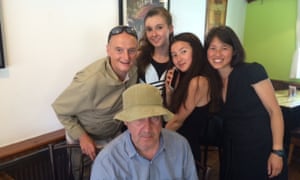


Stephen Mayers, front, a month before he died, with brother Andrew, niece Lola, daughter Sienna and wife Yasmin.


Stephen Mayers, front, a month before he died, with brother Andrew, niece Lola, daughter Sienna and wife Yasmin. Photograph: Andrew Mayers

With every regimen change there would be new flickerings of hope. Patience, the psychiatrists always cautioned – there is never a quick fix. If these drugs do work, it might be weeks, months, before the first inkling. But the lesson of the passing years was that the drugs didn’t work. The darkness engulfing Stephen became a tomb. And it engulfed us all – his wife, his daughters, his brothers, his parents.


So it seemed little short of a miracle when a “last resort” treatment penetrated that malign murk – indeed, blew it away. According to data collected by the Guardian, about 2,000 patients were given ECT in 2011. Thank God Stephen was one of them. A life that had been little more than an extended stupor, enlivened only by the gobbling of stodge, was transformed. The principled, generous, engaged soul re-emerged, as if from hibernation.


The addiction to discomfort eating, which brought only self-hatred, was ousted by a renewed passion for cycling. The old Stephen was reborn. As the writer and professor of clinical psychology Andrew Solomon has sagely noted, the opposite of depression is not happiness, but vitality.


My brother ended up getting four amazing, unexpected years of vitality: not a bad result from a seizure lasting less than a minute, triggered by an electrical current applied for up to eight seconds. All under general anaesthetic. No thrashing, no writhing. Perhaps a little toe-curling.


So if there is anything “crude and controversial” about ECT it’s the reaction, from some corners, to the revelation that these treatments are on the rise again. The portrayals that put this procedure on a par with lobotomy belong to a wholly different mental health era. We all know what happened to McMurphy at the hands of Nurse Ratched, but that was a fictional depiction, decades ago. When the Ramones sang Gimme Gimme Shock Treatment they made it sound like something only the truly twisted would consider. The experiences of Sylvia Plath – who described ECT as “a great jolt [that] drubbed me till I thought my bones would break and the sap fly out of me like a split plant” – or Janet Frame, the New Zealand poet incarcerated in asylums and subjected to 200 treatments by sadistic nurses, are brutal. But if anything they demonstrate how far mental healthcare has come.
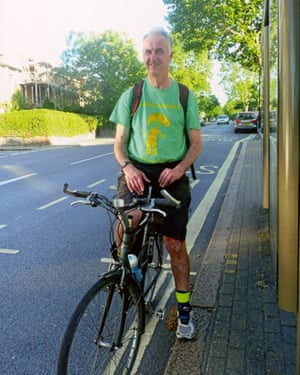


steve mayers


‘At his funeral one of his fellow cyclists gave an oration. ‘Steve Mayers, what a guy. Steve Mayers, what a guy. Steve Mayers what a guy.’’ Photograph: Yasmin Mayers

Last week the mental health charity Mind warned that the side-effects of ECT could include memory loss, difficulty concentrating and dizziness. In my brother’s case, these were the side-effects of not having ECT. But I still suspect that the ultimate side-effect of not having the procedure was his death last October.


The procedure had given him four precious years of vitality. In the middle of a cycle ride from Land’s End to John O’Groats – to raise money for the Maudsley hospital, in south London, where his treatment was carried out – his illness returned. The doctors knew – we all knew – that his best chance, perhaps his only chance, was another ECT course. But good medical practice meant that first they had to go through the rigmarole of drug regimes they knew would probably fail.


ECT time came agonisingly closer. His depression raged out of control – worse he said, than ever. And on top of this, even grimmer news: a persistent tremor was incipient Parkinson’s. The catastrophic thinking that was the hallmark of his depression now played a terminal role: the ECT miracle, those four years of vitality? A fluke, a trick, a story. Go under general anaesthetic? What happens if it leaves me conscious but paralysed? And anyway, what’s the point in being liberated from depression into a life ravaged by Parkinson’s?


The years of vitality were not to be repeated. But without ECT they would not have happened. At his funeral one of his fellow cyclists gave an oration. “Steve Mayers, what a guy. Steve Mayers, what a guy. Steve Mayers what a guy,” he intoned in broad Wolverhampton.


At the same time pictures flashed up on a big screen of Stephen on a bike. Forget Jack Nicholson, I thought. My big brother’s the positive face of ECT.


Drugs didn’t work for my brother. Electroconvulsive therapy did | Andrew Mayers

1 Nisan 2017 Cumartesi

DevoManc anniversary gives little cause for celebration | Andrew Harrop

NHS devolution in Greater Manchester turns one on Saturday, but it is not a birthday many will mark. When the Fabian Society questioned Mancunians for a new report, Local and National, they knew almost nothing about the initiative. Health devolution, it would seem, is happening behind closed doors, decentralisation without democracy.


That seems rather odd to those familiar with the mantras of localism. Devolution is meant to be about bringing power to the people by passing responsibilities to places where there is local transparency, scrutiny and public participation. That is the point of the new metro mayors being introduced in May.


So far, the experiment in Greater Manchester has a different rationale, and the new mayor will only be involved on the margins. It is an attempt to rewire local and regional health economies, by allowing local agencies to work out for themselves how to integrate and reconfigure. This is leading to Greater Manchester councils and the NHS establishing joint commissioning and joint bodies to deliver social care and community healthcare, and embarking on a major reorganisation of hospitals.


The powers and money devolved to the region are important, but so too is the political energy the buzz of devolution has brought to the local public sector. Local leaders are also seeking to align health decisions with their other responsibilities, to ensure each public service promotes good health. This is likely to be where the new mayor comes in, to knock heads together when the temptation is for different agencies to pursue their own paths.


So far this is a purely technocratic, private process. In the 12 months since Greater Manchester was handed new powers, NHS managers, council officials and elected members have been hard at work. But to residents, health devolution is invisible and local MPs and voluntary sector leaders are starting to grumble.


That’s a shame, because the Mancunians we brought together in discussion groups were pretty positive about their city region gaining NHS powers. Many of them saw it as “a coup for Greater Manchester” and all firmly believed that decisions about the city should be made there. They felt that local decision makers understood their communities better and would be easier to hold to account than “some faceless bureaucrat down south”.


But they were concerned about lack of transparency. They understood that experts needed to run complex services like the NHS, but they wanted to be better informed. While they didn’t think residents should call all the shots, one said it mattered that “local people are represented, not just local councils”. She wanted “local people somehow representing different parts of Greater Manchester, or different illnesses … people who’ve got really good local connections, and the skills to have some influence”.


This scepticism about councils was widely shared and will be a significant challenge to the development of health devolution, which is as much about councils getting involved as passing powers down from the centre. Some of the people we spoke to appreciated that councils should be involved in joining up services and preventing ill health. But many felt that councillors did not understand the health service and were poor at communicating with constituents.


They were even more doubtful about whether the new Greater Manchester mayor should influence NHS decisions, although the conversations took place many months before the post comes into being.


The endorsement for devolution we heard in Greater Manchester is not universal. When we spoke to a similar group in Newcastle, they were much more sceptical about the ability of local leaders to do better than national decision makers. They worried about what would happen if the money ran out and said they would rather “wait and see” than follow in Greater Manchester’s footsteps.


But across the country most people think the NHS would do better with more local power. In a Fabian Society/You Gov poll of adults in England, conducted in the autumn, 46% agreed with the statement “if healthcare was managed locally, services in my community would be better”, while only 18% preferred the alternative statement “healthcare is best when national leaders and organisations are in control”. This is the first evidence that there is latent appetite for health localism nationwide.


However, we also found it will only be possible to secure public support for NHS devolution if it happens in a way that avoids the dreaded “postcode lottery”. In the discussions in Greater Manchester and Newcastle, participants refused to accept inequality in standards or entitlements: “Everybody should be entitled to the same level of care, and the same services, regardless.”


And the results from our England-wide survey were just as emphatic. Just 17% preferred the statement “different communities have different needs so healthcare should be different in different places” while 71% chose the alternative, “healthcare should be the same across the country so nobody loses out”.


Localists have been warned. The public is ready to hear arguments that devolution and integration can improve local care. But without guarantees of national consistency, NHS devolution will fail the test of public opinion.


Join the Healthcare Professionals Network to read more pieces like this. And follow us on Twitter (@GdnHealthcare) to keep up with the latest healthcare news and views.


DevoManc anniversary gives little cause for celebration | Andrew Harrop

6 Ocak 2017 Cuma

Andrew Ward obituary

My fiance, Andrew Ward, who has died aged 38, was born with cystic fibrosis. The life expectancy of someone born today with CF is 41, but for Andy it was a triumph to reach adulthood. Throughout his life he defied the odds.


Andy was born and brought up in Leeds, the son of Valerie Bond (nee Ward), a cleaner, and Steven Westerman, a builder. He attended Whitecote primary, Bramley St Peter’s C of E middle and Benjamin Gott High schools, then left home to become a bar supervisor in Harvey’s wine bar, Leeds. After being retired through ill health in his early 20s, he returned to education and completed an access to higher education course in 2009.


He then embarked upon a full-time honours degree in media and popular culture at Leeds Beckett University. He viewed his condition as motivation for his drive, ambition and tenacity. He got up at 4.30 each morning to have time for nebulisers and physiotherapy before travelling to lectures and seminars. In July 2012 he graduated with first-class honours and a trio of awards: the best dissertation award, the Dean’s prize for outstanding student achievement in media and the Alan McGregor prize for outstanding work by a mature student. His dissertation tutor said: “It was an utter pleasure and privilege to teach Andrew and the highest mark I have ever awarded was to Andrew for his remarkable dissertation.”


Andy was awarded a scholarship for an MA course in cultural studies at the University of Leeds, where his intention was to build a module about disability and to become a lecturer. Unfortunately, he was unable to complete this because of declining health. He was placed on the transplant list and received six false calls for transplant before he died.


Andrew was witty, positive, funny and completely open and honest about all aspects of his life, his illness, organ donation and transplant. He was an avid reader of comics and a Star Wars fan. He enlightened and influenced many with his unique approach to life, appreciating each day as if it were his last.


In his own words: “I wouldn’t change a thing. Why? For better or worse, cystic fibrosis has given me so much. All I need to be happy is to wake up and feel relatively good and be surrounded by the people I love. CF has given me the ability to see life and all of its glory in a purer, more valued sense than most people do.”


He is survived by me and by two stepsons, Cameron and Morgan, by his parents and by his siblings, Sarah, Darren, Ben and Claire.


Andrew Ward obituary

15 Aralık 2016 Perşembe

Andrew Marr says new stroke treatment brings "subtle" improvements

Broadcaster Andrew Marr said a new treatment he received after having a stroke has resulted in subtle changes, but not the “dramatic improvements” he hoped for.


The BBC presenter, who had a stroke almost four years ago and remains semi-paralysed on his left side, travelled to Florida to try a new anti-inflammatory drug called Etanercept.


Marr, who had described the treatment – which involved having the drug injected into the spinal fluid while hanging upside down – as a Christmas present to himself, said he will now work to build on the small changes he has seen.


Marr said in a statement: “Although I haven’t seen the dramatic improvements that I hoped for, there have been subtle and useful changes which I am going to work on through physiotherapy and exercise over the coming months.


“It hasn’t been ‘pick up thy bed and walk’ but it hasn’t been nothing, either. We will tell the fuller story in a BBC documentary scheduled to be broadcast in January.”


Marr’s stroke in January 2013 left him spending two months in hospital and undergoing extensive physiotherapy to help him walk.


In a piece for the Spectator recently, talking about the new treatment, he detailed some of the effects of the stroke.


He wrote: “I’m not complaining too much: I can work, drink, see friends, paint, listen to music and irritate my children like before. I’m a lucky fellow.


“But I can’t run or cycle or swim, and I walk very unsteadily and slowly. I drop things and take ages to get dressed.”


Andrew Marr says new stroke treatment brings "subtle" improvements

24 Kasım 2016 Perşembe

Andrew Lansley chides chancellor lack of NHS and social care funding

The former health secretary Andrew Lansley has joined MPs from across the political spectrum in criticising the autumn statement for its lack of extra funding for the NHS and social care.


Lansley, who is now a peer, said he was disappointed there was not extra cash for the health service, which is under increasing pressure because adult social care budgets have been cut.


“I think the time is now to put some measure in place to try and help health and social care through the next two years,” he told the BBC’s World at One.


Asked whether he had been surprised at the lack of a funding announcement, he said: “Not being surprised doesn’t mean I’m not disappointed.”


He said the NHS and social care were facing an “incredibly difficult” period in the coming years.


“In the last parliament a challenging target was set and it was achieved,” he said. “The trouble is in this parliament, what has been asked of the National Health Service is not just more of the same but even more, and I’m afraid what was evident in the last financial year was when you take the level of support for the NHS below a 2% increase – to hospitals, that is – and the demand is rising at 4% there comes a point where they start to go in to significant deficit.


“The front-end loading of the money for the NHS in this parliament in to this financial year will probably mean those deficits come down this year, but without action next year and the year after those deficits will rise again and the accumulated deficit will make it very difficult for hospitals in particular to cope.”


He said the Better Care Fund, which brought together money from the NHS and social care, amounted to “robbing Peter to pay Paul”.


“That is not going to be remedied simply by taking money out of the NHS budget and passing it to local authorities,” he said.


Labour politicians led criticism of the chancellor, Philip Hammond, after his autumn statement for his failure to mention the NHS or social care in his fiscal document or to allocate any more money, instead prioritising infrastructure and projects such as more grammar schools.


Some Conservatives also voiced concern, including Sarah Wollaston, the chair of the health committee, who has said NHS and social care are at a tipping point. She and four other members of the health committee have also criticised the government’s claim to be putting an extra £10bn into the NHS by 2020.


“The continued use of the figure of £10bn for the additional health spending up to 2020-21 is not only incorrect, but risks giving a false impression that the NHS is awash with cash,” Wollaston and her four fellow committee members told the chancellor in a letter earlier this month.


Andrew Lansley chides chancellor lack of NHS and social care funding

11 Ağustos 2016 Perşembe

How the World Bank’s biggest critic became its president | Andrew Rice

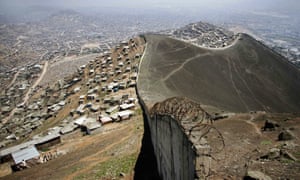
In a shanty town perched in the hilly outskirts of Lima, Peru, people were dying. It was 1994, and thousands of squatters – many of them rural migrants who had fled their country’s Maoist guerrilla insurgency – were crammed into unventilated hovels, living without basic sanitation. They faced outbreaks of cholera and other infectious diseases, but a government austerity program, which had slashed subsidised health care, forced many to forgo medical treatment they couldn’t afford. When food ran short, they formed ad hoc collectives to stave off starvation. A Catholic priest ministering to a parish in the slum went looking for help, and he found it in Jim Yong Kim, an idealistic Korean-American physician and anthropologist.


In his mid-30s and a recent graduate of Harvard Medical School, Kim had helped found Partners in Health, a non-profit organisation whose mission was to bring modern medicine to the world’s poor. The priest had been involved with the group in Boston, its home base, before serving in Peru, and he asked Kim to help him set up a clinic to aid his flock. No sooner had Kim arrived in Lima, however, than the priest contracted a drug-resistant form of tuberculosis and died.


Kim was devastated, and he thought he knew what to blame: the World Bank. Like many debt-ridden nations, Peru was going through “structural adjustment”, a period of lender-mandated inflation controls, privatisations and government cutbacks. President Alberto Fujimori had enacted strict policies, known collectively as “Fujishock”, that made him a darling of neoliberal economists. But Kim saw calamitous trickledown effects, including the tuberculosis epidemic that had claimed his friend and threatened to spread through the parish.


So Kim helped organise a conference in Lima that was staged like a teach-in. Hundreds of shanty town residents met development experts and vented their anger with the World Bank. “We talked about the privatisation of everything: profits and also suffering,” Kim recalls. “The argument we were trying to make is that investment in human beings should not be cast aside in the name of GDP growth.” Over the next half-decade, he would become a vociferous critic of the World Bank, even calling for its abolition. In a 2000 book, Dying for Growth, he was lead author of an essay attacking the “capriciousness” of international development policies. “The penalties for failure,” he concluded, “have been borne by the poor, the infirm and the vulnerable in poor countries that accepted the experts’ designs.”


Kim often tells this story today, with an air of playful irony, when he introduces himself – as the president of the World Bank. “I was actually out protesting and trying to shut down the World Bank,” Kim said one March afternoon, addressing a conference in Maryland’s National Harbor complex. “I’m very glad we lost that argument.”


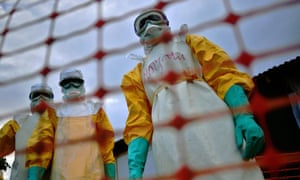
Medical staff treat people with Ebola in Kailahun, Sierra Leone, 2014.


Medical staff treat people with Ebola in Kailahun, Sierra Leone, 2014. Photograph: Carl de Souza/AFP/Getty Images

The line always gets a laugh, but Kim uses it to illustrate a broader story of evolution. As he dispenses billions of development dollars and tees off at golf outings with Barack Obama – the US president has confessed jealousy of his impressive five handicap – Kim is a long way from Peru. The institution he leads has changed too. Structural adjustment, for one, has been phased out, and Kim says the bank can be a force for good. Yet he believes it is only just awakening to its potential – and at a precarious moment.


Last year, the percentage of people living in extreme poverty dropped below 10% for the first time. That’s great news for the world, but it leaves the World Bank somewhat adrift. Many former dependents, such as India, have outgrown their reliance on financing. Others, namely China, have become lenders in their own right. “What is the relevance of the World Bank?” Kim asked me in a recent interview. “I think that is an entirely legitimate question.”


Kim believes he has the existential answers. During his four years at the bank’s monumental headquarters on H Street in Washington, he has reorganised the 15,000-strong workforce to reflect a shift from managing country portfolios to tackling regional and global crises. He has redirected large portions of the bank’s resources (it issued more than $ 61bn in loans and other forms of funding last year) toward goals that fall outside its traditional mandate of encouraging growth by financing infrastructure projects – stemming climate change, stopping Ebola, addressing the conditions driving the Syrian exodus.


Yet many bank employees see Kim’s ambitions as presumptuous, even reckless, and changes undertaken to revitalise a sluggish bureaucracy have shaken it. There have been protests and purges, and critics say Kim’s habit of enunciating grandiose aspirations comes with a tendency toward autocracy. The former bank foe now stands accused of being an invasive agent, inflicting his own form of shock therapy on his staff. “The wrong changes have been done badly,” says Lant Pritchett, a former World Bank economist.


Pritchett argues that, beyond issues of personality and style, Kim’s presidency has exposed a deep ideological rift between national development, which emphasises institution-building and growth, and what Pritchett terms “humane” development, or alleviating immediate suffering. Kim, however, sees no sharp distinction: he contends that humane development is national development – and if the bank persists in believing otherwise, it could be doomed to obsolescence.


The hardest thing to learn is mud-between-your-toes, on-the-ground development work


Jim Yong Kim


Kim likes to say that as a doctor with experience of treating the poor, his humanitarian outlook is his strongest qualification for his job – an opinion that probably vexes critics who point out that he knew little about lending before arriving at the bank. “Finance and macroeconomics are complicated, but you can actually learn them,” he says. “The hardest thing to learn is mud-between-your-toes, on-the-ground development work. You can’t learn that quickly. You can’t learn that through trips where you’re treated like a head of state. You have to have kind of done that before.”


Kim talks fast and he walks fast. Following him – a lithe, balding 56-year-old surrounded by a deferential, suited entourage – you can easily imagine him in a white coat as a physician making his rounds. He has a doctor’s diagnostic mindset too; he talks about ascertaining “the problem”, or what public-health experts call the “cause of the causes”. He thinks of poverty as an ailment and is trying to devise a “science of delivery”. It’s a philosophy built on a life-long interest in the intersection of science and humanities. Born in Seoul in 1959 to parents displaced by the Korean war, Kim emigrated to the US with his family when he was a child, eventually ending up in Muscatine, Iowa. His was one of two Asian families in the small town. His mother was an expert in Confucian philosophy, his father a dentist. Kim excelled at his studies while playing quarterback in high school. He attended Brown University in Providence, Rhode Island, where he studied human biology. His father wanted him to be a doctor, but he gravitated toward anthropology. Because Harvard let him pursue a medical degree and a PhD simultaneously, he landed there. Kim struck up a friendship with Paul Farmer, a fellow student, over shared interests in health and justice. In 1987, they formed Partners in Health.


The two came of age when the World Bank’s influence was arguably at its most powerful and controversial. Conceived along with the International Monetary Fund at the 1944 Bretton Woods conference, the bank was meant to rebuild Europe. However, it found its central mission as a source of startup capital for states emerging from the demise of colonial empires. The bank could borrow money cheaply in the global markets, thanks to the creditworthiness of its shareholders (the largest being the US government), then use that money to finance the prerequisites for economic growth – things such as roads, schools, hospitals and power plants. Structural adjustment came about in response to a series of debt crises that culminated in the 1980s. The Bretton Woods institutions agreed to bail out indebted developing states if they tightened their belts and submitted to painful fiscal reforms.


A wall dividing shanty towns and rich neighbourhoods in Lima, Peru, where Kim’s journey to the World Bank began.


A wall dividing shanty towns and rich neighbourhoods in Lima, Peru, where Kim’s journey to the World Bank began. Photograph: Oxfam/EPA

To Kim and Farmer, the moral flaw in the bank’s approach was that it imposed mandates with little concern for how cutting budgets might affect people’s health. They thought that “the problem” in global health was economic inequality, and in Haiti Partners in Health pioneered a grassroots methodology to tackle it: improve the lives of communities by training locals to provide medical care (thus creating jobs) and by expanding access to food, sanitation and other basic necessities. Though hardly insurgents – they were based at Harvard, after all – the friends passionately argued that policy discussions in Geneva and Washington needed to be informed by ground truths, delivered by the people living them.


Farmer’s impressive work ethic and pious demeanour made him famous – and the subject of Tracy Kidder’s acclaimed book Mountains Beyond Mountains – but Kim was the partner with systemic ambitions. “For Paul, the question is, ‘What does it take to solve the problem of giving the best care in the world to my patients?’” Kim says. “But he doesn’t spend all his time thinking about, ‘So how do you take that to scale in 188 countries?’” (Both men, who remain close friends, have won MacArthur Foundation “genius grants” for their work.)


Kim’s desire to shape policy landed him at the World Health Organisation (WHO) in 2003, overseeing its HIV/Aids work. The job required him to relocate to Geneva with his wife – a paediatrician he had met at Harvard – and a son who was just a toddler. (They now have two children, aged 16 and seven.) In the vigorously assertive style that would become his hallmark – going where he wants to go even if he’s not sure how to get there – Kim pledged to meet an audacious goal: treating three million people in the developing world with antiretroviral drugs by 2005, a more than sixfold increase over just two years. The strategy, in Kim’s own words, was, “Push, push, push.” The “three-by-five pledge,” as it was known, ended up being impossible to reach, and Kim publicly apologised for the failure on the BBC. But the world got there in 2007 – a direct result, Kim says, of the pledge’s impact on global-health policymaking: “You have to set a really difficult target and then have that really difficult target change the way you do your work.”


Kim left the WHO in 2006. After a stopover at Harvard, where he headed a centre for health and human rights, he was hired to be president of Dartmouth College in New Hampshire. He arrived in 2009, with little university management experience but characteristically high hopes. With the global recession at its zenith, however, Kim was forced to spend much of his time focused on saving Dartmouth’s endowment.


He hardly knew the difference between hedge funds and private equity, so a venture capitalist on the college’s board would drive up from Boston periodically to give him lessons, scribbling out basic financial concepts on a whiteboard or scratch paper. His tenure soon turned stormy as he proposed slashing $ 100m from the school’s budget and clashed with faculty members who complained about a lack of transparency. Joe Asch, a Dartmouth alumnus who writes for a widely read blog about the university, was highly critical of Kim. “He is a man who is very concerned about optics and not so concerned about follow-through,” Asch says now. “Everyone’s sense was that he was just there to punch his ticket.” Soon enough, a surprising opportunity arose.


The way Kim tells it, the call came out of the blue one Monday in March 2012. Timothy Geithner, another Dartmouth alumnus who was then the US treasury secretary, was on the line asking about Kim’s old nemesis. “Jim,” Geithner asked, “would you consider being president of the World Bank?”


When the government contacted him, Kim confesses, he had only the foggiest notion of how development finance worked. He had seen enough in his career, however, to know that running the bank would give him resources he scarcely could have imagined during his years of aid work. Instead of agonising over every drop of water in the budgetary bathtub, he could operate a global tap. “When I really saw what it meant to be a bank with a balance sheet, with a mission to end extreme poverty,” Kim says, “it’s like, wow.” His interest was bolstered by the bank’s adoption, partly in response to 1990s-era activists, of stringent “safeguards”, or lending rules intended to protect human rights and the environment in client states.


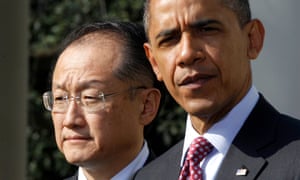
Barack Obama and Jim Yong Kim


Barack Obama nominates Kim for the presidency of the World Bank, Washington DC, 2012. Photograph: Charles Dharapak/AP

By custom, the World Bank had always been run by an American, nominated by the US president for a five-year term. But in 2012 there was a real international race for the post. Some emerging-market nations questioned deference to the United States, and finance experts from Nigeria and Colombia announced their candidacies. After considering political heavyweights such as Susan Rice, John Kerry and Hillary Clinton – who were all more interested in other jobs – Obama decided he needed an American he could present as an outsider to replace the outgoing president, Robert Zoellick, a colourless former Goldman Sachs banker and Republican trade negotiator. Clinton suggested Kim and “championed Jim as a candidate”, says Farmer. (Partners in Health works with the Clinton Foundation.)


Embedded within the dispute over superpower prerogatives was a larger anxiety about what role the World Bank should play in the 21st century. Extreme poverty had dropped from 37% in 1990 to just under 13% in 2012, so fewer countries needed the bank’s help. With interest rates at record lows, the states that needed aid had more options for borrowing cheap capital, often without paternalistic ethical dictates. New competitors, such as investment banks, were concerned mainly with profits, not safeguards. As a result, whereas the World Bank had once enjoyed a virtual monopoly on the development-finance market, by 2012 its lending represented only about 5% of aggregate private-capital flows to the developing world, according to Martin Ravallion, a Georgetown University economist. And while the bank possessed a wealth of data, technical expertise and analytical capabilities, it was hampered by red tape. One top executive kept a chart in her office illustrating the loan process, which looked like a tangle of spaghetti.


At Kim’s White House interview, Obama still needed some convincing that the global-health expert could take on the task of reinvigorating the bank. When asked what qualified him over candidates with backgrounds in finance, Kim cited Obama’s mother’s anthropology dissertation, about Indonesian artisans threatened by globalisation, to argue that there was no substitute for on-the-ground knowledge of economic policies’ impact. Two days later, Obama unveiled his pick, declaring that it was “time for a development professional to lead the world’s largest development agency”.


Kim campaigned for the job with the zeal of a convert. In an interview with the New York Times, he praised the fact that, unlike in the 1990s, “now the notion of pro-poor development is at the core of the World Bank”. He also embarked on an international “listening tour” to meet heads of state and finance ministers, gathering ideas to shape his priorities in office. Because votes on the bank’s board are apportioned according to shareholding, the US holds the greatest sway, and Obama’s candidate was easily elected. Kim took office in July 2012, with plans to eradicate extreme poverty. Farmer cites a motto carved at the entry to the World Bank headquarters – “Our dream is a world free of poverty” – that activists such as Kim once sniggered at. “Jim said, ‘Let’s change it from a dream to a plan, and then we don’t have to mock it.’”


Kim still had to win over another powerful constituency: his staff. Bank experts consider themselves an elite fraternity. Presidents and their mission statements may come and go, but the institutional culture remains largely impervious. “The bank staff,” says Jim Adams, a former senior manager, “has never fully accepted the governance.” When Robert McNamara expanded the bank’s mission in the late 1960s, doing things such as sending helicopters to spray the African black fly larvae that spread river blindness, many staffers were “deeply distressed to see the institution ‘running off in all directions’”, according to a history published in 1973. When James Wolfensohn arrived in the mid-1990s with plans to move away from structural adjustment and remake the bank like a consulting firm, employees aired their gripes in the press. “Shake-up or cock-up?” asked an Economist headline. Paul Wolfowitz, whose presidency was marred by leaks, was pushed out in 2007 after accusations of cronyism resulted in a damning internal investigation.


Recognising this fraught history, Kim went on a second listening tour: he met representatives of every bank department and obtained what he describes, in anthropologist-speak, as “almost a formal ethnography” of the place. What he lacked in economic knowledge, he made up for in charm. “Dr Kim is personable, Dr Kim is articulate, Dr Kim looks very moved by what he has to say,” says Paul Cadario, a former bank executive who is now a professor at the University of Toronto.


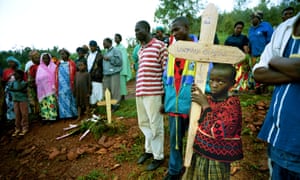
The funeral of a woman who died of Aids on the outskirts of Kigali, Rwanda.


The funeral of a woman who died of Aids on the outskirts of Kigali, Rwanda. Photograph: Sean Smith for the Guardian

The initial goodwill, however, vanished when Kim announced his own structural adjustment: a top-to-bottom reorganisation of the bank. It wasn’t so much the idea of change that riled up the staff. Even before Kim took office, respected voices were calling for a shakeup. In 2012, a group of bank alumni published a report criticising an “archaic management structure”; low morale was causing staff turnover, and there was an overreliance on consultants, promotion on the basis of nationality, and a “Balkanisation of expertise”. Where Kim went awry, opponents say, was in imposing his will without first garnering political support. “One famous statement is that the World Bank is a big village,” says Cadario, now a Kim critic. “And if you live in a village, it is a really bad idea to have enemies.”


The bank had been designed around the idea that local needs, assessed by staff assigned to particular countries and regions, should dictate funding; cooperation across geographical lines required internal wrangling over resources. So Kim decided to dismantle existing networks. He brought in the management consulting firm McKinsey & Co, which recommended regrouping the staff into 14 “global practices”, each of which would focus on a policy area, such as trade, agriculture or water. Kim hired outsiders to lead some departments and pushed out several formerly powerful officials with little explanation. To symbolise that he was knocking down old walls, he had a palatial, wood-panelled space on the World Bank’s executive floor retrofitted as a Silicon Valley-style open-plan office, where he could work alongside his top staff.


Kim also announced that he would cut $ 400m in administrative expenses, and eliminate about 500 jobs – a necessary measure, he said, because low interest rates were cutting into the bank’s profits. Kim says he “made a very conscious decision to let anyone who wanted… air their grievances.” His opponents detected no such tolerance, however, and their criticisms turned ad hominem. Around Halloween in 2014, a satirical newsletter circulated among the staff, depicting Kim as Dr Frankenstein: “Taking random pieces from dead change management theories,” it read, “he and his band of external consultants cobble together an unholy creature resembling no development bank ever seen before.” Anonymous fliers attacking Kim also began to appear around bank headquarters.


Kim portrayed internal dissent as a petty reaction to perks such as travel per diems being cut. “There’s grumbling about parking and there’s grumbling about breakfast,” he told the Economist. Meanwhile, bank staffers whispered about imperial indulgences on Kim’s part, such as chartering a private jet. (Kim claims this is a longstanding practice among bank presidents, which he only uses when there are no other options.)


A French country officer named Fabrice Houdart emerged as a lead dissenter, broadcasting his frustrations with Kim in a blog on the World Bank’s intranet. In one post, he questioned whether “a frantic race to show savings… might lead to irreversible long-term damages to the institution.” (This being the World Bank, his sedition was often illustrated with charts and statistics.) The staff went into open rebellion after Houdart revealed that Bertrand Badré, the chief financial officer, whom Kim had hired and who was in charge of cutting budgets, had received a nearly $ 100,000 bonus on top of his $ 379,000 salary. Kim addressed a raucous town hall meeting in October 2014, where he told furious staffers, “I am just as tired of the change process as all of you are.”


A few months later, Houdart was demoted after being investigated for leaking a privileged document. The alleged disclosure was unrelated to Kim’s reorganisation – it had to do with Houdart’s human rights advocacy, for which he was well known at the bank – and Kim says the investigation began before Houdart’s denunciations of his presidency. Critics, however, portray it as retaliatory. “Fabrice has become a folk hero,” Cadario says, “because he was brave enough to say what many of the people within the bank are thinking.” (Houdart is currently disputing his demotion before an internal administrative tribunal.)


In the heat of the staff revolt, Kim was devoting attention to a very different crisis: Ebola


“It’s never fun when large parts of the organisation are criticising you personally,” Kim admits. Yet he maintains that his tough decisions were necessary. “In order to do a real change, you have to put jobs at risk,” he says. “And completely understandably, people hate that.”


In the heat of the staff revolt, Kim was devoting attention to a very different crisis: Ebola. In contrast with the bank’s historically cautious, analytical approach, Kim was pushing it to become more involved in emergency response. He committed $ 400m to confront the epidemic immediately, a quarter of which he pushed out in just nine days. He dispatched bank employees to afflicted west African countries and reproached the head of the WHO for the organisation’s lack of urgency. “Rather than being tied up in bureaucracy, or saying, ‘We don’t do those things,’ Jim is saying that if poor people’s lives are at risk… then it is our business,” says Tim Evans, whom Kim hired to run the bank’s new global practice for health.


Some bank veterans disagreed, vehemently. Nearly two years on, they still worry that in trying to save the day, Kim runs the risk of diverting the bank from its distinct mission. “Pandemic response is important – but it’s not the WHO, it’s the World Bank,” says Jean-Louis Sarbib, a former senior vice-president who now runs a nonprofit development consultancy. “I don’t think he understands the World Bank is not a very large NGO.” Referencing Kim’s work with Partners in Health, Sarbib adds, “The work of the World Bank is to create a system so that he doesn’t need to come and create a clinic in Haiti.”


In reply to this critique, Kim likes to cite a study co-written by a former World Bank economist, Larry Summers, that found that 24% of full-income growth in developing countries between 2000 and 2011 was attributable to improved public health. Put simply, Kim says, pandemics and other health deficits represent enormous threats to economic development, so they should be the World Bank’s business. The same goes for climate change, which the bank is fighting by funding a UN initiative to expand sustainable energy. As for violent conflicts, rather than waiting until the shooting has stopped and painstakingly preparing a post-conflict assessment – as the bank has done in the past – Kim wants to risk more capital in insecure zones.


“We… bought into this notion that development is something that happens after the humanitarian crisis is over,” Kim said at a recent event called the Fragility Forum, where he sat next to representatives of various aid groups and the president of the Central African Republic in the World Bank’s sun-soaked atrium. “We are no longer thinking that way.”


After the forum, amid a whirlwind day of meetings and speeches, Kim stopped at a hotel cafe with me to unwind for a few minutes. As a counterweight to his life’s demands, he practices Korean Zen-style meditation, but he also seems to blow off steam by brainstorming aloud. Goals and promises came pouring out of him like a gusher. Besides eliminating extreme poverty, which he has now promised will be done by 2030, Kim wants to raise incomes among the bottom 40% of the population in every country. He also wants to achieve universal access to banking services by 2020.


Long past our allotted interview time, Kim told me he had just one more idea: “Another huge issue that I want to bring to the table is childhood stunting.” At the Davos World Economic Forum this year, he explained, everyone was chattering about a “fourth industrial revolution”, which will centre on artificial intelligence, robotics and other technological leaps. But Kim thinks whole countries are starting out with a brainpower deficit because of childhood malnutrition. “These kids have fewer – literally fewer – neuronal connections than their non-stunted classmates,” he said. “For every inch that you’re below the average height, you lose 2% of your income.”


“This is fundamentally an economic issue,” he continued. “We need to invest in grey-matter infrastructure. Neuronal infrastructure is quite possibly going to be the most important infrastructure.”


To World Bank traditionalists, addressing nutrition is an example of the sort of mission creep that makes Kim so maddening. Despite its name and capital, the bank can’t be expected to solve all the world’s humanitarian problems. (“We are not the UN,” is an informal mantra among some staffers.) Poor countries may well prefer the bank to stick to gritty infrastructural necessities, even if Kim and his supporters have splashier goals. “The interests of its rich-country constituencies and its poor-country borrowers are diverging,” Pritchett says. “It’s like the bank has a foot on two boats. Sooner or later, it’s going to have to jump on one boat or the other, or fall in the water. So far, Jim Kim is just doing the splits.”


The World Bank headquarters in Washington.


The World Bank headquarters in Washington. Photograph: Lauren Burke/AP

Kim’s defenders insist the bank hasn’t abandoned its core business. In fact, as private investment in emerging markets has contracted recently, due to instability in once-booming economies such as Brazil, countries have found more reasons to turn to the World Bank. Its primary lending unit committed $ 29.7bn in loans this fiscal year, nearly doubling the amount from four years earlier. “There is so much need in the world that I’m not worried we’re going to run out of projects to finance,” Kim says. He also hopes the worst of the tumult within the bank is over. A few elements of his reorganisation have been scaled back; after the new administrative structure proved unwieldy, the 14 global practices were regrouped into three divisions. Some of his more polarising hires have also left.


A five-year term, Kim says, is hardly sufficient to implement his entire agenda, and he has conveyed his desire to be reappointed in 2017. Though internal controversies have been damaging, and America’s domination of the bank remains a source of tension, the next US president (quite possibly Kim’s friend Hillary Clinton) will have a strong say in the matter. If he keeps his job, Kim wants to show that the World Bank can serve as a link between great powers and small ones, between economics and aid work – retaining its influence as old rules and boundaries are erased and new ones are scribbled into place.


Kim thinks he can succeed, so long as he keeps one foot rooted in his experiences as a doctor with mud between his toes. But he also wants to share his revelations about capital with his old comrades. “I really feel a responsibility to have this conversation with development actors who, like me 10 years ago, didn’t really understand the power of leverage,” Kim says with a guileless air.


“God,” he adds, “it is just such a powerful tool.”


This article first appeared in Foreign Policy magazine.


Follow the Long Read on Twitter at @gdnlongread, or sign up to the long read weekly email here.


How the World Bank’s biggest critic became its president | Andrew Rice

18 Temmuz 2014 Cuma

Andrew Lloyd Webber: "I went by way of a second of deep depression - I in fact got the kinds for Dignitas"

The fulfilment of Jean Lloyd Webber’s fiercest want, that her kids should attain all the good results of which they had been capable, is reflected in her older son’s domain. We meet in his London house, a palatial residence in which a modern day elevator whisks guests between floors of huge rooms adorned with very good furnishings and fine art.


Lord Lloyd-Webber (he acquired a hyphen with his peerage) owns a London theatre empire, a cellar of vintage Burgundy, a nation mansion and a assortment of Victorian art so magnificent that he strategies to endow a gallery to house it right after his death. And but, at 66, he combines an unaffected method with the insatiable appetite for work instilled in him by his mother. Jean Lloyd Webber, far from searching for luxury, lived a daily life of Spartan thrift. Until her last days, she would cycle or stroll to give her music lessons and furnished her flat with the barest necessities, refusing all offers to support from her older son.


“When I very first manufactured some income out of Jesus Christ Superstar, I inspected her fridge and stated: ‘Mum, this issue ought to be condemned. I’d like to purchase you a new a single.’ She wouldn’t even accept that.” Careless of material comforts, she had “an enormous work ethic. She at first wished me to be a performer like my brother, but anyone who heard my French horn practice realised that was not to be my destiny.”


When Andrew expressed an curiosity in history and architecture instead, she supported him to the extent of decreeing – to the dismay of her husband William, director of the London School of Music – that household trips have to be geared to her older son’s new passion. “We spent one vacation staying by a steelworks due to the fact I had explained I wanted to pay a visit to [the nearby] Margam Abbey.”


The close Lloyd Webber household was shaken when Andrew’s father died, unexpectedly, at 67. Soon afterwards, Jean Lloyd Webber, grief-stricken by her reduction, developed breast cancer. “My mom was a fighter, but she did not feel in traditional medication. She became far more and more ill, refusing any remedy, at a time when I essential her a lot.” Her decline coincided with the breakdown of his marriage to the singer, Sarah Brightman, and the start off of his relationship with his wife, Madeleine.


At first Jean was resistant to her future daughter-in-law, an completed horsewoman, believing her, mistakenly, to be in favour of the bloodsports she abhorred. “On one particular event she turned up for lunch with close friends carrying anti-hunting placards. But she came to adore and adore Madeleine, and she was a wonderful assistance to both of us.


“Still she stored saying that she couldn’t carry on any much more due to the fact she was a burden on us. We advised her she was anything at all but she was the rock from which we could go forward. Then she said she did not want to be a burden on Julian who, like John Lill [the concert pianist, whom she taken care of as an adopted family members member], lived in the exact same block of flats as she did.


“I was away, doing work round the world. I couldn’t be with her all the time. And frankly, in the state she was in, I fear that a couple of medical professionals would have concluded that, if she wished to destroy herself, they would agree.”


Her conviction that she would be a roadblock to her sons’ fantastic talents, ebbed only following she – a stranger to the planet of musicals – began to understand how she was a helpmate, not a hindrance, in a collaborative business. And so, in the final phase of her life, she grew closer to her older child than they had ever been. When death ultimately came, Andrew was operating in Los Angeles. She, the selfless promoter of her children’s successes, would have wished it no other way.


Long right after her tiny funeral was over, mortality continued to stalk her son’s existence. The themes of adore and death, which run like a fugue through the functions of Andrew Lloyd Webber, were soon to turn out to be individual. After a schedule blood check, he discovered that he had prostate cancer. “It was the most virulent kind, but I was quite fortunate. I didn’t consider I was going to die – just that I should have the wretched [cancer] removed so that I could get on with my occupation.”


Close to two years in the past, with his cancer cured, he began to suffer from a ache in one leg. A method to ease his discomfort and a subsequent back operation led to a sequence of interventions in which he had 14 procedures below general anaesthetic. By last summertime, Andrew Lloyd Webber – who had so a lot in common with his mom – identified that he also shared her wish to die.


“There have been days when I believed that I would do something to get out of this. I adore my perform, and I imagined that if I could not do that, then I had nothing more. I went through a moment of deep depression – that awful moment when you consider that you must find a way out. I truly got the forms for Dignitas. With hindsight, it was stupid and ridiculous, but I couldn’t feel what to do.


“I received through the demonstrate I was doing work on, but it was murder. I was on every type of painkiller there is… I couldn’t think what to do. In the finish, I threw away the kinds.” His journey back from despair was assisted by a chiropractor who alleviated his signs and symptoms. Nevertheless he says that his back condition indicates that “a sword of Damocles hangs more than me… and I can understand what serious pain means”.


Possessing watched his mom navigate the divide in between fulfilment and a daily life that has become intolerable, Lord Lloyd-Webber walked that lonely pathway for himself. These experiences have rendered him one particular of the most thoughtful critics of Lord Falconer’s Bill, the initial try to legalise assisted dying for the terminally ill given that 2006.


He will not communicate in today’s debate, but he will listen to the arguments innovative with respect and some humility. Unlike the strident advocates on each sides, Lord Lloyd-Webber – who has stared at death a lot more closely than most – nevertheless wrestles with a single of the best questions of the age.


“If individuals get to a point where their lives are so impossible, I would agree with the Bill. What concerns me, and I suspect many other individuals, is what floodgates would [this measure] open? Does it generate a culture in which older people are a burden? In 20 years’ time, signing off on the deaths of outdated folks may well not be taken as seriously as it is now. I am entirely uncertain.”


That admission must not recommend any weakness. The doubt that he is trustworthy adequate to countenance is mirrored in the health-related occupation, the place views differ, and in a Church riven by schism. Even though Justin Welby, the Archbishop of Canterbury has come out towards the measure, his predecessor Lord Carey supports the Bill, persuaded by “the actuality of needless suffering”.


Meanwhile Archbishop Desmond Tutu, 1 of the biggest churchmen in the globe, has asserted that he sees no sanctity in struggling. Lord Lloyd-Webber, who has watched a youthful acquaintance dying of motor-neurone ailment, does not dissent from the argument that it could be a lot more compassionate to allow some individuals to die. “I wonder if the principle of the Bill is not a excellent a single but that it requirements an amendment [to target on whether or not] people are on mechanical daily life assistance or in such intense discomfort that absolutely nothing can be accomplished.”


For many reasons, Lord Lloyd-Webber has studied the issues of daily life and death with forensic precision – not just because of the struggling he has witnessed and endured but because a wealthy man’s legacy demands considerably forethought.


His fortune will not go to his 5 children for, like his mother, he expects the next generation to make their personal way. Instead the beneficiary will be his Arts Foundation, whose operate consists of teaching music to state college youngsters who may possibly otherwise miss the chance to fulfil their dreams. Individuals plans in area, he has no intention of lessening his personal workload. With his musical Cats due back in London and a present to open on Broadway subsequent year, his life seems as settled as it has ever been.


Today, however, he will focus on the lives and on the deaths of others. A pragmatist, he is grateful to Lord Falconer for bringing a Bill which will allow a significantly-needed debate. As he says regularly, if the arguments in favour prove sufficiently compelling, then he reserves the right to modify his thoughts.


This kind of a alter of heart does not seem to be probably. As he says: “The danger for me lies in a situation like my mother’s.” When the claims and counter-claims are aired right now, one memory will lodge in his mind. The picture he can not shift is that of an elderly instructor particular that she is dying, but established to impart the present of music that will live on prolonged following she is gone.


Andrew Lloyd Webber: "I went by way of a second of deep depression - I in fact got the kinds for Dignitas"