Travel etiketine sahip kayıtlar gösteriliyor. Tüm kayıtları göster

2 Nisan 2017 Pazar

How space travel leads to cognitive shifts in awareness

The two people who have paid for a private moon mission next year will undergo a psychological as well as a physical journey. There’s a fundamental shift in human perspective offered by space flight. This radical shift in viewpoint – sometimes called ‘the overview effect’ – the cognitive shift in awareness that astronauts talk about when they look at Earth from orbit. The idea of how we view ourselves in the world was established in the 1980s with Professor Richard Morris’s water maze experiment. The maze consists of a tank with submerged platforms that rats seek out to rest on. By manipulating the landmarks we can study how the rat navigates and creates internal spatial maps.


What’s much less frequently studied in rats or people is the moment when you escape from the world in which you’ve been contained, and see a familiar landmark from a radically different perspective.


Astronauts report a deep change in their sense of themselves and the world. This is something neuroscientists need to engage in – we’d better start saving now.


Dr Daniel Glaser is director of Science Gallery at King’s College London


How space travel leads to cognitive shifts in awareness

3 Şubat 2017 Cuma

Healthcare and Trump"s travel ban: data shows success of doctors trained abroad

American patients treated by internationally educated doctors have slightly better outcomes than those treated by their American-educated counterparts, a new study has found, as Donald Trump’s ban on travel from seven Muslim-majority countries is expected to stop some immigrant physicians from coming to the United States.


But that is not because American medical schools are falling short, the authors of the report in the British Medical Journal said.


“We’re not saying medical school in the US is not doing a good job, it’s only about selection,” said Yusuke Tsugawa, a research associate at Harvard University’s TH Chan School of Public Health and lead author of the study. Self-selection, to be more specific.


“They are highly motivated,” Tsugawa said of doctors educated outside the US. “They are not random doctors from their home country, they are the best doctors.”


Trump’s executive order banned people from entering the US from seven countries – Iran, Iraq, Libya, Somalia, Sudan, Syria, and Yemen – for 120 days following the order. The order also stopped the Syrian refugee resettlement program indefinitely.


Researchers looked at 1.2m hospital admissions of patients on Medicare, the American public health insurance program for the elderly, who were treated by more than 44,000 physicians. The rate at which patients died or were readmitted was used to measure patient “outcomes”.


Despite the study’s findings that internationally educated doctors were slightly more likely to treat a sicker population – people with more chronic diseases, as well as more likely to be from racial minorities and more likely to be low-income – outcomes were slightly better than among their American-educated peers. That held when comparing doctors in the same hospitals. Patients treated by both international and US graduates were about the same age on average, approximately 80 years old.


“Our findings indicate that current standards of selecting international medical graduates for practice in the US are functioning well for at least one important dimension: inpatient outcomes,” researchers wrote.


By the numbers, researchers found that when patients were treated by internationally educated doctors, they died at a rate of 11.2%, versus 11.6% for US-educated physicians, in comparisons of doctors working in the same hospitals.


Readmissions showed the same trend. Patients returned to the hospital within 30 days at a rate of 15.4% for internationally educated doctors, and 15.5% for US educated doctors, when comparing doctors in the same hospital.


Tsugawa said he and his colleagues undertook the study because other research showed there “was a bias against foreign medical graduates, both from colleagues and patients, so they are thinking quality of care might be worse than US medical graduates.


“Given that 25% of the doctors in the US – or in the UK as well – are foreign medical graduates, we want to make sure they are providingquality medical care,” he said. Tsugawa said he expected to focus on the race of doctors in his next study.


“To do the residency program in the US, the bar is really high; only 50% of the candidates can get the slot in the residency program,” said Tsugawa. “There are multiple ways they are highly selected, and highly motivated, and that is the reason they have better outcomes.


“Those who come to the US are the brightest and the best,” he said.


About one quarter of physicians working in the US were educated abroad, multiple studies show. But many workforce experts believe that even if the immigration status of hundreds weren’t suddenly in question, there still would not be enough doctors coming to the US to make up shortages faced by ageing and rural Americans.


For example, the largely rural Alaska already needs an additional 60 doctors per year, the Atlantic reports. And a 2015 New England Journal of Medicine article argued that programs that brought 8,000 doctors to the US each year would fall far short of the primary care needs of the country’s ageing population.


Research from 2013 showed that 299 doctors from Iran, Iraq, Libya, Sudan, or Syria applied to train in the US as residents that year, with an acceptance rate of just 40%, a New England Journal of Medicine article reported.


Syria is also one of the top exporters of physicians to the US in another program that places doctors in high-need rural and inner-city areas, the J-1 visa program. In 2014, 165 Syrian doctors moved to the US under the program, according to the same article. If the ban continues beyond 120 days the number of doctors – and therefore patients – affected could escalate very quickly.


“Physicians with J-1 waivers are filling clinical jobs in areas of need,” the NEJM authors wrote. “An executive order that has not taken into account the widespread ramifications may lead to further shortages of physicians in areas that are already in dire need.”


Healthcare and Trump"s travel ban: data shows success of doctors trained abroad

30 Kasım 2016 Çarşamba

Ireland compensates woman forced to travel to Britain for an abortion

Ireland has for the first time in its history compensated a woman for the trauma caused by forcing her to travel to Britain for an abortion.


Pro-choice campaigners in the Republic said the Fine Gael-led minority government’s agreement on Wednesday to pay compensation to Amanda Mellet was highly significant.


Mellet and her husband James took their case all the way to the UN’s Human Rights Committee after the couple were forced to obtain a termination of her pregnancy in England.


In 2013 Amanda Mellet became the first of three Irish women to formally ask the UN to denounce the prohibition on abortions in cases of fatal foetal abnormalities as “cruel and inhumane”.


Under Ireland’s strict anti-abortion laws, if Mellet and the other two women had remained in the Republic they would have been forced to give birth to babies who would be born dead.


Campaigners arguing for a referendum to repeal an amendment to the Irish Constitution that gives full citizenship rights to the embryo after conception welcomed today’s decision by the Dublin government.


Ailbhe Smyth, convenor of the Coalition to Repeal the Eighth Amendment and a long-time campaigner on reproductive rights, said: “To the best of my knowledge, this is the first time ever that the Irish government has compensated a woman for having to leave the country for an abortion. This is long overdue acknowledgement of the profound denial of women’s right to autonomy in this country.”


“The government must immediately ensure no other woman suffers similar human rights violations. The eighth amendment is a profound source of discrimination and national shame for Ireland. It is simply not good enough to pass the book to the Citizen’s Assembly and not make any commitment to undertake the necessary constitutional and legislative reforms to end, once and for all, Ireland’s violation of international human rights law and obligations under human rights conventions and treaties.


“We cannot, as a country, continue to oversee the violation of women’s human rights. We’re saying that women deserve better and Ireland can do much better.”


In June the UNHCR ruled that by forcing Amanda Mellet to leave Ireland for an abortion in Britain, the Irish state had inflicted trauma and distress on her.


Irish Labour party senator and long term campaigner for abortion reform in Ireland Ivana Bacik said the government’s decision to accept the UNHCR ruling was a crucial step towards changing Ireland’s abortion regime.


The Trinity College Dublin law lecturer said: “The UN Human Rights Committee’s ruling in June of this year constituted an important acknowledgement that the highly restrictive Irish law on abortion violates the human rights of women. The government’s acceptance of the ruling through the announcement of the compensation award, and Minister Harris’s sincerity in apologising to Ms Mellet, are both welcome.


“But we need now to see official recognition that thousands of other women are being denied their basic human rights through being denied access to legal abortion in Ireland, due to the eighth amendment to the constitution. The UNHCR ruling in favour of Ms Mellet made clear the need for us to hold a referendum to repeal the eighth amendment.”


Ireland compensates woman forced to travel to Britain for an abortion

21 Eylül 2016 Çarşamba

5 Lifelong Benefits of Family Travel

Family Travel Has Lifelong Benefits for Children


Traveling with children can be a daunting idea for many families. This is especially true for those who have young children. When young children are involved there seems to be a larger potential for things to go wrong. Planning for family travel and packing for the trip is even harder when infants and toddlers are tagging along.


Despite these difficulties, there are many reasons why you should continue to travel after having children. Experts agree that travel is beneficial for adults and kids alike. Here are 5 lifelong benefits of family travel.


Exposure to Different Cultures


In today’s digital age, one of the greatest things that we can give our children is preparation for how to thrive in this new interconnected world of ours. How can you do this? By exposing your children to different cultures! By teaching your children to appreciate different ways of living, you set them up for success in the global world. A person that is able to communicate and interact with people across different cultures is a person that is more prepared for success in life.


Limitig Screen Time


Traveling as a family means time spent together that may not be possible during non-vacation time. Studies show that limiting screen time for children is important for their growth and development. The American Academy of Pediatrics (AAP) recommends the preschoolers use screens no more than 1 to 2 hours per day. Family travel is a great way to show your children just how much is possible without the use of computers, tablets or smart phones. With so much to see and do in the world, your children will discover new ways to learn and explore.


Creating Memories


Making memories as a family is important for many reasons. For parents and children alike, memories of time spent together on family vacations can be some of the best and fondest memories created. Traveling with your family gives you the opportunity to step out of your comfort zone and do things out of the ordinary. Whether it’s taking a balloon flight, white water rafting, or something as tranquil as a visit to a national park, these memories that you create will last a lifetime.


Travel is Educational


Seeing the world firsthand provides an education that is completely different than the education that children get in school. Travel teaches children about the economy, world politics, global history, geography, and sociology in an hands-on way that no classroom education can even come close to matching. The history of the world is amazing. There are so many places in the world rich in history that you can explore as a family. Wherever you choose to travel, the possibilities to make things teaching moments is endless.


Travel Challenges You


Going about your daily routine tends to become just that, routine. It’s never too late to break away from the ordinary and do something extraordinary. Make this the year that you take that family vacation and do something that inspires you. Travel is full of moments of joy as well as challenges. By overcoming the challenges, you can give yourself some of the greatest joys of all. How better to spend time with your family?


5 Lifelong Benefits of Family Travel

29 Temmuz 2016 Cuma

Heart disease, depression and blindness – the hazards of deep space travel

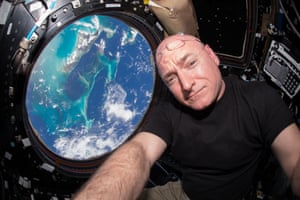
Upon his return last March from a record-breaking 340-day stay aboard the International Space Station (ISS), Nasa astronaut Scott Kelly was most excited about plunging into the swimming pool in his Houston, Texas backyard.


Kelly, who has spent more cumulative time in space than any other American, spent hours harnessed to a treadmill each day to try to keep his muscles and bones from atrophying. He also endured radiation exposure, nausea and vision problems while living on the ISS for nearly a year.


He has served as a guinea pig of sorts for scientists who are investigating the long term effects of zero-gravity environments on the human body. With Nasa planning a manned mission to Mars in the 2030s – and private outfits like Mars One advertising a colony on the planet in the next two decades – researchers want to know how to best offset the health hazards of a journey that will take two-and-a-half years. These dangers include everything from depression to loss of sight and heart disease.


American astronaut Scott Kelly returned to Earth on 3 March, 2016, after completing 522 days living in space over four missions.


American astronaut Scott Kelly returned to Earth on 3 March, 2016, after completing 522 days living in space over four missions. Photograph: NASA

“The biggest barrier to missions like that are biomedical,” says Leroy Chiao, a retired astronaut who has logged four space flights, including a six-month stint aboard the ISS as commander of Nasa’s Expedition 10. “It’s, how are you going to keep astronauts healthy in that long period of time?”


The biggest barrier to missions like that are biomedical.


Even on a short shuttle mission lasting a few weeks, microgravity causes big physiological changes. “You notice them immediately once you get into space,” Chiao says. While they adapt to the weightless environment, astronauts’ sensorimotor skills and balance are immediately thrown off. The inner ear senses that the body is moving, the eyes see that it isn’t, and the brain is confused by these contradictory signals.


“To me, it feels like you just did a forward roll,” says Chiao of the resulting dizziness and nausea, which can last for days.


Not only that, but the bodily fluids that gravity normally pushes down into the lower extremities will float up to the neck and head, causing headaches and uncomfortable pressure, potentially leading to vision problems due to swelling of the optic nerve.


Upon further study, scientists have discovered that the extended pressure inside the skull has flattened the backs of some astronauts’ eyeballs, making them more farsighted, an effect that is exacerbated by lengthy trips in space. This could have further serious implications for space travelers’ sight.


Related: Can Mars One colonise the red planet?


“Nobody’s gone two years with exposure to this, and the concern is that we’d have loss of vision,” says Dohit Donoviel, director of the Biomedical Innovation Laboratory at the National Space Biomedical Research Institute (NSBRI), which partners with Nasa and Baylor College of Medicine to study human health in space. “That is catastrophic for an astronaut.”


No astronaut has ever gone blind from space travel, and while about 70% of them do experience vision changes while in flight – more often men than women – astronauts typically bring glasses on their space flights to help them do their jobs.


Still, the current remedy for redistributing fluids – a pair of suction pants made by the Russians called the Chibis suit, which essentially vacuums the fluids back down into the lower body – is “incredibly uncomfortable”, according to Donoviel , and can only be worn for an hour or two.


If I die on Mars: meet the people on a mission to be first on the red planet … and stay there.

The NSBRI is testing a number of solutions, including a garment under development with Under Armour that astronauts would wear while they sleep.


Another big concern about prolonged space travel is its effect on the heart. Much like the muscles and bones that are depleted because they no longer need to work to fight gravity, the heart gets used to exerting a far lighter effort to keep blood pumping throughout the body.


Astronauts traveling to Mars, which has about one-third the gravity of Earth, will have to keep up extensive cardiovascular exercise every day in order for their hearts to be able to handle the planet.


No human has been exposed to the level of radiation that it would take to make that trip to Mars.


“It’s kind of like you’re lying still in bed,” says Chiao of the effect of weightlessness on the body and the circulatory system. That’s why Nasa performs bed rest studies in order to see how the body is affected long term.


When paired with radiation exposure, the prognosis doesn’t look good. A recent study of the 24 astronauts who left Earth’s low orbit on Nasa’s Apollo missions in the 60s and 70s showed that they were five times more likely to die of heart disease than the astronauts who didn’t enter deep space – a result scientists think may have been caused by excessive radiation exposure.


Astronauts on missions at the ISS are shielded from too much radiation by Earth’s atmosphere and magnetic field. But on a trip to Mars, humans would be exposed to radiation from the sun and from high-energy particles called galactic cosmic rays, which degrade DNA and drastically increase cancer risk. Nasa studies show that a round trip to Mars would expose astronauts to radiation levels reaching two-thirds of the agency’s lifetime limit.


Related: Apollo deep space astronauts five times more likely to die from heart disease


“We have no ability to block them,” says Dovotiel of the particles. “In essence, they affect every organ. No human has been exposed to the level of radiation that it would take to make that trip [to Mars].”


Beyond the many physical difficulties astronauts will have to withstand during long journeys, veterans say the psychological aspects of hurtling through deep space shouldn’t be discounted.


Astronauts stay extremely busy during missions, whether they’re conducting research, keeping tabs on equipment or churning out the requisite two hours of daily exercise. Aboard the ISS , that means they can always maintain a visual connection with home. But on a six-month trip to Mars, that comforting view of the Blue Planet will be gone.


“Watching the Earth disappear and turn into a star – that’s going to be different. You are going to feel alone,” says Chiao. “As we go on these longer missions, the psychosocial part is going to become more and more important.”


Heart disease, depression and blindness – the hazards of deep space travel

13 Mayıs 2014 Salı

NHS bosses advised to ditch 1st-class travel and take the bus

NHS new chief executive Simon Stevens

NHS chief executive Simon Stevens has informed colleagues to ‘think like a patient and act like a taxpayer’. Photograph: Owen Humphreys/PA


NHS chiefs have been banned from investing taxpayers’ cash on initial-class rail fares and ordered to get the bus or tube as an alternative of hopping in a cab.


The information came soon after figures showed nine well being bosses spent almost £200,000 last 12 months on meals, travel and hotels.


The new NHS England chief executive, Simon Stevens, has told colleagues to “think like a patient and act like a taxpayer”.


He has banned cost claims for initial-class fares and told colleagues that they should constantly consider to take public transport as an alternative of taking taxis.


The figures, obtained by The Daily Telegraph, showed that 9 individuals on the board of NHS England invested £195,802 amongst them on transport, meals and hotels in the course of 2013-14.


The newspaper identified that during the organisation’s initial yr, former NHS boss Sir David Nicholson claimed £32,000, including £6,700 on taxis. Tim Kelsey, nationwide director for patients and data, spent £46,000, the newspaper reported. Former nationwide director for policy Bill McCarthy claimed virtually £500 for a single night in a hotel in Berkshire, it added.


The investing has been referred to as an “absolute disgrace” by a patients’ group. Katherine Murphy, chief executive of the Patients’ Association, informed the Telegraph: “It is an absolute disgrace when individuals are waiting longer for care, when frontline workers are so overloaded, and when there are this kind of difficulties in some parts of the service, to see this scale of extra at the best of the organisation. It genuinely beggars belief.”


An NHS England spokeswoman said: “In his very first deal with to personnel ,Simon Stevens set the aim of ‘thinking like a patient, and acting like a taxpayer’. He knows how important this is to the individuals and the public.


“He would like the highest standards of transparency, governance and behaviour.


“He has already banned very first-class travel and manufactured clear public transport ought to constantly be taken in which possible.”


On Thursday, the new NHS chief, who took a shell out minimize when he started out the position, will handle the NHS England board on troubles of transparency. He will inform officials that as well as publishing costs, they will also be necessary to routinely publish meetings with other organisations.


NHS bosses advised to ditch 1st-class travel and take the bus

4 Mayıs 2014 Pazar

Sunglasses could put an end to travel sickness

The livery farmer, from Burgh Castle, Norfolk, whose movement sickness was so bad he could only previously travel by automobile if he was driving, informed The Sunday Occasions: “It has liberated me.


“I have flown to France, which was fantastic, travelled round Europe in the vehicle and tested them at sea. I am thrilled.”


Flaxman created his lifestyle-changing discovery one particular evening when taking the London Underground following going to the theatre


His invention was featured in the programme Make Me a Millionaire Inventor, on the Choose channel on Sunday [yesterday] evening, exactly where the glasses were put to the check with positive outcomes.


Following spending 10 years and £85,000 creating the glasses Flaxman is now working with one more British organization and has attracted interest from Lloyds Pharmacy over stocking the glasses.


He explained: “These glasses would open up the globe to so a lot of men and women that, even if I do not make cash, that would be a great legacy.”


Travel, or motion, sickness is triggered by the disconnect among what the physique is feeling and the visual signals becoming sent to the brain.


An spot of the brain which controls vomiting, the area postrema, is activated when there is an imbalance between these two signals and this triggers nausea and sickness.


TravelShades aim to quit the conflicting signals by blocking off the visual motion signals by cutting vision from 3D to 2D.


Other strategies utilised to try and fight motion sickness consist of magnetic bracelets or chewing ginger.


Sunglasses could put an end to travel sickness

22 Nisan 2014 Salı

Want To Travel To Outer Room? The Urgency Network Is Creating It Achievable For Anybody

The Urgency Network is a Los Angeles-based mostly startup that partners with nonprofits to offer when in a lifetime experiences as a way of bringing increased visibility to social and environmental causes that want support. The two founders, Donald Eley and Brandon Deroche, launched the organization in July of 2013 with some huge names involved – Sir Richard Branson, Paul McCartney, Thom York and Ram Dass, to identify a couple of – likely arousing at least a smidge of envy in other entrepreneurs functioning tough to stand out from the crowd. So how did they pull it off? Most often, the prizes are sourced from the nonprofit’s donor checklist – influential men and women who previously assistance the organization financially are generally satisfied to offer additional perks as a way of helping out. But that is only component of the story.


the urgency network


Eley and Deroche first crossed paths in 2011 at the Hangout Music Festival in Alabama, where they connected more than a shared passion for dwell music and free booze. Both have deep histories as musicians themselves – Deroche played guitar in a band that was productive enough to consider him straight from high college to touring the U.S. and Europe, and contemplating a variety of options with main record labels. But right after six years of growing annoyed with the music sector, he ended up taking a task at Causecast – a result in advertising business that, at the time, permitted him to operate with musicians from the other side of the table. A single of the initiatives he became deeply involved with was Music for Relief’s “Download to Donate,” which leveraged exclusive tracks to raise money for relief efforts following the Haiti &amp Japan Earthquakes, and featured over 400 well-liked artists. He then left Causecast to turn out to be the Director at The Make Your self Foundation, a nonprofit started by the band Incubus.


Eley knew from a younger age that he wished to be an entrepreneur and keep away from the circumstance his father found himself in, in which he’d spent his life working in the oil sector and was abrubtly allow go soon after becoming injured on the task. At age 19 Eley started to DJ, and this ultimately led him to  touring the planet and launching a label that was accountable for putting out in excess of a hundred releases from electronic music artists. Then the web boom hit, and people stopped getting music in the exact same way. He grew to become obsessed with making a digital download retailer, and whilst doing work on this new venture crossed paths with Rob McDaniels of INgrooves, a behind-the-scenes leader in digital music distribution, marketing and advertising and publishing solutions. He worked as their Director of Industry Development for a year, and then moved to Texas the place he started out a true estate brokerage company with a friend that was later on acquired by Keller Williams, managing the branding and advertising facets of the organization.


Following Eley and Deroche’s first meeting in Alabama they reconnected back in Los Angeles, exactly where they grew to become roommates and began mapping out the details for what would later grow to be The Urgency Network. Even though the concept began with a focus on utilizing music as a device to drive social and environmental progress, they expanded their vision to incorporate a better diversity of memorable experiences. One particular thought they’ve pursued because the early days was sending a person to outer area – the reason becoming that civilian area travel is presently restricted to the super wealthy, and what far better way to show the power of their platform than to blast a person into orbit. Three years later on, in partnership with VICE Media’s Motherboard, their dream is coming accurate with the launch of Ticket To Rise – a campaign that permits you to help a trigger of your choice, and be entered to win a journey to area on XCOR’s Lynx Spacecraft (watch video right here).


What differentiates Eley and Deroche’s giving from firms like Omaze, which applies a fairly straight forward “donate to win” fundraising model for nonprofits, is that each campaign they develop is extremely personalized primarily based on their client’s particular objectives. Some of the nonprofits they operate with are interested in educating (e.g., watching awareness vids, reading through articles or blog posts, and so forth.) even though other people are driven to enhance engagement (e.g., signing petitions, participating in mass tweets, connecting by means of social media etc.). And for people looking to fundraise, The Urgency Network uses nonprofit organization Network for Good to processes monetary transactions, making certain donations are tax deductible while retaining ten% of the total sum raised to cover their operating expenditures. They’ve outsourced design and style and development to imaginative shop Ludlow Kingsley, who they see much more as a long-term partner provided the firm’s high degree of strategic input, and commitment to The Urgency Network’s vision moving forward.


As for the instant street ahead, Eley and Deroche are currently hyper-centered on the Ticket To Rise campaign, and are also in the midst of raising a Series A round of financing. This will permit them to increase their team and invest far more time and vitality in organization advancement, which involves functioning with leading-tier brand names, evolving the platform based mostly on lessons discovered, and creating much more social action campaigns linked to attention-grabbing experiences. They both admit to becoming exhausted, and when asked what keeps them going Eley says, “We’re constantly surrounded by good individuals and we know what we’re doing is functioning – so truly, it is a dream job.” To this, Deroche nods his head and smiles, proving magical partnerships can certainly start over also several drinks at a music festival in Alabama.


If you are a nonprofit interested in joining Ticket To Rise click right here.
Other inquiries can be sent to area@urgencynetwork.com.


Want To Travel To Outer Room? The Urgency Network Is Creating It Achievable For Anybody

9 Nisan 2014 Çarşamba

Sneezes travel even more than you think


“When you cough or sneeze, you see the droplets, or feel them if someone sneezes on you,” says researcher John Bush. “But you really don’t see the cloud, the invisible gas phase. The influence of this gas cloud is to extend the assortment of the person droplets, particularly the little ones.”


The research may possibly also level a finger at ventilation techniques and their transmitting of probably infectious particles. The revelation could have an effect on the way architects and engineers design buildings such as offices or hospitals. It may even have an effect on the methods in area for air circulations on planes.


Component of the study featured large-pace imaging of sneezes. The subsequent video clips clearly present the cloud seem like a puff from a smokestack.


Researchers had previously assumed that more substantial droplets travelled additional since of greater velocity but the gasoline cloud discovery blew that notion out of the water.


“Basically, tiny drops can be carried a excellent distance by this gas cloud whilst the larger drops fall out,” says Bush. “So you have a reversal in the dependence of range on dimension.”


The discovery is a huge stage in analysis striving to comprehend the transmission of pathogens and how ideal to stop it.


Lydia Bourouiba, the lead writer of the analysis, which is published in the Journal of Fluid Mechanics, additional: “The cloud model presented in this examine predicts that the variety of droplets… would be extended by a issue of 5 to far more than 200 as [droplet diameter] decreases from a hundred to 10μm.


“Without the cloud entrainment, the trajectory of the droplets of diameter 100 μm expelled at cough cloud velocity would only be up to a dozen centimetres away from the mouth. This assortment is extended to metres away from the cougher by the cloud entrainment.


“For example, droplets of diameter thirty μm can have a horizontal variety of up two.5 m away from the cougher due to cloud dynamics. Additionally, when relatively large particles are ejected in the forward route from the cloud, their selection can be extended significantly.”


Sneezes travel even more than you think

22 Ocak 2014 Çarşamba

Travel wellness: can flying make you sick?


Phil Slater writes
I have just lately returned from India and Nepal, and by mindful precautions managed to escape all sickness whilst out there. Even so a single day soon after returning, I went down with a virus — headaches, nausea, extreme tiredness. Right after a few days making an attempt to shake it off with out achievement I went to my GP who mentioned “it was something I had picked up from the air circulation in the aircraft”. He mentioned it had impacted my sinuses and there was practically nothing he could give me, it would sooner or later go. I have by no means encountered this prior to on a number of lengthy haul flights. Right after 3 weeks it had not disappeared and I am now on antibiotics. Can you advise if this is uncommon? Is is identified that men and women endure from the result of recirculated air in an aircraft? If so what can be done to minimise the threat?


Dr Richard Dawood, travel medicine specialist, replies
The trigger of your sickness is not clear, but it is very probably to have had nothing to do with recirculation of cabin air on board your flight. An intriguing research in the US in contrast patterns of illness following travel on two different types of aircraft – an older sort with no recirculation, and far more modern airliners with regular recirculation. The examine discovered no measurable difference in illness charges between the two groups of passengers but the interesting obtaining was that the two groups of passengers suffered from a considerably enhanced price of upper respiratory sickness compared with the “background” fee in individuals who had been not travelling, and merely stayed at residence. It is easy to emphasis on a single component of one’s journey – the flight – as being to blame. But for most people, a journey affords a host of other possibilities to obtain infection: in the taxi to the airport, on buses and trains, in crowded departure lounges, and a lot of close get in touch with with individuals at your destination.


Even though intestinal infections are by far the most likely infective issue for anybody travelling to a tropical destination (and to the Indian Subcontinent in specific), respiratory infections are also a important difficulty, accounting for around 13 per cent of all infections reported by travellers who have turn into unwell even though abroad. Such infections acquire scant consideration, but as your personal expertise demonstrates, they can be troubling, inconvenient and hard to deal with.


Washing hands usually, and making use of hand sanitisers when travelling, are sensible precautions that might give some limited protection. If seated shut to another passenger who is coughing, or visibly unwell, try out to move, or flip up the ventilation. Encounter masks are not very practical, and unless you are extremely skilled in using them properly, are of small worth. Really don’t neglect that flu happens 12 months-round in the tropics and in the southern hemisphere, the flu season falls throughout our summertime months. Flu vaccination is as a result a very sensible precaution. Lastly, if you are susceptible to infection and have had issues in the previous, speak issues above with your medical doctor, and contemplate travelling with a provide of antibiotics in reserve.


Read much more


Is cabin air producing us sick?
Much more and far more pilots are reporting that air polluted by engine fumes is generating them sick and even incapable of dealing with their aircraft. So why are passengers not getting informed? Charles Starmer-Smith reports.
llness amongst cabin crew heightens toxic air fears
Legal victory for sick flight attendant


Inquire the experts


Our Q&ampA support allows you can pick the brains of our professionals at home and abroad. E mail your query to asktheexperts@telegraph.co.uk. We won’t be capable to reply them all, but we will do our greatest.


About Dr Richard Dawood


Richard is the health care director of the Fleet Street Clinic in London and has travelled in much more than one hundred countries. The fifth edition of his book Travellers’ Well being: How to Keep Healthier Abroad is now out. He runs the Fleet Street Travel Clinic (020 7353 5678).


Click here to locate out about our other specialists


Travel wellness: can flying make you sick?

16 Ocak 2014 Perşembe

Travel overall health: yellow fever jab renewal


In February my husband and I are flying from South Africa to the Victoria Falls in Zambia for three days, then returning to South Africa to finish our holiday. We have been told that we need a yellow fever vaccination certificate. We had these vaccinations in 2001, which puts us outside the 10-year limit. There was talk of these vaccinations lasting a lifetime but we cannot find any definitive answers. We are both over 60 years old and would obviously prefer not to have further vaccinations if possible. Do you know whether our 2001 certificates would be acceptable for re-entry to South Africa? We are also planning to visit Sao Tome in September – would the same principle apply?


Dr Richard Dawood, travel health expert, replies


Although medical experts now acknowledge that yellow fever vaccine provides long-term protection, the International Health Regulations have not yet changed, and the validity of the official Yellow Fever Certificate is unchanged – it currently lasts 10 years and after that it is invalid. It could be a long time before international agreement is reached on changing these rules. Until then, when travelling to a country that requires a valid certificate as a condition of entry, the position is clear: your certificate will have to be updated if you want to continue travelling.


The issue of yellow fever vaccination in over-60s is an interesting one. Yellow fever vaccine contains live, weakened virus, and the risk of vaccine side effects is known to increase with age. However, the increased risk applies only to individuals who are being vaccinated for the first time, who therefore have no prior immunity to the vaccine virus. It does not apply to re-vaccination, so safety concerns should not be an issue.


A more practical concern is the current scarcity of the vaccine itself. Supply problems began at the start of summer 2013 and remain dire. The vaccine is currently only supplied in 10-dose vials, and only a relatively small number of specialist centres have succeeded in maintaining uninterrupted supplies at reasonable cost.


Ask the experts


Our Q&A service allows you can pick the brains of our experts at home and abroad. Email your query to asktheexperts@telegraph.co.uk. We won’t be able to answer them all, but we will do our best.


About Dr Richard Dawood


Richard is the medical director of the Fleet Street Clinic in London and has travelled in more than 100 countries. The fifth edition of his book Travellers’ Health: How to Stay Healthy Abroad is now out. He runs the Fleet Street Travel Clinic (020 7353 5678).


Click here to find out about our other experts


Travel overall health: yellow fever jab renewal