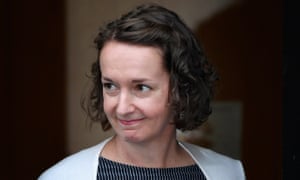
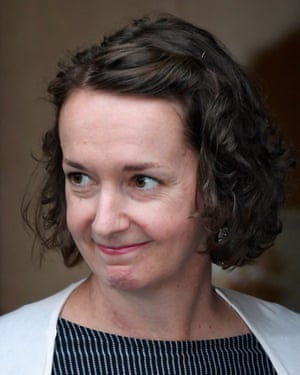
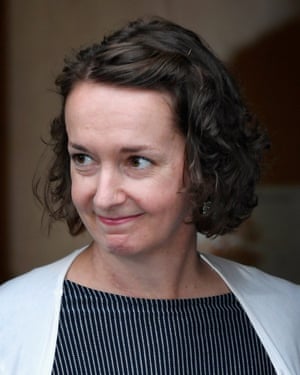
Pauline etiketine sahip kayıtlar gösteriliyor. Tüm kayıtları göster

20 Mart 2017 Pazartesi

Doctor admits misleading medics over Pauline Cafferkey temperature

A doctor has admitted misleading other medics by concealing Pauline Cafferkey’s raised temperature before she became seriously ill with Ebola.


Hannah Ryan, who volunteered in Sierra Leone in her first year after graduating from medical school, was one of the medics who assessed Cafferkey following the Scottish nurse’s return to the UK in 2014.


Ryan wrote down a temperature 1C lower than it actually was during a “chaotic” screening process at Heathrow airport on 28 December 2014, a medical practitioners tribunal heard on Monday.


A raised temperature can be the first sign of Ebola, which can kill within five days. Cafferkey, who twice nearly died from the virus, went on to develop one of the worst cases on record for people treated in the west.


Cafferkey was cleared of misconduct over the recording of her temperature in September.


The tribunal in Manchester heard on Monday that Ryan recorded Cafferkey’s temperature as being 37.2C despite knowing it was at least 38.2C – above the average body temperature of 37C and higher than the 37.5C threshold requiring further assessment by a consultant in infectious diseases.


She later told another doctor there were no abnormalities in the temperatures of Cafferkey’s group of returnees, according to a written summary of the allegations by the General Medical Council.


Dr Bernard Herdan, the tribunal chair, was told Ryan’s conduct was “misleading and dishonest” and that her “fitness to practise is impaired because of [Ryan’s] misconduct”.


Ryan admitted misleading others and “acquiesced” in the wrong temperature being given but denies misconduct by her actions at the airport and during a subsequent investigation by Public Health England.


Fraser Coxhill, representing the General Medical Council, said Ryan and Cafferkey were one group among many British medics who put their own lives at risk by volunteering their medical skills and going to west Africa to help fight the outbreak.


Deployed on 22 November 2014, they were based at an 80-bed treatment centre in Kerry Town, working “tirelessly in dangerous and highly pressurised conditions” during which they “formed a strong bond of friendship”, Coxhill said.


But about a month later when they returned to the UK on the afternoon of 28 December, the Ebola screening area at the Heathrow terminal was “crowded, noisy and chaotic”.


In the queue to get clearance from PHE medics to be allowed to leave “murmurings of discontent and frustration” grew, the tribunal heard. There were concerns some Scottish medics would miss connecting flights to Glasgow due to delays in the screening process.


Trying to help PHE staff with the process, they agreed to take and record their own temperatures. Ryan took Cafferkey’s temperature, which was 38.2C – a warning sign for the Ebola virus.


The two medics and another nurse with them, Donna Wood, discussed the reading, “during which someone said, ‘Let’s get out of here’,” Coxhill told the tribunal.


Cafferkey’s temperature was then recorded as 37.2C, the form was passed to PHE staff and the medics went on their way.


However, in baggage reclaim there was further discussion between the medics, and PHE staff were contacted.


When Cafferkey’s temperature was taken again it was below the threshold. However, by this time she had taken paracetamol, which lowers body temperature. Cafferkey returned to Glasgow but the next day fell seriously ill with Ebola.


Four days later, Dr Nick Gent, from PHE, called Ryan to investigate what had happened at the airport. Ryan later admitted not telling him she had taken Cafferkey’s temperature and that it was above the threshold for possible Ebola infection.


Coxhill added: “Whilst there is no doubt that Dr Ryan is a practitioner of hitherto unblemished character who undertook important selfless work in Sierra Leone, it is submitted that the events of 28 December 2014 and 2 January 2015 appear to demonstrate someone whose first instinct is to mislead and be dishonest.”


Ryan’s involvement emerged during a misconduct hearing for Donna Wood, another volunteer medic who was suspended for two months in November after being found to have concealed Cafferkey’s raised temperature.


In evidence to the Nursing and Midwifery Council, Ryan said she was in shock after taking Cafferkey’s temperature in her left and right ears and finding it raised.


She told the NMC hearing in a written witness statement: “I asked Pauline if she was feeling OK. She said she was feeling fine.


“I stood there in shock. It was like I was paralysed. I had no clear thought process. Ebola is such a horrible disease that every time you have a high temperature you worry, even when you know there’s no reason to.”


Ryan said only the three medics were present and that Wood “broke the inertia by saying something like, ‘I’m just going to write it down as 37.2 degrees’” so they could “get out of here and sort it out”.


The tribunal is expected to last 10 days.


Doctor admits misleading medics over Pauline Cafferkey temperature

8 Mart 2017 Çarşamba

"I was wrong": Pauline Hanson apologises for vaccination claims

Pauline Hanson has apologised for incorrectly claiming on Sunday that parents could conduct their own tests to evaluate vaccination safety.


“Yes, I do apologise,” she said. “As far as having tests done, OK, I admit I was wrong with that.”


Senator Hanson has been criticised by the Australian Medical Association and others for giving the incorrect impression that vaccines were not safe.


“All I’m saying to people that are concerned about it – you go and do your research, go ask questions of your doctor,” she told Channel Seven on Thursday.


Pauline Hanson voiced criticism of the government’s vaccination rules on the ABC’s Insiders program last week, sparking furious condemnation from health and medical groups.


She advised parents to test their children before vaccinations because some parents, she claimed, had reported problems with vaccines.


Hanson also argued that successive governments had “blackmailed” people into having their children vaccinated because of the policy of withholding childcare fee rebates and welfare payments from parents who don’t have their children fully immunised.


“What I don’t like about it is the blackmailing that’s happening with the government,” Hanson said. “Don’t do that to people. That’s a dictatorship. I think people have a right to investigate themselves.”


She later defended her comments saying they were her “personal opinion” and she acknowledged she had vaccinated her own children.


Hanson’s comments were also condemned by the prime minister, Malcolm Turnbull.


“If parents choose not to vaccinate their children, they are putting their children’s health at risk and every other person’s children’s health at risk too,” Turnbull said.


The president of the Australian Medical Association, Michael Gannon, told the ABC that Hanson needed to take responsibility for her position on vaccination.


“She needs to realise that she’s a serious player in Australian politics now,” he said. “You know, with 8, 9, 10% of Australians indicating an intention to vote for One Nation, she can no longer make fringe statements that are dangerous to the health of the whole community.”


“We know in medical science that we’re never going to reach that 1 or 2% of rusted-on flat-earthers who don’t accept the science of vaccination.


“But what we worry about a lot about is that about 8% of the population are so-called vaccine-hesitant, and they’re looking for any information that might lead them away from what is, with the exception of clean water, probably the most significant health measure we’ve got.


“It is absolutely essential that we have accurate information, and this fatuous idea that parents can spend half an hour on Wikipedia and come to a greater understanding of the issues than their doctor and the accumulated wisdom of all the world’s medical scientists is ludicrous.”


"I was wrong": Pauline Hanson apologises for vaccination claims

25 Kasım 2016 Cuma

Ebola nurse suspended after falsifying Pauline Cafferkey"s temperature

The nurse who was found to have concealed her colleague Pauline Cafferkey’s raised temperature before she tested positive for Ebola in 2014 has been suspended from practising for two months.


An independent Nursing and Midwifery Council (NMC) panel had found that Donna Wood was a low risk to future patients but that her fitness to practise had been impaired and a sanction was in the public interest.


Najrul Khasru, the chair of the panel, told Woods that an aggravating factor was that: “The seriousness of your misconduct … could have contributed to the risk of Ebola, a very serious and dangerous illness spreading in this country.”


The panel described Wood’s “dishonesty” as “extremely serious” but told her it was “not premeditated but a momentary lapse of judgment”.


The sanctions were imposed after an eight-day hearing in Stratford, east London, after Public Health England, which was running the screening process in Heathrow, reported her for allegedly falsifying a document recording Cafferkey’s temperature as one degree lower than it was.


Wood was returning from Sierra Leone, where she and Cafferkey had volunteered to work in an Ebola treatment centre at the peak of the epidemic in December 2014.


Khasru said her misconduct had been an “isolated incident in an otherwise unblemished nursing career … and unlikely to be repeated”.


The panel found that Wood had not misrecorded Cafferkey’s temperature on a health screening form, but said she had known it was elevated and had not escalated this despite knowing that a high temperature was a potential early warning sign for Ebola.


In not doing so, she had “put Ms Cafferkey and anyone coming into contact with her at at unwarranted risk of harm”, said Khasru.


In considering what sanctions to impose, Khasru said the panel took into account the stress and exhaustion of the nurses, who had been working up until the day they left Sierra Leone.


It concluded that striking Wood off would be have been disproportionate, and it was in the public interest to retain a highly skilled nurse. Wood currently works as an end-of-life nurse in Burslem, Stoke-on-Trent.


Among the mitigating factors were Wood’s previous good record and her “selfless act” to volunteer to help Ebola patients in Sierra Leone.


The panel also noted the “less-than-ideal environment in the screening area” at Heathrow airport when the passengers returned from west Africa on 28 December 2014.


Khasru noted that Wood had worked as a nurse for two years since the incident without any concerns raised during this period or throughout her 29-year career.


But the panel said her behaviour, though a momentary lapse of judgment, warranted a suspension in order to uphold the public’s confidence in the profession.


“The panel was mindful of its duty to protect the public interest. This includes the protection of patients and others, maintenance of public confidence in the profession and the regulatory body,” Khasru said.


It emerged during the disciplinary hearing that the group of five volunteers including Cafferkey and Wood had decided to take their own temperatures in order to get out of the “uncomfortable” and “chaotic” screening area more quickly.


Cafferkey and her colleagues were cleared to go through to the baggage area but Cafferkey later returned to the screening area after a doctor in their volunteer group raised concerns.


She was subsequently given the go-ahead to take her connecting flight to Glasgow, but the senior clinician on the team was not aware she had taken paracetamol, which can mask a high temperature, the tribunal had heard.


Ebola nurse suspended after falsifying Pauline Cafferkey"s temperature

17 Kasım 2016 Perşembe

Nurse denies falsifying Ebola patient Pauline Cafferkey"s temperature

A nurse who faces being struck off over a botched Ebola screening in Heathrow airport has said it is “preposterous” that she would have concealed knowledge that Pauline Cafferkey was unwell.


Donna Wood, an NHS nurse who volunteered along with Cafferkey to work in Sierra Leone in 2014, said she would never have put her country, her family or herself in such danger.


She faces being struck off after being charged by the Nursing and Midwifery Council (NMC) with falsifying Cafferkey’s temperature as they passed through the Heathrow screening process on 28 December 2014.


“I absolutely dispute the allegation because if I had been aware of anybody having a temperature it would have been a complete danger, a red alert in my mind,” she said.


She said “alarm bells” would have gone off in her head and she would have immediately taken action if a colleague had had a high temperature, as this is the first symptom of Ebola.


It is alleged that Wood, a reluctant poster girl of the government’s Ebola volunteer recruitment drive, dishonestly recorded Cafferkey’s temperate as 37.2C when she knew it was 38.2C.


Pauline Cafferkey.


Pauline Cafferkey. Photograph: Jeff J Mitchell/Getty Images

Under the Public Health England protocols, anyone who presented themselves with a temperature above 37.5C should have been referred for further assessment by a special infectious diseases expert.


The charges were brought after an investigation launched by Public Health England two days after Cafferkey fell critically ill with Ebola.


A doctor in the returning volunteer group, Hannah Ryan, alleged that Wood had said she would write the temperature down as one degree lower so they could get out of the “chaotic” screening area and “sort it out” themselves later.


“It would be preposterous to even contemplate that I would allow myself to be put in danger, or someone else, or my family or my country,” Wood said. “I just spent six weeks protecting myself from contracting Ebola, ensuring my colleagues working around me were protecting themselves against Ebola. The reason I had gone out to Sierra Leone was to control the spread of Ebola. There is no way I would have let someone else be at risk,” she said.


Wood told an NMC hearing in Stratford, east London, that she had no recollection of filling in Cafferkey’s form, as alleged by a doctor who had previously given evidence. Nor did she know that Cafferkey had taken paracetamol, which could possibly mask an elevated temperature, she said.


She said she remembered that Cafferkey had said she was feeling “warm” when they got off the flight and went to the toilet “to freshen up”. Cafferkey had ascribed her feeling to the fact that she had slept wearing a hoodie on the plane.


Wood said she remembered very clearly telling Cafferkey not to take paracetamol because it could affect her temperatures recordings, which were universally used as the first barrier of infection prevention with checks taken several times a day while they were in Sierra Leone.


“As we were leaving the toilets, we were on a very wide corridor, a lot of people around us. She said it very clearly so that I heard her: ‘I think I’m going to ask Dr Hannah if I should take some paracetamol.’


“Absolutely without a second at all, I responded staight away: ‘Gosh, no, you mustn’t do that. That could mask any temperature or symptoms,’” said Wood.


She told the NMC independent panel that none of the protocols of infection prevention and control were in place at Heathrow. Temperatures of passengers arriving at the airport were not taken as they disembarked from the plane from Sierra Leone, she said.


Although the volunteers were classified as being at the highest Ebola risk level under Public Health England protocols because they had worked on the frontline, Wood told how she was allowed to queue up with hundreds of other passengers arriving from all over the world in passport control before being taken to the Public Health England screening area, where she was again in close proximity to members of the public.


At the time America and Europe were gripped by panic over the potential spread of Ebola from west Africa to other parts of the globe.


The Ebola virus is spread through bodily fluids including saliva and sweat, and those who had worked in Sierra Leone were operating under the same strict “no touch” protocols as the public under the state emergency laws.


Wood told how the volunteers were banned from going to shops or churches or meeting locals in Sierra Leone and were under strict instructions to stay in the beach resort hotel that had been hired by Save the Children, which ran the Kerrytown hospital they were working in.


Describing how she felt standing close to others who had come from Sierra Leone in the screening area, she said: “I remember this wasn’t right. Through my training, you weren’t allowed go out to shops, churches, and here we were in a crowded area with people I didn’t know. They had come from Sierra Leone but thoughts were entering my head: could this person be unwell? Or could this person have been with someone who had Ebola?


“I remember being uncomfortable being that close in a crowded area.”


Under cross-examination Wood said she could recall a doctor holding up a thermometer but no one called out a temperature reading. She said she would have been gripped by panic if she had seen a temperature of 38.2C as it would have been an early warning.


“I would have been putting them at risk, myself at risk, my family at risk, all their families at risk, everyone in that room at risk”, which was something she would not have done “bearing in mind we had just had six weeks seeing horrific deaths”, she said.


Nurse denies falsifying Ebola patient Pauline Cafferkey"s temperature

14 Kasım 2016 Pazartesi

Nurse may be struck off over Pauline Cafferkey temperature reading

A British medic who helped fight the spread of Ebola in Sierra Leone two years ago faces being struck off or suspended from nursing after allegedly misleading doctors about her colleague Pauline Cafferkey, the Scottish nurse who nearly died twice from the virus.


Donna Wood, a senior sister with more than 30 years’ experience, is accused of failing to record Cafferkey’s elevated temperature when she arrived at Heathrow from west Africa on 28 December 2014.


A raised temperature can be the first sign of Ebola fever, and Cafferkey went on to develop one of the worst cases on record for people treated in the west.


At the Nursing and Midwifery Council (NMC) in Stratford, east London, on Monday, Wood faced three misconduct charges over the botched screening.


She allegedly recorded a temperature 1C lower than it actually was during a screening process at Heathrow, was “dishonest” because she knew this was wrong and failed to escalate the potential marker for Ebola appropriately.


Opening the hearing, the case presenter, Aja Hall, told an NMC panel that Cafferkey’s temperature had been taken by a volunteer colleague, Hannah Ryan, a doctor who had returned from Sierra Leone with Wood and Cafferkey.


Pauline Cafferkey.


Pauline Cafferkey. Photograph: Getty

The first reading from her left ear was 38.2C, above the average body temperature of 37C and higher than the threshold of 37.5C that requires further assessment by a consultant in infectious diseases.


Ryan had stated that she was in “shock” after taking Cafferkey’s temperature in her left and right ears and finding it raised, Hall said. “I told her to stay calm, we were both a bit panicky,” said Ryan.


The hearing was told that an elevated temperature was considered the body’s first reaction to Ebola, which can kill within five days.


“I asked Pauline if she was feeling okay? She said she was feeling fine,” Ryan told the hearing in a written witness statement. “I stood there in shock. It was like I was paralysed. I had no clear thought process. Ebola is such a horrible disease that every time you have a high temperature you worry, even when you know there’s no reason to.”


Ryan said only the three medics were present and that Wood “broke the inertia by saying something like ‘I’m just going to write it down as 37.2 degrees’” so they could “get out of here and sort it out”.


The three medics had returned to a screening area described by various witnesses as “busy, dangerous and even chaotic by some of those present”, Hall said.


They had been asked to fill in a Public Health England form and wait for a PHE medic to taket their temperature. Amid the chaos, they decided to record their own temperatures, the hearing heard.


Cafferkey was subsequently allowed leave the PHE screening area and enter the arrivals section because her form did not state that her temperature was above 38C. At some point Cafferkey had taken paracetamol, the NMC panel heard.


Ryan meanwhile informed Dr Sharon Irvine, another volunteer doctor returning from Sierra Leone. Irvine questioned Cafferkey about her temperature in the arrivals hall and advised her not to proceed with her onward flight to Glasgow.


Cafferkey was then returned to the screening area where her temperature was taken three further times at 15-minute intervals. Only one of those readings was above the threshold of 37.5C and she was allowed to fly home.


That night Cafferkey fell seriously ill and it later emerged that she had one of the highest Ebola virus loads on record.


The NMC claims that Wood’s “fitness to practice is impaired by reason of your misconduct”. Wood’s counsel, Ben Rich, denied the charges on her behalf.


The hearing heard that Cafferkey had remarked that she had felt warm on the plane home, but later said she had said that as a joke. The group of volunteers on the plane with her, including Wood, had “ascribed it to her sleeping in a hoodie on the plane”.


The hearing heard that some weeks later, Wood had written in an email to PHE that “Pauline Cafferkey said to me she had woken on the plane … and she had said she felt very hot and she did not mention having a fever”.


In 2014, Wood, who works at Haywood hospital in Burnslem, Staffordshire, was the face of the government’s campaign to get volunteers to work in Sierra Leone to help stop the spread of the worst Ebola outbreak in history.


The then international development secretary, Justine Greening, said at the time: “These NHS heroes, like Donna, spending Christmas on the Ebola treatment wards are an absolutely essential part of our efforts to contain, control and defeat this terrible disease.”


The misconduct hearing, which is scheduled to last until 25 November, continues.


Nurse may be struck off over Pauline Cafferkey temperature reading

Nurse faces tribunal over Pauline Cafferkey temperature reading

A nurse who was lauded by the government as one of Britain’s heroes of the Ebola epidemic is facing a disciplinary tribunal, accused of concealing the high temperature of her colleague Pauline Cafferkey, who developed Ebola on her return from Sierra Leone.


Senior sister Donna Wood was the face of the volunteers in Medics Behind the Mask, an online feature made by the Department for International Development. She and Cafferkey were among the first 70 volunteers to leave the UK and spend Christmas 2014 in the Ebola treatment units of Sierra Leone, and were publicly thanked by Justine Greening, the then international development minister.


But Wood’s career could end over events at Heathrow airport when the volunteers flew home on 28 December 2014. All the returnees had to be screened to ensure they did not have a high temperature that might be the first sign of Ebola fever. Chaotic conditions and long delays were described in the screening unit, with too few staff to process the exhausted volunteer nurses and doctors, so they took each other’s temperatures.


Pauline Cafferkey after being cleared of misconduct charges.


Pauline Cafferkey after being cleared of misconduct charges. Photograph: Jeff J Mitchell/Getty Images

When Cafferkey’s temperature was found to be high, Wood is alleged to have recorded it on the form as normal, saying they would then “get out of here and sort it out”. They were then allowed to leave the screening area.


Cafferkey later told another volunteer she had a high temperature and returned to the screening area, but she had taken paracetamol and her temperature was found to be within the normal range, so she was cleared to fly to Scotland, where she was taken ill.


Cafferkey was accused by the Nursing and Midwifery Council of misconduct, but was cleared on the grounds that she had already become too ill to understand the implications of her actions.


After she became ill the RAF flew her to a special isolation unit at the Royal Free hospital in London. Cafferkey came close to death but recovered. She then nearly died again when she later developed meningitis as a result of the Ebola virus.


Before travelling to Sierra Leone, Wood was a senior sister at Haywood hospital in Burslem, near Stoke on Trent, and had been nursing for 29 years.


“I’ve always been a caring person – that’s what my mother said. So it always felt like nursing was my vocation. It always will be,” she is quoted as saying on the DfID website.


“I’d been following the stories on the news and I felt I had to do this straight away. I could use the skills I’ve got to make a difference and join a team to help bring the disease under control … You don’t think of it as being heroic. It’s just what we do.”


The misconduct hearing is scheduled to last for eight days.


Nurse faces tribunal over Pauline Cafferkey temperature reading

6 Ekim 2016 Perşembe

Ebola nurse Pauline Cafferkey tests negative for virus

Pauline Cafferkey has tested negative for the Ebola virus, NHS authorities have said, after she was rushed to hospital for a fourth time since her return from Sierra Leone in 2014.


The 40-year-old nurse underwent further tests under the care of the infectious diseases team at Queen Elizabeth University hospital, Glasgow, where she was taken under police escort on Thursday morning.


A spokesperson for the hospital said: “Following a detailed assessment we can provide reassurance that there is no risk to the public.”


Police Scotland confirmed that they had provided an escort “as a matter of course” for the ambulance taking Cafferkey from her home in South Lanarkshire at 9.30am.


Nicola Sturgeon (@NicolaSturgeon)

Sending my very best wishes to Pauline Cafferkey. She has already suffered way too much – & all for trying to help others. Thoughts with her


October 6, 2016


Cafferkey, 40, first became ill from the Ebola virus on her return from Sierra Leone in late December 2014. She flew on from Heathrow to her home in Glasgow, where she was admitted to hospital with a fever later confirmed as Ebola infection. She was flown to London’s Royal Free hospital, which has a specialist isolation unit for Ebola patients.


She nearly died, but when she was pronounced out of danger in January 2015, it was thought the virus had been cleared from her system. That October, however, she became critically ill again and was readmitted to the Royal Free. Her case astonished experts, as the first in which the virus had lurked in her brain or spinal cord undetected and then attacked again, causing near-fatal meningitis.


She has had long-term problems as a result of the second attack, including muscle weakness in one leg, which has meant she is unable to run as she used to do.


Nurse Pauline Cafferkey relieved to be cleared of misconduct over Ebola virus – video

A third admission to the Royal Free turned out to be a false alarm, but the experts have no idea whether the Ebola virus is still lying undetected in her body because too little is known about the virus and the disease.


Three weeks ago, Cafferkey was cleared by her regulatory body, the Nursing and Midwifery Council, which had investigated allegations that she concealed her high temperature at Heathrow on her return from Sierra Leone.


The NMC, which could have struck her off the nursing register, said Cafferkey’s judgment had been compromised by her developing illness, and so she could not be held responsible for putting the public in danger. Cafferkey said she reported her high temperature, but was allowed to fly on to Glasgow.


Ebola nurse Pauline Cafferkey tests negative for virus

13 Eylül 2016 Salı

Pauline Cafferkey hearing urged to drop Ebola dishonesty charge

The British nurse who twice came close to death after contracting Ebola while working as a volunteer in Sierra Leone in 2014 should not face charges of dishonesty, a misconduct hearing has heard.


Pauline Cafferkey, 40, could be struck off by the Nursing and Midwifery Council if the remaining charges against her are proved. Those charges are that she allowed an incorrect temperature to be recorded on her return to the UK, and that she failed to report her elevated temperature to screening staff or tell them she had recently taken paracetamol.


On Tuesday morning the panel at an NMC misconduct hearing in Edinburgh was urged by the case presenter for the council to strike out a charge that she had acted dishonestly.


Anu Thompson, for the NMC, told the panel that expert evidence suggested Cafferkey’s “ability to make decisions and reason properly were affected at the relevant time”. She referred to one medical expert, Dr Thomson, who submitted that: “I have no doubt that a combination of early Ebola virus infection and fatigue resulting from a busy night shift followed by a lengthy journey [from Sierra Leone] would have impaired Pauline’s judgement at the time of entering the screening process at Heathrow airport.”


The hearing was told that on 28 December 2014 Public Health England’s Ebola screening facility at Heathrow airport had not been prepared for such a large influx of passengers, and that the screening area was “busy, disorganised and even chaotic”.


An agreed statement of fact described how each person was given a port of entry Ebola health assessment form, on which their temperature and other relevant information was to be recorded by medical staff. As the delays continued and frustrations grew, one member of Cafferkey’s group suggested they take their own temperatures.


The hearing was told that a member of that group, Doctor 1, took Cafferkey’s temperature and found it to be 38.2C, then 38.3C when she took it again a few minutes later.


Doctor 1 stated that she read out both numbers in the presence of Cafferkey and Registrant A, another group member, who said that she would record the nurse’s temperature as 37.2C then they would “get out of here and sort it out”.


Cafferkey, who sat quietly with her representative throughout the hearing, has stated that she remembers somebody using the words “let’s get out of here” but cannot remember who said them or who entered the temperature of 37.2C on her screening form.


Any temperature above 37.5C was considered to be elevated and should have been reported to a consultant for further assessment.


Cafferkey left the screening area, the hearing was told, but later returned after Doctor 1 raised further concerns about her elevated temperature. Her temperature was taken three more times, by Doctor 2, but only one reading was above 37.5C, and that by 0.1C. Cafferkey did not volunteer to Doctor 2 the information that she had recently taken paracetamol, nor was she asked directly about it, and she was cleared to travel home to Glasgow.


The following day she was diagnosed with Ebola, suffering one of the highest viral loads ever recorded.


Earlier on Tuesday, Cafferkey’s representative, Joyce Cullen, applied for the hearing to be held in private, arguing that the “intrusive nature of press and media has already had a significant psychological impact on Miss Cafferkey”.


Cullen added that an error by the NMC in publishing draft charges on their website last month had had an additional adverse effect, after which Cafferkey had required medical treatment and been forced to move out of her home for a period. Cullen argued that Cafferkey had a right to privacy regarding medical records that would be referred to during the hearing.


The assembled media objected to the application for the hearing to be heard in private. A decision was due later on Tuesday after hearing submissions from the media’s legal representatives.


Pauline Cafferkey hearing urged to drop Ebola dishonesty charge

20 Ağustos 2016 Cumartesi

Ebola nurse Pauline Cafferkey charged over "concealing temperature"

Pauline Cafferkey, the nurse who nearly died after contracting Ebola as a volunteer in west Africa, has been charged by a regulatory body with concealing her high temperature when she returned to the UK.


Cafferkey, hailed as a hero for her work in the Ebola treatment units of Sierra Leone, could be struck off by the Nursing and Midwifery Council if the charges are proved against her.


The NMC alleged that the Scottish nurse “allowed an incorrect temperature to be recorded” on 29 December 2014 and “intended to conceal from Public Health England staff that you had a temperature higher than 38C”.


Archive: Ebola survivor Pauline Cafferkey: I feared I’d die a horrible death

A high temperature is one of the first symptoms of Ebola haemorrhagic fever. NHS workers who returned from volunteering were all supposed to fill in questionnaires about their exposure to the virus in their patients and have their temperatures taken by PHE staff at Heathrow airport.


It is the first time the NMC has outlined its complaint against Cafferkey. The NMC has been investigating her and others who returned at the same time for well over a year. During this time, Cafferkey had told friends, she had felt as if her career was on hold.


The hearing is expected to be held in Edinburgh next month.


Cafferkey nearly died twice – the first time after being diagnosed in Scotland. She was flown to London to be treated in a special tented Ebola isolation unit at the Royal Free hospital.


Last October she developed meningitis as a result of the Ebola virus and had to be transferred to the Royal Free once more. Her condition became critical but she pulled through.


Cafferkey returned from Sierra Leone in December 2014 with a large contingent of NHS volunteers who had completed their tour of duty, as well as other people who had been working in west Africa. PHE had nurses at the airport to take the temperatures of the travellers, but, the Guardian has been told, not enough were stationed there.


One of the volunteers who returned at the same time as Cafferkey said they were encouraged by PHE staff to take one another’s temperatures and complete the forms.


Cafferkey’s temperature was high, so PHE’s staff were alerted, said the volunteer, who wanted to remain anonymous. Her temperature was taken six more times, but eventually, the volunteer said, Cafferkey was told she could board her flight to Glasgow.


With a high temperature, the protocol meant the nurse should have been transferred to a designated hospital nearby, Northwick Park, and seen by an infectious diseases consultant.


“PHE was unprepared and did not follow correct procedure in managing the screening process,” the volunteer told the Guardian. “Had Pauline been sent to Northwick Park hospital straight from Heathrow, her diagnosis and medical management would have commenced much earlier … Instead, as policy was not followed, this was delayed and she was allowed by PHE staff to fly to Glasgow, travel onwards to her home and potentially put the general public at risk.”


Many of those who travelled to west Africa to help with the Ebola outbreak were astonished that Cafferkey was facing charges from her regulatory body.


The volunteer was “incredulous” that Cafferkey and others who risked so much to help people in Sierra Leone “still have this hanging over their head”, adding that Cafferkey did nothing that was not approved by PHE.


“I cannot get my head round why one group of medical professionals – PHE – demand such an investigation over another vulnerable group of medical professionals when they themselves had so many failings,” the volunteer said in a written statement given to the Guardian.


An NMC spokesperson said: “Since these proceedings began the NMC has worked closely with Ms Cafferkey and her representatives to reach an outcome that is fair and meets the public interest in this case.


“Since the NMC’s case examiners considered the allegations and drafted charges, we have received further evidence. The final charges the panel will consider will be determined in light of this new material. Ms Cafferkey and her representatives have cooperated fully throughout this process.”


David Cameron announced in February 2015 that the NHS staff who had volunteered to work with Ebola in west Africa would be awarded a special medal. “We owe them an immense debt of gratitude,” the then prime minister told parliament.


Cafferkey and others did not accept the medal because they felt it was inappropriate in the light of the investigation.


Ebola nurse Pauline Cafferkey charged over "concealing temperature"

26 Haziran 2014 Perşembe

Pauline Drewitt obituary

Pauline Drewitt

Soon after retiring from nursing, Pauline Drewitt volunteered at a stroke club in Ponteland, Northumberland, and with the Women’s Royal Voluntary Service


My mom, Pauline Drewitt, who has died aged 91, was a lifelong carer, giver and above all a individuals individual. She worked as a nurse in Liverpool, north Wales and Newcastle on Tyne, and in 1983, the yr she retired, was given the Professor Ingram award for a Newcastle nurse who has produced a main contribution to the profession.


She was born in Liverpool, the second youngster of Eric Julian, a medical doctor, and his wife Pinx, a background teacher, who had not too long ago migrated from Cork. It was a lively, intellectual household: in her parents’ eyes, the good quality of conversation was far more important than the top quality of foods.


Pauline started a degree in social research at Liverpool University, but at the outbreak of the second planet war determined to become a nurse. She qualified at Liverpool Royal Infirmary, winning a prize for excellence when she experienced, and grew to become a theatre sister in Liverpool ahead of moving to nurse TB individuals in north Wales in 1943. Here she met her long term husband Geoff, a conscientious objector and artist.


They began married existence in London, the place I was born. Geoff’s promotion to head of art at City of Norwich school meant a move to that city, exactly where my sisters Lesley and Jackie were born. In 1957 we all returned to Liverpool so Pauline could search after her father, who had heart disease and had lately been widowed.


She resumed her nursing profession in 1965, operating in a single of the 1st intensive coronary care units. On the family’s relocation to Newcastle on Tyne she was a sister in the cardiology departments at Newcastle General and Freeman hospitals.


In retirement Pauline contributed to her neighborhood in Ponteland, Northumberland, as a volunteer at a stroke club and with the Women’s Royal Voluntary Service (now the Royal Voluntary Service). She spent treasured time with her 7 grandchildren, travelled widely with Geoff, and always offered a warm welcome to her relatives and pals outdated and new.


She usually remained real to her roots as a lifelong supporter of Ireland and Liverpool FC.


Geoff died in 2006. Pauline is survived by her brother, Desmond, and by Lesley, Jackie and me.


Pauline Drewitt obituary