falsifying etiketine sahip kayıtlar gösteriliyor. Tüm kayıtları göster

25 Kasım 2016 Cuma

Ebola nurse suspended after falsifying Pauline Cafferkey"s temperature

The nurse who was found to have concealed her colleague Pauline Cafferkey’s raised temperature before she tested positive for Ebola in 2014 has been suspended from practising for two months.


An independent Nursing and Midwifery Council (NMC) panel had found that Donna Wood was a low risk to future patients but that her fitness to practise had been impaired and a sanction was in the public interest.


Najrul Khasru, the chair of the panel, told Woods that an aggravating factor was that: “The seriousness of your misconduct … could have contributed to the risk of Ebola, a very serious and dangerous illness spreading in this country.”


The panel described Wood’s “dishonesty” as “extremely serious” but told her it was “not premeditated but a momentary lapse of judgment”.


The sanctions were imposed after an eight-day hearing in Stratford, east London, after Public Health England, which was running the screening process in Heathrow, reported her for allegedly falsifying a document recording Cafferkey’s temperature as one degree lower than it was.


Wood was returning from Sierra Leone, where she and Cafferkey had volunteered to work in an Ebola treatment centre at the peak of the epidemic in December 2014.


Khasru said her misconduct had been an “isolated incident in an otherwise unblemished nursing career … and unlikely to be repeated”.


The panel found that Wood had not misrecorded Cafferkey’s temperature on a health screening form, but said she had known it was elevated and had not escalated this despite knowing that a high temperature was a potential early warning sign for Ebola.


In not doing so, she had “put Ms Cafferkey and anyone coming into contact with her at at unwarranted risk of harm”, said Khasru.


In considering what sanctions to impose, Khasru said the panel took into account the stress and exhaustion of the nurses, who had been working up until the day they left Sierra Leone.


It concluded that striking Wood off would be have been disproportionate, and it was in the public interest to retain a highly skilled nurse. Wood currently works as an end-of-life nurse in Burslem, Stoke-on-Trent.


Among the mitigating factors were Wood’s previous good record and her “selfless act” to volunteer to help Ebola patients in Sierra Leone.


The panel also noted the “less-than-ideal environment in the screening area” at Heathrow airport when the passengers returned from west Africa on 28 December 2014.


Khasru noted that Wood had worked as a nurse for two years since the incident without any concerns raised during this period or throughout her 29-year career.


But the panel said her behaviour, though a momentary lapse of judgment, warranted a suspension in order to uphold the public’s confidence in the profession.


“The panel was mindful of its duty to protect the public interest. This includes the protection of patients and others, maintenance of public confidence in the profession and the regulatory body,” Khasru said.


It emerged during the disciplinary hearing that the group of five volunteers including Cafferkey and Wood had decided to take their own temperatures in order to get out of the “uncomfortable” and “chaotic” screening area more quickly.


Cafferkey and her colleagues were cleared to go through to the baggage area but Cafferkey later returned to the screening area after a doctor in their volunteer group raised concerns.


She was subsequently given the go-ahead to take her connecting flight to Glasgow, but the senior clinician on the team was not aware she had taken paracetamol, which can mask a high temperature, the tribunal had heard.


Ebola nurse suspended after falsifying Pauline Cafferkey"s temperature

17 Kasım 2016 Perşembe

Nurse denies falsifying Ebola patient Pauline Cafferkey"s temperature

A nurse who faces being struck off over a botched Ebola screening in Heathrow airport has said it is “preposterous” that she would have concealed knowledge that Pauline Cafferkey was unwell.


Donna Wood, an NHS nurse who volunteered along with Cafferkey to work in Sierra Leone in 2014, said she would never have put her country, her family or herself in such danger.


She faces being struck off after being charged by the Nursing and Midwifery Council (NMC) with falsifying Cafferkey’s temperature as they passed through the Heathrow screening process on 28 December 2014.


“I absolutely dispute the allegation because if I had been aware of anybody having a temperature it would have been a complete danger, a red alert in my mind,” she said.


She said “alarm bells” would have gone off in her head and she would have immediately taken action if a colleague had had a high temperature, as this is the first symptom of Ebola.


It is alleged that Wood, a reluctant poster girl of the government’s Ebola volunteer recruitment drive, dishonestly recorded Cafferkey’s temperate as 37.2C when she knew it was 38.2C.


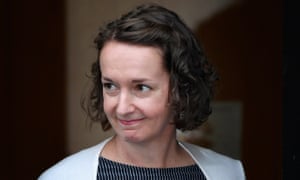
Pauline Cafferkey.


Pauline Cafferkey. Photograph: Jeff J Mitchell/Getty Images

Under the Public Health England protocols, anyone who presented themselves with a temperature above 37.5C should have been referred for further assessment by a special infectious diseases expert.


The charges were brought after an investigation launched by Public Health England two days after Cafferkey fell critically ill with Ebola.


A doctor in the returning volunteer group, Hannah Ryan, alleged that Wood had said she would write the temperature down as one degree lower so they could get out of the “chaotic” screening area and “sort it out” themselves later.


“It would be preposterous to even contemplate that I would allow myself to be put in danger, or someone else, or my family or my country,” Wood said. “I just spent six weeks protecting myself from contracting Ebola, ensuring my colleagues working around me were protecting themselves against Ebola. The reason I had gone out to Sierra Leone was to control the spread of Ebola. There is no way I would have let someone else be at risk,” she said.


Wood told an NMC hearing in Stratford, east London, that she had no recollection of filling in Cafferkey’s form, as alleged by a doctor who had previously given evidence. Nor did she know that Cafferkey had taken paracetamol, which could possibly mask an elevated temperature, she said.


She said she remembered that Cafferkey had said she was feeling “warm” when they got off the flight and went to the toilet “to freshen up”. Cafferkey had ascribed her feeling to the fact that she had slept wearing a hoodie on the plane.


Wood said she remembered very clearly telling Cafferkey not to take paracetamol because it could affect her temperatures recordings, which were universally used as the first barrier of infection prevention with checks taken several times a day while they were in Sierra Leone.


“As we were leaving the toilets, we were on a very wide corridor, a lot of people around us. She said it very clearly so that I heard her: ‘I think I’m going to ask Dr Hannah if I should take some paracetamol.’


“Absolutely without a second at all, I responded staight away: ‘Gosh, no, you mustn’t do that. That could mask any temperature or symptoms,’” said Wood.


She told the NMC independent panel that none of the protocols of infection prevention and control were in place at Heathrow. Temperatures of passengers arriving at the airport were not taken as they disembarked from the plane from Sierra Leone, she said.


Although the volunteers were classified as being at the highest Ebola risk level under Public Health England protocols because they had worked on the frontline, Wood told how she was allowed to queue up with hundreds of other passengers arriving from all over the world in passport control before being taken to the Public Health England screening area, where she was again in close proximity to members of the public.


At the time America and Europe were gripped by panic over the potential spread of Ebola from west Africa to other parts of the globe.


The Ebola virus is spread through bodily fluids including saliva and sweat, and those who had worked in Sierra Leone were operating under the same strict “no touch” protocols as the public under the state emergency laws.


Wood told how the volunteers were banned from going to shops or churches or meeting locals in Sierra Leone and were under strict instructions to stay in the beach resort hotel that had been hired by Save the Children, which ran the Kerrytown hospital they were working in.


Describing how she felt standing close to others who had come from Sierra Leone in the screening area, she said: “I remember this wasn’t right. Through my training, you weren’t allowed go out to shops, churches, and here we were in a crowded area with people I didn’t know. They had come from Sierra Leone but thoughts were entering my head: could this person be unwell? Or could this person have been with someone who had Ebola?


“I remember being uncomfortable being that close in a crowded area.”


Under cross-examination Wood said she could recall a doctor holding up a thermometer but no one called out a temperature reading. She said she would have been gripped by panic if she had seen a temperature of 38.2C as it would have been an early warning.


“I would have been putting them at risk, myself at risk, my family at risk, all their families at risk, everyone in that room at risk”, which was something she would not have done “bearing in mind we had just had six weeks seeing horrific deaths”, she said.


Nurse denies falsifying Ebola patient Pauline Cafferkey"s temperature