Globe etiketine sahip kayıtlar gösteriliyor. Tüm kayıtları göster

12 Mayıs 2017 Cuma

The life-changing flying eye hospital treating blindness across the globe

In Kitwe, the second largest city in Zambia, young mother Verah is carrying her one-year-old daughter, Racheal, into the consultation room at the eye annexe. The only dedicated paediatric eyecare centre in the country, the Kitwe annexe also attracts patients from neighbouring Angola and Congo. Racheal is here for surgery to remove the bilateral cataracts that prevent her from seeing.


A few months after Racheal was born, Verah noticed that something didn’t seem right with her vision. “I would move my hands in front of her face but she would not react. I would move things past her eyes but she would not follow them,” she explains.


The team of nurses, anaesthetists and paediatric ophthalmologists treating Racheal have been trained and are being continually supported by peers from some of the world’s most respected eye hospitals, who fly in on a specially adapted plane – the flying eye hospital – thanks to an initiative of Orbis, an international blindness prevention charity.


“Orbis volunteers who come to share their knowledge and give technical support are very good – most of them have been working for a long time so they have very good experience,” says Chineshe Mboni, the paediatric ophthalmologist treating Racheal. “So we have some from the US, Britain and Israel etc. Techniques are different around the world, so we get a mix of everything.”


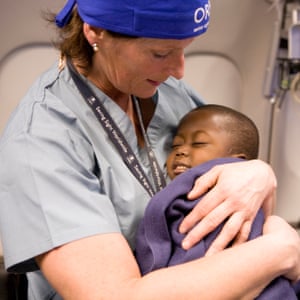
A volunteer ophthalmic nurse in the recovery room.


A volunteer ophthalmic nurse in the recovery room. Photograph: Geoff Oliver Bugbee/Orbis

Sharing experiences and discussing cases with the visiting Orbis medical volunteers “raises your confidence, to see that what you are doing is what everyone else is doing around the world”, Mboni concludes.


Globally, 285 million people are blind or visually impaired and yet for 80% of them, this could be prevented with access to the right treatment like the surgery Mboni is able to give Racheal. Orbis focuses its efforts in Africa, Asia and Latin America because 90% of the world’s 39 million blind people live in developing countries. Many of the conditions causing blindness – such as cataract and trachoma – can be easily treated. The loss of sight these conditions can cause have a huge impact as it will impede a person’s ability to gain an education, prevent them from finding employment and can plunge families into a life of poverty.


Ann-Marie Ablett, a nurse from the University Hospital of Wales in Cardiff, has been giving up four weeks of her annual leave to volunteer with Orbis since 2003. “You can’t change everything overnight but you can start with one patient and help them,” she says. “If everyone plays their small part together, you can make changes.”


Ablett is speaking in a terminal at Stansted Airport and just outside is the flying eye hospital, here for a short promotional visit. The white MD-10 aircraft on the tarmac looks like a typical passenger plane. In fact, this is a 46-seat classroom complete with audio-visual equipment that transmits live surgeries that can be watched in 3D. The lead surgeon, who is just next door in a state-of-the-art operating theatre, can be asked questions throughout the procedure. The aircraft, donated by FedEx, also features pre- and post-op spaces and a laser suite.


A patient wakes up from surgery.


A patient wakes up from surgery. Photograph: Orbis

Orbis’s main aim is to train eyecare teams and strengthen hospitals in the 92 countries where it works. It’s for this reason that Ablett first chose to volunteer. She says: “We’re not in the developing country just for numbers, we’re there to teach so that means we do less surgeries but when we fly off to the next country, the local doctors have got the skills to treat their own patients because they were trained up.”


Dr Jonathan Lord, global medical director for Orbis, went from being a regular volunteer to giving up his position as a consultant at Moorfields eye hospital in London and becoming a staff member for the charity before being promoted to his current role.


“I was just hooked after my visit trip,” he says. “Seeing the flying eye hospital work in real life, in the field with the patients being treated on the plane and that treatment being part of a really comprehensive training package that is upskilling all the groups of staff that are needed for each surgery, is amazing.


“The need round the world is huge. You realise the magnitude when you look at some of the statistics. In Ethiopia, there is a population of over 80 million, but [until recently] there was little over 80 ophthalmologists practising in the whole country. When I left Moorfields, it had over 150 covering just the catchment area of London.”


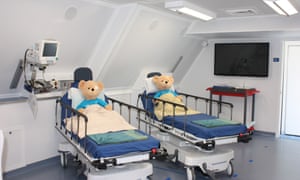
Recovery Room


The flying hospital’s recovery room. Photograph: Orbis

Programmes usually last two weeks, and require a lot of pre-planning with a team from Orbis flying in ahead to consult on what would be most helpful to the healthcare professionals in that country. The plane will land at a local airport and the team of local surgeons, nurses and anaesthetists board to join their volunteer counterparts. Meanwhile, another team of volunteers goes to the local hospital to provide training using the equipment in situ. At the end of the week, the teams swap.


Becoming hooked after stepping foot on the plane is a running theme among staff and volunteers, including the pilots, all FedEx employees who volunteer their time. Gary Dyson, who has been involved since 2001, says: “On my first trip, which was to China, I saw a child who couldn’t see on Monday but could see on Wednesday. It’s such a life-changing event for them.”


For Racheal, the short surgery will have undoubtedly had that effect. As Mboni removes the patches, she blinks a few times and waves her hands in front of her eyes, before looking up and seeing her mother for the first time.


News is spreading across Zambia of successes like this, Mboni says. “[People] know we can act fast, so they are telling patients with eye conditions – ‘This problem? Go to Kitwe central hospital’.”


Join the Healthcare Professionals Network to read more pieces like this. And follow us on Twitter (@GdnHealthcare) to keep up with the latest healthcare news and views.


The life-changing flying eye hospital treating blindness across the globe

27 Ekim 2016 Perşembe

Why Marijuana Should Be Legalized Across The Globe

Long gone are the days where marijuana is seen as taboo. More and more states have been legalizing marijuana for medical use—Alaska, California, DC, Delaware, Maine, Oregon, Massachusetts, Minnesota, Montana, New Hampshire, Rhode Island, New Jersey, New Mexico, Connecticut, Michigan, Maryland, Hawaii, Arizona, Nevada, New York, Ohio, Illinois, Pennsylvania, and Vermont; while Colorado and Washington have made history by decriminalizing the plant completely. Besides the United States, many countries have also began legalizing the use of marijuana (however, in some of these places, cultivating or transporting is still illegal)—Cambodia, Colombia, Costa Rica, Czech Republic, Ecuador, Italy, Estonia, Jamaica, Mexico, Nepal—among many others.


After a Gallop poll was done, it showed that 58 percent of Americans are in favor of legalizing the natural plant. This is the first time in history that Americans are more in favor of legalizing, than criminalizing, the herb. Below are a few reasons why it’s time to legalize marijuana worldwide.


Marijuana can be used to treat a variety of medical ailments.


Did you know that marijuana helps in treating epileptic seizures? It contains certain cannabinoids that have anticonvulsant properties, according to Katherine Mortati, MD, a neurologist serving at the Comprehensive Epilepsy Center, SUNY Downstate Medical Center. Furthermore, marijuana has been discovered to relieve nausea in cancer patients, increase appetite in HIV/AIDS patients, relax muscle tension and spasms; and relieve chronic pain.


It has a very low abuse risk.


According to Dr. Sanjay Gupta, CNN’s Chief Medical Correspondent, around 9 to 10 percent of adult users become dependent on marijuana. This is much lower than the dependent 20 percent of cocaine users, 25 percent of addicted heroin users, and the 30 percent of dependent tobacco users.


Cannabis can be a useful in treating insomnia.


The number one cause of insomnia is stress, and marijuana aids in relaxation. A study done by the National Cancer Institute found that patients that ingested a cannabis plant extract spray reported a much more restful sleep. It has been researched that THC provides a subject with an easier time falling asleep, longer sleep, deeper sleep, and better breathing while sleeping. The National Institute on Drug Abuse and National Institutes of Health funded studies that reported that subjects were able to fall asleep easier and more quickly after consuming THC.


Approximately 40% of Americans have admitted to using marijuana.


With more and more Americans having admit to trying marijuana at least once in their lives, it has been shown that marijuana is less addictive than coffee. Because of this, more people are finding reasons to feel safer when trying the drug.


No one has ever died from a marijuana overdose.


There has never been any reported case of anyone ever fatally overdosing on marijuana, despite the large amounts of THC in their systems. Prescription drugs, on the other hand, have been responsible for over 25,000 deaths in 2014 according to the National Institute on Drug Abuse; while the Center for Disease Control and Prevention report that 6 Americans die every day from alcohol poisoning.


Sources:


Why Marijuana Should Be Legalized Across The Globe

6 Ekim 2016 Perşembe

Life expectancy rises 10 years across globe, but more suffer in old age

Life expectancy has increased by 10 years across the globe in the past 35 years, thanks in part to efforts to treat infectious diseases such as Aids and malaria, but diet, obesity and drug use are now major causes of death and disability while too many women still die in childbirth, data reveals.


The Global Burden of Disease study, which regularly reviews the causes of illness, disability and death in every country in the world, shows health is improving but not to the same extent or in the same ways in every country. And as people live longer, they are suffering from more ill health and disability in their old age.


“Development drives, but does not determine health,” said Dr Christopher Murray, director of the Institute. “We see countries that have improved far faster than can be explained by income, education or fertility. And we also continue to see countries – including the United States – that are far less healthy than they should be given their resources.”


Life expectancy from 1980 to 2015 has risen globally by more than a decade to 69 years in men and 74.8 years in women. The cause of 70% of deaths is non-infectious diseases that often have lifestyle origins, such as heart disease, stroke and diabetes, but also include dementia. HIV/Aids, which was a major killer, accounted for 1.2 million deaths in 2015, which is a reduction of a third from 2005.


People are spending more years with chronic illness and disability, caused by drug use – particularly of opioids and cocaine – loss of sight and hearing and osteoarthritis, according to the series of papers published by the Lancet medical journal.


Low back and neck pain, sight and hearing loss, depression and anaemia caused by a lack of iron were the main reasons why people were living in poor health. Huge numbers of people suffer for more than three months from cavities in their teeth – 2.3 billion – while 1.5 billion suffer long-term from tension-style headaches. There have been drops in the numbers with chronic obstructive pulmonary disease (COPD), asthma, cervical cancer and ischemic heart disease.


High blood pressure, smoking, high blood sugar, high body mass index, and childhood undernutrition were the leading risk factors for premature death and ill health in 2015.


Environmental factors undermine people’s health worldwide. Obesity caused by bad diets – those high in salt and low in fruit, vegetables, wholegrains, nuts, seeds and seafoods – drug use and pollutants such as diesel exhaust and benzene encountered in people’s working lives as well as ozone pollution, have an impact on diabetes, heart disease and cancers, says the study coordinated by the Institute for Health Metrics and Evaluation at the University of Washington in Seattle.


Progress has been made in reducing the threat to health from smoking, unsafe sanitation and water, and household air pollution, although they remain major causes of poor health. Exposure to smoking fell by over a quarter worldwide, but it is still ranked among the top five risks associated with health loss in 140 countries, claiming 289,000 more lives in 2015 (total deaths: 6.4 million) than 2005, and is the leading risk factor for poor health in the UK and the US.


Investment in the Millennium Development Goals brought down the numbers of childhood and maternal deaths, and yet in 2015 more than 275,000 women died in pregnancy or childbirth in 2015, mostly from preventable causes. In 24 countries, deaths have actually risen. Many, such as Afghanistan and Palestine, have been affected by conflict, but some are high-income countries such as the US, Greece and Luxembourg. In the poorest countries, with most of the deaths in childbirth, women most often die from haemorrhage, but in rich countries they die from complications, such as heart problems which may be obesity-related.


Prof John Newton of Public Health England, who is involved in the study as chair of the European Burden of Disease Network, said: “The global picture is similar to that in England – people are living longer, but spending more time living with illness and disability. While we’ve made great strides to reduce deaths and illness from infections like HIV, malaria and measles, it’s the chronic, non-communicable conditions like diabetes, drug use disorders and hearing and sight loss that create the bigger burden of illness. The treatment and resource implications for health systems are huge.


“This presents a great opportunity for prevention both in England and worldwide. Consequences of a poor diet now account for 10% of all ill-health worldwide and levels of alcohol consumption and air pollution have hardly changed. We can tackle all of this and more through committed individual, national and global action.”


Life expectancy rises 10 years across globe, but more suffer in old age

8 Temmuz 2014 Salı

How Flu Tried To Steal The Globe Cup"s Thunder

At 4PM ET, the German soccer staff will encounter Brazil in The Globe Cup semi-finals. The Germans might not have made it.  Just a handful of days ago, the staff could have been stopped, not by their opponent France, but by a virus that triggered seven of the team’s gamers to come down with flu-like signs.


After almost a century of investigation, far more than a half-century of producing seasonal vaccines, and a decade of vital U.S. Government involvement via the Biomedical Advanced Research and Development Authority (BARDA) partnering, we are still studying how flu evolves and what the long term of vaccines and anti-viral medicines might seem like.


That was until finally Dr. Yoshiro Kawaoka, a name not effectively known outside the flu investigation neighborhood, grabbed headlines. He manufactured a presentation about his analysis, revealing that he was capable to manipulate the genetic code of the killer Swine Flu in his laboratories to make it even far more lethal.  Now several in the media have vilified him as a present day day Dr. Frankenstein, who engineered a zombie flu strain that could possibly destroy up to a billion folks if it escapes. And the villagers (on social media at least) are restless.


German National Soccer Team Training, Euro 2012


Dr. Kawaoka’s lab at the University of Wisconsin’s Influenza Investigation Institute (IRI) has been securely conducting critical influenza research because it opened in 2008.  Dr. Kawaoka, a professor of pathobiological sciences and an professional on influenza, has been one of IRI’s most prolific scientists.  In addition to explaining how he produced the capacity to alter influenza viruses, he also reported that recent viruses have all the components required to recreate the deadly 1918 influenza virus, which was accountable for killing as several as 50 million folks worldwide.


Many articles or blog posts about Dr. Kawaoka’s perform created a wonderful deal of misunderstanding.  The truth is that Dr. Kawaoka’s perform supplies a much better knowing of how viruses alter over time so their evolution can be anticipated, enabling vaccines to grow to be offered more quickly and greater anti-viral medication to be created.


The most successful way to deal with influenza right now is through a targeted vaccine that prevents men and women from catching a certain strain of flu.  Every year, as the flu virus evolves and adjustments, the earlier year’s seasonal flu vaccine becomes ineffective.  At times a novel strain for which there is no vaccine appears.  Producers like Novartis Novartis AG (NVS), GlaxoSmithKline GlaxoSmithKline plc (GSK) and Sanofi Sanofi (SNY) make adequate targeted flu vaccines each and every year to meet most of the world’s yearly require for seasonal flu.  With assistance from the U.S. government, the vaccine industry has manufactured great progress in early identification of novel influenza viruses and accelerated manufacturing of vaccines to counter them.


Flu Vaccine


For people people who did not have access to a vaccine or came down with the flu anyway, drugs like Relenza (zanamivir) from GlaxoSmithKline plc and Tamiflu (osaltimivir), designed by Gilead Sciences Gilead Sciences Inc. with exclusive rights licensed to Roche Holding Roche Holding AG (RHHBY), are accessible.  Our government stockpiles the two of these drugs for distribution in the occasion of a key influenza emergency.


As great as our current defenses may possibly be, our present flu-fighting equipment have shortcomings. Vaccines consider months to generate and distribute once a unique influenza virus is recognized.  Anti-virals are only successful early in the program of flu and the flu virus sooner or later develops resistance to the drugs, rendering them ineffective.


But what if we could take just one particular vaccine and be protected for decades from any strain that emerges?  Dr. Kawaoka is 1 of many researchers seeking a universal vaccine – 1 vaccine that will immunize a population from all flu variations for many years to come.  His investigation is being carried out with funding from the Nationwide Institute of Allergy and Infectious Condition (NIAID).  The goal of this government/academic partnership is to uncover why some viruses are hugely lethal to humans and to model how people reply to these viral pathogens. To achieve this greater understanding of how viruses evolve, Dr. Kawaoka is stitching with each other gene-creating proteins to develop new viruses.


Every single year as billions of animals all around the globe contract and spread viruses, the likelihood of a pandemic influenza emerging through evolution increases. Dr. Kawaoka’s research is extremely essential, as it continues to unfold info that could lead to a vaccine method that will be ready to anticipate and avoid the threat of an influenza virus.


Considerably has been overstated about Dr. Kawaoka’s study which includes the ease his work can be replicated. Some news posts and commenting scientists would have you believe Dr. Kawaoka’s experiments could be re-produced in a substantial college lab. But Dr. Kawaoka’s research isn’t the stuff of science fairs. It is highly complicated science that needs accessibility to delicate equipment and industrial-grade strains of multiple influenza genomes. The project demands extraordinary clinical skill and scientific skills, not effortlessly replicated by laymen or rogue operators. It is assumed, nonetheless, that similar operate is being conducted in the highly secure labs of other produced nations, and we have to never overlook that the evolution of influenza is ongoing as its parts morph into continually altering kinds in the world’s greatest open and uncontrolled lab — planet earth itself.


How Flu Tried To Steal The Globe Cup"s Thunder

25 Haziran 2014 Çarşamba

Legality of assisted dying shifting around the globe

French former doctor Nicolas Bonnemaison (centre)

French former doctor Nicolas Bonnemaison (centre) leaves court in southwestern France on 25 June 2014. Photograph: Gaizka Iroz/AFP/Getty Photos


On the exact same day that the United kingdom supreme court dismissed an argument that doctors in the ought to escape prosecution if they support individuals finish their lives, a doctor in France who gave lethal injections to seven terminally ill individuals was cleared of wrongdoing.


In neither country is the law clear reduce. Neither the terminally ill nor their physicians know exactly exactly where they stand. Time and once again, it is the attorneys and the judges who are known as on to interpret the minutiae of laws and guidance which a lot of on each sides of the debate take into account unsatisfactory.


In France, the acquittal of Dr Nicolas Bonnemaison was acclaimed by those who hope to see adjustments in the law. His attorneys explained the decision would force politicians to velocity up modify. French president François Hollande stated in 2013 that a nationwide debate was needed and has mentioned he intends to introduce a bill to parliament on assisted dying, which polls recommend has public support – as in the United kingdom.


Lord Falconer’s bill, which will quickly have a second reading, champions the rights only of these who are terminally sick – not people who find their lives intolerable – whoand can express their sturdy desire to die.


In that respect, it is closely primarily based on the model in Oregon in the US, in which assisted dying for the terminally sick was legalised in 1997. In 2008, up coming-door Washington state passed a equivalent law, followed by Vermont in 2013. Surveys have proven that oThere, 1 in six individuals talk to family members and buddies about assisted dying, but just one particular in 50 go on to talk to their physician and begin to be screened for suitability. A single in 500 in fact finish their daily life.


This is extremely diverse from the scenario in the Netherlands and Belgium, which in 2002 legalised voluntary euthanasia for the terminally ill and in instances of hopeless and unbearable struggling that cannot be alleviated. In 2013 in the Netherlands, euthanasia accounted for 2.9% of deaths, and in Germany suicide is legal and aiding somebody by offering the implies is technically inside of the law. There is the possibility of prosecution on a variety of counts, however, this kind of as a duty on relatives and medical doctors to seem after the wellbeing of a loved ones member or patient.


Legality of assisted dying shifting around the globe

1 Haziran 2014 Pazar

ten Health Tech Companies Altering The Globe

Healthcare is such a bloated and bureaucratic business that, at very first glance, it may possibly appear immune to disruption by innovators. But a new crop of tech entrepreneurs is making an attempt to change that. Their merchandise selection from apps and social networks to robots and complicated simulators. But they all share a widespread purpose: to leverage new technologies to fix an outdated business. Right here are ten of today’s tech startups that are altering healthcare and the globe:


ReWalk


Soon after an accident left Amit Goffer in a wheelchair for life, he started creating a program that would enable men and women with spinal cord injuries to stroll again. It took a lot more than a decade, but now the ReWalk exoskeleton is available to shoppers at a price of $ 85,000. The ReWalk is fundamentally a battery-powered set of legs. Consumers strap it on and then use crutches to balance as they walk. 1 of the principal goals is to enable people who have been bound to wheelchairs to meet the globe “eye-to-eye” yet again. But the technique offers real mobility, as effectively as positive metabolic effects and enhanced functionality, also. In 2012, a 32-12 months-old female who’d been paralyzed from the chest down used a ReWalk to complete the London Marathon in 17 days.


Key &amp keyhole with light


uMoove


uMoove’s computer software can turn any device with a front-dealing with camera into a face- and eye-monitoring device. Some of the apparent utilizes of the technological innovation incorporate, allowing consumer interfaces to react to movements of the head and eyes, enabling video games to react to gaze, and analyzing interest and degree of curiosity. But the firm is now pursuing new healthcare applications. Yitzi Kempinski, uMoove’s founder, says that a number of neurological ailments can be diagnosed based mostly on eye motion. By taking benefit of this, uMoove could flip many mobile products, laptops and even video game consoles into diagnostic devices. uMoove is an early entrant in the increasing eye- and encounter-tracking space and investors have been eager to get in early. It not too long ago closed a $ 1.5 million angel round that followed its $ one.five million seed round.


Telesofia 


Only about half of sufferers properly realize some medication instructions, even when they are as simple as “take a single pill each and every 4 hrs.” That’s the startling truth that led a staff of medical doctors and techies to identified Telesofia, an Israeli startup that enables physicians to offer customized guidelines to individuals in easy-to-recognize video clips. The movies, which can be pushed to any gadget, use illustrations and daily language to make certain that doctors’ orders turn into action at property. They also filter out irrelevant data, so that a 65-yr-old man does not get sidetracked by medication warnings meant for breastfeeding mothers. So far, Telesofia is functioning with $ one.5 million of funding and as of Could it had a Series A round open.


Surgical Theater


A neurosurgeon and two former air force R&ampD officers, founded Surgical Theater to carry flight simulation technology to the operating room. ST’s Surgical Rehearsal Platform (SRP) employs MRI photos and CT scans to render 3D virtual designs of patients’ brains. Surgeons then use two joysticks that manage virtual surgical resources to practice operations just before they complete them. The objective is the exact same as it is for air force pilots employing simulators: make the mission acquainted just before it counts. Given that the SRP secured FDA approval last February, a variety of major hospitals have set up it, including Mount Sinai, the Mayo Clinic, and NYU and UCLA hospitals. The company’s 2nd product, applies the engineering from the SRP to an operating area navigation program that allows surgeons to peak behind arteries and other structures utilizing a 3D virtual model while they are in the middle of an operation.


TotallyPregnant


Pregnancy mobile apps have turn into a booming segment of the app industry, with offerings that consist of week-by-week pregnancy trackers, diet regime managers, and even belly selfie functions. A new entrant, TotallyPregnant, appears to have rolled all of its rivals performance into one, even though including strong place-primarily based technological innovation and the first-ever 3D fetus animation videos. The app has an sophisticated interface centered on a easy navigation wheel. Functions contain personal photo albums, informational movies, skilled guidance forums, infant gear purchasing and a weekly pregnancy tracker. The app is free but generates revenue with back links to on the web shops and in-app purchases of courses like Lamaze and yoga for pregnancy.


Sufferers Know Greatest


As Dr. Mohammad Al’Ubaiydli received care from a lot of distinct suppliers for a uncommon genetic problem, he recognized that no one had a total picture of his health-related remedy. There was small he could do to alter this simply because he didn’t have easy access to all of his healthcare information. That’s why he developed Individuals Know Very best a platform that keeps healthcare information in the cloud and in the management of individuals. It permits patients to demonstrate doctors their complete medical history and, as a consequence, promotes personally tailored care. Sufferers Know Very best, which has raised a lot more than $ one million of funding, has been promoted by a number of Uk hospitals and is working on establishing a foothold in the US.


iCouch


iCouch uses videoconferencing to connect psychological health experts to patients. The complete interaction—from reserving to payment—occurs on the web which implies that mental wellness experts can reach sufferers anywhere in the planet. The ease of use, and the reality that you really do not even have to get off your couch, eliminates obstacles that avert some men and women from obtaining necessary remedy. These are welcome developments for a branch of medicine that suffers from a severe shortage of providers and a stigma that keeps away some individuals in require of aid.


ten Health Tech Companies Altering The Globe

22 Mayıs 2014 Perşembe

Football fans warned about dengue fever risk at Fifa Globe Cup in Brazil

Shanty town in Sao Paulo

Sao Paulo is fighting a significant outbreak of dengue fever. The disease spreads swiftly in crowded locations. Photograph: Mauricio Lima/AFP/Getty Images


Brazil has the highest incidence of dengue fever in the globe.


Final year, instances spiralled to a new substantial of 1.4 million and the trend demonstrates no indications of abating. São Paulo, host city for the opening ceremony of the FIFA World Cup on June twelve, battled a significant dengue outbreak this month. “Our campaign has not been effective,” laments Guilherme Ribeiro, an epidemiologist who specialises in infectious ailments at the Institute of Collective Health at the Federal University of Bahia. “We commit a great deal of funds and dengue is a priority for the government but regrettably 2013 was the worst 12 months on record.”


Ribeiro understands the mosquito-borne illness effectively having suffered the fever twice and studied it up shut in his native Salvador. A sprawling metropolis of two.6 million with large rises towering more than a sea of shanty towns, Brazil’s third largest city is a prime breeding ground for the Aedes aegypti mosquito which transmits dengue. Salvador is a single of the twelve host cities for the Planet Cup and wellness officials are paying near consideration. In mid-June, the rainy season will commence tapering off and dengue will be at its peak in the area.


Not like malaria and yellow fever which are primarily found in the Amazon states and other thinly populated components of the nation, dengue is rampant in urban places in which 85% of Brazil’s population lives. Swiftly increasing cities and towns have supplied an best environment for the spread of dengue. A tropical climate combined with bad infrastructure for water and sanitation motivate the proliferation of the Aedes mosquito, which can breed in as little as a teaspoon of water.


But what can make the urban mosquito specially hazardous is the truth that in densely populated neighbourhoods, it does not have to travel far to infect a massive number of individuals. A latest examine warned that, “overcrowded cities current extremely favourable situations for enhanced transmission,” and that São Paulo was in danger of turning out to be a sizzling spot due to the fact all four dengue virus strains have been in circulation there throughout an outbreak in 2013 – a first for a massive city in Brazil.


There is no cure for dengue and it can sometimes be fatal. Public health professionals are pinning their hopes on a vaccine which they feel will be the most powerful way to fight the ailment. A number of vaccines are in growth and Brazilian scientists are doing work on one edition at the Butantan Institute in São Paulo. It was produced in partnership with the US-primarily based Nationwide Institutes of Health. Early outcomes are promising and the vaccine will be moving into phase 3 clinical trials at the finish of up coming year.


In the meantime, the best way to get rid of mosquitoes is to eliminate their breeding locations but Salvador is a excellent example of how chaotic urban sprawl can make the process almost not possible. “The mosquito is incredibly effectively adapted to our urban setting,” says Ribeiro pointing to the blue water tanks which are a common sight on rooftops close to the city. They also come about to be an ideal incubator for mosquito larvae which thrive in dark, damp spaces. The tanks are extensively utilised because piped water provide during the city is intermittent. There is widespread public awareness about the want to keep tanks and water containers covered and clean but it does not always translate into action. “The campaign only functions when the local community participates,” says Angélica Andrade Santos, a well being official in the Pau da Lima area.


A single of the favelas (shanty towns) in Pau da Lima is a base for epidemiologists like Ribeiro who go there to perform discipline research on infectious ailments. There are presently a few dengue instances in late March, such as one particular 16-year previous with hemorrhagic fever, the most virulent sort. In accordance to a nevertheless-to-be published research carried out in 2010 by the Institute of Collective Wellness and the Oswaldo Cruz Basis, 95% of the adults in this favela have been exposed to the virus. But dengue is not confined to poor neighbourhoods. Other research have located that the virus circulated in densely populated neighbourhoods across the city affecting rich and bad alike.


Dengue Mata (Dengue Kills) billboards greet visitors as they drive into the city from the airport. It is a blunt warning from the well being department to the several site visitors and soccer supporters who will quickly be arriving in Salvador. Simon Hay, an Oxford-based epidemiologist, urged Brazilian authorities to aggressively remove mosquitoes all around the northeastern stadiums.


But Ribeiro says it is unlikely that the ultra-modern Arena Fonte Nova poses a dengue threat simply because it is a nicely maintained public space with extremely tiny standing water. He advises site visitors to instead be alert to the risk on the streets saying, “one week in Salvador is a lot more risky than currently being at the stadium.”


Study a lot more stories like this:
• Preparing for a dengue fever vaccine: why Brazil’s ahead of the game
• NTDs: ailment handle is about a lot far more than medicines
• Malaria: where’s the evidence of drug resistance?


Join the community of global advancement professionals and specialists. Become a GDPN member to get much more stories like this direct to your inbox


Football fans warned about dengue fever risk at Fifa Globe Cup in Brazil

10 Mayıs 2014 Cumartesi

Globe Cup supporters at risk of dengue fever in Brazil

Scientists operating with Prof Hay have recognized nine of Brazil’s stadiums as getting in dengue-plagued regions.


“Dengue fever could be a substantial dilemma in some of the tournament areas, and preventive measures are required,” Prof Hay writes in the journal Nature.


“Fifa, the Brazilian authorities and the World Cup sponsors must use their influence and experience to communicate the risk.”


The season for dengue fever normally ends in Might, a month just before the Globe Cup is due to get started.


But the northeast of Brazil is going through a heatwave, and public wellness officials warn that the mosquito breeding season might extend by means of the Planet Cup.


The north-eastern cities of Natal, Fortaleza, Recife and Salvador will host 21 video games amongst them, which includes Germany vs Portugal, Spain vs the Netherlands and potentially, a number of England video games.


England’s very first game towards Italy will be held in the humid setting of Manaus, in the Amazon rainforest.


If England finish prime of their group, they will play the runners-up from Group C in Recife’s Arena Pernambuco on June 29.


Should they win that game, their quarter-last will be held in Salvador’s Arena Fonte Nova six days later.


If they finish second, their quarter-final will be held in the Estadio Castelao in Fortaleza.


Climate researchers from the University of Reading say there is a 60 per cent likelihood of an El Nino event for the duration of the World Cup, which could lead to heatwaves and drought in Brazil.


El Nino is characterised by larger sea temperatures in the Pacific Ocean.


It typically brings about large amounts of rain, major to floods on the west coast of North America.


But in South America, it can lead to drier and hotter weather and create the ideal breeding circumstances for mosquitoes.


Dengue fever is a viral infection that generally produces a extreme fever and large temperature, among other symptoms that may possibly call for hospitalisation.


The condition has a basic stage and a significant stage that influences around 5 per cent of sufferers.


It can lead to seizures and excruciating joint discomfort, explaining why dengue is also identified as “break bone fever”.


The virus has 5 separate subtypes, with subsequent infection by one more type far more most likely to lead to severe signs and symptoms, this kind of as the life-threatening dengue haemorrhagic fever.


It is transmitted by female Aedes aegypti mosquitoes, which bite in the course of the day and lay their eggs on stagnant water.


There is no remedy or vaccine, so public health bodies in Brazil have attempted to lessen the risk of Dengue fever using insecticides and larvicides, and by targeting the areas of water on which mosquitoes breed.


But there may possibly be a novel solution on hand in time for the Planet Cup.


British biotec company Oxitec has created a mosquito with a modified gene that can only be kept alive with the antibiotic tetracycline. The modified males are launched to mate with the wild female population. Their offspring is unable to survive without antibiotics.


Brazil has, for the past two many years, conducted a trial of the genetically modified mosquitoes in Bahia state.


Brazilian company Moscamed released the world’s greatest ever swarm of GM mosquitoes in Jacobina, a town in Bahia, final month.


“We need to have to supply alternatives since the technique we have now in Brazil doesn’t work,” stated Aldo Malavasi, the president of Moscamed.


“We have thousands and thousands of cases of dengue and that expenses a whole lot for the country. Folks are unable to function.”


The company has reported a 90 per cent drop in wild Aedes aegypti mosquitoes in the town so far.


Globe Cup supporters at risk of dengue fever in Brazil

4 Nisan 2014 Cuma

The Sticky Globe of Advertising and marketing Cereal To Kids

A new examine from the clever minds at the Meals and Brand Lab at Cornell University and Yale University has arrived at a clue as to why kids are so drawn to the popular cartoon “spokes-characters” like Cap’n Crunch and the Trix rabbit. They look down on youngsters – literally. The researchers measured the eye angles of the well-known characters on kids’ cereal boxes, and calculated that the characters are strategically developed so that they’re producing eyes at the small passers-by who are the prime advertising targets. And, of program, what we come to feel connected to – which takes place when eye make contact with is made, even with a cartoon character – we’re more very likely to purchase.


The review, entitled, “Eyes in the Aisles: Why is Cap’n Crunch Searching Down at My Youngster?” will be published in a forthcoming situation of the journal Surroundings &amp Conduct. 


Cookie Crisp Cereal from above

Cookie Crisp Cereal from above (Photograph credit score: Wikipedia)


The group measured the eye angles of 57 various kids’ cereal characters in 10 grocery stories across New York and Connecticut, and identified that the character’s eyes were cast down at an average angle of 9.6 degrees. By contrast, cereals that were marketed to adults featured spokespeople whose eyes looked practically straight ahead, or looked up at a .43 degree angle.


The staff also located that most kids’ cereals were positioned on the reduced shelves – so, when the geometry was all mentioned and done, the spokes-characters’ gazes fell on a height of about 21 inches, even though adults’ cereal spokespeople looked on a height of at about 54 inches.


And the second portion of the examine, which looked at brand trust and connection, was even much more telling. The team showed two different versions of the Trix Rabbit to men and women: One version produced eye contact, and an additional model looked downward. The participants’ believe in in the brand was sixteen% increased, and their feelings of connectivity to the brand 28% larger, when the rabbit appeared to make eye get in touch with with them. The participants also stated they really liked the cereal greater, in comparison to an additional variety, when the rabbit looked appropriate at them.


The takeaway messages are twofold, say the researchers. “If you are a parent who does not want your little ones to go ‘cuckoo for Cocoa Puffs’  avoid taking them down the cereal aisle.” Sage suggestions, for any individual who’s ever had to pry a box of Cocoa Puffs out of your child’s hands.


The other message is that if sugary, artificially-flavored and -colored cereals can do it, so can the healthy ones. “If you are a cereal business searching to market place healthier cereals to little ones,” says the team, ”use spokes-characters that make eye make contact with with kids to produce brand loyalty!” So these “Trix” are not just for the sugary choices: They could simply be used to get little ones interested in, and connected to, the healthful ones as well.


Follow me @alicewalton or find me on Facebook.


Courtesy Cornell Food &amp Brand Lab

Courtesy Cornell Foods &amp Brand Lab


The Sticky Globe of Advertising and marketing Cereal To Kids

31 Mart 2014 Pazartesi

Inner Peace–Change your ideas, Heal the globe

Peace.  There are songs written about it. Everybody wishes for it. And however, it eludes us. We all say we look for peace, and on a theoretical level, we do. But if you don’t practice currently being peaceful, then you violate the quite principle you claim allegiance to.  If you can’t apply rules to real life—then you are not residing congruently with them, and they have tiny value.


In “real” lifestyle, there is no this kind of thing as “reality”—there is only perception. Reality is created, to a huge degree, in the way you think– how you filter what enters the door to your thoughts, what you feel, what has value, and how you signify it all to your self by your “Self Talk.”  It is far less difficult to preach peace, than it is to truly feel it when faced with another’s anger. Most of us get drawn into the emotional heat of the moment, and react with the very same, rather than staying in our own peace.


These emotions of anger, resentment, and fear– rob us of peace and more than time rob us of our overall health. Resentment impacts every organ of the physique. When you continually come to feel feelings of worry, or anger, you spend the penalty with neuritis, arthritis, and rheumatism or in my case– many years ago–gallstones—for inharmonious thoughts make acid in the blood, and these unnatural deposits sooner or later settle in joints or organs. Every single  “dis-ease” is induced by a thoughts not “at ease”. Every single illness manifested on the outdoors, signifies that there is emotional disharmony on the within.  “As the within, so the without having.”  “As is the blood, so is the entire body.”


All healing starts with our ideas. Ideas of anger beget anger. You cannot have vibrant health if you are usually contemplating about illness. Your ideas shape/determine your reality. You can not have peace if your thoughts are constantly jumping from one particular point to another—creating chaos and without your intention, producing your actuality.


Ancient healers knew that the most powerful way to have clarity of mind and eradicate all the external chatter was to meditate or pray. Both practices are designed to “still” the thoughts. With practice, you at some point acquire adequate control that you develop your actuality from inside (your essence), rather than external appearances. Holding the considered of peace, and reacting peacefully when almost everything outdoors of you is in chaos, is a most tough point to do.


We come into this planet with everything and nothing. We are born into a family–become portion of a local community and depend on them to nurture and educate us. All of us arrive on this earth as pure essence. Fresh from our Creator–we have no possessions, absolutely nothing to defend, no religious or political agenda, know no hatred, greed or prejudice, see all colours as equal. All of these values are downloaded following we arrive. Most of our beliefs are discovered inside of the 1st years of our daily life and continue to be with us into adulthood.  Our deepest “core” value, or pure essence–is love. Each and every single being on earth has this innate pure essence. Some men and women get in touch with it Spirit, Soul, or Aware. When we react to the emotions of other people, we usually lose our connection to this place of love inside us. When we get drawn in to their feelings we typically mirror their habits.  These are realized behaviors. The thoughts usually obscures your real nature from you. The ancients employed the metaphor—“dust on a mirror.” So in purchase to adjust our behavior, we have to first change our outdated and pre-conceived or “downloaded” beliefs. We need to clear away the dust from the mirror.


I locate it tough to meditate. My mind wanders (chaotically for sure!) and typically I fall asleep. Prayer has constantly helped me “still” my mind and deliver me peace. During my life—with the death of the two my parents by the age of eight, the tumultuous and lonely many years that followed, via the untimely and tragic death of my oldest brother, the death (from cancer) of his wife–who was like my sister—the cancer diagnosis of my husband–all the times the globe outside of me spun chaotically out of control, prayer has been my refuge. I am a “cradle” Catholic. I really like getting Catholic.  Mother Teresa is my best inspiration. Her phrases, “Do modest items with excellent enjoy,” are my daily mantra. Mother Teresa invested most of her existence in an external planet of poverty and specified chaos.  But constantly, she brought each existence she touched into her peace. Mom Teresa was pure adore.


In her book, Left To Tell, Immaculee Ilibagiza talks about how praying the Rosary brought her excellent peace as she endured the horrible events of the Rwandan Holocaust.


“Immaculee Ilibagiza was born in Rwanda and studied Electronic and Mechanical Engineering at the National University of Rwanda. Her existence transformed significantly in 1994 throughout the Rwanda genocide when she and 7 other ladies huddled silently with each other in a cramped bathroom of a regional pastor’s home for 91 days! For the duration of this horrific ordeal, Immaculee misplaced most of her family, but she survived to share the story and her miraculous transition into forgiveness and a profound partnership with God.”  (from her internet site)


Immaculee is a sturdy, gorgeous, compassionate woman–and really an inspiration. By means of her example, I have identified fantastic peace in the recitation of the Rosary. These two girls exemplify the real that means of peace.


When I publish my blogs, I usually attempt to consist of the scientific study supporting my healing practices. What the ancients discovered intuitively from their ancestors, present day science is finally proving with superior technologies. In a video clip from thebestdayever.com, I listened to an audio recording from Mark Robert Waldman titled, Neuro Wisdom 101. The website is for members only, but I have incorporated a video link to the TED speak he gave a handful of years ago that is very much the exact same. He also wrote several books including How God Alterations Your Brain, with Andrew Newberg, MD.


This investigation from major neuroscience research of the brain scans of Nuns, Buddhists, and Atheists displays that instead of focusing on the unfavorable differences that could simply result in conflict amid this kind of diverse human beings—if each man or woman focuses on their “deepest innermost value” –their brain scans all display the same optimistic alterations. Waldman says that focusing on 1 “value word” like peace, adore, or compassion—turns on 1200 anxiety reducing genes. So whether you are a Catholic Nun or an Atheist, your brain reacts the exact same if you both emphasis on a value you hold quite higher. You can get two individuals in conflict, and inquire them, “What is your deepest personalized, relational, or communication value?”—and everyone tends to be supportive of each other. In this way, every comes from their real essence, and breaks down religious, political, and racial barriers, so as to interrupt conflicts ahead of they begin.


Mark Waldman has taught this easy physical exercise to a quarter of a million men and women close to the globe who continue to practice it:


Just before you enter a conference area or prior to you open the door to come house right after operate, end outdoors and near your eyes. You require to relax extremely quickly, and Waldman suggests you stretch your entire body and yawn like you are just getting out of bed. Yawning is verified in scientific studies to be the quickest way to chill out. Yawn 5 or 6 instances and gently stroke your palms or forearms. Ask your self, “What is my deepest value that I want to bring in to this interaction?”  Next—you want to “build an picture that you hold that will build neurological believe in in anyone who sees your face in 7 seconds or less.” As you close your eyes, think about someone you deeply enjoy, or an event that holds wonderful meaning to you. The expression on your face is truly true, and generates deep trust. If you enter each and every interaction in this method, you will be coming from your accurate essence and focusing on that a single value word like peace, compassion, or adore. This exercising has been confirmed to be effective with most everyone—documented by positive changes on brain scans.


Think about if every one particular of us did this straightforward workout as we received out of bed every morning. If we picked 1 special word, like peace and focused on that word all day—we would flip on 1200 anxiety reducing genes. Imagine how peaceful we would be, and how we would intentionally inspire that same peace to all with whom we interact. This a single simple shift could change the world! 


Here is the video from the TED speak by Mark Robert Waldman:


https://www.youtube.com/observe?v=yvhCLXEeSDQ 


Sources:


http://www.lefttotell.com/


http://www.randomhouse.com/guide/120938/how-god-adjustments-your-brain-by-andrew-newberg-md-and-mark-rob


https://www.youtube.com/view?v=yvhCLXEeSDQ


Inner Peace–Change your ideas, Heal the globe

26 Mart 2014 Çarşamba

How Elevated Meat Consumption In China Alterations Landscapes Across The Globe

Americans eat 235 pounds of meat yearly.  That is the equivalent of roughly 470 big hamburgers a year – a lot more than a burger a day.


The Chinese on the other hand eat a mere 120 pounds of meat per particular person each year.  Nevertheless with 1.35 billion folks in the nation, China now consumes double the quantity of meat we do in the U.S..


“If absolutely everyone on the planet were to consume like Americans, we have the capability to feed two billion men and women.” says Janet Larsen, the Director of Investigation at the Earth Policy Institute.  “This is not a situation the world has dealt with just before.  Never prior to have so numerous individuals been making an attempt to reside so large on the hog, so to talk.”


In the U.S. beef reigns supreme, even though in China, the meat of selection is pork.  A lot more than half of the 107 million tons of pork eaten world broad in 2013 had been consumed in China, a clear reason Chinese business Shuanghui International Holdings Ltd. bought the world’s greatest pork producer, Smithfield Meals, last year.


PorkUSChina


And even though hogs a lot more effortlessly flip grain into protein – it requires only three pounds of grain for a pig to obtain a pound of excess weight (chickens get only two, even though beef requires 7) – all people pigs mean a lot of grain is needed.  China now purchases much more than 60 percent of the soybeans accessible for export in the globe, a essential ingredient in animal feed.


Soybeans, says Larsen, help to quickly and “efficiently” fatten hogs and cattle.  But soybean yields are challenging to enhance, which indicates that as far more soybeans are essential, a lot more land should be converted to make space for the legume.


That additional land is at the moment located in Brazil and Argentina.   Given that the 1990s big monoculture soy crops have graced lands in which forests when stood, and these days Brazil is quickly turning into the world’s foremost soy producer.


But now Brazil is also the world’s leading user of pesticide.  In accordance to a examine by the Swedish Institute for Meals and Biotechnology, herbicide use in between 2003 and 2008 rose 50 % in Brazil and average fungicide use in that same period for soybean plants rose 70 percent. 99 % of soybean crops in Brazil are also genetically modified, as are 93 percent of U.S. soybeans and 71 percent in Argentina, and, the report identified:


“This substantial adoption [of genetically engineered soy] has led to excessive reliance of glyphosate for weed handle in globe soybean production….A major trigger for the rising use of herbicides in soybeans is the rapid evolvement of glyphosate-resistant weeds in GE glyphosate-tolerant crops….Also in Brazil, there are indicators of enhanced use of older and far more toxic herbicides in the soybean crop. For illustration, imports of the toxic herbicide paraquat have increased strongly the final many years and there are reports of growing use of paraquat and 2,4-D in soybean regions.”


This substantial use of herbicide in Brazil and the U.S. is also now affecting the water and air we breathe.


Final year glyphosate, the main ingredient in Monsanto’s Round Up, was located consistently in water and air samples gathered in two farm states in the U.S.  And although it could be real that glyphosate is less toxic than numerous other pesticides, several scientific studies have also identified it toxic to fish and water microbes. The Associated Press also reported last 12 months that communities about Argentina are now also dealing with well being issues due to chemical drift, water contamination and a host of other troubles associated to the widespread spraying of pesticides on soybean fields.


Monsanto, the producer of most glyphosate herbicide and glyphosate-resistant seeds, reported $ 368 million in revenue in Q1 of 2014, in big element because of Brazilian revenue of their merchandise.  A new Monsanto glyphosate product known as INTACTA RR2 Pro aims to also get benefit of “emerging insect pressure” which “ sets the stage for rapid penetration” into markets in Latin America and the United States.


In other phrases, says Larsen of the Earth Policy Institute, “ Dramatic meat consumption in China is accountable for reshaping landscapes in west hemisphere.”  It is also affecting the health and well currently being of communities across the globe in methods we have not believed of prior to.


How Elevated Meat Consumption In China Alterations Landscapes Across The Globe

14 Mart 2014 Cuma

In The Globe Of Insuring NFL Athletes There Is Only One particular Large Daddy

Richard Salgado estimates that approximately 75% of prospective customers coaching in advance of the National Football League (NFL) Draft have some type of insurance policy.  If you have never ever heard the identify Richard Salgado, there is a excellent reason for that.  Salgado of Coastal Advisors is far more frequently identified all through NFL circles as “Big Daddy”, and is the insurance coverage go-to guy for some of the most well-liked gamers in the league.  Big Daddy believes that the 75% figure wants to be escalated, but he notes that his sector has come a prolonged way given that he initial commenced promoting insurance coverage in 1994.  He estimates that only about 10% of pre-Draft players had been insured when he started pushing insurance policies.


Asked for a explanation why athletes have turn into established to be insured prior to hitting the professional football field, Huge Daddy stated that it is due to more men and women attempting to sell insurance coverage and much more players discovering out about it.  However, Large Daddy could not care about his competitors.  In the past five many years, he has insured much more than 25 1st round picks such as Chicago Bears guard Kyle Prolonged, New York Jets defensive finish Mo Wilkerson and cost-free agent wide receiver Kenny Britt.  Some of his newest consumers are NFL Draft prospects Tre Mason (Auburn) and Brandon Coleman (Rutgers), along with Indiana Pacers guard Lance Stephenson.


fgjfj

Huge Daddy has 1 line to gamers not insured: “Call and meet with me.”


FORBES had a possibility to speak to Huge Daddy right after he returned from the NFL Combine in Indianapolis, which is an annual trip that he requires to see existing clientele and meet potential additions to his growing listing of insured athletes.  Unlike several of the agents and fiscal planners who touch down in Indianapolis, Huge Daddy only spends a few days close to town, working the area, receiving in front of the agents and chasing people down for premiums.


“I go [to the NFL Mix] for two days and I’m done,” stated Large Daddy.  He exudes the self-confidence of a superstar somebody that everyone that he cares about has heard of.  ”Everyone understands who Massive Daddy is, but what does Massive Daddy do?  I really do not perform for Nike, even even though absolutely everyone thinks I do.  I am the most essential important point for an athlete or a coach.  When these guys are all playing and coaching they require an agent.  When all that ends what do you require an agent for?  Insurance guy?  You have a family members, you have to shield the family.  Have a property?  Have to safeguard the property.  Have a vehicle?  Have to shield that car.”


Not only does Massive Daddy feel that a excellent insurance coverage agent is critical for an athlete, he is convinced that what the players need is Large Daddy on their group.  ”Look at my client checklist it speaks for itself,” mentioned Big Daddy to FORBES.  ”Who goes on FOX Information ten-15 times a yr and talks about it?  Everybody understands I have a title and a Rolodex that can compete against anybody.  That’s why I’m now Panerai’s ambassador.  I do photograph shoots and wear their watches.  They sponsor the Huge Daddy Golf Classic.  Delta Airlines has been my sponsor for 3 years.  People Google Google me now.”


Massive Daddy does not lack bravado.  However, despite his flamboyant and boisterous persona, he has a massive heart and cares about his clientele.  The Big Daddy Golf Classic has benefited the Health &amp Humanitarian Assist Basis and St. Jude Children’s Investigation Hospital St. Jude Children’s Research Hospital.  He also says that he is in his discipline simply because players are not obtaining the proper advice, and he wants to alter that.  ”You have people who believe they comprehend the insurance enterprise, but they truly do not,” mentioned Large Daddy.  ”Oftentimes players purchase into insurance items that are not advantageous for the insured.”


The bottom line is that for NFL-bound players, purchasing an insurance coverage policy is about guarding their futures.  Whether that policy is obtained by way of Huge Daddy or an additional insurance coverage agent, the player will have a line of protection in came some thing happens to him even though at training camps or exercise facilities.  Roughly 75% of pre-NFL Draft gamers are insured today, but it may not be extended right up until that quantity inches near to one hundred%.


Want to learn a lot more about the enterprise of sports? Pre-purchase my book How to Play the Game and adhere to me on Twitter.


In The Globe Of Insuring NFL Athletes There Is Only One particular Large Daddy

26 Şubat 2014 Çarşamba

Secretly starving: within the globe of anorexia blogging

Her attitude is chilling. Instead of urging her readers to stop starving themselves, to seek help and recover, Jade helps – and often encourages – them to embrace their eating disorder, like she does. “I eat three meals a day but make sure I never take in more than 50 calories,” she writes in one post. “I eat some lettuce and season it with a lot of pepper and salt.” Another boasts: “I’ve reached a point where I can go without food for three or four days and I am able to live my life with no problems. You can do it too, but it will take discipline and hard work.”


The replies – many of them anonymous, all from strangers – are equally unsettling. “I’m new to this, I need tips and I don’t want to lose my hair,” pleads one follower of the site. “I’m 12 – going to be 13 soon.” Another has written: “Need help to keep me from bingeing and overeating after a long period of starvation.”


Yet Jade is defensive about what she does. “My visitors are my girls and I have a lot of personal contact with them,” she explains. “I do not lead them in a path of destruction, as it might seem. The moment anorexia does not work for them, I support each and every one to their own personal path of recovery.” In the past, she has talked about making parts of her website private, so that only “genuine” eating disorder sufferers can have access, and “you don’t get stupid fat jealous b*****s stalking you” – but, for the moment, it remains open to anyone who knows how to Google.


——–


Though Jade’s remarks are shocking, they are far from unique. She is part of a growing international group of “pro-ana” (anorexia) and “pro-mia” (bulimia) bloggers, who perceive their illness as a “lifestyle” and urge others to do the same. Communities that glamorise eating disorders have been around for decades, but Jade’s is part of a worrying new genre of personal blogs and social network users who have turned anorexia and bulimia into something aspirational.


Of the 1.6 million people in the UK who are affected by an eating disorder, around two-thirds will have visited “how-to” sites such as hers. Last month, as data from the Health and Social Care Information Centre revealed an 8 per cent rise in hospital admissions for eating disorders in 2013, campaigners blamed these websites for the surge, warning that they are fetishising a serious mental illness and putting young people’s lives in danger. Today marks the start of Eating Disorders Awareness Week, and they say now is the time to do something about them.


Writing about the rise of pro-ana and pro-mia, however, is double-edged. There is a danger that any attempt to understand the appeal of these sites will draw them to the attention of new users, perhaps those on the verge of a disorder. Dr John Morgan, a consultant psychiatrist who chairs the Royal College of Psychiatrists’s eating disorder section, says raising awareness does carry risks, but remains imperative.


“We’re concerned about their toxicity but the more they are discussed, the more people tend to look for them,” he explains. “It’s like giving talks in schools on the issue – one or two in the class will go and starve themselves afterwards. We want healthcare professionals to be aware of the negative sites, but stop sufferers searching for them. There’s a paradox whereby we’re worried but we don’t know what to do.”


Doing anything is made more difficult by the fact that this material is online – and the internet is impossible to police. Last year, the social networking sites Tumblr, Pinterest and Instagram tried to ban “thinspiration” photographs – images designed to motivate weightloss – but to no avail. They are still populated with pictures of skinny models, flaunting protruding ribs and “thigh gaps”, simply posted under different names. These are the same pictures frequently used on pro-ana and pro-mia websites. Any attempt to ban or regulate their existence would only send their users elsewhere.


Instead, experts say the only way to stop these sites is to understand them; to get inside the minds of sufferers and uncover the appeal of the online communities they inhabit. Only by recognising what turns vulnerable, damaged people like Jade into role models, and what underlies their desire to be so thin, will we be able to lure them off the internet – and into real-life recovery.


Dr Helen Sharpe, a post-doctoral researcher at the Institute of Psychiatry at King’s College London, conducted research into pro-ana and pro-mia websites in 2011. They are, she says, “incredibly common”. “We know from a small number of studies that viewing pro-eating disorder content is harmful as it makes healthy women experience greater body dissatisfaction and feel less positively about themselves. We also know that individuals likely to seek them out are particularly vulnerable.”


The most important factor to consider, she explains, is “why people are choosing to seek out these groups – what do they give people that they can’t get elsewhere? Eating disorders can be extremely isolating conditions, and so finding a community of other people who think like you can be a powerful draw.


This idea of community, of anorexics and bulimics feeling the need to “belong” to a virtual family, is played out across a number of the websites. On the world’s largest pro-ana forum, which has 65,000 members and 1.5 million posts, many topics are available exclusively to members – with increasing layers of access granted the longer a user stays with the site.


“It’s like Dante’s circles of hell,” explains Dr Morgan. “The more private a site is, the more deviant, toxic practices it advocates. This introduces glamour; people feel they are being initiated into a group. Group therapy in anorexia is a powerful tool but these websites can bring out the worst in people, rather than the best.”


Dr Morgan is conducting a study of 120 patients, yet to be published, which shows that their access to pro-ana and pro-mia websites “has strongly influenced their behaviours”. There are two basic changes, he says: “first, it reinforces their grasp of their existing behaviour, so people who are losing weight lose more; people who are purging purge more. Second, it teaches new behaviours: they discover things they’ve never thought of before, such as water-loading [using liquids to stave off hunger or increase apparent weight] to deceive your parents or your GP.”


In the digital world, the real-life consequences don’t seem to matter. Detachment from reality characterises the attitudes of most users of these blogs and forums: many of them write anonymously or under infantile nicknames, and use avatars of skinny models or cartoons. When they refer to their illness, it is with affection – almost pride – not pain. “Ana” or “Mia” is given female characteristics and humanised to the point that “she” becomes a sufferer’s ally against recovery.


Lynn Crilly, a Surrey-based counsellor and author of Hope with Eating Disorders, came across these communities when her daughter was recovering from anorexia. She says portraying the illness and its sufferers as “friends”, whom site users will stop at nothing to impress, makes it much harder to log off.


“Lots of them wear coloured bracelets [red for anorexia, purple for bulimia] to show that they belong to certain groups on these sites,” she explains. “It’s like a clan. They’re all competing with each another to be the skinniest and to lose the most weight. They have ways to measure it: the thigh gap, the bikini bridge, and there was one game I found where you had to lie on your back and if you were higher than the length of a biro, it meant you were fat.”


——–


Sarah Robertson remembers this warped world. She was 25 when she was diagnosed with anorexia, and spent years recovering in outpatient treatment in Staffordshire. “I came across pro-ana websites after reading an article in a teenage magazine when I was 14,” she explains. “I logged on and was fascinated. Something clicked; I thought: ‘They’re like me, but I’m not like them because I’m not emaciated.’”


In the throes of her illness, Sarah, now 28, registered on a pro-ana forum and began writing an online diary about what she was eating; her frustrations; parts of her body that she hated. “Then I started posting weightloss pictures. I’d write what I was going to eat in advance so that I was accountable and I’d be disgusted with myself if I dared eat any more. I lived in fear that someone would comment, ‘You’re eating too much, no wonder you’re not thin.’ It was bullying in a sense, but friendship in another.”


A concerned friend deleted Sarah’s account but, during treatment, she continued to interact secretly with other sufferers via an exercise app on her mobile. “In the wrong hands, it’s toxic,” she says. “You can make your profile private, you can count calories – and there are pro-ana groups in the forums. Nobody stopped me. I could get on it 24/7 and got sucked in. I don’t think I knew I was ill. I thought I’d found people who knew who I was, who weren’t judging me for losing weight.”


Though many people actively search for pro-ana and pro-mia websites, others – like Sarah – stumble across them. Young people are spending more time online than ever, on mobiles and tablets all hours of the day and night. Pictures of celebrities and supermodels take up a disproportionate amount of this virtual space, parading their bikini bodies and boasting about extreme diets (most recently, tissues and cotton wool). Against this backdrop, it’s increasingly likely that an innocent search for “fitness tips” or “weightloss” will lead internet users to more sinister places.


Professor Bryan Lask, medical director for eating disorders at the charity Care UK, says social media is a “very important part” of his patients’ lives. “Eating disorders are genetically-determined, but the society in which we live – which creates thinness as an ideal – plays a major contributing role,” he explains. “I have one patient who spends many hours a day blogging about her experiences. I have others who spend many more hours reading other people’s blogs. It becomes their lives. It’s an escape from the inner pain and the confrontation of the external world.”


These patients, however, aren’t always young women. Though the highest incidence of anorexia is among females in the age bracket 12-28, many sufferers are much older – and around 11 per cent are male. David, from north London, is in his forties and has suffered from anorexia and bulimia for 30 years. He says his addiction to eating disorder websites contributed to a “breakdown” at a time when he was starving himself, purging food and abusing diet pills he had bought online.


“I became obsessed with pro-ana sites in 2007 and they made me extremely ill,” he admits. “I was religiously following guidelines from several sites: eating crushed ice to deaden my appetite, half an apple a day – no more or it was failure – half a cuppa soup for a meal.” Though David used the sites himself, he says he was “shocked to read young girls of 8 to 10 typing things like: ‘Just eaten a cream cracker, please forgive me everyone; I’ve made myself sick and taken 20 laxatives’.”


——–


These are exactly the type of comments that Beat, the UK’s largest eating disorder awareness charity, is trying to stamp out. Susan Ringwood, Beat’s chief executive, says they feed a mindset that is already distorted.


“If people are affected by anorexia, their ability to judge their own body’s shape and size will be compromised. They can’t judge themselves accurately, yet they’re comparing themselves to people on the site. They forget that these aren’t real-life, walking talking people – the photographs they post are manipulated and lots of them aren’t telling their full story.”


Fake profiles, however, aren’t her biggest concern. There is a little-known but disturbing link between pro-ana websites and online pornography, which makes their existence even more alarming. The rise of “skinny porn” is well-documented in the research world, but it is a difficult subject to broach with sufferers.


“It’s almost like grooming,” explains Ringwood. “There is a group of people who get sexual satisfaction from looking at these emaciated people, most of them photographed in their underwear or without many clothes. They pose as young girls and encourage others to post pictures of themselves. When you visit these sites, you get even more inundated with pornography than on other websites. They are linked. That’s because the same people access both.”


It’s a terrifying thought for Alice Craven, 22, from north London, who visited pro-ana websites when she was discharged from The Priory after being treated for anorexia in 2010. “I went on them during relapses,” she says. “It was just people festering in their own misery. I could never figure out who was running them; it wouldn’t surprise me if they were old men seeking out vulnerable young girls to tell them they’re pretty.”


Alice’s weight dropped to 39 kilograms during a period of depression and exam stress. Though she visited pro-ana sites, she says she hated what they stood for. “People have been working for so long to make people see eating disorders as a mental illness, and the idea of ‘pro-ana’ goes against that. It’s really scary.”


Online, she explains, she found a source of weightloss tips and methods for deceiving doctors and parents. “Things like wearing weighted wristbands when you’re going for weigh-ins or downing three-litre bottles of water to fill you up.”


Taken to the extreme, these innocuous-sounding “tips” could be not only unhealthy – but dangerous. Eating disorders have the highest mortality rate of any mental illness, with 20 per cent of sufferers dying prematurely from the disease and associated medical complications. Websites that promote anorexia and bulimia as a lifestyle choice are feeding a mindset that can, ultimately, be fatal.


Rosalind Ponomarenko-Jones knows this statistic well. In December 2006, she lost her daughter Sophie Mazurek, a 19-year-old student, who had suffered from anorexia for two years. Sophie, who by then weighed just four stone, died of heart failure. “Previously she had been an extremely sweet-natured, happy, confident young woman,” remembers Rosalind. “She was theatrical, loved dancing and singing. She became withdrawn, moody and secretive. It was like being with a different person.”


Rosalind thinks Sophie may have visited pro-ana sites when she was discharged from a mental health unit in Stoke three months before she died. “Pro-anorexia websites are often created misguidedly as ‘support’ groups to share ways of losing weight,” she says. “Obviously it does not help them get better; it colludes with the illness. If young people understood that the illness has a high death rate and lifelong health implications, maybe they wouldn’t be so willing to look at them in the first place.”


——–


There is no evidence that pro-ana or pro-mia sites cause eating disorders; and certainly no suggestion that those who run them can be held accountable for the tragic consequences of the illness. What is clear, however, is that they can have a destructive influence on unstable minds – and something must be done to control their spread.


In 2008, 40 cross-party MPs brought an early day motion urging the Government to act against online eating disorder communities. The following year, the Royal College of Psychiatrists also called for action, requesting that pro-ana and pro-mia sites be included within the definition of “harmful content” devised by the UK Council for Child Internet Safety. The Department of Health said it was “concerned” about the websites and was considering a plan. To date, however, little has changed.


Mark Hunter, MP for Cheadle in Staffordshire, was responsible for tabling the motion six years ago. “I was certainly not the only MP who was concerned,” he explains. “I’ve recently written letters to Maria Miller, the Culture Secretary, and Theresa May, the Home Secretary, to ask them to take a look at this. My call is for internet service providers to look more closely at self-regulation, because if they don’t there will be more pressure brought to bear on Government and ultimately we will have to act.”


Some internet service providers are already proactive, removing the more harmful sites, such as those linked with self-harm or suicide, as soon as they appear. Yet there is a grey area into which most pro-ana and pro-mia sites fall, making them almost impossible to regulate from the outside.


Simply banning them, says Dr Emma Bond, a senior lecturer in childhood and youth studies at University Campus Suffolk, won’t work – because users will resurface elsewhere, using different codewords to get around restrictions. In 2012, she found that there were around 500 such websites in the UK – but in the two years since, that number has multiplied to the hundreds of thousands. “What they show is the individualisation of the performance of an eating disorder,” she explains. “It’s their form of self-expression – and you can’t shut that down.”


Another option, she suggests, is the use of pop-ups, warning users that the content they’re about to see might trigger behaviour associated with an eating disorder. Research in Holland in 2009 found that click-through warnings did deter first-time users from accessing the sites. “Saying that, Facebook has an age limit of 13 and kids are on it by eight,” Dr Bond adds. “So it’s hard to know if disclaimers would work.”


Experts do agree that young people need to be made aware of these websites, so they can understand the risks behind their appeal. Natasha Devon runs the Body Gossip programme, which has taught self-esteem to 30,000 teenagers in schools around the UK. “A lot of girls I meet think that in order to be accepted and trendy, they have to starve,” she says. “The only way we can deal with sites that feed these thoughts is by building up their resilience, and by updating the curriculum in health and sex education to acknowledge that the internet is a massive part of their lives.”


And this is the heart of the problem. The influence of the internet – and the huge role it plays in our world – is only set to grow. If pro-ana and pro-mia sites are common now, there will be more in years to come. Yet Beat’s Susan Ringwood says this shouldn’t be a source of worry – instead, we should find ways of encouraging positive discussion of eating disorders online.


“Creating a digital profile and interacting with others online can be a healthy way of exploring your identity, especially when you’re feeling vulnerable or insecure,” she explains. “We need to give young people these kinds of creative opportunities through regulated forums or messaging sites, ones that don’t glamorise the illness. Not all sites dedicated to eating disorders are nasty; some are welcoming and constructive.”


——–


Ruby, a 32-year-old from the West Country, runs one such blog. She has lived the “half-life” of anorexia since she was 16 and has been in and out of hospital five times. With her doctors’ permission, she writes to me from inside a psychiatric unit, where she is seeking treatment after decades of concealing her illness. “I hid food in tissues, I poured my supplement drinks down the drain,” she admits. “I purged into plastic bags and hid it in my wardrobe. I exercised secretly in my room.”


Ruby’s story is heartbreaking. She has never had a job, has isolated herself from friends and family and says she feels “worthless” and “numb” because she is hungry all the time. Yet, though she shares many characteristics with other sufferers who write online, Ruby’s blog is very different from a pro-ana website. There is no banner at the top claiming that anorexia is a lifestyle, no “10 thin commandments”, no encouragement to others to starve themselves skinny.


Instead, there are sections explaining binge eating, myths and treatments. Her writing is stark and matter-of-fact; her tales of things she has done to her body shaming and unpleasant. Ruby has 300 followers and has won blogging awards from health organisations for her honest account of her disorder. Most importantly, she urges her followers to seek help. “It’s a daily battle,” she explains. “There is a tug of war going on in my head. Recovery or eating disorder. Life or death. Fight or give up.”


Ruby’s website is by no means perfect. But it shows the positive potential of eating disorder blogs – and the type of content that Beat and other charities suggest should be promoted as an alternative to pro-ana. “I don’t think pro-ana girls are bad people and they don’t realise how dangerous their behaviour is,” says Ruby. “While my blog describes life within an eating disorder, the others describe trying to attain an eating disorder. I would never choose to be this and I wouldn’t wish it on my worst enemy.”


There are signs, too, that writing her blog, and diarising the darkest moments of her anorexia, have spurred Ruby on towards recovery. One post, written a few months ago, is particularly revealing.


“It’s a sad truth that my virtual life is more active than my real life,” she writes. “Words on a screen are not the same as a hug, as a cuppa or a chat. It makes me so sad to think of all the girls here killing themselves trying to lose weight. I have to keep reminding myself that I am one of those girls. I am unwell. I need help and I need to help myself first. It is time for me to start living.


Since we spoke over a month ago, Jade’s pro-ana blog has gone offline. She doesn’t reply to my emails asking why. I can only hope that she has decided to do the same.


If you or anyone you know is affected by the issues raised in this article, contact Beat, the national eating disorder charity, on 0845 634 1414 or 0845 634 7650 (Youthline), or visit b-eat.co.uk


Secretly starving: within the globe of anorexia blogging