Hair turning grey, silver or white is considered as a normal sign of aging. This happens when our bodies stop secreting melanin. Aging is a natural process of life and many people travel through this process with acceptance. However, there are some who are not well prepared to accept this natural evolution.
How We Turn Grey?
There are follicles under our skull that as we age, they produce less melanin. This is the pigment that makes our hair colored; black, brown, blonde… When there is a decreased amount of secreted melanin in our skull, our hair lacks the pigment, and it grows grey. Our genes play a big role in what part of aging it starts to grow grey. Some people experience it as early as 25, and some have their natural pigment till they turn 40, or even 45. However, lifestyle can influence the amount of grey we grow on our heads and also the time when they body stops producing melanin.
The Four Main Reasons Why We Turn Grey Earlier than Expected
Smoking
Smoking has a huge effect on the aging process. Not only does it affect your heart, lungs, arteries and veins, but it is also a worst enemy to your hair and skin. It is considered to be a silent killer of your follicles and this is how smoking influences greying earlier than expected.
Chronic Stress
There is a strong link between the level of stress and the growing of grey hair. People who are exposed under a higher level of stress for a prolonged period of time are likely to have more grey hair. Therefore, if you silver, grey or white is not your favorite hair-color, try to avoid stress as much as possible. One of the great ways to relieve stress is yoga.
A Medical Condition
Other diseases may influence the hair follicles. People who suffer from autoimmune diseases are likely to suffer from premature greying as well. Problems with thyroid gland, or skin conditions like eczema or psoriasis may also influence on hair turning grey earlier than expected. Many of the autoimmune diseases are linked, again, with the level of stress, as well, therefore, the connection is obvious.
A Vitamin Deficiency Vitamin B12 is the most responsible for premature greying. Therefore, people who do eat products that contain this vitamin, are likely to have more grey hair than normal. Sticking to a well-balanced diet not only is a prevention to for premature greying but it also makes you easier to promote your longevity and vitality.
The NHS is being transformed into the “national hangover service” as binge drinking diverts vital resources, the head of the health service in England said. Simon Stevens condemned “selfish” partygoers in a stark warning as the nation gears up for one of the most alcohol-steeped nights of the year.
The chief executive of NHS England added that the health service was already facing considerable strain from the annual spike in winter emergencies.
Millions of revellers are expected to pack bars, pubs and clubs across the UK to celebrate the arrival of 2017 on Saturday night. Figures from the health service show that admissions for alcohol-related incidents rocket on the first day of the new year.
Stevens told the Daily Telegraph: “At a time of year when hospitals are always under pressure, caring for a spike in winter emergencies, it’s really selfish to get so blotto that you end up in an ambulance or A&E. More than a third of A&E attendances at peak times are caused by drunkenness. Casualty nurses and doctors are understandably frustrated about the NHS being used as a national hangover service.
“In our towns and cities this Christmas and new year, the paramedic called to a drunk partygoer passed out on the pavement is an ambulance crew obviously not then available for a genuine medical emergency.”
What better way of diverting attention from the government’s failure to address NHS underfunding ahead of the autumn statement than to turn up the heat on immigrants? You know, those hordes of NHS-clogging health tourists who come over here, steal all the GP appointments and make you wait half the night in A&E. Makes you sick, doesn’t it? No wonder our poor NHS is struggling.
Except, as Chris Wormald – the Department of Health mandarin whose comments have dominated front pages – knows better than anyone, the cost of so-called health tourism is a drop in the ocean of NHS spending. An estimated £200m a year is spent treating people who have travelled to the UK with the deliberate intent of obtaining free healthcare to which they are not entitled. That’s a mere 0.3% of the overall NHS budget.
Wormald, addressing parliament’s public accounts committee, revealed government proposals to clamp down on “health tourism” by requiring all NHS patients to prove their identity with two forms of identification, including a passport, before being allowed to receive hospital treatment. It is difficult to believe that the department’s most senior civil servant made his remarks – on the eve of Philip Hammond’s first autumn statement – in all innocence of their likely media impact, and without the blessing of his political masters. He even told MPs: “It is quite a controversial thing to do, to say to the entire population: you’ve got to prove your identity.”
This is not starry-eyed naivety. I know better than most what a ‘health tourist’ looks like
I’ll say. The UK has a long and grubby history of politicians and newspaper editors exploiting Britons’ love of the NHS to indulge in migrant-bashing; and it is something I, as an NHS doctor, am heartily sick of. I am a clinician, not an immigration officer. My job is to care for my patients irrespective of their race, religion, sexuality or nationality.
This is not starry-eyed naivety. I know better than most what a “health tourist” looks like because they are, on occasion, my patients. One, a young woman, was brought by her parents to my hospital from a country in sub-Saharan Africa where her rare auto-immune disease had gone undiagnosed and untreated. She arrived paralysed, mute and covered in sores. She left healed, whole and independent.
Yes, she cost the NHS tens of thousands of pounds. Indeed, you might claim her parents “took the NHS for a ride”. But, in a cradle-to-grave health service founded on tolerance, humanity and inclusivity, I will continue to treat my patients according to need not insinuation.
It’s not that I object to the policy per se, but to its exploitation for political ends. The truth is, the timing of this announcement is straight out of the Trump school of media management – using migrants as collateral damage to cover for the real reasons why the NHS is in crisis. If fiscal responsibility was really the issue here, why is the government not flexing its muscles with forgetful pensioners? After all, the NHS loses more money on missed GP appointments than it does on health tourism. Similarly, the NHS spends £200m a year more on stationery than it does on health tourism – but waging war against feckless pencils just doesn’t quite have the same resonance with the Ukip contingent.
Exploiting anti-immigrant feeling to distract the public from the catastrophic impact on the NHS of this government’s year-on-year underfunding is as irresponsible as it is cynical, potentially fuelling a narrative that stokes anger and hostility towards non-British nationals. Only this week the Daily Mail blamed dangerously long ambulance waits on the unprecedented demands from “migration, the ageing population and patients dialling 999 as they cannot reach their GP”, claiming: “Some paramedics have also reported pressure from migrants who either do not register with a surgery or do not know where to find a walk-in centre.”
In fact, as anyone who works on the NHS frontline is bitterly aware, it isn’t “health tourists” but the government’s £22bn of cuts during this parliament that is decimating our ability to deliver safe, quality care. Our wards are missing doctors and nurses: we’ve never known such a dangerous mismatch between our numbers and those of our patients. This year, whole emergency, paediatric and obstetric departments have closed because of a lack of medics. Now entire hospitals are slated for closure up and down the country.
In this context, it is disingenuous for Wormald to intimate that, alongside migrants, NHS staff like me might be part of the funding problem, with our lackadaisical attitudes towards squandering taxpayers’ money on treating any old Tom, Dick and Harry: “We are not here to criticise NHS frontline staff,” he said, “but what we want is a culture of everybody who works in it to understand financial rigour. We need a culture where we are more careful with the tax pound.”
Perhaps. But from my frontline staff perspective, what patients need more than anything is a culture of candour from the NHS’s political custodians. The longer they deny – or distract from – their dangerous and draconian cost-cutting, the more fearful for our patients my colleagues and I become.
“It doesn’t make any difference what I eat. Weight problems just run in my family. It’s all genetic.” These are common excuses, but genetic research has just shot them down in flames.
Genes do influence our size and shape, but studies clearly show that if you change your diet and lifestyle, you can override hereditary effects to a great degree. Contrary to popular understanding, genes are not dictators, they are committees. They do not give orders; they make suggestions. You can counteract your fat genes and boost your thin genes.
We often think of genes as unchangeable because, when it comes to eye color or hair color, they really are decisive. If they call for blue eyes or brown hair, that’s it. But the genes that establish your size and shape are much more flexible. They need to be able to adjust your appetite and your calorie burning, depending on whether food is plentiful or not, and whether you are working hard or resting. Unlike eye or hair color, your body has to be able to change its composition from minute to minute, from day to day.
Although your chromosomes are extraordinarily complex, there are just five key gene groups you need to know about:
* Taste genes determine the foods you crave. In taste experiments, scientists use a test substance called PROP (6-N-propylthiouracil). About one in four people can taste its bitterness very strongly. These people avoid grapefruits and never go near black coffee. Although their acute taste sense is generally an advantage, the downside is they may avoid healthy vegetables, such as broccoli or cabbage, that have a hint of bitterness. If this group includes you, you’ll want to find ways to flavor these healthy vegetables so you will include them in your routine.
Another one in four people cannot taste PROP and are called “taste blind.” Their problem is they may tend to overeat, making up in quantity what they are missing in taste. If this includes you, and you tend to be indiscriminate in what you’re eating, you’ll want to take care to emphasize fruits, vegetables, whole grains, and beans, and to be very cautious about fatty foods and their hidden calories.
* A gene on chromosome 7 makes leptin, the appetite-taming hormone. In 1997, English researchers reported the case of two cousins who became extremely obese very early in life. They demanded food continuously and ate much more than their siblings. At age 8, one weighed 189 pounds. She had so much trouble walking she had to have liposuction of her legs. Her cousin was only two years old but already weighed 64 pounds. It turned out they shared a rare mutation blocking the leptin gene. With no leptin to curb hunger, their appetites were voracious (1).
You are not likely to have this same gene abnormality. However, your leptin may not be working perfectly either. Very-low-calorie diets disrupt its appetite-taming effect, causing your appetite to run out of control. The key to keeping leptin working right is to avoid severe calorie restrictions. If you eat at least 10 calories per day per pound of your ideal weight, you are unlikely to run into serious problems.
* A gene on chromosome 8 builds LPL, the key enzyme that stores fat in your cells. It waits along the walls of the tiny blood vessels that course through your body fat, and its job is to extract fat from your bloodstream and pass it into your fat cells for storage. If your LPL is doing its job a little too well, you can change this genetic tendency by choosing foods that have little or no fat in them. Once again, vegetables, fruits, legumes, and whole grains are your best friends.
* The hormone insulin, coded on chromosome 11, is part of your body’s system for increasing your metabolism after meals. Depending on the type of foods you choose, you can help insulin spark a pronounced after-meal burn that releases calories as body heat rather than storing them as fat. Low-fat, vegan diets, along with regular exercise, make insulin more efficient (3).
* Believe it or not, exercise aptitude is largely biological, too. People who love to go for a five-mile run at the crack of dawn are genetically different from other people. They are endowed with a better capillary network that brings oxygen to working muscles and a more efficient fuel-burning mechanism. If you did not get these genetic advantages, you can do the next best thing. If you begin a regular exercise program and stick with it, your muscle cells begin to look more and more like those of natural athletes.
There is no need to be daunted by your family heritage. Yes, some of us will always be bigger and others smaller. But with a healthy, low-fat diet and regular physical activity, your genes can stop working against you and start working for you.
References
Leptin: Get Healthy the Natural Way – Gain Energy, Lose Weight, Overcome Leptin & Obesity, Sep 19, 2016, Heather Williams
The Hidden Story of Cancer, Brian S. Peskin, 2008
The insultin Resistance Solution: Reverse Pre-Diabetes, Repair Your Metabolism, Shed Belly Fat, and Prevent Diabetes, Jan 1, 2016, Rob Thormpson and Dana Carpenter
“How do we celebrate the best in men when the news is full of stories about their frustration, humiliation, and destructiveness?” That was the question that film-maker Jonathan Stack was pondering back in 2011. The answer, he concluded, was to point out to men that there is a simple and pragmatic way they can personally make a difference to some of the most complex problems of our time – a vasectomy.
“I saw it as a creative challenge,” he says now. “How do we counter that narrative?” In vasectomies Stack saw an opportunity to transform an “act of love” into a global movement – a means “to engage men in the conversation”.
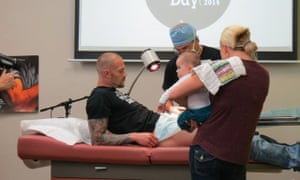
Vasectomies are an act of love, argues Jonathan Stack. Photograph: World Vasectomy Day
Expanding access to vasectomies in developing countries has now become Stack’s life mission. In 2012, he created World Vasectomy Day while working on a documentary about his journey through fatherhood and decision to have a vasectomy. “The plan was to have 100 doctors in 20 countries do 1,000 vasectomies in 24 hours,” he says. “And we came very close to that.”
Men need to share the burden of birth control
Studies indicate that reducing fertility can result in far-reaching benefits – from improvements to maternal and child health to poverty reduction and long-term environmental sustainability. In 2012, the Bill and Melinda Gates Foundation and the UK government’s Department for International Development co-hosted a summit on family planning and outlined an ambitious new goal: to make affordable contraception available to an additional 120 million women and girls in the world’s poorest countries by 2020.
Four years on, important gains have been made: more than half of the 69 countries have delivered on their commitments, and an additional 24.4 million women and girls now have access to modern contraceptive methods. But some experts say progress has been slower than expected because efforts have overlooked a key population: men.
“We need to engage more men to support their partners and spouses,” says Monica Kerrigan. Photograph: World Vasectomy Day
“We’re falling behind,” says Monica Kerrigan, former deputy director of family planning with the Gates Foundation and a senior adviser to FP2020, the global partnership formed after the summit to carry out its objectives. “I think a missing component is the need to engage more men to support their partners and spouses.” Among the many ways they can do that, she says, is by shouldering some of the burden of birth control, including, for those who no longer want to have children, voluntary sterilisation, or vasectomy.
Stack agrees. As it is, he says, men are largely left out. Most family planning programmes target women and girls, and with good reason: globally, the biggest barrier to reducing birth rates is gender inequality – population growth is fastest where female literacy is low, violence against women is common and reproductive rights are not protected.
Still, the reality remains that men tend to dominate decision making about family size and birth control. At the same time, they tend to be detached from or opposed to family planning, and the result is often that their partners discontinue using birth control or never start at all. In fact, of the unmarried women who say they don’t want to get pregnant within the next two years, close to a quarter don’t use contraception because someone close to them opposes it – one reason for the 74m million unintended pregnancies that occur annually.
“We’re now realising that while it’s important to focus on women and girls, we can’t continue with business as usual,” says Kerrigan. “We have to positively disrupt the status quo.” World Vasectomy Day, she says, is just that – an effort to secure men’s engagement, using modern innovations that can accelerate progress.
No scalpels
One of those innovations is the no-scalpel vasectomy. First performed in China in the 1970s, the technique made what was already a safe, simple procedure – a pair of small incisions to sever the duct that delivers sperm from the testicles (the vas deferens) – even more so. Using the no-scalpel approach, a provider need only locate the vas deferens under the skin and make a single needle puncture through which to cut it, minimising the risk of bleeding.
Men equate vasectomy with castration, or believe it will cause them to be impotent
“That modification really facilitated the spread of vasectomy across the globe,” says Carmela Cordero, a reproductive health expert with EngenderHealth. “Before, it was only the urologist who could perform a vasectomy. Now, we’re training nurses, midwives, clinical officers. You don’t need sophisticated equipment, you don’t need an operating room. It’s inexpensive, and it takes less than 15 minutes.”
And yet, for all its virtues, vasectomy is still an uncommon practice in the developing world and the least known modern method of contraception in poorer countries. In sub-Saharan Africa, where the unmet need for family planning is greatest, fewer than 100,000 men have had the operation. By comparison, female sterilisation, which is costlier , more time consuming, must be performed in a hospital and can result in serious complications, is among the most widely used methods of contraception worldwide.
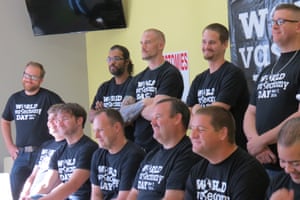
Some of the volunteers for WVS 2014. Photograph: World Vasectomy Day
One reason for that, says Ricky Lu, director of family planning and reproductive health at non-profit Jhpiego, is that vasectomy has long been mired in misconception. “Many men equate vasectomy with castration, or believe it will cause them to be impotent,” he says. Where accurate information is lacking, he says, demand for the procedure is very low, and “there are few trained providers offering the service” as a result.
Jhpiego is trying to change that through programmes like Tupange (“let’s plan” in Kiswahili) in Kenya, which aims to make modern contraceptive methods available to the urban poor and to educate men about the benefits of voluntary male sterilisation. The country is one of a long list that will celebrate the fourth annual World Vasectomy Day on 18 November, 2016. Now a global movement, the event is supported by the International Planned Parenthood Federation, Marie Stopes International, FHI 360, and the ministries of health of India, Indonesia, and Kenya.
WVS is celebrated all over the world, including Indonesia. Photograph: World Vasectomy Day
As before, the day will feature an 18-hour “vasectomy-thon” with medical professionals from around the world performing the procedure, as well as a training session for would-be providers in Kenya. “We’ll also have a wellness centre where men can get a general check-up, as well as counselling and testing for HIV and hypertension,” Stack says. “We think that part of being a responsible partner is taking care of one’s health.”
Kerrigan says vasectomy is part of catalysing men to support contraception. “If the majority of men supported their partners in using the contraceptive method that they want, we could go a long way toward preventing the 74m unintended pregnancies that happen every year,” she adds. “We need to change the way we think about men and boys in this space.”
Join our community of development professionals and humanitarians. Follow @GuardianGDP on Twitter. Join the conversation with the hashtag #SheMatters.
The astute woman of child-bearing age develops a facility to tune out of alarmist headlines about the biological clock. But every now and again an expert comes along and offers the kind of soundbite that cuts through. The latest came courtesy of Gillian Lockwood, medical director of Midland Fertility Clinic, who last month said: “It may not be true that women should be having babies at the time of GCSEs, but they shouldn’t leave it much later than graduation. Age 25 is exactly the time when today’s young women have left university, are trying to get off on a good career, trying to find someone who wants to have babies with them, and trying to get on the housing ladder.”
Twenty-five? In a supportive society, women keen to conceive in their mid-twenties might find it realistic to do so. But not in the current climate, where the financial crisis, spiralling property prices, unstable employment, austerity and low pay have combined to trap many members of Generation Y in perpetual financial adolescence.
Millennials talk to their parents about drugs, sex and jobs
Last year I interviewed people in their twenties up and down the UK who desperately wanted children but felt their situation was too precarious. Many were living in rented accommodation or with their parents, faced low pay, unemployment or insecure work, and felt they had no chance of getting on the property ladder anytime soon. They are, essentially, priced out of parenthood.
It’s a depressing state of affairs that has left some wondering whether reproductive technologies might be the answer. What if you could freeze your eggs and put having a baby literally on ice until things were looking a tad more grown up?
In the US, the marketing of egg freezing as a kind of insurance policy for millennials is already in full swing. Facebook, Apple, and the US military now offer egg freezing as an employee benefit. Fertility company EggBanxx estimates that by 2018, 76,000 women will have frozen their eggs. EggBanxx, which describes itself as “Uber, but for egg freezing”, has slogans including “Smart women freeze” and “Lean in, but freeze first!” and throws “Let’s chill” events aimed at young women. Could the UK soon follow suit, as more and more women put off the decision to have children? Inquiries into egg freezing at private clinics in Britain reportedly surged by 400% between 2014 and 2015, and more than half of these came from women under-35.
In the US, the marketing of egg freezing is in full swing. Facebook and Apple now offer it as an employee benefit
Mehrunissa, 23, plans to freeze her eggs in the next two years. “Ambitious, career-driven women often find it difficult to settle down – in terms of finding suitable partners,” she says. “Other women, who feel more of a time pressure to have kids, feel like they’re in a desperate situation where they need to find a man and settle as soon as possible, so freezing your eggs makes you immune to that sort of pressure, and also puts you in absolute control of your life. I envisage that when I do decide to have kids it’ll be for the right reasons rather than a feeling of desperation or losing a battle against time.”
She seems far too young to be thinking about such an extreme course of action but then again, the younger a woman is when she freezes her eggs, the better the chances are of conception. Not that there are any guarantees, and it can very costly – at least £5,000 in some London clinics; the more cycles you invest in, the better is your chance of conceiving. As for Mehrunissa’s aim of being in “absolute control”, when it comes to fertility, there is no such thing. But in a world in which young people lack stability it isn’t hard to understand why the illusion of it can be seductive.
“Social circumstances have delayed a lot of things. It’s not just about not having children younger but about not having a job, or a stable career younger, or not having a home,” explains Angel Petropanagos, a research associate in impact ethics at Dalhousie University in Canada, who spoke at a recent debate in the UK organised by the Progress Educational Trust, asking “Can you put motherhood on ice?”
“There is all this financial and social instability that has contributed to delayed parenting,” Petropanagos continues, but “one of the challenges is that in the US, egg freezing is really targeting a particular demographic with their advertising … upper middle-class women who are already privileged. These are the kind of women whose parents and grandparents are paying for egg freezing as a graduation present.”
Related: I had my eggs frozen. I wish someone had told me how difficult it was | Eleanor Morgan
And this is one of the major problems with egg freezing: that it is being portrayed as an option available for all women to delay motherhood, regardless of their income, when in reality, the costs are prohibitive to many, especially younger women. But because the clinics are arguing that your twenties are what Petropanagos calls the reproductive “sweet spot” when your eggs are more likely to yield results, young women are buying into the dream.
Sarah Martins Da Silva, a consultant gynaecologist based in Dundee, points out that “social egg freezing is a personal choice, but you could argue that it actually discriminates against this [younger] demographic as egg freezing needs to be self-funded, and costs several thousand pounds.” She refers to a report by the Centre for Population Change which details how womenwho remain childless largely do so because they have never wanted children, or because they simply haven’t met the right person yet. “On that basis, I would say the target market is the 30 to 35-year-old career woman who has not met Mr Right, who recognises that they are at risk of fertility problems as they get older, and who wants to preserve better quality eggs and an option to use them in future fertility treatment.”
At 34, Natalie (not her real name) could be said to fit into that category. “I’m still very much living that ‘young professional in London’ lifestyle,” she says. “Although I am in my thirties I don’t feel stable enough in myself [to have children]. I part-own a house and earn a decent wage, but freezing my eggs just seems like it could potentially buy me some time. It’s pricey, though, which is why it’s still only a consideration.”
In the UK, young women are not yet being aggressively targeted by clinics offering egg freezing. But as it takes longer for them to get on the career and housing ladders, you do wonder how many others will soon be faced with the same choice, and how companies will take advantage of that anxiety. If egg freezing is hawked as a sort of “wonder solution”, it is surely only a matter of time.
Related: London hits record low for new affordable housing, figures show
The danger is that the overwhelming focus of this will be on the individual reproductive choices of wealthier women, when instead we should be addressing the social structures preventing young women on lower incomes settling down sooner and having children earlier. Lack of affordable housing and maternity and paternity pay, along with (in)flexible or unreliable employment and prohibitively expensive childcare are all factors in our reproductive choices. It would do all women an injustice to neglect to challenge these barriers because of egg-freezing technology’s seemingly miraculous allure.
Electronic cigarettes have turn out to be a lightening rod for controversy among authorities in the health care occupation, with research supporting their likely to support some smokers quit, while other folks believe that the electronic gadgets could serve as a gateway to nicotine addiction by luring teen smokers.
Basically put, nicotine is a very addictive compound, regardless of whether delivered as a vapor or through combustion as a regular tobacco cigarette. It raises your heart fee and blood strain, and has a direct effect as a stimulant on your central nervous method.
With their alluring colors, flavors and packaging, and with out formal FDA regulation of packaging, marketing and distribution at this time, professionals and critics have legitimate concerns about Massive Tobacco’s capacity to mold and influence the delivery of nicotine to teenagers. And, as Massive Tobacco continues to invest better sums in production and distribution of electronic cigarettes, gaining a greater foothold in overall revenues, critics are now a lot more concerned than ever.
With e-cigarettes presently accounting for almost two billion a year in revenue, massive tobacco companies are entering the game in higher numbers. In fact, the maker of Camel cigarettes is scheduled to begin distribution of an e-cigarette by the finish of this month. And a subsidiary of Altria, the maker of Marlboro, programs to enter the field later on this year, along with Lorillard, the manufacturer of the leading US e-cigarette brand, Blu.
“It has been beneficial for assisting folks to cease smoking tobacco cigarettes but turning e-cigarettes into an entry port for younger folks is shameful,” said Klaus D. Lessnau. MD, FCCP a pulmonary and crucial care expert at Lenox Hill Hospital in New York City.
As the two a concerned mother or father and a physician, Lessnau is adamant that intervention and education by parents and teachers is vital in order to avert long term generations of teenagers from turning into nicotine addicts before they graduate from substantial college.
“My 15 year previous daughter tells me that some of her friends smoke e-cigarettes regularly,” Lessnau explains, “and to make this feasible is dishonest behavior from greedy businesses.”
“That is the very explanation that the FDA need to regulate e-cigarettes. It remains unscrupulousto use electronic cigarettes to flip teens and young adults into nicotine addicts,” adds Lessnau.
Even though e-cigarettes may definitely have a role in marketing harm reduction—reducing the danger of lung cancer and heart disease and helping some persistent smokers eventually quit–the possible for nicotine addiction establishing in teenagers deserves a spotlight in the national conversation, especially amongst dad and mom and teachers.
FDA regulation of all aspects of the production, distribution, as nicely as a strict ban on all marketing of the liquid nicotine units need to come sooner than later, Lessnau believes.
Whilst the FDA passed a rule in April of this yr to enact legislation to regulate electronic cigarettes as “tobacco products”. This would successfully ban product sales to minors, and would include a requirement that e-cigarette businesses disclose power of nicotine and all elements. Some come to feel that that the ongoing delay till formal passage may pose a risk to the well being and security of teens. And until this kind of a rule is adopted, the FDA’s Center for Tobacco Goods does not have the authority to regulate the sale or use of electronic cigarettes as tobacco items. This comprehensive method could really get years due to the legal concerns and several interests at stake.
And interestingly, the FDA has nevertheless to recommend advertising and marketing restrictions on e-cigarette manufacturers involving any ban on candy or fruit flavors, which are prohibited for use in normal tobacco cigarettes.
So far, 38 states, have previously prohibited revenue of electronic cigarettes to minors. This is primarily based on a report by the National Conference of State Legislatures. In addition, virtually a dozen states have passed some type of a ban in public places this kind of as schools and government buildings.
In accordance to a survey in 2012 launched by the Centers for Condition Management and Prevention (CDC), almost 3 % of US teens admitted to employing an electronic cigarette in the previous month. Far more importantly, the study noted that middle college students’ use of e-cigarettes had in fact doubled from 2011 to 2012. General, that much more than 1.78 million U.S. middle and large school students had experimented with e-cigarettes in 2012.
The CDC study also mentioned that amid those youngsters who tried e-cigarettes, early 75 % also smoked a typical tobacco cigarettes, generating the argument that e-cigarettes could be an entry stage to use of traditional tobacco products.
By Jonathan Ingram, Nic Horton and Josh Archambault—Mr. Archambault and Mr. Ingram are Senior Fellows, and Mr. Horton Policy Analysis Analyst, at the Foundation for Government Accountability.
U.S. Property Majority Leader Eric Cantor’s gorgeous loss in the Virginia principal to underfunded insurgent candidate David Brat sent shock waves by means of the nationwide political establishment, but its affect on the American men and women may rival the outcome of a state senate major in Arkansas, as the architect of the “Private Option” Medicaid growth lost his major largely on the expansion issue. Lawmakers in the 24 states that have not expanded are beginning to see the prospective political fallout from supporting an “alternative” Medicaid expansion program.
Voters Driven by ObamaCare’s Medicaid Expansion Situation
In Arkansas, three-term Republican State Representative John Burris misplaced a main runoff for a State Senate seat to first-time candidate and political novice Scott Flippo. Rep. Burris, an architect of the ObamaCare “Private Option” Medicaid expansion, need to have walked away with the GOP nod right into the State Senate right after a November vote for which Democrats failed to area their personal candidate.
Rep. John Burris: Private Choice ObamaCare Growth Architect
Burris had much more identify ID and substantially a lot more funding: the most recently offered campaign reviews display Burris obtaining outraised Flippo almost three-to-one—including tens of thousands of dollars in contributions from hospital lobbyists and other Personal Selection-supportive well being care special interests.
By all accounts, Rep. Burris has been the face of the ObamaCare Private Choice. Not only did he sponsor the ObamaCare growth bill, he came up with numerous of the empty guarantees utilised to squeeze just enough help to enact the plan.
Despite the political frenzy induced by the Personal Choice debate, Rep. Burris was still the favored. Flippo was a political unknown when he announced his candidacy earlier this yr, but as he hit the trail his message was simple and clear: ObamaCare growth is undesirable for Arkansas taxpayers, and John Burris is to blame for it.
Rep. Burris must have been a minor weary heading into the runoff.
An anti-Private Selection message throughout a specific election for a State Senate seat last yr vaulted Republican John Cooper to workplace in a district that hadn’t elected a Republican given that Reconstruction.
As Flippo’s anti-PO message seemed to take root, Rep. Burris’ campaign message seemed to vacillate among help and opposition for the system. While he claimed to have by no means shied away from his assistance for the Private Selection, he explained on at least a single voter’s manual that he “opposed” the Private Option law he crafted. And later on, he claimed in a Television ad to have blocked the ObamaCare exchange, even though he truly voted for it.
Despite his try to muddy the waters, and his supporters’ complaints that Flippo was making the entire race about ObamaCare, Rep. Burris couldn’t escape his direct involvement with expanding Medicaid below ObamaCare in Arkansas.
The Future of ObamaCare’s Medicaid Expansion Personal Alternative is Uncertain At Best
Final 12 months, funding for the Personal Alternative just barely squeaked by in the Arkansas Legislature. This previous legislative session, the plan barely survived a funding-reauthorization vote in March. Soon after 4 failed attempts, weeks of arm-twisting and legislators publicly trading their votes for pet projects, the system just barely survived, without having a single vote to spare in the Senate. Principal elections have previously tipped the stability strongly against the Private Choice.
The Senator whose retirement designed a pitched battle among Burris and Flippo was also a supporter of the ObamaCare Private Choice. And prior to this runoff, another Personal Option supporter, Senator Bruce Holland, was defeated in his own major by a committed anti-Personal Selection candidate.
On Friday devastated Malcolm informed an inquest how he had to observe his wife “die twice” at Sandwell Hospital, in West Bromwich, West Mids.
Offering evidence at Smethwick Coroners Court he explained he would never have left his wife’s side for her remaining four days if he had identified she was nevertheless alive.
He extra: “I was told it was only the machine trying to keep her breathing and there was no stage prolonging the inevitable.
“They informed us there was absolutely nothing a lot more they could do and she would only reside for a couple of minutes when I turned the machine off so I explained my goodbyes.
“It is like grieving for her dying twice, I mentioned goodbye twice.
“If I knew she would keep alive for 4 days I would in no way have left her side.”
Grandmother Marilyn had been hospitalised right after falling down the stairs of her home in West Bromwich and suffering a bleed to the brain.
She was rushed to Sandwell Hospital at 12.30pm on May three soon after her husband discovered her lifeless body at the bottom of the stairs.
Medical professionals advised her desperate household that practically nothing could be accomplished to save her daily life.
That left Malcolm with the heartbreaking choice to flip off the existence support trying to keep his wife alive at 6pm the identical day.
Bu the household rushed back to the hospital on Could seven soon after discovering she was nonetheless alive the preceding day when Malcolm phoned the hospital.
Daughter Joanne Highfield, 39, informed the hearing: “We did not know that for 3 days she had laid there alone, she was still breathing.
“Nobody referred to as us, no one told us our mum was even now alive.”
Adjourning the inquest for 3 months, Assistant Black Nation Coroner Mr Angus Smillie mentioned: “It is an sudden flip of occasions, you went property contemplating she had passed away only to find out days later that she was in reality even now alive.
“It would be inappropriate of me to conclude the inquest nowadays due to the fact of the uncommon situations.
“I would like to adjourn for three months for a lot more health care information and for an investigation into exactly what took place in people intervening days.
“It is a fairly extraordinary flip of occasions.”
A spokesman for Sandwell and West Birmingham Hospitals NHS Believe in, which runs Sandwell Standard Hospital, stated the death was currently being extensively investigated.
Sam Holdsworth, communications help officer, extra: “Our condolences go out to Mrs Greenhill’s family at this hard time.
“Deaths in our believe in are totally investigated.
“Ought to the coroner request that we examine any specific concerns arising from the ongoing inquest then we are committed to delivering information rapidly and totally.”
Leader of Sandwell Council Darren Cooper has now named for a full investigation into how the blunder was permitted to occur.
He stated: “My ideas go to the household. It really is a shocking set of conditions.
“There seems to have been a enormous breakdown in communication between the the hospital group and the loved ones.
“I hope that that there is a full investigation into what has occurred because some thing has gone significantly incorrect and it demands seeking into.”
A protest in 2011 towards the health and social care bill, which ‘opened the floodgates for complete-scale privatisation of the NHS’. Photograph: Demotix / melpressmen/Demotix/Press Association Pictures
The kite flown by a rightwing thinktank that everyone must have to shell out for access to healthcare (£10 each and every can conserve the NHS, 31 March) marks a critical turning point in switching in the direction of a fully paid-for overall health services. This approach has been lengthy planned. 1st Blair encouraged and then pressured NHS hospitals into turning into independent basis trusts, self-standing suppliers within a competitive industry. Cameron took this considerably additional by ruling that all NHS functions would be open to tender by any experienced supplier. The Lansley overall health and social care bill, hatched in deepest secrecy before the 2010 election with not a word about it in the Tory manifesto so that it had no electoral mandate, opened the floodgates for full-scale privatisation of the NHS. But usually the mantra was repeated that the NHS would continue to be “cost-free at the stage of support”. Now that assurance is being kicked away.
The thinktank authors decry the NHS as “an outdated, cosseted and unaffordable healthcare technique”. They do not mention that the Tory government has deliberately imposed a £20bn reduce in NHS funding in excess of the existing five-12 months time period to place it below intolerable strain and perhaps breakdown in purchase to pave the way for a gradual switch to a entirely paid-for personal support, which has often been their secret aim, just like prior to 1948. Nor do they mention that the NHS, at a price of 8% of GDP, is the most expense-productive in the world, half the comparative expense of the private US healthcare technique.
We now see why the Tories have been so keen to demean the NHS on each and every event in excess of the past couple of months. Cue the want to junk the previous, failing NHS and announce the dawn of a brand-new, burnished private healthcare method – and at a bargain price of £10 a month. But keep in mind tuition charges: capped at £3,000, then trebled. If every Uk grownup paid £10 a month, this new tax would increase £5.4bn. Treble that, or a lot more, and we’re speaking significant cash for the healthcare privateers. Michael Meacher MP Labour, Oldham West and Royton
• How dare Norman Warner and Jack O’Sullivan denigrate the NHS in such strident terms? I refer them to the meticulously documented report in August 2013 by Dr Don Berwick, who was commissioned to investigate patient security in the NHS. Berwick recognised that healthcare is political and that the existing sustained denigration of the NHS is an ideological campaign which smears “a globe-leading instance of dedication to health and healthcare as a human correct” that should be emulated, and that even though the NHS does have patient safety troubles, so “does each other healthcare technique in the world”. Noting that huge changes are needed, Berwick also says the achievements of the NHS are enormous and suggests that “drama, accusations and overstatement” are ideal avoided.
Reform, which published Warner and O’Sullivan’s report, believes that “by liberalising the public sector, breaking monopoly and extending option”, high-high quality solutions can be made available to absolutely everyone. Current experiences with private companies to the NHS in Cornwall and Suffolk, for instance, indicate otherwise. Reform was set up by a Conservative MP and a Tory strategist. The membership of Reform’s advisory board displays that it is funded by private businesses, with chief executives, chairmen and directors of main pharmaceutical organizations, worldwide investment banking institutions, and accountancy firms constituting the vast majority of board members. Could there be an ideological or probably even some other agenda right here? Gwen Parr Pulborough, West Sussex
• It is very misleading to describe the thinktank Reform as “independent”. In 2012, its leading six funders incorporated Prudential Insurance coverage, KMPG (consultants concerned with the NHS), McKesson (a pharmaceutical distributor and healthcare data business), Baxter (a private healthcare company) and BMI (which runs 66 hospitals and treatment centres in the country). These organisations all have a vested curiosity in the tendering out and privatisation (“reform”) of the NHS and in reviews that help the idea of charging for NHS companies. Sean de Podesta Brighton
• It would have been excellent if the Guardian had described Norman Warner’s and Reform’s vested interest in criticising the NHS. Warner is an advisory board member of Synlab, a German company involved in NHS privatisation, although Reform is funded by BMI Healthcare, Serco and Sodexo – organisations that have significantly to acquire from the break-up of the heath services (hat-tip to @SolHughesWriter on Twitter for this data). Ian Sinclair London
• The suggestion of an NHS membership fee is the newest instance of weird and unsocial reasoning. Folks apparently won’t place up with tax rises to assist the NHS so let us complicate matters by charging charges. How does that help – except if the motive is to exclude these unable to shell out the fee from NHS solutions? The denigration of tax leads to decrease taxes, major to reductions in public services, which leads to the wealthy paying for private medicine, personal education and, one day no doubt, private street lighting and refuse collections, leaving the dispossessed with ever-dwindling providers. Peter Cave London
• Alternatively, Warner and O’Sullivan could propose a .05% rise in income tax, to raise approximately the exact same sum, but with no added collection charges, as opposed to their scheme, which, if it is something like road tax, would lose over half the amount collected in administration. Rod Parfitt Cleeve, Somerset
• I go through with curiosity your report on a potential £10 per month membership for the NHS. As a surgeon in the NHS, 1 of the key issues I encounter with planned and emergency surgery is weight problems. Most obese patients are aware of the overall health consequences of their weight problems nevertheless, they will not look to know of the hazards they encounter for stomach surgical treatment. Simply moving them on and off an operating tables can be hazardous for the employees alone. The dangers of surgical procedure and submit-operative problems can lead to a prolonged recovery with a threat of main disability. Possibly there need to be an elevated membership fee in line with BMI? Kathryn McCarthy Consultant surgeon, Bristol
• Great juxtaposition of headlines on page two on Monday: “Spend £10 a month to use the NHS” and “Poorest properties face £120 council tax rise as security net goes”. Jeanne Warren Garsington, Oxfordshire
• The wellness sector regulator Check is committed to parity of esteem for bodily and psychological health providers, and is not recommending that funding for psychological overall health providers need to be cut by twenty% much more than for acute hospitals (Mental health solutions want targeted investment, not even far more cuts, 26 March). Beneath the NHS payment technique, national rates are not set for psychological health services. Pricing choices for psychological wellness companies are manufactured at regional level by commissioners and suppliers, who are anticipated to have regard to the national principles but can make their very own value adjustments where there are very good causes to do so. Professor Ric Marshall Director of pricing, Keep track of