Worries etiketine sahip kayıtlar gösteriliyor. Tüm kayıtları göster

10 Nisan 2017 Pazartesi

Let’s put our NHS worries in perspective – and celebrate what we have | Ann Robinson

The latest GP story to scare us witless says that a “record number of GP practices closed last year, forcing thousands of patients to find a new surgery”. Pulse, the GP website, highlighted NHS England data that shows nearly 100 practices closed in 2016 – a 114% increase on 2014 – and that more than a quarter of a million people have had to change practice. Cue claims that GPs aren’t coping with increased demand, the NHS needs more cash and staff – and that the whole system is teetering on the brink of collapse.


But what’s the true picture? Are you likely to find yourself without a GP any time soon? Is the service contracting? And is the closure of a GP practice always a bad thing?


People get understandably upset when a much loved, familiar, local service shuts down. It doesn’t matter if it’s a GP surgery, library, community centre or takeaway. I’ve been registered at the same GP practice for 30 years; I never go, but I was quite discombobulated when I got a letter saying that one of the long-serving doctors was retiring. If I had memory impairment and long-term health problems, I’d be upset and anxious if the whole practice closed down and I had to move somewhere unfamiliar.


But let’s keep this story in perspective; there are 7,674 GP practices in England, so the closure of 92 practices means that 98.8% remain open. Primary healthcare services are not necessarily contracting; in 2014 there were 5,729 more GPs and 1,688 more practice nurses employed by GPs than 10 years earlier. Admittedly, a lot of those GPs and nurses work part time, and there’s also more work done in primary care now. So no one’s saying that there’s not a case for more money, training and efficiencies. It’s just that it’s not fair to paint an apocalyptic vision of sick people roaming the streets of England, looking in vain for a doctor to treat them.


Every person with an NHS number has the right to be registered with a GP and get primary care services, and access to hospital-based services if needed. If you assault your GP and are removed from the practice, the local clinical commissioning group (CCG) will refer you to a specialist GP who takes on the role of caring for the violent, abusive or just unmanageable. If you kill someone and go to prison, you have access to a doctor. There is literally nothing you can do in the UK that means you forfeit the right to see a GP. If all your local GP practices are full, the CCG has an obligation to find you one. Asylum seekers and refugees are also entitled to NHS care while waiting for their application to be processed and are encouraged to register with a local GP surgery.


The overwhelming majority of us who live in the UK will be registered with a GP from the day we’re born to the day we die. And in an era where Obamacare is under attack in the US, it’s worth celebrating what we’ve got in this country. Sure, the system’s not perfect, but there’s no evidence that any one system works better across all parameters; and no one can argue with the fact that our system is equitable.
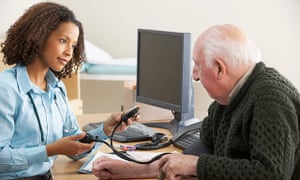


GP treating an elderly patient


‘GPs are more inspected, regulated and scrutinised than ever before – and quite right too.’ Photograph: Alamy

There is a problem with the huge variation in quality between different GP practices. But inspections by the Care Quality Commission and the publication of its findings are helping to enforce high standards across the board. The CQC can demand an action plan when practices are found to be inadequate and shut down surgeries on the spot if they’re found to be unsafe. Every British GP has to undergo an annual appraisal, providing evidence that they meet professional standards. Any GP that fails to play ball can be denied the right to continue working. This is a completely different landscape to when I started working as a GP nearly 30 years ago. We are more inspected, regulated and scrutinised than ever – and quite right too.


But some GPs can’t hack it. There’s more work, more scrutiny and higher expectations now. Practices have to adapt, and many single-handed GPs find that hard. The climate nowadays favours larger group practices; there are economies of scale, a mix of skills among a range of GPs, less risk of professional isolation, and more chance of resisting the creeping penetration by large global healthcare organisations. Virgin Care already runs more then 400 NHS and social care services. Single-handed practices can’t fight the Goliaths who are sniffing round primary care.


So some GPs are taking early retirement, and fewer young medics are opting for general practice. And 1.2% of GP practices closed last year. Some of those practices will be a loss, some won’t. Many patients will be upset that they’ve had to move but no one will be left without a GP. And that’s the real story.


Let’s put our NHS worries in perspective – and celebrate what we have | Ann Robinson

11 Ağustos 2016 Perşembe

"A few spots cast a cloud over my day": male teens on secret body worries

Although body image issues are thought to mainly affect young women, young men also worry about their looks – and more so than you might imagine. A new survey of 1,000 primary and secondary students in the UK found that 55% would consider changing their diet to look better, and 23% said they believed there was a “perfect male body”. It’s thought that pressure to look good comes from friends, celebrities, advertising and social media.


Related: Male teens and body image: what are your biggest fears and insecurities?


Below, four male teenagers and one young adult reveal their biggest body worries. Share your thoughts and comments (or indeed your own secret fears) below the line.


James, 19, Cornwall: ‘I don’t think I’ll ever be satisfied with my body’


I am most insecure about my skin and body. During my teenage years I spent hours looking in the mirror, thinking about what I hate and must improve on. I want to be more muscular, which requires eating more, but I’m also petrified of getting fat. Every bite becomes an existential matter, and I worry about being tipped over the edge into obesity (I’m 5ft8 and weigh roughly 138lbs). My skin is another root of my self-loathing. I’m constantly worried about bumps and spots and blackheads and obsess over the smallest of blemishes, washing my face sometimes more than 10 times a day. It really tears me apart.


I don’t think young men necessarily worry about their body image more than girls, but the problem is that we don’t talk about it. All my body worries really affect my mood. It sounds so dramatic but a grey cloud can be cast over my day because of a few spots.


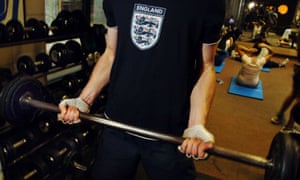
Boy lifting weights


‘I worry about making a fool of myself at the gym, so work out at home instead.’ Photograph: Linda Nylind for the Guardian

The past couple of months have been defined by diet and exercise and a will to get fit. But I also have a weird paranoia about joining a gym. I worry about making a fool of myself, so have gym equipment I use at home instead. Now, I work out pretty much every night. I’ve done hours of research on the best exercises and correct diet for muscle growth, but still don’t think I will ever be fully satisfied with the way my body looks.


William, 20, Essex: ‘Body image is a growing problem among young men’


Until my late teens I was overweight and although I am now (nominally) a normal weight for my height, I still feel fat and unattractive. I hate the way I look, whether I’m clothed or naked.


The ubiquity of internet porn has opened up a whole new world of insecurities around penis size


William


I think body image issues among young men are a growing problem. Advertising has made a big difference, for example the infamous Levi’s jeans ads that used a “perfect” male body to sell denim. Levi’s ads from the 1980s to me seem like a turning point, the first time that male sexuality and body image were used to sell us something (although practically any ad for men’s clothing or perfume now does this). These ads make me feel inadequate.


The ubiquity and extremity of internet porn has also opened up a whole new world of insecurities around penis size for men. Add that to an aggressively macho sports culture that worships strength and often denies men a chance to express their problems and you have the perfect storm for bottled-up anxiety, poor self-image and body dysphoria.


Craig, 17, Leicester: ‘Young men don’t talk about their own bodies in a negative way because they could get bullied’


I am sure a lot of men worry about their bodies, because we are expected to be muscular and some aren’t. Thinner men also think that they won’t get a date and some try to bulk up. During college years, young men always compare themselves to others and normally those who are classed as “fit” by girls.


I sometimes look at my own body and question whether it is good enough. I know I’m not as thin as I would like and I don’t have time to go to a gym (and wouldn’t because there are too many people there). I often feel embarrassed to take my top off, especially with friends because I don’t know what they will say, so I try to keep my tops a little baggy. Young men don’t talk about their own bodies in a negative way because they could get bullied, and younger men, especially, see their issues as weaknesses for others to exploit.


Mike, 19, Nottingham: ‘Young men are obsessed with body image’


I have always thought I was scrawny, that my shoulders are not broad enough and my upper arms not muscly enough. I could never go swimming or topless on a beach because I just don’t look good. I also worry that I’m not tall enough and that my skin is too pale.


Young men worry about body image every bit as much as young women do


Mike


Young men are obsessed with body image and worry about it every bit as much as young women do. Their worries can sometimes be more acute because there is so little debate about how images of “perfect” male bodies are used by the media. Whereas most girls are made aware that they are often unrealistic, there is no similar attempt to educate young men about body image. I am constantly anxious about the way I look in public: worries about being scrawny mean I can’t wear T-shirts or any close-fitting clothes. I feel uncomfortable without a jacket on to shield me, so I fear hot days when I have to leave the house without one. I also find it difficult to interact with girls without feeling like they are judging me. The way I appear feels like the most important thing in my life and one I can’t get right.


Tony, 18, Leicester: ‘My scrawny physique has led to me being called anorexic or compared to a heroin addict’


Boy staring out of window.


‘Comments about my body have made me insecure about ever taking my top off at the beach or poolside.’ Photograph: Noel Hendrickson/Getty Images

Everyone has always found great amusement at being able to form a ring around my wrists between their thumb and little finger. My scrawny physique has led to me being called anorexic, while others compare me to a heroin addict. All these comments have made me insecure about ever taking my top off at the beach or poolside. Worse still is that men often seem to size you up and then treat you accordingly. At times I feel like a non-entity. Everyone assumes that a two-seat sofa will fit three when I am one of the two already on it. Girls can be no different. They flock to the muscular men without ever giving boys my size a second glance. I am often told that it’s more a matter of confidence, but having a skinny physique means I don’t have any.


There seems to be a deficit of sensitivity in most male groups. It is always about banter and bravado. If one of us were to spontaneously open up there would be a tsunami of criticism and jokes.


  • Some names have been changed.


"A few spots cast a cloud over my day": male teens on secret body worries

25 Ağustos 2015 Salı

Obamacare Cadillac Tax Worries For 26% Of Employers

[unable to retrieve complete-text articles]


The latest evaluation of the so-named &ldquoCadillac tax&rdquo on wealthy health care ideas projects a single in four employers giving health advantages &ldquocould be impacted&rdquo by the regulation in 2018 if they don&rsquot make adjustments to their benefit structures. The Cadillac tax was developed as component of the Reasonably priced Care Act largely as [...]


Obamacare Cadillac Tax Worries For 26% Of Employers

22 Temmuz 2014 Salı

Safety worries continue to be above three-man or woman IVF | Ted Morrow

Human Embryo at 40 Days

Human embryo at forty days. Photograph: Carolina Biological/Corbis


Later on this year, parliament is anticipated to debate a alter to the law that would let a reproductive treatment named mitochondrial substitute (MR) into fertility clinics. A current review of proof by the United kingdom fertility regulator, the Human Fertilisation and Embryology Authority, stated that this experimental strategy is “not unsafe”. But although the aim of the process is noble – to eliminate human mitochondrial ailments, which have an effect on around 1 in four,000 men and women – a amount of essential safety issues continue to be unresolved.


Evolutionary concept predicts a mismatch in between the DNA in the donor’s mitochondria and the mother’s nuclear DNA, with potentially serious and unpredictable consequences for any embryo designed utilizing MR, an concern my colleagues and I wrote about last 12 months. When MR is carried out experimentally, it has been proven to alter the metabolic process and cognitive capacity of mice. In other species it benefits in male sterility, diminished survival, accelerated ageing and modifications the expression of numerous hundreds of genes. But there is a lack of data from species a lot more closely connected to humans – a gap in our information that we felt would be sensible to fill before proceeding to clinical trials.


The issue of mismatching arises due to the fact of the peculiar way mitochondrial DNA (mtDNA) is inherited through mothers only, offering an possibility every generation for the mtDNA and some of her nuclear DNA to be passed on collectively. This allows organic assortment, nature’s good quality control mechanism, to weed out combinations of interacting mitochondrial and nuclear DNA that are not compatible with a single one more. Over prolonged evolutionary timescales within populations, the two genomes will become matched or “coadapted” to one yet another. MR breaks these coadapted genomes apart, providing rise to a range of damaging results. The particular style of the experiments needed to detect mismatching is particularly essential. They normally involve manipulating a number of distinct mitochondrial types and creating observations in many people. With no these attributes the capacity to detect mismatching is bad. So whilst demonstrations that MR is technically feasible (with the production of four macaques in 2009), it is not ample to rule out the probability that the types of effects seen in other species will not be located in primates or people.


The HFEA appear unconvinced that the coevolutionary process for which there is evidence is true, contemplating “this kind of hypothetical issues to be extremely unlikely”.


The report, passed to the Department of Health on the 2 June 2014, discusses a number of other technical issues connected to the security of the technique, and even outlines a quantity of areas for which far more data is essential. But for the issue of mismatching, they do not advise any more study. This is regarding, as it appears a realistic security concern is getting ignored.


From my perspective as an evolutionary biologist, a frequent thread in the debate so far is that people are somehow particular circumstances, despite the reality that the same set of mitochondrial genes are found from yeast to humans, and that the evolutionary theory is a general one, applying even to plants. This suggests to me that greater exposure to and integration of current evolutionary ideas in the training of biomedical scientists would be beneficial. This is not a new suggestion a whole discipline called Darwinian medication is gradually gaining traction, with the aim of providing health care professionals the capacity to far better predict ailment threat.


It also appears that if evolutionary biologists were incorporated earlier in the consultation procedure, there may have been far more cautious conclusions about the security of MR. The inertia behind the regulatory procedure, collectively with the resistance from biomedical researchers to contemplate evolutionary arguments, is substantial. I propose that in the long term policy makers would do effectively to cast a broader net when searching for experience and evolutionary biologists themselves ought to engage much more with policy makers.


Scientists are usually urged to grow to be more concerned in building proof-primarily based policy, and so it is relatively perplexing to see that when concept and proof are presented they are roundly dismissed as irrelevant or trivial. Evolutionary biology can offer you a excellent deal of understanding about the planet around us, such as ourselves. We need to make use of that expertise.


• Ted Morrow is an evolutionary biologist at the University of Sussex


Safety worries continue to be above three-man or woman IVF | Ted Morrow

16 Nisan 2014 Çarşamba

Nauru dengue fever outbreak sparks fresh worries about detention centre

An outbreak of dengue fever at an Australian refugee detention centre in Nauru sparked calls on Thursday for greater oversight at the facility, which has been criticised by rights groups and the United Nations.


Immigration minister Scott Morrison’s workplace said that health-related officers at the centre had confirmed three cases of the probably fatal tropical condition, which is transmitted by mosquitoes.


Two of people affected by the sickness are possible refugees awaiting processing, while the other was a member of employees working at the centre, they said.


“All 3 folks have been isolated and are getting suitable treatment and are anticipated to make a full recovery,” a spokeswoman for Morrison stated in a statement.


But Sarah Hanson-Youthful, immigration spokeswoman for the Greens, stated that outbreaks are inevitable in crowded camps like the 1 on Nauru and known as for higher independent oversight of the overseas refugee detention method.


“The government can not management these types of outbreaks in the harsh detention camp surroundings. With seven households to a tent, it truly is unattainable to preserve youngsters safe from the ailment,” she said in a statement.


Australia uses detention centres in Nauru and on Manus Island in Papua New Guinea to procedure would-be refugees sent there after attempting to get to Australia, usually in unsafe boats soon after paying out people smugglers in Indonesia.


Canberra’s difficult stance on asylum seekers, such as offshore processing and a blanket ban on men and women arriving by boat ever settling in Australia, has been criticised by the United Nations and other groups as unlawful and inhumane.


The UN large commissioner for refugees in a November report stated neither centre had a “fair and effective system for assessing refugee claims” nor offered “safe and humane situations of treatment method in detention”.


Nauru in specific has come underneath fire following president Baron Waqa earlier this 12 months unilaterally sacked the nation’s complete judiciary, 1 factor of what critics have called a creeping authoritarianism there.


Critics say that Australia has been unusually silent about developments in Nauru in purchase to make certain that the camp, which is vital to its immigration policy, stays open.


In February, a riot at the detention centre on Manus Island in Papua New Guinea left at least one particular asylum seeker dead and 77 a lot more injured.


Nauru dengue fever outbreak sparks fresh worries about detention centre

3 Mart 2014 Pazartesi

Whistleblower threatened with sack more than hospital death fee worries

It warns the hearing, “may outcome in formal disciplinary action, not excluding dismissal.”


The trust rejected the allegations of altering the death prices, calling them an “outrageous slur”, and mentioned independently-verified proof “categorically disproved” her claims.


Its chief executive, David Loughton, said at the time: “Improvements in the hospital’s mortality costs have been audited and independently verified.”


Mrs Haynes-Kirkbright was suspended by the believe in after allegations of bullying, harassment, persistent swearing and unprofessional behaviour have been created towards her by colleagues by means of their union in April 2012.


She claims situations at the hospital had been as negative or worse than at scandal-hit Stafford, and that the allegations and suspension were created in an try to silence her.


She stated: “I come to feel like David fighting Goliath. I’ve just been telling the truth.”


Her case comes following Jeremy Hunt, the Health Secretary, referred to as for a “culture of openness and transparency” following the Stafford Hospital scandal.


Mrs Haynes-Kirkbright, initially from Texas, worked as a health coder at Wolverhampton, which involves recording particulars of the care obtained. The role does not require medical qualifications.


She claims coders have been recording too many deaths beneath palliative care, which are deaths classed as unavoidable and would consequently not alter a trust’s death prices record.


Mr Loughton said: “We categorically deny all the allegations and have provided thorough evidence to the Everyday Mail to assistance our place that the suggestion of any incorrect-undertaking is merely not accurate.”


Whistleblower threatened with sack more than hospital death fee worries

15 Ocak 2014 Çarşamba

Swedish Researchers Raise Security Worries About J & J"s Tylenol


Open bottles of Extra Strength Tylenol and Ext...

Extra Power Tylenol and Extra Power Tylenol PM, soreness relievers with the lively ingredient acetaminophen/paracetamol.  (Photo credit: Wikipedia)


Tylenol, Johnson &amp Johnson’s large selling painkiller, is in the news nowadays after Swedish researchers raised inquiries about the security in infants and pregnant women of its active ingredient, paracetamol. The researchers, primarily based at Uppsala University, found that paracetamol can cause decreased learning and memory capabilities in youthful mice.


Paracetamol is the key ingredient also in Panadol, a related painkiller broadly marketed in the U.K. and numerous other elements of the world. Panadol is created by London-primarily based GlaxoSmithKline. (Disclosure: I very own stock in GlaxoSmithKline.)


The study was performed by Henrik Viberg and three other individuals, and was published in Toxicological Sciences, the journal of the Reston, Virginia-based mostly Society of Toxicology.


An abstract of the study can be go through here.


The researchers were reported yesterday as urging that parents must be cautious in administering the drug.


As quoted in the Upsala Nya Tidning newspaper,  Henrik Viberg commented: “This exhibits that there are factors to restrict the use of paracetamol late in pregnancy and to hold back from giving the medicine to infants.”


Swedish Researchers Raise Security Worries About J & J"s Tylenol