Google etiketine sahip kayıtlar gösteriliyor. Tüm kayıtları göster

12 Nisan 2017 Çarşamba

Is mental illness real? You asked Google – here’s the answer | Jay Watts

When people ask whether mental illness is real or not, my suspicion is that they really mean: does mental illness have a physical, material cause, in the same way as cancer or a broken leg? Can it be tested for, diagnosed and treated with the same certainty as a physical disease? Whatever the answer to that question, it should cast no doubts or aspersions on the very real suffering of people with mental health problems.


When we think of mental illness, we tend to think of categories such as schizophrenia, bipolar affective disorder, depression and anxiety. These categories cannot be verified with objective tests, in the way as, say, cancer or diabetes can. Neither do they tend to stand up to scientific scrutiny as distinct constructs. For people with a diagnosis of schizophrenia, there is no specific treatment or predictable outcome. To take another example, most people with a diagnosis of depression have symptoms of anxiety, and vice versa.


Framing problems as being part of distinct disorders is a powerful thing to do, and loads of the categories that reach our diagnostic bibles appear relatively new, historically. Many can be traced back to the pharmaceutical industry, which has a direct interest in shaping behaviours and emotions into various symptoms, to be sold back to consumers as disorders requiring medication. This has led people to argue that these categories do not represent real illnesses.


Such arguments can come across as diminishing the lived experience of mental anguish, its embodiment, and the potential role of medication. Some mental health problems are less contested than others, and medication does save lives. It would be cruel to suggest a grieving widow unable to cope could not benefit sometimes from anti-anxiety medication, or to deny an option of antipsychotics to quell the intrusive, menacing, persecutory experiences that can accompany an acute psychosis.



In the City


In the City: ‘There is little political will to combine increasing mental distress with structural inequalities.’ Photograph: Alamy Stock Photo

The problem, though, is that the efficacy of such treatments, and the mechanisms by which they work, tend to be oversold and presented as long-term solutions. We are right to be cautious about the overprescription of antidepressants, to take one example. These tend to be prescribed along with a scientifically dodgy idea that the pills are rejigging an imbalance in serotonin, a chemical messenger in the brain. Similarly, emerging evidence suggests that the long-term prescription of antipsychotics may actually hinder recovery for many.


Psychological and social factors are at least as significant and, for many, the main cause of suffering. Poverty, relative inequality, being subject to racism, sexism, displacement and a competitive culture all increase the likelihood of mental suffering – as the survivor-led collective Recovery in the Bin brilliantly illuminates. Add into the mix individual experiences such as childhood sexual abuse, early separation, emotional neglect, chronic invalidation and bullying, and we get a clearer picture of why some people suffer more than others.


Crucially, all of these experiences affect our psychological and physiological makeup. For example, the Adverse Childhood Experiences studies show that childhood trauma, neglect and structural oppressions manifest later not just in mental distress but in chronically inflamed bodies stuck on hyper-alert (this we can pick up through blood tests).


Governments and pharmaceutical companies are not as interested in these results, throwing funding at studies looking at genetics and physical biomarkers as opposed to the environmental causes of distress. Sociologists argue that this is because citizens who consider themselves ill are easier to manage than people who consider themselves maddened by toxic families and injustice.


Mental health practitioners often try to sidestep this whole debate by claiming that most sensible professionals subscribe to a biopsychosocial model of mental distress. But unfortunately such a model nearly always ends up privileging the biological, despite the best intentions of many psychiatrists. As a society, we have a somewhat fetishistic relationship to bodies and brains, a moth-to-light-like attraction to shiny brain-imaging scans or a hint at a breakthrough in genetic research. Correlations between experiences and genetic phenotypes are conflated with evidence for molecular pathways that prove the existence of distinct disorders. Studies with only a few participants generate multiple headlines, and remain entrenched in the public imagination. At the same time, treatments that we know work fail to get funding due to the unconscious bias towards biological explanations.


We must shift our focus to one that validates the lived experience of people who are suffering, however they choose to understand their pain


Consider family interventions. Professionals have known for decades that reducing hostility, criticism and emotional over-involvement in families improves how well people recover from a number of serious mental health problems, regardless of how severe patients’ symptoms are. Yet despite the robust evidence base – up there with medication and individual therapy – family work is rarely available through the NHS.


Similarly, there is little political will to combine increasing mental distress with structural inequalities, though the association is robust and many professionals think this would be the best way to tackle the current mental health epidemic. The idea that mental suffering is a “real” illness residing in individuals, and especially in their genes, can therefore be damaging.


It is also not necessarily what the public wants, despite the current emphasis on the “just like any other illness” narrative. When researchers ask people how they understand mental illness, they tend to prefer psychosocial explanations to medical ones. Simplistic biological explanations tend to increase stigma, not least because they cement a division between ill and well people. Many people have felt silenced and traumatised by such accounts, feeling that the illness model shuts down their truth.


There is an implicit suggestion here that mental health problems have to be viewed as being equivalent to physical illnesses if they are to warrant society’s care and funding. This may inadvertently cement prejudice, given the contested nature of mental illness. Mental health problems are no less real, no less disabling, for occupying a peculiar space between inner and outer, meaning-making and meltdown, the inner world and the environments that shape us.


Rather than clumsily trying to squeeze people’s distress into different boxes, and attempting to convince the public that these reflect illness processes, as with flu or cancer, we must shift our focus to one that validates the lived experience of people who are suffering, however they choose to understand their pain.


Some will choose to conceptualise their distress as an illness, others as a result of trauma, others yet as an embodied response to the mixed messages that are rife in society about who and how we are supposed to be. Our guiding principle should not be whether such forms of accounting are true or false, but whether they are useful for any given individual at any given moment. Acceptance, after all – is the great friend of good mental health just as writing over one another’s truth is the great enemy.


Is mental illness real? You asked Google – here’s the answer | Jay Watts

28 Şubat 2017 Salı

NaturalNews De-Listed by Google in Attempt to “Smooth the Information Flow” to the Masses

The bold attack upon NaturalNews and all it’s affiliated websites by Google de-listing them is unprecedented. Censorship in this form effectively means two thirds of the internet will not be able to access NaturalNews information or products. A huge financial hit for business side of things as well. This all falls in line with the blueprint layed out in several documents on how to “smooth the information flow” and provide a “shared understanding” of what reliable information is to the masses. In an effort to destroy so-called “fake news“. Which really means any point of view not propagated by the establishment. Real journalism linking to real facts, documents and scientific studies in now considered fake news. Truly Orwellian. This author writing about the subject just a weeks ago on BlogsNaturalNews. The very site used as a justification for the take down. I watch in horror as the mechanics of the plan fall into place.


National Intelligence Council Report Describes the Final Solution for “Fake News”


The two documents are cited in the article.


National Intelligence Council the report titled Global Trends Assessment: Paradox of Progress


World Economic Forum’s  Global Risks Report 2017


A chapter in the World Economic Forum’s Global Risks Report 2017 . One of the documents covered in the article. It details how to “smooth the information flow” and questions “democratic ideals like free speech and the market place of ideas“. Falls right into line with the other document from National Intelligence Council and what is happening now with some of the major players in alternative media.


In the chapter Trends Transforming the Global Landscape there is a section titled Converging Trends Will Transform  Power and Politics. This word product puts in stark terms how the internet has empowered individuals and alternative media to influence opinion and spread information on a global scale as never before. It offers only one solution at the end of the chapter to the problem of “fake news” that has broken the monopolies. Can you guess what that is?


This report was issued a week before the Obama Administration left office. Here is their solution.


For authoritarian-minded leaders and regimes, the impulse to coerce and manipulate information—as well as the technical means to do so—will increase.   GTA p27


Chilling to free speech as it is being applied to some of the biggest names in fact based media. InfoWars being banned by Google adroll and NaturalNews being de-listed by Google off two thirds of the internet.


Undermining the “shared understanding” provided by complete corporate control of  almost all media that made globalization possible. Leading “some” to question democratic ideals like free speech and the marketplace of ideas. Wow. It doesn’t take a technocrat to figure out who the “some” are. The sky is falling and the information environment is fragmented because the globalists cannot compete in the market place of ideas. So shut it down. Competition is a sin.


Please sign the White House Petition against this tyranny


Visit RaptormanReports for news, science, and history.


Sources:


National Intelligence Council Report Describes the Final Solution for “Fake News”


https://www.dni.gov/index.php/global-trends/trends-transforming-the-global-landscape


http://blogs.naturalnews.com/


https://petitions.whitehouse.gov/petition/petition-ban-googles-blatant-suppression-free-speech


NaturalNews De-Listed by Google in Attempt to “Smooth the Information Flow” to the Masses

22 Şubat 2017 Çarşamba

What is yoga? You asked Google – here’s the answer | Swami Ambikananda Saraswati

The answers you get to this will depend on who formulates the response. The sleek 30-something clad in organic cotton leggings with a healthy glow might answer, while holding “plank pose” for an excruciating length of time, that yoga is about being simultaneously buff and chilled out. Ask a grizzly old Hindu monastic like myself and you’re likely to get a more knotty and byzantine response.


We humans are explorers. As soon as we stood upright we set out to explore the planet, taking fire with us. In the Shanidar cave high on the Bradost mountain of Iraq, rest skeletons respectfully laid in a foetal position, on beds of flowers gathered from the valley below. Each skeleton has artefacts useful for an afterlife carefully placed to hand. They may date back as far as 65,000 years and belonged to Neanderthals. Thus it seems that all branches of humanity were explorers, peering into the veil of death. We have always asked questions such as “What is all this?” and “Where did it all come from?”, and, most maddening of all, “Who am I?” That, we can speculate, is how all religion, philosophy and science were born. That is how yoga was born.


Now, as ever, we live poised at the edge of an abyss, not knowing what the next moment will bring. And in this age of the ascendancy of science, that edge has grown closer – and the abyss deeper – in our consciousness: we are a “biological accident”, so nearly not, and yet here we are, crying out like the poet Rabindranath Tagore: “When should I find myself complete in myself?”


In India, once the ancient hymns and rituals of the Vedas (the cornerstone texts of Hinduism) had been formulated, and once the great Indus Valley civilisation had risen and turned to dust, a group of people, women as well as men, gave up the cities and went into the forests – to become known as the aranyakas (forest dwellers). The core ritual of the Vedas was the sacred fire ceremony. The aranyakas internalised exploration, taking the heat and light of their sacred fire into the darkness within as they sought to understand consciousness. In the forests they contemplated truths that had been handed down for centuries by word of mouth. Their contemplations became the final portion of the Vedas, called the Upanishads. It is the Upanishads that crystallised the teachings of yoga.


The word Upanishad means, roughly, teachings received when you have drawn close: they are for dedicated students, the seekers who hang around asking persistent questions. The Katha Upanishad is one such teaching, in which a young seeker becomes disillusioned with the status quo and as a consequence is condemned to death. In a dialogue with death he is given the very first recorded teaching of yoga as a means of understanding life.


This teaching begins by acknowledging that, “moment by moment”, we are faced with choosing a more meaningful response than our habitual knee-jerk reaction. This, then, is the first definition of yoga: walking through the fire of refusing our first reactions, knowing that while we might not choose our circumstances, we can choose our responses to them.


Many Upanishads continued this exploration of yoga, but around 250 BCE (a date not set in stone) a remarkable philosopher delineated the quest of yoga in what has become known as the Patañjali Yoga Sūtra. This articulation of yoga became established as one of the six orthodox philosophies of Hinduism.


These sutras hold meaning for us when the perennial questions about what we are, what our existence is, whether it has any meaning at all, arise anew. The word sūtra means “thread”: we reach for that thread to navigate the abyss and reach for the deep, in search of our “complete” self. The very first word of these sūtras is “atha”, meaning “now”. It is a word that is also a symbol, something sacred, something pregnant with meaning: it was the now in which the Sage Patañjali delivered its message; it is the now in which I contact that teaching; it is the now of my readiness to be open and receptive to it – and when I am, that is yoga.


The Sage Patañjali defined yoga as “the stilling of the movement of thought in the mind” in order to “know the true self”. He had adopted an even more ancient philosophy that held that while the idea-of “I”, the socially constructed self, was a mirage – behind it, masked by it, was an immanent and universal “self” worth the search. Yoga is a means whereby that search is made.


In the centuries that followed, yoga became the sap nourishing the mighty tree of Hinduism, flowing into every branch of its rich philosophy while always remaining rooted in the Vedas. From the 18th century onwards, as India was colonised, yoga travelled to Europe and academics took to translating its many texts into their own languages.


Then, in 1893, at the Parliament of the World’s Religions in Chicago, a fiery, saffron-clad Hindu monk, Swami Vivekananda, stood up and began his brief speech with the address: “Brothers and sisters of America … ”, bringing the audience to its feet for a two-minute standing ovation. Vedic philosophy had burst upon the west, bringing yoga with it – and we embraced it. Yoga is now ubiquitous. It appeals because it offers us a means to deal with ancient questions that cannot be suppressed.


What is yoga? Despite its global travel, it remains all that we do to still the mind in order to know the true and universal self. So, is the well-toned figure sweating it out on the yoga mat doing yoga? Yes, by using the body the yogi trains the attention to handle the perennial questions. But the person walking their dog beside the river and contemplating the truth behind self, life and death, is also doing yoga. The beauty of yoga is that it meets us wherever we are and then invites us to continue the exploration – like young Nachiketas, the seeker in the Katha Upanishad, questioning even death.


My own yoga teacher, a Himalayan monk called Swami Venkatesananda, said: “Yoga is all those practices that enable us to discover health – which is not the absence of the symptoms of sickness, but which is wholeness and holiness, an inner state of being in which there is no division at all.”


What is yoga? You asked Google – here’s the answer | Swami Ambikananda Saraswati

8 Şubat 2017 Çarşamba

How often should I wash my hair? You asked Google – here’s the answer | Jessica Hopkins

“Should” is a tricky word. And not one I’m generally a fan of. By definition it’s used to indicate “obligation, duty, or correctness, typically when criticising someone’s actions”. For example: you should wash your hair; it looks awful. But do we have a duty or obligation to wash our hair? And if so, is that for the good of our own health or to appease society’s expectations of personal hygiene and grooming?


While growing up, I vaguely remember instructions to brush my teeth and have a wash but the parental guidance on hair washing specifically escapes recollection. My earliest memory of washing my own hair as a child is my older sister’s mirth that not only did I bypass shampoo and go straight for conditioner, I hadn’t rinsed it out either. Some 25 years of hair-care trial-and-error later and I’ve more or less got it nailed.


My hair is dark, curly and very thick, so can easily withstand a good four or five days before it needs washing. And, to be perfectly honest, it’s not unknown to push this to a full week, providing I’ve been giving it a thorough soaking and comb-through each day. Does that seem gross?


Maybe it is, maybe it isn’t. Excessively thick, curly hair can benefit no end from a little natural oil – in fact I’d go as far as to say that natural sebum is the world’s greatest serum – but for someone with thin, straight, blond hair, five days without washing generates an entirely different result.


So how do you determine what’s best for you? Just answer these simple questions. Is your hair long or short? Straight or curly? Thick or thin? Do you exercise (sweat) a lot? Swim? What’s your ethnicity? Do you live or work in a heavily polluted area? Do you use a lot of products? Do you heat style? Colour? Throw in the three sweeping hair “types” of oily, normal or dry and suddenly I feel an instructional matrix coming on. What the hell is normal hair, anyway?


Any one of these, or combination, will provide a different answer, ranging from every day to every other day, to every three days, to once or twice a week to the more obvious “as often as it needs it”. Most hair professionals tend to generalise at twice a week (fine hair excepted) but I know that isn’t applicable to me, at least, so why would you trust that? (As an aside, and just to be clear: whether you usually wash your hair every day or twice a week, using dry shampoo does not count. That’s like spritzing Febreze on your favourite T-shirt and saying you’ve washed it. You haven’t.)


The global shampoo industry will be worth an estimated $ 25bn-plus by 2019, in part thanks to the increase in dry shampoo sales and the increasing demand for natural and organic products. But is shampoo just another thing we’re programmed to buy because we think we need it? Every week my sister and I dutifully went to the supermarket with our dad, maintaining the illusion that we were helping with the weekly shop when in fact we were roaming the beauty aisle (with inexplicable free rein), searching for the new releases in shampoo and conditioner that we had just seen on TV. This was less because we had a keen interest in maintaining scalp health, more because we felt compelled to try the new products that promised us dreamy curls in a catchy way: “Don’t be so mean to your hair! Get hot!” (Yes, hands up if you’re a child of 80s commercialism.)


Given that shampoos can now only advertise how they will affect how hair looks, and not what is actually going on inside each follicle, then how can we trust that we do actually need to use it at all? To be Jen for a moment: “Here comes the science bit, concentrate.” If you usually wash your hair every day and then skip one it’s likely that your hair will become greasy pretty quickly. This is because while shampoo is taking away any dirt build up, it can also be drying out your natural reserves of sebum: the scalp thinks it’s in a drought so overcompensates, you get greasy hair and need to wash it again. Continue ad infinitum. (As another aside: be gentle when you wash, and only do the roots. Excessive scrubbing activates the oil-producing sebaceous glands, thus becoming a self-defeating action.)


When the hair and scalp are healthy, as much sebum as is needed is produced naturally. In theory, once you’ve weaned yourself free, you shouldn’t need to use shampoo at all, just a daily “wash” with water.


Given that I’m halfway to No Poo with my five-day average, I am incredibly tempted to give it a whirl properly. As for you (assuming you aren’t ready to ditch the suds): does it smell bad? Does your scalp itch? Is it stuck together? Does it look dull? Do you want to? Then probably, you already know the answer.


How often should I wash my hair? You asked Google – here’s the answer | Jessica Hopkins

4 Şubat 2017 Cumartesi

Search me: should you Google your therapist?

Britain’s therapists have been busy over the past six months. In the weeks that followed the EU referendum, there was barely a client who didn’t kick off with Brexit. Some wanted to express feelings of disenfranchisement and anger, alongside guilt for not having done more to convince others of their opinion. Others, who had struggled with feeling excluded or rejected in the past, felt alarm bells ringing again. As one therapist blogged last summer, “External events can often trigger deep-seated feelings of anxiety” – and this was one hell of an external event. Other arguably bigger events have followed.


The conversations that take place in the consulting room are critically different from the kind you might have with a neighbour, friend or relative. There are no nods, no groans, no knowing smiles; that’s not the way most therapy works. Sigmund Freud was the first to argue that a therapist needed to be a blank slate, so that a client could project their feelings on to them, a process called transference. These feelings can then be acknowledged and talked about.


But Freud lived decades before the internet. Online searches and social media mean clients can now unearth myriad personal details about their therapist – not just whether he or she is married, but whether they have children, sign petitions, share photos, supported Leave or Remain. This has turned some clients into quasi-stalkers, not unreasonably: if you are expecting someone to help sort out your life, you might well want to see what they’ve made of theirs.


Pam Custers, a couples therapist working in London, tells me she is scrupulous about her neutrality. Recently, she has been aware that some clients want her to drop the barriers, to talk about world politics and how it is affecting them; but she is careful about what she writes or posts online.


A therapist might be divorced, or of a particular religion – such things can resonate deeply with certain people


“I find myself censoring what I put out there. I would describe my approach as extremely mindful – not paranoid, I hope – about taking certain positions. So I have set my Facebook settings as high as they go, and I try to stay neutral on Twitter. But, at the same time, I do worry about having to internalise who I am in the world and how that will affect me.


“It’s a real conundrum for us therapists. We want to have opinions, we do have opinions, but if we express them, some clients may take them as judgments. And I believe people do their best work when I’m a blank canvas.” Custers has a website and is trialling an online relationship-therapy programme, so she is far from a technophobe. “But I was trolled recently on Twitter, so I can see the potential problems. It’s quite a scary world out there.”


Sophia Hilsely, a psychodynamically trained psychotherapist, takes a slightly different tack. According to psychoanalytic convention, she should fend off all personal queries about herself by asking why her clients are asking. “The idea is that you want to heighten anxiety, to get through to the subject.”


But this is something that fewer and fewer clients are happy with. “Most people now want solutions immediately,” Hilsely says. “I will share some things with some people.” For example, she wears her wedding ring, and notes if and how clients react. Her directory profile also informs them that she has a law degree, has lived in the US and Europe, and has worked for the civil service.


Many clients won’t settle for such scraps of information. Aaron Balick, a relational therapist based in London, wrote what he believes was the first-ever clinical paper on the effect of being discovered on Google, and then followed it up in 2013 with a book about social media, catchily titled The Psychodynamics Of Social Networking: Connected-up Instantaneous Culture And The Self.


“We can’t predict under what conditions people will Google their therapist,” Balick tells me, “or how what they find might unconsciously affect the relationship. Hot topics are very individualised. A therapist might be divorced, or have one child, or be of a particular religion – such things can resonate deeply with certain people.”


So Balick teaches therapists how to keep their professional and personal personae separate and secure. “The boundaries are more permeable now; it’s difficult not to give something away. Some are less worried about it; others are very strict. With an issue like Brexit, client and therapist can be on opposite sides of the divide, but you have to be able to talk about it. That doesn’t mean saying how you voted, but I’d say most therapists give a bit away.”


It’s hard not to. In Glasgow, a female therapist who offers post-abortion counselling, and who wished to remain anonymous, tells me she has been burned by Google search. She was invited to speak about her work at a Scottish university; afterwards, a student journalist contacted her to ask if she was the person of the same name who had posted comments below a feature about abortion on the Glasgow Herald website. She asked for clarification, but the student paper ran a story linking them to her anyway. “If a client saw that article, by Googling my name, they would conclude I was judgmental about abortion – and there is nothing further from the truth. As a therapist, you want your clients to know that you are there for them and you are not going to judge them.”


Even Freud fed his patients, sold them paintings, gave them dogs. He went to see the mother of one, saw one dance


In a city with a history of sectarianism, she aims to be neutral. However, because she is involved in refugee work at a local school, a project that has a digital footprint, it’s easy to work out her religion and that she has children. She’d prefer greater anonymity. “It gets in the way. It puts up barriers. You learn not to respond to any of the usual signals [from clients] – Rangers, Celtic, the different schools – because you have to manage what they know about you.”


Many therapists blog about mental health or current affairs to help them stand out from the pack. As Martin Pollecoff, chair of the professional therapy body, the United Kingdom Council for Psychotherapy, points out, some of the best-known psychotherapists in the UK, such as Susie Orbach and Stephen Grosz, write extensively about themselves and their work. “Freud’s idea of the blank screen was a cute one, but even he never did that. He fed his patients, sold them paintings, gave them dogs. He went to see the mother of one, he went to see another one dance.”


Therapist Philippa Perry makes TV and radio programmes, and writes an advice column for Red magazine. She doesn’t bury her opinions or her personal life – she has 21,000 Twitter followers and is often photographed alongside her artist husband Grayson – but then, she no longer sees clients privately. “If your online presence puts potential clients off, so much the better: you probably wouldn’t get on anyway,” she says. “I’m not going to compromise who I am outside the therapy room. But inside it, I am there for whoever has signed up to work with me.”


She believes that people should use technology to inform prospective clients about how therapy works, and what they personally have to offer. “In order to find a therapist, you probably need all the information you can muster. Being a blank is not my way. I’m for transparency.”


How much do clients want or need to know? I spoke to a woman in her late 20s who told me she’d used Google to start her journey into therapy. “I contacted two therapists and then, based on their responses, met with the one who seemed the best fit. After that meeting, I Googled her. She has a website but she’d also written some articles about her own mental health. I didn’t want a therapist who would be preaching from on high; I wanted them to be able to relate. From what I read about her, I felt she would.”


Since then, she has stayed away from Google. “To be honest, I am not sure now that it is a good idea to know too much, so I haven’t done it again, but when making those first tentative steps, it helped.” As she says, it’s the way we now approach many initial meetings, from work contacts to first dates.


She has blogged about how she felt to be without her therapist over a summer break. Coincidentally, her therapist wrote about the same thing, from her own perspective. “We didn’t know that the other was doing it, and at first I did feel it was a bit bizarre, like an unsaid dialogue.” It would have been easy to read a lot, or too much, into it. “To start thinking: is she trying to say something to me? I prefer that now we meet every week, and it is what we say when we are face-to-face that is important.”


If clients shouldn’t Google their therapists, a therapist shouldn’t look up a new patient, at least in theory. The idea is that they should know only what the client brings to them; anything else will muddy the water. “The relationship is what’s created between the four walls of the consulting room,” says Nigel Dawson, a therapist based in Manchester. “To be influenced by other routes is damaging – to the client and also to the effectiveness of the therapy. I might find out information they hadn’t disclosed to me, and it might affect my opinion of them.” Also, as Perry points out, it might not even be true.


One therapist Googled a client who said he had a grand job, and he did. ‘It helped disentangle my disbelief’


Privately, some psychotherapists will admit that they have Googled clients. One female therapist told me about one client: “He was quite disturbed and I found some of what he told me a bit fantastical. He was paranoid, but I also thought my response to him might have been counter-transference [in other words, that she was responding emotionally to him]. He claimed to have a grand job in a big company. So I looked him up – and he did. I felt it was an excusable use of Google. It helped me disentangle my disbelief.” Another told me she might do an online search if a name seemed familiar, or if she had concerns for her safety.


Technology has transformed the way therapy can be delivered: by email, phone, video, options that some clients find easier or cheaper. Most therapists I spoke to offered some online counselling, though usually only to clients they had already met “in the room”. There are myriad support groups and mental health blogs. One therapy client, who as Life In A Bind blogs about borderline personality disorder, has had 14,000 people read her most popular post, about obsessive attachments. She sends her therapist a link to her posts, “but I’m very clear that I don’t want to communicate with her in writing when I should be telling her in person. So quite often I blog about things we’ve already discussed. The real strength of it for me is the community – the feeling that I’m not alone. But sometimes, reading other blogs, means I compare my treatment with theirs. I tend to want to live out my therapy through someone else’s story, which is not good. Equally, there’s a danger in relating to another therapist whom I met online. I tend to go to him when things are not going well with my own therapy.” Her regular therapist has warned her against this.


Therapy is not friendship, but the lines are just as easily blurred in the digital age. Some therapists give clients contracts that help them negotiate potentially tricky areas, such as whether they will acknowledge you if you happen upon them in the street. But what if you bump into each other on a dating site? Or find out more personal details through a friend’s Facebook connection? As Pollecoff says, “I’m 67 – my indiscretions were done in the dark. Dating is in the light these days. And you’ve got the whole James Bond life of trying to appear marvellous on Twitter and Instagram, too.” He recalls one client who spotted an ad he’d placed on a community noticeboard about wanting to buy a dinghy when he was living in Wales. “In the middle of the session, the chap says to me, ‘Are you still looking for a dinghy?’ It seemed creepy. I thought he was saying to me, ‘I know stuff about you.’”


On the day I speak to Pollecoff, he is off to see a client’s exhibition, but he is clear about where the lines are drawn. “I was invited. A client often wants you there, alongside them. I’ve been asked to give away the bride, and I will do that. I’ll be at the ceremony, but not at the reception. It’s never social.”


The digital age has given people access to more information and support, while eroding many of the strictures that surround a peculiarly formal relationship. Will a traditionally private practice continue to open up, in a blaze of light-filled expansion, or will the professionals be pushed into a monastic silence? For the “talking cure”, that would be ironic.


Louise Chunn is the founder of welldoing.org, an independent directory of psychotherapists and counsellors.


Search me: should you Google your therapist?

30 Kasım 2016 Çarşamba

If I have cancer will I die? You asked Google – here’s the answer | Ranjana Srivastava

On a Sunday afternoon, a relative calls. She is at a party and wonders if I can help a friend of a friend.


“Her brother is having cancer treatment and wanted to talk to you.”


“You know I don’t like doing this, especially if there is another oncologist involved.”


“I know,” she says contritely. “But she is so shocked and I thought just your words might help.”


Suppressing a groan, I ask: “What kind of cancer does he have?”


“It’s some form of blood cancer.”


“He needs a haematologist. I can try to suggest one.”


“Oh, that won’t do,” she says. “He lives in Germany.”


“Germany has really good healthcare! He doesn’t need my advice, especially on a disease I don’t even treat.”


“But people like us, we hear the word ‘cancer’ and freak out.”


The friend of a friend is a wreck and I can’t bear to turn down her request. So although there is very little I will say, I patiently hear her out. Her brother indeed has cancer and has met his German oncologist, commenced chemotherapy, and seems to be doing OK. He has young children and the family is anxious about prognosis. The friend asks me many times if he will die from his disease. I tell her as many times as I can that he seems to be in competent hands and that the question about prognosis should be directed towards his treating doctor.


I long to tell her that he has a highly curable disease but without knowing all the details, this wouldn’t be right. I end the call feeling somewhat like a politician, having batted away every meaningful question with a platitude but my hands feel tied.


“If I have cancer, will I die?”


As an oncologist, it’s both interesting and poignant to know that this is one of the most common answers people seek from Google. Dispensing with the obvious, “Everyone must die”, the answer I hope Google would give is: “Tell me more.” Google should ask for not just the type of cancer but the colour of your skin, the language you speak, how much you earn, what country you live in, the distance to the nearest cancer centre, and crucially, if you are married.


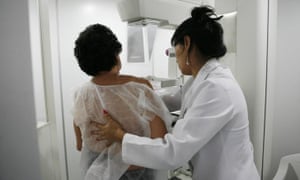
A woman undergoes a free mammogram.


‘The disparities in cancer outcomes based on the socioeconomic gradient are significant and sadly familiar to every oncologist.’ Photograph: Enrique Castro-Mendivil/Reuters

In the developed world, cancer survival rates are increasing. An Australian patient diagnosed with cancer today has a 67% chance of being alive in five years. Cancer Research UK states that cancer survival rates in the UK have doubled from 24% to 50% in the past 40 years. A recent American Cancer Society report calculates five-year survival for all cancers as having risen from 49% to 69% in the past 40 years.


If you have survived the first five years, the chance of long-term survival is increasingly optimistic, more than 90% for all cancers combined. These improved outcomes are attributed to early diagnosis and better treatments. Modern chemotherapy and radiotherapy regimens are unrecognisable compared to earlier decades. The march of immunotherapy continues, with new drugs able to delay cancer progression and extend survival in traditionally bleak scenarios including melanoma and lung and bladder cancer.


We now know that cancer is actually many different diseases, cancer cells are extraordinarily smart at outwitting the body’s defences, and a reasonable goal ought to be keeping cancer patients better for longer rather than expecting to banish cancer altogether. Amid the high survival rates for common cancers such as bowel, breast and prostate, detected early, the outcomes for brain, pancreas and stomach cancers remain dismal, with most patients expected to live for only a few years.


But apart from tumour biology, what else affects survival? Being male, an ethnic minority and being non-English speaking confers poorer outcomes as does social disadvantage, illiteracy, poverty and living far away from the full suite of services that modern treatment demands. The disparities in cancer outcomes based on the socioeconomic gradient are significant and sadly familiar to every oncologist, who nonetheless spend most of their time prescribing drugs because this is what they feel best equipped for.


Interestingly, marriage (but not living with a friend or a child) conveys a consistent and substantial impact on cancer detection, outcome and survival. Married people seek earlier attention for concerning symptoms, are more compliant with treatment, and die with greater psychological support. Married men benefit somewhat more than women but in the case of five common cancers, the overall impact is greater than published results of chemotherapy, leading the Journal of Clinical Oncology to state baldly: “Marriage is as protective as chemotherapy.”


It’s fair to say that if you are a cancer patient lucky enough to live in the rich world, you can be increasingly optimistic about your chances all along the continuum of cancer care, from diagnosis to terminal care. But what if a person living in a poorer country asks the same question? Unfortunately, the answer is more likely to be a straightforward: “Yes, you will die.”


Have scientists found the cure for cancer?

There are 14m new diagnoses and 8m cancer deaths each year. A staggering 70% of deaths happen in Africa, Asia and Central and South America. Poverty, poor governance, inadequate infrastructure and scarce specialists all play a role. Many countries have pockets of excellence but there is no comprehensive and easily accessible programme of cancer education, screening, treatment and palliative care.


Globally 20% of cancers are related to tobacco, use of which remains common, cheap and unregulated. Another 20% are attributed to vaccine-preventable infections such as Hepatitis B and C and the human papillomavirus. Patients suffer from the twin curse of living in cancer-promoting environments and lack of access to help when they need it.


But even if one took the sanguine view that everyone must die of something, it is the abject state of palliative care that should jolt us from complacency. While we may be occupied by opioid abuse, access to morphine remains a pipedream for most people around the world. Fully 90% of the world’s morphine is used by patients in the US, Canada, Europe and Australia.


Meanwhile, the vast majority of cancer presentations in developing countries are with advanced disease, where effective palliative care is not only the most practical but also the most compassionate intervention. But oncologists there have stories, such as the dying patient with a bleeding, infected and painful cancer who has travelled hundreds of kilometres in search of pain relief only to be sent home with paracetamol or ibuprofen, or nothing at all. Morphine is arguably the cheapest and most effective drug for palliation and is on the World Health Organisation’s list of essential medications but due to health illiteracy, stigma, misguided fears and misinformed government policy, dying with dignity is no more than an aspiration for most patients around the world.


As an oncologist, I am regularly humbled by patients’ disclosure that they lost track of everything else I said after the word “cancer”. Treatable or not, the very encounter permanently alters the lives of those who suffer and those who must watch on. No one, no matter where in the world, is “lucky” to develop cancer, but the next time you turn to Google and ask “If I have cancer, will I die?”, it may help to know what a loaded question it really is.


If I have cancer will I die? You asked Google – here’s the answer | Ranjana Srivastava

16 Kasım 2016 Çarşamba

Should I exercise if my muscles are sore? You asked Google - here’s the answer | Max Bridger

Muscle soreness is something many people experience for a couple of days after exercising. When the activity has been particularly intense or you’ve been unusually inactive beforehand, it can even last as long as five days. This ache is often referred to as Doms (delayed onset muscle soreness), and this annoying pain can cause people to avoid training and exercise until it has completely subsided, for fear of injury or intensifying the soreness. Luckily – or maybe unluckily – you needn’t wrap yourself in cotton wool or avoid all activity until you feel 100% again.


Before we go further into the creaky, sweary and achy world of aerobic- and weight training-induced Doms, it is important to note that you should be careful with very severe and localised bouts of muscle pain following exercise. Pain emanating from a focused area of the muscle can be a symptom of a muscle tear, which could have been missed if you are very competitive, determined, have a high pain threshold, or were simply aching equally everywhere and nearing the end of some particularly gruelling activity. If the localised pain is accompanied by bruising or swelling or you’re worried, it would be wise to stop and seek medical advice.


Weights


‘Muscle ache will be more severe towards the beginning of a new exercise regime; such as a weights workout plan.’ Photograph: Alamy

Sometimes the post-exercise pain encompasses the entire muscle group – as you may have experienced after weights or a challenging class – in which case you should ensure you warm up fully before your next bout of training. The pain may impede your ability to assume correct posture, suitable technique and safe practices, which will increase your risk of injury. So it’s important to take the correct precautions, such as warming up, stretching, cooling down, and extra rest periods.


Most commonly, muscle ache will be more severe towards the beginning of a new exercise regime; such as a weights workout plan or resistance class in the gym, or even the start of a new rugby or football season. This is because your body is not conditioned to the intensity or duration of the activity, and most likely you won’t use a full and proper cool-down period. When time to exercise is scarce, this is the bit we all have a tendency to skip. To reduce the inevitable Doms, increased frequency of training, and even a reduced volume of repetitions in regards to weights specifically, will help. Your fitness and conditioning will improve as you become used to the activity and increase your fitness. Reducing the volume of reps (repetitions) per muscle group, but hitting the muscle two to three times per week across more sessions, will allow for better recovery, less ache and more efficient progress towards your goals.


Muscle soreness can be caused by small micro-tears in the muscles, and/or the build-up of byproducts of intense activity such as lactic acid and calcium, which can be reduced with a proper cool-down period. These tiny tears to the muscle cells are nothing to be worried about; they are what cause your muscles to grow and repair (in combination with good nutrition and sufficient rest), making the muscles stronger and bigger over time. In the majority of cases, muscle soreness should not be a cause for concern and shouldn’t stop you training, rather it simply serves as a reminder that you need to:


cool down and stretch after intense periods of cardiovascular activity;


ensure your nutrition (including hydration) is up to scratch;


increase your fitness, which is likely to improve as the season or regime you’ve started progresses;


consider training more muscle groups per session, and multiple times per week, rather than a one-muscle group such as a biceps or a chest day – where too much volume is used, resulting in debilitating muscle soreness, and no extra progress for the pain.


Muscle soreness should lessen as you become used to the volume, intensity and duration of exercise, so you should only have to train while aching for the first couple of weeks of a fitness programme. Simply ensure you leave around 48 hours between training the same body part twice with weights to allow the muscles to fully recover before you hit your next session.


Woman stretches a leg


‘Cool down and stretch after intense periods of cardiovascular activity.’ Photograph: Alamy Stock Photo

Equally, in the same way that you shouldn’t stop training because you still have Doms, you shouldn’t label a workout as ineffective because you don’t experience severe muscle aches afterwards. This pain differs in intensity from person to person, and will lessen over time as you get used to the exercise. It does not have a correlation to muscle growth or improved fitness.


The best advice when weighing up whether or not to train with sore muscles is to listen to your body and distinguish between muscle ache, general fatigue (physical and mental) and an actual injury. If there is swelling and bruising around the site of pain or you’re worried, there may be some damage, so cease any activity that aggravates the area and seek medical advice. If your workout is extremely laboured even with a warm-up then consider training another part of your body or performing a non-weight bearing form of exercise instead – swimming, cycling or rowing.


Should I exercise if my muscles are sore? You asked Google - here’s the answer | Max Bridger

5 Ekim 2016 Çarşamba

What is PTSD? You asked Google – here’s the answer | Richard J McNally

The NHS reported last week that 12.6% of women in England aged 16 to 24 screened positive for post-traumatic stress disorder (PTSD) in a national study, compared with just 3.6% of their male peers. These findings were especially alarming as only 4.2% of women in this age bracket were identified as having PTSD in 2007. Although the assessments carried out in the two surveys differed somewhat, the new data seemingly implies a rising epidemic of PTSD among young women in England today.


The principal cause of PTSD is exposure to an extremely stressful, often life-threatening, event. Stressors that are unpredictable, uncontrollable and especially terrifying are those most likely to produce the disorder. Interpersonal violence, such as combat, rape, torture and domestic abuse, usually triggers PTSD more often than accidents, natural disasters, and events not involving deliberate intent to harm.


PTSD is a disorder of vivid memory. Sufferers do not merely remember their trauma; they re-experience it emotionally in the form of involuntary, distressing thoughts; nightmares about the trauma; and sudden sensory “flashbacks” of sights, sounds and odours that produce the illusion that it is happening once again.


Firefighters in Scotland

‘A psychological debriefing group consisting of firefighters or employees of a recently robbed bank was typical, although it was also used for individual survivors.’ Firefighters in Scotland. Photograph: Alamy

Yet the mind does not operate like a video recorder, infallibly encoding our experiences, traumatic or otherwise. And recollection is not like a replay of one’s experience. Rather, autobiographical recall entails reassembly of encoded elements of the event distributed throughout the brain.


Terror during trauma focuses one’s attention, strengthening memory for the most salient features of the experience, and occasionally at the expense of less salient ones as the phenomenon of “weapon focus” illustrates. Victims of armed robbery often encode and thus can recall details about the weapon, but sometimes fail to encode information such as the clothing worn by the assailant. Likewise, traumatised refugees seeking asylum who provide vivid accounts of an assault sometimes misremember the precise date that it took place. The upshot is that intense emotion at the time of an experience tends to produce robust memories of it. Hence, PTSD sufferers remember their trauma all too well.


Understandably, people with PTSD tend to steer clear of reminders of their trauma as best as they can. Activities, places, people and thoughts associated with the experience are avoided as much as possible lest intrusive memories become triggered. Sufferers are hypervigilant for potential threats, startle easily and are often irritable. Their sleep is disturbed, and their ability to concentrate in everyday life becomes difficult. They often lose interest in previously enjoyed activities, become disconnected from other people, and feel as if their capacity to experience positive emotions has disappeared. Finally, they can develop problematic beliefs, such as losing the capacity to trust other people and believing the world is an unpredictably dangerous place.


Acute symptoms of PTSD are common in the days following a trauma. But these must persist for at least one month before PTSD becomes diagnosable. Short-term stress reactions can be normal responses to an abnormal stressor, but the persistence of symptoms long after the stressor has passed is the hallmark of PTSD. For example, the clinical psychologist Barbara Rothbaum and her associates assessed 95 survivors of rape or attempted rape. They found that 94% of them met symptomatic criteria for PTSD within the first two weeks following the assault. The rate dropped to 65% and then to 47% approximately one and three months, post-assault, respectively. About half recovered naturally, whereas the others failed to remit.


Although exposure to one or more traumatic events is by definition essential for PTSD to develop, most people exposed to such events never develop the disorder. One representative survey of American adults conducted by the epidemiologists Naomi Breslau and Ronald Kessler found that 89.6% of the general population had experienced at least one traumatic stressor such as a serious accident, natural disaster, rape or the unexpected death of a loved one, yet only 9.2% developed PTSD. Such findings indicate that trauma is common, but PTSD is relatively rare, hence implying that risk and resilience variables influence the psychological impact of traumatic events.


Yet for years the study of risk factors for PTSD was de facto taboo for many working in the field of traumatic stress studies. After the diagnosis first appeared in 1980 in the third edition of the American Psychiatric Association’s Diagnostic and Statistical Manual of Mental Disorders, or DSM-III, some warned that research on risk factors amounts to blaming victims for their plight. But identifying statistical predictors of PTSD among trauma survivors no more blames victims than identifying predictors of other psychological or medical conditions. Indeed, progress continues as researchers pinpoint risk and resilience variables. For example, having a personal or family history of anxiety or mood disorders increases risk of PTSD, whereas above-average cognitive ability and good social support decreases it.


The evidence suggests many trauma survivors may prefer to rely on family, friends and clergy rather than counsellors


The recent NHS study underscores the urgency of taking steps to prevent PTSD, and to treat it effectively when it does develop. Primary prevention entails decreasing the frequency of events likely to trigger the disorder. Secondary prevention targets people who have recently experienced trauma.


A once-popular approach called “psychological debriefing” involved trained counsellors conducting a single session with trauma-exposed individuals shortly after their horrific experience. For example, a group consisting of firefighters or employees of a recently robbed bank was typical, although it was also used for individual survivors. The purpose was to prevent the emergence of chronic, post-traumatic reactions by having survivors describe aloud their thoughts and feelings during the trauma, reliving it while processing their emotions in the session.


Although debriefed individuals expressed gratitude for the efforts of their counsellors, dissemination of the method was premature. Indeed, most randomised controlled trials (RCTs) indicated that debriefed and non-debriefed trauma survivors did not differ in terms of symptoms at follow-up, whereas in other RCTs debriefing actually impeded natural recovery from trauma; non-debriefed survivors were doing better psychologically at follow-up than the debriefed ones.


Wood decoration at the charity Gardening Leave in Ayrshire, Scotland


Veterans work in the gardens and greenhouses at the charity Gardening Leave in Ayrshire, Scotland. Photograph: Murdo MacLeod for the Guardian

Taken together, this evidence suggests that many trauma survivors may prefer to rely on family, friends and clergy rather than professional counsellors. Having professional counsellors available is important, but compelling survivors to undergo psychological debriefing is not.


The story of the rise and fall of psychological debriefing makes an essential point. We must not rely on clinical intuition alone when treating survivors of trauma. They deserve better. Furthermore, the methods we devise must undergo rigorous evaluation in RCTs. This is precisely what leading clinical researchers have been doing. There are effective cognitive-behavioural therapies developed and tested by clinicians, such as Edna Foa and Patricia Resick in the US, Metin Başoğlu and Anke Ehlers in the UK, and Richard Bryant in Australia, among others.


An important element of these evidence-based therapies is the gradual, systematic exposure to traumatic memories until their capacity to trigger distress diminishes. Although most PTSD patients benefit from these treatments, others terminate treatment prematurely or fail to recover. We need to continue to explore and evaluate new interventions to help those who continue to suffer.


What is PTSD? You asked Google – here’s the answer | Richard J McNally

17 Ağustos 2016 Çarşamba

How do people die from cancer? You asked Google – here’s the answer | Ranjana Srivastava

Our consultation is nearly finished when my patient leans forward, and says, “So, doctor, in all this time, no one has explained this. Exactly how will I die?” He is in his 80s, with a head of snowy hair and a face lined with experience. He has declined a second round of chemotherapy and elected to have palliative care. Still, an academic at heart, he is curious about the human body and likes good explanations.


Related: We need better palliative care, not assisted dying | Zara Aziz


“What have you heard?” I ask. “Oh, the usual scary stories,” he responds lightly; but the anxiety on his face is unmistakable and I feel suddenly protective of him.


“Would you like to discuss this today?” I ask gently, wondering if he might want his wife there.


“As you can see I’m dying to know,” he says, pleased at his own joke.


If you are a cancer patient, or care for someone with the illness, this is something you might have thought about. “How do people die from cancer?” is one of the most common questions asked of Google. Yet, it’s surprisingly rare for patients to ask it of their oncologist. As someone who has lost many patients and taken part in numerous conversations about death and dying, I will do my best to explain this, but first a little context might help.


Some people are clearly afraid of what might be revealed if they ask the question. Others want to know but are dissuaded by their loved ones. “When you mention dying, you stop fighting,” one woman admonished her husband. The case of a young patient is seared in my mind. Days before her death, she pleaded with me to tell the truth because she was slowly becoming confused and her religious family had kept her in the dark. “I’m afraid you’re dying,” I began, as I held her hand. But just then, her husband marched in and having heard the exchange, was furious that I’d extinguish her hope at a critical time. As she apologised with her eyes, he shouted at me and sent me out of the room, then forcibly took her home.


[embedded content]

Metastasis: essential facts about cancer

It’s no wonder that there is reluctance on the part of patients and doctors to discuss prognosis but there is evidence that truthful, sensitive communication and where needed, a discussion about mortality, enables patients to take charge of their healthcare decisions, plan their affairs and steer away from unnecessarily aggressive therapies. Contrary to popular fears, patients attest that awareness of dying does not lead to greater sadness, anxiety or depression. It also does not hasten death. There is evidence that in the aftermath of death, bereaved family members report less anxiety and depression if they were included in conversations about dying. By and large, honesty does seem the best policy.


Studies worryingly show that a majority of patients are unaware of a terminal prognosis, either because they have not been told or because they have misunderstood the information. Somewhat disappointingly, oncologists who communicate honestly about a poor prognosis may be less well liked by their patient. But when we gloss over prognosis, it’s understandably even more difficult to tread close to the issue of just how one might die.


Thanks to advances in medicine, many cancer patients don’t die and the figures keep improving. Two thirds of patients diagnosed with cancer in the rich world today will survive five years and those who reach the five-year mark will improve their odds for the next five, and so on. But cancer is really many different diseases that behave in very different ways. Some cancers, such as colon cancer, when detected early, are curable. Early breast cancer is highly curable but can recur decades later. Metastatic prostate cancer, kidney cancer and melanoma, which until recently had dismal treatment options, are now being tackled with increasingly promising therapies that are yielding unprecedented survival times.


But the sobering truth is that advanced cancer is incurable and although modern treatments can control symptoms and prolong survival, they cannot prolong life indefinitely. This is why I think it’s important for anyone who wants to know, how cancer patients actually die.


Cancer cells


‘Cancer cells release a plethora of chemicals that inhibit appetite and affect the digestion and absorption of food’ Photograph: Phanie / Alamy/Alamy

“Failure to thrive” is a broad term for a number of developments in end-stage cancer that basically lead to someone slowing down in a stepwise deterioration until death. Cancer is caused by an uninhibited growth of previously normal cells that expertly evade the body’s usual defences to spread, or metastasise, to other parts. When cancer affects a vital organ, its function is impaired and the impairment can result in death. The liver and kidneys eliminate toxins and maintain normal physiology – they’re normally organs of great reserve so when they fail, death is imminent.


Cancer cells release a plethora of chemicals that inhibit appetite and affect the digestion and absorption of food, leading to progressive weight loss and hence, profound weakness. Dehydration is not uncommon, due to distaste for fluids or an inability to swallow. The lack of nutrition, hydration and activity causes rapid loss of muscle mass and weakness. Metastases to the lung are common and can cause distressing shortness of breath – it’s important to understand that the lungs (or other organs) don’t stop working altogether, but performing under great stress exhausts them. It’s like constantly pushing uphill against a heavy weight.


Cancer patients can also die from uncontrolled infection that overwhelms the body’s usual resources. Having cancer impairs immunity and recent chemotherapy compounds the problem by suppressing the bone marrow. The bone marrow can be considered the factory where blood cells are produced – its function may be impaired by chemotherapy or infiltration by cancer cells.Death can occur due to a severe infection. Pre-existing liver impairment or kidney failure due to dehydration can make antibiotic choice difficult, too.


Related: I am dying and I want everyone to talk about it


You may notice that patients with cancer involving their brain look particularly unwell. Most cancers in the brain come from elsewhere, such as the breast, lung and kidney. Brain metastases exert their influence in a few ways – by causing seizures, paralysis, bleeding or behavioural disturbance. Patients affected by brain metastases can become fatigued and uninterested and rapidly grow frail. Swelling in the brain can lead to progressive loss of consciousness and death.


In some cancers, such as that of the prostate, breast and lung, bone metastases or biochemical changes can give rise to dangerously high levels of calcium, which causes reduced consciousness and renal failure, leading to death.


Uncontrolled bleeding, cardiac arrest or respiratory failure due to a large blood clot happen – but contrary to popular belief, sudden and catastrophic death in cancer is rare. And of course, even patients with advanced cancer can succumb to a heart attack or stroke, common non-cancer causes of mortality in the general community.


You may have heard of the so-called “double effect” of giving strong medications such as morphine for cancer pain, fearing that the escalation of the drug levels hastens death. But experts say that opioids are vital to relieving suffering and that they typically don’t shorten an already limited life.


It’s important to appreciate that death can happen in a few ways, so I wanted to touch on the important topic of what healthcare professionals can do to ease the process of dying.


[embedded content]

Palliative care at home

In places where good palliative care is embedded, its value cannot be overestimated. Palliative care teams provide expert assistance with the management of physical symptoms and psychological distress. They can address thorny questions, counsel anxious family members, and help patients record a legacy, in written or digital form. They normalise grief and help bring perspective at a challenging time.


People who are new to palliative care are commonly apprehensive that they will miss out on effective cancer management but there is very good evidence that palliative care improves psychological wellbeing, quality of life, and in some cases, life expectancy. Palliative care is a relative newcomer to medicine, so you may find yourself living in an area where a formal service doesn’t exist, but there may be local doctors and allied health workers trained in aspects of providing it, so do be sure to ask around.


It’s your life and your death: you are entitled to an honest opinion, ongoing conversation, and compassionate care


Finally, a word about how to ask your oncologist about prognosis and in turn, how you will die. What you should know is that in many places, training in this delicate area of communication is woefully inadequate and your doctor may feel uncomfortable discussing the subject. But this should not prevent any doctor from trying – or at least referring you to someone who can help.


Accurate prognostication is difficult, but you should expect an estimation in terms of weeks, months, or years. When it comes to asking the most difficult questions, don’t expect the oncologist to read between the lines. It’s your life and your death: you are entitled to an honest opinion, ongoing conversation and compassionate care which, by the way, can come from any number of people including nurses, social workers, family doctors, chaplains and, of course, those who are close to you.


Over 2,000 years ago, the Greek philosopher Epicurus observed that the art of living well and the art of dying well were one. More recently, Oliver Sacks reminded us of this tenet as he was dying from metastatic melanoma. If die we must, it’s worth reminding ourselves of the part we can play in ensuring a death that is peaceful.


How do people die from cancer? You asked Google – here’s the answer | Ranjana Srivastava