Peter etiketine sahip kayıtlar gösteriliyor. Tüm kayıtları göster

1 Mart 2017 Çarşamba

Shared concerns unite all sides of the euthanasia debate | Peter Beresford

Brigit Forsyth, the actor best know as Thelma in Whatever Happened to the Likely Lads? is currently playing a terminally ill musician on stage. Her character in Killing Time says she’s a “prime candidate for a one-way trip to Switzerland”. Forsyth has disclosed that her GP grandfather helped dying patients end their lives and that she is in favour of euthanasia. Her comments are the latest in a long line of opinions on legalised assisted dying reported in the press, which has a habit of oversimplifying the complex arguments for and against. And this seems to be damaging our ability to hold meaningful public debate on the subject.


With this in mind, a study funded by the Joseph Rowntree Foundation sought the views of people with strongly opposed opinions on the matter. Participants in both groups included people with palliative care backgrounds, older and disabled people, those from organisations concerned with care and support and individuals from academic, social work and policy backgrounds.


What emerged is a surprising amount of common ground. People with apparently polarised views on legalising the right to die often shared areas of interest and concern. It is these areas that should form the basis for further public discussion, argues the report, Assisted Dying: Developing the Debate, which is published on Wednesday by the Shaping Our Lives network of user-led groups, service users and disabled people.


Shared concerns included clear agreement that palliative care for terminally ill people is inadequate. Whether for or against assisted dying, participants showed a willingness to discuss quality of life for terminally ill people, the value placed on good-quality care, and how to invest in and provide access to this care in the face of economic inequality.


Participants recognised that the debate on legalising assisted dying was taking place in an unequal society: we often place lower social value on older, sick, and disabled people. The research identified a willingness to discuss prevailing societal values, including the concept of “being a burden” on society; the value society placed on social care and support work; and our social attitudes towards death and dying. “How should assisted dying be funded?”, “Where should it be performed?”, and “What methods and means of self-administering a fatal dose should be used?”, were just some of the common questions raised.


Despite disagreement about the extent to which detailed processes and safeguards should be included in assisted dying legislation, participants from across the spectrum of opinion generally agreed that the “how” questions were not being discussed in enough depth.


Areas of shared understanding also emerged when respondents discussed ethical and existential ideas around death and dying, including the psychological aspects of pain and suffering, both for individuals and their loved ones. “All participants had a wish to find the best way forward with compassion for people who are terminally ill, regardless of being for or against legalising assisted dying,” the report concludes.


The study shows that the issues are far more complex than much of the public debate has so far allowed. Death and dying is a core issue for human beings, and public debate must reflect this. It is time to embrace the personal, social, policy and ethical issues that participants have highlighted.


Back in the theatre, Forsyth’s dying musician is visited by a young carer (Zoe Mills) who feels it is her duty to help put older people out of their misery. According to the reviews, she comes to realise that life and death is more nuanced.


Shared concerns unite all sides of the euthanasia debate | Peter Beresford

15 Aralık 2016 Perşembe

Sedentary lifestyles: the hidden factor in the social care crisis | Peter Walker

The current debate about the ever-growing pressure on social care services is by no means the first, and certainly won’t be the last. But it is always predicated around the same central assumption: with increasing numbers of older people, the costs can only go up. This is to miss an important point, one well known to public health experts but strangely ignored by most politicians. The problem isn’t just about an ageing population, it’s also about an increasingly sedentary one.


That far too many Britons are not physically active is well documented, even if the sheer extent can sometimes be surprising. For example, a fifth of Scottish people say they have not walked for more than 20 minutes even once over the past year. Not once. Also well known, if less discussed, is the toll this takes on the public health. The usual estimate is that about 85,000 people die early each year in England and Wales due to illnesses caused by sedentary living, mainly heart disease, type 2 diabetes and various cancers.


But callous as it sounds, what really keep senior civil servants awake at night isn’t the mortality rate; it’s the parallel issue known as morbidity: the quality of life people can expect as they age, and thus how independent they remain. Here, the near-magical effects of keeping up even a fairly minimal regime of exercise are also well documented.


Physical activity keeps people stronger and more supple as they age. It also improves balance, gives better bone density and makes them less likely to be depressed or develop Alzheimer’s. These are all things associated with needing less social care.


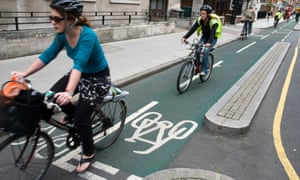
Cyclists in Amsterdam: ‘The Netherlands and Denmark have spent decades deliberately re-shaping their road environments away from the car culture of the 1960s and 70s towards mass cycling.’


Cyclists in Amsterdam: ‘The Netherlands and Denmark have spent decades deliberately re-shaping their road environments away from the car culture of the 1960s and 70s towards mass cycling.’ Photograph: Alamy Stock Photo

The earlier people start such a regime, the better the effect into older age. One public health expert once told me he encourages people this way: “I tell them, ‘being active throughout your life is about being able to get to the loo on time in your old age’. They can get their heads around that.”


If it’s so conclusive, why is the government not pushing this as part of the solution? Here we get into the more tricky area of what is politically acceptable, and whether ministers want to embark on what is, in effect, low-scale social engineering. Decades of experience has shown that just encouraging people to exercise has limited impact. Urging people to go to a gym or walk briskly round their local park eats into what is known to experts as “discretionary time” – when they could be doing something else. Thus they tend to give up pretty soon.


One of the few exercise regimes proved to stick is active travel, more specifically making walking or cycling to work, school or the shops sufficiently safe and convenient that it becomes easier for people to do it than not. Cycling is arguably the mode that should be encouraged the most. Aside from the fact people can cover greater distances on a bike than on foot, studies have shown that the slightly greater exertion it involves brings even more miraculous health benefits.


The mechanics of how you nudge people away from cars and on to bikes is another discussion, but there is little doubt it can be done if the political will is there. The Netherlands and Denmark, for example, have spent decades very deliberately re-shaping their road environments away from the car culture of the 1960s and 70s towards mass cycling. It’s not an accident.


‘In his first interview as transport secretary, Chris Grayling spoke of cyclists only to complain about those who jump red lights and to say bike lanes cause problems for “road users”, a group that apparently doesn’t include people on bikes.’


‘In his first interview as transport secretary, Chris Grayling spoke of cyclists only to complain about those who jump red lights and to say bike lanes cause problems for “road users”, a group that apparently doesn’t include people on bikes.’ Photograph: Alamy Stock Photo

Yes, it would take the UK a decade or so to make similar changes. But given the vast and unquestioned public health benefits on offer, with the huge savings this would bring on social care (not to mention the NHS, which some experts predict will soon become bankrupt due to the costs of ailments linked to sedentary lives), it’s a bit depressing that we haven’t even begun the debate.


For all the occasionally hysterical media narrative on cycling, it barely exists as an issue at the top of government. In his first interview as transport secretary last week, Chris Grayling spoke of cyclists only to complain about those who jumped red lights and to suggest that bike lanes caused problems for “road users”, a group that apparently doesn’t include people on bikes.


Grayling’s predecessor in the job, Philip Hammond, now the chancellor, was reported last month to have urged London’s mayor, Sadiq Khan, to rip out one of the few properly designed and safe bike lanes in the entire country. This is not to castigate the pair personally. Barring a handful of exceptions, almost all Britain’s top politicians think much the same about cycling as everyday transport.


The debate on social care shows how blinkered this is. As part of a book I’ve been writing about the beneficial effects of more cycling, I spoke to a number of public health experts about the problem of sedentary living. Several of them used the same analogy: getting people active in their everyday lives is, they said, like “a miracle pill” in the way it wards off disease and decrepitude. That miracle pill is well known. We’re just waiting for someone with the political vision to administer it.


• Bike Nation: How Cycling Can Save the World, by Peter Walker is published in April


Sedentary lifestyles: the hidden factor in the social care crisis | Peter Walker

12 Ekim 2016 Çarşamba

If GPs’ receptionists need retraining, would Les Dawson videos help? | Peter Bradshaw

The government says that it is funding training to help GPs’ receptionists to be more sensitive to patients’ needs. Receptionists must decide which patients are a priority, as pressure on them increases by the day, and their allegedly brusque demands for symptom details are hurtful.


Perhaps these receptionists will be sent to a special school where they will study old videos of Les Dawson doing his strange drag act as the woman who can’t quite bring herself to say indelicate things. Her voice dies out to silence halfway through the sentence, while the rubbery lips continue to mouth the words. So the Les Dawson-trained receptionist will say: “So sir, you’ve got a problem [inaudible whisper, lips moving emphatically] downstairs in the front-bottom waterworks department?”


Of course, this is no good if you’re talking to the patient on the phone. The person who actually needs this sensitivity training is my wife, who, when I plaintively inform her I have flu-like symptoms, gasps something like: “Influenza? Like the Spanish flu of 1918 that killed 50 million people? Oh, my God, we have to inform the council and the army and seal off the house.”


Uneasy elevations


Lady Chakrabarti is coming in for criticism on the subject of schools. But that isn’t exactly why her recent elevation makes me uneasy. I wonder if Jeremy Corbyn ever says that his other shadow cabinet ministers bring him problems, but Shami Chakrabarti brings him solutions? That is how Margaret Thatcher used to describe David Young, the dynamic chairman of the Manpower Services Commission. In 1984 she made him a life peer, and as Lord Young of Graffham he was elevated into cabinet, first as minister without portfolio, then secretary of state for employment and then for trade and industry. He had a very substantial government career, without ever having to suffer the indignity of pinning on a rosette or ringing on doorbells, or kissing babies – the ordeal, in short, of having to persuade the tiresome public to vote for him. He was a loyal Thatcherite partisan who made cabinet colleagues restless, particularly Norman Tebbit, because he never earned his spurs at the ballot box. Now, like others who have followed his trajectory, Chakrabarti has the chance to wield power, swathed in ermine. Mightn’t it be better for her to renounce her title, like Tony Benn, and fight an election?


Bush whacking


One the creepiest aspects of Donald Trump’s “locker room” tape was the 15 microseconds of fame it conferred on Billy Bush, cousin of George W Bush Jr, the talkshow host who was heard submissively and supportively giggling along to Donald’s sexual assault brags. Poor, pathetic Billy Bush, who loses his job, gets the odium, but doesn’t get to participate in Donald’s satanic celebrity status. One of the great undiscussed things about this kind of pathology is how the bully always needs a beta male, a lower-ranking wingman and yes man to validate the groping and the harassment.


Billy Bush and Donald Trump, the world’s least charming double act, were predicted in Neil LaBute’s icily prescient1997 movie, In the Company of Men. Howard, played by Matt Malloy, is a nerdy office worker who has no success with women. He falls under the spell of macho alpha dog Chad, played by Aaron Eckhart, who is similarly unable to get dates. Chad gigglingly persuades Howard to join him in a misogynist revenge plan to break the heart of a hearing-impaired woman who works in their office. It starts as a nasty joke and becomes a nasty reality. Watch the movie, and you can imagine the relationship of Billy and Donald.


If GPs’ receptionists need retraining, would Les Dawson videos help? | Peter Bradshaw

30 Eylül 2016 Cuma

If my team’s research on ME is rejected, the patients will suffer | Peter White

Chronic fatigue syndrome – sometimes called ME (myalgic encephalomyelitis) – is a sad tale for everyone involved. It is a debilitating illness that affects about 250,000 children and adults in the UK alone, wrecking lives as people are unable to hold down a job and are sometimes left bed-bound for years on end.


Unfortunately these patients have not been treated well – their illness is often dismissed or belittled, leading to much anger, misinformation and argument. There are claims of foul play, with issues over freedom of information and sharing of trial data; this week it was claimed that sexism is part of the reason those with ME struggle to get the proper treatment. My colleagues, Professors Trudie Chalder and Michael Sharpe, and I have spent our careers trying to improve care for patients with CFS/ME. At the heart of this story is the Pace trial we have been conducting since 2005.


For many years Nice (the National Institute for Health and Care Excellence, which oversees healthcare evidence) recommended just two treatments – graded exercise therapy (GET) and cognitive behavioural therapy (CBT) – because it had the best evidence that these therapies worked. However, many patients were not using them, following instead a self-guided treatment called “pacing”: listening to the messages from their bodies and pacing themselves – trying not to do too much, wary of pushing themselves to a point where they might make the illness worse. The idea of doing exercise therapy was scary for some patients, worried that over-exertion would exacerbate their ill-health. The idea that CBT, a talking treatment, might help, raised fears that the illness was regarded as “merely psychological”, or even “all in the mind”.


With so much uncertainty and fear among patients, we wanted to find out which of these treatments worked best and whether they were safe. So we ran a large trial with 640 patients that would seek to replicate earlier studies, but on a much bigger scale. All those who took part were given specialist care and randomly allocated to also receive either pacing therapy, CBT, GET, or nothing extra. We had involvement from CFS/ME community, and the research was overseen by independent committees looking at data, safety and how the trial was run.


The results of our study, published in The Lancet in 2011, were clear – those patients given CBT or GET experienced significantly greater improvements in both symptoms and ability to do things, compared with either pacing therapy or specialist medical care alone. Not only were CBT and GET more effective: crucially, they were just as safe as the other treatments when done correctly.


In short, CBT and GET are safe, can definitely help some people and are more effective than other treatments


Our results confirmed the earlier smaller trials, and strengthened the evidence upon which the recommendations of Nice were based. Added to this, a recent Cochrane review (a summary of all the evidence, and considered the gold standard in medical research) also concluded that exercise is a safe and effective treatment. In short, CBT and GET are safe, can definitely help some people and are more effective than other treatments: but, as with all treatments in medicine, they cannot help everyone.


From here on this should have become a happier story. However, some of the ensuing newspaper headlines – such as “Got ME? Just get out and exercise, say scientists” – gave the misleading impression that patients just needed to pull themselves together, or even that they were making it all up. In our clinics we had seen far too much suffering to ever think this illness could be dismissed in this way.


Our research, and that of our colleagues in this field, has attracted its fair share of criticism. Some campaigners have even called for the research to be stopped, the findings retracted, and CBT and GET abandoned completely as they cause harm. One recent focus of criticism has been whether CBT and GET can actually bring about recovery or remission from the illness, not just reduce the symptoms. And by recovery we mean recovery from a patient’s present episode of illness – which is not necessarily the same as being cured, as someone might fall ill again.


To address this we did another test on the data, and found that 22% of people could be considered as recovered with either CBT or GET. Though not a large proportion it was about three times more than the recovery rates achieved by the other two treatments. Other studies showed similar proportions recovering after CBT.


In the latest step in this saga, a blog that hasn’t gone through the rigours of scientific peer-review, or being published in a journal claims that CBT and GET are not as effective as we reported. The authors got their figures by tweaks such as increasing the pass-grade for what counted as recovery, and excluding patients who had reported themselves as “much better”.


Whichever way the data is viewed, patients get better results from CBT and GET – both confirmed as safe – than they do from pacing or medical care alone.


This whole affair is perhaps saddest for the patients themselves, whose suffering has been neglected for far too long. However, there is hope. First, the important message for patients is that it is possible to get treatment that will help them improve and for some to recover. Second, we agree with campaigners that we need more research into the causes and treatments of CFS/ME. However, if their campaign puts people off trying CBT and GET, it will be the patients themselves who will suffer the most.


If my team’s research on ME is rejected, the patients will suffer | Peter White

19 Eylül 2016 Pazartesi

Hillary Clinton was wrong to keep working: presenteeism is damaging | Peter Cheese

Is coming into work when you’re so sick that you’re on the verge of collapse really something we should be praising, or encouraging? When Hillary Clinton announced last week that she was trying to work through a pneumonia diagnosis and continue her campaign schedule, her supporters were quick to use this as an opportunity to praise her strength of character. She was described as tough, determined, strong, gritty and other adjectives that suggest working through serious illness is to be admired.


It may well be viewed as heroic by some, but in reality it’s a sign of an increasingly pervasive culture that sets up work as more important than our wellbeing.


Clinton certainly isn’t the only person who has turned up sick for work recently. I suspect at one time or another we’ve all uttered the words “don’t worry, it’s nothing serious”, or struggled in only to be greeted by a concerned colleague who politely asked us to go home and stop sneezing on them.


Whether it’s guilt about letting down the team, concern your tasks won’t get covered or more likely some fear that it might be counted against you, the trend for employees to come into work or to work longer hours when they should be taking time off has been growing.


Research by Simplyhealth and the Chartered Institute of Personnel and Development (CIPD), where I work as chief executive, shows “presenteeism” is on the rise. Our 2015 survey showed that in the preceding 12 months, a third of firms reported a rise in employees working when they’re sick, and this has some pretty clear negative effects on employee wellbeing. Organisations that have noticed an increase in presenteeism are nearly twice as likely to report an increase in stress-related absence and more than twice as likely to report an increase in mental health problems among their staff too.


Hillary Clinton, back on the campaign trail: ‘I’m doing great’ – video

Greater uncertainty in the economy and regarding jobs in recent years, together with an increasingly “always on” working environment and the pressure to perform are all factors driving this trend. Many of the companies and employees we talk to cite job insecurity as a reason for increased presenteeism, with employees fearing that a competitive job market, and the growth of automation, will make them more replaceable.


But leaders and managers set the tone, and have a responsibility not just to their organisation but also to the wellbeing of their employees. As our research shows, increasing presenteeism leads to increased prevalence of stress, and there is a wealth of evidence, such as the Towers Watson 2014 Global Benefits Attitudes survey, which clearly shows that workplace stress leads to less productive employees.


So why, then, do more than half of all organisations admit that they aren’t doing anything to combat this growing problem? It may well be that they believe that promoting long-term employee wellbeing might come at the expense of the short-term success of an organisation, but it can also be a lack of awareness of the growth of a corporate culture that accepts or even encourages presenteeism.


To perform at our best, people need to be well both physically and mentally. If businesses want employees who are engaged and motivated, then employees need to feel that their organisation, their managers and bosses are supporting them, and not pressuring them to work when they are not properly fit.


How do we change this culture? It has to come from the top down. Employees won’t feel empowered to take time off when they’re sick if their manager’s behaviour runs counter to that. The second action businesses can take is to build a culture that emphasises healthy living.


Health should be promoted in the workplace, with people given the opportunity to learn more about their own health, to exercise and eat well within the workplace and beyond. At the CIPD, we host discounted zumba and yoga classes each week. TransferWise takes all its staff on annual company holidays, while the law firm Allen & Overy has GPs and dentists on site. Those are at the more expensive end of the scale, but even simple things like free fruit for staff, a perk offered by just 15% of employers, can help instil a healthier work culture.


Mental health and particularly the understanding of stress is equally important and is perhaps even more challenging. Much more needs to be done to educate managers in how to show understanding and ask the right questions, and how and where to find the right support. Leaders in this field, such as Google, have built good mental health into their culture by offering mindfulness classes to staff, while many large employers in the City, such as KPMG and Deloitte, have launched the City Mental Health Alliance, working with charities to end the stigma attached to mental health problems.


The message to business is clear; a workforce that is well, works well. Clinton may have wanted to preserve her image of strength, but she wasn’t being honest with herself. We need our leaders – in the workplace and beyond – to take responsibility for their own health and wellbeing first, to set the right example.


Only then does this damaging culture of presenteeism have any chance of changing.


Hillary Clinton was wrong to keep working: presenteeism is damaging | Peter Cheese

22 Ağustos 2016 Pazartesi

Peter Draper obituary

‘Economic and financial mismanagement, along with predatory policies, are in danger of making us believe that we can neither afford to feed the hungry nor care for the old.” These words, as true now as when they were written in 1985, are from the paper Economic Policy As If People Mattered, by the distinguished public health researcher Peter Draper, who has died aged 83.


That we now routinely consider causes of ill health – and of wellbeing – to be as diverse as work and unemployment, macroeconomic policy, fuel poverty and the arms trade owes much to Peter’s contribution. He was instrumental in creating the study of health policy in the UK and was the country’s outstanding public health practitioner in the second half of the 20th century.


Early 1970s public health had a settled, environmental focus with no awareness of what we now call the social determinants of health. The 1974 reorganisation of the NHS removed local authority advocacy from public health, replacing it with technocratic NHS “community medicine”. In this stifling climate, Peter’s launch of the Unit for the Study of Health Policy (USHP) at Guy’s hospital medical school, London, in 1975 was a breath of fresh air. He brought together practitioners of epidemiology, sociology, health economics, statistics and public health to challenge the predominant approaches that emphasised individualistic “victim-blaming”. The USHP’s groundbreaking reports redirected policymakers and practitioners towards the root causes of public health problems.


For example, the 1980 report Accident and Illness Prevention analysed how the pursuit of market-oriented economic policies – what Peter called “the theology of economic growth” – leads to unhealthy outcomes in which, for instance, traffic accidents are viewed not as social costs, but as an economic benefit because of the motor repair work and new car sales that they generate.


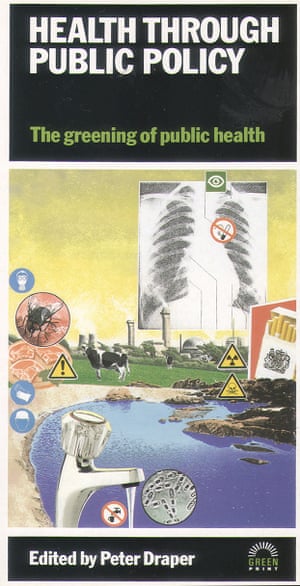
Health Through Public Policy, 1991, edited by Peter Draper


Health Through Public Policy, 1991, edited by Peter Draper

Similarly, the 1977 USHP report Health, the Mass Media and the NHS, and the 1980 BMJ paper Three Types of Health Education, showed how public policy promotes the marketing of unhealthy products. The BMJ paper described the government’s reliance on tobacco revenue at a time of recession and the media’s dependence on tobacco advertising. Evidence from both Labour and Conservative health ministers (David Owen and Sir George Young) showed that these issues, and concerns for industry workers’ and tobacconists’ jobs, prevented effective control and weakened action to prevent smoking.


The 1980 USHP report Rethinking Community Medicine – Towards a Renaissance in Public Health was a call for his profession to rediscover its role in the prevention of disease and the promotion of health.


After funding problems shut down the USHP in 1984, Peter remained a prolific writer, consultant and activist. His Economic Policy As If People Mattered paper made a key contribution to The Other Economic Summit (Toes) conference, set up as an alternative to that year’s G7 conference in London. In 1986 a Health Service Journal article, Whatever Happened to Public Health? which Peter and I wrote, led to the founding of the Public Health Alliance pressure group, later the UK Public Health Association.


He continued working on public health issues and in defence of the NHS, through the NHS Consultants Association (now Doctors for the NHS). In 1991 he edited Health Through Public Policy: the Greening of Public Health, which brought together his thinking about the broad scope of healthy public policy – a now-familiar term that Peter had imported from the US a decade earlier.


Born in Blackburn, Lancashire, to Alan, a textile engineer and mill manager, and Mary (nee King), Peter studied at Bolton school and Wrekin college, where he was head boy. His national service was as a Royal Air Force pilot in Canada and the UK. He studied medicine at Magdalene College, Cambridge, and trained in Manchester hospitals.


Experience as a junior doctor influenced his future career in two ways. Horrified by the anger of a senior physician whose NHS waiting list Peter had cleared while covering his leave, thus preventing, as he saw it, the doctor from prioritising his private patients, Peter developed a dislike for private practice. He became aware of the importance of public health as he realised how much disease could be prevented through earlier intervention, or by different social and economic circumstances.


Always reaching beyond the NHS and medical boundaries, Peter was president of the British Humanist Association (BHA), vice-president of the Ecology (now Green) party and president of the Health Visitors’ Association. The BHA website states: “Throughout its existence, the guiding conviction of the BHA has been that ‘this is our world, our responsibility, our possibility’, in the words of an early BHA member, Dr Peter Draper.”


He also gave strong support to community health councils as the campaigning voice of patients. Peter drew on his personal experience of being bipolar to campaign for recognition of the importance of working with the patient in managing this condition.


He is survived by his second wife, Carol Herrity, whom he married in 1999, and her children, Emma and Kayte; by two children, Nick and Jane, from his first marriage, to Dorothy Hopley which ended in divorce; and by five grandchildren and three stepgrandchildren.


• Peter Alan Draper, public health researcher, born 3 July 1933; died 30 July 2016


Peter Draper obituary

6 Haziran 2014 Cuma

Good medication is realised as a lot by means of art as science | Peter Thomas and Sam Guglani

Good medicine is about more than a set of technical decisions or interventions involving drugs, operations and tests. It demands identification with another’s suffering, moral deliberation, wisdom and insight.


The arts can illuminate this view of medicine. But it is not enough to expose doctors training in medical schools to the humanities, and there’s more to it than the idea of empathy being “stewarded” by the arts. Art does not simply tick a box within medicine. Good medicine is realised through art as much as it is through science.


The Medicine Unboxed Creative Prize reflects this belief, and looks to champion a less reductive, less consumerist view of illness and medicine, and the human fragility that underlies them both. Our intention is, in the words of Francis Bacon, “to deepen the mystery”, by celebrating an authentic creative connection between art and medicine.


Tom de Freston for Medicine Unboxed
Tom de Freston’s entry for the Medicine Unboxed Creative Prize 2013. Copyright: Tom de Freston

Since 2009, the Medicine Unboxed project has been bringing together the public, health professionals, politicians and artists to engage in a discussion about the values, beliefs, language and voices that inform medicine.


The conversations that have followed have been challenging, inspiring, sometimes funny and often moving.


In anticipation of this year’s annual Medicine Unboxed event – Frontiers, on 22-23 November – we launched an arts prize that aims to amplify the resonance between art and medicine. This year the prize, worth £10,000 for the winner, has attracted 80 entries from around the world.


The prize is unusual in that it is open to creative works in any discipline. It is also unusual in that, instead of simply entering their work, we asked artists to send expressions of interest to help our judges understand more about them and how they engage with our theme of the interface between arts and medicine.


Susan Aldworth for Medicine Unboxed
Susan Aldworth’s entry for the Medicine Unboxed Creative Prize 2013. Copyright: Susan Aldworth

In this way we hope to understand, encourage and explore not just the finished creative work but the wellspring of inspiration that links the arts and medicine.


We also opened up the creative process, and the prize process itself, by following shortlisted artists on their path towards their final submitted work. Tom de Freston, one of our judges, will be creating a documentary that tells the story of the prize, the artists and their interpretations of medicine.


You can follow the prize, and the Medicine Unboxed project, at medicineunboxed.org. The shortlist will be published in July and the winner will be announced at our Frontiers event in November.


Dr Sam Guglani is consultant oncologist at Cheltenham General Hospital and curator of Medicine Unboxed. Prof Peter Thomas is COO of the Leasing Foundation and creative director of Medicine Unboxed


Hugh Turvey for Medicine Unboxed
Hugh Turvey’s entry for the Medicine Unboxed Prize 2013. Copyright: Hugh Turvey

Good medication is realised as a lot by means of art as science | Peter Thomas and Sam Guglani

Great medication is realised as considerably via artwork as science | Peter Thomas and Sam Guglani

Good medicine is about more than a set of technical decisions or interventions involving drugs, operations and tests. It demands identification with another’s suffering, moral deliberation, wisdom and insight.


The arts can illuminate this view of medicine. But it is not enough to expose doctors training in medical schools to the humanities, and there’s more to it than the idea of empathy being “stewarded” by the arts. Art does not simply tick a box within medicine. Good medicine is realised through art as much as it is through science.


The Medicine Unboxed Creative Prize reflects this belief, and looks to champion a less reductive, less consumerist view of illness and medicine, and the human fragility that underlies them both. Our intention is, in the words of Francis Bacon, “to deepen the mystery”, by celebrating an authentic creative connection between art and medicine.


Tom de Freston for Medicine Unboxed
Tom de Freston’s entry for the Medicine Unboxed Creative Prize 2013. Copyright: Tom de Freston

Since 2009, the Medicine Unboxed project has been bringing together the public, health professionals, politicians and artists to engage in a discussion about the values, beliefs, language and voices that inform medicine.


The conversations that have followed have been challenging, inspiring, sometimes funny and often moving.


In anticipation of this year’s annual Medicine Unboxed event – Frontiers, on 22-23 November – we launched an arts prize that aims to amplify the resonance between art and medicine. This year the prize, worth £10,000 for the winner, has attracted 80 entries from around the world.


The prize is unusual in that it is open to creative works in any discipline. It is also unusual in that, instead of simply entering their work, we asked artists to send expressions of interest to help our judges understand more about them and how they engage with our theme of the interface between arts and medicine.


Susan Aldworth for Medicine Unboxed
Susan Aldworth’s entry for the Medicine Unboxed Creative Prize 2013. Copyright: Susan Aldworth

In this way we hope to understand, encourage and explore not just the finished creative work but the wellspring of inspiration that links the arts and medicine.


We also opened up the creative process, and the prize process itself, by following shortlisted artists on their path towards their final submitted work. Tom de Freston, one of our judges, will be creating a documentary that tells the story of the prize, the artists and their interpretations of medicine.


You can follow the prize, and the Medicine Unboxed project, at medicineunboxed.org. The shortlist will be published in July and the winner will be announced at our Frontiers event in November.


Dr Sam Guglani is consultant oncologist at Cheltenham General Hospital and curator of Medicine Unboxed. Prof Peter Thomas is COO of the Leasing Foundation and creative director of Medicine Unboxed


Hugh Turvey for Medicine Unboxed
Hugh Turvey’s entry for the Medicine Unboxed Prize 2013. Copyright: Hugh Turvey

Great medication is realised as considerably via artwork as science | Peter Thomas and Sam Guglani

30 Nisan 2014 Çarşamba

Psychiatric medicines are performing us much more harm than excellent | Peter Gøtzsche

‘More than 53m prescriptions for antidepressants have been issued in 2013 in England alone.’ Photograph: travel-and-far more/Alamy


We appear to be in the midst of a psychiatric drug epidemic, just as we have been when benzodiazepines (tranquilisers) had been at their height in the late 1980s. The decline in their use right after warnings about addiction led to a large boost in the use of the newer antidepressants, the SSRIs (selective serotonin re-uptake inhibitors).


Figures released by the Council for Proof-based mostly Psychiatry, which was set up to challenge a lot of of the assumptions commonly manufactured about contemporary psychiatry, show that much more than 53m prescriptions for antidepressants have been issued in 2013 in England alone. This is nearly the equivalent of a single for every guy, woman and little one and constitutes a 92% enhance since 2003.


Revenue of antidepressants have skyrocketed everywhere and are now so substantial in my very own country, Denmark, that – if the prescriptions were equally distributed – every single citizen could be in therapy for six many years of their existence. The predicament is even worse in the US, in which direct promoting of prescription medication to the public is permitted and in which more psychiatrists had been “educated” with sector hospitality than any other health-related discipline.


I began to realise the scale of the dilemma when I was persuaded seven many years ago to grow to be a tutor for a PhD thesis on no matter whether history was repeating itself, by evaluating benzodiazepines (“mother’s little helper”) with SSRIs. This study has established that people get as hooked on SSRIs as they did on benzodiazepines, and 37 of 42 withdrawal symptoms were the same for SSRIs as for benzodiazepines.


It is challenging to think that so a lot of individuals have become mentally disturbed and that these prescription increases reflect a genuine need, so we require to look for other explanations. There look to be three principal reasons for the huge development.


Initial, the definitions of psychiatric ailments are so vague that several healthy individuals can be diagnosed inappropriately. Second, some of the psychiatrists who wrote the diagnostic manuals have been on the industry’s payroll, and this might have also led to significant diagnostic inflation. Third, the companies’ behaviour has been worse in psychiatry than in any other spot of medication, with billion-dollar fines paid for the unlawful advertising of psychiatric drugs for non-approved uses. The rise in sales reflects patient dependency on these SSRIs: they may possibly have excellent trouble stopping even when they taper off the drugs slowly. Withdrawal signs are typically misdiagnosed as a return of the disease or the commence of a new one particular, for which medication are then prescribed. More than time, this prospects to an boost in the number of drug-dependent, lengthy-term users.


One more significant difficulty with psychiatric medication is that they can trigger the signs they are supposed to alleviate. Unfortunately, psychiatrists tend to boost the dose or include another drug when a patient reports damaging effects.


The problem is that many of these medication just do not perform as individuals suppose. The main result of antidepressants is not the reduction of depressive symptoms. They are no much better than placebo for mild depression, only somewhat greater for moderate depression, and advantage only a single out of 10 with serious depression. In all around half of all patients, they trigger sexual disturbances. The signs consist of decreased libido, delayed orgasm or ejaculation, no orgasm or ejaculation and erectile dysfunction. Studies in the two people and animals recommend that these effects may persist long after the drug has been discontinued.


The US Foods and Drug Administration has shown that antidepressants boost suicidal behaviour up to the age of forty, and numerous suicides have been reported even in wholesome people who took the medication for other reasons (for example, for tension or soreness). The identical report also said that, among individuals above 65 who are taken care of for one year, antidepressants are believed to destroy a single out of every single 28, because they lead to falls and hip fractures. Indeed, it is not clear whether antidepressants are protected at any age.


My studies of the research literature in this complete spot lead me to a extremely uncomfortable conclusion: the way we at present use psychiatric medication is creating much more harm than excellent. We ought to as a result use them significantly less, for shorter intervals of time, and often with a prepare for tapering off, to stop men and women from becoming medicated for the rest of their lives.


Psychiatric medicines are performing us much more harm than excellent | Peter Gøtzsche

24 Nisan 2014 Perşembe

The NHS needs a lifestyle-conserving idea how about a well being tax?| Peter Wilby

An NHS nurse checks his watch

The NHS: time is operating out for ‘a credible idea for preserving Labour’s most enduring achievement’. Photograph: Ian Waldie/Getty Pictures


The NHS is a monster. Its capacity to eat public resources is with no restrict. That is not just due to the fact of an ageing population or developments in expensive healthcare engineering. It is also simply because of growing expectations. Nobody ever considers themselves to be in ideal overall health: there is constantly a wart to be removed, an irritable bowel to be explored, a cough to be relieved, a intercourse drive to be restored.


Proposals to charge for visits to GPs or for hospital stays are in no way met with something less than public outrage. Failure to supply high-priced medication that give, at very best, an further few months of existence to the terminally sick are denounced by newspapers that otherwise rail towards high taxes. Any proof that a hospital fails to strain each and every sinew to keep alive an ailing 95-year-previous is branded as unacceptable “age discrimination”.


The insatiable growth of the NHS’s demands for money have in no way been far more graphically illustrated than beneath the existing government. Though “ringfenced” from the coalition’s spending cuts, the NHS is extensively believed to be deteriorating to the level of collapse because it needs an yearly budget boost of at least 4% (in genuine terms) to meet rising expectations. It almost certainly requirements more, as cuts in care providers put additional burdens on GPs and hospitals.


Though Tory leaders insist they can be trusted with the NHS, the right’s reply is clear: accept the support is unsustainable and replace it with an insurance-based mostly technique in which, even though fundamental remedy remains free of charge, individuals otherwise get what they pay for in premiums. What is Labour’s response? Other than hoping for some type of financial alchemy from the shadow chancellor Ed Balls, it seems to have none. Proposals for a 1% national insurance coverage surcharge devoted to the NHS – emanating from former minister Frank Area and Nick Pearce, director of the IPPR thinktank and ex-head of the Downing Street policy unit – were floated, only to be disowned instantly by Labour leaders. Final month, calls from Lord Warner, a former wellness minister, for a £10 NHS “membership” charge were dismissed as the ravings of a discredited Blairite.


But a credible notion for preserving Labour’s most enduring achievement in government is desperately required. An earmarked wellness tax may be a single whose time has come, and probably a model for financing other strained public companies and modifying voters’ resistance to taxation.


Gordon Brown introduced a one% national insurance health surcharge in his 2002 spending budget. The trickier question is how far the notion can be extended. Should all health spending come from distinct revenue sources – the total proceeds of NI, say, or a general revenue tax? Need to some thing comparable be completed for schooling? Ought to older people’s care bills be financed from an enhanced inheritance tax? Need to corporation tax go to in-work rewards – which, in impact, subsidise inadequate wages?


Hypothecated taxes, as economists get in touch with them (deriving from the Greek hypotithenai, which means “to give as pledge”), are typically opposed by finance ministries due to the fact they minimize central manage. But they are not new. The Television licence charge to support the BBC is a hypothecated tax so was the “ship cash” raised to finance the Navy, which received Charles I into difficulties. Originally, the proceeds of automobile duty went to a fund for the creating and upkeep of roads (people even now refer to the “road fund licence”). Several American states use petrol tax for a comparable function.


Labour took office in 1997 with a manifesto pledge to finance welfare-to-work from a “windfall levy” on privatised utilities. NI itself started out as a hypothecated tax or “contribution” to fund social safety including pensions (however not the NHS). Numerous countries dedicate “sin taxes” on tobacco and alcohol to well being promotion.


This kind of earmarking can reconnect voters to the functions of taxation. Even Labour politicians now refer routinely to the “tax burden”. Tax is portrayed as a disincentive to enterprise, investment and tough operate. In the public thoughts, tax is one thing “they” invest, almost certainly on ministerial limousines and other “wasteful” luxuries. Nearly no person connects the amount of tax they shell out with the quality of their children’s education or how extended they wait to see a GP.


Nor is taxation connected to, say, transport infrastructure or the abilities of the workforce, which might make Britain a greater place to do company. We require a a lot more adult conversation which tends to make voters inquire if what they achieve in reduced taxes will be outweighed by what they drop in inferior companies – although also comprehending that if they demand, say, costly medicines or shorter hospital waiting lists, they need to shell out higher taxes.


British curiosity in hypothecated taxation peaked in the early 1990s soon after the Thatcher government’s well-known tax cuts the Demos thinktank and the Fabian Society have been amongst the supporters.


Many objections emerged. First, governments tend to raid earmarked money and use them for other purposes, as they did with NI and the road fund. They are also apt, if the earmarked tax is meant to meet only component of a service’s charges, to reduce basic expenditure on that service leaving it no much better off.


2nd, tying investing on vital companies to the yields of certain taxes may make individuals providers dependent on the company cycle. Third, sections of the public – the childless or individuals who use personal training or overall health insurance coverage, for instance – would clamour to opt out of certain taxes. Fourth, the opposition to general taxation may turn into even much more intense, and the strain to minimize unpopular spending items this kind of as advantages or overseas help irresistible. The temptation in an election campaign would be to guarantee 1% greater wellness tax and a two% lower in common taxes.


These objections are not insuperable – the very first and second, for illustration, could be conquer if revenues for overall health or training had been paid into a separately managed fund with its personal borrowing powers. And if hypothecated taxes have disadvantages, basic taxes – which are opaque to a lot of voters – have more.


Like each other centre-left get together in Europe and America, Labour battles towards its opponents’ propaganda good results in casting taxation in a wholly unfavorable light. New Labour experimented with to apply its guarantees without the taxes to shell out for them. It failed. It is time for anything new, and the bolder the better.


The NHS needs a lifestyle-conserving idea how about a well being tax?| Peter Wilby

19 Mart 2014 Çarşamba

Why MS sufferers like me need to have the highs and lows of unrealistic optimism | Peter Thompson

Patient taking piils

‘Four instances the typical dose of statins? What the hell? Make it eight instances, please.’ Photograph: Cultura/Rex


One more day, yet another bit of thrilling news about a medical breakthrough. For a a number of sclerosis patient like me, the course of a day can see you raised from a height of happiness and expectation at a headline to a minimal brought on by qualification and modest print. In some techniques, the best breakthrough would be a pill that protects one particular towards people highs and lows. Meanwhile one particular has to fall back on an capacity to study in between the lines, differentiate journalistic hyperbole from health care realism, and come to a conclusion that makes it possible for for hope but prepares for disappointment.


Today’s information is that specific statins, taken in higher dose, might assist to slow down the progress of MS in its later stages. At very first glance this seems like two marauding birds killed with one extremely cheap stone. As a 53-12 months-previous man who enjoys a sausage roll, I have been worrying more about my cholesterol amounts not too long ago than about the signs and symptoms of my MS, and right here comes a pill that guarantees to deal with both. All of a sudden, fears that I had about the side-results of statins are dissipated by the hopes that one particular has about the side-effects of statins. Exactly where just before I had rejected the idea of going on a drug like that each day for the rest of my life, now I can’t wait to get down to the GP to get place on the trial dose.


4 times the regular? What the hell? Make it eight occasions, please, and how does it match in with the additional vitamin D3 I am taking, and the additional folic acid and vitamin B12, and cod-liver oil by the spoonful, and all the other issues that have been suggested by healthcare personnel and friends?


But underneath all this optimistic clutching at straws there is the recognition that one has an sickness, an sickness that is not going to go away, that is possibly going to get worse and that – even if this new miracle remedy proves to be correct – will slow the shrinking of the brain only from .six% to .3% a 12 months. On the other hand, in no way have 3-thousandths of the trillions of neurons and nerve cells in my brain seemed so useful and worth preserving.


And this is the issue: the unrealistic optimism that is an essential portion of human character drives us to believe in miracle cures, regardless of whether they be statins, the lottery, or the spittle of a supposed messiah. Existence without the highs and lows of hope and dashed expectations would hardly be a existence really worth living.


When creating about my diagnosis in the Guardian some many years ago, I said that science was not my god, but it could be my salvation. That remains my position today, and I feel it is frequently the place of several folks with numerous various ailments and illnesses. Beneath the drugs and lotions and new-age quackery that our pains and aches lead us in the direction of, there is an undertow, an underpinning and an imagined certainty that – as with all those other ailments that were once so typical and are now so uncommon – ours too will a single day be a distant memory. Perhaps not to us, but, as Brecht when put it: to those who come later on.


Why MS sufferers like me need to have the highs and lows of unrealistic optimism | Peter Thompson

12 Mart 2014 Çarşamba

Harry Burns: "We require compassion, not judgments about poor people" | Peter Hetherington

As a youthful surgeon in Glasgow Royal Infirmary, Sir Harry Burns was so troubled by the challenges facing poorer men and women in the city that he embarked on a new occupation path. “I grew to become very interested in the way society organised itself for the greater excellent,” he recalls. “I at some point considered the time had come to cease cutting bits out (of people) and start off pondering far more creatively about carrying out one thing to quit the bits that essential to be minimize out.”


Right after 15 many years at the hospital, 5 of them as a consultant, he took a master’s degree in public well being to pursue a theme that has because dominated his specialist life: trying to make folks more healthy, in each physique and in mind, by reinforcing the social and communitarian bonds of society.


So it is probably tiny shock that Burns, 63, will retire as Scotland’s chief medical officer following month to consider up a senior professorship in international public overall health at Strathclyde University.


Medical doctors, he once recalled, are obsessed with the triggers of condition rather than the triggers of what he calls “wellness”. In a lecture, he extra: “As a medical professional at the Royal, I by no means after wrote a death certificate saying the trigger of death was residing in a horrible residence or unemployment. Folks die of molecular deaths, this kind of as proteins coagulating in arteries and creating heart attacks and strokes. However we know that poor [social] conditions lead to poor well being and premature deaths.”


So began a specialist lifestyle devoted to turning round the overall health of a Scottish nation that remains among the unhealthiest in Europe – even though successive governments, considering that political devolution in 1999, have moved with speed to introduce a smoking ban in public locations, outlaw the sale of reduce-cost alcohol, which Burns is in no doubt will have a “important influence” on public health (albeit with the drinks business tough new legislation) and, much more not too long ago, devoting an additional £500m for “preventive measures”.


Burns, thoughtful and engaging, chooses his phrases carefully, but is in no way afraid to make a strong social comment – albeit couched in the diplomacy of the public servant keen to pressure that, of program, he is not celebration political. He says forcefully that he has usually been driven by science and by evidence and, implicitly, not by ideology. “Unless of course you have evidence all you have is viewpoint,” he says. Proof tells him that the most successful societies are individuals with strong social bonds, connection and cohesion. “I’ve worked with every health minister, in some capability, considering that 1999 and they’ve all desired to do the correct point … if you current them with the evidence they are convinced and want to move the agenda forward. We’ve produced some great strides,” he says. “It really is tougher to do that in a country ten times the size.”


Yet, for outsiders, the wellness of Scotland stays a puzzle. “What we’ve seen given that 1990 is improved mortality prices amid younger men and women – the 15-45 age group – and it is a relatively recent phenomenon,” Burns explains.


In his new task, he will concentrate on well being, “wellness” creation and social exclusion at house and abroad. He is clearly nonetheless troubled by the wellness of his personal nation, and particularly that of the densely populated area of better Glasgow – an spot that will be crucial to the outcome of the independence referendum on 18 September (he declines to say how he will vote).


Burns points to research by the Glasgow Centre for Population Health (GCPH), which is learning the problem in the city. It stresses the effectively-chronicled hyperlinks in between poverty and ill-overall health and the area’s long-established large ranges of deprivation, even though adding: “These explanations do not seem to be sufficient to explain the particularly … poor overall health of Scotland … mortality prices are particularly increased those of England and Wales”


Research in 2010 showed the deprivation profiles of Glasgow, Liverpool and Manchester to be nearly identical, however premature mortality in Glasgow was thirty% greater than in the English cities.


So is there one thing in the collective psyche of Glasgow setting it apart? On the 1 hand, Burns stresses there is nothing at all inherently distinct about Scotland. But turning to the GCPH’s studies, he notes that Glaswegians are significantly less likely to go to church, join clubs, take component in community activities or to volunteer.


The causes may possibly be a lot of and varied, but he notes that 20 many years ago existence expectancy in Scotland was similar to the European regular. Considering that then, other countries have leaped ahead because, Burns observes, mortality rates in younger individuals “down the social scale” in Scotland have not declined.


He puts part of the problem down to the de-industrialisation of west-central Scotland, allied to the breakup of effectively-established communities as old tenement blocks – social centres in their very own correct – had been demolished and residents scattered to large housing schemes on Glasgow’s outskirts. “There was some thing about ‘connectedness’ that was falling apart. Skilled perform was going. Someone at the time stated ‘all these males received jobs’, but what variety of jobs? If you have been a welder in a shipyard you were somebody, but if you have been functioning in a store someplace, effectively …”


He recalls talking to a priest from Los Angeles, who was devoted to doing work with the gangs of the Californian city. He had come to observe social issues in Glasgow, and informed Burns that “connectedness” was the crucial to social cohesion. Burns quotes him enthusiastically. “What we need to have is a compassion that stands in awe at the burdens the poor have to carry, rather than stands in judgment at the way they carry it.”


The Clydeside of Burns’ formative many years was a hive of sector – shipyards, engineering works, steel-producing complexes employing tens of thousands. He recalls, with admiration, the late Jimmy Reid, a single of the leaders of the Upper Clyde Shipbuilders eight-month operate-in in 1971-72 – following a Conservative government initially refused to give the business, which had a full purchase guide, a bridging loan to safe its potential.


As a medical pupil, Burns voted for Reid – who was a SNP supporter in later on lifestyle – to turn into rector of the University of Glasgow, and vividly recalls his rectorial address, which was printed in complete in the New York Occasions.


“Jimmy Reid understood what was happening – the alienation, the cry of guys who have been victims of blind economic forces past their manage, a feeling of despair and hopelessness,” he observes thoughtfully. “Folks who do not feel in control over their lives struggle because the method does things to them – it does not function with them and assist them develop ‘wellness’ for themselves … when issues come about that alienate men and women, they get rid of that sense of management and a total selection of biological, as nicely as psychological, things take place.”


And on the referendum itself? Burns is non-committal. “No matter what takes place, I would want to proceed to make Scotland a greater location for individuals to live, expand and produce,” he says. Read through into that what you will.


Age 63.


Lives Barrhead, near Glasgow.


Household Married (wife a GP), six children.


Schooling St Aloysius’ school, Glasgow University of Glasgow, healthcare graduate University of Glasgow, master’s in public overall health.


Job From April 2014: professor of global public health, University of Strathclyde 2005-14: chief healthcare officer, Scotland 1994-2005: director of public health, Higher Glasgow Overall health Board 1990-94: medical director, Glasgow Royal Infirmary 1984-89: consultant surgeon and senior lecturer in surgical treatment, Glasgow Royal Infirmary 1974-84: surgeon at Glasgow Royal Infirmary.


Interests Cycling, operating, hill walking.


Harry Burns: "We require compassion, not judgments about poor people" | Peter Hetherington

19 Şubat 2014 Çarşamba

Medicare: well being minister Peter Dutton signals overhaul

The federal health minister, Peter Dutton, has signalled dramatic alterations to Medicare to tackle “staggering” increases in overall health investing, confirming the Abbott government would take into account a new charge for visits to the medical doctor.


Laying the groundwork for politically delicate reforms, Dutton stated he desired to “start a nationwide conversation about modernising and strengthening Medicare”. He mentioned the wellness technique was “riddled with inefficiency and waste” and warned that doing absolutely nothing to tackle the lengthy-phrase price range burden was not an option.


In a speech in Brisbane on Wednesday, the minister flagged a greater role for the personal sector and private insurers in principal care as the government desired to “grow the possibility for individuals Australians who can afford to do so to contribute to their own healthcare costs”.


But Labor seized on his feedback of proof that the government planned “to ruin universal healthcare in Australia” by producing people pay out a lot more to accessibility services.


The shadow overall health minister, Catherine King, said Dutton’s claims about rising health costs were “hysterical” as Australia invested 9.one% of its gross domestic product on health in contrast with 17% by the United States.


Dutton followed up his speech with an interview on the ABC’s seven.30 program in which he stated the nation ought to debate how governments and buyers paid for health services. He explained the discussion must consist of payment models for people who had “a means to contribute to their personal healthcare”.


The minister told the program: “I want to make sure that, for argument’s sake, we have a discussion about you or me on reasonable incomes, no matter whether we should expect to pay absolutely nothing when we go to see the medical professional, when we go to have a blood test – ought to we expect to pay practically nothing as a co-contribution and other taxpayers to select up that bill?”


Asked about the notion of a new $ 6 co-payment for bulk-billed GP visits, which was raised in a submission to the Nationwide Commission of Audit, Dutton mentioned tips had been produced in favour and towards the proposal but it was “one factor that the government will want to consider”.


“Well, my very own see is that folks at the second pay a co-contribution through when they buy their medicines, regardless of their revenue,” Dutton mentioned.


“People spend as little as $ 6 for a $ 17,000 prescription, a single prescription. Folks spend a co-payment at the minute for their private well being insurance. Eleven million Australians have personal wellness insurance coverage.


“Many Australians presently shell out a co-payment when they go to see a medical doctor. Now, the situation is how you promise access, notably for people who are without having implies, and how you really do not deter folks from going to see a doctor if there is some kind of a payment mechanism in place.”


In the leadup to the 8 February Griffith byelection, Tony Abbott dismissed a Labor “scare campaign” over a new charge for bulk-billed GP visits.


The prime minister refused to rule it out, but played down the prospect. “Nothing is becoming considered nothing at all has been proposed practically nothing is planned,” Abbott mentioned on 1 February.


On Wednesday night the opposition sounded the alarm above the prospect of a “GP tax”, saying Australians ought to get the healthcare they necessary rather than what they could afford.


“The Liberal get together has in no way believed in Medicare and they have by no means believed in a universal healthcare technique,” King said.


“Australians who can afford to pay more currently do so through a higher contribution to the Medicare levy. What Mr Dutton is genuinely talking about is dismantling our fair and sustainable program in favour of a private health technique like that which exists in the United States.”


Earlier, Dutton stated in his speech that there had been “many shrill voices” decrying the government-ordered commission of audit regardless of the want to tackle federal debt and deficit.


The target of the minister’s address to the Committee for Economic Advancement of Australia was the rising value to the price range of wellness services, with the prospect of even greater increases as the population aged and the nation confronted weight problems, diabetes and dementia challenges.


Dutton said complete paying on healthcare in Australia had elevated by 122% in the ten many years to 2011-12, when it totalled $ 140bn. This equated to about $ 6,200 a person a 12 months on regular.


The commonwealth element of health spending was forecast to rise from $ 62bn now to $ 75bn by 2016-17.


Dutton described Australia’s “1980s model” wellness system as “tracking on an unsustainable path with no prospect of meeting the demands of the well being of our nation in the 21st century”.


“There’s been speak about simply escalating the Medicare levy to fix the sustainability concern. Let me just say right here [that] if we had been to improve the Medicare levy to cover the entire price of the commonwealth’s wellness budget, it would have to enhance to 9.5%. That is $ seven,220 per year on an common salary of $ 77,000.


“Either way, individuals finish up paying for their healthcare – whether or not it is immediately or indirectly by way of pay as you go or by way of increased taxes otherwise. To reap the positive aspects, there is usually a cost, and I think most Australian taxpayers realize this.”


Dutton stated governments met about 70% of complete paying on healthcare in Australia even though men and women straight contributed about 17% via out-of-pocket payments.


He said there would “always be value in leveraging individuals into supporting their personal well being wants in the personal sector”, arguing that picking up almost a hundred% of the price made “no sense” for the taxpayer when the patient was prepared to contribute to their personal expenses.


The minister said governments contributed about 35 cents in the dollar for private hospital services – which includes via the Medicare Rewards Schedule and the private overall health insurance coverage rebate – but 92 cents in the dollar for these taken care of in the public technique.


“Therefore a single essential task of the Abbott government is to increase the possibility for people Australians who can afford to do so to contribute to their very own healthcare fees,” he said.


Dutton voiced assistance for making it possible for higher involvement of personal well being insurers in main care, asking: “Why need to we see the private sector involving itself in public providers as a negative point?”


He also referred to as for “improved public sector efficiency” in the well being sector.


Medicare: well being minister Peter Dutton signals overhaul

9 Ocak 2014 Perşembe

Soon after Tiller – review | Peter Bradshaw

Still from the documentary After Tiller, which will premiere at Sundance 2013

Agressively targeted … Following Tiller. Photograph: Sundance Institute


  1. After Tiller


  2. Production year: 2013


  3. Nation: USA


  4. Runtime: 88 mins


  5. Directors: Lana Wilson, Martha Shane

  6. A lot more on this film


Right after Tiller is a sobering account of these couple of doctors in the US who, given that the murder of Dr George Tiller in 2009, are capable to provide late-phrase abortions. The procedures are legal, characterised by medical need to have, and require distinct knowledge, but are, of course, aggressively targeted by pro-existence campaigners, who harass medical doctors and firebomb premises. Their pursuits are America’s every day terrorism. It really is a grim story. Typically, US media talk about the abortion “debate” – but there is no debate, far more like a cold-war style faceoff between folks diametrically opposed to each other. However, it is the pro-lifers who can mobilise the bully squads, deploy the 24-hour a passive-aggressive pickets and evidently get in touch with on people far more than prepared to carry out acts of righteous violence. Liberals cannot muster that variety of firepower, and my fret about Following Tiller is that it seems to offer the pro-option side no debating or campaigning strategy. Anyway: a sombre study. PB


Soon after Tiller – review | Peter Bradshaw