Operatic soprano Greta Bradman was19 years old when she started to self-harm. Intense bullying through high school had coincided with her parents’ divorce. She felt isolated and started skipping school. A year earlier her grandfather, cricket star and national hero Sir Donald Bradman, had died.
Donald Bradman and his grand daughter were close – their relationship has been chronicled in a double episode of Australian Story – and he had instilled in her a love of classical music. Greta saw singing as “a kind of solace” for her pain, and she was accepted into the Elder Conservatorium of Music in Adelaide. But that overwhelming sense of self-loathing stayed with her, and she began trying to destroy the one thing that brought her joy: her voice.
“I wanted to take away the possibility of singing as a career,” she says. She describes it as needing to punish herself – for missing school, for being “completely worthless”, for having the audacity to wrap her identity up in art.
“It was a combination of wanting to hurt my voice and to get that sense of relief that can come from self-harm. But it’s a completely maladaptive coping strategy, which took me further and further down the cycle of self-loathing … It was bound up in me as an artist – not really knowing how to go about it, and not feeling like I could necessarily succeed, but at the same time being terrified of the prospect of success.”
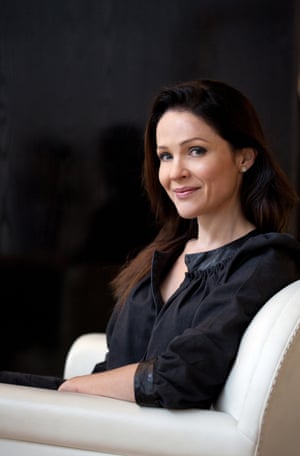
Eventually, Greta climbed out of the cycle. She stopped self-harming when she was 23 and became pregnant with her first child. Today, her voice well and truly intact, she is one of Australia’s leading sopranos, with a radio show on ABC Classic FM, an upcoming principal role as Mimì in La Bohème at the Sydney Opera House, and a plaque on the Adelaide Festival Centre’s walk of fame.
She also practices pro bono as a provisional psychologist, with a masters in clinical psychology. Bradman has combined both passions to consult on a major new industry-first initiative from Arts Centre Melbourne – the Arts Wellbeing Collective – to help others in the creative arts who have struggled in similar ways.
The collective, which launched on Thursday, is unprecedented – if not around the world, then certainly in Australia. It comprises close to 90 Victorian arts and culture organisations, including Melbourne festival, Melbourne Theatre Company, Victorian Opera and Regional Arts Victoria, who have come together with a common aim: to improve mental health and wellbeing for Victorian performing arts workers – those on stage and in front of the camera, as well as those working behind the scenes.
Developed in consultation with prominent psychologist Dr Michael Carr-Gregg, and drawing from the practice of positive psychology, the program, in its pilot phase, will feature a series of workshops and a dedicated website filled with resources tailored to the mental health needs of the performing arts sector – a sector which recent research has shown is in crisis.
Performing arts work: a lethal cocktail
In 2016, a major report was released by Victoria University and Entertainment Assist following an extensive study of entertainment industry workers.
The report – which focused on performing artists and composers, performing arts support workers and broadcasting and media equipment operators – was alarming. Levels of moderate to severe anxiety in the performing arts industry were 10 times higher than the general population; levels of depression in industry workers were up to five times higher; and workers were four to five times more likely to plan to commit suicide, and twice as likely to attempt it.
As Bradman explains, the performing arts industry comprises a unique cocktail of working conditions that, without the right levels of support, can prove deadly.
“As a performer, you’re working when everyone else is working, and then you’re working when everyone else is having fun,” she says. “The work hours are unique, and on top of that you’ve got the lack of work security, and the financial pressures.”
An Australia Council report released in 2010 found more than half the country’s artists were making less than $ 10,000 a year from their creative pursuits, regardless of the hours they put in. Many of those hours come in shifts, Bradman says, which come with their own set of risks – from obesity and cardiovascular disease through to sleep problems and other mental health issues.
There are social factors too, including an imperative to socialise and network at events that revolve around alcohol and drug consumption. “Looking at future work possibilities and career progression can be somewhat tied to that too,” Bradman says.
And all that’s to say nothing of work instability, and what it can do to one’s mental health. “For performing artists, and also for people backstage, you might go through a phase of getting a lot of work, and then all of the sudden the work drops off. That can have a big impact on your sense of identity.”
You have these immense highs of being part of a [big show] … and then suddenly it’s all gone
The extreme highs and lows of the work itself compound the issues. “I’ve experienced this myself,” Bradman says. “You have these immense highs of being part of a family, a community, that comes together for this incredible project – particularly if it’s a long project, like a musical, an opera, a long run of a dance. You’re so close to the people, and you’re all so bound up in it – and chemically, from a neuropsychological and psychological perspective, there is so much going on in those relationships … but it’s all bound up within that world of the show, and suddenly the show ends and it’s gone.
“There’s a huge sense of grief and loss that can come from that – and a sense of needing to renegotiate your identity.”
While Bradman fundamentally disagrees with the myth of the “struggling artist”, which romanticises mental health issues as a creative boon, she says there is something intrinsic to the arts that can make artists and workers particularly at risk.
“To be [an artist] we have to be vulnerable, we have to give of ourselves, hugely, we have to allow ourselves to feel an array of emotions – some of them good, some of them really difficult,” she says. That’s why it’s particularly important that arts workers can access resources and support tailored to their industry – a gap the Arts Wellbeing Collective is hoping to fill.
“What we do [as arts workers] is so bound up with who we are. This is not necessarily a good or bad thing, it’s just a way that a lot of us identify,” Bradman says. “We have to negotiate what that means, so that in the quieter times – in those times when there’s not as much work – we don’t equate a lack of achievement with a lack of self-worth, or an uncertainty about our direction.”
‘I’d spun out of control’
For Simon J Green, it started with scratching. He had been running an independent film company for eight years – a creative investment with huge financial strain, long hours and high responsibility – when his wife noticed him absent-mindedly digging paths across his forearms. “As soon as she mentioned it, I realised I’d been scratching my legs, too. I pulled up my pant legs and we both gasped at the ragged, bloody strips I’d torn in myself.”
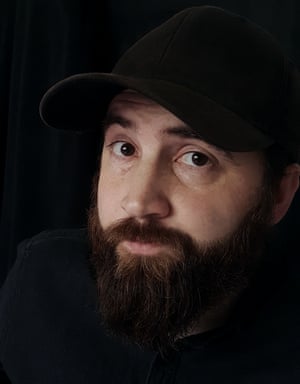
Green, who is based in Melbourne, was experiencing “extreme levels of stress and depression” combined with long working hours and a lack of sleep, which meant every small problem took on extreme proportions. It’s a spiralling feeling that many performing arts workers identify with.
“Taking on staff, and the pressure of keeping them both paid and creatively satisfied, weighed on me more than I realised,” he said. “Combined with managing [my] cystic fibrosis, and trying but failing to meet my own creative needs, I’d spun out of control to the point I was literally tearing myself up.”
There was another factor too, Green says: a lack of perceived value. “People don’t think our work is worth much, which puts pressure on us to make more for less.”
This is an issue Bradman raises too, which she is looking into with a new, broader survey which soft-launched in January. “Culturally, and particularly in the current climate, [there are questions] over the perceived value of the arts, not only within the performing arts community but the broader community.”
In 2015, the Abbott government slashed funding from the Australia Council – cuts which were handed down, for the most part, to the small-to-medium arts sector. In May 2016, the artistic directors of major theatre companies penned an open letter calling it an “unprecedented assault” on the arts, and individual artists were among the biggest losers.
“When funding is shifting and changing, and there is so much uncertainty, that can really play into one’s sense of where one is going in life, and one’s sense of self-worth,” Bradman says.
The issue of worth came up in the Entertainment Assist report too. “Performers working for free is a huge issue in our industry. It devalues our skills and puts us out of work,” said one participant. “[We need] more government support and to realise the importance of the arts,” said another.
In the film industry, Green says, that devaluation has specific repercussions. “There’s a real scarcity mindset that seems to undermine collaboration – a sense of a zero-sum game of work available, which isn’t true. I think it comes from that feeling that we aren’t really valued by society at large; from all of us being told at school, ‘Don’t be an artist, you’ll never make a living, be something else’, to the tired joke (that we perpetuate) that an arts degree is useless.
I pulled up my pant legs and we both gasped at the ragged, bloody strips I’d torn in myself.
“Performing artists are twice as likely to attempt suicide, and depression is five times higher than the general population. That’s a horrifying statistic,” he says. “Clearly there’s a problem, but no one really cares. If it were a different industry – say, manufacturing – there’d be a national discussion.”
Green remembers when the report came out, alongside an article on how little money is made by actors who are considered famous in Australia. “The comments sections were full of people saying, ‘Boo hoo, get a real job, they chose that life.’ With all this, how can the arts not be fatiguing our mental health?”
Beyond the performing arts
Although the report, and the Arts Wellbeing Collective which has sprung from it, are focused on the performing side, mental health issues in the arts are by no means confined to that. Mental suffering has a long and storied history with visual art, for instance, and a recent callout for arts workers who had experienced mental health flare-ups drew mostly anecdotes from writers, who spoke of anxiety, depression, bipolar disorder, eating disorders and recent, heartbreaking suicides among their community.
Developed by a performing arts company, the focus of the Arts Wellbeing Collective reflects its origins. Upcoming workshops are titled “the Green Room”, “Centre Stage” and “the Show Must Go On”. But Bradman hopes the resources made available will be of use across the industry and beyond, and has aspirations for expansion.
“There is absolutely nothing to preclude it from being broadened out, if it’s successful,” she says. “I think it’s really important to be slowly, slowly about it, to let it build up and evolve, to let this year really inform the shape that it takes in the next.”
Above all, she hopes it achieves a top-down recognition of mental health issues, removing stigma, generating conversation and increasing support: “A real sense of committing, on the part of the organisations, to a nonjudgmental, open and supportive relationship when it comes to mental health in the arts,” she says.
• Find out more about the Arts Wellbeing Collective
‘I was literally tearing myself up’: can the performing arts solve its mental health crisis?

